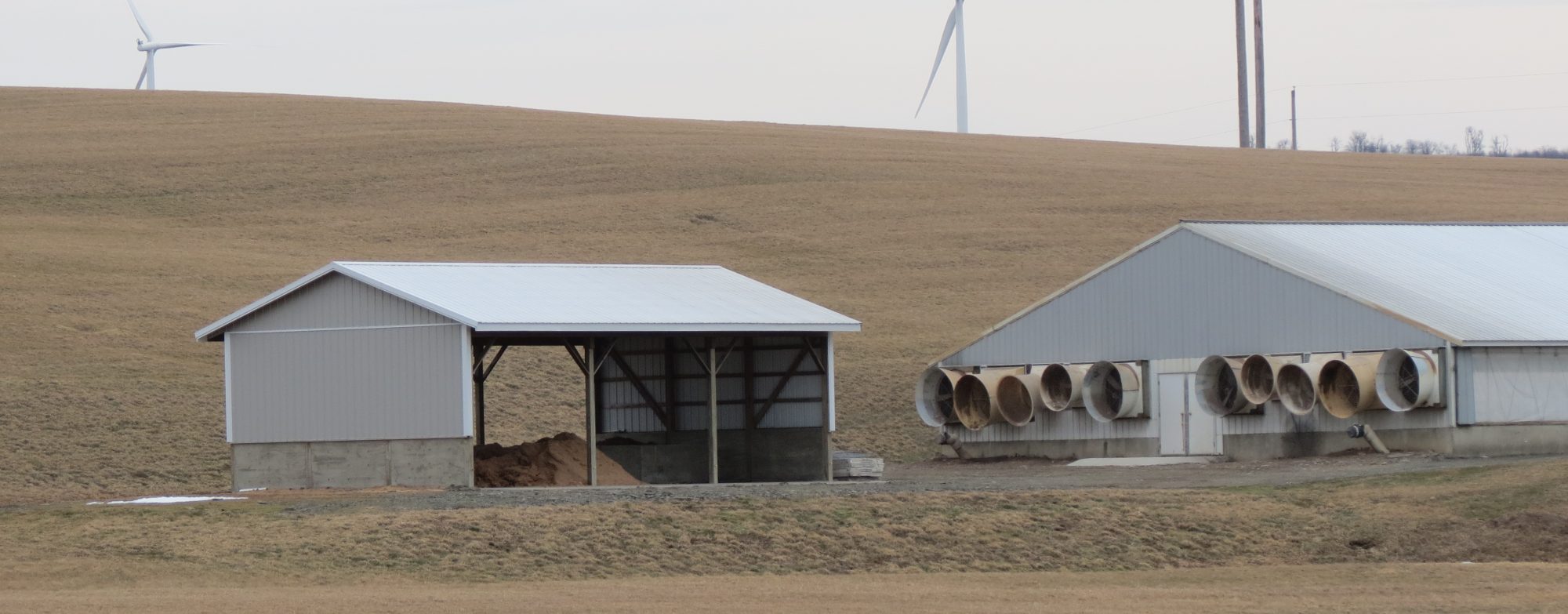
This webinar will explore how mortality is part of livestock production, whether in the day-to-day on the farm or after a catastrophic disease or environmental disaster. Handling and disposal of mortality in a safe and efficient manner is critical for continuity of operations. In this webinar, the presenters will present on studies evaluating different techniques of mortality management and the lessons learned from each study This presentation was originally broadcast on October 10, 2025. Continue reading “Mortality Management – From Routine to Catastrophic”
Rethinking Manure Management with 360Rain: Expanding Application Windows and Improving Nutrient Use Efficiency
This webinar will explore how the 360Rain autonomous irrigation system is being used as a new tool for manure management. By enabling in-season manure application, 360Rain opens opportunities to better match nitrogen availability with crop uptake, reduce manure storage time (and associated methane emissions), and even provide supplemental irrigation. This presentation was originally broadcast on September 26, 2025. Continue reading “Rethinking Manure Management with 360Rain: Expanding Application Windows and Improving Nutrient Use Efficiency”
Flies, Frass, Feces, and Fields
This webinar will examine how black soldier fly larvae (BSFL) can transform food and agricultural waste into valuable products for both animal feed and soil health. Presenters will discuss large-scale BSFL production, the frass co-product, and how nutrient content can vary based on inputs and processing. This presentation was originally broadcast on August 15, 2025. Continue reading “Flies, Frass, Feces, and Fields”
Manure processing for discharge water quality – technical performance and county perspectives for advancing water quality
The webinar “Manure Processing for Discharge Water Quality” reviews the potential of advanced manure processing systems to treat manure to water quality standards suitable for discharge. It features insights from the Land Conservation Division of the Dane County Land and Water Resources Department, including their objectives in supporting system installation, the ownership and operational structure, financial support mechanisms, documented outcomes, and future planning.
The presentation was originally broadcast on June 20, 2025. Continue reading “Manure processing for discharge water quality – technical performance and county perspectives for advancing water quality”
A USDA multi-location project monitoring ammonia deposition near animal production sites
Animals excrete a lot of nitrogen as they grow with a large fraction escaping into the air as ammonia. What happens to that ammonia, and can we predict how that excess nitrogen might be beneficial to nearby crop production? This webinar will present pilot-scale research for manure and food waste treatment. This presentation was originally broadcast on May 16, 2025. Continue reading “A USDA multi-location project monitoring ammonia deposition near animal production sites”
Mobilizing Microbes in Treatment Processes
Microbes are abundant in manure and food waste. Harnessing and/or controlling microbial action in a treatment process is challenging – but some technologies are making headway. This webinar will present pilot-scale research for manure and food waste treatment. This presentation was originally broadcast on March 21, 2025. Continue reading “Mobilizing Microbes in Treatment Processes”
Moving Manure Research Forward Through the NRCS CIG Program
The Conservation Innovation Grants (CIG) program is a federal grant program that is part of the USDA NRCS EQIP program. This talk will describe the most significant parts of the program, explain the program intent and eligibility, and outline important program requirements that are unique to CIG. The second part of the presentation will review several successful projects on equipment and practices for in-season nutrient management and nutrient recovery techniques. This presentation was originally broadcast on February 28, 2025. Continue reading “Moving Manure Research Forward Through the NRCS CIG Program”
Application of Manure on Growing Crops
Scheduling conflicts, equipment breakdowns, and wet field conditions can wreak havoc on spring manure application and planting schedules. This webinar will provide valuable insights into maximizing the efficiency and timing of manure application for growing crops, especially corn. By exploring innovative techniques for liquid manure application and the potential for in-season poultry litter application, participants will learn possible ways to navigate challenges in crop management while ensuring nutrient efficiency and maintaining crop yield and quality. This presentation was originally broadcast on January 17, 2025. Continue reading “Application of Manure on Growing Crops”
Responding to PFAS on Dairy Farms in Maine
Per- and polyfluoroalkyl substances (PFAS) are persistent in the environment and in humans. While agriculture is not the source of PFAS, feed and animal production are potential transfer points. This webinar shares experiences from Maine, where PFAS was detected in soil, feed, milk, and meat and initiated a multi-pronged response and remediation approach from multiple agencies, on multiple farms. Our speakers will share the important distinctions between PFAS chemicals, short- and long-term ramifications for local farms, and remediation techniques – both implementation and research scale. This presentation was originally broadcast on December 13, 2024. Continue reading “Responding to PFAS on Dairy Farms in Maine”
Engaging Farm Safety and Manure Management: Innovative Teaching Methods in Action
The agricultural industry consistently has the highest risk for occupational injuries and fatalities. This session will share some proven techniques for making changes to farm safety practices and manure management that could positively impact generations to come. We will explore dynamic and interactive teaching methodologies that could be adapted for use in at your facility and in your training programs. These methods employ activity-based learning, where participants have the opportunity to learn, apply and discuss real-world scenarios in a safe environment. This presentation was originally broadcast on November 22, 2024. Continue reading “Engaging Farm Safety and Manure Management: Innovative Teaching Methods in Action”