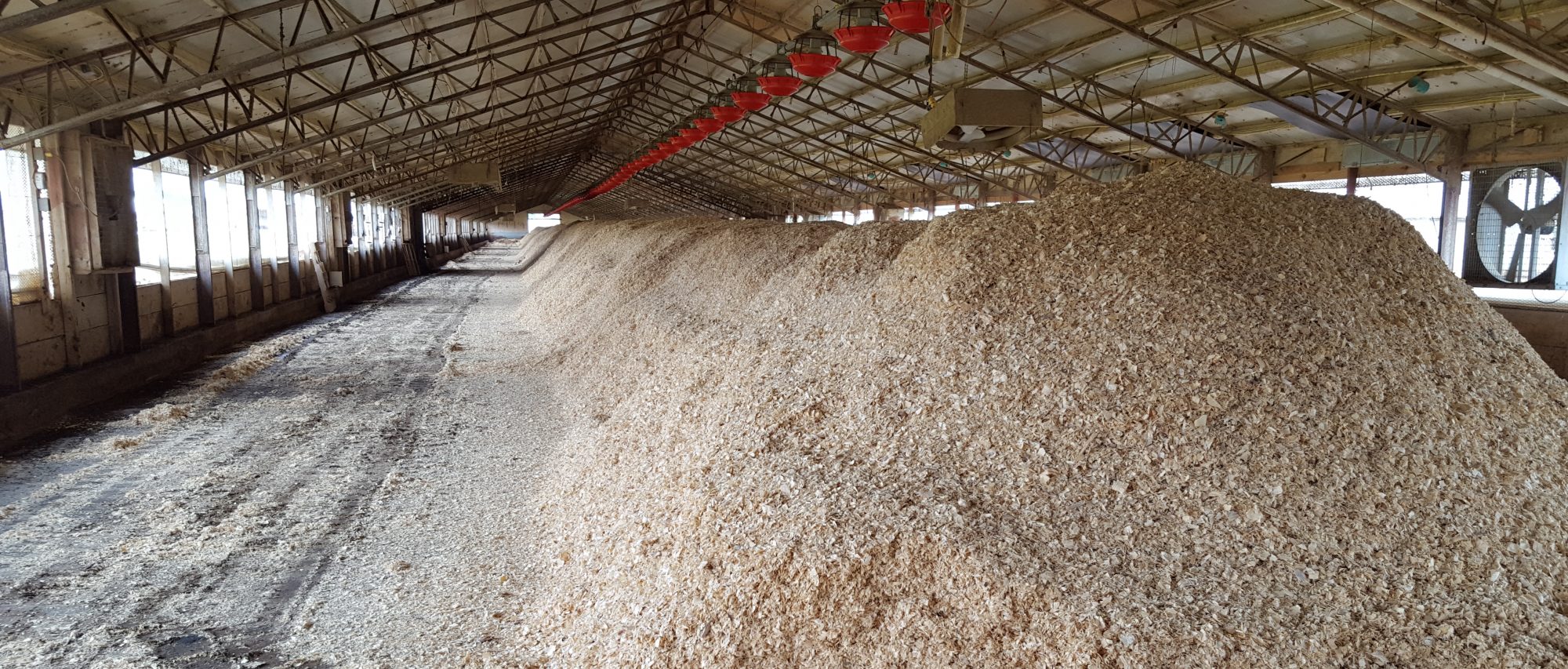

Manure nutrient trends from 2012-2022

Purpose

Livestock manure nutrients can be variable depending on animal species, age, diet, management, housing, climate, and manure storage and handling. Thousands of samples are analyzed every year by agricultural laboratories across the United States (U.S.). While many published manure characteristics are two decades old, this study provides an updated glimpse into more recent manure data from thousands of samples across the country and reviewed possible trends from 2012-2022 by U.S. regions for common animal categories.

What Did We Do?

We collected manure nutrient data from participating U.S. laboratories and this data was aggregated by researchers at the University of Minnesota into ManureDB, a manure nutrient test database. By February 2024, ManureDB included over 490,000 samples from across the U.S. With ManureDB, data was filtered for the time period from 2012-2022 and common U.S. animal manure categories (solid beef, liquid beef, solid dairy, liquid dairy, solid chicken-broiler, solid chicken-layer, solid turkey, and liquid swine manure) to update nutrient summary statistics for total nitrogen (TN), ammonium-N (NH4-N), phosphorus (P2O5), and potassium (K2O) using the approximately 325,000 samples. Samples were divided by designating samples with <10% total solids as liquid manure and samples with >10% total solids as solid manure. Data was also analyzed to assess regional nutrient comparisons and trends for regions with sufficient samples.

What Have We Learned?

Regional differences impacted nutrient concentrations in solid and liquid manures. When comparing regions with at least 500 samples per animal manure category across 2012-2022 we found significant differences in nutrient concentrations in 66% of the individual year comparisons for solid manures and 91% of comparisons for liquid manures for all four analytes.

Between 2012 and 2022, significant increasing or decreasing nutrient (TN, NH4-N, P2O5, K2O) trends were evident in 25% of solid samples and 18% of liquid samples. The only significant trend for solid beef manure was a decreasing trend in the SE region for NH4-N. Both the solid chicken-broiler SE and NE regions had significant decreases in NH4-N, and only the SE had an increasing trend for K2O. The SE region for solid chicken-layer had decreasing trends for NH4-N, P2O5, and K2O. For solid dairy manure, the MW region only had a decreasing trend for P2O5, while the NE region had decreasing trends for N and NH4-N. Solid turkey manure only had significant trends for P2O5, with the MW increasing and the SE decreasing. Liquid beef manure had no significant trends. For liquid dairy manure, only the NE region had significant decreasing trends for all four nutrients. For liquid swine manure, only the SE region had significant increasing trends for NH4-N.

Standardizing nomenclature and increasing manure sample details, especially with animal life stage and manure storage information on manure sample submittal forms, will further improve ManureDB’s usefulness.

Future Plans

We continue to expand and refine ManureDB by adding data each year, additional labs, making the website more user-friendly, and enhancing data quality control. We archived the first set of data with Ag Data Commons in 2024 and plan to do that annually. We also plan to publish several papers regarding the development of the database and analysis of the manure nutrient data.

Authors

Presenting & corresponding author

Nancy L. Bohl Bormann, Researcher, University of Minnesota, nlbb@umn.edu

Additional authors

Melissa L. Wilson, Associate Professor, University of Minnesota

Erin L. Cortus, Associate Professor and Extension Engineer, University of Minnesota

Additional Information

Acknowledgements

ManureDB is supported through USDA NIFA Award 2020-67021-32465 and Cooperative Ecosystem Studies Unit program [grant no. NR253A750008C001] from the U.S. Department of Agriculture — Natural Resources Conservation Service.

The authors are solely responsible for the content of these proceedings. The technical information does not necessarily reflect the official position of the sponsoring agencies or institutions represented by planning committee members, and inclusion and distribution herein does not constitute an endorsement of views expressed by the same. Printed materials included herein are not refereed publications. Citations should appear as follows. EXAMPLE: Authors. 2025. Title of presentation. Waste to Worth. Boise, ID. April 711, 2025. URL of this page. Accessed on: today’s date.

Extraction and Recovery of Phosphorus from Pig Manure Using the Quick Wash Process

*Why Look at Phosphorus Recovery from Pig Manure?

Land disposal of manure is a challenging environmental problem in areas with intense confined pig production. When manure is land applied at optimal nitrogen rates for crop growth, phosphorus can accumulate in excess of soil assimilative capacity because of the disproportion of nitrogen and phosphorus contents in animal manures relative to plant biomass. In turn, excess manure phosphorus lost through soil leaching or runoff has the potential to reach and pollute water resources. To reduce manure phosphorus losses into the environment, a substantial amount of phosphorus needs to be moved off the pig farm but transporting manure to phosphorus-deficit croplands becomes less cost effective with increasing distance from the pig farm. Yet, conservation and recovery of phosphorus is a concern in modern agriculture because of the high cost and possible insufficient supply of mined phosphates in the future. Thus, manure management in regions with intense animal production could benefit from new technologies that would recover manure phosphorus in a concentrated, usable form. This approach would make more economical the long distance transfers of manure phosphorus while reducing both agronomic phosphorus imbalances and adverse effects of soil P losses on water resources.

What did we do?

diagram of the quick wash processA patented treatment process, called “Quick Wash”, was developed for extraction and recovery of phosphorus from animal manure solids, but research has shown that the approach is equally effective with municipal biosolids. In the Quick Wash process, phosphorus is selectively extracted from pig manure solids by using mineral or organic acid solutions. Following, phosphorus is recovered by addition of liquid lime and an organic poly-electrolyte to the liquid extract to form a calcium-containing P precipitate. The quick wash process generates two products: 1) manure solids low in phosphorus; and 2) recovered phosphorus material.

What have we learned?

The Quick Wash process selectively extracts and recovers as much as 90 % of the phosphorus from pig manure solids while leaving most of the nitrogen in the washed manure solids. Consequently, the washed solid residue has a more balanced nitrogen and phosphorus composition for crop production and is environmentally safer for land application. The concentrated phosphorus product contains more than 90% of its phosphorus in plant available form for use as crop fertilizer. The inclusion of this process in a waste management system offers pig producers a new and welcomed opportunity to minimize phosphorus losses into the environment, while recovering and recycling phosphorus as a valuable product.

Future Plans

USDA granted an exclusive license of the invention to Renewable Nutrients, LLC (Pinehurst, NC). The Quick Wash is being commercialized by Renewable Nutrients, LLC for the municipal wastewater treatment sector and its partner TRIEA Technologies, LLC (Frederick, MD) for phosphorus recovery in the animal agriculture market.

Authors

Ariel A. Szogi, Research Soil Scientist, USDA-ARS Coastal Plains Soil, Water, and Plant Research Center, Florence, SC ariel.szogi@ars.usda.gov

Matias B. Vanotti, Patrick G. Hunt – USDA-ARS Coastal Plains Soil, Water, and Plant

Additional information

https://www.frontiersin.org/articles/10.3389/fsufs.2018.00037/full

http://www.rnutrients.com/

http://www.trieatechnologies.com/quickwash

Szogi, A.A., Vanotti, M.B., Hunt, P.G., 2014. Process for removing and recovering phosphorus from animal waste. U.S. Patent 8,673,046 B1. U.S. Patent and Trademark Office.

Acknowledgements

This work is part of USDA-ARS National Program 214: Agricultural and Industrial Byproducts; ARS Project 6657-13630-005-00D “Innovative Bioresource Management Technologies for Enhanced Environmental Quality and Value Optimization.”

The authors are solely responsible for the content of these proceedings. The technical information does not necessarily reflect the official position of the sponsoring agencies or institutions represented by planning committee members, and inclusion and distribution herein does not constitute an endorsement of views expressed by the same. Printed materials included herein are not refereed publications. Citations should appear as follows. EXAMPLE: Authors. 2015. Title of presentation. Waste to Worth: Spreading Science and Solutions. Seattle, WA. March 31-April 3, 2015. URL of this page. Accessed on: today’s date.

Process for Recovery of Phosphorus from Solid Manure

Waste to Worth: Spreading science and solutions logoWaste to Worth home | More proceedings….

Why Study Phosphorus Recovery?

Land application of manure in regions with intense confined livestock and poultry production is an environmental concern when land is limiting because it promotes soil phosphorus (P) surplus and potential pollution of water resources. A net accumulation of soil P results from the disproportion between lower nitrogen (N) and P ratio (N:P) in animal manure and the higher N:P ratio in harvested crops. Although manure can be moved off the farm, its transportation becomes less economical with increasing distances from the source. Thus, management alternatives to land application are needed to resolve agronomic P imbalances for more effective recycling of manure P.

Litter washed solids residue – Low P content

What Did We Do?

A treatment process, called “quick wash”, was developed for extraction and recovery of P from poultry litter and animal manure solids. In the quick wash process, P is selectively extracted from solid manure or poultry litter by using mineral or organic acid solutions. Following, P is recovered by addition of liquid lime and an organic poly-electrolyte to the liquid extract to form a calcium-containing P precipitate. The quick wash process generates two products: 1) washed solid residue, and 2) concentrated recovered P material.

What Have We Learned?

Recovered concentrated P material

The quick wash process selectively removes up to 80 % of the phosphorus from manure solids while leaving most of the nitrogen in the washed litter residue. Consequently, the washed solid residue has a more balanced N:P ratio for crop production and environmentally safe for land application. The concentrated  P recovered materials contained more than 90% of its phosphorus in plant available form. The use of recovered P can provide a recycled P source for use as crop fertilizer while minimizing manure P losses into the environment from confined animal production.

Future Plans

USDA granted an exclusive license of the invention to Renewable Nutrients, LLC (Pinehurst, NC); a centralized plant for treating poultry litter is planned to be built and operated by Renewable Nutrients in the Mid-Atlantic region.

Authors

Ariel A. Szogi, Research Soil Scientist, USDA-ARS Coastal Plains Soil, Water, and Plant Research Center,  Florence, SC. ariel.szogi@ars.usda.gov

Ariel A. Szogi, Matias B. Vanotti, Patrick G. Hunt – USDA-ARS Coastal Plains Soil, Water, and Plant Rsearch Center,  Florence, SC.

Additional Information

https://www.ars.usda.gov/is/pr/2008/080229.htm

https://www.frontiersin.org/articles/10.3389/fsufs.2018.00037/full

Szogi, A.A., Vanotti, M.B., Hunt, P.G., 2008. Process for removing and recovering phosphorus from animal waste. U.S. Patent and Trademark Office Application Serial No. 12/026,346.

Szogi, A.A., Vanotti, M.B., and Hunt, P.G. 2008. Phosphorus recovery from poultry litter. Trans. ASABE 51(5):1727-1734.

Szogi, A.A. and Vanotti, M.B., 2009. Prospects for phosphorus recovery from poultry litter. Bioresour. Technol. 100(22):5461-5465.

Szogi, A.A., Bauer, P.J., and Vanotti, M.B. Fertilizer effectiveness of phosphorus recovered from broiler litter. Agron. J. 102(2):723-727. 2010.

Acknowledgements

This work is part of USDA-ARS National Program 214: Agricultural and Industrial Byproducts; ARS Project 6657-13630-005-00D “Innovative Bioresource Management Technologies for Enhanced Environmental Quality and Value Optimization.”

The authors are solely responsible for the content of these proceedings. The technical information does not necessarily reflect the official position of the sponsoring agencies or institutions represented by planning committee members, and inclusion and distribution herein does not constitute an endorsement of views expressed by the same. Printed materials included herein are not refereed publications. Citations should appear as follows. EXAMPLE: Authors. 2013. Title of presentation. Waste to Worth: Spreading Science and Solutions. Denver, CO. April 1-5, 2013. URL of this page. Accessed on: today’s date.