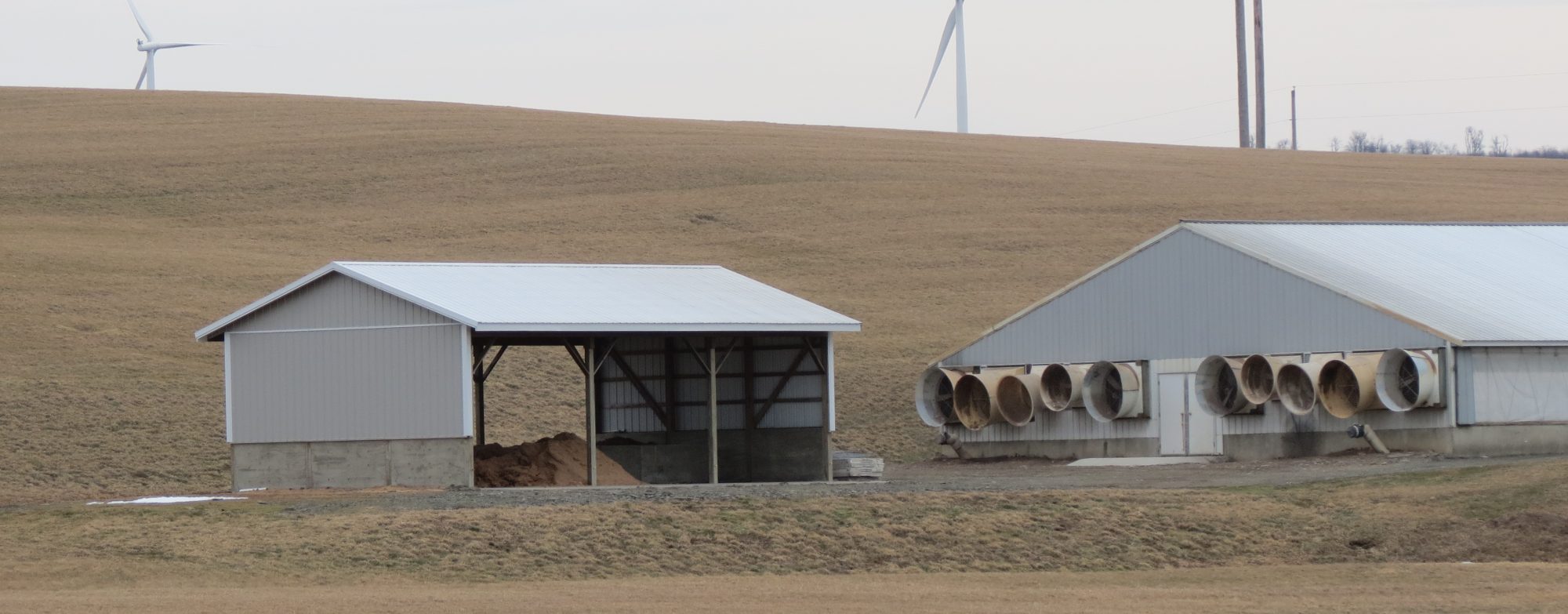

This webinar will explore how mortality is part of livestock production, whether in the day-to-day on the farm or after a catastrophic disease or environmental disaster. Handling and disposal of mortality in a safe and efficient manner is critical for continuity of operations. In this webinar, the presenters will present on studies evaluating different techniques of mortality management and the lessons learned from each study This presentation was originally broadcast on October 10, 2025. Continue reading “Mortality Management – From Routine to Catastrophic”
Flies, Frass, Feces, and Fields
This webinar will examine how black soldier fly larvae (BSFL) can transform food and agricultural waste into valuable products for both animal feed and soil health. Presenters will discuss large-scale BSFL production, the frass co-product, and how nutrient content can vary based on inputs and processing. This presentation was originally broadcast on August 15, 2025. Continue reading “Flies, Frass, Feces, and Fields”
Moving Manure Research Forward Through the NRCS CIG Program
The Conservation Innovation Grants (CIG) program is a federal grant program that is part of the USDA NRCS EQIP program. This talk will describe the most significant parts of the program, explain the program intent and eligibility, and outline important program requirements that are unique to CIG. The second part of the presentation will review several successful projects on equipment and practices for in-season nutrient management and nutrient recovery techniques. This presentation was originally broadcast on February 28, 2025. Continue reading “Moving Manure Research Forward Through the NRCS CIG Program”
Application of Manure on Growing Crops
Scheduling conflicts, equipment breakdowns, and wet field conditions can wreak havoc on spring manure application and planting schedules. This webinar will provide valuable insights into maximizing the efficiency and timing of manure application for growing crops, especially corn. By exploring innovative techniques for liquid manure application and the potential for in-season poultry litter application, participants will learn possible ways to navigate challenges in crop management while ensuring nutrient efficiency and maintaining crop yield and quality. This presentation was originally broadcast on January 17, 2025. Continue reading “Application of Manure on Growing Crops”
Responding to PFAS on Dairy Farms in Maine
Per- and polyfluoroalkyl substances (PFAS) are persistent in the environment and in humans. While agriculture is not the source of PFAS, feed and animal production are potential transfer points. This webinar shares experiences from Maine, where PFAS was detected in soil, feed, milk, and meat and initiated a multi-pronged response and remediation approach from multiple agencies, on multiple farms. Our speakers will share the important distinctions between PFAS chemicals, short- and long-term ramifications for local farms, and remediation techniques – both implementation and research scale. This presentation was originally broadcast on December 13, 2024. Continue reading “Responding to PFAS on Dairy Farms in Maine”
Engaging Farm Safety and Manure Management: Innovative Teaching Methods in Action
The agricultural industry consistently has the highest risk for occupational injuries and fatalities. This session will share some proven techniques for making changes to farm safety practices and manure management that could positively impact generations to come. We will explore dynamic and interactive teaching methodologies that could be adapted for use in at your facility and in your training programs. These methods employ activity-based learning, where participants have the opportunity to learn, apply and discuss real-world scenarios in a safe environment. This presentation was originally broadcast on November 22, 2024. Continue reading “Engaging Farm Safety and Manure Management: Innovative Teaching Methods in Action”
Managing Dairy Manure for Increased Soil Health and Forage Production Sustainability
Manure is a valuable source of crop-essential nutrients that, when managed carefully, can help build soil organic matter, enhance nutrient cycling, and improve overall soil health and climate resilience over time. In 2022, a statewide on-farm research project was initiated in New York State to quantify the nitrogen (N) replacement value, corn silage or grain yield, and soil health enhancements of various manure sources. Between 2022 and 2023, eleven on-farm field trials were implemented. Yield data are being used to quantify differences in most economic N rate between manured and non-manured strips, and to quantify the yield impact of the manure applications. In 2024, eight additional trials were added using various manure sources. Results so far indicate that manure can offset N fertilizer needs and increase corn silage yield beyond its nutrient contributions, but impacts are field-specific, reflecting differences in field histories and growing conditions. Assessments of soil microbial biomass for sites in 2023 and 2024 reflected the manure history for trial locations and suggest that mid-season assessments may help identify where nitrogen fertilizer addition is beneficial for the crop and where not. Assessment of variability of different manure sources point to the importance of manure sampling and analyses. Preliminary results will be shared. This presentation was originally broadcast on October 18, 2024. Continue reading “Managing Dairy Manure for Increased Soil Health and Forage Production Sustainability”
The Role of Agriculture in Atmospheric Nitrogen Deposition: Sources, Impacts, and Management
Agriculture is the largest source of ammonia emissions and contributes to nitrogen deposition which can impact ecosystem health. This webinar introduces the topic of nitrogen deposition and provides an overview of the role of the National Atmospheric Deposition Program (NADP) in determining nitrogen deposition sources. In addition, the speakers provide an overview of a region being impacted by agriculture related nitrogen deposition and discusses agricultural management practices that may reduce ammonia emissions and nitrogen deposition. This presentation was originally broadcast on September 20, 2024. Continue reading “The Role of Agriculture in Atmospheric Nitrogen Deposition: Sources, Impacts, and Management”
Staying in the Loop: Circularity in Integrated Crop and Livestock Production
Have you heard or read about circularity and the circular economy? These buzzwords describe sustainability concepts that are being adopted in many sectors, including food animal production. This webinar shares definitions for these concepts and how they can inform thinking about changes to animal systems and manure management. This presentation was originally broadcast on June 21, 2024. Continue reading “Staying in the Loop: Circularity in Integrated Crop and Livestock Production”
Precision Ag In the Barn and In the Pasture
This webinar shares updates on approaches to precision agriculture for animal management, welfare and productivity, and how these applications influence nutrient management. This presentation was originally broadcast on May 17, 2024. Continue reading “Precision Ag In the Barn and In the Pasture”