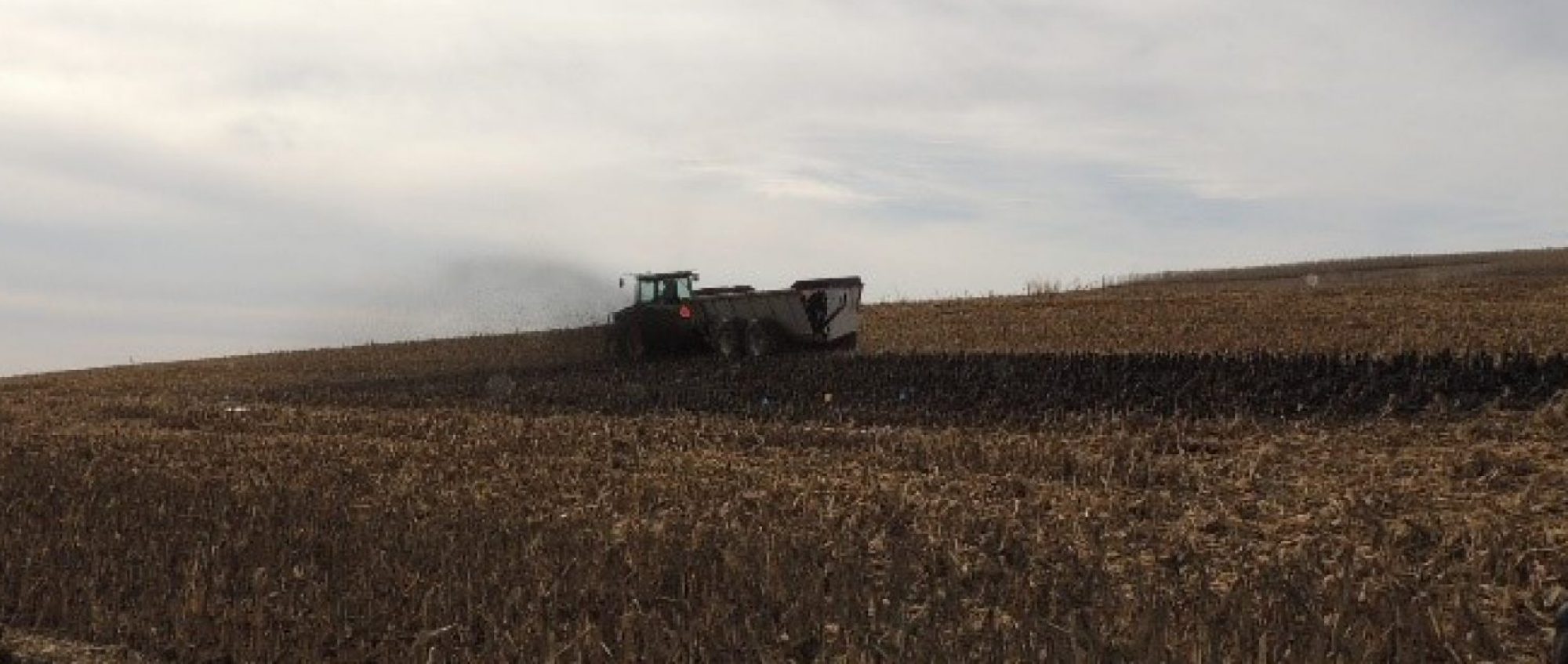

Manure nutrient trends from 2012-2022

Purpose

Livestock manure nutrients can be variable depending on animal species, age, diet, management, housing, climate, and manure storage and handling. Thousands of samples are analyzed every year by agricultural laboratories across the United States (U.S.). While many published manure characteristics are two decades old, this study provides an updated glimpse into more recent manure data from thousands of samples across the country and reviewed possible trends from 2012-2022 by U.S. regions for common animal categories.

What Did We Do?

We collected manure nutrient data from participating U.S. laboratories and this data was aggregated by researchers at the University of Minnesota into ManureDB, a manure nutrient test database. By February 2024, ManureDB included over 490,000 samples from across the U.S. With ManureDB, data was filtered for the time period from 2012-2022 and common U.S. animal manure categories (solid beef, liquid beef, solid dairy, liquid dairy, solid chicken-broiler, solid chicken-layer, solid turkey, and liquid swine manure) to update nutrient summary statistics for total nitrogen (TN), ammonium-N (NH4-N), phosphorus (P2O5), and potassium (K2O) using the approximately 325,000 samples. Samples were divided by designating samples with <10% total solids as liquid manure and samples with >10% total solids as solid manure. Data was also analyzed to assess regional nutrient comparisons and trends for regions with sufficient samples.

What Have We Learned?

Regional differences impacted nutrient concentrations in solid and liquid manures. When comparing regions with at least 500 samples per animal manure category across 2012-2022 we found significant differences in nutrient concentrations in 66% of the individual year comparisons for solid manures and 91% of comparisons for liquid manures for all four analytes.

Between 2012 and 2022, significant increasing or decreasing nutrient (TN, NH4-N, P2O5, K2O) trends were evident in 25% of solid samples and 18% of liquid samples. The only significant trend for solid beef manure was a decreasing trend in the SE region for NH4-N. Both the solid chicken-broiler SE and NE regions had significant decreases in NH4-N, and only the SE had an increasing trend for K2O. The SE region for solid chicken-layer had decreasing trends for NH4-N, P2O5, and K2O. For solid dairy manure, the MW region only had a decreasing trend for P2O5, while the NE region had decreasing trends for N and NH4-N. Solid turkey manure only had significant trends for P2O5, with the MW increasing and the SE decreasing. Liquid beef manure had no significant trends. For liquid dairy manure, only the NE region had significant decreasing trends for all four nutrients. For liquid swine manure, only the SE region had significant increasing trends for NH4-N.

Standardizing nomenclature and increasing manure sample details, especially with animal life stage and manure storage information on manure sample submittal forms, will further improve ManureDB’s usefulness.

Future Plans

We continue to expand and refine ManureDB by adding data each year, additional labs, making the website more user-friendly, and enhancing data quality control. We archived the first set of data with Ag Data Commons in 2024 and plan to do that annually. We also plan to publish several papers regarding the development of the database and analysis of the manure nutrient data.

Authors

Presenting & corresponding author

Nancy L. Bohl Bormann, Researcher, University of Minnesota, nlbb@umn.edu

Additional authors

Melissa L. Wilson, Associate Professor, University of Minnesota

Erin L. Cortus, Associate Professor and Extension Engineer, University of Minnesota

Additional Information

Acknowledgements

ManureDB is supported through USDA NIFA Award 2020-67021-32465 and Cooperative Ecosystem Studies Unit program [grant no. NR253A750008C001] from the U.S. Department of Agriculture — Natural Resources Conservation Service.

The authors are solely responsible for the content of these proceedings. The technical information does not necessarily reflect the official position of the sponsoring agencies or institutions represented by planning committee members, and inclusion and distribution herein does not constitute an endorsement of views expressed by the same. Printed materials included herein are not refereed publications. Citations should appear as follows. EXAMPLE: Authors. 2025. Title of presentation. Waste to Worth. Boise, ID. April 711, 2025. URL of this page. Accessed on: today’s date.

Manure nutrient trends and creating dynamic “book values” through ManureDB

This webinar highlights ManureDB, a database of manure samples informing “book values”. Having current manure test numbers will assist in more accurate nutrient management planning, manure storage design, manure land application, and serve agricultural modeling purposes. This presentation was originally broadcast on June 17, 2022. Continue reading “Manure nutrient trends and creating dynamic “book values” through ManureDB”

Trends in Manure Sample Data

Purpose

Most manure book values used today from the MidWest Plan Service (MWPS) and American Society of Agricultural and Biological Engineers (ASABE) were derived from manure samples prior to 2003. To update these manure test values, the University of Minnesota in partnership with the Minnesota Supercomputing Institute, is working to build a dynamic manure test database called ManureDB. During this database construction, the University of Minnesota collected manure data spanning the last decade from five labs across the country. Trends, similarities, and challenges arose when comparing these samples. Having current manure test numbers will assist in more accurate nutrient management planning, manure storage design, manure land application, and serve agricultural modeling purposes.

What Did We Do?

We recruited five laboratories for this preliminary study who shared some of their manure sample data between 2012-2021, which represented over 100,000 manure samples. We looked at what species, manure types (liquid/solid), labels, and units we had to work with between the datasets to make them comparable. Once all the samples were converted into either pounds of nutrient/ton for solid manure or pounds of nutrient/1000 gallons for liquid manure, we took the medians of total nitrogen, ammonium-nitrogen (NH4-N), phosphate (P2O5), and potassium oxide (K2O) analyses from those samples and compared them to the MWPS and ASABE manure nutrient values.

What Have We Learned?

There is no standardization of laboratory submission forms for manure samples. The majority of samples have minimal descriptions beyond species of animal and little is known about storage types. With that said, we can still detect some general NPK trends for the beef, dairy, swine, poultry manure collected from the five laboratories in the last decade, compared to the published book values. For liquid manure, the K2O levels generally increased in both the swine and poultry liquid manure samples. For the solid swine manure and solid beef manure, total N, P2O5, and K2O levels all increased compared to the published book values. The solid dairy manure increased in P2O5 and K2O levels, and the solid poultry manure increased in total N and K2O. See Figure 1 for the general trends in liquid and solid manure for swine, dairy, beef, and poultry.

Table 1. Manure sample trends 2012-2021 compared to MWPS/ASABE manure book values. (+) = trending higher, (o) = no change/conflicting samples, (-) = trending lower

Liquid Total N NH4N P2O5 K2O
Swine o o +
Dairy o o
Beef o o o o
Poultry o + +
Solid Total N NH4N P2O5 K2O
Swine + o + +
Dairy o o + +
Beef + + +
Poultry + o o +

Future Plans

The initial data gives us a framework to standardize fields for the future incoming samples (location, manure type, agitation, species, bedding, storage type, and analytical method) along with creating a unit conversion mechanism for data uploads. We plan to recruit more laboratories to participate in the ManureDB project and acquire more sample datasets. We will compare and analyze this data as it becomes available, especially more detailed data for each species. We will be designing ManureDB with statistical and data visualization features for future public use.

Authors

Nancy L. Bohl Bormann, Graduate Research Assistant, University of Minnesota

Corresponding author email address

bohlb001@umn.edu

Additional authors

Melissa L. Wilson, Assistant Professor, University of Minnesota

Erin L. Cortus, Associate Professor and Extension Engineer, University of Minnesota

Kevin Janni, Extension Engineer, University of Minnesota

Larry Gunderson, Pesticide & Fertilizer Management, Minnesota Department of Agriculture

Tom Prather, Senior Software Developer, University of Minnesota

Kevin Silverstein, Scientific Lead RIS Informatics Analyst, University of Minnesota

Additional Information

ManureDB website: http://manuredb.umn.edu/ (coming soon!)

Twitter: @ManureProf, @nlbb

Lab websites:

https://wilsonlab.cfans.umn.edu/

https://bbe.umn.edu/people/erin-cortus

Acknowledgements

This work is supported by the AFRI Foundational and Applied Science Program [grant no. 2020-67021-32465] from the USDA National Institute of Food and Agriculture, the University of Minnesota College of Food, Agricultural and Natural Resource Sciences, and the Minnesota Supercomputing Institute.


The authors are solely responsible for the content of these proceedings. The technical information does not necessarily reflect the official position of the sponsoring agencies or institutions represented by planning committee members, and inclusion and distribution herein does not constitute an endorsement of views expressed by the same. Printed materials included herein are not refereed publications. Citations should appear as follows. EXAMPLE: Authors. 2022. Title of presentation. Waste to Worth. Oregon, OH. April 18-22, 2022. URL of this page. Accessed on: today’s date.

Dynamic manure “book values” through the U.S. National Manure Database

Purpose

Most manure composition data summaries available in the U.S. are outdated because genetics, feed rations, manure handling, and housing practices have evolved over the past two decades. This means that the community that uses this manure data, such as farmers developing manure management plans, engineers designing manure storages, state and federal regulators establishing best management practices for manure land application, or researchers modeling nutrient cycling and gas emissions, is using outdated information. Thousands of manure samples, however, are analyzed every year by university and commercial labs across the country and could provide an up-to-date source of information. Until recently, there has been no mechanism for combining and summarizing this valuable data in a way that makes the results accessible to the broader community of users. Together with the Minnesota Supercomputing Institute (MSI) and the Minnesota Department of Agriculture (MDA) – who runs the only manure analysis proficiency program in the United States – researchers at the University of Minnesota are developing a national database for manure test results. The database, or ManureDB, will meet FAIR principles (Findable, Accessible, Interoperable, and Reusable) to ensure the data is shared and used by a wide audience.

What Did We Do?

The project team brought together a stakeholder group involved with manure management, regulation, lab analysis, and research to help us develop standards and best practices for data management. The stakeholder team helped inform the creation of several deliverables to date, including a schema and framework for the database, as well as a data use agreement template. The MSI is currently working on the development of the public-facing website that will interface with the database as well as a data cleaning tool to help standardize the data as it is uploaded.

What Have We Learned?

The stakeholder group identified that data privacy is a top priority. Customer data (i.e., name and address) will be removed, though state and zip codes will remain with the data (full zip codes will not be shared publicly). We also found that there is a stark difference between what data the full stakeholder team would like to see (i.e., manure data for livestock facilities by county or watershed code for different livestock species and manure storage types) versus what commercial laboratories collect (i.e. livestock species and sometimes the address of the livestock facility, but more often the address of the person requesting the tests). Standardizing manure submission forms in the future will potentially help ensure that information collected for each sample is consistent. Future educational efforts for those advising farmers on manure testing will be needed to ensure the forms are filled out accurately instead of being left blank.

Future Plans

This project is ongoing. We are in the process of working with our current participating labs to sign data use agreements and then to clean and upload data. New labs will be recruited throughout the project period. A public-facing dashboard will be created to search through aggregate data. We are working with our stakeholder groups to design websites for other potential use cases, including a site to download cleaned data for research purposes and potentially a site for labs to be able to benchmark their samples against labs from within and outside of their regions.

Authors

Melissa L. Wilson, Assistant Professor and Extension Specialist, University of Minnesota

Corresponding author email address

mlw@umn.edu

Additional authors

Erin L. Cortus, Associate Professor and Extension Engineer, University of Minnesota

Nancy L. Bohl Bormann, Graduate Research Assistant, University of Minnesota

Kevin Janni, Extension Engineer, University of Minnesota

Larry Gunderson, Pesticide & Fertilizer Management, Minnesota Department of Agriculture

Tom Prather, Senior Software Developer, University of Minnesota

Kevin Silverstein, Scientific Lead RIS Informatics Analyst, University of Minnesota

Additional Information

Manuredb.umn.edu

Acknowledgements

This work is supported by the AFRI Foundational and Applied Science Program [grant no. 2020-67021-32465] from the USDA National Institute of Food and Agriculture. We’d also like to thank our stakeholders for their time commitment.


The authors are solely responsible for the content of these proceedings. The technical information does not necessarily reflect the official position of the sponsoring agencies or institutions represented by planning committee members, and inclusion and distribution herein does not constitute an endorsement of views expressed by the same. Printed materials included herein are not refereed publications. Citations should appear as follows. EXAMPLE: Authors. 2022. Title of presentation. Waste to Worth. Oregon, OH. April 18-22, 2022. URL of this page. Accessed on: today’s date.