In the spring of 2014, the farmer with a 2020 finishing pig barn, wanted to change from burial of mortality to composting the mortality. We will document the change and the use of the composting barn from July 2014 to Dec 2016.
What did we do?
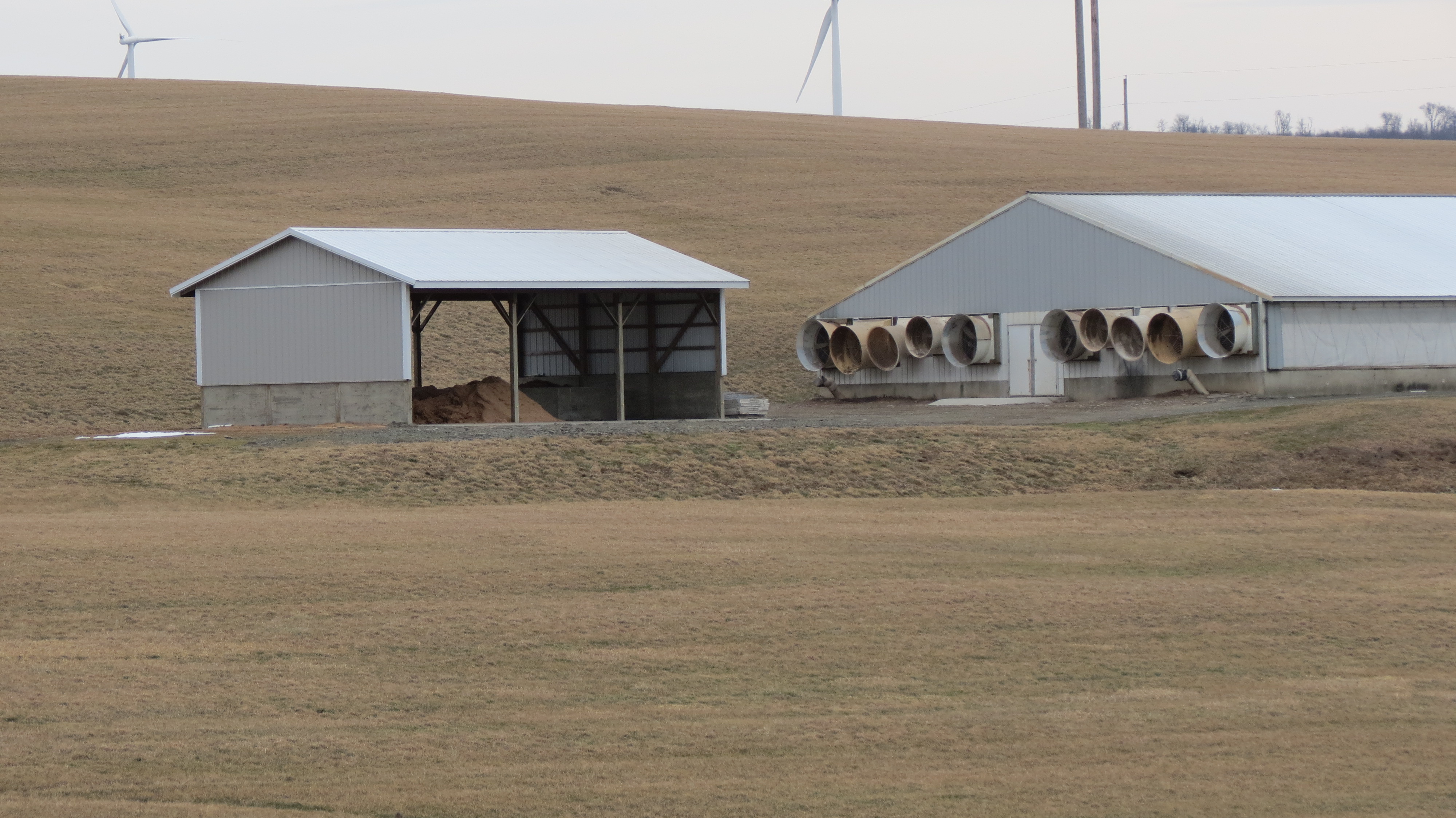
This 2020 finish pig barn space has about 3% mortality and expects about 250 deaths per year to compost. We discussed building a PA Michigan single wall compost barn design. The farmer built a 24×40 compost barn, with a 3 feet center dividing wall. The barn was completed in the summer of 2014 and we will track the pig barn turns and compost barn mortality loadings from July 2014 to December 2016. The barn has used about 56 cubic yards of woodchips/ bark mulch the first year and then replaced with about 40 cubic yards of sawdust for the second year.
The compost temperatures have reached 130 Degrees F and the farmer is very pleased with how the barn works and how he can mix and turn the compost. The presentation will cover barn costs, barn design and sawdust mortality loading and turning.
PA Michigan compost barn built at the end of the hog barn
Excellent example of free flowing air into the compost piles while
having a center push up wall to help turn the piles
What have we learned?
We have documented the farmers use of the barn, the mortality rates, compost sawdust and woodchip use, and mixing schedules. We have also documented the mortality cost rates for this farm.
Future Plans
We will highlight this PA Michigan compost barn type to other pig barns and document the use of them in Pennsylvania.
The authors are solely responsible for the content of these proceedings. The technical information does not necessarily reflect the official position of the sponsoring agencies or institutions represented by planning committee members, and inclusion and distribution herein does not constitute an endorsement of views expressed by the same. Printed materials included herein are not refereed publications. Citations should appear as follows. EXAMPLE: Authors. 2017. Title of presentation. Waste to Worth: Spreading Science and Solutions. Cary, NC. April 18-21, 2017. URL of this page. Accessed on: today’s date.
Streptococcus equi subspecies equi (S. equi), causes the potentially fatal respiratory disease in horses known as “strangles”, while the closely related Streptococcus equi subspecies zooepidemicus (S. zooepidemicus) causes potentially fatal infections in humans. A study was undertaken to determine the survival of these 2 organisms in compost and soiled bedding.
What did we do?
Dacron bags were filled with a feedstock mixture of soiled equine bedding and feed waste at ratios of 3:1 (C:N ratio 40.6), 1:1 (C:N ratio 31.9), and 1:4 (C:N ratio 25.4). The Dacron bags were inoculated with S. zooepidemicus, and placed in 3 compost windrows of the same 3 feedstock ratios 24 h later. Streptococci were quantified at different time points. Next, S. equi was inoculated into Dacron bags then placed into a compost windrow of the same feedstock ratio. Streptococci were quantified. To rule out killing of both Streptococcal species by microflora during the 24 h storage period, samples of soiled equine bedding, both autoclaved and non-autoclaved, were inoculated with S. zooepidemicus and periodically sampled. A repeated study was conducted with S. equi. To determine the role of moisture on the killing of S. equi in equine waste, soiled equine bedding was dried at 37 °C for 48 h and sterile water then added to dried bedding.
What have we learned?
Microbes in soiled equine bedding may eliminate Streptococci, indicating that normal compost microflora may provide sustainable methods for the control of human and animal pathogens.
Future Plans
Future studies could assess the role of individual bacterial species in the abatement of Streptococci, and possible additives to a compost pile which might increase numbers of streptocidal organisms. In addition, compost could be examined to discover novel antibiotics or bacteriophages which may be used for disease control.
Corresponding author, title, and affiliation
Alexandria Garcia, Graduate Student, University of Maine
Dr. Robert Causey, Associate Professor at University of Maine, Scott Mitchell, Student, Kathleen Harvey, Student, Ashley Myer, Student, Mark Hutchison, Extension Professor, and Martin Stokes, Professor
Additional information
Garcia, Alexandria, “Abatement of Streptococcus equi in Equine Compost” (2016). Electronic Theses and Dissertations. 2435.
Maine Agricultural Center, Dr. M. Susan Erich, Mark Hutchinson
The authors are solely responsible for the content of these proceedings. The technical information does not necessarily reflect the official position of the sponsoring agencies or institutions represented by planning committee members, and inclusion and distribution herein does not constitute an endorsement of views expressed by the same. Printed materials included herein are not refereed publications. Citations should appear as follows. EXAMPLE: Authors. 2017. Title of presentation. Waste to Worth: Spreading Science and Solutions. Cary, NC. April 18-21, 2017. URL of this page. Accessed on: today’s date.
The purpose of this project was to study and promote the use of compost as an alternative horse stall bedding and encourage horse owners and managers to think more creatively about manure management. Our objective was to reduce bedding use, and improve manure management practices at equine facilities in Snohomish County, Washington State.
Recreational and professional horse owners contribute to maintaining agricultural open space and supporting the agricultural infrastructure and local economy. Horse owners have historically been overlooked as contributors to animal agriculture, and as a result many horse owners lack a basic knowledge about manure and nutrient management. They are not aware of their impact on water and soil quality. Disposal of used stall bedding is costly for horse owners in northwestern Washington State, and has a potentially large impact on water quality. Disposal practices often include filling in low spots and ravines, or building massive piles. Composting manure at high temperatures eliminates pathogens and parasites, stabilizes nutrients, and reduces odors and vector attraction.
What did we do?
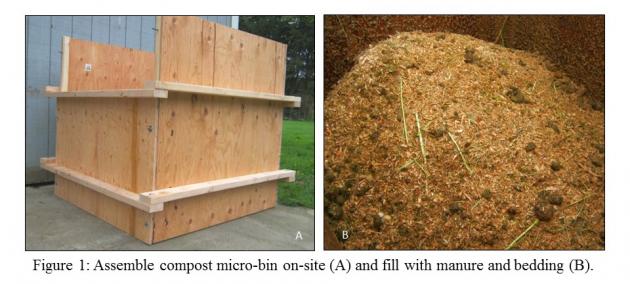
The Snohomish Conservation District (SCD) worked with ten commercial and two private equine facilities to test the use of compost as an alternative horse stall bedding material. Facilities ranged in size from 5 to >20 stalls. The primary system used for composting and reusing bedding involved a micro-bin composter (O2 Compost, Snohomish, WA) and a Stall Sh*fter® (Brockwood Farm, Nashville, IN). Micro-bins were assembled on-site and filled with used stall bedding (Fig.1-2).
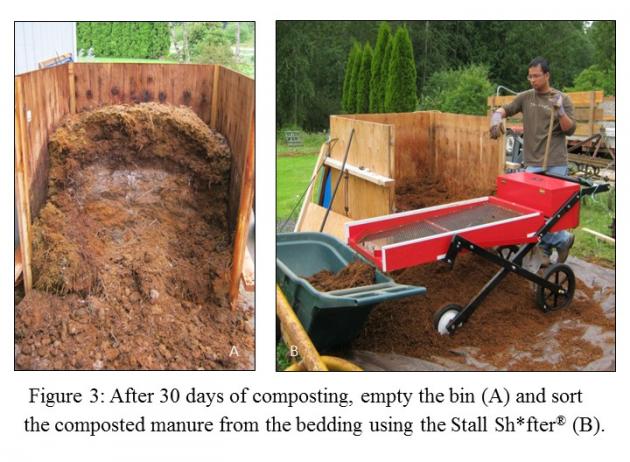
After 30 days of composting, the bin was emptied and the manure was separated from the bedding (Fig. 3). The composted bedding was then used in a stall (Fig. 4). Equine facility managers provided feedback on the effectiveness, perception, and impacts of using the compost as stall bedding. Results varied between trial sites based on type and quantity of bedding used, season, and stall management practices.
What have we learned?
Composted stall waste makes a soft absorbent bedding for horses or other livestock. Composted bedding is less dusty than shavings or wood pellets, darker in color, and has a pleasant earthy odor. There were no reports of composted bedding increasing stall odors or flies, or negatively impacting horse health. The best results were reported when mixing the composted bedding with un-composted bedding in equal proportions or two parts compost to one part bedding. There were some reports of horses with skin and respiratory conditions improving during the time they were on composted bedding, including thrush in the feet, hives and “rain rot” on the body, and “scratches” on the legs.
When separating the composted manure from the bedding, the amount and type of bedding determines the effectiveness of a bedding re-use system. Concern about appearances was more prevalent than concern about disease or parasite transfer. Even though barn managers were not entirely ready to make the switch to composted bedding, this project helped start many conversations (in person, through publications, and social media) about manure management and resource conservation. It was a great opportunity to help horse owners make the mental leap from “waste” to “resource”.
Future Plans
This project demonstrated that compost is a safe and effective horse stall bedding. Future work should be focused in three areas:
1. Developing systems for making composted bedding that are practical on a large scale and provide an economic incentive for large equine facilities to recycle their waste.
2. Outreach and education programs directed at horse owners who board their animals at commercial facilities. Would some horse owners be willing to pay a premium to board their horses at a facility that is managed in an environmentally sustainable manner?
3. Clinical trials to examine the effects of composted bedding on skin and respiratory conditions.
Author
Caitlin Price Youngquist, Agriculture Extension Educator, University of Wyoming Extension cyoungqu@uwyo.edu
I would like to thank all of the farm owners and managers who very graciously participated in this project and were willing to try something new. The contribution of time and energy is very much appreciated.
Thanks also to the staff at O2 Compost for their efforts, ideas, and creativity. This would not have been possible without them.
And Mollie Bogardus for helping take this project to the next level, and explore all the possibilities.
The authors are solely responsible for the content of these proceedings. The technical information does not necessarily reflect the official position of the sponsoring agencies or institutions represented by planning committee members, and inclusion and distribution herein does not constitute an endorsement of views expressed by the same. Printed materials included herein are not refereed publications. Citations should appear as follows. EXAMPLE: Authors. 2015. Title of presentation. Waste to Worth: Spreading Science and Solutions. Seattle, WA. March 31-April 3, 2015. URL of this page. Accessed on: today’s date.
Why Is It Important to Study Availability of Manure Nitrogen?
Application of fresh and composted manure as a fertilizer source in corn production has long been a useful practice in many sustainable crop production systems especially when phosphorus, and not nitrogen (N), is the primary nutrient of interest. But when manure is applied as the primary source of N, despite several agronomic advantages associated with manure use, there is a high risk of ground water pollution, and often times, would produce lower yields and grain protein than inorganic fertilizers. Nitrogen mineralization and availability from manure is difficult to predict. Therefore estimating the amount of crop N uptake that may be attributed to manure applied in the same year or to its residual impact, can be a useful approach towards quantifying a supplementary quantity of inorganic N fertilizer with the manure.
What did we do?
This study measured in situ relative soil N mineralization rates (flux) during three growing seasons of continuous no-till (2013 and 2014) corn in Carrington, ND. We applied fresh (FM) and composted beef feedlot manure (CM) only once in spring 2012 at N rates of 90, 180, and 240lbs/A as FM, and 90 and 180lbs as CM. These rates were applied based on the calculation that 50% of N from FM and 25% of N from CM, would be available the first year. Other treatments were urea at 90, 150, 180, and 240lbs N/A, plus a check at 0lbs/A. In 2013 and 2014 urea was applied to respective plots, based on soil test, to raise the N levels to the respective 2012 N levels. We used the randomized complete block design with four replicates. Three replicates were used to measure soil N (NO3- + NH4+) mineralization rates bi-monthly with Plant Root Simulator probes (PRS™), from the urea fertilized and manured plots at the 0, 90 and 180lb levels at 4-6 leaf growth stage. Four pairs of PRS™ probes were buried in the top 6 inches near corn roots and replaced every two weeks for four sampling dates. We measured yields, protein content, and N uptake.
What have we learned?
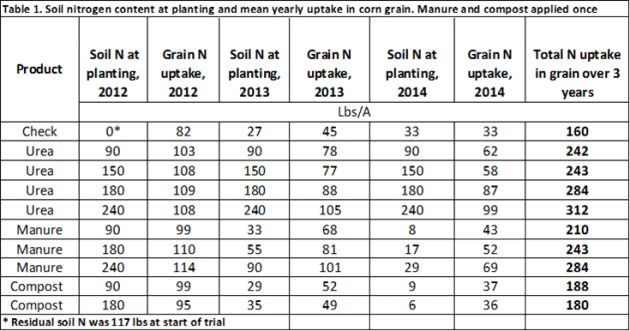
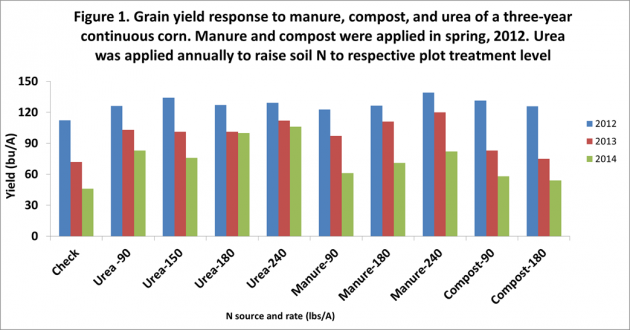
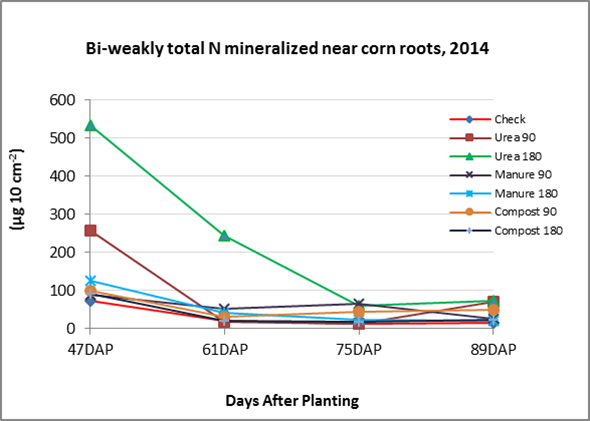
Yields were generally low in all three years of this study, well below the average for this region. Bi-monthly N mineralization was significantly higher as N increases with urea as N source during the early sampling dates (Figures 2 and 3) and subsequently declined to similar levels as the manure treatments. It is therefore possible that the plants benefited from higher early uptake of N from urea up to the early stages of peak corn N uptake but not enough to produce significantly higher yields than the manure treatments. Analysis of variance showed no significant treatment effects for yields in 2012 (α = 0.05) but grain protein differences were significant. These differences were observed only between the check and 180 lbs N in 2012. The highest mean grain yield was recorded with the 90 lbs N treatment where, the residual soil N at planting was just 33 lbs. The protein level was also significantly higher than the check and CM plot that received 180 lbs N in 2012, and with a soil residual N prior to 2013 planting, at 35 lbs. Each year, grain yields responded positively to N rates (applied as urea) and residual N levels from FM but not with CM. Since corn was grown for three continuous years, unsurprisingly yields declined with years of production since N was not applied to the FM and CM treatments after first application in year one. Similarly, yield decline was observed with urea over the three years but not as steep as the FM and CM treatments. The FM at 240 lbs N, and urea at 180 and 240 lbs treatments produced significantly higher grain protein than the check in 2012 (data not shown). Lower N mineralization and very likely, lower N availability was observed with the CM treatments especially at 180 lbs N, which consistently scored the lowest mean yield and protein in 2013 and 2014. Grain yields were consistently higher at 90 lbs N than 180 lbs N with the CM treatment. Summer droughts of 2012 and 2013 at this site and possibly, factors associated with continuous corn production (e.g. disease, temporal N immobilization) compounded the effects of urea treatments even though N uptake was consistently higher with urea. Total N taken up in corn grains from the FM and CM treatments increased with N rates but decreased with time (Table 1). From this study, corn grains took up more N from the plots treated with FM than the CM over the three-year period of the study. Subsequent changes in soil conditions such as moisture, N leaching, temperature, can sometimes limit the efficiency of inorganic fertilizer uses, and favoring low cost alternative uses such as manure especially if the prevailing conditions enhance N mineralization from manure or soil organic matter. Based on N input plus soil N status at the beginning of planting every year, corn N uptake efficiency was in the order: Check>FM>CM>Urea, with efficiency decreasing at higher N rates. The minimum proportion of grain N uptake by any treatment to the single highest N uptake for any urea-N treatment (considered as a reference) in a given year, was 42% for the check in 2013.
Future Plans
Relative contribution of nitrogen from the fresh and composted manure treatments and residual N will be used to estimate the percentage of N coming from these treatments over a three-year period. This will be used to establish new studies to assess different levels of fertilizer N to apply with manure to improve on the grain protein content and yields.
Authors
Jasper M Teboh, Soil Scientist, Carrington Research Extension Center, North Dakota State University Jasper.Teboh@ndsu.edu
North Dakota Corn Growers Association, Western Ag Innovations, Mr. Ron Wiederholt, Mr. Blaine G Schatz (Director, CREC)
The authors are solely responsible for the content of these proceedings. The technical information does not necessarily reflect the official position of the sponsoring agencies or institutions represented by planning committee members, and inclusion and distribution herein does not constitute an endorsement of views expressed by the same. Printed materials included herein are not refereed publications. Citations should appear as follows. EXAMPLE: Authors. 2015. Title of presentation. Waste to Worth: Spreading Science and Solutions. Seattle, WA. March 31-April 3, 2015. URL of this page. Accessed on: today’s date.
Over the last twenty years there have been considerable increases in the incidence of human infections with bacteria that are resistant to commonly used antibiotics. This has precipitated concerns about the use of antibiotics in livestock production. Composting of swine manure has several advantages, liquid slurries are converted to solid, the total volume of material is reduced and the stabilized product is more easily transported off-site. The goal of this study was to determine if composting can also be used to reduce the concentration of indicators and bacteria containing genes for antibiotic resistance (AR) in swine manure.
What did we do?
Sample Analysis:
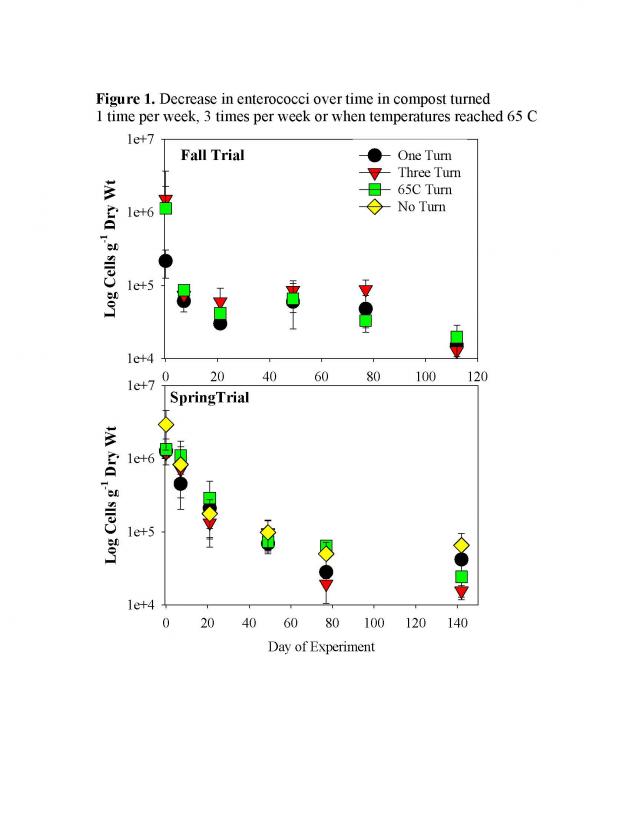
Compost trials were conducted in either fall (FT) or spring (ST) and piles were turned once, three times or upon reaching 65 ºC. Microbial indicators and populations with AR genes for tetracycline, erythromycin and sulfonamide resistance were quantified by culture and/or quantitative, real-time (qPCR) analysis.
Compost materials and conditions:
Decomposed materials (a mixture of swine slurry and woodchips) were obtained on two separate occasions from swine high-rise finishing facilities (HRFF) located in western Kentucky. The HRFF houses between 4,000 and 4,800 swine which are placed in the facility at 18 to 20 kg and are removed after three months (weighing about 105 kg). The high-rise floor raises the living area 3.7 m above the ground. Manure, excess feed, water and wastewater drop through slatted floors into 2.5 cm screened woodchips (average size 1.9 ± 0.9 cm). The slurry-woodchip material was turned up to three times per week while under the HRFF. When the material was visibly moist, reducing its ability to absorb additional waste materials, it was removed from the facility for finishing in windrows. In fall 2011 (FT) and Spring 2012 (ST), HRFF slurry-woodchip mix (approximately 60 m3 weighing 48.4 Mg) was brought by semi-trailer trucks to the Western Kentucky University Agricultural complex where ma terials were divided into three or four windrow piles. In the FT, swine slurry-woodchip mixes having a bulk density of 849.6 kg m-3 and consisting of around 19.6 m3 of material were formed into three piles of approximately 10.4 m x 2.1 m x 0.9 m (L x W x H). In the ST, swine slurry-woodchip mixes having a bulk density of 778.4 kg m-3 and consisting of around 18.8 m3 of material were formed into three piles of approximately 5.8 m x 2.7 m x 1.2 m (L x W x H) and a fourth batch (unturned) was left piled at the side (0X; 3.6 m3). In each study, piles were turned using a windrow compost turner either once per week (1X), three times per week (3X) or upon the internal compost temperature reaching 65 ºC (@65). Compost for the FT @65 treatment heated to 65 ºC by day 14 and was turned 11 times over the course of the trial. However, during the ST, the @65 pile did not heat for the first 63 days (mean temperature 27 ± 8 ºC) therefore weekly turning was initiated at that time. Samples were taken on days 0 and three and then weekly for the first 12 weeks and bi-weekly until composting was stopped at day 112 for the FT and day 142 for the ST.
What have we learned?
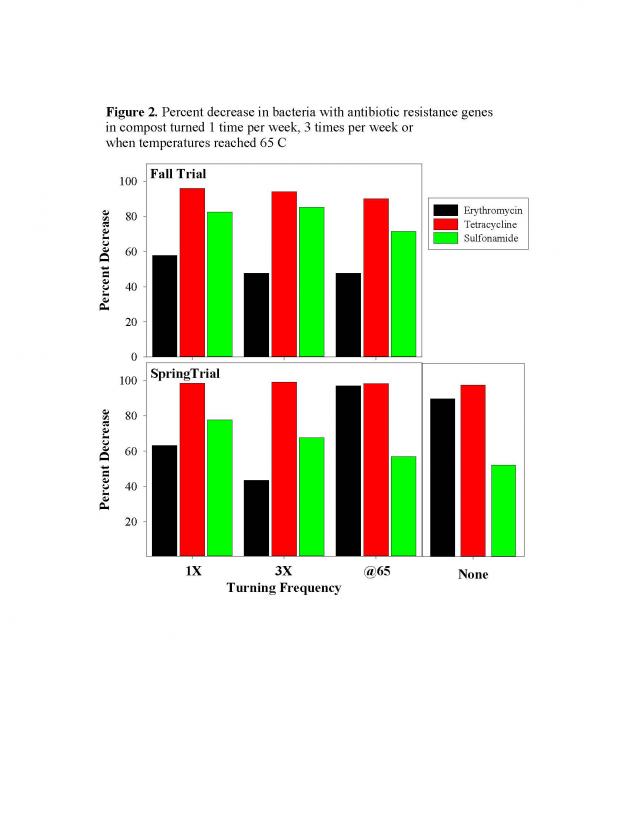
In the FT, concentrations of enterococci decreased below culturable detection within 21 days, corresponding with a 99% decrease in detection by qPCR (Fig. 1). Similar decreases in qPCR detection in the ST took longer (day 49 or day 77 of composting). Changes in the concentration of bacteria with AR genes varied by antibiotic type (erythromycin (36% – 97%), tetracycline (94% to 99%) and sulfonamide (53% to 84%) and compost season (greater decreases in ST). There were few differences based on turning regime. Even the unturned compost pile had 90%, 98% and 56% reduction in bacteria resistant to erythromycin, tetracycline and sulfonamide, respectively.
Results suggest that composting effectively decreases the concentration of indicators and AR genes in swine manure. As concerns over antibiotic resistance and pathogens increase, composting provides a valuable manure management tool for decreasing contaminants and improving the value of this material as a soil conditioner.
Future Plans
Volume reduction, low moisture and low readily degradable organic matter suggest that the finished compost would have lower transportation costs and should provide value as a soil conditioner. Studies are warranted to evaluate its agronomic value as an alternative source of plant nutrients. Future studies will be conducted to evaluate the nutrient value this compost as an organic fertilizer for row crop production.
This research was conducted as part of USDA-ARS National Program 214: Agricultural and Industrial By-products: CRIS 6445-12630-004-00D. Mention of trade names or commercial products in this article is solely for the purpose of providing specific information and does not imply recommendation or endorsement by the USDA.
Proceedings cook figures 1
Proceedings cook figures 2
The authors are solely responsible for the content of these proceedings. The technical information does not necessarily reflect the official position of the sponsoring agencies or institutions represented by planning committee members, and inclusion and distribution herein does not constitute an endorsement of views expressed by the same. Printed materials included herein are not refereed publications. Citations should appear as follows. EXAMPLE: Authors. 2015. Title of presentation. Waste to Worth: Spreading Science and Solutions. Seattle, WA. March 31-April 3, 2015. URL of this page. Accessed on: today’s date.
Residual antibiotics in land-applied manure and biosolids present a potential threat to public and ecological health, so it is important to determine antibiotic removal efficiencies for manure and biosolids waste management practices and to identify conditions that enhance antibiotic degradation.
What we did
Loss of the antibiotics florfenicol, sulfadimethoxine, sulfamethazine, and tylosin was studied during pilot-scale static pile thermophilic composting and the effects of temperature and feedstock particles on antibiotic removal rates were tested. The antibiotics were spiked into dairy manure solids and wastewater biosolids, and treatments included aerated and non-aerated manure and biosolids/wood-product (1:3 v/v) composting.
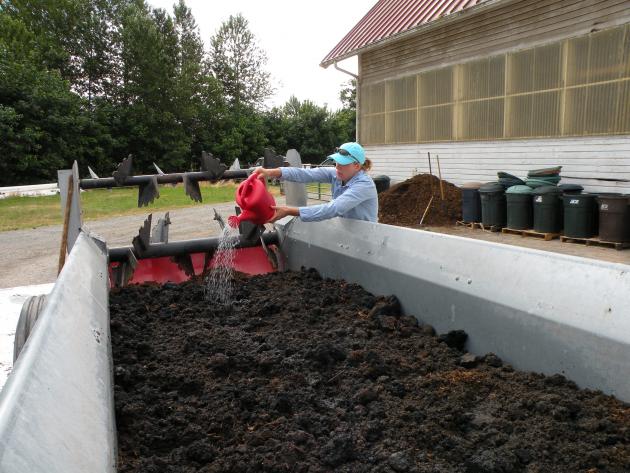
Figure 1. Applying antibiotic solution to biosolids
What have we learned
Results showed no significant differences between aerated and non-aerated treatments; on average ≥85%, ≥93%, and ≥95% antibiotic reduction was observed after 7, 14, and 21 d of composting. Greater antibiotic reduction was observed in manure compost compared to biosolids compost for florfenicol (7, 14, 21, 28 d) and tylosin (7, 14, 28 d); however, there was no significant difference for sulfadimethoxine and sulfamethazine. Peak temperatures were 66-73°C, and ≥55°C was maintained for 6-7 d in the biosolids compost and 17-20 d in the manure compost.
Bench-scale experiments conducted at 25, 55, and 60°C showed that lower temperature decreased removal of the sulfonamides and tylosin in both feedstocks and florfenicol in the biosolids. The presence of compost particles increased antibiotic loss, with time to 50% dissipation ≤ 2 d in the presence of solids (60°C), compared to no degradation in their absence. These results indicate that thermophilic composting effectively reduces residual antibiotics in manure and biosolids.
The authors are solely responsible for the content of these proceedings. The technical information does not necessarily reflect the official position of the sponsoring agencies or institutions represented by planning committee members, and inclusion and distribution herein does not constitute an endorsement of views expressed by the same. Printed materials included herein are not refereed publications. Citations should appear as follows. EXAMPLE: Authors. 2015. Title of presentation. Waste to Worth: Spreading Science and Solutions. Seattle, WA. March 31-April 3, 2015. URL of this page. Accessed on: today’s date.
To examine the financial, operational and health benefits of re-using composted bedding in the equine industry.
What Did We Do?
Stable waste, consisting of manure, urine and wood shavings, is a readily compostable feedstock that generates heat and can be transformed into finished homogenous compost, which can be used as bedding for horses and other livestock. This transformation can be completed in as little as 2 weeks with in-vessel technologies, 15-25 days in aerated site-built systems and 20-30 days in aerated static pile (ASP) systems. If composting is done in a biologically active, aerobic environment such as the systems mentioned above, the process destroys weed seed, parasites and harmful pathogens. These benefits are the result of system controls such as a correct ratio of C:N, moisture, porosity of the pile, and temperature. The in-vessel composting system offers the most comprehensive control of these factors ensuring the most favorable results.
The biological process that occurs when the stable waste is blended utilizes the leachable N and binds it in the organic matrix keeping it secured. There is also a reduction in N during the process as it becomes volatile and escapes through vaporization. The phosphorus is utilized by the bacteria during the process, reducing the amount available to leach by at least 50%. Since both N and Ph are needed for cellular growth, they get locked in the cells of the growing bacteria. This process generates heat, removing the moisture, killing pathogens and creating drier and more absorbent material for bedding re-use.
IOS Ranch, a private 20 horse show stable on Bainbridge Island, Washington, was the study site for this paper. They purchased an Earth Flow in vessel system and it is from this system that the lab results and observational data were collected. Their bedding of choice is medium sized bulk shavings. Also studied over the same period of time was the Earth Flow in-vessel system at Joint Base Myers/Henderson in Arlington, Virginia. The US Army Caisson horses stabled there are bedded on pelletized bedding. Lab data from this composting mix contributed to this study as well.
Washington State University, encouraged by the potential of financial savings, started using composted material as bedding in the school’s dairy farm. An unexpected benefit of this decision was the reduction of mastitis in the dairy herd. The change in bedding was the only variable altered in the care of the herd when this observation was noted. A study conducted by Cornell University’s Waste Management Institute studied the financial effects of using manure solids (DMS) as bedding. This study showed an average of $37,000 was saved annually by the diary farms who switched to re-use bedding. It was from these observations that we decided to apply the same questions to the equine industry.
A study conducted by Caitlin Price Youngquist of the Snohomish Conservation District, and funded by Western SARE is searching for the health benefits to horses with the use of composted stable waste as bedding. Preliminary examination has shown an increase in foot and leg health and a decrease in thrush, scratches and dermatitis seen on the horses in the study. General foot and leg health was also attributed to compost bedding by Dr. Hannah Mueller of Cedarbrook Veterinary Clinic and Northwest Equine Stewardship Center. She documented relief for a horse with chronic hives and a horse with a tracheotomy. The reduction of dust has been cited as a benefit to the horses suffering from heaves and other dust related ailments such as skin and respiratory irritations. The compost material has the unique quality of a large capacity for absorption while at an already higher level of moisture that makes the compost bedding less dusty. Both pellets and shavings exhibit this attribute.Youngquist’s assumption for the benefit composted bedding offers is based in the process itself. She states, “The compost has been through a very hot phase to kill all pathogens and parasites. It now has a thriving microbial population that competes aggressively with the fungal and bacterial pathogens that cause infections and irritations on skin and hooves (similar to the concept of a pro-biotic).”
Stable waste compost as bedding can be used in its entirety or screened to collect the larger remaining pieces of shavings for bedding, leaving the fines for soil amendment. Testing has shown in either case the composted material to have high absorbency, more so than green shavings. When mixed with 50% new or green shavings, the stall is at its most efficient for health and comfort for the horse. The composted material offers higher absorption, soaking up the urine off the stall floor. With a top dressing of new shavings the stall is aesthetically pleasing to the human eye, light in color and offering the horse a barrier to the wetter, compost material below. The compost bedding is odor free when reintroduced to the stall. The introduction of at least 50% new shavings also supports the ongoing composting system, refilling the system when it has its 40-50% reduction of volume and the eventual breakdown of the shaving pieces with multiple trips through the system. Continuing research is being done to understand the effect of pelletized bedding used in the bedding re-use loop without the introduction of a larger substance to affect the integrity of the material as it continues to be re –used.
The first test done was to measure the absorption ability of the three types of bedding mixes. Two inches of material was placed in a plastic container. The first test done on 2” of green shavings, the second test done on 2” of a 50/50 mix of green shavings and compost, and the third test done on 2” of compost. Each of the variations was weighed before the introduction of water. One gallon of water was poured over the material and allowed to stand for 2 minutes. The container was then drained of any standing water which was measured. The container was again weighed in each case after the water had been drained. This procedure allowed for the measurement of absorption by both the increase in weight and the volume of water not absorbed by the material.
The new shavings taken from a loose pile absorbed the least, the 50/50 mix the next higher amount and the compost bedding absorbed the most moisture. This is impressive when one considers that the density of compost bedding is higher before the introduction of the test water. The compost material is comprised of the same woody fiber as the shavings but the edges have softened and loosened, and it is possible that the breakdown of the resins, which can be hydro phobic, allows for additional absorption ability.
We also tested for the moisture content of each bedding type with a simple oven test. The material was measured by a two cup measuring cup and poured into a glass baking dish. The material was weighed before going into the oven, set at 200°. The material was then weighed again to determine the moisture content after 12 hours.
These preliminary tests were performed to study initial benefits noted with bedding re-use. These are not scientific studies and are only intended to show possible indications for the purpose of this paper and to encourage further study. With composting and bedding re-use, barns close the waste stream loop and create a value added product.
What Have We Learned?
The viability of composted stable waste to be re-used as bedding is proven to provide financial benefits by saving on the cost of material purchase and in the disposal of stable waste. It provides further savings in health care costs.
Laboratory Results for Composted Stable Waste
Laboratory Results for Composted Stable Waste
Future Plans
We will continue to support the Snohomish Conservation District study run by Caitlin Youngquist by supplying composted stable waste and collaboration.
We plan to run our dust measurement during the summer months when we actually have dust in the Pacific Northwest. A furnace filter attached to the intake side of an 18” x 18” fan would be left on at ground level in a newly bedded stall for three minutes while the horse was hand walked around the stall. This would be repeated for the three bedding variations. The filter would be weighed before being attached to the fan and again after the three minute period.
Study of pellets as bedding re-use material will be done, measuring the health benefits and the viability of the product over multiple uses.
A controlled trial on direct contact allergens will be conducted on the three bedding mixtures.
We will continue to educate the equine industry and encourage a broad scale adoption of this closed waste system.
Authors
Mollie Bogardus, MBA Sustainable Business, Equine Specialist, Green Mountain Technologies, Inc. and Michael Bryon Brown, President, Green Mountain Technologies, Inc.
Bogardus, Mollie. “Equine Applications/Case Studies/ IOS Ranch and Fort Myer/Henderson.” Green Mountain Technologies. Green Mountain Technolgies, Inc., n.d. Web. 15 Mar. 2013. http://compostingtechnology.com/equine/.
Cohen, Jamie. “Composted Horse Manure: The Pros and Cons.” The Florida Horse Feb. 2013: 23. Print.
“Equine Applications.” Green Mountain Technologies- lab results. N.p., 12 Dec. 2012. Web. 1 Mar. 2013. http://compostingtechnology.com/equine.
LeaMaster, Brad, James R. Hollyer, and Jennifer L. Sullivan. “Composted Animal Manures: Precautions and Processing.” Cooperative Extension Service,College of Tropical Agriculture and Human Resources, University of Hawai‘i. University of Hawaii at Manoa, n.d. Web. 6 Mar. 2013. http://www.ctahr.hawaii.edu/oc/freepubs.
Price Youngquist, Caitlin. “Composted Horse Manure and Stall Bedding Pilot Project – YouTube.” YouTube. Snohomish Conservation District, 17 Jan. 2013. Web. 1 Mar. 2013. https://youtu.be/B91U5UjuaXI.
Schwartz, Mary, Jean Bonhotal, and A. Edward Stachr. “Use of Dried Manure Solids as Bedding for Dairy Cows.” Cornell Waste Management Institute. Cornell University, n.d. Web. 1 Oct. 2012. http://cwmi.css.cornell.edu>.
Wheeler, Eileen , and Jennifer Smith Zajaczkowski. “Horse Stable Manure Management.” Cornell Cooperative Extension, Orange County Equine, Saratoga County Equine. Penn State University, n.d. Web. 6 Mar. 2013. http://cceequine.org.
Zaborski, Ed. “Composting to Reduce Weed Seeds and Plant Pathogens – eXtension.” eXtension – Objective. Research-based. Credible.. University of Illinois at Urbana Champaign, 22 Oct. 2012. Web. 2 Oct. 2012. http://www.extension.org/pages/28585/composting-to-reduce-weed-seeds-and….
Acknowledgements
This report could not have been done without the support of Philippe Le Dorze at IOS Ranch. His interest and pursuit of knowledge pushed us to continue to search for improvements and greater knowledge.
The staff at Joint Base Myer/Henderson, Amy Fagan especially, were also willing participants in the pursuit of the perfect compost recipe. Paul Brezovec at Concurrent Technologies Corp was a tremendous support to the project and continues to encourage the use of Earth Flow vessels for other bases.
A special thanks to Caitlin Price Youngquist for her ongoing dedication, collaboration and interest in the phenomena of bedding re-use.
The authors are solely responsible for the content of these proceedings. The technical information does not necessarily reflect the official position of the sponsoring agencies or institutions represented by planning committee members, and inclusion and distribution herein does not constitute an endorsement of views expressed by the same. Printed materials included herein are not refereed publications. Citations should appear as follows. EXAMPLE: Authors. 2013. Title of presentation. Waste to Worth: Spreading Science and Solutions. Denver, CO. April 1-5, 2013. URL of this page. Accessed on: today’s date.
This research is evaluating management options for conventional hog producing facilities in regions of Manitoba that will have insufficient land base for sustainably applying raw slurry manure when manure application regulations switch from nitrogen based to phosphorus based rates. Producers are being encouraged to use solid-liquid separation, such as centrifugation, to remove the phosphorus rich solid fraction so that it can be transported and applied further away where there is a phosphorus deficiency. However, the resulting separated hog solids (SHS) product is still odorous and prone to nitrogen losses through ammonia volatilization. Therefore, it has been suggested that composting the SHS before it is applied is a beneficial management practice that would allow producers to capitalize on agricultural and environmental benefits such as reduced odours, stabilization of minerals, application of a homogeneous product, and acts as a multi-beneficial soil conditioner. However, the low starting C:N of 15:1 and small particle size of SHS make it a unique and challenging product to compost in windrows, a common form of large production on-farm composting. The SHS must be combined with a bulking agent that allows adequate nutrient balance for decomposition as well as a porous structure. Therefore, this project is comparing wood shavings (WS) and wheat straw (WHT) as bulking agents to evaluate which is the better management practice based upon minimizing greenhouse gas emissions and additional nitrogen gas losses as well as overall quality of the mature compost.
LI-8100a automated flux chamber
What Did We Do?
Starting in October 17, 2012 we created two windrows containing SHS, one with wood shavings as a bulking agent and one with wheat straw. The materials were mixed in a feed mixer to produce a homogeneous mixture with the initial starting parameters shown in Table 1. The windrows were turned once a week for the first four weeks with a Backus windrow turner.
Gas emissions were measured with the use of the highly innovative technology of the LI-8100a automated chamber system (LICOR BioSciences) and Fourier Transform Infrared spectroscopy (FTIR) multi-gas analyzer (Gasmet DX4015). By combining these two instruments it has the advantage of nearly continuous unattended data collection and simultaneous measurement of greenhouse gases (carbon dioxide, methane, nitrous oxide) and additional nitrogen gases (ammonia, nitrous dioxide, and nitrogen monoxide). There were four automated chambers on each windrow; a flux measurement was taken every half hour, alternating between the two windrows. Flux emissions were calculated using linear regression analysis.
Table 1. Initial starting parameters for the two windrows
Initial In-process Compost
Starting C:N
Starting Moisture %
Starting Bulk Density (kg/m3)
Starting pH
WHT + SHS
32.5
63.70
170.5
6.86
WS + SHS
35.5
60.45
350
6.5
The temperature, % oxygen, and moisture content of the windrows were recorded to identify when the compost needed to be turned and to track the composting process and relate it to the gases emitted.
Backhus compost windrow turner
What Have We Learned?
In September 2011 we conducted a trial that used straw as a bulking agent but found the contact between the separated hog solids and straw was poor due to the difference in particle size allowing for large pore spaces and the waxy texture of straw. The porous structure made it difficult to maintain moisture in the compost windrow and when water was added some of the separated hog solids actually “washed off”. In the winter, the windrow wasn’t big enough or it was too porous that it did not insulate well so self heating stopped and the pile froze in January. These problems slowed the decomposition process and resulted in compost with straw pieces still visible.
For this trial we decided to try using wood shavings as an alternative bulking agent, because wood shavings have a smaller particle size which we predicted would result in better contact with the separated hog solids and a less porous structure allowing better insulation against the weather (water loss in the summer, heat loss in the winter). Additionally, it is expected that wood shavings are also beneficial in reducing ammonia losses.
However, during this trial we experienced much wetter and cooler conditions compared to the year before, so we did not have to add water to the windrows. This was beneficial for the windrow with straw because the moisture content did not decline resulting in a steady rate of decomposition during the first month of composting noted by continuous CO2 emissions. Eventually the moisture content became too high creating anaerobic conditions and the production of CH4 after the second and fourth turnings. NO2 emissions were also detected during the same time as CH4, indicating some aerobic respiration occurring. After CO2 emissions reduced there was a small amount of N2O and NO measured.
The windrow with wood shavings took a little longer to start producing CO2 because it became anaerobic from the start. CH4 was produced much early and at higher emission rates compared to the windrow with the straw as a bulking agent. N2O, NO, and NO2 were emitted at the same time as CH4, indicating there were anaerobic and aerobic pockets throughout the windrow. N2O emissions continued after CO2 emissions declined.
Composting in the winter
After the windrows had been in the active stage of composting for three months, the temperature within the windrows gradually declined and both windrows froze up in early January.
We are currently in the process of calculating the ammonia flux determinations. Due to the nature of ammonia it is prone to absorbtion reactions on the surface of the LI-8100a and FTIR systems’ tubing. The surface reactions cause a time delay for the FTIR to analyze the concentration compared to the other gases. Thus, this gas requires a different time interval to calculate the flux.
Future Plans
A common problem with using chamber measurements on compost windrows is underestimation of gas emissions from chambers placed on the top of the windrow when high winds blow through the windrow horizontally, reducing the “chimney effect”. Having the ability to collect gas emission data at such a high frequency using the LI-8100a automated chamber and FTIR system allows us to identify when gases emissions may be underestimated due to wind. The next step is to determine if we can correlate the wind speed and direction with under estimation of gas losses.
Mario Tenuta, Canada Research Chair in Applied Soil Ecology, University of Manitoba
Matt Gervais, Soil Ecology Field Technician, University of Manitoba
Acknowledgements
Western Economic Diversification Canada, Manitoba Pork Council, Manitoba Horticultural Productivity Enhancement Centre, Manitoba Rural Adaptation Council, NSERC, National Center for Livestock and the Environment, University of Manitoba Soil Ecology Laboratory, Glenlea Research Farm, Prairie Agricultural Machinery Institute, Compo-stages, Puratone
The authors are solely responsible for the content of these proceedings. The technical information does not necessarily reflect the official position of the sponsoring agencies or institutions represented by planning committee members, and inclusion and distribution herein does not constitute an endorsement of views expressed by the same. Printed materials included herein are not refereed publications. Citations should appear as follows. EXAMPLE: Authors. 2013. Title of presentation. Waste to Worth: Spreading Science and Solutions. Denver, CO. April 1-5, 2013. URL of this page. Accessed on: today’s date.
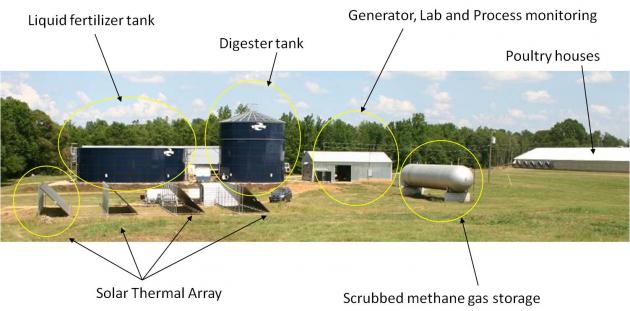
Comprehensive on-farm resource utilization and renewable energy generation at the farm scale are not new concepts. However, truly encompassing implementation of these ideals is lacking. Brinson Farms operates 10 commercial broiler houses. The farm generates heat for its houses using biomass boilers and litter anaerobic digestion to produce methane. Solar panels assist in heating process water for the boilers and digester. Biomass feedstock includes litter as well as municipal yard wastes. Liquid fertilizer is a product of the digester while residual solids are included in the farm’s composting operation. The operator has used a futuristic approach to not only attain energy independence for the farm, but also to comprehensively utilize byproducts of production and other local “wastes”, diverting them from local landfills. Considering the propane cost for a single winter flock has reached $66,000 and the annual electric bill may be $120,000, energy costs very much affect grower profitability. This approach decreases the uncertainty in energy costs. Brinson Farms provides a unique look into ensuring long-term farm sustainability in an environmentally friendly way and with a wide-ranging systems approach to management.
Purpose
The purpose of the renewable energy project was to implement an innovative, sustainable solution to manage poultry manure and other organic waste products using anaerobic digestion as well as to demonstrate the ability to effectively and economically reduce dependence on outside utilities.
What Did We Do?
Brinson Farms demonstrates comprehensive utilization of local resources that have historically been viewed as wastes. These organic materials (broiler litter, yard trimmings, storm damaged trees and waste vegetables) come from both the farm and the community. Broiler litter and waste vegetables are anaerobically digested to produce methane. The methane is then used in three ways: 1) to generate electricity for the farm; 2) in boilers to heat water used in the digestion process; and 3) in dual-fuel biomass boilers to heat water for heat exchange in the broiler houses when biomass sources are low. Two other significant products from the digester include liquid fertilizer (approximately 5-2-3) that is sold and residual solids that are incorporated into the farm’s composting facility. Solar panels assist in heating water for the biomass boilers and the digester. The simple payback period for the on-farm poultry litter digester system is approximately 5 years.
Brinson Farms anaerobic digester complex.
What Have We Learned?
Brinson Farms provides a unique system to ensure long-term farm sustainability in an environmentally beneficial manner. Attributes of the integrated system include: 1) bio-based energy production; 2) reduced utility costs; 3) comprehensive litter utilization; 4) no need to land apply poultry litter; 5) production of high quality, organic liquid fertilizer; 6) production of a marketable soil amendment (compost); and 7) diverting wastes from landfills. The farm/community interface is mutually advantageous. The farm uses yard trimmings and trees for energy and as a compost substrate; the community has a free repository to dispose of the biomass, where otherwise it would have to pay landfill fees.
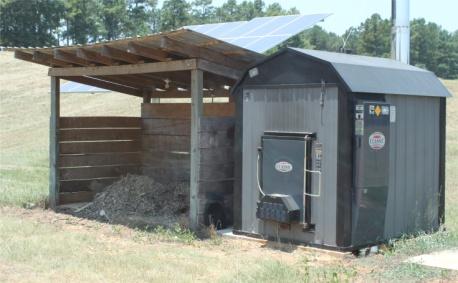
Biomass storage and boiler to heat broiler houses
Future Plans
Future plans include developing economic evaluations for each of the system components so that farmers can choose the renewable energy/value added process(es) that will best fit their local resources as well as short and long term financial plans.
Authors
Dana M. Miles, Chemical Engineer, USDA-ARS Genetics & Precision Agriculture Research Unit, Mississippi State, MS, dana.miles@ars.usda.gov
The assistance of John Logan and Jeff Breeden to effectively describe the Brinson system is greatly appreciated.
The authors are solely responsible for the content of these proceedings. The technical information does not necessarily reflect the official position of the sponsoring agencies or institutions represented by planning committee members, and inclusion and distribution herein does not constitute an endorsement of views expressed by the same. Printed materials included herein are not refereed publications. Citations should appear as follows. EXAMPLE: Authors. 2013. Title of presentation. Waste to Worth: Spreading Science and Solutions. Denver, CO. April 1-5, 2013. URL of this page. Accessed on: today’s date.
Proper management of animal mortalities has important implications for nutrient management, water quality, animal health, and farm/ranch family and public health. To best ensure human health and safety, reduce regulatory risks, and protect environmental resources, livestock producers should become familiar with best management practices (BMPs) for dealing with dead animals. Producers should also be aware of state laws related to proper disposal or processing of mortalities.
Mortality composting is an increasingly popular and viable alternative when compared to other disposal practices because of cost savings, bio-security benefits, and reduced environmental risks. Static mortality composting differs from traditional composting in both management intervals and carbon to nitrogen ratios. The objective of this workshop is to provide those who advise livestock producers with the knowledge, tools, and resources to develop a mortality management plan, with specific focus on the static composting option.
The Rocky Mountain based authors conducted demonstrated research, reviewed pertinent literature, studied USDA-NRCS standards, and documented mortality composting systems already in-use by regional producers.
Recording of the author’s presenting the workshop
Options for managing dead animals
Principles of mortality composting
Managing animal mortality compost piles
Economics of mortality composting
Curriculum Materials
Data from these activities provided a basis for the following tools:
Decision aid spreadsheet that evaluates the costs of mortality composting against other mortality disposal options (in English and Spanish),
How-to-manual on mortality composting in English and Spanish),
Video illustrating on-the-ground mortality composting
PowerPoint presentation explaining mortality composting principles, methods and resources (in English and Spanish).
Learning Objectives
This 90 minute in-service workshop will provide background and step-by-step considerations for mortality composting, with an emphasis on the practice in the semi-arid environments of the western United States. However, fundamentals of the workshop will apply to all climates. To the right, you will find recordings of the authors presenting the workshop using the slides from the curriculum materials.
Presenters
Thomas Bass, Livestock Environment Associate Specialist, Montana State University tmbass@montana.edu. Mr. Bass has been an Extension Specialist in the area of livestock and environmental management for 12 years. He has been involved in composting research and demonstrations for much of his career.
Jessica Davis, PhD, Colorado State University. Dr. Davis is an Extension Specialist and the director of the Institute for Livestock and the Environment, a diverse group of CSU faculty working together to solve problems at the interface of livestock production and environmental management. She is the principal investigator and originator of this SARE project.
John Deering, MS, Colorado State University. Mr. Deering, is a regional Extension Specialist in Eastern Colorado. He is an economist by training with an emphasis on agriculture and business management. He developed the economic tools and narratives associated with the products of this project.
Michael Fisher, MS, Colorado State Univeristy. Mr. Fisher is an area Extension Agent, with an emphasis in livestock production, meat science, range management, and overall ranch management. He is an important conduit between producers, other government agencies, and industry groups in north eastern Colorado.
Additional Information
This project was funded by the Western Region Sustainable Agriculture Research and Education (SARE) program.
The authors are solely responsible for the content of these proceedings. The technical information does not necessarily reflect the official position of the sponsoring agencies or institutions represented by planning committee members, and inclusion and distribution herein does not constitute an endorsement of views expressed by the same. Printed materials included herein are not refereed publications. Citations should appear as follows. EXAMPLE: Authors. 2013. Title of presentation. Waste to Worth: Spreading Science and Solutions. Denver, CO. April 1-5, 2013. URL of this page. Accessed on: today’s date.
To provide the best experiences, we use technologies like cookies to store and/or access device information. Consenting to these technologies will allow us to process data such as browsing behavior or unique IDs on this site. Not consenting or withdrawing consent, may adversely affect certain features and functions.
Functional
Always active
The technical storage or access is strictly necessary for the legitimate purpose of enabling the use of a specific service explicitly requested by the subscriber or user, or for the sole purpose of carrying out the transmission of a communication over an electronic communications network.
Preferences
The technical storage or access is necessary for the legitimate purpose of storing preferences that are not requested by the subscriber or user.
Statistics
The technical storage or access that is used exclusively for statistical purposes.The technical storage or access that is used exclusively for anonymous statistical purposes. Without a subpoena, voluntary compliance on the part of your Internet Service Provider, or additional records from a third party, information stored or retrieved for this purpose alone cannot usually be used to identify you.
Marketing
The technical storage or access is required to create user profiles to send advertising, or to track the user on a website or across several websites for similar marketing purposes.




 This study measured in situ relative soil N mineralization rates (flux) during three growing seasons of continuous no-till (2013 and 2014) corn in Carrington, ND. We applied fresh (FM) and composted beef feedlot manure (CM) only once in spring 2012 at N rates of 90, 180, and 240lbs/A as FM, and 90 and 180lbs as CM. These rates were applied based on the calculation that 50% of N from FM and 25% of N from CM, would be available the first year. Other treatments were urea at 90, 150, 180, and 240lbs N/A, plus a check at 0lbs/A. In 2013 and 2014 urea was applied to respective plots, based on soil test, to raise the N levels to the respective 2012 N levels. We used the randomized complete block design with four replicates. Three replicates were used to measure soil N (NO3- + NH4+) mineralization rates bi-monthly with Plant Root Simulator probes (PRS™), from the urea fertilized and manured plots at the 0, 90 and 180lb levels at 4-6 leaf growth stage. Four pairs of PRS™ probes were buried in the top 6 inches near corn roots and replaced every two weeks for four sampling dates. We measured yields, protein content, and N uptake.
 Yields were generally low in all three years of this study, well below the average for this region. Bi-monthly N mineralization was significantly higher as N increases with urea as N source during the early sampling dates (Figures 2 and 3) and subsequently declined to similar levels as the manure treatments. It is therefore possible that the plants benefited from higher early uptake of N from urea up to the early stages of peak corn N uptake but not enough to produce significantly higher yields than the manure treatments. Analysis of variance showed no significant treatment effects for yields in 2012 (α = 0.05) but grain protein differences were significant. These differences were observed only between the check and 180 lbs N in 2012. The highest mean grain yield was recorded with the 90 lbs N treatment where, the residual soil N at planting was just 33 lbs. The protein level was also significantly higher than the check and CM plot that received 180 lbs N in 2012, and with a soil residual N prior to 2013 planting, at 35 lbs. Each year, grain yields responded positively to N rates (applied as urea) and residual N levels from FM but not with CM. Since corn was grown for three continuous years, unsurprisingly yields declined with years of production since N was not applied to the FM and CM treatments after first application in year one. Similarly, yield decline was observed with urea over the three years but not as steep as the FM and CM treatments. The FM at 240 lbs N, and urea at 180 and 240 lbs treatments produced significantly higher grain protein than the check in 2012 (data not shown). Lower N mineralization and very likely, lower N availability was observed with the CM treatments especially at 180 lbs N, which consistently scored the lowest mean yield and protein in 2013 and 2014. Grain yields were consistently higher at 90 lbs N than 180 lbs N with the CM treatment.
  Summer droughts of 2012 and 2013 at this site and possibly, factors associated with continuous corn production (e.g. disease, temporal N immobilization) compounded the effects of urea treatments even though N uptake was consistently higher with urea. Total N taken up in corn grains from the FM and CM treatments increased with N rates but decreased with time (Table 1). From this study, corn grains took up more N from the plots treated with FM than the CM over the three-year period of the study. Subsequent changes in soil conditions such as moisture, N leaching, temperature, can sometimes limit the efficiency of inorganic fertilizer uses, and favoring low cost alternative uses such as manure especially if the prevailing conditions enhance N mineralization from manure or soil organic matter. Based on N input plus soil N status at the beginning of planting every year, corn N uptake efficiency was in the order: Check>FM>CM>Urea, with efficiency decreasing at higher N rates. The minimum proportion of grain N uptake by any treatment to the single highest N uptake for any urea-N treatment (considered as a reference) in a given year, was 42% for the check in 2013.