
Can Cover Crops Help Nutrient Management in Idaho Dairy Systems?

Purpose


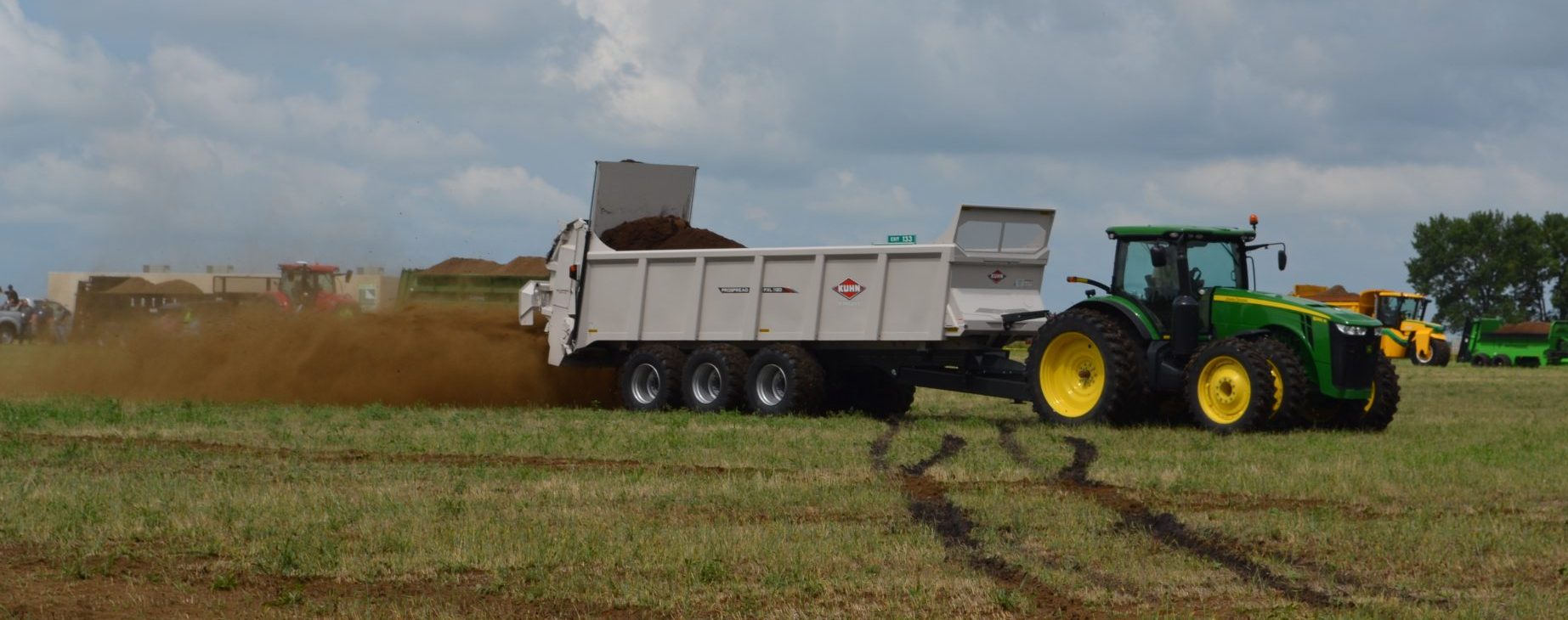
This research aims to determine the effectiveness of cover crops (CCs) to improving nutrient uptake and soil health in a corn silage-cover crop system. Nutrient accumulation in soils from years of dairy manure or compost applications has increased the level of soil nutrients, creating environmental concerns. The study tests the feasibility and performance of different management strategies using CCs to mine nutrients from agricultural soils and reduce the negative environmental impact of manure or compost application.

What Did We Do?

In one study, two CC mixes (low height or tall) were inter-seeded (dual cropping) with corn silage at two different dates, near the corn planting date and later in the vegetative development. Two post-harvesting management strategies were used by either keeping the CC during the next season or terminating the CC in the spring, before the next corn silage planting. The control had no CC, only the corn silage. In an additional study, a fall CC mix was planted after corn silage harvest (double cropping). Different management strategies were used, including harvesting the CC, simulated grazing, green manuring the CC, and control with no CC. Both studies received the same amount of dairy manure compost annually, plus synthetic fertilizers. All other parameters, including corn planting and harvesting times and irrigation, were the same for both studies and all treatments. Weed management was adjusted using mowing as a method on plots with CCs, and herbicide on plots with no CCs.

What Have We Learned?

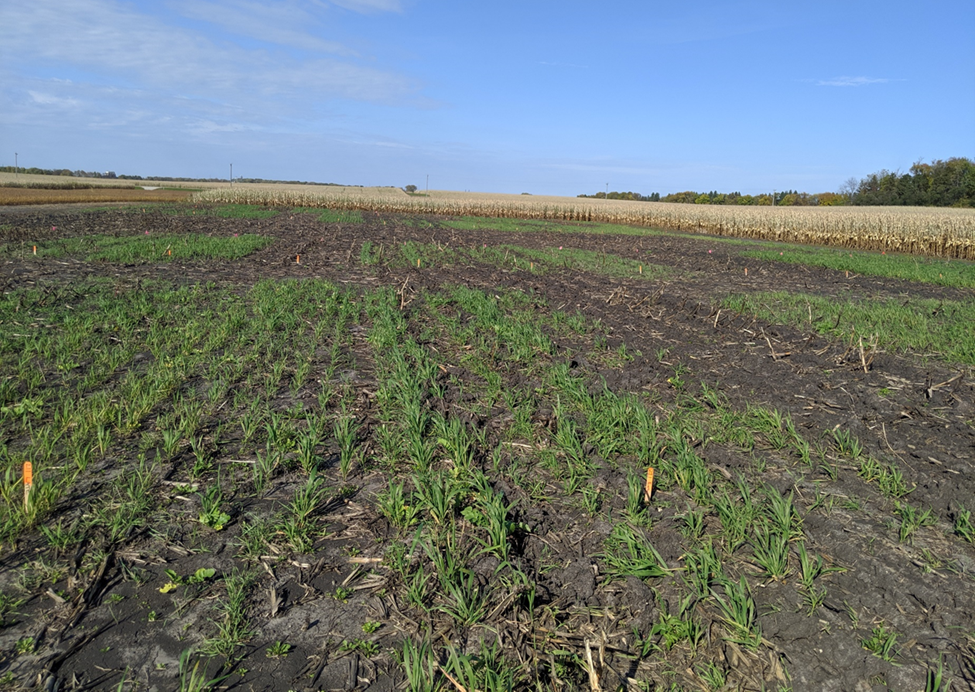
This study will continue for two more years. The first year of data collection was 2021. The inter-seeding (dual cropping) study results show very few significant differences in soil analysis comparing CC treatments. There were, however, statistically significant differences between some treatments and the control. This situation indicates that having an actively growing CC influences the soil nutrients and nutrient uptake compared to not having any CC when growing corn silage. The short CC mixes, either planted near the corn planting date or later during the corn vegetative development, tend to have the highest increase in soil OM, especially under reduced or no-till conditions, and reducing soil nitrates, ammonium, and total nitrogen. This can be explained by the better growth of the low mixes that continued growing after the corn silage harvest, compared with the high mixes that were harvested with the corn and rarely regrew after harvesting. CC establishment and growth was a challenge each year due to the corn silage shade. The low CC mix was the only one that was not terminated and continued to grow until after planting the corn silage the following spring. This treatment has proven challenging due to the aggressive CC regrowth and low growth of the corn with the CC competition, even when using strip tillage.

In most years, the previous season CC needed to be terminated to allow for the corn to grow and to reduce weed pressure before replanting the CC again. Soil phosphorous (P) did not show significant differences across treatments and control on the surface level. Phosphorus levels kept increasing during the study, indicating that the application rate far exceeded the crop uptake. In the case of nitrogen, even when CC showed increased nitrogen (N) uptake for all N species, nitrates have accumulated in soils, especially at lower depths, indicating leaching processes in all treatments and much more in the control (Figure 1). Cover crops can uptake some of the excess nitrogen, especially on the soil top layer, reducing the impact of N leaching (Figure 2). Under nutrient overapplication conditions, CCs that have not developed to their full potential cannot handle all the nutrients’ load, thus leaching can still occur. Overall, inter-seeding CC may have a positive impact on nutrient management when managed properly. This positive effect may be complex to quantify when comparing different CC practices with lower-than-ideal CC growth and under nutrient-overapplication conditions.

The second trial with double cropping with a single fall CC mix after harvesting the corn silage was more successful in most years in growing much more CC mass than the inter-seeding CC. The greatest differential was present only for a short period in spring before harvesting or terminating the CC for corn planting. Weed management during the corn growing season was simplified in the double (fall) cropping system. Results on the impact of fall CC and the different treatments compared to the control have not been fully analyzed.
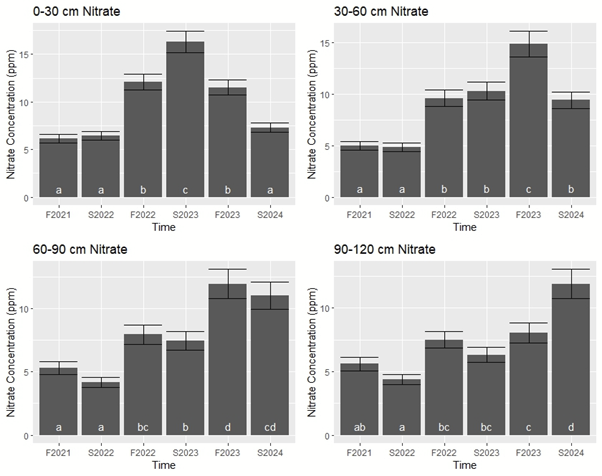
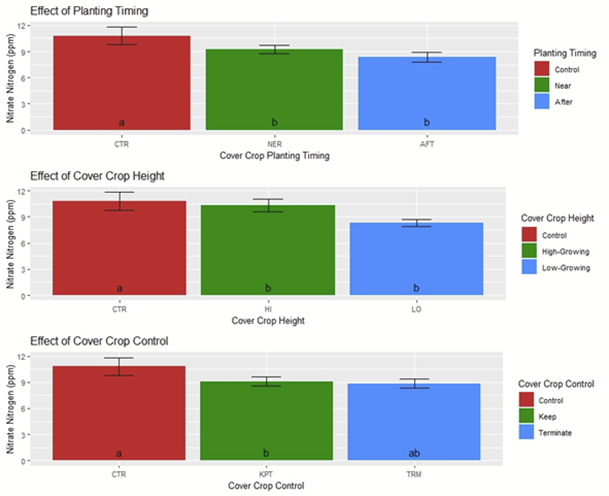
Figure 1. Soil NO3-N estimated marginal means at 0-30 cm, 30-60 cm, 60-90 cm, and 90-100 cm depths across all sampling points in an inter-seeding corn silage-cove crop system receiving annual applications of dairy compost and synthetic fertilizer.

Figure 2. Estimated marginal means of soil nitrate at 0-30 cm depth by CC planting timing, CC height, and CC vs control in an inter-seeding corn silage-cove crop system receiving annual applications of dairy compost and synthetic fertilizer.

Figure 2. Estimated marginal means of soil nitrate at 0-30 cm depth by CC planting timing, CC height, and CC vs control in an inter-seeding corn silage-cove crop system receiving annual applications of dairy compost and synthetic fertilizer.

Future Plans

There is additional data to analyze in both studies, including other soil chemical parameters, corn silage and CC yields, and feed quality. In the last year, moisture sensors were installed in some plots, measuring and recording soil moisture and temperature at different depths up to three feet. This moisture data at various depths could be correlated with nitrate values and other soil chemical parameters data to determine nutrient leaching, irrigation efficiency, and what role CC may play. Two additional seasons of data will be included to the dataset.

Authors

Presenting & corresponding author

Mario E. de Haro-Martí, Professor and Extension Educator, University of Idaho, mdeharo@uidaho.edu

Additional authors

Linda Schott, Assistant Professor, Extension Specialist, University of Idaho

Miguel Mena, MS Graduate Student, SWS Department, University of Idaho

Steven Hines, Professor and Extension Educator, University of Idaho

Anthony S. Simerlink, Assistant Professor and Extension Educator, University of Idaho

Clarence Robison, Research Support Scientist, University of Idaho

Additional Information

Idaho Sustainable Agriculture Initiative for Dairy website: https://www.uidahoisaid.com/

Acknowledgements  

The research team thanks the USDA-ARS Kimberly, ID personnel for their support with machinery and assistance with this project.

Funding for this project was provided by a USDA-NIFA Sustainable Agriculture Systems (SAS) grant #2020-69012-31871.


The authors are solely responsible for the content of these proceedings. The technical information does not necessarily reflect the official position of the sponsoring agencies or institutions represented by planning committee members, and inclusion and distribution herein does not constitute an endorsement of views expressed by the same. Printed materials included herein are not refereed publications. Citations should appear as follows. EXAMPLE: Authors. 2025. Title of presentation. Waste to Worth. Boise, ID. April 7-11, 2025. URL of this page. Accessed on: today’s date.
The Effect of Cover Crops on Nutrient Leaching

Purpose

An NRCS Conservation Innovation Grant (CIG) state-wide study examining soil health is underway.  Seventeen farms across the state of Utah are incorporating various soil health practices and are comparing them to their conventional practices (no soil health treatment).  Mini zero-tension lysimeters (12” diameter) were installed at two of the locations in northern Utah (Cache Valley), to collect leachate.  Cache Valley has a semi-arid climate with warm summers and cold winters.  The soil type on both farms is a Lewiston sandy loam.  Both of these farms apply manure and are incorporating cover crops as part of their soil health management.  The fields are irrigated.  Leachate is being collected to evaluate the impact of cover crops on nutrient leaching.  Other scientists are examining various soil health parameters, such as bulk density, soil carbon tests, water infiltration, etc.

Leachate is being collected bi-weekly throughout the growing season, and as late as possible into the winter.  Leachate samples are being analyzed for available N (ammonia and nitrate/nitrite), and dissolved phosphorus on a Lachat Auto-Analyzer using Methods 10-10701-2-A, 10-107-04-1-A, and 10-115-01-1-A, respectively.  Deep soil cores are also being collected to a depth of 5 feet and will be analyzed for nitrogen and phosphorus.

What Did We Do?

Mini zero-tension lysimeters were installed in the spring of 2023.  In year 1, both farms (GS and JC) planted corn with a cover crop (rye, clover, vetch, brassica mix) being interseeded at ~ the V5 stage.  Due to the short growing season, cover crop establishment early in the season, before canopy cover, is needed to get adequate cover crop growth in the fall.  In year 2, the GS Farm began transitioning to alfalfa.  Oats were planted in the spring and terminated for a late summer/early fall alfalfa planting.  Three-way grass will be interseeded into alfalfa in the spring of 2025 for the soil health treatment.  In year 2, the JC Farm missed the window for getting the cover crop interseeded into the corn crop.  There was no soil health treatment in effect for the 2024 growing season on the JC Farm.

Leachate is being collected bi-weekly throughout the growing season, and as late as possible in the winter.  Leachate samples are being analyzed for available N (ammonia and nitrate/nitrite), and dissolved phosphorus on a Lachat Auto-Analyzer using Methods 10-10701-2-A, 10-107-04-1-A, and 10-115-01-1-A, respectively.  Deep soil cores are also being collected to a depth of 5 feet and will be analyzed for nitrogen and phosphorus.

What Have We Learned?

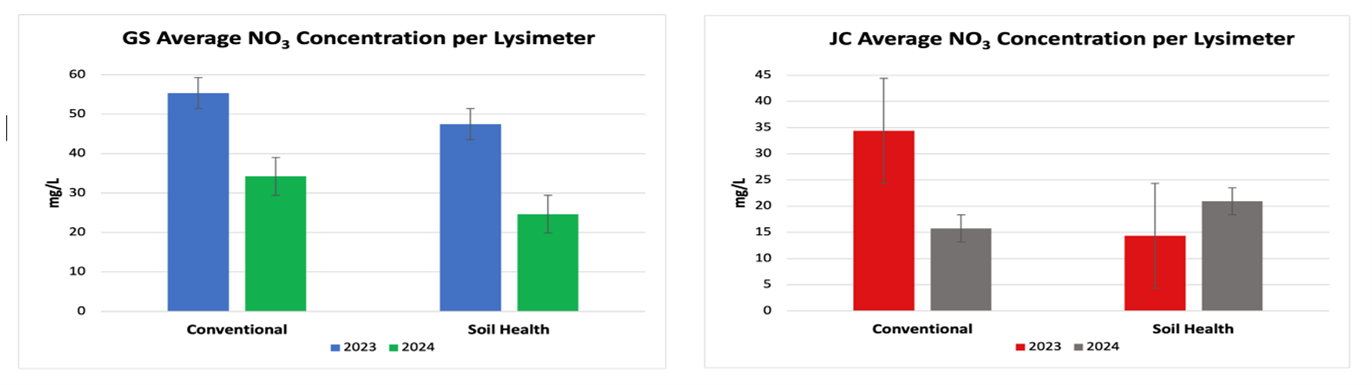
On the GS Farm, the leachate from the soil health treatment had, on average, a lower nitrate concentration.  There was also less leachate produced, and less total nitrate going past the soil root zone.   On the JC Farm in 2023, the soil health treatment also produced leachate with a lower nitrate concentration than their conventional treatment.  There was also less total leachate produced and less total nitrate loss when cover crops were interseeded into the corn in 2023.  Those results disappeared in 2024 when a cover crop was not planted.  Even with the cover crop, the leachate (on average) exceeded the drinking water standard for nitrate concentration.  The application of manure in the spring likely contributed to this loss.

Future Plans

This study will continue for three more years.  The goal is to verify and demonstrate practices that improve soil health and minimize environmental impacts.

Authors

Presenting & Corresponding author

Rhonda Miller, Professor, Utah State University, rhonda.miller@usu.edu

Additional authors

Katie Hewitt, Graduate Student, Utah State University; Bruce Miller, Professor, Utah State University

Acknowledgements

Funding provided by NRCS CIG Grant “Utah Soil Health Partnership On-Farm Trials” – Agreement Number NR223A750013G009

The authors are solely responsible for the content of these proceedings. The technical information does not necessarily reflect the official position of the sponsoring agencies or institutions represented by planning committee members, and inclusion and distribution herein does not constitute an endorsement of views expressed by the same. Printed materials included herein are not refereed publications. Citations should appear as follows. EXAMPLE: Authors. 2025. Title of presentation. Waste to Worth. Boise, ID. April 7-11, 2025. URL of this page. Accessed on: today’s date.

Optimizing stoichiometry in Cover Crops to Boost Soil Health and Enhance Carbon Sequestration

Purpose

Increasing the quantity of carbon (C) inputs is a pathway to build soil C stores. One way to achieve this is using cover crop mixtures which can increase the amount and types of root exudates, supporting greater microbial activity and biomass. However, few studies use stoichiometry i.e., C:Nitrogen (N) ratios (the amount of C in relation to the amount of N present) to select cover crop mixes. Our major objective is to understand plant-soil feedback in the context of the legacy effects of cover crop stoichiometry on soil health, C-sequestration, and crop yields. We hypothesized that cover crops with a lower C:N ratio will increase nitrogen availability for the next crop cycle and increase C-sequestration.

What Did We Do?

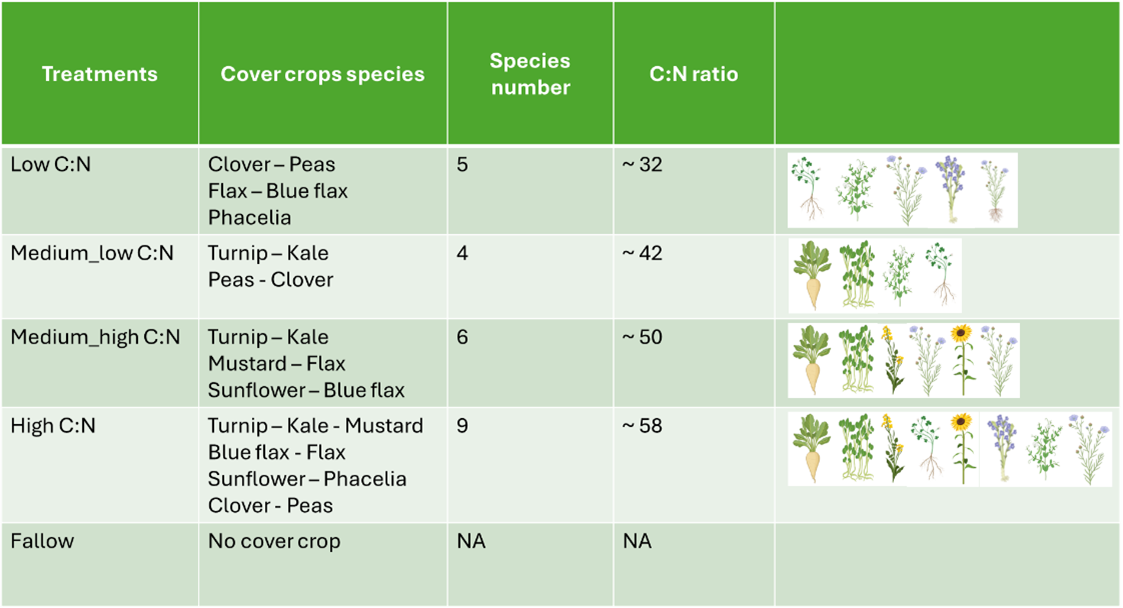
We are conducting a multi-year, random-block field experiment comparing cover crop mixtures with low, medium-low, medium-high, and high C:N ratios (Table 1), and a fallow control (n=5). We are also interested in the effect of cover crop termination (herbicide vs. roller-crimper) on subsequent barley cash crop. The experiment was established in Southern Idaho, at the Kimberly Research and Extension Center. Soil samples were taken at the start of the experiment in fall 2023, spring, and fall 2024 to compare cover crop effects on soil health.

Table 1. Treatments implemented in this study

“Soil health is the continued capacity of soil to function as a vital living ecosystem that sustains plants, animals and humans, and connects agricultural and soil science to policy, stakeholder needs and sustainable supply-chain management” (Lehmann, et al. 2020). Moreover, natural or anthropogenic actions can change soil properties rapidly. It makes these properties be considered as good soil health indicators, that can be physical, chemical and biological. The first two have a slow response compared to the microbiological and biochemical properties.

The soil health properties evaluated in this research are:

*Physical properties: water holding capacity (the amount of water that a soil can retain).

*Chemical properties: pH, soil organic matter (decayed material that originated from a living organism), nutrient analysis (NH4-N, NO3-N, PO4, major ways that nutrients can be taken by plants).

*Biological properties:  enzyme activities involved in the main biogeochemical cycles mineralizing organic matter (α- and β- glucosidase, cellobiosidase, acid and alkaline phosphatase, leucine aminopeptidase, N-acetyl-glycosaminidase), substrate induce respiration (response of microbial respiration to the addition of a nutrient as glucose), carbon mineralization (process for capturing, storing, and utilizing CO2 to synthesize other products). Also, we included agronomic parameters such as yield, crop biomass, full and empty grain.

Statistical analysis was conducted using R software version 4.4.0. Evaluating these attributes allow to verify the soil status and apply better management to get a desire outcome, e.g. increase organic matter in soil.

What Have We Learned?

Overall, the results in the first year of the study showed that medium-high C:N ratio treatment has the potential to improve soil health (Fig. 1), while herbicide termination performed better in comparison to roller crimper termination treatment.

The preliminary results show among all treatments an increase in moisture and pH with a decrease in water holding capacity during the spring compared with the fall seasons compared to fallow treatment. Active microbial biomass (i.e., substrate-induced respiration) did not differ between treatments for fall 2023 and spring 2024; however, carbon and nitrogen mineralization was higher before the treatments were established. Additionally, phosphorous did not vary across time.

Fig. 1. Potential nitrification rates in soil samples under cultivation with different C:N stoichiometry of cover crops. Lowercase letters above columns indicate differences at P < 0.05

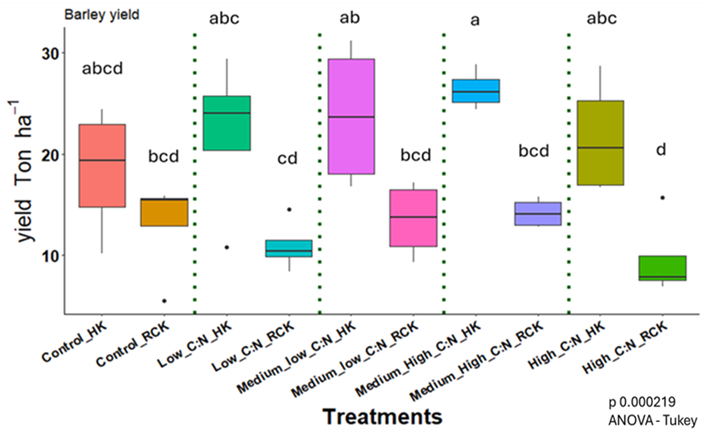
Agronomic parameters showed that herbicide termination method gave more barley height, dry aboveground biomass, seed counts, grain weight, total full grain, and barley yield (Fig. 2). On the other hand, the roller crimper termination method increased the amount of empty grain and the presence of weeds in the field.

Fig. 2. Barley yield in 2024 following different cover crops based on their C:N stoichiometry. Lowercase letters above columns indicate differences at P < 0.05

Future Plans

To understand if the environmental condition has a positive or negative influence in soil health parameters, we replicate it at the Plant Materials Center (NRCS, USDA, Pullman, WA) where the environmental conditions are distinct from those in Southern Idaho. Also, we plan to conduct two more years of the experiment. We expect that the information obtained at the end of the study can provide fundamental information to the research community and guide farmers in the selection of cover crops and the termination methods for them in different environmental conditions.

Authors

Presenting authors

Vanessa Otero Jiménez, Postdoctoral Fellow, University of Idaho

Linda Schott, Assistant Professor and Extension Specialist, University of Idaho

Michael Strickland, Research Associated Professor, University of Idaho

Corresponding author

Vanessa Otero Jiménez, Postdoctoral Fellow, Soil and Water System Department, University of Idaho, Vanessao@uidaho.edu

Additional author

Steven Lee, Plant Materials Center, Natural Resources Conservation Service, United States Department of Agriculture

Acknowledgements

This work is supported by grant no. 2021-09118-1027664 from the USDA National Institute of Food and Agriculture. Any opinions, findings, conclusions, or recommendations expressed in this publication are those of the author(s) and do not necessarily reflect the view of the U.S. Department of Agriculture.

The authors are solely responsible for the content of these proceedings. The technical information does not necessarily reflect the official position of the sponsoring agencies or institutions represented by planning committee members, and inclusion and distribution herein does not constitute an endorsement of views expressed by the same. Printed materials included herein are not refereed publications. Citations should appear as follows. EXAMPLE: Authors. 2025. Title of presentation. Waste to Worth. Boise, ID. April 711, 2025. URL of this page. Accessed on: today’s date.
Potential soil health improvement through the integration of cover crops and manure in the upper Midwest

Purpose

Oftentimes fall manure application is associated with significant offsite transport of nitrogen and phosphorus into nearby bodies of water and the atmosphere. Mechanisms of losses include leaching, runoff, sediment transport, and volatilization processes. This is becoming more common as there has been a trend of increased wet springs that create difficult planting conditions. This prolonged period without an active root system leaves more time for nutrient loss from fall-applied manure to occur.

A strategy to offset nutrient losses in the fall and early spring is to plant a cover crop. The uptake of nutrients during this time in the field, which would otherwise be left fallow, allows for nutrients to be stored in the tissue of the cover crops, minimizing nutrient loss risk. Upon terminating the cover crops, the decomposing residues can supply nutrients to the succeeding row-crop. However, cover crop adoption is low in the upper Midwest US stemming from a short cover crop growing season due to the cold climate. This is especially the case for crops utilizing manure. A strategy to expand the cover crop growing season may be to interseed a cover crop into a maturing row-crop prior to harvest. Previous studies investigating the integration of manure and cover crops have seeded the cover crop after manure application. We wanted to measure the impacts of first planting a cover crop then applying manure once the cover crop has had ample time to get established. This may help expand the cover crop growing season and potentially limit the offsite transfer of pollutants to our water and air.

What Did We Do?

A small plot study was started in fall 2019 at the University of Minnesota West Central Research and Outreach Center near Morris, MN. We tested the effect of nitrogen source and cover crops on soil health, nutrient cycling, and agronomic responses using a randomized complete block design with split plots.

Cover crop mixtures of cereal rye and annual ryegrass were interseeded near corn’s fifth leaf collar (V5) growth stage, physiological maturity (R5 to R6 growth stage), or drilled after corn harvest. Dairy manure was sweep-injected to minimize soil disturbance in early and late fall, when soil temperatures were above and below 10°C (50°F), respectively. Non-manured plots received urea in the spring prior to corn planting. Urea applied plots (no manure) with no cover crops served as the control. Soil samples were taken throughout the cover crop and row-crop growing season from the 0-15, 15-30, and 30-60 cm (0-6, 6-12, and 12-24 in) soil layers. Cover crop biomass samples were taken in the late fall prior to the first frost event and prior to cover crop termination in the spring.

What Have We Learned?

Sweep injection is a reliable method to apply liquid manure to a field with an established stand of cover crops with minimal noticeable damage to the cover crops in the spring (Figure 1). Planting cover crops as soon as possible ensures more biomass is produced; planting after harvest consistently had lower cover crop yield than interseeding. Spring cover crop yield, right before termination, was highest when planted near physiological maturity [110 kg ha-1 (98 lb ac-1)] compared to drilling after harvest [87 kg ha-1 (78 lb ac-1)]. Nutrient source had a significant effect on silage yield. Manure, either applied in the early or late fall, had greater silage yield [58.5 and 58.7 Mg ha-1 (26.1 and 26.2 ton ac-1), respectively] than spring applied urea [53.6 Mg ha-1 (23.9 ton ac-1)]. Plots with cover crops interseeded at V5 had greater silage yield [59.5 Mg ha-1 (26.5 ton ac-1)] than all other treatments [54-56 Mg ha-1 (24-25 ton ac-1)] except no cover crops [57.8 Mg ha-1 (25.8 ton ac-1)].

Figure 1. Cover crops planted prior to late manure application. Photo was taken in the spring at cover crop termination.

Future Plans

Soil samples collected throughout the study are currently being analyzed for nutrient content and other soil health parameters. Results from this study will be used to develop best management practices for integrating cover crops and liquid injected manure in the upper Midwest.

Authors

Manuel J. Sabbagh, Graduate Research Fellow, University of Minnesota

Corresponding author email address

sabba018@umn.edu

Additional authors

Melissa L. Wilson, Assistant Professor, University of Minnesota; Paulo H. Pagliari, Associate Professor, University of Minnesota

Additional Information

Twitter: @mannyandmanure @manureprof

Lab website: https://wilsonlab.cfans.umn.edu/

Acknowledgements

This work is supported by the Conservation Innovation Grants program at the Natural Resources Conservation Service of the USDA, the Minnesota Corn Research and Promotion Council, and the Foundation for Food and Agriculture Research.

The Value of Cover Crops in Dairy Production Systems


Proceedings Home W2W Home w2w17 logo

Purpose           

The purpose of this research was to identify trade-offs among soil erosion, soil health, and crop production when using cover crops with manure application.Continuous corn silage cropping systems in Wisconsin leads to overall removal of N from the system unless manure is applied. However, this cropping system allows for the planting of cover crops or a winter silage crop post harvest, which may lead to increases in soil N over time. Cover crops are valuable in these corn-silage based rotations as they also provide ground cover after harvest and can reduce N leaching after fall manure application. 

What did we do? 

The cropping system investigated was a continuous corn silage system with fall manure application. The experiment was a randomized complete block split-plot design where the whole plot treatments were no cover, rye as a cover (chemically terminated) or as a forage (harvested) crop and the split plot treatment was depth.The objective of this study was to determine the effect of cover cropping on potentially mineralizable nitrogen (PMN) over a growing season using a 7-day anaerobic incubation (2015 and 2016 season), a long-term aerobic incubation (2015 season), and N uptake by corn. 

What have we learned? 

There were no statistical differences in short-term PMN among cover crop treatments at any time point in 2015 or 2016. However, the cover crop treatments led to a yield reduction compared to no cover crop use in both years. Thus, our study showed significant effects of cover cropping on agronomic factors like corn yield and N uptake but these same differences were not measurable in the soil N.

Future Plans    

This work will continue to evaluate the long-term effects of cover crop use on soil health.

Corresponding author, title, and affiliation       

Matthew Ruark, University of Wisconsin-Madison

Corresponding author email 

mdruark@wisc.edu

Other authors   

Jaimie West, Kavya Khrishnan, Kevin Shelley

Additional information          

ruarklab.soils.wisc.edu

extension.soils.wisc.edu

Acknowledgements

This material is based upon work that is supported by the National Institute of Food and Agriculture, U.S. Department of Agriculture, under award number 2013-68002-20525. Any opinions, findings, conclusions or recommendations expressed in this publication are those of the author(s) and do not necessarily reflect the view of the U.S. Department of Agriculture.

The authors are solely responsible for the content of these proceedings. The technical information does not necessarily reflect the official position of the sponsoring agencies or institutions represented by planning committee members, and inclusion and distribution herein does not constitute an endorsement of views expressed by the same. Printed materials included herein are not refereed publications. Citations should appear as follows. EXAMPLE: Authors. 2017. Title of presentation. Waste to Worth: Spreading Science and Solutions. Cary, NC. April 18-21, 2017. URL of this page. Accessed on: today’s date.

Manure & Soil Health: Roundtables to Advance our Understanding of the State of the Science

Farmers and ranchers are becoming increasingly aware of the importance of soil quality/health to the productivity and sustainability of their agricultural system. Research and field observations have demonstrated that carefully managed manure applications can contribute to improved soil quality with limited environmental and social risks. However, a comprehensive assemblage of outputs and conclusions from research studies, field trials, soil labs databases, and other sources has never been developed. Therefore, the purpose of the initiative, Manure & Soil Health: Understanding and Advancing the State of the Science, is to assemble current knowledge on this topic, make it available to those influencing manure and land management decisions, and use it to inform and facilitate future research and service needs. The intent of the roundtables is to improve our understanding of: current knowledge, critical and emerging issues for which there are knowledge gaps, and information needs of farmers and their advisors.

What’s A Roundtable?

The four, hour-long roundtables consisted of a panel discussion with experts who were asked to summarize their current understanding of topics. Each panel also included a practitioner who shared perspectives on critical information needs of farmers and advisors and field experiences relative to use of manure. Panels were moderated to encourage interaction with audience. Roundtable participants were invited to ask questions of panelists and share expertise and experience.

When Were The Roundtables Held?

Date/Time Topic Panel Experts

February 9, 2017

Manure and Soil Health Testing Bianca Moebius-Clune
Donna Brandt
Russell Dresbach
Geoff Ruth

February 16, 2017

Manure and Soil Biology Rhae Drijber
Michele Soupir
Dr. Jonathan Lundgren

February 23, 2017

Manure and Soil Erosion, Runoff, and Losses Nathan Nelson
John Gilley
Mike Kucera
Andy Scholting

March 9, 2017

Manure and Cover Crops Tim Harrigan
Barry Fisher
Heidi Johnson
Sarah Carlson

How Farmers and Ranchers Are Adapting to Local Weather Extremes

Most farmers and ranchers are acutely aware of weather and how it factors into their risk management planing. Climatologists have indicated that the trend toward more extreme events and greater extremes is going to continue. This has many implications for animal agriculture producers. The farmers featured in this Waste to Worth panel all provided their perspectives on adapting to extreme events through diversity, building resilience, and keeping an eye toward long-term profitability.

Diversity, Resilience and Manure Management with Cover Crops

A former ag teacher, Keith Berns understands that you need to be open to multiple ways of achieving a goal. His desire to build resilience into his farm system led to a business selling cover crop seeds that emphasize diversity. He outlines several scenarios where he uses cover crops on his farm and also several ways his seed customers utilize diverse cover crop and annual forage mixes. High stocking densities naturally incorporate manure, and residue helps conserve and hold valuable moisture during/after extreme rainfall events. [Nebraska/Kansas]

Perspectives On a Changing Climate

Dr. Sandra Matheson, DVM (retired) raises grass-fed beef cattle on her northwestern ranch. Weather extremes have created more dust, mud, and she has seen an increase in disease and health issues with cattle. She utilizes the decision-making process, holistic management, and planned grazing to create a system with the greatest amount of adaptability and resilience for her environment and its potential extremes. Her goals converge around building the soil. [Washington]

Grazing Dairy Finds Plants that Work in Low Water Environments

Michael DeSmet watched his cows when they entered a new paddock and noticed something surprising – they liked weeds. Upon further investigation, he found out that the weeds they were selecting were high-protein, palatable, and could survive on very small amounts of precipitation. Michael was no stranger to making changes; he had already converted the family dairy operation into a grazing-based system selling milk into niche markets. He continues to examine forage options for his pastures that allow the farm to utilize limited water, extend the grazing season, and improve soil quality. [New Mexico]

The authors are solely responsible for the content of these proceedings. The technical information does not necessarily reflect the official position of the sponsoring agencies or institutions represented by planning committee members, and inclusion and distribution herein does not constitute an endorsement of views expressed by the same. Printed materials included herein are not refereed publications. Citations should appear as follows. EXAMPLE: Authors. 2015. Title of presentation. Waste to Worth: Spreading Science and Solutions. Seattle, WA. March 31-April 3, 2015. URL of this page. Accessed on: today’s date.
Manure and Cover Crops

In the Manure and Cover Crops roundtable, our goal was to discover whether manure and cover crops have complementary benefits related to soil quality. We debated if certain fields will produce more complementary benefits than others and whether timing of application and sampling affects these benefits. Finally, we’ll discussed whether we can derive an economic value for manure beyond its nutrient value. Field experiences and observations related to the value of manure as well as what farmers still need related to soil building with manure were discussed. This dialogue was the final of a four part series discussing the current state of our knowledge relative to manure’s impact on soil health.

If you have difficulties please see our webcast troubleshooting page. If you need to download a copy of a segment, submit a request.

Tim Harrigan, Michigan State University

Barry Fisher, NRCS Regional Soil Health Coordinator

Heidi Johnson, University of Wisconsin

Sarah Carlson, Practical Farmers of Iowa

Discussion

Other Manure and Soil Health (MaSH) Information

Minnesota Watershed Nitrogen Reduction Planning Tool

Abstract

Using the nitrogen reduction planning model involves three steps.  The first step is to select a watershed, enter hypothetical adoption rates for each BMP, and compare the effectiveness and cost of the individual BMPs.  The second step is to compare suites of the BMPs that would attain any given reduction in the N load at minimum cost.  The third step is to “drill down” to the details and assumptions behind the models of effectiveness and costs of any particular BMP and make any adjustments to reflect your particular situation.

Why Develop a Nitrogen Reduction Planning Tool?

A watershed-level nitrogen reduction planning tool (Excel spreadsheet) compares the effectiveness and cost of nine different “best management practices” (BMPs), alone and in combination, for reducing N loads leaving a Minnesota watershed.  The Minnesota Pollution Control Agency is developing a new set of standards for nitrate nitrogen in surface waters based on aquatic life toxicity.  The tool was developed to assist the agency and local resource managers to better understand the feasibility and cost of various “best management practices” to reduce N loading from Minnesota cropland.

What Did We Do?

The BMPs are:  reducing corn N fertilizer rates to extension recommended rates, changing fertilizer application timing, seeding cover crops, installing tile line bioreactors or controlled drainage, planting riparian buffers, or converting some corn and soybean acres to a perennial crop. The spreadsheet does its analysis for a watershed that the user selects.  However, the N loadings and crop economic calculations are done first by agroecoregion before aggregating the results into the watershed of interest.  Agroecoregions are units having relatively homogeneous climate, soil and landscapes, and land use/land cover.  The spreadsheet includes area data for the fifteen high-N HUC8 watersheds that make up roughly the southern half of the state, along with the state as a whole.  When the user selects a watershed for analysis, formulas retrieve results as an area-weighted average of the agroecoregions making up that watershed.  Each of the fifteen HUC8 watersheds includes between four and nine agroecoregions.

The N loadings from each agroecoregion are calculated in three categories:  drainage tile discharges, leaching from cropland, and runoff.  Nitrogen loading amounts modeled are “edge-of-field” measures that do not account for denitrification losses that occur beyond the edge of field as groundwater travels towards and is discharged to streams.  The BMPs consider only loading from cropland, but loading from forests and impervious urban and suburban land is also included in the totals.

What Have We Learned?

The EPA’s Science Advisory Board has said that a 45% reduction in both N and P is needed in the Mississippi River to reduce the size of the Gulf of Mexico hypoxic zone.  This tool suggests that the BMPs considered are not likely to achieve much more than half that reduction even at high adoption rates.  Reducing N fertilizer rates on corn down to extension-recommended levels and shifting from fall to spring or sidedressed applications tend to be among the cheaper BMPs to adopt, but the results vary across watersheds and weather scenarios.  Various other factors such as crop and fertilizer prices also affect the results, hence the need for a computer tool.

Future Plans

The tool and results of a larger project will be reviewed during the first half of 2013.  The tool may then play a role in implementation of the new N state standards in the state.

Authors

William F. Lazarus, Professor and Extension Economist, University of Minnesota wlazarus@umn.edu

Geoff Kramer, Research Fellow, Department of Biosystems and Bioproducts Engineering, University of Minnesota

David J. Mulla, Professor, Department of Soil, Water, and Climate, University of Minnesota

David Wall, Senior Hydrologist, Watershed Division, Minnesota Pollution Control Agency

Additional Information

The latest version of the tool and an overview paper are available at the author’s project page.

Davenport, M. A., and B. Olson. “Nitrogen Use and Determinants of Best Management Practices:  A Study of Rush River and Elm Creek Agricultural Producers Final Report, submitted to the Minnesota Pollution Control Agency  as part of a comprehensive report on nitrogen in Minnesota Surface Waters.” Department of Forest Resources, University of Minnesota, St. Paul, Minnesota, September 2012.

Fabrizzi, K., and D. Mulla. “Effectiveness of Best Management Practices for Reductions in Nitrate Losses to Surface Waters In Midwestern U.S. Agriculture.  Report submitted to the Minnesota Pollution Control Agency  as part of a comprehensive report on nitrogen in Minnesota Surface Waters.” September 2012.

Lazarus, W. F., et al. “Watershed Nitrogen Reduction Planning Tool (NBMP.xlsm) for Comparing the Economics of Practices to Reduce Watershed Nitrogen Loads.” December 11, 2012, http://wlazarus.cfans.umn.edu/.

Mulla, D. J., et al. “Nonpoint Source Nitrogen Loading, Sources and Pathways for Minnesota Surface Waters.  Report submitted to the Minnesota Pollution Control Agency  as part of a comprehensive report on nitrogen in Minnesota Surface Waters.” Department of Soil, Water & Climate, University of Minnesota, September 2012.

Acknowledgements

Partial support for this project was provided by the Minnesota Legislature.

The authors are solely responsible for the content of these proceedings. The technical information does not necessarily reflect the official position of the sponsoring agencies or institutions represented by planning committee members, and inclusion and distribution herein does not constitute an endorsement of views expressed by the same. Printed materials included herein are not refereed publications. Citations should appear as follows. EXAMPLE: Authors. 2013. Title of presentation. Waste to Worth: Spreading Science and Solutions. Denver, CO. April 1-5, 2013. URL of this page. Accessed on: today’s date.