
Bridging the Gap: Communicating Sustainability Research to Southern Idaho Dairy Farmers

Purpose

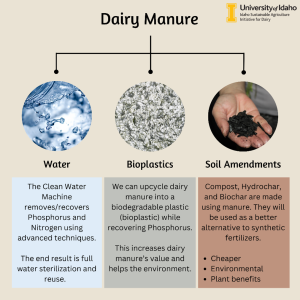
This is an example of an informative social media post that shows the ISAID Grant’s research with dairy manure.

Dairy farming is at the heart of Southern Idaho’s economy and way of life. As pressures mount around environmental impact, consumer expectations, and long-term viability, sustainability has become essential to the future of dairy. While research in this area has made significant strides, many farmers struggle to access and apply this information in a way that makes sense for their operations. Scientific studies are often dense, packed with technical jargon, and filled with data that doesn’t always connect to the everyday realities of farming.
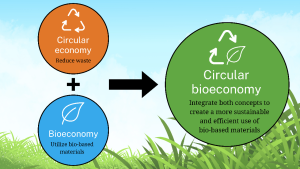
This graphic explains what circular bioeconomy is, a term used often in sustainability research.

This project aims to close the information gap by using research from the Idaho Sustainable Agriculture Initiative for Dairy (ISAID) Grant to make sustainability science more accessible and actionable. Our goal is to translate research into tools and messages that help farmers adopt practical, sustainable practices that benefit their operations and the broader agricultural landscape.

What Did We Do?

To better understand the communication barriers farmers face, we conducted a literature review focusing on agricultural communication and knowledge transfer, particularly in dairy sustainability. Our review included studies on the communication preferences of dairy producers, social media engagement in agriculture, and the role of trusted advisors such as veterinarians and extension specialists in knowledge dissemination. Key findings from this review highlighted the importance of concise, visually engaging content and digital platforms like Facebook and YouTube for reaching dairy farmers. We also examined studies on farmers’ motivations and perceived barriers to adopting sustainable practices, which emphasized the need for messages that align with farmers’ economic and operational priorities.
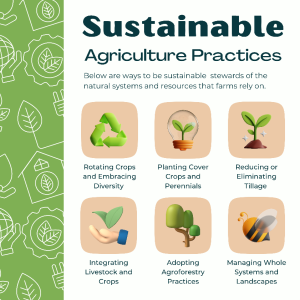
This graphic gives farmers suggestions for how to make their land more sustainable.

Additionally, research on sustainable practice adoption highlights that behavioral change plays a critical role in whether farmers choose to implement new sustainability measures. Concepts from the social science of behavior change, such as the Diffusion of Innovation (DOI) theory and the Reasoned Action Approach (RAA), help explain how farmers evaluate new practices. Key factors include perceived relative advantage, compatibility with existing practices, complexity, trialability, observability, and riskiness. These insights suggest that effective communication strategies should focus not just on providing information but also on addressing these concerns to increase adoption likelihood. Studies also show that demographics, land tenure, and financial constraints play significant roles in whether a farmer adopts new practices, reinforcing the need for tailored communication that takes these contextual factors into account.
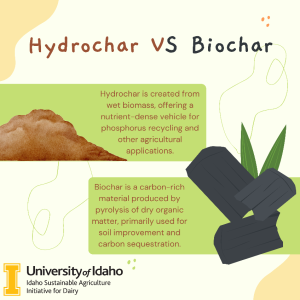
Hydrochar and Biochar are often mentioned in the ISAID Grant’s research. This graphic explains what each one is and how it is used.

To implement these strategies, we built a website that serves as a hub for sustainability research, providing easy access to summaries, case studies, and media. Additionally, we launched The Clever Cow Podcast, where industry experts, researchers, and farmers discuss sustainability, innovation, and best practices. A structured social media strategy further expands our outreach, allowing us to engage farmers through Facebook, Instagram, and YouTube. Recognizing the role of selective exposure and confirmation bias in how farmers consume information, we have designed our content to align with existing beliefs while also introducing new sustainability concepts in an engaging and relatable manner. To ensure our approach remains farmer-focused, we will conduct focus groups and surveys this summer to gather direct feedback, refine our outreach efforts, and develop communication strategies that effectively bridge the gap between researchers and the dairy community.

What Have We Learned?

Initial research and discussions suggest that farmers value concise, visually engaging content over lengthy technical reports. Social media and digital platforms, especially Facebook and YouTube, have emerged as preferred tools for accessing sustainability information. Farmers have also emphasized the importance of seeing practical examples of sustainability in action, such as case studies of dairy producers who have successfully incorporated sustainable practices. Additionally, partnerships with trusted organizations like local extension offices strengthen credibility and ensure that information is regionally relevant.
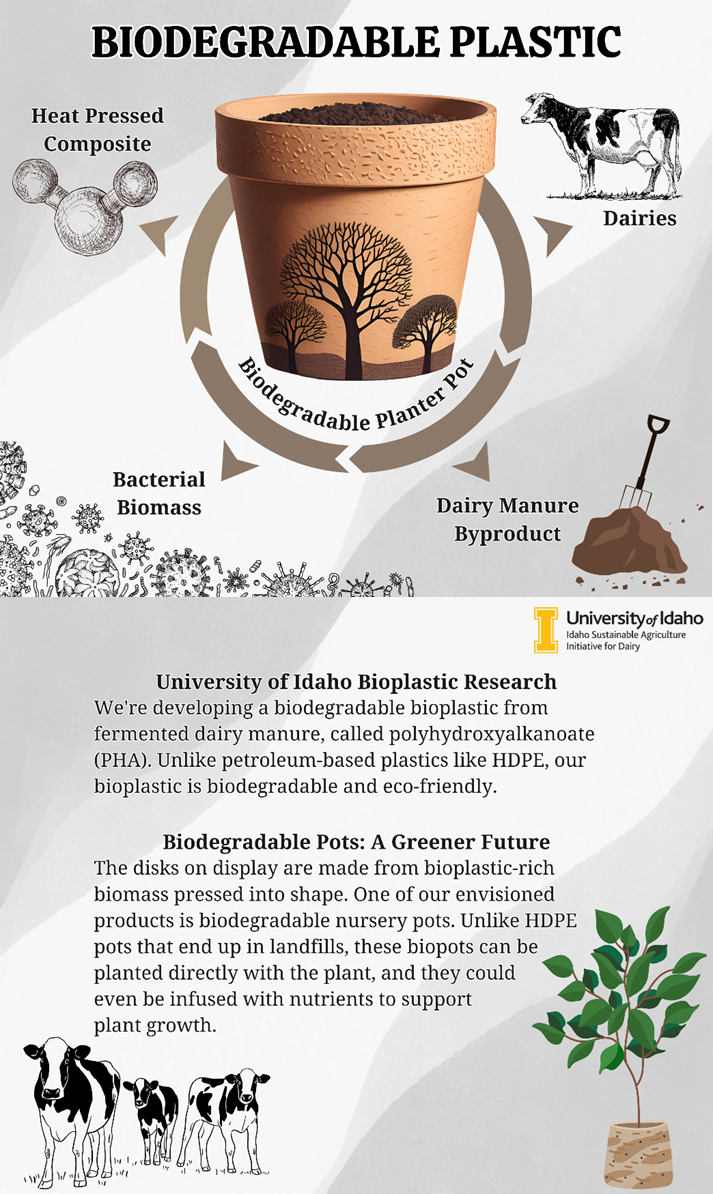
This informational card was used to share information with dairy producers about biodegradable plastic made from dairy manure.

Our research also highlights the need to consider cognitive biases in message design. Confirmation bias and selective exposure influence the way farmers engage with agricultural information, meaning that they are more likely to interact with content that aligns with their existing beliefs. By strategically framing sustainability messages in ways that resonate with their values—such as economic benefits, operational efficiency, and long-term resilience—we can increase engagement and encourage the adoption of sustainable practices. These findings highlight the importance of tailoring communication strategies to respect farmers’ time while making complex sustainability research easier to understand and apply.

Future Plans

In summer 2025, we will conduct two focus groups (12 farmers each) and distribute a statewide survey targeting over 100 Southern Idaho dairy producers. These efforts will gather direct input on preferred communication channels, trusted sources of information, and barriers to engaging with sustainability research. Using this feedback, we will refine and test outreach tools such as short-form videos, podcast episodes, social media graphics, and research-backed infographics. The insights gained will inform the development of a flexible, scalable communication model that can be customized for other agricultural communities across the U.S.

Authors

Presenting author

Savanah Nunes Carpenter, M.S. Graduate Student, Media and Communications Director, ISAID Grant, University of Idaho

Corresponding author

Dr. Mireille Chahine, Acting Head and Professor, Department of Animal Veterinary and Food Sciences, University of Idaho, mchahine@uidaho.edu

Additional Information

To learn more, visit the ISAID Grant website: www.uidahoisaid.com

Follow us on social media:

This video explains my research in four minutes: https://youtu.be/_3JWGDQgf0Y?si=Hpu233CQXFb1Dk8R


Acknowledgements

This research was funded by the USDA Sustainable Agricultural Systems Initiative through the Idaho Sustainable Agriculture Initiative for Dairy (ISAID) grant (Award No. 2020-69012-31871).

Special thanks to the ISAID Grant research team, the University of Idaho Extension, and the Southern Idaho dairy farmers who will participate in the upcoming focus groups and surveys.


The authors are solely responsible for the content of these proceedings. The technical information does not necessarily reflect the official position of the sponsoring agencies or institutions represented by planning committee members, and inclusion and distribution herein does not constitute an endorsement of views expressed by the same. Printed materials included herein are not refereed publications. Citations should appear as follows. EXAMPLE: Authors. 2025. Title of presentation. Waste to Worth. Boise, ID. April 7-11, 2025. URL of this page. Accessed on: today’s date.

Economical Anaerobic Digestion of CAFO Animal Waste


Purpose

The application of manure on croplands is increasingly under regulatory scrutiny, especially from impaired watersheds. The challenge facing many small farms is to find cost-effective and innovative solutions for manure reuse whilst responding to environmental, regulatory and public concerns. One option is to install an anaerobic digester (AD) in which microorganisms break down biodegradable material in the absence of oxygen. However, not all farmers are financially able to install an AD but do need the AD’s benefits to keep their livestock operation sustainable. This paper discusses a novel, cost effective and patented manure treatment system which can reduce the volume of manure for field application (see Figure 1).Earthmentor N2RTS Schematic

What did we do?

The EarthMentor® Natural Nutrient Reclamation and Treatment System (EMS), uses a combination of innovative sand separation technology (if necessary) and anaerobic treatment to concentrate manure nutrients into solid phases and treat approximately 70% of manure liquids into a product which can be applied to active cropland as low-nutrient liquid using irrigation methods. The primary economic advantage of using an EMS to treat livestock manure prior to land application is lower total manure disposal costs. The total manure handling costs are reduced because up to 75 % of the original manure volume can be handled as low-nutrient value irrigation quality liquid in bulk instead of hauling it by tanker for land application. This fact alone reduces total manure handling costs by over 50 %. Other tangible benefits of using an EMS include low odor, minimized environmental risks, and greater flexibility in proper land application of the treated manure. It can be installed at farms with as few as 250 cows. Depending on farm size, operators can realize a return on investment in as little as three years. Compared to a traditional AD installed to generate biogas the EMS is simple to operate, requires less energy, requires no chemicals or substrates to treat the waste, and reduces manure disposal costs.

The EMS involves six major steps: 1) collection of raw manure and transport to the processing center, 2) sand bedding is separated from the manure stream, 3) coarse manure components are removed from the liquid manure stream, 4) additional settling of the fine manure solids and sand particles occurs in a settling basin to a concentration of 8 to 10 percent solids, 5) AD treatment of the liquid manure and dissolved solids occurs in anaerobic treatment lagoon (ATL), and 6) The ATL effluent is stored in a Storage Pond for eventual discharge to active growing crops; additional natural treatment of the liquid manure occurs while in the Storage Pond.

All settling basins and ATL lagoon must meet state guidelines, such as Natural Resource Conservation Service technical guidelines or state requirements for waste storage facilities.

The ALT of the EMS system has a smaller footprint compared to traditional ALTs (primarily use in the south and western United States) because the majority of the nutrient-rich semi-solids are removed from the manure before discharge to the ATL. Due to this major operational change the EMS is economical to install and operate even in the northern climates of the United States where many of the top producing dairy states are located. While many facilities separate solids before land application, the EMS is different because is adds the AD step which converts the manure into a low-nutrient liquid capable of irrigation-style land disposal.  The method of solid separation can be as simple as a sloped screen followed by additional gravity separation as described in Step 4 above. The EMS ATL must be sized to account for reduced biodegradation during the colder weather. The EMS has successfully operated at multiple swine facilities and several Midwestern dairy farms.

If there is sufficient land near the farmstead, the EMS can be installed at existing dairies with minimum difficulty since the treatment system works equally well with multiple bedding materials and varying manure collection methods. Another benefit of the EMS is that is allows application on fields that may be high in phosphorus since much of the phosphorus will be stored in the accumulating ATL sludge. For dairies bedding with sand, a patented sand removal system can be provided that relies on a decanting method of sand separation. Once the sand is removed, it can be reused in the barn. 

What have we learned?

Typical Cost Savings for Manure Application Using EMS
Component
Disposal Method
Conventional Manure Handling
EarthMentor® Treatment System Handling
Liquid Manure


Land Application 100% $0.02/gallon 0% $0
Separated Solids Land Application 0% $0 10% $0.016/gallon
($4/ton equiv.)
Heavy Slurry Land Application 0% $0 20% $0.02/gallon
Treated Wastewater Center Pivot over Crop 0% $0 70% $0.002/gallon
Combined Cost   100% $0.02/gallon 100% $0.007/gallon
(weighted average of all components)

Using financial data from 2010 for a 2,000-cow Michigan dairy, it was estimated that the cost to handle manure using an EMS is reduced from $0.02/gallon to $0.007/gallon. The cost saving using the EMS is based on the assumption that the average dairy cow produces nearly 25 gallons/day of manure, including wastewater but excludes bedding since farms used different types and volumes of bedding for their dry and lactating cows. Based on the financial analysis, installation of an EMS benefits the farm’s economic sustainability while providing other benefits including reduced environment risk associated with manure land application.

Far beyond the obvious cost savings associated with the EMS installation, a livestock producer will realize many other benefits. A partial list is provided below:

  • This practical and manageable manure treatment system requires little or no additional farm labor commitments yet greatly reduces overhead expenditures to keep the farm sustainable and competitive,
  • All manure is treated prior to land application (environmentally sound),
  • The more consistent high solids slurry can be precisely applied to fields with the greatest need as opposed to the highly variable manure nutrient concentrations recovered from a traditional manure pond,
  • Minimizes the environmental risks (ecologically viable) and farm nuisance potential,
  • The window of opportunity for manure application is extended to over 200 days instead of being limited to spring and fall applications for typical liquid manure,
  • Can provide a safe unlimited recycled bedding source for cattle, if so desired, by the dairy owner,
  • Permits farmer to follow BMPs for soil conservation,
  • Permits farmer to follow timing, rate, source, and place for fertilizer/crop nutrient applications,
  • Benefits the non-farm neighbors and community through reduced nuisance odors, and
  • Continues using the farm’s manure as a soil amendment for crop production, the most efficient use known.

Future Plans

The immediate future plans for EMS is to target small livestock producers, especially those within impaired watersheds.  Since many ADs need a substrate material imported from outside the farm to be economically sustainable, the EMS is ideal for those farms that want to be good neighbors with reduced farm air emissions, need greater convenience in manure management, and desire to maximize the real cash value of their manure.

As the EMS adapts well to any bedding material, by investing time and dedicating property for the ATL any size operation can begin to treat their manure prior to land application and reduce their overall cost for manure management.

In addition to small farms we envision four possible adaptations of EMS; these examples are provided to show the transferability of this technology to farms desiring various outcomes from an EMS:

  1. Installation of an Energy-Generating AD – if a farm wishes to generate energy using a traditional AD, it would be installed prior to the EMS system whereby the AD digestate discharges into the settling ponds. Since the residence time of a traditional AD is measured in days, there is a great deal of additional treatment that can occur so that the cost savings for land application can still be realized.
  2. Use manure solids for other uses besides land application – if the livestock producer decides to bed their cattle on manure solids or to compost the manure solids for sale off-farm to landscapers or bag and sell direction from the farm then the solids from the SS can be further treated with a screw press or roller then composting by various means.
  3. Greenhouse gas capture and sale of carbon credits – a geosynthetic liner cover can be added to the ATL and all captured gases burned through a flare. However, it should be noted that by removing a significant amount of high organic solids during the initial fiber solids separation step, much less organic material is subject to organic degradation into methane gas.
  4. Greenhouse gas capture and burning of the gases – to generate electricity or heat water (typically for on-farm use or export to an adjoining business, such as a greenhouse).

One future issue to resolve includes educating state governments on the benefits of installing an EMS, especially for those farms that may be under a Consent Order or other regulatory actions or those farms that may need to implement a manure treatment system to mitigate odors from the livestock operation.  The duration to install an EMS and get it operational is much shorter than the lead time to design and install a traditional AD so the EMS can help when farms need to implement changes quickly.  A second issue to overcome is to properly educate producers on the benefits of EMS and differences between traditional ADs.  Swine, beef, and dairy producers who already have a farm irrigation system will have a lower capital investment to begin achieving the reduced manure management costs referenced above.

Author

Matthew J. Germane, P.E., President at Germane Environmental Consulting, LLC MGermane@GECEnvironmental.net

Additional information

https://www.gecenvironmental.com, Envirolytic Technologies, LLC

Acknowledgements

Acknowledgements to Envirolytic Technologies, LLC, Greenville, OH manufacturer of the Earthmentor® N2RTS system and RAM Technologies, LLC, manufacturer of the sand separation equipment used in the EMS for their assistance in providing the laboratory data used in this paper.

The authors are solely responsible for the content of these proceedings. The technical information does not necessarily reflect the official position of the sponsoring agencies or institutions represented by planning committee members, and inclusion and distribution herein does not constitute an endorsement of views expressed by the same. Printed materials included herein are not refereed publications. Citations should appear as follows. EXAMPLE: Authors. 2015. Title of presentation. Waste to Worth: Spreading Science and Solutions. Seattle, WA. March 31-April 3, 2015. URL of this page. Accessed on: today’s date.