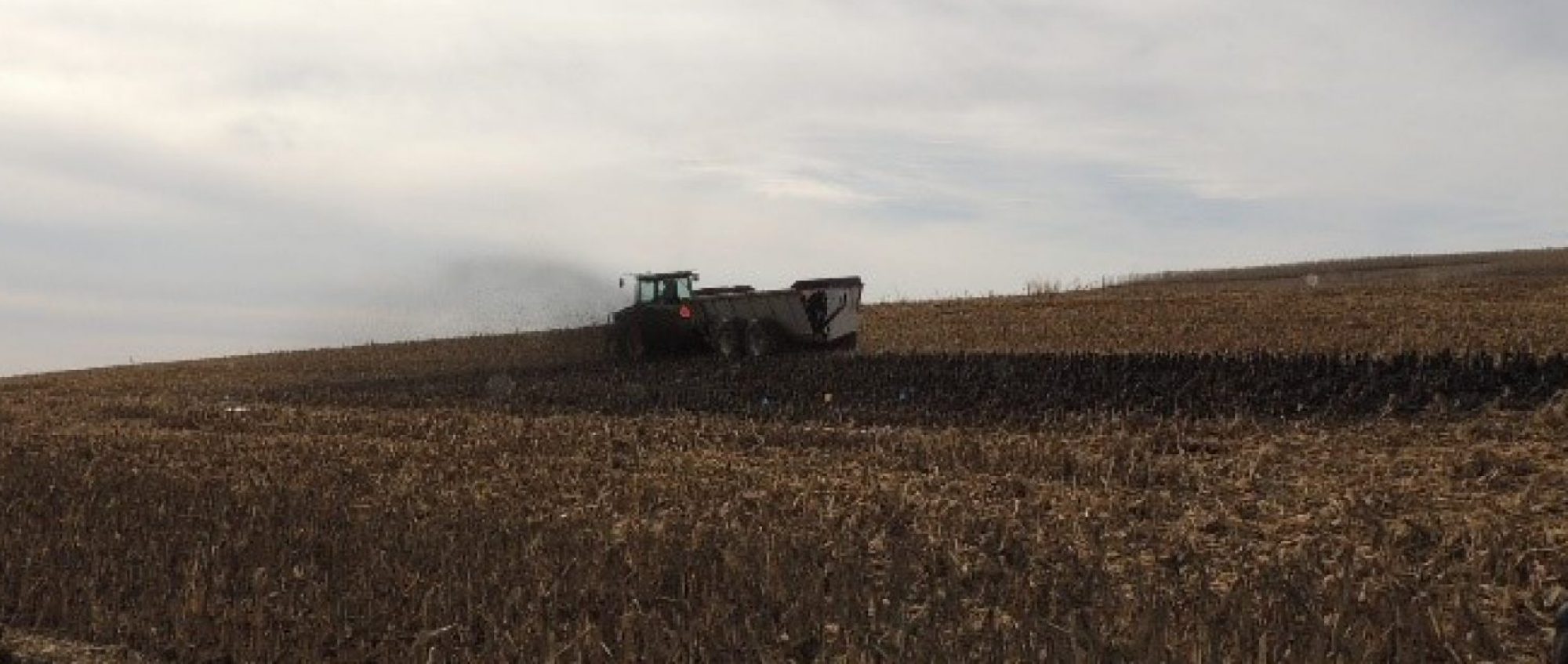

Modeling water movement in beef cattle bedded manure pack


Why Examine Moisture Content of a Manure Pack?

Bedded manure is a valuable fertilizer source because it contains essential macronutrients (nitrogen (N), phosphorus (P), and potassium (K)) for crop production. Previous research with beef cattle bedded manure packs demonstrated that water-soluble macronutrients accumulated toward the bottom of the packs with water movement. Thus, predicting water movement in bedded manure helps to estimate nutrient composition throughout the bedded pack. This work presents a development of a process-based model of vertical water movement that considers percolation and diffusion as the main processes of water and vapor movements in bedded manure packs. Evaporation from the top zone to the atmosphere was considered a process of convective mass transfer. The model predicts the change in moisture content of the different zones in the bedded manure and assists in estimating nutrient composition.
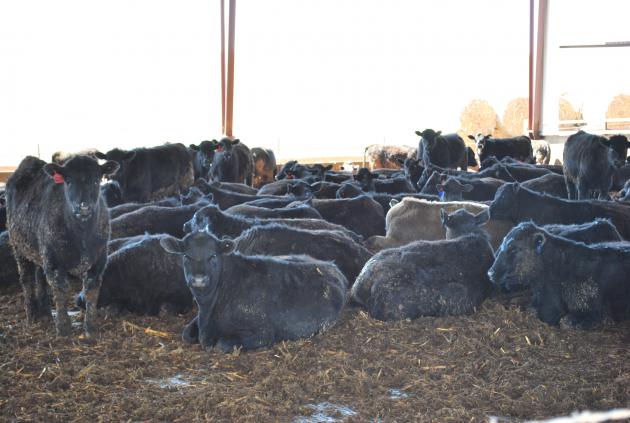
cattle loafing on a bed pack in their barnWhy Study Moisture Movement In a Bedded Pack?

Beef cattle producers that raise cattle in complete confinement, such as mono-slope or hoop barns, may apply bedding material to manage moisture and improve the environment for the animals. Some producers let the manure and bedding accumulate to form a bedded manure pack, which is compacted by cattle activity. The bedded manure contains valuable nitrogen (N), phosphorus (P), and potassium (K) that are essential for crop production and soil sustainability. Depending on temperature, bedding material, and storage time of the bedded pack, the concentration of water-soluble N, P and K compounds may increase in the bottom of the bedded pack where water accumulates. Thus, understanding and predicting water movements within the bedded manure is important to estimate fertilizer N-P-K content and distribution in the bedded manure.

What did we do?

The processes considered in this process-based model include evaporation, percolation, diffusion of water vapor and diffusion of liquid water for vertical water movement. The model by Seng et al. (2012) for static compost piles and a modified version of the Integrated Farm System Model (not yet released) by Rotz et al. (2014) for bedded manure were reviewed and compared. Ultimately, the model needs to be adaptable to estimate the water content of the pack over time for different environmental conditions, bedding materials, and storage times at varying depths within the bedded pack. Data for model calibration and validation were gained through laboratory-scale experiments by Ayadi et al. (in review).

What have we learned?

Percolation and liquid water diffusion are considered the main processes for vertical water movement between layers in the bedded manure. Evaporation occurs from the surface of the top zone of the bedded pack. The rates of percolation and liquid water diffusion are depth-specific and their rates therefore vary. The modified version of the Integrated Farm System Model (IFSM) is more adaptable to data gained through laboratory-scale experiments. Overall, IFSM is more applicable to producer-available data and thus more applicable to predict water movement for bedded manure packs in real-life conditions.

Future Plans

After predicting water movements in the bedded manure, the model will be used to estimate N, P and K movement through the different zones of the bedded manure pack as well as gaseous emission (ammonia and nitrous oxide) from the bedded pack surface. The final overall model will be a calculator that estimates fertilizer N-P-K content and value and ammonia and nitrous oxide emissions of the bedded manure packs from confined beef cattle facilities with respect to temperature, bedding material, storage time and depth of the bedded pack.

Authors

Erin Cortus, Ph. D., Assistant Professor, South Dakota State University, Brookings, SD

Ferouz Ayadi, M.S., Graduate Student, South Dakota State University, Brookings, SD; Mindy Spiehs, Ph. D., Animal Scientist, USDA‐ARS Meat Animal Research Center, Clay Center, NE

Additional information

References

Ayadi, F. Y., M. J. Spiehs, E. L. Cortus, and D. N. Miller. In review. Physical, chemical and biological properties of different depths and ages of simulated beef bedded manure packs. Transactions of the ASABE.

Rotz, C.A., Corson, M.S., Chianese, D.S., Montes, F., Hafner, S.D., Bonifacio, H.F., Coiner, C.U., 2013a.

The Integrated Farm System Model Reference Manual, Version 4.1. USDA-Agricultural Research Service. Avaialble at: http://www.ars.usda.gov/sp2UserFiles/Place/80700500/Reference%20Manual.pdf

Seng, B., H. Kaneko, K. Hirayama, and K. Katayama-Hirayama. 2012. Development of water movement model as a module of moisture content simulation in static pile composting. Environmental Technology 33(15):1685-1694.

Acknowledgements

The support and assistance of Henry F. Bonifacio with the simulation of water movements in the bedded pack manure is very much appreciated. This project and all associated reports and support materials were supported by the Sustainable Agriculture Research and Education (SARE) program, which is funded by the U.S. Department of Agriculture- National Institute of Food and Agriculture (USDA-NIFA). Any opinions, findings, conclusions or recommendations expressed within do not necessarily reflect the view of the SARE program or the U.S. Department of Agriculture. USDA is an equal opportunity provider and employer. The mention of trade names or commercial products in this publication is solely for the purpose of providing specific information and does not imply recommendation or endorsement by the USDA.

The authors are solely responsible for the content of these proceedings. The technical information does not necessarily reflect the official position of the sponsoring agencies or institutions represented by planning committee members, and inclusion and distribution herein does not constitute an endorsement of views expressed by the same. Printed materials included herein are not refereed publications. Citations should appear as follows. EXAMPLE: Authors. 2015. Title of presentation. Waste to Worth: Spreading Science and Solutions. Seattle, WA. March 31-April 3, 2015. URL of this page. Accessed on: today’s date.

The Role of Computer Models in Environmental Phosphorus Management

Waste to Worth: Spreading science and solutions logoWaste to Worth home | More proceedings….

Why Model Agricultural Phosphorus?

Computer models are excellent ways to integrate years of scientific research into decision tools that producers and policy makers can use to reduce the environmental impact of agricultural phosphorus. Models are playing more important roles in efforts to manage phosphorus at the farm and watershed scales, so it is increasingly important to make sure models are well developed to meet the needs of users, give reliable predictions, and are consistently updated to keep pace with scientific knowledge.

What Did We Do?

Our research over the past 10 years has concentrated on developing scientifically sound, reliable models that can be used to better manage agricultural phosphorus. This includes developing state-of-the-art models for soil phosphorus cycling and loss to the environment in surface runoff and leaching from soils, manures, and fertilizers. We have also concentrated on making sure models of different complexity, from daily processed-based models to annual empirical models, are based on the same principles and give similar predictions so there are a variety of model choices available to meet user needs.

What Have We Learned?

It is certainly possible to develop reliable, scientifically sound, phosphorus management models, as our research success demonstrates. The best model development requires interdisciplinary collaborations and excellent communication between experimentalists, model developers, and model users. Such a framework of interconnected experimentation and model development should symbiotically advance the science of agricultural P and environmental protection beyond the point that the two proceeding independently can achieve.

Future Plans

Model development research continues to make sure that available models are kept up to date with scientific knowledge and meet the needs of users concerning ease of use and data requirements.

Authors

Peter Vadas, Dairy Systems Scientist, USDA-ARS Dairy Forage Research Center,  peter.vadas@ars.usda.gov

Additional Information

More information can be found at: http://ars.usda.gov/Services/docs.htm?docid=21763


The authors are solely responsible for the content of these proceedings. The technical information does not necessarily reflect the official position of the sponsoring agencies or institutions represented by planning committee members, and inclusion and distribution herein does not constitute an endorsement of views expressed by the same. Printed materials included herein are not refereed publications. Citations should appear as follows. EXAMPLE: Authors. 2013. Title of presentation. Waste to Worth: Spreading Science and Solutions. Denver, CO. April 1-5, 2013. URL of this page. Accessed on: today’s date.

Process for Recovery of Phosphorus from Solid Manure

Waste to Worth: Spreading science and solutions logoWaste to Worth home | More proceedings….

Why Study Phosphorus Recovery?

Land application of manure in regions with intense confined livestock and poultry production is an environmental concern when land is limiting because it promotes soil phosphorus (P) surplus and potential pollution of water resources. A net accumulation of soil P results from the disproportion between lower nitrogen (N) and P ratio (N:P) in animal manure and the higher N:P ratio in harvested crops. Although manure can be moved off the farm, its transportation becomes less economical with increasing distances from the source. Thus, management alternatives to land application are needed to resolve agronomic P imbalances for more effective recycling of manure P.

Litter washed solids residue – Low P content

What Did We Do?

A treatment process, called “quick wash”, was developed for extraction and recovery of P from poultry litter and animal manure solids. In the quick wash process, P is selectively extracted from solid manure or poultry litter by using mineral or organic acid solutions. Following, P is recovered by addition of liquid lime and an organic poly-electrolyte to the liquid extract to form a calcium-containing P precipitate. The quick wash process generates two products: 1) washed solid residue, and 2) concentrated recovered P material.

What Have We Learned?

Recovered concentrated P material

The quick wash process selectively removes up to 80 % of the phosphorus from manure solids while leaving most of the nitrogen in the washed litter residue. Consequently, the washed solid residue has a more balanced N:P ratio for crop production and environmentally safe for land application. The concentrated  P recovered materials contained more than 90% of its phosphorus in plant available form. The use of recovered P can provide a recycled P source for use as crop fertilizer while minimizing manure P losses into the environment from confined animal production.

Future Plans

USDA granted an exclusive license of the invention to Renewable Nutrients, LLC (Pinehurst, NC); a centralized plant for treating poultry litter is planned to be built and operated by Renewable Nutrients in the Mid-Atlantic region.

Authors

Ariel A. Szogi, Research Soil Scientist, USDA-ARS Coastal Plains Soil, Water, and Plant Research Center,  Florence, SC. ariel.szogi@ars.usda.gov

Ariel A. Szogi, Matias B. Vanotti, Patrick G. Hunt – USDA-ARS Coastal Plains Soil, Water, and Plant Rsearch Center,  Florence, SC.

Additional Information

https://www.ars.usda.gov/is/pr/2008/080229.htm

https://www.frontiersin.org/articles/10.3389/fsufs.2018.00037/full

Szogi, A.A., Vanotti, M.B., Hunt, P.G., 2008. Process for removing and recovering phosphorus from animal waste. U.S. Patent and Trademark Office Application Serial No. 12/026,346.

Szogi, A.A., Vanotti, M.B., and Hunt, P.G. 2008. Phosphorus recovery from poultry litter. Trans. ASABE 51(5):1727-1734.

Szogi, A.A. and Vanotti, M.B., 2009. Prospects for phosphorus recovery from poultry litter. Bioresour. Technol. 100(22):5461-5465.

Szogi, A.A., Bauer, P.J., and Vanotti, M.B. Fertilizer effectiveness of phosphorus recovered from broiler litter. Agron. J. 102(2):723-727. 2010.

Acknowledgements

This work is part of USDA-ARS National Program 214: Agricultural and Industrial Byproducts; ARS Project 6657-13630-005-00D “Innovative Bioresource Management Technologies for Enhanced Environmental Quality and Value Optimization.”

The authors are solely responsible for the content of these proceedings. The technical information does not necessarily reflect the official position of the sponsoring agencies or institutions represented by planning committee members, and inclusion and distribution herein does not constitute an endorsement of views expressed by the same. Printed materials included herein are not refereed publications. Citations should appear as follows. EXAMPLE: Authors. 2013. Title of presentation. Waste to Worth: Spreading Science and Solutions. Denver, CO. April 1-5, 2013. URL of this page. Accessed on: today’s date.

Use of Filters in Drainage Control Structures to Reduce the Risk Associated with Manure Application on Tile-Drained Fields

Waste to Worth: Spreading science and solutions logoWaste to Worth home | More proceedings….

Abstract

In livestock producing areas, animal manure is often applied to cropland to enhance soil fertility. Guidelines have been developed for manure application on fields underlain by subsurface (tile) drainage systems. Some of these guidelines, such as avoiding manure application if rain is predicted and not applying manure over a flowing tile, though effective, involve some level of risk. We believe that the level of risk can be reduced by filtering contaminants from the water leaving the drains. The control structures recommended for use with drainage systems underlying fields to which manure is applied, provide ready-made receptacles for filters. In this report we discuss the development and testing of a filter to remove contaminants from lagoon effluent.

Why Study Filters for Drainage Water?

The purpose of this project is to develop an economically feasible solution to capturing sediment bound nutrient loss from agricultural land as well as prevent herbicides, pesticides, heavy metals, fertilizers and other contaminants from polluting the receiving waters of tile drained systems. In the event of a spill, these filters will presumably act as a barrier to capture pollutants in an attempt to prevent environmental degradation as well as fines to farmers.

What Did We Do?

We developed an activated carbon filter and tested it in our lab at the University of Illinois at Urbana-Champaign and in a controlled field setting in order to test the filters ability to meet physical parameters like allowing average tile flow rates through without backup and the effectiveness of the filter in improving water quality.

What Have We Learned?

We have learned that designing for agriculture is much more intensive than in a controlled setting and from that challenge, the project has helped us establish better research and development skills.

Check Out These Programs & Research About Tile Drainage

Swine Manure Timing & Subsurface Drainage

Tile Drainage Field Day

New Technologies for Drainage Water Management

Role of Drainage Depth and Intensity on Nutrient Loss

Future Plans

We plan to continue with alternative filter prototypes and continue testing so we have a product that is scientifically proven and farmers will want to use.

Authors

Stephanie Herbstritt, Graduate Research Assistant, Department of Agricultural and Biological Engineering, University of Illinois at Urbana-Champaign, Annie Kwedar, Undergraduate, Department of Agricultural and Biological Engineering, University of Illinois at Urbana-Champaign

*The author can be contacted at: herbstr2@illinois.edu

Additional Information

For more information on using filters in subsurface tile drained systems, go to the January-February 2013 edition of the Illinois Land Improvement Contractors Of America’s newsletters which can be found at: https://www.illica.net/newsletters

Acknowledgements

Dr. Richard Cooke, Associate Professor, Department of Agricultural and Biological Engineering, University of Illinois at Urbana-Champaign

Julie Honegger, Undergraduate, Department of Agricultural and Biological Engineering, University of Illinois at Urbana-Champaign


The authors are solely responsible for the content of these proceedings. The technical information does not necessarily reflect the official position of the sponsoring agencies or institutions represented by planning committee members, and inclusion and distribution herein does not constitute an endorsement of views expressed by the same. Printed materials included herein are not refereed publications. Citations should appear as follows. EXAMPLE: Authors. 2013. Title of presentation. Waste to Worth: Spreading Science and Solutions. Denver, CO. April 1-5, 2013. URL of this page. Accessed on: today’s date.