
Risk Mapping of Potential Groundwater Contamination from Swine Carcass Leachate Using HYDRUS-1D and GIS

Purpose

The on-farm disposal of swine carcasses poses a potential risk to groundwater quality due to the generation of leachate with nitrate compounds (Koh et al., 2019). This study aims to evaluate the vertical movement of nitrate nitrogen from leachate produced during decomposition of swine carcasses in Nebraska soil types by integrating HYDRUS-1D modeling with GIS-based spatial analysis.

What Did We Do?

Leachate from six on-farm mortality disposal units was gathered during a year-long field study. A soil column study was conducted using the leachate from the field study to evaluate contaminant fate and transport through two common Nebraska soil types – a sandy clay loam and a silty clay.

HYDRUS-1D Model Calibration and Simulation. The model was calibrated using laboratory soil column data; no field-scale observations were used for validation. The objective was to parameterize the model based on controlled experimental conditions and use these simulations to inform spatial risk assessments.

Soil Hydraulic and Solute Transport Parameters. The van Genuchten-Mualem model was chosen to define the soil hydraulic properties for the two soil types used in the columns study, sandy clay loam (SCL) and silty clay (SC). Ten simulations were conducted to develop the HYDRUS-1D model, each run for 365 days, using the mean monthly nitrogen (N lb/ac) generated in leachate during the field study, which was converted into NO₃-N units. The model simulated nitrate leaching in a 10-meter soil column profile using boundary conditions that replicated laboratory leachate transport where the upper boundary represents a constant flux boundary to simulate leachate application based on controlled experimental data and lower boundary represents a free drainage condition representing natural percolation.

Model Calibration. Calibration was performed using inverse modeling within HYDRUS-1D, adjusting key parameters to minimize the sum of squared errors (SSQ) between observed and simulated nitrate concentrations in soil columns at 5 cm, 15 cm, and 25 cm. The results may not fully represent field-scale variability since the model was calibrated only using laboratory data. However, the controlled conditions ensured that parameterization was optimized for subsequent spatial risk assessment using GIS. The sandy clay loam soil strongly correlated with observed and simulated values (R²=0.99). The silty clay soil had a slightly lower R² (0.86). Identical RMSEs of 3.15 for both soil types suggest similar levels of overall deviation from observed concentrations.

The model outputs were exported as time-series CSV data and georeferenced to the study area using ArcGIS Pro. Statewide soil texture data were obtained from the USDA-NRCS soil texture class map (Knoben, 2021) and depth were derived from interpolated data using the Kriging method, based on historical water levels from the UNL Groundwater and Geology Portal (CSD, 2025) respectively. Soil type, groundwater depths, and digital elevation models (DEM) were imported into ArcGIS Pro and processed under the NAD 1983 UTM Zone 14N coordinate system to ensure spatial alignment.

Hydraulic parameters for the ten soil textural classes in Nebraska were defined by the ROSETTA model in HYDRUS-1D and used to model nitrate transport and concentration at 2m soil depth at 1,000 randomly defined locations statewide. Nitrate concentration data at 2 m of soil depth was interpolated using the Kriging tool to create a continuous nitrate concentration data layer. Soil type and groundwater depth data were converted into raster format to enhance the spatial analysis, and a vulnerability assessment was performed using a classification system based on soil permeability, groundwater depth, and nitrate concentrations to produce a spatial representation of groundwater contamination vulnerability (Figure 1).
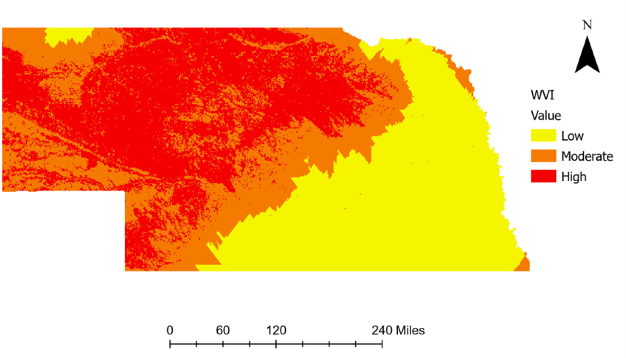
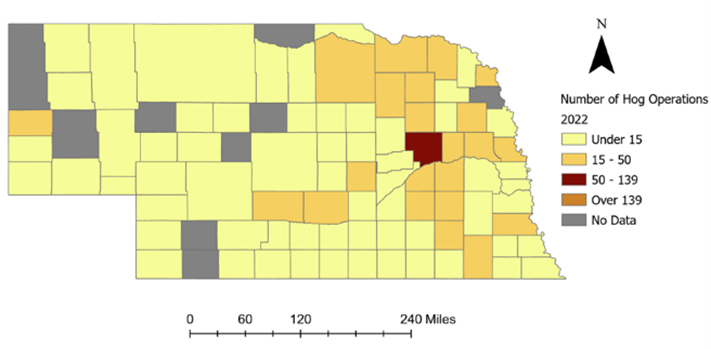
Figure 1. Distribution of groundwater contamination vulnerability modeled with HYDRUS-1D
Figure 2. Level swine inventory data for Nebraska (Census of Ag, 2022)

Swine population inventories (Figure 2) were obtained from the 2022 USDA Census of Agriculture (IARN, 2025), allowing for comparison of county-level swine populations to groundwater contamination vulnerability.

What Have We Learned?

The HYDRUS-1D model successfully modeled nitrate movement in the soil profile, producing time-series data that matched expected trends based on soil properties and environmental conditions. Counties with the greatest groundwater contamination risk are predominantly located in the western and northern regions of the state due to well-drained soils and shallow depths of groundwater. Very few swine operations are located in these moderate- to high- risk zones, but those that are located in these zones should be aware of the potential for groundwater contamination and should utilize mortality disposal methods that minimize leachate production. Four counties in northeast Nebraska contain moderate swine populations and have moderate to high risks for groundwater contamination. Castro and Schmidt (2023) found that carcass disposal via shallow burial with carbon (SBC) yielded much less leachate – and, subsequently, much lower loads of contaminants to the soil environment – than composting of whole or ground swine carcasses, suggesting that SBC may be a more environmentally conscious disposal method in these counties. Counties having low vulnerability to groundwater contamination cover much of the state’s central and eastern portions where the majority of swine production is located. This study provides critical insights into the risks of groundwater contamination from on-farm swine carcass disposal in Nebraska. Guidance for on-farm disposal of mortalities by all livestock producers should focus on selecting disposal methods that minimize leachate production and contaminant transport potential.

Future Plans:

Outreach efforts will focus on promoting mortality disposal BMPs with a primary focus on selecting disposal methods that minimize leachate production. Field research will be expanded to include evaluation of multiple carbon sources used for on-farm carcass disposal to reduce leachate generation. Future research will focus on enhancing the predictive accuracy of the HYDRUS-1D model by incorporating field-scale validation using observed nitrate concentrations from groundwater monitoring wells in high-risk areas. This validation will improve the reliability of the model’s output and support more precise risk assessments.

Authors:

Presenting Author

Gustavo Castro Garcia, Graduate Extension & Research Assistant, Department of Biological Systems Engineering, University of Nebraska-Lincoln

Corresponding Author

Amy Millmier Schmidt, Professor, Department of Biological Systems Engineering and Department of Animal Science, University of Nebraska-Lincoln, aschmidt@unl.edu

Additional Authors

Mara Zelt, Research Technologist, University of Nebraska-Lincoln

Aaron Daigh, Associate Professor, Department of Biological Systems Engineering and Department of Agronomy & Horticulture, University of Nebraska-Lincoln

Benny Mote, Associate Professor, Department of Animal Science, University of Nebraska-Lincoln

Carolina Córdova, Assistant Professor, Department of Agronomy & Horticulture, University of Nebraska-Lincoln

Acknowledgments

This project was supported by the National Pork Board Award #22-073. The authors wish to recognize Jillian Bailey, Logan Hafer, Alexis Samson, Nafisa Lubna, Andrew Ortiz, and Maria Oviedo Ventura, for their technical assistance during the field and column studies that provided input data for this modeling effort.

Additional Information

Castro, G., and Schmidt, A. (2023). Evaluation of swine carcass disposal through composting and shallow burial with carbon (poster presentation). ASABE AIM. Omaha, NE. July 9 – 12, 2003.

CSD. (2025). UNL Ground Water and Geology Portal: CSD Ground Water and Geology Data Portal. University of Nebraska-Lincoln. Retrieved from: CSD Ground Water and Geology Data Portal.

IANR. (2025). Hogs and pigs, operations with inventory, total operations by county. Nebraska Map Room. Data source: Census of Agriculture, 2022. Retrieved from: https://cares.page.link/Xu1J.

Knoben, W. J. M. (2021). Global USDA-NRCS soil texture class map, HydroShare, https://doi.org/10.4211/hs.1361509511e44adfba814f6950c6e742.

Koh, EH., Kaown, D., Kim, HJ., Lee, KK., Kim, H., and Park, S. (2019). Nationwide groundwater monitoring around infectious-disease-caused livestock mortality burials in Korea: superimposed influence of animal leachate on pre-existing anthropogenic pollution. Environ Int 129:376–388.


The authors are solely responsible for the content of these proceedings. The technical information does not necessarily reflect the official position of the sponsoring agencies or institutions represented by planning committee members, and inclusion and distribution herein does not constitute an endorsement of views expressed by the same. Printed materials included herein are not refereed publications. Citations should appear as follows. EXAMPLE: Authors. 2025. Title of presentation. Waste to Worth. Boise, ID. April 7-11, 2025. URL of this page. Accessed on: today’s date. 


Evolution of material mixtures for leachate absorption during on-farm disposal of animal mortalities

Purpose

The safe and biosecure disposal of livestock mortalities is a vital concern for livestock producers and the environment. Traditional on-farm livestock disposal methods include composting and land burial, with burial posing environmental risks if leachate generated during carcass decomposition moves through the soil profile to reach groundwater. A 1995 study on the groundwater quality around six poultry mortality piles found elevated concentrations of ammonia and nitrate in the surrounding wells, demonstrating the risk of water contamination from carcass disposal (1). Moreover, the risk of disease transmission to nearby animal facilities associated with an outbreak and large mortality event, particularly due to a foreign animal disease outbreak, dictates that on-farm mortality disposal be conducted in a way that contains and eliminates pathogenic organisms. In the case of a large mortality event, landfills or rendering facilities may not have capacity to receive mortalities or they might refuse to accept them.

On-farm methods accepted in most states include land burial, composting, and incineration. While burial of mortalities often requires less labor and capital cost than composting or incineration, it comes with unique challenges, namely having sufficient space to bury large quantities of animals, adequate soil structure to contain leachate produced during decomposition, and sufficient depth to groundwater to avoid groundwater contamination. Composting is a valuable method as it can destroy many pathogens because of the heat produced in the process, and the by-product is useful. Some of its downsides include the nuisance odor produced and insects such as flies that often accompany the piles. Incineration, while highly effective at reducing volume of carcasses and disease-causing organisms, relies on access to a portable incinerator and sufficient fuel to operate it (2).

Shallow burial with carbon (SBC) is an emerging method for carcass disposal that combines the more common methods of composting and burial. With this method, a shallow pit is excavated in soil and 24 in of carbon material is placed in the trench prior to placing carcasses. The carcasses are then covered using the excavated soil. A field study comparing performance characteristics of SBC and composting for swine carcass disposal (3) found that SBC maintained thermophilic temperatures that met EPA 503(b) time-temperature standards (4), produced less leachate per unit mass of carcasses, and yielded lower contaminant loads (e.g. E. coli) than compost units, suggesting it may also be a suitable mortality disposal method during a foreign animal disease (FAD) outbreak. Further, SBC is a desirable mortality disposal option because it requires less carbon material than composting and does not require management beyond the establishment of the disposal site.

While the previous field study demonstrated lower leachate production from SBC than composting units, the potential may exist to further limit leachate production by identifying carbon materials with greater capacity to absorb liquid produced during carcass decomposition. The primary purpose of establishing a base of carbon material in SBC or composting disposal units is to absorb leachate released during decomposition, reducing the transport of contaminants to water sources. Therefore, this study explored absorbency of several organic materials for inclusion in SBC or mortality compost piles to reduce leachate losses.

What Did We Do?

Our team identified several alternative organic materials for pile construction including wood chips, silty clay loam soil, corn stover, recycled paper pulp (SpillTech(R) Loose Absorbent), and cellulose fiber (Pro Guard Cellulose Fiber). These were tested alone and in combination with 1% by mass (of base material) of sodium and potassium polyacrylate crystals, and 2-mm water gel beads (ZTML MS brand). Hydrogels (HG), sodium polyacrylate (SP), and potassium polyacrylate (PP) were demonstrated in previous studies to retain water in experimental greenhouses (5).

Five replicates of each treatment were enclosed in 4×6 inch cotton mesh bags (TamBee Disposable Tea Filter Bags, Amazon.com) and weighed prior to being submerged in deionized (DI) water at pH 7 for two hours (Figure 1). Bags were removed from the water and allowed to drain for 5 minutes before being weighed again. The bags were resubmerged for an additional 22 hours after which they were removed, allowed to drain for 5 minutes, and weighed again.

Figure 1. Methodology to evaluate absorptivity of treatments

Five replicates of each combination of base material and absorbent additive were also evaluated using DI water adjusted to pH 3, 5, 7, 8, 10 and using 0.01M NaCl to evaluate the effect of pH on absorbency.

The swelling ratio (SR) of each treatment was calculated using the following formula:

SR = Ww – Wd

where Ww is the wet weight and Wd is the dry weight.

The expected water holding capacity (C) was calculated for each combination.

C = SR ⋅ D

Where C is measured in gallons of water per lb of treatment material and D is the density of base material.

The average of the SR value for the five replications of each combination was further used to determine economic feasibility for retaining leachate from a large-scale mortality compost or burial pile. This was done by first determining the average amount of leachate produced from the mortality piles during the preceding year-long field study in eastern Nebraska (6,030 gallons). This was considered the target volume of material held by an alternative material or combination of materials in the economic assessment.

The volume of leachate was converted to mass, and the swelling ratio average values were used to calculate the mass of base material needed to hold the target quantity of water. These values were then used to calculate the total cost (based on pricing from various sellers) to build a pile of each of these materials that would hold the target volume of leachate. Table 1 shows the price per pound of each material tested; the price of the wood chips, corn stover, and soil were estimated based on these sources, though true price will vary based on region and supplier.

Table 1. Costs of materials evaluated

Material $/lb Source
Wood Chips   0.05 Evans Landscaping
Corn Stover   0.02 MSU Extension
Soil      0.004 Dirt Connections
Recycled Paper   1.84 Grainger
Cellulose Fiber   7.00 Pro Guard
Hydrogel 15.09 ZTML MS
Sodium Polyacrylate   3.71 Sandbaggy
Potassium Polyacrylate 11.38 A.M. Leonard

What Have We Learned?

Results from an analysis of variance (ANOVA) of the SR data showed that SR was not significantly impacted by the soaking time or by pH of the soaking solution. The results also showed that only the addition of 1% SP had a significant effect among the three superabsorbent additives when compared to no additive in the same base material. This effect was relatively equal between all base materials. The other super absorbents (1% HG and 1% PP) did not have a significant effect due to the high variability in the results. The most meaningful differences in absorptive capacity were attributed to base material (Figure 2). On average, the swelling ratio of cellulose fiber (no additives, 24-hour soak, pH 7) is 0.577 gallons water/lb base material. For corn stover, this value is only slightly lower, at 0.447 gallons water/lb base material. Wood chips, the material used in compost piles in the preceding study, had much worse results at only 0.188 gallons water/lb base material.

Figure 2. Mean swelling ratios for organic base materials tested (without additives) after 24-hours soaking in water, pH 7. Letters denote significant differences in water holding capacity, error bars show standard error.

The results of the economic analysis are included in Table 2. The corn stover (without super absorbents) emerged as the most cost-effective material, with an estimated $258 total cost of material required to absorb the average amount of leachate observed in a previous yearlong field study that evaluated leachate volume produced from six disposal piles, each containing 20 pigs with a mean weight of 5,826 lb (±90.8 lb). The next most economical option was soil alone ($392) and then corn stover with sodium polyacrylate added ($782).

Table 2. Material cost to retain a leachate volume of 6,030 gallons

Material Mass Required of Base Material (lb) Cost
Woodchips 36,425 $  1,655
Woodchips + SP 36,126 $  2,993
Corn Stover 14,202 $      258
Corn Stover + SP 14,060 $      782
Cellulose Fiber 10,442 $73,085
Cellulose Fiber + SP 10,338 $72,742
Soil 86,462 $      392
Soil + SP 85,597 $  3,596
Recycled Paper 27,289 $50,256
Recycled Paper + SP 27,016 $50,766

SP: sodium polyacrylate

Future Plans

To confirm the swelling ratios calculated in the lab are realistic, further testing of the effectiveness of the recommended base construction will be needed at field-scale. Additionally, analysis of evapotranspiration, rainfall, and temperature in the piles should be collected to build a working relationship of the leachate rates to important environmental conditions and provide insight into the variable water quantities that change with geographical location. Combining these measurements with climate information will form a better predictive model for broader applicability.

Authors

Presenting author

Alexis Samson, Undergraduate Researcher, Department of Biological Systems Engineering, University of Nebraska-Lincoln

Corresponding author

Amy Schmidt, Professor, Department of Biological Systems Engineering and Department of Animal Science, University of Nebraska-Lincoln, aschmidt@unl.edu

Additional authors

Mara Zelt, Research Technologist, University of Nebraska-Lincoln

Gustavo Castro Garcia, Graduate Research Assistant, University of Nebraska-Lincoln

Additional Information

    1. Ritter, W. F. & Chirnside A. E. M. (1995). Impact of Dead Bird Disposal Pits on Groundwater Quality on the Delmarva Peninsula, Bioresource Technology. https://www.researchgate.net/publication/256637308_Impact_of_dead_bird_disposal_pits_on_ground-water_quality_on_the_Delmarva_Peninsula.
    2. Costa, T. & Akdeniz, N. (2019). A review of the animal disease outbreaks and biosecure animal mortality composting systems, Waste Management. https://www.sciencedirect.com/science/article/pii/S0956053X19302600?via%3Dihub.
    3. Castro, G., Schmidt, A. (2023). Evaluation of Swine Cadaver Disposal through Composting and Shallow Burial with Carbon (poster presentation). ASABE AIM. Omaha, NE.
    4. Code of Federal Regulations, Chapter 40, Part 503. 1993. Standards for the Use or Disposal of Sewage Sludge. Appendix B.   https://www.ecfr.gov/current/title-40/chapter-I/subchapter-O/part-503.
    5. Demitri, C., Scalera, F., Madaghiele, M., Sannino, A., & Maffezzoli, A. (2013). Potential of Cellulose-Based Superabsorbent Hydrogels as Water Reservoir in Agriculture, International Journal of Polymer Science. https://onlinelibrary.wiley.com/doi/10.1155/2013/435073?msockid=06caea3aa704636306b4f95fa67a62b8.

Acknowledgements

This project was partially supported by the National Pork Board Award #22-073. The technical assistance of Maddie Kopplin and Josh Mansfield was critical to the completion of this study.


The authors are solely responsible for the content of these proceedings. The technical information does not necessarily reflect the official position of the sponsoring agencies or institutions represented by planning committee members, and inclusion and distribution herein does not constitute an endorsement of views expressed by the same. Printed materials included herein are not refereed publications. Citations should appear as follows. EXAMPLE: Authors. 2025. Title of presentation. Waste to Worth. Boise, ID. April 711, 2025. URL of this page. Accessed on: today’s date. 

Methodologies for In-situ Characterization of the Impact of Equine Manure Management Practices on Water Quality

Nutrient loading of nitrogen and phosphorus in runoff and water leachate threatens Florida’s environmental and water resources. Of those nutrients, nitrate (NO3) nitrogen is highly soluble and not strongly bound to soils. Consequently, nitrate is highly mobile and subject to leaching losses when both nitrate content and water movement are high.

Due to Florida’s sandy soils and humid subtropical climate, nitrate losses from leaching and runoff are high and creates concerns for animal waste handling1. Mitigating nutrient loading to ground and surface waters through proper management of horse manure and stall waste can help protect water quality. However, information regarding the relationship between on-farm equine manure management practices and water quality remains limited.

What did we do

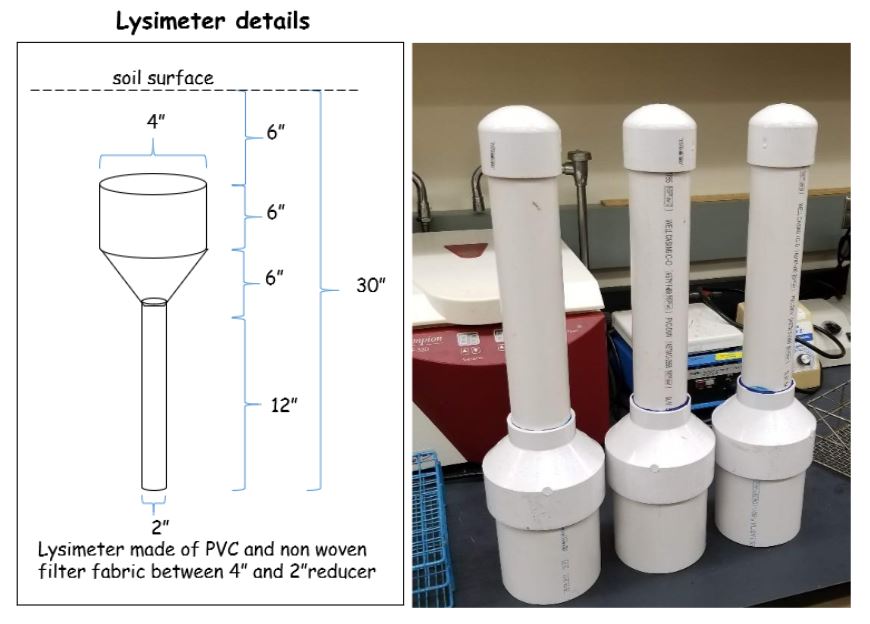
The objective of this study was to address waste management challenges on Florida equine operations by developing methodologies for in-situ characterization of nutrient profile of pore and surface water runoff from stockpiled equine waste and waste that has been effectively composted. Two small-scale horse properties with 2-8 horses managed on 4-9 acres, and 1 larger scale operation with up to 70 horses managed on 300+ acres located within the Rainbow Springs Basin Management Action Plan (BMAP) were enlisted for the project. Lysimeters (soils enclosed in suitable containers and exposed to natural surroundings to capture leachates) were constructed of PVC and non-woven filter fabric suspended between a 4” and 2” PVC reducer with a total length of 24” and deployed 6” below ground2 (Figure 1).

Figure 1. Design details and image of lysimeters used for leachate collection. Each lysimeter was equipped with silicone tubing for effluent collection.


One hole was drilled between the 4” and 2” PVC reducer to insert the sampling lines to the bottom well of the lysimeter and secured with duct tape. For each lysimeter installation, the top 6” of the soil profile was removed using a 6” diameter core ring to ensure the soil profile was undisturbed. The remaining 6”-12” depth of soil was composited and repacked into the lysimeter container, layer by layer. An auger was used to achieve a total depth of 30 inches from the surface to secure the lysimeter in the ground. Following lysimeter installation, the top 6” of intact soil was replaced above the lysimeter and all lines were buried 6” in the soil and channeled to one central location. The collection trenches were fabricated from vinyl gutter material filled with river rock (pre-rinsed for removal of iron and sediment) and installed up and downgradient at stockpile systems and at the opening of each compost bin. A 5-gallon bucket attached to the downgradient gutter served as the water collection reservoir (Figure 2).

three bin compost structure
Figure 2a) Three bin manure compost structure
Manure stockpile structure
Figure 2b) Manure stockpile structure

Figure 2. Placement of runoff collection trenches within the (a) compost and (b) stockpile manure bin structures. The trenches intercept any runoff during heavy rainfall and drain into a 5-gallon bucket. Once the bilge pump below the bucket is adequately submerged, the water is evacuated to the secondary collection bucket for sampling.

Figure 3. Arrangement of the eight peristaltic pumps on a hand truck dolly for ease of transport. The pumps with connected clear silicone tubing are attached to the lysimeter collection line for leachate collection.

For the lysimeter leachate sampling, eight peristaltic pumps were arranged in an array of 4 pumps wired together and controlled by an on/off switch connected to a sampling tube of the lysimeter (Figure 3).
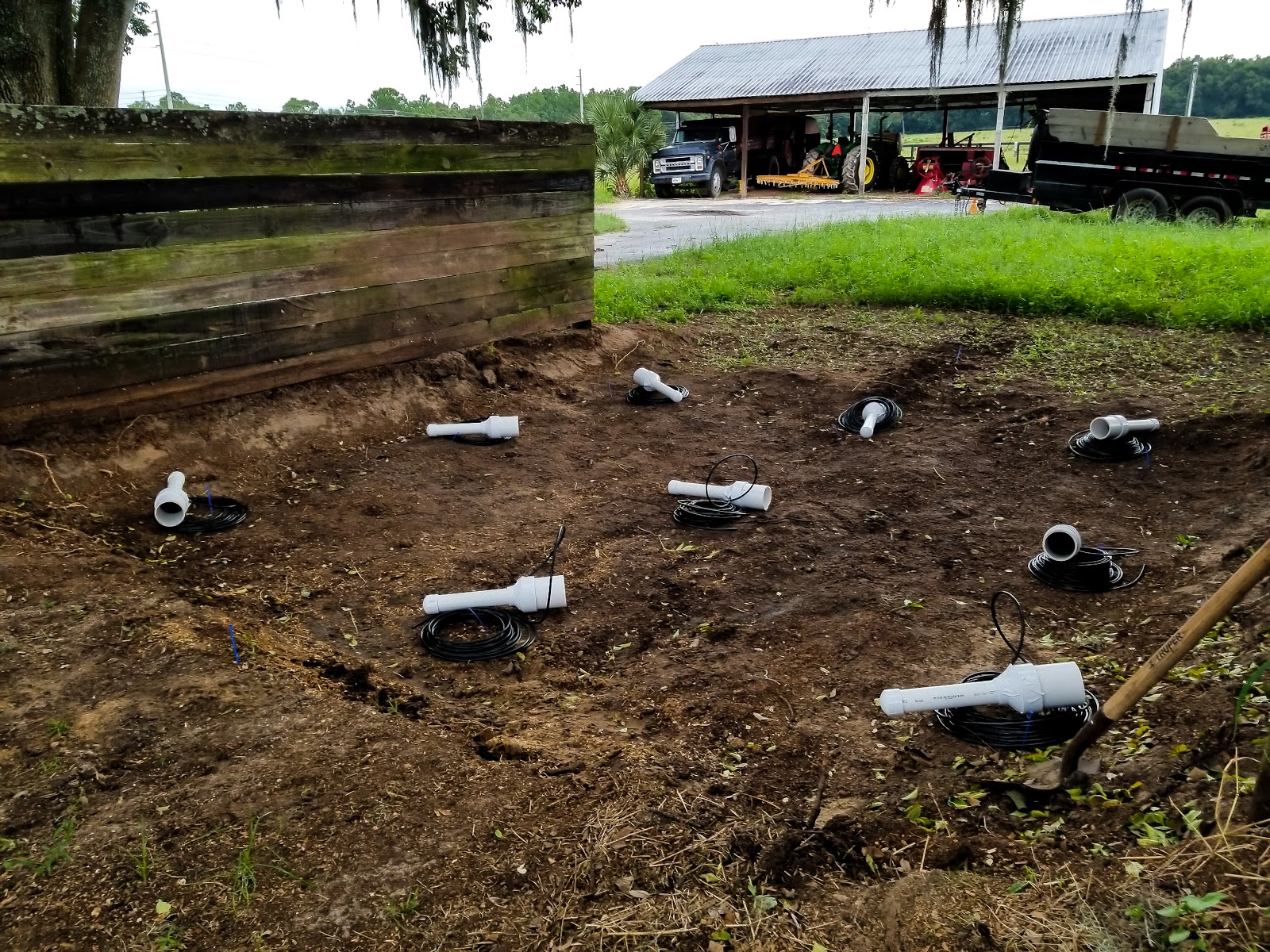
A grid of 4-5 lysimeters were placed under each compost bin for collection and compositing of samples. The lysimeters for the stockpile were arranged in a 3×3 grid across the stockpile bin with each row (3 lysimeters) representing a composited sample (Figure 4).

Figure 4. Pre-installation and arrangement (3x3) of the lysimeters within the manure stockpile structure.
Figure 4. Pre-installation and arrangement (3×3) of the lysimeters within the manure stockpile structure.

The lysimeters were purged with deionized water after two weeks or after a heavy rainfall event prior to the first sample collection.  For water runoff collection, a 12 volt (500gph) automatic bilge pump, powered by a marine battery, was used to pump water from the collection bucket to a 5-gallon sampling bucket. A 10% subsample was collected with the remaining 90% expelled to the ground surface using a 2-way restricted-flow Y connector. Runoff samples (collected immediately post rainfall event) and leachate samples (collected biweekly) were acidified and stored in scintillation vials at 4oC for nutrient analysis (NO-X, NH4+, TKN, and TP).

Outcome

 The lysimeter and water runoff collection trench construction provide a cost-effective, easily deployed system for characterizing nutrient loading in leachate and surface runoff from manure storage and composting sites. The system has been successful in collecting samples for nutrient analysis, however, a few challenges have also been identified. (1) The runoff system requires periodic maintenance, primarily cleaning (re-rinsing) the gutter and river rock to remove any material lying above the trench. (2) Also, the Y connectors require calibration every month to remove leaf litter and other debris to allow water flow through the valves to ensure a 10% subsample is collected. (3) Suspended materials (fine soil or organic matter) have been observed in lysimeter leachate samples and runoff collection trenches. (4) A subset of lysimeter samples have emitted a sulfur odor when adverse weather conditions or other events delay sampling beyond the target 2-week interval.

Future plans

To assess potential nitrate losses due to sample retention time, the lysimeter effluent will be sampled at specific intervals (day 1, day 3, day 6, day 9, day 14) during a period of no rainfall. These measurements should help determine the optimal time interval for sample collection for analysis of nitrate levels.  Additionally, runoff samples are being collected for analysis of fecal coliform and E. coli. The methodologies employed in this field level study represent an important step towards an improved understanding of the impact of manure management BMPs on water quality.

Corresponding author, title, and affiliation

Agustin Francisco, Graduate Student, University of Florida

Corresponding author email

afran@ufl.edu

Other authors

Carissa Wickens, State Extension Horse Specialist, University of Florida Mark Clark, Wetland Ecologist, University of Florida; Caitlin Bainum, Extension Agent, Florida Cooperative Extension, Marion County, Ocala, Florida; Megan Mann, Extension Agent, Florida Cooperative Extension, Lake County, Tavares, FL

Additional information

1FDEP. 2013. Small Scale Horse Operations: Best Management Practices for water resource protection in Florida.

2Bergstrom, L. 1990. Use of lysimeters to estimate leaching of pesticides in agriculture soils. J. Environmental Pollution. 67:325-347

Additional information regarding this project is available by contacting Carissa Wickens (cwickens@ufl.edu), or Agustin Francisco (afran@ufl.edu).

Acknowledgements

The authors wish to thank the Southwest Florida Water Management District (SWFWMD) for funding support, the farm site cooperators Dave and Deb Kane, Jim and Merry Lee Bain, and Eli and Jeff McGuire. We would also like to thank Carol Vasco, Ellen Rankins, Ana Margarita Arias, Anastasia Reif for their assistance with site installation and data collection.

The authors are solely responsible for the content of these proceedings. The technical information does not necessarily reflect the official position of the sponsoring agencies or institutions represented by planning committee members, and inclusion and distribution herein does not constitute an endorsement of views expressed by the same. Printed materials included herein are not refereed publications. Citations should appear as follows. EXAMPLE: Authors. 2019. Title of presentation. Waste to Worth. Minneapolis, MN. April 22-26, 2019. URL of this page. Accessed on: today’s date.