
Optimizing Manure Nitrogen Application Timing in Corn Production for Sustainability and Profitability

 Purpose

Nitrogen (N) application timing is crucial in balancing crop productivity and environmental sustainability. While fall applications are typical among Iowa corn producers due to favorable field conditions, they pose a high risk of N loss through denitrification, volatilization, and leaching. Spring and in-season sidedress applications offer improved nitrogen use efficiency (NUE) by aligning N availability with crop demand.

This study evaluates the effects of different N application timings—fall, spring, and sidedress—on corn yield and NUE. Using data from 65 site-years, we assess how application timing influences yield, economic returns, and environmental impacts. The findings provide insights into best management practices for improving profitability and sustainability in corn production.

What Did We Do?

A review of studies comparing N application timing in corn production was conducted, including a long-term experiment from the University of Minnesota (1960-1996) and additional datasets totaling 65 site-years. Treatments were separated into three categories: fall, spring, and sidedress. Relative yield was used to normalize data across years, and yield response was modeled using a Mitscherlich-Baule equation (Figure 1).
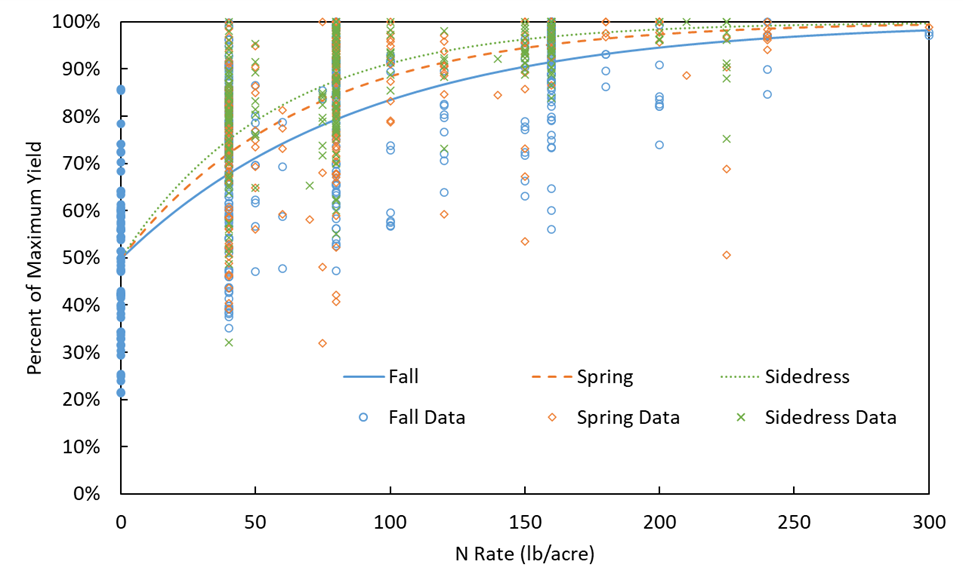
Figure 1: Yield response curves for 65 site-years of relative yield response data, categorized by season of N application

Economic impacts were analyzed using maximum return to nitrogen (MRTN), which identifies the N rate that maximizes economic return (Figure 2). Corn prices ($4.62/bu) and anhydrous ammonia prices ($0.45/lb N) were used to estimate profitability in each application scenario. The environmental effects were assessed by examining N-loss pathways and the potential for emission reduction of nitrous oxide (N2O), a greenhouse gas estimated to be 273 times more potent than carbon dioxide.

Figure 2: Net income per acre for fall, spring, and sidedress N application. Maximum return to nitrogen (MRTN) is plotted as a circular point on each curve, with the profitable N rate (low and high) within $1/acre bounded by diamond points.

What Have We Learned?

Results show that year-to-year, sidedress applications consistently produce the highest corn yield, followed by spring applications, with fall applications being the least effective. Yield differences are particularly evident in wet years (November to June rainfall > 1 inch above average), where sidedress applications outperform fall by an average of 9% (Figure 3). MRTN analysis shows that sidedress applications require 25% less N than fall applications while achieving higher yields, demonstrating their economic advantage.
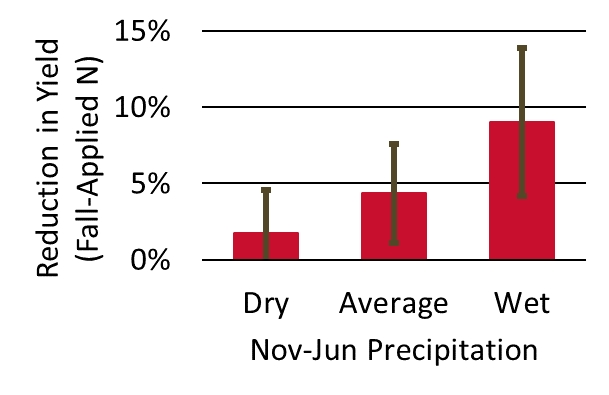
Figure 3: Reduction in relative yield between fall and sidedress application in different weather conditions: Dry (greater than 1 inch below average November-to-June precipitation), Average (within ±1 inch of average precipitation), and Wet (greater than 1 inch above average precipitation). Interpreted as the yield loss due to increased exposure of applied N to precipitation.

The environmental analysis indicates that reducing N application rates through improved timing could cut N2O emissions by up to 25%. With a carbon credit of $30/metric ton CO2e abated the reduction in N2O equates to a $2.66/acre credit for a reduced N application rate. Fall-applied N is most susceptible to losses due to prolonged exposure to wet conditions, while spring and sidedress applications minimize the risk of loss by reducing time in the field and matching crop demand.

Future Plans

Further research is needed to refine N application strategies by incorporating real-time weather data and precision agriculture tools. The development of high-clearance application equipment, such as 360 RAIN from 360 Yield Center, offers opportunities for more flexible and targeted in-season applications, potentially enhancing NUE and reducing losses.

Additional studies should assess the risk of spring or sidedress applications from year to year. Weather conditions often limit pre-plant N application, so a thorough analysis of the frequency and financial impact of interrupted field management operations should be conducted.

Future studies should also explore the economic feasibility of split applications, which combine the benefits of multiple timings to reduce risk. Additionally, expanding MRTN models to include seasonal effects would improve decision-making for producers seeking to optimize N application timing while minimizing environmental impact.

Authors

Presenting author

Jacob R. Willsea, Graduate Research Assistant, Iowa State University Department of Agricultural and Biosystems Engineering

Corresponding author

Daniel S. Andersen, Associate Professor, Iowa State University Department of Agricultural and Biosystems Engineering, dsa@iastate.edu

Additional Information

Talkin’ Crap Podcast Episode:

https://talkincrappodcast.buzzsprout.com/2163071/episodes/15629592-the-power-of-manure-timing-enhancing-nitrogen-efficiency

Andersen Lab Poster Repository:

https://iastate.box.com/s/4s9gjhkd93d95yvqip8q5rr46frshtln

https://iastate.box.com/s/icg6clbamksfzciw8ze3lc301p8homg1

Acknowledgements

USDA-NRCS

Brent Renner

360 Yield Center

The authors are solely responsible for the content of these proceedings. The technical information does not necessarily reflect the official position of the sponsoring agencies or institutions represented by planning committee members, and inclusion and distribution herein does not constitute an endorsement of views expressed by the same. Printed materials included herein are not refereed publications. Citations should appear as follows. EXAMPLE: Authors. 2025. Title of presentation. Waste to Worth. Boise, ID. April 7-11, 2025. URL of this page. Accessed on: today’s date.  
Integrated Best Management Practices to Minimize Nitrate Leaching in Corn

Purpose

In Nebraska, approximately 117 out of nearly 550 groundwater-based community public water systems are required to conduct quarterly sampling due to elevated nitrate-N levels, with ten systems having already implemented costly treatment measures such as reverse osmosis to mitigate this issue. The intensive production of row crops under irrigation in the state are a primary reason for elevated nitrate concentrations in groundwater. However, the environmental impact of nitrate leaching from agricultural fields is not confined to Nebraska; it is a widespread issue across the US Midwest, where intensive crop production is prevalent.

Despite advances in N management stemming from studies comparing nitrogen fate and transport under synthetic versus manure fertilizers, cover crops versus no cover crops, and other practices, research indicates that when manure is applied following research-based best management practices (BMPs), the risk of nitrate leaching is significantly lower compared to when synthetic fertilizers are applied following BMPs. While individual practices such as cover cropping or manure application have been shown to reduce nitrate leaching, their combined effects on both nitrate leaching potential and crop productivity, particularly in corn (Zea mays L.) systems, have not been thoroughly studied. There remains a critical need to comprehensively evaluate implementation of BMPs that can reduce nitrogen losses to groundwater in Nebraska and utilize evidence-based research to motivate the implementation of BMPs.

This study was conducted to evaluate the effects of the integrated use of beef manure, woodchips, and cover crops on corn (Zea mays L.) productivity and nitrate leaching.

What Did We Do?

A two-year study was conducted on drip-irrigated land with a loamy sand soil having 0 to 2% slopes at UNL’s Haskell Agricultural Laboratory research site near Concord, Nebraska from 2022 to 2023. A total of 24 plots were established, each measuring 6.1 m x 30.48 m, and six treatments were randomly assigned to plots in a factorial combination of two fertilizer sources (manure and inorganic fertilizer), two cover crops (rye cover crop and no cover crop), and two carbon amendment treatments (woodchips of mixed species and no woodchips). Each year, all the plots received the same total N rate, equating to 30% of the total N application broadcasted at planting in the form of Agrotain coated urea, which was calculated using University of Nebraska’s N rate algorithm. The manure plots received the remaining N (70% of the total) in the form of beef manure at planting using a manure spreader. The inorganic plots received the remaining N in the form of UAN side-dressed at the V6 corn growth stage. Each year, inorganic fertilizer plots received additional P, S, and Zn at the time of planting to balance the amount of these nutrients supplied by the manure.

Data collected included:

Soil. Deep core soil samples up to 120 cm were collected before planting in the spring and after harvest each fall, divided into four depths of 30 cm increment, composited by depth within each plot, and stored in a cooler before being transported to the lab for analysis.

Crop. Plant growth parameters assessed at V10 (±1) stage included plant height, leaf chlorophyll, and canopy fullness. Grain yield, harvest index, nitrogen harvest index and partial factor productivity were determined at harvest.

Water. Concentration of NO3-N and NH4-N in the pore water below the root zone was measured one to two times each week throughout the growing season with the help of suction cup lysimeters, two of which were installed 6 m apart between the center two rows of each plot at a depth of 1.2 m.

Cover crop failed to establish in 2023 spring due to dry conditions, therefore, cover crop data and its effects are not reported in this paper.

What Have We Learned?

Key results of this study include:

    • Manure significantly reduced nitrate leaching by providing a slower, more synchronized N release compared to inorganic fertilizers.
    • Woodchip mulch initially delayed N availability and biomass N uptake but ultimately helped reduce nitrate leaching by improving soil moisture retention and temperature moderation.
    • Aboveground biomass N uptake was significantly affected by fertilizer source with manure improving biomass N uptake by 11% compared to inorganic fertilizer.
    • Inorganic fertilizers boosted corn yields by 9% compared to manure treatments, but increased the risk of nitrate leaching, highlighting a trade-off between productivity and environmental impact.
    • Integrated management of manure and mulch was deemed crucial for optimizing N use efficiency and minimizing environmental risks in irrigated corn systems.

Future Plans

Identifying nutrient and land management practices that support sustainable agricultural practices by safeguarding groundwater quality while maintaining farm productivity are critical to the future of agriculture. Future research is expected to focus on refining the practices used in this study to maximize their benefits, including other practices such as in-season nitrogen management, and assessing outcomes under varying environmental conditions and soil types. Nitrogen availability from manure is heavily influenced by environmental and soil conditions, so multi-year data from this site and others should help determine when in-season nitrogen supplementation with inorganic fertilizer is needed to offset nitrogen deficits caused by slow conversion of organic nitrogen.

Because of the failure of cover crops to thrive in this study, future research to assess multiple practices in combination should include a cover crop versus no cover crop treatment.

Combining crop productivity and nitrogen fate and transport data with measures of soil biological conditions may also help identify trends in biological characteristics that contribute significantly to factors like nitrogen conversion and plant nitrogen uptake.

Authors

Presenting & corresponding author

Amy Millmier Schmidt, Professor and Livestock Bioenvironmental Engineering Specialist, University of Nebraska-Lincoln, aschmidt@unl.edu

Additional authors

Swetabh Patel, Assistant Professor, University of Minnesota; Michael Kurtzhals, Graduate Research Assistant, University of Nebraska-Lincoln; Arshdeep Singh, Graduate Research Assistant, University of Nebraska-Lincoln; Leslie Johnson, Extension Educator, University of Nebraska-Lincoln; Javed Iqbal, Assistant Professor, University of Nebraska-Lincoln

Additional Information

https://scisoc.confex.com/scisoc/2024am/meetingapp.cgi/Paper/156921

Acknowledgements

This research was funded by USDA-NIFA Award No. 2022-68008-36509.

The authors extend their sincere gratitude to Logan Dana, Operations Manager at the UNL Haskell Ag Lab, for his role in supporting this project.

The authors are solely responsible for the content of these proceedings. The technical information does not necessarily reflect the official position of the sponsoring agencies or institutions represented by planning committee members, and inclusion and distribution herein does not constitute an endorsement of views expressed by the same. Printed materials included herein are not refereed publications. Citations should appear as follows. EXAMPLE: Authors. 2025. Title of presentation. Waste to Worth. Boise, ID. April 711, 2025. URL of this page. Accessed on: today’s date.
Evaluating Dry Manure Storage Options for Water Quality Protection in Western Washington

Purpose

The purpose of this project was to collect local on-the-ground data to evaluate the effectiveness of different manure storage options installed on working farms in King County, Washington. Agricultural areas in King County receive over 40 inches of rain annually with most of it falling between the months of October through March. During this time, farms often store and compost their manure for spring and summer field application. Composting livestock manure and waste can produce a valuable resource for land managers. However, if managed improperly, manure leachate and runoff can contaminate ground and surface water resources posing a risk to humans and other wildlife.

The project aimed to collect data on water quality and manure quality under different solid manure storage options during the fall and winter months. During the project, we worked with two farms to monitor water quality and manure quality as well as held education and outreach events to engage with stakeholders about benefits and/or costs of adopting new manure management BMPs.

What Did We Do

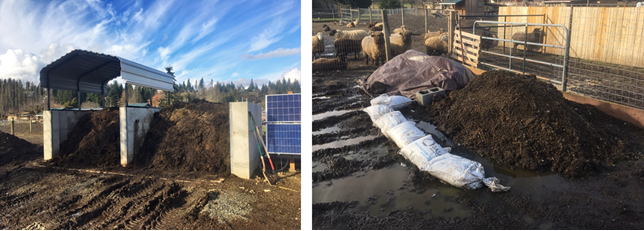
For the project, we worked with two farms and established four manure storage areas on each including: a concrete slab with walls and a roof, concrete slab with walls and no roof, a compacted soil areas with a tarp cover, and a compacted soil area with no cover. The manure piles were managed by the farmer following common winter practices and were turned and added to 2-3 times per month. We monitored the temperature of the piles over time to assess their composting activity, although it was not a primary focus of our study.

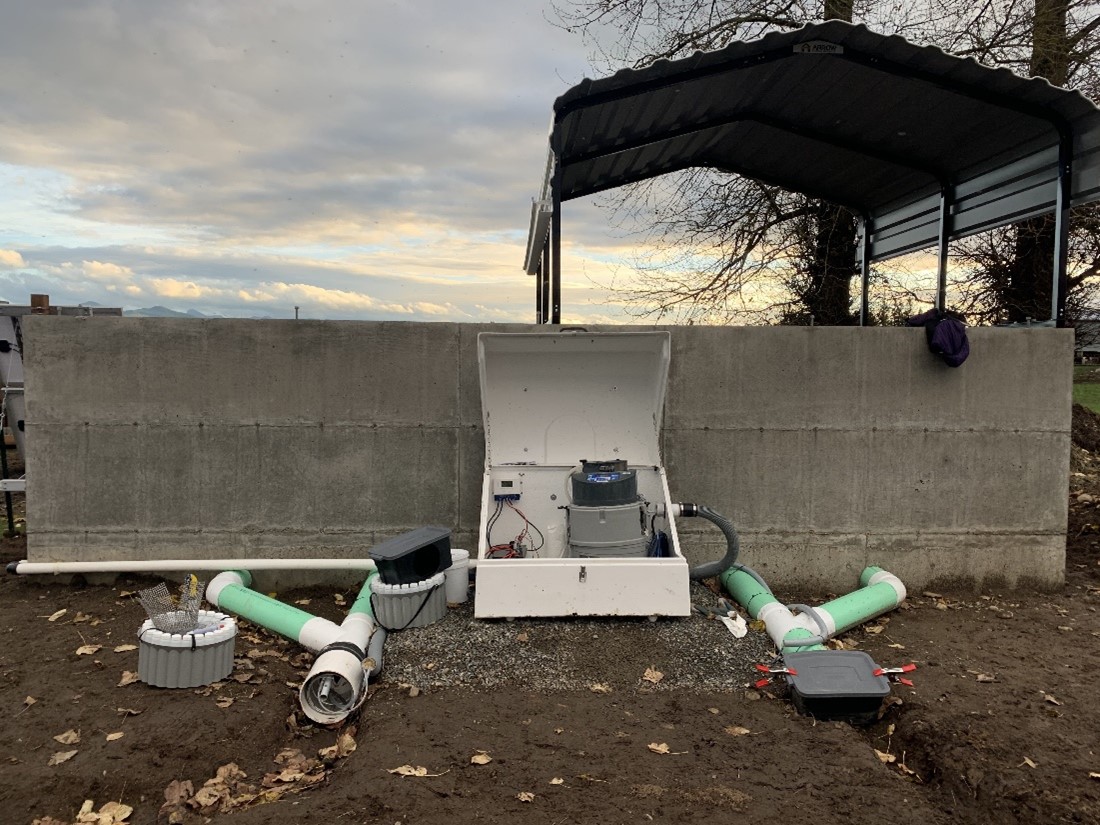
We collected samples of the manure from each storage area during the project to monitor changes over time. To assess nutrient loss and pollution via a stormwater runoff pathway, we collected runoff from the concrete slabs. To assess nutrient loss and pollution via a leaching pathway, we collected soil samples, from under the compacted soil areas. This monitoring allowed us to compare the storage options. The study was conducted over the course of eight months from October 2020 through May 2021. Below are photos of our study setup. Stormwater runoff water quality samples were collected using an ISCO automated sampler that was programmed to grab samples during rain events that generated runoff from the manure piles. Soil and manure samples were collected on a monthly basis.

Figure 1. Manure storage treatments. From left to right: slab covered, slab uncovered, soil covered, and soil uncovered.
Figure 2. Stormwater runoff collection system from the concrete slabs.

What Have We Learned

The project results support the conclusion that the covering of solid manure piles had positive environmental benefits. Covered manure piles stored on a concrete slab have less stormwater runoff with lower loads of nutrients in the leachate than uncovered manure piles on a concrete slab. The covering of dry manure piles stored on compacted soil surfaces reduced the leaching of nutrient, particularly nitrate and nitrite, from manure piles into the soil. It also created a better manure end-product by allowing higher heat values to be reached and creating a drier end product. Additionally, the

placement of manure on a non-permeable, concrete surface eliminated the leaching of manure nutrients below the piles. Covered manure piles, whether stored on a concrete slab or dirt, tended to be drier and have higher temperatures, which results in a better composted manure product.

The results of this study demonstrated that the type of animal species and pile management (how often the pile was turned or added to) also greatly affected the nutrient composition of the leachate. For instance, at Site A, there was higher TP in the manure, and thus higher TP in the runoff water quality and in soil samples.

Future Plans

Due to the short duration of the project, we pursued and were awarded additional funding to extend the project and expand the data set to allow for more robust statistical analysis and conclusions. Partner agencies and organizations as well as the farmers have expressed support and interest in continuing this research, and the project Steering Committee members have also expressed interest in further participation.

In future studies, we intend to try to better quantify the flow volumes from manure piles stored on slabs. In addition, we intend to better assess leaching potential underneath the manure piles stored on soil by using lysimeters to measure leachate volumes.

Authors

Presenting Author

Scarlett Graham, Conservation Research Specialist, Whatcom Conservation District

Corresponding Author

Laura Redmond, Landowner Incentive Program Coordinator, King Conservation District
laura.redmond@kingcd.org

Additional Authors

Addie Candib, Pacific Northwest Regional Director, American Farmland Trust

Additional Information

American Farmland Trust website: https://farmland.org/project/south-puget-sound-discovery-farms/

Acknowledgements

Dr. Nichole Embertson, PhD, Dairy Sustainability at Starbucks (formerly worked at the Whatcom Conservation District)

Videos, Slideshow and Other Media

South Sound Discovery Farms® Project


The authors are solely responsible for the content of these proceedings. The technical information does not necessarily reflect the official position of the sponsoring agencies or institutions represented by planning committee members, and inclusion and distribution herein does not constitute an endorsement of views expressed by the same. Printed materials included herein are not refereed publications. Citations should appear as follows. EXAMPLE: Authors. 2022. Title of presentation. Waste to Worth. Oregon, OH. April 18-22, 2022. URL of this page. Accessed on: today’s date.
Assessing the implications of chloride from land application of manure for Minnesota waterways

Purpose

Rising chloride contamination in ground and surface waters is a growing concern in Minnesota. Previous studies estimate 87% of the chloride load originated from road salts, fertilizers, and wastewater treatments plants, and 6% from livestock manure. However, these estimates may be outdated as the livestock industry and manure application practices have evolved since these estimates of manure chloride concentrations were calculated in 2004. It also remains unclear how varying soil types affect the movement of chloride leaching following manure application. The aim of this study is to understand the movement of manure-based chloride from liquid and solid manures in Minnesota soils through a series of intact core leaching studies. Specifically, this project examines the magnitude of chloride leaching from swine and turkey manure application and compares it with synthetic potassium chloride fertilizer and a no nutrient control. The soil cores represent fine and medium textured soil.

What Did We Do?

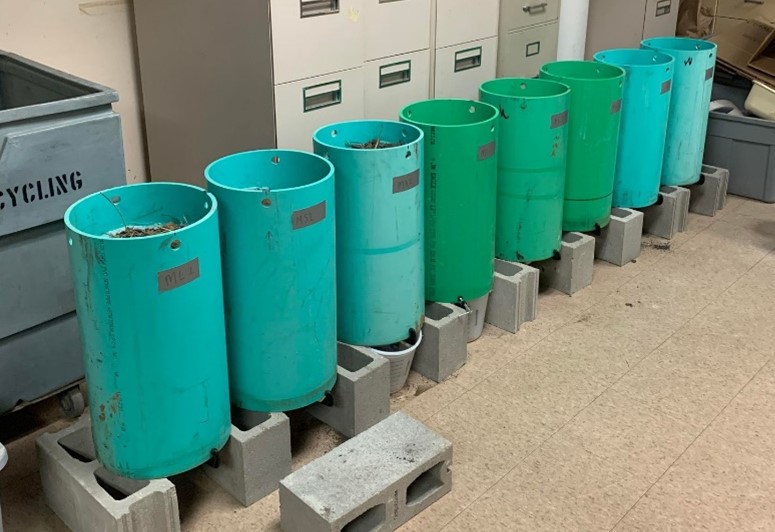
    • Collected 24 12-inch soil columns from medium and fine-textured soils in Minnesota (Figure 1).
    • Collected swine and turkey manure from Minnesota farms
    • Analyzed soil pre- and post-leaching study for nutrient analysis (Cl, Bray P, NH4+, NO3, K, Organic Matter, pH, and Exchangeable Ca, Mg, Na, K)
    • Analyzed manure samples for nutrient analysis pre-application (Total N, P2O5, K2O, Cl)
    • Added water to cores until they reached field capacity
    • Applied manure using N-based application rates, and fertilizer using a K-based rate to 3 replicates
    • Simulated 2-in rainfall events on days 4, 12, and 18 post nutrient application
    • Collected and analyzed leachate for Cl, NH4+-N, and NO3-N
Figure 1: Setup of 12-inch PVC soil cores for leaching study

What Have We Learned?

    • How chloride concentration varies based on manure type and species
    • How the total amount of chloride applied via fertilizer application to cores varies by treatment
    • How manure-based chloride moves through soil
    • How fine and medium textured soil influences the movement of manure-based chloride
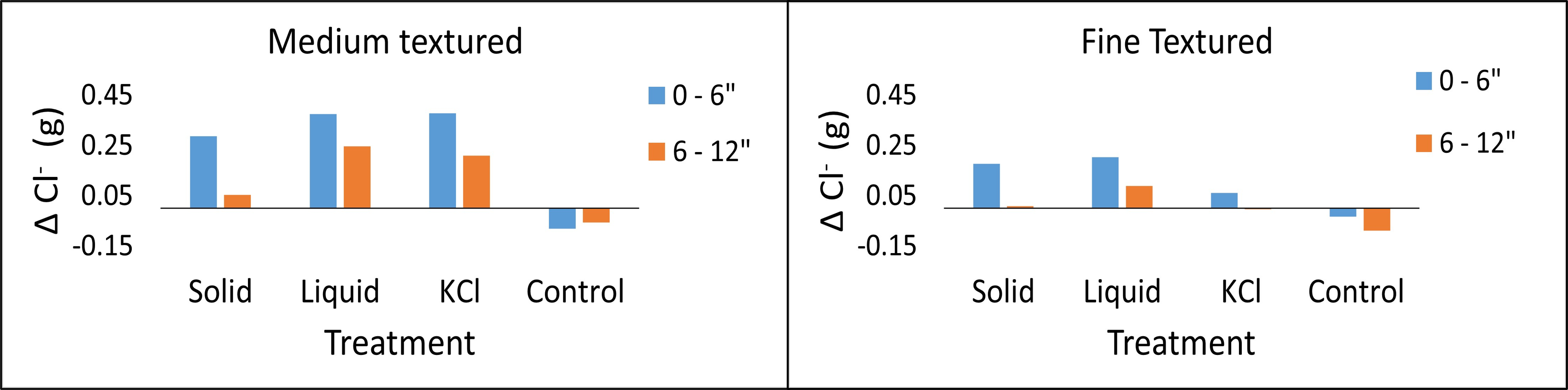
    • How chloride storage changed by soil type following the experiment (Figure 2)
      1. Medium textured soils had a greater change in chloride storage in both top and bottom layers compared to fine textured soils
      2. Manure additions increased chloride storage in both medium and fine textured soils
      3. Control soil cores experienced a loss in chloride storage following leaching
Figure 2: Change in soil chloride storage in each medium textured (left) and fine textured (right) soils by treatment. Positive values indicate a net gain in soil chloride, while negative values indicate a net loss in soil chloride following leaching.
Table 1: Total Cl concentration of liquid swine manure (lbs/1000 gallons), solid turkey litter, and synthetic KCl (lbs/ton) followed by total weight (g) of Cl added per core via application.
Treatment

Cl (lbs/1000 gallons)

Cl (lbs/ton)

Cladded per core (g)

Liquid

26

1.49

Solid

2.7

0.179

KCl

940

0.576

Control

0

0

Future Plans

Our group would like to complete a second round of this study the following year on newly identified liquid and solid manure and an additional coarse textured soil type. Future attempts in creating chloride-based mass balances for the state of Minnesota will benefit from this study.

Authors

Matthew Belanger, Graduate Research Assistant, Dept of Soil, Water, and Climate, University of Minnesota

Corresponding author email address

belan081@umn.edu

Additional authors

Dr. Erin L. Cortus, Associate Professor and Extension Engineer, Dept of Bioproducts and Biosystems Engineering, University of Minnesota

Dr. Gary W. Feyereisen, Research Agricultural Engineer, USDA-ARS Soil & Water Mgt. Research Unit

Nancy Bohl Bormann, Graduate Research Assistant, Dept of Soil, Water, and Climate University of Minnesota

Dr. Melissa L. Wilson, Assistant Professor and Extension Specialist, Dept of Soil, Water, and Climate, University of Minnesota

Additional Information

Wilson Manure Management and Water Quality Lab Site

Acknowledgements

This project is funded through the University of Minnesota Water Resource Center’s Watershed Innovation Grants Program. We’d also like to thank Scott Cortus, Eddie Alto, Todd Schumacher, Dr. Pedro Urriola, and Thor Sellie for their assistance.

Nutrient Leaching Under Manure Staging and Sludge-Drying Areas

Proceedings Home W2W Home w2w17 logo

Purpose

Even well managed lagoons need to have sludge removed periodically. Hauling of sludge is expensive and time consuming. Drying of the sludge before hauling would greatly reduce the volume and therefore the number of trips required. This would result in both an economic and time savings. In Utah, sludge drying is currently not permitted due to the potential for groundwater contamination since it is considered a liquid.

What did we do?

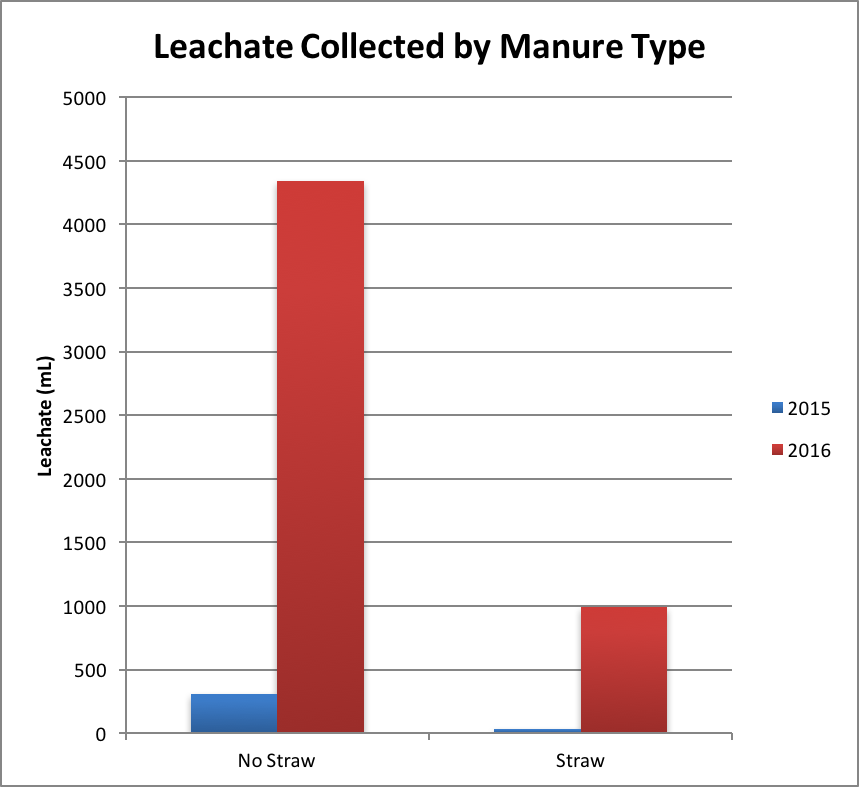
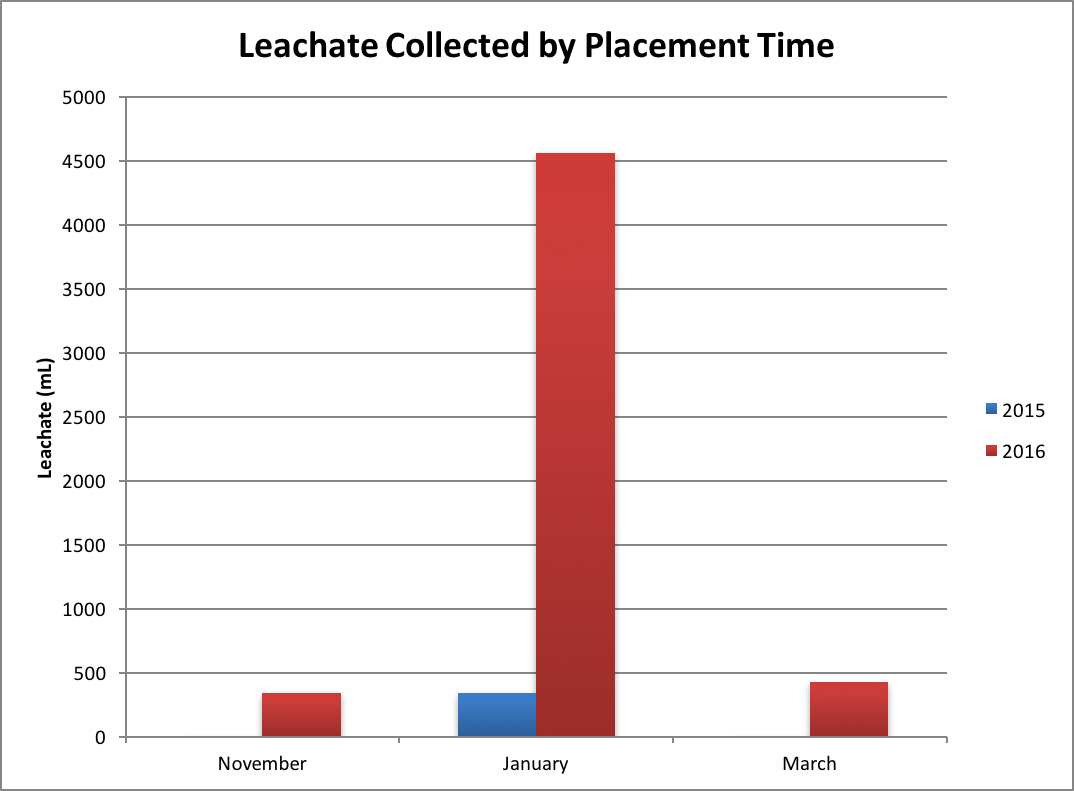
Two studies examined leaching under sludge drying and manure staging areas. The first study compared the leachate under a sludge drying area (liquid manure), versus the leachate produced under a manure staging area (solid manure). Both treatments were placed in the field in July. The second study compared manure staging areas with manure placed at three different times (November, January, and March) and two different bedding materials (straw, no straw).

Leachate was collected by means of zero-tension lysimeters installed under the sludge drying and manure staging areas and analyzed for ammonium nitrogen using Method 10-107-06-2-O and nitrate nitrogen using Method: 10-107-04-1-C on a Lachat FIA analyzer. Soil samples were taken to a depth of 90 cm and analyzed for nitrate nitrogen using Method 12-107-04-1-F on a Lachat FIA analyzer.

Graph of leachate collected by manure type in 2015 and 2016 with straw and with no straw
Total leachate collected under winter manure staging areas by manure type.

Graph of leachate collected by placement time in 2015 and 2016
Total leachate collected under winter manure staging areas by placement time.

What have we learned?

The sludge dried in 8-10 weeks. Observed volume reduction for the July applications was 81.1% and 35.7% for the sludge and manure piles, respectively. Leachate under the sludge drying areas tended to seal off quickly producing little leachate after the initial leaching event. Likewise, there was little leachate under the manure staging piles placed in July. Significant leachate was produced under the manure staging piles placed during the winter months, with the manure with no straw (sand bedding) producing more leachate than the manure with straw (straw bedding). Preliminary results indicate that sludge drying produces less leachate than a manure staging area placed at the same time, and much less leachate than manure staging areas placed during the winter months.

Future Plans

We plan to continue this study and report the findings to the Utah Division of Water Quality. The results of this study and another study examining sludge drying in southern Utah will likely be used to revisit the decision as to whether or not sludge-drying should be allowed in Utah.

Corresponding author, title, and affiliation

Rhonda Miller, Ph.D.

Corresponding author email

rhonda.miller@usu.edu

Other authors

Mike Jensen, Trevor Nielson, Jennifer Long

Additional information

Website: http://agwastemanagement.usu.edu

Acknowledgements

The authors gratefully acknowledge support from Utah State University Experiment Station.

Swine Manure & Aqua-ammonia Nitrogen Application Timing on Subsurface Drainage Water

Waste to Worth: Spreading science and solutions logoWaste to Worth home | More proceedings….

Abstract

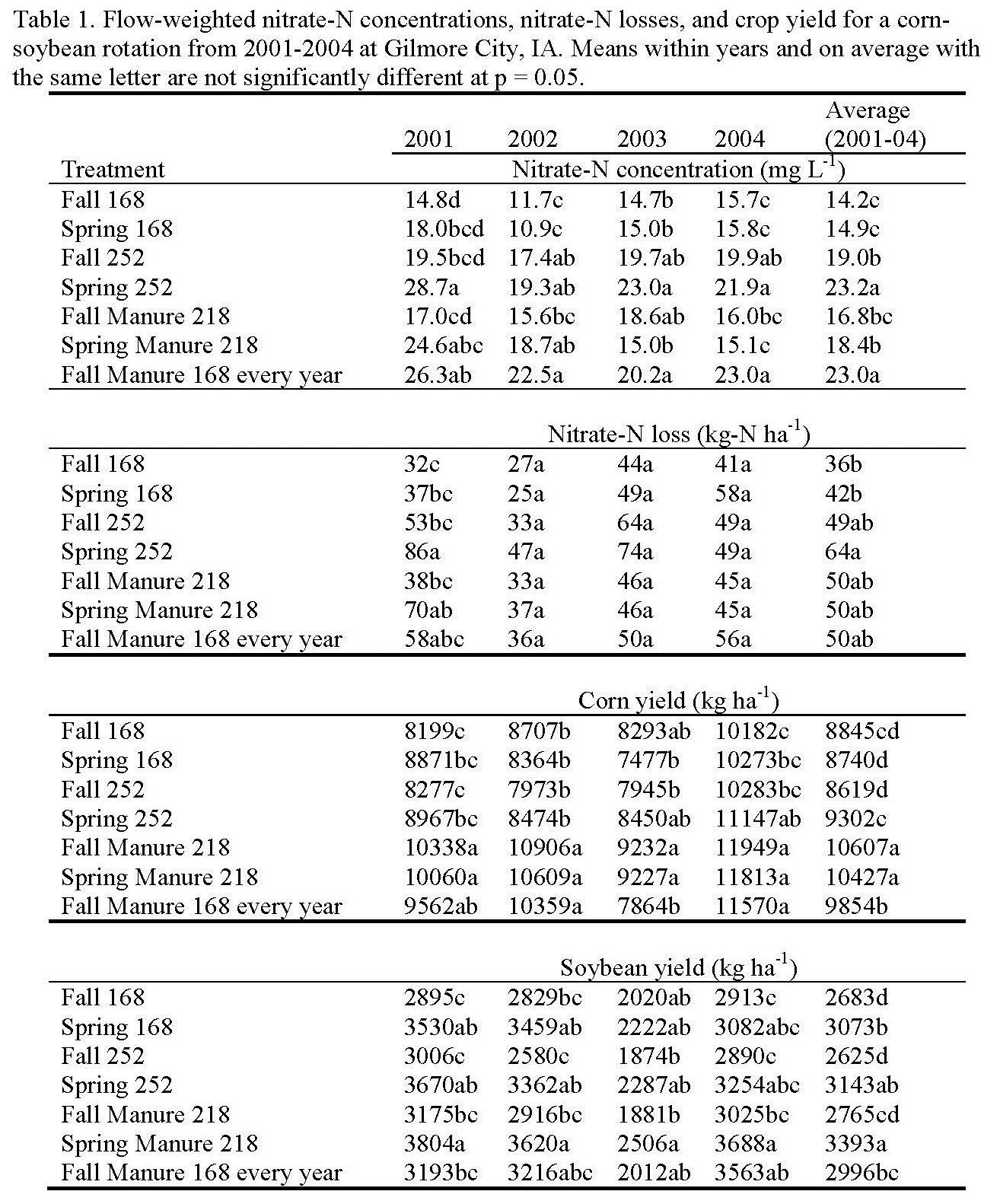
In Iowa and many other Midwestern states, excess water is removed artificially through subsurface drainage systems.  While these drainage systems are vital for crop production, nitrogen (N) added as manure or commercial fertilizer, or derived from soil organic matter, can be carried as nitrate-nitrogen (NO3-N) to downstream water bodies.  A five-year, five-replication, field study was conducted in north-central Iowa with the objective to determine the influence of seasonal N application as ammonia or liquid swine manure on flow-weighted NO3-N concentrations and losses in subsurface drainage water and crop yields in a corn-soybean rotation.  Four aqua-ammonia N treatments (150 or 225 lb-N/acre applied for corn in late fall or as an early season side-dress) and three manure treatments (200 lb-N/acre for corn in late fall or spring or 150 lb-N/acre  in the fall for both corn and soybean) were imposed on subsurface drained, continuous-flow-monitored plots. Four-year average flow-weighted NO3-N concentrations measured in drainage water were ranked: spring aqua-ammonia 225 (23 ppm) = fall manure 150 every year (23 ppm) > fall aqua-ammonia 225 (19ppm) = spring manure 200 (18 ppm) = fall manure 200 (17 ppm) > spring aqua-ammonia 150 (15 ppm) = fall aqua-ammonia 150 (14 ppm).  Corn yields were significantly greater (p=0.05) for the spring and fall manure-200 rates than for non-manure treatments. Soybean yields were significantly greater (p=0.05) for the treatments with a spring nitrogen application to the previous corn crop. Related: LPELC Manure Nutrient Management resources

Check Out These Other Presentations About Tile Drainage

Tile Drainage Field Day

Use of Filters in Drainage Control Structures

New Technologies for Drainage Water Management

Role of Drainage Depth and Intensity on Nutrient Loss

Why Study Sub-Surface Drainage and Manure Application?

Subsurface agricultural drainage has allowed for enhanced crop production in many areas of the world including the upper Midwest, United States. However, the presence of nitrate-nitrogen (nitrate-N) in subsurface tile drainage water is a topic of intense scrutiny due to several water quality issues. With the growing concern for the health of the Gulf of Mexico and local water quality concerns, there is a need to understand how recommended nitrogen management practices, such as through nitrogen rate and timing, impact nitrate-N concentrations from subsurface drainage systems.  The objective of this presentation is to summarize results of studies from Iowa that have documented the impact of nitrogen application rate and timing on tile drainage nitrate loss. 

What Did We Do?

The field experimental site was located near Gilmore City in Pocahontas County, IA. In the fall of 1999, seven treatments were initiated on 35 plots at the site to determine the effect of N source, rate, and application timing on crop yield and subsurface drainage water quality in a corn and soybean (CS) rotation. Two fertilizer N rates (168 or 252 kg ha-1) applied in the spring or fall and liquid swine manure (LSM) applied in spring or fall (218 kg ha-1) for corn production, and fall applied LSM for both crops in a CS rotation (168 kg ha-1) were randomly distributed in five blocks. Flow-weighted drainage samples were collected and volume measurements recorded for each plot through sampling/monitoring systems during drainage seasons in 2001-2004.

What Have We Learned?

This multi-year experiment demonstrated that rate and to a lesser extent timing affect concentration and losses and even at constant rates, these can be highly variable depending on precipitation patterns, N mineralization/denitrification processes and crop utilization in a given season. As expected, as nitrogen application rate to corn increases, the nitrate-N concentrations in subsurface tile drainage water increase.  This highlights the need for appropriate nitrogen application to corn and to avoid over application.  However, it is important to note that even when recommended nitrogen application rates are used, nitrate-N concentrations in subsurface drainage are still elevated and may exceed the EPA drinking water standard for nitrate-N of 10 mg L-1.  Relative to timing of nitrogen application, i.e. moving from fall to spring application, our studies showed little to moderate potential to decrease nitrate-N concentrations. Likely the largest factor when looking at the effect from fertilizer application timing is when precipitation and associated nitrate-N loss occurs.  Although timing of nitrogen application is important, perhaps the most important factor is to apply the correct amount of N. Manure treatments out yielded commercial N in all years. No significant differences in corn yield for any year were noted between application timing. Soybean yields were affected by N timing and less so by application rate.

click on image to enlarge

Future Plans

Other management practices need to be explored for their potentials in reducing nitrate loads from tile drained systems. Promising practices include drainage management, alternative cropping systems and edge-of-field practices.

Authors

Matthew Helmers, Associate Professor, Department of Agricultural & Biosystems Engineering, Iowa State University, mhelmers@iastate.edu

Xiaobo Zhou, Assistant Scientist, Department of Agricultural & Biosystems Engineering, Iowa State Univeristy

Carl Pederson, Agricultural Specialist, Department of Agricultural & Biosystems Engineering, Iowa State University

Additional Information

Lawlor, P.A., A.J. Helmers, J.L. Baker, S.W. Melvin, and D.W. Lemke. 2011. Comparison of liquid swine manure and ammonia nitrogen dynamics for a corn-soybean crop system. Trans. ASABE 54(5): 1575-1588.

LPELC Manure Nutrient Management home

Acknowledgements

Funding for this project was provided by the Iowa Department of Agriculture and Land Stewardship through the Agricultural Water Management fund.


The authors are solely responsible for the content of these proceedings. The technical information does not necessarily reflect the official position of the sponsoring agencies or institutions represented by planning committee members, and inclusion and distribution herein does not constitute an endorsement of views expressed by the same. Printed materials included herein are not refereed publications. Citations should appear as follows. EXAMPLE: Authors. 2013. Title of presentation. Waste to Worth: Spreading Science and Solutions. Denver, CO. April 1-5, 2013. URL of this page. Accessed on: today’s date.
How can I prevent leaching of nitrate into groundwater from manure applications?

Nitrate contamination of groundwater occurs when excess nitrate in the soil profile moves along with water that is moving down past the root zone of the crop. In most cases, it is not possible to keep water from moving past the roots, so the only other option for preventing nitrate leaching is to avoid having excess nitrate present in the root zone during times when leaching events are likely to occur. Determine the available nitrogen content of manure prior to application, and don’t apply more available nitrogen than the crop can use. Make the applications as close to the time the crop will use the nitrogen as possible.

Although only available nitrogen is subject to leaching, organic form nitrogen will become available as it mineralizes, at which time it too can leach if not utilized by the crop. The amount of nitrogen that will mineralize prior to and during the crop season should be taken into account when calculating manure application rates. If significant mineralization from previous applications is expected, plan to have a crop present to utilize it prior to leaching events.