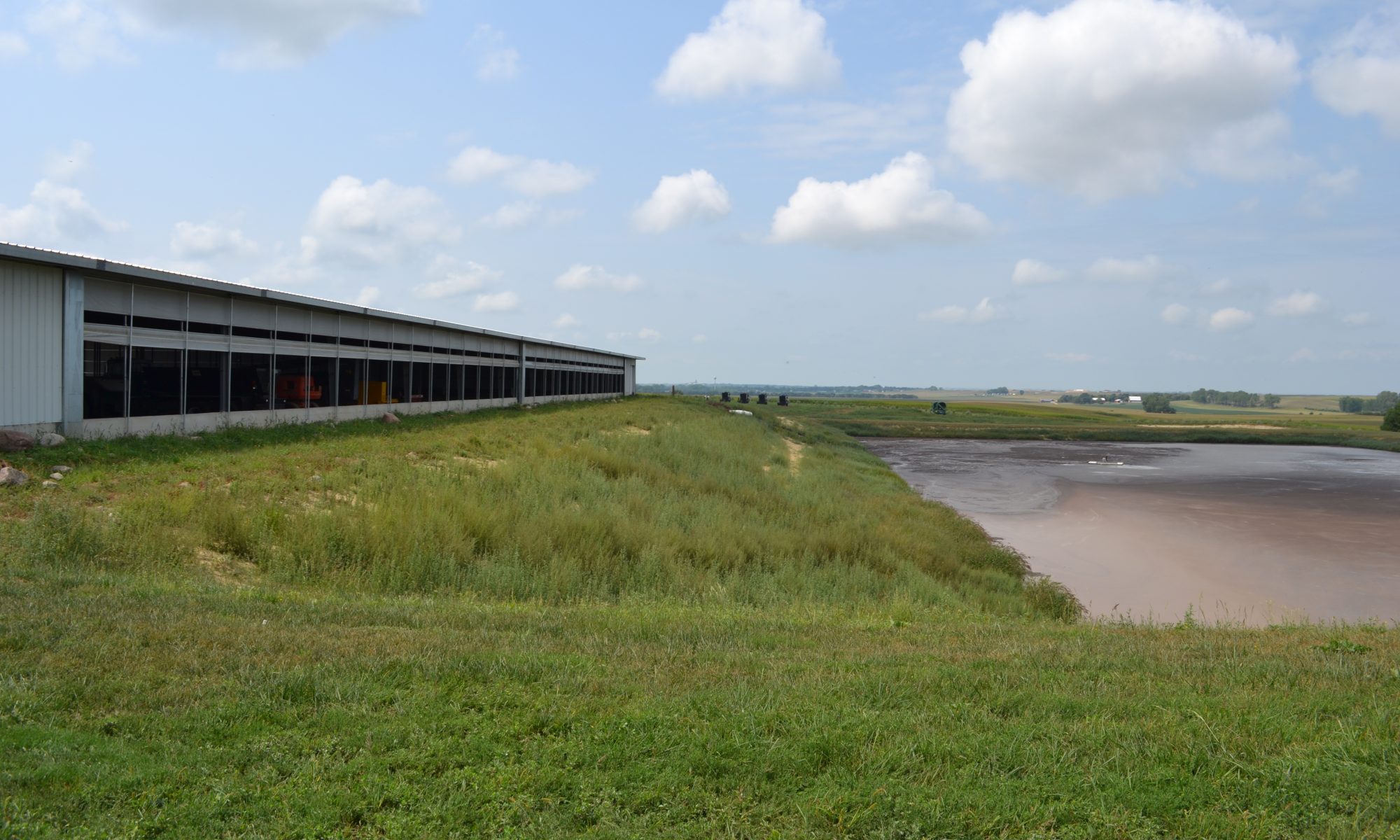

Per- and polyfluoroalkyl substances (PFAS) are persistent in the environment and in humans. While agriculture is not the source of PFAS, feed and animal production are potential transfer points. This webinar shares experiences from Maine, where PFAS was detected in soil, feed, milk, and meat and initiated a multi-pronged response and remediation approach from multiple agencies, on multiple farms. Our speakers will share the important distinctions between PFAS chemicals, short- and long-term ramifications for local farms, and remediation techniques – both implementation and research scale. This presentation was originally broadcast on December 13, 2024. Continue reading “Responding to PFAS on Dairy Farms in Maine”
Engaging Farm Safety and Manure Management: Innovative Teaching Methods in Action
The agricultural industry consistently has the highest risk for occupational injuries and fatalities. This session will share some proven techniques for making changes to farm safety practices and manure management that could positively impact generations to come. We will explore dynamic and interactive teaching methodologies that could be adapted for use in at your facility and in your training programs. These methods employ activity-based learning, where participants have the opportunity to learn, apply and discuss real-world scenarios in a safe environment. This presentation was originally broadcast on November 22, 2024. Continue reading “Engaging Farm Safety and Manure Management: Innovative Teaching Methods in Action”
Managing Dairy Manure for Increased Soil Health and Forage Production Sustainability
Manure is a valuable source of crop-essential nutrients that, when managed carefully, can help build soil organic matter, enhance nutrient cycling, and improve overall soil health and climate resilience over time. In 2022, a statewide on-farm research project was initiated in New York State to quantify the nitrogen (N) replacement value, corn silage or grain yield, and soil health enhancements of various manure sources. Between 2022 and 2023, eleven on-farm field trials were implemented. Yield data are being used to quantify differences in most economic N rate between manured and non-manured strips, and to quantify the yield impact of the manure applications. In 2024, eight additional trials were added using various manure sources. Results so far indicate that manure can offset N fertilizer needs and increase corn silage yield beyond its nutrient contributions, but impacts are field-specific, reflecting differences in field histories and growing conditions. Assessments of soil microbial biomass for sites in 2023 and 2024 reflected the manure history for trial locations and suggest that mid-season assessments may help identify where nitrogen fertilizer addition is beneficial for the crop and where not. Assessment of variability of different manure sources point to the importance of manure sampling and analyses. Preliminary results will be shared. This presentation was originally broadcast on October 18, 2024. Continue reading “Managing Dairy Manure for Increased Soil Health and Forage Production Sustainability”
Fifty Years of Environmental Progress for US Dairy Farms
Many changes have occurred in the technology, management, and resulting productivity and environmental impacts of United States dairy farms over the past 50 years. Based on research recently published in the Journal of Dairy Science, Dr. Al Rotz will discuss how changes in production have impacted 13 environmental metrics and where improvements can still be made in the future. This presentation was originally broadcast on August 16, 2024. Continue reading “Fifty Years of Environmental Progress for US Dairy Farms”
Staying in the Loop: Circularity in Integrated Crop and Livestock Production
Have you heard or read about circularity and the circular economy? These buzzwords describe sustainability concepts that are being adopted in many sectors, including food animal production. This webinar shares definitions for these concepts and how they can inform thinking about changes to animal systems and manure management. This presentation was originally broadcast on June 21, 2024. Continue reading “Staying in the Loop: Circularity in Integrated Crop and Livestock Production”
Precision Ag In the Barn and In the Pasture
This webinar shares updates on approaches to precision agriculture for animal management, welfare and productivity, and how these applications influence nutrient management. This presentation was originally broadcast on May 17, 2024. Continue reading “Precision Ag In the Barn and In the Pasture”
Optimizing Agricultural Practices: Balancing Manure Use and Minimizing Compaction
This webinar discusses why compaction is a cropping challenge, considers how the application of manure can lead to it, and the effects of manure on soil resiliency. This presentation was originally broadcast on April 19, 2024. Continue reading “Optimizing Agricultural Practices: Balancing Manure Use and Minimizing Compaction”
Implications of Managing Manure on a Nitrogen Basis
Meeting crop nitrogen needs with manure while overapplying other nutrients can save the crop farmer the cost of additional fertilizer, but every decision on a farm has consequences. This webinar discusses using whole farm and field-based nitrogen (N) and phosphorus (P) balances to identify opportunities for improvements in nutrient use and monitor the impact of management changes over time, the time necessary to reduce the soil phosphorus levels, and the issues with zinc accumulation in soils. This presentation was originally broadcast on March 15, 2024. Continue reading “Implications of Managing Manure on a Nitrogen Basis”
Upcoming Models and Tools to Improve Manure Management
Responsible manure management uses multiple data types from a wide range of sources. This webinar highlights three new tools that aim to ease this burden while supporting effective decision-making. ManureDB aggregates U.S. manure analysis data and provides user-specified reports of manure characteristics. ManureTech synthesizes the environmental, economic and operational facets of manure treatment technologies. Manure Management Planner is a trusted tool but has also undergone recent updates for site-specific setback distances. Participants will be able to see these tools in action, and where further developments are headed. This presentation was originally broadcast on February 16, 2024. Continue reading “Upcoming Models and Tools to Improve Manure Management”
2024 Webinars Approved for ARPAS Continuing Education Units
These webinars have been approved for 1 continuing education unit (each) as part of the American Registry of Professional Animal Scientists (ARPAS) program. To receive CEUs, view a live or archived webinar, complete an evaluation (if available), and contact ARPAS, 217-356-5390 to have the credit applied to your CEU balance. Repeat this process for each webinar being utilized for CEUs.
2024 Webinars
-
- Responding to PFAS on Dairy Farms in Maine – December 13
- Engaging Farm Safety and Manure Management: Innovative Teaching Methods in Action – November 22
- Managing Dairy Manure for Increased Soil Health and Forage Production Sustainability – October 18
- The Role of Agriculture in Atmospheric Nitrogen Deposition: Sources, Impacts, and Management – September 20
- Fifty Years of Environmental Progress for US Dairy Farms – August 16
- Staying in the Loop: Circularity in Integrated Crop and Livestock Production – June 21
- Precision Ag In the Barn and In the Pasture – May 17
- Optimizing Agricultural Practices: Balancing Manure Use and Minimizing Compaction – April 19
- Implications of Managing Manure on a Nitrogen Basis – March 15
- Upcoming Models and Tools to Improve Manure Management – February 16
- Animal Feeding Operations Air Emission Estimation Methods – January 19
More Webinars…
- Topics include: Carbon Markets, Soil Health, Mortalities, Air Quality, Models & Tools, Vector Control, Antibiotic Stewardship, Manure Additives, Minimizing Risk, and Energy Conservation. More…
- Topics include: Carbon Markets, Worker Safety, CEAP I & II, Antimicrobial Resistant movement, Manure Nutrient Trends, Vermifiltration, Urban Manure Management, Manure Pipelines, and Lagoon and Digester Cleanouts. More…
- Topics include: Edge of Field Monitoring, PFAS, Food Safety, Digesters & Natural Gas, Manuresheds, Extreme Events, Antimicrobial Resistance, Sustainability, Weeds, and Soil Health. More…
- Topics include: Less typical species, designer manure, precision technologies, human health, poultry systems, communicating science, compost emissions, PFAS, and manure transfers. More…
- Topics include: Separation technologies, soil health, cleaning barn exhaust air, pathogens, antimicrobial resistance, greenhouse gas emissions, nutrient inventories, and phosphorus management. More…
- Topics include: Emergency response, treatment technologies, manure foaming, small farm equipment, manure’s impact on soil, manure irrigation, manure pit death, sampling, and biosecurity. More…
- Topics include: Climate resiliency, avian influenza, side-dressing nitrogen on emerged corn, runoff risk advisory tools, anaerobic digestion, manure handling safety, long-term manure application, and managing edge of field losses.. More…
- Topics include: Construction and maintenance of manure ponds, antibiotic resistance, manure entomology, NAQSAT, Drones, manure safety and transport, the nutrient recycling challenge, Vermont nutrient management training course, and pathogens. More…
- Topics include: Manure Apps, Gypsum Bedding, Livestock Housing, Tile Drained Lands, Micro Manure Management, Horse Manure Composting, Uses of Biochar, Thermal Manure-to-Energy Systems, Mortality Management during Avian Influenza, Communication Pathways, Communicating During Controversy. More…
- Topics include: Capturing Nutrients, Manure as a biofuel, Water Quality Index, Liquid manure nutrients, Carbon credits, Bioaerosols, WOTUS, Biosecurity, Mortality composting, Whole Farm Nutrient management, Winter manure application, Next generation activities. More…
2013 Webinars
- Topics include: Risk Management, Waste to Worth, Mono-slope beef barns and research results, Bioavailability of Phosphorus, Capturing Nutrients. More…
2012 Webinars
- Topics include: Biofilters, The 4Rs, Microbes, Life-Cycle Assessments, Carbon Footprints, Nitrates, Adaptive Nutrient Managment, Chesapeake Bay, Emergency Management. More…
2011 Webinars
- Topics include: Top-dressing manure, Chesapeake Bay, Soil Health, Reducing Odor Risk, Anaerobic Digestion, NMP implementation, NAEMS, Lagoon Closure, Manure Economics, 2011 NPDES CAFO rule. More…
2010 Webinars
- Topics include: Cover Crops, Vegetative Environmental Buffers, Mortality Composting, Manure Spills, NAQSAT, Manure on No-Till, SPCC, Ammonia Emissions. More…
2009 Webinars
- Topics include: Feeding Strategies, Carbon Footprint, Conserving Nitrogen, AFO Inspection, Mortalities, Air Emissions, Grazing Management. More…
2008 Webinars
- Topics include: Market Based Conservation, Antibiotics and Hormones, Dry Manure Housing Systems, Ammonia, Small Farms, Regulations, Manure Management Planner Software. More…
2007 Webinars
- Topics include: Integrated Nutrient Management, Manure Application to Legumes, Value of Manure in Land Application, Smithfield Project, Value Added Processing of Manure, Manure Treatment Technologies, Value of Manure in Energy Generation, Vegetative Treatment Systems, and Innovative Manure Treatment Technologies. More…
2006 Webinars
- Topics include: CNMP Core Curriculum, Pathogens, EPA CAFO Regulations. More…
Having Trouble?
If you experience difficulty in viewing webinars, please visit our webinar troubleshooting page: