N2 Applied: A Novel Approach to Increasing Nitrogen in Animal Manure

Due to a technical glitch, the beginning of the recorded presentation was not recorded. Please accept our apologies.

Purpose

Manure management technologies are constantly being developed. But do these technologies meet their intended purpose?  How effectively do they perform?  Providing impartial evaluations on the effectiveness and longevity of these technologies requires time, finances, and expertise.

Newtrient, with support from a Natural Resources Conservation Service (NRCS) Conservation Innovation Grant (CIG) and a New York Farm Viability Institute Grant, has been evaluating 15 manure-related technologies with a focus on water quality. Through this effort, Newtrient will document the findings from each study to promote the broader adoption of these technologies in livestock manure management. One of the technologies evaluated, N2 Applied, explored the use of plasma treatment to increase nitrogen content in the manure waste stream, while simultaneously reducing ammonia and greenhouse emissions. This presentation will primarily highlight the results from the N2 Applied evaluation.
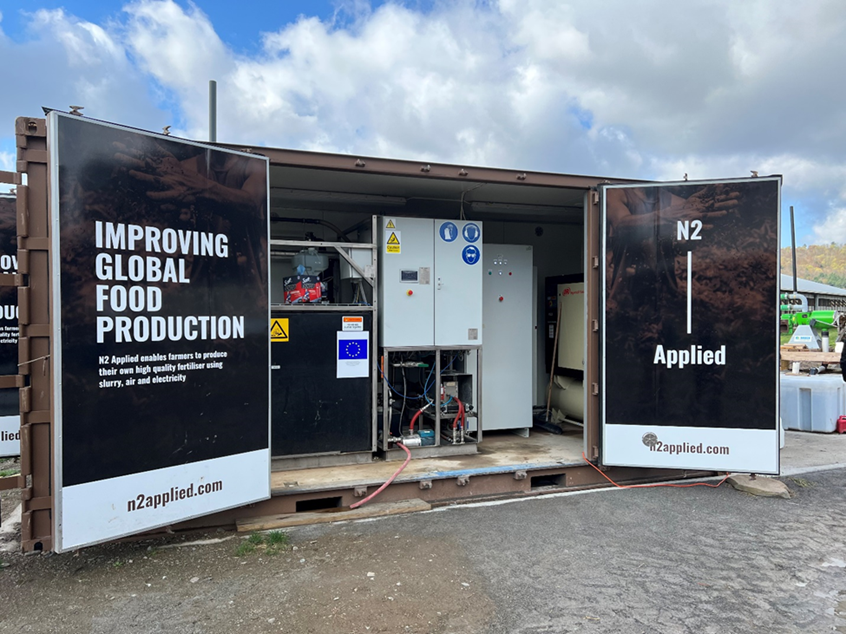
 Figure 1. N2 Applied Demonstration Unit.

Figure 1. N2 Applied Demonstration Unit.

What Did We Do?

Newtrient collaborated with Washington State University to develop a technology review protocol. This evaluation process was modeled after the NRCS approach for assessing Waste (Manure) Treatment technologies, as outlined in Conservation Practice Standard 629, Waste Treatment. One of the challenges in reviewing manure management technologies has been obtaining technical third-party evaluations. This protocol established a comprehensive method for reviewing and evaluating these technologies.

For the N2 Applied system, Newtrient contracted with Cornell University as the third-party evaluator. This evaluation compared the nitrogen content and stability of untreated and treated dairy manure over a 15-week period. Both static and flow-through tanks were studied to assess the effectiveness of this treatment process. Liquid samples were analyzed for nutrient content, with a focus on water quality issues, and a limited number of air samples were collected to evaluate greenhouse gas emissions and air quality.

The N2 Applied plasma technology uses electricity to split atmospheric nitrogen and oxygen which then forms into reactive nitrogen gas.  This gas is absorbed into the manure waste stream raising the amount of plant available nitrogen while also lowering the pH.  This demonstration unit was delivered and operated from a 20 feet long cargo bin.
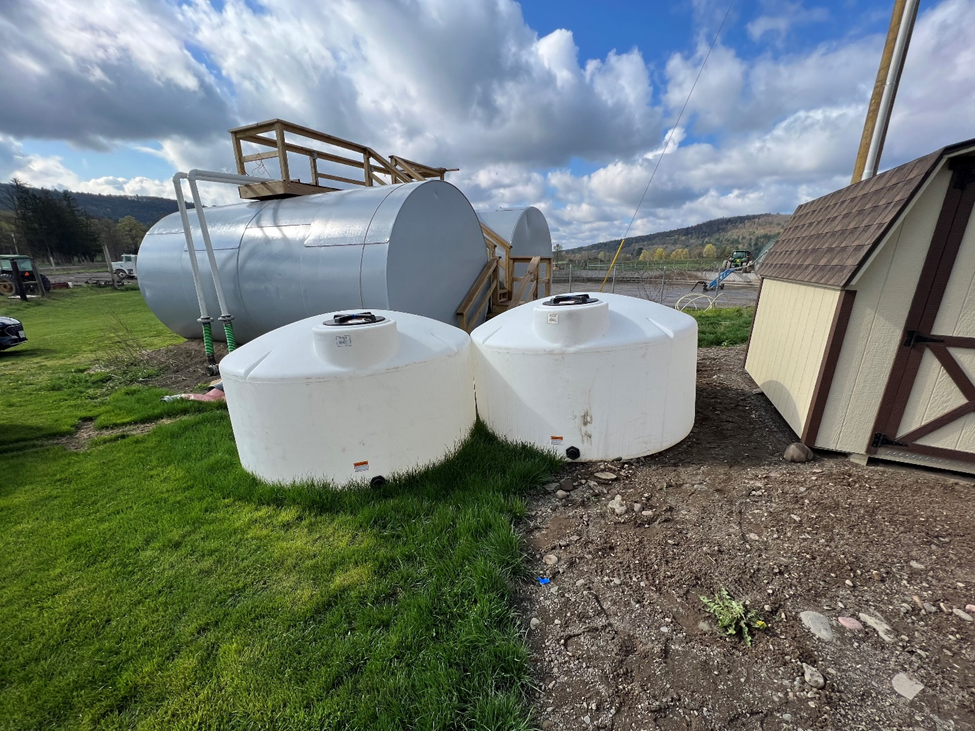
Figure 2. Static and Flow Through Tanks Utilized for Technology Evaluation.

What Have We Learned?

The N2 Applied technology increased the nitrogen content of the dairy manure by more than 50% in the static tanks and nearly 50% in the flow-through tanks. The plasma torch created nitrogen oxides by combining atmospheric nitrogen and oxygen gases. This treatment process lowered the pH to a set point, initially set at 5.5 but later adjusted to 5.0. This lower pH inhibited the microbial production of methane (CH4) and converted more of the nitrogen to ammonium (NH4+) instead of the more volatile ammonia (NH3). The following two figures show the impact of the N2 Applied technology on methane and nitrogen stability for the static tank portion of the study.
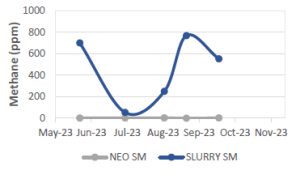
Figure 3. CH4 from static tanks

The nitrogen content remained stable for more than 4 months, and methane production was significantly reduced through this process. Coarse solid/liquid separation was a key component ensuring the efficient operation of the technology.
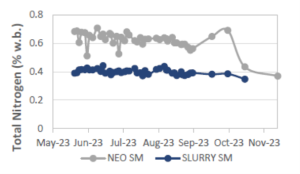
Figure 4. Nitrogen Levels with and without N2 Applied Technology.

For this demonstration unit, the plasma torch used approximately one-half of the energy consumed.  The estimated annual electrical cost to operate this unit was $26,800.  With the lessons learned from this evaluation, the new commercial unit will have much lower electrical costs.

Future Plans

The N2 Applied system evaluated for this study was a demonstration unit. Based on the lessons learned, a commercial unit is currently being developed, with deployment to the United States expected in late 2025. Once a new unit is installed, another series of studies will be conducted following a similar testing protocol.

For the commercial unit, a critical factor to evaluate will be the long-term stability of the nitrogen-enriched manure. Additionally, it will be important to assess production rates, along with capital and operating costs. Agronomic trials, combined with field emission measurements, will determine the impact on crop yield and air quality once the product is land applied.

Authors

Presenting & Corresponding author

Jeff Porter, Technical Consultant, Newtrient,  jeff.porter@newtrient.com

Additional author

Mark Stoermann, Chief Operating Officer, Newtrient

Additional Information

Project and Vendor Information: 2020 NRCS Conservation Innovation Grant – Newtrient

Acknowledgements

Special thanks to the USDA-NRCS Conservation Innovation Grant program and the New York Farm Viability Institute for providing funding to allow for this technology evaluation to take place.

Videos, Slideshows and other media

Webinar Highlighting Evaluation Results: N2 Applied – Insights and Innovation

Newtrient Solutions Catalog: N2 Applied

N2 Applied Homepage: Home – N2 Applied

GEA Manure Enricher: Produce your own sustainable fertilizer | GEA ProManure E2950

The authors are solely responsible for the content of these proceedings. The technical information does not necessarily reflect the official position of the sponsoring agencies or institutions represented by planning committee members, and inclusion and distribution herein does not constitute an endorsement of views expressed by the same. Printed materials included herein are not refereed publications. Citations should appear as follows. EXAMPLE: Authors. 2025. Title of presentation. Waste to Worth. Boise, ID. April 711, 2025. URL of this page. Accessed on: today’s date.

Results of Nutrient Recovery System Installed on Large Scale Dairy Operation After 2-years of Operation


Proceedings Home W2W Home w2w17 logo

*Do not make slides downloadable

Purpose 

For centuries, farmers have disposed of manure by simply spreading it on the land. It is a natural fertilizer. Today, that practice is no longer considered the best solution. Field spreading is now understood to contribute to a growing global problem of the pollution of water, soil, and air. Consequently, U.S. dairy farmers face increased fiscal and operational pressure from the progression of ever tightening environmental regulations. Conventional handling of manure also imposes a number of operational challenges (limitations for storage, land application and irrigation, settlement in lagoons, high manure hauling costs, etc.) and typically requires a relatively large land base to allow adequate nutrient management.

In Indiana, a dairy that was daily producing thousands of tons of livestock waste was investigating how technology could capture the valuable nutrients remaining in their cow manure after it had gone through the farm’s anaerobic digestion process. Their goal was to convert the manure/digestate into a nutrient rich cake that could be easier managed and made into fertilizer, and the liquid clean enough to be used unrestricted for land application.

The farm’s key operational deliverables were 1) to reduce the manure’s handling and transportation costs, 2) allow for precision applications of the processed manure as carbon-based fertilizer and 3) allow for re-use of nutrient reduced liquid for field irrigation.

What did we do? 

The dairy farm chose to implement a nutrient recovery technology from Trident Processes LLC. The technology separates the manure/digestate into three fractions: 1) cellulosic fiber, 2) a concentrated cake of nutrient enriched solids, and 3) water with about 1% remaining solids.

Trident’s turn-key system, consisting of different mechanical and chemical components, processes the manure and diverts each separated fraction into their separate spaces. Sensors and programmable controls (PLC) allow for smooth operation, requiring minimal operator attendance. The entire system can be monitored, controlled and diagnosed remotely.

The manure is fed into the system following the digestion process. The initial step is the extraction of the large fiber, which is done via a rotary screen conditioner. The wetted material separates, with the effluent water and fine solids sifting down through the screen while the larger fiber is retained. This step is critical as it ensures the fine particles, which contain the nutrients, are sent down stream for further treatment.

FIBER: The extracted fiber is sent to a screw press for further dewatering. This renders it as a 30% dry cellulosic fiber biomass that is ideal for recycling as cow bedding or other biomass use. Any liquid squeezed from the fiber is diverted to join the fine solids stream.

SOLIDS: The effluent water and solids are sent to a dissolved air flotation (DAF) tank. Polymerization ensures effective flocculation of the feedstock, resulting in a concentration of the nutrient rich particles that float to the surface. The sludge formed on the surface is skimmed off the top and gravity fed into a multi-disc press for second-stage dewatering. The press gently dewaters and thickens the recovered solid/nutrient sludge into a 25% solids, nutrient rich cake.

WATER: The final effluent water, now nutrient reduced, contains less than 1.2% solids and is sent to the lagoon for storage. The water is then reused for irrigation through efficient pivot systems or as operational water on the farm.

What have we learned? 

By implementing Trident’s Nutrient Recovery System, the farms’ objectives have been met and/or exceeded. After running for nearly two years the system is producing the following statistics:

• Fully automated operation requiring about 1 hr/shift for operator attendance (visual checks)

• 98% system uptime

• Polymer costs: $0.06 – $0.08/day/cow

• Reduction of handling and irrigation costs: $ 0.01/gal (conventional) vs $0.003/gal (center pivot)

• $250,000/yr electrical power savings with MD Press vs. centrifuge

• 73,000+ ton/yr nutrient cake produced

• 81% P, 70% organic N (54% TKN), and 20% K is the average nutrient capture rate

• 1% (max.) solids in the effluent water sent to lagoons

• 99% Suspended solids captured

Future Plans 

Dairy farm: A fertilizer plant will go live in the near future, allowing the farm to sell their concentrated nutrients to the plant as feedstock for custom fertilizer production.

Technology provider: 2nd Phase effluent treatment to capture and retain the solid and nutrient fraction of the existing process, allowing to meet stream discharge standards and comply with BOD / COD levels. Bench scale testing is completed. Farm scale pilot testing is scheduled to run from March 2017-December 2017.

Corresponding author, title, and affiliation       

Richard Shatto (Senior Partner at Point Nexus Consulting), Frank Engel (Director Marketing at KPD Consulting Ltd.)

Corresponding author email 

frank.engel@kpdconsulting.ca

Additional information 

https://youtu.be/PvaTGmyws-w (Carl Ramsey’s presentation at Indiana Dairy Forum)

http://www.progressivedairy.com/topics/manure/prairie-s-edge-dairy-on-pa… (Progressive Dairyman article)

http://tridentprocesses.com/documents/case-study-trident-nutrient-recove… (Newtrient case study)

https://are.wisc.edu/manure-processing/ (manure management project with University of Wisconsin)

http://www.foodqualityandsafety.com/article/nutrient-recovery-improves-s… (Nutrient Recovery Improves Sustainability article in Food Quality & Safety Magazine)

Acknowledgements       

Carl Ramsey, Environmental Manager at Prairie’s Edge Dairy Farm

Soil Net LLC, Dr. Aicardo Roa (strategic partner for chemical separation process)

Leap Tech, R.C. Ludke (strategic partner for automation)