Manure management decisions involve a complex balance of economic, environmental, and operational considerations. This webinar explores how producers, advisors, and policymakers evaluate the costs, benefits, and trade-offs of manure management practices. Topics will include decision-support tools, the role of economics in environmental stewardship, how policy influences management decisions, and current perspectives on the costs, value, and adoption of manure management technologies and practices. Participants will gain insight into the factors that shape manure management decisions and their implications for agricultural operations and environmental outcomes. This presentation was broadcast on October 23, 2026.
An application for continuing education credit for Certified Crop Advisors (CCAs) and members of the American Registry of Professional Animal Scientists (ARPAS) will be submitted.
How Policy Shapes the Value of Manure
Zach Raff, North Carolina State University (20:17)
Using the ManureTech Decision Support Tool to Explore Alternative Manure Management Systems for Dairies
Erin Scott, University of Arkansas (20:14)
Dan Anderson Presentation Title
Dan Anderson, Iowa State University (00:00)
Questions from the Audience
All Speakers (12:09)
About the Speakers
Zach Raff, North Carolina State University
Zach Raff, North Carolina State University
Zach Raff is an assistant professor of agricultural and resource economics at North Carolina State University. His research program examines the adoption of precision technology in livestock production and the benefits and costs of agri-environmental policy, particularly policy on manure management. Before NC State, Raff was a research economist at USDA’s Economic Research Service.
Erin Scott, University of Arkansas
Erin Scott, University of Arkansas
Erin Scott, Ph.D., is a public policy professional specializing in water quality management, environmental policy, and stakeholder-driven conservation initiatives. She earned her Ph.D. in Public Policy from the University of Arkansas, where her dissertation focused on bridging science and policy in dairy manure management through the development of a multicriteria decision support tool. Erin serves as Senior Policy & Program Director at H2Ozarks, leading watershed management and conservation programs across the region. Her work brings together scientists, policymakers, agricultural producers, and community stakeholders to develop practical, science-based solutions that support both environmental stewardship and economic vitality. Erin’s expertise includes manure management, water quality protection, watershed planning, and evidence-based policy development.
Dan Anderson, Iowa State University
Dan Anderson, Iowa State University
Daniel Andersen is a Professor and Extension Agricultural Engineer at Iowa State University, specializing in manure management, nutrient utilization, and agricultural sustainability. Better known as “Dr. Manure,” he works to help livestock producers and farmers turn manure management challenges into practical and economic opportunities. He is an ASABE Fellow.
Mahmoud Sharara (moderator), North Carolina State University
Mahmoud Sharara, North Carolina State University
Mahmoud Sharara is an Associate Professor and Extension Specialist in the Department of Biological and Agricultural Engineering at NC State University, where he also directs the Food Animal Resource Management & Sustainability(FARMS)Center. His research, extension, and teaching focus on adding value to byproducts from food animal production while reducing their environmental impacts. He works closely with growers, industry, and agency partners to evaluate and support adoption of manure processing and nutrient management technologies. Dr. Sharara is a co-chair of the upcoming Waste to Worth 2027 in Raleigh, NC (April 12-16, 2027).
The application of livestock manure to farm fields has always been an expense for producers. On-farm research plots were assessed in Ohio following application of liquid swine and liquid dairy manure using drag hoses to provide side-dress nitrogen to emerged corn. A six-inch diameter drag hose was used to side-dress corn with swine finishing manure at the V3 stage for four crop seasons. The manure was incorporated at a rate of 6,500 gallons per acre to replace purchased commercial side-dress nitrogen. Plot yield results indicated liquid swine manure produced higher yields when compared to 28% urea ammonium nitrate fertilizer when applied at similar nitrogen levels and the cost savings on purchased fertilizer paid for the manure application cost. The use of liquid manure to sidedress corn can provide a new window of time for manure application in Ohio and apply manure when the nutrients could be utilized by a growing crop.
Purpose
The process of applying liquid swine finishing manure to farm fields represents a significant expense for livestock producers despite the value of the nitrogen, phosphorus and potash contained in the manure. Ohio farmers continue to reduce wheat acreage shifting more of their manure application to the fall application window. The ammonium nitrogen in fall-applied manure is subject to loss before a crop is planted the following season. In the Western Lake Erie Basin of Ohio, an area over three million acres in size, surveys have shown approximate half the livestock manure generated annually is applied in the fall after crops are harvested (Zhang et al., 2015). This allows much of the manure nitrogen to be lost to leaching before the following crop season. Recent research has determined the amount of nitrogen entering Lake Erie influences the toxicity of the hazardous algae blooms.
The ammonium nitrogen in fall applied swine finishing manure can be captured by growing cover crops. A fall cover crop study (Sundermeier, 2010) indicated that an actively growing radish crop reduced soil nitrate nitrogen levels from 21.3 ppm to 6.5 ppm. This prevented the nitrogen from being lost from the field, but only a portion of the organic matter created would mineralize the following crop season to provide nitrogen for a growing crop.
The incorporation of swine finishing manure directly into a growing corn crop with a manure tanker has proven to provide corn yields similar to commercial fertilizer (Arnold et al., 2017). However, Arnold et al. noted soil compaction was a concern with the heavy manure tanker. Using a drag hose to incorporate the manure into emerged corn should overcome the soil compaction concern and allow the corn crop to utilize the available nitrogen in the swine finishing manure. The money saved by not needing to purchase commercial nitrogen to side-dress the corn crop could exceed the cost of the manure application.
What did we do?
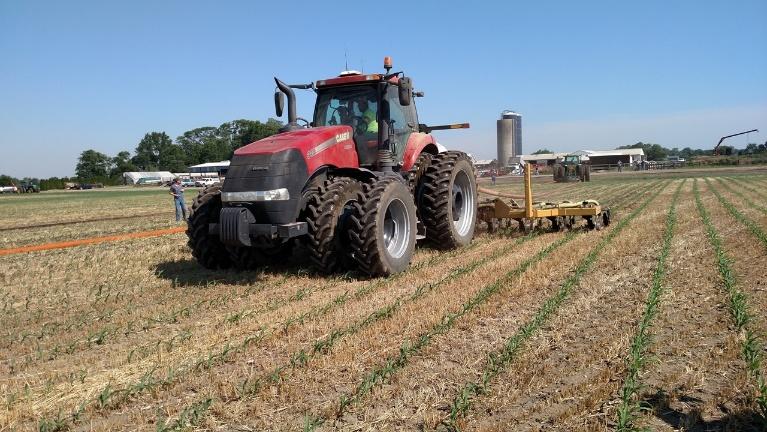
This study was designed to determine whether the ammonium nitrogen in liquid swine finishing manure could produce corn yields similar to commercial 28% urea ammonium nitrate (UAN) when the manure was side-dressed on emerged corn using an injection toolbar and soft drag hose (Figure 1).
Figure 1. Side-dressing V2 corn with liquid manure.
In each of the four years of this complete block design study, started in 2014, manure was incorporated at a rate of 6,500 gallons per acre to provide approximately 210 pounds per acre of nitrogen. The 28% UAN treatment was applied at approximately 70 gallons per acre to provide 210 pounds of nitrogen per acre. All treatments also received 10 gallons of 28 percent UAN as a row starter fertilizer at planting time to provide approximately 30 pounds of nitrogen. The two treatments (manure and commercial fertilizer) were replicated three times each season.
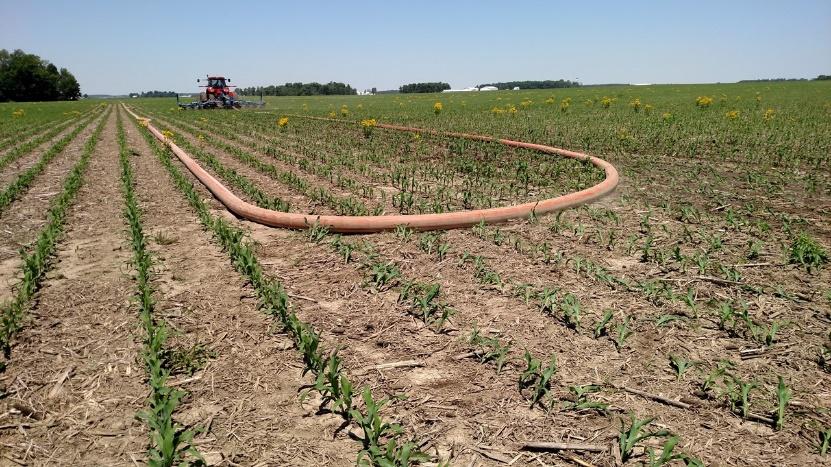
Figure 2. Manure drag hose across V3 corn.
To fit the needs of the commercial manure drag hose operator, each year the corn fields were planted at a 45 degree angle with a 12-row planter using auto-steer. This allowed the commercial manure applicator to stretch the empty manure hose diagonally across the field from one corner to the other at the start of the manure application process (Figure 2).This divided the square field into two triangles and the applicator could apply manure to the entire field without the need of a second tractor to assist in moving the full manure hose. The field had 36 rows (90 feet) of end rows completely around each field allowing the drag hose operator sufficient room to make turns and keep the manure within the boundaries of the field.
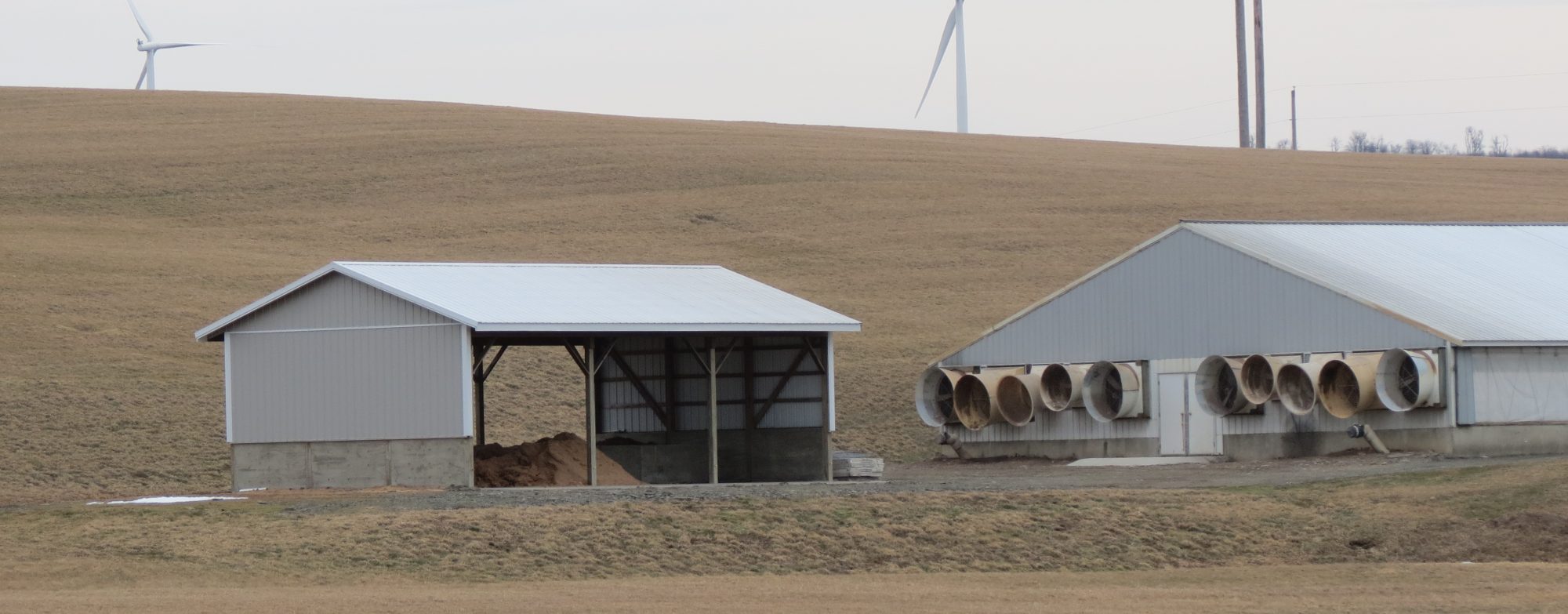
The manure came from a 2,450 head swine finishing building with an eight foot deep pit under the animals. This finishing building design is common in Ohio. The manure was pumped through an eight inch diameter hose to the edge of the corn field. A six inch diameter drag hose was pulled across the field during the manure application process.
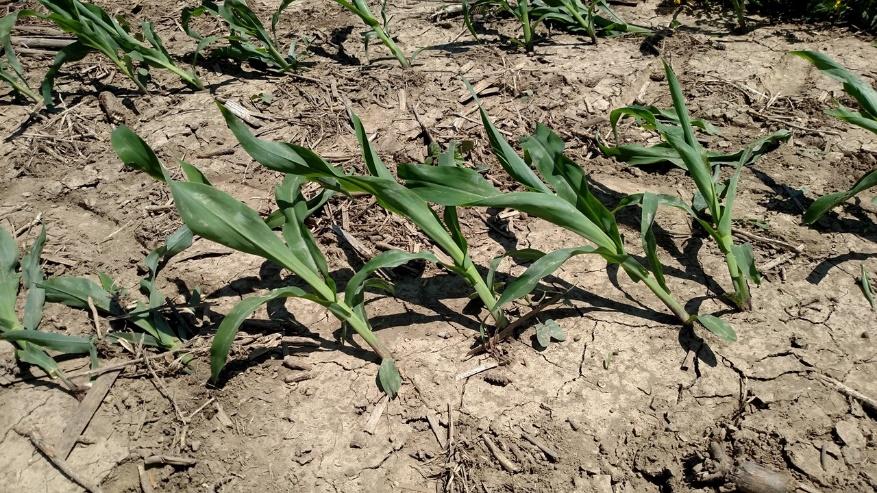
Figure 3. Drag hose damage caused the corn to lean for about a day.
The corn flattened by the hose typically recovered, i.e. was standing upright, by the following day (Figure 3). The pressure in the hose at the building was more than 200 pounds per square inch. The hose pressure at the toolbar in the field was approximately 30 pounds per square inch. The flow rate was typically between 1,400 and 2,000 gallons per minute depending on the type of pumping equipment used, the diameter of the hoses used, and the distance from the manure storage site to the field during each of the four years.
Manure samples were collected and analyzed during the application process each season. The nitrogen, phosphorus and potassium content of the manure was similar each year so application rates were kept the same each season. The analysis indicated the manure contained 32.1 pounds of available nitrogen, 18.0 pounds of P205 and 24.9 of K20 per 1,000 gallons (Table 1).
Table 1. Average nutrient analysis of swine finishing manure applied.
Nutrient
Pounds per 1,000 gallons
Total Nitrogen
34.3
Ammonium Nitrogen (NH4)
31.0
Organic Nitrogen
2.2
Available Nitrogen
32.1
Phosphorus (P2O5)
18.0
Potash (K2O)
24.9
The liquid manure application toolbar had rolling coulter manure application units with a wavy coulter tilling up a strip of soil approximately six inches deep and three inches wide. The manure boot applied manure over the tilled strip and the manure was covered by a pair of notched soil closing wheels. Treatments were approximately 1,200 feet long and 30 feet (12 rows) wide. The auto-steer unit used for planting the crop was transferred from the planting tractor to the 275 horsepower tillage tractor, attached to the toolbar and drag hose, for the manure application. The center unit on the toolbar was removed to prevent tillage and manure application to the center row. This enabled the drag hose to ride higher on the soil surface and lessen the scouring of the field. The manure for the center row was diverted to each side so each side received 150% of the normal manure application rate.
In each year of the study manure was not applied to three strips, 12 rows wide, in each field. These strips were fertilized with 28% UAN the same day with the same rate of nitrogen contained in the swine finishing manure. These commercial fertilizer strips did, however, have the drag hose pulled across them as the commercial manure applicator applied manure to all other parts of the fields. Commercial 28% UAN was applied to the ends of the corn fields and edges of the corn fields where the swine manure could not be incorporated.
The fields were no-till or minimum-till and the previous crop each year was soybeans. Plant population counts were conducted each year of the study. The predominant soil type in the fields were Blount Silt loam, end moraine 0 to 2 or 2 to 4% slopes
Soil samples of each of the four fields in this study showed P205 and K20 levels to be in the maintenance range. The Mehlich III P205 levels ranged from 59 to 81 ppm and the K20 levels ranged from 149 ppm to 184 ppm (Table 2).
Table 2. Annual soil nutrient test results (Mehlich III).
Year
2014
2015
2016
2017
pH
6.7
7.0
7.0
6.8
Organic Matter (%)
2.9
2.5
2.6
2.8
P2O5 (ppm)
66
76
81
59
K2O (ppm)
161
149
162
184
At harvest time each year, yields and moisture data were collected using the combine’s monitor. The monitor was calibrated each season before the manure side-dress plots were harvested. All yields were adjusted for moisture. Yield data were analyzed by ANOVA at the 0.10 probability level.
What we have learned?
Over the four years of this study the incorporated swine finishing manure treatments increased yields when compared to the incorporated 28% UAN treatments by an average of 14.8 bushels per acre (Table 3). This varied from no yield increase the 1st year (2014) to 33 bushel per acre yield increase in 2015, an unusually wet growing season.
Table 3. Corn yield for treatments comparing nitrogen applied as UAN at planting to side-dressed hog manure. Subscript letters a and b indicate yields that year were statistically different using ANOVA at 0.10 probability level.
Yield in Bushels per Acre
Treatments
2014
2015
2016
2017
4-year ave.
Incorporated 28 percent UAN
204
121a
216a
145a
171.5
Incorporated swine manure
204
154b
222b
165b
186.3
Least Significant Difference (0.10)
17.65
15.57
2.37
0.19
Coefficient of Variability
2.45
4.74
0.62
0.39
The normal accumulated precipitation for the growing season (April 1 through September 30) in this area of Ohio is 23.3 inches. The 2015 season was much wetter than normal, and the 2016 season was drier than normal (Table 4).
Table 4. Annual planting dates and normal and observed temperature and precipitation data from April 1 through September 30.
Year
2014
2015
2016
2017
Corn planting date
April 25
May 15
April 20
June 1
Normal precipitation (inches)
23.3
23.3
23.3
23.3
Actual precipitation (inches)
21.0
32.6
16.5
23.6
Historical average temp (°F)
65.7
65.7
65.7
65.7
Actual average temp (°F)
65.3
66.2
67.2
65.9
Average high temp (°F)
76.8
77.6
78.8
77.4
Average low temp (°F)
54.8
55.8
56.7
55.4
Total growing degree days
2,876
3,006
3,272
2,960
The application of 6,500 gallons per acre of swine finishing manure supplied approximately 210 pounds per acre of side-dress nitrogen for the corn crop while also supplying sufficient phosphorus and potash for the corn crop and the soybean crop the following year without applying excessive phosphorus (Table 5).
Table 5. Nutrient balance of swine finishing manure side-dress of corn. Nutrient removal rates are from Vitosh et al., 2003 (Tri-State Soil Fertility Guide).
Crop
Nutrient removal in pounds per bushel:
200 bushel per acre corn crop followed by a 60 bushel per acre soybean crop
Available nitrogen (ammonium nitrogen + half the organic nitrogen)
P205
K20
P205
K20
N
Corn
0.37
0.27
74
48
Soybeans
0.80
1.40
54
84
Total nutrients removed
122
138
Nutrient content of 6,500 gallons of swine finishing manure applied
117
162
210
Net nutrients
-5
+24
In the first year of this study (2014) the field conditions for manure application were less than ideal. The field was wet and the drag hose scoured more than an inch of soil from the field resulting in some of the V1 corn plants being buried and others being pulled out. This reduced the final plant population of the corn rows next to the drag hose by approximately three thousand plants per acre. In each of the following seasons, when V3 plants were side-dressed, the field conditions were firmer and stand loss from the drag hose was not an issue. This stand reduction may have been the reason why 2014 was the only season in which manure did not yield statistically better than the commercial fertilizer.
The hose dragged across emerged plants caused an obvious lean immediately after the application process. By the following day all the plants were upright again. Stand counts indicated approximately 32,000 plants per acre across both treatments in the 2015, 2016, and 2017 seasons.
The 2015 crop season had the largest difference in crop yields between the treatments. Rainfall that season was more than nine inches above normal (Table 4). Most of this extra rainfall fell during the 35 days following the side-dress treatments. We theorize that the lower yields with the UAN treatment was a result of a greater portion of the commercial fertilizer nitrogen being lost to either denitrification or leaching than the manure nitrogen during that time period.
In the 2017 season the corn was originally planted on April 25. Emergence was so poor as to justify replanting, but field conditions were not firm enough to replant until June. The side-dress applications took place two weeks after planting as the corn grew rapidly with the warm temperatures.
The swine finishing manure application rate of 6,500 gallons per acre provided more than an adequate amount of nitrogen for the corn crop while being just short of balancing phosphorus for the two year needs of a corn-soybean rotation. The amount of potash applied with the manure was 24 pounds more than needed for the crop rotation.
The cost of purchasing 28 percent UAN fertilizer to side-dress corn averaged approximately 40 cents per pound during the four years of this study. At an application rate of 210 pounds per acre the commercial fertilizer side-dress cost was $84.00 per acre (210 pounds * $0.40 per pound). The landowner’s custom cost for applying liquid swine finishing manure was $8.00 per 1,000 gallons or $52.00 per acre (6,500 gallons at $8.00 per 1,000 gallons). The cooperating farmers in this study valued his corn at $3.40 and the 14.8 bushel advantage for the manure treated plots were valued at $50.32 per acre. He also did not need to purchase side-dress nitrogen for the acres where manure was applied, and this saved an additional $84.00 per acre.
Future plans
In this study the application of liquid swine finishing manure at side-dress produced higher corn yields, compared to commercial fertilizer, in three of the four study years. Incorporating liquid swine finishing manure as a side-dress nitrogen source to emerged corn can boost yields, reduce nutrient losses, and give livestock producers another window of time to apply manure to farm fields in-season. The money saved on purchasing commercial side-dress nitrogen can pay for the cost of the manure application to an emerged corn crop.
Ohio State University extension now owns three 12-row manure side-dress toolbars which are being loaned to livestock producers and commercial manure applicators for their use to side-dress emerged corn. We discovered that very few commercial manure applicators in Ohio currently have row-ready tractors and only a small percentage of livestock producers have large enough tractors to pull the drag hoses. Grant monies have also been secured to provide tractors to pull the sidedress toolbars.
There is strong interest from commercial manure applicators to apply manure to corn fields. This practice enables them to apply more total gallons of manure in a year. Current indications are that the application of manure to corn fields will continue to expand in the years ahead as commercial applicators gear up for this practice. Every gallon of manure applied to a growing corn crop in early June is one less gallon likely to be applied during the fall application window.
Authors
Arnold, G. , Field Specialists, Manure Nutrient Management Application, Ohio State University Extension. arnold.2@osu.edu Custer, S., County Extension Educator, Darke County, Ohio State University
Additional information
Arnold, G. J. (2015). Corn yield results from side-dressing with liquid livestock manure. Journal of the NACAA, 8(2). Retrieved from https://www.nacaa.com/journal/index.php?jid=329
Sundermeier, A. (2010). Nutrient management with cover crops. Journal of the NACAA, 3(1). Retrieved from https://www.nacaa.com/journal/index.php?jid=45
Vitosh, M. L., Johnson, J. W., & Mengel, D. B. (2003). Tri-state Fertilizer Recommendations for Corn, Soybeans, Wheat and Alfalfa. Purdue Extension, Lafayette, IN.
Zhang, W., Wilson, R. S., Burnett, E., Irwin, E. G., & Martin, J. F. (2016). What motivates farmers to apply phosphorus at the “right” time? Survey evidence from the Western Lake Erie Basin. Journal of Great Lakes Research, 42(6), 1343–1356. https://doi.org/10.1016/j.jglr.2016.08.007
Facebook Page: Ohio State University Environmental and Manure Management
Thanks to Harrod Farms of Rossburg, Ohio for working with Ohio State University Extension on this research project
The authors are solely responsible for the content of these proceedings. The technical information does not necessarily reflect the official position of the sponsoring agencies or institutions represented by planning committee members, and inclusion and distribution herein does not constitute an endorsement of views expressed by the same. Printed materials included herein are not refereed publications. Citations should appear as follows. EXAMPLE: Authors. 2019. Title of presentation. Waste to Worth. Minneapolis, MN. April 22-26, 2019. URL of this page. Accessed on: today’s date.
South Carolina is home to an estimated 18,000 horse owners, many of which own or house less than ten horses on their property. Owners of such small facilities regularly obtain assistance from the Clemson Extension service concerning soil fertility, forage options, and in some cases nutrient testing, but there is very little information available concerning efficient utilization of the manure produced from their facility. In many cases the manure and bedding removed from stalls is viewed as something to be disposed of rather than a possible nutrient source than can be utilized with proper management. This presentation provides an overview of horse manure production and nutrient content for the small horse facility owner, and addresses the best management techniques to utilize produced manure, including the benefits of composting the manure before utilization.
Purpose
South Carolina is home to an estimated 18,000 horse owners, many of which own or house less than ten horses on their property. Owners of such small facilities regularly obtain assistance from the Clemson Extension service concerning soil fertility, forage options, and in some cases nutrient testing, but there is very little information available concerning efficient utilization of the manure produced from their facility. In many cases the manure and bedding removed from stalls is viewed as something to be disposed of rather than a possible nutrient source than can be utilized with proper management.
What Did We Do?
Several County Extension agents offer multi-week Equine Management seminars covering a range of topics primarily for the horse owner with a small number of horses. We added a segment on horse manure production and utilization, developing a presentation detailing the manure production amounts and nutrient content of typical horse manure, and best management strategies for utilizing that manure.
What Have We Learned?
This presentation has been provided to four Equine Management Seminars to date. In each case the horse owners were surprised in the lack of immediate availability of nitrogen in the manure, and were glad to learn of methods that provide sustainable uses for their horse manure while also helping to minimize potential disease issues and other impacts. They also mentioned that they now view the manure as a resource, not as “something to be dealt with.”
Future Plans
We plan to offer this training during future Equine Management seminars and as a single-event program.
Authors
W. Bryan Smith, M.S., Area Extension Agent – Agricultural Engineer, Clemson Cooperative Extension Service, wsmth@clemson.edu
John P. Chastain, Ph.D., Professor and Extension Agricultural Engineer, Clemson University
Gary L. Heusner, Ph.D., Professor and Extension Specialist, University of Georgia
The authors are solely responsible for the content of these proceedings. The technical information does not necessarily reflect the official position of the sponsoring agencies or institutions represented by planning committee members, and inclusion and distribution herein does not constitute an endorsement of views expressed by the same. Printed materials included herein are not refereed publications. Citations should appear as follows. EXAMPLE: Authors. 2013. Title of presentation. Waste to Worth: Spreading Science and Solutions. Denver, CO. April 1-5, 2013. URL of this page. Accessed on: today’s date.
To provide the best experiences, we use technologies like cookies to store and/or access device information. Consenting to these technologies will allow us to process data such as browsing behavior or unique IDs on this site. Not consenting or withdrawing consent, may adversely affect certain features and functions.
Functional
Always active
The technical storage or access is strictly necessary for the legitimate purpose of enabling the use of a specific service explicitly requested by the subscriber or user, or for the sole purpose of carrying out the transmission of a communication over an electronic communications network.
Preferences
The technical storage or access is necessary for the legitimate purpose of storing preferences that are not requested by the subscriber or user.
Statistics
The technical storage or access that is used exclusively for statistical purposes.The technical storage or access that is used exclusively for anonymous statistical purposes. Without a subpoena, voluntary compliance on the part of your Internet Service Provider, or additional records from a third party, information stored or retrieved for this purpose alone cannot usually be used to identify you.
Marketing
The technical storage or access is required to create user profiles to send advertising, or to track the user on a website or across several websites for similar marketing purposes.

 Erin Scott, University of Arkansas

 Mahmoud Sharara, North Carolina State University