Due to a technical glitch, we did not get this presentation recorded. Please accept our apologies.
Purpose
This study aimed to review current literature on livestock emissions in the United States, focusing on sources, challenges, and mitigation strategies. Specifically, it examines emissions from enteric fermentation, animal housing, manure management systems, and manure utilization. By synthesizing existing research, the study provides an understanding of how these emission sources contribute to air quality concerns, including greenhouse gas accumulation, odor issues, and public health risks. Additionally, it highlights the regulatory landscape and ongoing efforts to monitor and reduce emissions through technological and management innovations.
This study also explores opportunities for improving air quality while maintaining sustainable livestock production. It evaluates the effectiveness of various mitigation strategies, such as precision feeding, anaerobic digestion, and advanced manure treatment systems, in reducing emissions. Furthermore, it discusses potential advancements, including circular economy approaches and enhanced air quality modeling, to optimize emission reductions. By providing this analysis of current research and policy efforts, this study aims to support informed decision-making among producers, researchers, and policymakers in advancing sustainable livestock systems.
What Did We Do?
This literature review analyzed peer-reviewed research, government reports, and industry publications on livestock emissions. The review focused on emissions from enteric fermentation, animal housing, manure management systems, and manure utilization, identifying key sources and their environmental impacts. Studies were selected based on their relevance to air quality, greenhouse gas emissions, and mitigation strategies, ensuring a broad yet detailed assessment of current knowledge. Additionally, regulatory frameworks and policies from agencies such as the United States Department of Agriculture and U.S. Environmental Protection Agency were examined to contextualize efforts aimed at reducing emissions in livestock production systems.
To evaluate mitigation strategies, the study categorized technologies and management practices based on their effectiveness, feasibility, and adoption rates. Approaches such as anaerobic digesters, biofilters, precision feeding, and manure treatment systems were reviewed for their potential to reduce emissions while maintaining economic viability. Case studies and data from ongoing research projects were incorporated to highlight real-world applications and emerging innovations. The synthesis of findings aimed to identify knowledge gaps, assess the impact of existing policies, and propose future research directions to enhance emission reduction efforts in livestock production.
What Have We Learned?
Livestock emissions primarily arise from enteric fermentation (methane from digestion) and manure management. These sources contribute significantly to agricultural methane emissions, a potent greenhouse gas impacting climate change. Recent research has enhanced our understanding of strategies to mitigate methane emissions from livestock, particularly through dietary interventions. Feed additives like 3-nitrooxypropanol (3-NOP) and red seaweed (Asparagopsis taxiformis) have shown significant potential in reducing methane production during digestion. Studies indicate that 3-NOP can decrease methane emissions by approximately 30% in dairy cows, while red seaweed has been shown to reduce emissions by up to 80% in beef cattle. These additives work by inhibiting specific enzymes involved in methane synthesis within the rumen, thereby lowering the overall greenhouse gas output from ruminant livestock.
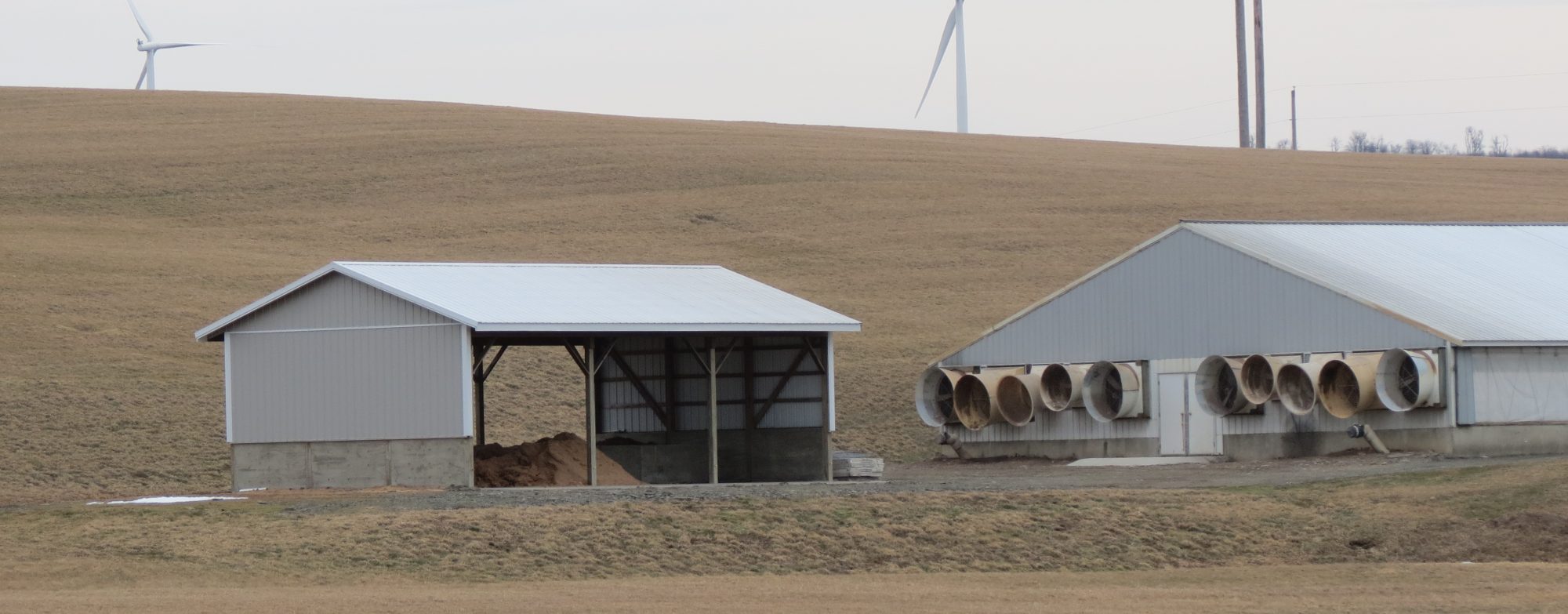
In addition to dietary strategies, advancements in manure management have been explored to further reduce environmental impacts i.e., solid-liquid separation, anaerobic digestion, acidification, vermifiltration. Anaerobic digestion (AD) systems convert livestock manure into biogas, which can be used as a renewable energy source. This process not only mitigates methane emissions but also offers economic benefits by reducing fossil fuel expenses and generating income from excess energy production. However, the economic viability of AD systems can be influenced by factors such as operational costs and the scale of implementation. Therefore, while AD presents a promising approach to sustainable manure management, careful consideration of these factors is essential for its successful adoption in livestock operations.
Future Plans
Future studies on mitigating dairy emissions should focus on integrated approaches across enteric fermentation, manure management, and land application. Research into dietary interventions, such as precision feeding strategies and methane-reducing feed additives like seaweed, tannins, and essential oils, could help lower enteric methane emissions while maintaining animal productivity. Advances in microbiome research could further refine these approaches by identifying specific gut microbial populations that reduce methane production. Additionally, long-term studies on genetic selection for low-methane-emitting cattle could offer a sustainable mitigation strategy without compromising milk yield.
For manure systems and applications, future research should prioritize optimizing anaerobic digestion efficiency to maximize methane capture and energy recovery while reducing residual emissions. Innovative manure amendments, such as biochar or nitrification inhibitors, could limit methane and nitrous oxide release during storage and land application. Studies on precision manure application techniques, including low-disturbance injection and variable-rate spreading, could enhance nutrient use efficiency while minimizing emissions. Furthermore, landscape-scale modeling should be developed to assess the cumulative effects of these strategies and guide policy recommendations for sustainable dairy farming.
Authors
Presenting & corresponding author
Gilbert Miito, Assistant Professor & Extension Specialist — Air Quality, University of Idaho, gmiito@uidaho.edu
The authors are solely responsible for the content of these proceedings. The technical information does not necessarily reflect the official position of the sponsoring agencies or institutions represented by planning committee members, and inclusion and distribution herein does not constitute an endorsement of views expressed by the same. Printed materials included herein are not refereed publications. Citations should appear as follows. EXAMPLE: Authors. 2025. Title of presentation. Waste to Worth. Boise, ID. April 7-11, 2025. URL of this page. Accessed on: today’s date.

 Myeongseong Lee, Texas A&M AgriLife High Plains Research and Extension Center