Pathways for Effective Manure Nutriment Management Information Sharing and Education Between Agriculture Professionals: A South Dakota Pilot Test


Why Look at Barriers in Nutrient Management Information Flow?


The issue of manure nutrient management has been the subject of controversy and new policies in recent years as the non-point source discharge of nutrients and bacteria is substantial if manure is not managed properly. Unfortunately, there are barriers between organizations and individuals that prevent the flow of important, timely information between audience types and limits the impact and usefulness of research results. These barriers may be in the form of institutional language differences, job descriptions, or a mismatch between information outputs and inputs.

What did we do?

A national team of researchers, Extension specialists, consultants and government staff developed a survey to quantify the role, programming, and barriers to information flow between organizations and individuals regarding manure nutrient management. The electronic survey was disseminated via cooperating agencies, organizations and personal contacts to technical service providers, producers, university personnel, regulatory personnel, private sales or service enterprises and other professionals who contribute to manure nutrient management in South Dakota. Respondents were asked to indicate the relevance of information sources (inputs), information products (outputs) and collaborators (links), as well as barriers to their use. The relevance selections were transformed into scalar data and an analysis of variance was performed on the average relevance scores to test for differences based on input/output/link type and organization type.

What have we learned?

There were 139 surveys started, and 80 surveys completed. Data from partially completed surveys were, however, included in the analysis. The main categories of self-identified respondents were NRCS (n=36), Producers (n=29), University personnel (n=15) and Regulatory personnel (n=9). The remaining categories respondents were grouped into an Other category (n=22). The average relevance score for each of the information sources, information products and collaborations listed in the survey were consistent (no significant difference between organization types). As sources of information, consultation, eXtension and field days were ranked most relevant, with classroom and social media being least relevant. Similarly, consultation, field days and eXtension were ranked the most relevant means of sharing information; social media was ranked least relevant. Barriers to information sources and products were specific to the activity or product. The select ion “No barriers to use” was not an indicator of relevance. All organization types deemed producers the most relevant collaborator, followed by state, university and federal agencies.

Future Plans

The South Dakota-based survey was a pilot test for a nationwide survey being conducted in 2015. From feedback and data review, the survey has been refined and shortened to elicit the key input, output and collaborator data. With the national data in hand later in 2015, the project team looks forward to linking information producers and users in effective pathways for manure nutrient management information transmission, and ultimately, adoption.

Authors

Erin Cortus, Assistant Professor and Environmental Quality Engineer at South Dakota State University erin.cortus@sdstate.edu

Nichole Embertson, Nutrient Management Specialist, Sustainable Livestock Production Program, Whatcom Conservation District; Jeffrey Jacquet, Assistant Professor, Sociology and Rural Studies, South Dakota State University

Additional information

Anyone interested in participating on the Pathways Project team are invited to contact Erin Cortus (erin.cortus@sdstate.edu) or Nichole Embertson (NEmbertson@whatcomcd.org).

Acknowledgements

The nationwide team who contribute to and guide the Pathways project are gratefully acknowledged. Funding provided through the South Dakota SARE Mini-Grant Program supported data collection and analysis for the survey pilot test.

The authors are solely responsible for the content of these proceedings. The technical information does not necessarily reflect the official position of the sponsoring agencies or institutions represented by planning committee members, and inclusion and distribution herein does not constitute an endorsement of views expressed by the same. Printed materials included herein are not refereed publications. Citations should appear as follows. EXAMPLE: Authors. 2015. Title of presentation. Waste to Worth: Spreading Science and Solutions. Seattle, WA. March 31-April 3, 2015. URL of this page. Accessed on: today’s date.


Improved Recovery of Ammonia From Swine Manure Using Gas-Permeable Membrane Technology and Aeration

Why Study Nitrogen Recovery from Manure?

Significant efforts are required to abate NH3 emissions from livestock operations. In addition, the costs of fertilizers have rapidly increased in recent years, especially nitrogen fertilizer such as anhydrous ammonia which is made from natural gas. Thus, new technologies for abatement of ammonia emissions in livestock operations are being focussed on N recovery. This presentation shows a novel system that uses gas-permeable membranes to capture and recover ammonia from liquid manure, reducing ammonia emissions from livestock operations, and recovering concentrated liquid nitrogen that could be sold as fertilizer.

What Did We Do?

Nitrogen recovery from swine manure was investigated using a new technology that uses gas-permeable membranes at low pressure. The new process includes the passage of gaseous ammonia contained in the liquid manure through a microporous hydrophobic membrane and capture and concentrate with circulating diluted acid on the other side of the membrane.   The membranes can be assembled in modules or manifolds.  Membrane manifolds are submerged in the manure and the ammonia is removed from the liquid before it escapes into the air. The process involves manure pH control to increase ammonium recovery rate that is normally carried out using an alkali chemical. In this study a new strategy was tested to avoid the use of alkali chemicals.  Instead of the chemical, we applied low-rate aeration and nitrification inhibitor to raise the pH and promote ammonia capture by the membrane system.

Diagram of ammonia recovery system using with gas permeable membranes and low-rate aeration

Figure 1. Diagram of ammonia recovery system using with gas permeable membranes and low-rate aeration

What Did We Learn?

Two studies were conducted to recover N from liquid swine manures containing high ammonia concentrations using a USDA patented gas-permeable membrane system. One study used raw liquid manure from the pit under slatted floor of a farrowing sow’s barn in Segovia, Spain.  The second study used liquid swine manure effluent from a covered lagoon digester in North Carolina, USA.  The new strategy that used low-rate aeration and nitrification inhibition worked quite well in both situations. In the first study using raw manure,  the pH increased and the ammonium concentration was almost depleted: it declined from 2270 mg N/L to 20 mg N/ in 18 days. The ammonia that was removed was recovered efficiently in the concentrator tank (99% recovery efficiency).  Using the same membrane manifold without the aeration protocol, the ammonium concentration in the manure decreased at a slower rate from 2330 mg N/L to 790 mg N/L in 18 days. The results obtained were consistent in the second study that used digested swine effluent.  When low-rate aeration and nitrification inhibitor were added to the gas-permeable membrane reactor, ammonium concentration in the digester effluent decreased rapidly, from 3130 mg N/L to 96 mg N/L, in 5 days.  The recovery efficiency was 98%.  This N removal rate was 5 times faster than a control that used the same membrane reactor and conditions but operated without the aeration protocol.  Overall results obtained in this work indicate the low-rate aeration is an economical alternative to chemical addition to increase ammonia availability and the capture of ammonia by gas-permeable membrane systems. This conclusion is supported by the very high removal and recovery efficiencies obtained resulting in an overall recovery of 95 to 98% of the initial ammonia in the manure.

Future Plans

On-farm demonstration studies will be conducted in 2015 in cooperation with Dr. John Classen, North Carolina State University, through an NRCS Conservation Innovation Grant (CIG) “Ammonia recovery from swine wastewater with selective membrane technology”.  A mobile pilot unit will demonstrate recovery of ammonia from liquid manure effluents using the gas-permeable technology in three different manure collection systems: under floor belt system, scraper system, and anaerobic digester.

USDA seeks a commercial partner to develop and market this invention (Systems and Methods for Reducing Ammonia Emissions form Liquid Effluents and for Recovering Ammonia. US Patent Appl. SN 13/164,363 allowed Dec. 19, 2014)  http://www.ars.usda.gov/business/docs.htm?docid=763&page=5

Authors

Matias Vanotti, USDA-ARS, Florence, South Carolina matias.vanotti@ars.usda.gov

Matias B. Vanotti1, Maria C. Garcia-Gonzalez2, Patrick J. Dube1, Ariel A. Szogi1

1 USDA-ARS, Coastal Plains Soil, Water, and Plant Research Center, Florence, SC

2 Agriculture Technological Institute of Castilla and Leon (ITACyL), Valladolid, Spain

Additional Information

“Livestock Waste Management 2.0: Recycling Ammonia Emissions as Fertilizer” published in the November/December 2012 issue of Agricultural Research magazine  http://www.ars.usda.gov/is/AR/archive/nov12/livestock1112.htm

“Recovery of ammonia with gas permeable membranes” research update at USDA-ARS-CPSWPRC website  http://www.ars.usda.gov/Research/docs.htm?docid=22883#ammonia

Vanotti,M.B., Szogi,A.A.  “Systems and Methods for Reducing Ammonia Emissions form Liquid Effluents and for Recovering Ammonia”. US Patent Appl. SN 13/164,363,  filed June 20, 2011, allowed December 19, 2014.  US Patent and Trademark Office, Washington, DC.

Garcia-Gonzalez, M.C., Vanotti, M.B., Szogi, A.A. 2015. “Recovery of ammonia from swine manure using gas-permeable membranes: Effect of aeration”. Journal of Environmental Management 152:19-26

Acknowledgements

This research was part of USDA-ARS National Program 214 Agricultural and Industrial Byproducts, Research Project 6657-13630-005-00D “Innovative Bioresource Management Technologies for Enhanced Environmental Quality and Value optimization”. Funding by INIA/FEDER Project CC09-072 is gratefully acknowledged.

The authors are solely responsible for the content of these proceedings. The technical information does not necessarily reflect the official position of the sponsoring agencies or institutions represented by planning committee members, and inclusion and distribution herein does not constitute an endorsement of views expressed by the same. Printed materials included herein are not refereed publications. Citations should appear as follows. EXAMPLE: Authors. 2015. Title of presentation. Waste to Worth: Spreading Science and Solutions. Seattle, WA. March 31-April 3, 2015. URL of this page. Accessed on: today’s date.

Extraction and Recovery of Phosphorus from Pig Manure Using the Quick Wash Process

*Why Look at Phosphorus Recovery from Pig Manure?

Land disposal of manure is a challenging environmental problem in areas with intense confined pig production. When manure is land applied at optimal nitrogen rates for crop growth, phosphorus can accumulate in excess of soil assimilative capacity because of the disproportion of nitrogen and phosphorus contents in animal manures relative to plant biomass. In turn, excess manure phosphorus lost through soil leaching or runoff has the potential to reach and pollute water resources. To reduce manure phosphorus losses into the environment, a substantial amount of phosphorus needs to be moved off the pig farm but transporting manure to phosphorus-deficit croplands becomes less cost effective with increasing distance from the pig farm. Yet, conservation and recovery of phosphorus is a concern in modern agriculture because of the high cost and possible insufficient supply of mined phosphates in the future. Thus, manure management in regions with intense animal production could benefit from new technologies that would recover manure phosphorus in a concentrated, usable form. This approach would make more economical the long distance transfers of manure phosphorus while reducing both agronomic phosphorus imbalances and adverse effects of soil P losses on water resources.

What did we do?

diagram of the quick wash processA patented treatment process, called “Quick Wash”, was developed for extraction and recovery of phosphorus from animal manure solids, but research has shown that the approach is equally effective with municipal biosolids. In the Quick Wash process, phosphorus is selectively extracted from pig manure solids by using mineral or organic acid solutions. Following, phosphorus is recovered by addition of liquid lime and an organic poly-electrolyte to the liquid extract to form a calcium-containing P precipitate. The quick wash process generates two products: 1) manure solids low in phosphorus; and 2) recovered phosphorus material.
What have we learned?

The Quick Wash process selectively extracts and recovers as much as 90 % of the phosphorus from pig manure solids while leaving most of the nitrogen in the washed manure solids. Consequently, the washed solid residue has a more balanced nitrogen and phosphorus composition for crop production and is environmentally safer for land application. The concentrated phosphorus product contains more than 90% of its phosphorus in plant available form for use as crop fertilizer. The inclusion of this process in a waste management system offers pig producers a new and welcomed opportunity to minimize phosphorus losses into the environment, while recovering and recycling phosphorus as a valuable product.

Future Plans

USDA granted an exclusive license of the invention to Renewable Nutrients, LLC (Pinehurst, NC). The Quick Wash is being commercialized by Renewable Nutrients, LLC for the municipal wastewater treatment sector and its partner TRIEA Technologies, LLC (Frederick, MD) for phosphorus recovery in the animal agriculture market.

Authors

Ariel A. Szogi, Research Soil Scientist, USDA-ARS Coastal Plains Soil, Water, and Plant Research Center, Florence, SC ariel.szogi@ars.usda.gov

Matias B. Vanotti, Patrick G. Hunt – USDA-ARS Coastal Plains Soil, Water, and Plant

Additional information

https://www.frontiersin.org/articles/10.3389/fsufs.2018.00037/full

http://www.rnutrients.com/

http://www.trieatechnologies.com/quickwash

Szogi, A.A., Vanotti, M.B., Hunt, P.G., 2014. Process for removing and recovering phosphorus from animal waste. U.S. Patent 8,673,046 B1. U.S. Patent and Trademark Office.

Acknowledgements

This work is part of USDA-ARS National Program 214: Agricultural and Industrial Byproducts; ARS Project 6657-13630-005-00D “Innovative Bioresource Management Technologies for Enhanced Environmental Quality and Value Optimization.”

The authors are solely responsible for the content of these proceedings. The technical information does not necessarily reflect the official position of the sponsoring agencies or institutions represented by planning committee members, and inclusion and distribution herein does not constitute an endorsement of views expressed by the same. Printed materials included herein are not refereed publications. Citations should appear as follows. EXAMPLE: Authors. 2015. Title of presentation. Waste to Worth: Spreading Science and Solutions. Seattle, WA. March 31-April 3, 2015. URL of this page. Accessed on: today’s date.

Identify and Synthesize Methods to Refine Phosphorus Indices from Three Regional Indexing Efforts

Purpose

This project was started to work with regional CIG projects to calibrate and harmonize Phosphorus Indices across the U.S., demonstrate their accuracy in identifying the magnitude and extent of phosphorus loss risk, and provide suggestions to refine or improve existing Indices. This research is important to provide consistency among state Phosphorus Indices and their subsequent recommendations.  

What did we do?

We will combine and compare results from each of the four regional and state Phosphorus Index CIG-funded projects, in order to synthesize, summarize, and describe the science-based information and lessons learned from the individual Phosphorus Index assessment projects (i.e., Chesapeake Bay Watershed, Heartland Region, Southern States and Ohio Lake Erie Basin) and build a harmonized framework that yields consistent Phosphorus-based risk assessment across the U.S. by doing this, we plan to ensure that the refinement of Phosphorus Indices is grounded in the best available science, reflects local environmental and agronomic conditions, anticipates impacts to water quality and farm management, and provides consistent recommendations within and across varied physiographic regions of the U.S.

What have we learned?

Despite the success of the Phosphorus Index concept in state-level nutrient management planning strategies as part of the NRCS 590 Standard, there remain concerns about the effectiveness of the Indexing approach for attaining water quality goals. Different versions of the Phosphorus Index have emerged to account for regional differences in soil types, land management, climate, physiographic and hydrologic controls, manure management strategies, and policy conditions. Along with this development, differences in Phosphorus Index manure management recommendations under relatively similar site conditions have also emerged. To date, we have learned that the individual projects with slightly differing objectives have shown there to be a paucity of field measured runoff, against which to reliably compare Index performance. Thus, several off-the shelf and pre-calibrated models (e.g., APEX) were tested to provide adequate phosphorus runoff information to validate Indices. Use of off-the-shelf models can provide unreliable estimates of phosphorus runoff, while calibrate models can provide more reliable estimates when given adequate site information.

Future Plans

It is planned to have extend the research for one more year to the end of 2016 to continue model assessment, compile field runoff databases, conduct statistical and uncertainty analyses, and compile cross project findings.

Authors

Andrew Sharpley, Distinguished Professor, Division of Agriculture University of Arkansas System sharpley@uark.edu

Deanna Osmond, Professor and Soil Science Department Extension Leader; David Radcliff, Professor; Peter Kleinman, Research Leader; Doug Beegle, Distinguished Professor of Agronomy; John Lory, Associate Professor of Extension; and Nathan Nelson, Professor.

Additional information

Sharpley, A.N., D. Beegle, C. Bolster, L. Good, B. Joern, Q. Ketterings, J. Lory, R. Mikkelsen, D. Osmond, and P. Vadas. 2011. Revision of the 590 Nutrient Management Standard: SERA-17 Recommendations. Southern Cooperative Series Bulletin No. 412. Published by SERA-IEG-17, Virginia Tech. University, Blacksburg, VA. Available at https://sera17dotorg.files.wordpress.com/2015/02/590-sera-17-recommendations.pdf 2011.

Sharpley, A.N., D. Beegle, C. Bolster, L. Good, B. Joern, Q. Ketterings, J. Lory, R. Mikkelsen, D. Osmond, and P. Vadas. 2011. Revision of the 590 Nutrient Management Standard: SERA-17 Supporting Documentation. Southern Cooperative Series Bulletin No. 412. Published by SERA-IEG-17, Virginia Tech. University, Blacksburg, VA. Available at https://sera17dotorg.files.wordpress.com/2015/02/590-sera-17-recommendations.pdf

Sharpley, A.N., D.G. Beegle, C. Bolster, L.W. Good, B. Joern, Q. Ketterings, J. Lory, R. Mikkelsen, D. Osmond, and P.A. Vadas. 2012. Phosphorus indices: Why we need to take stock of how we are doing. J. Environ. Qual. 41:1711-1718.

Osmond, D.L., A.N. Sharpley, C. Bolster, M. Cabrera, S. Feagley, B. Lee, C. Mitchell, R. Mylavarapu, L. Oldham, F. Walker, and H. Zhang. 2012. Comparing phosphorus indices from twelve southern USA states against monitored phosphorus loads from six prior southern studies. J. Environ. Qual. 41:1741-1750.

The authors are solely responsible for the content of these proceedings. The technical information does not necessarily reflect the official position of the sponsoring agencies or institutions represented by planning committee members, and inclusion and distribution herein does not constitute an endorsement of views expressed by the same. Printed materials included herein are not refereed publications. Citations should appear as follows. EXAMPLE: Authors. 2015. Title of presentation. Waste to Worth: Spreading Science and Solutions. Seattle, WA. March 31-April 3, 2015. URL of this page. Accessed on: today’s date.


Factors Affecting Nitrous Oxide Emissions Following Subsurface Manure Application

[Abstract] Subsurface manure application is theoretically susceptible to greater denitrification losses and nitrous oxide (N2O) emissions compared to surface application methods – primarily attributed to manure being placed in a more anaerobic environment. A review of field studies suggest N2O emissions typically range from 0.1% to 3% of total applied N from subsurface application methods, but there is considerable variation in emissions depending on pre- and post-application soil moisture conditions, readily-available carbon content in manure compared to background levels in soil, localized nitrogen form and oxygen concentration at the application site, and application depth. This paper will summarize peer-reviewed literature of field studies that quantify N2O emissions subsequent to subsurface manure application and identify the most prominent determining factors cited by authors.

Why Study Nitrous Oxide Emissions of Manure?

Ammonia abatement efficiencies of up to 90 percent have been documented with subsurface application and incorporation of animal manures compared to conventional surface application methods. While reducing ammonia emissions has positive implications for air and water quality, a portion of the nitrogen conserved may come at the expense of increased nitrous oxide emissions produced during denitrification and nitrification processes in the soil. As a greenhouse gas 300 times more potent than carbon dioxide at trapping heat, nitrous oxide has been linked to anthropogenic climate change and depletion of stratospheric ozone. Release of nitrous oxide from agriculturally-productive soils into the atmosphere also represents a loss of crop nutrients. Understanding the circumstances and manageable factors that contribute to nitrous oxide formation in soils subsequent to manure application is important for retaining crop nutrients and preventing greenhouse gas emissions.

What did we do?

A literature review was performed to investigate the factors that contribute to nitrous oxide emissions following subsurface application of animal manure to both grassland and arable land, compare results from different application techniques, and examine the conditions and circumstances that lead to nitrous oxide emissions.

What have we learned?

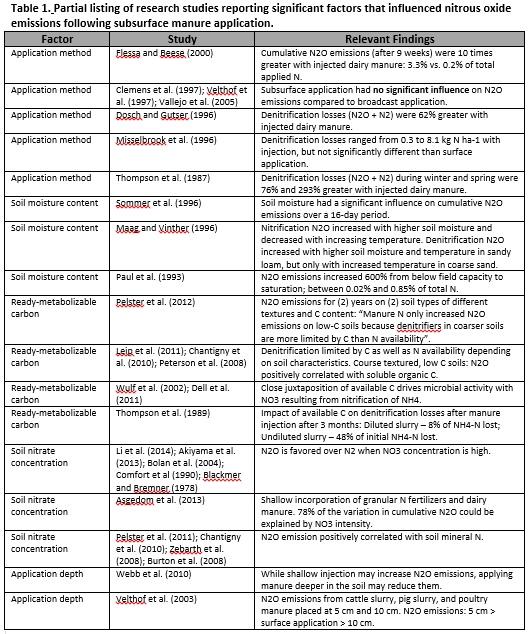
Several studies demonstrate significant increases in nitrous oxide emissions (from 0.1 to 3 percent) attributable to factors including increasing soil moisture content, high concentrations of readily-available carbon in manure substrate, increased nitrate concentration in soil, shallow application depth, high soil temperature, and ambient conditions during and immediately following application (table 1). Other studies show no difference in nitrous oxide emissions as compared to surface application methods. Reasons that subsurface application techniques will not necessarily result in greater nitrous oxide emissions were: 1) the length of the diffusion path from the site of denitrification to the soil surface may lead to a greater portion of denitrified nitrogen being emitted as nitrogen gas; 2) the soil moisture conditions and aeration level at the time of application may not be suitable for increased nitrous oxide production; 3) prior to manur e application, soils may already contain readily-metabolizable carbon and mineral nitrogen, thus any increase in nitrous oxide emission following application may not have a significant impact; and 4) weather events subsequent to manure application may effect soil moisture content and water-filled-pore-space, thereby affecting nitrous oxide emissions. Several studies document nitrous oxide emissions due to subsurface application methods (including manure incorporation and shallow injection) but research comparing nitrous oxide emissions from different subsurface application techniques and application depth is limited. Lack or absence of data in literature about manure chemistry, nitrogen application rates, application technique or method, as well as soil and atmospheric conditions during and after application made it more difficult to draw specific conclusions on factors affecting nitrous oxide emissions from subsurface-applied manure.

Further research is needed to determine the environmental and economic tradeoffs of implementing subsurface manure application methods for abatement of NH3 considering different future greenhouse gas emissions and market scenarios. Recent work suggests a link between denitrifier community density, organic C, and N2O emissions. Characterization of these biological mechanisms and identification of genetic markers for key enzymes should continue, particularly with respect to various subsurface manure application techniques, different manure types and N application rates, soil types, environmental conditions, and soil chemistry. Subsurface application depth plays an important role in determining the proportion of N2O to N2 emitted during denitrification; however, the number of field studies that examine the impact of application depth is limited. More research is needed to determine optimal manure application depth as influenced by soil type, soil chemistry, timing of application, and vegetative cover. Finally, future research on subsurface manure application will allow existing and future prediction models to improve estimation of annual N2O emissions at landscape scale and airshed levels. Refinement of greenhouse gas inventories, including N2O emissions from agricultural production systems, will assist agriculture producers, scientists, and policy makers in making informed decisions on greenhouse gas emission mitigation.

research articles reporting factors of Nitrous Oxide

Future Plans

Future agricultural greenhouse gas regulations and/or carbon market incentives have potential implications for agricultural producers, including the method and timing of manure application. Controlled, replicated, and well-documented research on subsurface manure application and subsequent nitrous oxide release is critical for estimating the costs and benefits of different manure application techniques.

Authors

David W. Smith, Extension Program Specialist, Texas A&M AgriLife Extension DWSmith@ag.tamu.edu

Dr. Saqib Mukhtar, Professor and Associate Department Head for Extension, Texas A&M AgriLife Extension

Additional information

The publication ‘Estimation and Attribution of Nitrous Oxide Emissions Following Subsurface Application of Animal Manure: A Review’ has been accepted for publication in Transactions of the ASABE.

Acknowledgements

Funding for this effort provided by USDA-NIFA grant No. 2011-67003-30206.

The authors are solely responsible for the content of these proceedings. The technical information does not necessarily reflect the official position of the sponsoring agencies or institutions represented by planning committee members, and inclusion and distribution herein does not constitute an endorsement of views expressed by the same. Printed materials included herein are not refereed publications. Citations should appear as follows. EXAMPLE: Authors. 2015. Title of presentation. Waste to Worth: Spreading Science and Solutions. Seattle, WA. March 31-April 3, 2015. URL of this page. Accessed on: today’s date.

Swine Manure Application Method Impact on Soil Arthropods


Does Manure Application Impact Soil Arthropods? *

Soil arthropod populations and diversity provide an indication of the biological quality of soil, which can impact soil fertility. Arthropods include insects, crustaceans, arachnids, myriapods, and scorpions and nearly every soil is inhabited by many different arthropod species. Row-crop soils may contain several dozen species. One particular arthropod species, mites, can have a significant impact on nutrient release in soil. For this study, the impact of swine manure slurry applied via broadcast and injection at a rate designed to meet the agronomic nitrogen needs of corn was investigated to determine the manure application method impact on soil arthropod population and diversity.

What did we do?

Treatments include broadcasted swine slurry, injected swine slurry, and non-manured check plots with four replications per treatment. Plots have been monitored following manure application in June 2014 and will continue through June 2015. Soil samples were removed 4 d prior to manure application and at 1, 2, and 4 weeks and monthly thereafter from 0 to 8 inches on each plot. Arthropods were extracted by use of Burlese funnels and collected species are being sorted and characterized.

What have we learned?

Species characterization is on-going and will be summarized for presentation in the poster session at the conference.

Future Plans

Results of this work will allow us to better understand the impact of manure application on soil biological properties, a component in defining the overall fertility or “health” of soil.

Authors

Amy Millmier Schmidt, Assistant Professor and Livestock Bioenvironmental Engineer, University of Nebraska – Lincoln aschmidt@unl.edu

Nicole R. Schuster, Graduate Research Assistant, University of Nebraska – Lincoln; Julie Peterson, Assistant Professor and Entomologist, University of Nebraska – Lincoln

Additional information

Dr. Amy Millmier Schmidt; (402) 472-0877; aschmidt@unl.edu

Acknowledgements

We would like to recognize a number of individuals who assisted with soil sample collection, arthropod extractions, and other laboratory activities over the course of this project, including Keith Miller, Ethan Doyle, Mitch Goedeken, Eric Davis, Lucas Snethan, Kevan Reardon and Kayla Tierramar

The authors are solely responsible for the content of these proceedings. The technical information does not necessarily reflect the official position of the sponsoring agencies or institutions represented by planning committee members, and inclusion and distribution herein does not constitute an endorsement of views expressed by the same. Printed materials included herein are not refereed publications. Citations should appear as follows. EXAMPLE: Authors. 2015. Title of presentation. Waste to Worth: Spreading Science and Solutions. Seattle, WA. March 31-April 3, 2015. URL of this page. Accessed on: today’s date.

Analyses of Microbial Populations and Antibiotic Resistance Present in Stored Swine Manure from Underground Storage Pits


Why Study Antibiotic Resistance in Manure?

Antimicrobial compounds have been commonly used as feed additives for domestic animals to reduce infection and promote growth. Recent concerns have suggested such feeding practices may result in increased microbial resistance to antibiotics, which can have an impact on human health. As part of our research project we have been studying the commensal microbial populations present in stored swine manure and the swine GI tract. We have extended this work to include studies on the antibiotic resistance present in these populations.

What did we do?

Predominant microbial populations were identified by both pure culture isolations and direct 16S rDNA sequencing of total DNA from swine feces and stored manure samples. Antibiotic resistance was analyzed using similar pure culture isolation methods. Pure cultures were isolated following plating on anaerobic and aerobic media containing tetracycline, tylosin, or erythromycin. Polymerase chain reaction (PCR) analyses using primers based on a variety of antibiotic resistance genes was carries out with both pure culture isolates and total DNA from swine feces and stored manure.

What have we learned?

Results of pure culture isolation and direct 16S rDNA gene sequence analyses indicate that the bacterial populations of the swine GI tract (feces) and stored manure ecosystems are predominantly composed of anaerobic, low mole %G+C, Gram-positive bacteria, most of which represent novel genera and species. Results of antibiotic resistance gene PCR studies demonstrated the presence of a variety of tet (e.g., tetK, tetO) and erm (e.g., ermA, ermC) resistance gene classes in both anaerobic and aerobic pure cultures and total DNA from both swine feces and stored manure, as well as the identification of novel bacteria containing new resistance genes. Comparison of DNA sequences suggests that horizontal transfer of resistance genes between bacterial strains has also occurred. The data indicate that both the swine gastrointestinal (GI) tract and stored swine manure may serve as reservoirs of known and novel antibiotic resistant bacteria and resistan ce genes.

Future Plans

We are interested in developing methods to reduce antibiotic resistance in the swine GI tract and stored manure, and to determine if antibiotic resistance genes present in these ecosystems can be transferred to bacteria that may affect human health (e.g., E. coli, Salmonella, Campylobacter).

Authors

Terence R. Whitehead, Research Microbiologist, USDA-ARS- National Center for Agricultural Utililzation Research, Peoria, IL 61604 terry.whitehead@ars.usda.gov

Michael A. Cotta, USDA-ARS-National Center for Agricultural Utilization Research, Peoria, IL 61604

Additional information

Terence R. Whitehead, NCAUR, 1815 N. University St., Peoria, IL 61615 309-681-6272

USDA-ARS-NCAUR-Bioenergy Research Unit: http://ars.usda.gov/main/site_main.htm?modecode=50-10-05-20

Cotta, M.A., Whitehead, T.R., and Zeltwanger, R.L. Isolation, Characterization, and Comparison of Bacteria from Swine Faeces and Manure Storage Pits. (2003) Env. Microbiol. 5:737-745. http://onlinelibrary.wiley.com/doi/10.1046/j.1467-2920.2003.00467.x/pdf

Whittle, G., Whitehead, T.R., Hamburger, N., Shoemaker, N.B., Cotta, M.A., and Salyers, A.A. Identification of a new ribosomal protection type of tetracycline resistance gene, tet(36), from swine manure pits . (2003) Appl. Environ. Microbiol. 69:4151-4158. http://aem.asm.org/content/69/7/4151.full

Cotta, M.A., Whitehead, T.R., Falsen, E., Moore, E. and Lawson, P.A. Robinsonella peoriae gen.nov., sp. nov., isolated from a swine-manure storage pit and a human clinical source. (2009) Int. J. System. Evol. Microbiol. 59:150-155. https://pubmed.ncbi.nlm.nih.gov/19126740/

Whitehead, T.R. and Cotta, M.A. Stored Swine Manure and Swine Feces as Reservoirs of Antibiotic Resistance Genes. (2013) Lett. Appl. Microbiol. 56:264-267. http://onlinelibrary.wiley.com/enhanced/doi/10.1111/lam.12043/

The authors are solely responsible for the content of these proceedings. The technical information does not necessarily reflect the official position of the sponsoring agencies or institutions represented by planning committee members, and inclusion and distribution herein does not constitute an endorsement of views expressed by the same. Printed materials included herein are not refereed publications. Citations should appear as follows. EXAMPLE: Authors. 2015. Title of presentation. Waste to Worth: Spreading Science and Solutions. Seattle, WA. March 31-April 3, 2015. URL of this page. Accessed on: today’s date.

PEDV Survivability in Swine Mortality Compost Piles


*Purpose

PEDv has caused significant losses in the Nebraska pork industry and mortality can approach 100%. Disposal of these carcasses is a challenge as they serve as a source of tremendous amounts of infectious virus. Current alternative methods of disposal include rendering, incineration and burial. Rendering trucks may serve as a farm-to-farm vector. Incineration is not feasible for the significant number of mortalities and burial may enable long-term survival of virus in soil and may cause re-infection after disease elimination. Therefore, composting may serve as an ideal solution for disposal and mortalities this would provide a biosecure, safe, and cost-effective method to mitigate on-farm sources of virus. The overall objective of this study was to determine the efficacy of composting as a mortality disposal method following death loss from the porcine epidemic diarrhea virus (PEDv). Validation of time-temperature combinations for PEDv inactivation in mortality compost piles was the primary intended outcome of this project.

What did we do?

PEDv virus challenge protocol modeled one that has shown previous success using weanling pigs (Hesse et al., 2013). Twenty-seven animals (approximately 21-day-old weaned piglets) were sourced from a high-health commercial source that had no history of PEDv and with dams that tested negative for the presence of PEDv-specific antibodies and were negative for fecal virus shedding as determined by PCR. Experimental groups were housed in pens and maintained at appropriate temperature and in accordance with national animal care space requirements. Pigs were given five days of acclimation and maintained on commercial nursery pig diets. Following acclimation, each pig was inoculated orally with 5 mL of virus inoculum (NE 9282) supplemented with gentamicin that had been diluted to a real time PCR assay cycle threshold (Ct) 22. Inocula (feces/intestinal contents) from a natural outbreak of PEDv were used. Pigs were evaluated twice daily for evidence of infection: temperature, pulse, respiration, dehydration, and diarrhea. Fecal samples were collected daily for evaluation of fecal shedding of PEDv. When significant clinical signs of enteric disease were present or pigs became sufficiently ill that the attending veterinarian determined euthanasia was appropriate, animals were humanely euthanized and samples taken for necropsy.

Following necropsy, carcasses from infected and euthanized pigs were composted inside biosecure rooms in the Veterinary and Biomedical Sciences Research Facility at the University of Nebraska – Lincoln. Three compost piles were constructed using commercial sawdust and wood shavings at a target moisture content of 50% w.b. For each pile, an insulated platform with internal dimensions of 121.92 cm (W) x 152.4 cm (L) (48 in x 60 in) was used to contain piles. Platforms were constructed of an outer layer of plywood and an inner layer of PolyBoard sheeting with foam board insulation in between to simulate the linear continuation of the pile and the insulative properties of a compacted soil base. Compost piles were constructed by placing a layer of wood shavings on each base to a depth of 60 cm (24 in), followed by placement of five carcasses in a single layer in the center of the pile followed by a 15 cm (6 in) layer of pile material and a second layer of four carcasses in a single layer. Additional sawdust was placed over and around the carcasses to achieve 60 cm of coverage on the top of the pile. Rooms were maintained at approximately 21°C (70°F) and 25% RH throughout the duration of the project.

Temperature was monitored at ten locations within each pile using Apresys in-transit digital temperature recorders (Apresys, Inc., Duluth, GA) beginning at establishment of the piles and continuing at a 20-min sampling frequency (duration of primary compost cycle not established at time of proceedings submission). Temperature within each pile was also monitored manually using a thermometer at 0, 24, 48, 96 h, and 168 h, and then weekly for the duration of the compost cycle to confirm success of the heating process.

Following completion of the primary compost cycle, temperature loggers will be recovered and each pile will be mixed, sampled for analysis of survivability of PEDv at five locations, moisture will be added, and piles will be re-established for a secondary composting cycle with temperature loggers placed as previously described. At the completion of the secondary composting cycle, piles will again be sampled for analysis of survivability of PEDv (5 samples per pile) and temperature loggers will be recovered.

PEDv survivability will be determined via two independent assay methods. Reverse transcription quantitative polymerase chain reaction (RT-qPCR) is a rapid and sensitive method that will be used to quantify the amount of virus RNA genome in the samples. The Nebraska Veterinary Diagnostic Center currently has a validated RT-qPCR test to assay for the presence of PEDv in manure sample matrices. To validate results from the RT-qPCR in laboratory assays, sawdust simulated compost matrix will be spiked with known concentrations of PEDv target RNA and compared to known standards to ensure no inhibition is present and that proper extraction methods are being used. An alternative method using virus isolation will also be conducted to determine whether viable virus is present in flasks at a smaller subset of time points. To do this, Vero cell monolayers will be infected with filter sterilized aliquots of compost exudate, blindly passaged once after seven days, and examined for virus p resence using IFA with a PED specific monoclonal antibody. At specific time points, RT-qPCR Ct values and Virus Isolation will be run in parallel to ensure sensitivity of testing and to evaluate correlation of the testing modalities under the simulated testing conditions and matrices. If these testing methods show agreement, and/or no virus is isolated, RT-qPCR testing will be utilized to facilitate rapid and consistent assessment of virus persistence during the majority of experimental time points.

What have we learned?

Biosecurity is essential to controlling the spread of PEDv and any facility that is currently positive for PEDv should work diligently to prevent contamination of neighboring facilities. Vehicle transport has been shown as a high-risk activity that may facilitate spread of PEDv (Lowe 2014) and mortalities that are positive for PEDv may be rejected by renderers to protect them from liability for transmitting the disease. Burial of mortalities can be detrimental to water quality (Bartelt-Hunt et al., 2013) and it is unknown how long the PEDv can remain active in the cool, dark, moist environment that accompanies land burial of carcasses, but extrapolation of available data suggests virus may persist for months. Therefore, we believe composting is likely to provide an effective, biosecure, economically viable and environmentally compatible option for disposal of PEDv mortalities. This research will validate the effectiveness of composting through controlled mortality composting trials subsequent to experimental infections. With the completion of this research, our expectation is that we will know what operating parameters are required to ensure inactivation of PEDv during composting of PEDv mortalities.

Future Plans

Using the information generated from this research, we will deliver extension programming and outreach materials to swine producers, veterinarians, and stakeholders within and beyond Nebraska to promote biosecure disposal of PEDv-infected mortalities.

Authors

Amy Millmier Schmidt, Assistant Professor and Livestock Bioenvironmental Engineer, University of Nebraska – Lincoln aschmidt@unl.edu

J. Dustin Loy, Assistant Professor, Veterinary & Biomedical Sciences, University of Nebraska – Lincoln

Additional information

Dr. Amy Millmier Schmidt
(402) 472-0877
aschmidt@unl.edu

Acknowledgements

The authors would like to acknowledge the Nebraska Pork Producers Association and the National Pork Board for providing funding for this research. Special thanks to Jared Korth for helping with laboratory activities on this project and construction of mortality composting platforms.

The authors are solely responsible for the content of these proceedings. The technical information does not necessarily reflect the official position of the sponsoring agencies or institutions represented by planning committee members, and inclusion and distribution herein does not constitute an endorsement of views expressed by the same. Printed materials included herein are not refereed publications. Citations should appear as follows. EXAMPLE: Authors. 2015. Title of presentation. Waste to Worth: Spreading Science and Solutions. Seattle, WA. March 31-April 3, 2015. URL of this page. Accessed on: today’s date.

Time-Temperature Combinations for Destruction of PEDv During Composting


*Purpose

The purpose of this project was to determine the appropriate time-temperature combinations required for inactivation of the porcine epidemic diarrhea virus (PEDv) in composting material as a basis for evaluation of composting for disposal of swine mortalities and/or other PEDv-positive biological material.

What did we do?

In vitro propagation of PEDv for laboratory survivability assays was conducted using a cell culture-adapted isolate received from APHIS-NVSL (Ames, IA) that was free of extraneous agents (5th passage Colorado 2013 PEDv 1303). Propagation was conducted by infection of confluent VERO cell monolayers at a multiplicity of infection (MOI) of 0.1 with a concentration of 5 µg/mL TPCK trypsin. Virus stocks were be amplified following a 2-4 day incubation period on cell monolayers, frozen and thawed, centrifuged, and culture supernatants containing virus were harvested. Virus concentration was calculated and standardized to 1×10⁵-1×10⁶ TCID50/mL using immunocytochemistry and indirect fluorescent antibody assay (IFA) using a PEDV specific mouse monoclonal antibody (MedGene Labs).

The effect of temperature on survivability of PEDv in compost material was evaluated by inoculating compost material and subjecting the material to temperatures of 50°C (122°F), 55°C (131°F), 60°C (140°F), 65°C (149°F), and 70°C (158°F) for 0, 24, 48, 72, 96 h, and 120 h. Sawdust was acquired from a commercial source, autoclaved to eliminate existing microbes, oven dried and used to simulate compost material. One gram of prepared sawdust was placed in each of 140 1-mL centrifuge tubes. Cell culture supernatant containing infectious PEDv was added to phosphate buffered saline and added to each tube achieve a moisture content of 50% w.b. Tubes were randomly assigned to laboratory incubators at the five temperature treatment levels. At each sampling point, four tubes were removed from each incubator and tested to determine virus survivability.

PEDv survivability was determined via two independent assay methods. Reverse transcription quantitative polymerase chain reaction (RT-qPCR) is a rapid and sensitive method that was used by the Nebraska Veterinary Diagnostic Center to quantify the amount of virus RNA genome in the samples. To validate results from the RT-qPCR in laboratory assays, sawdust simulated compost matrix was spiked with known concentrations of PEDv target RNA and compared to known standards to ensure no inhibition was present and that proper extraction methods were being used. An alternative method using virus isolation was also conducted to determine whether viable virus was present in tubes at a smaller subset of time points. To do this, Vero cell monolayers were infected with filter sterilized aliquots of compost exudate, blindly passaged once after seven days, and examined for virus presence using IFA with a PED specific monoclonal antibody. At specific time points, RT-qPCR Ct values and Virus Isolation were run in parallel to ensure sensitivity of testing and to evaluate correlation of the testing modalities under the simulated testing conditions and matrices.

What have we learned?

At the time of proceedings submission, results were not available for inclusion in this report. Results will be presented during the scheduled oral seminar at the conference.

Results of this laboratory study will be used to evaluate appropriate time-temperature combinations necessary during swine mortality composting to inactivate the PEDv virus and determine the feasibility of on-farm mortality composting as a biosecure disposal method for PEDv-infected pigs. Following this laboratory study, mortality composting was initiated using PEDv-positive piglets to confirm the inactivation of PEDv during composting.

Future Plans

Results of this and the full-scale composting study will be used to recommend appropriate swine mortality disposal methods for swine producers with losses due to PEDv as part of their farm biosecurity plan. Additional swine enteric corornaviruses will likely be studied to confirm similar requirements for disposal of mortalities caused by these viruses.

Authors

Amy Millmier Schmidt, Assistant Professor and Livestock Bioenvironmental Engineer, University of Nebraska – Lincoln aschmidt@unl.edu

J. Dustin Loy, Assistant Professor, Clayton Kelling, Professor, Judith Galeota, Virology Laboratory Manager, and Sarah Vitosh, Graduate Research Assistant, Veterinary & Biomedical Sciences, University of Nebraska – Lincoln

Additional information

Dr. Amy Millmier Schmidt
(402) 472-0877
aschmidt@unl.edu

Acknowledgements

The authors would like to acknowledge the Nebraska Pork Producers Association and the National Pork Board for providing funding for this research. Special thanks to Jared Korth for helping with laboratory activities on this project.

The authors are solely responsible for the content of these proceedings. The technical information does not necessarily reflect the official position of the sponsoring agencies or institutions represented by planning committee members, and inclusion and distribution herein does not constitute an endorsement of views expressed by the same. Printed materials included herein are not refereed publications. Citations should appear as follows. EXAMPLE: Authors. 2015. Title of presentation. Waste to Worth: Spreading Science and Solutions. Seattle, WA. March 31-April 3, 2015. URL of this page. Accessed on: today’s date.

Money to Burn: How to Capitalize on BioCNG at Your Wastewater Plant

Purpose  

Across the globe, units of government are struggling with the balance of deriving clean energy with economics and environmental protection. This struggle has led to the development of many renewable energy innovations and inventions, such as rapid improvement in the cost and efficiencies of photovoltaic solar (PV) systems and the development of large off-shore wind turbine systems. The challenges imposed on energy utilities associated with managing grid variability leads emphasis on the development of ‘baseload’ alternative energy systems, like bioenergy systems. We should recognize, however, that we have a bounty of organic wastes generated by society each day, and systems that are able to recycle these organic resources into energy are capable of more consistent energy generation, as compared to the intermittency of solar and wind. In this regard, such bioenergy systems hold promise for balancing our energy needs.

Waste to worth mtb figure 1.What did we do?  

Bioenergy systems based on the utilization of organic wastes, such as municipal wastes, food wastes, and crop residues provide the additional benefits of supporting improved pollution prevention and waste treatment systems.

Of the organic wastes available for us in bioenergy systems, one may be directly correlated to the increasing energy needs and clean energy desires of the global population – waste organics associated with municipal wastewater treatment. Municipal wastewater treatment strategies vary by geography, climate, and level of development across our globe. However, in all cases, opportunities exist to utilize these waste as feedstocks for the creation of biogas that may be used to fuel electricity generators, farm implements, and the transportation needs of our population.

****the above writing doesn’t explain the work that was conducted as requested

What have we learned?  

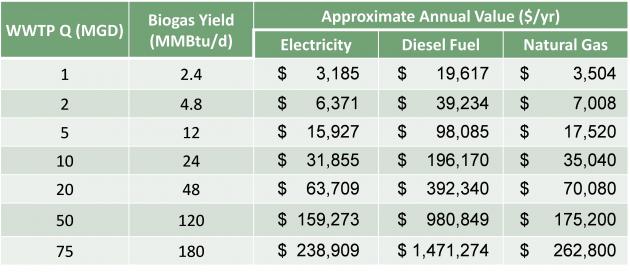
Many municipal and industrial wastewater treatment plants (WWTP) across the U.S. already utilize anaerobic digestion as a primary treatment process to reduce sludge or reduce organic loading, expressed as Biochemical Oxygen Demand (BOD), to subsequent aerobic treatment processes. However, most of these facilities presently flare the biogas that is produced from the digestion process. Most often, these managers report the following reason for lack of implementation of energy harvesting. WHAT REASON???

We continue to seek clean, renewable energy sources across the globe to reduce our dependency on fossil fuels for improved air quality and economic stability. While solar, wind, and other renewable energy sources play a vital role in a diversified energy strategy, the development of bioenergy systems that continuously operate in ‘base load’ fashion is very important for grid stability. Additionally, unlike solar and wind, bioenergy systems that convert organic wastes into fuels have opportunities to positively impact transportation fuel needs. The development of systems that harvest biogas from anaerobic digesters employed at municipal wastewater plants can serve to fill a portion of this need, and create improved revenues for the wastewater treatment utility. Often, anaerobic digesters serving municipal wastewater treatment plants are operating well under their optimum capacity, creating opportunities for municipalities to engage in partnerships with private sector waste generators, such as food and beverage processors, restaurants, and farmers.

Many commercial fleets are converting to natural gas fuel to realize the cost savings and participate in programs that reward cleaner air quality through reduced emissions. Each commercial waste truck that is converted to natural gas from diesel has a comparable impact to removing 325 cars from the road. Currently the costs of natural gas-fueled vehicles are slightly higher (10-15%) than conventionally-fueled vehicles. However, as the costs of fossil fuels rise, and more CNG vehicles are manufactured, the costs are likely to become very similar.


****An explanation of the table below would be useful.. You should use this document to outline how you conducted the study and what you found, most of the information contained is introductory in nature.

Table 1.

Table 2.Future Plans    

Unlike fossil fuels, which are finite in quantity, bioenergy and biogas systems convert the organic wastes that are generated each day into fuel; often in only a few days’ time. In this regard, bioenergy systems offer a truly infinite resource for renewable energy, while providing the added benefit of pollution reduction and additional revenues to support existing wastewater treatment infrastructure systems.

Author

Gus Simmons, Director of Bioenergy, Cavanaugh & Associates, P.A. gus.simmons@cavanaughsolutions.com

Additional information

www.cavanaughsolutions.com

1-877-557-8924

Acknowledgements      

Clean Water Needs Survey, 2008

Loyd Ray Farms, Yadkinville, NC

Duke University Carbon Offsets Initiative

The authors are solely responsible for the content of these proceedings. The technical information does not necessarily reflect the official position of the sponsoring agencies or institutions represented by planning committee members, and inclusion and distribution herein does not constitute an endorsement of views expressed by the same. Printed materials included herein are not refereed publications. Citations should appear as follows. EXAMPLE: Authors. 2015. Title of presentation. Waste to Worth: Spreading Science and Solutions. Seattle, WA. March 31-April 3, 2015. URL of this page. Accessed on: today’s date.