
Manure Nutrient Sensing Technologies 

Due to a technical glitch, we did not get this presentation recorded. Please accept our apologies.

Purpose

Manure is a critical resource in livestock production as it contains many essential nutrients required for crop growth. However, as a nutrient source, manure is highly variable, and nutrient composition may fluctuate significantly during emptying of manure storages if not properly agitated. Accounting for this variability requires extensive sampling, which is often cost and time prohibitive for haulers and producers.

The aim of this study is to evaluate a commercially available manure nutrient sensor utilizing near-infrared spectroscopy (NIRS) to provide real-time manure nutrient data. The study investigates the impact of NIRS systems in the field to achieve target nutrient application rates and assess effects on crop nutrient use efficiency (NUE) and yield compared to conventional sampling and fixed-rate application methods.

What Did We Do?

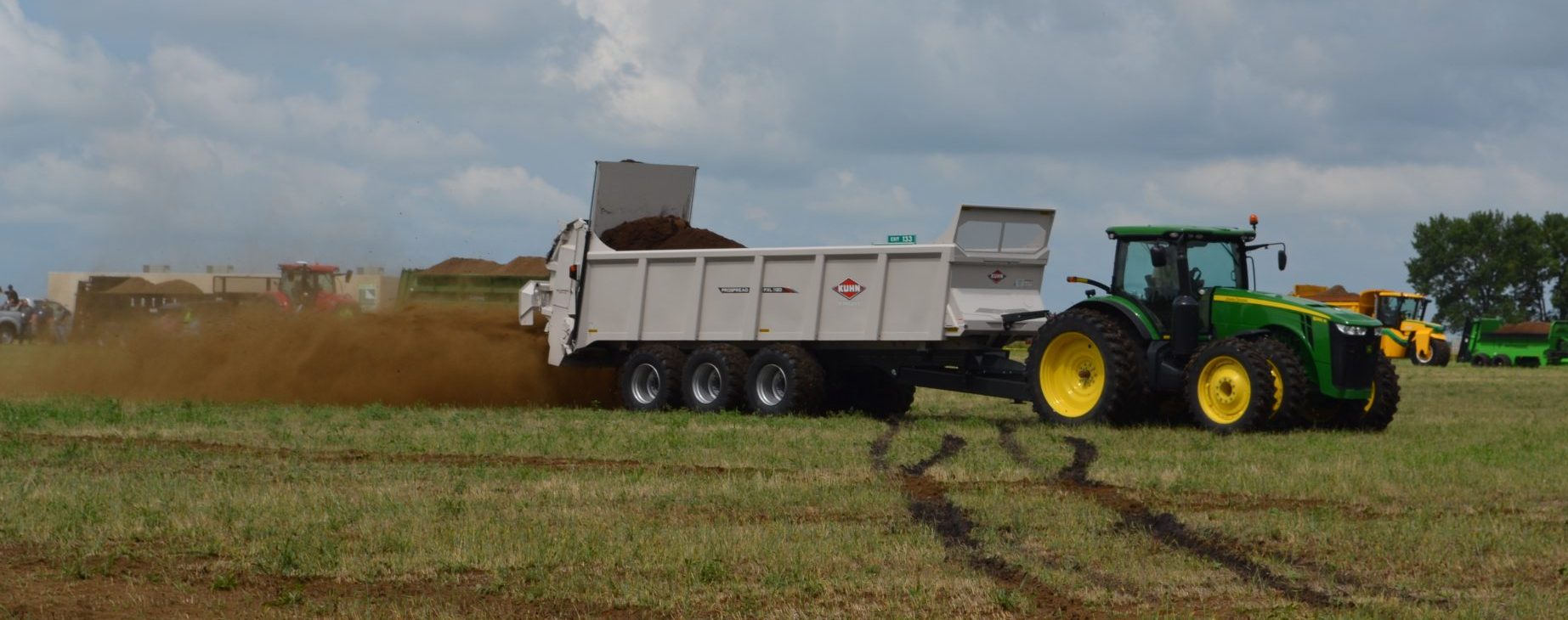
A manure tanker was outfitted with a John Deere HarvestLab 3000 setup for manure nutrient sensing. The setup included the sensor, a Krone flow meter, and a John Deere rate controller (Figure 1). Manure nutrient values from the sensor were recorded in real time. The controller then set specific target rates for a nutrient and the automation system adjusted the tractor speed or manure pump rate to meet the target.

Field trials were conducted in Wisconsin on silt loam soil. Manure was applied to strip plots to meet three specific nitrogen application rates using both the NIRS sensor and conventional sampling and application methods. During application, composite manure samples were collected to assess the sensor’s accuracy. After manure application, the field was planted with corn silage, and following harvest, NUE and yield were evaluated.
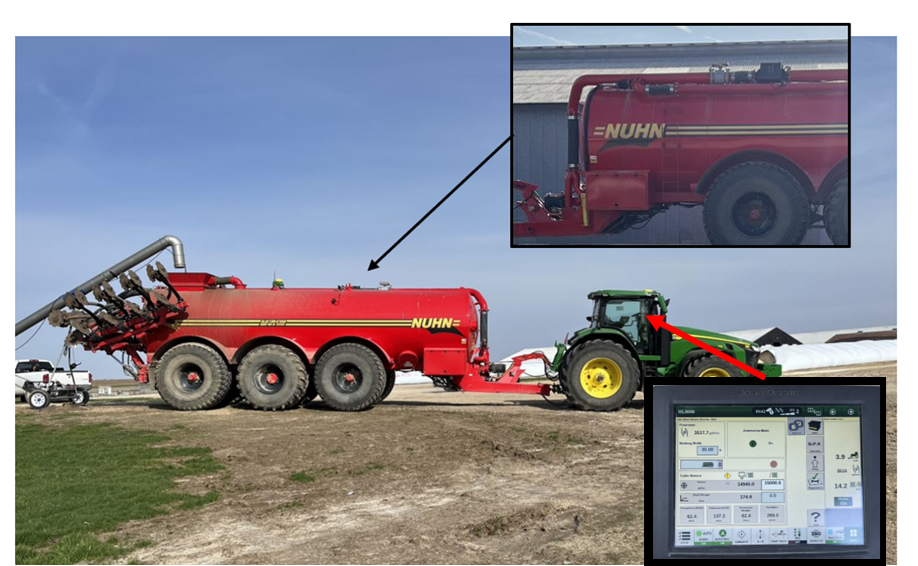
Figure 1: Manure tanker setup for sensor trials.

What Have We Learned?

In the first year of the study, the NIRS sensor outperformed conventional sampling methods in achieving target nitrogen rates. Across the application plots, the NIRS sensor delivered manure at a nitrogen rate in the range of 20 to 30 lbs N/ac over the target rate, whereas conventional sampling led to overapplication by 40 lbs N/ac to 95 lbs N/ac. During application, the system also tracked other nutrients, such as phosphorus and ammonium, but laboratory analysis indicated that the sensor was less accurate for these nutrients compared to nitrogen. While manure application rates varied, there was little difference in crop yield or NUE between treatments at harvest.

The NIRS sensor shows promise as a tool to revolutionize manure nutrient accounting in cropland. Its ability to track manure variation in real time could significantly improve nutrient management. Figure 2 demonstrates how the system tracked manure nitrogen, phosphorus, and potassium levels over time following a reduction in agitation. This type of tracking may help reduce the need for excessive agitation and enhance manure utilization efficiency.

Figure 2: Variation of nitrogen (left), phosphorus (center), and potassium (right) over time while applying dairy manure. The right side of the field shows signs of decreased homogeneity when agitation was reduced.

Future Plans

Researchers plan to continue field trials over multiple years to assess long-term impacts on nutrient use efficiency and soil nutrient management. Additionally, with new calibration updates since the original trial, future studies will evaluate the sensor’s accuracy in measuring phosphorus and its ability to meet phosphorus-based manure application targets while simultaneously tracking nitrogen for improved supplemental nitrogen prescriptions. Overall, the goal of the project is to provide producers and haulers with information on how effective the system is and ways in which it can be used to enhance on-farm efficiency.

Authors

Presenting & corresponding author

Joseph R. Sanford, Assistant Professor, University of Wisconsin -Platteville, sanfordj@uwplatt.edu

Additional authors

Rebecca A. Larson, Professor, Nelson Institute for Environmental Studies, University of Wisconsin-Madison; Tyler Liskow, Engineer, Nelson Institute for Environmental Studies, University of Wisconsin-Madison

Acknowledgements

This material is supported by the Wisconsin Dairy Innovation Hub and the National Institute of Food and Agriculture, U.S. Department of Agriculture, under award number 2022-69008-36506. Any opinions, findings, conclusions, or recommendations expressed in this publication are those of the author(s) and do not necessarily reflect the view of the U.S. Department of Agriculture or the Wisconsin Dairy Innovation Hub.

The authors are solely responsible for the content of these proceedings. The technical information does not necessarily reflect the official position of the sponsoring agencies or institutions represented by planning committee members, and inclusion and distribution herein does not constitute an endorsement of views expressed by the same. Printed materials included herein are not refereed publications. Citations should appear as follows. EXAMPLE: Authors. 2025. Title of presentation. Waste to Worth. Boise, ID. April 7-11, 2025. URL of this page. Accessed on: today’s date. 

Enhancing Precision Manure Nutrient Application with Near-Infrared Spectroscopy (NIRS) Sensors

Purpose

Land application of manure is crucial for providing nutrients to crops, yet challenges such as nutrient losses and reduced nutrient use efficiency (NUE) affect sustainability. This study evaluates a commercially available real-time near-infrared spectroscopy (NIRS) nutrient-sensing system to enhance precision manure nutrient application in crop production systems. The study assesses the impact of the NIRS system on manure application rates, NUE, and crop yield compared to conventional fixed-rate methods.

What Did We Do?

Field trials were conducted using a John Deere Harvest Lab 3000 NIRS system, rate controller, and Krone Flow meter on a manure tanker, Figure 1. Manure was applied to achieve a target total nitrogen rate for corn silage, with application rates varied to simulate manure nutrient variations during lagoon emptying.

Figure 1. Location of sensor on manure tanker

What Have We Learned?

Although NIRS predictions taken in laboratory conditions for total nitrogen were lower than the ranges reported for Manure analysis proficiency (MAP) certified laboratory results, the ammoniacal nitrogen,  phosphorous (P2O5), and potassium (K2O) were with the MAP lab ranges reported in Sanford et al. (2020). However, additional data is needed for assessment of the sensor accuracy during field conditions.

First-year field trial data indicate that NIRS was closer to the intended nitrogen application rates and had improved NUE with no significant differences in yield compared to those using conventional fixed-rate application methods. Further, the system is capable of producing manure nutrient application maps that can be used for supplemental nutrient applications, Figure 2.

Figure 2: Nitrogen application maps produced by the sensing system during plot trials

Overall, integrating NIRS into the land application system demonstrates potential improvements in precision nutrient application over conventional methods. Further trials and analyses are planned to assess the accuracy of the NIRS sensor and its broader impact on nutrient management and application precision.

Future Plans

Researchers plan to continue field trials for another one to two years to assess the impacts over multiple field years. This includes assessing the sensor accuracy in field conditions. Further, researchers’ previous trials have focused on applying based on manure nitrogen content. Additional trials will assess applying manure with a phosphorus limit using the same sensor. Lastly, researchers are working to guide farmers interested in integrating the system and aiding in using developed maps to improve supplemental nitrogen application.

References

Sanford, J.R., R.A. Larson, & M.F. Digman. 2020. Assessing certified manure analysis laboratory accuracy and variability. Applied Engineering in Agriculture, 36(6):905-912. https://doi.org/10.13031/aea.14214

Authors

Presenting author

Tyler Liskow, Engineer, Professor, Nelson Institute for Environmental Studies, University of Wisconsin-Madison

Corresponding author

Rebecca A. Larson, Professor, Nelson Institute for Environmental Studies, University of Wisconsin-Madison, rebecca.larson@wisc.edu

Additional authors

Tyler Liskow, Engineer, Nelson Institute for Environmental Studies, University of Wisconsin-Madison; and Joseph Sanford, Assistant Professor, University of Wisconsin-Platteville

Acknowledgements

This material is based on work that is supported by the National Institute of Food and Agriculture, U.S. Department of Agriculture under award number 2022-69008-36506.

Any opinions, findings, conclusions, or recommendations expressed in this publication are those of the author(s) and do not necessarily reflect the view of the U.S. Department of Agriculture.

The authors are solely responsible for the content of these proceedings. The technical information does not necessarily reflect the official position of the sponsoring agencies or institutions represented by planning committee members, and inclusion and distribution herein does not constitute an endorsement of views expressed by the same. Printed materials included herein are not refereed publications. Citations should appear as follows. EXAMPLE: Authors. 2025. Title of presentation. Waste to Worth. Boise, ID. April 711, 2025. URL of this page. Accessed on: today’s date.

A Feasibility Study on Optical Sensing Based Rapid Dairy Manure Nutrients Quantification

Proceedings Home W2W Home w2w17 logo

Purpose

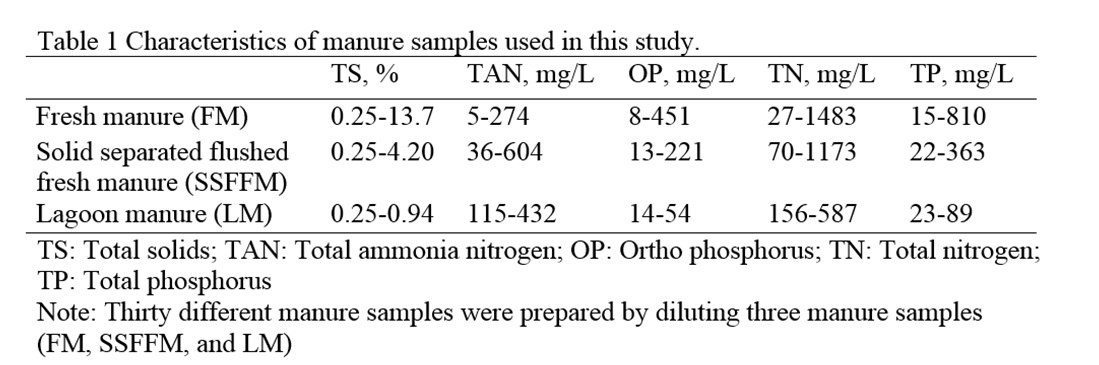
Precision application of manure in agricultural land requires information on its nutrients but the existing reliable nutrient estimation methods are unsuitable for real-time nutrient levels estimation. Near infrared spectroscopy (NIRS) is a rapid, non-destructive method of composition analyses and is commonly used in agricultural plant and produce quality evaluations.Previous studies have shown potential of NIRS for manure nutrients determination without identifying specific or narrow bands suitable to predict manure nutrients (nitrogen (N), phosphorus (P), etc.). In order to develop miniaturized sensing modules for variable rate manure nutrients applications, research is needed to determine specific wavelengths suitable for predicting the nutrients. The main goal of this study was thus to develop a robust method to determine specific key wavelengths in NIR region for manure nutrients determination.

Table 1 Characteristics of manure samples used in this study

What did we do?

We investigated optical sensing integrated multivariate data analysis methods to identify key wavelengths for manure nutrients determination. Total of 150 spectra (700-2500 nm) were collected using 30 different dairy manure samples. Manure samples at various dry matter contents ranging between 0.25 to 14.0%, representing different nutrient concentrations, were prepared by diluting (1.2-56.0 times) stock manure with distilled water. During data preprocessing, the spectral data were normalized and binned (25 nm). Then, key wavelengths were selected using stepwise multiple linear regression (SMLR) followed by principal component analysis (PCA). The selected key wavelengths were evaluated using linear (partial least square regression (PLSR)) and non-linear regression models (support vector machine regression (SVMR), and artificial neural network regression (ANNR).

Table 2 Performance of different prediction models with selcted key wavelengths

What have we learned?

This study demonstrates the potential use of NIRS technology for rapid detection of dairy manure nutrients. Preprocessing the

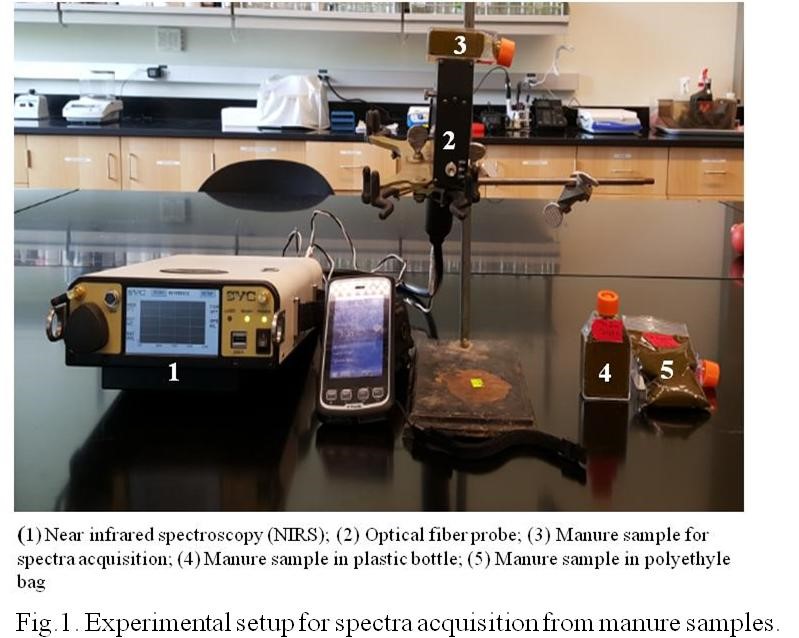
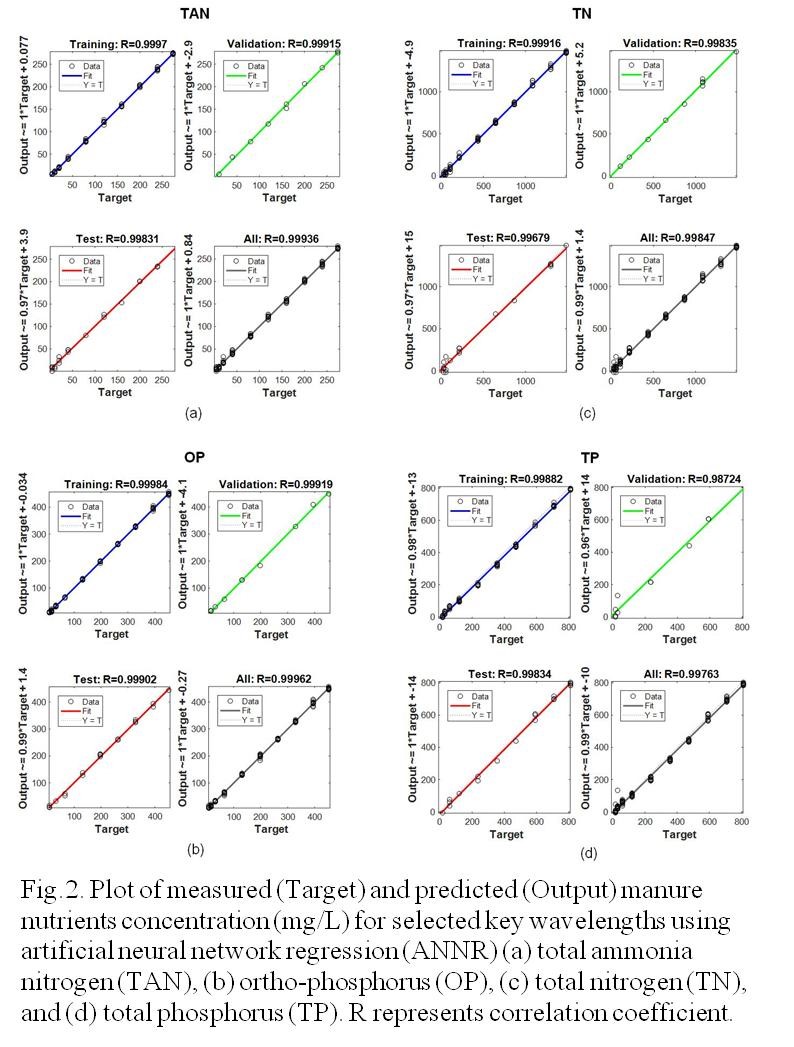
spectral data (normalizing and binning) and using the SMLR analysis followed by PCA can be an effective method for identifying key wavelengths related to manure nutrients. Ten key wavelengths identified for N and P determinations in dairy manure were 713.0, 740.6, 768.6, 964.7, 1022.9, 1144.7, 1175.1, 1295.5, 1532.7, and 1849.5 nm. The ANNR model had the highest R2 and lowest RMSE than the other two models. Similarly, the ANNR model maintained almost same performance with a set of selected key bands excluding > 1200 nm. Overall, results from this study indicated potential for development of a low-cost NIR-based sensing module for variable rate manure applications.Fig. 1 Experimental setup for spectra acquisition from manure samples

Future Plans

The next steps include evaluating the selected key wavelengths using a large number of manure samples from different dairy farms. This is necessary because the composition of manure is highly variable depending on the animal breed, the type of housing, the amount of water added, the type and the age of the animals, the feed rations, and the type and duration of slurry storage. We expect that this step will lead to the building of prototype modules and further field evaluation before commercialization.Fig. 2 Plot of measured (Target) and predicted (Output) manure nutrients concentration (mg/L) for selected key wavelengths

Corresponding author, title, and affiliation

Pius Ndegwa, Associate Professor, Department of Biological Systems Engineering, Washington State university, Pullman, WA

Corresponding author email

ndegwa@wsu.edu

Other authors

Gopi K. Kafle, Lav R. Khot, Iftikhar Zeb; Department of Biological Systems Engineering, Washington State University, Pullman, WA

Additional information

http://csanr.wsu.edu/grants/rapid-sensing-of-dairy-manure-nutrients-for-…

Acknowledgements

This research was funded by the BIOAg program via the Center for Sustainable Ag and Natural Resources and the Agricultural Research Center, Washington State University, WA.

The authors are solely responsible for the content of these proceedings. The technical information does not necessarily reflect the official position of the sponsoring agencies or institutions represented by planning committee members, and inclusion and distribution herein does not constitute an endorsement of views expressed by the same. Printed materials included herein are not refereed publications. Citations should appear as follows. EXAMPLE: Authors. 2017. Title of presentation. Waste to Worth: Spreading Science and Solutions. Cary, NC. April 18-21, 2017. URL of this page. Accessed on: today’s date.