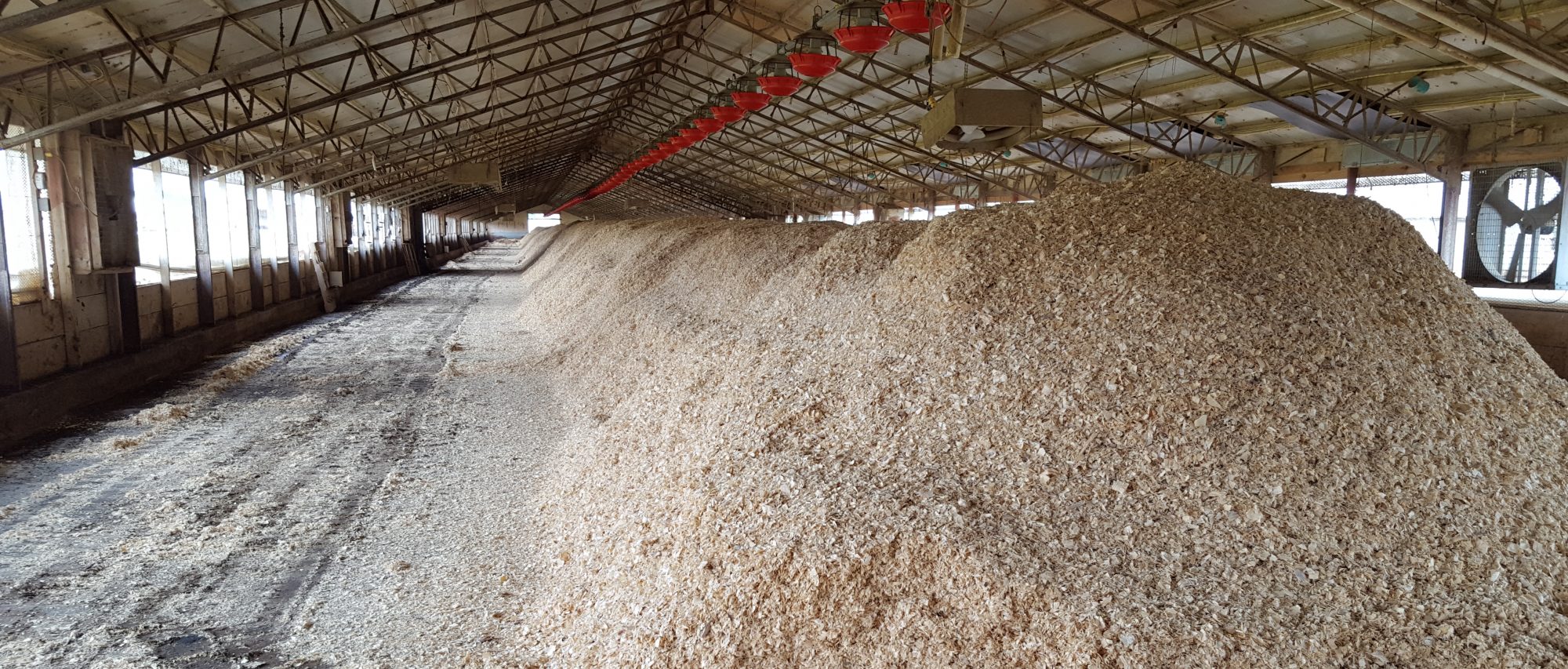

This webinar will examine how black soldier fly larvae (BSFL) can transform food and agricultural waste into valuable products for both animal feed and soil health. Presenters will discuss large-scale BSFL production, the frass co-product, and how nutrient content can vary based on inputs and processing. This presentation was originally broadcast on August 15, 2025. Continue reading “Flies, Frass, Feces, and Fields”
Decades of advancement in the practice of manure storage and toward continued future success
Purpose
The history and development of the practice of manure storage over time in the US is told to educate new stakeholders, illustrate collective industry advancements and failures that have shaped course, and urge support for future success using rational design approaches, especially for concrete liners.
What Did We Do?
From literature and research interviews we layout a narrative for how the practice of manure storage design has changed over time. Change in the practice is traced by examining the development and use of the four major lining materials of earth, steel, plastic and concrete against the larger backdrops of consolidation and increasing environmental caution. Special focus is given to concrete, a lining material with relatively high durability and low permeability but limited rational design methodology.
What Have We Learned?
The practice of manure storage is shown to have advanced over the decades resulting in lower permitted seepage obtained for longer lifespans. This advancement has occurred under pressures for larger storages that are held to higher environmental standards. This advancement has been made possible by the development of existing and new materials, including significant technical support behind them developed by governmental agencies, industries that supply the materials, and engineers who utilize them on farms. In the area of concrete liners there is room for significant advancement to develop near zero seepage liners at feasible cost, through the use of frameworks that are rational (mechanistic-empirical) and quantifiable.
Future Plans
Complete stage gate analysis for obtaining design seepage rates for concrete liners used in manure storage, that are mechanistic based and quantifiable.
Authors
Presenting & corresponding author
Mike Krcmarik, Professional Engineer, mikekrcmarik@gmail.com
Email corresponding author for a copy of the presentation and all collected references.
Acknowledgements
The author would like to acknowledge employees of the USDA’s Natural Resources Conservation Service, private consulting engineers designing manure storages, state regulators supporting manure storages, and material industry representatives for providing perspectives and resources used in assembling this presentation.
The authors are solely responsible for the content of these proceedings. The technical information does not necessarily reflect the official position of the sponsoring agencies or institutions represented by planning committee members, and inclusion and distribution herein does not constitute an endorsement of views expressed by the same. Printed materials included herein are not refereed publications. Citations should appear as follows. EXAMPLE: Authors. 2025. Title of presentation. Waste to Worth. Boise, ID. April 7-11, 2025. URL of this page. Accessed on: today’s date.
Changes in amount and location of US dairy manure production from 1970-2023
Purpose
We estimated milking cow manure production for US states from 1970 to 2023 with the aim to provide a broad perspective to stakeholders who manage and optimize the use of dairy manure. Stakeholders include producers and those working on their behalf such as agronomists, applicators, engineers, extension agents, researchers, governmental agencies, cooperatives, and markets.
It is hoped that with increased understanding of how manure production has changed over time and location stakeholders can better understand trends and historical conditions which impact their efforts.
What Did We Do?
We estimated milking cow manure production for 48 US states from 1970 to 2023 using an empirical equation estimating manure production as a function of milk production published by the American Society of Agricultural and Biological Engineer’s Manure Production and Characteristics standard. To apply this equation to each state we utilized two data sources produced by the United States Department of Agriculture’s National Agricultural Statistics Service (NASS), annual milk production and annual milking cow herd size. To gain further insight data sources reporting the number of dairy farms and land available for manure application in each state were additionally gathered from NASS and reported in combination with manure production. The workflow and references for combining this data are displayed in the following figures.


What Have We Learned?
Nationally annual dairy manure production has decreased from 1970-2023 by approximately 4% (2.2 billion gallons). From 1998 to 2023 annual dairy manure production increased by approximately 13% (6.4 billion gallons). Although national milking cow numbers generally declined from 1970 to 1998 then nearly remained constant until 2023, this trend was offset by continual increase in manure production per cow from 1970-2023 due to the direct relationship with milk production, which has continued to increase from 1970-2023. Also, the annual number of gallons of manure per dairy farm has increased from 1970-2023 due to a decrease in number of dairies combined with an increase in manure production per cow. It is accepted that the US dairy industry has consolidated over time, this data supports that its’ manure production has consolidated as well. The author posits based on experience and this analysis that nationally, over time, manure systems in support of livestock production have contributed to an increase in volume of manure being managed to date. As dairy cows move to increasing levels of confinement, from pasture and lots which utilize land base as a manure system to barns with more engineered manure systems, greater collection of manure occurs and therefore must be managed. Regarding the impact of the specific type of engineered manure systems impact on volume of manure that must be managed the author posits this currently varies based on the kind of manure system selected, either adding or subtracting to the managed manure stream, which is a function heavily dependent on local climate (precipitation, evaporation, and length of storage period) and technology adoption (covers, flush systems, separation, and advanced treatment). In the upper Midwest with relatively high precipitation, low evaporation, and long winter periods dairy manure systems are predominantly collect and store only, overall adding to the volume of manure to be managed as additional precipitation is also captured by the uncovered nature of most storages in this region.

At the state level the change in manure production has varied. From 1970 to 2023, 12 states have increased manure production, the remaining 26 states have decreased manure production. This has resulted in a change in the location of where manure is produced. In 2023, most manure was produced in a few states. In 2023, 10 states produced 70% of the total annual US dairy manure production, with 6 states producing over 50%.

Future Plans
Authors seek to maintain this data analysis in a method available to stakeholders, additionally incorporating manure production from swine, beef, and poultry into it, and updating it as future NASS reports are published.
Authors
Presenting & corresponding author
Mike Krcmarik, Professional Engineer, mikekrcmarik@gmail.com
Additional Information
Email corresponding author for copy of all data and figures used in this analysis, including figures published on the poster only.
Acknowledgements
-
- American Society of Agricultural and Biological Engineers, Engineering Practices Subcommittee of the ASAE Agricultural Sanitation and Waste Management Committee responsible for standard ASAE D384.2 Manure Production and Characteristics used in this analysis.
- United States Department of Agriculture’s National Agricultural Statistics Service responsible for the various surveys and reports used in this analysis.
- Allen Young, Eric County Soil and Water Conservation District (New York) providing valuable review and discussion.
The authors are solely responsible for the content of these proceedings. The technical information does not necessarily reflect the official position of the sponsoring agencies or institutions represented by planning committee members, and inclusion and distribution herein does not constitute an endorsement of views expressed by the same. Printed materials included herein are not refereed publications. Citations should appear as follows. EXAMPLE: Authors. 2025. Title of presentation. Waste to Worth. Boise, ID. April 7–11, 2025. URL of this page. Accessed on: today’s date.
Water Quality Regulations and Animal Agriculture Curriculum Materials

As livestock and poultry production has intensified it is no surprise that regulations have become a more prominent part of the business. This module introduces the Clean Water Act (CWA) and it application to animal agriculture. This material was developed for use in beginning farmer and extension programs, high school classrooms, and for self-study or professional continuing education.
Agriculture Professionals and Farmers
Check out this self-study module “Playing By the Rules“. This module is estimated to take 60 minutes and offers a certificate upon successful completion.
Teachers, Extension, Consultants
Educators are welcome to use the following materials in their classrooms and educational programs. More modules…
- Instruction Guide – includes lesson plan, links to additional information, connections to national agriculture education standards (AFNR Career Content Cluster Standards), application to Supervised Agricultural Experience (SAE) projects, sample quiz/review questions, and enrichment activities.
- Presentation – 36 slides, Powerpoint 97-2003 format. Annotated.
Acknowledgements
Author: Thomas Bass, Montana State University
Reviewers: Paul Hay, University of Nebraska, Lyle Holmgren, Utah State University, Jill Heemstra, University of Nebraska, Elizabeth Burns Thompson, Drake University (law student), Mary Catherine Barganier, NYFEA, Shannon Arnold, Montana State.
Building Environmental Leaders in Animal Agriculture (BELAA) is a collaborative effort of the National Young Farmers Educational Association, University of Nebraska-Lincoln, and Montana State University. It was funded by the USDA National Institute for Food and Agriculture (NIFA) under award #2009-49400-05871. This project would not be possible without the Livestock and Poultry Environmental Learning Community and the National eXtension Initiative.
Water Quality Regulations and Animal Agriculture
View more presentations from LPELC
Climate Change Regulations, Policy, and Market Opportunities
 There are several strategies of reducing, or mitigating carbon and other GHG emissions.
The first and most basic of which is conservation – if we don’t use the energy in the first place, we don’t need to be concerned with what emissions it was responsible for. Agricultural energy audits are helpful to see the areas capable of the biggest improvements.
Second are emission offsets; an offset is a greenhouse gas reduction made by a non-regulated entity, which is purchased by a regulated entity.
The third strategy of reducing GHG emissions is a regulation imposed to restrict the quantity of emissions on certain parties; this regulation can be in the form of a tax or cap and trade program. Markets exist to trade both voluntary- and mandatory-based compliance credits.
Related: [online article] Large Livestock & Poultry Operations Required to Report GHG’s and [archived webinar] Mandatory Greenhouse Gas Reporting Rule
Aside from voluntary and compliance-based markets, other market opportunities exist to give value to reduced emissions, including utility purchase of green energy (both electricity and gas). The Cow Power Program in Vermont is a good example of this process in the U.S. However, with all market options available to trade emission credits, there are costs and potential risks involved that are important to be educated about.
An opportunity exists for animal agriculture to benefit from GHG cap and trade programs, since regulated entities will be looking for carbon offset credits to purchase, and this will drive up the value of the offsets. Credits could be more valuable in the future with legislation to regulate certain sectors – they will look to agriculture as one of the voluntary sources from which to be able to offset those emissions.
Educator Materials
If you would like to use the video, slides, or factsheet for educational programs, please visit the curriculum page for download links for this and other climate change topics.
Examples of Voluntary and Compliance Markets
No endorsement is intended by listing here. These are listed purely to provide examples of different types of markets.
Voluntary Markets –The Climate Trust | Native Energy | TerraPass
Compliance Markets – Regional Greenhouse Gas Emissions | California Cap and Trade Program (California AB32)
Acknowledgements
Author: Jennifer Pronto, Cornell University
This page was developed as part of a project “Animal Agriculture and Climate Change” an extension facilitation project to increase capacity for ag professionals. It was funded by USDA-NIFA under award # 2011-67003-30206.
Feed Management Planners Certification Program to Reduce Nutrient Loads in Impaired Watersheds
 Waste to Worth home | More proceedings….
Why Develop a Feed Management Certification Program?
To develop a program to train ARPAS-certified (American Registry of Professional Animal Scientists) dairy and beef nutritionists on how to prepare and evaluate Feed Management plans as it relates to the NRCS Feed Management (592) practice in Pennsylvania. The objective is to compare how formulated diets match to the consumed diets. Phosphorus is monitored through manure testing and nitrogen by milk urea nitrogen and calculating milk nitrogen efficiency. Dry matter intake efficiency is also monitored as this can affect the total manure volume excreted.
What Did We Do?
In 2007, Mid-Atlantic Water Program (MAWP) scientists applied the national feed management program to meet the needs of dairy consultants to implement feed management in the Chesapeake Basin. This program certifies consultants in precision feed management, a practice that reduces nutrient loads in animal wastes by minimizing the phosphorus and nitrogen content in the feed.
With the recent release of the US Environmental Protection Agency’s Total Maximum Daily Load for the Chesapeake Bay, the agricultural community is looking for the best practices to control nutrient pollution while minimizing impacts to profit. Over the years, the work of this project team has established precision feed management as both an economically and environmentally viable best management practice. As such, state watershed implementation plans include precision feed management as a method to meet load allocations.
Pennsylvania currently has twenty-four NRCS qualified nutritionists to write feed management plans. In 2011, fifty-one operations received EQIP or CBWI funding through USDA-NRCS for feed management, with the majority consisting of dairy farms. An additional 10 farms entered into contracts with NRCS in 2012. Farms are currently in the process of being assessed on how well they implemented recommendations from the first year of quarterly reports and are working through their second year of implementation.
Additional efforts have been implemented to educate consultants about the regulations and issues affecting dairy producers. Currently, the Pennsylvania team is working with producers to monitor income over feed costs and to develop cash flow plans, which provides the opportunity to implement precision feeding practices while monitoring the economic benefits to the herd. A study of six component fed dairy herds in Pennsylvania is also being completed to evaluate the effects of the feed, forage, and manure sampling protocols along with feeding order on fecal phosphorus levels and to update current sampling recommendations.
Funding from the MAWP was critical to providing these trainings and projects and establishing precision feed management as a best management practice that farmers can realistically utilize. The infrastructure is in place to address the demand for more feed management plans and the MAWP will continue to meet the educational needs of this audience.
What Have We Learned?
There are a lot of opportunities on farms to improve feed management and nutrient balance. Challenges have been observed pertaining to nutrient reduction strategies that could impact overall nutrient balances in dairy and beef rations. Many of these challenges are greatly influenced by the volatility in today’s commodity pricing. Producers need to become more engaged in what they are feeding and how it affects their profitability. It has been observed that inorganic phosphorus is still being used in grain mixtures when rations contain high phosphorus forages or inclusion of byproduct feeds. We have also observed some challenges in obtaining test analyses for complete grain and mineral mixes on a regular basis. More education is needed for both industry professionals as well as producers.
Future Plans
As the feed management program in Pennsylvania progresses, pounds of phosphorus excreted can be tracked to monitor the effects of reducing phosphorus in dairy and beef rations. This can be used to evaluate its effect on water quality and potential phosphorus accumulations in the soil when manure is applied to crops at nitrogen-based rates. Crop rotations, inclusion of alternative forages and whole farm nutrient balance will be included in future trainings and feed management plans. The Penn State Extension Dairy team is also working on the development of a Feed Management mobile app for producers and nutritionist to be able to track and monitor their progress on nutrient reductions in their rations.
Authors
Daniel Ludwig, Natural Resources Specialist, USDA – NRCS, dan.ludwig@pa.usda.gov
Virginia Ishler, Dairy Complex Manager/Nutrient Specialist, Penn State University
Rebecca White, Program Manager-Penn State Extension Dairy Team
Additional Information
Pennsylvania NRCS on Feed Management
The authors are solely responsible for the content of these proceedings. The technical information does not necessarily reflect the official position of the sponsoring agencies or institutions represented by planning committee members, and inclusion and distribution herein does not constitute an endorsement of views expressed by the same. Printed materials included herein are not refereed publications. Citations should appear as follows. EXAMPLE: Authors. 2013. Title of presentation. Waste to Worth: Spreading Science and Solutions. Denver, CO. April 1-5, 2013. URL of this page. Accessed on: today’s date.