Why Study Air Emissions from Mono-slope Beef Barns?
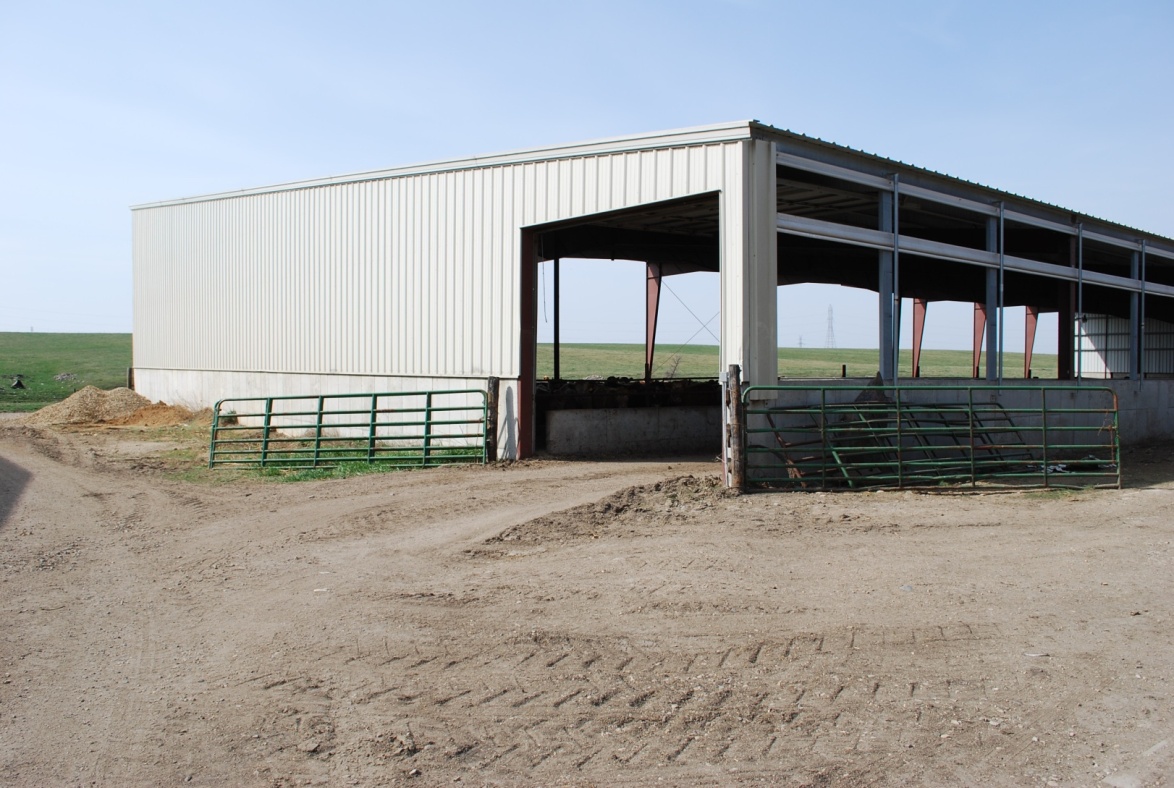
Mono-slope buildings (Figure 1) are one type of roofed and confined cattle feeding facility that is becoming increasingly popular in the Northern Great Plains. However, little is known about the impact of these housing systems and associated manure management methods on the air quality inside and outside the barn. The objective of this study was to determine gas concentrations in mono-slope beef cattle facilities and relate these concentrations to environmental and manure management factors.
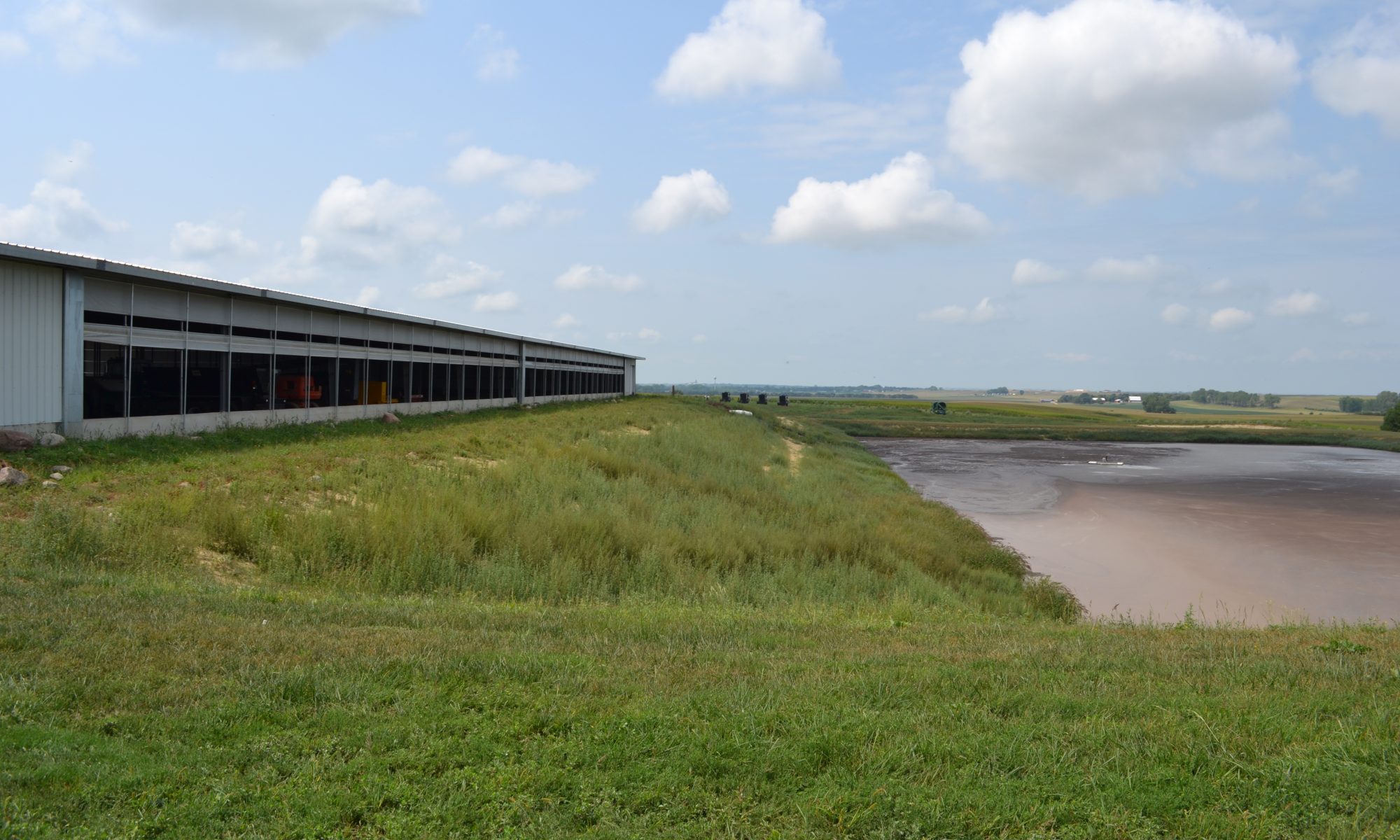
Figure 1. View of a monoslope cattle facility from the northeast. Adjustable curtains in the rear (north) wall are used to limit airspeed through the barn during colder weather.
What Did We Do?
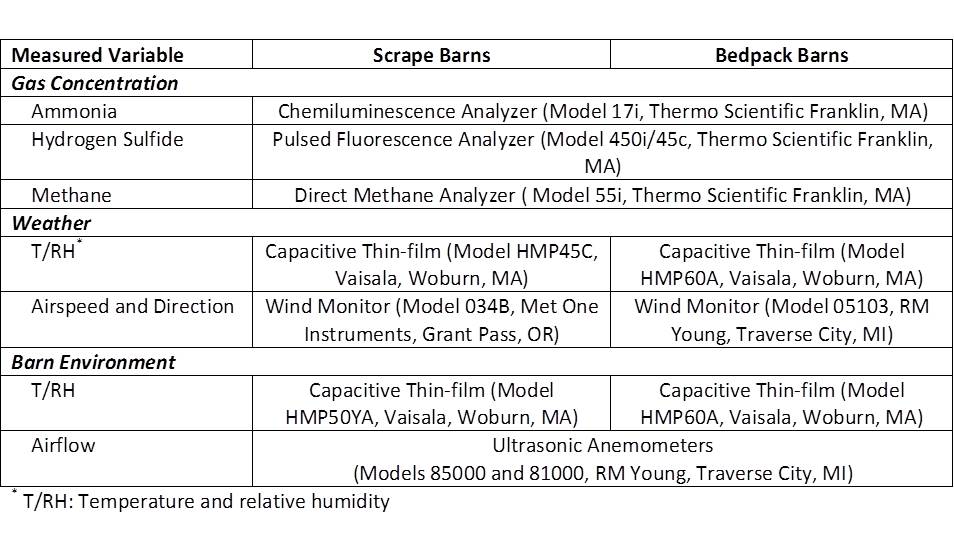
Four producer-owned and operated beef deep-bedded mono-slope facilities were selected for monitoring. Two barns maintained deep-bedded manure packs (Bedpack), whereas two barns scraped manure and bedding from the pens weekly (Scrape). Each site was monitored continuously for one month each quarter for two years to capture both daily and seasonal variations. At each facility, the environment-controlled instrument trailer and associated equipment were located adjacent to the barn. The trailer contained: a gas sampling system (GSS) that consisted of Teflon tube sample lines connected to a computer-controlled sampling manifold, gas analyzers, computer, data acquisition system, calibration gas cylinders, and other supplies. In addition to the sampling lines, there were environmental instruments to measure the airflow and weather conditions for two pens in each barn. The analyzers and sensors used are summarized in Table 1.
Table 1. Analyzers and sensors used for air quality and environmental monitoring
Ammonia, hydrogen sulfide and methane concentrations were sequentially sampled from two south wall locations and three north wall locations per pen. The maximum hourly mean concentrations measured at the north or south wall of either pen in the barn were used in this analysis. The seasonal average hourly means of maximum concentrations and corresponding environmental variables were calculated.
What Have We Learned?
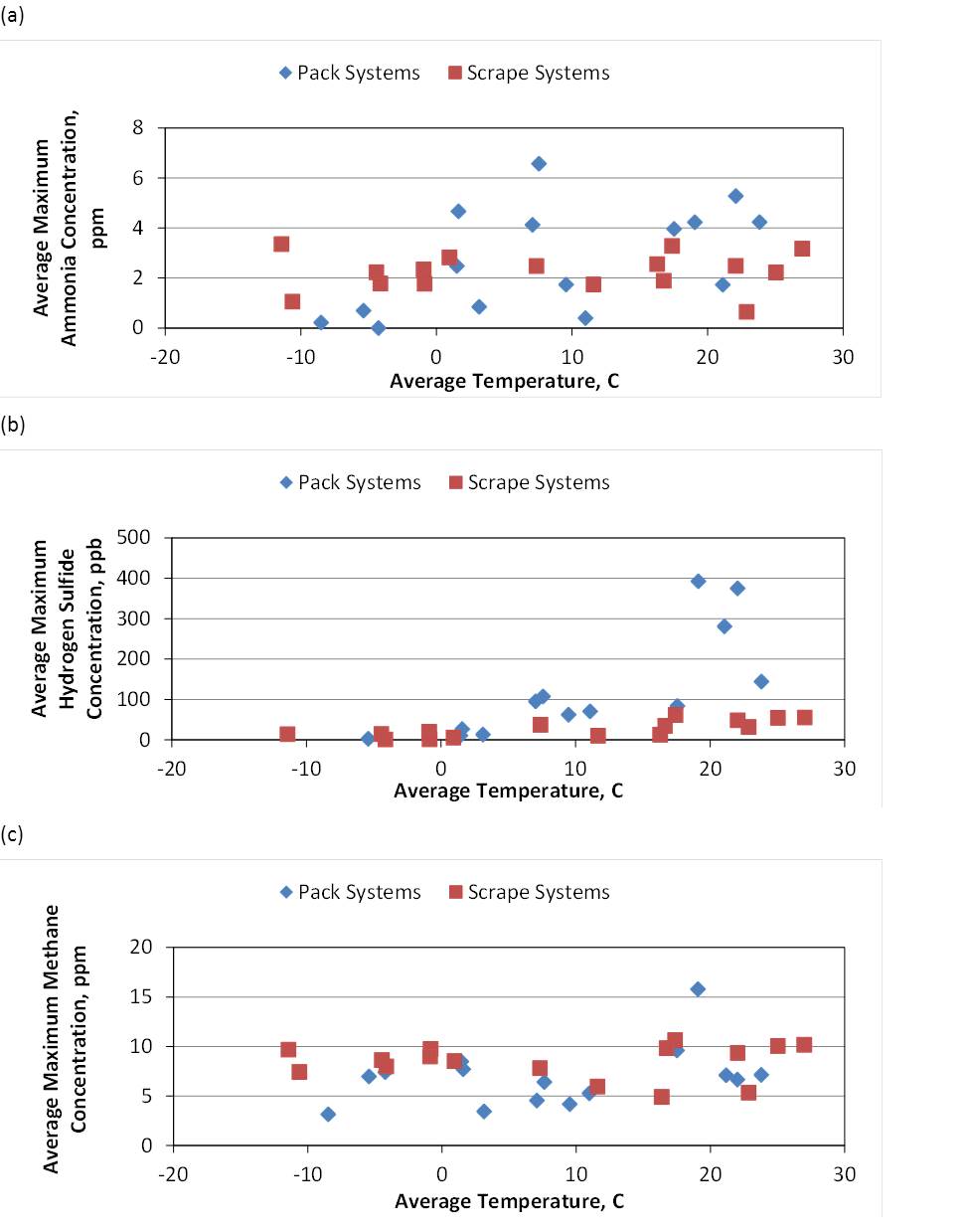
Figure 2. Seasonal averages of maximum hourly mean ammonia (a), hydrogen sulfide (b) and methane (c) concentrations for the bedpack and scrape manure management systems monitored in four monoslope cattle facilities, as influenced by ambient temperature.
The seasonal average hourly maximum ammonia concentration ranged from 0.6 to 3.3 ppm with the Scrape barns and from 0.2 to 7.1 ppm with the Bedpack barns (Fig 2a). The range of maximum hydrogen sulfide concentrations was 0 to 61 ppb in the Scrape barns and 0 to 392 ppb in the Bedpack barns (Fig 2b). The maximum methane concentration ranges were 4.9 to 10.6 and 3.1 to 15.8 ppm in the Scrape and Bedpack barns, respectively (Fig 2c). There are indications of differences between gas release rates for bedpack and scrape manure management systems and increased release rates with temperature for ammonia and hydrogen sulfide. Methane concentrations were more consistent between systems and for different temperature conditions.
This project expands the knowledge base of gaseous concentrations from deep-bedded beef barns. This integrated project also provides management techniques that producers can implement to minimize emissions, and improve air quality.
Future Plans
Emission values will be calculated using these concentration data, in conjunction with airflow data, which also varies with site and temperature conditions.
Project funded by Agriculture and Food Research Initiative Competitive Grant no. 2010-85112-20510 from the USDA National Institute of Food and Agriculture. Technical assistance provided by Alan Kruger, John Holman, Todd Boman, and Bryan Woodbury.
The authors are solely responsible for the content of these proceedings. The technical information does not necessarily reflect the official position of the sponsoring agencies or institutions represented by planning committee members, and inclusion and distribution herein does not constitute an endorsement of views expressed by the same. Printed materials included herein are not refereed publications. Citations should appear as follows. EXAMPLE: Authors. 2013. Title of presentation. Waste to Worth: Spreading Science and Solutions. Denver, CO. April 1-5, 2013. URL of this page. Accessed on: today’s date.
The Maumee River watershed contributes 3% of the water but more than 40% of the nutrients entering Lake Erie. Data from the Ohio Tributary Loading Program has identified increasing levels of dissolved reactive phosphorus as the prime suspect in the recurrence of harmful algal blooms within Lake Erie. Livestock manure represents approximately 25% of the phosphorus applied in the watershed and can be a source of dissolved reactive phosphorus.
One project is a three year research project on applying liquid swine manure as a spring top-dress nitrogen source for soft red winter wheat. Field-scale randomized block design replicated plots were conducted on farms. Liquid swine manure was surface applied and incorporated on all plots using a Peecon toolbar and compared to urea (46-0-0) fertilizer surface applied with a fertilizer buggy for wheat yield. Manure applications were made using a standard 5,000 gallon manure tanker in early April after the wheat had broken dormancy and field conditions were deemed suitable. Manure was applied at rates to approximate the nitrogen amount in the urea treatments. There was no statistical yield difference between using livestock manure or purchased urea fertilizer as the top-dress nitrogen source.
Another research project started in 2011 compared fall and spring applied manure. The fall treatment included an application of manure just before planting of a wheat cover crop. The wheat was killed in the spring and followed with a corn crop. A direct injection manure application was made to the corn that had not received manure in the fall. The fall applied manure had an average yield of 109 bu/ac and the spring applied had an average yield of 205 bu/ac.
The potential to use liquid manure on growing crops opens a new window of opportunity to reduce phosphorus loading into Lake Erie.
Purpose
To compare manure nutrient field application timing throughout the year and with commercial fertilizer in order to maximize crop yield and minimize nutrient loss.
What Did We Do?
Topdressed wheat in the spring with manure and urea. Corn applications include topdressing and sidedressing corn fields in the fall and spring.
What Have We Learned?
Wheat topdressed with manure has yielded equal to or greater than urea. Preliminary results show sidedressing applications made to corn in the spring yield better than fall applications.
No statistically significant yield difference was found between spring applied urea and manure to soft red winter wheat.
There was a statsitcally significant yield difference between both fall manure applications (manure and manure plus a nitrogen inhibitor) and the spring sidedressed manure.
Future Plans
Continue the wheat study and are adding cover crops to the corn study.
Authors
Amanda Douridas, Extension Educator, The Ohio State University Extension Douridas.9@osu.edu
Glen Arnold, Manure Nutrient Management Field Specialist, The Ohio State University Extension
The authors are solely responsible for the content of these proceedings. The technical information does not necessarily reflect the official position of the sponsoring agencies or institutions represented by planning committee members, and inclusion and distribution herein does not constitute an endorsement of views expressed by the same. Printed materials included herein are not refereed publications. Citations should appear as follows. EXAMPLE: Authors. 2013. Title of presentation. Waste to Worth: Spreading Science and Solutions. Denver, CO. April 1-5, 2013. URL of this page. Accessed on: today’s date.
A number of the manure related Conservation Innovation Grants (CIG) have been successful. Several feed management related projects have been major successes under the CIG program. Other successful projects have dealt with such technologies as anaerobic digesters; community digesters; environmental credit trading; lagoon management; manure to energy generation; alternative litter sources, storage, and handling; and pathogen, odor, and emissions mitigation, to name just a few.
The presentation will provide specific numbers of projects and funding per year, and information about actual projects that NRCS considers to have been successful.
What Is the Purpose of the CIG Grant Program?
Glenn Carpenter came to Natural Resources Conservation Service as a Senior Economist in December of 2001 with the Animal Husbandry and Clean Water Division. In May, 2004 he became the agency’s National Leader for Animal Husbandry, with that Division. In 2010 his position was moved to the Ecological Sciences Division. Much of his work with NRCS has been related to the animal waste issue and the agency’s interaction with EPA over the CAFO Rule.
Glenn has three degrees in Poultry Science from Michigan State University. Prior to joining NRCS, Glenn served in Extension Poultry positions at two universities.
The 2002 Farm Bill created a mechanism under the Environmental Quality Incentives Program (EQIP) for a program of Conservation Innovation Grants (CIG). These grants were “…intended to stimulate innovative approaches to leveraging Federal investment in environmental enhancement and protection, in conjunction with agricultural production…” The grants were to provide a mechanism for funding projects to aid in technology development and transfer. The granting program actually began in 2004, and has continued since that time.
What Did We Do?
By statute, the USDA Natural Resources Conservation Service cannot do research. Because of this, and because the interest of NRCS lies in directly assisting farmers and ranchers in the adoption of technologies that will benefit conservation, projects funded under this program must be in the field demonstration or tool application stages. Since the initial grant funding cycle in 2004, NRCS has provided funding through EQIP every year. To date nearly 500 grants have been awarded, with total funding in excess of $180 million.
A large share of these CIGs has been strongly animal, and/or manure related. Almost 25 percent of the total number of grants has been animal related, and these grants have received slightly over 26 percent of the total dollars. About 19 percent of the total grants have been manure related and these have received about 22 percent of the funding. Those animal related grants that are not manure related largely deal with range and pasture systems.
What Have We Learned?
Several feed management related projects have been major successes under the CIG program. Other successful projects have dealt with such technologies as anaerobic digesters; community digesters; environmental credit trading; lagoon management; manure-to-energy generation; alternative litter sources, litter storage, and handling; and pathogen, odor, and emissions mitigation from manure, to name just a few.
The number and variety of funded projects has covered a wide range of geographic areas and technical innovations. A multistate feed management project resulted in training programs, a tech note for NRCS, and many fact sheets and other materials that are available on Livestock and Poultry Environmental Learning Center webpage. Another major grant demonstrated the effectiveness of filter strips and other vegetated treatment areas on mitigating manure runoff from cattle feedlots. Utilizing high pressure injection of manure, a Pennsylvania project demonstrated a decrease in odor and runoff while also preserving nitrogen. Several projects have successfully demonstrated the effects of precision feeding of dairy cattle to show the change in manure nutrients. Projects have demonstrated the effectiveness of different tillage systems and technologies on manure nutrient runoff. Other projects have dealt with innovative waste-to-energy technologies, or waste to value-added-product creation. These are just a few of the number and variety of projects funded through the Conservation Innovation Grants program.
Future Plans
The success of the CIG program since 2004, both in numbers of projects and in innovative technologies and tools applied, demonstrates that the program is important to agriculture in the U.S. NRCS has shown its support by continually funding the program, and by making additional moneys available for special targeted CIGinitiatives.
Authors
Glenn H. Carpenter, National Leader, Animal Husbandry, USDA Natural Resources Conservation Service glenn.carpenter@wdc.usda.gov
United States Department of Agriculture, Natural Resources Conservation Service, Conservation Innovation Grants Program
The authors are solely responsible for the content of these proceedings. The technical information does not necessarily reflect the official position of the sponsoring agencies or institutions represented by planning committee members, and inclusion and distribution herein does not constitute an endorsement of views expressed by the same. Printed materials included herein are not refereed publications. Citations should appear as follows. EXAMPLE: Authors. 2013. Title of presentation. Waste to Worth: Spreading Science and Solutions. Denver, CO. April 1-5, 2013. URL of this page. Accessed on: today’s date.
* Presentation slides are available at the bottom of the page.
Ammonia and odor emissions from land application of liquid dairy manure, and costs associated with manure land application methods are serious concerns for dairy owners, regulators, academic, and the general public. Odor and ammonia samples from agricultural fields receiving liquid dairy manure applied by surface broadcast and subsurface injection methods were collected and analyzed. Costs associated with both of the manure application methods were estimated. The test results showed that subsurface injection reduced both the odor and ammonia emissions compared with surface broadcast; therefore, applying liquid dairy manure by subsurface injection could be recommended as one of the best management practices to control ammonia and odor emissions. The estimated costs associated with subsurface injection were higher than surface broadcast. However the higher costs could be partially compensated by the higher nitrogen fertilizer value captured in the soil by the deep injection method.
Why Study Air Emissions from Dairy Farms?
A floating self-propelled mixing pump and a remote controller (yellow)
Agriculture is the single most important economic sector in Idaho. Dairy production currently stands as the single largest agricultural pursuit in Idaho. Currently, Idaho ranks as the third largest milk production state in the US. Idaho has roughly 550 dairy operations with 580,000 milk cows. Over 70% of milk cows are located in the Magic Valley in southern Idaho (Idaho Department of Agriculture-Bureau of Dairying, 1/22/2013). A number of dairies in the Magic Valley use flushing systems resulting in huge amount of lagoon water which is applied to crop lands near the lagoons via irrigation systems during the crop growing seasons. The volatilization of ammonia (NH3) from the irrigated lands and lagoons is not only a loss of valuable nitrogen (N), but also causes air pollution. Concentrated dairy production in a limited area such as the Magic Valley has caused air and water quality concerns. Controlling odor and capturing N in dairy manure are big challenges facing the southern Idaho dairy industry.
Direct injection incorporates manure directly beneath the soil surface and thus minimizes odor and NH3 emissions during application. Injecting manure decreases soluble phosphorus (P) and N in runoff relative to surface application. Some common types of direct injection applications are liquid tankers with injectors and drag-hose systems with injectors. Manure can be successfully injected in both conventional tillage and non-till systems with currently available equipment. The manure direct injection has been proven in other regions, such as the Midwest, to effectively manage odors and manure nutrients. The purpose of this research was to demonstrate, evaluate, and encourage the widespread adoption of the manure direct injection method in southern Idaho for mitigating odors and managing manure nutrients.
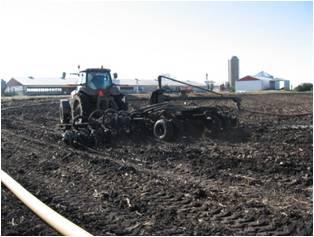
Subsurface injection with drag hose system
What Did We Do?
A manure application field day was held on October 31, 2012 on a dairy in Buhl, Idaho, to demonstrate and evaluate dairy manure land application via a drag-hose system and manure mixing equipment. The dairy had approximately 3,500 milking cows managed in a free-stall and open-lot mix set-up, with about 60% of the cows housed in free stalls. Waste is flushed from lanes running under the feeding alleys and from the milking parlor. The wastewater passes through solids removal equipment and basins and then into three lagoons in series. Manure used for this demonstration study was from the last lagoon, which had about 9 million gallons of manure at the beginning of the demonstration field day and its sludge had been not cleaned for 5 years.
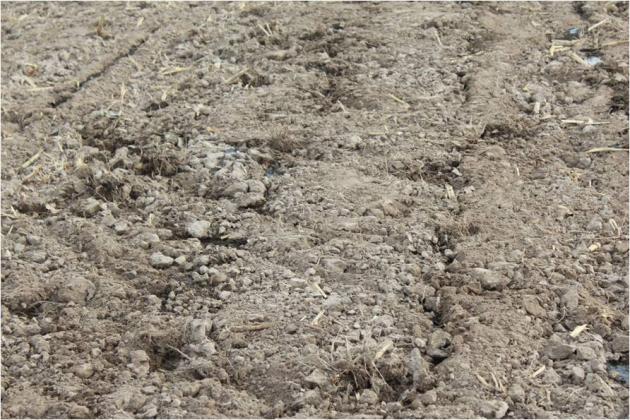
Soil after manure subsurface injection
The on-farm manure application trials conducted at two sites were comprised of two manure application methods: surface broadcast and subsurface injection. At each of the sites, a square plot of approximately 3,600 m2 in the western portion of the site was used for surface broadcast and the rest of the land was used for subsurface injection. The western portion of the site was chosen because the prevailing winds were from the north during the test period. The previous crop at the two sites was corn; both sites had been disked after harvest.
The manure lagoon was agitated before and during application with a floating mixing pump. Manure was pumped from the lagoon directly to the application field via drag hoses. The two manure application methods were demonstrated with the same equipment. Subsurface injection placed manure behind the shank in a band approximately 20 cm (8 inches) deep. Surface broadcast was realized by lifting the shanks above ground so manure was applied on the soil surface. Manure was applied from east to west and back again until the site was finished. The equipment shanks were lifted only when the equipment was in the designated 3,600 m2 square plot for surface application. After manure application in the site, three towers, each 1.5 m high, were placed in a north-to-south orientation with approximately 15 m spacing. The middle tower was placed at the center of the manure surface applied plot. Three towers were placed in the manure subsurface injected field parallel to the ones in the manure surface broadcasted plot and approximately 200 m apart to avoid or minimize cross-contamination between the two manure application methods.
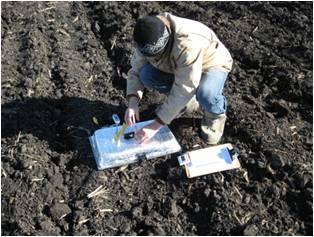
Passive NH3 samplers (Ogawa & Co. USA Inc., Pompano Beach, FL) were installed on each tower at a height of 0.5 and 1 m to determine the NH3 concentration at each location. Ammonia samplers were changed approximately every 24 hours over a two-day period after manure application. Right after collection of NH3 samplers in field, samplers were placed into airtight containers and then shipped back to the U-Idaho Twin Falls Waste Management Laboratory where the NH3 sampler filters were carefully removed from the samplers and transferred into 15-mL centrifuge tubes. Five mL of 1 M KCI was added to each of the centrifuge tubes to extract NH3 trapped in the filters. The extractant was transported to the USDA Northwest Irrigation and Soils Research Laboratory (NWISRL) located in Kimberly, Idaho where it was analyzed for NH4-N using a flow-injection analysis system (Quickchem 8500, Lachat Instruments, Milwaukee, WI). Background concentrations of NH3 were determined by placing three towers 50 m upwind (north) of the site following the same procedure described previously. Concentrations from passive samplers are time-average concentrations for the amount of time the sampler was exposed to the air and were calculated with the following equation:
In this, [NH3-N]air is the concentration of NH3-N in the air, [NH4-N]extractant is the concentration of NH4-N in the extractant, and 31.1 cm3/min is a constant used to calculated diffusion to the trap (Roadman et al., 2003; Leytem et al., 2009). Details regarding the design and calculation of NH3 concentrations can be found in Roadman et al. (2003) and Leytem et al. (2009).
Air samples were collected from the first test site right after manure application using Tedlar bags. One air sample was collected at 1 m above ground from each of the three towers located in the surface broadcast plot, subsurface injection, and background, respectively. A total of nine air samples were collected and then sent via UPS over-night service to Iowa State University Olfactometry Laboratory for odor analysis. The nine air samples were analyzed within 24 hours based on ASTM E679-04 (ASTM, 2004).
For each test site, a grab sample (about 1 L) of liquid manure was collected and transported to a commercial lab (Stukenholtz Laboratory, Inc., located in Twin Falls, Idaho) for pH and total nitrogen analysis. The manure pH, total N, and calculated total N application rates are shown in Table 1. The liquid manure application rate was approximately 20,000 gallons per acre on both the test sites.
Table 1. Manure pH and total N concentrations and application rates of total N at the two test sites
Site and Application Method
Manure pH
Manure total N concentration (mg/L)
Manure total N Application Rate (kg/acre)
Site 1
7.4
3433
257
Site 2
7.3
3519
265
A soil temperature probe with data logger (HOBO U23 Pro v2 2x external temperature data logger-U23-003) was placed 3 cm below the soil surface to record soil temperature data in 15-min increments. Wind speed, temperature, and relative humidity data were obtained from local Buhl Airport, located six miles from the test sites, due to failure of the mobile weather station set on the test sites. The ambient weather conditions and soil temperature at the test sites over the test period are shown in Table 2.
Table 2. Ambient weather conditions and soil temperature at the test sites
Site 1
Site 2
Item
Day 1
Day 2
Day 1
Day 2
Average wind speed, m/s
5.0
4.2
4.2
3.1
Air temperature, average(minimum, maximum),˚F
61 (42, 78)
49 (45, 63)
49 (45, 63)
47 (38, 61)
Average relative humidity, %
28
53
53
51
Soil temperature, average(minimum, maximum), ˚F
50.9 (51.1, 56.1)
47.3 (51.1, 51.2)
46.5 (51.5, 52.1)
66.7 (51.6, 69.1)
Cost analysis was carried out for four different manure land application systems as shown in the “What Have We Learned?” section below. Cost calculations are based on 500 hours annual use for the tractor and 200 hours annual use for the injection system. Tractor operator labor is figured at $11.70/hour, diesel is figured at $4.00/gallon. Equipment costs were determined using the MACHCOST program from the University of Idaho’s department of Agricultural Economics and Rural Sociology. The program is available on the AERS web page at https://www.uidaho.edu/cals/idaho-agbiz/resources/tools. Equipment data was provided by John Smith at Smith Equipment Co. Rupert, ID 83350. Some machinery data was taken from “Costs of Owning and Operating Farm Machinery in the Pacific Northwest” PNW 346 available on line at: https://www.extension.uidaho.edu/publishing/pdf/PNW/PNW0346/PNW0346.html.
What Have We Learned?
Odor results from test site 1
T-test for Odor showed there was no significant difference between the background and subsurface injection (P=0.41), there was significant difference between the background and surface broadcast (P=0.03), and P value was 0.08 for the t-test of mean difference between the subsurface injection and surface broadcast. The field day attendees felt there was significant difference in odor perception between the subsurface injection and surface broadcast methods.
Test site 1
First day ammonia sample results from test site 1.
Second day ammonia sample results from test site 1.
The NH3 concentration data from test site 1 showed significant difference between surface broadcast and subsurface injection based on P<0.05. The NH3 concentration data from test site 1 showed 82% and 64% reduction in NH3 concentration for first and second sampling day, respectively when liquid dairy manure was applied by subsurface injection vs. surface broadcast.
Test site 2
First day ammonia sample results from test site 2.
Second day ammonia sample results from test site 2.
The NH3 concentration data from test site 2 showed significant difference between surface broadcast and subsurface injection based on P<0.05. There were 64% and 41% decrease in NH3 concentration for first and second sampling day, respectively when manure was applied by subsurface injection compared with surface broadcast.
The NH3 concentration data from both the test sites showed lower NH3 concentration in the air from the subsurface injected soil vs. surface applied land which means higher nitrogen fertilizer value captured in the soil by the subsurface injection method.
Cost analysis results:
*Fuel and Lubricant Costs are assigned to the Power Unit.
The above fact sheet summarizes probable costs of operation for a 7,400 gallon tank with a 2,000 gpm discharge rate and a 15 foot wide broadcast unit. A 180 PTO HP tractor is needed to pull this unit at an average ground speed of 8 mph. Up to 10 acres per hour can be covered with the unit. The tank is discharged in approximately 4 minutes. Time and equipment to refill the tank is not included in these calculations.
*Fuel and Lubricant Costs are assigned to the Power Unit.
The above fact sheet summarizes probable costs of operation for a 7,400 gallon tank with a 2,000 gpm discharge rate and a 12 foot wide broadcast unit. A 215 PTO HP tractor is needed to pull this unit at an average ground speed of 7 mph. Up to 7 acres per hour can be covered with the unit. The tank is discharged in approximately 4 minutes. Time and equipment to refill the tank is not included in these calculations.
*Fuel and Lubricant Costs are assigned to the Power Unit.
The above fact sheet summarizes probable costs of operation for a 7,400 gallon tank with a 2,000 gpm discharge rate and a 12 foot wide broadcast unit. A 225 PTO HP tractor is needed to pull this unit at an average ground speed of 7 mph. Up to 7 acres per hour can be covered with the unit. The tank is discharged in approximately 4 minutes. Time and equipment to refill the tank is not included in these calculations.
*Fuel and Lubricant Costs are assigned to the Power Unit.
The above fact sheet summarizes probable costs of operation for a system utilizing 5,280 FT of 8 inch hose and 1,320 FT of 5 inch hose. The pump unit capacity is 1,500 gpm to a 16 foot knife injection unit. A 250 PTO HP tractor is needed for the injection unit operating at 75% field efficiency and at an average ground speed of 3.5 mph. The lagoon pump is a 270 HP unit and operating efficiency assumed at 70%. Beyond 2 miles a booster pump would be necessary. Up to 4.75 acres per hour can be covered with the unit. Operation is continuous as no tank refill is needed.
Based on the estimated costs above, the subsurface injection method has higher costs mainly due to the need of larger tractor and lower operating speed. However, we did not include the time and equipment costs associated with refilling the tank for the tank application system. Due to the short time to discharge the tank on the tank broadcast and tank injection systems additional equipment to refill the tank in a timely fashion would be desirable. This would increase the investment in equipment and also would reduce the number of acres that could be covered per hour due to down time while the tank is refilled.
In summary, subsurface injection can reduce both the odor and NH3 emissions compared with surface broadcast; therefore, applying liquid dairy manure by subsurface injection could be recommended as one of the best management practices to control NH3 and odor emissions. The estimated costs associated with subsurface injection were higher than surface broadcast. However, the higher costs could be partially compensated by the higher nitrogen fertilizer value captured in the soil by the subsurface injection method.
Future Plans
We will finish development of educational videos to demonstrate the manure subsurface injection technique and disseminate results from this study to our stakeholders.
Authors
Lide Chen, Waste Management Engineer and Assistant Professor, Biological and Agricultural Engineering Department, University of Idaho lchen@uidaho.edu
Mario de Haro Marti, Extension Educator
Wilson Gray, District Extension Economist and Extension Professor
Howard Neibling, Extension Irrigation and Water Management Specialist and Associate Professor
Mireille Chahine, Extension Dairy Specialist and Associate Professor
Sai Krishna Reddy Yadanaparthi, Graduate student, University of Idaho
Acknowledgements
This project was supported by the USDA Natural Resource Conservation Service through a Conservation Innovation Grant. We would also like to thank Dr. April Leytem and Mr. Myles Miller (USDA Northwest Irrigation and Soils Research Laboratory (NWISRL) located in Kimberly, Idaho) for their help with analysis of ammonia samples.
The authors are solely responsible for the content of these proceedings. The technical information does not necessarily reflect the official position of the sponsoring agencies or institutions represented by planning committee members, and inclusion and distribution herein does not constitute an endorsement of views expressed by the same. Printed materials included herein are not refereed publications. Citations should appear as follows. EXAMPLE: Authors. 2013. Title of presentation. Waste to Worth: Spreading Science and Solutions. Denver, CO. April 1-5, 2013. URL of this page. Accessed on: today’s date.
This presentation will compare using litter as a replacement for LP gas for on-farm space heating with using litter to generate electricity. The comparison includes heating system efficiency, amount of LP off-set possible, value of plant nutrients in the litter, quantity and value of plant nutrients in the litter ash, impact of brokerage, and costs of producing the energy. It was concluded that using litter on-farm as a source of space heat and using the litter ash as fertilizer could provide a potential value of $48 per ton of litter. However, on-farm combustion of litter to produce electricity resulted in a loss of about – $3/ton of litter. Therefore, if a heating and ash management system can be implemented in a cost-effective manner use of litter to off-set 90% or more of the heating energy requirements would be the better of these two alternatives.
Why Is Energy Use Important in Poultry Production?
Modern poultry production requires substantial amounts of energy for space heating (propane/LP gas), ventilation, feed handling, and lighting. It was determined that annual LP gas consumption in broiler houses can range from 150 to 300 gallons of LP per 1000 square feet of floor space with an average of about 240 gal LP/1000 ft2 observed in South Carolina. Similarly, broiler production in South Carolina requires about 2326 kWh/1000 ft2 of house area. As a result, a 6-house broiler farm in SC uses about 30,240 gallons of LP and 293.076 kWh of electricity annually. The cost for energy for a 6-house farm is on the order of $57,456 per year for LP ($1.90/gal LP) and $35,169 per year for electricity ($0.12/kWh). Energy costs have more than doubled over the last decade and as a result producers are very interested in ways to reduce on-farm energy costs by using the energy contained in the litter. The objective of this study was to compare using litter as a replacement for LP gas for on-farm space heating with using litter to generate electricity.
What Did We Do?
Our analysis included heating system efficiency, amount of LP off-set possible, value of plant nutrients in the litter, quantity and value of plant nutrients in the litter ash, impact of brokerage, and costs of producing the energy.
What Have We Learned?
It was concluded that using litter on-farm as a source of space heat and using the litter ash as fertilizer could provide a potential value of $46 to $55 per ton of litter. However, on-farm combustion of litter to produce electricity resulted in a loss of about $3/ton of litter. Therefore, if a heating and ash management system can be implemented in a cost-effective manner use of litter to off-set 90% or more of the heating energy requirements would be the better of these two alternatives.
Future Plans
This information is being used in extension programs that target poultry producers.
Authors
Dr. John P. Chastain, Professor and Extension Agricultural Engineer, School of Agricultural, Forestry, and Environmental Sciences, Clemson University, jchstn@clemson.edu
Additional Information
Chastain, J.P., A. Coloma-del Valle, and K.P. Moore. 2012. Using Broiler Litter as an Energy Source: Energy Content and Ash Composition. Applied Engineering in Agriculture Vol 28(4):513-522.
Acknowledgements
Support was provided by the Confined Animal Manure Managers Program, Clemson Extension, Clemson University, Clemson, SC.
The authors are solely responsible for the content of these proceedings. The technical information does not necessarily reflect the official position of the sponsoring agencies or institutions represented by planning committee members, and inclusion and distribution herein does not constitute an endorsement of views expressed by the same. Printed materials included herein are not refereed publications. Citations should appear as follows. EXAMPLE: Authors. 2013. Title of presentation. Waste to Worth: Spreading Science and Solutions. Denver, CO. April 1-5, 2013. URL of this page. Accessed on: today’s date.
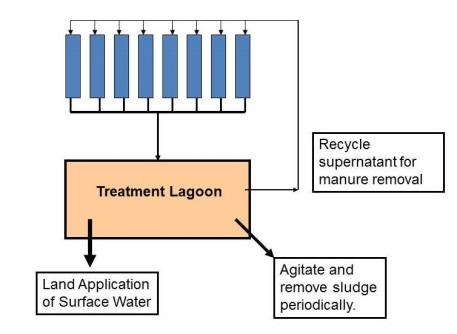
Treatment lagoons are one of the most common biological treatment methods used on swine and dairy farms that use recycled supernatant as a means to remove manure from animal housing facilities by flushing. A properly functioning treatment lagoon will provide adequate treatment to allow reuse of the effluent without compromising animal health or generating strong odor.
A typical treatment lagoon system used on swine and dairy farms.
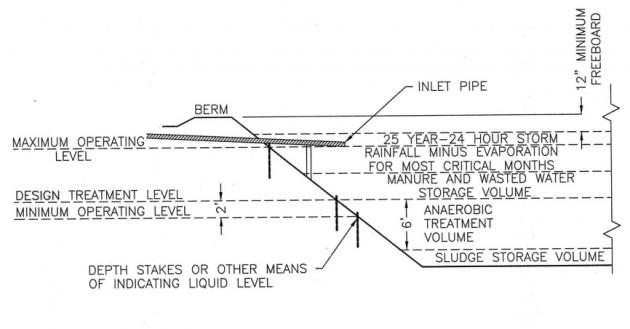
A lagoon should have a minimum biological treatment volume and provide sufficient volume for settling and storage of sludge to provide the needed levels of treatment prior to recycling. This presentation will provide a summary of the benefits of using liquid-solid separation to maintain and potentially reduce the required treatment volume, reduce sludge build-up, increase useful life of an existing lagoon, and to reduce the size of new lagoons based on the ASABE Standard. Information will also be provided concerning desired loading rates and supernatant concentrations for recycling, and impacts of odor production potential.
Components of a treatment lagoon for animal manure.
What Did We Do?
The ASABE Lagoon Standard (ANSI/ASAE EP403.4, ASABE 2011) was used to calculate lagoon treatment volumes for swine and dairy manure using volatile solid loading rates for a variety of climates ranging from a cold climate, such as Southern Minnesota (3 lb VS/1000 ft3-day), to a hot climate, such as Central Florida (6.0 lb VS/1000 ft3-day). Liquid-solid separation methods can provide a reduction in the mass of VS in the liquid fraction by 10% to 80%. The corresponding reduction in treatment volume were also determined for swine and dairy manure over a wide range of climates.
The ASABE Standard also provides a method to estimate sludge storage volume requirments per year for swine and dairy lagoons that is based on the total solids loaded into a lagoon. The impact of implementing solid-liquid separation on the sludge accumulation rate was also destermined for TS removals in the range of 20% to 80%.
What Have We Learned?
The percent reduction in treatment volume of a lagoon was the same as the mass fraction of VS removed by liquid-solid separation. That is, a 30% reduction in VS provided a 30% reduction in treatment volume. The practical result is that implementation of liquid-solid separation system that can remove 30% of the VS would allow pork producers in the Midwest to use similar treatment volumes as pork producers located in South Carolina or Central Georgia.
Liquid-solid separation also reduced sludge build up in lagoons by the same percentage as the TS removal efficiency. Therefore, a 30% reduction in TS will reduce sludge accumulation by30%.
Reduction in TS and VS loading can help to reduce odors from lagoons, reduce the size of the lagoon needed to provide treatment, and can yield better treated surface water for flushing manure from the buildings.
Removal of large portions of the VS (60% to 80% reduction) using high-rate liquid-solid separation methods has the added benefit of greatly reducing the amount of the organic-N loaded. As a result, less organic-N will be converted to ammonium-N in a lagoon where a portion will be lost to the air as ammonia.
Future Plans
This information will be published as part of a new USDA-NRCS technical note or as part of the National Engineering Handbook, Part 651 Agricultural Waste Management Field Handbook.
Authors
Dr. John P. Chastain, Professor and Extension Agricultural Engineer, School of Agricultural, Forestry, and Environmental Sciences, Clemson University jchstn@clemson.edu
Jeffrey P. Porter, P.E. Environmental Engineer Manure Management Team USDA-Natural Resources Conservation Service
Additional Information
Solid-Liquid Separation Alterntives for Manure Handling Treatment, a new USDA-NRCS technical note or as part of the National Engineering Handbook, Part 651 Agricultural Waste Management Field Handbook.
Acknowledgements
Piedmont-South Atlantic Coast Cooperative Ecosystems Studies Unit (CESU). This Cooperative and Joint Venture Agreement allowed for this work to take place.
Manure Management Team USDA-Natural Resources Conservation Service, Greensboro, NC
Additional support was provided by the Confined Animal Manure Managers Program, Clemson Extension, Clemson University, Clemson, SC.
The authors are solely responsible for the content of these proceedings. The technical information does not necessarily reflect the official position of the sponsoring agencies or institutions represented by planning committee members, and inclusion and distribution herein does not constitute an endorsement of views expressed by the same. Printed materials included herein are not refereed publications. Citations should appear as follows. EXAMPLE: Authors. 2013. Title of presentation. Waste to Worth: Spreading Science and Solutions. Denver, CO. April 1-5, 2013. URL of this page. Accessed on: today’s date.
The use of wet distiller’s grains with solubles (WDGS) in feedlot diets has increased as a result of the growing U.S. ethanol industry. However, few studies have evaluated the use of WDGS in finishing diets based on steam-flaked corn (SFC), the processing method used extensively in the Southern Great Plains. The effects of corn processing method and WDGS on enteric methane (CH4) production, carbon dioxide (CO2) production and energy metabolism were evaluated in two respiration calorimetry studies. In Exp. 1, the effects of corn processing method (SFC or dry rolled corn – DRC) and WDGS inclusion (0 or 30% of diet dry matter- DM) were studied using a 2 x 2 factorial arrangement of treatments and four Jersey steers in a 4 x 4 Latin square design. In Exp. 2, the effects of WDGS inclusion rate (0, 15, 30, or 45% of diet DM) on CH4 and CO2 production were measured in a 4 x 4 Latin square design. Results indicate that cattle consuming SFC-based diets produce less enteric CH4 and retain more energy than cattle fed DRC-based diets. When dietary fat levels were held constant, dietary inclusion of WDGS at 15% of diet DM did not affect enteric CH4 production, WDGS inclusion at 45% of diet DM significantly increased enteric CH4 production and WDGS inclusion at 30% of diet DM had variable effects on enteric CH4 production.
Purpose
Our objectives were to determine the effects of corn processing method and WDGS inclusion rate on enteric methane losses from finishing cattle using respiration calorimetry.
What Did We Do?
Steer in open circuit respiration calorimetry chamber.
Eight steers were used in two studies. In each study steers were fed one of four diets at 2 x maintenance energy requirements in a 4 x 4 Latin square design. Each period of the Latin squares included a 16 d adaptation period followed by 5 days of total fecal and urine collection and measurement of gas exchange in respiration chambers. In Experiment 1 dietary treatments consisted of corn processing method (steam flaked -SFC or dry rolled -DRC) and WDGS inclusion rate (0 or 30% of DM). All diets were balanced for ether extract. In Exp. 2, cattle were fed SFC-based diets containing 0, 15, 30 or 45% WDGS (DM basis). The calorimetry system consisted of 4 chambers with an internal volume of 6500 L. Outside air was pulled through chambers using a mass flow system. Gas concentrations were determined using a paramagnetic oxygen analyzer and infrared methane and carbon dioxide analyzers (Sable Systems, Las Vegas, NV) Data were statistically analyzed using the Mixed procedure of SAS.
What Have We Learned?
In Exp. 1. no iteractions between grain processing method and WDGS inclusion were detected (P> 0.47). Cattle fed DRC-based diets had greater (P< 0.05) CH4 production (L/steer, L/kg of DMI, % of gross energy intake, and % of digestible energy intake) than cattle fed SFC-based diets probably the result of differences in ruminal fermentation and ruminal pH. Methane losses as a proportion of GE intake (2.47 and 3.04 for SFC and DRC-based diets, respectively) were similar to previous reports and to IPCC (2006) values but were somewhat lower than EPA (2012) values. Grain processing method did not affect CO2 production (13 to 14 Kg/d). WDGS inclusion rate did not affect CH4 or CO2 production. In Exp. 2, CH4 production (L/d) increased quadratically (P = 0.03) and CH4 production as L/kg of DMI and as a proportion of energy intake increased linearly (P < 0.01) with increasing concentrations of WDGS in the diet. Feeding WDGS did not affect (P > 0.23) total CO2 production. Conclucions: Our results indicate that cattle consuming DRC-based finishing diets produce approximately 20% more enteric CH4 than cattle fed SFC-based diets. When WDGS comprised 30% or less of the diet and diets were similar in total fat content, feeding WDGS had little effect on enteric CH4 but when fed at higher inclusion rates enteric CH4 production was increased by approximately 40%.
Future Plans
Over 80% of the enteric methane emissions of the U.S. beef cattle herd are produced by cows, calves, and yearling on pasture. Therefore, additional research will study the effects of supplementation strategies and forage quality on enteric methane production by cattle.
Authors
N. Andy Cole; Research Animal Scientist/Research Leader; USDA-ARS-CPRL, Bushland, TX andy.cole@ars.usda.gov
Kristin E. Hales, Research Animal Scientist, USDA-ARS-MARC, Clay Center, NE
Richard W. Todd, Research Soil Scientist, USDA-ARS-CPRL, Bushland, TX
Ken Casey, Associate Professor, Texas AgriLife Research, Amarillo, TX
Jim C. MacDonald, Associate Professor, Dept. of Animal Science, Univ. of NE, Lincoln
Additional Information
Hales, K. E. , N. A. Cole, and J. C. MacDonald. 2013. Effects of increasing concentrations of wet distillers grains with solubles in steam-flaked corn-based diets on energy metabolism, carbon-nitrogen balance, and methane emissions of cattle. J. Anim. Sci. (in press)
Hales, K. E. , N. A. Cole, and J. C. MacDonald. 2012. Effects of corn processing method and dietary inclusion of wet distillers grains with solubles on energy metabolism, carbon-nitrogen balance, and methane emissions of cattle. J. Anim. Sci. 90:3174-3185.
Acknowledgements
Mention of trade names or commercial products in this article is solely for the purpose of providing specific information and does not imply recommendation or endorsement by the USDA. USDA is an equal opportunity provider and employer.
We wish to thank USDA-NIFA for partial funding through Project # TS-2006-06009 entitled “Air Quality: Odor, Dust and Gaseous Emissions from Concentrated Animal Feeding Operations in the Southern Great Plains”
The authors are solely responsible for the content of these proceedings. The technical information does not necessarily reflect the official position of the sponsoring agencies or institutions represented by planning committee members, and inclusion and distribution herein does not constitute an endorsement of views expressed by the same. Printed materials included herein are not refereed publications. Citations should appear as follows. EXAMPLE: Authors. 2013. Title of presentation. Waste to Worth: Spreading Science and Solutions. Denver, CO. April 1-5, 2013. URL of this page. Accessed on: today’s date.
A review of the literature indicated that good quality biodiesel can be used in farm equipment at concentrations from 20% (B20) to 100% (B100) depending on air temperature and the design of the engine. Using biodiesel reduces emissions of carbon monoxide, sulfur containing pollutants that contribute to acid rain, unburned hydrocarbons, and particulates. Using B100 in a diesel engine can reduce fuel efficiency by about 8%, but had no other negative impacts when operated during warm weather. Using B20 to B50 has been shown to be sufficient to make loss of fuel efficiency inconsequential and allows operation of tractors in cold weather. The objectives of this study were to compare the use of soybeans and canola as a fuel crop for on-farm biodiesel production, and to determine the benefits of using animal manure as a source of fertilizer for on-farm fuel crop production. Related: Manure value & economics
What Did We Do?
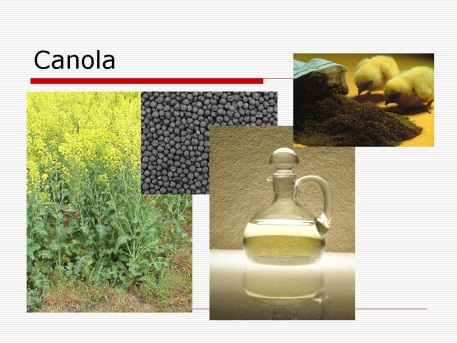
Canola can be used to produce high-quality oil for biodiesel production and high protein meal for animal feed.
Soybeans and canola are both oil seeds that can be used to make high-quality biodiesel. Soybeans are 19% oil and a single bushel will yield about 1.5 gallons of biodiesel. At a market price of $10 to $14 per bushel the soybean cost to produce a gallon of biodiesel can range from $6.67 to $9.33 per gallon. Or to state it another way, if the price of diesel is $4.20/gal making biodiesl on-farm would be like selling soybeans for only $6.30/bu. It was concluded that it would best to sell soybeans rather than use then for on-farm biodiesel production. Canola, or rape seed, contains 40% oil and will yield about 2.8 gal of biodiesel/bu. In the last few years, canola prices have increase from $5/bu to $10/bu. At a diesel price of $4.20/gal the value of the canola would be $11.76/bu which exceeds traditional prices of canola and is slightly higher than recent US prices. Therefore, canola was selected as the preferred crop for on-farm production of biodiesel in this study.
Few canaola buying stations are located in the Southeastern US and as a result canola is typically not grown in swine and poultry producing states such as South Carolina, North Carolina, and Georgia. Canola can be grown in the fall and winter months in a manner similar to wheat which adds to the appeal of using canola for on-farm biodiesel production in southern states.
A crop budget for canola production in the Southeastern US was used with current fertilizer prices to compare the cost to produce canola using purchased fertilizer versus using animal manure to provide all of the N, P2O5, and K2O needs. It was determined that the cost to produce a bushel of canola was about $6.24/bu if commercial fertilizer was used. However, using manure as the sole nutrient source lowered production costs to $3.47/bushel. The input cost to produce biodiesel from canola was determined to be $2.23 per gallon if fertilizer was purchased versus $1.24 per gallon if manure was used to produce canola
Canola meal is a valuable by-product with a protein content of about 33% (extracted by pressing without solvents) and can be used as a protein source in animal feeds. The value of the canola meal was assumed to be $234/ton and the meal production per acre was 0.75 tons. The value of canola meal was determined to be $1.25 per gallon biodiesel. The value of the meal was used as a production credit towards the cost of making biodiesel on-farm. This meal credit can only be realized if the meal is sold at market value or by using canola meal on-farm as a feed ingredient for livestock (e.g. beef or dairy cattle).
Using a moderate biodiesel production cost ($1.50/gal) the cost to make canola biodiesel on farm was $2.36/gal if fertilizer was purchased and $1.49/gal if manure was used as a fertilizer replacement. If the canola meal credit cannot be realized, on-farm biodiesel production cost was $3.61/gal if fertilizer was purchased, and $2.74/gal if manure was used.
What Have We Learned?
The results indicated that:
soybeans are too valuable to be used as a fuel crop,
canola can yield more fuel per acre than soybeans,
fertilizer costs can account for 44% of the cost of producing canola,
animal producers have a substantial advantage since manure can be used as a source of plant nutrients for canola,
obtaining fair market value for canola meal is an essential part of lowering the cost to produce biodiesel, and
making biodiesel for on-farm use or in a cooperative arrangement in a farming community appears to hold an opportunity for animal producers.
Future Plans
This information is being used in extension programs that target animal and row-crop producers.
Authors
Dr. John P. Chastain, Professor and Extension Agricultural Engineer, School of Agricultural, Forestry, and Environmental Sciences, Clemson University, jchstn@clemson.edu
Wilder Ferreira, Extension Economist, School of Agricultural, Forestry, and Environmental Sciences, Clemson University,email: wferrei@clemson.edu
Acknowledgements
Support was provided by the Confined Animal Manure Managers Program, Clemson Extension, Clemson University, Clemson, SC.
The authors are solely responsible for the content of these proceedings. The technical information does not necessarily reflect the official position of the sponsoring agencies or institutions represented by planning committee members, and inclusion and distribution herein does not constitute an endorsement of views expressed by the same. Printed materials included herein are not refereed publications. Citations should appear as follows. EXAMPLE: Authors. 2013. Title of presentation. Waste to Worth: Spreading Science and Solutions. Denver, CO. April 1-5, 2013. URL of this page. Accessed on: today’s date.
A new method was used at the Ag 450 Farm Iowa State University (41.98N, 93.65W) from October 24, 2012 through December 14, 2012 to assess GHG emission from land-applied swine manure on crop land. Gas samples were collected daily from four static flux chambers. Gas method detection limits were 1.99 ppm, 170 ppb, and 20.7 ppb for CO2, CH4 and N2O, respectively. Measured gas concentrations were used to estimate flux using four different models, i.e., (1) linear regression, (2) non-linear regression, (3) non-equilibrium, and (4) revised Hutchinson & Mosier (HMR). Sixteen days of baseline measurements (before manure application) were followed by manure application with deep injection (at 41.2 m3/ha), and thirty seven days of measurements after manure application.
Static flux chamber (pictured) method was developed to measure greenhouse gas emissions from land-applied swine manure from a corn-on-corn system in central Iowa in the Fall of 2012. Gas samples were collected in vials and transported to the Air Quality Laboratory at Iowa State University campus.
Why Study Greenhouse Gases and Land Application of Swine Manure?
Assessment of greenhouse gas (GHG) emissions from land-applied swine manure is needed for improved process-based modeling of nitrogen and carbon cycles in animal-crop production systems.
What Did We Do?
We developed novel method for measurement and estimation of greenhouse gas (CO2, CH4, N2O) flux (mass/area/time) from land-applied swine manure. New method is based on gas emissions collection with static flux chambers (surface coverage area of 0.134 m^2 and a head space volume of 7 L) and gas analysis with a GC-FID-ECD.
Baseline (post tilling) greenhouse gas (GHGs) emissions monitoring was followed with swine manure application in the Fall of 2012 (pictured) and about 10 weeks of post-application monitoring of GHGs.
New method is also applicable to measure fluxes of GHGs from area sources involving crops and soils, agricultural waste management, municipal, and industrial waste. New method was used at the Ag 450 Farm Iowa State Univeristy (41.98 N, 93.65 W) from October 24, 2012 through December 14, 2012 to assess GHG emission from land-applied swine manure on crop (corn on corn) land. Gas samples were collected daily from four static flux chambers. Gas method detection limits were 1.99 ppm, 170 ppb, and 20.7 ppb for CO2, CH4, and N2O, respectively.
What Have We Learned?
Measured gas concentrations were used to estimate flux using four different mathematical models, i.e., (1) linear regression, (2) non-linear regression, (3) non-equilibrium, and (4) revised Hutchinson & Mosier (HMR). Sixteen days of baseline measurements (before manure application) were followed by manure application with deep injection (at 41.2 m3/ha), and thirty seven days of measurements after manure application. Preliminary net cumulative flux estimates ranged from 115,000 to 462,000 g/ha of CO2, -4.65 to 204 g/ha of CH4, and 860 to 2,720 g/ha N2O. These ranges are consistent with those reported in literature for similar climatic conditions and manure application method.
Greenhouse gases (GHGs) were analyzed in the Air Quality Laboratory (ISU) using dedicated GHGs gas chromatograph. The picture above shows an example of gas sample analysis for CO2, GH4 and N2O. Each ‘peak’ represents one of the tagget GHGs. Gas concentrations were used in a mathematical model to estimate GHG flux (mass emitted/area/time).
Future Plans
Spring 2013 measurements of GHG flux from land-applied swine manure are planned. The spring study will follow the protocols developed for the Fall 2012 season. Estimates of the Spring and Fall GHG flux will be used to develop GHG emission factors for emissions from swine manure in Midwestern corn-on-corn systems. Emission factors will be compared with literature data.
Authors
Dr. Jacek Koziel, Associate Professor, Iowa State University Department of Agricultural and Biosystems Engineering koziel@iastate.edu
Devin Maurer, Research Associate, Iowa State University Department of Agricultural and Biosystems Engineering
Kelsey Bruning, Undergraduate Research Assistant, Iowa State University Department of Civil, Construction and Environmental Engineering
Tanner Lewis, Undergraduate Research Assistant, Iowa State University Department of Agricultural and Biosystems Engineering
Danica Tamaye, Undergraduate Research Assistant, University of Hawaii College of Agriculture, Forestry, and Natural Resource Management
William Salas, Applied Geosolutions
Acknowledgements
We would like to thank the National Pork Board for supporting this research.
The authors are solely responsible for the content of these proceedings. The technical information does not necessarily reflect the official position of the sponsoring agencies or institutions represented by planning committee members, and inclusion and distribution herein does not constitute an endorsement of views expressed by the same. Printed materials included herein are not refereed publications. Citations should appear as follows. EXAMPLE: Authors. 2013. Title of presentation. Waste to Worth: Spreading Science and Solutions. Denver, CO. April 1-5, 2013. URL of this page. Accessed on: today’s date.
This paper presents a description of the ABFX (Ammonium Bicarbonate Fiber Explosion) pretreatment process. The ABFX process is an extremely simple and inexpensive process that possesses the attributes of the Ammonia Fiber Explosion Process (AFEX) and CO2 explosion process while eliminating the cost associated with high temperature, high pressure and ammonia recovery. The process uses ammonia bicarbonate (ABC) recovered from anaerobic digestate to pretreat the substrate. The ABC is simply added to the substrate, pumped to a reactor, heated to temperatures less than 100°C, for a short duration. The pressure created by ABC volatilization is then released and the gases (CO2, NH3, H2O) condensed at ambient temperature to produce ABC that is then reused in the process. The process can operate with low temperature waste heat.
This paper presents a description of the process and the results of a National Science Foundation Small Business Innovative Research investigation that compared the methane gas yields from both pretreated and untreated grass silage and pretreated and untreated screened (screw press) dairy manure solids. The ABFX pretreated manure solids produced 38% more methane gas than the untreated while the ABFX pretreated grass silage produced 14% more methane gas than the untreated. The economic benefits of the process will be discussed.
Is There Potential to Improve Methane Yields from Manure?
A large fraction of municipal solid waste (MSW), crop residues, animal manures, forest residues, or dedicated energy crops are composed of lignocellulouse. Lignocellulosic substrates consist of a tightly woven matrix of cellulose, hemicellulose, and lignin polymers. Biological degradation of these polymers are carried out by a variety of enzymes. Pretreatment can enhance the bioconversion of the wastes or cop residues for ethanol or biogas production by increasing the accessibility of the enzymes to the substrate. Thus, pretreatment can increase the energy yield (biogas or ethanol) while decreasing the residual waste to be disposed.
Anaerobic bacteria easily convert the hemicellulose and amorphous cellulose to gas. However, conversion of the crystalline cellulose and lignin is far more difficult. Lignin is not converted to gas by anaerobic organisms. Only a fraction of the crystalline cellulose is converted to gas within the detention times commonly used (20 days) in anaerobic digestion. Pretreatment is required to rupture the crystalline cellulose for enzymatic hydrolysis. A wide variety of pretreatment technologies have been developed. Dilute acid pretreatment solubilizes the hemicellulose. Alkali, lime or sodium hydroxide pretreatment solubilize the lignin thus exposing the hemicellulose and cellulose for enzymatic attack. A variety of explosion processes such as steam, carbon dioxide, and liquid ammonia (AFEX) have also been developed that disrupt the crystalline cellulose and hemicellulose. Ammonia soaking, over prolonged periods of time, has also been used to pretreat straw for animal feed and thereby improve rumen digestibility and animal weight gain. All of the processes use high pressure and temperature, or toxic chemicals. The commonly used, conventional processes are not suitable for on-farm use.
What Did We Do?
Figure 1: ABFX Process
We substantiated the feasibility of a breakthrough pretreatment technology under a National Science Foundation Small Business Innovative Research (SBIR) grant that used the non-toxic Ammonium Bicarbonate (ABC) recovered from the anaerobic digestate. The pretreatment was accomplished with a simple device, shown in Figure 4, composed of a pump, that pumps the solid biomass substrate, mixed with a small amount of ABC, into a reactor. The reactor is closed and heated to temperatures below the boiling point of water. Once heated the ABC breaks down to its water, ammonia, and carbon dioxide components putting the contents under significant pressure. The pressure is then rapidly released causing the explosion or disruption of the lignocellulosic substrate and the breakdown of the crystalline cellulose. The gases (H2O, NH3, and CO2), are then condensed in a separate chamber to produce ABC that is reused in the next cycle. Nothing is wasted. The ABC is recovered and reused. The applied heat and detention time provided is sufficient to pasteurize the biomass and meet the temperature requirements of the downstream anaerobic reactor. It is a simple process composed of a solids pump, heat pump, and two low detention time (10± minutes) reactors.
The SBIR research consisted of pretreating both grass silage and concentrated, screw press, manure solids and digesting both pretreated and untreated silage and manure solids. The pretreated and untreated solids were digested in 10 reactors at a 12.5 day HRT and 35°C.
What Have We Learned?
Pretreatment of the grass silage increased the methane yield 16% over several months of operation. Pretreatment increased the methane yield from the pretreated manure solids by 35% over the same period. The increased gas yield was approximately equal to the methane yield from the crystalline cellulose present in the substrate that is normally not converted to gas. The research demonstrated the feasibility of pretreating lignocellulosic substrates in a simple, short detention time, low temperature process that does not dilute the substrate stream or use toxic chemicals such as liquid or gaseous ammonia, acids, or caustic.
Future Plans
The current plan is to build a prototype facility to pretreat a variety of crop residuals (corn stover, rice straw, wheat straw), dry feedlot manure and poultry litter.
The authors are solely responsible for the content of these proceedings. The technical information does not necessarily reflect the official position of the sponsoring agencies or institutions represented by planning committee members, and inclusion and distribution herein does not constitute an endorsement of views expressed by the same. Printed materials included herein are not refereed publications. Citations should appear as follows. EXAMPLE: Authors. 2013. Title of presentation. Waste to Worth: Spreading Science and Solutions. Denver, CO. April 1-5, 2013. URL of this page. Accessed on: today’s date.
To provide the best experiences, we use technologies like cookies to store and/or access device information. Consenting to these technologies will allow us to process data such as browsing behavior or unique IDs on this site. Not consenting or withdrawing consent, may adversely affect certain features and functions.
Functional
Always active
The technical storage or access is strictly necessary for the legitimate purpose of enabling the use of a specific service explicitly requested by the subscriber or user, or for the sole purpose of carrying out the transmission of a communication over an electronic communications network.
Preferences
The technical storage or access is necessary for the legitimate purpose of storing preferences that are not requested by the subscriber or user.
Statistics
The technical storage or access that is used exclusively for statistical purposes.The technical storage or access that is used exclusively for anonymous statistical purposes. Without a subpoena, voluntary compliance on the part of your Internet Service Provider, or additional records from a third party, information stored or retrieved for this purpose alone cannot usually be used to identify you.
Marketing
The technical storage or access is required to create user profiles to send advertising, or to track the user on a website or across several websites for similar marketing purposes.

 Waste to Worth home | More proceedings….