Performance of Mitigation Measures in the Dairy Sector under Future Climate Change


Proceedings Home W2W Home w2w17 logo

Purpose

Climate change is an economic, environmental and social threat, and worthy of scientific study. Immediate action must be taken to reduce greenhouse gas emissions and mitigate negative impacts of future climate change. Proposed action can start at the farm level and has the potential of making a contribution to mitigation of climate change. Dairy farmers are able to significantly reduce their emissions by implementing better management practices, primarily through feed production, enteric fermentation, and manure management. We model the corresponding changes in emissions from proposed mitigation efforts to understand their impact on global climate change.

What did we do?

Best Management Practices (BMPs) for dairy systems have been identified and simulated using the Integrated Farm System Model (IFSM). Simulations representative of a large New York farm (1500 cows) and a small Wisconsin farm (150 cows) estimated the emission of greenhouse gases for a whole farm system. Percent reductions were calculated by comparing a baseline scenario without any implemented mitigation, to scenarios that included the identified BMPs. Refer to Table 1 for emission and percent reduction estimates for the simulated BMPs.Table 1. Emissions and percent reductions from baseline for simulated mitigation strategies

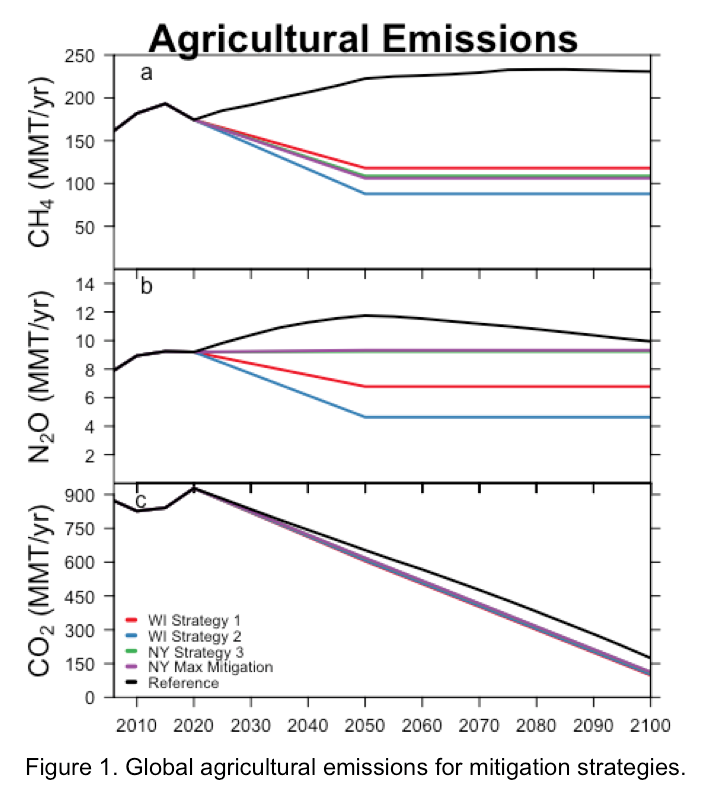
Percent reduction estimates were then applied to a projected “business as usual” emission scenario. This scenario prescribes anthropogenic emissions through 2100 and excludes any climate action or policy after 2015. Taking 2020 as a reference year and 2050 as a target year, we applied the estimated percent reductions to the projected global agricultural emissions. Emission reductions were decreased linearly from 2020 to 2050, and held constant between 2050 and 2100 (Figure 1). This assumes that all farms globally can reduce emissions despite increases in production. To compare the performance of the mitigation measures under future climate change, we employed a fully coupled earth system model of intermediate complexity – the Integrated Global System Model (IGSM). The model includes an interactive carbon-cycle capable of addressing important feedbacks between the climate and terrestrial biosphere.

Figure 1. Global agricultural emissions for mitigation strategiesWhat have we learned?

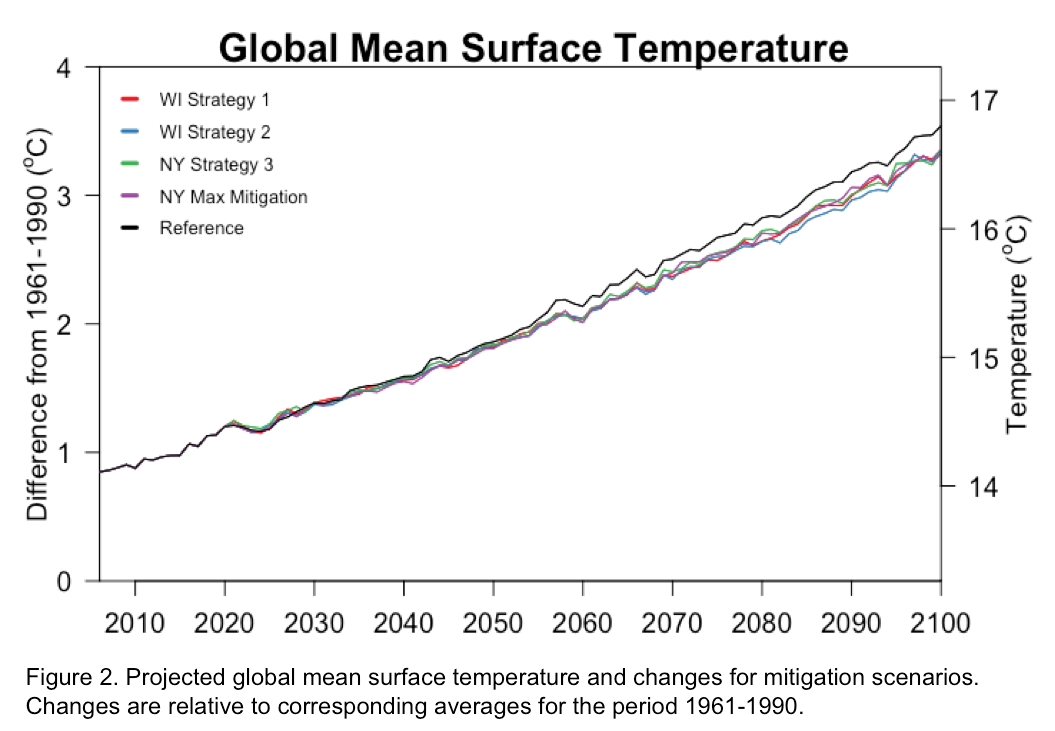
Action taken globally in the agricultural sector to reduce greenhouse gas emissions over the first half of the 21st century is likely to have an impact in mitigating global warming. Following a “business as usual” emission scenario without any climate policy or action beyond 2015, an increase in global mean surface temperature by the end of the 21st century (2081-2100) relative to pre-industrial (1961-1990) levels is projected to be 2.8 C to 3.5 C (Figure 2). This exceeds the 2 C temperature target described as the maximum warming allowed to avoid dangerous and irreversible climate change. An associated net radiative

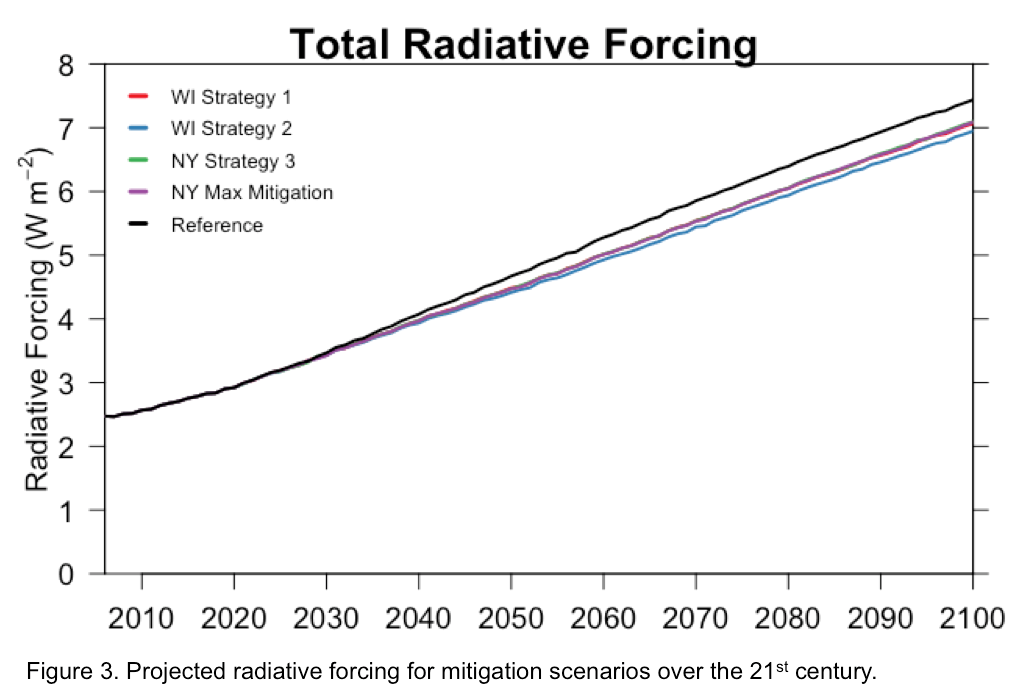
forcing for the “business as usual” scenario is projected to be 7.4 W/m^2 by 2100 (Figure 3). Adopting the identified BMPs in the dairy sector and decreasing global agricultural emissions by 2050 is projected to decrease global mean surface temperatures for 2100 by 0.2 C and net radiative forcing by 0.4 W/! m^2 on av erage. In summary, this modeled experiment demonstrates that ongoing efforts to decrease greenhouse gas emissions in the dairy and agricultural sector are effective at reducing the overall warming of climate change.

Figure 2. Projected global mean surface temperature and changes for mitigation scenarios

Figure 3. Projected radiative forcing for mitigation scenarios over the 21st century

Future Plans

Future work will look further into the evolution of regional temperature and rainfall profiles for the mitigation scenarios. Then, ecological risk assessment methodologies will be applied to determine the probable impacts of climate change by each scenario on agricultural production.

Corresponding author, title, and affiliation

Kristina Rolph – Graduate Student, The Pennsylvania State University.

Corresponding author email

kar5469@psu.edu

Other authors

Chris Forest – Associate Professor of Climate Dynamics, The Pennsylvania State University.

Rob Nicholas – Research Associate, Earth & Environmental Systems Institute.

Additional information

  1. The Sustainable Dairy Project, funded by the USDA, researches alternative management practices in the dairy industry. http://www.sustainabledairy.org
  2. The Integrated Farm System Model simulates all major farm components to represent the many biological and physical processes on a farm. https://www.ars.usda.gov/northeast-area/up-pa/pswmru/docs/integrated-farm-system-model/
  3. The MIT Integrated Global System Model is a fully coupled earth system model of intermediate complexity designed to analyze interactions between human activities and the Earth system. https://globalchange.mit.edu/research/research-tools/global-framework

Acknowledgements

This material is based upon work that is supported by the National Institute of Food and Agriculture, U.S. Department of Agriculture, under award number 2013-68002-20525. Any opinions, findings, conclusions, or recommendations expressed in this publication are those of the author(s) and do not necessarily reflect the view of the U.S. Department of Agriculture.

Natural Resources Conservation Service Reaction to the Final H2S/ Gypsum CIG Study Report


Proceedings Home W2W Home w2w17 logo

Purpose            

The Natural Resources Conservation Service (NRCS) and partners worked with Eileen Fabian-Wheeler of the Pennsylvania State University to study the manure gas risks associated with gypsum bedding at dairy farms. This was a NRCS Conservation Innovation Grant (CIG) project. As a result of the information gathered and the published final report, NRCS has taken the following actions which are described below.

What did we do? 

1. The NRCS National office has published National Bulletin 210-15-9 dated 7/14/15 detailing safety risks from manure storages of dairy cows bedded with gypsum.

2. The NRCS National Standard 333 for Amending Soil Properties with Gypsum Products has included a safety reference warning about adding gypsum to liquid manure storage facilities.

3. Pennsylvania NRCS has led and participated in numerous safety programs discussing the relationship between gypsum added to liquid manure storage facilities and the production of hydrogen sulfide (H2S). Within Pennsylvania (PA), NRCS and agency partner employees have been made aware of the risks of gypsum and excessive H2S production through the repeated use of a wide variety of educational medium.

4. Pennsylvania NRCS developed a new safety sign titled, “During Agitation, Deadly Gases Possible”. The sign was developed in direct response to the new Penn State Conservation Innovation Grant report that H2S is proven to be released during the agitation of manure with gypsum. There are possible ties to other high sulfur materials.

5. Pennsylvania NRCS developed a new PA Fact Sheet #5 titled, “Under Barn Storage Facilities, (Pros and Cons)”. The factsheet was developed to increase awareness of safety risks with under barn manure storages including extreme risks with H2S coming from high sulfur manure/bedding additives. (Can also include other high sulfur feed materials)

6. Pennsylvania has added safety requirements and clarifications to the PA 313 Waste Storage Facility Standard including;

a. requirements for agitation signs at covered/uncovered manure storages,

b. gypsum cannot be added to solid covered or under-the-barn waste storages (known to produce excessive H2S gas production),

c. silage leachate or other materials containing high sulfur cannot be stored in covered under-the-barn storages.

7. Pennsylvania NRCS has added safety warnings and clarifications to the PA 634 Waste Transfer Standard; “Gypsum bedding, silage leachate, and other waste components containing high amounts of sulfur can produce excessive amounts of manure gases…can create dangerous manure gas situations….”

8. Pennsylvania NRCS has rewritten the PADEP/PSU Fact Sheet MM2, to include up-to-date safety information, especially highlighting known H2S gas origins and hazards. Now titled PA NRCS Fact Sheet #10, this is a ready reference available to be supplied to producers at time of manure storage planning and design.

9. Pennsylvania NRCS engineers and others are currently on alert for the proper reporting of manure gas accidents.  They are investigating H2S as a probable most significant cause of manure gas accidents.  Hydrogen sulfide should be the first manure gas suspected and investigated.

10. Pennsylvania NRCS is alerting our field employees and partner agency field employees about the high sulfur content in ethanol by-products, which is different than brewer’s grain by-products. The ethanol production process normally includes the addition of significant amounts of sulfuric acid into the ethanol process for multiple purposes including chemistry, sanitation, pH control, and others, but leaving behind significant sulfur, which can cause unexpected H2S production with by-product reuse.

11. Pennsylvania NRCS has purchased 4 multi-gas meters for in-state training use. Meters measure 4 gases. The NRCS meters are intended for educational / awareness use and encouraging landowners / manure haulers to purchase for their own use.

Corresponding author, title, and affiliation        

W. Hosea Latshaw, PE, USDA NRCS Pa State Conservation Engineer

Corresponding author email    

hosea.latshaw@pa.usda.gov

Acknowledgements       

Manure Gas Risks Associated with Gypsum Bedding at Dairy Farms, Final Project Report, USDA NRCS Conservation Innovation Grant, Pennsylvania State University, Project Manager: Eileen Fabian-Wheeler, December 2017


The authors are solely responsible for the content of these proceedings. The technical information does not necessarily reflect the official position of the sponsoring agencies or institutions represented by planning committee members, and inclusion and distribution herein does not constitute an endorsement of views expressed by the same. Printed materials included herein are not refereed publications. Citations should appear as follows. EXAMPLE: Authors. 2017. Title of presentation. Waste to Worth: Spreading Science and Solutions. Cary, NC. April 18-21, 2017. URL of this page. Accessed on: today’s date.

Sensitivity of Soil Microbial Processes to Livestock Antimicrobials

Proceedings Home W2W Home w2w17 logo

Purpose

Many of the antimicrobials administered to livestock are excreted in manure where they may undergo natural breakdown, become more tightly associated with the manure and soil, or become mobilized in wastewater/runoff. Both liquid and solid manure is usually applied to nearby crop fields as a manure fertilizer, recycling the nutrients in the manure. Public concerns about the overuse of antimicrobials leading to greater antibiotic resistance and potentially greater risk for human health have led to new regulations limiting the use of antimicrobials in animal production. However, there are several significant research questions that need to be explored in order to determine how important the links are between antimicrobial use in livestock production and increased antibiotic resistance in humans.

One important issue involves how important soil processes (decomposition, nutrient transformation, and gas emissions) could be altered by antimicrobial compounds in manures and wastewater. In a previous study at a cattle feedlot in central Nebraska, we found typical antimicrobial concentrations in feedlot runoff at low part per billion (ppb) levels and were detected infrequently (<20% of the time). One exception, monensin, was usually detected with an average concentration of 87 ppb and peak concentrations above 200 ppb. Adding complexity to this issue is that soils may experience a variety of conditions ranging from fully aerobic, to denitrifying (using nitrate as a terminal electron acceptor), to anaerobic, and a diverse variety of microbes may predominate in these various conditions. How might soil functions be affected under a range of conditions experiencing differing concentrations of antibiotic? Are there clear very high concentration thresholds that completel! y inhibit specific soil functions? The purpose of this study was to determine the effects of three common livestock antibiotics at multiple concentrations on decomposition, nutrient transformation, and gas production in pasture soil under aerobic, denitrifying, and anaerobic conditions.

What did we do?

A soil slurry incubation study was conducted with pasture soil where runoff from a nearby cattle feedlot was occasionally applied. Monensin, sulfamethazine, and lincomycin were amended (0, 5, 500, and 5000 ppb) to mason jars and serum bottles containing soil and simulated cattle feedlot runoff. The mason jars were flushed with air (aerobic) while serum bottles were flushed with nitrogen gas (anaerobic). Denitrifying conditions were established initially in a subset of anaerobic serum bottles which were supplemented with nitrate (100 mg NO3-N L-1). All antimicrobial amendments and conditions were replicated in triplicate and incubated at 20°C. Headspace gas composition and decomposition products were both measured using gas chromatography and monitored over several weeks.Table 1. Summary of the effects of various livestock antibiotics on decomposition under aerobic, anaerobic, and denitrifying conditions

What have we learned?

Soil processes were generally affected only at the highest antibiotic concentrations, which are 10x greater than observed levels in feedlot runoff. Furthermore, the effects on soil processes depended upon the antibiotic tested (Table 1). Monensin, a broad-range antimicrobial, had the greatest effect on a number of processes. At highest monensin concentrations tested (5000 ppb), both aerobic and anaerobic decomposition (including denitrification) were affected as shown by greater VFA concentrations and low to no gas production (CO2, N2O, and CH4). Even at 500 ppb, monensin had some effect—CO2, N2O, and CH4 gas production were reduced. Sulfamethazine at 5000 ppb inhibited full denitrification (no N2O produced), but there was no effect on other gases or VFA. At 500 ppb sulfamethazine, N2O production was reduced by half. Lincomycin’s only observable effect was lower (0.5x) N2O production at the 5000 ppb level under denitrification conditions.

These results show important soil processes can be blocked by high levels of antibiotics found in animal manures, but inhibition depends upon the antibiotic.  A general antimicrobial like monensin affected microbial processes far more than antimicrobials with a specific mode of action.  The highest antibiotic levels evaluated were 5 to 10 times higher than levels found in animal manures, so soils are likely not impacted under normal conditions where manures mixed and distributed into soils.  Antibiotic breakdown in the soil further helps reduce the potential for antibiotics to build up in the soils.

Future Plans

These incubations only assessed the effect of a one-time dose of antimicrobials. Future studies will examine how longer soil exposures affect soil processes. Additional studies will also compare how soils that have different manure exposure histories (cattle feedlot soil with heavy exposure versus protected prairie soils with very low manure exposure) would react to higher levels of antimicrobials.

Corresponding author, title, and affiliation

Dan Miller, Microbiologist, USDA-ARS

Corresponding author email

dan.miller@ars.usda.gov

Other authors

Matteo D’Alessio, Postdoctoral Researcher, Nebraska Water Center; Dan Snow, Director of Services, Water Sciences Laboratory

Additional information

151 Filley Hall, UNL East Campus, Lincoln, NE 68583

Ph: 402-472-0741

https://dl.sciencesocieties.org/publications/csa/pdfs/61/8/4?search-result=1

The authors are solely responsible for the content of these proceedings. The technical information does not necessarily reflect the official position of the sponsoring agencies or institutions represented by planning committee members, and inclusion and distribution herein does not constitute an endorsement of views expressed by the same. Printed materials included herein are not refereed publications. Citations should appear as follows. EXAMPLE: Authors. 2017. Title of presentation. Waste to Worth: Spreading Science and Solutions. Cary, NC. April 18-21, 2017. URL of this page. Accessed on: today’s date.

A Feasibility Study on Optical Sensing Based Rapid Dairy Manure Nutrients Quantification

Proceedings Home W2W Home w2w17 logo

Purpose

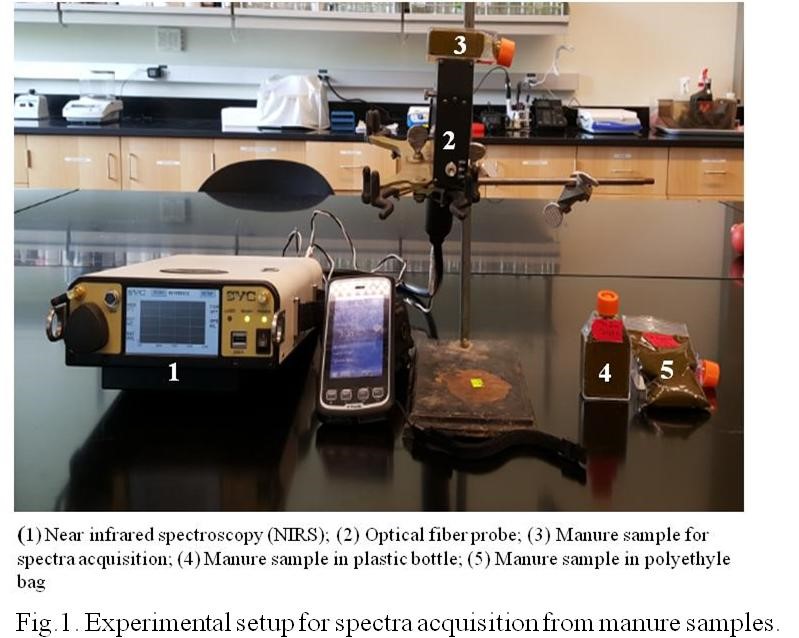
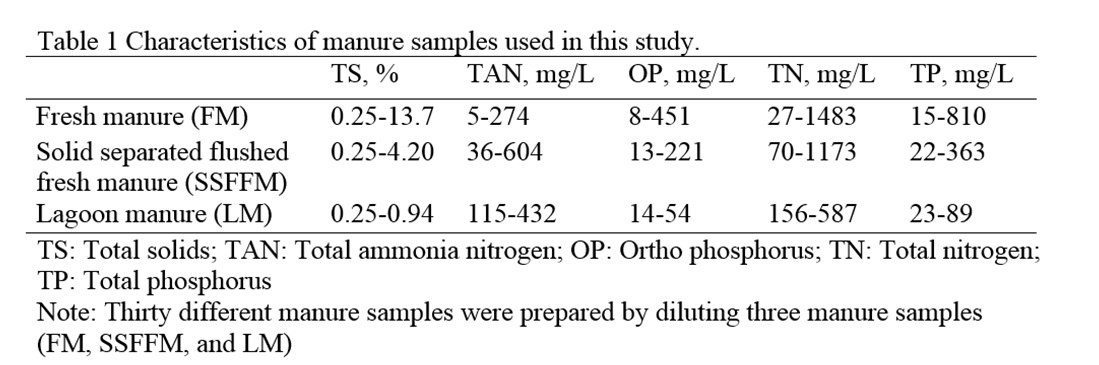
Precision application of manure in agricultural land requires information on its nutrients but the existing reliable nutrient estimation methods are unsuitable for real-time nutrient levels estimation. Near infrared spectroscopy (NIRS) is a rapid, non-destructive method of composition analyses and is commonly used in agricultural plant and produce quality evaluations.Previous studies have shown potential of NIRS for manure nutrients determination without identifying specific or narrow bands suitable to predict manure nutrients (nitrogen (N), phosphorus (P), etc.). In order to develop miniaturized sensing modules for variable rate manure nutrients applications, research is needed to determine specific wavelengths suitable for predicting the nutrients. The main goal of this study was thus to develop a robust method to determine specific key wavelengths in NIR region for manure nutrients determination.

Table 1 Characteristics of manure samples used in this study

What did we do?

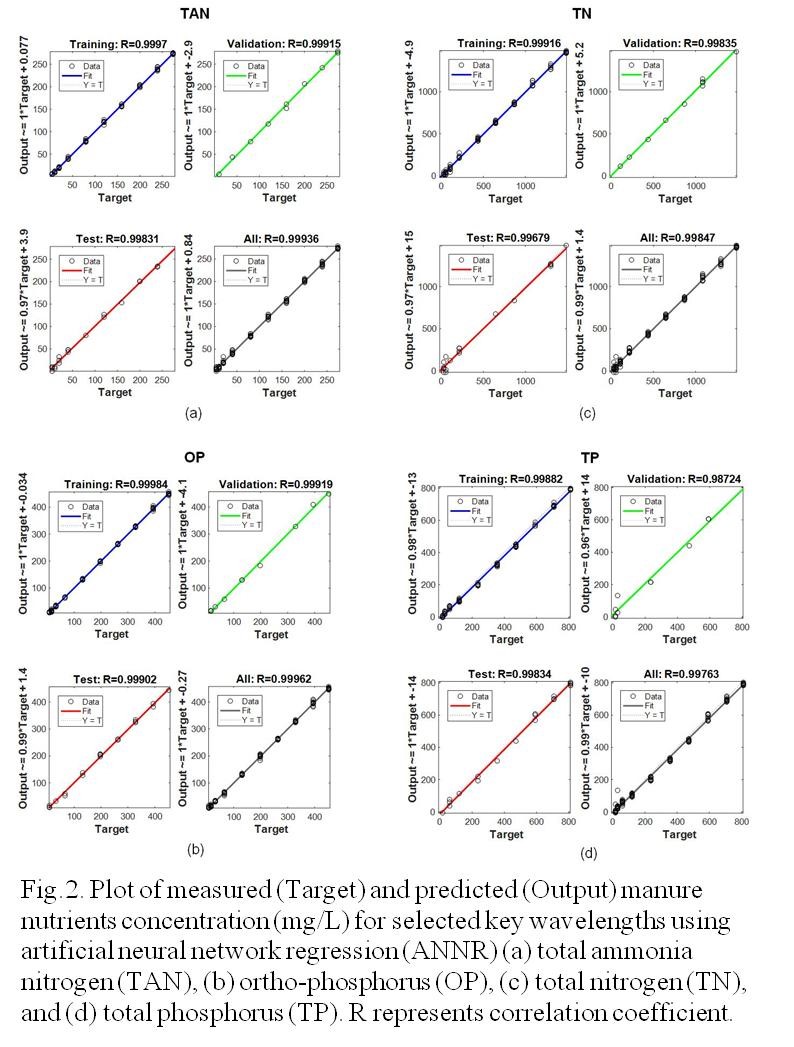
We investigated optical sensing integrated multivariate data analysis methods to identify key wavelengths for manure nutrients determination. Total of 150 spectra (700-2500 nm) were collected using 30 different dairy manure samples. Manure samples at various dry matter contents ranging between 0.25 to 14.0%, representing different nutrient concentrations, were prepared by diluting (1.2-56.0 times) stock manure with distilled water. During data preprocessing, the spectral data were normalized and binned (25 nm). Then, key wavelengths were selected using stepwise multiple linear regression (SMLR) followed by principal component analysis (PCA). The selected key wavelengths were evaluated using linear (partial least square regression (PLSR)) and non-linear regression models (support vector machine regression (SVMR), and artificial neural network regression (ANNR).

Table 2 Performance of different prediction models with selcted key wavelengths

What have we learned?

This study demonstrates the potential use of NIRS technology for rapid detection of dairy manure nutrients. Preprocessing the

spectral data (normalizing and binning) and using the SMLR analysis followed by PCA can be an effective method for identifying key wavelengths related to manure nutrients. Ten key wavelengths identified for N and P determinations in dairy manure were 713.0, 740.6, 768.6, 964.7, 1022.9, 1144.7, 1175.1, 1295.5, 1532.7, and 1849.5 nm. The ANNR model had the highest R2 and lowest RMSE than the other two models. Similarly, the ANNR model maintained almost same performance with a set of selected key bands excluding > 1200 nm. Overall, results from this study indicated potential for development of a low-cost NIR-based sensing module for variable rate manure applications.Fig. 1 Experimental setup for spectra acquisition from manure samples

Future Plans

The next steps include evaluating the selected key wavelengths using a large number of manure samples from different dairy farms. This is necessary because the composition of manure is highly variable depending on the animal breed, the type of housing, the amount of water added, the type and the age of the animals, the feed rations, and the type and duration of slurry storage. We expect that this step will lead to the building of prototype modules and further field evaluation before commercialization.Fig. 2 Plot of measured (Target) and predicted (Output) manure nutrients concentration (mg/L) for selected key wavelengths

Corresponding author, title, and affiliation

Pius Ndegwa, Associate Professor, Department of Biological Systems Engineering, Washington State university, Pullman, WA

Corresponding author email

ndegwa@wsu.edu

Other authors

Gopi K. Kafle, Lav R. Khot, Iftikhar Zeb; Department of Biological Systems Engineering, Washington State University, Pullman, WA

Additional information

http://csanr.wsu.edu/grants/rapid-sensing-of-dairy-manure-nutrients-for-…

Acknowledgements

This research was funded by the BIOAg program via the Center for Sustainable Ag and Natural Resources and the Agricultural Research Center, Washington State University, WA.

The authors are solely responsible for the content of these proceedings. The technical information does not necessarily reflect the official position of the sponsoring agencies or institutions represented by planning committee members, and inclusion and distribution herein does not constitute an endorsement of views expressed by the same. Printed materials included herein are not refereed publications. Citations should appear as follows. EXAMPLE: Authors. 2017. Title of presentation. Waste to Worth: Spreading Science and Solutions. Cary, NC. April 18-21, 2017. URL of this page. Accessed on: today’s date.

Effectiveness of Livestock Exclusion in a Pasture of Central North Carolina


Proceedings Home W2W Home w2w17 logo

*Do not make slides downloadable

Purpose 

Jordan Lake (Reservoir), located in central North Carolina, is a 5,650-ha impoundment with a 436,860-ha watershed of which 18% was urban, 20% agricultural, and 56% forested. Like many lakes in the eastern U.S., the use of this water resource is being threatened by excessive nutrient inputs. A proposed nutrient reduction strategy set overall nitrogen (N) and phosphorus (P) load reduction goals for the watershed at 8-35% for N and 5% for P. Because much of the agricultural land in the watershed was used for pasture, the initial focus of reduction efforts was on pastures with livestock exclusion fencing identified as having the most potential. The objective of this project was to document the effectiveness of a combination of livestock exclusion fencing and nutrient management implemented on a beef cattle pasture typical of pastures in the Jordan Lake watershed and of the Piedmont region of NC.

What did we do? 

figure 1aThe paired watershed experimental approach used in this project, required simultaneous monitoring of two watersheds (treatment and control), during a calibration and a treatment period. The calibration period was from 12/30/07 to 10/5/11 and the treatment period was from 10/6/11 to 12/18/15. During both periods, the rainfall and quantity and quality of discharge were monitored continuously. Land use information (number of cattle, fertilization, soil test results) was collected at least annually. The treatment watershed (Past-treat) encompassed 54.5 ha all but 7.3 ha of which was used for beef cow pasture. The control watershed (Past-cont) encompassed 78.1 ha 39.5 ha of which was pasture, while most of the remainder (27.5 ha) was wooded.

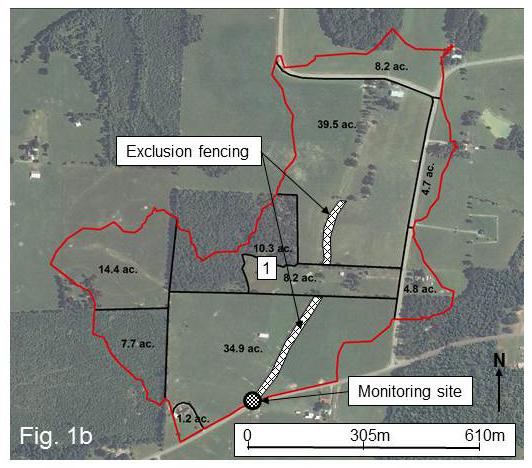
In the treatment watershed the exclusion fenceline was constructed in October, 2011 about 3 m from the top of the streambank on either side and was limited to the main stream channel only (fig. 1b). Nutrient management was also implemented which eliminated P application as soil tests showed that there was adequate P in the soil to support the growth of pasture grasses such as fescue. In the control watershed, beef cattle had unlimited access to the stream channel during the entire project (fig. 1a). Monitoring included collecting flow-proportional samples during storm events and analyzing them for total Kjeldahl (TKN), ammonia (NH3-N), and inorganic (NOx-N) nitrogen as well as total phosphorus (TP) and total suspended solids (TSS).

What have we learned?           

figure 1bStatistical analyses of storm event load data documented that during the post-fencing period, mass loading of TKN (34%), NH3-N (54%), TN (33%), TP (47%), and TSS (60%) was reduced significantly in the treatment relative to the control watershed, while storm discharge and NOx-N loads were not significantly different. These data showed that even a relatively narrow exclusion corridor implemented on only the main stream channel can significantly reduce the export of nitrogen, phosphorus, and sediment from a beef cattle pasture.

Future Plans   

Evaluate livestock exclusion fencing at another Piedmont site with a wider exclusion corridor.

Corresponding author, title, and affiliation       

Daniel Line, Extension Specialist at NC State University

Corresponding author email    

dan_line@ncsu.edu

Other authors  

Deanna Osmond, Professor, NC State University

Additional information              

Published in J. Environmental Quality 45:1926-1932

Acknowledgements      

This project received support from the National Institute of Food and Agriculture, U.S. Department of Agriculture, Integrated Water Quality Grant award 2011-0515 as well as funding from NCDEQ-DWR as pass-through funds from U.S. EPA 319.

Innovative Business Models for On-farm Anaerobic Digestion in the U.S.

Proceedings Home W2W Home w2w17 logo

Purpose

AgSTAR is a collaborative voluntary program of the Environmental Protection Agency (EPA) and United States Department of Agriculture (USDA). AgSTAR promotes the use of anaerobic digestion (AD) systems to advance economically and environmentally sound livestock manure management. AgSTAR has strong ties to industry, government, non-profit and university stakeholders and assists those who enable, purchase or implement anaerobic digesters by identifying project benefits, risks, options and opportunities.

Anaerobic digestion (AD) continues to be a sustainable manure management opportunity with growing interest in innovative business models for project development.   AD systems provide a number of benefits, including improved nutrient management, locally sourced renewable energy, and diversified revenue streams for farmers.   As energy prices remain low across the country, and interest grows in managing food waste and organics outside of landfills, new business models have been implemented to make these on-farm AD projects viable. This presentation will provide a national overview of the livestock AD sector, explore new AD projects across the U.S., and highlight successful projects with innovative business models.

The presentation will cover several case studies of AD projects on topics including:

  • Third-party ownership and development of projects;
  • Food waste collection and boosting project profitability through tip fees and increased biogas production;
  • Eco-market products from dairy manure fibers; manure-based alternatives to peat moss for the horticulture industry; and
  • Biogas to vehicle fuel; opportunities and financial considerations.

With only 244 operating on-farm AD projects across the U.S., there exists a great opportunity for market share growth at the approximately 8,000 farms that could support a project. This, coupled with the desire for alternative management of organic waste streams, provides a unique opportunity for this sector to grow in the near future.

Pigs in a fieldCows in a field

Corresponding author, title, and affiliation

Nick Elger

Program Manager

AgSTAR & Global Methane Initiative

U.S. Environmental Protection Agency

1201 Constitution Ave NW, Mail code: 6207J

Washington, D.C. 20460

Phone: 202.343.9460

Email: elger.nicholas@epa.gov

https://www.epa.gov/agstar

https://www.globalmethane.org/

Effects of pH on Urease Activity in Swine Urine and Urea Solution

Proceedings Home W2W Homew2w17 logo

Purpose

A major source of pollution and loss of nutrient value from animal manure results from the conversion of urea nitrogen into ammonia by the naturally occurring urease enzyme in solid/liquid waste streams. Studies often focus on either urease inhibition in soil to prevent the volatilization of applied urea fertilizer or recovery of ammonia from wastewater, but few have studied urease inhibition in manure slurry directly from the barn. If the urea in fresh urine can be preserved at the source it would prevent the volatilization of ammonia that represents the loss of a valuable nutrient as well as the adverse effects of ammonia on livestock, humans and the environment. Our study investigated methods of inhibiting urease activity in fresh swine urine to preserve the urea nitrogen content during storage, processing and transport.

What did we do?

The study was comprised of 4 experiments:

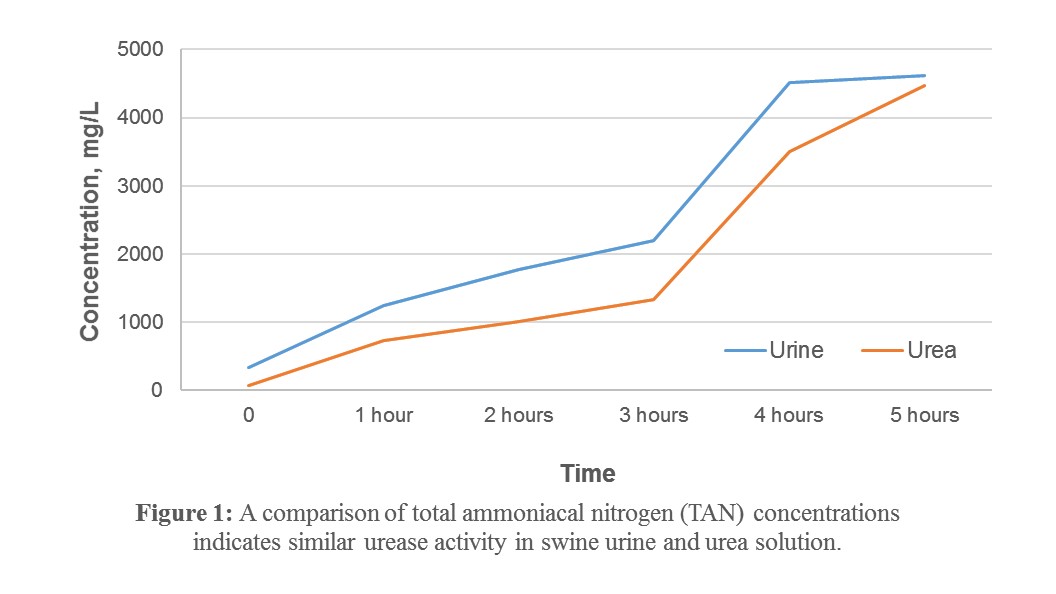
1) Jack bean urease was introduced to a 1M aqueous urea solution and fresh swine urine. Samples were taken hourly for five hours and lab tested for total ammoniacal nitrogen (TAN) to compare urease activity of the urea solution with that of actual urine.

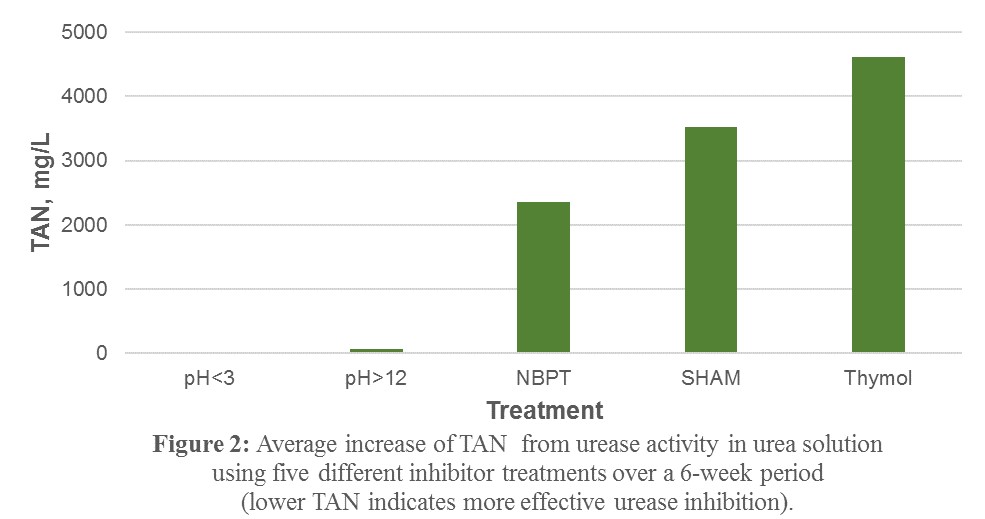
2) Using the same 1M urea solution, the effects of pH < 3.0 and pH > 12.0 on urease activity was measured relative to the commercially available inhibitors N-(n-butyl) thiophosphoric triamide (NBPT), salicylhydroxamic acid (SHAM), and Thymol (a phenol obtained from thyme oil or other volatile oils). Each treatment was sampled weekly for Total Kjeldahl Nitrogen (TKN), TAN and pH over six weeks to see which treatment best preserved urea nitrogen.

3) To determine if a smaller pH adjustment would be an effective inhibitor, we compared the activity of urease in a 1M urea solution across a pH range from 4.0 to 11.0. This was done by either lowering the pH of the urea solution with 0.1N sulfuric acid or raising it with 0.5N sodium hydroxide. The samples were tested at 7 days for pH, TKN and TAN.

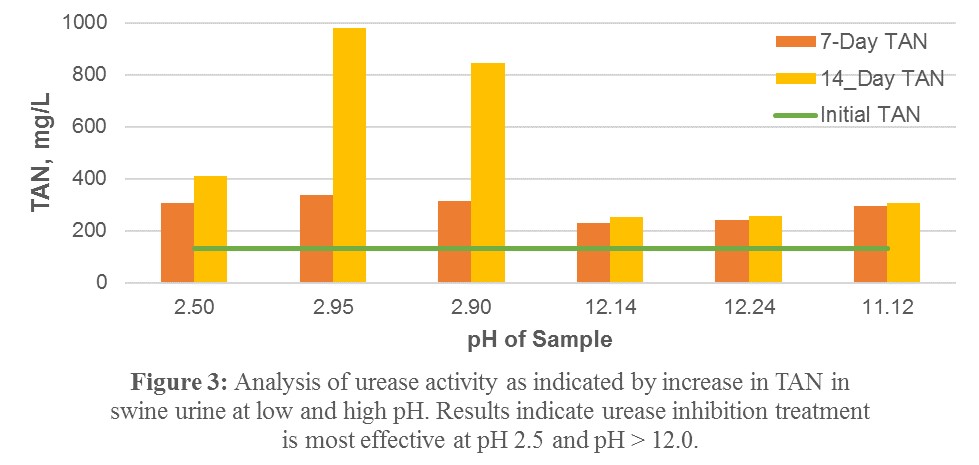
4) Finally, we explored the effect of pH < 3.0 and pH > 12.0 on urease activity in swine urine to compare the effect with that in the urea solution. The initial pH, TKN and TAN of the swine urine was observed relative to the pH and concentrations of samples taken at 7 days and 14 days.

What have we learned?

Figure 1: A comparison of total ammoniacal nitrogen (TAN) concentrations indicates similar urease activity in swine urine and urea solution

1) The conversion of urea nitrogen to ammonia (as measured by TAN) follows a similar trend in both a urea solution and freshly collected sow urine (Figure 1). This indicates that a urea solution may be an acceptable alternative for testing urease inhibition when fresh urine is not available.

2) In a comparison of NBPT, Thymol, and SHAM to pH < 3.0 and pH > 12.0, it was observed that the high and low pH had the most significant inhibitory effect on urease enzyme activity, as almost none of the TKN in the samples observed over a 6-week study period was converted to TAN, relative to the other inhibitors tested (Figure 2).

Figure 2: Average increase of TAN from urease activity in urea solution using five different inhibitor treatments over a 6-week period

3) Testing a range of nominal pH values between 4.0 and 11.0 it was observed that while urease enzyme remained active over a 2 week period across all values, activity declined with an increase or decrease in pH from the highest activity observed at pH 7.0. However, at a pH below 3.0 the urease enzyme was completely denatured and could not be restored by increasing the pH.

4) When testing high and low pH on swine urine it was observed to have a similar inhibitory effect on urease activity compared with the urea solution, that the effect is lasting over 14 days, and that the high pH is slightly more effective than the low pH (Figure 3).

Figure 3: Analysis of urease activity as indicated by increase in TAN in swine urine at low and high pH. Results indicate urease inhibition treatment is most effective at pH 2.5 and ph &gt; 12.0

Future Plans

A follow up study will be conducted using a pilot scale scraper separation system to collect fresh urine from about 30 swine through a 16 week growing cycle. We will be testing urea preservation using 3 different inhibitor treatments including pH > 12, pH < 3 and the commercial soil urease inhibitor, NBPT. We will also study the effect of UV light on urease activity during the control periods. The experiment will be repeated for each inhibitor over 3 feeding phases to simulate grower farm conditions.

Corresponding author, title, and affiliation

Alison Deviney, Graduate Research Assistant at Biological and Agricultural Engineering Department, North Carolina State University

Corresponding author email

avdevine@ncsu.edu

Other authors

John J. Classen, Ph.D. and Mark Rice, Extension Specialist at Biological and Agricultural Engineering Department, North Carolina State University

Additional information

Alison Deviney

Biological and Agricultural Engineering Department

North Carolina State University

Raleigh, NC 27695

Acknowledgements

Jason Shye and Dan Wegerif, Managing Members

Waste 2 Green, LLC, Cocoa, Florida, USA

Evaluation of Greenhouse Gas Emissions from Dairy Manure

Proceedings Home | W2W Home w2w17 logo

Purpose

Greenhouse gas (GHG) emissions from dairy manure can be affected by barns, bedding and manure collection, as well as processing and storage. To reduce life cycle environmental impacts of milk production, it is important to understand the mechanisms involved in production and emission of GHGs from dairy manure. In addition to the GHGs emitted from the manure surface, the production of these gases in manure at different depths is an important but poorly understood driver of emissions. Because it is often not practical to measure GHG production and emissions directly in the field, simulation of these processes, both experimentally and through modeling, is needed to help understand the GHG emission mechanisms.Because manure samples are heterogeneous and their composition varies based on the bedding materials and bedding rate as well as cleaning frequency, it is also necessary to consider the impacts of these different types of manure heterogeneity and their impact on emission processes. Another important element that can impact GHGs emissions from dairy manure is oxygen. GHG emission rates can be different based on manure storage status (aerobic, anaerobic, and mixed conditions) and storage time. Several other factors, such as manure bedding materials, bedding rate, applied stress, temperature and moisture content can also impact the microbial activities that produces these GHGs. Our goals are to enhance understanding of the relationships between these factors and GHG emissions from dairy manure, and to identify strategies by which substantial reductions in GHG can be realized in a practical way.

What did we do?

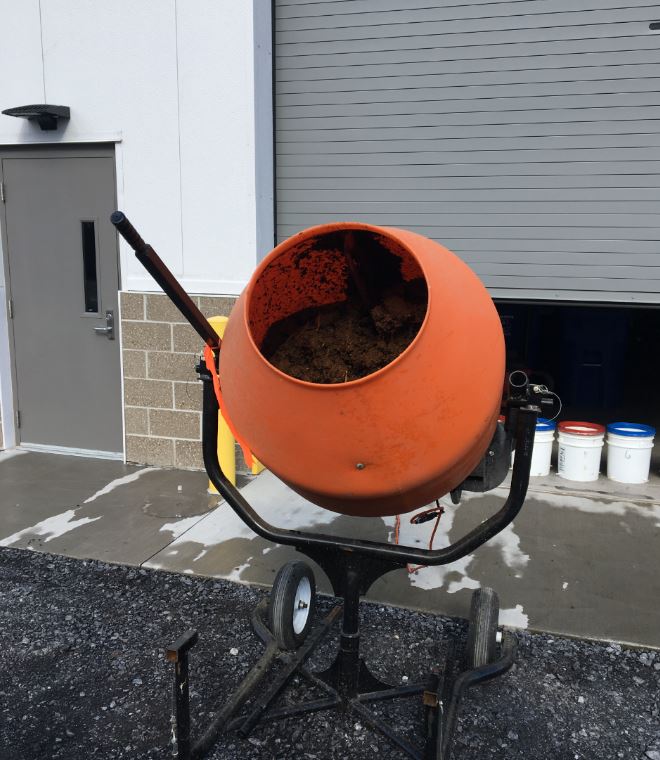
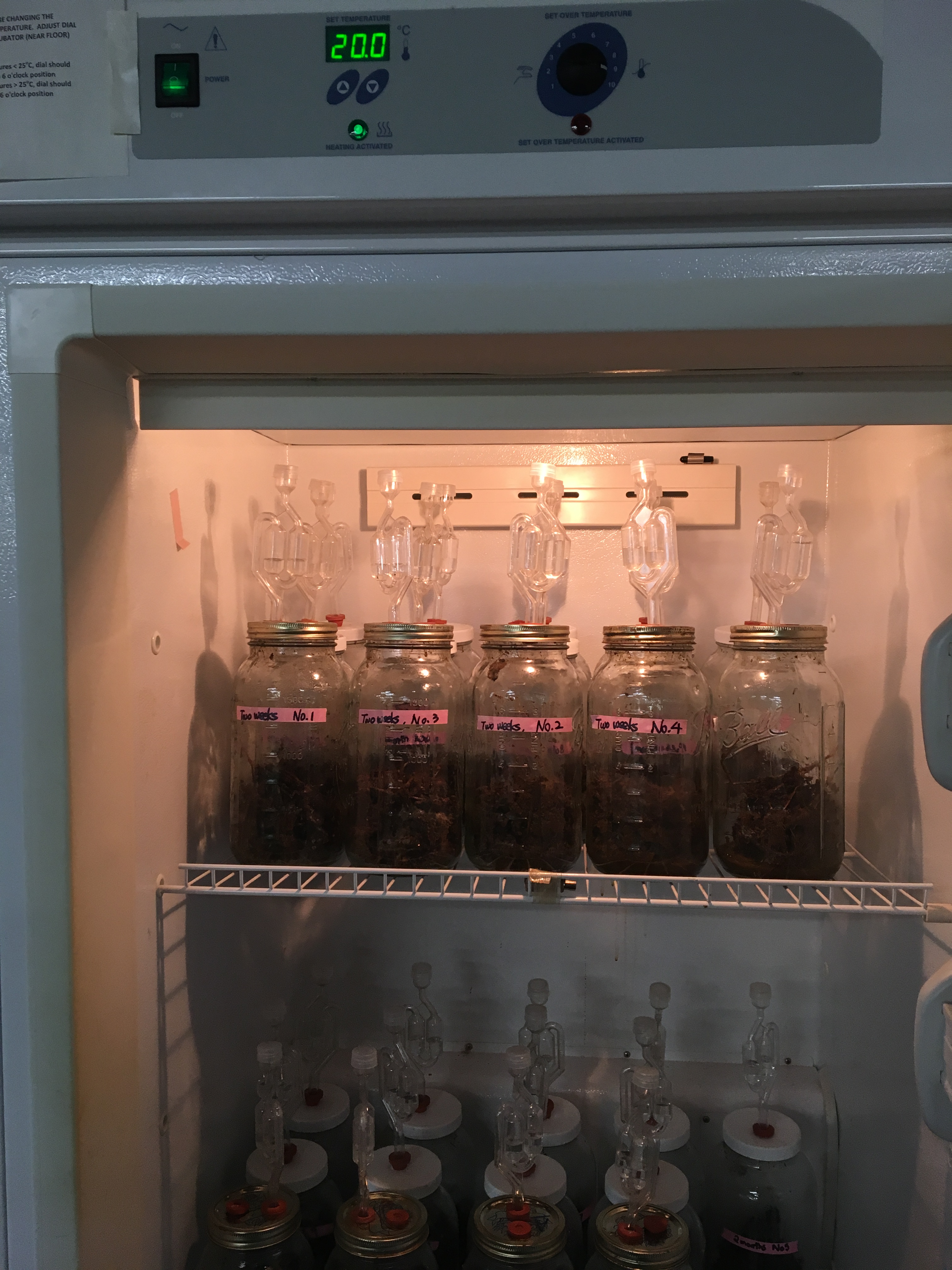
In a controlled laboratory environment we investigated three different dairy manures: sand stacked manure, sawdust bedded manure, and organic sawdust bedded manure. The first two manures were studied and measured in 2016, and the last one was collected and measured in February 2017. After sample collection, manures were mixed in a cement blender to be more homogeneous, and were then transported to buckets and jars for compaction and storage. Nine buckets were filled with manure in layers, and each layer was characterized for physical and biochemical properties. Three levels of stress (0 N/m2, 4196 N/m2, and 12589 N/m2) were applied above the manure to emulate the impact of overburden at various pile depths. Manure bulk density and permeability for each bucket were measured, and the average of each treatment was summarized to evaluate relationships with GHG emissions. Four gases (NH3, CH4, CO2, and N2O) were investigated. The manure moisture content and water holding capacity were measured adjusted to create aerobic, anaerobic, and mixed conditions for manure microorganisms. Three moisture contents were applied to 300 g manure samples, each three replicates. Each manure storage condition was simulated in 2L glass vessels for five durations (one day, two weeks, one month, two month, and three months). The relationship between storage time and GHG rates was assessed.

Picture of cement blenderPicture of buckets and manure compactionPicture of dairy manure storage after blending and compaction

What have we learned?

The results showed that there are good prospects that GHGs reductions can be realized in dairy manure management. In this work, manure that was characterized between each sample layer in the buckets showed similar results, which means the samples are pretty homogeneous. Bulk density and permeability decreased with increasing applied stress. GHG emissions and ammonia emissions showed correlation with the compaction density. Using different bedding materials did impact the GHGs rate.

Future Plans

The combination of prediction models (DNDC and IFSM) and real-word data will be discussed next.

Corresponding author, title, and affiliation

Fangle Chang, post-doctoral at Penn State University, State College PA

Corresponding author email

fuc120@psu.edu

Other authors

Micheal Hile, Eileen E. Fabian (Wheeler),

Additional information

Micheal Hile, mlh144@psu.edu

Eileen E. Fabian (Wheeler), Professor of Agricultural Engineering, Environmental Biophysics, Animal Welfare, and Agricultural Emissions, Integrated Research and Extension Programs, Penn State University, State College PA, fabian@psu.edu

Tom L. Richard, Professor of Agricultural and Biological Engineering, Director of Penn State Institutes for Energy and the Environment, Bioenergy and Bioresource Engineering, Penn State University, State College PA, tlr20@psu.edu

Acknowledgements

This material is based upon work that is supported by the National Institute of Food and Agriculture, U.S. Department of Agriculture, under award number 2013-68002-20525. Any opinions, findings, conclusions or recommendations expressed in this publication are those of the author(s) and do not necessarily reflect the view of the U.S. Department of Agriculture.

The authors are solely responsible for the content of these proceedings. The technical information does not necessarily reflect the official position of the sponsoring agencies or institutions represented by planning committee members, and inclusion and distribution herein does not constitute an endorsement of views expressed by the same. Printed materials included herein are not refereed publications. Citations should appear as follows. EXAMPLE: Authors. 2017. Title of presentation. Waste to Worth: Spreading Science and Solutions. Cary, NC. April 18-21, 2017. URL of this page. Accessed on: today’s date.

Methane Mitigation Strategies for Dairy Herds


Proceedings Home | W2W Home w2w17 logo

Purpose 

The U.S. dairy industry has committed to lowering the carbon footprint of milk production by 25% by 2020. A key factor in meeting this goal is reducing enteric greenhouse gas (GHG) emissions which represent about 51% of the carbon footprint of a gallon of milk. Methane (CH4) is the primary GHG emitted by dairy cows. Total methane emissions represented 10.6% of the total U.S. GHG emissions in 2014. Enteric CH4 emissions were 22.5% of the total methane emissions. Methane emissions from dairy cattle were 5.7% of total U.S. methane emissions or 0.6% of all U.S. GHG emissions. The purpose of this project was to examine nutrition and management options to lower methane emissions from dairy cattle.

What did we do?

This project utilized a number of approaches. One was to develop a base ration using the Cornell Net Carbohydrate and Protein System (CNCPS) model to evaluate the impact of level of dry matter intake and milk production on methane emissions. A second approach was to compile a database of commercial herd rations from 199 dairy farms. This database was used to examine relationships between the feeding program and CH4 emissions. A third component was to utilize published review papers to estimate potential on-farm CH4 reductions based on research data.

What have we learned? 

A base ration developed in the CNCPS model was evaluated at milk production levels ranging from 40 to 120 pounds of milk. As milk production increased, CH4 emissions increased from 373 to 509 grams/cow/day. This is primarily due to increasing levels of dry matter intake as milk production increases. However, the CH4 emissions per pound of milk decreased from 9.32 to 4.24 g as milk production increased. The 199 commercial herd database had an average input milk of 83.7 pounds per day with a range from 50 to 128 pounds. Daily dry matter intake (DMI) averaged 51.4 pounds with a range of 35.2 to 69.8. Simple correlations were run between CH4 emissions and ration components. Dry matter intake had a positive (0.795) correlation with CH4 emissions (g/day). However, the correlation between DMI and CH4/pound of milk was -0.65. These results agree with published research on the relationship of DMI and CH4 emissions. Starch intake also had a positive correlation (0.328) while percent ration starch was negatively correlated (-0.27) with CH4 emissions. There was also a positive correlation (0.79) between the pounds of NDF intake and CH4 emissions.

A review paper indicated that the maximum potential reduction in CH4 emissions by altering rations was 15% (Knapp et. al., 2014). Projected reductions from genetic selection, rumen modifiers and other herd management practices were 18, 5 and 18% in this same paper. The reduction by combining all approaches was estimated to be 30%. A second review paper listed mitigation strategies as low, medium or high (Hristov et. al. 2013). Potential reductions for the low group was <10% while the medium group was 10-30%. The high group had >30% potential to lower CH4 emissions. Ionophores, grazing management and feed processing were in the low group. Improving forage quality, feeding additional grain and precision feeding were in the low to medium group. Rumen inhibitors were listed in the low to high group. No items were listed only in the high group. These results provide guidance in terms of items to concentrate on at the farm level to reduce methane emissions.

Future Plans 

The number of commercial herds in the database will be expanded to increase the types of rations represented and the simple correlations run. In addition, a multiple regression approach will be used to better understand the relationships of ration components and CH4 emissions. Whole herd data will be obtained and examined to determine the proportion of the total herd CH4 emissions contributed by the various animal groups. The CNCPS program will also be used on rations at constant DMI to better understand the impact of specific ration components on CH4 emissions. These results of these will permit a more defined and targeted approach to adjusting rations to decrease CH4 emissions.

Corresponding author, title, and affiliation        

Dr. Larry E. Chase, Professor Emeritus, Dept. of Animal Science, Cornell University

Corresponding author email     

lec7@cornell.edu

Additional information               

Hristov A.N., J. Oh, J.L. Firkins, J. Dijkstra, E. Kebreab, G. Waghorn, H.P.S. Makkar, A.T. Adesogan, W. Yang, C. Lee, P.J. Gerber, B. Henderson and J.M. Tricarico. 2013. Mitigation of methane and nitrous oxide emissions from animal operations: I. Review of enteric methane mitigation options. J. Anim. Sci. 91:5045-5069.

Knapp J.R., G.L. Laur, P.A. Vadas, W.P. Weiss an d J.M. Tricarico. 2014. Enteric methane in dairy cattle production: Quantifying the opportunities and impact of reducing emissions. J. Dairy Sci. 97:3231-3261.

Acknowledgements       

This material is based upon work that is supported by the National Institute of Food and Agriculture U.S. Department of Agriculture under award number 2013-68002-20525. Any opinions, findings, conclusions, or recommendations expressed in this publication are those of the author and do not necessarily reflect the view of the U.S. Department of Agriculture.

The authors are solely responsible for the content of these proceedings. The technical information does not necessarily reflect the official position of the sponsoring agencies or institutions represented by planning committee members, and inclusion and distribution herein does not constitute an endorsement of views expressed by the same. Printed materials included herein are not refereed publications. Citations should appear as follows. EXAMPLE: Authors. 2017. Title of presentation. Waste to Worth: Spreading Science and Solutions. Cary, NC. April 18-21, 2017. URL of this page. Accessed on: today’s date.

Climate Change Mitigation and Adaptation in Dairy Production Systems of the Great Lakes

Proceedings Home | W2W Home  waste to worth 2017 logo

Purpose

To better understand how dairy agriculture can reduce its impact on climate change, the USDA has supported a large, transdisciplinary research project to examine dairy production systems across the Great Lakes region of the United States. The goals of the Sustainable Dairy Coordinated Agricultural Project are to identify where in the life cycle of a dairy system can beneficial management practices (BMP) be applied to reduce greenhouse gases (GHG) without sacrificing productivity or profit to the farmer. Since 2013, a team of 70 researchers has been collaborating across institutions and disciplines to conduct the investigations.

What did we do?

Experimental data were collected at the cow, barn, manure, crop and soil levels from 2013-2016 by agricultural and life scientists. Modelers continue to conduct comparative analyses of process models at the animal, field and farm scales. Atmospheric scientists have down-scaled global climate models to the Great Lakes region and are integrating climate projections with process modeling results. The Life Cycle Assessment team is evaluating select beneficial management practices to identify where the greatest reduction of greenhouse gases (GHG) may occur. Results of focus groups and farmer surveys in Wisconsin and New York will help us understand how producers currently farm and what types of changes they may be willing to implement, not just to reduce emissions but to adapt to long-term changes in climate.

What have we learned?

Through the Dairy CAP grant, researchers have developed and refined the best ways to measure GHG emissions at the cow, barn, manure, crop and soil levels, and these data are archived through the USDA National Sustainable Dairy LogoAgricultural Library. Results show that the greatest levels of methane produced on a farm come from enteric emissions of the cow and changes in the diet, digestion and genetics of the cow can reduce those emissions. Another significant source of methane—manure production, storage and management—can be substantially reduced through manure management practices, particularly when it is processed through an anaerobic digester. Changes in timing of nitrogen application and use of cover crops practices are found to improve nitrogen efficiency and reduce losses from the field.

A comparative analysis of process models showed multiple differences in their ability to predict GHG emissions and nutrient flow (particularly nitrogen dynamics) at the animal, farm, and field scales. Field data collected were used to calibrate and refine several models. The Life Cycle Assessment approach shows that a combination of BMPs can reduce GHG emissions without sacrificing milk production. The application of down-scaled climate data for the Great Lakes region is being used in conjunction with the suite of BMPs to develop mitigation and adaptation scenarios for dairy farming in the Upper Midwest.

Research findings are shared through a series of fact sheets available on the project website, and a web-based, virtual farm that presents educational materials for 150- and 1500-cow operations to a variety of audiences, ranging from high school students to academics.

Future Plans

The Dairy CAP grant sunsets in 2018, but research questions remain relative to the efficacy of beneficial management practices at different stages in the life cycle of a farm. Challenges revolve around the complexity of farming practices, the individuality of each farm and how it is managed, and uncertainty associated with the predictive capabilities of models. Mitigation and adaptation strategies will be shared with the dairy industry, educators and extension partners who will be responsible for working with farmers at the field level. Implementation of these strategies will make dairy farming in the Great Lakes region more resilient.

Corresponding author, title, and affiliation

Carolyn Betz, Research Project Manager, University of Wisconsin-Madison. Department of Soil Science

Corresponding author email

cbetz@wisc.edu

Other authors

Matt Ruark and Molly Jahn

Additional information

http://www.sustainabledairy.org

http://virtualfarm.psu.edu

Acknowledgements

This material is based upon work that is supported by the National Institute of Food and Agriculture, U.S. Department of Agriculture, under award number 2013-68002-20525.