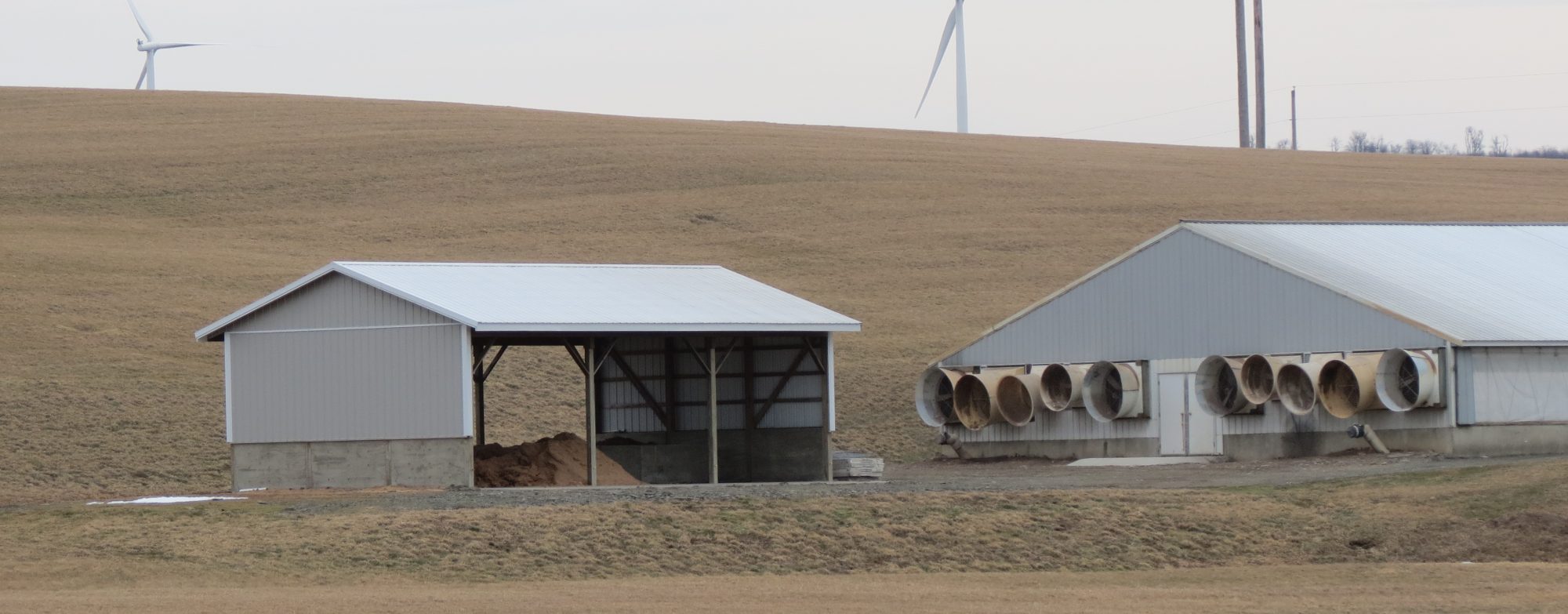
The Conservation Innovation Grants (CIG) program is a federal grant program that is part of the USDA NRCS EQIP program. This talk will describe the most significant parts of the program, explain the program intent and eligibility, and outline important program requirements that are unique to CIG. The second part of the presentation will review several successful projects on equipment and practices for in-season nutrient management and nutrient recovery techniques. This presentation was originally broadcast on February 28, 2025. Continue reading “Moving Manure Research Forward Through the NRCS CIG Program”
Application of Manure on Growing Crops
Scheduling conflicts, equipment breakdowns, and wet field conditions can wreak havoc on spring manure application and planting schedules. This webinar will provide valuable insights into maximizing the efficiency and timing of manure application for growing crops, especially corn. By exploring innovative techniques for liquid manure application and the potential for in-season poultry litter application, participants will learn possible ways to navigate challenges in crop management while ensuring nutrient efficiency and maintaining crop yield and quality. This presentation was originally broadcast on January 17, 2025. Continue reading “Application of Manure on Growing Crops”
Responding to PFAS on Dairy Farms in Maine
Per- and polyfluoroalkyl substances (PFAS) are persistent in the environment and in humans. While agriculture is not the source of PFAS, feed and animal production are potential transfer points. This webinar shares experiences from Maine, where PFAS was detected in soil, feed, milk, and meat and initiated a multi-pronged response and remediation approach from multiple agencies, on multiple farms. Our speakers will share the important distinctions between PFAS chemicals, short- and long-term ramifications for local farms, and remediation techniques – both implementation and research scale. This presentation was originally broadcast on December 13, 2024. Continue reading “Responding to PFAS on Dairy Farms in Maine”
Engaging Farm Safety and Manure Management: Innovative Teaching Methods in Action
The agricultural industry consistently has the highest risk for occupational injuries and fatalities. This session will share some proven techniques for making changes to farm safety practices and manure management that could positively impact generations to come. We will explore dynamic and interactive teaching methodologies that could be adapted for use in at your facility and in your training programs. These methods employ activity-based learning, where participants have the opportunity to learn, apply and discuss real-world scenarios in a safe environment. This presentation was originally broadcast on November 22, 2024. Continue reading “Engaging Farm Safety and Manure Management: Innovative Teaching Methods in Action”
Managing Dairy Manure for Increased Soil Health and Forage Production Sustainability
Manure is a valuable source of crop-essential nutrients that, when managed carefully, can help build soil organic matter, enhance nutrient cycling, and improve overall soil health and climate resilience over time. In 2022, a statewide on-farm research project was initiated in New York State to quantify the nitrogen (N) replacement value, corn silage or grain yield, and soil health enhancements of various manure sources. Between 2022 and 2023, eleven on-farm field trials were implemented. Yield data are being used to quantify differences in most economic N rate between manured and non-manured strips, and to quantify the yield impact of the manure applications. In 2024, eight additional trials were added using various manure sources. Results so far indicate that manure can offset N fertilizer needs and increase corn silage yield beyond its nutrient contributions, but impacts are field-specific, reflecting differences in field histories and growing conditions. Assessments of soil microbial biomass for sites in 2023 and 2024 reflected the manure history for trial locations and suggest that mid-season assessments may help identify where nitrogen fertilizer addition is beneficial for the crop and where not. Assessment of variability of different manure sources point to the importance of manure sampling and analyses. Preliminary results will be shared. This presentation was originally broadcast on October 18, 2024. Continue reading “Managing Dairy Manure for Increased Soil Health and Forage Production Sustainability”
The Role of Agriculture in Atmospheric Nitrogen Deposition: Sources, Impacts, and Management
Agriculture is the largest source of ammonia emissions and contributes to nitrogen deposition which can impact ecosystem health. This webinar introduces the topic of nitrogen deposition and provides an overview of the role of the National Atmospheric Deposition Program (NADP) in determining nitrogen deposition sources. In addition, the speakers provide an overview of a region being impacted by agriculture related nitrogen deposition and discusses agricultural management practices that may reduce ammonia emissions and nitrogen deposition. This presentation was originally broadcast on September 20, 2024. Continue reading “The Role of Agriculture in Atmospheric Nitrogen Deposition: Sources, Impacts, and Management”
Fifty Years of Environmental Progress for US Dairy Farms
Many changes have occurred in the technology, management, and resulting productivity and environmental impacts of United States dairy farms over the past 50 years. Based on research recently published in the Journal of Dairy Science, Dr. Al Rotz will discuss how changes in production have impacted 13 environmental metrics and where improvements can still be made in the future. This presentation was originally broadcast on August 16, 2024. Continue reading “Fifty Years of Environmental Progress for US Dairy Farms”
Call for Abstracts for Waste-to-Worth 2025
You are invited to participate!
The Waste to Worth Conference will be April 7-11, 2025 at the Grove Hotel in Boise, Idaho.
Waste to Worth 2025 welcomes oral, poster, panel, and workshop presentation proposals focused on applied solutions related to animal manure management and protecting the environment.
-
- Submissions should align with one or more of the general areas of emphasis (see below).
- Graduate students are encouraged to submit and participate in a poster presentation competition.
To submit an abstract, go to https://tinyurl.com/W2W2025
For more information, go to: https://wastetoworth.org or the W2W Call for Abstracts flyer.
Deadline is October 30, 2024
Areas of Emphasis
-
- Circular Bioeconomy
- Biosecurity
- Feed & Nutrient Management
- Manure, Soil Health & Sustainability
- Emerging Contaminants
- Manure Storage, Treatment, Handling & Application Systems
- Robotics & Artificial Intelligence in Animal Production Systems
- Value-Added Products from Agricultural Production Systems
- Climate Impacts & Adaptation/Mitigation Measures
- Air Quality, Emissions & Fate
- Educational Programming & Delivery
- Environmental Planning & Regulations in Animal Agriculture
- Case Studies/On-Farm Experience
- Mortality Management
- Sustainable Animal Systems
- New & Innovative Technology
- Water Quality
Who attends?
-
- Extension agents & specialists
- Progressive farmers & producers
- NRCS staff
- Consultants & technical experts
- Regulatory & policy advisors
- Scientists
- Technology providers
Energy Conservation in Livestock and Poultry Operations
To be sustainable, producers need to conserve energy while still maintaining or improving their facilities and the lives of the animals they house. This presentation was originally broadcast on December 15, 2023. Continue reading “Energy Conservation in Livestock and Poultry Operations”
Webinar Series
 The Livestock and Poultry Environmental Learning Community offers a free monthly webinar on a variety of issues related to animal manure management.
Next Live Webinar
The next webinar will be held on March 20, 2026, at 1:30 PM Central. In this webinar titled Nutrient Management Solutions for Small Farms, we will examine … More…
Webinar Scheduler
The upcoming webinars will continue to include air and water quality topics. As webcast topics and speakers are finalized, they are posted at Upcoming Webcasts and announced in the newsletter.
Attending a Live Webinar
The webinars are presented live on the third Friday of each month (some exceptions apply) at 2:30 pm (eastern), 1:30 pm (central), 12:30 pm (mountain) and 11:30 am (pacific). All webinars are recorded and archived for on-demand viewing.
-
- First-time viewers should follow the steps on the How Do I Participate in a Webinar? page to be sure you have the appropriate software and web connection.
- On the day of the webcast connect through the Live Webinar Information page.
Due to system changes in the summer of 2016, the URL for the webinar will change each time, so please plan to connect through the Live Webinar Information page.
Viewing an Archived Webinar
Each archive includes the video segments, presentation slides, written summaries of the question and answer session (when available), links to additional information, and access to individual segments within each webinar.
You have two options for finding and archived presentation:
-
- Browse by Topic
- Browse Chronological List
Continuing Education Units
The webcast series has been approved for Continuing Education Units (CEUs) through the Certified Crop Advisers (CCA) and to members of the American Registry of Professional Animal Scientists (ARPAS).