
Distillers grains impact on feedlot pen surface material

Purpose

Distillers grains (DGs) have been heavily researched as a diet additive for cattle since the early 2000s. Research has considered the nutritional value, optimization, and even how it impacts odors and greenhouse gases emitted from the surface of the pens that house cattle fed these diets. However, no work has been conducted to determine if there are changes in pen surface material properties after exposure to manure from diets containing DGs. Recent conversations with producers highlighted changes in pen surface characteristics such as significant loss in material and inability to maintain mounds in the pen. after DGs were fed for prolonged periods. Research has shown that manure from distillers diets contain excess proteins which we hypothesized could cause interruptions in soil particle interactions thus leading to a loss in integrity of the pen surface. The purpose of this work was to investigate if excess excreted protein in urine was the cause of changes in the properties of pen surface material.

What Did We Do?

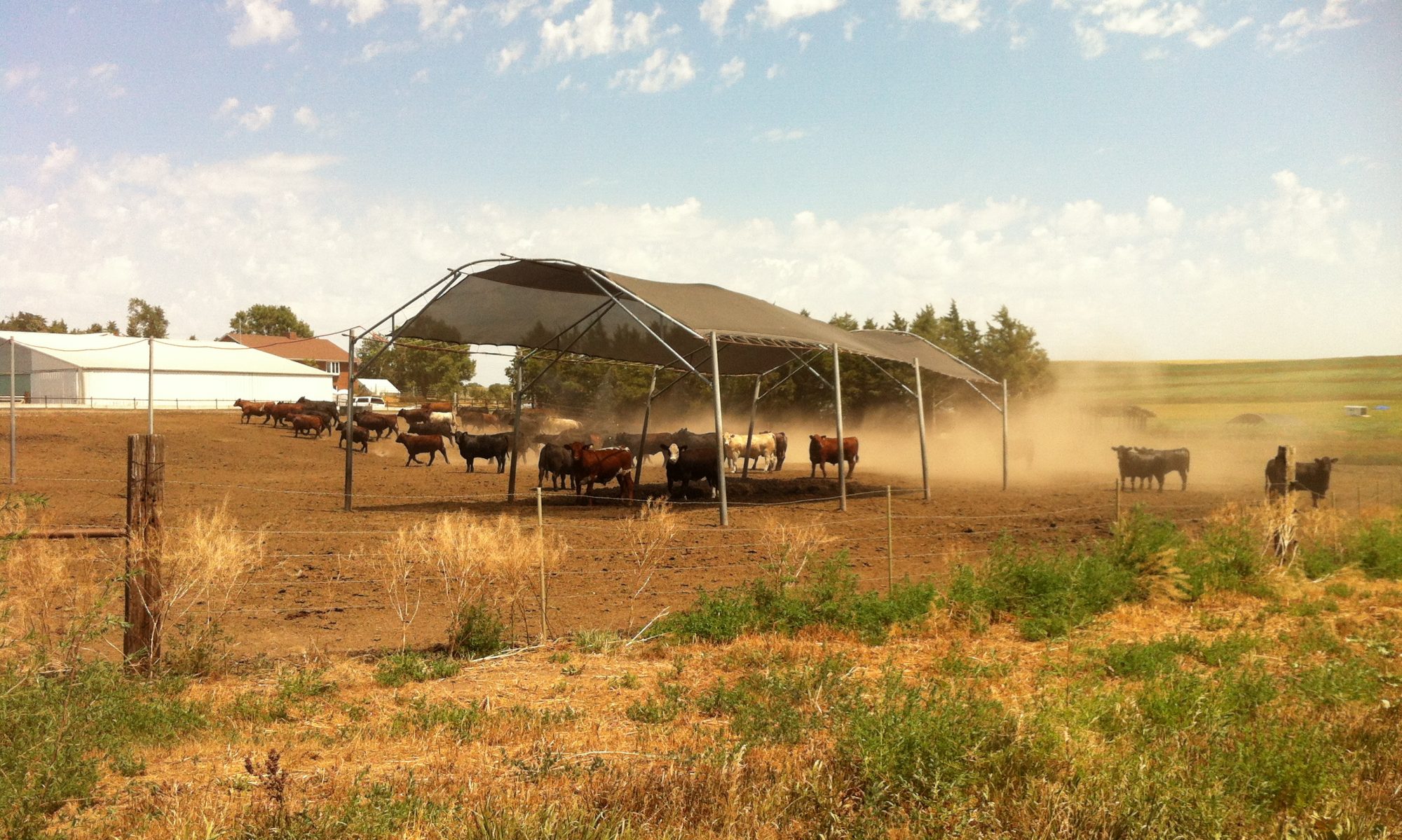
This work was comprised of a large-scale study at a feedlot and a lab-scale study. In the feedlot study, cattle were fed either control (no DGs), wet DGs (40%) or dry DGs (40%) for 180 days. Once cattle were finished and removed from their pens, pen surface material (PSM) was collected from 4 general locations within each pen: behind the apron, on top of the mound, the side of the mound and the bottom of the pen. Samples from each pen with the same treatment were pooled into one single composite to represent each of the treatments. Samples were divided into two sets and analyzed by a commercial laboratory as either soil or manure. Soil analysis included pH, soluble salts, organic matter, nitrate nitrogen, potassium, sulfate, zinc, copper, calcium, sum of cations, % saturation of calcium and magnesium, and Mehlich-III phosphorus. Manure analysis included organic nitrogen, ammonium nitrogen, nitrate, phosphorus, potassium, sulfur, calcium, magnesium, sodium, zinc, iron, manganese, copper, boron, soluble salts pH, and moisture

For the lab-scale study, PSM was collected from a feedlot that does not feed DGs. Material was dried, ground, and sieved. Synthetic urine was added daily to bottles containing 300 g of PSM for 3 weeks to simulate prolonged addition of urine to feedlot pen surface. Samples were then shaken for 30 minutes and left at room temperature unsealed overnight. Synthetic urine contained either 0, 8, 16, or 32% additional protein. At the end of the study, samples were dried and sent to a commercial lab to be tested as soil in which the same properties listed above were again reported.

What Have We Learned?

In the feedlot study, differences (p < 0.05) in soluble salts were observed between all three treatments. Differences (p<0.05) were observed between the control and  DGs diets for soluble salts, organic matter, potassium, sulfate, magnesium saturation, Mehlich P, pH, ammonium nitrogen, organic N, total N, phosphate, total phosphorus, and sulfur.

For the lab-scale study, properties in which differences (p<0.05) were measured between the control and treatments include: nitrate N, cation exchange capacity, magnesium, sodium, zinc, calcium saturation and magnesium saturation. Analysis which resulted in differences (p < 0.05) between control and all three added protein treatments include Mehlich P, potassium, calcium, and copper. No significant differences were determined between the control and the treatments for zeta potential and conductivity. Results of the feedlot study compared to the lab scale study suggest that changes in PSM are not solely caused by excess soluble protein excretion.

Future Plans

The lab scale study will be used to determine if fiber has any contribution to the observed changes in PSM properties. The results of this study will help us determine how best to manage feedlot pens when varying forms and concentrations of DGs are fed to the cattle. It may also provide insight into potential pen surface amendments that may be used to mitigate the negative effects of feeding DGs to cattle.

Authors

Corresponding author

Bobbi Stromer, Research Chemist, US Meat Animal Research Center, Bobbi.stromer@usda.gov

Additional authors

Mindy Spiehs, Research Nutritionist, US Meat Animal Research Center

Bryan Woodbury, Research Engineer, US Meat Animal Research Center

Additional Information

USDA is an equal opportunity provider and employer

Acknowledgements

The authors wish to thank Victor Gaunt for assistance with data collection.


The authors are solely responsible for the content of these proceedings. The technical information does not necessarily reflect the official position of the sponsoring agencies or institutions represented by planning committee members, and inclusion and distribution herein does not constitute an endorsement of views expressed by the same. Printed materials included herein are not refereed publications. Citations should appear as follows. EXAMPLE: Authors. 2025. Title of presentation. Waste to Worth. Boise, ID. April 7–11, 2025. URL of this page. Accessed on: today’s date.
Ammonia and greenhouse gas emissions when chicken litter is added to beef pen surface material

Purpose

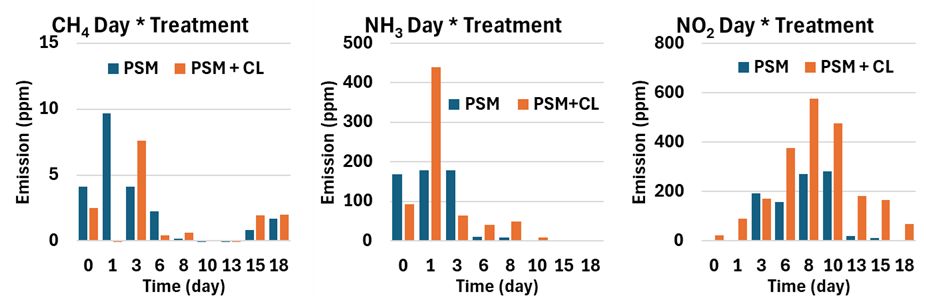
One of the big challenges in animal agricultural waste management is reduction of greenhouse gas (GHG) emissions. Pen surface material (PSM) from beef feedlots has been characterized for its GHG emission profile and research has now shifted to focus on emission-reducing treatments for pen surfaces. Chicken litter (CL) has a nutrient and microbial profile unique from beef manure which was hypothesized to cause a change in GHG emissions.  This study was conducted to determine if the addition of CL to beef PSM would reduce methane (CH4), carbon dioxide (CO2), ammonia (NH3), and nitrous oxide (NO2) emissions.

What Did We Do?

A lab scale study was conducted in which 24 stainless steel pans (12.75 x 20.75 x 2.5 in, L x W x H) were filled with PSM (3000 g, control) that had been collected from USMARC feedlot in August. Twelve pans of PSM had chicken litter (20% wt/wt) added to the top of the pan and gently raked into the PSM. All pans had 1000 g of water added. All samples were kept in an environmentally controlled chamber at 25 C for 18 days and watered after each measurement to keep sample moisture consistent. Sample pH and loss in water were recorded throughout the experiment. Flux measurements of CH4, CO2, N2O and NH3 were measured on days 0, 1, 3, 6, 8, 10, 13, 15, and 18 using Thermo Scientific gas analyzers. Data was analyzed for statistical differences in emissions as a function of time (days), treatment (control vs chicken litter), and time*treatment. At the conclusion of emission measurements, samples were pooled and sent to a commercial lab for nutrient analysis.

What Have We Learned?

All measured gases showed significant changes over the time of the experiment (p < 0.05). Significant differences between treatments (p < 0.05) were recorded for N2O with a higher emission recorded for PSM+CL.  Significant treatment* day interactions were observed for CH4, NH3, and N2O (p < 0.05). Methane and NH3 emissions peaked on day 1 and steadily decreased over the 18 days; N2O emissions steadily rose from day 0 to day 8 and then steadily decreased through day 18. Nutrient analysis determined PSM with chicken litter contained significantly higher levels of organic N, ammonium N, and total nitrogen. There was no significant difference of N2O in control vs treated samples. Chicken litter treated samples showed higher levels of P2O5, K2O, sulfur, calcium, magnesium, sodium, zinc, copper, boron, soluble salts, and organic matter. From this work, we conclude that addition of chicken litter to PSM did not favorably alter emissions of greenhouse gasses. Mixing the manures may be beneficial for land application to cropland or for composting.

Future Plans

Future research will evaluate different sources of composted CL, the emission profile of CL, and consideration of how mixtures of PSM and CL impact nutrient retention and composting.

Authors

Presenting & corresponding author

Bobbi Stromer, Research Chemist, US Meat Animal Research Center, Bobbi.stromer@usda.gov

Additional authors

Mindy Spiehs, Research Nutritionist, US Meat Animal Research Center

Bryan Woodbury, Research Engineer, US Meat Animal Research Center

Additional Information

USDA is an equal opportunity provider and employer

Acknowledgements

The authors wish to thank Victor Gaunt for assistance with data collection


The authors are solely responsible for the content of these proceedings. The technical information does not necessarily reflect the official position of the sponsoring agencies or institutions represented by planning committee members, and inclusion and distribution herein does not constitute an endorsement of views expressed by the same. Printed materials included herein are not refereed publications. Citations should appear as follows. EXAMPLE: Authors. 2025. Title of presentation. Waste to Worth. Boise, ID. April 7–11, 2025. URL of this page. Accessed on: today’s date.

Seasonal greenhouse gas emissions from dairy manure slurry storages in New York State

Due to a technical glitch, the beginning of the recorded presentation was not recorded. Please accept our apologies.

Purpose

As the adoption of dairy manure storage systems has increased as a best management practice for protecting water quality, the anaerobic conditions in these systems has inadvertently led to an increase in emission of the greenhouse gas methane. Current inventory and modeled estimates of this potent greenhouse gas are based on limited datasets, and there is a need for methodologies to better quantify these emissions so that the impacts of storage conditions, manure treatments and seasonality can be better assessed, mitigation strategies can be implemented, and greenhouse gas reduction estimates can be correctly accounted for.

What Did We Do?

We are developing a ground-based, mobile measurement approach where manure storage systems are circled with a backpack methane gas analyzer and measurements are integrated with on-site wind measurements to calculate emission flux rates. Twelve commercial dairy farm manure storage systems, representing a range of herd sizes and pre-storage manure treatments are collaborating on the research. Once per month, each manure storage structure at each site is circled 10 consecutive times with a methane gas analyzer. A drone equipped with a separate methane analyzer is also used to verify ground-based measurements amidst the methane plumes. Divergence (Gauss’s) theorem is then applied to concentration measurements and anemometer wind data to estimate the net rate of methane flux. These observed methane emission fluxes are compared to International Panel of Climate Change (IPCC) modeled emissions as well as state inventories.

What Have We Learned?

We find that this methodology provides a reliable, cost-effective way to estimate methane emissions from manure storages. Observed emissions track modeled emissions with similar magnitudes, though models may be overestimating emissions during the growing season and underestimating during the winter months in this region (Figure 1). While emissions patterns are generally similar for each of the farm sites, with some farms and some individual monthly observational estimates there can be substantial deviation from predicted emission rates.
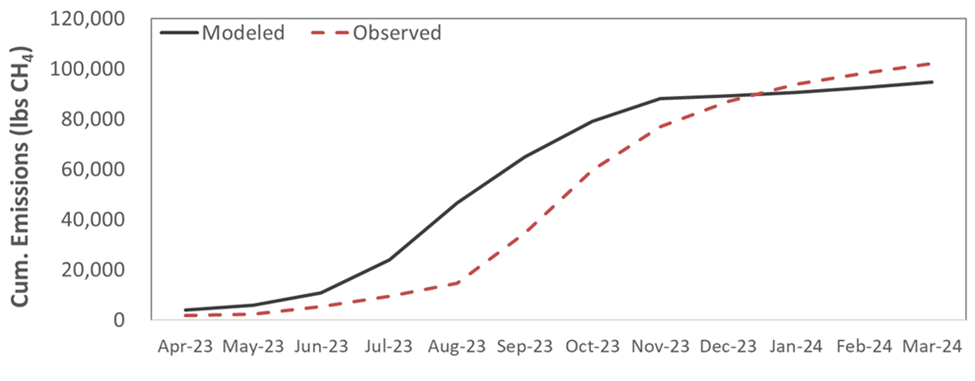
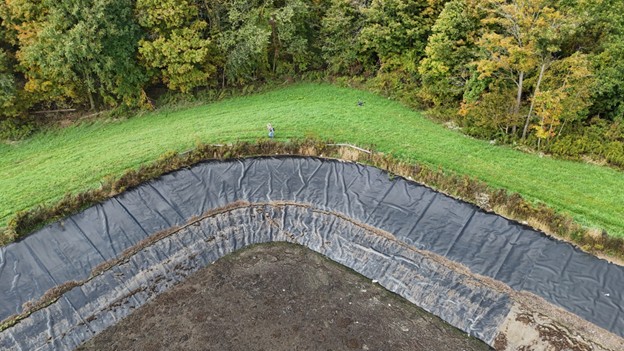
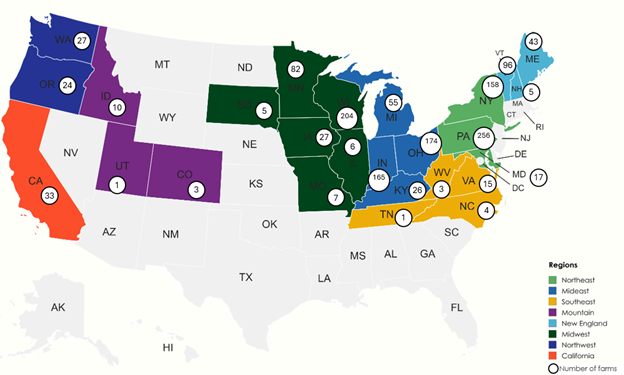
Figure 1. Modeled and measured cumulative methane emissions from a dairy manure storage system over a 12-month period.

Future Plans

Evaluation of 2024 field data is ongoing, and we will continue to measure methane around storages with ground-based and drone measurements into the summer of 2025. We will explore plume dynamics and the effects of pre-storage treatments on measured methane emission flux. For select sites, measurements will be expanded to include continuous, open-path laser absorption spectroscopy to verify this novel measurement approach, footprint emissions, and explore the implications of pre-storage manure treatments.

Authors

Presenting & corresponding author

Jason P. Oliver, Dairy Environmental Systems Engineer, Cornell University | PRO-DAIRY, jpo53@cornell.edu

Additional authors

Lauren Ray, Agricultural Sustainability and Energy Engineer, Cornell University | PRO-DAIRY

Eric Leibensperger, Associate Professor, Physics and Astronomy, Ithaca College

Additional Information

https://cals.cornell.edu/pro-dairy/our-expertise/environmental-systems/climate-environment/greenhouse-gas-emissions

https://leibensperger.github.io/

Acknowledgements

Funding for this work was provided by the New York State Department of Agriculture and Markets. Agreement #  CM04068CO


The authors are solely responsible for the content of these proceedings. The technical information does not necessarily reflect the official position of the sponsoring agencies or institutions represented by planning committee members, and inclusion and distribution herein does not constitute an endorsement of views expressed by the same. Printed materials included herein are not refereed publications. Citations should appear as follows. EXAMPLE: Authors. 2025. Title of presentation. Waste to Worth. Boise, ID. April 711, 2025. URL of this page. Accessed on: today’s date.

Modeling ammonia and greenhouse gas emissions from dairy manure management in organic dairy farms

Due to a technical glitch, we did not get this presentation recorded. Please accept our apologies.

Purpose

Dairy farms are important contributors to greenhouse gas (GHG) and ammonia (NH3) emissions. Dairy producers in the U.S. have established net zero goals, with organic farms implementing payments from voluntary carbon in-setting programs. However, organic dairy farms have extra challenges when compared to conventional farms as there are limited studies reporting methods and emission outputs from organic dairy operations. Moreover, available carbon accounting tools, such as COMET-Farm and Cool Farm Tool, are not specific for organic farms. As organic farms have different management practices than conventional farms, estimated emissions of GHGs with these tools might not be representative. Moreover, understanding the sources and magnitude of NH3 emission is critical to implement mitigation strategies, yet NH3 emission factors from different management practices at dairy operations are lacking in the literature. This study presents the results from a national life cycle assessment (LCA) study of organic dairy farms in the US, focusing on GHG and NH3 emissions from manure management, establishing baselines, and analyzing mitigation practices

What Did We Do?

A total of 32 archetypical organic dairy farms, part of Organic Valley, were defined across the United States (US), which was divided into eight regions (Figure 1). Each archetypical farm, or farm scenario, is named depending on the number of lactating cows, animal breed (H=Holstein, J = Jersey, XB=Cross breed), manure type (Sol = solid, Slu = slurry, Bp = bedded pack), certified grass-fed organic farm (Grass), and isolation from the electricity grid (OGNG=Off-grid powered by natural gas, OGD=Off-grid powered by diesel). Farm activities (e.g., dairy diet production and composition, manure management, etc.) are differentiated between grazing and non-grazing months but emission results are averaged throughout the year. The grazing season lasts a minimum of 4.5 months and up to a maximum of 9 months, depending on the region. Similarly, the amount of manure that is collected and stored varies between grazing and non-grazing seasons before manure land applications,  2 times a year in spring and fall. For example, farm scenarios collect and store between 10 to 50% of manure excreted by the herd (with the rest deposited directly on pastures) during the grazing season. During the non-grazing season, nearly 80 to 90% of manure is collected and stored. This is important as the amount and timing of manure storage affects both GHG and NH3 emissions.

Figure 1. Defined regions and number of Organic Valley dairy farms per state. States with no numbers indicate that there are no dairy farms in that state. The number of farms is for reference only as not all farms have been modeled in the study. Only 5 farms were modeled in the Midwest, 5 farms in New England, 2 farms in California, 2 farms in the Northwest, 9 farms in the Mideast, 5 farms in the Northeast, 3 farms in the Southeast, and 1 farm in the Mountain region.

A dairy farm LCA model was fitted to accommodate organic dairy farm practices throughout farm management, animal diet, manure management, energy and material use, and carbon sequestration from grasslands and feed production. Estimated environmental impacts include GHG emissions, NH3 emissions, eutrophication potential, water use, energy use, and land use, expressed per fat and protein corrected milk (FPCM). This paper focuses on GHG and NH3 emissions from manure management. A sensitivity analysis was conducted to evaluate the effect of different variables and management practices on GHG emissions to highlight avenues for mitigation.

What Have We Learned?

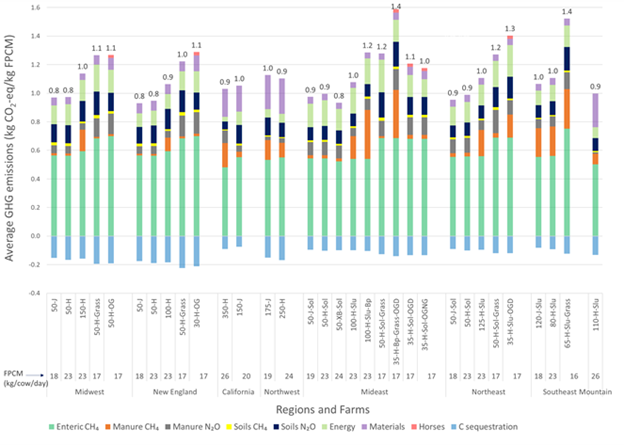
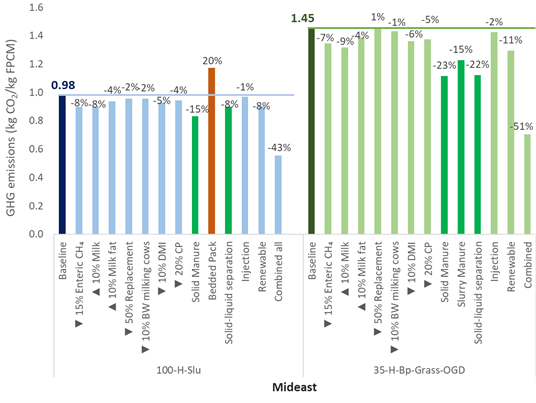
Enteric methane (CH4) continues to be the main source of GHGs throughout all modeled farm scenarios (Figure 2). GHG emissions are closely related to milk productivity, as FPCM is defined as the denominator, or functional unit. As a result, scenarios with higher milk productivity have lower GHG intensity and scenarios with lower milk productivity have higher GHG intensity. After enteric CH4, manure management is the second source of GHGs in farms managing slurry manure and with bedded packs, with emissions from manure storage (manure CH4 and N2O) and land application (soils CH4 and N2O) accounting for up to 42% of farm level GHGs. Overall, farms with <100 cows manage solid manure, while farms with >100 cows handle slurry manure. Storage of slurry manure promotes anaerobic conditions that lead to emission of CH4, the main source of GHG emissions from these farms. CH4 emissions from slurry manure storage are directly related to temperature and presence of volatile solids (VS) in storage, hence, most CH4 from slurry manure storage is emitted during the grazing season (hotter temperatures) despite a lower manure collection rate vs non-grazing months. Emissions of CH4 from bedded packs are even more important than from slurry manure, given that bedded packs create ideal conditions for CH4 emissions (high temperatures, accumulation of VS, etc.) that remain during winter and summer months. Sensitivity analysis on different herd productivity, feed efficiency, and management practices show altering manure management can achieve important GHG mitigation (Figure 3).

Figure 2. Greenhouse gas emissions (GHGs) (average for grazing and non-grazing seasons) for each modeled farm scenario and region after accounting for carbon sequestration (negative). Fat and protein corrected milk (FPCM) production per scenario is shown to relate GHGs to milk production.
Figure 3. Sensitivity of different farm efficiency variables and management practices on greenhouse gas (GHG) emissions for two farms modeled in the Mideast region.

As with GHGs, scenarios with lower FPCM have higher intensity of NH3 emissions (Figure 4). Manure storage and land application are the main sources of NH3 emissions, but the ratio varies among farm scenarios. For example, soils are the main source of NH3 in the Mideast Grass scenarios, as most manure is deposited directly on pastures. Grass farms have diets high in grass and forage that result in higher nitrogen excretion and potential for NH3 to be volatilized. However, manure storage remains the main source of NH3 emissions even for Grass scenarios in the Northeast and Southeast regions, which have higher monthly temperatures than the Midwest region. Overall, solid manures have higher NH3 intensities than slurry manures given higher pH during storage. In addition, farms storing slurry manure have a crust that acts as a barrier to wind that promotes NH3 loss.

Figure 4. Ammonia (NH3) emissions from modeled farms and regions. Manure management includes barn and manure storage, and soil with manure land application.

Future Plans

Temperature is a key driver of both GHG and NH3 emissions from organic dairy farms. Future work will explore how temperature increments could affect overall emissions to identify which regions are more susceptible to GHG increments. The degree of this impact will be compared against the effect of alternative management practices to identify those with the highest mitigation potential.

Authors

Presenting & corresponding author

Horacio A. Aguirre-Villegas, Scientist III, University of Wisconsin-Madison, aguirreville@wisc.edu

Additional authors

Rebecca A. Larson, Professor, University of Wisconsin-Madison; Nicole Rakobitsch, Director of Sustainability, Organic Valley; Michel A. Wattiaux, Professor, University of Wisconsin-Madison; Erin Silva, Professor, University of Wisconsin-Madison

Additional Information

Aguirre-Villegas HA, Larson RA, Rakobitsch N, Wattiaux MA, Silva E, Environmental Assessment of Organic Dairy Farms in the US: Mideast, Northeast, Southeast, and Mountain Regions, Cleaner Environmental Systems, 15:100233, https://doi.org/10.1016/j.cesys.2024.100233

Acknowledgements

This material is supported by the National Institute of Food and Agriculture, U.S. Department of Agriculture, under award number 2021-51106-35492. Any opinions, findings, conclusions, or recommendations expressed in this publication are those of the author(s) and do not necessarily reflect the view of the U.S. Department of Agriculture.

The authors are solely responsible for the content of these proceedings. The technical information does not necessarily reflect the official position of the sponsoring agencies or institutions represented by planning committee members, and inclusion and distribution herein does not constitute an endorsement of views expressed by the same. Printed materials included herein are not refereed publications. Citations should appear as follows. EXAMPLE: Authors. 2025. Title of presentation. Waste to Worth. Boise, ID. April 7-11, 2025. URL of this page. Accessed on: today’s date. 

Livestock Emissions in the United States: Challenges, Efforts, and Opportunities

Due to a technical glitch, we did not get this presentation recorded. Please accept our apologies.

Purpose

This study aimed to review current literature on livestock emissions in the United States, focusing on sources, challenges, and mitigation strategies. Specifically, it examines emissions from enteric fermentation, animal housing, manure management systems, and manure utilization. By synthesizing existing research, the study provides an understanding of how these emission sources contribute to air quality concerns, including greenhouse gas accumulation, odor issues, and public health risks. Additionally, it highlights the regulatory landscape and ongoing efforts to monitor and reduce emissions through technological and management innovations.

This study also explores opportunities for improving air quality while maintaining sustainable livestock production. It evaluates the effectiveness of various mitigation strategies, such as precision feeding, anaerobic digestion, and advanced manure treatment systems, in reducing emissions. Furthermore, it discusses potential advancements, including circular economy approaches and enhanced air quality modeling, to optimize emission reductions. By providing this analysis of current research and policy efforts, this study aims to support informed decision-making among producers, researchers, and policymakers in advancing sustainable livestock systems.

What Did We Do?

This literature review analyzed peer-reviewed research, government reports, and industry publications on livestock emissions. The review focused on emissions from enteric fermentation, animal housing, manure management systems, and manure utilization, identifying key sources and their environmental impacts. Studies were selected based on their relevance to air quality, greenhouse gas emissions, and mitigation strategies, ensuring a broad yet detailed assessment of current knowledge. Additionally, regulatory frameworks and policies from agencies such as the United States Department of Agriculture  and U.S. Environmental Protection Agency were examined to contextualize efforts aimed at reducing emissions in livestock production systems.

To evaluate mitigation strategies, the study categorized technologies and management practices based on their effectiveness, feasibility, and adoption rates. Approaches such as anaerobic digesters, biofilters, precision feeding, and manure treatment systems were reviewed for their potential to reduce emissions while maintaining economic viability. Case studies and data from ongoing research projects were incorporated to highlight real-world applications and emerging innovations. The synthesis of findings aimed to identify knowledge gaps, assess the impact of existing policies, and propose future research directions to enhance emission reduction efforts in livestock production.

What Have We Learned?

Livestock emissions primarily arise from enteric fermentation (methane from digestion) and manure management. These sources contribute significantly to agricultural methane emissions, a potent greenhouse gas impacting climate change. Recent research has enhanced our understanding of strategies to mitigate methane emissions from livestock, particularly through dietary interventions. Feed additives like 3-nitrooxypropanol (3-NOP) and red seaweed (Asparagopsis taxiformis) have shown significant potential in reducing methane production during digestion. Studies indicate that 3-NOP can decrease methane emissions by approximately 30% in dairy cows, while red seaweed has been shown to reduce emissions by up to 80% in beef cattle. These additives work by inhibiting specific enzymes involved in methane synthesis within the rumen, thereby lowering the overall greenhouse gas output from ruminant livestock.

In addition to dietary strategies, advancements in manure management have been explored to further reduce environmental impacts i.e., solid-liquid separation, anaerobic digestion, acidification, vermifiltration. Anaerobic digestion (AD) systems convert livestock manure into biogas, which can be used as a renewable energy source. This process not only mitigates methane emissions but also offers economic benefits by reducing fossil fuel expenses and generating income from excess energy production. However, the economic viability of AD systems can be influenced by factors such as operational costs and the scale of implementation. Therefore, while AD presents a promising approach to sustainable manure management, careful consideration of these factors is essential for its successful adoption in livestock operations.

Future Plans

Future studies on mitigating dairy emissions should focus on integrated approaches across enteric fermentation, manure management, and land application. Research into dietary interventions, such as precision feeding strategies and methane-reducing feed additives like seaweed, tannins, and essential oils, could help lower enteric methane emissions while maintaining animal productivity. Advances in microbiome research could further refine these approaches by identifying specific gut microbial populations that reduce methane production. Additionally, long-term studies on genetic selection for low-methane-emitting cattle could offer a sustainable mitigation strategy without compromising milk yield.

For manure systems and applications, future research should prioritize optimizing anaerobic digestion efficiency to maximize methane capture and energy recovery while reducing residual emissions. Innovative manure amendments, such as biochar or nitrification inhibitors, could limit methane and nitrous oxide release during storage and land application. Studies on precision manure application techniques, including low-disturbance injection and variable-rate spreading, could enhance nutrient use efficiency while minimizing emissions. Furthermore, landscape-scale modeling should be developed to assess the cumulative effects of these strategies and guide policy recommendations for sustainable dairy farming.

Authors

Presenting & corresponding author

Gilbert Miito, Assistant Professor & Extension Specialist — Air Quality, University of Idaho, gmiito@uidaho.edu

The authors are solely responsible for the content of these proceedings. The technical information does not necessarily reflect the official position of the sponsoring agencies or institutions represented by planning committee members, and inclusion and distribution herein does not constitute an endorsement of views expressed by the same. Printed materials included herein are not refereed publications. Citations should appear as follows. EXAMPLE: Authors. 2025. Title of presentation. Waste to Worth. Boise, ID. April 7-11, 2025. URL of this page. Accessed on: today’s date. 


Reducing Ammonia Emissions from Poultry Litter with Lignite and Lignosulfonate

Due to a technical glitch, we did not get this presentation recorded. Please accept our apologies.

Purpose

The purpose of this study was to determine the effectiveness of lignite, a low-quality coal, and lignosulfonate, a byproduct of paper milling, in reducing ammonia emissions from poultry litter.

What Did We Do?

We utilized a laboratory

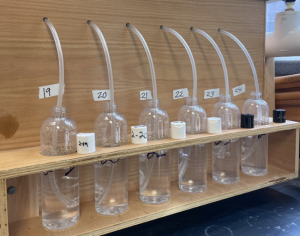
 acid-trap chamber system to assess the effectiveness of varying rates of lignite and lignosulfonate on ammonia reduction when compared to an industry standard, sodium bisulfate (PLT), and an untreated control. In the volatilization experiment, 12 treatments were tested, including five application rates of lignite and lignosulfonate (0.75, 1.5, 3, 4.5, and 6 kg m-2), PLT, and an untreated control. Acid traps of 0.02 M phosphoric acid were changed 11 times over the 14-day experiment. Acid trap solutions were then analyzed for ammonia to quantify cumulative ammonia emissions.  

What Have We Learned?

Both lignite and lignosulfonate were effective in reducing ammonia volatilization in this laboratory setting. While both lignite and lignosulfonate required higher application rates to achieve the same ammonia reduction as PLT, these could be effective alternatives and should be further studied on a larger scale.

Future Plans

While we have no active plans to continue this work, future efforts should include small scale testing in a commercial setting, cost analysis, and sourcing options.

Authors

Presenting & Corresponding author

Stephanie Kulesza, Assistant Professor, North Carolina State University, sbkulesz@nscu.edu

Additional Information

This research is not yet published. Reach out to Stephanie Kulesza at sbkulesz@ncsu.edu if you would like to know more about this work.

The authors are solely responsible for the content of these proceedings. The technical information does not necessarily reflect the official position of the sponsoring agencies or institutions represented by planning committee members, and inclusion and distribution herein does not constitute an endorsement of views expressed by the same. Printed materials included herein are not refereed publications. Citations should appear as follows. EXAMPLE: Authors. 2025. Title of presentation. Waste to Worth. Boise, ID. April 711, 2025. URL of this page. Accessed on: today’s date.

Measured methane emission rates relative to the chemical composition of dairy manure samples

Purpose

Methane emissions from liquid manure storage systems contribute a significant portion of methane emissions from the US agricultural sector (EPA, 2024). There is a need for more farm-level methane emission values to guide decision-making activities within the dairy industry and by government agencies. Cost, time, and labor constraints are challenges related to on-farm methane emission measurements. There is a need for simpler emission measurement methods.

The purpose of this work was to investigate relationships between methane emission rates (MER) in a laboratory assay and commonly measured characteristics including total solids (TS), volatile solids (VS), ash, and total Kjeldahl nitrogen (TKN). The relationships were also examined in conjunction with storage type, season, manure type, and storage duration.

What Did We Do?

We collected dairy manure samples from manure storages at 27 farms in Minnesota and Wisconsin at 2 to 4-month intervals throughout 2024. These samples represented various storage types, storage durations, and manure temperatures. To date, a majority of these samples have been processed for TS, VS, Ash, and TKN using standard methods for manure chemical analyses (American Water Works Association, 2017; Wilson et al., 2022). Additionally, MER were estimated in triplicate with a 3-day in vitro assay (Andersen et al., 2015). Relationships between MER and these manure chemical constituents were examined using Spearman correlation analysis and bivariate plots across all manure samples and with respect to other manure management characteristics. These include storage type, season, manure type, and storage duration. Manure chemical constituents were treated as numerical data whereas storage characteristics were treated as categorical data in the analysis. It is important to note that many samples may only have a partial set of manure analyses completed at this point. This resulted in varying counts of available samples used in the statistical analyses below (Table 1-3). Summary statistics (mean, median, range) are also presented for the different manure chemical constituents.

What Have We Learned?

Table 1 shows summary statistics of dairy manure samples processed for this work (wet basis). There was a wide range of concentrations observed for each manure chemical constituent; however, average values were comparable to American Society of Agricultural and Biological Engineers (ASABE) manure characteristics values (ASABE, 2019).

Table 1: Summary statistics of dairy manure chemical characteristics (% wet basis) (n = 148 for TKN, n = 155 for other manure constituents)

Mean Median Min Max
TS 5.92% 4.98% 0.53% 17.89%
VS 4.39% 3.50% 0.27% 16.60%
Ash 1.53% 1.21% 0.26% 11.12%
TKN 0.31% 0.29% 0.08% 0.83%

Generally, overall correlations (Table 2) and correlations within categories (Table 3) were not strong, however there were some exceptions. These exceptions were observed in TS and VS relationships with MER for flush water and long-term storage duration (Table 3). Here, both positive and negative correlations that were at least moderately strong (rs ≥ |0.5|) were observed. Since methane emissions are a product of organic matter degradation, positive correlations between VS and MER were expected, but not always reflected in the results. Other trends in relationships between other manure constituents and MER are not well understood. However, manure management factors may also influence other microbial activity with respect to TS, Ash, and TKN content, which may have indirect effects on MER that cannot be discerned from a correlative relationship.

Additionally, given the wide range in the concentrations of all manure constituents and MER, it may be difficult to distinguish these relationships when comparing across the aggregate values. Instances where the strongest correlations were observed (Table 3) describe samples from a single farm, which suggests conducting a similar analysis within individual farms to better understand these relationships.

Table 2: Overall Spearman correlation values (rs) between manure constituents and MER

Total solids Volatile solids Ash Total Kjeldahl Nitrogen
MER 0.060 0.052 0.137 -0.046


Table 3: Spearman correlation values (rs) between manure constituents and MER by manure storage type, manure type, storage duration, and season

TS vs MER VS  vs MER Ash vs MER TKN vs MER
Manure storage type Transfer pit (n = 169) 0.150 0.124 0.271 0.075
Underfloor pit (n = 34) -0.103 -0.121 -0.125 -0.153
Manure type Raw manure (including bedding (n=36) 0.270 0.267 0.312 0.369
Raw manure (including bedding + others) (n = 140) 0.042 0.047 0.094 -0.093
Liquid separated manure (n =24) -0.213 -0.297 -0.025 -0.156
Flush water (n = 9) 0.800 0.800 0.883 0.833
Storage duration Short term (< 1 month) (n = 176) 0.082 0.090 0.117 -0.020
Long term (> 1 month) (n =6) -0.771 -0.771 -0.143 -0.200
Point sample (not a storage) (n= 29) 0.029 -0.078 0.350 -0.136
Season Winter (n= 23) 0.013 0.081 -0.011 0.132
Spring (n= 57) 0.406 0.399 0.411 0.238
Summer (n = 46) -0.268 -0.291 -0.165 -0.436
Fall (n =66 -0.188 -0.198 -0.023 -0.011

 Future Plans

We plan to conduct a stepwise regression analysis to better understand the significant independent variables (manure constituents) that influence MER. Correlations between manure constituents and MER using measurements from samples within individual farms will also be conducted.

Authors

Presenting author

Noelle Soriano, PhD candidate, University of Minnesota

Corresponding author

Erin Cortus, Associate Professor and Extension Engineer, University of Minnesota, Ecortus@umn.edu

Additional author

MaryGrace Erickson, Postdoctoral associate, University of Minnesota

Additional Information

Andersen, D. S., Van Weelden, M. B., Trabue, S. L., & Pepple, L. M. (2015). Lab-assay for estimating methane emissions from deep-pit swine manure storages. Journal of Environmental Management, 159, 18-26.

American Water Works Association. (2017). Standard Methods for the Examination of Water and Wastewater. American Water Works Association.

ASABE. (2019). Manure Production and Characteristics (ASAE D384.2). ASABE.

EPA. (2024). Inventory of U.S. Greenhouse Gas Emissions and Sinks 1990-2022 (No. EPA 430-R-24-004). U.S. Environmental Protection Agency. https://www.epa.gov/ghgemissions/inventory-us-greenhouse-gas-emissions-andsinks-1990-2022

Wilson, M., Brimmer, R., Floren, J., Gunderson, L., Hicks, K., Hoerner, T., Lessl, J., Meinen, R. J., Miller, R. O., Mowrer, J., Porter, J., Spargo, J. T., Thayer, B., & Vocasek, F. (2022). Recommended Methods Manure Analysis (M. Wilson & S. Cortus, Eds.; 2nd ed.). University of Minnesota Libraries Publishing.

Acknowledgements

We are grateful to the farms that participated in this research for providing samples and for sharing their observations with us. We are also grateful to Kevin Bourgeault, Seth Heitman, Sabrina Mueller, and Jacob Olson for contributing to sampling and laboratory analysis.

This research is supported by through USDA NIFA Award 2023-68008-39859, and the Minnesota Rapid Agricultural Response Fund.

The authors are solely responsible for the content of these proceedings. The technical information does not necessarily reflect the official position of the sponsoring agencies or institutions represented by planning committee members, and inclusion and distribution herein does not constitute an endorsement of views expressed by the same. Printed materials included herein are not refereed publications. Citations should appear as follows. EXAMPLE: Authors. 2025. Title of presentation. Waste to Worth. Boise, ID. April 7-11, 2025. URL of this page. Accessed on: today’s date. 


Laboratory estimation of methane emission rates from Midwest dairy manure samples representing common manure types and storage conditions

Purpose

Methane (CH4) emissions from manure storage are a substantial contributor to the cradle-to-farmgate climate footprint for many dairy farms, especially for farms storing manure as liquid or slurry (Rotz et al., 2021). Dairy systems handle, treat, and store manure in various ways. In combination with environmental conditions, these differences in manure-related structures and processes potentially cause substantial farm-to-farm variability in CH4 production and intensity. However, few methods are available to estimate CH4 emissions specific to a manure storage or farm system.

To enable estimation of CH4 emission rate per unit of manure (methane emission rate, MER), research by Andersen et al. (2015) tested a laboratory assay on swine manure from deep pits. These authors showed that MER was related to manure chemical composition and varied across the year, with the highest values recorded in late fall. Our research aimed to build on Andersen et al. (2015) by testing dairy rather than swine manure to 1) compare MER across a variety of manure types, storage types, and typical storage durations, 2) examine seasonal differences in MER, and 3) quantify farm-to-farm and storage-to-storage variation in MER. Ultimately, we expected to illustrate how the MER laboratory assay could be used in estimating farm-specific CH4 emission rates from dairy manure storages.

What Did We Do?

We partnered with 27 dairies in the U.S. Upper Midwest with liquid and slurry manure storages. At approximately 2–4-month intervals throughout 2024, we collected composite samples (n = 208) representing various manure types, typical storage durations, and storage types. Most samples were whole manure (n = 165, 79%) or liquid separated manure (n = 34, 16%), with remaining samples representing flush water and digestate. Samples represented areas where manure was stored for short durations (≤1 mo.; n = 120, 58%) and long durations (>1 mo.; n = 88, 42%). Most long-term storage was unroofed, and most short-term storage was roofed. Samples represented transfer pits (n = 84, 40%), unroofed basins or pits (n = 67, 32%), and below-building pits (n = 30, 14%), among other storage types. Samples were distributed evenly across seasons for most farms, except that fewer samples were collected during winter due to outdoor storages freezing over.

For the MER assay, we incubated 75.06 ± 0.02 g (mean ± standard error) of manure at 72°F in triplicate 100 mL serum bottles for 2.99 ± 0.01 days. Then, we measured gas displacement with a syringe and headspace CH4 concentration with gas chromatography (Agilent 490 Micro GC, Agilent Technologies, Inc., Santa Clara, CA). We calculated MER as the average CH4 emission (mL) at 72°F per liter of manure per day. To examine differences due to manure type, typical storage duration, storage type, and season, we fit linear mixed models to log-transformed MER, then back-transformed model-implied means and standard errors. Additionally, we examined variance components attributable to individual storages and farms in relation to the residual variance. Storage-to-storage differences explained a small amount of total variance, so the random effect of storage was removed. Significance was declared at p<0.05.

What Have We Learned?

Across samples, the MER was highly variable and right-skewed (mean = 37, median = 21, standard deviation = 45 mL CH4 L-1 d-1; Figure 1), with a small fraction of extremely high values (maximum = 236 mL CH4 L-1 d-1). In contrast with our expectations, we found no effect of manure type, typical storage duration, and storage type on MER. Season influenced MER (F [3, 183.4] = 11.3, p < 0.001), with Fall samples exhibiting a larger MER compared with other seasons (Table 1). Larger MERs in Fall samples were driven by greater gas volume and CH4 concentrations in headspace; model-implied means of both variables nearly doubled in Fall compared with other seasons. Considering that all samples were incubated at the same temperature during the MER assay, greater MER during Fall may indicate that these samples had more abundant and active methanogen populations. Additionally, differences in chemical and physical properties of manure may have enhanced substrate availability for methanogenesis in Fall samples relative to other seasons.

Table 1. Results of a laboratory assay to estimate methane emission rate from dairy manure samples (n = 208) by incubating at 72°F in serum bottles for 3 days.
Model-Implied Mean (Confidence Interval)
Variable Spring Summer Fall Winter
Volume displacement, mL 14 (3, 25) 16 (4, 27) 26 (14, 37) 13 (0, 26)
Headspace methane, % 5 (3, 10) 8 (5, 16) 14 (8, 26) 6 (3, 12)
Methane emission rate,
mL CH4 L-1 d-1
13 (7, 25) 22 (11, 43) 41 (21, 79) 15 (7, 33)


Although our results illustrated that the mean MER was generally similar across categories of manure types, storage durations, and storage types, we found that between-farm differences accounted for 18% of the total variance in MER. In other words, samples from the same farm were correlated on average 0.18. This suggests that there are farm-to-farm differences in MER that were not explained by the predictors we considered as fixed effects.

Figure 1. Methane emission rates of samples (n = 208 points) showing the median and first and third quartiles (box) with whiskers 1.5 times the interquartile range.

Future Plans

In future work on this project, we plan to explore if between-farm differences in MER can be explained by other farm meta-data such as bedding type, manure removal frequency, storage volume, and surface area of manure. Additionally, we will explore relationships between manure chemical composition (total solids, volatile solids, total nitrogen) and MER. Similar to Andersen et al. (2015), we are examining the temperature sensitivity of methanogenesis in different sample types. In subsequent work, we may consider relating MER to other chemical constituents in manure samples related to substrate availability (e.g., fiber fractions) or fermentation end-products (e.g., volatile fatty acids).

Authors

Presenting author

MaryGrace Erickson, Postdoctoral Associate, University of Minnesota

Corresponding author

Erin Cortus, Associate Professor and Extension Engineer, University of Minnesota, ecortus@umn.edu

Additional author

Noelle Cielito Soriano, Ph.D. Candidate, University of Minnesota

Additional Information

Andersen, D. S., Van Weelden, M. B., Trabue, S. L., & Pepple, L. M. (2015). Lab-assay for estimating methane emissions from deep-pit swine manure storages. Journal of Environmental Management, 159, 18–26. https://doi.org/10.1016/j.jenvman.2015.05.003

Rotz, A., Stout, R., Leytem, A., Feyereisen, G., Waldrip, H., Thoma, G., Holly, M., Bjorneberg, D., Baker, J., Vadas, P., & Kleinman, P. (2021). Environmental assessment of United States dairy farms. Journal of Cleaner Production, 315, 128153. https://doi.org/10.1016/j.jclepro.2021.128153

Acknowledgements

We thank the farms who participated in this research for providing samples and data. Additionally, we are grateful to Kevin Bourgeault, Seth Heitman, Sabrina Mueller, and Jacob Olson for contributing to sampling and laboratory analysis. This research is supported by USDA NIFA Award 2023-68008-39859, and the Minnesota Rapid Agricultural Response Fund.


The authors are solely responsible for the content of these proceedings. The technical information does not necessarily reflect the official position of the sponsoring agencies or institutions represented by planning committee members, and inclusion and distribution herein does not constitute an endorsement of views expressed by the same. Printed materials included herein are not refereed publications. Citations should appear as follows. EXAMPLE: Authors. 2025. Title of presentation. Waste to Worth. Boise, ID. April 7-11, 2025. URL of this page. Accessed on: today’s date. 

Pilot-scale Composting System to Measure Air Emissions from Dairy Manure and other Byproducts

Purpose

The overall objectives of this research are to investigate the design, implementation, and evaluation of a pilot-scale composting system for dairy manure. This composting system was developed because of the significant quantities of dairy manure produced in Idaho and the need to improve dairy compost quality while reducing air emissions during the composting process. This composting system provides the ability to simulate on-farm composting in Idaho while measuring and regulating key composting parameters, gas emissions, and implementing changes during operation.

What Did We Do?

This pilot-scale composting system was developed by adapting a home composter to simulate a mechanically turned windrow system. The composters were modified to include aeration control, air monitoring equipment (Gasmet), and measure key composting parameters throughout the process. Ten compost reactors were built, which allowed for several combinations of treatments and multiple replications. Each reactor is connected to a plenum with the capacity to interconnect several reactors or isolate each one and regulate airflows and chamber pressure. During the initial trial, two replications of each amendment: control, biochar, pumice, wood chips, and zeolites were evaluated. A follow-up trial will repeat the two replications per treatment, for a total of four replications. Modifications of the composting system during the trial addressed challenges with moisture control, odor, temperature regulation, air velocity, and compost balling.

Figures 1 and 2 define the blocking pattern and layout of the composting system for all ten compost reactors. The blocking pattern was generated for two primary reasons: Create replications for each treatment and compensate for a temperature differential between both ends of the research space caused by the cooling method in the greenhouse.

Figure 1. Diagram of air plenum that hangs above the compost reactors. Source: Authors

Figure 2. Diagram of gasmet tubing color coded with three separate lengths of PTFE tubing to each reactor. Source: Authors

What Have We Learned?

We learned that the pilot-scale composting system can effectively simulate different types of on-farm composting methods, demonstrating its adaptability for research. During the composting trial, the aeration was regulated to simulate forced and natural airflow composting systems. The ability to continuously measure the headspace size confirmed a significant decrease in composting volume, as expected in a full sized composting system. The temperature monitoring showed we were able to reach thermophilic composting for the first two weeks of the trial and showed temperature increases at each turning event. These findings indicate that this system can be a valuable tool for developing more efficient on-farm dairy manure management practices at the pilot-scale.

Future Plans

The design and implementation of this composting system have only completed one trial run. The immediate next step is to complete another round of the compost trial. Each resulting compost mix with the corresponding amendment will be tested in a crop-testing greenhouse trial. The amount of compost, or any other products, handled by these reactors allows for further tests in the lab, at the pilot scale, or in a greenhouse.

In the short term and beyond the dairy manure trials, the reactor system will be tested for other processes, including different composting techniques and amendments. Other processes to be tested include soil amendments and their impact on air emissions, anaerobic digestion without mixing, emissions from diverse waste streams and amendment combinations, among others.

Authors

Presenting author

Anthony Scott Simerlink, Assistant Professor, Extension Educator – Power County, University of Idaho

Corresponding author

Mario E. de Haro-Martí, Professor, Extension Educator – Gooding County, University of Idaho, mdeharo@uidaho.edu

Acknowledgements

Funding for this project was provided by a USDA-NIFA Sustainable Agriculture Systems (SAS) grant #2020-69012-31871.


The authors are solely responsible for the content of these proceedings. The technical information does not necessarily reflect the official position of the sponsoring agencies or institutions represented by planning committee members, and inclusion and distribution herein does not constitute an endorsement of views expressed by the same. Printed materials included herein are not refereed publications. Citations should appear as follows. EXAMPLE: Authors. 2025. Title of presentation. Waste to Worth. Boise, ID. April 711, 2025. URL of this page. Accessed on: today’s date. 


The Role of Agriculture in Atmospheric Nitrogen Deposition: Sources, Impacts, and Management

Agriculture is the largest source of ammonia emissions and contributes to nitrogen deposition which can impact ecosystem health. This webinar introduces the topic of nitrogen deposition and provides an overview of the role of the National Atmospheric Deposition Program (NADP) in determining nitrogen deposition sources. In addition, the speakers provide an overview of a region being impacted by agriculture related nitrogen deposition and discusses agricultural management practices that may reduce ammonia emissions and nitrogen deposition. This presentation was originally broadcast on September 20, 2024. Continue reading “The Role of Agriculture in Atmospheric Nitrogen Deposition: Sources, Impacts, and Management”