Taking the Pulse: Insights into the Needs and Challenges of Iowa’s Commercial Manure Application Industry

Purpose

The Iowa commercial manure application industry plays a crucial role in advancing nutrient utilization, circularity, and water quality within agricultural systems. Effective programming requires an understanding of the industry’s needs, challenges, and perspectives to tailor information and drive behavior change.

To assess the current state of the industry, we surveyed Iowa’s commercial manure applicators to gather insights into business sizes, application capacity, client demand for manure as a cost-effective fertilizer alternative, and pricing structures. The survey served as a needs assessment, helping to align business goals with state water quality objectives. Specifically, we aimed to understand how the industry navigates market demands, regulatory pressures related to environmental stewardship (particularly water and air quality), labor, and time constraints.

What Did We Do?

A comprehensive electronic survey was sent to all 540 of the 562 commercial manure application businesses in Iowa (22 did not have an email on file). We received a response rate of 20%, providing valuable insights into the industry’s scale and operations. Key findings include:

    • Commercial applicators handle 62% of Iowa’s 13 billion gallons of liquid manure annually and nearly 60% of its 6 million tons of solid manure.
    • Manure transport costs and application expenses shape decision-making, influencing equipment selection and service pricing.
    • Current industry capacity and weather-dependent application constraints affect the feasibility of meeting best management practices, such as applying manure only when the soil is 50°F and cooling to minimize nutrient loss.

By examining these trends, we aimed to identify programming opportunities that could support both industry advancements and water quality improvement goals.

What Have We Learned?

The survey results provided critical context for understanding commercial applicator decisions, including:

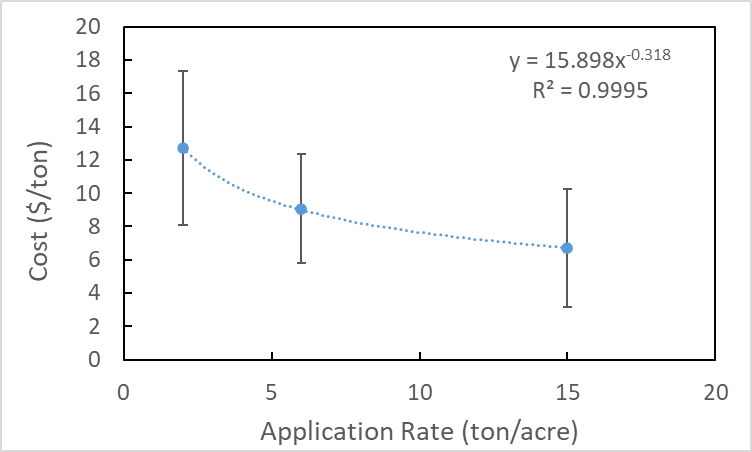
    • Economic Realities – The manure application industry must remain financially viable while balancing regulatory requirements and customer needs. One of the most common questions asked by manure applicators is what people are charging for manure application. To help address this question we asked applicators what they would charge for application for three liquid manure application rates (4000 gallons/acre, 12,000 gallons/acre and 20,000 gallons/acre) meant to represent finishing swine manure, gestation-farrowing manure, and dairy manure respectively (Figure 1). For solid manure applicators we asked what they charge per ton for application rates of 2, 6, and 15 tons/acre, meant to represent layer manure, turkey litter, and bed pack cattle manure rates (Figure 2). Additionally, we asked what hauling charge was used for transporting either liquid or solid manure. The average charge for liquid manure was $0.0411 per gallon-mile, while for solid manure, the average charge was $0.40 per ton-mile. Agitation of liquid manures was generally included in the manure application price; however, if special agitation services were required (an additional agitation tractor beyond standard practice or the use of an agitation boat) an additional charge of $0.002 per gallon or around $150-300 per hour was reported.
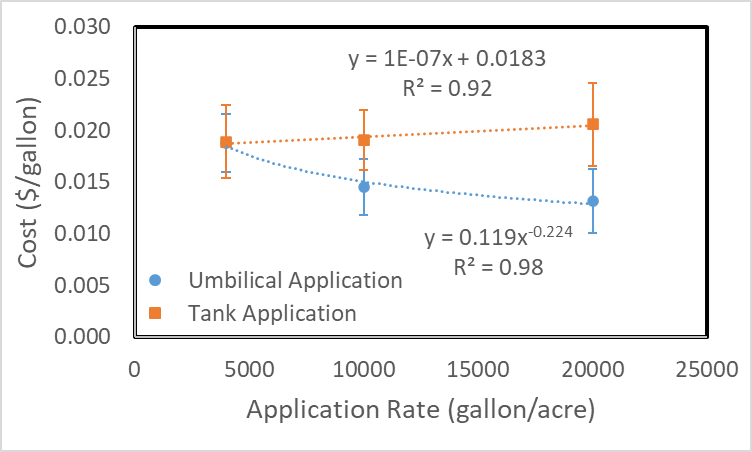
Reported liquid manure application price for umbilical application system (blue circles) and manure tank application (orange squares). Error bars represent the reported standard deviation amount respondents at each application rate.
Figure 2. Estimated cost of solid manure application per ton. Error bars represent the reported standard deviation amount respondents at each application rate.
    • Manure Transport & Industry Size – Understanding how manure moves within the state and the cost of application informs strategic equipment investments. Solid manure transport distances were reported to average 14.5 miles while liquid manure transport was reported at 2.0 ± 1 mile.

      Survey responses suggested 2050 people employed in the commercial manure application business, with 920 of these as non-seasonal employees and 1130 as seasonal employees. Overall totals align well with the number of certified commercial manure applicators in Iowa.

    • Regulatory & Timing Constraints – The number of available application days under various weather conditions and the desired soil temperatures at the time of application limits application days available. It also sets a constraint on the application capacity needed to complete manure application. We surveyed how much manure could be applied daily by each company to evaluate application days needed and to evaluate how much increase in application capacity is required. Expansion could occur through either equipment sizing and employee numbers, needed to meet state water quality goals while maintaining viable businesses. On average, businesses can apply 0.6 million gallons of liquid manure per day, with a standard deviation ranging from 0.25 to 1.6 million gallons. Assuming an application rate of around 4000-gallons and acre this means manure could cover 150-acres per day per company. It would take 50 working days to apply all liquid manure in Iowa. On average, businesses apply 526 tons of solid manure per day, requiring 57 working days to apply all the solid manure in Iowa.
    • Industry’s Role in Water Quality – Commercial applicators must be strategic partners in achieving water quality objectives by optimizing manure use through best application rates and timing, and incorporation of technology.

      An open-ended question was asked around what challenges were for your application business over the next ten years (Figure 3). As answers were not limited, most businesses chose to list numerous concerns. These were grouped as best possible to provide categories and to help understand where future programming could address these concerns.

      The primary concerns listed by most businesses were equipment costs and labor availability. Many noted how as equipment costs have increased it takes more hours of application to justify ownership and find a way to make their business cash flow, and how this has translated into repair costs that add to concerns about maintaining a business. There was an expression of how this could make it difficult for a younger generation to get into the business and make sure the industry stays sustainable. Developing materials to help facilitate those interested in developing a business plan and gallons it takes under different conditions would be a useful tool for facilitating making a business case to a lender.

This study underscores the importance of tailoring educational programs to meet industry needs while collaborating with policymakers to develop strategies that advance manure management practices.
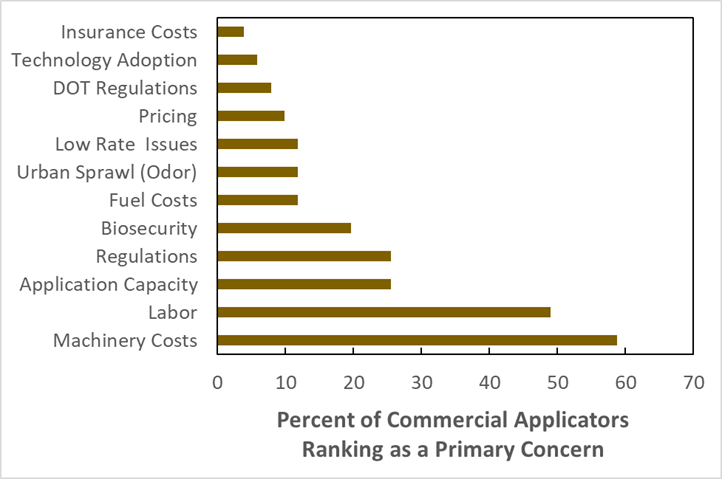
Figure 3. Primary concerns of commercial manure application businesses.

Future Plans

To further support the industry and align with water quality objectives, future efforts will focus on:

    • Developing strategic policies that support efficient manure application while maintaining business viability.
    • Expanding educational programming to help applicators navigate regulatory changes and improve application timing strategies.
    • Assessing infrastructure needs to determine equipment investment and business growth opportunities.
    • Enhancing industry collaboration with policymakers to balance business sustainability with environmental stewardship.

Authors

Presenting & corresponding author

Daniel Andersen, Associate Professor, Iowa State University, dsa@iastate.edu

Additional authors

Melissa McEnany, Iowa State University

Rachel Kennedy, Iowa State University

Additional Information

https://www.extension.iastate.edu/immag/commercial-manure-applicators

The authors are solely responsible for the content of these proceedings. The technical information does not necessarily reflect the official position of the sponsoring agencies or institutions represented by planning committee members, and inclusion and distribution herein does not constitute an endorsement of views expressed by the same. Printed materials included herein are not refereed publications. Citations should appear as follows. EXAMPLE: Authors. 2025. Title of presentation. Waste to Worth. Boise, ID. April 711, 2025. URL of this page. Accessed on: today’s date. 

Liquid Dairy Manure in a Sugarbeet Rotation

Purpose

As large dairies move into western Minnesota, a consistent supply of manure is available that was not historically present. These dairies are using a new technology to separate solids from liquids in the manure, and the impact on nutrient availability in this region’s climate and soil types is unknown. Understanding this is particularly important for sugarbeet growers in the region as late season N availability in the soil affects sugar content of the crop (high late season soil nitrate levels typical result in reduced sugar production). Where in the crop rotation should this manure be applied to maximize the beneficial properties while minimizing risk?

What Did We Do?

A three-year crop rotation including sugarbeet, corn, and soybean was set up at two locations (west central and northwestern Minnesota) with each crop present each year (Figure 1) and then rotated accordingly in subsequent years. Two rates of liquid separated dairy manure from a nearby commercial dairy were applied in the first year (in the fall prior to planting of each crop) and compared with standard synthetic fertilizer-only practices (fertilizers were applied each spring prior to planting). The two manure application rates were approximately 15,000 gallons per acre, which supplied approximately 195 pounds first-year available nitrogen per acre, or approximately 10,000 gallons per acre, which supplied approximately 150 pounds of first year available nitrogen per acre. In following years, only commercial fertilizer was applied according to soil test phosphorus and potassium levels or state nitrogen guidelines, considering manure nitrogen credits if applicable, for each crop. At the end of each growing season, yield was determined for each crop. Sugarbeet was also evaluated for sugar content and quality.

Figure 1. Aerial photograph taken in July 2021 of the plot setup with each crop labeled. Each crop was replicated four times in a randomized complete block design.

What Have We Learned?

The manured treatments typically resulted in similar or higher yields than synthetic- fertilizer-only for corn and sugarbeet during all three years of the rotation. For soybean, yields were significantly decreased by manure application at one site in the first year and generally unaffected at the second site. In the second and third years, there were no differences in soybean yield across nutrient treatments.

Future Plans

This study was conducted in two fields that did not have a recent history of manure application. Since we know that manure is the “gift that keeps on giving”, we want to repeat this study to see if there are long-term effects of nitrogen release from repeated applications of manure. Thus, manure was applied after the third growing season of the rotation and the rotation will begin again at both sites.

Authors

Presenting & corresponding author

Melissa L. Wilson, Associate Professor and Extension Specialist, University of Minnesota, mlw@umn.edu

Additional Information

Search for manure research: https://www.sbreb.org/research/

Acknowledgements

Thanks to the Sugarbeet Research and Education Board of Minnesota and North Dakota for funding this work.


The authors are solely responsible for the content of these proceedings. The technical information does not necessarily reflect the official position of the sponsoring agencies or institutions represented by planning committee members, and inclusion and distribution herein does not constitute an endorsement of views expressed by the same. Printed materials included herein are not refereed publications. Citations should appear as follows. EXAMPLE: Authors. 2025. Title of presentation. Waste to Worth. Boise, ID. April 711, 2025. URL of this page. Accessed on: today’s date.

Changes in amount and location of US dairy manure production from 1970-2023

Purpose

We estimated milking cow manure production for US states from 1970 to 2023 with the aim to provide a broad perspective to stakeholders who manage and optimize the use of dairy manure. Stakeholders include producers and those working on their behalf such as agronomists, applicators, engineers, extension agents, researchers, governmental agencies, cooperatives, and markets.

It is hoped that with increased understanding of how manure production has changed over time and location stakeholders can better understand trends and historical conditions which impact their efforts.

What Did We Do?

We estimated milking cow manure production for 48 US states from 1970 to 2023 using an empirical equation estimating manure production as a function of milk production published by the American Society of Agricultural and Biological Engineer’s Manure Production and Characteristics standard. To apply this equation to each state we utilized two data sources produced by the United States Department of Agriculture’s National Agricultural Statistics Service (NASS), annual milk production and annual milking cow herd size. To gain further insight data sources reporting the number of dairy farms and land available for manure application in each state were additionally gathered from NASS and reported in combination with manure production. The workflow and references for combining this data are displayed in the following figures.

Figure 1. Workflow to estimate annual dairy manure production using ASABE’s Manure Production and Characteristics standard and NASS milk cow production and cow herd inventory data sources.
Figure 2. Workflow to estimate number of dairies and acres for manure application from NASS data sources.

What Have We Learned?

Nationally annual dairy manure production has decreased from 1970-2023 by approximately 4% (2.2 billion gallons). From 1998 to 2023 annual dairy manure production increased by approximately 13% (6.4 billion gallons). Although national milking cow numbers generally declined from 1970 to 1998 then nearly remained constant until 2023, this trend was offset by continual increase in manure production per cow from 1970-2023 due to the direct relationship with milk production, which has continued to increase from 1970-2023. Also, the annual number of gallons of manure per dairy farm has increased from 1970-2023 due to a decrease in number of dairies combined with an increase in manure production per cow. It is accepted that the US dairy industry has consolidated over time, this data supports that its’ manure production has consolidated as well.  The author posits based on experience and this analysis that nationally, over time, manure systems in support of livestock production have contributed to an increase in volume of manure being managed to date. As dairy cows move to increasing levels of confinement, from pasture and lots which utilize land base as a manure system to barns with more engineered manure systems, greater collection of manure occurs and therefore must be managed. Regarding the impact of the specific type of engineered manure systems impact on volume of manure that must be managed the author posits this currently varies based on the kind of manure system selected, either adding or subtracting to the managed manure stream, which is a function heavily dependent on local climate (precipitation, evaporation, and length of storage period) and technology adoption (covers, flush systems, separation, and advanced treatment). In the upper Midwest with relatively high precipitation, low evaporation, and long winter periods dairy manure systems are predominantly collect and store only, overall adding to the volume of manure to be managed as additional precipitation is also captured by the uncovered nature of most storages in this region.

Figure 3. National change in manure and milk production, milking cow inventory, and number of dairies from 1970 to 2023.

At the state level the change in manure production has varied. From 1970 to 2023, 12 states have increased manure production, the remaining 26 states have decreased manure production. This has resulted in a change in the location of where manure is produced. In 2023, most manure was produced in a few states. In 2023, 10 states produced 70% of the total annual US dairy manure production, with 6 states producing over 50%.

Figure 4. 2023 annual milking cow manure production, millions of gallons, and percent change of annual milking cow manure production from 1970 to 2023.

Future Plans

Authors seek to maintain this data analysis in a method available to stakeholders, additionally incorporating manure production from swine, beef, and poultry into it, and updating it as future NASS reports are published.

Authors

Presenting & corresponding author

Mike Krcmarik, Professional Engineer, mikekrcmarik@gmail.com

Additional Information

Email corresponding author for copy of all data and figures used in this analysis, including figures published on the poster only.

Acknowledgements

    • American Society of Agricultural and Biological Engineers, Engineering Practices Subcommittee of the ASAE Agricultural Sanitation and Waste Management Committee responsible for standard ASAE D384.2 Manure Production and Characteristics used in this analysis.
    • United States Department of Agriculture’s National Agricultural Statistics Service responsible for the various surveys and reports used in this analysis.
    • Allen Young, Eric County Soil and Water Conservation District (New York) providing valuable review and discussion.

The authors are solely responsible for the content of these proceedings. The technical information does not necessarily reflect the official position of the sponsoring agencies or institutions represented by planning committee members, and inclusion and distribution herein does not constitute an endorsement of views expressed by the same. Printed materials included herein are not refereed publications. Citations should appear as follows. EXAMPLE: Authors. 2025. Title of presentation. Waste to Worth. Boise, ID. April 711, 2025. URL of this page. Accessed on: today’s date.

Comparative Evaluation of Dairy Manure Compost Supply Chains in the US Pacific Northwest

Purpose

The overall objectives of this research are to describe the current linkages among participants in the dairy manure compost supply chains in the Pacific Northwest (PNW) states of ID, OR, and WA and to provide analytical insights into the challenges and opportunities for enhancing manure compost marketability and usage in the different regions. Obtaining an enhanced understanding of these market dynamics is necessary for explaining why and how dairy compost quality varies and for identifying strategies for establishing and/or strengthening linkages among market participants. Improving dairy compost quality and increasing usage among crop producers is important for achieving sustainable environmental quality and agricultural business profitability in all PNW states.

What Did We Do?

Our analysis builds on the underlying concept that is outlined in Extension bulletins and other references from universities in the PNW (e.g., Chen et al. 2011), which emphasize that developing good quality dairy manure-based compost requires achieving a proper Carbon (C) to Nitrogen (N) ratio (C:N) of about 30:1. It is common that supplemental C is needed to increase the C:N balance in dairy manure-based compost to that magnitude. There are various sources of supplemental C used by PNW compost producers, but the most common are cereals (barley and wheat) straw, corn stalks/silage, sawdust, and wood chips.

We created Figure 1 to describe, with several assumptions, the major participants in the PNW dairy compost supply chains and the nature of their typical interactions with each other. The main participants include dairies, compost businesses, logging businesses, cereals farms, laboratory testers, and silage farmers. We next implemented data-driven analyses to determine if and the extent to which the linkages among the dairy compost supply chain participants differ across PNW states, based on the structure of the dairy and other aligned industries (e.g., logging) in each state. The principal objective of the analyses was to quantify the relative spatial concentration of the dairy industries, which has implications for business profitability and policy-driven incentives for implementing the composting process. We used a couple of different measures of dairy market concentration for comparison. The first is the Herfindahl-Hirschman Index (HHI), which is a statistical measure of industry concentration (Rhoades, 1993). We applied the calculation of the HHI in a manner that is different than is typically done such that the obtained values represent differences in the spatial concentration of the dairy industries in ID, OR, and WA. We supplemented the HHI values with calculations of the ratios of dairy cow inventories to cropland acreage. Lastly, to obtain insights about the relative strengths of linkages among potential dairy compost supply chain entities, we estimated the correlation between county level dairy cow inventories, cropland acreage, and the numbers of other entities (e.g., logging businesses) for each state.

Figure 1. Diagram of major PNW dairy compost supply chain linkages (Source: Authors)

What Have We Learned?

The estimated HHI values in our context could range from close to about 100, which would reflect an even distribution of dairy cows among all counties in a state, to 10,000, which would imply that all dairy cows are in a single county. Our estimated HHI values based on 2022 data from the USDA Census of Agriculture were 1,378 for ID, 2,307 for OR, and 2,082 for WA. Thus, by the HHI measure, the dairy industries in OR and WA are more spatially concentrated than that in ID. However, by the ratio of dairy cow inventory to cropland acreage measure, all states have counties with relatively high concentrations of dairy cows, but to different extents across states. Additionally, estimates from the correlation analysis at the county level show a positive relationship between dairy cow inventories and cropland acreage for all states (statistically significant at the 5% confidence level for OR). A negative, but not statistically significant, relationship was found between the number of logging businesses and dairy cows in all states, but the magnitude was largest in ID. Thus, it is more common that counties have both dairy cows and logging businesses in a county in OR and WA than in ID. These relationships help explain why wood-based amendments with higher C are likely more commonly used in the composting process in OR and WA than in ID, as well as how the associated compost qualities differ across states.

Future Plans

The analyses we have implemented so far are at the county level. We plan to implement additional analyses that include identifying larger multi-county dairy producing regions and compiling more data on the existing supply chain participants, including cropland acreage for other crops (i.e., non-grain and silage) in such regions. This expanded analysis will provide more regionally specific assessments of the differences in dairy compost components/quality among the major dairy producing regions in the PNW.

Authors

Presenting & corresponding author

Patrick Hatzenbuehler, Associate Professor and Extension Specialist – Crop Economics, University of Idaho, phatzenbuehler@uidaho.edu

Additional authors

Srijan Budhathoki, Graduate Student, Washington State University

Mario de Haro-Martí, Extension Educator – Gooding County, University of Idaho

Anthony Simerlink, Extension Educator – Power County, University of Idaho

Additional Information

Idaho Sustainable Agriculture Initiative for Dairy

Acknowledgements

Research funding was provided by USDA-NIFA Sustainable Agricultural Systems Grant No. 2020-69012-31871 and the Idaho Agricultural Experiment Station.

The authors are solely responsible for the content of these proceedings. The technical information does not necessarily reflect the official position of the sponsoring agencies or institutions represented by planning committee members, and inclusion and distribution herein does not constitute an endorsement of views expressed by the same. Printed materials included herein are not refereed publications. Citations should appear as follows. EXAMPLE: Authors. 2025. Title of presentation. Waste to Worth. Boise, ID. April 711, 2025. URL of this page. Accessed on: today’s date.

Manure Can Offset Nitrogen Fertilizer Needs and Increase Corn Silage Yield – Value of Manure Project

Purpose


Manure is a tremendously valuable nutrient source. Not all the nitrogen (N) in manure is plant-available at land application. Organic N is released into plant-available forms over multiple years. Inorganic N availability depends on the application method and timing, with more plant-available N from manure when injected in the spring than when surface applied in fall. A manure N crediting system was developed in New York in the late 90s that credits N from manure based on manure’s composition and application timing and method. With advances in farm management, the manure that dairy farms are land-applying now may be very different from the manure sources used to develop that crediting system. The Value of Manure project was initiated by the New York On-Farm Research Partnership in 2022 to update New York’s manure crediting system. Over multiple years, the project evaluates different manure sources, application methods, and timings that commercial farms now use. Additionally, we are documenting the impact of manure on yield beyond what can be obtained with inorganic fertilizer only.

What Did We Do?

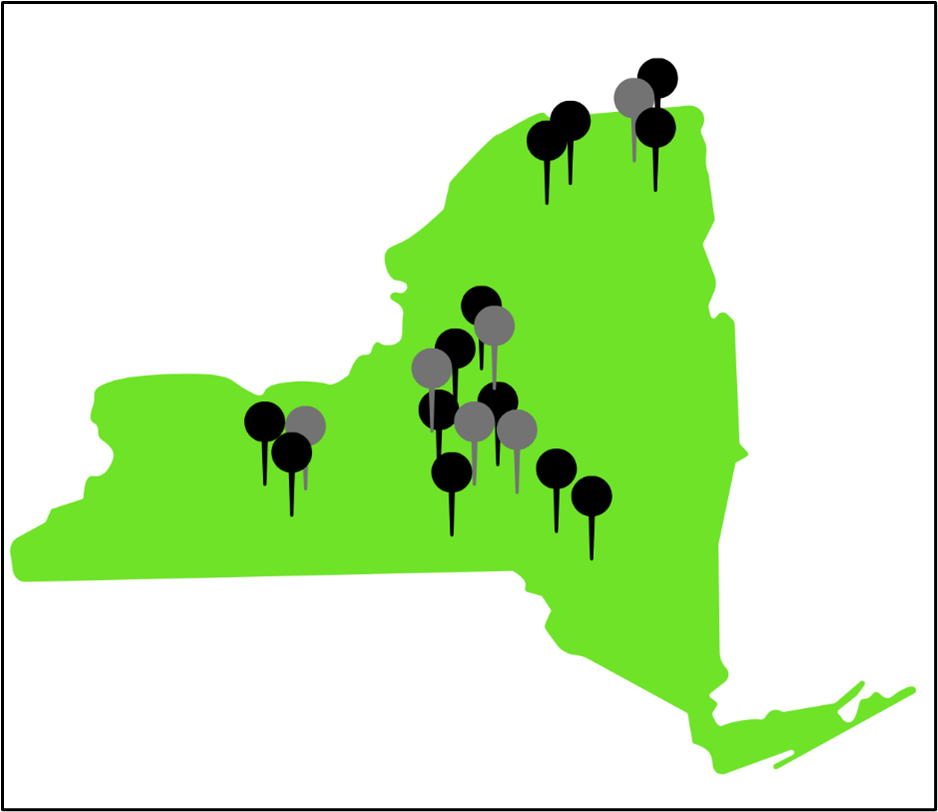
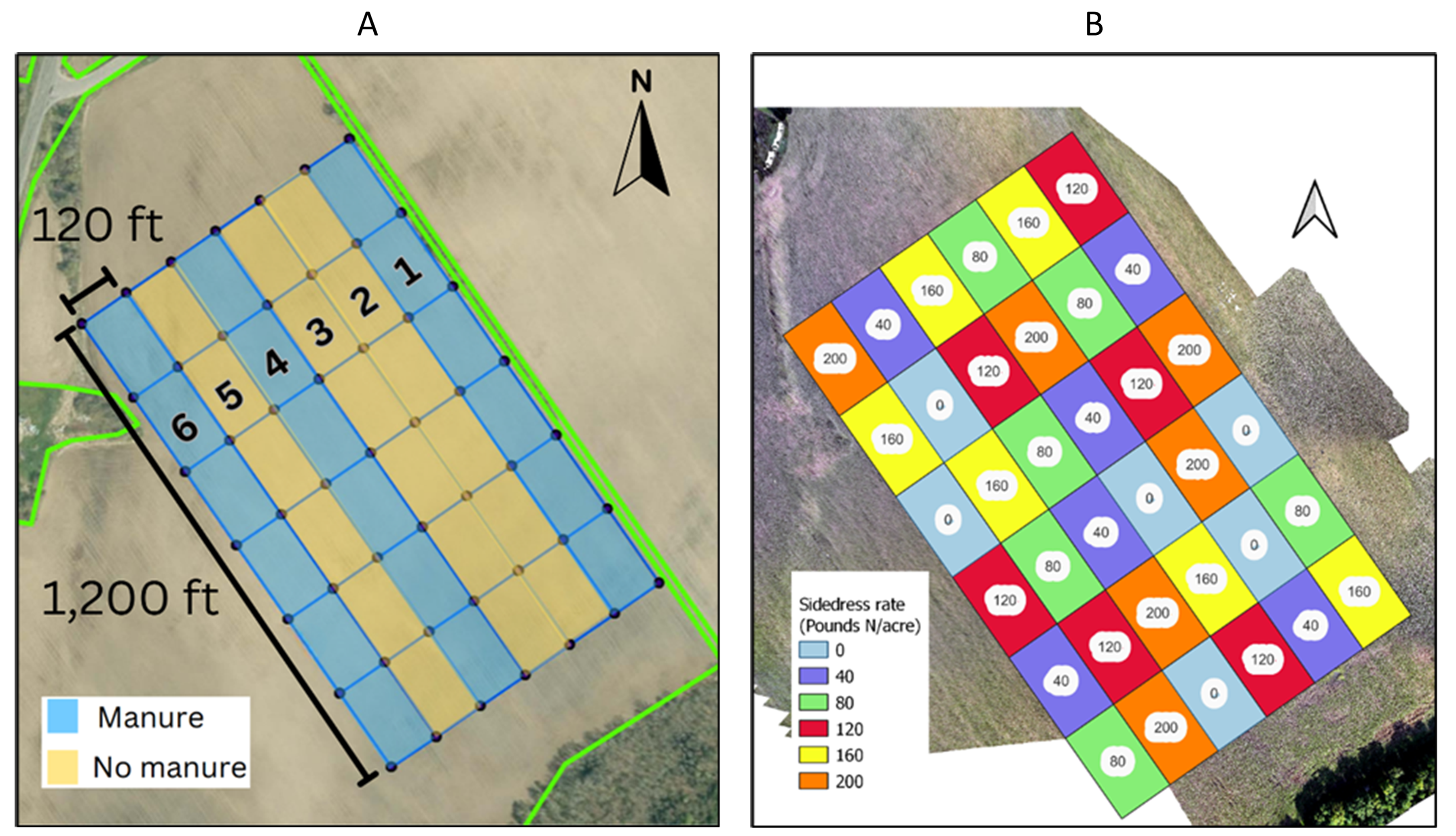
Nineteen trials were implemented on commercially farmed corn fields across New York between 2022 and 2024 (Figure 1). Each trial had three strips that received manure and three that did not, for a total of six strips per trial (Figure 2a). Five “carryover” trials received manure in the spring of year 1, and we tested manure N and yield benefits in the second year after application. Manure was applied and tested in the same year in all the other trials. Soil type, dairy manure type (digestate, separated liquids, untreated, etc.), application rate, and application methods (broadcasted, injected, etc.) varied across trials (see our “What’s Cropping Up?” extension articles in the Additional Information section for more details).

When corn was at the V4-V6 stage each strip was divided into six sub-strips (Figure 2b), and subplots were sidedressed at a rate usually ranging from 0 to 200 pounds N/acre. Sidedress rates were trial-specific, based on the expected N requirement of each field according to the Nitrogen Guidelines for Field Crops in New York. In each trial, we measured manure nutrient composition, general soil fertility, Pre-Sidedress Nitrate Test (PSNT), Corn Stalk Nitrate Test (CSNT), yield, and forage quality.

Figure 1. Nineteen Value of Manure trials have been implemented across New York between 2023 and 2024.
Figure 2. Layout of a Value of Manure study plot. Three strips received manure before planting corn (1a). At the V4-V6 stage each of the six strips received six different inorganic N sidedress rates (1b).

What Have We Learned?

In the three years of the project, we have documented how manure offsets fertilizer needs and “bumps” yields. Yield responses to manure and fertilizer N vary by location and year, influenced by field past management (manure history, crop rotation, etc.) and weather.

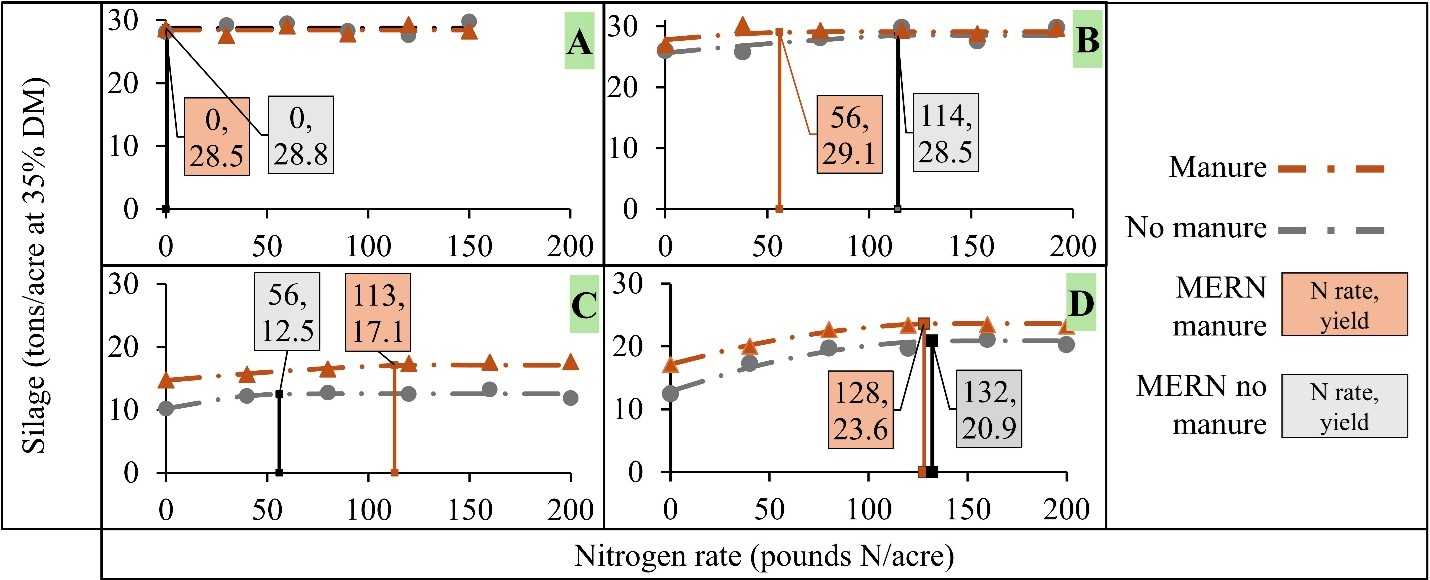
    • We observed no yield response to manure or sidedress N application in three trials (Figure 3A, Table 1 trial A). That was likely due to high N credits from past manure applications. Yet those trials were among the highest-yielding ones and had excessive CSNT results.
    • At the Most Economical Rate of N (MERN, the N rate that maximizes economic return), manure replaced inorganic N fertilizer in six trials by lowering sidedress fertilizer needs (Figure 3B, Table 1 trial B). In the manure strips for these trials, yields at MERN were higher than the yields at the MERN of the no-manure plots.
    • In three trials manure applications increased yields to such elevated levels (2.3 to 4.6 tons/acre), that it also increased the crop’s need for fertilizer N (Figure 3C, Table 1 trial C).
    • Significant yield bumps due to manure application were documented in fourteen trials. These yield bumps were also present in all five “carry-over” trials, where we saw that manure applied in year 1 benefited yields in the second year after application (Figure 3D, the carryover study of Figure 3C trial, Table 1 trial D).
Figure 3. Four examples of crop response to manure and sidedresss N as part of the statewide Value of Manure trials conducted between 2022 and 2024. Orange text boxes are the MERN and yield at MERN for manured plots; gray text boxes are MERN and yield at the MERN for no-manure plots. Yields are in tons/acre at 35% dry matter (DM).
Table 1. Most economic rates of N (MERN) for no-manure and manure plots and manure-induced yield increase (tons/acre at 35% dry matter) for four examples of crop response to manure and sidedress N as part of the statewide Value of Manure trials conducted between 2022 and 2024.
Trial No manure MERN Manure MERN Manure-induced yield increase
————- pounds N/acre ————- tons/acre
A 0 0 0
B 114 56 0.6
C 56 113 4.6
D * 132 128 2.7
*Note: Trial D was a carryover study where manure was applied in the spring of 2023 and we tested its value for 2024 corn.

Future Plans

To re-evaluate the current N crediting system and learn how to predict and take into account yield bumps, the Value of Manure project requires the addition of more trials beyond the nineteen trials completed so far. Thus, the Value of Manure Project will continue in 2025. We will be testing additional manure types and application methods in various soil types and weather conditions and follow up with several sites to determine carryover benefits into the third year after application.

Authors

Presenting author

Juan Carlos Ramos Tanchez, On-Farm Research Coordinator, Nutrient Management Spear Program, Cornell University

Corresponding author (name, title, affiliation)

Quirine M. Ketterings, Professor, Cornell University, qmk2@cornell.edu

Additional authors

Kirsten Workman, Nutrient Management and Environmental Sustainability Specialist, PRO-DAIRY and Nutrient Management Spear Program, Cornell University; Carlos Irias, Master Student, Nutrient Management Spear Program, Cornell University.

Additional Information

Acknowledgements

We thank the farms participating in the project and their collaborators for their help in establishing and maintaining each trial location, and for providing valuable feedback on the findings. This project has been funded by Northern New York Agricultural Development Program, New York Farm Viability Institute, New York Department of Environmental Conservation, New York Department of Agriculture and Markets, Dairy Management Inc., and the Foundation for Food & Agricultural Research.

The authors are solely responsible for the content of these proceedings. The technical information does not necessarily reflect the official position of the sponsoring agencies or institutions represented by planning committee members, and inclusion and distribution herein does not constitute an endorsement of views expressed by the same. Printed materials included herein are not refereed publications. Citations should appear as follows. EXAMPLE: Authors. 2025. Title of presentation. Waste to Worth. Boise, ID. April 711, 2025. URL of this page. Accessed on: today’s date.

Performance of Manure Processing Systems in Wisconsin

Purpose

Advanced manure processing technologies offer the potential to enhance the sustainability of these systems by separating manure into various streams for more efficient post-processing management. This presentation will synthesize findings from multiple full-scale studies on manure processing systems, focusing on separation technologies. It will also include recent evaluations of systems designed to treat manure to a quality suitable for discharge into surface waters. The data presented will cover separation efficiencies of key components, system performance, operational challenges, barriers to adoption, and the results of life cycle assessments of the environmental impacts when integrated into dairy facilities. These insights can provide valuable guidance for producers and stakeholders on how to integrate these systems effectively to achieve targeted environmental and operational outcomes.

What Did We Do?

A number of full-scale manure separation systems were analyzed over time to assess the nutrient separation efficiency of each component. This included systems from previously published data as well as two new sites analyzed in 2024-2025.

Site 1. A total of 45 manure samples were collected over 37 weeks from the Aqua Innovations treatment system located in Middleton, WI. Samples were collected from the (1) influent manure (following digestion), the (2) separated solid (screw press)and (3) liquids from the separator (screw press), (4) separated solid (centrifuge), (5) liquids from separator (centrifuge), (6) ultrafiltration (UF) concentrate and, (7) UF treated liquid, and the (8) reverse osmosis concentrate, and (9) clean water discharged.

Site 2. Samples were also collected from a dairy with a Livestock Water Recycling system located in Kiel, WI. Similarly, samples were collected over 45 sampling events from (1) liquid influent entering the inclined screen/roller press (raw manure), (2) liquid effluent following the inclined screen/roller press, (3) solids following the polymer assisted inclined screen/roller press, (4) liquid effluent following polymer assisted inclined screen/roller press, (5) outflow from clarifier, (6) liquid effluent following reverse osmosis (“clean” water), and (7) nutrient concentrate following reverse osmosis.

Samples were collected and shipped to Great Lakes Labs after each week of sampling and manure analyzed for manure total solids (or dry matter), total phosphorus, total nitrogen, ammoniacal nitrogen, potassium among many other sample parameters. Nutrient separation efficiencies were then compared for the entire system and each system component to previously collected data and data reported in literature.

What Have We Learned?

Separation efficiencies vary significantly for each nutrient through the system. Mutiple separation systems in series reduce variability in separation efficiency. Manure nitrogen is primarily removed from advanced treatment components, ultrafiltration and reverse osmosis, while solids and phosphorus are primarily removed in the initial separation stages.

Future Plans

Data will be further analyzed and published in a peer-reviewed journal. The data will also be integrated into a partial life cycle assessment to determine the impact to various environmental impact categories. This will be useful in aiding farmers in selecting processing systems for targeted outcomes in terms of nutrient separation and environmental outcomes.

Authors

Presenting & corresponding author

Rebecca A. Larson, Professor, Nelson Institute for Environmental Studies, University of Wisconsin-Madison, rebecca.larson@wisc.edu

Additional author(s)

Tyler Liskow, Engineer, Nelson Institute for Environmental Studies, University of Wisconsin-Madison; Brian Langolf, Researcher, Nelson Institute for Environmental Studies, University of Wisconsin-Madison; and Horacio Aguirre-Villegas, Scientist, Nelson Institute for Environmental Studies, University of Wisconsin-Madison

Additional Information

https://dairy.extension.wisc.edu/articles/treating-manure-to-produce-clean-water/

Acknowledgements

Newtrient and the USDA NRCS Conservation Innovation Grants for the funding to complete system sampling.

The authors are solely responsible for the content of these proceedings. The technical information does not necessarily reflect the official position of the sponsoring agencies or institutions represented by planning committee members, and inclusion and distribution herein does not constitute an endorsement of views expressed by the same. Printed materials included herein are not refereed publications. Citations should appear as follows. EXAMPLE: Authors. 2025. Title of presentation. Waste to Worth. Boise, ID. April 711, 2025. URL of this page. Accessed on: today’s date.

Using ManureTech Decision-Support Tools to Aid in Manure System Selection

Purpose

The purpose of the ManureTech Decision-Support Tools (DST) for Dairy and for Swine is to assist farmers, consultants, and others in the dairy/swine industry in optimizing the management of manure from collection to land application. By providing data-driven recommendations based upon customizable inputs and priorities, the ManureTech DST help users make informed decisions about manure management systems in consideration of the economic, environmental, and operational needs of farm management.

What Did We Do?

A multi-state team has developed Excel-based decision-support tools for selecting technology and systems for managing manure on dairy and swine operations as part of a USDA NIFA-funded project.

During this workshop, participants will be introduced to the ManureTech DST for Dairy and the ManureTech DST for Swine and will be provided with hands-on training in using the decision-support tool for dairy.  Major aspects of the tools that will be addressed in the workshop include an introduction to the user interface; entering primary inputs; prioritization of economic, environmental, and operational metrics; and reporting of results, including the ranking of manure system scenarios.

What Have We Learned?

In terms of learning, this effort has provided the project team with a fuller grasp of the complex nature of manure management!  In terms of accomplishments, the team has assembled a tool that considers the multi-faceted benefits and challenges of various manure management systems and presents users with a ranked list of systems for consideration, which should help expedite and enhance system selection.  Users of the ManureTech DST can provide farm-specific weight to economic, environmental, and operational criteria which allows ManureTech DST to rank alternative manure management scenarios in close alignment with individual priorities.

This visual illustrates what a user of the ManureTech Decision-Support Tool sees when weighing economic, environmental, and operational priorities of a farm, so that the rankings of the manure management systems reflect these farm priorities.  In the illustrated case, the user preferences favor economic priorities over others.

Future Plans

Future plans include completing beta testing / pilot-testing of the ManureTech DST and conducting additional training on using the tool.  Over a longer-range timeframe, the team would like to add some additional specialized capabilities and functionality, as a phase II effort.

Authors

Presenting authors

    • Erin Scott, Project/Program Manager, University of Arkansas
    • Varma Vempalli, Wastewater Treatment Specialist, City of Meridian (ID)
    • Jacob Hickman, Systems Analyst, University of Arkansas
    • Rick Stowell, Extension Specialist in Animal Environment, University of Nebraska-Lincoln
    • Teng Lim, Extension Professor and Engineer, University of Missouri

Corresponding author

Rick Stowell, Extension Specialist in Animal Environment, University of Nebraska-Lincoln, Richard.Stowell@unl.edu

Additional authors

    • Erin Scott, Project/Program Manager, University of Arkansas
    • Jacob Hickman, Systems Analyst, University of Arkansas
    • Jennie Popp, Associate Dean and Professor, University of Arkansas
    • Varma Vempalli, Wastewater Treatment Specialist, City of Meridian (ID)
    • Greg Thoma, Director of Agricultural Modeling and Lifecycle Assessment, Colorado State University
    • Teng Lim, Extension Professor and Engineer, University of Missouri

Additional Information

The ManureTech DST and related articles can be accessed at Decision-Support Tools – Livestock and Poultry Environmental Learning Community.

Acknowledgements

The authors acknowledge funding from the USDA NIFA AFRI Water for Food Production Systems program, grant #2018-68011-28691.

The authors are solely responsible for the content of these proceedings. The technical information does not necessarily reflect the official position of the sponsoring agencies or institutions represented by planning committee members, and inclusion and distribution herein does not constitute an endorsement of views expressed by the same. Printed materials included herein are not refereed publications. Citations should appear as follows. EXAMPLE: Authors. 2025. Title of presentation. Waste to Worth. Boise, ID. April 711, 2025. URL of this page. Accessed on: today’s date.
Consumer Demand for products using biochar

Purpose

This research aims to analyze consumer sentiment and demand for biochar-enriched products, with a focus on their willingness to pay. By assessing how consumers perceive and value biochar’s environmental and agricultural benefits—such as reduced greenhouse gas emissions, carbon sequestration, improved soil health, enhanced water efficiency, and increased yields—the study explores how these factors influence purchasing decisions.

Understanding these preferences is essential for determining the market viability of biochar-enriched products and identifying potential price premiums. Additionally, the study provides insights into policy recommendations on eco-labeling, sustainability certifications, and incentives for biochar adoption. As the biochar market is still emerging, these findings will help producers and suppliers assess whether investment in biochar-based systems is financially viable based on consumer demand.

What Did We Do?

For our analysis, we employed the contingent valuation method (CVM), a widely used approach in consumer studies. In this method, consumers are asked whether they are willing to pay a premium for products after being informed about their environmental and health benefits compared to conventional options. Our analysis is based on the premise that consumers care about the products they purchase, particularly in terms of the environmental and health benefits they offer.

To capture a broad range of consumer sentiments, the survey was designed to gather data from approximately 1,006 U.S. respondents aged 18 and older who consume meat, selected randomly through Qualtrics. The sample was evenly balanced, with 50.4% female and the remaining respondent’s male. The survey aimed to understand meat consumers’ preferences regarding sustainably produced feed, particularly focusing on corn silage produced using biochar. It collected demographic information and insights into participants’ meat purchasing habits, such as the frequency of purchases and their preferred locations. Participants ranked factors like taste, price, health benefits, environmental impact, and brand when selecting meat products. We also assessed their awareness of sustainable agriculture practices, environmental claims, and the effects of traditional farming.

Since biochar is a relatively new concept, respondents unfamiliar with biochar were shown an educational video explaining its benefits as a soil amendment. Respondents were then asked to choose between sustainable feed and conventional feed, as well as to rank the importance of sustainable feed sources in meat production. Following this, respondents listing benefits of biochar in silage production, including reduced greenhouse gas emissions, reduced water usage, decreased chemical fertilizer use, reduced carbon footprint, and improved soil health. Finally, respondents were asked about their willingness to pay a premium for meat produced with sustainably raised feed (silage produced using biochar) and whether additional product information or certifications, such as USDA , Organic, would influence their purchasing decisions.

What Have We Learned?

From our survey, we learned that demographic factors such as marital status, education level, urban residence, and full-time employment are associated with greater concern for health and a willingness to pay a premium for higher-quality meat. Nearly 94% of participants purchased meat from supermarkets, with 66% doing so weekly, with taste and price being the most important factors in their decision-making. Health benefits were considered, but they were secondary to taste and price. Environmental sustainability and brand identity had a minimal influence on purchasing choices, and most consumers did not actively seek information about food production processes. A significant portion of respondents, particularly those unfamiliar with sustainable farming practices, did not let environmental claims impact their meat purchases.

Additionally, our findings revealed that over 92% of respondents were initially unaware of biochar and its benefits. However, after being exposed to an informational clip, 49% expressed interest in learning more about biochar, and 35% felt informed enough to make a purchasing decision. Participants recognized key benefits of biochar, including reduced chemical fertilizer use, lower water consumption, and improved soil health. By the end of the survey, more than 69% of respondents indicated a willingness to pay a premium for sustainably raised meat.

Moreover, familiarity with sustainable agriculture and consideration of environmental claims played a significant role in purchasing decisions, emphasizing the impact of awareness on consumer behavior. Certification and detailed product information, both of which were statistically significant at the 1% level, further enhanced consumer trust and perceived value, increasing the likelihood of premium pricing acceptance.

Future Plans

The analyses conducted thus far are based on survey results, utilizing descriptive statistics and an ordered logit regression model. Moving forward, we plan to apply these findings to estimate market demand for biochar-based products and compare the profitability of biochar-based production with conventional practices. This expanded analysis will offer deeper insights into consumer preferences, the potential price premium for biochar products, and the economic viability of integrating biochar into agricultural production systems.

Authors

Presenting & Corresponding author

Sunita Bandane Pahari, Graduate Research Assistant, University of Idaho, paha0494@vandals.uidaho.edu

Additional author

Jason Winfree, Professor, University of Idaho

Additional Information

Idaho Sustainable Agriculture Initiative for Dairy (ISAID)

This informational clip derived from You Tube is used for survey to provide information on what is biochar and its benefits to participants: https://youtu.be/7qVcEvKEfGc?si=Isxex7E4lJCQrfGc

Acknowledgements

This research was funded by the USDA Sustainable Agricultural Systems Initiative through the Idaho Sustainable Agriculture Initiative for Dairy (ISAID) grant (Award No. 2020-69012-31871).

The authors are solely responsible for the content of these proceedings. The technical information does not necessarily reflect the official position of the sponsoring agencies or institutions represented by planning committee members, and inclusion and distribution herein does not constitute an endorsement of views expressed by the same. Printed materials included herein are not refereed publications. Citations should appear as follows. EXAMPLE: Authors. 2025. Title of presentation. Waste to Worth. Boise, ID. April 7-11, 2025. URL of this page. Accessed on: today’s date.
Managing Dairy Manure for Increased Soil Health and Forage Production Sustainability

Manure is a valuable source of crop-essential nutrients that, when managed carefully, can help build soil organic matter, enhance nutrient cycling, and improve overall soil health and climate resilience over time. In 2022, a statewide on-farm research project was initiated in New York State to quantify the nitrogen (N) replacement value, corn silage or grain yield, and soil health enhancements of various manure sources. Between 2022 and 2023, eleven on-farm field trials were implemented. Yield data are being used to quantify differences in most economic N rate between manured and non-manured strips, and to quantify the yield impact of the manure applications. In 2024, eight additional trials were added using various manure sources. Results so far indicate that manure can offset N fertilizer needs and increase corn silage yield beyond its nutrient contributions, but impacts are field-specific, reflecting differences in field histories and growing conditions. Assessments of soil microbial biomass for sites in 2023 and 2024 reflected the manure history for trial locations and suggest that mid-season assessments may help identify where nitrogen fertilizer addition is beneficial for the crop and where not. Assessment of variability of different manure sources point to the importance of manure sampling and analyses. Preliminary results will be shared. This presentation was originally broadcast on October 18, 2024. Continue reading “Managing Dairy Manure for Increased Soil Health and Forage Production Sustainability”

Call for Abstracts for Waste-to-Worth 2025

You are invited to participate!

The Waste to Worth Conference will be April 7-11, 2025 at the Grove Hotel in Boise, Idaho.

Waste to Worth 2025 welcomes oral, poster, panel, and workshop presentation proposals focused on applied solutions related to animal manure management and protecting the environment.

    • Submissions should align with one or more of the general areas of emphasis (see below).
    • Graduate students are encouraged to submit and participate in a poster presentation competition.

To submit an abstract, go to https://tinyurl.com/W2W2025

For more information, go to: https://wastetoworth.org or the W2W Call for Abstracts flyer.

Deadline is October 30, 2024

Areas of Emphasis

    • Circular Bioeconomy
    • Biosecurity
    • Feed & Nutrient Management
    • Manure, Soil Health & Sustainability
    • Emerging Contaminants
    • Manure Storage, Treatment, Handling & Application Systems
    • Robotics & Artificial Intelligence in Animal Production Systems
    • Value-Added Products from Agricultural Production Systems
    • Climate Impacts & Adaptation/Mitigation Measures
    • Air Quality, Emissions & Fate
    • Educational Programming & Delivery
    • Environmental Planning & Regulations in Animal Agriculture
    • Case Studies/On-Farm Experience
    • Mortality Management
    • Sustainable Animal Systems
    • New & Innovative Technology
    • Water Quality

Who attends?

    • Extension agents & specialists
    • Progressive farmers & producers
    • NRCS staff
    • Consultants & technical experts
    • Regulatory & policy advisors
    • Scientists
    • Technology providers