Innovative Business Models for On-farm Anaerobic Digestion in the U.S.

Proceedings Home W2W Home w2w17 logo

Purpose

AgSTAR is a collaborative voluntary program of the Environmental Protection Agency (EPA) and United States Department of Agriculture (USDA). AgSTAR promotes the use of anaerobic digestion (AD) systems to advance economically and environmentally sound livestock manure management. AgSTAR has strong ties to industry, government, non-profit and university stakeholders and assists those who enable, purchase or implement anaerobic digesters by identifying project benefits, risks, options and opportunities.

Anaerobic digestion (AD) continues to be a sustainable manure management opportunity with growing interest in innovative business models for project development.   AD systems provide a number of benefits, including improved nutrient management, locally sourced renewable energy, and diversified revenue streams for farmers.   As energy prices remain low across the country, and interest grows in managing food waste and organics outside of landfills, new business models have been implemented to make these on-farm AD projects viable. This presentation will provide a national overview of the livestock AD sector, explore new AD projects across the U.S., and highlight successful projects with innovative business models.

The presentation will cover several case studies of AD projects on topics including:

  • Third-party ownership and development of projects;
  • Food waste collection and boosting project profitability through tip fees and increased biogas production;
  • Eco-market products from dairy manure fibers; manure-based alternatives to peat moss for the horticulture industry; and
  • Biogas to vehicle fuel; opportunities and financial considerations.

With only 244 operating on-farm AD projects across the U.S., there exists a great opportunity for market share growth at the approximately 8,000 farms that could support a project. This, coupled with the desire for alternative management of organic waste streams, provides a unique opportunity for this sector to grow in the near future.

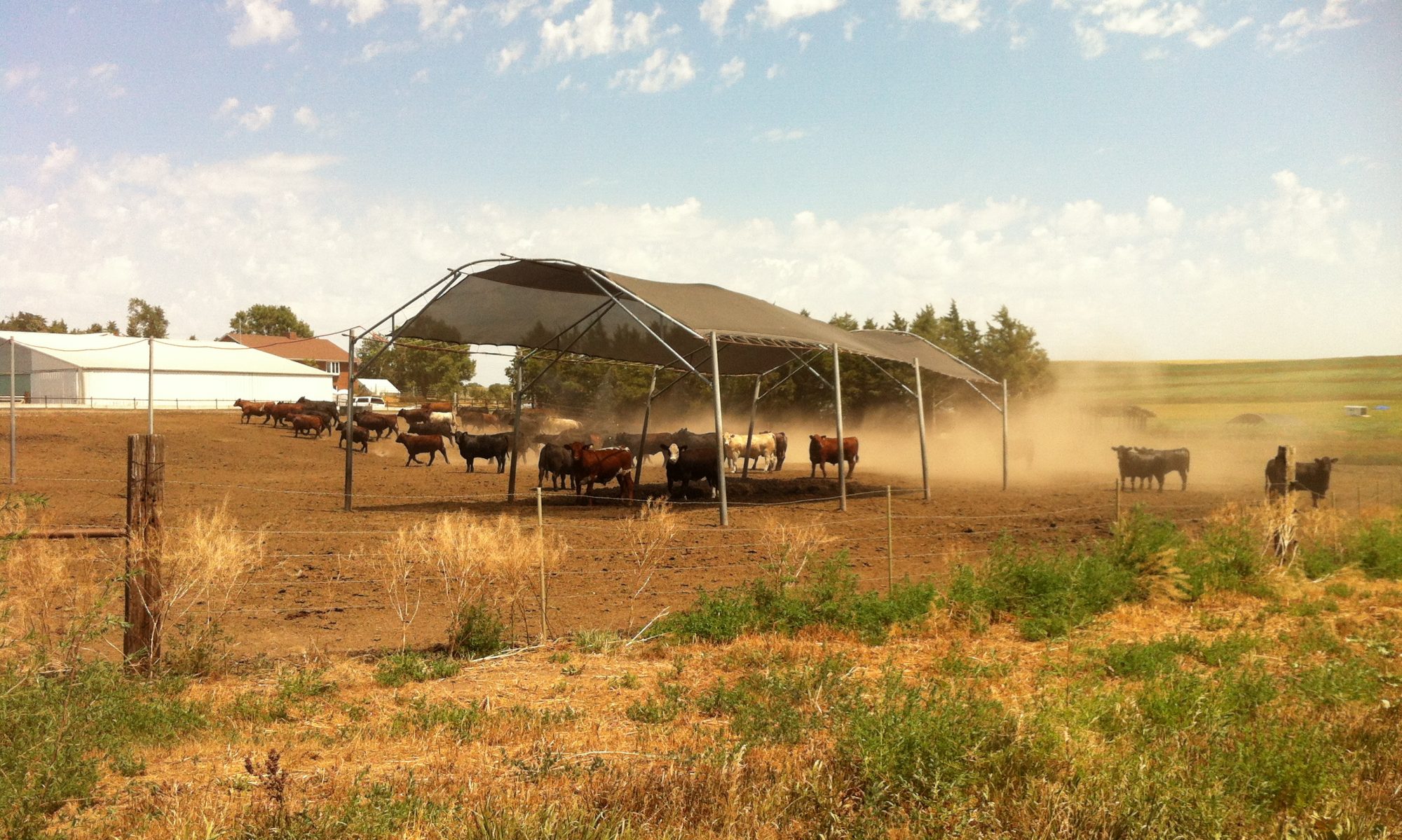
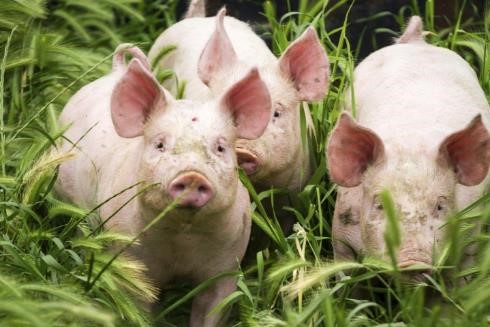
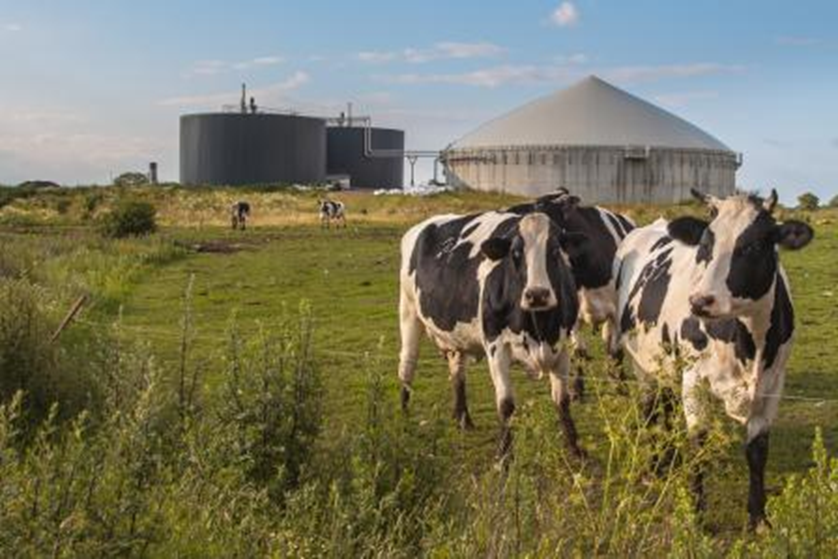
Pigs in a fieldCows in a field

Corresponding author, title, and affiliation

Nick Elger

Program Manager

AgSTAR & Global Methane Initiative

U.S. Environmental Protection Agency

1201 Constitution Ave NW, Mail code: 6207J

Washington, D.C. 20460

Phone: 202.343.9460

Email: elger.nicholas@epa.gov

https://www.epa.gov/agstar

https://www.globalmethane.org/

Replacing Commercial Sidedress Nitrogen with Liquid Livestock Manure on Emerged Corn

waste to worth 2017 logoProceedings Home | W2W Home

Purpose

Livestock producers can more fully utilize the nutrients in livestock manure to reduce purchased fertilizer costs if they can apply manure when crops need the nutrients. Better capturing manure nutrients can reduce phosphorus and nitrogen losses into surface water bodies. To help decrease the incidences of harmful algae blooms in the Western Basin of Lake Erie, Ohio State University (OSU) Extension research has sought to develop an in-season window to apply manure to emerged corn. By incorporating livestock manure as a sidedress nitrogen fertilizer for corn, nutrients are less exposed to movement by water and a greater percent of the nitrogen is utilized by the growing corn crop.

Surveys of livestock farmers, who attended OSU Extension field days in western Ohio reveal approximately 49% of livestock manure is applied in the months of October, November, and December following crop harvest. Typically, there is no growing crop at that time of year to capture the available nitrogen in the manure. The surveys also reveal only 19% of manure is applied in the months of April, May and June. Ohio has about 2.5 billion gallons of liquid dairy manure and almost one billion gallons of liquid swine manure needing applied to farm fields each year.

What did we do?

Ohio State University conducted replicated small-plot research from 2012 to 2016 using swine and dairy manure as sidedress nitrogen sources compared to incorporated 28% Urea Ammonium Nitrate (UAN) on pre-emergent and post-emergent corn. The nitrogen in manure is primarily in two forms; ammonium and organic. Ammonium nitrogen is readily available to a growing crop. Organic nitrogen has to undergo a mineralization process for a percentage of the nitrogen to eventually be released in the ammonium form each crop season.

More than 45 on-farm plots with livestock producers were also completed over five seasons using field sized replicated plots. Liquid swine, dairy, and beef manure were applied to corn in the V2 to V4 stage of growth using a 5,250 gallon Balzer tanker and six-row Dietrich manure injection toolbar. The flotation tires on the tanker were replaced with rims and narrow tires allowing the tanker to follow the tractor down the rows of corn. In replicated plots, the liquid manures produced similar yields to commercial fertilizer when applied at similar nitrogen fertilizer amounts.

OSU Extension also conducted swine finishing manure drag hose plots with a pork producer where manure was incorporated into emerged corn at the V2 to V3 stage of growth and compared to incorporated 28%UAN. The manure application rate was approximately 6,500 gallons per acre using a seven-shank rotary injector toolbar. The drag hose was six inches in diameter and the pumping rate was 1,300 gallons per minute. The farmer planted the fields on a 45 degree angle to accommodate the drag hose manure application.

What have we learned?

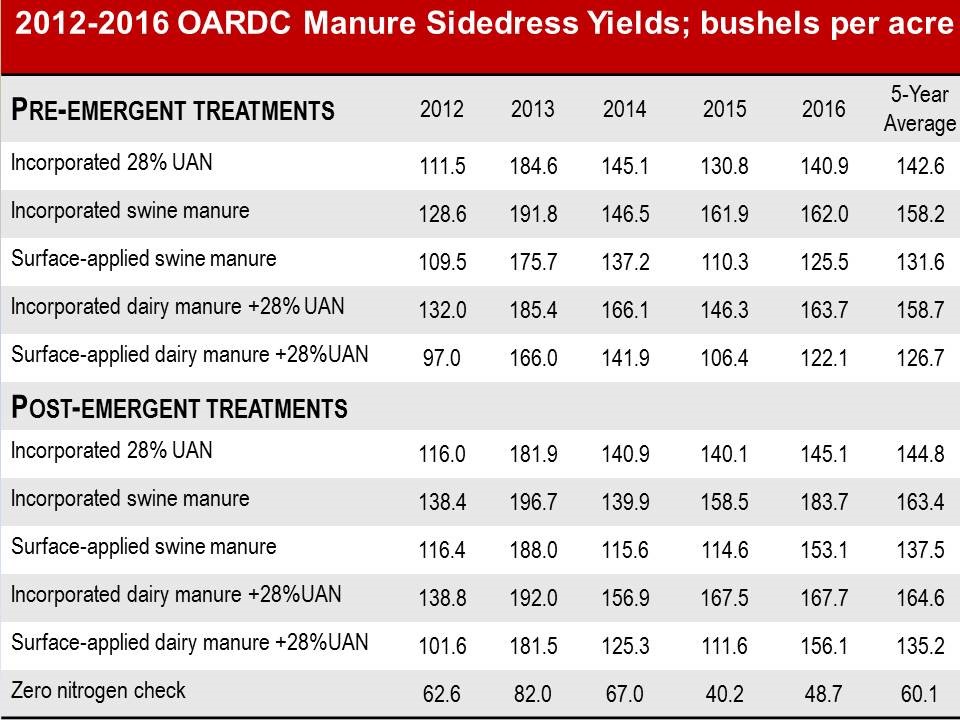
Below are five years of liquid manure side-dress research on corn plots at the Northwest Station of the Ohio Agricultural Research and Development Center. In these research plots liquid swine and liquid dairy manure were used in pre-emergent and post-emergent plots and compared with incorporated 28%UAN. Manure was applied to the pre-emergent plots each season within three days of planting. Manure was applied to the post-emergent plots at the V3 stage of corn growth. The manure was applied to a depth of approximately five inches using a 1,250 gallon manure tanker with Dietrich manure injection sweeps and covering wheels.

For these plots, the swine finishing manure application rate was 5,000 gallons per acre to provide 200 pounds of available nitrogen. The dairy pond manure application rate was 13,500 gallons per acre (140 pounds of available nitrogen) plus 20 gallons of 28% UAN nitrogen applied just ahead of the manure for a total of 200 pounds of nitrogen. The 28%UAN treatments also received 200 pounds of nitrogen per acre each year.

Chart 1. OARDC manure side-dress plot results

2012-2016 OARDC Manure Sidedress Yields; bushels per acre

The long-range goal of Ohio State University Extension’s manure application research is to utilize a drag hose to incorporate liquid manure of any species into corn from the date of planting up to the V4 stage of growth. Three years of drag hose manure side-dress plots in Darke County indicate this manure application method has great potential. Applying manure to a growing crop can capture more of the manure nutrients than applying manure without a crop in the field.

Chart 2. Drag hose research yields on corn in Darke County, Ohio

Year

Swine manure

(bu/acre)

28%UAN (bu/acre)

2016

222

216

2015

154

121

2014

204

204

In addition to the three crop seasons of drag hose sidedress of corn in Darke County, we also have three years of drag hose damage research from the Ohio Agricultural Research and Development Center’s Northwest Station near Hoytville. Based on this research, we believe we can use a drag hose across emerged corn through the V3 stage without a loss of yield and probably through the V4 stage if early season conditions are drier than normal.

Chart 3. 2014-2016 OARDC drag hose damage yield losses in corn

Corn growth stage

Plant population

2014

Yield

bu/acre

2014

Plant population

2015

Yield

bu/acre

2015

Plant population

2016

Yield

bu/acre

2016

3-year

population

average

3-year

average

bu/acre

No drag hose

30,166

145.1

31,850

167.2

28,625

145.1

30,214

152.5

V1

29,660

154.3

31,750

166.1

28,625

149.5

30,012

155.4

V2

30,166

157.9

32,000

165.3

28,500

141.2

30,222

154.8

V3

28,933

153.9

31,375

172.3

29,250

144.4

29,853

156.9

V4

29,264

149.7

23,500

123.5

27,500

152.1

26,755

141.8

V5

15,366

109.8

——-

——

16,000

126.3

15,683*

118.0*

*Indicates only two years of data

Future Plans

Funds are being solicited to purchase 12-row drag hose manure incorporation toolbars to have available to livestock producers and commercial manure applicators to use in Ohio for the 2017 crop season and beyond. Thanks to donations from the Columbus Foundation, Ohio Farm Bureau, Dietrich Inc., Cooper Farms, Hord Livestock, Conservation Action Project, and Bazooka Inc. we have almost secured the funds to build two toolbars.

Corresponding author, title, and affiliation

Glen Arnold, Associate Professor & Field Specialist Manure Nutrient Management Application, The Ohio State University

Corresponding author email

Arnold.2@osu.edu

Other authors

Eric Richer, Sam Custer, Sarah Noggle, Jeff Stachler, Jason Hartschuh, Amanda Douridas

Additional information

Additional on-farm manure plot research results are available at www.agcrops.edu

YouTubes of OSU Extension manure application to emerged corn can be found at: https://www.youtube.com/channel/UC7jUsQNGM8fCHjbZUdT9pKw

Acknowledgements

Thanks to the Ohio Environmental Education Fund, Ohio Pork Producers Council, Ohio Dairy Research Fund, Ohio Corn Marketing Board, Ag Credit, Farm Credit Services, Ohio Soybean Council, the Ohio Farm Bureau, and the Conservation Tillage Conference for funding support.

The authors are solely responsible for the content of these proceedings. The technical information does not necessarily reflect the official position of the sponsoring agencies or institutions represented by planning committee members, and inclusion and distribution herein does not constitute an endorsement of views expressed by the same. Printed materials included herein are not refereed publications. Citations should appear as follows. EXAMPLE: Authors. 2017. Title of presentation. Waste to Worth: Spreading Science and Solutions. Cary, NC. April 18-21, 2017. URL of this page. Accessed on: today’s date.

Poultry Digestion – Emerging Farm-Based Opportunity

While EPA AGSTAR has long supported the adoption of anaerobic digestion on dairies and swine farms, they have not historically focused on the use of anaerobic digestion on egg laying and other poultry facilities. This has been because the high solids and ammonia concentrations within the manure make anaerobic digestion in a slurry-based system problematic. Development of enhanced downstream ammonia and solids recovery systems is now allowing for effective digestion without ammonia toxicity. The process also generates dilution water, avoiding the need for fresh water consumption, and eliminating unwanted effluent that needs to be stored or disposed of to fields. The system produces high-value bio-based fertilizers. In this presentation, a commercial system located in Fort Recovery Ohio will be used to detail the process flow, its technologies, and the co-products sold.

Why Examine Anaerobic Digestion on Poultry Farms?

The purpose of this presentation is to supply a case study on a commercial poultry digestion project for production of combined heat and power as well as value-added organic nutrients on a 1M egg-layer facility in Ohio.

What did we do?

In this study we used commercial farm information to demonstrate that poultry digestion is feasible in regard to overcoming ammonia inhibition while fitting well into an existing egg-layer manure management system. Importantly, during the treatment process a significant portion of nutrients within the manure are concentrated for value-added sales, ammonia losses to the environment are reduced, and wastewater production is minimized due to recycle of effluent as dilution water.

What have we learned?

In this study, commercial data shows that ammonia and solids/salts levels that are potentially inhibitory to the biology of the digestion process can be controlled. The control is through a post-digestion treatment that includes ammonia stripping and recovery as ammonium sulfate as well as fine solids separation using a dissolved air flotation process with the addition of a polymer. The resulting treated effluent is sent back to the front of the digester as dilution water for the high solids poultry manure. The separated fine solids and the ammonium sulfate solution are dried using waste engine heat to produce a nutrient-rich fertilizer for off-farm sales. The stable anaerobic digestion process resulting from the control of potential inhibitors that might accumulate in the return water, if no post-treatment occurred, leads to production of a significant supply of electrical power for sales to the grid.

Demonstration at commercial scale shows the promise anaerobic digestion with post-digestion treatment and effluent recycle can play in a more sustainable poultry manure treatment system including managing nutrients for export out of impacted watersheds.

Future Plans

Future plans include continued work with industry in developing and/or providing extension capabilities around novel digestion and post-treatment processes for a variety of manures and on-farm situations. Expansion of such processes to poultry and other on-farm business plans will allow for improved reductions in wastewater production, concentrate nutrients for export out of impacted watersheds and do so within a positive economic business plan.

Authors

Craig Frear, Assistant Professor at Washington State University cfrear@wsu.edu

Quanbao Zhao, Project Engineer DVO Incorporated, Steve Dvorak, President DVO Incorporated

Additional information

Additional information about the corresponding author can be found at http://www.csanr.wsu.edu while information about the poultry project and the industry developer can be found at http://www.dvoinc.net. Numerous articles related to anaerobic digestion, nutrient recovery and separation technologies for climate, air, water and human health improvements can be found at the WSU website using their searchable articles function.

Acknowledgements

This research was supported by funding from USDA National Institute of Food and Agriculture, Contract #2012-6800219814; National Resources Conservation Service, Conservation Innovation Grants #69-3A75-10-152; and Biomass Research Funds from the WSU Agricultural Research Center. 

The authors are solely responsible for the content of these proceedings. The technical information does not necessarily reflect the official position of the sponsoring agencies or institutions represented by planning committee members, and inclusion and distribution herein does not constitute an endorsement of views expressed by the same. Printed materials included herein are not refereed publications. Citations should appear as follows. EXAMPLE: Authors. 2015. Title of presentation. Waste to Worth: Spreading Science and Solutions. Seattle, WA. March 31-April 3, 2015. URL of this page. Accessed on: today’s date.


Farm-Based Anaerobic Digestion Projects – Wastewater Disposal and Nutrient Considerations

While anaerobic digestion is often touted for producing renewable energy/fuels, producers at concentrated animal feeding operations (CAFOs) are often most concerned about nutrient loading, an issue that has garnered increasing regulatory scrutiny. Anaerobic digestion, while a carbon management tool capable of producing carbon fuels, does little in regard to nitrogen and phosphorus management. Thus digestion projects, if they are to meet producer needs, must incorporate downstream separation to recover nutrients and protect soils. This presentation highlights the key environmental issues and hurdles facing manure management and disposal and lays the framework for a needed focus on combined anaerobic digestion and nutrient recovery systems capable of meeting producer and regulatory needs regarding nutrient management.

Why Review Nutrient Recovery Technologies for Anaerobic Digestion?

A literature review and conversations with dairy farmers both suggest that improving manure nutrient management is a major concern for dairy producers. This supports the conclusion that ongoing research and development efforts to support development of nutrient recovery technologies, including those that can be used in concert with anaerobic digestion (AD), will be key to enhancing adoption rates for AD technology.

What did we do?

A literature review was used to support and enhance findings from conversations with farmers about anaerobic digestion technologies.

What have we learned?

Managing manure is major consideration for dairy producers, and one that comes with high potential costs in areas where there are few crop producers willing to accept manure (USDA ERS 2009). Dairies in many regions of the U.S. are facing increased pressure from growing public concern about nutrient-related water and air quality issues. In some cases, regulation of dairies has increased.

As a result, there is increased interest from dairy producers and others in nutrient recovery technologies. Although no technologies are widely commercialized at present, several emerging nitrogen and phosphorus recovery technologies exist. Some of these technologies are most appropriately used on specific forms of untreated dairy manure (e.g. scrape, flush), while others are more appropriate when combined with AD as part of an AD system (Figure 1).
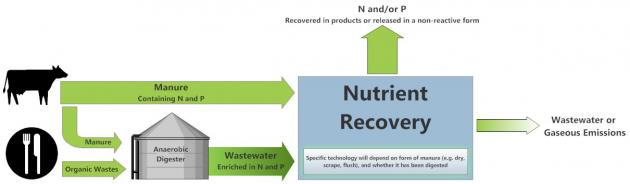
Figure 1. Nutrient recovery fact sheet diagram

Figure 1. Nutrient recovery fact sheet diagram

figure 2. overhead view of nutrient recovery system

Figure 2. Overhead view of a nutrient recovery system for nitrogen and phosphorus.

Approaches also vary in that some recover both phosphorus and nitrogen (Figure 2), while others focus on only one nutrient (Figure 3). Some nutrient recovery processes dispose of these nutrients in form that is non-reactive, and therefore not problematic environmentally. However, most nutrient recovery technologies produce concentrated nutrient products that can be transported more easily, and economically, than manure. The most promising technologies also make products with characteristics (e.g. homogenous and predictable nutrient content, easy to handle, reduced pathogen counts or pathogen-inert chemicals) that make them more appealing to crop producers than manure.
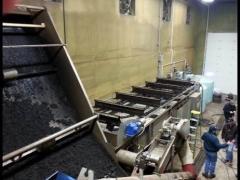
figure 3. commercial scale recovery of phosphorus

Figure 3. Commercial scale recovery of phosphorus.

With further technological and market development, these technologies have the potential to transform dairy manure nutrient management. They may also become a cost-effective approach to improving nutrient management at a watershed level, through the replacement of imported chemical nutrients by crop-farms with manure-derived nutrients already in the watershed. However, nutrients can still be lost from nutrient recovery products or from the wastewater that normally is a by-product of nutrient recovery. This is especially true if these are applied with improper application rates or timing. Nutrient recovery technologies therefore need to be used as part of a comprehensive watershed-level strategy that addresses nutrient balance, equitable distribution of costs and benefits, and improved nutrient application timing and methodology.

Nutrient recovery could also encourage adoption of anaerobic digestion technologies. Although anaerobic digestion changes the form of nitrogen and phosphorus in manure, it does not appreciably decrease the total amount of nutrients, most of which are concentrated in the liquid effluent that is a product of the AD process (Frear et al. 2012). Also, co-digestion of dairy manure with additional organic food wastes can import nutrients to the farm, exacerbating existing nutrient management issues. Nutrient recovery can make AD more appealing to dairy producers by addressing one of their most important concerns. Meanwhile, potential income from the sale of recovered nutrients can contribute to the economic feasibility of an AD project.

Future Plans

The authors and collaborators are continuing efforts to review existing information about nutrient recovery systems (see talk by Jingwei Ma et al., Nutrient Recovery Technologies—A Primer on Available and Emerging Nitrogen, Phosphorus, and Salt Recovery Approaches, their Performance and Cost). They are also continuing technological development and commercialization efforts for specific nutrient recovery technologies.

Authors

Georgine Yorgey, Research Associate at Center for Sustaining Agriculture and Natural Resources, Washington State University yorgey@wsu.edu

Craig Frear, Assistant Professor in the Department of Biological Systems Engineering, Washington State University, and Chad Kruger, Director, Center for Sustaining Agriculture and Natural Resources, Washington State University

Additional Information

The topics covered in this presentation are covered in more depth in a factsheet that is available from Washington State University Extension. The Rationale for Recovery of Phosphorus and Nitrogen from Dairy Manure is available at https://pubs.extension.wsu.edu/the-rationale-for-recovery-of-phosphorus-and-nitrogen-from-dairy-manure-anaerobic-digestion-systems-series. This document is part of a series of extension documents on Dairy AD Systems, being prepared by the authors and other colleagues at Washington State University.

References:

Frear, C., W. Liao, T. Ewing, and S. Chen. 2012. Evaluation of Co-digestion at a Commercial Dairy Anaerobic Digester. Clean Water, Air, and Soil, 39 (7): 697-704.

USDA-ERS. 2009. Manure Use for Fertilizer and for Energy. Report to Congress. United States Economic Research Service. Washington, DC.

Acknowledgements

This work was supported by funding from USDA National Institute of Food and Agriculture, Contract #2012-6800219814; National Resources Conservation Service, Conservation Innovation Grants #69-3A75-10-152; and Biomass Research Funds from the WSU Agricultural Research Center.

The authors are solely responsible for the content of these proceedings. The technical information does not necessarily reflect the official position of the sponsoring agencies or institutions represented by planning committee members, and inclusion and distribution herein does not constitute an endorsement of views expressed by the same. Printed materials included herein are not refereed publications. Citations should appear as follows. EXAMPLE: Authors. 2015. Title of presentation. Waste to Worth: Spreading Science and Solutions. Seattle, WA. March 31-April 3, 2015. URL of this page. Accessed on: today’s date.
Composted Horse Manure and Stall Bedding Pilot Project

Why Study Compost as Bedding for Horses?

The purpose of this project was to study and promote the use of compost as an alternative horse stall bedding and encourage horse owners and managers to think more creatively about manure management. Our objective was to reduce bedding use, and improve manure management practices at equine facilities in Snohomish County, Washington State.

Recreational and professional horse owners contribute to maintaining agricultural open space and supporting the agricultural infrastructure and local economy. Horse owners have historically been overlooked as contributors to animal agriculture, and as a result many horse owners lack a basic knowledge about manure and nutrient management. They are not aware of their impact on water and soil quality. Disposal of used stall bedding is costly for horse owners in northwestern Washington State, and has a potentially large impact on water quality. Disposal practices often include filling in low spots and ravines, or building massive piles. Composting manure at high temperatures eliminates pathogens and parasites, stabilizes nutrients, and reduces odors and vector attraction.

What did we do?

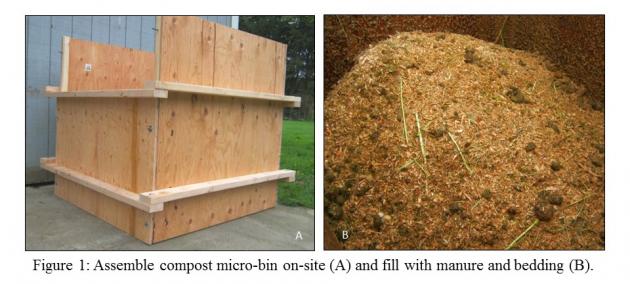
The Snohomish Conservation District (SCD) worked with ten commercial and two private equine facilities to test the use of compost as an alternative horse stall bedding material. Facilities ranged in size from 5 to >20 stalls. The primary system used for composting and reusing bedding involved a micro-bin composter (O2 Compost, Snohomish, WA) and a Stall Sh*fter® (Brockwood Farm, Nashville, IN). Micro-bins were assembled on-site and filled with used stall bedding (Fig.1-2).

Figure 1. Assemble compost micro-bin on site and fill with manure and beddingFigure 2. Turn on blower to provide aeration and monitor temperature

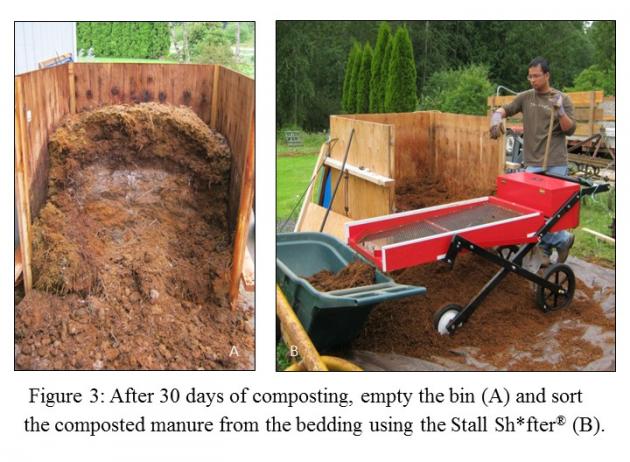
After 30 days of composting, the bin was emptied and the manure was separated from the bedding (Fig. 3). The composted bedding was then used in a stall (Fig. 4). Equine facility managers provided feedback on the effectiveness, perception, and impacts of using the compost as stall bedding. Results varied between trial sites based on type and quantity of bedding used, season, and stall management practices.

Figure 3. After 30 days of composting, empty the bin and sort the composted manure from the bedding using the Stall Sh*fter (registered trademark)

Figure 4. Use composted bedding in the stall and composted manure in the garden.

What have we learned?

Composted stall waste makes a soft absorbent bedding for horses or other livestock. Composted bedding is less dusty than shavings or wood pellets, darker in color, and has a pleasant earthy odor. There were no reports of composted bedding increasing stall odors or flies, or negatively impacting horse health. The best results were reported when mixing the composted bedding with un-composted bedding in equal proportions or two parts compost to one part bedding. There were some reports of horses with skin and respiratory conditions improving during the time they were on composted bedding, including thrush in the feet, hives and “rain rot” on the body, and “scratches” on the legs.

When separating the composted manure from the bedding, the amount and type of bedding determines the effectiveness of a bedding re-use system. Concern about appearances was more prevalent than concern about disease or parasite transfer. Even though barn managers were not entirely ready to make the switch to composted bedding, this project helped start many conversations (in person, through publications, and social media) about manure management and resource conservation. It was a great opportunity to help horse owners make the mental leap from “waste” to “resource”.

Future Plans

This project demonstrated that compost is a safe and effective horse stall bedding. Future work should be focused in three areas:

1. Developing systems for making composted bedding that are practical on a large scale and provide an economic incentive for large equine facilities to recycle their waste.

2. Outreach and education programs directed at horse owners who board their animals at commercial facilities. Would some horse owners be willing to pay a premium to board their horses at a facility that is managed in an environmentally sustainable manner?

3. Clinical trials to examine the effects of composted bedding on skin and respiratory conditions.

Author

Caitlin Price Youngquist, Agriculture Extension Educator, University of Wyoming Extension cyoungqu@uwyo.edu

Additional information

Visit http://BetterGround.org, a project of the Snohomish Conservation District.

The full report, including photographs of trial sites, is available on the Western SARE website: https://projects.sare.org/sare_project/ow11-315/

Acknowledgements

I would like to thank all of the farm owners and managers who very graciously participated in this project and were willing to try something new. The contribution of time and energy is very much appreciated.

Thanks also to the staff at O2 Compost for their efforts, ideas, and creativity. This would not have been possible without them.

And Mollie Bogardus for helping take this project to the next level, and explore all the possibilities.

The authors are solely responsible for the content of these proceedings. The technical information does not necessarily reflect the official position of the sponsoring agencies or institutions represented by planning committee members, and inclusion and distribution herein does not constitute an endorsement of views expressed by the same. Printed materials included herein are not refereed publications. Citations should appear as follows. EXAMPLE: Authors. 2015. Title of presentation. Waste to Worth: Spreading Science and Solutions. Seattle, WA. March 31-April 3, 2015. URL of this page. Accessed on: today’s date.
Small to Mid-Sized Dairies: Making Compact Anaerobic Digestion Feasible

Why Consider Small or Medium Digester Projects?

Anaerobic digestion (AD) is an environmentally-friendly manure management process that can generate renewable energy and heat, mitigate odors, and create sustainable by-products such as bedding or fertilizer for dairies and farmers. However, due to economics, a majority of commercially available AD technologies have been implemented on large farming operations. Since the average herd size of dairies across the country is below 200 head of milking cows, there is a need for small-scale AD systems to serve this market.

eucolino allen farmsWhat did we do?

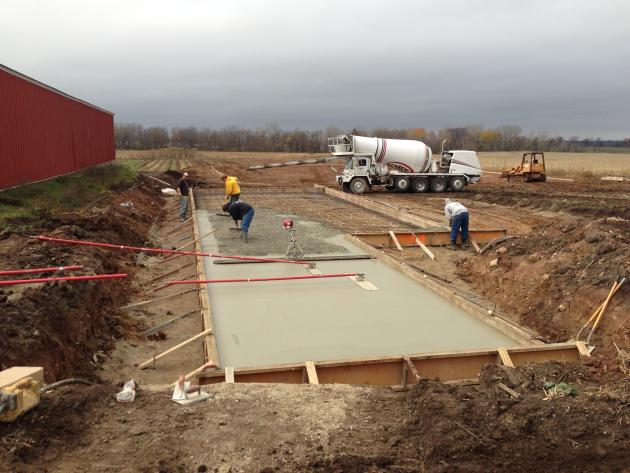
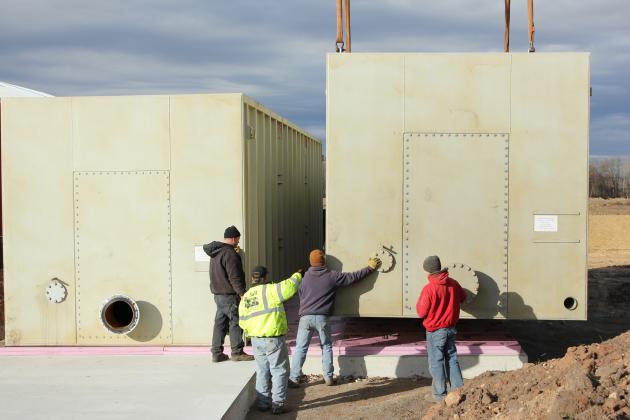
The University of Wisconsin-Oshkosh, in collaboration with BIOFerm™ Energy Systems, installed the EUCOlino—a small-scale, mixed, plug-flow digester—onto on a 136 milking head Wisconsin Dairy. The system is pre-manufactured, containerized and requires very limited on-site construction.   This includes grading, pouring a concrete pad for the containers and electrical services installation.

Start-up and commissioning were performed after the delivery of the 64 kWe combined heat and power (CHP). The input materials consist of bedded-pack dairy manure (corn or bean stover and straw), parlor wash water, and minor additional substrates such as lactose or fats, oils, and grease.

Solid materials are dumped via bucket tractor into a hopper feeder system that uses an auger to feed substrate into the anaerobic digestion tank. Additional parlor water is piped directly into the anaerobic digestion tank and mixed with the solids to make a feedstock of approximately 13% total solids. The solids are fed hourly, which is controlled by the PLC system.

The digester has a ~30-day retention time and the biogas produced is stored in a bag above the fermenters. Biogas produced is conditioned and combusted in a CHP mounted on a separate skid. Effluent from the system is pumped directly to an open pit lagoon for storage and subsequently land applied as fertilizer. The system produces approximately 25 – 33 m3/hour of biogas, with a raw biogas quality of 52-60% CH4 and less than 700 ppm H2S.

concrete pads for installation
installation
input

What have we learned?

This project has been an important step forward in developing future small-scale anaerobic digesters across the U.S.  Notably, our installation has given us insight into balancing system economics with the size of small-scale models; the energy output of the system must exceed pre-processing energy requirements and the digester must still be large enough for the designed residence time. Our experience has shown that, while reducing the size of a digester, these requirements remain essential for an installation to economically make sense.

Additionally, challenges involved in AD at the small-scale are related to pre-processing or feedstock conveyance. Once suitable consistence or size for conveyance, anaerobically digesting the organic fraction can be relatively easy. Inconsistency of incoming feedstocks is very detrimental to the system’s stability. Additionally, exterior feedstock storage and above ground piping can limit processing potential when severe cold weather settles in. While all of these are challenges that are easily overcome with engineering, they come at a cost and that can make or break the economics at this scale.

Future Plans

For the small-scale EUCOlino to be effective in the United States, it is key to establishing a U.S.- based manufacturing location. Pre-processing needs to be well-suited to the incoming feedstock. Post-digestion products need established off-takers, for electricity generation, bedding, fertilizer, etc.

Authors

Steven Sell, Manager Application Engineer, BIOFerm™ Energy Systems beaw@biofermenergy.com

Whitney Beadle, Marketing Communications, BIOFerm™ Energy Systems

Additional information

The following publications offer additional information on the Allen Farms digester:

Readers interested in this topic can also visit our website for more information on the Allen Farms digester and other BIOFerm projects. We can also be found on Facebook, Twitter, and LinkedIn.

The authors are solely responsible for the content of these proceedings. The technical information does not necessarily reflect the official position of the sponsoring agencies or institutions represented by planning committee members, and inclusion and distribution herein does not constitute an endorsement of views expressed by the same. Printed materials included herein are not refereed publications. Citations should appear as follows. EXAMPLE: Authors. 2015. Title of presentation. Waste to Worth: Spreading Science and Solutions. Seattle, WA. March 31-April 3, 2015. URL of this page. Accessed on: today’s date.
The Great Biogas Gusher


Why Pursue Bio-Energy?

The great Texas Oil Boom, also referred to as the Gusher Age, provided for dramatic economic growth in the US in the early 20th century, and ushered in rapid development and industrial growth. Although we typically think of the Middle East when we consider the impacts of oil discoveries on local economies (reference Dubai), at the time of its discovery, the oil finds in Texas were unprecedented; and the US quickly became the world’s top producer of petroleum.

As we all know, the rest of the world came to the party, and the US was soon falling in the ranks of top petroleum producers. Though the US oil reserves are vast, increasing concerns over the environmental impacts of finding, mining, extracting, refining, and consuming fossil fuels has incentivized the development of renewable energy resources, such as solar, wind, hydro, and bioenergy. Of these forms of renewable energy, bioenergy holds the promise for replacement of fossil fuels for transportation use.

a biogas collection systemWhat did we do?

Bioenergy may be described as fuels derived from organic materials, such as agricultural wastes, through processes like anaerobic digestion. The US has even more organic resources above the Earth’s surface than are identified in the petroleum and natural gas deposits yet to be exploited, yet the development of agricultural bioenergy systems seems to be progressing at a snail’s pace, as compare to the great Oil Boom. There is enormous potential in producing biogas from agricultural, industrial, municipal solid waste, sewage and animal byproducts which can be used to fuel vehicles. The EPA estimates that 8,200 US dairy and swine operation could support biogas recovery systems, as well as some poultry operations. Biogas can be collected from landfills and used to power natural gas vehicles or to produce energy. Wastewater treatment plants are estimated by the EPA to have the potential of about 1 cubic foot of digester gas per 100 gallons of wastewater, this energy could potentially meet 12% of the US electricity demand. Industrial, commercial and institutional facilities provide another source of biogas, in particular supermarkets, restaurants, and educational facilities with food spoilage.

What have we learned?

This presentation compares and contrasts the historical development of fossil fuel reserves with the potential for development of bioenergy from agricultural sources, such as animal wastes and crop residues. The US energy potential from these sources is grossly quantified, and current development inhibitions are identified and discussed. Opportunities for gathering biogas and bioenergy from multiple regional sources, similar to the processes used in the Texas oil fields, are discussed. The presentation offers insight into overcoming these obstacles, and how the US may once again rise to the top of the energy development rankings through efficient use and stewardship of our organic resources.

Percentage of waste water treatment plants that send solids to anaerobic digestion broken out by state

Future Plans

Biogas and bioenergy resources present an enormous opportunity for renewable energy development, and progression toward energy independence for the U.S. The U.S. currently has more than 2,000 active biogas harvesting sites, but claims more than 11,000 additional sites can be developed in the U.S., with the potential to power more than 3 million American homes if used to fuel electricity generating power plants. The USDA, EPA and DOE recently created a US Biogas Opportunities Roadmap which is off to a good start, which hopefully will initiate biogas programs, and foster investment in biogas systems to improve the market vitality in each state. To move the process forward, policy-makers, investors and the public need to have improved collaboration and communication on the state level. We need to develop a clear plan and strategy for developing these valuable biogas resources to promote environmental sustainability and economic growth of our b ioenergy sector.

Author

Gus Simmons, P.E., Director of Bioenergy, Cavanaugh & Associates, P.A. gus.simmons@cavanaughsolutions.com

Additional Information           

http://www.cavanaughsolutions.com 1-877-557-8924

http://www.epa.gov/climatechange/Downloads/Biogas-Roadmap.pdf

Acknowledgements      

USDA/DOE/EPA US Bioenergy Roadmap

The authors are solely responsible for the content of these proceedings. The technical information does not necessarily reflect the official position of the sponsoring agencies or institutions represented by planning committee members, and inclusion and distribution herein does not constitute an endorsement of views expressed by the same. Printed materials included herein are not refereed publications. Citations should appear as follows. EXAMPLE: Authors. 2015. Title of presentation. Waste to Worth: Spreading Science and Solutions. Seattle, WA. March 31-April 3, 2015. URL of this page. Accessed on: today’s date.
Money to Burn: How to Capitalize on BioCNG at Your Wastewater Plant

Purpose  

Across the globe, units of government are struggling with the balance of deriving clean energy with economics and environmental protection. This struggle has led to the development of many renewable energy innovations and inventions, such as rapid improvement in the cost and efficiencies of photovoltaic solar (PV) systems and the development of large off-shore wind turbine systems. The challenges imposed on energy utilities associated with managing grid variability leads emphasis on the development of ‘baseload’ alternative energy systems, like bioenergy systems. We should recognize, however, that we have a bounty of organic wastes generated by society each day, and systems that are able to recycle these organic resources into energy are capable of more consistent energy generation, as compared to the intermittency of solar and wind. In this regard, such bioenergy systems hold promise for balancing our energy needs.

Waste to worth mtb figure 1.What did we do?  

Bioenergy systems based on the utilization of organic wastes, such as municipal wastes, food wastes, and crop residues provide the additional benefits of supporting improved pollution prevention and waste treatment systems.

Of the organic wastes available for us in bioenergy systems, one may be directly correlated to the increasing energy needs and clean energy desires of the global population – waste organics associated with municipal wastewater treatment. Municipal wastewater treatment strategies vary by geography, climate, and level of development across our globe. However, in all cases, opportunities exist to utilize these waste as feedstocks for the creation of biogas that may be used to fuel electricity generators, farm implements, and the transportation needs of our population.

****the above writing doesn’t explain the work that was conducted as requested

What have we learned?  

Many municipal and industrial wastewater treatment plants (WWTP) across the U.S. already utilize anaerobic digestion as a primary treatment process to reduce sludge or reduce organic loading, expressed as Biochemical Oxygen Demand (BOD), to subsequent aerobic treatment processes. However, most of these facilities presently flare the biogas that is produced from the digestion process. Most often, these managers report the following reason for lack of implementation of energy harvesting. WHAT REASON???

We continue to seek clean, renewable energy sources across the globe to reduce our dependency on fossil fuels for improved air quality and economic stability. While solar, wind, and other renewable energy sources play a vital role in a diversified energy strategy, the development of bioenergy systems that continuously operate in ‘base load’ fashion is very important for grid stability. Additionally, unlike solar and wind, bioenergy systems that convert organic wastes into fuels have opportunities to positively impact transportation fuel needs. The development of systems that harvest biogas from anaerobic digesters employed at municipal wastewater plants can serve to fill a portion of this need, and create improved revenues for the wastewater treatment utility. Often, anaerobic digesters serving municipal wastewater treatment plants are operating well under their optimum capacity, creating opportunities for municipalities to engage in partnerships with private sector waste generators, such as food and beverage processors, restaurants, and farmers.

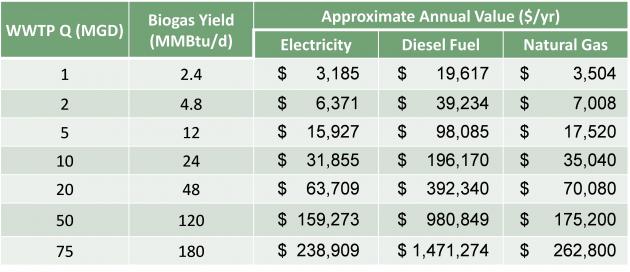
Many commercial fleets are converting to natural gas fuel to realize the cost savings and participate in programs that reward cleaner air quality through reduced emissions. Each commercial waste truck that is converted to natural gas from diesel has a comparable impact to removing 325 cars from the road. Currently the costs of natural gas-fueled vehicles are slightly higher (10-15%) than conventionally-fueled vehicles. However, as the costs of fossil fuels rise, and more CNG vehicles are manufactured, the costs are likely to become very similar.


****An explanation of the table below would be useful.. You should use this document to outline how you conducted the study and what you found, most of the information contained is introductory in nature.

Table 1.

Table 2.Future Plans    

Unlike fossil fuels, which are finite in quantity, bioenergy and biogas systems convert the organic wastes that are generated each day into fuel; often in only a few days’ time. In this regard, bioenergy systems offer a truly infinite resource for renewable energy, while providing the added benefit of pollution reduction and additional revenues to support existing wastewater treatment infrastructure systems.

Author

Gus Simmons, Director of Bioenergy, Cavanaugh & Associates, P.A. gus.simmons@cavanaughsolutions.com

Additional information

www.cavanaughsolutions.com

1-877-557-8924

Acknowledgements      

Clean Water Needs Survey, 2008

Loyd Ray Farms, Yadkinville, NC

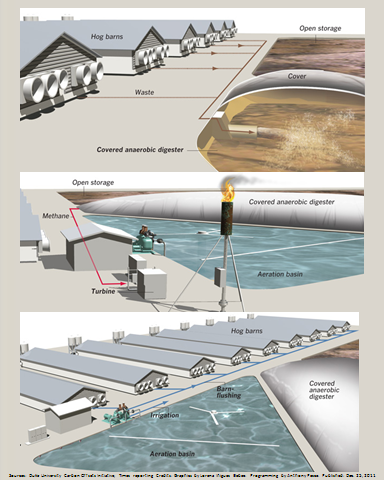
Duke University Carbon Offsets Initiative

The authors are solely responsible for the content of these proceedings. The technical information does not necessarily reflect the official position of the sponsoring agencies or institutions represented by planning committee members, and inclusion and distribution herein does not constitute an endorsement of views expressed by the same. Printed materials included herein are not refereed publications. Citations should appear as follows. EXAMPLE: Authors. 2015. Title of presentation. Waste to Worth: Spreading Science and Solutions. Seattle, WA. March 31-April 3, 2015. URL of this page. Accessed on: today’s date.


Above the Dirt: A Look into North Carolina’s Clean Energy Future through Waste-carbon Harvesting


Why Study Organic Wastes as Energy Sources?

Compare the Potential: The United States has tremendous organic resources available, such as food waste, crop residues, animal manures, and human waste. Americans need only look out the window of their home or office to see the reasons why – we live in a very ‘green’ country. In most states, we have a temperate climate with ample resources that promotes our ability to inhabit and cultivate; which means we create organic wastes. However, Americans have been slow to realize the huge potential that may be derived from these organic resources in the form of bioenergy. Why have we spent so much time evaluating the energy resources buried deep in our soils, rather than recognizing the opportunity right in front of us, above the dirt?

What did we do?  

This presentation provides an overview for establishing infrastructure systems that capture, purify, and transport the biogas that may be derived from these organic resources to create an infinite energy reserve to draw from, creating jobs and bolstering our economy. Potential uses for energy products that may be derived from organic wastes are discussed, as well as the barriers, challenges, and economics of waste to energy systems. The presenter’s home state of North Carolina is examined in more detail, describing and comparing the potential for harnessing the energy value from wastes that lie above the dirt.

The Potential:

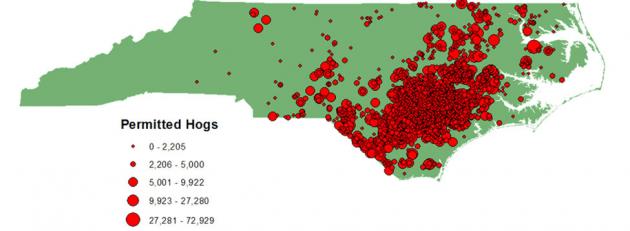
To understand the infinite possibilities and advantages of the use of bioenergy nationwide, let’s first explore the possibilities in just one state, North Carolina. According to Census Bureau migration patterns in 2013 across the U.S. showed that North Carolina remains in the top 3 fastest-growing states in the nation. While predominantly an agricultural state, N.C. has an abundance of potential to be derived from organic resources in the form of bioenergy. N.C. places second in the U.S. for the production of pigs and turkeys and it ranks fourth in the production of broiler chickens. This generates an abundance of organic wastes, particularly in animal manures, which as people are beginning to understand, gives our state of North Carolina the potential to be a leader in supplying renewable energy.

Map of permitted hogs

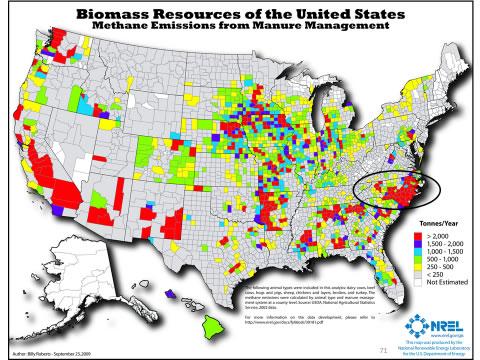
According to sources such as the Environmental Protection Agency (EPA), the U.S. Department of Agriculture (USDA) and the Renewable Energy Laboratory (NREL), the organic waste resources in North Carolina – stemming from municipal waste (solid waste and sewage) and agriculture (animal manures) – are among the richest in the nation. Imagine the Potential: North Carolina can harvest energy value from crop residues, food waste and crops to produce infinitely renewable energy that can also improve air and water quality impacts. Anaerobic digestion is one common approach to harvesting the energy content of these organic wastes and other feedstocks.

Biomass resource of the United States, methane emissions from manure management map

What have we learned?  

The development of bioenergy systems is one of the ways in which we can be good stewards of our earthly resources. By reusing the carbon readily at hand above the ground – which is often already creating a negative environmental impact in the form of waste – these bioenergy systems can provide for our fuel and energy needs while simultaneously achieving improvements in environmental quality. There are many ways in which we can accomplish the reuse of carbon through the harvesting of energy value associated with organic wastes. There are over 16,000 permitted municipal WWTP’s in the U.S., and about 10% utilize anaerobic digestion. Coupled with the thousands and thousands of farms, landfills, and biotechnology manufacturing facilities, our ability to develop renewable biogas fuels for transportation and electrification is astounding.

NC "all bioenergy" facilities map (with NG pipelines)

Future Plans  

As a country we need to step away from how we have always done things (buying foreign sources of oil, and using fossil fuels, and relying solely on power plants) and be receptive to innovative approaches that improve climate action initiatives and foster stewardship of our earthly resources so that we can do better environmentally and plan so there be enough water, energy and food for the future. These recommendations start on a state to state level, and progress through our country, and across the world. We need to take better care of our environment, and uses our resources to reduce pollution and greenhouse gases, and harvest the energy from our wastewater and agricultural sources that lie above the dirt.

Author     

Gus Simmons, P.E., Director of Bioenergy, Cavanaugh & Associates, P.A. gus.simmons@cavanaughsolutions.com

Additional information                 

www.cavanaughsolutions.com

1-877-557-8924

Acknowledgements      

Duke Energy Carbon Offsets Initiative

NREL – www.nrel.gov/gis

The authors are solely responsible for the content of these proceedings. The technical information does not necessarily reflect the official position of the sponsoring agencies or institutions represented by planning committee members, and inclusion and distribution herein does not constitute an endorsement of views expressed by the same. Printed materials included herein are not refereed publications. Citations should appear as follows. EXAMPLE: Authors. 2015. Title of presentation. Waste to Worth: Spreading Science and Solutions. Seattle, WA. March 31-April 3, 2015. URL of this page. Accessed on: today’s date.


Farms of the Future: Seeking Agricultural Energy Independence


Why Look to Agriculture and Bioenergy?

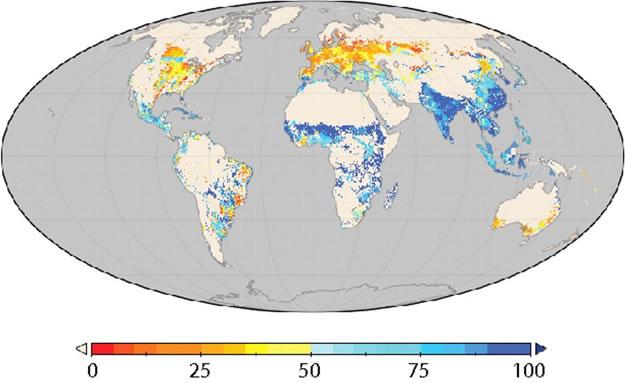
As the world population continues to grow at an exponential rate, the ability to nourish this planet’s inhabitants with clean water and safe, healthy food are of paramount importance. This paper describes some of the considerations for and impacts of the demand for the production of food in developed and developing countries on energy resources, and ways in which advancements in on-farm, bioenergy production systems may help farms achieve the incredible production requirements of the next thirty years. Our challenge is to expand agriculture’s output to accommodate the increasing population, without hindering its environmental footprint.

What did we do?  

Today only roughly two percent (2%) of the population produces the food for our plant. This includes all the fruits, vegetables, meats and dairy products that the world’s population of over 7 billion people acquires and eats from markets, grocers, and restaurants. Our global population is projected to exceed nine billion people by the year 2050, all of who will need to be supplied with food derived from the farms of the future. Through technological advances, and improvements in motorized equipment, each farmer is now able to feed roughly 150 people, compared to only 19 people in the 1940’s (Prax, 2010). In the year 2050, a farmer will be required to feed at least 200 people, and based on the rate of reduction in both the number of farms and the amount of land under agricultural production, that number may reach 300 people. But what will these ‘Farms of the Future’ be like? The number of actively producing farms in the developed world has suffered a slow, steady decline over the past two decades, while the global demand for fresh foods, protein and feedstocks have steadily increased. How will we feed a population of more than nine billion with fewer and fewer farms, and how will we feed the livestock needed to feed the increased population?

Figure 1.

What have we learned?  

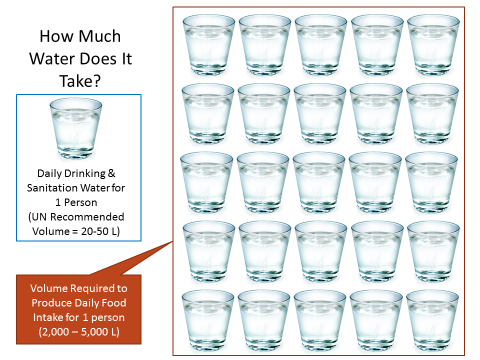
The growth in our global population also means a growth in the need for clean water, which is a somewhat fixed volume on planet Earth. More importantly, though, the growth in the demand for clean water for drinking purposes also places a greater constraint on the amount of fresh water available for irrigation of crops and to provide for the drinking water required of livestock. The increase in our population means much greater demands for energy – for everything from transportation, lighting, and communications devices to water treatment, agricultural production, and food processing. The culmination of these increasing demands on our planets finite resources has been dubbed by many as the “Food-Water-Energy Nexus.”

Future Plans  

The interdependency of agriculture, water, and energy has become commonly referred to as “the Nexus.” This term does not indicate a crossroads, where a pathway to agricultural production is independent of impacts on water supply and energy availability. Instead, it denotes a relationship of give and take: the decisions we make to utilize, exploit, or economize one of these critical elements of human existence are likely to have broad-reaching impacts on the other two.

Figure 2.The realization of these interdependencies, and more importantly, the fragility of the balance of satisfying these needs must lead us to proactively invest in agricultural innovations, as much as we have with water and energy. The needs for energy innovations have been wildly popularized in society, such as may be seen through promulgation of solar panels the world-over. Similarly, water sustainability innovations, such as reclaiming water from wastes, water conservation devices, and even desalinization. However, the drive for innovations in maximizing the productivity of healthy foods through sustainable agricultural practices seems, by many, silent in comparison.
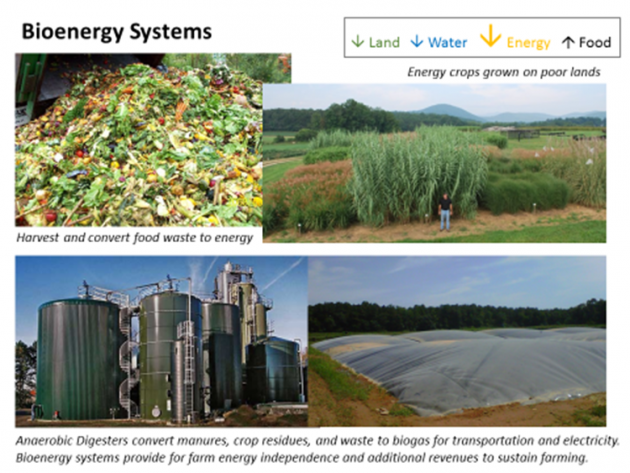
There is no doubt that the ‘Farms of the Future’ must be able to be self-sustaining; but what does that mean? Will they be able to take the manures from livestock, swine and poultry, convert them to biogas to run the machinery serving their farms, and also provide the nutrient-rich fertilizers for their crops, and bedding for their animals? Will they be able to return nutrients, water, and carbon to the land in which the food is produced in such a manner that none is wasted (meaning the only export from the farms is the food products that are to be consumed, rather than in the form of air emissions, water waste, and exported solid wastes)? What alternate sources of revenue may be developed to sustain small, locally sourced farms?

Demand Placed on Lands

This presentation will discuss how farms of the future can prepare to deal with issues of climate change and greenhouse gas reduction and what is needed in agriculture, water conservation, and stewardship to prepare our world for the additional people inhabiting the Earth in 2050.

Figure 3.

Author         

Gus Simmons, P.E., Director of Bioenergy, Cavanaugh & Associates, P.A. gus.simmons@cavanaughsolutions.com

Additional information  

www.cavanaughsolutions.com

Gus Simmons, P.E. 1-877-557-8924

Acknowledgements      

Sources:

1. Monfreda, C., N. Ramankutty, and J. A. Foley (In Press), Farming the Planet. 2: The Geographic Distribution of Crop Areas, Yields, Physiological Types, and NPP in the Year 2000, Global Biogeochemical Cycles, doi:10.1029/2007GB002947.

The authors are solely responsible for the content of these proceedings. The technical information does not necessarily reflect the official position of the sponsoring agencies or institutions represented by planning committee members, and inclusion and distribution herein does not constitute an endorsement of views expressed by the same. Printed materials included herein are not refereed publications. Citations should appear as follows. EXAMPLE: Authors. 2015. Title of presentation. Waste to Worth: Spreading Science and Solutions. Seattle, WA. March 31-April 3, 2015. URL of this page. Accessed on: today’s date.