Ammonia Emissions and Emission Factors: A Summary of Investigations at Beef Cattle Feedyards on the Southern High Plains

Waste to Worth: Spreading science and solutions logoWaste to Worth home | More proceedings….

Why Study Ammonia Emitted from Feedlots?

Ammonia volatilization is a major component of the nitrogen balance of a feedyard, and the effects of ammonia loss range from the economic (loss of manure fertilizer value) to the environmental (air quality degradation, overfertilization of ecosystems). Although not yet regulated, ammonia emissions from cattle are required to be reported under the Emergency Planning and Community Right to Know Act. Emission factors are used to estimate ammonia emissions for purposes of reporting and national inventories, but current emission factors are based on limited data. Our objective was to definitively quantify ammonia emissions and emission factors from commercial feedyards on the southern High Plains of Texas.
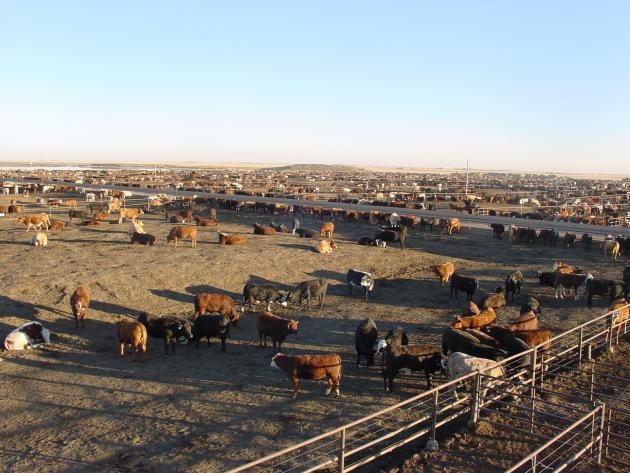
A typical feedyard on the High Plains of Texas. In the foreground, cattle in corrals with a stocking density of about 150 sq. ft./animal. In the background on the left, the runoff water retention pond, and center, a mound of stockpiled manure.

What Did We Do?

Ammonia emissions were quantified at three commercial feedyards in the Texas Panhandle from 2002 to 2008 using micrometeorological methods. Seasonal, intensive measurement campaigns were conducted from 2002 to 2005 at one feedyard, and ammonia emissions were near-continously monitored from 2007-2008 at two more feedyards. Meteorological and cattle management data were also collected.

What Have We Learned?

Ammonia emissions followed a distinct annual pattern. Emissions during summer were about twice those during winter, while spring and autumn emissions were intermediate. Annualized ammonia emissions ranged from 0.20 to 0.37 lb NH3/animal/day, and averaged 0.26 lb NH3/animal/day over all studies. Ammonia loss as a fraction of nitrogen fed to cattle averaged 41% during winter and 69% during summer; on an annual basis, 54% of fed nitrogen was lost as ammonia. Greatest emissions were observed when crude protein in cattle rations exceeded the nutrient requirements of beef cattle. Mean monthly ammonia emissions were strongly correlated with mean monthly temperature, and the relationship can be used to predict ammonia emissions from southern High Plains feedyards. Cattle feeders that meet recommended crude protein in rations can expect to lose half of fed N as ammonia. We recommend an annual emission factor of 88 lb/head for beef cattle feedyards based on one-time capacity, or 39 lb/head fed, based on a 150-d feeding period.
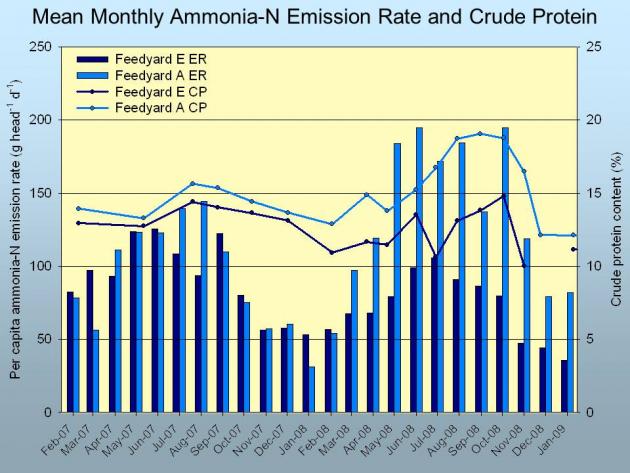
The annual pattern of ammonia emission rates (ER) followed seasonal temperatures, but also was sensitive to dietary crude protein (CP). Adding distillers grains to rations from March, 2008 to October, 2008 increased crude protein at Feedyard A to as high as 19%. Ammonia emissions greatly increased compared with the previous year and compared with Feedyard E.

Future Plans

Next steps involve using the extensive database from this research to adapt and refine process-based models of ammonia emissions. These models, based on the actual physical and chemical processes that control ammonia loss, will be more generally applicable than emission factors to a wider range of feedyards.

On an annual basis, ammonia emission averaged 0.26 lb per animal per day across the three feedyards and six years of study. Increased ammonia emission at Feedyard A in 2008 was due to high dietary crude protein when distillers grains were added to rations. Using these data and other estimates of ammonia loss from retention ponds and stockpiles, we recommend, for beef cattle fed a diet that meets protein requirements, an annual emission factor of 88 lb/head based on one-time capacity, or 39 lb/head fed, based on a 150-d feeding period.

Authors

Richard W. Todd, Research Soil Scientist, USDA-ARS Conservation and Production Research Laboratory, Bushland, Texas, richard.todd@ars.usda.gov

Richard W. Todd, Research Soil Scientist; N. Andy Cole, Research Leader and Research Animal Scientist (Nutrition); and Heidi M. Waldrip, Research Soil Scientist: USDA-ARS Conservation and Production Research Laboratory, Bushland, Texas.

Additional Information

Cole, N.A., R.N. Clark, R.W. Todd, C.R. Richardson, A. Gueye, L.W. Greene, and K. McBride. 2005. Influence of dietary crude protein concentration and source on potential ammonia emissions from beef cattle manure.  J. Anim. Sci. 83:722 731.

Cole, N.A., A.M. Mason, R.W. Todd, M. Rhoades, and D.B. Parker. 2009. Chemical composition of pen surface layers of beef cattle feedayrds. Prof. Anim. Sci. 25:541-552.

Flesch, T.K., J.D. Wilson, L.A. Harper, R.W. Todd, and N.A. Cole. 2007. Determining ammonia emissions from a cattle feedlot with an inverse dispersion technique. Agric. For. Meteorol. 144:139-155.

Hristov, A. N., M. Hanigan, A. Cole, R. Todd, T. A. McAllister, P. M. Ndegwa, A. Rotz. 2011. Ammonia emissions from dairy farms and beef feedlots: A review. Can. J. Anim. Sci. 91:1-35.

Preece, S.L., N.A. Cole, R.W. Todd, and B.W. Auvermann. 2012. Ammonia emissions from cattle-feeding operation. Texas A&M AgriLife Extension Bulletin E-632 12/12.

Rhoades, M.B., D.B. Parker, N.A. Cole, R.W. Todd, E.A. Caraway, B.W. Auvermann, D.R. Topliff, and G.L. Schuster. 2010. Continuous ammonia emission measurements from a commercial beef feedyard in Texas. Trans. ASABE 53:1823-1831.

Sakirkin, S.L., N.A. Cole, R.W. Todd, and B.W. Auvermann. 2011. Ammonia emissions from cattle-feeding operations. Part 1: issues and emissions. Texas Agricultural Experiment Station Bulletin, Air Quality Education in Animal Agriculture, Issues: Ammonia, December, 2011. p. 1-11.

Sakirkin, S., R.W. Todd, N.A. Cole, and B.W. Avermann. 2011. Ammonia emissions from cattle-feeding operations. Part 2: abatement. Texas Agricultural Experiment Station Bulletin, Air Quality Education in Animal Agriculture, Issues: Abatement, December, 2011. p. 1-11.

Todd, R.W., N.A. Cole, and R.N. Clark. 2006. Reducing crude protein in beef cattle diet reduces ammonia emissions from artificial feedyard surfaces. J. Environ. Qual. 35:404-411.

Todd, R.W., N.A. Cole, M.B. Rhoades, D.B. Parker, and K.D. Casey. 2011. Daily, monthly, seasonal and annual ammonia emissions from southern High Plains cattle feedyards. J. Environ. Qual. 40:1-6.

Todd, R.W., N.A. Cole, H.M. Waldrip, and R.M. Aiken. 2013. Arrhenius equation for modeling feedyard ammonia emissions using temperature and diet crude protein. J. Environ. Qual. 2013. (accepted for publication).

Acknowledgements

Research was supported by CSREES Grant #TS2006-06009 under the direction of Dr. John Sweeten, Resident Director, Texas A&M University AgriLife Research and Extension Center, Amarillo, TX. Larry Fulton, Research Technician, USDA-ARS-CPRL, provided invaluable technical and logistical support and expertise.

The authors are solely responsible for the content of these proceedings. The technical information does not necessarily reflect the official position of the sponsoring agencies or institutions represented by planning committee members, and inclusion and distribution herein does not constitute an endorsement of views expressed by the same. Printed materials included herein are not refereed publications. Citations should appear as follows. EXAMPLE: Authors. 2013. Title of presentation. Waste to Worth: Spreading Science and Solutions. Denver, CO. April 1-5, 2013. URL of this page. Accessed on: today’s date.

Ammonia Emissions from Eight Types of Dairy Manure During Storage

Waste to Worth: Spreading science and solutions logoWaste to Worth home | More proceedings….

Why Study Ammonia Emissions from Dairy Manure?

  1. To study the interactive effects of large particle solids removal, anaerobic digestion and amendment of a manure additive (More than manure®), along with environmental factors on NH3 emissions from dairy slurry during storage.
  2. To demonstrate a cost-effective and instantaneous NH3 measurement method using GasAlert NH3 detector under field conditions.

What Did We Do?

Twenty-six liters of each manure was stored in plastic storage buckets in duplicate in a  barn with the surface open to the atmosphere. GasAlert readings of NH3 were obtained weekly from each container. Samples from each manure were analyzed for total N, NH4-N, total solids and volatile solids. Data collected was manure temperature, manure pH and ambient temperature. Average NH3 concentration, peak NH3 concentration and NH3 flux was calculated for each manure treatment.

What Have We Learned?

1. AD manure may result in greater N loss in the form of NH3 than raw manure.

2. Higher amounts of solids can preserve more total nitrogen in manure, which can potentially result in greater NH3 loss during storage.

3. The manure amendment “More Than Manure®” did not have a significant effect on preserving N in manure during storage.

4. The GasAlert® NH3 detector can be adopted as a cost-effective tool for determination of  NH3.

Future Plans

1.Examine the effect of manure sources on emissions of greenhouse gases (CO2, CH4 and N2O) during storage.

2. Include additional environmental factors, such as ventilation and solar radiation, to observe the external impact on manure N loss potential.

3. Evaluate gaseous losses from manure over extended lengths of time, > 3 months.

Additional Information

Ammonia Emissions from Eight Types of Diary Manure During Storage (PDF version of poster)

Poster Graphs

Authors

Joe Harrison, professor, Washington State University, Puyallup Research and Extension Center, jhharrison@wsu.edu

Fei Sun1, graduate student

Joe Harrison1, professor

Pius Ndegwa2, associate professor

HungSoo Joo2, post Doc research associate

Liz Whitefield1, research associate

Kris Johnson2, professor

1Washington State University Research and Extension Center, 2 Washington State University

Acknowledgements

Specialty Fertilizer Products (SFP), LLC for financial support  


The authors are solely responsible for the content of these proceedings. The technical information does not necessarily reflect the official position of the sponsoring agencies or institutions represented by planning committee members, and inclusion and distribution herein does not constitute an endorsement of views expressed by the same. Printed materials included herein are not refereed publications. Citations should appear as follows. EXAMPLE: Authors. 2013. Title of presentation. Waste to Worth: Spreading Science and Solutions. Denver, CO. April 1-5, 2013. URL of this page. Accessed on: today’s date.


Manure Spreader Calibration Field Days for Confined Animal Facility Operators in South Carolina

Waste to Worth: Spreading science and solutions logoWaste to Worth home | More proceedings….

Abstract

Confined Animal Facility Operators in South Carolina either utilize the manure they produce directly on their own land or sell the manure to be used on another farm.  The application of this manure is regulated by SC Regulation R.61-43, which provides application setback requirements, nutrient application rates, and other information pertaining to the utilization of the manure as a nutrient source.  One requirement of this regulation is that growers must calibrate their spreader equipment once each year in order to provide an accurate application of the manure.  Spreader calibration field days were developed for both liquid and solid manure application systems and held in multiple locations around South Carolina.  The poster will detail the methods used, the amount of grower interaction and participation, and the number or growers attending and utilizing this program.

Authors

Bryan Smith, Clemson University Cooperative Extension Service               wsmth@clemson.edu

Brian L. Beer, M.S., Area Extension Agent – Livestock, Clemson Extension Service, Lee van Vlake, M.S., Area Extension Agent – Livestock, Clemson Extension Service


The authors are solely responsible for the content of these proceedings. The technical information does not necessarily reflect the official position of the sponsoring agencies or institutions represented by planning committee members, and inclusion and distribution herein does not constitute an endorsement of views expressed by the same. Printed materials included herein are not refereed publications. Citations should appear as follows. EXAMPLE: Authors. 2013. Title of presentation. Waste to Worth: Spreading Science and Solutions. Denver, CO. April 1-5, 2013. URL of this page. Accessed on: today’s date.

Process for Recovery of Phosphorus from Solid Manure

Waste to Worth: Spreading science and solutions logoWaste to Worth home | More proceedings….

Why Study Phosphorus Recovery?

Land application of manure in regions with intense confined livestock and poultry production is an environmental concern when land is limiting because it promotes soil phosphorus (P) surplus and potential pollution of water resources. A net accumulation of soil P results from the disproportion between lower nitrogen (N) and P ratio (N:P) in animal manure and the higher N:P ratio in harvested crops. Although manure can be moved off the farm, its transportation becomes less economical with increasing distances from the source. Thus, management alternatives to land application are needed to resolve agronomic P imbalances for more effective recycling of manure P.

Litter washed solids residue – Low P content

What Did We Do?

A treatment process, called “quick wash”, was developed for extraction and recovery of P from poultry litter and animal manure solids. In the quick wash process, P is selectively extracted from solid manure or poultry litter by using mineral or organic acid solutions. Following, P is recovered by addition of liquid lime and an organic poly-electrolyte to the liquid extract to form a calcium-containing P precipitate. The quick wash process generates two products: 1) washed solid residue, and 2) concentrated recovered P material.

What Have We Learned?

Recovered concentrated P material

The quick wash process selectively removes up to 80 % of the phosphorus from manure solids while leaving most of the nitrogen in the washed litter residue. Consequently, the washed solid residue has a more balanced N:P ratio for crop production and environmentally safe for land application. The concentrated  P recovered materials contained more than 90% of its phosphorus in plant available form. The use of recovered P can provide a recycled P source for use as crop fertilizer while minimizing manure P losses into the environment from confined animal production.

Future Plans

USDA granted an exclusive license of the invention to Renewable Nutrients, LLC (Pinehurst, NC); a centralized plant for treating poultry litter is planned to be built and operated by Renewable Nutrients in the Mid-Atlantic region.

Authors

Ariel A. Szogi, Research Soil Scientist, USDA-ARS Coastal Plains Soil, Water, and Plant Research Center,  Florence, SC. ariel.szogi@ars.usda.gov

Ariel A. Szogi, Matias B. Vanotti, Patrick G. Hunt – USDA-ARS Coastal Plains Soil, Water, and Plant Rsearch Center,  Florence, SC.

Additional Information

https://www.ars.usda.gov/is/pr/2008/080229.htm

https://www.frontiersin.org/articles/10.3389/fsufs.2018.00037/full

Szogi, A.A., Vanotti, M.B., Hunt, P.G., 2008. Process for removing and recovering phosphorus from animal waste. U.S. Patent and Trademark Office Application Serial No. 12/026,346.

Szogi, A.A., Vanotti, M.B., and Hunt, P.G. 2008. Phosphorus recovery from poultry litter. Trans. ASABE 51(5):1727-1734.

Szogi, A.A. and Vanotti, M.B., 2009. Prospects for phosphorus recovery from poultry litter. Bioresour. Technol. 100(22):5461-5465.

Szogi, A.A., Bauer, P.J., and Vanotti, M.B. Fertilizer effectiveness of phosphorus recovered from broiler litter. Agron. J. 102(2):723-727. 2010.

Acknowledgements

This work is part of USDA-ARS National Program 214: Agricultural and Industrial Byproducts; ARS Project 6657-13630-005-00D “Innovative Bioresource Management Technologies for Enhanced Environmental Quality and Value Optimization.”

The authors are solely responsible for the content of these proceedings. The technical information does not necessarily reflect the official position of the sponsoring agencies or institutions represented by planning committee members, and inclusion and distribution herein does not constitute an endorsement of views expressed by the same. Printed materials included herein are not refereed publications. Citations should appear as follows. EXAMPLE: Authors. 2013. Title of presentation. Waste to Worth: Spreading Science and Solutions. Denver, CO. April 1-5, 2013. URL of this page. Accessed on: today’s date.

Effect of Manure Handling and Incorporation on Steroid Movement In Agricultural Fields Fertilized With Beef Cattle Manure

Waste to Worth: Spreading science and solutions logoWaste to Worth home | More proceedings….

Why Study Manure Land Application and Steroids?

Manure generated from concentrated animal feeding operations may serve as a source of steroids in surface water and adversely impact the development of aquatic ecosystems. The objectives of this research were to determine the amount of steroids and metabolites in manure from beef cattle production pens, and runoff from crop production fields.

What Did We Do?

Heifers were treated with zeranol, trenbolone acetate, and 17b-estradiol implants and fed melengestrol acetate, while a second group was not treated with growth promoters. Manure was sampled in the pens during feeding, run-off was collected during rainfall events, after feeding manure was collected, and either composted or stockpiled overwinter. In the  following summer both composted and stockpiled manure was spread on a field, with plots subjected three tillage practices. Following application, two rainfall simulation events were conducted: one day (1 DAT) and one month later (30 DAT) to determine the effects of rainfall timing, manure handling (treated compost, untreated compost, treated stockpile and untreated stockpile) and tillage (no-till, moldboard plow+disk and disk) on the runoff losses of steroids.

What Have We Learned?

Simulated rainfall apparatus.

Results from the manure composting showed reduction in steroid concentrations over stockpiling for some compounds in manure samples such as 4-androstenedione, a-zearalenol, and progesterone, though not for all steroids. Very low concentrations of steroids were found in most runoff samples, approaching or below detection limits. Considering only detection frequency, fewer runoff samples showed traces of steroids on the 1 DAT in comparison to the 30 DAT simulations.  The amount of  rainfall  before runoff was initiated was affected by tillage, and was different for the 1 DAT and 30 DAT events. A second year’s study with a smaller set of treatments, and use of a surrogate estrogen applied at known mass showed that disking significantly reduced runoff losses of the steroids. Runoff risk is affected by the storm event needed to initiate runoff, and also the time since manure application.

Soil during rain simulation and tube to take runoff to collection point.

Future Plans

From both the steroid runoff and general manure applications risk perspectives, how the soil receives rainfall changes during the first month after tillage. Therefore, this process needs to be investigated more closely and models predicting runoff have to take these changes into account.

Authors

Charles A. Shapiro, Professor, Department of Agronomy and Horticulture, University of Nebraska-Lincoln, Haskell Agricultural Laboratory, Concord, NE cshapiro@unl.edu

Sigor Biswas, Research Assistant, William L. Kranz, Associate Professor, David P. Shelton, Professor, Simon J. van Donk, Assistant Professor, Biological Systems Engineering; Daniel D. Snow, Associate Professor, Schol of Natural Resources; Shannon L. Bartelt-Hunt, Assistant Professor, Tian C. Zhang, Professor, Civil Engineering; Terry L. Mader, Professor, Animal Science, University of Nebraska-Lincoln; David D. Tarkalson, Soil Scientist, USDA-ARS, Kimberly-ID. 

Additional Information

Bartelt-Hunt, S., D. Snow, W. Kranz, T. Mader, C. Shapiro, S. van Donk, D. Shelton, D. Tarkelson, and T.C. Zhang. 2012. Effect of growth promotants on the occurrence of steroid hormones on feedlot soils and in runoff from beef cattle feeding operations. Environ. Sci. Technol. 46(3): 1352-1360.

Biswas, S., C. A. Shapiro, W. L. Kranz, T. L. Mader, D. P. Shelton, D.D. Snow, S. L. Bartell-Hunt, D. D. Tarkalson, S. J. van Donk, T. C. Zhang, S. Enslay. Current knowledge on the environmental fate, potential impact and management of growth promoting steroids used in the US beef cattle industry. J. of Soil and Water Cons. (In press, July 2013 issue).

Acknowledgements

This research was funded by US-EPA Science to Achieve Results (STAR) grant R833423.


The authors are solely responsible for the content of these proceedings. The technical information does not necessarily reflect the official position of the sponsoring agencies or institutions represented by planning committee members, and inclusion and distribution herein does not constitute an endorsement of views expressed by the same. Printed materials included herein are not refereed publications. Citations should appear as follows. EXAMPLE: Authors. 2013. Title of presentation. Waste to Worth: Spreading Science and Solutions. Denver, CO. April 1-5, 2013. URL of this page. Accessed on: today’s date.

The Role of Drainage Depth and Intensity on Hydrology and Nutrient Loss in the Northern Corn-Belt

Waste to Worth: Spreading science and solutions logoWaste to Worth home | More proceedings….

Why Are We Concerned About Nutrient Loss and Tile Drainage?

Water management in the crop root-zone is crucial to successful crop growth and production. Irrigation, surface, and subsurface drainage—and other practices—are routinely implemented throughout the world to improve crop productivity and working conditions of the soil. Water management practices also impact the environmental footprint of agricultural systems by affecting the flow of water, nutrients, sediment, and other constituents through field, farms, and watersheds. Water management practices for agriculture in the Midwestern US should be designed with both profitability and the environment in mind. The design of subsurface (tile) drainage systems has traditionally been more a matter of how much drainage one can afford, rather than the aforementioned objectives. The relationship among subsurface drainage design characteristics (depth, spacing, layout), farm profitability, and environmental impact are not well known at the farm scale. Thus, drainage system design may fail to meet one or more of these important objectives. This presentation will examine the effects of subsurface drainage system design criteria on productivity, profitability, and the environment, using the soils and climatic conditions of the northern corn-belt (southern Minnesota).

Check Out These Other Presentations About Tile Drainage

Swine Manure Timing & Subsurface Drainage

Tile Drainage Field Day

Use of Filters in Drainage Control Structures

New Technologies for Drainage Water Management

Authors

Gary Sands, University of Minnesota      grsands@umn.edu

Dario Canelon, University of Minnesota; Mike Talbot, University of Minnesota


The authors are solely responsible for the content of these proceedings. The technical information does not necessarily reflect the official position of the sponsoring agencies or institutions represented by planning committee members, and inclusion and distribution herein does not constitute an endorsement of views expressed by the same. Printed materials included herein are not refereed publications. Citations should appear as follows. EXAMPLE: Authors. 2013. Title of presentation. Waste to Worth: Spreading Science and Solutions. Denver, CO. April 1-5, 2013. URL of this page. Accessed on: today’s date.

The Arkansas Discovery Farm Program: Connecting Science to the Farm

Waste to Worth: Spreading science and solutions logoWaste to Worth home | More proceedings….

Why Create the Arkansas Discovery Farm Program?

Agriculture in Arkansas is under increasing pressure to manage nutrients and sediment in an environmentally sustainable manner.  In many sectors of the farming community, this has created severe constraints to remaining economically viable and competitive in today’s global market place.  In northwest Arkansas, home to the nation’s second largest broiler poultry production, farmers have been under intense scrutiny and litigation over the last decade, due to downstream water users (i.e., Oklahoma) questioning the role of agriculture in water quality impairment.  Also, increasing national attention is being focused on reducing nutrients to the Gulf of Mexico, which will further increase the need of agricultural producers to increase nutrient efficiency while declining groundwater levels in crop producing areas of eastern Arkansas will increase the need for greater water efficiency.  The Arkansas Discovery Farm Program was initiated in 2009 to document the effectiveness of conservation practices on “real-world” private farms across the diverse forage, livestock, and row crop agricultural setting across the State.

What Did We Do?

We are monitoring runoff quality from seven farms as we are quantify sediment and nutrient losses from all major row crop and livestock commodities including rice, soybean, corn, cotton, poultry and beef cattle.  We are currently monitoring the quality of runoff from 19 fields using automated water quality samplers that are now equipped modems that contact us via cell phone when sampling is initiated.    On our row crop fields, we have increased our efforts to monitor irrigation water use and needs.  All fields are equipped with turbine-type irrigation flow meters that utilize dataloggers to automatically records flow data.  On two farms, we split fields in half and monitored evapotranspiration with atmometers (ET gages) and compared to our computer irrigation scheduler to calibrate the ET gages as an easier field method for irrigation scheduling.

What Have We Learned?

Due to the fact that we have been monitoring runoff since mid-2011 at the longest, we have limited reliable information to present.  As our first year, 2011 produced several severe flood-stage storms and 2012 provided a record breaking drought, it is difficult to quantify impact at this point.  While the water quality monitoring is a cornerstone, empowering agricultural producers to take ownership in finding solutions to minimize environmental impact is paramount to protecting voluntary efforts for the industry.  Our major findings to date have been the willingness of Arkansas farmers in general to embrace the Program, to be environmentally accountable for their actions, and to be proactive rather than reactionary.   

Future Plans

We have plans to develop another Discovery Farm in the litigated Illinois River Watershed, Northwest Arkanas.   While there is a great deal of interest in developing a commerical forestry Discovery Farm, a lack of potneital funding has limited those plans to date.  As we continue to collect data, we hope we can provide timely information on both economic and natural resource sustainability on behalf of Arkansas Agriculture to regulators, lawmakers and other decision makers. 

Authors

Andrew Sharpley, Professor, Division of Agriculture, University of Arkansas System, sharpley@uark.edu

Mike Daniels, Professor, Cooperative Extension, Division of Agriculture, University of Arkansas System

Neal Mays, Program Technician, Division of Agriculture, University of Arkansas System

Cory Hallmark, Program Technician, Cooperative Extension, Division of Agriculture, University of Arkansas System

Additional Information

http://discoveryfarms.uark.edu/

Acknowledgements

Arkansas Association of Conservation Districts, Arkansas Conservation Commission, Arkansas Natural Resource Conservation Service, Arkansas Farm Bureau


The authors are solely responsible for the content of these proceedings. The technical information does not necessarily reflect the official position of the sponsoring agencies or institutions represented by planning committee members, and inclusion and distribution herein does not constitute an endorsement of views expressed by the same. Printed materials included herein are not refereed publications. Citations should appear as follows. EXAMPLE: Authors. 2013. Title of presentation. Waste to Worth: Spreading Science and Solutions. Denver, CO. April 1-5, 2013. URL of this page. Accessed on: today’s date.

Software For Evaluating the Environmental Impact of Dairy and Beef Production Systems

Waste to Worth: Spreading science and solutions logoWaste to Worth home | More proceedings….

Why Model Environmental Impacts of Livestock?

Quantifying the long term environmental impacts of dairy and beef production is complex due to the many interactions among the physical and biological components of farms that affect the amount and type of emissions that occur. Emissions are influenced by climate and soil characteristics as well as internal management practices. Software models are needed to perform an integrated and comprehensive assessment of all important environmental and economic effects of farm management and mitigation strategies. Related: Manure value & economics

What Did We Do?

Figure 1. The Integrated Farm System Model simulates the performance, determines the economics, and predicts the air and water emissions of farm production systems.

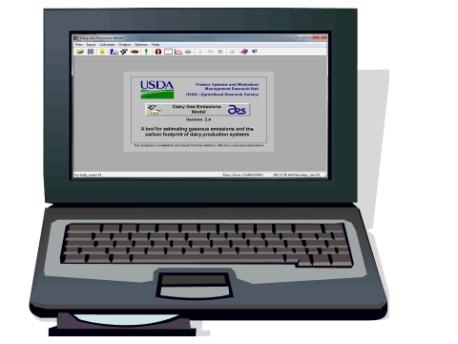
Software tools were created that perform whole-farm analyses of the performance, economics and environmental impact of dairy and beef production systems. The Integrated Farm System Model (IFSM) is a comprehensive research tool that simulates production systems over many years of weather to quantify losses to the environment and the economics of production. From the simulated performance and losses, environmental footprints are determined for carbon, energy use, water use and reactive nitrogen loss. Crop, dairy and beef producing farms can be simulated under different management scenarios to evaluate and compare potential environmental and economic benefits. The Dairy Gas Emissions Model (DairyGEM) provides a simpler educational tool for studying management effects on greenhouse gas, ammonia and hydrogen sulfide emissions and the carbon, energy and water footprints of dairy production systems.

What Have We Learned?

Analyses with either the IFSM or DairyGEM tools illustrate the complexity of farming systems and the resultant effect of management choices. Although IFSM was primarily developed and used as a research tool, it is also used in classroom teaching and other education applications. DairyGEM provides an easier and more graphical tool that is best suited to educational use.

Future Plans

Figure 2. DairyGEM is an educational tool for evaluating management effects on air emissions and environmental footprints of dairy production systems.

Development of these software tools continues. Work is currently underway to add the simulation of VOC emissions to both models. Routines are also being implemented to better represent the performance and emissions of beef feed yards.

Authors

C. Alan Rotz, Agricultural Engineer, USDA/ARS; al.rotz@ars.usda.gov

Additional Information

The IFSM and DairyGEM software tools are available through Internet download [https://www.ars.usda.gov/research/software/?modeCode=80-70-05-00] for use in individual, workshop and classroom education. Reference manuals and other detailed information on the models is also available at this website.

Acknowledgements

Many people have contributed to the development of these models and software tools. Although they can not all be listed here, they are acknowledged in each software program.

The authors are solely responsible for the content of these proceedings. The technical information does not necessarily reflect the official position of the sponsoring agencies or institutions represented by planning committee members, and inclusion and distribution herein does not constitute an endorsement of views expressed by the same. Printed materials included herein are not refereed publications. Citations should appear as follows. EXAMPLE: Authors. 2013. Title of presentation. Waste to Worth: Spreading Science and Solutions. Denver, CO. April 1-5, 2013. URL of this page. Accessed on: today’s date.

Iowa Manure Management Action Group (IMMAG)

Waste to Worth: Spreading science and solutions logoWaste to Worth home | More proceedings….

Abstract

The Iowa Manure Management Action Group (IMMAG) was a concept born in 1997 to provide a comprehensive vehicle to deliver manure management information.  It is hard to imagine, but at that time web pages were just beginning to be used as vehicles to share information, and even harder to imagine is the fact that while information on manure management existed, it was difficult to access, and it was just not a topic that garnered much positive attention.

IMMAG began as state-level technical committee comprised of public and private-sector entities with the objectives to 1) provide access to comprehensive information on manure management issues; 2) develop relevant educational materials and 3) provide them in a format that could be easily accessible.

Now, 15 years later, what was supposed to be short-term, one-year effort, has turned into a major outreach and education effort for Iowa State University Extension and Outreach and their partners.  In addition to the web page, IMMAG has hosted many field days and training workshops over the years as well as coordinated the development of countless fact sheets, newsletters and other educational pieces. 

Why Was the IMMAG formed?

As the livestock sector in Iowa changed in the 1990’s it became apparent that a mechanism for information delivery was needed that could quickly evolve to keep livestock producers in tune with changing regulations, up-to-date with current research and understand best management practices to help assure manure’s value as a crop nutrient resource and help protect Iowa’s natural resources.

IMMAG was a concept born in 1997 to provide a comprehensive vehicle to deliver manure management information, develop and deliver educational programs, and design tools and resources that could be used by producers, technical agencies, educational institutions, researchers, consultants and the general public.  IMMAG originated as a state-level technical committee under the leadership of the Iowa NRCS that brought together the state agencies, land-grant institution, commodity groups, environmental groups and private sector interests who proceeded to identify challenges and needs for manure management information. 

What Did We Do?

After an initial needs assessment was completed, members of IMMAG agreed the highest priority was the development of an integrated Web site for all manure management information.  A Web page would allow the most flexibility in keeping materials up-to-date.  The members also agreed that producers and others not having internet access would be able to request printed materials from the site made available through the commodity organization.   Once all existing materials were organized and included on the IMMAG Web page, a needs assessment was conducted by ISU Extension and the commodity group to determine information gaps and the kinds of new material that needed to be developed.  Materials were not limited to print resources, but also included development and delivery of nutrient planning workshops, field days and tools.  Along with a needs assessment, the Web site was thoroughly evaluated by members of the environmental groups and the general public to determine how accessible the information was and how easy it was to use and comprehend. 

During the past 15 years, the Iowa Manure Management Action Group has distributed monthly newsletters (originally printed, now e-newletters); created 40 fact sheets;  hosted over 50 field days and workshops, coordinated 3 multi-day manure clinics for producers and professionals; written over 200 popular press articles,  supported and developed material for nearly 600 Extension meetings;  and developed 9 video presentations. 

What Have We Learned?

The biggest lesson learned from this educational outreach program was and is the success  of integrating the state agency, land-grant university and livestock commodity group message to assist livestock producers.  This partnership allowed the development of  a consistent message among all involved when it came to manure management so producers and their technical staff were using the same recommendations and planning processes across all programs.  Other important things learned include  1) longevity of programs are crucial to producer awareness and success; 2) a defined mechanism for intergrating research into extension programming is crucial for producers to make informed choices related to best management practices; 3) leveraging financial support to serve all clients helps level the playing field in terms of client access to educational materials, events and access to technical assistance and 4) when provided with appropriate training and resource materials, it is possible to develop an entire service industry to assist producers with manure nutrient management planning.

Future Plans

Many internal discussions have identified the need to continue to support this effort even with the availability of other national programs that serve as clearinghouses for manure management information.  Future needs for program implementation  include coordinating long-term financial support for continued programming and a needs assessment that is relevant to current production practices.  Future needs for program delivery include more field days and hands-on type experiences for producers and their service providers. 

Authors

Angela Rieck-Hinz, Extension Program Specialist, Iowa State University, amrieck@iastate.edu

Additional Information

IMMAG Home Page


The authors are solely responsible for the content of these proceedings. The technical information does not necessarily reflect the official position of the sponsoring agencies or institutions represented by planning committee members, and inclusion and distribution herein does not constitute an endorsement of views expressed by the same. Printed materials included herein are not refereed publications. Citations should appear as follows. EXAMPLE: Authors. 2013. Title of presentation. Waste to Worth: Spreading Science and Solutions. Denver, CO. April 1-5, 2013. URL of this page. Accessed on: today’s date.

Water Quality Initiatives for Small Iowa Beef and Dairy Feedlot Operations (Small Feedlot Project)

Waste to Worth: Spreading science and solutions logoWaste to Worth home | More proceedings….

Abstract

Traditionally, small feedlots and dairies have not been engaged in environmental regulations and awareness in Iowa due to the environmental focus being directed at large feedlots and confinement feeding operations.  Many small feedlot and dairy managers do not even recognize or admit that regulations do apply to their livestock operation. This effort primarily uses traditional extension outreach methods, field days and publications, to raise awareness.  Unique to this outreach effort are the goal to provide a producer network to share information and ideas to learn more about manure runoff control structures and best management practices to reduce impacts on water quality, and the focus on controls beyond minimum rule requirements, but tailored to small operations.

This talk will discuss some of the challenges faced by small feedlot producers, identification of parameters to help producers overcome some of these challenges, and methods and educational materials aimed at helping raise environmental awareness and foster action among these producers.

Purpose

The Small Feedlot Project is a cooperative effort between state and federal regulatory agencies, public research and extension, technical agencies and the private sector in Iowa.  The primary objectives are to 1) educate producers to better understand the pollution potential of open feedlot runoff, 2) train producers to accurately assess the water pollution potential of their own feedlots, 3) assist producers to identify and evaluate appropriate runoff control alternatives, and 4) provide technical assistance to producers to implement solutions that improve the environmental performance of their feedlots.  

What Did We Do?

The first focus in regards to raising awareness about potential impacts of runoff from open feedlots was the development of two producers guides that specifically talk about open lot runoff and impacts on water quality,  applicable regulations,  the importance and how to assess risk, structural solutions, management solutions and a list of appropriate resources.  The guides, PM 3018, Small Open Beef Feedlots in Iowa- a producer guide and PM 3019, Small Open Lot Dairies in Iowa- a producer guide, were both written and printed in 2012.  These publications were peered reviewed by internal and external partners to the Small Feedlot Plan.  Two-thousand copies of each publication were printed and have been widely distributed via field days, workshops and meetings.  The publications have been in such demand that as of February 2013, only 26 copies of the beef publication and 630 copies of the dairy pub remain in stock. 

The second focus to raising awareness was to offer multiple field days that showcased structural or management practices put in place by feedlot owners to address runoff from their farms.  It is well-known that livestock producers respond well to field days where they can observe physical site conditions that impact runoff, see structural (i.e. settling basins, pumping demonstration, clean-water diversions) or management practices (i.e.  pen scraping, manure removal) put in place by other producers; can ask management and cost of implementation questions to other producers; and can discuss regulations and other management decisions with Extension and agency staff. 

Three field days were held in 2012 to provide options to look at different sizes of feedlots, dirt versus concrete lots and structural and management practices on farms.  The first field day was a three-stop tour held on August 7 near Larchwood, IA with 26 people in attendance; the second field day was held on October 29 near Wall Lake, IA, with 22 people in attendance; and the third field day was held on October 31 near Andover, IA with 26 people in attendance.


What Have We Learned?

A post-field day evaluation was offered to attendees at the Wall Lake and Andover Field Days.  A summary of the evaluations completed follows:

  • 29% reported their understanding of impact of feedlot runoff on stream water quality “increased a lot”; while 56% reported their understanding “increased a little”.
  • 38% reported their understanding of lost-cost methods to better control and manage feedlot runoff “increased a lot”; while 52% reported their understanding “increased a little”.
  • 29% reported their understanding of the value of feedlot manure for crop production “increased a lot”; while 60% reported their understanding “increased a little”.
  • 31% reported their understanding of available technical and financial assistance for feedlot runoff control improvement “increased a lot”; while 58% reported their understanding “increased a little”. 
  • 35% reported they are more likely to plan and install additional improvements to feedlot runoff controls on their farms as a result of attending a field day. 

Future Plans

Future plans include the development of fact sheets that address specific practices small open lot dairy and beef operations can use to protect water quality and additional field days throughout 2013.  New materials will be posted to a Web page specifically created to host resources for small open lots. 

Authors

Angela Rieck-Hinz, Extension Program Specialist, Iowa State University, amrieck@iastate.edu

Shawn Shouse, Extension Field Ag Engineer, Iowa State University

Additional Information

Small Feedlots and Dairy Operations Web Page

Acknowledgements

Partners in the Water Quality Initiatives for Small Iowa Beef and Dairy Feedlot Operations

The authors are solely responsible for the content of these proceedings. The technical information does not necessarily reflect the official position of the sponsoring agencies or institutions represented by planning committee members, and inclusion and distribution herein does not constitute an endorsement of views expressed by the same. Printed materials included herein are not refereed publications. Citations should appear as follows. EXAMPLE: Authors. 2013. Title of presentation. Waste to Worth: Spreading Science and Solutions. Denver, CO. April 1-5, 2013. URL of this page. Accessed on: today’s date.