Will Spreading Bans Reduce Manure Runoff Events?

Waste to Worth: Spreading science and solutions logoWaste to Worth home | More proceedings….

Abstract

The Wisconsin Discovery Farms Program was one of the first on-farm evaluation projects to identify the risk of manure applications in the late winter period.  Data from several of our farms have shown that manure applied during February and March has an increased risk of running off and contributing to high nutrient losses in surface water.  This data has been used to justify the establishment of recommendations, rules and regulations on winter manure spreading.  But, do bans on winter manure spreading (spreading on frozen or snow covered ground) actually reduce the risk of manure runoff?  A close evaluation of the data indicates that spreading during early winter (November – January) is much different than during late winter when frost can extend deeper and be more solid in the soil profile. Total winter application bans also increase the volume of manure that needs to be stored and increase the risk of runoff during the spring spreading season.

Based on the data from the Wisconsin Discovery Farms Program, manure spreading bans should be established based on field conditions, and not a calendar.  There are times when applying manure early in the winter is optimal because lack of snow and/or frost affords the opportunity for manure to come into contact with the soil.  There are also times when manure can be safely applied in late March, when the soils have thawed, snowmelt is finished and the fields are fit.  Not allowing farmers to begin fieldwork based on calendar dates can greatly increase the potential for runoff because the window for manure applications is smaller and the potential for runoff from saturated soils and spring rains is greater.

Why Did the Discovery Farms Project Study Nutrient Runoff?

The Wisconsin Discovery Farms Program was established in 2001 with leadership from farmers, their advisors and their industry groups to gather water quality data from working farms around Wisconsin and to use that data to educate farmers, industry personnel, consumers and policymakers. At the time, there was little reliable year-round information on actual phosphorus, nitrogen or sediment loss from fields with different management practices, physical settings or weather related events.

What Did We Do?


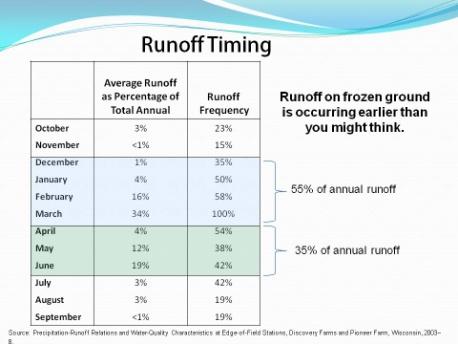
Average runoff timing and frequency from Wisconsin Discovery Farms, 2003-2008

The US Geological Survey partners with the Discovery Farms Program to provide high quality year-round data collected from agricultural fields, in streams, and within tile drainage. Monitoring has been conducted on more than 10 farms all around the state, totaling over 150 site years of data.

What Have We Learned?

The Discovery Farms data shows losses from the edge of field are, on average, 667 pounds of sediment, 2 pounds of phosphorus and 7 pounds of nitrogen.  While these numbers are important, the real value is in the variation, factors, and the management decisions that can influence nutrient and sediment losses. One of the most important lessons learned is the impact of the timing of manure application on nutrient loss. The key to reducing loss of nutrients from manure applications is to maximize the time between a manure application and a runoff event. As a producer, you need to understand the factors that cause runoff and options you have when manure spreading is not feasible.

Approximately 90% of the annual runoff in Wisconsin occurs from December through June. From December through March, most of the runoff is caused by snowmelt or rain on frozen/snow covered ground. During every year and on every site monitored, there has been runoff in March. Avoiding manure application during February and March can reduce nutrient loss, as 50% of the annual runoff happens during these two months. From April through June, runoff is driven by intense storm events or saturated soil conditions. In any given year, there can be times when fields are fit for manure application during this same time period based on little to no snow cover, early spring conditions, or droughty periods.

Future Plans

Prohibiting spreading based on calendar dates does not allow producers to assess the conditions in their immediate location. Management by calendar dates can force producers to spread during conditions when the risk for runoff is high because storage facilities are full. The conditions vary each year, and waiting for a specific calendar date can make producers miss opportune times for manure application so that field activities can be completed in a timely manner.

To prepare producers for assessing their own situations, Discovery Farms has provided intensive education and outreach on the factors that cause runoff in Wisconsin. By understanding the factors that cause runoff and management strategies that reduce nutrient loss, Wisconsin agriculture producers can maintain and improve water quality resources and farm productivity.

Authors

Amber Radatz, Outreach Specialist, UW Discovery Farms, aradatz@wisc.edu

Eric Cooley, Outreach Specialist, UW Discovery Farms

Dennis Frame, Director, UW Discovery Farms

Additional Information

www.uwdiscoveryfarms.org

UW Discovery Farms on Facebook

The authors are solely responsible for the content of these proceedings. The technical information does not necessarily reflect the official position of the sponsoring agencies or institutions represented by planning committee members, and inclusion and distribution herein does not constitute an endorsement of views expressed by the same. Printed materials included herein are not refereed publications. Citations should appear as follows. EXAMPLE: Authors. 2013. Title of presentation. Waste to Worth: Spreading Science and Solutions. Denver, CO. April 1-5, 2013. URL of this page. Accessed on: today’s date.

Tile Drainage Field Day to Promote Manure Management

Waste to Worth: Spreading science and solutions logoWaste to Worth home | More proceedings….

Abstract

Seeing is believing and in August, 2012 a regional field day was held in southern Michigan in conjunction with the Michigan Land Improvement Contractors and Michigan State University Extension to bridge the management practices and new technologies between tile drainage and manure management.  Tile drainage contractors, farmers and agri-business had the opportunity to see sub surface drainage installation and also learn about new management technologies to assist in reducing the risks of both manure and fertilizers from reaching tile outlets and surface waters.   These technologies included installation of water control devices, bark bed bio-reactors, sub-irrigation to manage dairy waste water, cover crops and tillage to disrupt soil macropoures.   The field demonstrations were teamed up with educational sessions under tents.   Planning and developing a field event with onsite drainage installations is a time commitment but proves very important for awareness and education on an important topic.

Why Have Field Days on Tile Drainage and Manure?

As manure systems have become more dilute with the capture of rain and runoff waters, the risks of nutrients and manure reaching sub-surface tile drainage from land applications has become a concern that can be managed.

Check Out These Programs & Research About Tile Drainage

Swine Manure Timing & Subsurface Drainage

Use of Filters in Drainage Control Structures

New Technologies for Drainage Water Management

Role of Drainage Depth and Intensity on Nutrient Loss

What Did We Do?

With very dilute manure and wastewater manure steams on farms, there is a risk of land applications reaching sub-surface drainage systems.  These risks can be reduced and or eliminated first by awareness, then by checking outlets during land applications and by conscience management of rates and timing of applications. For farms that feel they need additional precautions to reduce these risks there are other management systems that can be put in place.  By hosting a field demonstration of sub-surface tile installation a two day field event showed these management practices to farmers, drainage installers and others who attended the event in August of 2012 in SE Michigan.  Tour demonstrations included cover crops, tillage, water control structures, bio-filters and general rate and timing recommendations.

Authors

Natalie Rector, Michigan State University Extension (retired) rector@msu.edu

Natalie Rector has worked in manure nutrient management and water quality protection for the last 12 years of her Michigan extension career.  She worked on a voluntary protection program in state and has worked with a team to train CNMP providers across the mid-west. 


The authors are solely responsible for the content of these proceedings. The technical information does not necessarily reflect the official position of the sponsoring agencies or institutions represented by planning committee members, and inclusion and distribution herein does not constitute an endorsement of views expressed by the same. Printed materials included herein are not refereed publications. Citations should appear as follows. EXAMPLE: Authors. 2013. Title of presentation. Waste to Worth: Spreading Science and Solutions. Denver, CO. April 1-5, 2013. URL of this page. Accessed on: today’s date.

What We Feed Dairy Cows Impacts Manure Chemistry and the Environment

Waste to Worth: Spreading science and solutions logoWaste to Worth home | More proceedings….

Why Be Concerned with Feed Rations and Their Environmental Implications?

During the last part of the 20th century, animal manure management became an environmental concern. In response to these concerns, legislation was enacted to control manure management and the emission of undesirable gasses (e.g., methane, ammonia, nitrous oxide) from animal production systems. The purpose of this paper is to illustrate how mineral phosphorus (P) supplements, forage types and amounts, and the crude protein (CP) fed to lactating cows impact manure chemistry and the fate of manure nutrients in the environment.

What Did We Do?

Source-sink relationships have been used to illustrate relationships between feed nutrient sources (e.g., forms and concentrations of P and CP in lactating cows rations) and nutrient sinks (milk and manure), and relationships between manure nutrient sources (e.g., soluble P, urea N) and sinks [soil test P, runoff P, atmospheric ammonia, soil inorganic nitrogen (N), crop N] and the impact of these relationships on the environment.

What Have We Learned?

As mineral P concentrations in dairy rations increase, the excretion of total P and soluble P in manure also increases. The amount of cropland needed to recycle manure P and runoff of soluble P from cropland after manure application can be related back to the P excreted in manure, which in turn can be linked to the amount of mineral P in cow rations.  Likewise, the type and amount of CP and forage fed to dairy cows impact manure chemistry and manure N losses as ammonia, N cycling in soil, including plant N uptake. Ammonia emissions from dairy barns and soil after manure application can be related back to the urea N excreted by dairy cows in urine, which is linked to the types and concentrations of CP and forages in cow rations, and the concentrations of urea in milk (milk urea N, or MUN).  Our results demonstrate that profitable rations can be fed to satisfy the nutritional demands of healthy, high producing dairy cows, reduce manure excretion and therefore the environmental impacts of milk production.

Future Plans

We continue investigations on how the feeding of tannins to lactating dairy cows, and the use of MUN as a management tool  may enhance feed CP use efficiency (more feed CP transformed into milk, less excreted in manure) and reduce losses of ammonia, nitrates and nitrous oxide from dairy farms.

Authors

J. Mark Powell, Soil Scientist. USDA-ARS U.S. Dairy Forage Research Center, Madison, Wisconsin,  mark.powell@ars.usda.gov

Glen A. Broderick,  Dairy Scientist,  USDA-ARS U.S. Dairy Forage Research Center, Madison, Wisconsin

Additional Information

Powell, J.M. and Broderick, G.A. Transdisciplinary soil science research: Impacts of dairy nutrition on manure chemistry and the environment. Soil. Sci. Soc. Am. J. 75:2071–2078.

Powell, J.M. Alteration of Dairy Cattle Diets for Beneficial On-Farm Recycling of Manure Nutrients. pp 21-42  In: Applied Research in Animal Manure Management. Zhongqi H. (Ed.) Nova Science Publ. Inc.

Powell, J.M., Wattiaux, M.A., and Broderick, G.A. Evaluation of milk urea nitrogen as a management tool to reduce ammonia emissions from dairy farms. J. Dairy Sci. 94:4690–4694.


The authors are solely responsible for the content of these proceedings. The technical information does not necessarily reflect the official position of the sponsoring agencies or institutions represented by planning committee members, and inclusion and distribution herein does not constitute an endorsement of views expressed by the same. Printed materials included herein are not refereed publications. Citations should appear as follows. EXAMPLE: Authors. 2013. Title of presentation. Waste to Worth: Spreading Science and Solutions. Denver, CO. April 1-5, 2013. URL of this page. Accessed on: today’s date.

Overview of Solid-Liquid Separation Alternatives for Manure Handling and Treatment Document

Waste to Worth: Spreading science and solutions logoWaste to Worth home | More proceedings….

Is Solid-Liquid Manure Separation Worthwhile?

* Presentation slides are available at the bottom of the page.

Solid-liquid separation of animal manures and other agricultural products can be an integral part of a livestock operation ranging from improved facility performance to enhanced nutrient management.  A document entitled “Solid-Liquid Separation Alternatives for Manure Handling and Treatment” is being created through work by Clemson University and funding from USDA-Natural Resources Conservation Service.  The purpose of this document is to assist in solid-liquid separation technology selection, evaluation of separation performance, and quantifying the impact of solid-liquid separation on manure management.  This presentation will provide an outline of this document including methods of solid-liquid separation, influence of manure characteristics and handling methods, fundamentals of solid-liquid separation, performance of various solid-liquid separation technologies, separation enhancement methods, and design considerations.  An overview of various farm scale separation technologies is also presented in the solid-liquid separation document.

What Did We Do?

Geobag used with metal salt and polymer to separate solids and nutrient partitioning of swine manure

In this document we have provided a detailed compilation of empirical, theoretical, and practical information related to the performance and design of solid-liquid separation systems for animal manure treatment. The information is divided into the following chapters: Methods of Solid-Liquid Separation, Fundamentals of Solid-Liquid Separation, Measures of Solid-Liquid Separation Performance, High-Rate Solid-Liquid Separation, Unique Applications of Solid-Liquid Separation Technology, and Design Considerations. Within these chapters detailed information is provided on: the influence of entrainment on the performance of mechanical separators, design of gravity settling using discrete particle settling and hindered settling theory, efficacy of combining separator methods in a single machine, benefits of using coagulants and flocculants, benefits of solid-liquid separation, and a summary of the solid-liquid separation methods that have been used with sand-laden dairy manure. The publication also provides twenty-one detailed examples such as: design of settling basins based on hindered settling velocities, calculation of the performance of a variety separator options using field data, calculation of dimensions for sand lanes, determination of chemical need to enhance mechanical solid-liquid separation, and sizing of storages for separated solids. Numerous system design diagrams are also provided to demonstrate the wide variety of ways that solid-liquid separation can be implemented into an animal manure treatment system.

What Have We Learned?

Sand settling lane for flush dairy operation

This work brings together fundamental information about solid-liquid separation, benefits and limitations of many separation technologies, performance measurement techniques along with design considerations into one document.

Future Plans

This document will be published as a USDA-NRCS technical note or as part of the National Engineering Handbook, Part 651 Agricultural Waste Management Field Handbook.

Authors

Jeffrey P. Porter, P.E. Environmental Engineer     Manure Management Team USDA-Natural Resources Conservation Service; e-mail – Jeffrey.Porter@gnb.usda.gov

Dr. John P. Chastain, Professor and Extension Agricultural Engineer School of Agricultural, Forestry, and Environmental Sciences Clemson University; email – jchstn@clemson.edu

Additional Information

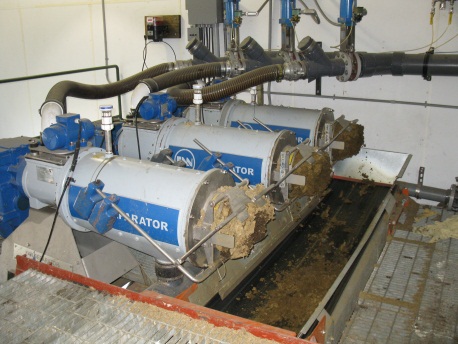
Screw presses used on a dairy farm following anaerobic digestion

John Perkins Chastain, PhD Homepage

East National Technology Support Center Directory

NRCS on Livestock

Solid Separation Technologies for Animal Manure Webinar

Acknowledgements

A special thank you goes out to the Piedmont-South Atlantic Coast Cooperative Ecosystems Studies Unit (CESU).  This Cooperative and Joint Venture Agreement allowed for this work to take place.

Additional support was provided by the Confined Animal Manure Managers Program, Clemson Extension, Clemson University, Clemson, SC.


The authors are solely responsible for the content of these proceedings. The technical information does not necessarily reflect the official position of the sponsoring agencies or institutions represented by planning committee members, and inclusion and distribution herein does not constitute an endorsement of views expressed by the same. Printed materials included herein are not refereed publications. Citations should appear as follows. EXAMPLE: Authors. 2013. Title of presentation. Waste to Worth: Spreading Science and Solutions. Denver, CO. April 1-5, 2013. URL of this page. Accessed on: today’s date.

Alternative Poultry Litter Storage for Improved Transportation and Use As a Soil Amendment

Waste to Worth: Spreading science and solutions logoWaste to Worth home | More proceedings….

Abstract

Transportation of poultry litter out of nutrient limited watersheds such as the Illinois River basin (eastern Oklahoma) is a logical solution for minimizing phosphorus (P) losses from soils to surface waters. Transportation costs are based on mass of load and distance transported. This study investigated an alternative litter storage technique designed to promote carbon (C) degradation, thereby concentrating nutrients for the purpose of decreasing transportation costs through decreased mass. Poultry litter was stored in 0.90-Mg conical piles under semipermeable tarps and adjusted to 40% moisture content, tested with and without addition of alum (aluminum sulfate).

An additional study was conducted using 3.6-Mg piles under the same conditions, except tested with and without use of aeration pipes. Samples were analyzed before and after (8 wk) storage. Litter mass degradation (i.e., loss in mass due to organic matter decomposition) was estimated on the basis of changes in litter total P contents. Additional characterization included pH, total nutrients, moisture content, total C, and degree of humification. Litter storage significantly decreased litter mass (16 to 27%), concentrated nutrients such as P and potassium (K) and increased proportion of fulvic and humic acids. The addition of aeration pipes increased mass degradation relative to piles without aeration pipes. Nitrogen volatilization losses were minimized with alum additions. Increases in P and K concentrations resulted in greater monetary value per unit mass compared with fresh litter. Such increases translate to increased litter shipping distance and cost savings of $17.2 million over 25 yr for litter movement out of eastern Oklahoma.

Why Study Alternative Poultry Storage

Due to the specialization and integration of the modern poultry industry, poultry farms have the potential to import more nutrients than what is exported from the farm in the form of animal and plant products.  In the past, phosphorus (P) imported in poultry feed often remained on-farm in the form of poultry litter, a mixture of bedding material and manure. This litter was often land applied at rates to meet crop nitrogen (N) needs which resulted in soil (P) buildup on some farms.

Because the nutrient ratio in litter is different from that of plant nu­trient requirements, careful consideration must be taken when land applying to avoid over-application of certain nutrients, pri­marily P. If poultry litter land application is not properly managed, excess P application could degrade water quality through runoff into surrounding surface water resources. These concerns have led to environmental regulations, litigation, and successful efforts to move poultry litter outside of critical watersheds.  However, since poultry litter nutrients are not as concentrated as commercial fertilizer, transportation cost is the most limiting factor for exporting poultry litter away from nutrient sensitive watersheds.

The alternative litter storage technique described below promotes degradation of litter carbon, which appreciably reduces the total mass of the litter and also increases the phosphorus and potassium concentrations compared to fresh or normally stored litter.  The advantage of this process is that the final product (degraded litter) can be transported at a lower cost per lb of nutrients, or put another way, it can be transported greater distances before the transport cost exceeds manure value.

What Did We Do?

We developed a process for degrading litter, particularly organic C, with little monetary and labor inputs.  Decreasing litter mass and retaining nutrients means more efficient transport and application of litter.  In order for the process to be effective only two requirements are necessary: adjustment of litter dry matter to 0.60 (weight solids/total weight) and covering with a suitable tarp.  The process was designed to use little time, money, and effort compared to a traditional composting system that involves addition of bulking agents that would increase litter mass and dilute phosphorus concentration.

Step 1. Uniformly add enough water to decrease dry matter content to 0.60.  The amount of water (gallons) to be added per ton of litter is calculated as:

For example, poultry litter with a dry matter of 0.70 (30% moisture content) would require 57 gallons of water per ton of litter.  The water can be applied with a hose after the flow rate of the hose (in gallons per minute) is determined.  Knowing the total weight of litter to be treated and the necessary volume of water from the previous equation, the necessary “spray time” (in minutes) can be determined by:

For example, a 25 ton litter pile with 0.70 dry matter (from the previous example) would require 1,225 gallons of water that can be provided by spraying a hose with a flow rate of 20 gpm for 71 minutes.

Water can be applied as the litter pile is being mixed with a front end loader or while being dumped at a new location.  You could estimate the litter weight in a bucket load and apply the amount of water necessary for that amount of litter while it is slowly being dumped in forming the new pile.  Typical poultry litter at cleanout has a density of 35 lbs/ft3.  You could also apply water while litter is being directly poured out of a dump-bed.

Step 2. Cover the pile with a semi-permeable tarp.  We used a typical polyethylene tarp (6 mil thickness and 10 mesh) considered low to medium weight purchased from a local hardware store.  The purpose of the tarp is to prevent the pile from drying too quickly, allow some oxygen to diffuse into the pile (preventing anaerobic conditions), prevent rainfall contact, and reduce the amount of ammonia volatilization.  According to Oklahoma regulations all litter piles must be covered or bermed.

Step 3: Choose one of the following options:

Option 1:  Never turn or mix the litter and simply allow the pile to remain covered for two months.  Although this method is effective at degrading litter and reducing mass, research shows that the piles turned after one month will degrade more than piles not turned (Table 1).

Option 2: Mix the litter after one month using a front end loader or some type of heavy equipment.  This introduces more oxygen into the system and mixes the inner portion of the pile with the outer portion.  Re-cover the pile with the tarp and allow further degradation for an additional month.

Option 3: Construct a framework of perforated pipe within the pile (no pile turning).  For our 6 ton piles, we used 4 inch diameter perforated PVC pipe laid on the ground in the shape of a cross with a single vertical pipe extending from the center.  Litter was dumped directly on top of this pipe framework with the vertical pipe extending out from the top of the pile.  The tarp is still necessary for this process.  The perforated pipe system allows for greater aeration of the pile without the need for turning or mixing.  We found that this system resulted in greater litter degradation (i.e. mass reduction) compared to the static piles with no pipes (option 1; Table 1).

What Have We Learned?

Table 1.  Impact of the litter degradation storage process on percent mass reduction, nutrient content, and litter value after a two-month period.  Nutrient content is shown on a dry mass basis.  Litter value is expressed on both a dry and wet mass basis.

Litter Treatment Dry matter (w/w) % mass reduction N P2O5 K2O

Value

Dry

Value

Wet

Lb/lb —Lbs/ton— –$/ton–

Initial

0.66

88

82

82

144

111

 No turnover (option 1)

0.67

14.9

80

94

94

152

119

One month turnover (option 2)

0.65

19.6

80

103

100

160

123

Aeration pipes (option 3)

0.77

23.0

74

104

101

157

134

Economic Savings

As a result of the litter carbon degrading to carbon dioxide, the storage techniques are able to reduce litter mass from 15 to 23% and concentrate the nutrients (Table 1).  This concentration of nutrients increases litter value per ton.  Also notice that although the process involves adding water to reduce dry matter to 0.6, the litter does dry out to levels similar to the original litter.  The aeration pipes allowed the litter to dry more than the original litter.  This drying effect also increases the litter value on a wet weight basis.  Litter value was based on the concentration of N, P2O5, and K2O and current fertilizer prices.  Based on the value of the wet litter shown in Table 1, a standard tractor-trailer load (24 tons) of normal (non-degraded) litter is worth $2,664 while degraded litter from our research piles varied from $2,856-$3,216.  The higher economic value of the degraded litter means that it can be transported greater distances than normal litter before the transport cost exceeds the litter value (i.e. break even distance).  For example, assuming a purchase cost of $15/ton litter, $24/ton for loading, unloading, and application, and transport cost of $0.16/ton/mile, the normal litter can be transported 398 miles while degraded litter can move 444 to 525 miles.  If all poultry litter from Eastern Oklahoma was stored using these degradation techniques, the increased economic benefit would be about 10 million dollars after 5 years and about 32 million dollars after 25 years, compared to transporting normal litter (Figure 3).

The higher nutrient density (P2O5 and K2O) of the degraded litter will also reduce application costs since less litter will be required to bring soil test phosphorus concentrations to agronomic optimum levels.  In addition, degraded litter was more uniform in particle size, darker in color, and had less offensive odors compared to normal poultry litter.

Figure 2. Oklahoma economic benefit of transportation of degraded poultry litter resulting from an alternative storage technique, relative to fresh litter.

Poultry litter haulers and those receiving poultry litter will gain the most benefit from this process since haulers can transport more nutrients per load and the receivers need not purchase as much degraded litter as normal litter due to greater nutrient density.

Future Plans

Study the impact of land application of the degraded litter on crop growth and soil quality.

Authors

Chad J. Penn, associate professor of soil & environmental chemistry, Oklahoma State University; chad.penn@okstate.edu

Jeff Vitale, associate professor of agricultural economics, Oklahoma State University

Josh Payne, area animal waste management specialist, adjunct associate professor, Oklahoma State University

Additional Information

Penn, C.J., J. Vitale, S. Fine, J. Payne, J.G. Warren, H. Zhang, M. Eastman, and S.L. Herron.  2011.  Alternative poultry litter storage for improved transportation and use as a soil amendment.  J. Environ. Qual. 40:233-241.

http://pods.dasnr.okstate.edu/docushare/dsweb/Get/Document-8111/PSS-2268…

The authors are solely responsible for the content of these proceedings. The technical information does not necessarily reflect the official position of the sponsoring agencies or institutions represented by planning committee members, and inclusion and distribution herein does not constitute an endorsement of views expressed by the same. Printed materials included herein are not refereed publications. Citations should appear as follows. EXAMPLE: Authors. 2013. Title of presentation. Waste to Worth: Spreading Science and Solutions. Denver, CO. April 1-5, 2013. URL of this page. Accessed on: today’s date.
Case Study: Poultry Lagoon Closure in Texas

Waste to Worth: Spreading science and solutions logoWaste to Worth home | More proceedings….

Abstract

The closure of earthen lagoons associated with a caged egg-laying operation was used as a case study.  This case study presents information on the steps taken to close the lagoons, including topographic survey needs, analysis of sludge and wastewater at different times during the closure process, methods for excavating and removing the sludge, and the costs associated with the closure of earthen lagoons.  The sludge has a high fertilizer value for P2O5 and other micro- and macro-nutrients.  The cost of the closure for this case exceeded the expected cost for the earthwork for the construction of a new facility

Why Present a Case Study on Propoer Lagoon Closure?

Provide the steps taken to close the lagoons, including topographic survey needs, analysis of sludge and wastewater at different times during the closure process, methods for excavating and removing the sludge, and the costs associated with the closure of earthen lagoons.  These steps will hopefully assist others in the future closure of lagoons.

What Did We Do?

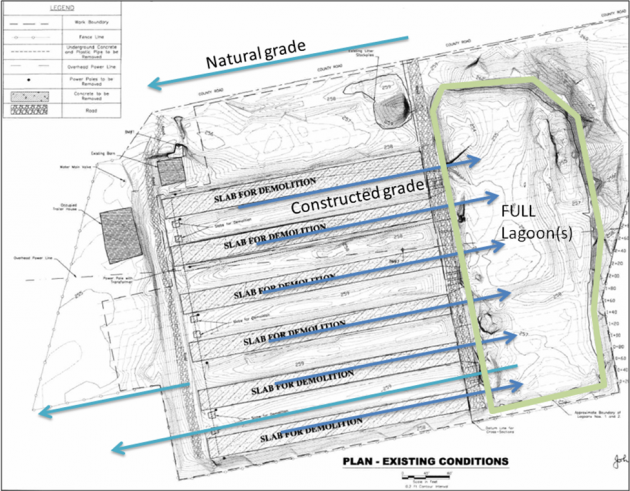
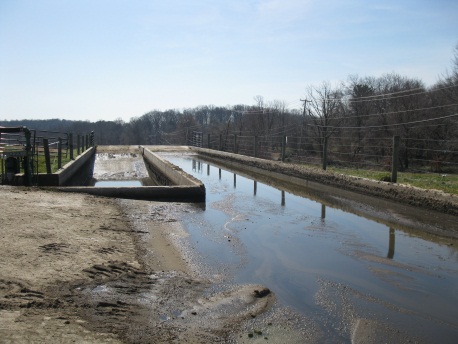
Performed closure of earthen lagoons for a caged egg-laying operation that existed for over 35 years in Gonzales County, Texas.  The 100 ft by 400 ft football field sized lagoon area with 5 – 12 ft deep sludge had accumulated approximately 20,000 cubic yards of sludge.  The photo below depicts the three lagoon areas (Infrared photograph of site depicting two lagoons and smaller wastewater storage area (USDA-NAPP, 1983).

Multiple different options for closure of the lagoon were evaluated.  Sampling in-situ materials to determine if the existing system had a realistic potential for seepage.  Detailed analysis of the sludge and wastewater were performed throughout the project.  A detailed survey of the site determined the existing volumes of sludge and wastewater.  Civil 3D and Eagle Point software programs assisted in development of a final grading plan for the site.

Construction drawings and specifications were developed to place the site into pre-existing conditions. The construction project was split into four phases:  Phase 1 – Sludge and Wastewater Removal; Phase 2 – Removal of Sludge to Nearby Agricultural Operation; Phase 3 – Demolition of Concrete Slabs and Final Grading; and Phase 4 – Establishing Vegetation on Site

Site plan generated for construction plans depicting the natural grade compared to the constructed grade of the poultry houses. (USDA-NRCS, Poultry Lagoon Closure Construction Drawings, March 2008)

Irrigation pump for the removal of wastewater (TSSWCB, 22 June 2009)

Use of field conveyor belts to stack sludge on-site.  (TSSWCB, 28 June 2009)

What Have We Learned?

Formal contracting potentially increases the cost of the project; however, observance of worker safety laws is more likely .  Initially this project was sent for bid as a turn key project consisting of 18,500 CY of sludge to be removed and land applied, removal of concrete slabs, placement of 27,000 CY of compacted earthfill, final grading and establishment of vegetative cover.  As part of the bid, the contractor was to secure a location for the sludge to be land applied or find another use for the sludge.  The bids received ranged from $1.8M up to $3M.  This level of funding was not available, so the project was split into different phases.  By breaking into phases, the cost of the project was reduced by over 75%.  Costs for application or hauling of sludge can be reduced by having an agreement in place prior to contracting.

The cost of the project was close to $250,000 for construction and sludge hauling without consideration of other costs, such as engineering design work, sample analysis, and staff time.  The earthwork associated with the construction of this site for a new facility with the excavation and placement of 27,200 CY of compacted earthfill would have been completed for approximately $70,000.

With flexible scheduling, it was possible to find a landowner that was willing to pay for the hauling and land application of sludge, which reduced the out-of-pocket expenses for the closure by more than $90,000.

The amount of Phosphorus present in the sludge was compared to the cost of commercial fertilizer.  As of February 2011, Rock Phosphate with 32% P2O5 was selling at $160/metric ton (Index Mundi, 11 June 2012), therefore P2O5  was $500 per metric ton.  Using the hauled weight of 12,100 tons with a moisture content of 25.9% and 5.66% P and a conversion factor of 2.29 for P to P2O5, there was 1,160 tons (1,054 metric tons) of P2O5.  At the rate of $500 /metric ton, the P2O5 in the sludge would have a value of $525,000.  There is additional fertilizer value for the other constituents that are not included.

Future Plans

This case study provides much needed data for the closure of similar operations across the United States.  The data collected will be used for future closures under the NRCS Environmental Quality Incentives Program (EQIP).  The construction specifications that were developed for this project can be adapted into general specifications for future closure projects.  Additional work is needed to compare the value of the sludge to a fertilizer value.  The potential for a portable pelletizing and bagging system for recycling sludge from lagoons warrants further research.

Authors

Catherine Nash, Water Resources Engineer, USDA – Natural Resources Conservation Service Catherine.nash@tx.usda.gov

Additional Information

“Case Study:  Closure of Earthen Lagoon”, An ASABE Meeting Presentation, Paper No. 1336921

Archived webinar  – Poultry Lagoon Closure – Case in Progress

Acknowledgements

Contributions from Texas Poultry Federation, Gonzales Soil and Water Conservation District, Texas State Soil and Water Conservation Board (TSSWCB), USDA – Natural Resources Conservation Service (NRCS), Texas Water Resources Institute, Farm Pilot Project Corporation, Inc. (FPPC) and others made this project possible. A special thanks to:  John Foster, TSSWCB, and James Grimm, Texas Poultry Federation, for initiating the project and keeping it moving forward;  Lee Munz, TSSWCB for assistance with surveying and taking the lead on his first construction project; John Mueller, NRCS for his support and guidance through the process; Ace Fairchild, NRCS, for his enthusiasm and support throughout the project; Wayne Gabriel, NRCS, for assistance with soils identification; Tom Beach, NRCS, for evaluating feasibility of other options for closure; Shawn Higgins for assistance, endurance and encouragement with the development of Engineering Drawings and Specifications.  Thanks to Gonzales County Soil and Water District Employees who helped throughout the project, including:  Jeremiah Ford, Abigail Lindsey, Shari Johnson, Jessi Goodson and Wain Fairchild.  Thanks to TSSWCB staff including: Lawrence Brown, Jeff Cerny, Amy Devereaux, TJ Helton, Dawna Winkler, and Kenny Zajicek.  Thanks to USDA-NRCS staff including:  James Davis, Andria Heiges, Jeff Porter, Doug Sharer, James Smith, and Millie Stevens.  Thanks to AgriLife Extension members:  Saqib Mukhtar, Biological and Agricultural Engineering Department; and Sam Feagley, Department of Soil and Crop Sciences.  Every person that was asked for assistance responded graciously and enthusiastically in a timely manner.

The authors are solely responsible for the content of these proceedings. The technical information does not necessarily reflect the official position of the sponsoring agencies or institutions represented by planning committee members, and inclusion and distribution herein does not constitute an endorsement of views expressed by the same. Printed materials included herein are not refereed publications. Citations should appear as follows. EXAMPLE: Authors. 2013. Title of presentation. Waste to Worth: Spreading Science and Solutions. Denver, CO. April 1-5, 2013. URL of this page. Accessed on: today’s date.
Development of an Acid Scrubber for Reducing Ammonia Emissions from Animal Rearing Facilities

Waste to Worth: Spreading science and solutions logoWaste to Worth home | More proceedings….

Abstract

Recent research has shown that over half of nitrogen excreted by chickens is lost into the atmosphere via ammonia volatilization before the litter is removed from poultry houses.  Large quantities of particulate matter and volatile organic compounds (VOCs) are also emitted from animal rearing facilities. During the past decade we have developed and patented an acid scrubber for capturing ammonia, VOCs and dust from air exhausted from poultry and swine barns.  The objectives of this project were; (1) to re-design the scrubber to improve the ammonia removal efficacy, (2) conduct full-scale testing of the scrubber under controlled conditions at various ventilation rates, (3) evaluate the cost, practicality and efficacy of various acids for scrubbing ammonia, and (4) install scrubbers on exhaust fans of poultry houses located in Virginia and Arkansas and measure the efficiency of ammonia removal from the exhaust air.  The efficiency of ammonia removal by the scrubber varied from 55-95%, depending on the type of acid used, air flow rate, and the internal scrubber configuration.  This technology could potentially result in the capture of a large fraction of the N lost from AFOs, while simultaneously reducing emissions of bacteria, dust, and odors, which would improve the social, economic, and environmental sustainability of poultry and swine production.

Purpose

The objectives of this project were; (1) to re-design our ammonia scrubber to improve the ammonia removal efficacy, (2) conduct full-scale testing of the scrubber under controlled conditions at various ventilation rates, and (3) evaluate the cost, practicality and efficacy of various acids for scrubbing ammonia.

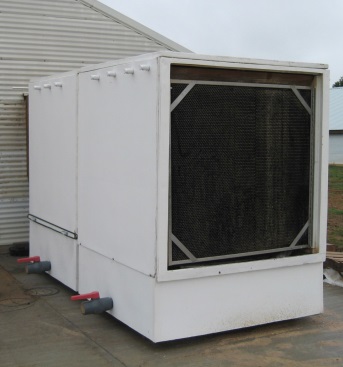
Acid scrubber developed by USDA/ARS in Fayetteville, AR, for reducing ammonia, dust and odor emissions from animal rearing facilities.

What Did We Do?

During the first year of this project the main task of our team was to re-design the ammonia scrubber developed and patented by Moore (2007).  A full scale prototype was constructed of wood and a series of tests were conducted to evaluate various configurations on air flow and static pressure drop in tests conducted in a machine shop.  The scrubber was connected to a 48” variable speed poultry fan.  Air flow was measured using a fan assessment numeration system (FANS unit).  Static pressure difference was measured using a Setra 2601MS1 differential pressure sensor.   The effects of slat angle, number and arrangement of slats, and thickness of cool cell material were evaluated. 

Following the initial testing a fiberglass mold was made and six scrubbers were constructed.  One of these was used to evaluate the effectiveness of water, strong acids, acid salts, and a neutral salt on scrubbing ammonia.  Anhydrous ammonia was metered out into a distribution system located within the fan at a sufficient rate to result in 25 ppm NH3 in the plenum between the fan and the dust scrubber.  Evaluations of each acid were made with the variable speed fan set at 60 and 40 Hz, which corresponded to air flows of approximately 8,000 and 5,000 cfm, respectively.  A stainless steel star sampler was used to take air samples from the plenum and from the air exhausted from the scrubber.  Ammonia concentrations were measured using a photoaccustic multigas analyzer (Innova 1412).  All personal involved in this testing wore respirators equipped with NH3 cartridges.  Three 2-hour trials were conducted with solutions of the following acids at both 40 and 60 Hz: alum, aluminum chloride, ferric sulfate, ferric chloride, sodium bisulfate, sulfuric acid, hydrochloric acid, phosphoric acid, and nitric acid. The effects of water and calcium chloride were also evaluated.   For these trials the amount of each acid added was equivalent to 2 liters of concentrated sulfuric acid.

In addition to measuring inflow and outflow ammonia levels, the mass accumulation of ammonia in both the dust and acid scrubber reservoirs was determined by analyzing the contents for ammonium using an auto-analyzer.  Twenty ml aliquots of the scrubber solution were taken at times 0, 1 and 2 hours for ammonia and pH measurements.  These data were used to validate that the difference in inlet and outlet ammonia were, in fact, due to accumulation of NH3 in the scrubber.  Notes were also taken on each chemical’s ease of use and potential for problems.  For example, some dry acids did not readily dissolve and some strong acids, like sulfuric acid, had very strong exothermic reactions.  Salts of aluminum and iron become aluminum and iron hydroxides at high pH which have the potential to clog cool cell material. 

Another performance issue that was monitored was the loss of fine droplets (mist) from the scrubber.  When dealing with high air volumes and small droplet sizes, there is a potential for mist to exit the system, resulting in not only the loss of N, but of the acid used to scrub NH3.  In order to measure mist loss, five 12.5 cm Whatman 42 filters were attached on a wire cage on the exhaust of the scrubber.  These filters were placed in a 50 ml centrifuge tub at the end of each trial and shaken with 25 ml of DDI water, which was analyzed for ammonium, along with sulfate, chloride, nitrate, or phosphate, depending on the acid used.

What Have We Learned?

Early on in this research we learned that two scrubbers (a dust scrubber and an acid scrubber) were needed rather than one.  If the dust isn’t removed from the exhaust air of poultry houses, then a large amount of the acid will be wasted neutralizing the dust.

We found that the relationship between slat angle and pressure drop was exponential and the angle that would maximize particle collisions on a wet surface while minimizing pressure drop was 45o.  We also found that as the number of rows of slats increased the effect on pressure drop was linear.   The final configuration chosen was eight rows of slats in the dust scrubber and three rows of slats in the chemical scrubber, followed by one or two 6” thick layers of cool cell material.    The pressure drop using this configuration was about 0.1” of water at 5,000 cfm and 0.3” of water at 8,000 cfm.

All of the acids scrubbed ammonium from air, whereas water and calcium chloride only worked for a very short period of time.  The iron (Fe) and aluminum (Al) compounds tended to work a little better than the other acid salts or the strong acids.  We believe this is due to Fe and Al compounds coating the cool cell material.  Although no difference was observed in the static pressure during these short tests, we believe Al and Fe hydroxides would eventually form and may clog the cool cells.  Due to the inherit danger in dealing with strong acids, we concluded that an acid salt that did not contain Al and Fe, such as sodium bisulfate, would be used for our research in the future.  This product is sold under the tradename PLT for a poultry litter treatment and is readily available to poultry growers. 

Future Plans

Four NH3 scrubbers will be attached to sidewall fans of a commercial broiler house located in Madison County, Arkansas.  The efficacy of these scrubbers for reducing ammonia, volatile organic compounds (VOCs), and particulate matter will be evaluated.  We will also measure the amount of sodium bisulfate, water and electricity used by the scrubbers, as well as the mass of nitrogen captured.  A cost-benefit analysis will be performed based on this data.  Data on the efficacy to scrub ammonia will also be conducted on farms in DE, VA, and PA.

Authors

Philip A. Moore, Jr., USDA/ARS, philipm@uark.edu

Rory Maguire, Virginia Tech

Mark Reiter, Virginia Tech

Jactone Ogejo, Virginia Tech

Robert Burns, University of Tennessee

Hong Li, University of Delaware

Dana Miles, USDA/ARS

Michael Buser, Oklahoma State University

Acknowledgements

This research was funding by USDA/ARS and by grants from USDA/NRCS and the National Wildlife Foundation.   The authors would like to thank the hard work and great ideas supplied by Scott Becton and Jerry Martin, without which this scrubber could not have been built.


The authors are solely responsible for the content of these proceedings. The technical information does not necessarily reflect the official position of the sponsoring agencies or institutions represented by planning committee members, and inclusion and distribution herein does not constitute an endorsement of views expressed by the same. Printed materials included herein are not refereed publications. Citations should appear as follows. EXAMPLE: Authors. 2013. Title of presentation. Waste to Worth: Spreading Science and Solutions. Denver, CO. April 1-5, 2013. URL of this page. Accessed on: today’s date.

Best Management Practices for Reducing Gas Emissions from Manure Application in Semi-Arid Regions

Waste to Worth: Spreading science and solutions logoWaste to Worth home | More proceedings….

*Abstract

Gas emissions from animal feeding operations (AFOs) create adverse impacts ranging from short-term local effects on air quality, particularly odor, to the long-term effects from greenhouse gas generation. Best management practices (BMPs) have been designed and implemented to mitigate gas emissions from farm operations. Our study investigates emission control strategies widely used in AFOs including manure management and land application. The primary objectives were to evaluate the efficiency and identify improvement of the currently available BMPs. We simulated and monitored gaseous emissions from a range of manure application and incorporation methods. The gaseous emissions were monitored using the closed dynamic chamber (CDC) method with a Fourier Transformed Infrared (FTIR) spectroscopy gas analyzer, which is capable of monitoring 15 pre-programmed gases simultaneously including typical gaseous compounds and greenhouse gases emitted from manure sources; namely, ammonia, carbon dioxide, methane, nitrous oxide, oxides of nitrogen, and volatile organic compounds. In this presentation, we will discuss the efficiency of the current manure management BMPs to reduce air emissions from dairy operations, based on the gaseous emission monitoring during the course of our experiment. Results from our study should enhance development and implementation of more flexible and more efficient air quality management approaches for dairy operations.

Why Study Gas Emissions from Manure Application Sites?

Evaluate gaseous emissions from manure application.  Identify ways to improve manure management and land application BMPs.

What Did We Do?

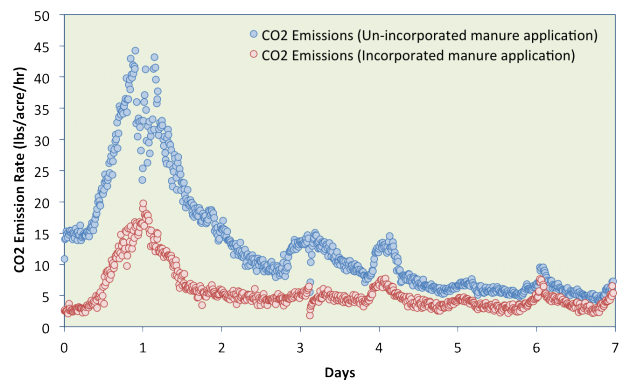
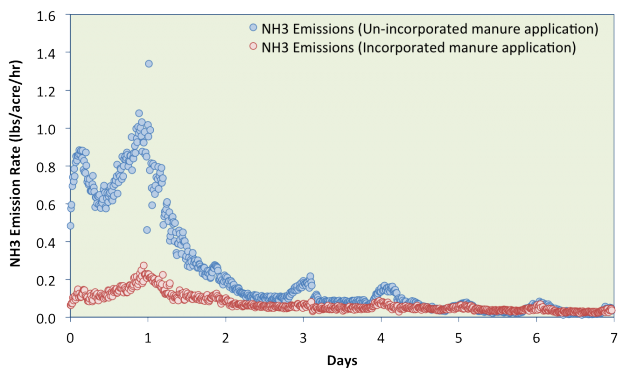
Manure application and incorporation methods were simulated and evaluated in a greenhouse setting.  Scraped dairy manure was applied at a rate of 50 tons/acre to a Millville silt loam soil.  Incorporation versus no incorporation was compared.  Gaseous emissions were monitored using a closed dynamic chamber with a Fourier Transformed Infrared (FTIR) spectroscopy gas analyzer, which is capable of monitoring 15-pre-programmed gases simultaneously including typical gaseous compounds and greenhouse gases emitted from manure sources; namely, ammonia, carbon dioxide, methane, nitrous oxide, oxides of nitrogen, and volatile organic compounds.  On Day 3, after emissions had subsided, the soil surface was rewetted.  Emissions were monitored for 7 days.

What Have We Learned?

Emission rates for CO2 and NH3 peaked after 24 hours, with the majority of emissions occurring within the first 2 days.  Rewetting had limited impact.  Based on this data, it appears that rapid incorporation is needed to have a meaningful impact on reducing gaseous emissions.

Carbon Dioxide Emissions

Ammonia Emissions

Future Plans

Examine gaseous emissions from a range of manure application and incorporation methods in a field setting.  The gaseous emissions will be monitored using the closed dynamic chamber method with a Fourier Transformed Infrared (FTiR) spectroscopy gas analyzer.

Authors

Rhonda Miller, Ph.D.; Agricultural Systems Technology and Education Dept.; Utah State University rhonda.miller@usu.edu

Pakorn Sutitarnnontr; Environmental Soil Physics Group; Utah State University

Enzhu Hu; Environmental Soil Physics Group; Utah State University

Markus Tuller, Ph.D.; Soil, Water, and Environmental Science Dept.; University of Arizona

Jim Walworth, Ph.D.; Soil, Water, and Environmental Science Dept.; University of Arizona

Scott B. Jones, Ph.D.; Plants, Soils, and Climate Dept.; Utah State University

Additional Information

Sutitarnnonntr, P., R. Miller, S. Bialkowski, M. Tuller, and S. B. Jones.  2012.  A Multiplexing System for Monitoring Greenhouse and Regulated Gas Emissions from Manure Sources Using a Portable FTIR Gas Analyzer.  ASABE 2012 Paper and Presentation No. 121337982.  St. Joseph, MI:  American Society of Agricultural and Biological Engineers.

Website:  http://agwastemanagement.usu.edu

Acknowledgements

The authors gratefully acknowledge support from a USDA-CSREES AFRI Air Quality Program Grant #2010-85112-50524.

The authors are solely responsible for the content of these proceedings. The technical information does not necessarily reflect the official position of the sponsoring agencies or institutions represented by planning committee members, and inclusion and distribution herein does not constitute an endorsement of views expressed by the same. Printed materials included herein are not refereed publications. Citations should appear as follows. EXAMPLE: Authors. 2013. Title of presentation. Waste to Worth: Spreading Science and Solutions. Denver, CO. April 1-5, 2013. URL of this page. Accessed on: today’s date.
White Meat-Green Farm: Case Study of Brinson Farms

Waste to Worth: Spreading science and solutions logoWaste to Worth home | More proceedings….

Abstract

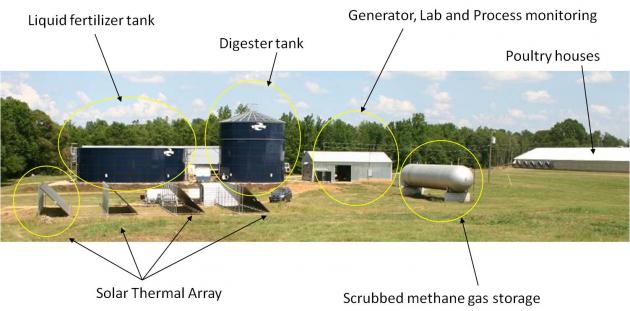
Comprehensive on-farm resource utilization and renewable energy generation at the farm scale are not new concepts.  However, truly encompassing implementation of these ideals is lacking.  Brinson Farms operates 10 commercial broiler houses.  The farm generates heat for its houses using biomass boilers and litter anaerobic digestion to produce methane.  Solar panels assist in heating process water for the boilers and digester.  Biomass feedstock includes litter as well as municipal yard wastes.  Liquid fertilizer is a product of the digester while residual solids are included in the farm’s composting operation.  The operator has used a futuristic approach to not only attain energy independence for the farm, but also to comprehensively utilize byproducts of production and other local “wastes”, diverting them from local landfills.  Considering the propane cost for a single winter flock has reached $66,000 and the annual electric bill may be $120,000, energy costs very much affect grower profitability.  This approach decreases the uncertainty in energy costs.  Brinson Farms provides a unique look into ensuring long-term farm sustainability in an environmentally friendly way and with a wide-ranging systems approach to management.

Purpose

The purpose of the renewable energy project was to implement an innovative, sustainable solution to manage poultry manure and other organic waste products using anaerobic digestion as well as to demonstrate the ability to effectively and economically reduce dependence on outside utilities.

What Did We Do?

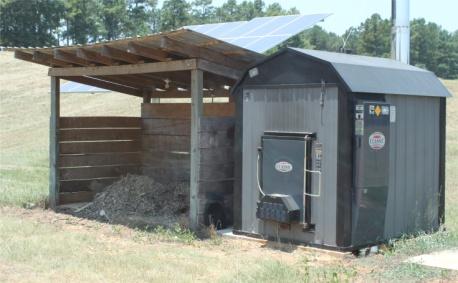
Brinson Farms demonstrates comprehensive utilization of local resources that have historically been viewed as wastes.  These organic materials (broiler litter, yard trimmings, storm damaged trees and waste vegetables) come from both the farm and the community.  Broiler litter and waste vegetables are anaerobically digested to produce methane.  The methane is then used in three ways: 1) to generate electricity for the farm; 2) in boilers to heat water used in the digestion process; and 3) in dual-fuel biomass boilers to heat water for heat exchange in the broiler houses when biomass sources are low. Two other significant products from the digester include liquid fertilizer (approximately 5-2-3) that is sold and residual solids that are incorporated into the farm’s composting facility.  Solar panels assist in heating water for the biomass boilers and the digester. The simple payback period for the on-farm poultry litter digester system is approximately 5 years.

Brinson Farms anaerobic digester complex.

What Have We Learned?

Brinson Farms provides a unique system to ensure long-term farm sustainability in an environmentally beneficial manner. Attributes of the integrated system include: 1) bio-based energy production; 2) reduced utility costs; 3) comprehensive litter utilization; 4) no need to land apply poultry litter; 5) production of high quality, organic liquid fertilizer; 6) production of a marketable soil amendment (compost);  and 7) diverting wastes from landfills.  The farm/community interface is mutually advantageous. The farm uses yard trimmings and trees for energy and as a compost substrate; the community has a free repository to dispose of the biomass, where otherwise it would have to pay landfill fees.

Biomass storage and boiler to heat broiler houses

Future Plans

Future plans include developing economic evaluations for each of the system components so that farmers can choose the renewable energy/value added process(es) that will best fit their local resources as well as short and long term financial plans.

Authors

Dana M. Miles, Chemical Engineer, USDA-ARS Genetics & Precision Agriculture Research Unit, Mississippi State, MS, dana.miles@ars.usda.gov

Additional Information

John Logan: johnlogan1@windstream.net;

Jeff Breeden: jbreeden@egesystems.com;

Eagle Green Energy: http://eaglegreenenergyinc.com/;

Arora, S. 2011. Poultry Manure: The New Frontier for Anaerobic Digestion. http://www.nrcs.usda.gov/Internet/FSE_DOCUMENTS/stelprdb1046769.pdf

Acknowledgements

The assistance of John Logan and Jeff Breeden to effectively describe the Brinson system is greatly appreciated.

The authors are solely responsible for the content of these proceedings. The technical information does not necessarily reflect the official position of the sponsoring agencies or institutions represented by planning committee members, and inclusion and distribution herein does not constitute an endorsement of views expressed by the same. Printed materials included herein are not refereed publications. Citations should appear as follows. EXAMPLE: Authors. 2013. Title of presentation. Waste to Worth: Spreading Science and Solutions. Denver, CO. April 1-5, 2013. URL of this page. Accessed on: today’s date.
Effect of Feeding Distiller’s Grains on Reduced Sulfur Emissions

Waste to Worth: Spreading science and solutions logoWaste to Worth home | More proceedings….

Why Study Sulfur Emissions and Manure from Animals Fed Distillers Byproducts?

Odorous reduced sulfur compounds are produced during manure decomposition and emitted from confined animal feeding operations.  Feeding high-sulfur distiller’s byproducts may increase the emission of these compounds.  The objectives of a series of feedlot pen studies was to (i) determine if emissions of reduced sulfur compounds from fresh manure and from the feedlot surface where affected if cattle were fed varying levels of distillers byproducts, and (ii) determine the areas within a pen that emit greater amounts of reduced sulfur compounds.

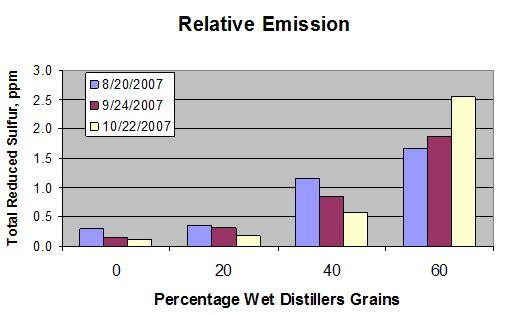
Study #1–Relative emission of redued sulfur compounds from fresh feces. Cattle fed diets containing 0%, 20%, 40%, and 60% WEGS.

What Did We Do?

Three studies were conducted to evaluate the relative impact of feeding high-sulfur wet distiller’s grain plus solubles (WDGS) to beef cattle.  In the first study, beef cattle in sixteen small-scale pens were fed varying amounts (0%, 20%, 40%, and 60%) of WDGS, and the relative emissions of reduced sulfur from fresh feces were measured using a laboratory wind tunnel chamber.  A follow up study in eight production-scale feedlot pens also examined the effect of feeding 0% or 40% WDGS on fresh manure emissions.  A third study in ten production-scale pens examined emissions from the pen surface when cattle were fed 0% and 40% WDGS diets over two production cycles.

Study #2–Relative emission of reduced sulfur compounds from feces of cattle fed 0% or 40% WDGS. P values above bars indicate the significance of the difference between emissions on the four dates.

What Have We Learned?

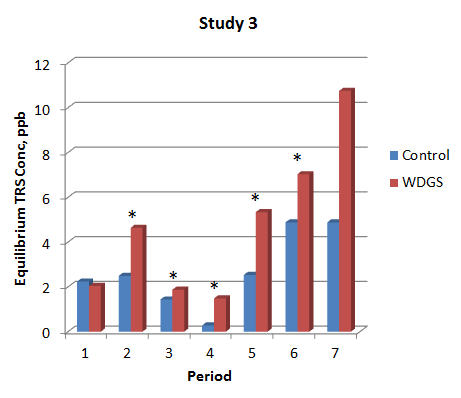
The relative emission of reduced sulfur from fresh feces was significantly greater (4 to 22-fold) when 40% (or greater) WDGS was fed in the initial study.  The follow up study confirmed this finding, but found the relative emission to be lower (2 to 4 fold higher for WDGS) in the production-scale feedlot.  In the final study examining the relative emission from the whole feedlot pen surface (mixed soil and aged feces) over many months, emissions principally came from the wetter edges of the pen when animal were fed higher levels of WDGS in their diet.  For the six study periods, the relative emissions from WDGS pens ranged from 0.3 to 4-fold higher than a standard ration.  Consistent results from these three studies indicate that reduced sulfur emissions increase when animals are fed higher levels of WDGS.

Study #3–Relative concentration of total reduced sulfur (TRS) in the chamber for each of the seven study periods. An asterisk above the bars indicates a significant difference (P < 0.05) between diets.

Future Plans

The level of sulfur in WDGS varies depending upon source and production method.  Feeding lower sulfur WDGS should reduce the relative emission of odorous reduced sulfur compounds.  Production of the reduced sulfur compounds may also be related to water quality—some water sources high in sulfur may enhance the emission of reduced sulfur from animal production sites.  Further research into the mechanism of reduced sulfur production may provide new insights into controlling the emissions of these odorous compounds.

Authors

Daniel N. Miller, Research Microbiologist, USDA-ARS, Lincoln, NE, dan.miller@ars.usda.gov

Mindy J. Spiehs, Research Animal Scientist, USDA-ARS, Clay Center, NE

Bryan L. Woodbury, Agricultureal Engineer, USDA-ARS, Clay Center, NE

Additional Information

Miller, D. N., V. H. Varel, B. L. Woodbury, and M. J. Spiehs.  2010.  Enhanced reduced sulfur emission from manures of beef cattle fed distiller’s byproducts.  International Symposium on Air Quality and Manure Management for Agriculture Conference Proceedings, 13-16 September, Dallas, Texas.  711P0510cd.

Acknowledgements

The authors would like to acknowledge the technical expertise of Todd Bowman, Alan Kruger, and Ryan McGhee.  Mention of trade names or commercial products in this publication is solely for the purpose of providing specific information and does not imply recommendation or endorsement by the U.S. Department of Agriculture.  USDA is an equal opportunity provider and employer.

The authors are solely responsible for the content of these proceedings. The technical information does not necessarily reflect the official position of the sponsoring agencies or institutions represented by planning committee members, and inclusion and distribution herein does not constitute an endorsement of views expressed by the same. Printed materials included herein are not refereed publications. Citations should appear as follows. EXAMPLE: Authors. 2013. Title of presentation. Waste to Worth: Spreading Science and Solutions. Denver, CO. April 1-5, 2013. URL of this page. Accessed on: today’s date.