Changes in amount and location of US dairy manure production from 1970-2023

Purpose

We estimated milking cow manure production for US states from 1970 to 2023 with the aim to provide a broad perspective to stakeholders who manage and optimize the use of dairy manure. Stakeholders include producers and those working on their behalf such as agronomists, applicators, engineers, extension agents, researchers, governmental agencies, cooperatives, and markets.

It is hoped that with increased understanding of how manure production has changed over time and location stakeholders can better understand trends and historical conditions which impact their efforts.

What Did We Do?

We estimated milking cow manure production for 48 US states from 1970 to 2023 using an empirical equation estimating manure production as a function of milk production published by the American Society of Agricultural and Biological Engineer’s Manure Production and Characteristics standard. To apply this equation to each state we utilized two data sources produced by the United States Department of Agriculture’s National Agricultural Statistics Service (NASS), annual milk production and annual milking cow herd size. To gain further insight data sources reporting the number of dairy farms and land available for manure application in each state were additionally gathered from NASS and reported in combination with manure production. The workflow and references for combining this data are displayed in the following figures.

Figure 1. Workflow to estimate annual dairy manure production using ASABE’s Manure Production and Characteristics standard and NASS milk cow production and cow herd inventory data sources.
Figure 2. Workflow to estimate number of dairies and acres for manure application from NASS data sources.

What Have We Learned?

Nationally annual dairy manure production has decreased from 1970-2023 by approximately 4% (2.2 billion gallons). From 1998 to 2023 annual dairy manure production increased by approximately 13% (6.4 billion gallons). Although national milking cow numbers generally declined from 1970 to 1998 then nearly remained constant until 2023, this trend was offset by continual increase in manure production per cow from 1970-2023 due to the direct relationship with milk production, which has continued to increase from 1970-2023. Also, the annual number of gallons of manure per dairy farm has increased from 1970-2023 due to a decrease in number of dairies combined with an increase in manure production per cow. It is accepted that the US dairy industry has consolidated over time, this data supports that its’ manure production has consolidated as well.  The author posits based on experience and this analysis that nationally, over time, manure systems in support of livestock production have contributed to an increase in volume of manure being managed to date. As dairy cows move to increasing levels of confinement, from pasture and lots which utilize land base as a manure system to barns with more engineered manure systems, greater collection of manure occurs and therefore must be managed. Regarding the impact of the specific type of engineered manure systems impact on volume of manure that must be managed the author posits this currently varies based on the kind of manure system selected, either adding or subtracting to the managed manure stream, which is a function heavily dependent on local climate (precipitation, evaporation, and length of storage period) and technology adoption (covers, flush systems, separation, and advanced treatment). In the upper Midwest with relatively high precipitation, low evaporation, and long winter periods dairy manure systems are predominantly collect and store only, overall adding to the volume of manure to be managed as additional precipitation is also captured by the uncovered nature of most storages in this region.

Figure 3. National change in manure and milk production, milking cow inventory, and number of dairies from 1970 to 2023.

At the state level the change in manure production has varied. From 1970 to 2023, 12 states have increased manure production, the remaining 26 states have decreased manure production. This has resulted in a change in the location of where manure is produced. In 2023, most manure was produced in a few states. In 2023, 10 states produced 70% of the total annual US dairy manure production, with 6 states producing over 50%.

Figure 4. 2023 annual milking cow manure production, millions of gallons, and percent change of annual milking cow manure production from 1970 to 2023.

Future Plans

Authors seek to maintain this data analysis in a method available to stakeholders, additionally incorporating manure production from swine, beef, and poultry into it, and updating it as future NASS reports are published.

Authors

Presenting & corresponding author

Mike Krcmarik, Professional Engineer, mikekrcmarik@gmail.com

Additional Information

Email corresponding author for copy of all data and figures used in this analysis, including figures published on the poster only.

Acknowledgements

    • American Society of Agricultural and Biological Engineers, Engineering Practices Subcommittee of the ASAE Agricultural Sanitation and Waste Management Committee responsible for standard ASAE D384.2 Manure Production and Characteristics used in this analysis.
    • United States Department of Agriculture’s National Agricultural Statistics Service responsible for the various surveys and reports used in this analysis.
    • Allen Young, Eric County Soil and Water Conservation District (New York) providing valuable review and discussion.

The authors are solely responsible for the content of these proceedings. The technical information does not necessarily reflect the official position of the sponsoring agencies or institutions represented by planning committee members, and inclusion and distribution herein does not constitute an endorsement of views expressed by the same. Printed materials included herein are not refereed publications. Citations should appear as follows. EXAMPLE: Authors. 2025. Title of presentation. Waste to Worth. Boise, ID. April 711, 2025. URL of this page. Accessed on: today’s date.

Manure nutrient trends from 2012-2022

Purpose

Livestock manure nutrients can be variable depending on animal species, age, diet, management, housing, climate, and manure storage and handling. Thousands of samples are analyzed every year by agricultural laboratories across the United States (U.S.). While many published manure characteristics are two decades old, this study provides an updated glimpse into more recent manure data from thousands of samples across the country and reviewed possible trends from 2012-2022 by U.S. regions for common animal categories.

What Did We Do?

We collected manure nutrient data from participating U.S. laboratories and this data was aggregated by researchers at the University of Minnesota into ManureDB, a manure nutrient test database. By February 2024, ManureDB included over 490,000 samples from across the U.S. With ManureDB, data was filtered for the time period from 2012-2022 and common U.S. animal manure categories (solid beef, liquid beef, solid dairy, liquid dairy, solid chicken-broiler, solid chicken-layer, solid turkey, and liquid swine manure) to update nutrient summary statistics for total nitrogen (TN), ammonium-N (NH4-N), phosphorus (P2O5), and potassium (K2O) using the approximately 325,000 samples. Samples were divided by designating samples with <10% total solids as liquid manure and samples with >10% total solids as solid manure. Data was also analyzed to assess regional nutrient comparisons and trends for regions with sufficient samples.

What Have We Learned?

Regional differences impacted nutrient concentrations in solid and liquid manures. When comparing regions with at least 500 samples per animal manure category across 2012-2022 we found significant differences in nutrient concentrations in 66% of the individual year comparisons for solid manures and 91% of comparisons for liquid manures for all four analytes.

Between 2012 and 2022, significant increasing or decreasing nutrient (TN, NH4-N, P2O5, K2O) trends were evident in 25% of solid samples and 18% of liquid samples. The only significant trend for solid beef manure was a decreasing trend in the SE region for NH4-N. Both the solid chicken-broiler SE and NE regions had significant decreases in NH4-N, and only the SE had an increasing trend for K2O. The SE region for solid chicken-layer had decreasing trends for NH4-N, P2O5, and K2O. For solid dairy manure, the MW region only had a decreasing trend for P2O5, while the NE region had decreasing trends for N and NH4-N. Solid turkey manure only had significant trends for P2O5, with the MW increasing and the SE decreasing. Liquid beef manure had no significant trends. For liquid dairy manure, only the NE region had significant decreasing trends for all four nutrients. For liquid swine manure, only the SE region had significant increasing trends for NH4-N.

Standardizing nomenclature and increasing manure sample details, especially with animal life stage and manure storage information on manure sample submittal forms, will further improve ManureDB’s usefulness.

Future Plans

We continue to expand and refine ManureDB by adding data each year, additional labs, making the website more user-friendly, and enhancing data quality control. We archived the first set of data with Ag Data Commons in 2024 and plan to do that annually. We also plan to publish several papers regarding the development of the database and analysis of the manure nutrient data.

Authors

Presenting & corresponding author

Nancy L. Bohl Bormann, Researcher, University of Minnesota, nlbb@umn.edu

Additional authors

Melissa L. Wilson, Associate Professor, University of Minnesota

Erin L. Cortus, Associate Professor and Extension Engineer, University of Minnesota

Additional Information

Acknowledgements

ManureDB is supported through USDA NIFA Award 2020-67021-32465 and Cooperative Ecosystem Studies Unit program [grant no. NR253A750008C001] from the U.S. Department of Agriculture — Natural Resources Conservation Service.

The authors are solely responsible for the content of these proceedings. The technical information does not necessarily reflect the official position of the sponsoring agencies or institutions represented by planning committee members, and inclusion and distribution herein does not constitute an endorsement of views expressed by the same. Printed materials included herein are not refereed publications. Citations should appear as follows. EXAMPLE: Authors. 2025. Title of presentation. Waste to Worth. Boise, ID. April 711, 2025. URL of this page. Accessed on: today’s date.
Comparative Evaluation of Dairy Manure Compost Supply Chains in the US Pacific Northwest

Purpose

The overall objectives of this research are to describe the current linkages among participants in the dairy manure compost supply chains in the Pacific Northwest (PNW) states of ID, OR, and WA and to provide analytical insights into the challenges and opportunities for enhancing manure compost marketability and usage in the different regions. Obtaining an enhanced understanding of these market dynamics is necessary for explaining why and how dairy compost quality varies and for identifying strategies for establishing and/or strengthening linkages among market participants. Improving dairy compost quality and increasing usage among crop producers is important for achieving sustainable environmental quality and agricultural business profitability in all PNW states.

What Did We Do?

Our analysis builds on the underlying concept that is outlined in Extension bulletins and other references from universities in the PNW (e.g., Chen et al. 2011), which emphasize that developing good quality dairy manure-based compost requires achieving a proper Carbon (C) to Nitrogen (N) ratio (C:N) of about 30:1. It is common that supplemental C is needed to increase the C:N balance in dairy manure-based compost to that magnitude. There are various sources of supplemental C used by PNW compost producers, but the most common are cereals (barley and wheat) straw, corn stalks/silage, sawdust, and wood chips.

We created Figure 1 to describe, with several assumptions, the major participants in the PNW dairy compost supply chains and the nature of their typical interactions with each other. The main participants include dairies, compost businesses, logging businesses, cereals farms, laboratory testers, and silage farmers. We next implemented data-driven analyses to determine if and the extent to which the linkages among the dairy compost supply chain participants differ across PNW states, based on the structure of the dairy and other aligned industries (e.g., logging) in each state. The principal objective of the analyses was to quantify the relative spatial concentration of the dairy industries, which has implications for business profitability and policy-driven incentives for implementing the composting process. We used a couple of different measures of dairy market concentration for comparison. The first is the Herfindahl-Hirschman Index (HHI), which is a statistical measure of industry concentration (Rhoades, 1993). We applied the calculation of the HHI in a manner that is different than is typically done such that the obtained values represent differences in the spatial concentration of the dairy industries in ID, OR, and WA. We supplemented the HHI values with calculations of the ratios of dairy cow inventories to cropland acreage. Lastly, to obtain insights about the relative strengths of linkages among potential dairy compost supply chain entities, we estimated the correlation between county level dairy cow inventories, cropland acreage, and the numbers of other entities (e.g., logging businesses) for each state.

Figure 1. Diagram of major PNW dairy compost supply chain linkages (Source: Authors)

What Have We Learned?

The estimated HHI values in our context could range from close to about 100, which would reflect an even distribution of dairy cows among all counties in a state, to 10,000, which would imply that all dairy cows are in a single county. Our estimated HHI values based on 2022 data from the USDA Census of Agriculture were 1,378 for ID, 2,307 for OR, and 2,082 for WA. Thus, by the HHI measure, the dairy industries in OR and WA are more spatially concentrated than that in ID. However, by the ratio of dairy cow inventory to cropland acreage measure, all states have counties with relatively high concentrations of dairy cows, but to different extents across states. Additionally, estimates from the correlation analysis at the county level show a positive relationship between dairy cow inventories and cropland acreage for all states (statistically significant at the 5% confidence level for OR). A negative, but not statistically significant, relationship was found between the number of logging businesses and dairy cows in all states, but the magnitude was largest in ID. Thus, it is more common that counties have both dairy cows and logging businesses in a county in OR and WA than in ID. These relationships help explain why wood-based amendments with higher C are likely more commonly used in the composting process in OR and WA than in ID, as well as how the associated compost qualities differ across states.

Future Plans

The analyses we have implemented so far are at the county level. We plan to implement additional analyses that include identifying larger multi-county dairy producing regions and compiling more data on the existing supply chain participants, including cropland acreage for other crops (i.e., non-grain and silage) in such regions. This expanded analysis will provide more regionally specific assessments of the differences in dairy compost components/quality among the major dairy producing regions in the PNW.

Authors

Presenting & corresponding author

Patrick Hatzenbuehler, Associate Professor and Extension Specialist – Crop Economics, University of Idaho, phatzenbuehler@uidaho.edu

Additional authors

Srijan Budhathoki, Graduate Student, Washington State University

Mario de Haro-Martí, Extension Educator – Gooding County, University of Idaho

Anthony Simerlink, Extension Educator – Power County, University of Idaho

Additional Information

Idaho Sustainable Agriculture Initiative for Dairy

Acknowledgements

Research funding was provided by USDA-NIFA Sustainable Agricultural Systems Grant No. 2020-69012-31871 and the Idaho Agricultural Experiment Station.

The authors are solely responsible for the content of these proceedings. The technical information does not necessarily reflect the official position of the sponsoring agencies or institutions represented by planning committee members, and inclusion and distribution herein does not constitute an endorsement of views expressed by the same. Printed materials included herein are not refereed publications. Citations should appear as follows. EXAMPLE: Authors. 2025. Title of presentation. Waste to Worth. Boise, ID. April 711, 2025. URL of this page. Accessed on: today’s date.
Manure Can Offset Nitrogen Fertilizer Needs and Increase Corn Silage Yield – Value of Manure Project

Purpose


Manure is a tremendously valuable nutrient source. Not all the nitrogen (N) in manure is plant-available at land application. Organic N is released into plant-available forms over multiple years. Inorganic N availability depends on the application method and timing, with more plant-available N from manure when injected in the spring than when surface applied in fall. A manure N crediting system was developed in New York in the late 90s that credits N from manure based on manure’s composition and application timing and method. With advances in farm management, the manure that dairy farms are land-applying now may be very different from the manure sources used to develop that crediting system. The Value of Manure project was initiated by the New York On-Farm Research Partnership in 2022 to update New York’s manure crediting system. Over multiple years, the project evaluates different manure sources, application methods, and timings that commercial farms now use. Additionally, we are documenting the impact of manure on yield beyond what can be obtained with inorganic fertilizer only.

What Did We Do?

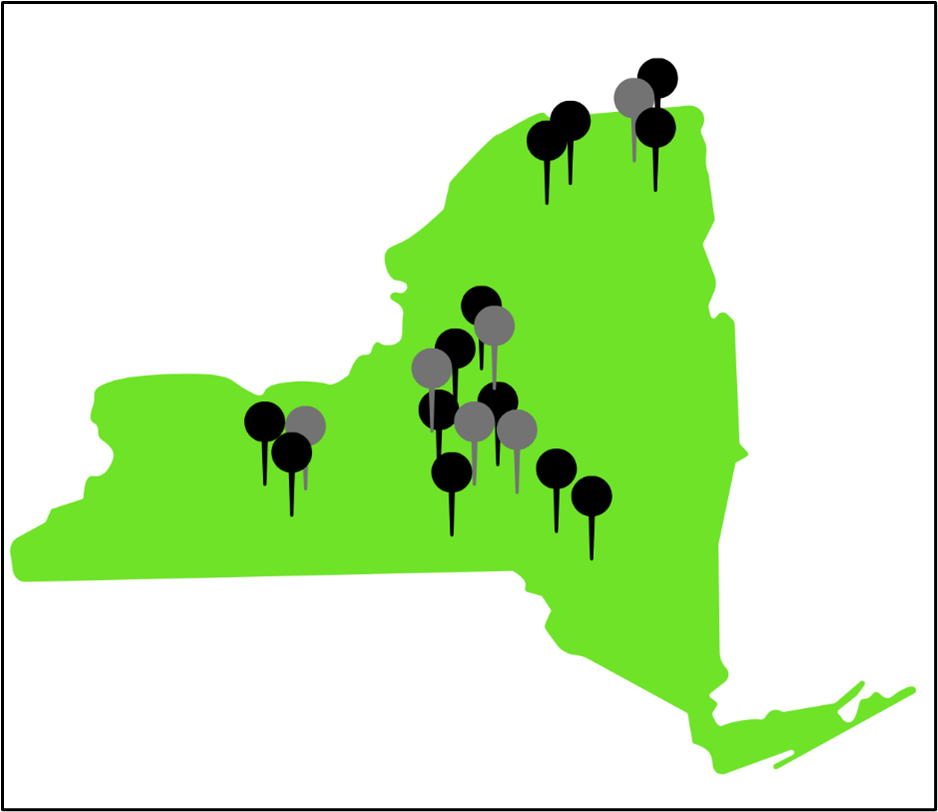
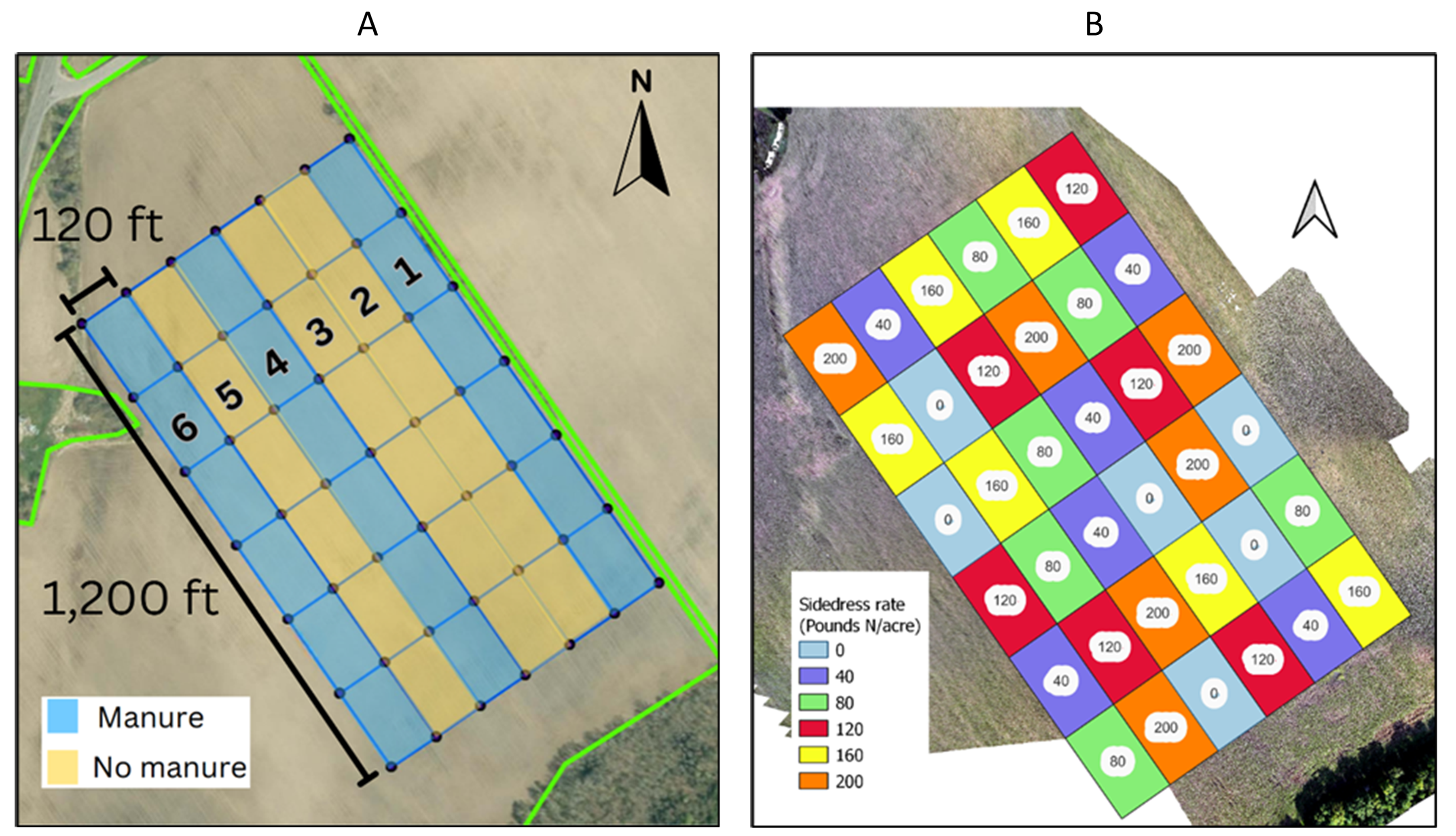
Nineteen trials were implemented on commercially farmed corn fields across New York between 2022 and 2024 (Figure 1). Each trial had three strips that received manure and three that did not, for a total of six strips per trial (Figure 2a). Five “carryover” trials received manure in the spring of year 1, and we tested manure N and yield benefits in the second year after application. Manure was applied and tested in the same year in all the other trials. Soil type, dairy manure type (digestate, separated liquids, untreated, etc.), application rate, and application methods (broadcasted, injected, etc.) varied across trials (see our “What’s Cropping Up?” extension articles in the Additional Information section for more details).

When corn was at the V4-V6 stage each strip was divided into six sub-strips (Figure 2b), and subplots were sidedressed at a rate usually ranging from 0 to 200 pounds N/acre. Sidedress rates were trial-specific, based on the expected N requirement of each field according to the Nitrogen Guidelines for Field Crops in New York. In each trial, we measured manure nutrient composition, general soil fertility, Pre-Sidedress Nitrate Test (PSNT), Corn Stalk Nitrate Test (CSNT), yield, and forage quality.

Figure 1. Nineteen Value of Manure trials have been implemented across New York between 2023 and 2024.
Figure 2. Layout of a Value of Manure study plot. Three strips received manure before planting corn (1a). At the V4-V6 stage each of the six strips received six different inorganic N sidedress rates (1b).

What Have We Learned?

In the three years of the project, we have documented how manure offsets fertilizer needs and “bumps” yields. Yield responses to manure and fertilizer N vary by location and year, influenced by field past management (manure history, crop rotation, etc.) and weather.

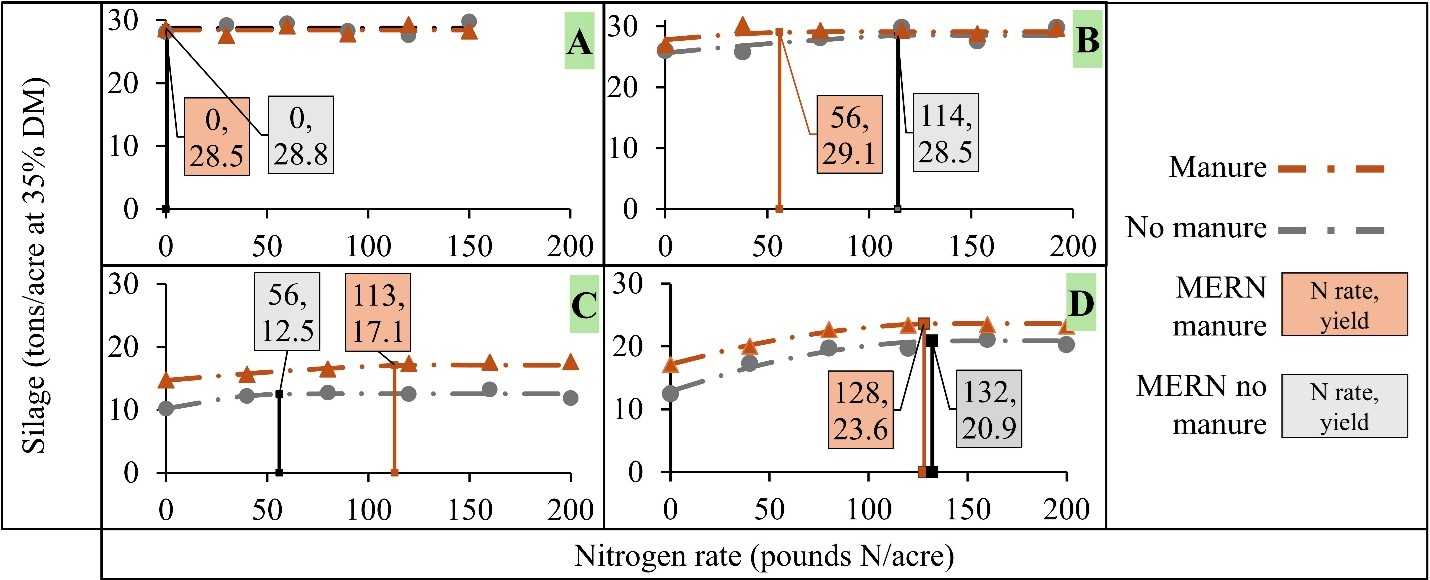
    • We observed no yield response to manure or sidedress N application in three trials (Figure 3A, Table 1 trial A). That was likely due to high N credits from past manure applications. Yet those trials were among the highest-yielding ones and had excessive CSNT results.
    • At the Most Economical Rate of N (MERN, the N rate that maximizes economic return), manure replaced inorganic N fertilizer in six trials by lowering sidedress fertilizer needs (Figure 3B, Table 1 trial B). In the manure strips for these trials, yields at MERN were higher than the yields at the MERN of the no-manure plots.
    • In three trials manure applications increased yields to such elevated levels (2.3 to 4.6 tons/acre), that it also increased the crop’s need for fertilizer N (Figure 3C, Table 1 trial C).
    • Significant yield bumps due to manure application were documented in fourteen trials. These yield bumps were also present in all five “carry-over” trials, where we saw that manure applied in year 1 benefited yields in the second year after application (Figure 3D, the carryover study of Figure 3C trial, Table 1 trial D).
Figure 3. Four examples of crop response to manure and sidedresss N as part of the statewide Value of Manure trials conducted between 2022 and 2024. Orange text boxes are the MERN and yield at MERN for manured plots; gray text boxes are MERN and yield at the MERN for no-manure plots. Yields are in tons/acre at 35% dry matter (DM).
Table 1. Most economic rates of N (MERN) for no-manure and manure plots and manure-induced yield increase (tons/acre at 35% dry matter) for four examples of crop response to manure and sidedress N as part of the statewide Value of Manure trials conducted between 2022 and 2024.
Trial No manure MERN Manure MERN Manure-induced yield increase
————- pounds N/acre ————- tons/acre
A 0 0 0
B 114 56 0.6
C 56 113 4.6
D * 132 128 2.7
*Note: Trial D was a carryover study where manure was applied in the spring of 2023 and we tested its value for 2024 corn.

Future Plans

To re-evaluate the current N crediting system and learn how to predict and take into account yield bumps, the Value of Manure project requires the addition of more trials beyond the nineteen trials completed so far. Thus, the Value of Manure Project will continue in 2025. We will be testing additional manure types and application methods in various soil types and weather conditions and follow up with several sites to determine carryover benefits into the third year after application.

Authors

Presenting author

Juan Carlos Ramos Tanchez, On-Farm Research Coordinator, Nutrient Management Spear Program, Cornell University

Corresponding author (name, title, affiliation)

Quirine M. Ketterings, Professor, Cornell University, qmk2@cornell.edu

Additional authors

Kirsten Workman, Nutrient Management and Environmental Sustainability Specialist, PRO-DAIRY and Nutrient Management Spear Program, Cornell University; Carlos Irias, Master Student, Nutrient Management Spear Program, Cornell University.

Additional Information

Acknowledgements

We thank the farms participating in the project and their collaborators for their help in establishing and maintaining each trial location, and for providing valuable feedback on the findings. This project has been funded by Northern New York Agricultural Development Program, New York Farm Viability Institute, New York Department of Environmental Conservation, New York Department of Agriculture and Markets, Dairy Management Inc., and the Foundation for Food & Agricultural Research.

The authors are solely responsible for the content of these proceedings. The technical information does not necessarily reflect the official position of the sponsoring agencies or institutions represented by planning committee members, and inclusion and distribution herein does not constitute an endorsement of views expressed by the same. Printed materials included herein are not refereed publications. Citations should appear as follows. EXAMPLE: Authors. 2025. Title of presentation. Waste to Worth. Boise, ID. April 711, 2025. URL of this page. Accessed on: today’s date.
Enhancing Precision Manure Nutrient Application with Near-Infrared Spectroscopy (NIRS) Sensors

Purpose

Land application of manure is crucial for providing nutrients to crops, yet challenges such as nutrient losses and reduced nutrient use efficiency (NUE) affect sustainability. This study evaluates a commercially available real-time near-infrared spectroscopy (NIRS) nutrient-sensing system to enhance precision manure nutrient application in crop production systems. The study assesses the impact of the NIRS system on manure application rates, NUE, and crop yield compared to conventional fixed-rate methods.

What Did We Do?

Field trials were conducted using a John Deere Harvest Lab 3000 NIRS system, rate controller, and Krone Flow meter on a manure tanker, Figure 1. Manure was applied to achieve a target total nitrogen rate for corn silage, with application rates varied to simulate manure nutrient variations during lagoon emptying.

Figure 1. Location of sensor on manure tanker

What Have We Learned?

Although NIRS predictions taken in laboratory conditions for total nitrogen were lower than the ranges reported for Manure analysis proficiency (MAP) certified laboratory results, the ammoniacal nitrogen,  phosphorous (P2O5), and potassium (K2O) were with the MAP lab ranges reported in Sanford et al. (2020). However, additional data is needed for assessment of the sensor accuracy during field conditions.

First-year field trial data indicate that NIRS was closer to the intended nitrogen application rates and had improved NUE with no significant differences in yield compared to those using conventional fixed-rate application methods. Further, the system is capable of producing manure nutrient application maps that can be used for supplemental nutrient applications, Figure 2.

Figure 2: Nitrogen application maps produced by the sensing system during plot trials

Overall, integrating NIRS into the land application system demonstrates potential improvements in precision nutrient application over conventional methods. Further trials and analyses are planned to assess the accuracy of the NIRS sensor and its broader impact on nutrient management and application precision.

Future Plans

Researchers plan to continue field trials for another one to two years to assess the impacts over multiple field years. This includes assessing the sensor accuracy in field conditions. Further, researchers’ previous trials have focused on applying based on manure nitrogen content. Additional trials will assess applying manure with a phosphorus limit using the same sensor. Lastly, researchers are working to guide farmers interested in integrating the system and aiding in using developed maps to improve supplemental nitrogen application.

References

Sanford, J.R., R.A. Larson, & M.F. Digman. 2020. Assessing certified manure analysis laboratory accuracy and variability. Applied Engineering in Agriculture, 36(6):905-912. https://doi.org/10.13031/aea.14214

Authors

Presenting author

Tyler Liskow, Engineer, Professor, Nelson Institute for Environmental Studies, University of Wisconsin-Madison

Corresponding author

Rebecca A. Larson, Professor, Nelson Institute for Environmental Studies, University of Wisconsin-Madison, rebecca.larson@wisc.edu

Additional authors

Tyler Liskow, Engineer, Nelson Institute for Environmental Studies, University of Wisconsin-Madison; and Joseph Sanford, Assistant Professor, University of Wisconsin-Platteville

Acknowledgements

This material is based on work that is supported by the National Institute of Food and Agriculture, U.S. Department of Agriculture under award number 2022-69008-36506.

Any opinions, findings, conclusions, or recommendations expressed in this publication are those of the author(s) and do not necessarily reflect the view of the U.S. Department of Agriculture.

The authors are solely responsible for the content of these proceedings. The technical information does not necessarily reflect the official position of the sponsoring agencies or institutions represented by planning committee members, and inclusion and distribution herein does not constitute an endorsement of views expressed by the same. Printed materials included herein are not refereed publications. Citations should appear as follows. EXAMPLE: Authors. 2025. Title of presentation. Waste to Worth. Boise, ID. April 711, 2025. URL of this page. Accessed on: today’s date.

The Effect of Cover Crops on Nutrient Leaching

Purpose

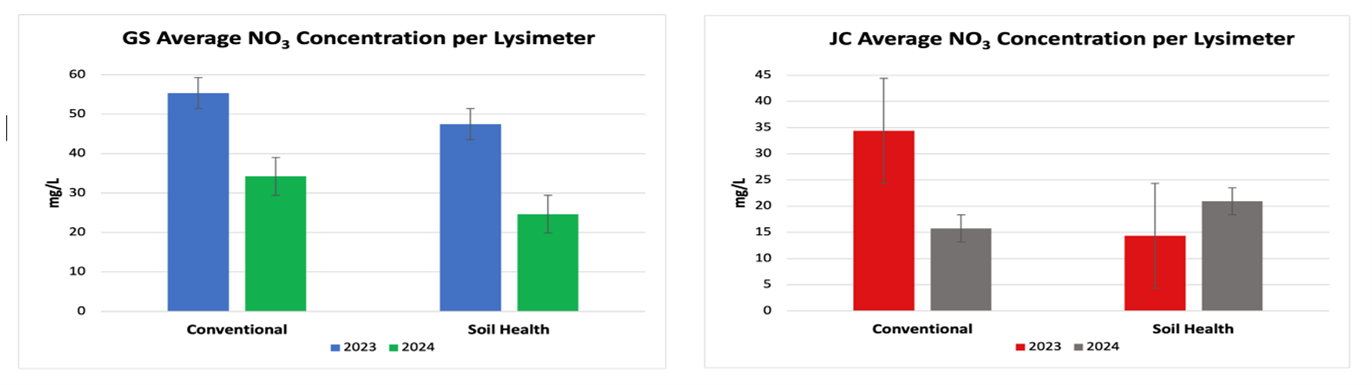
An NRCS Conservation Innovation Grant (CIG) state-wide study examining soil health is underway.  Seventeen farms across the state of Utah are incorporating various soil health practices and are comparing them to their conventional practices (no soil health treatment).  Mini zero-tension lysimeters (12” diameter) were installed at two of the locations in northern Utah (Cache Valley), to collect leachate.  Cache Valley has a semi-arid climate with warm summers and cold winters.  The soil type on both farms is a Lewiston sandy loam.  Both of these farms apply manure and are incorporating cover crops as part of their soil health management.  The fields are irrigated.  Leachate is being collected to evaluate the impact of cover crops on nutrient leaching.  Other scientists are examining various soil health parameters, such as bulk density, soil carbon tests, water infiltration, etc.

Leachate is being collected bi-weekly throughout the growing season, and as late as possible into the winter.  Leachate samples are being analyzed for available N (ammonia and nitrate/nitrite), and dissolved phosphorus on a Lachat Auto-Analyzer using Methods 10-10701-2-A, 10-107-04-1-A, and 10-115-01-1-A, respectively.  Deep soil cores are also being collected to a depth of 5 feet and will be analyzed for nitrogen and phosphorus.

What Did We Do?

Mini zero-tension lysimeters were installed in the spring of 2023.  In year 1, both farms (GS and JC) planted corn with a cover crop (rye, clover, vetch, brassica mix) being interseeded at ~ the V5 stage.  Due to the short growing season, cover crop establishment early in the season, before canopy cover, is needed to get adequate cover crop growth in the fall.  In year 2, the GS Farm began transitioning to alfalfa.  Oats were planted in the spring and terminated for a late summer/early fall alfalfa planting.  Three-way grass will be interseeded into alfalfa in the spring of 2025 for the soil health treatment.  In year 2, the JC Farm missed the window for getting the cover crop interseeded into the corn crop.  There was no soil health treatment in effect for the 2024 growing season on the JC Farm.

Leachate is being collected bi-weekly throughout the growing season, and as late as possible in the winter.  Leachate samples are being analyzed for available N (ammonia and nitrate/nitrite), and dissolved phosphorus on a Lachat Auto-Analyzer using Methods 10-10701-2-A, 10-107-04-1-A, and 10-115-01-1-A, respectively.  Deep soil cores are also being collected to a depth of 5 feet and will be analyzed for nitrogen and phosphorus.

What Have We Learned?

On the GS Farm, the leachate from the soil health treatment had, on average, a lower nitrate concentration.  There was also less leachate produced, and less total nitrate going past the soil root zone.   On the JC Farm in 2023, the soil health treatment also produced leachate with a lower nitrate concentration than their conventional treatment.  There was also less total leachate produced and less total nitrate loss when cover crops were interseeded into the corn in 2023.  Those results disappeared in 2024 when a cover crop was not planted.  Even with the cover crop, the leachate (on average) exceeded the drinking water standard for nitrate concentration.  The application of manure in the spring likely contributed to this loss.

Future Plans

This study will continue for three more years.  The goal is to verify and demonstrate practices that improve soil health and minimize environmental impacts.

Authors

Presenting & Corresponding author

Rhonda Miller, Professor, Utah State University, rhonda.miller@usu.edu

Additional authors

Katie Hewitt, Graduate Student, Utah State University; Bruce Miller, Professor, Utah State University

Acknowledgements

Funding provided by NRCS CIG Grant “Utah Soil Health Partnership On-Farm Trials” – Agreement Number NR223A750013G009

The authors are solely responsible for the content of these proceedings. The technical information does not necessarily reflect the official position of the sponsoring agencies or institutions represented by planning committee members, and inclusion and distribution herein does not constitute an endorsement of views expressed by the same. Printed materials included herein are not refereed publications. Citations should appear as follows. EXAMPLE: Authors. 2025. Title of presentation. Waste to Worth. Boise, ID. April 7-11, 2025. URL of this page. Accessed on: today’s date.

Summary of Manure Handling Certification Programs Across the United States

Purpose

Effective management of manuresheds is important to address regional mass nutrient imbalances of manure nitrogen and phosphorus (Speigal et. al., 2020). To date, a summary description of state-level certification programs of those that apply, transport, or broker manure has not been published in literature. The purpose of this research (Flynn et. al., 2025) was to: 1) enumerate and characterize manure handling certification programs across the US; 2) investigate correlation of state programs and manure surpluses/regional manureshed source areas; and 3) explore a Wisconsin case study focused on voluntary, market-based, statewide certification and correlation with reduced manure spills and safe land application.

What Did We Do?

Thorough internet examinations of state agency and university websites were used to compile descriptive data for state manure hauling, brokering, and application certification requirements. Data from a Qualtrics survey used to gather further details of certification programs received input from university or agency professionals from all 50 states. Data from the internet search and survey was compiled, quantified, and placed in a data repository (Erb, Inaoka, and Meinen, 2024). A case study summarized information from historical surveys, reports, and conference proceedings and reported impacts of certification and associated educational programming in the state of Wisconsin (e.g. Erb, 2022; Erb, 2024; Erb et. al., 2011; Erb et. al., 2021; Erb, Kostelny, et. al., 2024; Erb, et. al., 2009; Erb et. al., 2015; Erb and Stieglitz, 2007).

What Have We Learned?

Legal definitions of certification are diverse among states but can largely be defined as legal permissions to handle manure. Certification programs are present in 26 of 50 states. Certifications were placed into three categories: farmers, professional manure transporter/applicators, and manure brokers. Many states certify individuals in more than one category, that may be mandatory or voluntary. Categorization of certification programs revealed the following:

    • Producer certification existed in 21 states (15 mandatory, 6 voluntary).
    • Transporter/Applicator certification existed in 20 states (13 mandatory, 7 voluntary).
    • Broker certification existed in 10 states (7 mandatory, 3 voluntary).

When certification characterization was transferred to maps there were no clear standardization or spatial patterns between states. However, when compared to maps of animal concentrations and manureshed surplus areas, it was apparent that certification programs do cover much of the country’s intensive animal production regions. The largest lack of certification programs was in some Appalachian and western states.

Researchers concluded that state, watershed, and manureshed management goals can be assisted through certification of producers, transporters/applicators, and brokers that handle manure. Implementation of multi-state cooperation, standardization, and reciprocation of manure certification programs would assist in goals of parties across state, watershed, and manureshed boundaries.

Authors

Presenting author

Robert J. Meinen. Director Pennsylvania Nutrient Management Education Program, Department of Plant Science, The Pennsylvania State University, University Park, PA, rjm134@psu.edu

Additional author(s) (name, title, and affiliation for each)

    • Colton Flynn. USDA-ARS Grassland Soil and Water Research Laboratory, Temple, TX.
    • Kevin Erb. University of Wisconsin-Madison, Division of Extension, Green Bay, WI.
    • Jenifer L. Yost. USDA-ARS Grassland Soil and Water Research Laboratory, Temple, TX.
    • Mirai Inaoka. Department of Crop Sciences, University of Illinois at Urbana-Champaign, Urbana, IL.
    • Sheri Spiegal. USDA-ARS, Jornada Experimental Range, Las Cruces, NM.

Additional Information

Flynn, K.C., Erb, K., Meinen, R.J., Yost, J.L., Inaoka, M., and Spiegal, S. Manure Handling Certification Programs in Manuresheds Across the United States. Cleaner Waste Systems. February 27, 2025. https://doi.org/10.1016/j.clwas.2025.100241

The authors are solely responsible for the content of these proceedings. The technical information does not necessarily reflect the official position of the sponsoring agencies or institutions represented by planning committee members, and inclusion and distribution herein does not constitute an endorsement of views expressed by the same. Printed materials included herein are not refereed publications. Citations should appear as follows. EXAMPLE: Authors. 2025. Title of presentation. Waste to Worth. Boise, ID. April 711, 2025. URL of this page. Accessed on: today’s date.
Soil Property Effect on Nitrogen Mineralization of Dairy Manure in the Pacific Northwest

Purpose

Growers often use total nitrogen (N) concentration of dairy manure to estimate plant available N for crop production. This estimate often does not take into account the role soil properties may have on N mineralization (Nmin) rates. This study aims to determine how soil properties impact Nmin rates of dairy manure and composted dairy manure by aerobic incubation. The soil properties investigated, including soil texture, percent organic matter, pH, EC, buffer pH, NO3-N, NH4-N, Olsen P, K, Ca, Mg, Na, CEC, S, Zn, Fe, Mn, Cu, B, and CaCO3 equivalent, which are all accessible to producers sending soil samples to a commercial soil laboratory. The goal of this project is to incorporate soil properties into N availability prediction models for dairy manure to improve N use efficiency of field-applied manure.

What Did We Do?

A total of 16 different soil series were sampled throughout Oregon, Washington, and Idaho in major dairy producing counties at a 12-inch depth. These soils represent over 1.6 million acres in the Pacific Northwest (PNW). One solid dairy manure was sampled in Idaho and one composted dairy manure was sampled in Oregon to be applied to the soils during incubation. All the soils were analyzed for a full suite of soil physiochemical properties at a local soil testing laboratory. The manures similarly received a full analysis at the same laboratory.

We conducted a 12-week incubation of manure-amended soils at 77°F (25°C), sampling periodically for nitrate and ammonium to determine the difference in Nmin rates with changes in soil physiochemical properties. Approximately 1.1 lbs (500 g) of soil was added to 1-gallon Ziplock bags and brought to 80% field capacity. The soils were treated with dairy manure, composted manure, or no manure at a rate of approximately 400 lb N/acre (200 mg N/kg soil) with four replicates for each soil and treatment. Each of the 192 samples were randomly assigned a sample number corresponding to their location inside the incubator. The closed and loosely rolled bags were stored in 12 by 9 by 7-inch cardboard boxes, then placed inside an incubator at 77°F for 12 weeks. Soils were sampled at weeks 0, 2, 4, 8, and 12, where part of the sample was used to monitor soil moisture, and the other was frozen for future analysis. Analysis of the frozen samples for nitrate and ammonium content was conducted using a microplate spectrophotometer using vanadium (III) chloride and sodium salicylate methods, respectively.

What Have We Learned?

The analysis of frozen samples has just begun at the time of submission. Initial results will be available on the poster presented.

Future Plans

The next steps of this project are to conclude the nitrate and ammonium analysis of the soil samples and create Nmin curves with this data for each soil and treatment. These curves will be analyzed to determine if the differences in Nmin rates correlate with any of the tested soil physiochemical properties and which properties are most influential. Finally, we will create a model based on correlation data to express the changes in nitrogen mineralization depending on soil physiochemical properties that can be used by producers to adjust their dairy manure application rates depending on their soil test results.

Authors

Presenting author

Ryan A. Auld, Soil Science Graduate Student, Oregon State University

Corresponding author

Amber Moore, Extension Soil Fertility Specialist, Oregon State University, Amber.moore@oregonstate.edu

Additional authors

Jennifer Moore, Research Soil Scientist, Forage Seed and Cereal Research Unit, U.S. Department of Agriculture Agricultural Research Service; Yakun Zhang, Associate Professor, Oregon State University; Christopher Rogers, Research Soil Scientist, Northwest Irrigation and Soils Research, U.S. Department of Agriculture Agricultural Research Service

Additional Information

Build DAIRY

Acknowledgements

I’d like to acknowledge the BUILD Dairy program and the Oregon Dairy Farmers Association for their support of this project, as well as the many producers who have allowed me to sample soils from their farms.

The authors are solely responsible for the content of these proceedings. The technical information does not necessarily reflect the official position of the sponsoring agencies or institutions represented by planning committee members, and inclusion and distribution herein does not constitute an endorsement of views expressed by the same. Printed materials included herein are not refereed publications. Citations should appear as follows. EXAMPLE: Authors. 2025. Title of presentation. Waste to Worth. Boise, ID. April 711, 2025. URL of this page. Accessed on: today’s date.

Impacts of Swine Manure Application on Soil Properties in Continuous Corn Plot

Purpose

Land application of swine manure (SM) offers a practical approach to supplying nutrients to crop fields while enhancing soil organic carbon and micronutrient contents. This study is a part of a multi-state project evaluating the effects of SM land application on soil properties and corn yield in comparison to inorganic fertilizer (IF).

What Did We Do?

The experiment is conducted on a five-acre plot using randomized complete block design, consisting of three treatments [IF, SM, and SM+ Starter Fertilizer (SF)], over five years. The study aims to measure various soil properties (organic carbon, nitrogen content, bulk density, porosity, water holding capacity, soil respiration, pH, electrical conductivity, and soil macro- and micronutrient contents). Soil samples are collected from each plot at various depths (0-3, 3-6, 6-12,12-18, 18-24, 24-36 inches) to evaluate treatment effects over time.

What Have We Learned?

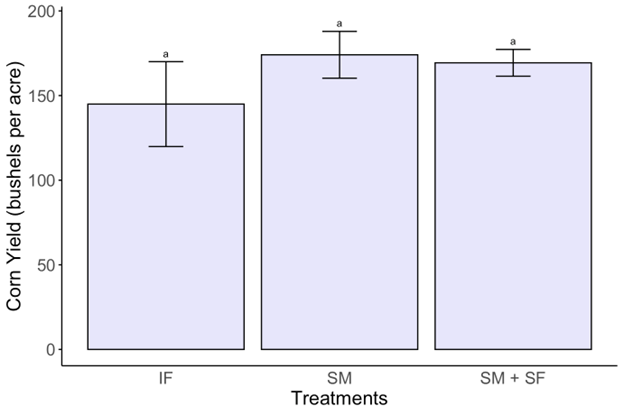
Although the study is still in its early stages, preliminary data show promising results for corn yield in the first year, with 144.96, 174.09, and 168.39 bushels per acre for the IF, SM and SM+SF treatments, respectively. While the differences were statistically non-significant (p = 0.32), the SM treatment achieved the highest yield. Soil compaction (measured using SHT-003 Soil Load Penetrometer) of the field was non-significant (p = 0.56) for the treatments. However, the highest soil compaction was observed with the inorganic fertilizer (11.86 Newton) treatment, followed by SM (11.07 Newton), and the lowest soil compaction with the SM + SF (10.99 Newton) treatment. These findings suggest that swine manure may have a positive impact on the corn yield and soil compaction.

Figure 1: Effects of SM, IF & SM+IF applications on corn yield(SM- Swine Manure, IF- Inorganic fertilizer, SM+SF: Swine manure + Starter Fertilizer)

(Data are presented as mean with standard error, bars with different letters denote significantly different at p<0.05)
Figure 1: Effects of SM, IF & SM+IF applications on corn yield
(SM- Swine Manure, IF- Inorganic fertilizer, SM+SF: Swine manure + Starter Fertilizer)
(Data are presented as mean with standard error, bars with different letters denote significantly different at p<0.05)

Furthermore, we observed significant differences (p < 0.05) in Soil Plant Analysis Development (SPAD, chlorophyll and nitrogen contents in leaves measured using Minolta Chlorophyll Meter) values among the treatments, with IF showing the highest value (52.37), followed by SM (48.15) and then the SM+SF (45.56).

Figure 2: Effects of SM, IF & SM+IF application on SPAD values(SM- Swine Manure, IF- Inorganic fertilizer, SM+SF: Swine manure + Starter Fertilizer, SPAD- Soil Plant Analysis Development)

(Data are presented as mean with standard error, bars with different letters denote significantly different at p<0.05)
Figure 2: Effects of SM, IF & SM+IF application on SPAD values
(SM- Swine Manure, IF- Inorganic fertilizer, SM+SF: Swine manure + Starter Fertilizer, SPAD- Soil Plant Analysis Development)
(Data are presented as mean with standard error, bars with different letters denote significantly different at p<0.05)

The electrical conductivity (measured using Hanna GroLine Soil EC Tester) of the soil was significantly influenced (p < 0.05) by the treatments. The highest electrical conductivity was observed with the application of SM (0.36) which is statistically similar to SM+SF (0.32) treatment, but significantly higher than the IF (0.22) treatment.

Fig. 3 Effects of SM, IF & SM+IF application on electrical conductivity (EC)(SM- Swine Manure, IF- Inorganic fertilizer, SM+SF: Swine manure + Starter Fertilizer, EC- Electrical Conductivity)

(Data are presented as mean with standard error, bars with different letters denote significantly different at p<0.05)
Fig. 3 Effects of SM, IF & SM+IF application on electrical conductivity (EC)
(SM- Swine Manure, IF- Inorganic fertilizer, SM+SF: Swine manure + Starter Fertilizer, EC- Electrical Conductivity)
(Data are presented as mean with standard error, bars with different letters denote significantly different at p<0.05)

Future Plans

We plan to take the growth parameters including plant height and chlorophyll content (SPAD) at regular intervals. Additionally, we intend to sample soil microbiome composition in the field. This year we harvested 6 rows per plot but starting next year, we will harvest 18 center rows per plot (out of 31) for yield measurement. We will also exclude 15 feet from both the northern and southern ends of each plot.

Authors

Presenting author

Ravi Raj Mishra, Graduate student, University of Missouri, Columbia

Corresponding author

Teng-Teeh Lim, Extension Professor, University of Missouri, Columbia, limt@missouri.edu

Additional author(s) (name, title, and affiliation for each)

Manobendro Sarker, Graduate student, University of Missouri, Columbia

Keywords

Swine Manure, Soil Health, Soil Properties, Starter Fertilizers

Acknowledgements

We acknowledge the National Pork Board for the funding and collaboration with South Dakota State University. Our sincere thanks also go to Manobendro Sarker, Moh Moh Thant Zin, and Rana Das from our research group, and the research farm team for their support in field operations.

The authors are solely responsible for the content of these proceedings. The technical information does not necessarily reflect the official position of the sponsoring agencies or institutions represented by planning committee members, and inclusion and distribution herein does not constitute an endorsement of views expressed by the same. Printed materials included herein are not refereed publications. Citations should appear as follows. EXAMPLE: Authors. 2025. Title of presentation. Waste to Worth. Boise, ID. April 711, 2025. URL of this page. Accessed on: today’s date.

Effects of manure land application on soil properties based on multiyear state-wide data in Missouri

Purpose

Soil health is crucial for sustainable crop production, which can differ from conventional soil nutrient considerations. Analyzing a multiyear, state-wide dataset can greatly improve the understanding of soil health status. In collaboration with the Missouri N340 cover crop cost-share program, this research compiled multiyear soil sample results from fields throughout Missouri and assessed the effects of manure application strategies on soil properties.

What Did We Do?

A total of 14,473 soil samples were collected from 2015 to 2022 across Missouri. The physicochemical properties of soil samples were analyzed by the University Soil Health Assessment Center (SHAC). To evaluate the impacts of manure application, results were first compared with fields that received inorganic fertilizer, followed by the interaction with soil texture. The effects of manure type and their application method were further studied in this research.

What Have We Learned?

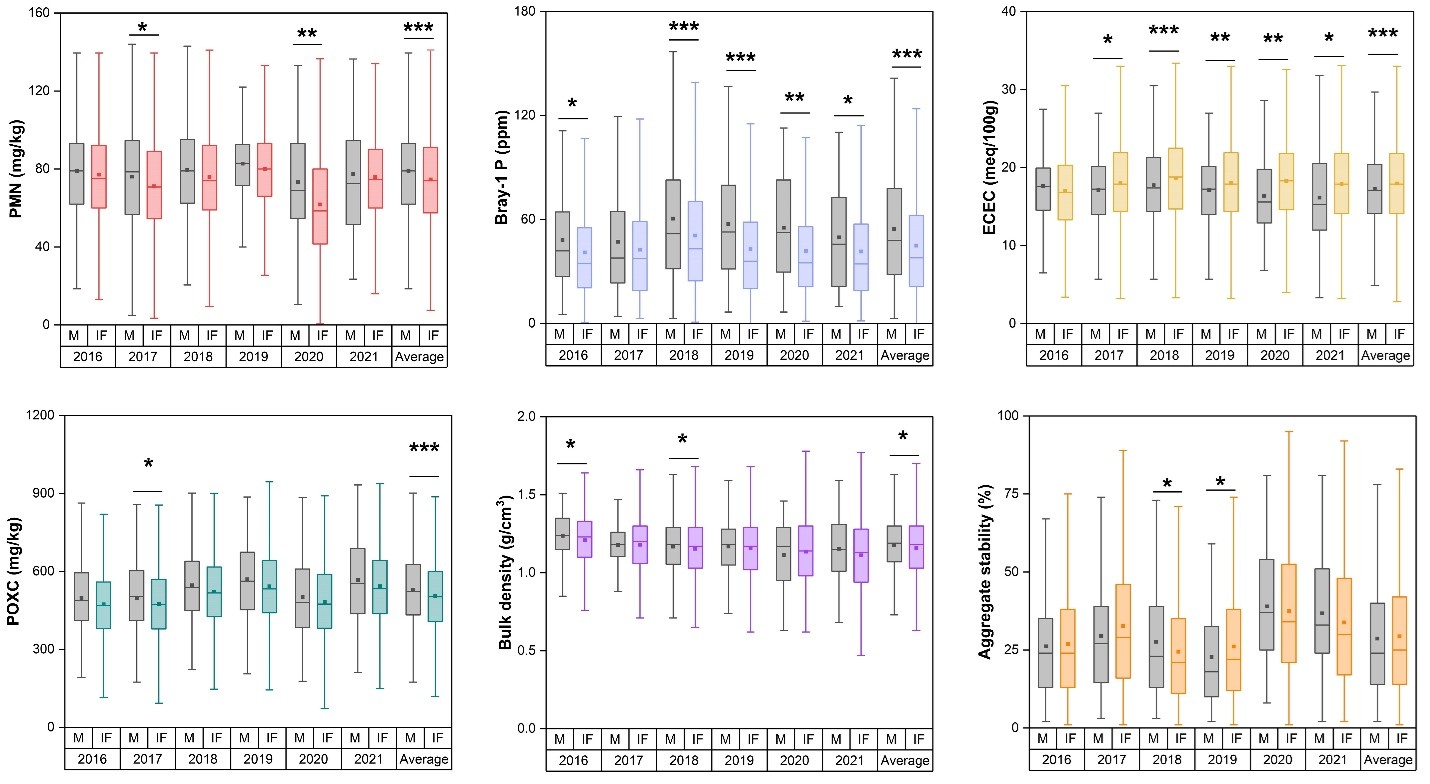
In most years, manure application increased potentially mineralizable nitrogen (PMN), Bray-1 phosphorus (P), permanganate-oxidizable carbon (POXC), and organic carbon, showing more significant differences in some years compared to inorganic fertilizer. There was no improvement in effective cation exchange capacity (ECEC), but aggregate stability was highly variable for manure application (Figure 1).

Figure 1: Effects of manure land application on soil properties for soil samples of 2015-2022 (M- Manure, IF- Inorganic fertilizer; significant codes: *** : < 0.001, ** : < 0.01, * : <0.05)

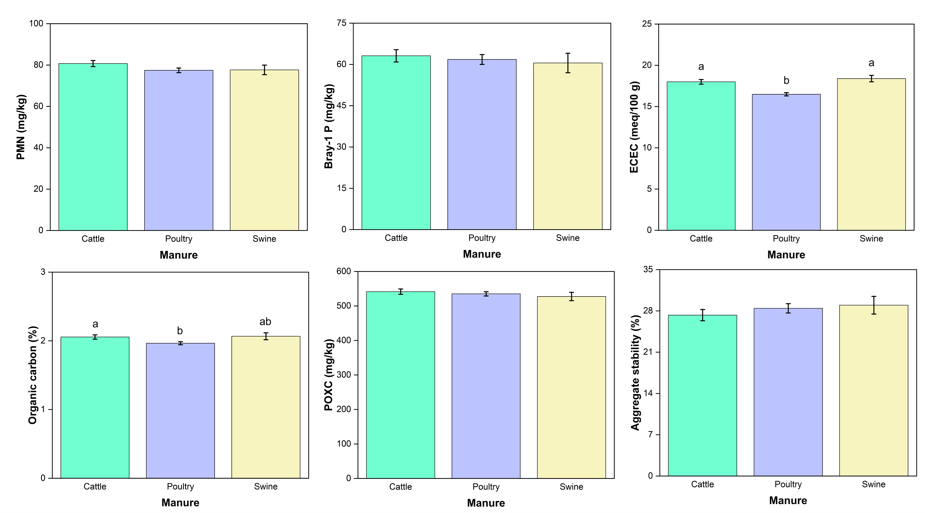
The interaction between manure and soil texture significantly (p<0.01) affected PMN, ECEC, organic carbon, and POXC, but no significant difference in aggregate stability was observed. There was also a significant effect of manure type on ECEC and organic carbon, as shown in Figure 2. The organic carbon of fields that received cattle and swine manure was significantly higher (p<0.05) than poultry manure-receiving fields, but there was no significant difference between cattle and swine manure.

Figure 2: Effects of manure types on soil physicochemical properties (Data are presented as mean with standard error, bars with different letters denote significantly different at p<0.05)

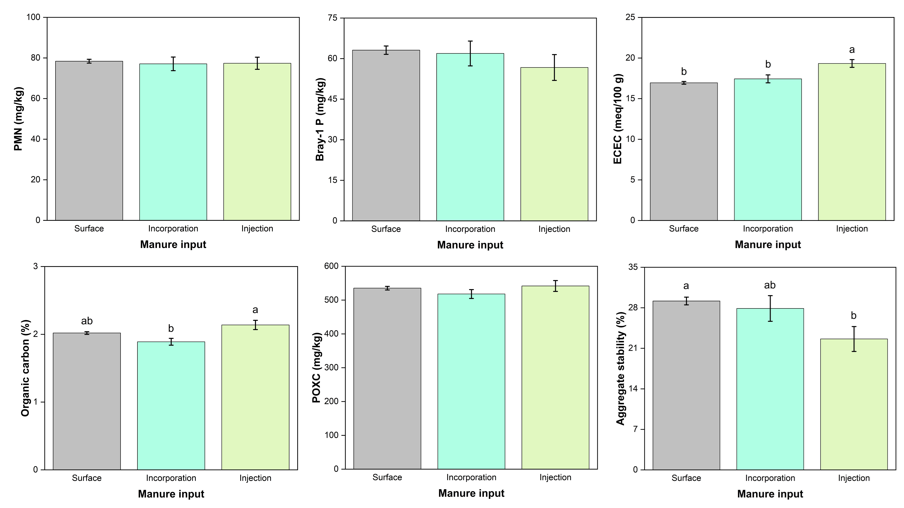
In Missouri, surface application is the most commonly used application method, followed by incorporation and injection. Figure 3 illustrates the effects of different manure application methods on soil properties. There was no significant difference in PMN and Bray-1 P across the application methods. However, the application method significantly affected ECEC and organic carbon, which were higher for manure injection. Surprisingly, the aggregate stability was the lowest for fields with manure injection.

Figure 3: Effects of manure application methods on soil properties (Data are presented as mean with standard error, bars with different letters denote significantly different at p<0.05)

Future Plans

Data from management practices reveals notable variations in manure types and application rates across the state. Additionally, many farms have adopted cover crop practices and mixed tillage methods, including no-till, reduced tillage, and conventional tillage. Given the diversity of agricultural practices in Missouri, data collection and analysis are ongoing, with a field experiment at a university farm currently underway to provide further insights and validation.

Authors

Presenting author

Manobendro Sarker, Graduate student, University of Missouri, Columbia

Corresponding author

Teng-Teeh Lim, Extension Professor, University of Missouri, Columbia, limt@missouri.edu

Additional authors

Morgan Davis, Assistant Professor, University of Missouri, Columbia

Donna Brandt, Lead Research Specialist, Soil Health Assessment Center, University of Missouri, Columbia

Timothy Reinbott, Director, Field Operations, Agricultural Experiment Station

University of Missouri, Columbia

Additional Information

Please email us at limt@missouri.edu (Teng-Teeh Lim) or ms59d@umsystem.edu (Manobendro Sarker).

Acknowledgements

We gratefully acknowledge the Missouri Department of Natural Resources, Soil and Water Conservation Program for funding the project. We also thank Moh Moh Thant Zin, Rana Das, and Ravi Mishra from our research group for their assistance with field operations.

The authors are solely responsible for the content of these proceedings. The technical information does not necessarily reflect the official position of the sponsoring agencies or institutions represented by planning committee members, and inclusion and distribution herein does not constitute an endorsement of views expressed by the same. Printed materials included herein are not refereed publications. Citations should appear as follows. EXAMPLE: Authors. 2025. Title of presentation. Waste to Worth. Boise, ID. April 711, 2025. URL of this page. Accessed on: today’s date.