Dairy manure was once considered a waste, but it can be transformed into a valuable resource. As demand for sustainable waste management grows, innovative ways for converting dairy manure are being actively researched to enhance both dairy productivity and environmental sustainability. One such method, hydrothermal carbonization (HTC), has recently garnered significant attention due to its ability to convert wet biomass into value-added products. HTC involves treating wet biomass, such as dairy manure with high water content, at moderate temperatures (180℃-250℃) and pressure. The outcome of HTC is hydrochar, a solid product with high carbon and nutrient content.
Hydrochar has strong potential as a means of soil amendment, carbon sequestration and/or biofuel. Our lab scale experiments showed that hydrochar retains more than 90% phosphorus (P) from dairy manure. For hydrochar production to become a viable technology for dairy farms, a continuous system is essential. Such a system would offer numerous benefits, including increased production, enhanced efficiency, and greater potential for commercialization. The purpose of this study is to design a pre-commercial conceptual process for the continuous production of hydrochar from dairy manure.
What Did We Do?
Manure management consists of collecting manure from the floor to utilize it in the best possible way. Most dairy farms treat manure through anaerobic digestion to produce energy, separate the solids for use as a bedding material, and/or apply directly to field applications. To explore alternative ways of handling the large quantities of manure in a quick chemical method and recycling nutrients back to the cropland, dairy manure is processed into P-rich hydrochar via an HTC process. Based on the results of our laboratory experiments, a conceptual process was developed, which is capable of treating dairy manure from a mid-size farm with 1,000 lactating cows and equates to 38,000 tons of manure per year with 8-10% solids. The process design includes engineering designing details of manure preparation and handling, feeding and discharge mechanisms, main equipment (such as HTC reactor and heat exchangers), heating and temperature controls, and schemes for post-HTC process wastewater (post-water) handling. Figure 1 is the schematic of the conceptual process with major process equipment, where the thick, black lines indicate the flow of dairy manure slurry containing solids, while the thin, blue lines represent the flow of post-processed water.
Firstly, dairy manure collected from the dairy barns (approx. 10% solids) is stored in a storage tank (T-101) before being pumped into the feeding tank (T-102), where it is heated to 167°F (75°C) by the recycled post-water from preheater I (E-201) through internal heating coils. The feeding tank is equipped with a marine-style impeller for agitation to maintain solid suspension. Two preheaters (E-201 and E-202) are used to further heat the slurry to the required HTC temperature before entering the reactor (R-301). Preheater I is a shell-and-tube heat exchanger to heat the slurry up to 320°F (160°C) by heat recovery using the hot post-water from post-water tank (T-304). Preheater II is a tubular electric heater and is to finish the last stage of heating to 437°F (225°C). A continuously stirred tank reactor (CSTR) with agitation is the main equipment to thermochemically process dairy manure into hydrochar. After a 30-minute retention time in the reactor, the resulting product mixture is collected in the receiving tank/separator (T-302). Then the hot post processed-water is separated from the solid (the wet hydrochar cake) and collected in a storage tank (T-304) before being used as a heating medium for heat recovery. The wet hydrochar cake coming out of decanter centrifuge (T-303) is dewatered through an air-drying unit (C-305) to a water content of 12% or less, which can be used directly for land applications or packaged and transported to other markets.
Figure 1 Schematic of the conceptual process with major process equipment.
What Have We Learned?
Continuous hydrochar production holds great potential for recycling phosphorus from dairy manure back into the cropland as a soil amendment and for sequestrating carbon back to the soil. The conceptual process represents a significant step towards practically promoting this alternative manure treatment technology and creating a value-added product for nutrient cycling. This process is capable of producing approximately 5 million pounds (2,300 metric tons) of air-dried hydrochar per year, a yield of about 60% of the solid matter from dairy manure, and with a phosphorus concentration of approx. 1.4 lb/100 lb. Hydrochar is hydrophobic and can be sufficiently dried by ambient air. The air dried hydrochar contains a moisture content of 12% or less (as low as 5% per laboratory results due to hydrochar’s hydrophobic characteristics) and is suitable for long term storage and/or distance transportation. Because the raw, wet dairy manure can be processed directly from the farm without any pretreatment, the HTC process offers a good possibility for a cost-effective waste management alternative while producing valuable hydrochar for phosphorus recycling.
Future Plans
Upon completing this continuous flow process design, we will conduct a techno-economic assessment (TEA) to provide insights into the system’s economic feasibility, cost structure, and profitability. The TEA study will also offer a better perspective on the economic viability, technical challenges, and potential profitability of adopting and investing in the continuous hydrochar production system from dairy manure for waste management and nutrient cycling.
Authors
Presenting author
Imran Hussain Mahdy, Graduate Student (Ph.D.), University of Idaho
Corresponding author
Brian He, Professor, University of Idaho, bhe@uidaho.edu
Acknowledgements
USDA AFRI, UADA NIFA and Idaho Agricultural Experiment Station are acknowledged for their financial support through Sustainable Agricultural Systems (SAS) program (Grant 2020-69012-31871), and hatch project of IDA0-1716 (Accession number1012741).
The authors are solely responsible for the content of these proceedings. The technical information does not necessarily reflect the official position of the sponsoring agencies or institutions represented by planning committee members, and inclusion and distribution herein does not constitute an endorsement of views expressed by the same. Printed materials included herein are not refereed publications. Citations should appear as follows. EXAMPLE: Authors. 2025. Title of presentation. Waste to Worth. Boise, ID. April 7–11, 2025. URL of this page. Accessed on: today’s date.
Porcine reproductive and respiratory syndrome virus (PRRSV) is a major concern to the U.S. swine industry due to the severe economic loss it can cause. Its symptoms include severe flu-like symptoms, respiratory distress, fever, and premature abortions in pregnant sows. The virus is spread during close contact between pigs or exposure to contaminated urine, semen, feces, and nasal and mammary secretions (1). Control measures have proven exceedingly costly with PRRSV which causes an estimated $1 billion in lost production in the U.S. pork industry per year (3), an 80% increase from a decade earlier (2)(4). With very few, truly effective methods available to control PRRSV after the start of an outbreak, developing methods to mitigate the dispersion of the virus has become a major priority.
Common biosecurity measures for swine operations (e.g., controlled access, personal hygiene, animal management, pest control, and production area cleaning and disinfection) have proved insufficient to stop PRRSV transmission. Producers are, therefore, seeking to understand the potential risks posed by more novel transport methods. Observations of new PRRSV cases emerging during manure handling activities have raised questions about aerosolized manure as a potential transmission vector. This study was conducted to test this possibility in the following stages:
Verify the presence of viable virus sample within pit manure, lagoon samples, or dust coming from barns with active PRRSv outbreaks.
Develop a reliable method for collecting and preserving viable airborne viral samples.
Assess the aerosol transmission “footprint” of PRRSV originating from positive swine farms to improve understanding of potential farm-to-farm disease transmission risks.
What Did We Do?
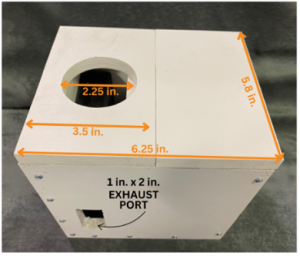
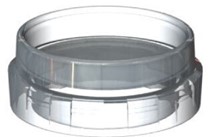
Novel air sampling devices were constructed by the project team (Figure 1) to be deployed inside and outside swine production units to accumulate samples of particulates and aerosols. The devices accommodate a commercially available Air Prep filter cartridge (innovaprep.com) to capture particulates pulled across the filter by a fan housed within the sampling unit.
Figure 1. Air sampler unit constructed for this project (L) and commercial AirPrep Filter (R)
Our project team worked closely with the lead veterinarian at a large swine integrator in Nebraska to access farms within 5 to 7 d of pigs being confirmed PRRSV-positive. Sampling events 1 and 2 focused on evaluating PRRSV presence on indoor surfaces, fresh and stored manure, flies, and maggots. Sampling events 3 through 5 focused on evaluating PRRSV presence in air downwind of PRRSV-positive swine production areas or downwind of land application of manure from PRRSV-positive animals.
Sampling Event 1. A swine breeding operation was identified where animals were currently testing positive for and showing clinical signs of PRRSV infection. At this site, two production areas were selected at random for sampling. Surface swabs were collected from floors, fan louvers, and pen dividers. Fresh fecal samples were collected from sows in the same production areas, and an air sampler was placed on the floor in each room and allowed to operate for two hours before retrieving the filters. For surface samples, sterile swabs were swept over each surface type and then placed into phosphate buffered saline (PBS) elution buffer. Fresh fecal samples were collected using a sterile spatula and placed into clean sample containers. Upon retrieving filters from air samplers, a sterilized knife was used to separate the filter from the plastic casing in which it was mounted, and sterile forceps were used to transfer the filter into a PBS elution tube. All samples were transported on ice to the University of Nebraska-Lincoln (UNL) Schmidt Lab and then submitted to the Iowa State University Veterinary Diagnostic Laboratory for analysis by polymerase chain reaction (PCR).
Sampling Event 2. A swine finisher unit was identified where animals were currently testing positive for and showing clinical signs of PRRSV infection. At this site, two production areas were selected at random for sampling inside the building. Surface swabs were collected from floors, fan louvers, feeders, and pen dividers. An air sampler was placed on the floor in each room and allowed to operate for four hours before retrieving the filters. Additional air samplers were mounted outside the building. For one production area, three samplers were mounted at a height aligning with the center of a minimum ventilation fan and spaced at 5, 12, and 19 feet from the rim of the fan hood. For a second production area, two samplers were mounted at a height aligning with the center of a minimum ventilation fan and spaced at 5 and 13 feet from the rim of the fan hood. These samplers were allowed to run for three hours before filters were retrieved. For surface samples, sterile swabs were swept over each surface type and then placed into PBS elution buffer. Manure samples from two deep pit storage sections of the building were collected using a plastic pole and dipper cup and placed into clean plastic bottles. Maggots observed in one pump out port were collected by hand and placed into PBS elution buffer. Upon retrieving filters from air samplers, a sterilized knife was used to separate the filter from the plastic casing in which it was mounted, and sterile forceps were used to transfer the filter into a PBS elution tube. Flies present around the production buildings were also collected at this site. For one sample, approximately six flies were captured and placed directly into PBS elution buffer. For a second sample, approximately six flies were captured, placed into 70% EtOH for 10 s, and then transferred from the ethanol to PBS elution buffer. All samples were transported on ice to the UNL Schmidt Lab and then submitted to the Iowa State University Veterinary Diagnostic Laboratory for analysis by PCR.
Sampling Event 3. A naturally-ventilated PRRSV-positive swine farm was identified. Air samplers mounted on t-posts were deployed in an array at a height above the ground of roughly 6 ft at varying distances (10 yards to 1 mile) from the buildings after using smoke candles to confirm wind direction and dispersion. Sampling was conducted for approximately 2.5 hours on a day with 40-55°F temperature,10-20 mph winds, and full cloud cover (Figure 2).
Sampling Event 4. At a mechanically-ventilated PRRSV-positive swine farm, sampling was conducted using the same process as for Event 3 for approximately 21.25 hours starting on a day with 85-105°F temperature, 4-10 mph winds, and full sun exposure, then continuing overnight.
Sampling Event 5. Using the previously described process, sampling was conducted for approximately 2.5 hours on a day with 70-95°F temperature, 2-10 mph winds, and partly cloudy conditions downwind of a field where lagoon effluent from PRRSV-positive pigs was being applied via center pivot.
Figure 2. Air sampler array at the naturally ventilated swine farm
All samples were submitted to the Iowa State Veterinary Diagnostic Lab for RT-qPCR analysis to identify PRRS viral genomic material.
What Have We Learned?
Results of PCR analyses for sampling event 1 (Table 1) revealed that, in barns where swine oral fluid samples were positive for PRRSv, all surface samples collected were also positive or suspected positive for PRRSv. The same was true for all of the surface and air samples collected inside the barn and for the air samples located up to 19 ft minimum from the building ventilation fans during sampling event 2 (Table 2). Maggots taken from the manure pit during sampling event 2, along with sterilized and unsterilized flies, tested positive for PRRSV, as well. Conversely, all manure samples obtained during sampling event 2 tested negative using the methodologies employed. This outcome does not dismiss manure as a possible transmission source; rather, it underscores the need for ongoing research to develop a reliable detection method for PRRS within such a complex matrix.
The team has not yet recovered air samples testing positive for PRRSV from any of the exterior arrays in sampling events 3-5 (Table 3). This could be due to ambient air conditions during the tests which may have caused rapid destruction of the virus or dilution of the virus below detectable concentrations. The rolling terrain surrounding facilities where arrays of samplers were posted downwind of buildings or the land application site may have created turbulent air movement that diluted samples such that concentrations of PRRSV genomic material capture on filters were too low to produce a positive result by PCR.
Table 1. Cycle Threshold (Ct) values for sampling event 1
Sample Description
Ct (Result)
Pen Floor, Room 17
37.5 (Suspect)
Fan Louver, Room 17
30.1 (Positive)
Feeder, Room 17
31.6 (Positive)
Air Filter, Room 17
31.2 (Positive)
Pen Floor, Room 18
31.5 (Positive)
Fan Louver, Room 18
31.4 (Positive)
Feeder, Room 18
37.6 (Suspect)
Air Filter, Room 18
30.5 (Positive)
Fecal Sample 1
³40 (Negative)
Fecal Sample 2
³40 (Negative)
Cycle threshold (Ct) indicates the number of PCR cycles required for the sample fluorescence to reach a predefined threshold for identification (<38 = positive, ~38-40 = suspect, ≥40 = negative). Lower Ct values correspond to higher viral RNA concentration.
Table 2. Cycle Threshold (Ct) values for sampling event 2
Sample Description
Ct (Result)
Exhaust Air, Room 5, 5 ft from fan
33.1 (Positive)
Exhaust Air, Room 5, 12 ft. from fan
34.1 (Positive)
Exhaust Air, Room 5, 19 ft. from fan
38.1 (Suspect)
Indoor Air, Room 5, Rep 1
30.9 (Positive)
Indoor Air Room 5, Rep 2
33.3 (Positive)
Exhaust Air, Room 6, 5 ft from fan
32.6 (Positive)
Exhaust Air, Room 6, 13 ft. from fan
32.4 (Positive)
Flies
37.0 (Suspect)
Flies Sterilized in Ethanol
36.3 (Positive)
Maggots
39.9 (Suspect)
Floor, Room 5, Rep 1
32.4 (Positive)
Floor, Room 5, Rep 2
32.3 (Positive)
Louvers, Room 5, Rep 1
33.1 (Positive)
Louvers, Room 5, Rep 2
32.1 (Positive)
Pens, Room 5, Rep 1
37.9 (Positive)
Pens, Room 5, Rep 2
35.8 (Positive)
Feeder, Room 5, Rep 1
35.8 (Positive)
Feeder, Room 5, Rep 2
37.5 (Suspect)
Pens, Room 4, Rep 1
35.6 (Positive)
Pens, Room 4, Rep 2
35.3 (Positive)
Floor, Room 4, Rep 1
31.4 (Positive)
Floor, Room 4, Rep 2
32.9 (Positive)
Louvers, Room 4, Rep 1
33.0 (Positive)
Louvers, Room 4, Rep 2
32.1 (Positive)
Cycle threshold (Ct) indicates the number of PCR cycles required for the sample fluorescence to reach a predefined threshold for identification (<38 = positive, ~38-40 = suspect, ≥40 = negative). Lower Ct values correspond to higher viral RNA concentration.
Table 3. Cycle Threshold (Ct) values for sampling events 3 through 5
Sampling Event
Sample Description
Ct (Result)
Event 3
Air Filters (n=2)
³40 (Negative)
Event 4
Air Filters (n=4)
³40 (Negative)
Fans (n=4)
³40 (Negative)
Oral Fluids, Room 15
34.0 (Positive)
Oral Fluids, Room 16
36.1 (Positive)
Oral Fluids, Room 17
38.0 (Suspect)
Oral Fluids, Room 18
34.7 (Positive
Event 5
Air Filters (n=4)
³40 (Negative)
Cycle threshold (Ct) indicates the number of PCR cycles required for the sample fluorescence to reach a predefined threshold for identification (<38 = positive, ~38-40 = suspect, ≥40 = negative). Lower Ct values correspond to higher viral RNA concentration.
Future Plans
It is essential to identify which ambient weather conditions, if any, are favorable for air dispersion of infective PRRSv and which conditions will significantly limit dispersion. As research continues, the suspected ideal conditions for sampling downwind of mechanically ventilated PRRSv-positive barns or irrigation systems applying lagoon effluent from PRRSv-positive pigs will be 0 to 50°F with low to moderate wind speed and full cloud cover. At least 24 hours of continuous sampling is also expected to produce greater opportunity for positive air samples.
The continued inability to isolate the virus from manure samples is curious, given the universally positive samples we identified from the positive barns. However, the PRRSV is believed to require as few as 10 viral particles to be transmitted. Given the potentially very low concentration of viral material in manure, and the significant PCR inhibitors present in complex organic samples, the team continues to explore new sample preparation and testing methods for this matrix.
Lastly, further investigation into the potential roles of flies and maggots is warranted, particularly with the discovery of sufficient PRRSV genomic material in the gut of surface sterilized flies to yield a positive PRRSV result via RT-qPCR.
Authors
Presenting author
Logan Hafer, Undergraduate Research Assistant, Department of Biological Systems Engineering, University of Nebraska-Lincoln
Corresponding author
Dr. Amy Millmier Schmidt, Professor, Department of Biological Systems Engineering and Department of Animal Science, University of Nebraska-Lincoln, aschmidt@unl.edu
Additional author(s)
Dr. Benny Mote, Associate Professor, Department of Animal Science, University of Nebraska-Lincoln
Dr. Hiep Vu, Associate Professor, Department of Animal Science, University of Nebraska-Lincoln
Butler, J. E., Lager, K. M., Golde, W., Faaberg, K. S., Sinkora, M., Loving, C., & Zhang, Y. I. 2014. Porcine reproductive and respiratory syndrome (PRRS): an immune dysregulatory pandemic. Immunologic research, 59, 81-108. https://link.springer.com/article/10.1007/s12026-014-8549-5.
Dee, S., T. Clement, and E. Nelson. 2023. Transmission of porcine reproductive and respiratory syndrome virus in domestic pigs via oral ingestion of feed material. J of the Am Vet Med Assoc, 262(1). https://doi.org/10.2460/javma.23.08.0447
Osemeke, O.H., T. Donovan, K. Dion, D.J. Holtkamp and D.C.L. Linhares. 2021. Characterization of changes in productivity parameters as breeding herds transitioned through the 2021 PRRSV Breeding Herd Classification System. J Swine Health Prod. 2022;30(3):145-148. https://doi.org/10.54846/jshap/1269
Acknowledgements
Funding for this research was provided by the Nebraska Pork Producers Association under award #22-063 and an Undergraduate Student Research Program award from the UNL Institute of Agriculture and Natural Resources, Agricultural Research Division.
The authors are solely responsible for the content of these proceedings. The technical information does not necessarily reflect the official position of the sponsoring agencies or institutions represented by planning committee members, and inclusion and distribution herein does not constitute an endorsement of views expressed by the same. Printed materials included herein are not refereed publications. Citations should appear as follows. EXAMPLE: Authors. 2025. Title of presentation. Waste to Worth. Boise, ID. April 7–11, 2025. URL of this page. Accessed on: today’s date.
The Waste to Worth Conference will be April 7-11, 2025 at the Grove Hotel in Boise, Idaho.
Waste to Worth 2025 welcomes oral, poster, panel, and workshop presentation proposals focused on applied solutions related to animal manure management and protecting the environment.
Submissions should align with one or more of the general areas of emphasis (see below).
Graduate students are encouraged to submit and participate in a poster presentation competition.
Responsible manure management uses multiple data types from a wide range of sources. This webinar highlights three new tools that aim to ease this burden while supporting effective decision-making.ManureDBaggregates U.S. manure analysis data andprovides user-specified reportsof manure characteristics.ManureTech synthesizes the environmental, economic and operational facetsof manure treatment technologies.Manure Management Planneris a trusted tool but has also undergone recent updates forsite-specific setback distances.Participants will be able to see these tools in action, and where further developments are headed. This presentation was originally broadcast on February 16, 2024. Continue reading “Upcoming Models and Tools to Improve Manure Management”
This webinar discusses purposeful additives like nitrification inhibitors and biochar as well as accidental additives like copper sulfate from disinfecting foot baths and how these things can and should impact our decisions when applying manure. This presentation was originally broadcast on September 22, 2023. Continue reading “Implications of Manure Additives: Both Purposeful and Accidental”
This webinar will focus on theimportance of controlling these pests and thesafety of the livestock, the caretakers, and non-target animals and insectsaround the farm when doing so. This presentation was originally broadcast on June 16, 2023. Continue reading “Vector Control on Livestock Operations”
This webinar shares research and guidance on minimizing the risk of virus movementthrough manure and mortality management. This webinar also explains theroles technical advisors can play in response to an outbreak. This presentation originally broadcast on March 17, 2023. Continue reading “Moving Manure and Mortalities after Highly Pathogenic Avian Influenza”
There’s more to worker safety than just bumps and bruises. This webinar discusseson-farm injuriesrelated to manure and mortality handling and application as well aspotential toxic gas exposuresand how to minimize risks of each. This presentation was originally broadcast on October 21, 2022. Continue reading “Worker Safety in Animal Production Systems”
This webinar discusses the science and economics behind the use of worms in the processes of composting (i.e., vermicomposting) and treatment of wastewater and manure liquid waste stream (vermifiltration). This presentation was originally broadcast on May 20, 2022. Continue reading “Use of Vermifiltration as a Tool for Manure Management”
The purpose of this project was to collect local on-the-ground data to evaluate the effectiveness of different manure storage options installed on working farms in King County, Washington. Agricultural areas in King County receive over 40 inches of rain annually with most of it falling between the months of October through March. During this time, farms often store and compost their manure for spring and summer field application. Composting livestock manure and waste can produce a valuable resource for land managers. However, if managed improperly, manure leachate and runoff can contaminate ground and surface water resources posing a risk to humans and other wildlife.
The project aimed to collect data on water quality and manure quality under different solid manure storage options during the fall and winter months. During the project, we worked with two farms to monitor water quality and manure quality as well as held education and outreach events to engage with stakeholders about benefits and/or costs of adopting new manure management BMPs.
What Did We Do
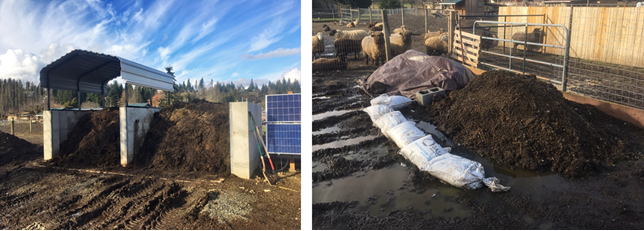
For the project, we worked with two farms and established four manure storage areas on each including: a concrete slab with walls and a roof, concrete slab with walls and no roof, a compacted soil areas with a tarp cover, and a compacted soil area with no cover. The manure piles were managed by the farmer following common winter practices and were turned and added to 2-3 times per month. We monitored the temperature of the piles over time to assess their composting activity, although it was not a primary focus of our study.
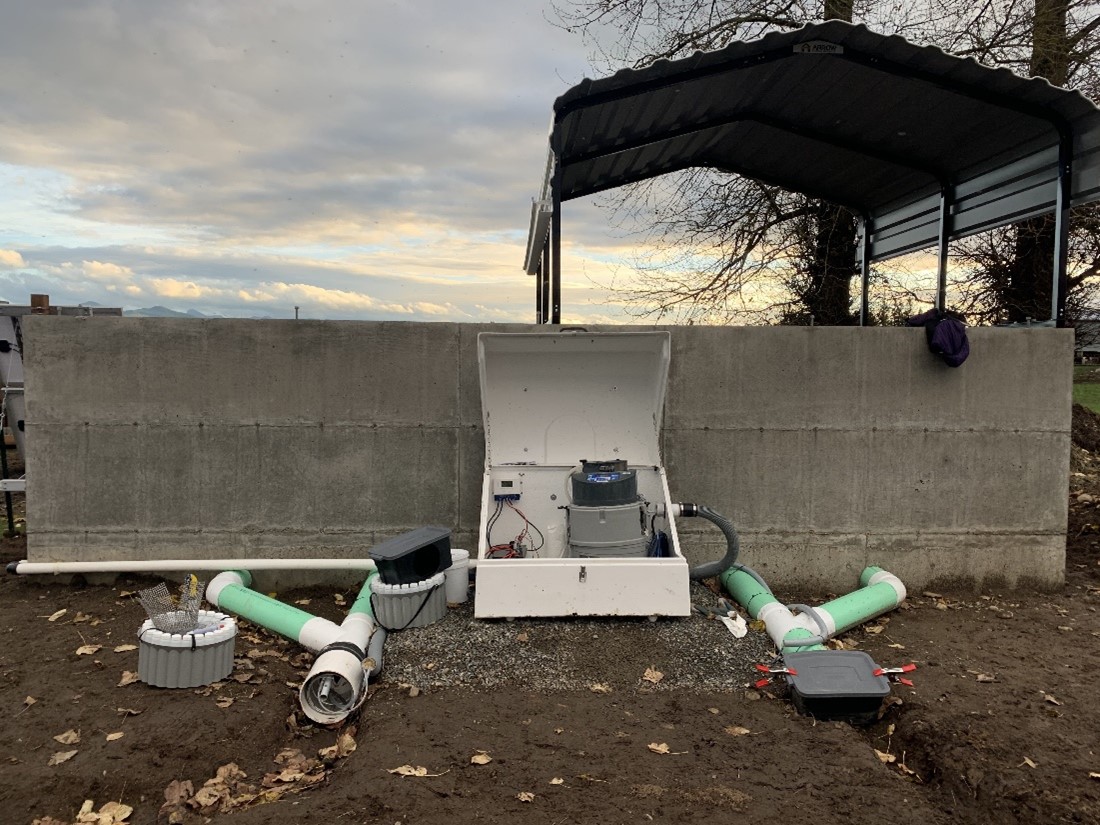
We collected samples of the manure from each storage area during the project to monitor changes over time. To assess nutrient loss and pollution via a stormwater runoff pathway, we collected runoff from the concrete slabs. To assess nutrient loss and pollution via a leaching pathway, we collected soil samples, from under the compacted soil areas. This monitoring allowed us to compare the storage options. The study was conducted over the course of eight months from October 2020 through May 2021. Below are photos of our study setup. Stormwater runoff water quality samples were collected using an ISCO automated sampler that was programmed to grab samples during rain events that generated runoff from the manure piles. Soil and manure samples were collected on a monthly basis.
Figure 1. Manure storage treatments. From left to right: slab covered, slab uncovered, soil covered, and soil uncovered.Figure 2. Stormwater runoff collection system from the concrete slabs.
What Have We Learned
The project results support the conclusion that the covering of solid manure piles had positive environmental benefits. Covered manure piles stored on a concrete slab have less stormwater runoff with lower loads of nutrients in the leachate than uncovered manure piles on a concrete slab. The covering of dry manure piles stored on compacted soil surfaces reduced the leaching of nutrient, particularly nitrate and nitrite, from manure piles into the soil. It also created a better manure end-product by allowing higher heat values to be reached and creating a drier end product. Additionally, the
placement of manure on a non-permeable, concrete surface eliminated the leaching of manure nutrients below the piles. Covered manure piles, whether stored on a concrete slab or dirt, tended to be drier and have higher temperatures, which results in a better composted manure product.
The results of this study demonstrated that the type of animal species and pile management (how often the pile was turned or added to) also greatly affected the nutrient composition of the leachate. For instance, at Site A, there was higher TP in the manure, and thus higher TP in the runoff water quality and in soil samples.
Future Plans
Due to the short duration of the project, we pursued and were awarded additional funding to extend the project and expand the data set to allow for more robust statistical analysis and conclusions. Partner agencies and organizations as well as the farmers have expressed support and interest in continuing this research, and the project Steering Committee members have also expressed interest in further participation.
In future studies, we intend to try to better quantify the flow volumes from manure piles stored on slabs. In addition, we intend to better assess leaching potential underneath the manure piles stored on soil by using lysimeters to measure leachate volumes.
Authors
Presenting Author
Scarlett Graham, Conservation Research Specialist, Whatcom Conservation District
Corresponding Author
Laura Redmond, Landowner Incentive Program Coordinator, King Conservation District
laura.redmond@kingcd.org
Additional Authors
Addie Candib, Pacific Northwest Regional Director, American Farmland Trust
The authors are solely responsible for the content of these proceedings. The technical information does not necessarily reflect the official position of the sponsoring agencies or institutions represented by planning committee members, and inclusion and distribution herein does not constitute an endorsement of views expressed by the same. Printed materials included herein are not refereed publications. Citations should appear as follows. EXAMPLE: Authors. 2022. Title of presentation. Waste to Worth. Oregon, OH. April 18-22, 2022. URL of this page. Accessed on: today’s date.
Manage Cookie Consent
To provide the best experiences, we use technologies like cookies to store and/or access device information. Consenting to these technologies will allow us to process data such as browsing behavior or unique IDs on this site. Not consenting or withdrawing consent, may adversely affect certain features and functions.
Functional
Always active
The technical storage or access is strictly necessary for the legitimate purpose of enabling the use of a specific service explicitly requested by the subscriber or user, or for the sole purpose of carrying out the transmission of a communication over an electronic communications network.
Preferences
The technical storage or access is necessary for the legitimate purpose of storing preferences that are not requested by the subscriber or user.
Statistics
The technical storage or access that is used exclusively for statistical purposes.The technical storage or access that is used exclusively for anonymous statistical purposes. Without a subpoena, voluntary compliance on the part of your Internet Service Provider, or additional records from a third party, information stored or retrieved for this purpose alone cannot usually be used to identify you.
Marketing
The technical storage or access is required to create user profiles to send advertising, or to track the user on a website or across several websites for similar marketing purposes.