Impact of ammonia reduction management practices in land applied manure on nitrogen losses and nitrogen use efficiency

Purpose

Manure nitrogen losses from agricultural soils presents a significant challenge with far-reaching implications for global food security and environmental health. This project evaluates common manure application practices and studies some mechanistic factors and relationships that influence manure nitrogen losses via leaching and volatilization when manure is soil applied. The study highlights the tradeoffs between reduction of ammonia emissions and nitrogen leaching aiming to promote effective manure management techniques that increase crop nutrient use efficiency while minimizing nutrient losses to the environment.

What Did We Do?

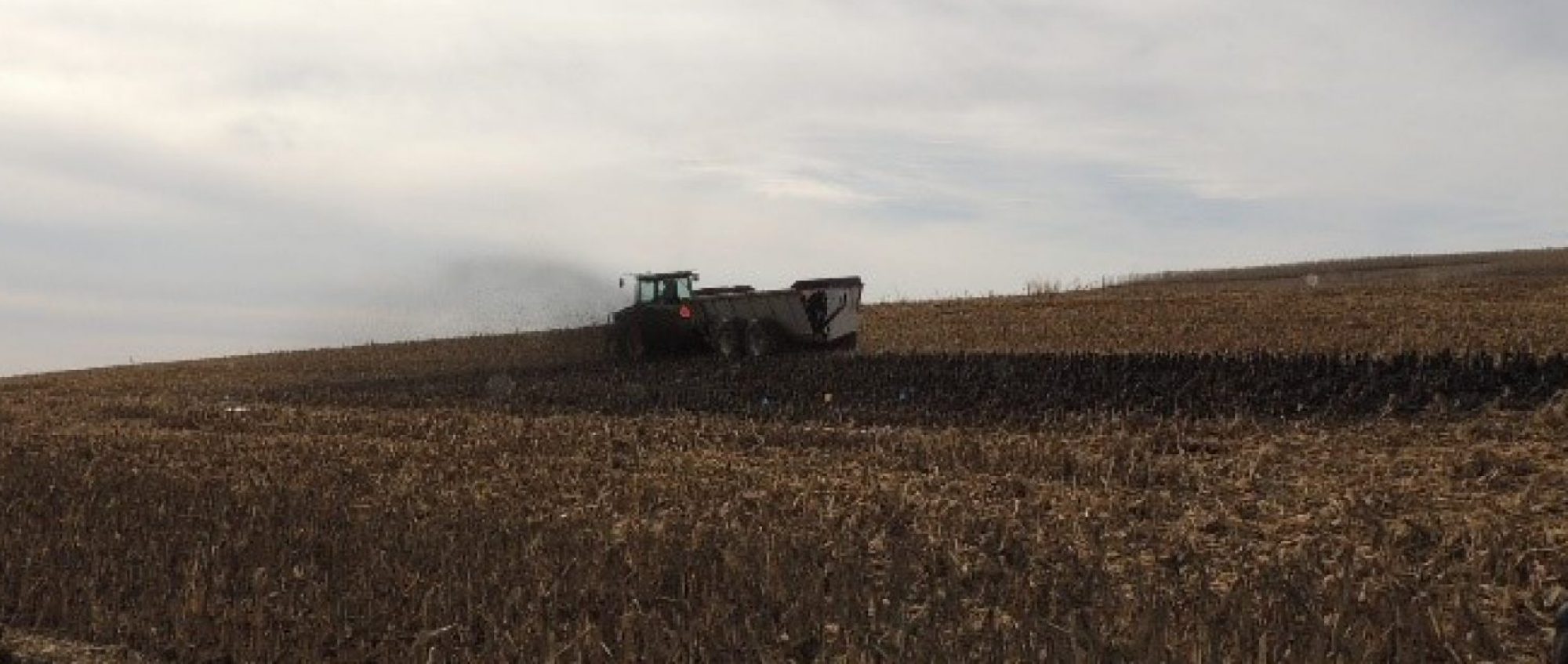
Dairy manure was applied to a silt loam agricultural field using different manure applications. The study involves six experimental treatments, each applying 94 m³ ha-1 of liquid dairy manure through different methods: injection, incorporation, surface broadcast, and two treatments with urease inhibitor-one injected and one surface broadcast. Additionally, there are control plots with no manure application. Immediately after manure application, ammonia emissions were routinely measured using an FTIR while cumulative nitrate leaching for the growing season was assessed using the resin cartridge methodology. Corn silage was planted and yield data collected at the end of the growing season and nitrogen use efficiency following each experimental treatment determined.

What Have We Learned?

Preliminary results suggest that manure incorporation and injection with or without the urease inhibitor, have a comparable significant impact on corn silage yield when compared to surface manure application and plots with no manure application. However, there were no significant differences in N uptake among treatments. Additionally, there were significant differences in the cumulative nitrates leached when comparing the manure application methods to the no-manure plots. Manure injection and incorporation resulted in the highest significant nitrates leached with averages of 104.4 kg ha-1 and 108.4 kg ha-1  respectively, in comparison to surface manure application. Overall, current project data suggests that ammonia emissions tend to be lower in the manure injection especially when the manure is treated with urease inhibitor compared to when manure is surface applied.

These preliminary results suggest that certain manure application practices may offer superior environmental benefits while the agronomic benefits may remain comparable across different practices.

Future Plans

The field project will be extended into a second year under similar soil types to collect additional data for better comparisons and identifications of trends among experimental treatments. Future plans will also include a new project involving the incorporation of biochar and investigating its potential in simultaneously reducing ammonia volatilization and nitrogen leaching in manure and crop systems.

Authors

Presenting & corresponding author

Juma Bukomba, PhD Candidate, University of Wisconsin-Madison, bukomba@wisc.edu

Additional authors

Rebecca Larson, Associate Professor, University of Wisconsin-Madison;

Mathew Ruark, Professor, University of Wisconsin-Madison

Acknowledgements

This material is based upon work supported by the National Science Foundation under Grant No. EFMA-2132036. Any opinions, findings, and conclusions or recommendations expressed in this material are those of the author(s) and do not necessarily reflect the views of the National Science Foundation.

The authors are solely responsible for the content of these proceedings. The technical information does not necessarily reflect the official position of the sponsoring agencies or institutions represented by planning committee members, and inclusion and distribution herein does not constitute an endorsement of views expressed by the same. Printed materials included herein are not refereed publications. Citations should appear as follows. EXAMPLE: Authors. 2025. Title of presentation. Waste to Worth. Boise, ID. April 7-11, 2025. URL of this page. Accessed on: today’s date. 

Application of Manure on Growing Crops

Scheduling conflicts, equipment breakdowns, and wet field conditions can wreak havoc on spring manure application and planting schedules. This webinar will provide valuable insights into maximizing the efficiency and timing of manure application for growing crops, especially corn. By exploring innovative techniques for liquid manure application and the potential for in-season poultry litter application, participants will learn possible ways to navigate challenges in crop management while ensuring nutrient efficiency and maintaining crop yield and quality. This presentation was originally broadcast on January 17, 2025. Continue reading “Application of Manure on Growing Crops”

Engaging Farm Safety and Manure Management: Innovative Teaching Methods in Action

The agricultural industry consistently has the highest risk for occupational injuries and fatalities.  This session will share some proven techniques for making changes to farm safety practices and manure management that could positively impact generations to come.  We will explore dynamic and interactive teaching methodologies that could be adapted for use in at your facility and in your training programs.  These methods employ activity-based learning, where participants have the opportunity to learn, apply and discuss real-world scenarios in a safe environment. This presentation was originally broadcast on November 22, 2024. Continue reading “Engaging Farm Safety and Manure Management: Innovative Teaching Methods in Action”

Managing Dairy Manure for Increased Soil Health and Forage Production Sustainability

Manure is a valuable source of crop-essential nutrients that, when managed carefully, can help build soil organic matter, enhance nutrient cycling, and improve overall soil health and climate resilience over time. In 2022, a statewide on-farm research project was initiated in New York State to quantify the nitrogen (N) replacement value, corn silage or grain yield, and soil health enhancements of various manure sources. Between 2022 and 2023, eleven on-farm field trials were implemented. Yield data are being used to quantify differences in most economic N rate between manured and non-manured strips, and to quantify the yield impact of the manure applications. In 2024, eight additional trials were added using various manure sources. Results so far indicate that manure can offset N fertilizer needs and increase corn silage yield beyond its nutrient contributions, but impacts are field-specific, reflecting differences in field histories and growing conditions. Assessments of soil microbial biomass for sites in 2023 and 2024 reflected the manure history for trial locations and suggest that mid-season assessments may help identify where nitrogen fertilizer addition is beneficial for the crop and where not. Assessment of variability of different manure sources point to the importance of manure sampling and analyses. Preliminary results will be shared. This presentation was originally broadcast on October 18, 2024. Continue reading “Managing Dairy Manure for Increased Soil Health and Forage Production Sustainability”

Fifty Years of Environmental Progress for US Dairy Farms

Many changes have occurred in the technology, management, and resulting productivity and environmental impacts of United States dairy farms over the past 50 years. Based on research recently published in the Journal of Dairy Science, Dr. Al Rotz will discuss how changes in production have impacted 13 environmental metrics and where improvements can still be made in the future. This presentation was originally broadcast on August 16, 2024. Continue reading “Fifty Years of Environmental Progress for US Dairy Farms”

Staying in the Loop: Circularity in Integrated Crop and Livestock Production

Have you heard or read about circularity and the circular economy? These buzzwords describe sustainability concepts that are being adopted in many sectors, including food animal production. This webinar shares definitions for these concepts and how they can inform thinking about changes to animal systems and manure management. This presentation was originally broadcast on June 21, 2024. Continue reading “Staying in the Loop: Circularity in Integrated Crop and Livestock Production”

Implications of Managing Manure on a Nitrogen Basis

Meeting crop nitrogen needs with manure while overapplying other nutrients can save the crop farmer the cost of additional fertilizer, but every decision  on a farm has consequences. This webinar discusses using whole farm and field-based nitrogen (N) and phosphorus (P) balances to identify opportunities for improvements in nutrient use and monitor the impact of management changes over time, the time necessary to reduce the soil phosphorus levels, and the issues with zinc accumulation in soils. This presentation was originally broadcast on March 15, 2024. Continue reading “Implications of Managing Manure on a Nitrogen Basis”

Models & Tools to Improve Manure Management: Part II

This webinar features the Oregon NMPT, an internet-based record keeping and planning tool, and the Ruminant Farm Systems (RuFaS) project, which aims to build an integrated, whole-farm model that simulates milk, meat, and crop production, and critical metrics of sustainability from ruminant farms. This presentation was originally broadcast on October 20, 2023. Continue reading “Models & Tools to Improve Manure Management: Part II”