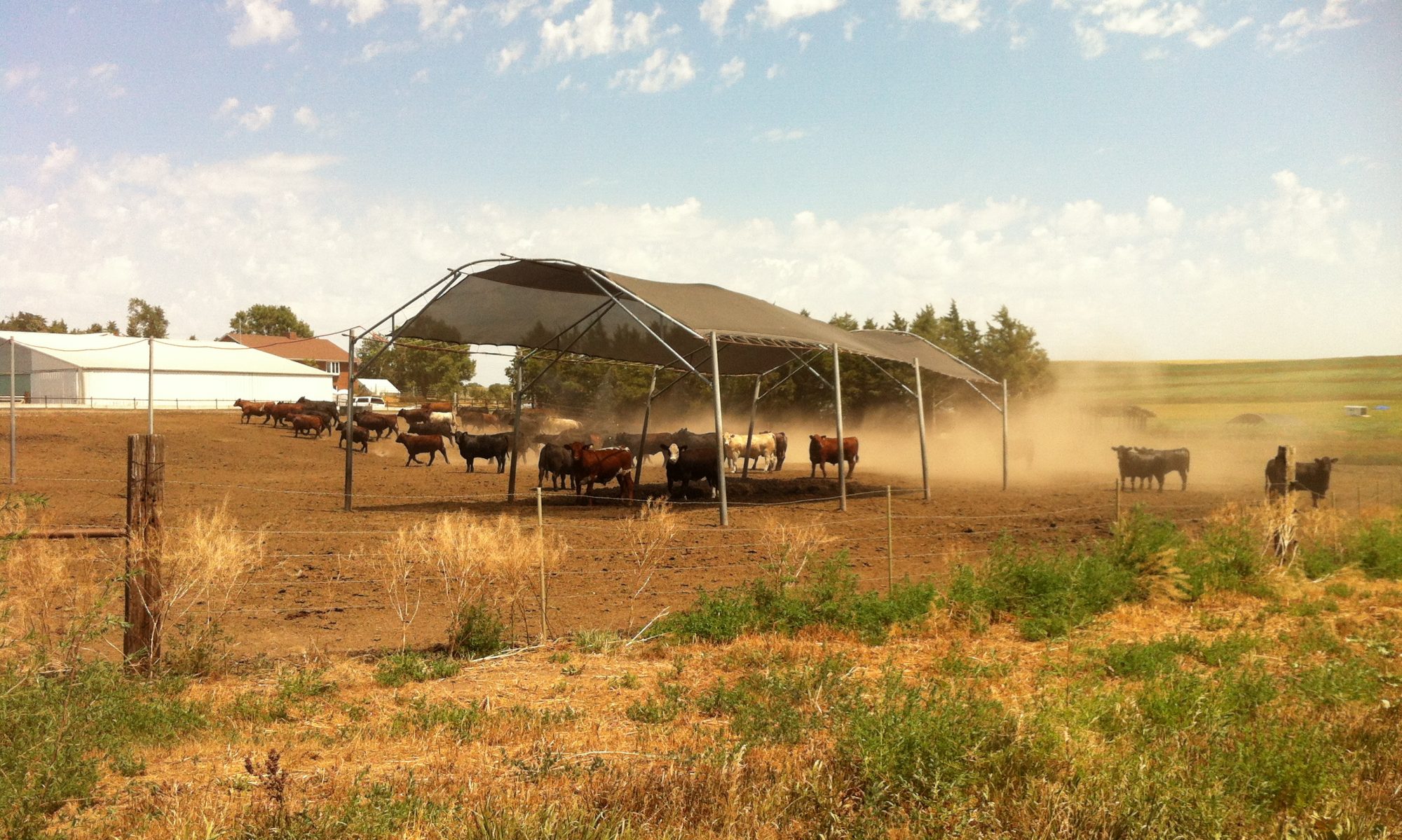

This webinar highlights some of the work being done to identify effective practices for reducing concentrations of resistant bacteria and resistance genes at critical control points in beef feedlot and dairy manure management systems. This presentation was originally broadcast on November 15, 2019. More… Continue reading “Managing Manure to Mitigate Antibiotic Resistance”
Antibiotic Measurement and Recovery in Manure and Impacts on Antimicrobial Resistance in Agricultural Settings
Antimicrobial resistance (AMR) has been exacerbated through anthropogenic sources of antibiotics, with antibiotics use in animal production being a possible contributor to AMR. On dairy and beef cattle operations, different classes of antibiotics are administered in response to an infection, or as a prophylactic to prevent infection. The connection between cattle antibiotic use and AMR development in human pathogens is uncertain. To better understand this possible connection (and associated risks), we need improved knowledge of the fate and transport of antibiotics in livestock manure. This necessitates quantification of antibiotics in complex organic matrices. The challenges in measuring antibiotics in animal husbandry result from the heterogeneity of manure with varying manure treatment and handling systems. Typically, antibiotic extraction procedures focus on a single class of antibiotic; however, the goal of this study was to optimize one extraction method for multiple classes of antibiotics in cattle manure. Four classes of antibiotics were targeted: tetracyclines, macrolides, sulfonamides, and beta-lactams. The beta-lactams, penicillin G, ampicillin, ceftiofur, and two lactam metabolites were of specific interest because of their prevalent use for treatment and prevention of mastitis in dairy cows and difficulty to detect in manure extracts. Two manure preservation methods were considered: frozen and freeze-dried. Tested extraction methods included: accelerated solvent extraction, liquid-liquid extraction, solid phase extraction, and salting out. None of the direct extraction procedures produced sufficient recoveries for the beta-lactams. A derivatization method that hydrolyzed the beta-lactam group with piperidine prior to extraction improved recoveries. Antibiotic extraction efficiencies from cattle manure, determined using reverse phase HPLC tandem MS-MS analyses after preservation and extraction, will be presented in full.
Authors
Andrea Yarberry, Beltsville Agricultural Research Center, ORISE Participant, United States Department of Agriculture, ayarberry@gmail.com
Rice, Clifford (Agricultural Research Center, Sustainable Agricultural Systems Laboratory, United States Department of Agriculture, Beltsville, MD, USA); Poindexter, Carlton (Department of Environmental Science and Technology, University of Maryland, College Park, MD, USA); Lansing, Stephanie (Department of Environmental Science and Technology, University of Maryland, College Park, MD, USA)
Acknowledgements
This research was supported in part by an appointment to the Agricultural Research Service (ARS) Research Participation Program administered by the Oak Ridge Institute for Science and Education (ORISE) through an interagency agreement between the U.S. Department of Energy (DOE) and the U.S. Department of Agriculture (USDA). ORISE is managed by ORAU under DOE contract number DE-SC0014664. All opinions expressed in this paper are the author’s and do not necessarily reflect the policies and views of USDA, ARS, DOE, or ORAU/ORISE.
The authors are solely responsible for the content of these proceedings. The technical information does not necessarily reflect the official position of the sponsoring agencies or institutions represented by planning committee members, and inclusion and distribution herein does not constitute an endorsement of views expressed by the same. Printed materials included herein are not refereed publications. Citations should appear as follows. EXAMPLE: Authors. 2019. Title of presentation. Waste to Worth. Minneapolis, MN. April 22-26, 2019. URL of this page. Accessed on: today’s date.
Effectiveness of Different Dairy Manure Management Practices in Controlling the Spread of Antibiotics and Antibiotic Resistance
Proceedings Home | W2W Home 
Purpose
Even when antibiotics are used judiciously, antibiotic residues, antibiotic resistant bacteria (ARB) and antibiotic resistance genes (ARG) can accumulate in human waste and manure and contribute to the spread of antibiotic resistance. Modern U.S. dairy farms use antibiotics for disease treatment and prevention according to the guidance of veterinary physicians. While dairy manure handling and treatment systems may effectively mitigate antibiotic resistance, the fate of antibiotic residues, ARB and ARG through these systems has not been adequately investigated.
What did we do?
Working cooperatively with 11 dairies in 3 states (NY, PA, MD) our multi-institutional (U. Buffalo, Cornell, U. Maryland, U. Michigan), interdisciplinary team is investigating the effect different manure management practices (e.g. long-term storage, composting, anaerobic digestion, etc.) have on antibiotic residue levels, ARB and ARG. Every 6 weeks for 2 years manure is being collected pre- and post- each treatment step of the various manure handling systems used by each farm. All samples are being characterized and tested for select antibiotic residues (tetracyclines, macrolides, sulfonamides, penicillins and ceftiofurs), with select samples also analyzed for ARB and ARG. To guide these efforts, antibiotic usage and manure treatment system operational data are also being collected for each farm.
What have we learned?
A year of samples has been collected with analysis of antibiotic residues, ARB and ARG on-going. Based on the preliminary data, antibiotic residues are detectable at low-concentrations (< 200 mg/L) in each farm’s manure. Antibiotic residue levels are generally lower in treated manure compared to levels in raw manure, though mitigation efficacy is variable. Early findings show some composting systems have the capacity to lower antibiotic residue levels. Antibiotic residue levels are also lower in separated manure solids, with evidence for partitioning of soluble antibiotic residues into separated manure liquids. At this time, the effects of anaerobic digestion and long-term anaerobic manure storage on antibiotic residue levels remain unclear. Select samples are currently being analyzed for ARB and ARG.
Future Plans
We are entering our second year of field monitoring and ARB and ARG analysis is on-going. Laboratory efforts are also beginning to test the effectiveness of specific anaerobic digester operational parameters at mitigating antimicrobial resistance. Extension/outreach meetings with stakeholder groups are also being planned. The ultimately project goals are to discern the fate of antibiotic residues, ARB and ARG as they move through dairy manure handling systems, identify the efficacy of different manure treatment systems at mitigating antibiotic resistance and extending this knowledge to dairy operators.
Corresponding author, title, and affiliation
Jason Oliver, Postdoctoral Associate at Dept. of Animal Science, Cornell University
Corresponding author email
Other authors
Curt Gooch, Senior Extension Associate at Cornell University, Dept. of Animal Science, PRO-DAIRY
Additional information
Additional project information can be found on the dairy environmental system webpage: www.manuremanagement.cornell.edu
Acknowledgements
This material is based upon work that is supported by the National Institute of Food and Agriculture, U.S. Department of Agriculture, under award number 2016-68003-24601. Any opinions, findings, conclusions, or recommendations expressed in this publication are those of the author(s) and do not necessarily reflect the view of the U.S. Department of Agriculture.
Project collaborators include: (PD) Diana Aga, University of Buffalo, Dept. of Chemistry (Co-PI); her students Mitch Mayville and Jarod Hurst; (Co-PD) Lauren Sassoubre , University of Buffalo, Dept. of Civil, Structural & Environmental Engineering; (Co-PDs) Stephanie Lansing and Gary Felton, Associate Professors at University of Maryland, Dept. of Environmental Science & Technology; their student Jenna Schueler; (Co-PD) Krista Wigginton, Assistant Professor at University of Michigan, Dept. of Civil & Environmental Engineering; Lutgarde Raskin, Professor at University of Michigan, Dept. of Civil & Environmental Engineering; and their student Emily Crossette.
The authors are solely responsible for the content of these proceedings. The technical information does not necessarily reflect the official position of the sponsoring agencies or institutions represented by planning committee members, and inclusion and distribution herein does not constitute an endorsement of views expressed by the same. Printed materials included herein are not refereed publications. Citations should appear as follows. EXAMPLE: Authors. 2017. Title of presentation. Waste to Worth: Spreading Science and Solutions. Cary, NC. April 18-21, 2017. URL of this page. Accessed on: today’s date.
Analyses of Microbial Populations and Antibiotic Resistance Present in Stored Swine Manure from Underground Storage Pits
Why Study Antibiotic Resistance in Manure?
Antimicrobial compounds have been commonly used as feed additives for domestic animals to reduce infection and promote growth. Recent concerns have suggested such feeding practices may result in increased microbial resistance to antibiotics, which can have an impact on human health. As part of our research project we have been studying the commensal microbial populations present in stored swine manure and the swine GI tract. We have extended this work to include studies on the antibiotic resistance present in these populations.
What did we do?
Predominant microbial populations were identified by both pure culture isolations and direct 16S rDNA sequencing of total DNA from swine feces and stored manure samples. Antibiotic resistance was analyzed using similar pure culture isolation methods. Pure cultures were isolated following plating on anaerobic and aerobic media containing tetracycline, tylosin, or erythromycin. Polymerase chain reaction (PCR) analyses using primers based on a variety of antibiotic resistance genes was carries out with both pure culture isolates and total DNA from swine feces and stored manure.
What have we learned?
Results of pure culture isolation and direct 16S rDNA gene sequence analyses indicate that the bacterial populations of the swine GI tract (feces) and stored manure ecosystems are predominantly composed of anaerobic, low mole %G+C, Gram-positive bacteria, most of which represent novel genera and species. Results of antibiotic resistance gene PCR studies demonstrated the presence of a variety of tet (e.g., tetK, tetO) and erm (e.g., ermA, ermC) resistance gene classes in both anaerobic and aerobic pure cultures and total DNA from both swine feces and stored manure, as well as the identification of novel bacteria containing new resistance genes. Comparison of DNA sequences suggests that horizontal transfer of resistance genes between bacterial strains has also occurred. The data indicate that both the swine gastrointestinal (GI) tract and stored swine manure may serve as reservoirs of known and novel antibiotic resistant bacteria and resistan ce genes.
Future Plans
We are interested in developing methods to reduce antibiotic resistance in the swine GI tract and stored manure, and to determine if antibiotic resistance genes present in these ecosystems can be transferred to bacteria that may affect human health (e.g., E. coli, Salmonella, Campylobacter).
Authors
Terence R. Whitehead, Research Microbiologist, USDA-ARS- National Center for Agricultural Utililzation Research, Peoria, IL 61604 terry.whitehead@ars.usda.gov
Michael A. Cotta, USDA-ARS-National Center for Agricultural Utilization Research, Peoria, IL 61604
Additional information
Terence R. Whitehead, NCAUR, 1815 N. University St., Peoria, IL 61615 309-681-6272
USDA-ARS-NCAUR-Bioenergy Research Unit: http://ars.usda.gov/main/site_main.htm?modecode=50-10-05-20
Cotta, M.A., Whitehead, T.R., and Zeltwanger, R.L. Isolation, Characterization, and Comparison of Bacteria from Swine Faeces and Manure Storage Pits. (2003) Env. Microbiol. 5:737-745. http://onlinelibrary.wiley.com/doi/10.1046/j.1467-2920.2003.00467.x/pdf
Whittle, G., Whitehead, T.R., Hamburger, N., Shoemaker, N.B., Cotta, M.A., and Salyers, A.A. Identification of a new ribosomal protection type of tetracycline resistance gene, tet(36), from swine manure pits . (2003) Appl. Environ. Microbiol. 69:4151-4158. http://aem.asm.org/content/69/7/4151.full
Cotta, M.A., Whitehead, T.R., Falsen, E., Moore, E. and Lawson, P.A. Robinsonella peoriae gen.nov., sp. nov., isolated from a swine-manure storage pit and a human clinical source. (2009) Int. J. System. Evol. Microbiol. 59:150-155. https://pubmed.ncbi.nlm.nih.gov/19126740/
Whitehead, T.R. and Cotta, M.A. Stored Swine Manure and Swine Feces as Reservoirs of Antibiotic Resistance Genes. (2013) Lett. Appl. Microbiol. 56:264-267. http://onlinelibrary.wiley.com/enhanced/doi/10.1111/lam.12043/
The authors are solely responsible for the content of these proceedings. The technical information does not necessarily reflect the official position of the sponsoring agencies or institutions represented by planning committee members, and inclusion and distribution herein does not constitute an endorsement of views expressed by the same. Printed materials included herein are not refereed publications. Citations should appear as follows. EXAMPLE: Authors. 2015. Title of presentation. Waste to Worth: Spreading Science and Solutions. Seattle, WA. March 31-April 3, 2015. URL of this page. Accessed on: today’s date.
Composting Swine Slurry to Reduce Indicators and Antibiotic Resistance Genes
Purpose
Over the last twenty years there have been considerable increases in the incidence of human infections with bacteria that are resistant to commonly used antibiotics. This has precipitated concerns about the use of antibiotics in livestock production. Composting of swine manure has several advantages, liquid slurries are converted to solid, the total volume of material is reduced and the stabilized product is more easily transported off-site. The goal of this study was to determine if composting can also be used to reduce the concentration of indicators and bacteria containing genes for antibiotic resistance (AR) in swine manure.
What did we do?
Sample Analysis:
Compost trials were conducted in either fall (FT) or spring (ST) and piles were turned once, three times or upon reaching 65 ºC. Microbial indicators and populations with AR genes for tetracycline, erythromycin and sulfonamide resistance were quantified by culture and/or quantitative, real-time (qPCR) analysis.
Compost materials and conditions:
Decomposed materials (a mixture of swine slurry and woodchips) were obtained on two separate occasions from swine high-rise finishing facilities (HRFF) located in western Kentucky. The HRFF houses between 4,000 and 4,800 swine which are placed in the facility at 18 to 20 kg and are removed after three months (weighing about 105 kg). The high-rise floor raises the living area 3.7 m above the ground. Manure, excess feed, water and wastewater drop through slatted floors into 2.5 cm screened woodchips (average size 1.9 ± 0.9 cm). The slurry-woodchip material was turned up to three times per week while under the HRFF. When the material was visibly moist, reducing its ability to absorb additional waste materials, it was removed from the facility for finishing in windrows. In fall 2011 (FT) and Spring 2012 (ST), HRFF slurry-woodchip mix (approximately 60 m3 weighing 48.4 Mg) was brought by semi-trailer trucks to the Western Kentucky University Agricultural complex where ma terials were divided into three or four windrow piles. In the FT, swine slurry-woodchip mixes having a bulk density of 849.6 kg m-3 and consisting of around 19.6 m3 of material were formed into three piles of approximately 10.4 m x 2.1 m x 0.9 m (L x W x H). In the ST, swine slurry-woodchip mixes having a bulk density of 778.4 kg m-3 and consisting of around 18.8 m3 of material were formed into three piles of approximately 5.8 m x 2.7 m x 1.2 m (L x W x H) and a fourth batch (unturned) was left piled at the side (0X; 3.6 m3). In each study, piles were turned using a windrow compost turner either once per week (1X), three times per week (3X) or upon the internal compost temperature reaching 65 ºC (@65). Compost for the FT @65 treatment heated to 65 ºC by day 14 and was turned 11 times over the course of the trial. However, during the ST, the @65 pile did not heat for the first 63 days (mean temperature 27 ± 8 ºC) therefore weekly turning was initiated at that time. Samples were taken on days 0 and three and then weekly for the first 12 weeks and bi-weekly until composting was stopped at day 112 for the FT and day 142 for the ST.
What have we learned?
In the FT, concentrations of enterococci decreased below culturable detection within 21 days, corresponding with a 99% decrease in detection by qPCR (Fig. 1). Similar decreases in qPCR detection in the ST took longer (day 49 or day 77 of composting). Changes in the concentration of bacteria with AR genes varied by antibiotic type (erythromycin (36% – 97%), tetracycline (94% to 99%) and sulfonamide (53% to 84%) and compost season (greater decreases in ST). There were few differences based on turning regime. Even the unturned compost pile had 90%, 98% and 56% reduction in bacteria resistant to erythromycin, tetracycline and sulfonamide, respectively.
Results suggest that composting effectively decreases the concentration of indicators and AR genes in swine manure. As concerns over antibiotic resistance and pathogens increase, composting provides a valuable manure management tool for decreasing contaminants and improving the value of this material as a soil conditioner.
Future Plans
Volume reduction, low moisture and low readily degradable organic matter suggest that the finished compost would have lower transportation costs and should provide value as a soil conditioner. Studies are warranted to evaluate its agronomic value as an alternative source of plant nutrients. Future studies will be conducted to evaluate the nutrient value this compost as an organic fertilizer for row crop production.
Authors
Kimberly Cook, Research Microbiologist, USDA ARS kim.cook@ars.usda.gov
Carl Bolster, USDA ARS; Karamat Sistani, USDA ARS
Additional information
http://www.ars.usda.gov/main/site_main.htm?modecode=50-40-05-00
Acknowledgements
This research was conducted as part of USDA-ARS National Program 214: Agricultural and Industrial By-products: CRIS 6445-12630-004-00D. Mention of trade names or commercial products in this article is solely for the purpose of providing specific information and does not imply recommendation or endorsement by the USDA.
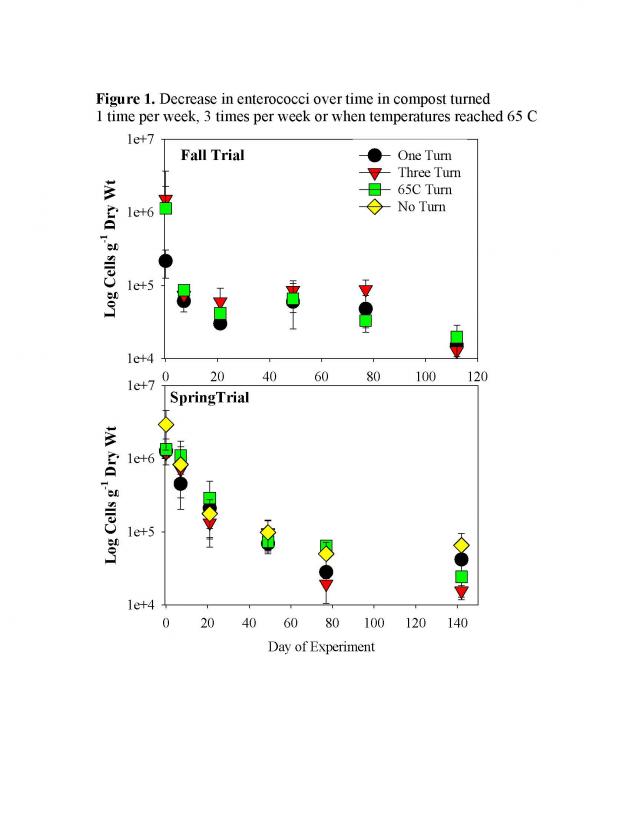
Proceedings cook figures 1
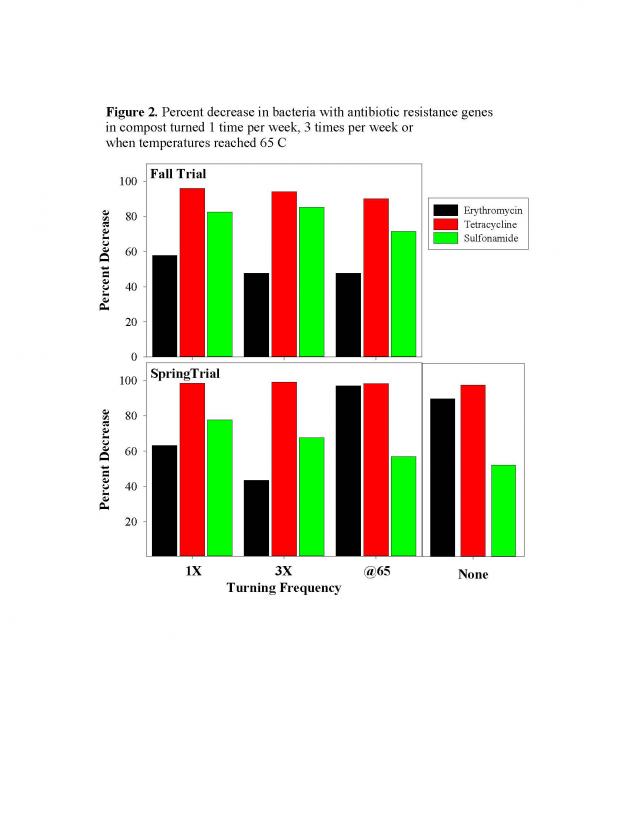
Proceedings cook figures 2
The authors are solely responsible for the content of these proceedings. The technical information does not necessarily reflect the official position of the sponsoring agencies or institutions represented by planning committee members, and inclusion and distribution herein does not constitute an endorsement of views expressed by the same. Printed materials included herein are not refereed publications. Citations should appear as follows. EXAMPLE: Authors. 2015. Title of presentation. Waste to Worth: Spreading Science and Solutions. Seattle, WA. March 31-April 3, 2015. URL of this page. Accessed on: today’s date.
Antibiotic Resistance and Animal Agriculture
This webcast examines the veterinary feed directive and how it impacts animal agriculture as well as discusses the state of the science as it relates to antibiotic resistance. Finally, it busts some myths and reviews “facts” to keep in mind when chatting with livestock producers and the general public.This presentation was originally broadcast on March 25, 2016. More… Continue reading “Antibiotic Resistance and Animal Agriculture”