Broiler litter is a valuable fertilizer but can also be a source of odorous and GHG emissions during production, storage, and land application. Impacts of these emissions are felt by local communities, posing respiratory health impacts and decreased quality of life, as well as increased deposition into soil and water systems. This study seeks to quantify the magnitude of emissions associated with in-house broiler litter and estimate variability across farms. Finally, the study evaluates litter parameters, such as litter age and chemical composition, for gas emission predictors.
What Did We Do?
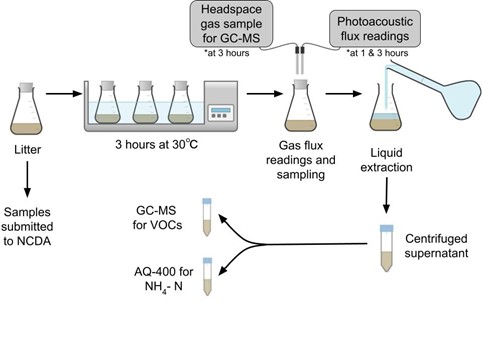
A set of five active broiler houses in North Carolina were sampled to measure gaseous emissions (NH3, H2S, CH4, N2O, CO2, and VOCs) using headspace flux measurement gas samples. Headspace gas concentrations were measured at 1 hour and 3 hours after incubation at 30°C using a photoacoustic analyzer (Innova 1412) for NH3, CH4, N2O, and CO2 and Jerome 631-X was used to measure H2S, concentration. The headspace was also sampled to quantify VOCs associated with odorous emissions. After incubation, water extraction was used to quantify less volatile organic species that are associated with odorous emissions in the litter. Experimental setup is described in Figure 1. Statistical software, JMP, was utilized for analysis of litter composition on NH3, H2S, CH4, N2O, CO2, and VOC gaseous emissions.
Figure 1. Broiler emission experimental setup
What Have We Learned?
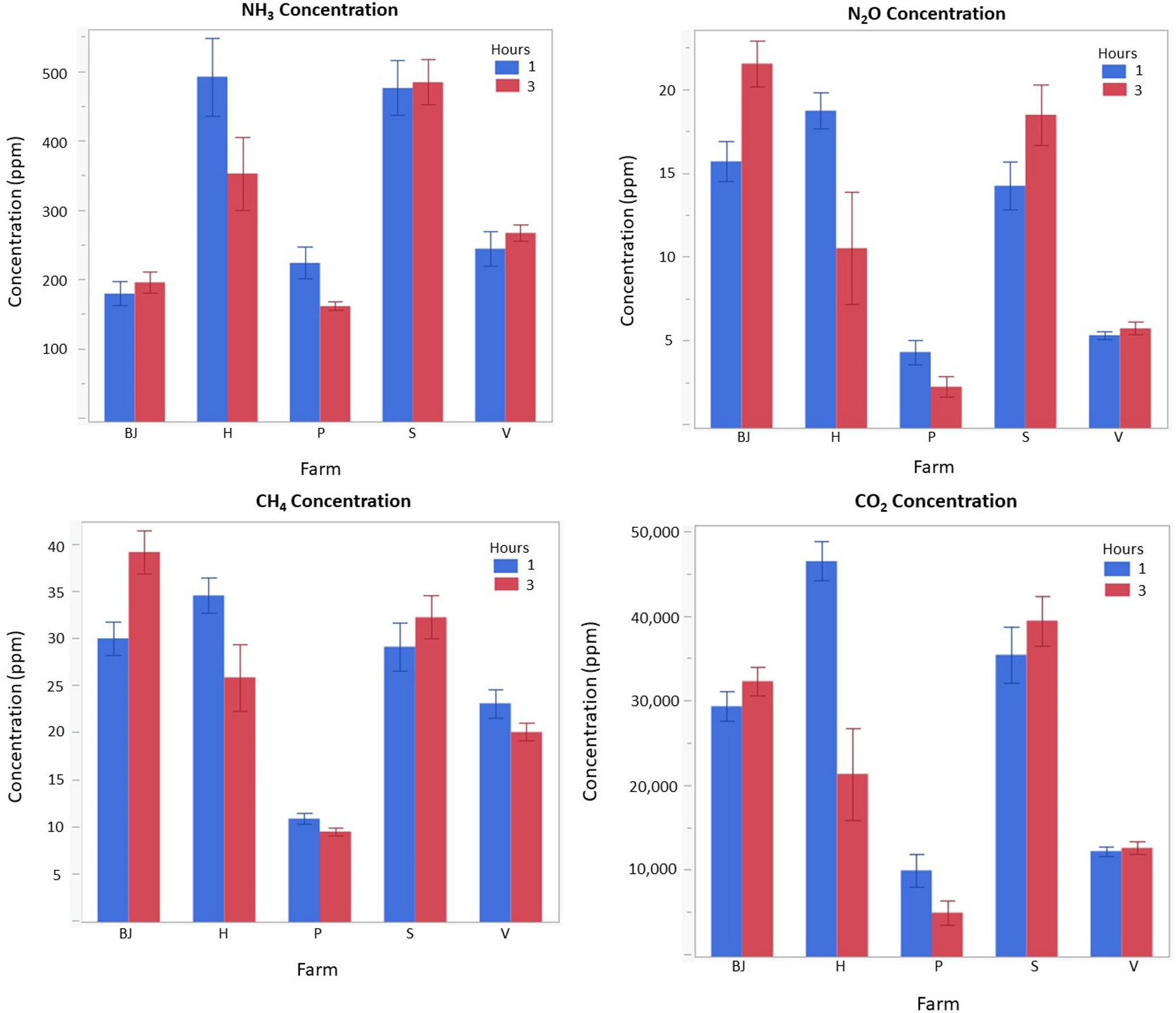
H2S emissions were very low (< 0.01 ppm) and did not produce statistically significant observations. There was a wide range of emissions from the litter samples for different gases as shown in Figure 2: 146-555 ppm NH3, 1.5-22 ppm N2O, 4,077-50,835 ppm CO2, and 9.1-43.3 ppm CH4. The differences between farms accounted for 86%, 81%, 76%, and 84% of the variability in NH3, N2O, CO2, CH4 observations, respectively. This could be attributed to differences in integrator and management strategies. Moisture content and age of the litter were the primary contributing factors to increased gaseous emissions from all samples. More specifically, NH3 was largely impacted by pH (p < 0.01), while N2O, CO2, and CH4 were largely impacted by C:N (p < 0.01). Quantitative VOC analysis was difficult due to the number of gases detected by the GC-MS (20+), however the most common species present in the litter samples were a variety of volatile fatty acids, alcohols, phenol, as well as a few amines, ketols, and terpenes.
Figure 2. Photoacoustic flux measurements of litter samples at 1 and 3 hour intervals.
Future Plans
These results will serve as baseline emission readings for odor and emission control strategies. We are currently developing Miscanthus-derived biochar as a poultry litter amendment for emission mitigation in poultry houses. This dataset will inform our decision making to help target gaseous species of top concern in NC broiler litter by methods of physical and chemical biochar modification.
Authors
Presenting author
Carly Graves, Graduate Research Assistant, North Carolina State University
Corresponding author
Dr. Mahmoud Sharara, Assistant Professor & Waste Management Extension Specialist, North Carolina State University
Corresponding author email address
msharar@ncsu.edu
Acknowledgements
Funding for this project is through Bioenergy Research Initiative (BRI)- NC Department of Agriculture and Consumer Services (NCDA&CS): Miscanthus Biochar Potential as A Poultry Litter Amendment
This webinar focuses on air emissions associated different methods of composting and the subsequent emissions when composted manure is applied to cropland. This presentation was originally broadcast on September 18, 2020. More…Continue reading “Emissions from Composting”
The main purpose of this research project is an evaluation of the current products available in the open marketplace for using in deep pit swine manure structure as to their effectiveness in mitigation of odors and reduction of hydrogen sulfide (H2S), ammonia (NH3), 11 odorous volatile organic compounds (VOCs) and greenhouse gas (CO2, methane and nitrous oxide) emissions from stored swine manure. At the end of each trial, hydrogen sulfide and ammonia concentrations are measured during and immediately after the manure agitation process to simulate pump-out conditions. In addition, pit manure additives are tested for their impact on manure properties including solids content and microbial community.
What Did We Do?
Figure 1. Reactor simulates swine manure storage with controlled air flow rates.
We are using 15 reactors simulating swine manure storage (Figure 1) filled with fresh swine manure (outsourced from 3 different farms) to test simultaneously four manure additive products using manufacturer recommended dose for each product. Each product is tested in 3 identical dosages and storage conditions. The testing period starts on Day 0 (application of product following the recommended dosage by manufacturer) with weekly additions of manure from the same type of farm. The headspace ventilation of manure storage is identical and controlled to match pit manure storage conditions. Gas and odor samples from manure headspace are collected weekly. Hydrogen sulfide and ammonia concentrations are measured in real time with portable meters (both are calibrated with high precision standard gases). Headspace samples for greenhouse gases are collected with a syringe and vials, and analyzed with a gas chromatograph calibrated for CO2, methane and nitrous oxide. Volatile organic compounds are collected with solid-phase microextraction probes and analyzed with a gas chromatography-mass spectrometry (Atmospheric Environment 150 (2017) 313-321). Odor samples are collected in 10 L Tedlar bags and analyzed using the olfactometer with triangular forced-choice method (Chemosphere, 221 (2019) 787-783). To agitate the manure for pump-out simulation, top and bottom ‘Manure Sampling Ports’ (Figure 1) are connected to a liquid pump and cycling for 5 min. Manure samples are collected at the start and end of the trial and are analyzed for nitrogen content and bacterial populations.
The effectiveness of the product efficacy to mitigate emissions is estimated by comparing gas and odor emissions from the treated and untreated manure (control). The mixed linear model is used to analyze the data for statistical significance.
What we have learned?
Figure 2. Hydrogen sulfide and ammonia concentration increased greatly during agitation process conducted at the end of trial to simulate manure pump-out conditions and assess the instantaneous release of gases. The shade area is the initial 5 minutes of continuous manure agitation.
U.S. pork industry will have science-based, objectively tested information on odor and gas mitigation products. The industry does not need to waste precious resources on products with unproven or questionable performance record. This work addresses the question of odor emissions holistically by focusing on what changes that are occurring over time in the odor/odorants being emitted and how does the tested additive alter manure properties including the microbial community. Additionally, we tested the hydrogen sulfide and ammonia emissions during the agitation process simulating pump-out conditions. For both gases, the emissions increased significantly as shown in Figure 2. The Midwest is an ideal location for swine production facilities as the large expanse of crop production requires large fertilizer inputs, which allows manure to be valued as a fertilizer and recycled and used to support crop production.
Future Plans
We develop and test sustainable technologies for mitigation of odor and gaseous emissions from livestock operations. This involves lab-, pilot-, and farm-scale testing. We are pursuing advanced oxidation (UV light, ozone, plant-based peroxidase) and biochar-based technologies.
Daniel S. Andersen, Assoc. Prof., Iowa State University
David B. Parker, Ph.D., P.E., USDA-ARS-Bushland
Additional Information
Heber et al., Laboratory Testing of Commercial Manure Additives for Swine Odor Control. 2001.
Lemay, S., Stinson, R., Chenard, L., and Barber, M. Comparative Effectiveness of Five Manure Pit Additives. Prairie Swine Centre and the University of Saskatchewan.
Maurer, D., J.A. Koziel. 2019. On-farm pilot-scale testing of black ultraviolet light and photocatalytic coating for mitigation of odor, odorous VOCs, and greenhouse gases. Chemosphere, 221, 778-784; doi: 10.1016/j.chemosphere.2019.01.086.
Maurer, D.L, A. Bragdon, B. Short, H.K. Ahn, J.A. Koziel. 2018. Improving environmental odor measurements: comparison of lab-based standard method and portable odour measurement technology. Archives of Environmental Protection, 44(2), 100-107. doi: 10.24425/119699.
Maurer, D., J.A. Koziel, K. Bruning, D.B. Parker. 2017. Farm-scale testing of soybean peroxidase and calcium peroxide for surficial swine manure treatment and mitigation of odorous VOCs, ammonia, hydrogen sulfide emissions. Atmospheric Environment, 166, 467-478. doi: 10.1016/j.atmosenv.2017.07.048.
Maurer, D., J.A. Koziel, J.D. Harmon, S.J. Hoff, A.M. Rieck-Hinz, D.S Andersen. 2016. Summary of performance data for technologies to control gaseous, odor, and particulate emissions from livestock operations: Air Management Practices Assessment Tool (AMPAT). Data in Brief, 7, 1413-1429. doi: 10.1016/j.dib.2016.03.070.
Acknowledgments
We are thankful to (1) National Pork Board and Indiana Pork for funding this project (NBP-17-158), (2) cooperating farms for donating swine manure and (3) manufacturers for providing products for testing. We are also thankful to coworkers in Dr. Koziel’s Olfactometry Laboratory and Air Quality Laboratory, especially Dr. Chumki Banik, Hantian Ma, Zhanibek Meiirkhanuly, Lizbeth Plaza-Torres, Jisoo Wi, Myeongseong Lee, Lance Bormann, and Prof. Andrzej Bialowiec.
The authors are solely responsible for the content of these proceedings. The technical information does not necessarily reflect the official position of the sponsoring agencies or institutions represented by planning committee members, and inclusion and distribution herein does not constitute an endorsement of views expressed by the same. Printed materials included herein are not refereed publications. Citations should appear as follows. EXAMPLE: Authors. 2019. Title of presentation. Waste to Worth. Minneapolis, MN. April 22-26, 2019. URL of this page. Accessed on: today’s date.
Climate change is an economic, environmental and social threat, and worthy of scientific study. Immediate action must be taken to reduce greenhouse gas emissions and mitigate negative impacts of future climate change. Proposed action can start at the farm level and has the potential of making a contribution to mitigation of climate change. Dairy farmers are able to significantly reduce their emissions by implementing better management practices, primarily through feed production, enteric fermentation, and manure management. We model the corresponding changes in emissions from proposed mitigation efforts to understand their impact on global climate change.
What did we do?
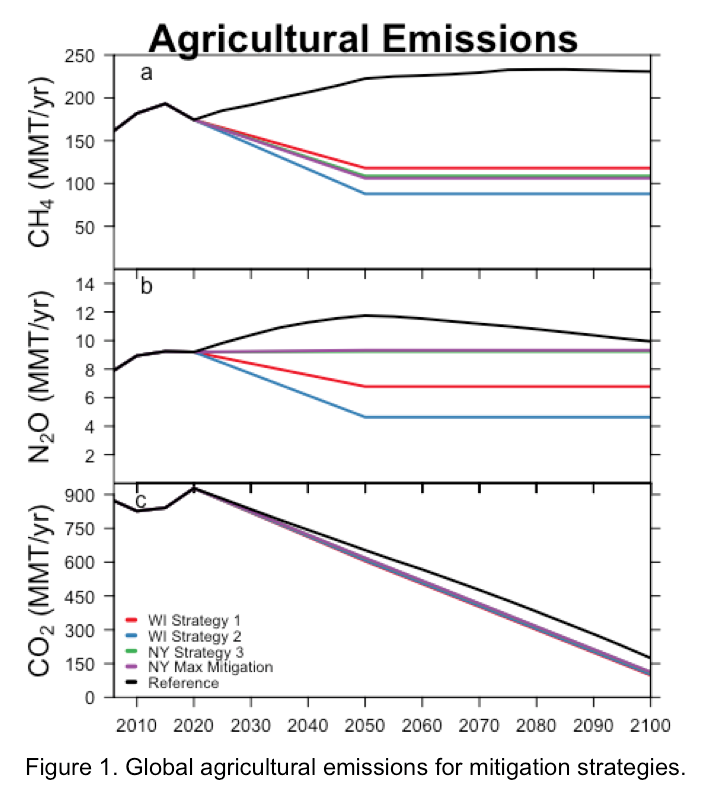
Best Management Practices (BMPs) for dairy systems have been identified and simulated using the Integrated Farm System Model (IFSM). Simulations representative of a large New York farm (1500 cows) and a small Wisconsin farm (150 cows) estimated the emission of greenhouse gases for a whole farm system. Percent reductions were calculated by comparing a baseline scenario without any implemented mitigation, to scenarios that included the identified BMPs. Refer to Table 1 for emission and percent reduction estimates for the simulated BMPs.
Percent reduction estimates were then applied to a projected “business as usual” emission scenario. This scenario prescribes anthropogenic emissions through 2100 and excludes any climate action or policy after 2015. Taking 2020 as a reference year and 2050 as a target year, we applied the estimated percent reductions to the projected global agricultural emissions. Emission reductions were decreased linearly from 2020 to 2050, and held constant between 2050 and 2100 (Figure 1). This assumes that all farms globally can reduce emissions despite increases in production. To compare the performance of the mitigation measures under future climate change, we employed a fully coupled earth system model of intermediate complexity – the Integrated Global System Model (IGSM). The model includes an interactive carbon-cycle capable of addressing important feedbacks between the climate and terrestrial biosphere.
What have we learned?
Action taken globally in the agricultural sector to reduce greenhouse gas emissions over the first half of the 21st century is likely to have an impact in mitigating global warming. Following a “business as usual” emission scenario without any climate policy or action beyond 2015, an increase in global mean surface temperature by the end of the 21st century (2081-2100) relative to pre-industrial (1961-1990) levels is projected to be 2.8 C to 3.5 C (Figure 2). This exceeds the 2 C temperature target described as the maximum warming allowed to avoid dangerous and irreversible climate change. An associated net radiative
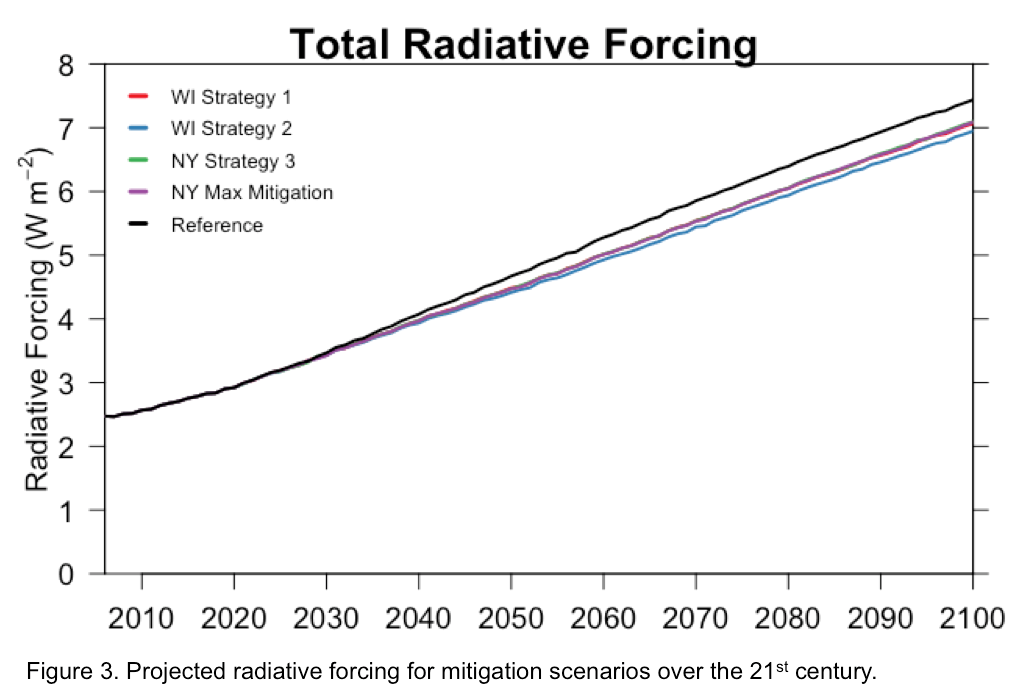
forcing for the “business as usual” scenario is projected to be 7.4 W/m^2 by 2100 (Figure 3). Adopting the identified BMPs in the dairy sector and decreasing global agricultural emissions by 2050 is projected to decrease global mean surface temperatures for 2100 by 0.2 C and net radiative forcing by 0.4 W/! m^2 on av erage. In summary, this modeled experiment demonstrates that ongoing efforts to decrease greenhouse gas emissions in the dairy and agricultural sector are effective at reducing the overall warming of climate change.
Future Plans
Future work will look further into the evolution of regional temperature and rainfall profiles for the mitigation scenarios. Then, ecological risk assessment methodologies will be applied to determine the probable impacts of climate change by each scenario on agricultural production.
Corresponding author, title, and affiliation
Kristina Rolph – Graduate Student, The Pennsylvania State University.
This material is based upon work that is supported by the National Institute of Food and Agriculture, U.S. Department of Agriculture, under award number 2013-68002-20525. Any opinions, findings, conclusions, or recommendations expressed in this publication are those of the author(s) and do not necessarily reflect the view of the U.S. Department of Agriculture.
Recently there has been increased interest in regulating ammonia emissions to reduce PM2.5 (“fine” particles with an aerodynamic diameter less than 2.5 micrometers) concentrations. However, understanding the quantity of and interactions between ammonia and nitrogen oxide (NOx) is necessary in determining whether controlling ammonia is an effective strategy for reducing PM2.5 in a particular region. Research from the California Regional Particulate Air Quality Study and other studies has demonstrated the relative abundance of ammonia in comparison to the limited concentrations of the other key precursor, nitric acid formed by NOx emissions. As a result, NOx acts as the primary limiting precursor for the formation of secondary ammonium nitrate in the San Joaquin Valley (SJV). Modeling based on data from these studies also found that controlling NOx was the most effective strategy to reduce ammonium nitrate particulate in the SJV and controlling ammonia had little effect on PM2.5 concentrations.
In summary and as explained in the San Joaquin Valley Air Pollution Control District 2012 PM2.5 Plan, the best scientific information available indicates that controlling NOx emissions is the most effective strategy to reduce secondary ammonium nitrate in the SJV. While it has been demonstrated that controlling ammonia will not significantly reduce PM2.5 concentrations in the SJV, the District has adopted stringent regulations that have significantly reduced ammonia emissions.
Purpose
The San Joaquin Valley is primarily a rural region with large areas dedicated to agriculture. Recently there has been increased interest in regulating ammonia emissions from agricultural operations and other sources as a means to reduce PM2.5 concentrations. However, understanding the quantity and interactions between ammonia and NOx are necessary in determining whether controlling ammonia emissions is an effective strategy for reducing secondary PM2.5 formation in a particular geographic region.
The United States Environmental Protection Agency (U.S. EPA) periodically reviews and establishes health-based air quality standards (often referred to as National Ambient Air Quality Standards, or NAAQS) for ozone, particulate matter (PM), and other pollutants. Although the air quality in California’s San Joaquin Valley has been steadily improving, the region is currently classified as “serious” non-attainment for the 1997 and 2006 federal ambient air quality standards for PM2.5. The periods for which measured PM2.5 concentrations drive nonattainment of these standards occur primarily in the winter months and air quality research in the San Joaquin Valley has identified ammonium nitrate as the predominant contributor to secondary PM2.5 in the region. Ammonium nitrate particulate is formed through chemical reactions between ammonia in the air and NOx emissions produced by mobile and stationary combustion sources. As shown in Figure 1 above, ammonium nitrate is commonly the largest contributor to PM2.5 mass during the winter in the San Joaquin Valley.
What did we do?
Atmospheric modeling has demonstrated that controlling NOx is the most effective strategy to reduce ammonium nitrate concentrations in the San Joaquin Valley and controlling ammonia has little effect on these concentrations. The California Air Resources Board conducted multiple modeling runs to simulate the formation of PM2.5 in the San Joaquin Valley and compare the effect of reducing various pollutants on PM2.5 concentrations. As seen in Figure 2, U.S. EPA’s Community Multi-scale Air Quality (CMAQ) indicated that reducing NOx by 50% reduced nitrate concentrations by 30% to 50% reductions, while reducing ammonia by 50% resulted in less than 5% reductions in nitrate concentrations. Similarly, the UCD/CIT photochemical transport model indicated that for the conditions on January 4-6, 1996 in the San Joaquin Valley, controlling NOx emissions is far more effective for reducing nitrate concentrations than controlling ammonia.
What have we learned?
Ammonium nitrate particulate is limited by NOx in the San Joaquin Valley
Extensive research conducted through the California Regional Particulate Air Quality Study (CRPAQS) and other studies has demonstrated the relative abundance of ammonia in comparison to the limited concentrations of the other key precursor, nitric acid formed by NOx emissions in the San Joaquin Valley. As a result, NOx (via nitric acid) acts as the primary limiting precursor for the formation of secondary ammonium nitrate. (See Figures 3 and 4)
Future Plans
As explained in detail in the San Joaquin Valley Air Pollution Control District 2012 PM2.5 Plan, the best scientific information available indicates that controlling NOx emissions is the most effective strategy to reduce secondary ammonium nitrate in the San Joaquin Valley. While ammonia has been demonstrated to not significantly contribute to PM2.5 concentrations in the San Joaquin Valley, the District has developed control strategies, via stringent regulations (Confined Animal Facilities – Rule 4570, Organic Material Composting – Rule 4566, Biosolids, Animal Manure, and Poultry Litter Operations – Rule 4565), that have resulted in significant reductions in ammonia emissions.
Chen, J.; Lu, J.; Avise, J. C.; DaMassa, J. A.; Kleeman, M. J. & Kaduwela, A. P. (2014), Seasonal modeling of PM2.5 in Californias San Joaquin Valley, Atmospheric Environment 92, p. 182-190.
Kleeman, Michael J., Qi Ying, Ajith Kaduwela (2005) Control Strategies for the Reduction of Airborne Particulate Nitrate in California’s San Joaquin Valley. Atmospheric Environment, 39 (29), p. 5325 – 5341
The authors are solely responsible for the content of these proceedings. The technical information does not necessarily reflect the official position of the sponsoring agencies or institutions represented by planning committee members, and inclusion and distribution herein does not constitute an endorsement of views expressed by the same. Printed materials included herein are not refereed publications. Citations should appear as follows. EXAMPLE: Authors. 2015. Title of presentation. Waste to Worth: Spreading Science and Solutions. Seattle, WA. March 31-April 3, 2015. URL of this page. Accessed on: today’s date.
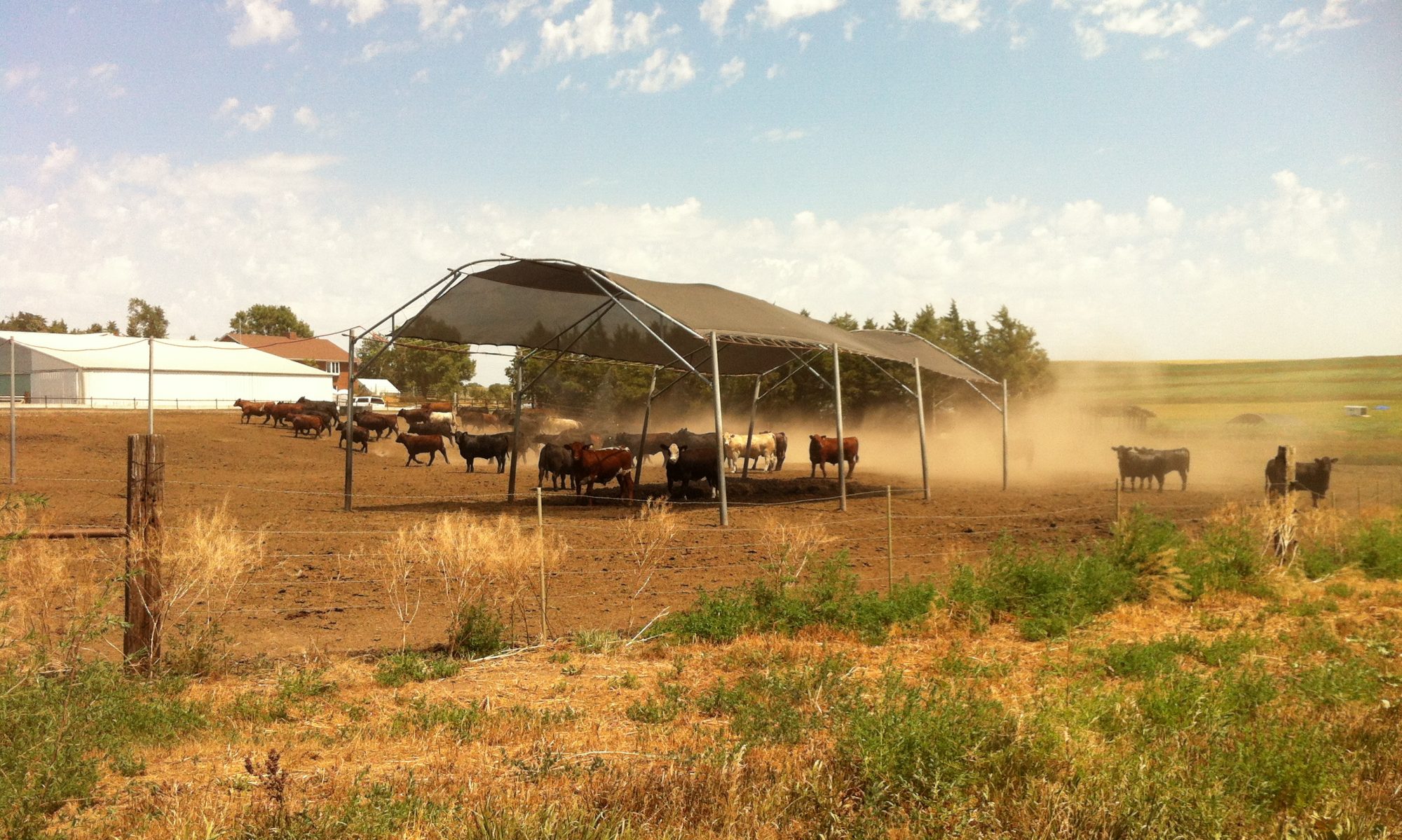
The research community is making good progress in understanding the mechanical, biochemical, and atmospheric processes that are responsible for airborne emissions of particulate matter (PM, or dust) from open-lot livestock production, especially dairies and cattle feedyards. Recent studies in Texas, Kansas, Nebraska, Colorado, California, and Australia have expanded the available data on both emission rates and abatement measures. Although the uncertainties associated with our estimates of fugitive emissions are still unacceptably high, we have learned from our recent experience with ammonia that using a wide variety of credible measurement techniques, rather than focusing on one so-called “standard” technique, may be the better way to improve confidence in our estimates. Whereas the most promising control measures for gaseous emissions continue to be dietary strategies with management of corral-surface moisture a close second for particulate matter, corral-surface management and moisture management play comparable roles, depending on the mechanical strength of soils and the availability of water, respectively. The cost per unit reduction of emitted mass attributable to these abatement measures varies as widely as the emissions estimates themselves, so we need to intensify our emphasis on process-based emissions research to (a) reduce the variances in our emissions estimates and (b) mitigate the contingency of prior, empirically based estimates. As a general rule, although cattle feedyard emission factors may be thought a reasonable starting point for estimating emissions from open-lot dairies, such estimates should be viewed with suspicion.
Purpose
Document the state of the art of particulate-matter (PM) emissions from open-lot livestock facilities, including emission fluxes and abatement measures.
What did we do?
We conducted (a) field research at commercial, open-lot livestock facilities in the southern High Plains and (b) an up-to-date review of the latest literature concerning primary particulate matter emission fluxes and the abatement measures appropriate to the source type. Field research included time-resolved concentration measurements upwind and downwind of the livestock facilities during the hottest, driest times of the year (in the case of dairy emissions) and throughout the year (in the case of beef feedyards); and a 5-month evaluation of stocking density manipulation using electric cross-fences that preserve optimum bunk space for beef cattle on feed. The literature review surveyed research findings from anywhere in the world that were published in refereed journals as recently as March 2015 concerning the same topics.
What have we learned?
Increasing the stocking density of fed beef cattle as compared to the industry-wide average during hot, dry weather suppresses dust emissions to a measurable and reasonably consistent degree. Concentrations of PM measured downwind of open-lot dairies vary throughout the day, though to a lesser degree and at lower overall concentrations than those measured downwind of nearby beef cattle feedyards, likely reflecting (a) the comparatively lower intensity of the dairy animal’s physical activity and (b) the greater diurnal uniformity of animal-activity patterns in dairies as compared to those in cattle feedyards. Stocking density manipulation does not appear likely to influence dairy dust emissions to the same degree as it influences feedyard dust emissions. Our confidence in emission-flux estimates from these open-lot systems suffers from a lack of methodological diversity; that confidence would be greatly bolstered by the deployment of measurement techniques that differ from the standard inverse-dispersion-modeling paradigm. The integrated horizontal flux (IHF) approach to emissions estimation, which we are now testing at a cattle feedyard in the Texas Panhandle, will provide some corroborating evidence that will allow us to narrow the range of PM flux estimates in the research literature, a range that now spans more than an order of magnitude when expressed on a per-animal-unit basis.
Future Plans
We will continue long-term, ground-level monitoring of time-resolved PM concentrations at a commercial cattle feedyard in the Texas Panhandle; continue our ongoing tests of the IHF flux-estimation technique; and evaluate eye-safe lidar as a path-averaging monitoring technology for the intermediate path lengths (50-300m) that will permit experimental discrimination of concentration data downwind of adjacent pen areas featuring different dust-abatement measures.
Authors
Brent Auvermann, Professor, Texas A&M AgriLife Extension Service b-auvermann@tamu.edu
K. Jack Bush and Kevin R. Heflin, Research Associates, Texas A&M AgriLife Research
USDA-NIFA Contract Nos. 2010-34466-20739 and 2009-55112-05235; Texas A&M AgriLife Research; JBS Five Rivers Cattle Feeding; Texas Air Research Center; Texas Cattle Feeders Association
The authors are solely responsible for the content of these proceedings. The technical information does not necessarily reflect the official position of the sponsoring agencies or institutions represented by planning committee members, and inclusion and distribution herein does not constitute an endorsement of views expressed by the same. Printed materials included herein are not refereed publications. Citations should appear as follows. EXAMPLE: Authors. 2015. Title of presentation. Waste to Worth: Spreading Science and Solutions. Seattle, WA. March 31-April 3, 2015. URL of this page. Accessed on: today’s date.
The Federal Environmental Protection Agency (EPA) requires states to submit to them air quality emission inventories for all types of sources every three years. In 2012, the Central States Air Resource Agencies Association (CenSARA) and its contractor, TranSystems Corporation (TranSystems), developed a 2011 agricultural pesticide emissions inventory for the association’s member states of Arkansas, Iowa, Kansas, Louisiana, Minnesota, Missouri, Nebraska, Oklahoma, and Texas.
Crops grown in this region total more than 140 million acres and are routinely treated with pesticide products, such as herbicides, insecticides, and fungicides. Row crops, such as corn, soybeans, and sorghum and non-row crops, such as fruit orchards, were included in the work. Hazardous air pollutants (HAPs) and/or volatile organic compounds (VOCs) are in pesticide ingredients; VOCs being a main contributor to ground-level ozone, commonly known as smog. In this work, 458 active ingredient-specific VOC emission factors were developed, based primarily on empirically derived pesticide chemical data maintained by the California Department of Pesticide Regulations; county level active ingredient throughputs were derived from the best available information.
An emissions calculation tool was developed to produce emissions, following a linear crop to acreage relationship as the default. Participating states can use the tool to input local practices such as the selection of crops and/or the choice of pesticide products, as well as the extent and amount of applications. The work also included a survey to try to understand the timeframes pesticides are applied to various crops. These parameters can significantly alter the default linear relationship. The final product provided the individual states with 2011 emission estimates and a methodology to account for better data when obtained, which can result in a more accurate emission inventory for this source category.
Authors
Theresa Pella, Central States Air Resource Agencies Association tpella@censara.org
The authors are solely responsible for the content of these proceedings. The technical information does not necessarily reflect the official position of the sponsoring agencies or institutions represented by planning committee members, and inclusion and distribution herein does not constitute an endorsement of views expressed by the same. Printed materials included herein are not refereed publications. Citations should appear as follows. EXAMPLE: Authors. 2013. Title of presentation. Waste to Worth: Spreading Science and Solutions. Denver, CO. April 1-5, 2013. URL of this page. Accessed on: today’s date.
Air emissions from animal feeding operations have become a growing concern for producers and their neighbors. Much work has been done to quantify emission rates; however, little information has been provided about air quality downwind from these facilities. This study investigates PM2.5 (particulate matter ≤ 2.5 µm in diameter) levels as they dissipate from the exhaust fans of selected commercial, tunnel-ventilated, broiler houses in Northeast Georgia. PM2.5 was measured in real time using aerosol monitors and from a time-integrated basis using cyclone samplers. Data were taken over the last 4-weeks of a summer flock (considered a worst-case-scenario) and filtered to insure enough data was present at each distance and time. Results indicate a rapid reduction in fine particulate concentration as the distance from the source increases. When compared to nearby monitoring data, particulate levels appear to be near background levels at distances greater than 30 m (100 ft) from the exhaust fans.
Why Study PM 2.5 in Poultry Production?
Considerable work has been done on evaluation of particulate and ammonia concentrations inside poultry houses and emissions from those houses. Less is known about how concentrations dissipate as they leave the houses. This is a concern for neighbors of production facilities as well as farm owners. The objective of this study was to investigate PM2.5 concentrations in the air up to 152.5 m (500ft) away from tunnel-ventilated broiler houses and compare those levels to ambient conditions.
What Did We Do?
The study was conducted on a four-house commercial broiler farm in Northeast Georgia, from July 18 through August 12, 2007. The houses were orientated east to west with open pasture located on the east end (downwind) of the four houses. The investigation incorporated a study design to include conditions which favored maximum emission rates, including high temperatures (July, August) and sampling during the final four weeks of the 8-week broiler grow-out cycle.
Real time (DustTrak 8520) and daily cumulative gravimetric (Triplex cyclone; BGI, model SCC 1.062) PM2.5 measurements were measured at locations as shown on Figure 1. Publicly available data taken by Georgia EPD [9] using a TEOM 1400ab sampler at a site in Athens, GA (approx.. 32 km east of the site) was also used as an additional “control site.”
What Have We Learned?
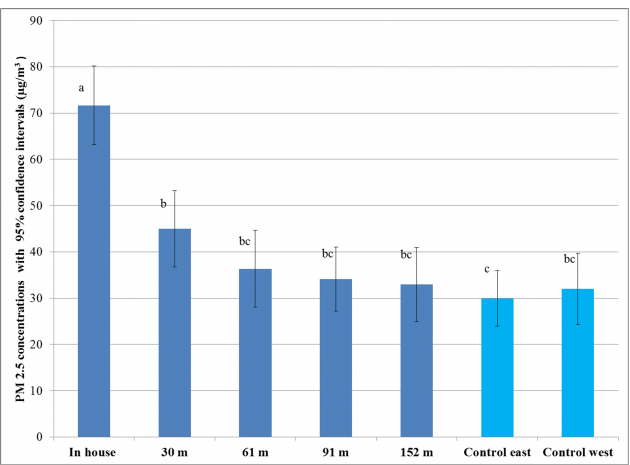
Particulate levels near poultry houses are elevated by emissions from the houses, however if we compare the readings on Figures 2a and 2b, we see that the largest single influence on the results was ambient conditions. The downwind levels (2b) closely followed the ambient levels (2a). Similar results were seen for the daily gravimetric readings. If we look at the average readings for the entire experiment at each distance from the house and compare those to in-house and ambient readings (Figure 3) we see a rapidly dropping influence on atmospheric particulate readings with no significant difference beyond 30 m from the houses. While some of the measurements were above EPA’s ambient air standards, ambient conditions were also above the standards during those days.
Figure 2 PM 2.5 levels vs. distance from houses
Authors
John W Worley, Associate Professor, Poultry Science Department, University of Georgia jworley@uga.edu
Casey W Ritz1 Professor, Michael Czarick1,Sr. Public Service Associate, Brian D Fairchild1,Associate Professor, Luke P Naeher2 Associate Professor
1 Poultry Science Department, University of Georgia
2 Environmental Health Science, University of Georgia
Acknowledgements
The authors would like to acknowledge the contributions of Mr. Benjamin Hale and Mr. Adam Gray who did much of the field work including instrument calibration and lab analysis for this project and to Mr. Olorunfemi Adetona for his help in pulling together information for the document. We would also like to thank the US Poultry and Egg Association for their financial support that enabled this research to be accomplished.
The authors are solely responsible for the content of these proceedings. The technical information does not necessarily reflect the official position of the sponsoring agencies or institutions represented by planning committee members, and inclusion and distribution herein does not constitute an endorsement of views expressed by the same. Printed materials included herein are not refereed publications. Citations should appear as follows. EXAMPLE: Authors. 2013. Title of presentation. Waste to Worth: Spreading Science and Solutions. Denver, CO. April 1-5, 2013. URL of this page. Accessed on: today’s date.
Management practices from large-scale swine production facilities have resulted in the increased collection and storage of manure for off-season fertilization use. Odor produced during storage has increased the tension among rural neighbors and among urban and rural residents, and greenhouse gas emissions may contribute to climate change. Production of these compounds from stored manure is the result of microbial activity of the anaerobic bacterial populations present during storage. We have been studying the bacterial populations of stored manure to develop methods to reduce bacterial metabolic activity and production of gaseous emissions, including the toxic odorant hydrogen sulfide produced by sulfate-reducing bacteria. Quebracho and other condensed tannins were tested for effects on total gas, hydrogen sulfide, and methane production and levels of sulfate-reducing bacteria in in vitro swine manure slurries. Quebracho condensed tannins were found to be most effective of tannins tested, and total gas, hydrogen sulfide, and methane production were all inhibited by greater than 90% from in vitro manure slurries. The inhibition was maintained for at least 28 days. Total bacterial numbers in the manure were reduced significantly following addition of quebracho tannins, as were sulfate-reducing bacteria. These results indicate that the condensed tannins are eliciting a collective effect on the bacterial population, and the addition of quebracho tannins to stored swine manure may reduce odorous and greenhouse gas emissions.
Why Would We Want to Inhibit Gas Production of Stored Manure?
Develop methods for reducing odor and emissions from stored swine manure.
What Did We Do?
Tested the effects of addition of condensed tannins to in vitro swine manure slurries on production of total gas, hydrogen sulfide, methane, and on the levels of hydrogen sulfide-producing sulfate reducing bacteria.
What Have We Learned?
Addition of condensed tannins to in vitro swine manure slurries reduces production of total gas, with quebracho condensed tannins being the most effective. 0.5% w/v Quebracho condensed tannins reduced total gas, hydrogen sulfide, and methane by at least 90% over a minimum of 28 days. Levels of sulfate reducing bacterial were also significantly reduced by addition of the tannns. This technique should assist swine producers in lowering emission and odors from stored manure.
Future Plans
We are interested in scaling up the testing to on-farm sites and also testing the tannins for reducing foaming from manure storage pits.
Authors
Terence R. Whitehead, Research Microbiologist, USDA-ARS-National Center for Agricultural Utilization Research, Peoria, IL 61604, terry.whitehead@ars.usda.gov
Cheryl Spence, USDA-ARS-National Center for Agricultural Utilization Research, Peoria, IL 61604
Michael A. Cotta, USDA-ARS-National Center for Agricultural Utilization Research, Peoria, IL 61604
Additional Information
Whitehead, T.R., Spence, C., and Cotta, M.A. Inhibition of Hydrogen Sulfide, Methane and Total Gas Production and Sulfate-Reducing Bacteria in In Vitro Swine Manure Slurries by Tannins, with Focus on Condensed Quebracho Tannins. (2012) Appl. Microbiol. Biotech. http://link.springer.com/article/10.1007/s00253-012-4562-6/fulltext.html
The authors are solely responsible for the content of these proceedings. The technical information does not necessarily reflect the official position of the sponsoring agencies or institutions represented by planning committee members, and inclusion and distribution herein does not constitute an endorsement of views expressed by the same. Printed materials included herein are not refereed publications. Citations should appear as follows. EXAMPLE: Authors. 2013. Title of presentation. Waste to Worth: Spreading Science and Solutions. Denver, CO. April 1-5, 2013. URL of this page. Accessed on: today’s date.
Manage Cookie Consent
To provide the best experiences, we use technologies like cookies to store and/or access device information. Consenting to these technologies will allow us to process data such as browsing behavior or unique IDs on this site. Not consenting or withdrawing consent, may adversely affect certain features and functions.
Functional
Always active
The technical storage or access is strictly necessary for the legitimate purpose of enabling the use of a specific service explicitly requested by the subscriber or user, or for the sole purpose of carrying out the transmission of a communication over an electronic communications network.
Preferences
The technical storage or access is necessary for the legitimate purpose of storing preferences that are not requested by the subscriber or user.
Statistics
The technical storage or access that is used exclusively for statistical purposes.The technical storage or access that is used exclusively for anonymous statistical purposes. Without a subpoena, voluntary compliance on the part of your Internet Service Provider, or additional records from a third party, information stored or retrieved for this purpose alone cannot usually be used to identify you.
Marketing
The technical storage or access is required to create user profiles to send advertising, or to track the user on a website or across several websites for similar marketing purposes.





 What have we learned?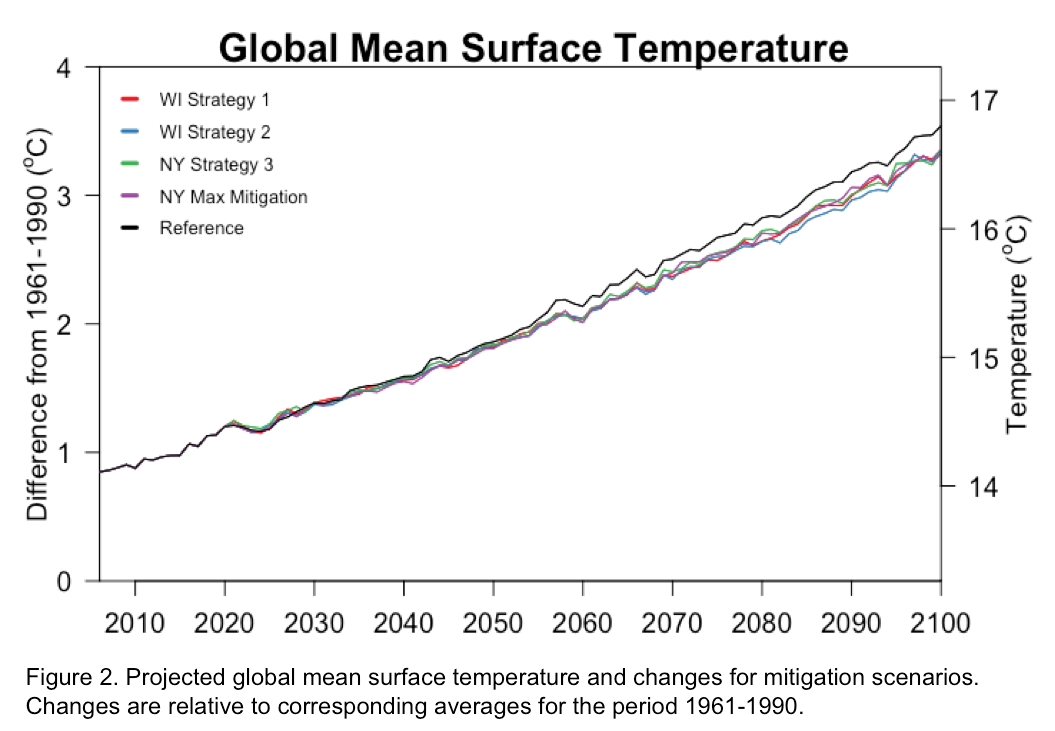

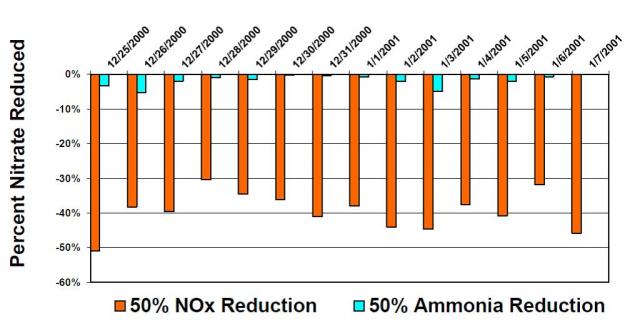 Atmospheric modeling has demonstrated that controlling NOx is the most effective strategy to reduce ammonium nitrate concentrations in the San Joaquin Valley and controlling ammonia has little effect on these concentrations. The California Air Resources Board conducted multiple modeling runs to simulate the formation of PM2.5 in the San Joaquin Valley and compare the effect of reducing various pollutants on PM2.5 concentrations. As seen in Figure 2, U.S. EPA’s Community Multi-scale Air Quality (CMAQ) indicated that reducing NOx by 50% reduced nitrate concentrations by 30% to 50% reductions, while reducing ammonia by 50% resulted in less than 5% reductions in nitrate concentrations. Similarly, the UCD/CIT photochemical transport model indicated that for the conditions on January 4-6, 1996 in the San Joaquin Valley, controlling NOx emissions is far more effective for reducing nitrate concentrations than controlling ammonia.
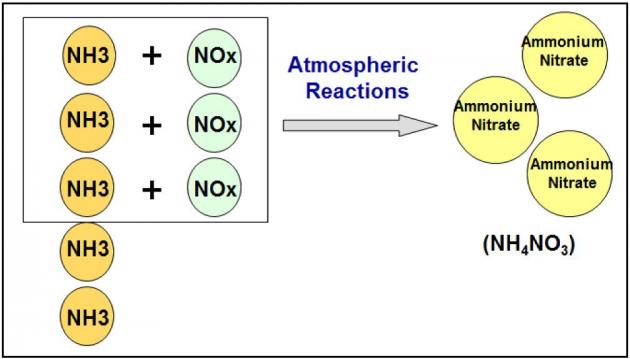 Ammonium nitrate particulate is limited by NOx in the San Joaquin Valley
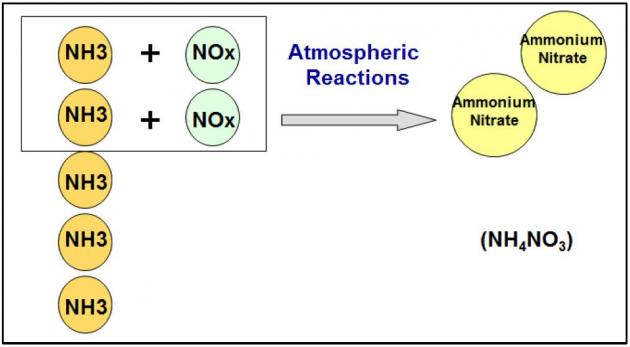 As explained in detail in the San Joaquin Valley Air Pollution Control District 2012 PM2.5 Plan, the best scientific information available indicates that controlling NOx emissions is the most effective strategy to reduce secondary ammonium nitrate in the San Joaquin Valley. While ammonia has been demonstrated to not significantly contribute to PM2.5 concentrations in the San Joaquin Valley, the District has developed control strategies, via stringent regulations (Confined Animal Facilities – Rule 4570, Organic Material Composting – Rule 4566, Biosolids, Animal Manure, and Poultry Litter Operations – Rule 4565), that have resulted in significant reductions in ammonia emissions.