An Analysis of Poultry Litter Purchases in South Carolina

Purpose

Poultry production is the number one agricultural enterprise in value of production for South Carolina with approximately 280,000,000 birds in inventory.  Poultry litter as a by-product of poultry production is a low-cost fertilizer that can provide nitrogen (N), phosphorus (P), potassium (K), and micronutrients for forage systems. Poultry litter can improve soil fertility and health by adding organic matter and enhancing water infiltration and soil fertility over time on more than 300,000 acres of forages in South Carolina.

Yet, despite purported benefits to the pasture system and use as a fertilizer to improve forage, questions remain for livestock producers looking to apply poultry litter to their pastures. There is a lack of information about the availability, cost, and quality of litter.  With the increase in interest in poultry litter applications as a climate-smart agricultural practice or to participate in conservation programs, this work is expected to assist regional producers in understanding poultry litter attributes and inform purchasing decisions.

What Did We Do?

Using a dataset of 68 producers utilizing poultry litter and the corresponding transactions, we characterize the availability and market for poultry litter in South Carolina. Data on transactions, including prices paid, delivery date, application rate, and county-level location of litter, forms the basis for analysis. Also, we use sample analysis results to compare nutrient price with commercial fertilizer nutrient values.

What Have We Learned?

Of the 68 producers reporting data, 45 reported detailed price, location and application information. An exploration of prices paid per ton of litter across the state suggests differences based on location (Table 1).  Based on the results of a t-test, higher prices are observed for the mid-state compared to the upstate (statistically significant at 6% level for two tail t-test). Differences in prices observed by season appear but are not statistically significantly different based on ANOVA tests.

Table 1: Average price per ton of litter based on region of the farm and season applied.
Midstate (n=20) Upstate (n=25)  Average
Fall 25.55 22.32 23.30
Spring 32.13 22.55 28.02
Summer 22.31 22.31
Winter 19.33 19.33
Average 27.37 22.02 24.40

Other findings from the data could be helpful to design outreach and assist producers looking to purchase litter for their operation. Some other interesting information includes the type of litter: broiler, layer, turkey, and other sources. Also, of the producers in the sample, 19 were unable to find litter with the majority of producers located in the Upstate area (74%).

Next, for the approximately 40 samples that included nutrient analysis, a summary of mean and standard deviation of pounds per ton of ammonium N, organic N, P205 and K20 are given in Table 2. From prices reported by each producer, the cost per pound of nutrient is also calculated. From here, average fertilizer and nutrient prices were gathered for South Carolina and displayed in Table 3. Similar costs can be seen when comparing the average cost per pound for each nutrient (Table 2) to the average price per pound for commercial fertilizers (Table 3).  For example, the average cost of a pound of ammonium N from the poultry litter sources was $2.46/lb and $2.45/lb from commercial sources.

Table 2: Summary statistics of nutrient analysis from 40 samples.
Nutrients
  Ammonium N (lbs./ton) Organic N (lbs./ton) P205 (lbs./ton) K20 (lbs./ton)
n 41 40 42 42
mean 10.04 50.21 47.15 51.65
std dev 3.93 15.09 20.41 21.04
$/# $2.46 $0.49 $0.52 $0.48
Table 3: Average fertilizer prices for South Carolina by fertilizer type and cost per pound for nutrients N, P, K.
South Carolina Average Fertilizer Prices FY2024
DAP (18%-46%-0%) Urea (46%) 10-10-10 Potash (60%)
Mean $881.00 $504.45 $489.00 $482.45
Std. Dev. $8.02 $13.30 $5.72 $13.05
N ($/#) $2.45 $0.55 $2.45 $0.00
P ($/#) $0.96 $0.00 $2.45 $0.00
K ($/#) $0.00 $0.00 $2.45 $0.40

Source: South Carolina Crop Production Report (Monthly), Livestock, Poultry, and Grain Market News, USDA Agricultural Marketing Service.

Future Plans

Findings and data from this analysis will first be prepared for outreach and dissemination efforts to producers across the state. Information will also be summarized for current enrollees in the grant program. Finally, given that this data was collected as part of a five-year study, data will be collected in subsequent years. Ultimately, a hedonic analysis of poultry litter attributes to help understand differences in price as a result of nutrient attributes, storage conditions, type, and trucking could inform producer sourcing of litter and prices paid.

Authors

Presenting & corresponding author

Nathan B. Smith, Extension Economist, Clemson University, nathan5@clemson.edu

Additional authors

Anastasia W. Thayer, Assistant Professor, Clemson University; Matthew Fischer, Extension Associate, Clemson University; Maggie Miller, Extension Associate, Clemson University.

Additional Information

https://www.climatesmartsc.org/

Acknowledgements

This material is based upon work supported by the U.S. Department of Agriculture, under agreement number NR2338750004G049.


The authors are solely responsible for the content of these proceedings. The technical information does not necessarily reflect the official position of the sponsoring agencies or institutions represented by planning committee members, and inclusion and distribution herein does not constitute an endorsement of views expressed by the same. Printed materials included herein are not refereed publications. Citations should appear as follows. EXAMPLE: Authors. 2025. Title of presentation. Waste to Worth. Boise, ID. April 7-11, 2025. URL of this page. Accessed on: today’s date.

Liquid Dairy Manure in a Sugarbeet Rotation

Purpose

As large dairies move into western Minnesota, a consistent supply of manure is available that was not historically present. These dairies are using a new technology to separate solids from liquids in the manure, and the impact on nutrient availability in this region’s climate and soil types is unknown. Understanding this is particularly important for sugarbeet growers in the region as late season N availability in the soil affects sugar content of the crop (high late season soil nitrate levels typical result in reduced sugar production). Where in the crop rotation should this manure be applied to maximize the beneficial properties while minimizing risk?

What Did We Do?

A three-year crop rotation including sugarbeet, corn, and soybean was set up at two locations (west central and northwestern Minnesota) with each crop present each year (Figure 1) and then rotated accordingly in subsequent years. Two rates of liquid separated dairy manure from a nearby commercial dairy were applied in the first year (in the fall prior to planting of each crop) and compared with standard synthetic fertilizer-only practices (fertilizers were applied each spring prior to planting). The two manure application rates were approximately 15,000 gallons per acre, which supplied approximately 195 pounds first-year available nitrogen per acre, or approximately 10,000 gallons per acre, which supplied approximately 150 pounds of first year available nitrogen per acre. In following years, only commercial fertilizer was applied according to soil test phosphorus and potassium levels or state nitrogen guidelines, considering manure nitrogen credits if applicable, for each crop. At the end of each growing season, yield was determined for each crop. Sugarbeet was also evaluated for sugar content and quality.

Figure 1. Aerial photograph taken in July 2021 of the plot setup with each crop labeled. Each crop was replicated four times in a randomized complete block design.

What Have We Learned?

The manured treatments typically resulted in similar or higher yields than synthetic- fertilizer-only for corn and sugarbeet during all three years of the rotation. For soybean, yields were significantly decreased by manure application at one site in the first year and generally unaffected at the second site. In the second and third years, there were no differences in soybean yield across nutrient treatments.

Future Plans

This study was conducted in two fields that did not have a recent history of manure application. Since we know that manure is the “gift that keeps on giving”, we want to repeat this study to see if there are long-term effects of nitrogen release from repeated applications of manure. Thus, manure was applied after the third growing season of the rotation and the rotation will begin again at both sites.

Authors

Presenting & corresponding author

Melissa L. Wilson, Associate Professor and Extension Specialist, University of Minnesota, mlw@umn.edu

Additional Information

Search for manure research: https://www.sbreb.org/research/

Acknowledgements

Thanks to the Sugarbeet Research and Education Board of Minnesota and North Dakota for funding this work.


The authors are solely responsible for the content of these proceedings. The technical information does not necessarily reflect the official position of the sponsoring agencies or institutions represented by planning committee members, and inclusion and distribution herein does not constitute an endorsement of views expressed by the same. Printed materials included herein are not refereed publications. Citations should appear as follows. EXAMPLE: Authors. 2025. Title of presentation. Waste to Worth. Boise, ID. April 711, 2025. URL of this page. Accessed on: today’s date.
Manure Can Offset Nitrogen Fertilizer Needs and Increase Corn Silage Yield – Value of Manure Project

Purpose


Manure is a tremendously valuable nutrient source. Not all the nitrogen (N) in manure is plant-available at land application. Organic N is released into plant-available forms over multiple years. Inorganic N availability depends on the application method and timing, with more plant-available N from manure when injected in the spring than when surface applied in fall. A manure N crediting system was developed in New York in the late 90s that credits N from manure based on manure’s composition and application timing and method. With advances in farm management, the manure that dairy farms are land-applying now may be very different from the manure sources used to develop that crediting system. The Value of Manure project was initiated by the New York On-Farm Research Partnership in 2022 to update New York’s manure crediting system. Over multiple years, the project evaluates different manure sources, application methods, and timings that commercial farms now use. Additionally, we are documenting the impact of manure on yield beyond what can be obtained with inorganic fertilizer only.

What Did We Do?

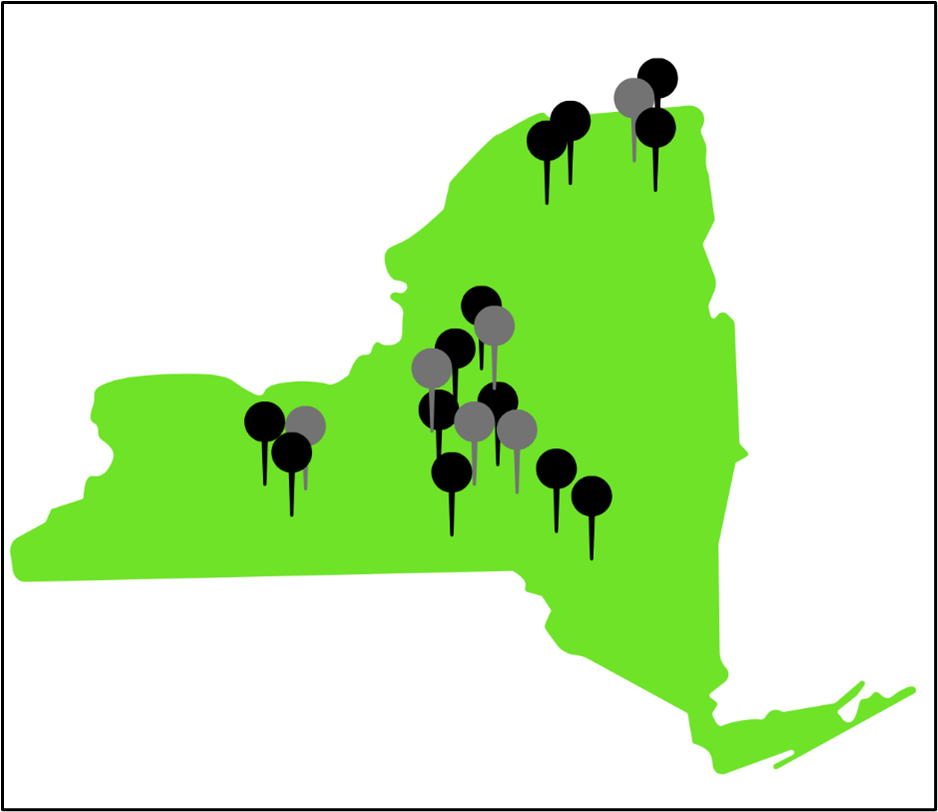
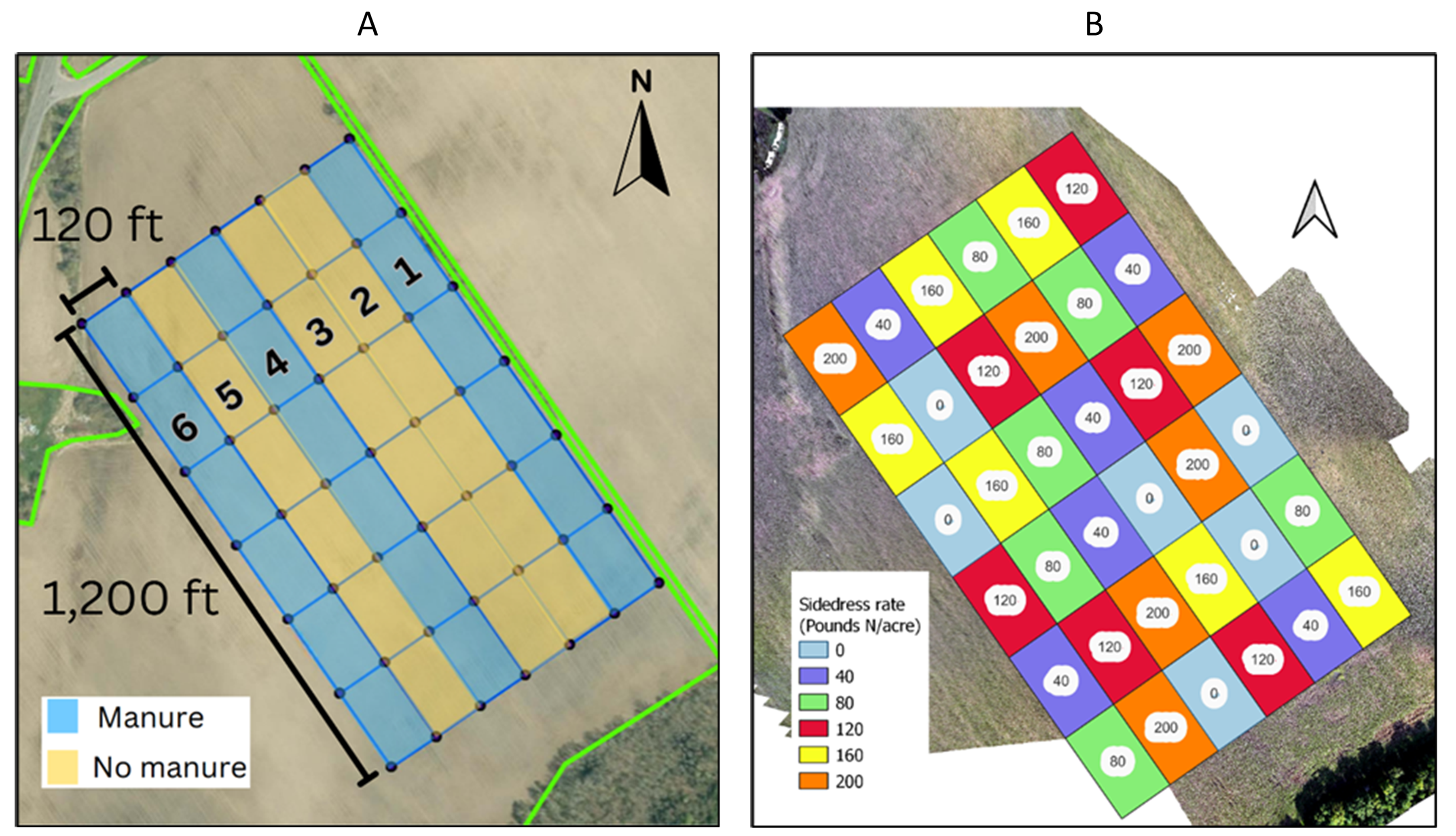
Nineteen trials were implemented on commercially farmed corn fields across New York between 2022 and 2024 (Figure 1). Each trial had three strips that received manure and three that did not, for a total of six strips per trial (Figure 2a). Five “carryover” trials received manure in the spring of year 1, and we tested manure N and yield benefits in the second year after application. Manure was applied and tested in the same year in all the other trials. Soil type, dairy manure type (digestate, separated liquids, untreated, etc.), application rate, and application methods (broadcasted, injected, etc.) varied across trials (see our “What’s Cropping Up?” extension articles in the Additional Information section for more details).

When corn was at the V4-V6 stage each strip was divided into six sub-strips (Figure 2b), and subplots were sidedressed at a rate usually ranging from 0 to 200 pounds N/acre. Sidedress rates were trial-specific, based on the expected N requirement of each field according to the Nitrogen Guidelines for Field Crops in New York. In each trial, we measured manure nutrient composition, general soil fertility, Pre-Sidedress Nitrate Test (PSNT), Corn Stalk Nitrate Test (CSNT), yield, and forage quality.

Figure 1. Nineteen Value of Manure trials have been implemented across New York between 2023 and 2024.
Figure 2. Layout of a Value of Manure study plot. Three strips received manure before planting corn (1a). At the V4-V6 stage each of the six strips received six different inorganic N sidedress rates (1b).

What Have We Learned?

In the three years of the project, we have documented how manure offsets fertilizer needs and “bumps” yields. Yield responses to manure and fertilizer N vary by location and year, influenced by field past management (manure history, crop rotation, etc.) and weather.

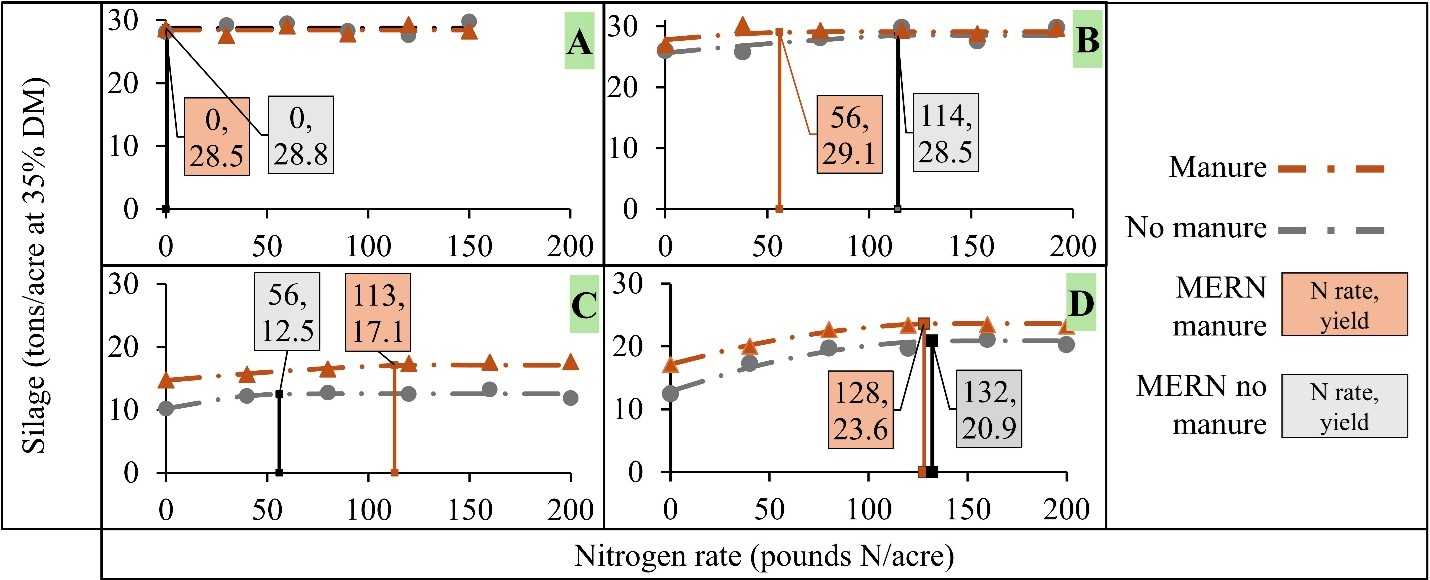
    • We observed no yield response to manure or sidedress N application in three trials (Figure 3A, Table 1 trial A). That was likely due to high N credits from past manure applications. Yet those trials were among the highest-yielding ones and had excessive CSNT results.
    • At the Most Economical Rate of N (MERN, the N rate that maximizes economic return), manure replaced inorganic N fertilizer in six trials by lowering sidedress fertilizer needs (Figure 3B, Table 1 trial B). In the manure strips for these trials, yields at MERN were higher than the yields at the MERN of the no-manure plots.
    • In three trials manure applications increased yields to such elevated levels (2.3 to 4.6 tons/acre), that it also increased the crop’s need for fertilizer N (Figure 3C, Table 1 trial C).
    • Significant yield bumps due to manure application were documented in fourteen trials. These yield bumps were also present in all five “carry-over” trials, where we saw that manure applied in year 1 benefited yields in the second year after application (Figure 3D, the carryover study of Figure 3C trial, Table 1 trial D).
Figure 3. Four examples of crop response to manure and sidedresss N as part of the statewide Value of Manure trials conducted between 2022 and 2024. Orange text boxes are the MERN and yield at MERN for manured plots; gray text boxes are MERN and yield at the MERN for no-manure plots. Yields are in tons/acre at 35% dry matter (DM).
Table 1. Most economic rates of N (MERN) for no-manure and manure plots and manure-induced yield increase (tons/acre at 35% dry matter) for four examples of crop response to manure and sidedress N as part of the statewide Value of Manure trials conducted between 2022 and 2024.
Trial No manure MERN Manure MERN Manure-induced yield increase
————- pounds N/acre ————- tons/acre
A 0 0 0
B 114 56 0.6
C 56 113 4.6
D * 132 128 2.7
*Note: Trial D was a carryover study where manure was applied in the spring of 2023 and we tested its value for 2024 corn.

Future Plans

To re-evaluate the current N crediting system and learn how to predict and take into account yield bumps, the Value of Manure project requires the addition of more trials beyond the nineteen trials completed so far. Thus, the Value of Manure Project will continue in 2025. We will be testing additional manure types and application methods in various soil types and weather conditions and follow up with several sites to determine carryover benefits into the third year after application.

Authors

Presenting author

Juan Carlos Ramos Tanchez, On-Farm Research Coordinator, Nutrient Management Spear Program, Cornell University

Corresponding author (name, title, affiliation)

Quirine M. Ketterings, Professor, Cornell University, qmk2@cornell.edu

Additional authors

Kirsten Workman, Nutrient Management and Environmental Sustainability Specialist, PRO-DAIRY and Nutrient Management Spear Program, Cornell University; Carlos Irias, Master Student, Nutrient Management Spear Program, Cornell University.

Additional Information

Acknowledgements

We thank the farms participating in the project and their collaborators for their help in establishing and maintaining each trial location, and for providing valuable feedback on the findings. This project has been funded by Northern New York Agricultural Development Program, New York Farm Viability Institute, New York Department of Environmental Conservation, New York Department of Agriculture and Markets, Dairy Management Inc., and the Foundation for Food & Agricultural Research.

The authors are solely responsible for the content of these proceedings. The technical information does not necessarily reflect the official position of the sponsoring agencies or institutions represented by planning committee members, and inclusion and distribution herein does not constitute an endorsement of views expressed by the same. Printed materials included herein are not refereed publications. Citations should appear as follows. EXAMPLE: Authors. 2025. Title of presentation. Waste to Worth. Boise, ID. April 711, 2025. URL of this page. Accessed on: today’s date.
Phosphorus contribution from distillers grains to corn and wheat in North Dakota

There is growing interest from farmers to know if distillers grains (DGs) could be used as a cheap alternative or supplemental input for cereal production. Condensed distillers solubles (CDS) and wet distillers grains (WDG) are co-products from ethanol production that are mainly used as sources of feed for livestock. They are sometimes available to farmers when in excess of demands as feed, or when for whatever reason, the plant encounters some storage limitations, and have to dispose of the products. Potential environmental problems and cost of freighting huge loads to distant places for disposal has been a concern for ethanol plants. However, the cost of procurement and transportation of DGs, storage, and availability of appropriate equipment to apply these products to farmlands, are some of the bottlenecks for farmers interested in their value as fertilizer sources. Despite these concerns, farmers who farm in close proximity to ethanol plants, or who have the means to transport and apply these products in nearby fields are the ones likely to benefit from the DGs as fertilizer inputs. Preliminary studies indicate that when DGs are applied to soil as sources of nitrogen (N) or phosphorus (P), yields have been similar or better in comparison to synthetic fertilizers. Farmers also appreciate the environmental value in that nutrients removed with the corn following harvest from their fields to the ethanol plants can be recycled back to farmlands. Procurement of DGs by farmers also creates and enhances a synergism between farmers and the ethanol plants, considering the latter could cut down on storage, drying, or disposal costs if farmers are willing to buy or take any excess DGs.

What Did We Do?

Methods are reported for field studies that assess the effects of P from three sources on grain yield and quality of corn in 2017, and wheat in 2017 and 2018. Study sites were located at the NDSU Carrington Research Extension Center, Carrington (ND). The P sources were CDS, WDG, and triple super phosphate (TSP) fertilizer. Rates of P were 0, 40, and 80 lbs P2O5 for wheat in addition to 120 lbs/ac for corn. Wheat treatments in 2017 and 2018 included surface application versus incorporation following application. The weight or volume of WDG or CDS applied varied by year, depending on the nutrient analysis. In 2018, to apply 20 lbs P, 3.3 T/ac of WDG, and 270 gallons/ac of CDS were required. At these rates, 112 lbs N, 17 lbs S, and 27 lbs K2O were applied with WDG. CDS contributed 32 lbs N, 31 lbs K20, and 15 lbs S at the 40 lbs P rate. Urea was applied up to the N rate recommended (79 lbs) to prevent deficiency for the check (0 lbs P) and TSP treatments, and less for the 40 lbs P rate of CDS. Sulfur (as ammonium sulfate) was also added to the check plots and those that received TSP. Treatments were surface applied and incorporated. CDS was mixed with water to facilitate manual application to the small plots, 5 x 25 ft.

What Have We Learned?

In 2017, P did not impact yields for both corn and wheat trials. This was probably due to high soil P level, 16 and 13 ppm P from the corn and wheat respective fields, before planting. P sources did not affect yields. Following harvest, P removed with the grain, on a dry weight basis, was significantly greater with WDG (76.2 lbs/ac) compared to TSP (69 lbs). The difference in grain P removed between WDG and CDS (75.7 lbs/ac) was not statistically significant. Neither yields nor protein differed between P sources.

In 2018, yields improved significantly from P application with DGs and TSP as sources. The P unfertilized plot (0 lbs P) produced 42 bushels, which was significantly less (by 10 bushels) than yields at 40 lbs P. Yields were also significantly less at 40 lbs P (by 5 bushels) compared to 80 lbs P. Yields produced by CDS, WDG, and TSP were similar (54 bushels). Earlier in the season, Normalized Difference Vegetation Index data were collected using a remote sensor to provide an index of crop vigor. There were no differences in vigor between P rates. Meanwhile, the crop vigor of TSP treatment was significantly greater than for both DGs. This was likely due to better availability of P and N, early in the growing season, from urea and TSP. However, these nutrients were later available after mineralization from DGs, in amounts that were adequate to satisfy the crop’s needs similar to respective P rates from TSP. Grain P removal was not different between P sources. When averaged across P rates, P removal in the grain was 33 lbs P2O5. Grain P removal was 23, 30, and 35 lbs/ac at 0, 40, and 80 lbs rates, respectively.

effect of P sources on yield of spring wheat at three rates of P plot
Figure 1. Effect of P sources on yield of spring wheat at three rates of P (2017).

Grain protein was significantly greater with WDG compared to CDS and TSP, probably due to higher N applied with DGs at the 80 lbs rate of P, 223 lbs N at 80 lbs P compared to 79 lbs applied with TSP and CDS on a soil that already had 47 lbs and previous crop was soybeans.

Considering the 2018 results and results previously reported from the 2015 and 2016 trials, CDS and WDG can be valuable sources of P and other nutrients for grain crops in North Dakota. For farmers who can transport DGs short distances, pay little or nothing for it, and apply with their manure applicators, they should feel comfortable applying DGs as a good source of P and N.

Future Plans

Some farmers have been curious about the dried distillers grains as P sources. We will conduct another study in 2019 including the dry product (DDG), even though we understand it is very unlikely that farmers would make any profit with the dry product as a source of nutrients.

Authors

Jasper M Teboh, Research Soil Scientist, NDSU – Carrington Research Extension Center

Jasper.Teboh@ndsu.edu

Szilvia Yuja, Research Soil Specialist, NDSU – Carrington Research Extension Center

Additional Information

Where can people go to learn more about this project or research? List journal articles, websites, publications, articles, social media, or other resources.

Please contact me with questions at Jasper.Teboh@ndsu.edu, or by phone at 701-652-2951 (Ext 109).

Results from this research were first presented at the ASA/SSSA/CSSA 2016 annual conference in Phoenix and is accessible at: https://scisoc.confex.com/crops/2016am/webprogram/Paper100533.html

A summary of findings was later presented on the NDSU – Carrington REC blog at: https://www.ag.ndsu.edu/CarringtonREC/center-points/distillers-grains-impacted-yields-of-corn-and-spring-wheat-when-used-as-a-source-of-p

NDSU Carrington Research and Extension Center Annual report, 2018. https://www.ag.ndsu.edu/carringtonrec/documents/annual-reports/2018-annual-report

Acknowledgements

The authors are grateful to the North Dakota Corn Council, and North Dakota Agricultural Products Utilization Commission for funding the corn and wheat projects, respectively, and also to Tharaldson Ethanol (Casselton, ND) for supplying us with the distillers grains.   


The authors are solely responsible for the content of these proceedings. The technical information does not necessarily reflect the official position of the sponsoring agencies or institutions represented by planning committee members, and inclusion and distribution herein does not constitute an endorsement of views expressed by the same. Printed materials included herein are not refereed publications. Citations should appear as follows. EXAMPLE: Authors. 2019. Title of presentation. Waste to Worth. Minneapolis, MN. April 22-26, 2019. URL of this page. Accessed on: today’s date.

Sidedressing Corn: Swine Manure via Dragline Hose Produces Yields Comparable to Synthetic Fertilizer

Spring in the upper Midwest can be short, resulting in challenges for producers to apply manure and plant crops in a timely manner to maximize yield. This results in a significant       amount of manure applied in the fall after the crop is harvested. Fall applied manure has ample time to mineralize and leave the root zone before next season’s crop can utilize the nutrients. These nutrients can end up in rivers and other freshwater bodies decreasing water quality. Sidedressing manure in growing crops could provide producers with another window of opportunity to apply their manure, maximize nutrient uptake efficiency, and protect water quality. The summer of 2018 was the start of a two-year, on-farm study researching the effectiveness of sidedressing slurry swine manure to corn via dragline hose. The swine manure was compared to sidedressed anhydrous ammonia, 32% urea ammonium nitrate (UAN), and a  control that received no additional nitrogen at the time of sidedressing.

What we did

Corn was planted May 7th with a 12-row planter equipped to apply an in-furrow and top dressed liquid fertilizer. The total fertilizer applied at planting was 40.7 lbs of nitrogen (N), 19.8 lbs of P2O5 phosphorus (P), and 14.4 lbs of sulfur (S) per acre.

Sidedressing the nitrogen sources

We sidedressed all treatments on June 4-5 with 140 pounds of available N, except the control which had no additional N applied. All the equipment applied nutrients between 30-inch rows and fit a 12-row planter to match up on odd rows.

  • Anhydrous ammonia treatment = 12-row toolbar and tractor were supplied by the farmer.
  • Finishing hog manure dragline hose treatment = The toolbar for the dragline hose sidedress was supplied by Bazooka Farmstar. The toolbar is a coulter till 28-foot bar with 30-inch spacing.
  • UAN treatment = The tool bar for the UAN sidedress application was provided by a local farmer.
  • Control treatment = The control treatment did not receive any fertilizer at sidedress.
Swine manure slurry being applied via dragline hose and Bazooka Farmstar sidedress bar.

Soil data collection methods

Soil nitrate and ammonium samples were taken 5 times through the growing season, approximately every 4 weeks, to track nitrogen in the soil profile. Soil sample depths were 0-6, 6-12, and 12-24 inches from the soil surface. Soil

Two foot soil sampling with tractor probe.

samples were taken from the middle of the interrow, 7.5 inches from both sides of the middle of the inter row and in the middle of the row. This sample method assured soil samples would be representative of the soil profile since banded fertilizer can skew results.

Yield data collection methods

Yield was harvested October 6th by a combine with a 6-row head. The combine took the middle 12 rows of the 24-row treatment reducing the side effects from neighboring treatments. A calibrated weigh wagon measured the weight of each combine pass which was calculated to find yield in bushels per acre for every sample.

What we have learned

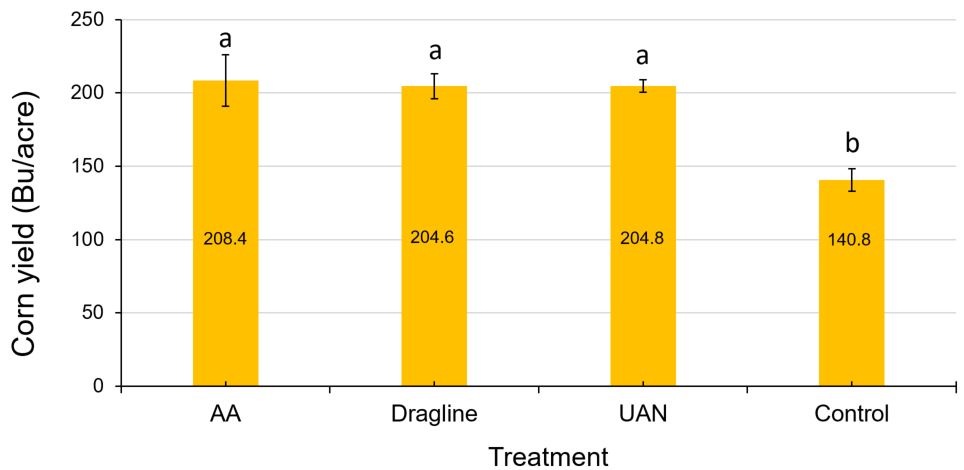
First year data revealed all sidedressed nitrogen sources significantly increased corn yields over the control but were otherwise statistically similar (Figure 1).

Figure 1. Yield data from 2018 manure sidedress trial in bushels per acre. AA=anhydrous ammonia, UAN=urea ammonium nitrate, Control=received no additional N at sidedress, and Dragline=swine manure slurry applied via dragline hose.

When we analyzed the soil inorganic nitrogen by each date differently, nitrogen concentrations between treatments were only statistically different on the soil sample date of June 15th (Figure 2) This soil sample date was ten days after the sidedress application on June 4th.  All other soil nitrogen sample dates are not statistically different between treatments and even the control.  

Figure 2. Total soil inorganic N (ammonium and nitrate) by treatment and sample date.

Statistics have not yet been run on the whole plant nitrogen content data in the graph below but numerically there doesn’t seem to be a difference in nitrogen content between the three sidedress treatments but a difference from the control (Figure 3).

Figure 3. Percent nitrogen in harvest grain, R6 cobbs, and R6 stover between treatments.

Future plans

The first year of data was collected during the 2018 growing season and a second year of data will be collected in the summer of 2019. This study aims to evaluate the effectiveness of sidedressed swine manure slurry compared to traditionally used synthetic fertilizers. Since we have seen promising results this first year an additional study that could follow this experiment would be a direct comparison of fall applied swine manure and sidedressed swine manure. This information would help us understand the efficiency of sidedressing compared to fall application. Soil samples from this study would also illustrate the difference in mineralization and nitrogen movement between fall-applied and sidedressed swine manure slurry.    

Authors

  • Chris Pfarr, M.S. student in the Land and Atmospheric Sciences Program, University of Minnesota, pfarr025@umn.edu
  • Melissa Wilson, Ph.D., Assistant Professor and Extension Specialist, Department of Soil, Water, and Climate, University of Minnesota, mlw@umn.edu

Additional information

Acknowledgements  

This project was partially funded by the Minnesota Soybean Research and Promotion Council and the Minnesota Pork Board.

The authors are solely responsible for the content of these proceedings. The technical information does not necessarily reflect the official position of the sponsoring agencies or institutions represented by planning committee members, and inclusion and distribution herein does not constitute an endorsement of views expressed by the same. Printed materials included herein are not refereed publications. Citations should appear as follows. EXAMPLE: Authors. 2019. Title of presentation. Waste to Worth. Minneapolis, MN. April 22-26, 2019. URL of this page. Accessed on: today’s date.

Assessment of Condensed Distillers Solubles (CDS) and Wet Distillers Grains (WDG) as Sources of Phosphorus Fertilizer for Corn and Wheat

Proceedings Home W2W Home w2w17 logo

Purpose

Some farmers in North Dakota are showing growing interest in applying coproducts from ethanol production, as sources of nutrients for crop production, especially corn and wheat. The majority of these coproducts are used as livestock feedstuff, but sometimes, due to a combination of factors, ethanol plants have a surplus of condensed distillers solubles (CDS) and wet distillers grain (WDG). Under those circumstances, the price of CDS and WDG can drop significantly, and due to their nutrient content, it might make financial sense to use them as a source of nutrients for crop production instead of commercial fertilizers. Cognizant of current low market prices of wheat and corn, farmers are seeking effective and less expensive sources of nutrients for their crops. Farmers also like the concept of recycling the nutrients exported in the corn kernels back into the soil in the form of CDS and WDG.

What Did We Do?

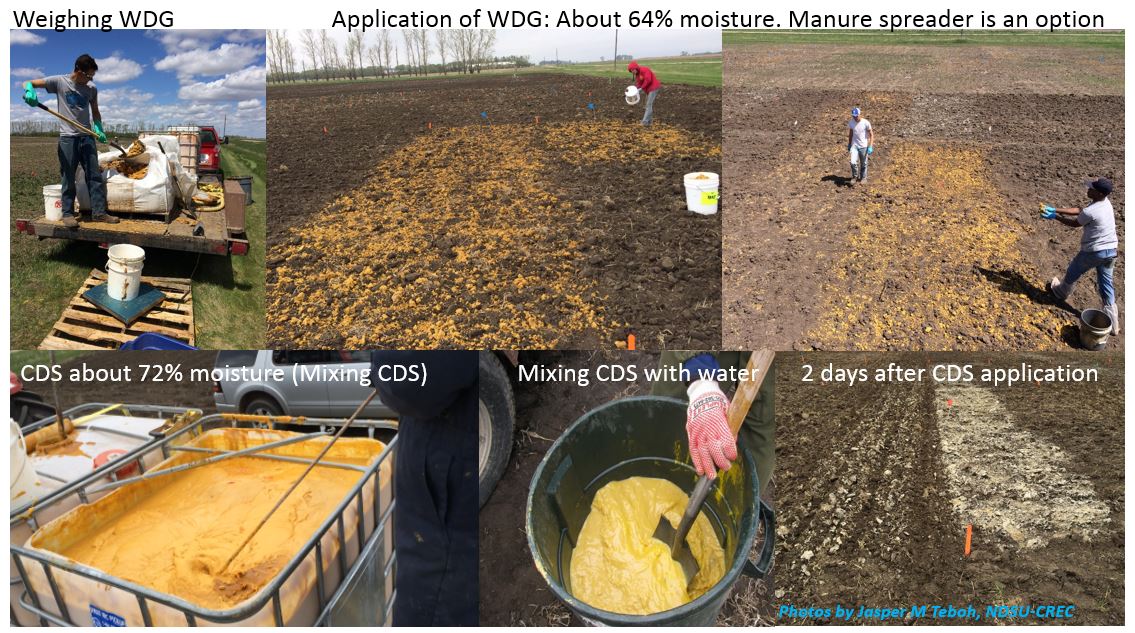
We conducted studies in Carrington (2015 and 2016) and Fairmount (2015), ND. We assessed the impact of CDS and WDG compared to triple super phosphate (TSP) fertilizer as sources of phosphorus (P), on grain yield and quality of corn (2015 and 2016) at rates of 0, 40, 80, 120 lbs P2O5/ac, and wheat (2016) at rates of 0, 40, 80 lbs P2O5/ac. Treatments were surface applied and incorporated. CDS was mixed with water to facilitate application. The check (0 lbs P) and TSP treatments received recommended N as urea.

Slides of weighing, applying, and mixing WDG

What Have We Learned?

In 2015, corn yields from CDS treatments were consistently greater than yields from WDG and TSP at each P level at Carrington. Corn did not respond to P application at Fairmount. In 2016, corn yields were significantly greater for WDG treatments than for CDS and TSP, which produced similar yields. Wheat yields and protein were also significantly higher for WDG compared to TSP. Therefore, CDS and WDG can be valuable sources of P and other nutrients for grain crops in North Dakota.

Future Plans

We will continue assessing the P fertilizer value of CDS and WDG for corn and wheat in 2017. A separate study will assess in-furrow treatments with CDS. Finally, we will assess soil residual effects from CDS and WDG application to soil on subsequent crops, as well as potential economic implications for farmers.

Authors

Jasper M Teboh, Research Soil Scientist, NDSU – Carrington Research Extension Center

Jasper.Teboh@ndsu.edu

Other Authors

Joel Ransom, Extension Agronomist – Cereal Crops, NDSU – Department of Plant Sciences

Szilvia Yuja, Research Soil Specialist, NDSU – Carrington Research Extension Center

J. Paulo Flores, Precision Ag Specialist, NDSU – Carrington Research Extension Center

Additional Information

Please contact me with questions at Jasper.Teboh@ndsu.edu or by phone at 701-652-2951 (Ext 109).

Results from this research were first presented at the ASA/SSSA/CSSA 2016 annual conference in Phoenix and is accessible at:

https://scisoc.confex.com/crops/2016am/webprogram/Paper100533.html

A summary of findings was later presented on the NDSU – Carrington REC blog at

https://www.ag.ndsu.edu/CarringtonREC/center-points/distillers-grains-impacted-yields-of-corn-and-spring-wheat-when-used-as-a-source-of-p

Acknowledgements

The authors are grateful to the North Dakota Corn Council, and North Dakota Agricultural Products Utilization Commission for funding the corn and wheat projects, respectively. Our gratitude also to Tharaldson Ethanol (Casselton, ND) especially Mr. Keith Finney and Mr. Brad Kjar; Mr. Greg LaPlante, Mr. Chad Deplazes (Research Specialist at NDSU), CREC technicians, staff, and students for field support.

The authors are solely responsible for the content of these proceedings. The technical information does not necessarily reflect the official position of the sponsoring agencies or institutions represented by planning committee members, and inclusion and distribution herein does not constitute an endorsement of views expressed by the same. Printed materials included herein are not refereed publications. Citations should appear as follows. EXAMPLE: Authors. 2017. Title of presentation. Waste to Worth: Spreading Science and Solutions. Cary, NC. April 18-21, 2017. URL of this page. Accessed on: today’s date.

Fertilizer Value of Nitrogen Captured using Ammonia Scrubbers

Proceedings Home W2W Home w2w17 logo

Purpose

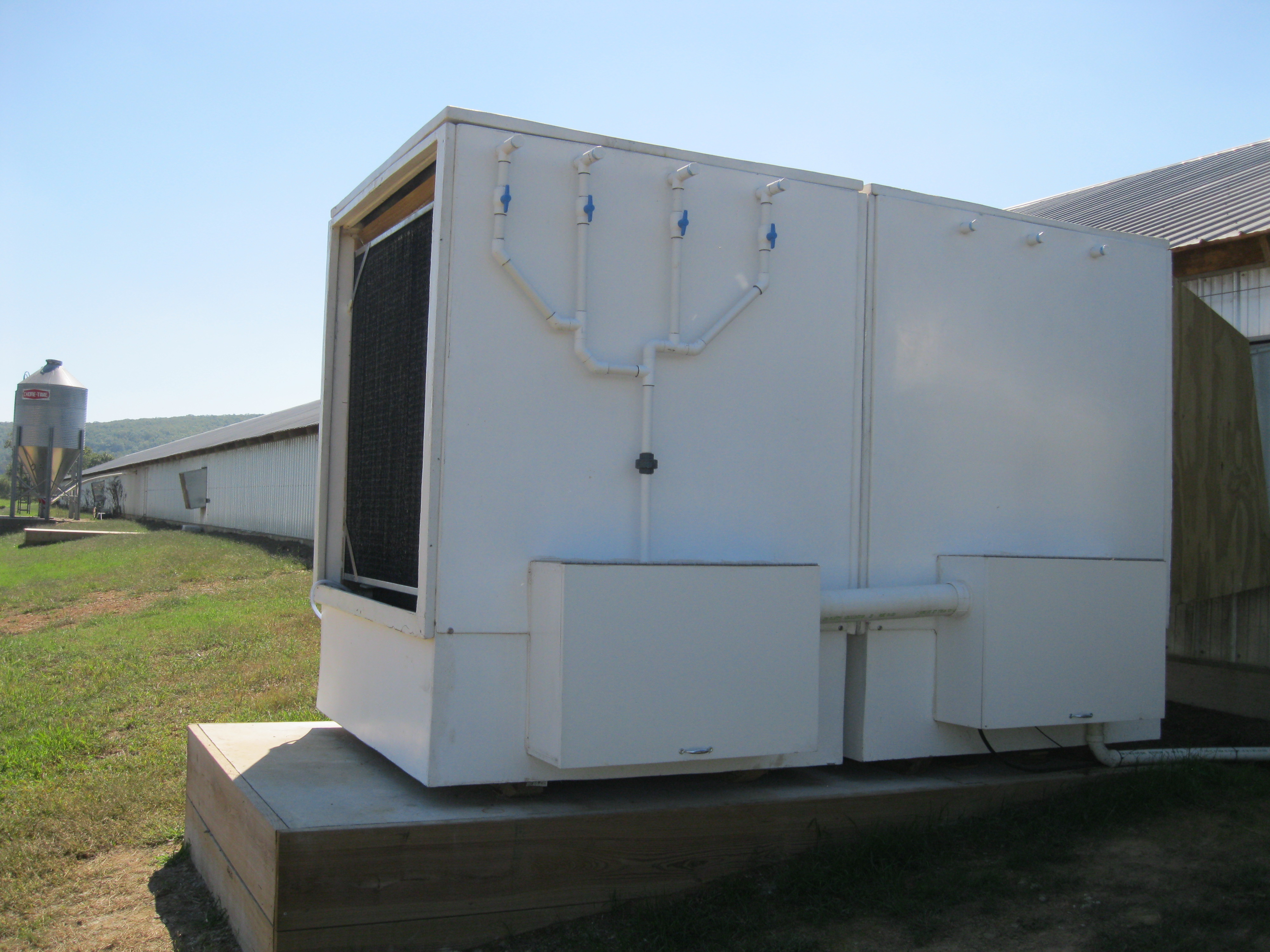
Over half of the nitrogen (N) excreted from broiler chickens is lost to the atmosphere as ammonia (NH3) before the manure is removed from the barns, resulting in air and water pollution and the loss of a valuable fertilizer resource. A two stage exhaust scrubber (ARS Air Scrubber) was developed by scientists with USDA/ARS to trap ammonia and dust emissions from poultry and swine facilities. One objective of this study was to determine the fertilizer efficiency of N, which is mainly present as ammonium (NH4), captured from the exhaust air from poultry houses using acid scrubbers, when applied to forages. The second objective was to determine if any of the scrubber solutions resulted in a decrease in phosphorus (P) runoff or soil test P.

What did we do?

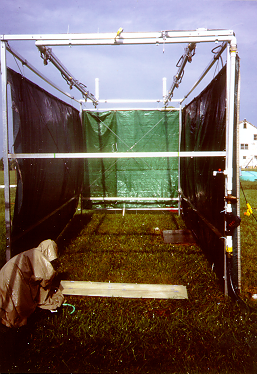
This study was conducted using 24 small plots (1.52 x 6.10 m) located on a Captina silt loam soil at the University of Arkansas Agricultural Experiment Station. There were six treatments in a randomized block design with four replications per treatment. The treatments were: (1) unfertilized control, (2) potassium bisulfate (KHSO4) scrubber solution, (3) alum (Al2(SO4)3.14H2O) scrubber solution, (4) sulfuric acid (H2SO4) scrubber solution, (5) sodium bisulfate (NaHSO4) scrubber solution and (6) ammonium nitrate (NH4NO3) fertilizer dissolved in water. The four scrubber solutions, which were obtained from scrubbers attached to exhaust fans on commercial poultry houses, and the ammonium nitrate solution were all applied at an application rate equivalent to 112 kg N ha-1. Forage yields were measured periodically throughout the growing season. A rainfall simulation study was conducted five months after the solutions were applied to determine potential effects on P runoff.

ARS air scrubber in Arkansas

Applying scrubber solutions

Rainfall simulation

What have we learned?

Forage yields (Mg ha-1) followed the order: potassium bisulfate (7.61), sodium bisulfate (7.46) > ammonium nitrate (6.87), alum (6.72), sulfuric acid (6.45) > unfertilized control (5.12). These data indicate that forage yields with scrubber solutions can be equal to or even greater than that obtained with equivalent amounts of N applied as commercial fertilizer. This is likely due to the presence of other nutrients, such as K in acid salts, like potassium bisulfate. Nitrogen uptake followed similar trends as yields, although there were no significant differences among N sources.


Total P loads in runoff were 37, 25, 20, 19, 17, and 14 g P ha-1, for sulfuric acid, potassium bisulfate, sodium bisulfate, unfertilized control, ammonium nitrate, and alum. The alum solution resulted in significantly lower P loads than H2SO4. This was likely due to a decrease in the water extractable P (WEP) in the soil, since alum was also shown to significantly reduce WEP compared to the unfertilized control. None of the treatments affected Mehlich III extractable P.


Future Plans

Currently research is underway on using acid-tolerant nitrifying bacteria to generate the acidity needed to capture ammonia in the exhaust air from animal rearing facilities.


Corresponding author, title, and affiliation

Philip Moore, Soil Scientist, USDA/ARS

Corresponding author email

philipm@uark.edu

Other authors

Jerry Martin, USDA/ARS, Fayetteville, AR; Hong Li, University of Delaware

Additional information

Philip Moore
Plant Sciences 115
University of Arkansas
Fayetteville, AR 72701

Moore, P.A., Jr., R. Maguire, M. Reiter, J. Ogejo, R. Burns, H. Li, D. Miles and M. Buser. 2013.  Development of an acid scrubber for reducing ammonia emissions from animal rearing facilities.  Proc. Waste to Worth Conference. http://lpelc.org/development-of-an-acid-scrubber-for-reducing-ammonia-emissions-from-animal-rearing-facilities.

The authors are solely responsible for the content of these proceedings. The technical information does not necessarily reflect the official position of the sponsoring agencies or institutions represented by planning committee members, and inclusion and distribution herein does not constitute an endorsement of views expressed by the same. Printed materials included herein are not refereed publications. Citations should appear as follows. EXAMPLE: Authors. 2017. Title of presentation. Waste to Worth: Spreading Science and Solutions. Cary, NC. April 18-21, 2017. URL of this page. Accessed on: today’s date.
Extraction and Recovery of Phosphorus from Pig Manure Using the Quick Wash Process

*Why Look at Phosphorus Recovery from Pig Manure?

Land disposal of manure is a challenging environmental problem in areas with intense confined pig production. When manure is land applied at optimal nitrogen rates for crop growth, phosphorus can accumulate in excess of soil assimilative capacity because of the disproportion of nitrogen and phosphorus contents in animal manures relative to plant biomass. In turn, excess manure phosphorus lost through soil leaching or runoff has the potential to reach and pollute water resources. To reduce manure phosphorus losses into the environment, a substantial amount of phosphorus needs to be moved off the pig farm but transporting manure to phosphorus-deficit croplands becomes less cost effective with increasing distance from the pig farm. Yet, conservation and recovery of phosphorus is a concern in modern agriculture because of the high cost and possible insufficient supply of mined phosphates in the future. Thus, manure management in regions with intense animal production could benefit from new technologies that would recover manure phosphorus in a concentrated, usable form. This approach would make more economical the long distance transfers of manure phosphorus while reducing both agronomic phosphorus imbalances and adverse effects of soil P losses on water resources.

What did we do?

diagram of the quick wash processA patented treatment process, called “Quick Wash”, was developed for extraction and recovery of phosphorus from animal manure solids, but research has shown that the approach is equally effective with municipal biosolids. In the Quick Wash process, phosphorus is selectively extracted from pig manure solids by using mineral or organic acid solutions. Following, phosphorus is recovered by addition of liquid lime and an organic poly-electrolyte to the liquid extract to form a calcium-containing P precipitate. The quick wash process generates two products: 1) manure solids low in phosphorus; and 2) recovered phosphorus material.

What have we learned?

The Quick Wash process selectively extracts and recovers as much as 90 % of the phosphorus from pig manure solids while leaving most of the nitrogen in the washed manure solids. Consequently, the washed solid residue has a more balanced nitrogen and phosphorus composition for crop production and is environmentally safer for land application. The concentrated phosphorus product contains more than 90% of its phosphorus in plant available form for use as crop fertilizer. The inclusion of this process in a waste management system offers pig producers a new and welcomed opportunity to minimize phosphorus losses into the environment, while recovering and recycling phosphorus as a valuable product.

Future Plans

USDA granted an exclusive license of the invention to Renewable Nutrients, LLC (Pinehurst, NC). The Quick Wash is being commercialized by Renewable Nutrients, LLC for the municipal wastewater treatment sector and its partner TRIEA Technologies, LLC (Frederick, MD) for phosphorus recovery in the animal agriculture market.

Authors

Ariel A. Szogi, Research Soil Scientist, USDA-ARS Coastal Plains Soil, Water, and Plant Research Center, Florence, SC ariel.szogi@ars.usda.gov

Matias B. Vanotti, Patrick G. Hunt – USDA-ARS Coastal Plains Soil, Water, and Plant

Additional information

https://www.frontiersin.org/articles/10.3389/fsufs.2018.00037/full

http://www.rnutrients.com/

http://www.trieatechnologies.com/quickwash

Szogi, A.A., Vanotti, M.B., Hunt, P.G., 2014. Process for removing and recovering phosphorus from animal waste. U.S. Patent 8,673,046 B1. U.S. Patent and Trademark Office.

Acknowledgements

This work is part of USDA-ARS National Program 214: Agricultural and Industrial Byproducts; ARS Project 6657-13630-005-00D “Innovative Bioresource Management Technologies for Enhanced Environmental Quality and Value Optimization.”

The authors are solely responsible for the content of these proceedings. The technical information does not necessarily reflect the official position of the sponsoring agencies or institutions represented by planning committee members, and inclusion and distribution herein does not constitute an endorsement of views expressed by the same. Printed materials included herein are not refereed publications. Citations should appear as follows. EXAMPLE: Authors. 2015. Title of presentation. Waste to Worth: Spreading Science and Solutions. Seattle, WA. March 31-April 3, 2015. URL of this page. Accessed on: today’s date.