Converting Manure, Food Wastes and Agricultural Production Wastes into Bio-Secure Fertilizer, feed, and/or beeding


Purpose

To find a way to completely eliminate bio-hazards in manure, food wastes, municipal sludge, and agricultural production wastes.

What did we do? 

We adapted existing dry extrusion technology to bio-hazard agricultural wastes. To test the hypothesis we developed [ Dry Extrusion Technology can be adapted to convert bio-degradable hazardous wastes into Bio-Secure class “A” fertilizer, feed, and/or bedding more economically, with less environmental impact, greater sustainability, and in less time with a smaller foot print]

Once we proved our Hypothesis we further developed the process to allow the technology to be utilized in a large stationary plant suitable for a large waste generator and in a portable plant that can be used to assist smaller waste generators, such as, most agricultural producers and smaller municipalities.

What have we learned? 

Our tests showed that we could validate our hypothesis by:

1) utilizing finely ground dry agricultural production wastes, mixed with the wet food and manure to reduce the moisture content of the wet wastes to a level compatible to the requirements of the dry extruder,
2) The Dry extruder effectively sterilized the wastes by high temperature, high pressure inside the extruder, and sudden drop in atmospheric pressure inside the cell walls of all the materials when exiting the Dry Extruder, thereby destroying the cell walls of not only the bio-mass materials but also of all micro organisms ova, and pathogens inside the final product.

Future Plans 

Develop new niche markets for agricultural waste generators by adding additional value to their wastes.

Authors

Joe E. Busby joebusby@wfeca.net 

Moses Braxton, Bill Ansley, William Andrews, Duncan Nesbit, and Dr. Carm Parkhurst

Acknowledgements

Insta Pro International, North Carolina State University

The authors are solely responsible for the content of these proceedings. The technical information does not necessarily reflect the official position of the sponsoring agencies or institutions represented by planning committee members, and inclusion and distribution herein does not constitute an endorsement of views expressed by the same. Printed materials included herein are not refereed publications. Citations should appear as follows. EXAMPLE: Authors. 2015. Title of presentation. Waste to Worth: Spreading Science and Solutions. Seattle, WA. March 31-April 3, 2015. URL of this page. Accessed on: today’s date.

Plant Nutrient and Carbon Content of Equine Manure as Influenced by Stall Management and Implications for Nutrient Management


Purpose 

South Carolina’s equine industry is small compared to states like Texas (395,816 horses), Oklahoma (158,918 horses), and Kentucky (141,842 horses, USDA, 2013). However, the South Carolina equine industry has increased over the last twelve years.

The increase in interest and participation in horse ownership centers around several activities including trail riding, polo, fox hunting, Western and English competitions, shows, and training facilities of all kinds. These activities are facilitated by the hundreds of miles of riding trails available on public lands, the presence of a steeplechase track near Camden, SC, numerous polo fields near Aiken, SC, and large arenas for shows at Clemson University, and near Landrum, SC.

The increase in horse population also increased the amount of horse manure to be managed in a responsible manner. It has been estimated that about 30 kg (66 lb) of manure and soiled bedding is removed from a typical horse stall each day (Wheeler, 2006). Every 1000 kg of bedded horse manure contains about 6 kg of total-N, 2.5 kg of P2O5, and 4.5 kg of K2O (Wheeler and Zajaczkowski, 2001). Horse manure also contains large amounts of carbon, organic matter, and many valuable minor plant nutrients, such as Ca, Mg, S, Zn, Cu, Mn, and Fe. However, little data is available in the literature concerning concentrations of minor plant nutrients in stall manure (Lawrence et al., 2003).

The large amount of carbon contained in horse manure has been shown to greatly reduce the availability of nitrogen following land application of horse manure. Several sources and studies have indicated that the large amounts of carbon can induce nitrogen deficiency due to immobilization of soluble nitrogen (e.g. James, 2003, Doesken and Davis, 2007). As a result, horse manure is typically not a good source of nitrogen as compared to poultry litter.

The goal of this project was to obtain equine manure composition data that can be used for the development of manure management plans. Given the wide variability in the daily use of stalls, the amount of bedding used in stalls, and other stall management factors it was hypothesized that stall management would have a significant impact on the composition of equine manure, and may have an impact on recommended manure utilization practices. The objectives to meet this goal were to: (1) collect as-removed bedded stall samples on six horse farms during routine stall cleaning, (2) obtain bedding-free manure samples from at least three farms, (3) classify each barn by stall management, and stall use, (4) determine if stall management had a significant impact on the solids and plant nutrient content of equine manure, (5) develop manure management recommendations and a table of characteristics to be used for manure management planning for equine facilities.

What did we do? 

Six horse farms were selected that included facilities that ranged from small, pleasure horse barns to farms with multiple barns that provided intensively managed housing for race, and show horses. Each horse farm was visited once to obtain samples of bedded stall manure. Samples were collected as manure and fouled bedding was removed from the stalls according to normal daily stall management practices. During the site visit, the owner of the facility was asked questions about bedding practices, manure removal frequency, and stall use frequency. Based on these interviews and observations during the site visit, the farms were classified by stall use and bedding management categories as shown in Table 1.

Table 1. Description of the six horse farms and manure samples collected

Table 1.

On Farm 3 (see Table 1), bedded manure that was removed daily from stalls was stored in large, uncovered, windrows for extended periods of time prior to application to pastures. The owner called the piles compost piles. However, it was evident that very little heating was taking place. Samples were taken from several locations and depths in an old windrow of unknown age. These samples were well-mixed to provide a representative sample for analysis. The composition of these samples was to be compared with bedded manure as-removed from the stalls. While visiting Farms 2, 3, and 6 samples of horse manure without bedding were obtained from stalls to provide a comparison to heavily bedded horse manure.

Manure samples were collected from the stalls, or the uncovered windrow, using shovels and a wheel barrow. The manure was mixed well in the wheel barrow using a shovel and a pitch fork. Three, 2 to 3 L samples of the manure from each barn were placed in sealed, plastic containers, and were transported on ice to Clemson University for analysis at the Agricultural Service Laboratory. Three replicate analyses were performed for each of the 6 horse barns (Farms 1-6), bedding-free manure (one sample each from Farm 2, 3, and 6), and the uncovered pile (Farm 3). The plant nutrients concentrations measured were: total nitrogen (Total-N), total ammoniacal nitrogen (TAN = NH4+-N + NH3-N), nitrate-N, total P (expressed as P2O5), total K (expressed as K2O), calcium, magnesium, sulfur, zinc, copper, manganese, iron, and sodium. The organic-N content was calculated as: Organic-N = Total-N – TAN – nitrate-N. Other characteristics measured included: moisture content, total carbon content, organic matter content (O.M.), pH, and electrical conductivity (EC). Standard laboratory procedures were used for all analyses and details are provided by Moore (2014).

What have we learned? 

Statistical analysis of the organic matter, Total-N, P2O5, K2O, and several minor plant nutrient concentrations (dry basis) indicated that the composition of manure collected from each of the barns, and the covered pile were significantly different in one or more characteristics. These results point out that data collected from individual facilities are needed to account for farm-to-farm differences in feed composition, use of mineral supplements, stall management, and stall use. A summary of the data is provided in Table 2.
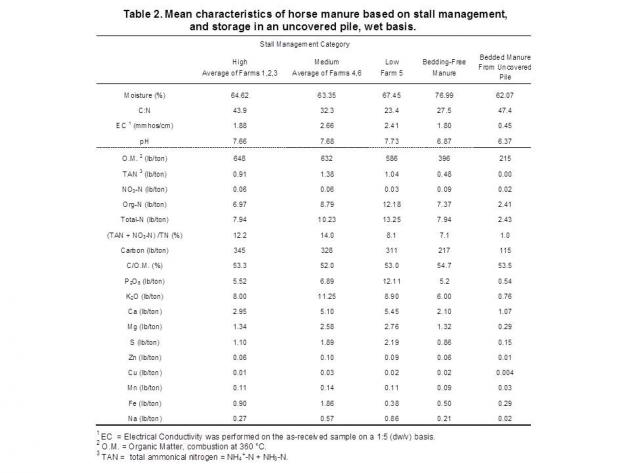
Table 2. Mean characteristics of horse manure based on stall management, and storage in an uncovered pile, wet basis

Table 2.

Storage of manure in an uncovered pile resulted in very little active composting as indicated by an insignificant reduction in organic-N, and only a small reduction in carbon (3%). Uncovered storage also resulted in reductions in major and minor plant nutrient concentrations ranging from 33% (Mn) to 74% (K2O). Therefore, nutrient content data obtained from bedded manure as-removed from a stall was shown to be inadequate to determine agronomic applications rates for manure removed from storage. In practice, separate data sets would be needed for management of as-removed horse manure, and manure removed from storage for development and implementation of a manure management plan.

In general, as the quality of stall management increased the amount of bedding provided per stall per day increased resulting in an increase in C:N. The C:N ranged from 23 to 48 for the barns sampled on the six farms. A correlation analysis was conducted to determine if the dry matter concentrations of organic matter, and plant nutrients were significantly correlated with C:N. The only measured characteristic that had a significant positive correlation with respect to C:N was the organic matter content. This was not surprising since bedding was the source of additional organic matter. The plant nutrients that had significant negative correlations with respect to C:N were: organic-N, total-N, P2O5, Ca, Mg, Zn, and Cu. It was apparent that one of the effects of additional bedding use was to dilute major and minor plant nutrient concentrations.

Electrical conductivity is often used as a general measure of the salt content in manure, compost, and other soil amendments. The eight different treatments included in this study had EC values ranging from 0.45 to 3.46 mmhos/cm. A correlation analysis was used to determine which of the conductive elements included in the analysis (Cu, Ca, Mg, Na, Zn, K2O, Fe, Mn) were significantly related to EC. It was determined that the only plant nutrient that was a significant predictor of elevated EC values was K2O content (dry-basis) with a correlation coefficient of 0.9727 and a coefficient of determination of 0.9462. Consequently, the high EC values observed were directly correlated to high levels of potassium and not harmful salts. These results demonstrate that EC alone cannot be used to determine if plant toxicity is likely, but sufficient analyses should be performed to determine if the elevated EC is from valuable nutrients or salts as suggested previously by others (e.g. Compost for Soils, 2011).

All of the horse manure samples collected on the six farms studied contained large amounts of carbon as indicated by C:N ratios ranging from 23 to 48. As a result, horse manure was not accessed to be a good source of nitrogen as compared to poultry litter. It may be best to compost horse manure to stabilize bioavailable carbon and nitrogen prior to use. After composting, the material should be applied based on agronomic rates for P2O5, or K2O while accounting for the organic nitrogen that will be slowly released.

Another alternative may be to apply horse manure based on agronomic rates for P2O5 or K2O while adding additional nitrogen to offset induced nitrogen deficiency. If un-composted manure is spread on cropland or pasture a portion of the mineralized-N will be converted to organic-N and would be expected to release slowly later in the year, and a portion may be carried over into subsequent growing seasons. Estimation of available carry-over nitrogen is difficult due to uncertainties related to soil pH, moisture, temperature, rainfall, and microbial activity. However, the best method of estimation appears to be a series of organic-N availability factors provided by Wheeler (2006).

A complete report on this study is provided by Chastain and Moore (2014).

Future Plans    

The results from this study will be used to develop extension classes and literature for owners of equine facilities. These data will also provide valuable information for nutrient management planning.

Authors       

John P. Chastain, Ph.D., Professor and Extension Agricultural Engineer, Clemson University jchstn@clemson.edu

Kathy P. Moore, Ph.D., Director, Agricultural Service Laboratory, Clemson University

Additional information 

References Cited

Chastain, J.P. & K.P. Moore. 2014. Plant Nutrient and Carbon Content of Equine Manure as Influenced by Stall Management in South Carolina. ASABE. Paper No. 1908331. ASABE, 2950 Niles Rd., St. Joseph, MI 49085-9659.

Compost for Soils. (2011). Compost Characteristics. Factsheet published by Compost for Soils, A Division of the Austrailian Organics Recycling Association. Retrieved from: http://compostforsoils.com.au/images/pdf/practical%20compost%20use/compo….

Doesken, K. C., & Davis, J. G. (2007). Determining plant available nitrogen from manure and compost topdressed on an irrigated pasture. In Proc. International Symposium on Air Quality and Waste Management for Agriculture. ASABE Publication Number 701P0907cd. St. Joseph, Mich.: ASABE.

James, R.E. (2003). Horse Manure Management: The Nitrogen Enhancement System. AGF-212-03. Ohio State University Extension, The Ohio State University, Columbus, OH.  Retrieved from: http://ohioline.osu.edu/agf-fact/0212.html.

Moore, K.P. (2014). Compost Analysis Procedures. Clemson, SC: Agricultural Service Laboratory, Clemson University. Available  at: Available at: http://www.clemson.edu/agsrvlb/procedures2/compost.htm.

Wheeler, E.F, and J.S. Zajaczkowski. (2001). Horse Stable Manure Management (G-97). Penn State University Extension. Available at: http://panutrientmgmt.cas.psu.edu/pdf/G97.pdf.

Wheeler, E. F. (2006). Manure Management, In Horse Stable and Riding Arena Design, (pp 91-93). Ames, Iowa: Blackwell Publishing.

Acknowledgements      

Support for this work was provided by the Confined Animal Manure Management Program of Clemson Extension, Clemson University, Clemson, SC.

The authors are solely responsible for the content of these proceedings. The technical information does not necessarily reflect the official position of the sponsoring agencies or institutions represented by planning committee members, and inclusion and distribution herein does not constitute an endorsement of views expressed by the same. Printed materials included herein are not refereed publications. Citations should appear as follows. EXAMPLE: Authors. 2015. Title of presentation. Waste to Worth: Spreading Science and Solutions. Seattle, WA. March 31-April 3, 2015. URL of this page. Accessed on: today’s date.



Markets for Composted Agricultural Waste

Why Consider Composting Manure?

Enforcement of nutrient management regulation has forced Maryland farms and agricultural facilities to adopt new waste management practices. Few options exist that are financially sustainable. Regulatory agencies witnessed the unexpected consequence of closing small and mid-sized farms who could not afford to institute new waste management technologies. To counter that consequence, Maryland Department of Agriculture offered grants to subsidize the development of innovative technology and business practices. These new systems and business models had to offer both financial and environmental sustainability.

What Did We Do?

The first step in this project (supported by the Maryland Department of Agriculture, 2014) was to identify the biological make up and characteristics of the stable waste both before and after processing. We measured nutrient content and form (N, P, K), porosity, moisture absorption and C: N ratio. By understanding what the material consisted of pre-processing, we were able to determine what effects different controls during processing would have on the end product. As an example, when using stable waste for bedding re-use the material is run through the composting system as quickly as possible. A shorter composting period with auger mixing technology allowed the biological activity to breakdown the manure balls, support the transformation of the waste nutrients and yet protect the integrity of the shavings for second use. Related: Managing Manure on Horse Farms

Next, the local markets were studied:

    • Soil types and needs: compost to add porosity, water retention, nutrients to soil
    • Weather patterns and created needs: compost added for water retention, binding material to diminish run off
    • Population centers for urban market: compost for landscape needs, potting medium
    • Rural character for on farm market: compost for nutrient replacement, bedding re-use
    • Cost of operations on local farms: cost of bedding, cost of disposal, cost of landscape material, cost of synthetic or imported fertilizer
    • Wholesale market needs: compost for distribution centers (Scotts products), soil specialty companies, land reclamation sites, Department of Transportation needs, green house growers

Identifiable, viable market channels to move the processed stable waste were necessary components of a business model.  Uses for the processed waste were identified both on site and off site.

On site uses were identified as:

    • Land application: field enhancement
    • Bedding re-use
    • Landscape use
    • Improved footing arenas
    • Land reclamation
    • Pelletized for heat systems
Off site uses were identified as:

    • Soil amendment
    • Land reclamation
    • Potting Medium
    • Food Waste Bulking agent
    • Whole sale distribution centers
    • Soil Specialty companies

What Did We Learn?

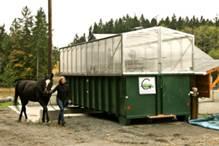
Data was gathered and studied from equine facilities with existing composting operations to illustrate what the benefits and challenges can be. IOS Ranch on Bainbridge Island Washington is a sustainably designed 7.5 acre property that supports 20-25 stalled horses. The design concentrates the structures, indoor arena, stall, office and supporting buildings, so there could be surrounding pasture turn out and an outdoor arena. The facility was paying high waste disposal fees. Their decision to bring composting technology to the farm was an effort to eliminate disposal fees and diminish their bedding cost through bedding re-use. However, once the system was installed a local landscaper visited the site and saw value in the compost. The material is now sold for $30/yard wholesale and $45/yard retail to local landscapers and gardeners. With the price of shavings for bedding delivered at $7.50/yard the business decision to sell the compost was an obvious one. The property was formerly a gravel pit with large areas of exposed pit run. Once realizing the value of the compost for land application, the owner spread on the exposed areas greatly improving grass performance in the turnout fields. This farm was saving $100-$140/day producing compost because of the reduced disposal fees plus profits from marketing, allowing for a breakeven on investment in 3 years.

manure composting operation on horse farm manure composting operation on horse farm manure composting operation on horse farm

Joint Base Myer Henderson Hall hosted a pilot project for composting of food waste on remote contingency bases. On this base the Army’s Caisson horses are housed in a 50+ stall barn. After the pilot was completed the in vessel composting system will revert to the base for processing the stable waste. The base has the choice of bedding re-use or using the compost for landscape needs on base and/or in the adjacent Arlington National Cemetery. Outside contractors were supplying the base with compost at nearly $400,000 per year. The project could pay for itself in the first year. Thorough lab analysis showed the compost to be consistently of high quality, pathogen free, and weed seed free.

army base horse manure composting photos

Currently two sites in Maryland are being studied; one an equine rescue facility housing 50-80 horses, and the other a dairy with 240 head. The use of composted stable waste as a peat moss replacement will bring value to the equine and dairy farms and to the large, local greenhouse industry. Currently 80% of the peat moss used in Maryland is imported from Canada. The farms selected are large enough that they can produce enough material for bedding re-use (savings of nearly 20% of operating budget) and/or sell the material to wholesale buyers. The composting material from both sites show the favorable attributes of peat moss, porosity and moisture retention. Blending can alter the nutrient levels to what the market needs by using the more nutrient rich dairy waste. The collection of compost and blending can be done on on site or at an off site location in cooperation with other local farms, this may help meet larger volume needs of wholesale buyers.

horse manure composting operation in Maryland horse manure composting operation in Maryland horse manure composting operation in Maryland

Future Plans

The Maryland projects are both two years in duration with continual data gathering and recording. The next step is the location and operation of a collection yard for multiple local farms to send their processed stable waste. Such a yard allows for mixing to meet differing market needs and the creation of large quantities of homogenous product for local greenhouse growers.

Authors

Mollie Bogardus, owner, Aveterra and representative of Green Mountain Technologies, Inc. mollie@compostingtechnology.com

Additional Information

http://news.maryland.gov/mda/press-release/2014/08/15/mda-awards-1-million-for-innovative-manure-management-technologies-demonstration-projects-in-howard-frederick-and-worcester-counties-recognized/

Acknowledgements

Dr. Pat Millner, USDA Beltsville, Research Microbiologist is lead researcher and mentor on these projects in Maryland.

The authors are solely responsible for the content of these proceedings. The technical information does not necessarily reflect the official position of the sponsoring agencies or institutions represented by planning committee members, and inclusion and distribution herein does not constitute an endorsement of views expressed by the same. Printed materials included herein are not refereed publications. Citations should appear as follows. EXAMPLE: Authors. 2015. Title of presentation. Waste to Worth: Spreading Science and Solutions. Seattle, WA. March 31-April 3, 2015. URL of this page. Accessed on: today’s date.
Waste to Worth 2013-Manure Value & Economics

W2W13 proceedings | Waste to Worth home
On this page: Environmental Planning | Value as Fertilizer | Feeding & Rations | Manure to Energy

Environmental Planning Value as Fertilizer

Modeling to Characterize Manure Flows in Texas

Evaluating the Environmental Impact of Dairy and Beef

Sustainable Dairy Cropping Systems

Financial Benefits of Composting Stable Waste

Factors Affecting the Price of Manure Applied on Corn

Economic Analysis of Swine Diet Cost Versus Manure Value

Feeding & Rations Manure to Energy

Economic Analysis of Swine Diet Cost Vs. Manure Value

BFNMP: A Tool for Feedlot Manure Economics

Integrating Manure into Feed Ration Optimization

Production of Fuel Crops For Biodiesel Using Manure

Using Litter for On-Farm Space Heating vs. Electricity

Waste-to-Energy Technology and Environmental Revenues


Global Supply of Phosphate

Waste to Worth: Spreading science and solutions logoWaste to Worth home | More proceedings….

Why Are We Concerned About Global Phosphorus Supply?

There has been a great deal of press coverage in the past few years about the supplies and reserves of rock phosphate across the globe with some predicting exhaustion of these supplies within a few decades. This presentation examines the supplies, reserves and trends in the world phosphorus supply.

Authors

Mike Stewart, International Plant Nutrition Institute mstewart@ipni.net

Additional Information

International Plant Nutrition Institute http://www.ipni.net


The authors are solely responsible for the content of these proceedings. The technical information does not necessarily reflect the official position of the sponsoring agencies or institutions represented by planning committee members, and inclusion and distribution herein does not constitute an endorsement of views expressed by the same. Printed materials included herein are not refereed publications. Citations should appear as follows. EXAMPLE: Authors. 2013. Title of presentation. Waste to Worth: Spreading Science and Solutions. Denver, CO. April 1-5, 2013. URL of this page. Accessed on: today’s date

Coupling Dairy Manure Anaerobic Digesters with Commercial Greenhouses – An assessment of Technical and Economic Feasibility

Waste to Worth: Spreading science and solutions logoWaste to Worth home | More proceedings….

Abstract

Despite all of the positive environmental benefits of anaerobic digestion, the economics are not sufficient for widespread adoption by US farmers when selling surplus power to the grid.  Often farms are only paid the wholesale price (2 to 3 cents/kWh) for electricity, making it difficult to justify generating it in the first place.  In addition, typically in the Northeast, approximately 40% of the energy from a digester goes unused (excess heat).  Therefore, promising value-added technology/business partnerships need to be evaluated and demonstrated, such as partnering anaerobic digestion with commercial greenhouses. 

Greenhouses are an ideal end user of the waste heat and surplus electricity produced by a digester.  In the Northeast and other similar climates, heat and electricity represent a major expense for greenhouse growers.  Greenhouses can make use of excess heat to provide the necessary growing conditions for year-round production and excess electricity can be used to run supplemental lighting to keep production constant year-round.

To facilitate the adoption of digester/greenhouse unions, we are developing a comprehensive computer model of both the energy output of farm-based digesters, the energy requirements of the associated farm, and the energy required by greenhouses, in terms of timing and magnitude.  We will use existing and project-developed data collected from five Northeast digesters and three greenhouse operations to aid in developing and validating the model.  The model will be complex enough to handle varying biomass inputs and required outputs, and the economics of operation.  We will use the model to run several real-world “what ifs” and use the outputs for making recommendations to existing anaerobic digesters considering coupling with greenhouses. System economics are also going to be included.

Authors

Curt Gooch, Cornell PRO-DAIRY cag26@cornell.edu

Tim Shelford, Cornell PRO-DAIRY


The authors are solely responsible for the content of these proceedings. The technical information does not necessarily reflect the official position of the sponsoring agencies or institutions represented by planning committee members, and inclusion and distribution herein does not constitute an endorsement of views expressed by the same. Printed materials included herein are not refereed publications. Citations should appear as follows. EXAMPLE: Authors. 2013. Title of presentation. Waste to Worth: Spreading Science and Solutions. Denver, CO. April 1-5, 2013. URL of this page. Accessed on: today’s date.
Feasible Small-Scale Anaerobic Digestion – Case Study of EUCOlino Digestion System.


* Presentation slides are available at the bottom of the page.

Waste to Worth: Spreading science and solutions logoWaste to Worth home | More proceedings….

Abstract

While large-scale farms have typically been the focus of anaerobic digestion systems in the U.S., an emerging need has been identified to serve smaller farms with between 50 and 500 head of cattle. Implementing such a small, standardized, all-in-one system for these small farm applications has been developed. Small-scale digesters open the playing field for on-farm sustainability and waste management.

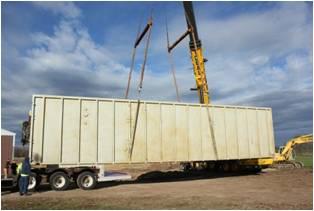
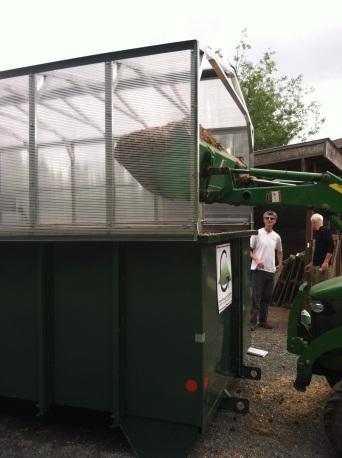
Unloading the first biodigester unit.

This presentation on small-scale digestion would discuss the inputs, processing, function, and outputs of BIOFerm™ Energy Systems’ small agitated plug flow digester (EUCOlino). This plug-and-play digester system has the ability to operate on dairy manure, bedding material, food waste, or other organic feedstocks with a combined total solids content of 15-20%. A case study would be presented that describes the site components needed, the feedstock amount and energy production, as well as biogas end use. Additional details would include farm logistics, potential sources of funding, installation, operation, and overall impact of the project.

This type of presentation would fill an information gap BIOFerm™ has discovered among dairy farmers who believe anaerobic digestion isn’t feasible on a smaller scale. It would provide farmers who attend with an understanding of the technology, how it could work on their specific farm and hopefully reveal to them what their “waste is worth”.

Why Study Small-Scale Anaerobic Digestion

To inform and educate attendees about small-scale anaerobic digestion surrounding the installation and feasibility of the containerized, paddle-mixed plug flow EUCOlino system on a small dairy farm <150 head.

Biodigester unit being installed at Allen Farms.

What Did We Do?

Steps taken to assist in financing the digestion system include receiving grants from the State Energy Office and Wisconsin Focus on Energy. Digester installation includes components such as feed hopper, two fermenter containers, motors, combined heat and power unit, electrical services, etc…

What Have We Learned?

Challenges associated with small project implementation regarding coordination, interconnection, and utility arrangements.

Future Plans

Finalize commissioning phases and optimize operation.

Authors

Amber Blythe, Application Engineer, BIOFerm™ Energy Systems blya@biofermenergy.com

Steven Sell, Biologist/Application Engineer, BIOFerm™ Energy Systems

Gabriella Huerta, Marketing Specialist, BIOFerm™ Energy Systems

Additional Information

Readers interested in this topic can visit www.biofermenergy.com and for more information on our plants, services and project updates please visit us on our website at www.biofermenergy.com. You will also see frequent updates from us in industry magazines (BioCycle, REW Magazine, Waste Age). BIOFerm will also be present at every major industry conference or tradeshow including the Waste Expo, Waste-to-Worth and BioCycle– stop by our booth and speak with one of our highly trained engineers for further information.

The authors are solely responsible for the content of these proceedings. The technical information does not necessarily reflect the official position of the sponsoring agencies or institutions represented by planning committee members, and inclusion and distribution herein does not constitute an endorsement of views expressed by the same. Printed materials included herein are not refereed publications. Citations should appear as follows. EXAMPLE: Authors. 2013. Title of presentation. Waste to Worth: Spreading Science and Solutions. Denver, CO. April 1-5, 2013. URL of this page. Accessed on: today’s date.

Benefits of Bedding Reuse for the Equine Industry

Waste to Worth: Spreading science and solutions logoWaste to Worth home | More proceedings….

Why Studying Bedding Reuse for Horses?

To examine the financial, operational and health benefits of re-using composted bedding in the equine industry.

What Did We Do?

Stable waste, consisting of manure, urine and wood shavings, is a readily compostable feedstock that generates heat and can be transformed into finished homogenous compost, which can be used as bedding for horses and other livestock.  This transformation can be completed in as little as 2 weeks with in-vessel technologies, 15-25 days in aerated site-built systems and 20-30 days in aerated static pile (ASP) systems.  If composting is done in a biologically active, aerobic environment such as the systems mentioned above, the process destroys weed seed, parasites and harmful pathogens. These benefits are the result of system controls such as a correct ratio of C:N, moisture, porosity of the pile, and temperature.  The in-vessel composting system offers the most comprehensive control of these factors ensuring the most favorable results. 

The biological process that occurs when the stable waste is blended utilizes the leachable N and binds it in the organic matrix keeping it secured.  There is also a reduction in N during the process as it becomes volatile and escapes through vaporization.  The phosphorus is utilized by the bacteria during the process, reducing the amount available to leach by at least 50%.   Since both N and Ph are needed for cellular growth, they get locked in the cells of the growing bacteria.  This process generates heat, removing the moisture, killing pathogens and creating drier and more absorbent material for bedding re-use.

IOS Ranch, a private 20 horse show stable on Bainbridge Island, Washington, was the study site for this paper.  They purchased an Earth Flow in vessel system and it is from this system that the lab results and observational data were collected.  Their bedding of choice is medium sized bulk shavings.  Also studied over the same period of time was the Earth Flow in-vessel system at Joint Base Myers/Henderson in Arlington, Virginia.  The US Army Caisson horses stabled there are bedded on pelletized bedding.  Lab data from this composting mix contributed to this study as well.

Washington State University, encouraged by the potential of financial savings, started using composted material as bedding in the school’s dairy farm.  An unexpected benefit of this decision was the reduction of mastitis in the dairy herd.  The change in bedding was the only variable altered in the care of the herd when this observation was noted.  A study conducted by Cornell University’s Waste Management Institute studied the financial effects of using manure solids (DMS) as bedding.  This study showed an average of $37,000 was saved annually by the diary farms who switched to re-use bedding.  It was from these observations that we decided to apply the same questions to the equine industry. 

A study conducted by Caitlin Price Youngquist of the Snohomish Conservation District, and funded by Western SARE is searching for the health benefits to horses with the use of composted stable waste as bedding. Preliminary examination has shown an increase in foot and leg health and a decrease in thrush, scratches and dermatitis seen on the horses in the study.  General foot and leg health was also attributed to compost bedding by Dr. Hannah Mueller of Cedarbrook Veterinary Clinic and Northwest Equine Stewardship Center.  She documented relief for a horse with chronic hives and a horse with a tracheotomy.   The reduction of dust has been cited as a benefit to the horses suffering from heaves and other dust related ailments such as skin and respiratory irritations.  The compost material has the  unique quality of a large capacity for absorption while at an already higher level of moisture that makes the compost bedding less dusty. Both pellets and shavings exhibit this attribute.Youngquist’s assumption for the benefit composted bedding offers is based in the process itself.  She states, “The compost has been through a very hot phase to kill all pathogens and parasites. It now has a thriving microbial population that competes aggressively with the fungal and bacterial pathogens that cause infections and irritations on skin and hooves (similar to the concept of a pro-biotic).”

Stable waste compost as bedding can be used in its entirety or screened to collect the larger remaining pieces of shavings for bedding, leaving the fines for soil amendment. Testing has shown in either case the composted material to have high absorbency, more so than green shavings.  When mixed with 50% new or green shavings, the stall is at its most efficient for health and comfort for the horse.  The composted material offers higher absorption, soaking up the urine off the stall floor.  With a top dressing of new shavings the stall is aesthetically pleasing to the human eye, light in color and offering the horse a barrier to the wetter, compost material below.  The compost bedding is odor free when reintroduced to the stall.   The introduction of at least 50% new shavings also supports the ongoing composting system, refilling the system when it has its 40-50% reduction of volume and the eventual breakdown of the shaving pieces with multiple trips through the system.    Continuing research is being done to understand the effect of pelletized bedding used in the bedding re-use loop without the introduction of a larger substance to affect the integrity of the material as it continues to be re –used.

The first test done was to measure the absorption ability of the three types of bedding mixes.  Two inches of material was placed in a plastic container.  The first test done on 2” of green shavings, the second test done on 2” of a 50/50 mix of green shavings and compost, and the third test done on 2” of compost.  Each of the variations was weighed before the introduction of water.  One gallon of water was poured over the material and allowed to stand for 2 minutes.  The container was then drained of any standing water which was measured.  The container was again weighed in each case after the water had been drained.  This procedure allowed for the measurement of absorption by both the increase in weight and the volume of water not absorbed by the material.

The new shavings taken from a loose pile absorbed the least, the 50/50 mix the next higher amount and the compost bedding absorbed the most moisture.  This is impressive when one considers that the density of compost bedding is higher before the introduction of the test water.  The compost material is comprised of the same woody fiber as the shavings but the edges have softened and loosened, and it is possible that the breakdown of the resins, which can be hydro phobic, allows for additional absorption ability.

We also tested for the moisture content of each bedding type with a simple oven test.  The material was measured by a two cup measuring cup and poured into a glass baking dish.  The material was weighed before going into the oven, set at 200°.  The material was then weighed again to determine the moisture content after 12 hours.

These preliminary tests were performed to study initial benefits noted with bedding re-use.  These are not scientific studies and are only intended to show possible indications for the purpose of this paper and to encourage further study.  With composting and bedding re-use, barns close the waste stream loop and create a value added product.

What Have We Learned?

The viability of composted stable waste to be re-used as bedding is proven to provide financial benefits by saving  on the cost of material purchase and in the disposal of stable waste.  It provides  further savings in health care costs.

Laboratory Results for Composted Stable Waste

Laboratory Results for Composted Stable Waste

Laboratory Results for Composted Stable Waste
 

Future Plans

We will continue to support the Snohomish Conservation District study run by Caitlin Youngquist by supplying composted stable waste and collaboration. 

We plan to run our dust measurement during the summer months when we actually have dust in the Pacific Northwest. A furnace filter attached to the intake side of an 18” x 18” fan would be left on at ground level in a newly bedded stall for three minutes while the horse was hand walked around the stall.  This would be repeated for the three bedding variations.  The filter would be weighed before being attached to the fan and again after the three minute period.   

Study of pellets as bedding re-use material will be done, measuring the health benefits and the viability of the product over multiple uses.

A controlled trial on direct contact allergens will be conducted on the three bedding mixtures.

We will continue to educate the equine industry and encourage a broad scale adoption of this closed waste system.

Authors

Mollie Bogardus, MBA Sustainable Business, Equine Specialist, Green Mountain Technologies, Inc. and Michael Bryon Brown, President, Green Mountain Technologies, Inc.

Mollie Bogardus, mollie@compostingtechnology.com, Michael Bryon Brown, mbb@compostingtechnology.com

Additional Information

Bogardus, Mollie. “Equine Applications/Case Studies/ IOS  Ranch and Fort Myer/Henderson.” Green Mountain Technologies. Green Mountain Technolgies, Inc., n.d. Web. 15 Mar. 2013. http://compostingtechnology.com/equine/.

Cohen, Jamie. “Composted Horse Manure:  The Pros and Cons.” The Florida Horse Feb. 2013: 23. Print.

“Equine Applications.” Green Mountain Technologies- lab results. N.p., 12 Dec. 2012. Web. 1 Mar. 2013. http://compostingtechnology.com/equine.

LeaMaster, Brad, James R.  Hollyer, and Jennifer L. Sullivan. “Composted Animal Manures: Precautions and Processing.”   Cooperative Extension Service,College of Tropical Agriculture and Human Resources, University of Hawai‘i. University of Hawaii at Manoa, n.d. Web. 6 Mar. 2013. http://www.ctahr.hawaii.edu/oc/freepubs.

Price Youngquist, Caitlin. “Composted Horse Manure and Stall Bedding Pilot Project – YouTube.” YouTube. Snohomish Conservation District, 17 Jan. 2013. Web. 1 Mar. 2013. https://youtu.be/B91U5UjuaXI.

Schwartz, Mary, Jean Bonhotal, and A. Edward Stachr. “Use of Dried Manure Solids as Bedding for Dairy Cows.” Cornell Waste Management Institute. Cornell University, n.d. Web. 1 Oct. 2012. http://cwmi.css.cornell.edu>.

Wheeler, Eileen , and Jennifer Smith Zajaczkowski. “Horse Stable Manure Management.” Cornell Cooperative Extension, Orange County Equine, Saratoga County Equine. Penn State University, n.d. Web. 6 Mar. 2013. http://cceequine.org.

Zaborski, Ed. “Composting to Reduce Weed Seeds and Plant Pathogens – eXtension.” eXtension – Objective. Research-based. Credible.. University of Illinois at Urbana Champaign, 22 Oct. 2012. Web. 2 Oct. 2012. http://www.extension.org/pages/28585/composting-to-reduce-weed-seeds-and….

Acknowledgements

This report could not have been done without the support of Philippe Le Dorze at IOS Ranch.  His interest and pursuit of knowledge pushed us to continue to search for improvements and greater knowledge.

The staff at Joint Base Myer/Henderson, Amy Fagan especially, were also willing participants in the pursuit of the perfect compost recipe.  Paul Brezovec at Concurrent Technologies Corp was a tremendous support to the project and continues to encourage the use of Earth Flow vessels for other bases.

A special thanks to Caitlin Price Youngquist for her ongoing dedication, collaboration and interest in the phenomena of bedding re-use.


The authors are solely responsible for the content of these proceedings. The technical information does not necessarily reflect the official position of the sponsoring agencies or institutions represented by planning committee members, and inclusion and distribution herein does not constitute an endorsement of views expressed by the same. Printed materials included herein are not refereed publications. Citations should appear as follows. EXAMPLE: Authors. 2013. Title of presentation. Waste to Worth: Spreading Science and Solutions. Denver, CO. April 1-5, 2013. URL of this page. Accessed on: today’s date.

Economic Analysis of Swine Diet Cost Versus Manure Value

Waste to Worth: Spreading science and solutions logoWaste to Worth home | More proceedings….

Abstract

In high yielding row crop intensive regions the role of swine manure as a crop nutrient source has increased in value, replacing the purchase of increasingly expensive commercial fertilizer by providing the nutrient needs of crops.  Nutrients from manure are recycled to fertilize high yielding crops in an environmentally friendly, synergistic system. 

Access to the value of the nutrients in manure has been a primary motivation for constructing swine facilities.   However, as the energy cost of swine diets has increased, feeding programs have been dramatically changed.  Changes in ingredients composition has changed from manipulations of dietary formulations.  These changes can alter the nutrient composition of the resulting manure and thus the nutrient value of the manure as fertilizer.  What does not occur is the consideration that owners/users of the manure composition and if changes need to be made in application rates for optimizing fertilizer rates for crops.

The swine nutritionist can reduce the nitrogen (N) level in manure by 40 or 50% or they can increase the N level by 76%.   If the nitrogen produced by a pig is, for example worth $4 as a manure nutrient.   The range in value will be from $2/head to $7/head depending on diet formulation.    The broader analyses that producers should think about is comparing feed savings from diet manipulation to loss or gain of manure value from that manipulation.    Case studies that will be discussed include low protein synthetic amino acid addition, phytase addition, and feeding DDGS.  

Information will be presented that will compare feed cost savings from common diet manipulation strategies to the change in the nutrient value of the manure because of the diet manipulation.  We are developing a simple spreadsheet to help understand the economics on a holistic operation basis, that we plan to make available to workshop participants.

Why Look At the Value of Manure Nutrients When Formulating Pig Rations?

Producers in Iowa entering the pig business by constructing a contract barn are often influenced by the potential value of manure from that facility.  There is interest in saving the expense of commercial fertilizer.  Most of these producers, especially those that are row crop oriented with limited swine experience, don’t realize that swine diet formulation will change the manure value. 

In Iowa at the farm level nutrients in manure are highly valued for commercial fertilizer replacement, crop and swine production systems are symbiotic.  Crops feed the livestock and manure from the livestock is used as fertilizer for crops.   Therefore, in Iowa manure has typically been highly regarded for its fertilizer value.

However, the manure can be dramatically changed by diet formulation and thereby the nutrient content of the principle fertilizer components, Nitrogen (N) and Phosphorus (P).  Thus the value of the manure used for fertilizer changes as well.   

Contract growers should realize that the value of the manure can be dramatically changed by diet formulation, and that usually the lower cost diet results in less value in the manure nutrients.   Also, that it is possible that the value of the nutrients for the crop is actually less than the cost to haul.   Therefore, the purpose of this talk is to discuss the whole farm financial and environmental impact of formulating a change in the swine diet compared to the change in the level of nutrients in swine manure.  

We want producers to be aware of the value of swine manure for various reasons.  A common problem in the field is that manure is spread on the field adjacent to the facility, therefore soil P levels typically are increased to the upper levels of very high soil test leading to potential pollution problems.  If the concentration of nutrients is increased through diet formulation the extra value would make it more likely to economically haul the manure to a low testing, more environmentally friendly field.  The reason swine producers have not understood that diet formulation changes nutrient density is because large differences in water management/wastage have hidden the diet formulation changes.  Therefore, measuring manure yield per pig using a manure test is an important management tool not yet utilized by producers. 

What Did We Do?

We built a spreadsheet to compare the feed savings from diet formulation to the value of nutrients in the manure.   Additionally, Dr Matt Swantek developed a feeding model to predict the feed cost  and manure nutrient changes on a per pig basis so swine producers will be able to see and understand the concept. 

What Have We Learned?

With diet formulation, the value of the swine manure will vary greatly.  In the model we used, given the price assumptions the value of manure ranged from $41.52 to $84.77 per 1000 gallons.  The range is more than $5.00 per head.  This is 2.5 times more than the standard labor cost of about $2.00 per head.   It is desirable environmentally to transport to low P soil test fields rather than over application of nutrients in the field next to the facility, higher nutrient value per gallon is more economically feasible to transport.  Water wastage causes wide variation in manure test results and masks the diet formulation differences that are important to the producer.  With diet formulation and water wastage it is possible to decrease to value of the manure below the cost of application.  Measuring nutrient yield per pig is important to know.  It can be determined calculating the gallon of manure produced per pig, the number of pigs per 1000 gallon and then calculating each pig’s nutrient (NPK) contribution based on the manure test pound of nutrient per 1000 gallon. 

Future Plans

We plan to hold educational workshops regarding this topic and make the spreadsheet tool available on line to help producers understand these concepts

Authors

David Stender, Iowa State University Extension Swine Field Specialist dstender@iastate.edu

Dr Matt Swantek, Iowa State University Extension Swine Field Specialist

Additional Information

Call or email Dave Stender at dstender@iastate.edu or 712 261 0225 or Matt Swantek at mswantek@iastate.edu  or visit the Iowa Pork Industry Center web page (the decision aid tool will be posted there when it is completed:  http://www.ipic.iastate.edu/


The authors are solely responsible for the content of these proceedings. The technical information does not necessarily reflect the official position of the sponsoring agencies or institutions represented by planning committee members, and inclusion and distribution herein does not constitute an endorsement of views expressed by the same. Printed materials included herein are not refereed publications. Citations should appear as follows. EXAMPLE: Authors. 2013. Title of presentation. Waste to Worth: Spreading Science and Solutions. Denver, CO. April 1-5, 2013. URL of this page. Accessed on: today’s date.
Next Generation Technology Swine Waste-to-Energy Project

Waste to Worth: Spreading science and solutions logoWaste to Worth home | More proceedings….

Abstract

* Presentation slides are available at the bottom of the page.

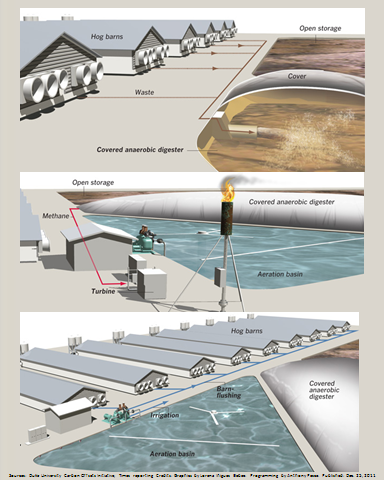
The Loyd Ray Farms project is the first swine waste project in the State of North Carolina to generate and transfer renewable energy credits (RECs) to a public utility.  Utilizing an anaerobic digester as primary treatment, this waste treatment system is designed to meet the Environmental Performance Standards set forth by NC law for new and expanded swine facilities through the use of nitrification/denitrification and further treatment. The system implemented at this farm utilizes anaerobic digester technology to turn raw animal waste into biogas.  The biogas is used to fuel a microturbine, generating electricity to power the environmental treatment system, and about half of the farm. Related: Manure value & economics

The farm is a finishing swine operation that houses approximately 9,000 pigs near Yadkinville, NC.  The concept for this approach was conceived by the team in 2006, followed by economic and performance modeling, permitting, and construction of the commercial-scale system.  The project was commissioned on May 27, 2011.  Funding for construction was provided by Duke Energy and Duke University, with support from USDA-NRCS and the NC Division of Soil and Water Conservation.  Google provides operational funding support in exchange for a portion of the carbon offsets created.

Loyd Ray Farms is the only innovative Swine waste system in North Carolina that generates Renewable Energy Credits for an electric utility,  which generates enough power for  the treatment system and has enough surplus electricity to power about half of the farm.  Cavanaugh collaborated in this study with Duke University, Duke Energy,  and Google with funding from NC Soil & Water Conservation and USDA/Natural Resources Conservation Service.

Forefront: Tatjana Vujic of Duke University views the meter readings

The project began as a conversation about greenhouse gas emissions, sources for renewable energy, and sustaining the state’s swine industry among Duke Energy, Duke University, Google, and Cavanaugh.  That conversation led to a project that is getting attention around the world, for its successes in combining strategies to address the concerns for generating renewable energy from agricultural sources, sustaining agriculture, and addressing farming’s relationship to climate change.

The system’s goals: generating about 500 megawatt-hours of electricity annually, reducing greenhouse gas emissions equivalent to 5,000 tons of carbon dioxide annually, reducing ammonia and odor emissions from the farm, and improving the quality of treated wastewater on the farm.”

Is Manure to Energy Important?

We will discuss the successes and challenges in partnered efforts by farmers, electric utilities, and other stakeholders in the marrying of renewable energy generation with enhanced environmental treatment and green house gas emissions reduction, including the economics of such effort.

What Did We Do?

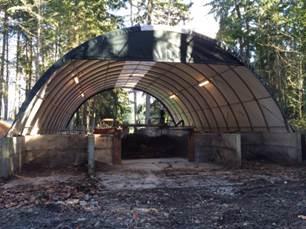
Waste generated by the animals is flushed into an anaerobic digester where bacteria consume the waste and respire energy-rich biogas.  The biogas fuels a microturbine that generates electricity, and excess gas is flared.  After digestion, the liquid waste is further treated to achieve the Environmental performance Standards set forth by North Carolina for Innovative Swine Waste Treatment Systems.

The process by which the stakeholders came together in a partnership, the technologies and approaches selected, and the successes/challenges that can be gleaned for advancing future projects.  The Loyd Ray Farms project is the first Swine Waste-to-Energy project in the State of North Carolina to place RECs on the North Carolina Utilities Commission REC Tracking System, and is the first swine farm in North Carolina to transfer RECs to Duke Energy.  Coupling techniques to improve the environmental treatment system employed at the farm, the Loyd Ray Farm project is also the first ‘Innovative Swine Waste Treatment System’ permitted that utilizes an anaerobic digester as a primary form of waste treatment.

Presenters

William G. “Gus” Simmons, Jr., P.E. Cavanaugh & Associates, P.A., gus.simmons@cavanaughsolutions.com

Gus Simmons, lead designer, M. Steve Cavanaugh, Jr., and Marvin Cavanaugh, Sr. during the commissioning of the system.  Cavanaugh developed the concept for Duke University in an effort to create a cost-effective solution that converts swine waste into renewable energy while achieveing a superior level of waste treatment and a reduction in the carbon footprint created by the conventional waste management system.

Gus Simmons, P.E., is the Director of Engineering at Cavanaugh & Associates, a consulting firm specializing in stewardship through innovation.  An NC State University graduate with a BS in Biological & Agricultural Engineering, Gus  has worked for a major agricultural producer where he was Director of Environmental Affairs and Engineering Services, managing engineering and construction for facilities in the US and Europe.  Gus has designed, permitted, and managed over 5,000 acres of wastewater irrigation in NC, and thousand of acres of wastewater irrigation in the Western US. He has assisted many municipalities and private entitites with the development and implementation of reclaimed water systems and reuse irrigation systems, and has actively participated in alternative wastewater management strategies for the NC Pork Industry.  His recent sucessess include the engineering design of an anaerobic digester for animal waste to energy project in Yadkinville, NC which has gained world-wide recognition for its successes in generating RECs and greenhouse gas credits.

Additional Information

The authors are solely responsible for the content of these proceedings. The technical information does not necessarily reflect the official position of the sponsoring agencies or institutions represented by planning committee members, and inclusion and distribution herein does not constitute an endorsement of views expressed by the same. Printed materials included herein are not refereed publications. Citations should appear as follows. EXAMPLE: Authors. 2013. Title of presentation. Waste to Worth: Spreading Science and Solutions. Denver, CO. April 1-5, 2013. URL of this page. Accessed on: today’s date.