Livestock GRACEnet

Waste to Worth: Spreading science and solutions logoWaste to Worth home | More proceedings….

Abstract

Livestock GRACEnet is a United States Department of Agriculture, Agricultural Research Service working group focused on atmospheric emissions from livestock production in the USA. The working group presently has 24 scientists from 13 locations covering the major animal production systems in the USA (dairy, beef, swine, and poultry). The mission of Livestock GRACEnet is to lead the development of management practices that reduce greenhouse gas, ammonia, and other emissions and provide a sound scientific basis for accurate measurement and modeling of emissions from livestock agriculture. The working group fosters collaboration among fellow scientists and stakeholders to identify and develop appropriate management practices; supports the needs of policy makers and regulators for consistent, accurate data and information; fosters scientific transparency and rigor and transfers new knowledge efficiently to stakeholders and the scientific community.  Success in the group’s mission will help ensure the economic viability of the livestock industry, improve vitality and quality of life in rural areas, and provide beneficial environmental services. Some of the research highlights of the group are provided as examples of current work within Livestock GRACEnet. These include efforts aimed at improving emissions inventories, developing mitigation strategies, improving process-based models for estimating emissions, and producing fact sheets to inform producers about successful management practices that can be put to use now.

Why Was GRACEnet Created?

The mission of Livestock GRACEnet is to lead the development of livestock management practices to reduce greenhouse gas, ammonia, and other emissions and to provide a sound scientific basis for accurate measurement and modeling of emissions.

What Did We Do?

The Livestock GRACEnet group is comprised of 24 scientists from 13 USDA-ARS locations researching the effects of livestock production on emissions and air quality.

Our goals are to:

  • Collaborate with fellow scientists and stakeholders to identify and develop appropriate management practices
  • Support the needs of policy makers and regulators for consistent, accurate data and information
  • Foster scientific transparency and rigor
  • Transfer new knowledge efficiently to stakeholders and the scientific community

Success in our mission will help to ensure the economic viability of the livestock industry, vitality and quality of life in rural areas, and provide environmental services benefits.

Authors

April Leytem, Research Soil Scientist, USDA-ARS april.leytem@ars.usda.gov

Additional Information

https://www.ars.usda.gov/anrds/gracenet/livestock-gracenet/


The authors are solely responsible for the content of these proceedings. The technical information does not necessarily reflect the official position of the sponsoring agencies or institutions represented by planning committee members, and inclusion and distribution herein does not constitute an endorsement of views expressed by the same. Printed materials included herein are not refereed publications. Citations should appear as follows. EXAMPLE: Authors. 2013. Title of presentation. Waste to Worth: Spreading Science and Solutions. Denver, CO. April 1-5, 2013. URL of this page. Accessed on: today’s date.

Demonstration of a Pilot Scale Leach-bed Multistage Digester for Treating Dry-lot Wastes

Waste to Worth: Spreading science and solutions logoWaste to Worth home | More proceedings….

Abstract

Dry-lot feedlot wastes have historically been a challenging feed-stock for digestion due to the dry recalcitrant nature of the waste, and the presence of settleable sand. Leach-bed dry digestion systems could theoretically circumnavigate these difficulties but poor hydraulic conductivities are noted in the literature. In addition to the poor hydraulic conductivities there are often serious problems with system stability and operation.  A leach-bed based design which addresses the hydraulic limitations of previous systems and utilizes a multiple process stages to enhance system stability is currently under development. By adding readily available inert shear stabilizers and biodegradable porosity improvers, hydraulic improvements have been demonstrated to be an order of magnitude higher than without the modifications.  By utilizing a multiple stage process the liquid leachategenerated from the leachate beds is treated through two stages, the buffering/storage tank and the high rate methanogenic reactor. The buffering tank is a tank for the leachate to reach chemical equilibrium and to store the leachate before it is precisely metered into the methanogenic tank.  Within the high rate methanogenic reactor compounds with the leachate are converted into methane which is removed and combusted. This system is demonstrated in a 48’ long refrigeration transport trailer which is essentially energy independent under continuously operation. This system will provide support for the validation of the technology with various wastes and will also serve as a research vessel for the continual optimization of this technology.

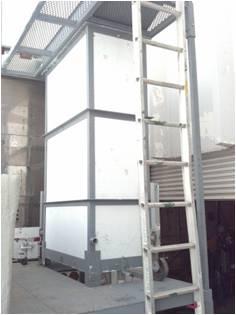
Front of the Pilot Unit

Is It Possible to Digest Dry or Solid Manure?

This new anaerobic digestion system has been designed from the ground up based on extension work carried out on Colorado dairy and beef facilities. Previous feasibility studies conducted on these sites indicated that conventional anaerobic digestion was not a recommended technology due to a variety of economic and technical parameters.

However, upon further review, it was found that these constraints were tied to specific technologies, not anaerobic digestion in general. Using an iterative design process, a digestion system was created which could effectively address these problems. In its most basic form, it will efficiently process difficult wastes like Colorado’s dry-lot manures as well as other more conventional waste streams.

What Did We Do?

Colorado State University has a pilot system located on the Foothills Campus. The purpose of this pilot unit is to gather data about the performance of the leachate bay reactor in an integrated system and to provide design criteria for scaling this concept. The system is currently in the inoculation stage. Using a consortium of animal manures and bedding waste generated onsite, the reactors are growing the bacteria needed before further testing can commence.

Intrinsic to the design is a three phased process that is tailored to the available substrates. Solid type wastes (Typically >20% total solids) are placed into the leachate bay reactor where liquid (leachate) is passed through, slowly striping away methane forming organic chemicals.

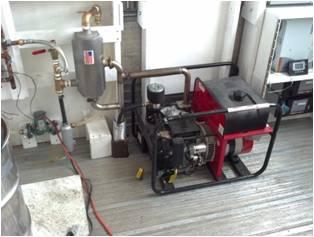
6kW Generator with Heat Exchanger for Heat Reactors with Waste Heat

Slurry wastes (Typically <20% total solids with high suspended solids) can pass into the second stage of the process- the leachate storage tank. This vessel acts as a pre digestion vessel, solids sedimentation basin, and storage tank for the pre-digestion products. Clarified leachate, rich with dissolved organic compounds, is then pumped into the final stage- the high rate reactor. In the high rate reactor process upset is mitigated by providing a very controlled flow rate of the acidic leachate into the reactor. This moderates the pH in the reactor, allowing the methane producing organisms to operate at maximum potential. Quickly degraded waste waters such as: milk processing water, run-off lagoon water, or nearby industrial wastes can be added directly to the high rate reactor.

What Have We Learned?

Solid wastes appropriate for the leachate bay reactor are dry-lot cattle manure, crop residues, equine and poultry manures, among many others. These types of wastes were the important drivers in the breakdown of technical and economic feasibility of conventional digestion systems. Due to the design of the leachate bay reactors though, many of these constraints were avoided and these wastes instead play a powerful role in this systems effectiveness by allowing digestion of often overlooked waste products. Related: Update on this project presented at the 2015 Waste to Worth conference in Seattle.

Manure Loading Dock with LBR

Future Plans

Extensive infrastructure has been built into this pilot unit to facilitate monitoring and logic control of this facility. Ongoing work will be to build out this sensing network. 

Important design parameters will be teased out of the collected data to guide the development of optimization models. With the use of these models, the system can be further modified. Potential technological enhancements include: nutrient recovery from leachate, various flushing procedures to reduce salt loading, and digestion of ligno-cellulotic by-products.

Authors

Sybil Sharvelle, Sybil.Sharvelle@colostate.edu

Lucas Loetscher, Graduate Reseach Assistant, Colorado State University

Sybil Sharvelle, Assistant Professor, Colorado State University

Acknowledgements

  • Colorado Agriculture Experiment Station
  • Colorado NRCS
  • Colorado Bioscience Discovery Grant
  • Colorado Governors Energy Office

The authors are solely responsible for the content of these proceedings. The technical information does not necessarily reflect the official position of the sponsoring agencies or institutions represented by planning committee members, and inclusion and distribution herein does not constitute an endorsement of views expressed by the same. Printed materials included herein are not refereed publications. Citations should appear as follows. EXAMPLE: Authors. 2013. Title of presentation. Waste to Worth: Spreading Science and Solutions. Denver, CO. April 1-5, 2013. URL of this page. Accessed on: today’s date.
Integrating Probable Fieldwork Days into Nutrient Management Plans

Waste to Worth: Spreading science and solutions logoWaste to Worth home | More proceedings….

Abstract

Weather conditions impact land application of manure.  Wet soils hinder equipment from accessing fields.  Regulations prohibit application on frozen or snow cover soils.  Uncertain soil and atmospheric conditions can cause the best plans to fail.  Nutrient management plans that are expected to succeed might fail given any particular year’s weather. Incorporating fieldwork days information into nutrient management plans can make them more robust to uncertain weather conditions.

The USDA publishes the number of fieldwork days for different crop reporting districts within states. These data are from field reporters who provide their opinion on the number of days that were available for farmers to conduct fieldwork such as disking, planting and harvesting.  USDA Fieldwork Days data cover the growing season (approximately April to December). Estimates of fieldwork days do not exist for the non-growing season (approximately December to April).  However, certain states have agricultural weather station networks that collect soil temperature and other critical information that can be used to estimate the number of fieldwork days that exist for manure application within regulatory limits.

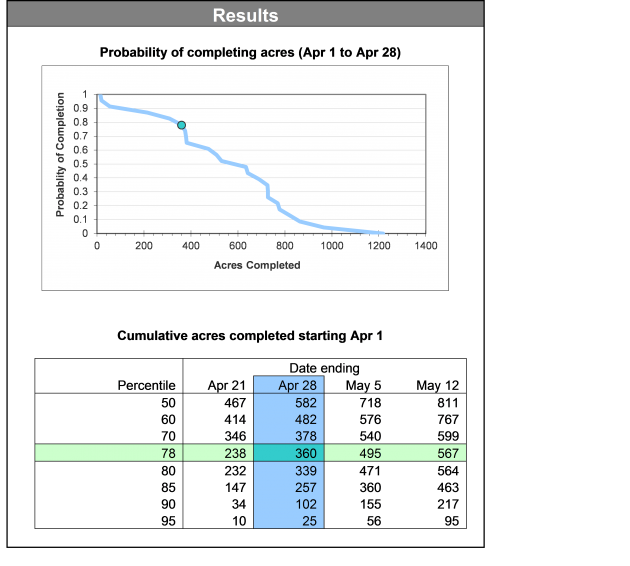
This project integrates fieldwork days from the USDA Fieldwork Days data with the Missouri Agricultural Weather Station Network winter soil temperature and precipitation data for the corresponding crop reporting district.  This compiled database gives a complete year of fieldwork day estimates.  The data are used in a model that allows nutrient management planners to incorporate climatological impacts into their land application plans.  Users specify their equipment complement and size, quantity of manure, and desired beginning and ending dates.  The model reports output in a cumulative distribution function that estimates the probability of completing fieldwork within the specified parameters and a sensitivity table of ending dates.

Why Consider Fieldwork Days for Nutrient Planning?

We currently have no mechanism to evaluate the feasibility of implementing nutrient management plans.  A plan that successfully finds sufficient fields for using nutrients in manure may fail because there is insufficient time to apply manure with the designated equipment.  Incorporating fieldwork day information into the nutrient management planning process could make plans more robust, informing the planner and farmer how likely the plan will succeed.

What Did We Do?

This project developed two spreadsheets that help nutrient management planners incorporate USDA and climatic data into their plans to estimate the likelihood of successfully completing the plan objectives.

The first spreadsheet incorporates fieldwork day data from the USDA with machinery management decisions to estimate the probability of completing manure application within a planned window.  This spreadsheet and data report the number of days in a week when fieldwork can be done in various regions of the state during the period April through November.  The second spreadsheet integrates soil temperature and precipitation data from the Missouri Agricultural Weather Station Network to estimate the probability of completing manure application within a planned window during the months of December through March period.

Users specify their equipment complement and size, quantity of acres receiving manure, desired beginning and ending dates for manure application, and hours per day and days per week they can apply manure.  The model reports output in a cumulative distribution function that estimates the probability of completing fieldwork within the specified parameters and a sensitivity table of ending dates.

Sample output of the probability of completing necessary fieldwork.

What Have We Learned?

Plans do not normally consider the feasibility of accomplishing manure application within an appropriate time frame.  Missouri fieldwork day data indicate that time available for field work varies significantly over the year and within the state at any given time.    For example, a nutrient management plan that requires 100 hours of application time in northwest MO during the month of April would be successful 78% of the time.  The same nutrient management plan needing 100 hours of fieldwork during February would be successful 40% of the time.  In April the median number of fieldwork days 11.5 days compared to 8.3 days in February.

Sample imput screen for describing the manure application parameters.

Future Plans

We will expand the tool beyond Missouri.  We are looking for funding opportunities to integrate it into our nutrient management plan document generators.

Authors

John Lory, Associate Professor of Extension, Plant Science Divsion, University of Missouri loryj@missouri.edu

Dr. Ray Massey, Professor of Extension, Agricultural Economics, University of Missouri

Pat Guinan, Assistant Professor of Extension, Soil and Environmental Systems, University of Missouri

Additional Information

The spreadsheets that incorporates fieldwork days into manure management decisions can be obtained at swine.missouri.edu/manure/ under the link names of Probable Fieldwork Days and Probable Winter Fieldwork Days.

Acknowledgements

Scott Gerlt and Brent Carpenter of the Food and Agriculture Policy Institute created the initial spreadsheet tool.


The authors are solely responsible for the content of these proceedings. The technical information does not necessarily reflect the official position of the sponsoring agencies or institutions represented by planning committee members, and inclusion and distribution herein does not constitute an endorsement of views expressed by the same. Printed materials included herein are not refereed publications. Citations should appear as follows. EXAMPLE: Authors. 2013. Title of presentation. Waste to Worth: Spreading Science and Solutions. Denver, CO. April 1-5, 2013. URL of this page. Accessed on: today’s date.
Valuing Feedstocks for Anaerobic Digestion – Balancing Energy Potential and Nutrient Content

Waste to Worth: Spreading science and solutions logoWaste to Worth home | More proceedings….

Why Study the Interaction Between Energy and Nutrients for Digestion?

To improve the energy production and revenue generation, many farm digester operators are including off-farm feedstocks in the blend.  Off-farm feedstocks are raw materials with high carbon concentrations that can be degraded anaerobically.  Common off-farm feedstocks include food service or retail waste, food processing byproducts, residuals from biofuels production and FOG (fat, oil & grease) resulting from food preparation.  Typically, off-farm feedstocks have a higher energy potential when compared to manure.  Manures generally have biogas potential in the range of 280 to 500 L of biogas/kg of VS, compared to off-farm feedstocks which can range from 300 to 1,300 L of biogas/kg of VS [1].  In addition to the increased biogas production, revenue can also be generated from tipping fees collected for feedstock brought onto a farm.  The tipping fee is typically comparable to the cost of disposing of the material at a landfill or wastewater treatment plant. 

The purpose of this ongoing project is to evaluate the biogas potential and impact on nutrient management of off-farm feedstocks for anaerobic digestion.  

What Did We Do?

The Anaerobic Digestion Research and Education Center (ADREC) has carried out hundreds of biogas methane potential tests (BMP’s) over the past 5 years.  The purpose of the BMP is to evaluate if a feedstock is anaerobically degradable and predict the biogas production under ideal conditions.  As part of the biogas testing, many feedstocks were also characterized for their nutrient composition.

What Have We Learned?

While off-farm feedstocks do offer opportunities to improve the profitability of anaerobic digestion systems, operators must also consider the costs associated with bring material onto the farm.  Water contained in off-farm feedstock contributes to the manure volume and adds cost during land application.  Nutrients contained in feedstocks need to be measured and considered in the context of nutrient management planning.  In addition, the regulatory and record keeping requirements associated with off-farm feedstock should also be factored into any cost-benefit analysis.

Future Plans

ADREC is planning to continue the BMP evaluations as part its normal fee for service activities.

Authors

Dana Kirk, Specialist, Michigan State University, kirkdana@anr.msu.edu

Louis Faivor, Technician, Michigan State Univeristy

Additional Information

http://researchgroups.msu.edu/adrec/about


[1] KTBL.  2012.  Biogas Profitability Calculator.  http://daten.ktbl.de/biogas/showSubstrate.do?zustandReq=3#anwendung


The authors are solely responsible for the content of these proceedings. The technical information does not necessarily reflect the official position of the sponsoring agencies or institutions represented by planning committee members, and inclusion and distribution herein does not constitute an endorsement of views expressed by the same. Printed materials included herein are not refereed publications. Citations should appear as follows. EXAMPLE: Authors. 2013. Title of presentation. Waste to Worth: Spreading Science and Solutions. Denver, CO. April 1-5, 2013. URL of this page. Accessed on: today’s date.

Design, Construction and Implementation of a Pilot Scale Anaerobic Digester at the University of Missouri-Columbia’s Swine Teaching and Research Farm

Waste to Worth: Spreading science and solutions logoWaste to Worth home | More proceedings….

* Presentation slides are available at the bottom of the page.

Abstract

Self-scraping system in hog confinement building.

Animal manure is often utilized by the American agriculture industry as fertilizer without considering the potential energy production. It is well established that on-farm anaerobic digestion (AD) can be effective in providing energy, reducing greenhouse gas emissions, and controlling air and water pollutions. Knowledge of the ADs on biogas production, digested and stored manure nutrients, and air emissions must reach parties of interest. A modular, pilot-scale, mesophilic AD system is being installed for the new swine finishing facility at University of Missouri-Columbia Research Farm.

The new AD design utilizes three insulated, reinforced fiber-glass tanks of 2500-gallon in size, which are commercially available. One tank is designed for feedstock storage and mixing, and the other two tanks are for digestion. The dual-tank set up provides research flexibility as either single stage with two-stream parallel replication or dual-stage single-stream experiments. The design employs small biogas (generated by the AD) boilers for heating the digester tanks and system building.  It also features a feedstock-digestate heat-exchanger for heat reclamation to reduce net energy input; which will be critical to the small and mid-size AD systems not generating electricity (no waste-heat from engines).

Valve control box (under construction). This allows extra manure and effluent to be discharged directly to the lagoon or to pump fresh manure directed back to the digester.

The system also includes a geothermal heat exchanger for biogas cooling to collect condensate in the biogas along with a small iron sponge to reduce H2S concentrations which improves the biogas quality. Excess biogas will be burned in boiler and the heat produced will be dissipated through a dual purpose radiator. The radiator provides building heat in winter and releases heat outside in summer. The goals of this project are to demonstrate AD for small and mid-size swine productions, quantify and characterize manure nutrient changes due to AD and storage, and develop baseline emission factors for raw and digested manure. This paper reports the design, construction and implementation of the AD system.

Why Study Small-Scale Anaerobic Digestion?

The purpose of this project is to establish a pilot scale, on-farm anaerobic digester (AD) that demonstrates and evaluates the potential energy production, manure management, and overall economic viability of such systems. This research will provide invaluable information for small to medium sized swine farms seeking viable energy alternatives, practical manure management practices and air quality improvements.

What Did We Do?

Current digester system enclosed in greenhouse.

Construction began in the Fall of 2012, at the University of Missouri-Columbia’s Swine Teaching and Research Farm. This modular, pilot-scale, mesophilic AD system is being constructed next to a four-room swine finishing research barn. Each of the finishing room has individual deep-pit storage, with a  pull-plug system for draining the manure to the lagoon. Manure scraper systems are installed in two of the rooms to more frequently collect the manure. The AD system is comprised of three insulated, reinforced fiber-glass tanks, each with a capacity of 2500-gallons. The first tank is designed for feedstock storage and pre-mixing, while the other two are for digestion. The dual tank set up allows flexibility for researchers to conduct experiments either with a single stage, two-stream parallel replication or dual-stage single-stream digestion process. The system employs a biogas (generated by AD) boiler for heating the digestion tanks to maintain continuity. A 3,000 gallon biogas bladder storage unit stores the biogas for a few hours. A feedstock-digestate heat exchanger is designed for heat reclamation to increase net energy output; which will be critical to a small to mid-size AD systems that do not generate electricity (no waste-heat from biogas engines). The boilers also supply heat to the AD housing through radiators, while the excess biogas will be flared off.

What Have We Learned?

Designing and implementing an AD system is complex and time consuming. It is very important to involve a good engineering or technical support team. If the barn is not designed to accommodate an AD system, significant consideration is needed to manage the manure collection and transport, and to maintain manure freshness and solids content. Project management is critical to consider planning and coorperation between the farm personnel and management, utility and construction companies, and the engineering support firm.

Future Plans

Pilot test will be conducted to examine and fine-tune the system. The AD system is designed for research and demonstration purposes. Submitted proposals include plans for studying the improved efficiency due to better design and heat-exchangers, effects of feedstock, co-digestion, feedstock pre-treatment on biogas production, and characterizing greenhouse gas emissions from untreated manure and AD-treated manure.

Authors

Brandon Harvey, Research Assistant, Agricultural Systems Management, University of Missouri bchfzf@mail.missouri.edu

Teng Lim, Assistant Professor, Agriculture Systems Management, University of Missouri. Kevin Rohrer, Engineer, Martin Machinery, LLC.

The authors are solely responsible for the content of these proceedings. The technical information does not necessarily reflect the official position of the sponsoring agencies or institutions represented by planning committee members, and inclusion and distribution herein does not constitute an endorsement of views expressed by the same. Printed materials included herein are not refereed publications. Citations should appear as follows. EXAMPLE: Authors. 2013. Title of presentation. Waste to Worth: Spreading Science and Solutions. Denver, CO. April 1-5, 2013. URL of this page. Accessed on: today’s date.

Evaluation of a Trickle Flow Leach Bed Reactor for Anaerobic Digestion of High Solids Cattle Waste

Waste to Worth: Spreading science and solutions logoWaste to Worth home | More proceedings….

Why Study High-Solids Anaerobic Digestion?

Colorado is the second highest producer of high solids cattle waste (HSCW) in the United States. Despite the available resources, Colorado currently has only one operational anaerobic digester treating manure (AgSTAR EPA 2011), which is located at a hog farm in Lamar. Arid climate and limited water resources in Colorado render the implementation of high water demanding conventional AD processes. Studies to date have proposed high solids AD systems capable of digesting organic solid waste (OSW) not more than 40% total solids (TS). Lab tests have shown that HSCW produced in Greeley (Colorado) has an average of 89.4% TS. Multi-stage leach bed reactor (MSLBR) system proposed in the current study is capable of handling HSCW of up to 90% TS.

What Did We Do?

Hydrolysis is carried out in a trickle flow leach bed reactor (TFLBR) and methanogenesis can be carried out in a high rate anaerobic digester (HRAD) like an upflow anaerobic sludge blanket reactor or a fixed film reactor. The objective of this research is to evaluate and optimize the performance of the TFLBR. The system was operated as a batch process and the organic leaching potential of a single pass TFLBR configuration was evaluated. The organic leaching potential was measured in terms of chemical oxygen demand (COD).

Three series’ of reactor experiments were carried out in total. Each subsequent experiment was based on the results on the previously conducted experiment. First set of reactor experiments included three TFLBRs (triplicate) loaded with HSCW. The difficulty encountered during the operation of this experiment was that the flow rate of water through the TFLBR slowed down over time and eventually dropped to zero within the first 24 hrs. This caused water build-up on top of the manure bed, resulting in the failure of hydrolysis. Second set of reactor experiments included six TFLBRs (two sets of triplicates). One set of triplicate was loaded with HSCW and the other set of triplicate was loaded with HSCW bulked with straw (5% by mass) to improve the porosity through the reactor. A layer of fine sand was added on top of the manure bed to facilitate water dispersion through the reactor.

The third set of reactor experiments included the comparison between nutrient dosed and non-nutrient dosed reactors (each carried out in triplicates). The idea behind dosing nutrients to an operational TFLBR was to check if the reactors were nutrient limited during the digestion process. Composite sampling technique was adopted so as to capture the exact leaching potential from each of the reactors.

What Have We Learned?

The first set of reactor experiments helped in identifying the clogging issues in operational TFLBRs handling HSCW. The second set of reactor experiments validated the use of fine sand as a better alternative to improve hydraulic flow when compared to the use of bulking agents. The third set of reactor experiments indicated that the addition of nutrient solution to a single-pass TFLBR operation is essential in improving the overall system yield. Leachate collection by composited sampling method instead of the instantaneous sample method improved the system efficiency by approximately 50%. The average TS reductions in the non-nutrient dosed and nutrient dosed TFLBRs were 23.18% and 22.67% respectively. The non-nutrient dosed TFLBRs underwent approximately 66.32% of COD reduction and the nutrient dosed TFLBRs underwent approximately 73.51% of COD reduction due to COD leaching during hydrolysis, over the period of six weeks. Biochemical methane potential (BCMP) test results indicate high biogas yields from the weekly composited leachate from the reactor experiments proving successful system operation. Approximately 0.43 L CH4/g COD is produced from the leachate collected from the non-nutrient dosed TFLBRs and 0.57 L CH4/g COD is produced from the leachate collected from the nutrient dosed TFLBRs.

Future Plans

The proposed MSLBR system recommends TFLBRs operating under leachate recirculation. The addition of nutrient solution in a leachate recirculated TFLBR would not be unnecessary since the nutrients in the system would be conserved. The success of hydraulic conductivity and leaching quality in a leachate recirculated TFLBR is unknown. More research is required to completely understand the operation and success of the MSLBR system treating HSCW. Pilot scale reactor experiments should be conducted to monitor the operation of the TFLBRs under leachate recirculation.

Authors

Asma Hanif, Graduate Student in Civil & Environmental Engineering, Colorado State University,  asmahanif1988@gmail.com

Dr. Sybil Sharvelle, Assistant Professor in Civil & Environmental Engineering, Colorado State University, Sybil.Sharvelle@colostate.edu


The authors are solely responsible for the content of these proceedings. The technical information does not necessarily reflect the official position of the sponsoring agencies or institutions represented by planning committee members, and inclusion and distribution herein does not constitute an endorsement of views expressed by the same. Printed materials included herein are not refereed publications. Citations should appear as follows. EXAMPLE: Authors. 2013. Title of presentation. Waste to Worth: Spreading Science and Solutions. Denver, CO. April 1-5, 2013. URL of this page. Accessed on: today’s date.
Silage Runoff Characterization

Waste to Worth: Spreading science and solutions logoWaste to Worth home | More proceedings….

Abstract

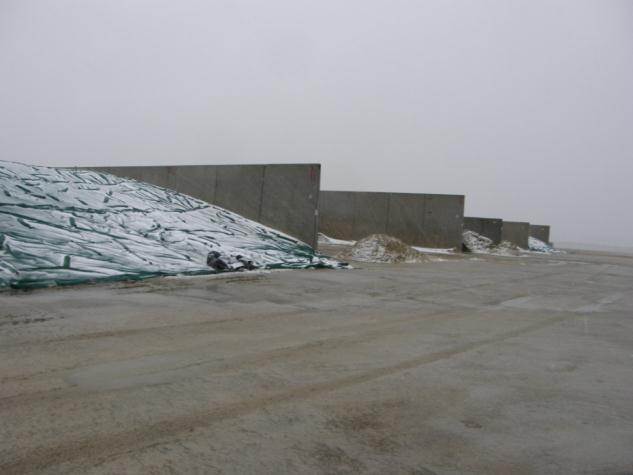
Silage leachate is a high strength waste which contributes to surface and groundwater contamination of various pollutants from runoff, direct leaching through concrete storage structures, and infiltration of runoff. Feed storage is required for the majority of dairy operations in the country (which are expanding in size and fed storage requirements) leading to widespread potential contamination. Limited data on silage leachate quality and treatment has made management and regulation based solely on observation. This project investigated three bunker silage storage sites to assess the water quality characteristics of silage leachate and runoff from various feed sources and surrounding environmental factors. Surface samples were collected from feed storage structures and analyzed for numerous water quality parameters. Using collected hydrologic data, contaminant loading was analyzed for various storm events and assessed for first flush effects and potential to impact handling and treatment designs. Determination of first flush provides essential data for separation of waste streams (high and low strength) to ease management in terms of operation and cost, reduce loading to treatment systems, and reducing the overall environmental impact.

Why Is It Important to Characterize Silage Leachate?

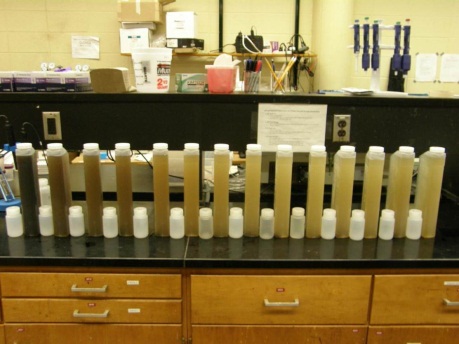
Silage Runoff Samples from an October Rain Event

Silage runoff, or the flow of surface excess water over an area containing silage or silage leachate, contains nutrients harmful to watersheds. Nutrient concentrations within silage runoff are variable and are dependent on event size, seasonality, bunker condition, and concentration of silage. Knowledge of nutrient loading thoughout a storm can benefit silage runoff storage and treatment standards.

What Did We Do?

Three horizontal bunkers in south central Wisconsin were anzlyzed over the seasons of fall, spring and summer.  Two of the bunkers sampled were designed with subsurface leachate collection.  Runoff was collected using ISCO automated samplers and samples were triggered by flow rate. Water quality analysis was completed on the campus of University of Wisconsin – Madison and alkalinity, NH3, BOD5, COD, NO2, NO3, ortho-p, pH, TKN, TP and TS were analyzed. Thirty-five storms in total were analyzed ranging from 0.03 – 1.74 inches.

Horizontal Dairy Bunker During a Storm Event

What Have We Learned?

Seasonality can impact the nutrient concentrations within silage runoff.  Normalized cumulative pollution load curves illustrate moderate first flush in the fall and a moderate delayed load curve in the summer.

Future Plans

Correlating silage runoff concentrations with bunker conditions such as date, amount filled, moisture content, and amount of litter present on pad could help explain seasonal variability.  Collection of future storms could aid in explaining variances and facilitate modeling.

Authors

Michael Holly, Master’s Candidate Biological System Engineering, University of Wisconsin – Madison, maholly@wisc.edu

Dr. Rebecca Larson, Assistant Professor and Extension Specialist, University of Wisconsin – Madison

Acknowledgements

Zach Zopp, Lab and Field Tech

Shayne Havlovitz, Undergraduate Research Assistant


The authors are solely responsible for the content of these proceedings. The technical information does not necessarily reflect the official position of the sponsoring agencies or institutions represented by planning committee members, and inclusion and distribution herein does not constitute an endorsement of views expressed by the same. Printed materials included herein are not refereed publications. Citations should appear as follows. EXAMPLE: Authors. 2013. Title of presentation. Waste to Worth: Spreading Science and Solutions. Denver, CO. April 1-5, 2013. URL of this page. Accessed on: today’s date.

Youth Ag Greenhouse Gas Educational Lab Materials Via Pork Production Scenarios

Waste to Worth: Spreading science and solutions logoWaste to Worth home | More proceedings….

Abstract

Many of today’s high school students have little insight into the basic day-to-day operational decisions and challenges faced by Agricultural producers. Therefore, there is a need for the development of ag-centric and dynamic educational material. Furthermore; there is an even greater need to provide high-school instructors with innovative classroom materials and instructional tools that are conducive to the structured conveyance of ag principles. Targeting the need for these innovative ag educational materials within Arkansas classrooms, this project presents an dynamic lab activity with emphasis on introductory level subject matter about Arkansas swine production systems and the related greenhouse gas emissions. Due to the particular nature of the subject matter, the activity materials were crafted into two complementary products for practicality. The first product is a compilation of swine production reference materials including: terminology and layman definitions of Arkansas swine management strategies and the basic dynamics of greenhouse gasses (CO2, N2O, CH4) as they relate to swine production. The second product is a scenario based critical thinking exercise, implemented from a manipulative decision-tree platform.

Purpose

  1. Educate students within the state of Arkansas about the various management systems intrinsic to swine production operations within their state.
  2. Provide students insight into the management obstacles that Arkansas swine producers are challenged with through balancing Carbon footprints, economic resources, natural resources, and legal compliance with production profitability and productivity

What Did We Do?

This project presents an dynamic lab activity with emphasis on introductory level subject matter about Arkansas swine production systems and the related greenhouse gas emissions. The activity materials were crafted into two complementary products for practicality. The first product is a compilation of swine production reference materials including: terminology and layman definitions of Arkansas swine management strategies and the basic dynamics of common greenhouse gasses (CO2, N2O, CH4) as they relate to this activities scope of swine production. The reference material serves as both an introduction to basic ideas and practices native to swine production and GHGs, and as a guide which aids the students in completion of the second product (lab activity).

The second product is a scenario based critical thinking exercise, implemented from a manipulative decision-tree platform. Flashcards are used to represent three specific swine management systems using a three tier hierarchy. This hierarchy is distinguished by the allocation of Categories, Components, and Options. The “Categories” are the designated ranking class and will represent three major swine production management systems: Housing Management, Waste Management, and Feed Management. The “Components’ are the first sub-order class, and are used to represent various functions/considerations that comprise each “Category” of production system. The “Options” class holds the lowest position within the hierarchy and represents the different configurations/settings for the individual “Components”. For the context of this exercise the students will act as consultants hired by a producer to design the three management systems (via the flashcards) to “best match” the producer’s desired specifications, as defined within by a supplied catalog of unique scenarios.

Graphical reference to the hierarchical structure of the manipulatives used within this project’s lab activity.

Future Plans

Implementation of this project’s developed lab-activity within Arkansas’ high school classrooms via the Arkansas Farm Bureau supported (Ag-In-the-Classroom) program.

Authors

Szymanski “Rick” Fields II, Program Associate, Biological and Agricultural Engineering, University of Arkansas Division of Agriculture Extension rfields@uaex.edu

Karl VanDevender, Professor-Engineer, Biological and Agricultural Engineering, University of Arkansas Division of Agriculture Extension

Additional Information

http://www.extension.org/pages/65635/integrated-resource-management-tool-to-mitigate-the-carbon-footprint-of-swine-produced-in-the-united

Acknowledgements

This is a NIFA funded project (Proposal # 2010-04269; Title of Proposal “Integrated Resource Management Tool to Mitigate the Carbon Footprint of Swine Produced in the U.S”)

Special thanks to Donna VanDevender (High School Science Teacher-Bauxite Arkansas) for her insight into the development of the materials and for providing the opportunity to conduct trial runs of the lab-activity.

The authors are solely responsible for the content of these proceedings. The technical information does not necessarily reflect the official position of the sponsoring agencies or institutions represented by planning committee members, and inclusion and distribution herein does not constitute an endorsement of views expressed by the same. Printed materials included herein are not refereed publications. Citations should appear as follows. EXAMPLE: Authors. 2013. Title of presentation. Waste to Worth: Spreading Science and Solutions. Denver, CO. April 1-5, 2013. URL of this page. Accessed on: today’s date.
Influence of Swine Manure Application Method on Concentrations of Methanogens and Denitrifiers in Agricultural Soils

Waste to Worth: Spreading science and solutions logoWaste to Worth home | More proceedings….

Abstract

Soil microbial communities have been proposed as indicators of soil quality due to their importance as drivers of global biogeochemical cycles and their sensitivity to management and climatic conditions. Despite the importance of the soil microbiota to nutrient transformation and chemical cycling, physio-chemical properties rather than biological properties of soils are traditionally used as measures of environmental status. In general, much is unknown regarding the effect of management fluctuations on important functional groups in soils systems (i.e., methanogens, nitrifiers and denitrifiers). It is only recently that it has been possible, through application of sophisticated molecular microbiological methods, to sensitively and specifically target important microbial populations that contribute to nutrient cycling and plant health present at the field-scale and in differentially managed soil systems.

Fig. 1. Swine slurry surface application.

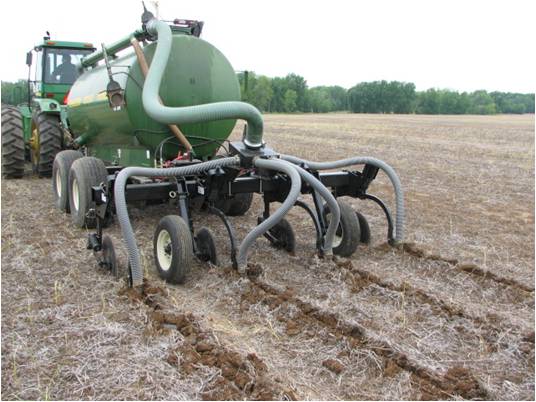
In this study, quantitative, real-time PCR (qPCR) was used to quantify changes in denitrifiers (narG) and methanogens (mcrA) in agricultural soils with three different swine effluent application methods including surface application, direct injection, and application in combination with soil aeration. Results show that concentrations of bacteria were high in all treatments (2.9 ± 1.4 X 10⁹ cells per gram of soil); about 25% higher than in controls with no slurry added. Concentrations of methanogens and denitrifiers were slightly higher (around 50%) when slurry was applied by injection or aeration (5.3 ± 2.4 X 10⁷ cells and 2.8 ± 1.8 X 10⁷ cells per gram of soil, respectively) as compared to no till  (2.4 ± 1.6 X 10⁷ cells and 1.6 ± 1.0 X 10⁷ cells per gram of soil, respectively).

These results suggest that application method has little influence on concentrations of functional groups of microorganisms. These results will be discussed in light of results of GHG sampling conducted during the same study.

Fig. 2. Swine slurry application by direct injection.

Why Study Greenhouse Gases and the Manure-Soil Interaction?

Although agricultural production has been identified as a significant source of green house gas (GHG) emissions, relatively little scientific research has been conducted to determine how manure management strategies effect GHG production upon land application. Even fewer studies have taken into consideration the microorganisms associated with applied manures. Microbial communities are responsible for nutrient transformation and chemical cycling in soil systems and many important functional groups (i.e., methanogens, nitrifiers and denitrifiers) are extremely sensitive to environmental management and climate conditions. The goal of this study was to evaluate how swine slurry land application methods effect microbial communities associated with nitrogen cycling and GHG production.

Fig. 3. Swine slurry application in combination with soil aeration.

What Did We Do?

We used molecular microbial methods to quantify changes in nitrifiers (amoA), denitrifiers (nirK, nosZ and narG) and methanogens (mcrA) in agricultural soils receiving swine slurry applied by (A) surface application (Fig. 1) (B) direct injection (Fig. 2) or (C) application in combination with soil aeration (Fig. 3). Soil samples were taken from triplicate plots 13 days after effluent application.

Above – Fig. 4. Concentration of methanogens (mcrA) and nitrate reducing bacteria (narG) as measured by quantitative, real-time PCR analysis of targeted genes (in parentheses). Swine slurry was applied by three methods surface, direct injection (Inj) or in combination with aeration (Aer). Chemical fertilizer (Fert) and plots with no fertilizer (Control) were also included. Initial slurry was removed before application. Cells in soils from plots with surface applied slurry were sampled at two depths (1.3 cm and 5.1 cm). Error bars represent the standard deviation of triplicate plot samples.
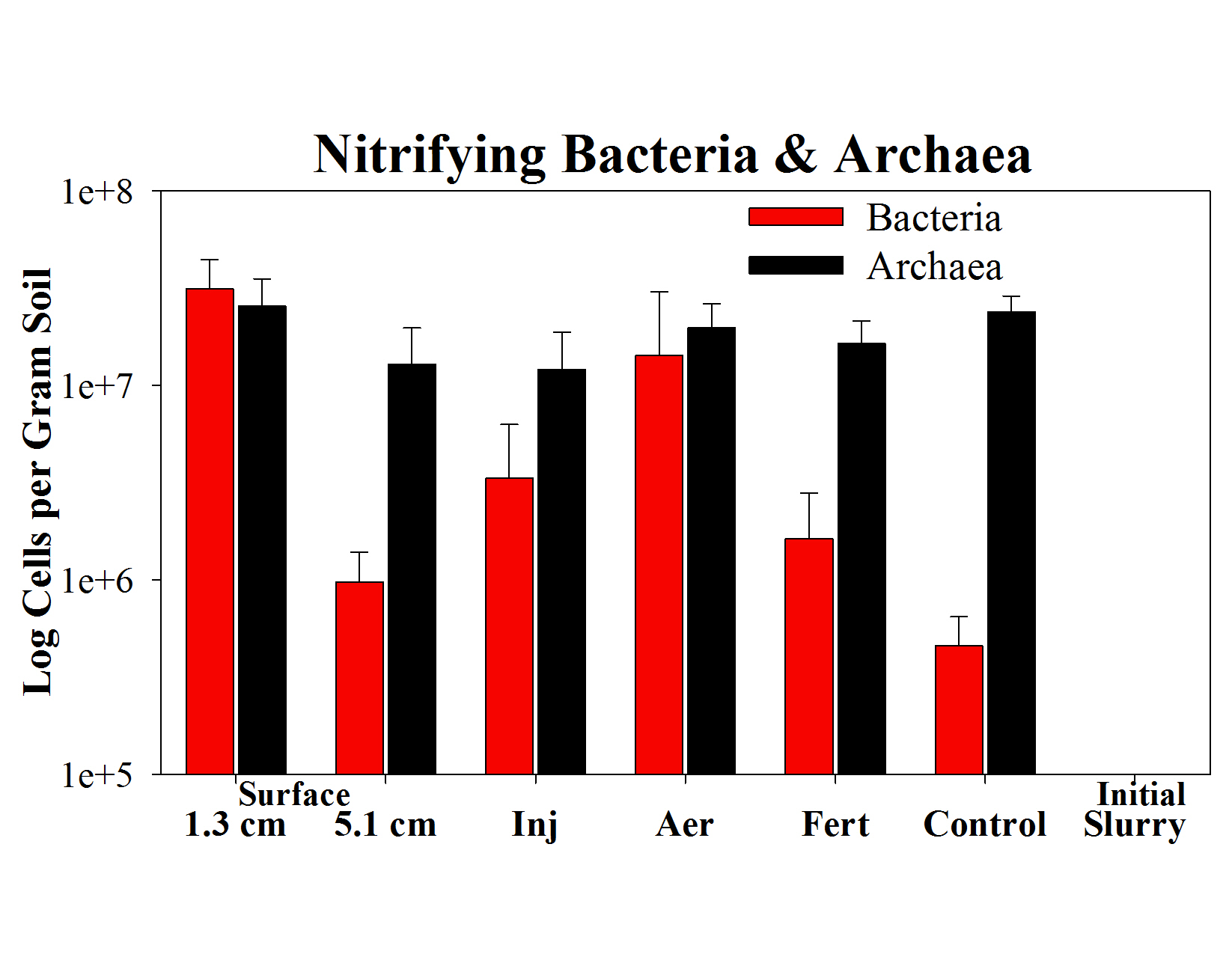
Below – Fig. 5. Concentration of nitrifying bacteria or archaea as measured by quantitative, real-time PCR analysis of the amoA specific for each group. Swine slurry was applied by three methods surface, direct injection (Inj) or in combination with aeration (Aer). Chemical fertilizer (Fert) and plots with no fertilizer (Control) were also included. Initial slurry was removed before application. Cells in soils from plots with surface applied slurry were sampled at two depths (1.3 cm and 5.1 cm). Error bars represent the standard deviation of triplicate plot samples.

What Have We Learned?

  1. Sampling cell concentrations at different soil depths (1.3 cm or 5 cm) from plots with surface applied slurry significantly influenced results (Fig. 4, Fig. 5 and Fig 6).
  2. Slurry applied by any method significantly increased (7 logs) concentrations of nitrate reducing bacteria and methanogens (Fig 4). Methanogens were present in the slurry while nitrate reducers were not measurable in slurry or control plots.
  3. Nitrifying bacteria significantly increased in concentration after slurry addition (i.e. 7, 31, 2 and 68 times higher than control plots for slurry applied by injection, aeration or surface application (1.3 cm and 5 cm), respectively); concentrations of nitrifying archaea did not change from initial levels after slurry addition (Fig. 5).
  4. Concentrations of bacteria, fungi and denitrifiers on plots with slurry applied were two to nine times higher than concentrations in controls with no slurry (Fig. 6).

Future Plans

Findings from this study underscore the importance of measuring both microbial populations and gas production when evaluating the impact of manure application on emissions. Emission data provided important information about the kind and rate of GHG emissions (see reference below for details; Sistani et al (2011) Soil Sci. America J. 74(2): 429-435). However, microbial analyses showed that select groups of nitrifiers and denitrifiers (but not all groups) were affected by manure application. Findings from microbial analyses will be the basis for development of future studies to target and manipulate specific microbial populations in ways that inhibit their ability to produce GHG.

Fig. 6. Change in concentration of targeted population in each treatment relative to that in the control with no slurry or fertilizer added. Concentrations of bacteria (16S RNA gene), fungi (18S RNA gene), nitrite reducing bacteria (nirK) or nitrous oxide reducing bacteria (nosZ) were measured by quantitative, real-time PCR analysis of targeted genes (in parentheses). Swine slurry was applied by three methods surface, direct injection (Inj) or in combination with aeration (Aer). Chemical fertilizer (Fert) and plots with no fertilizer (Control) were also included. Initial slurry was removed before application. Cells in soils from plots with surface applied slurry were sampled at two depths (1.3 cm and 5.1 cm). Error bars represent the standard deviation of triplicate plot samples.

Authors

Dr. Kimberly Cook, Research Microbiologist, USDA Agricultural Research Service, kim.cook@ars.usda.gov

Dr. Karamat Sistani, Research Soil Scientist, USDA Agricultural Research Service

Additional Information

USDA-ARS Bowling Green, KY Location Webpage: http://www.ars.usda.gov/main/site_main.htm?modecode=64-45-00-00


Relevant Publications:

Sistani, K.R., Warren, J.G., Lovanh, N.C., Higgins, S., Shearer, S. 2010. Green House Gas Emissions from Swine Effluent Applied to Soil by Different Methods. Soil Sci. America J. 74(2): 429-435.

Acknowledgements

We would like to thank Jason Simmons and Rohan Parekh for valuable technical assistance. This research is part of USDA-ARS National Program 214: Agricultural and Industrial By-products

The authors are solely responsible for the content of these proceedings. The technical information does not necessarily reflect the official position of the sponsoring agencies or institutions represented by planning committee members, and inclusion and distribution herein does not constitute an endorsement of views expressed by the same. Printed materials included herein are not refereed publications. Citations should appear as follows. EXAMPLE: Authors. 2013. Title of presentation. Waste to Worth: Spreading Science and Solutions. Denver, CO. April 1-5, 2013. URL of this page. Accessed on: today’s date.
Manure management and temperature impacts on gas concentrations in mono-slope cattle facilities

Waste to Worth: Spreading science and solutions logoWaste to Worth home | More proceedings….

Why Study Air Emissions from Mono-slope Beef Barns?

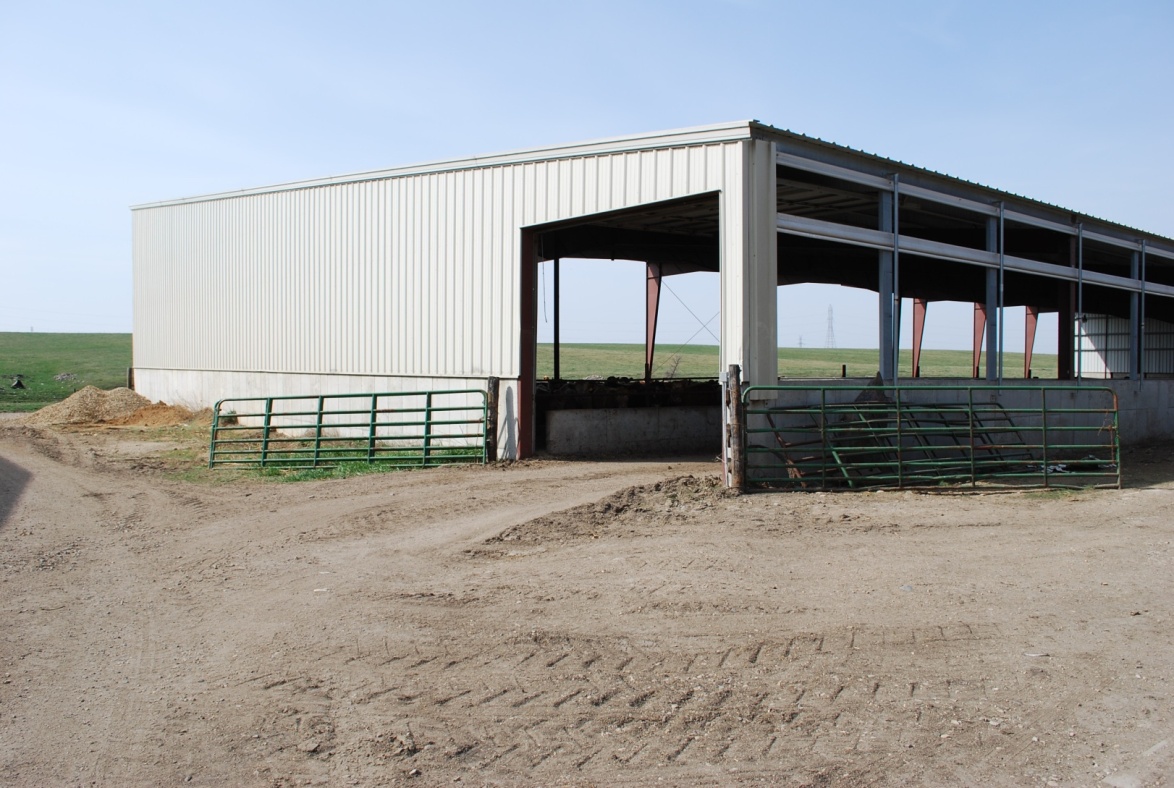
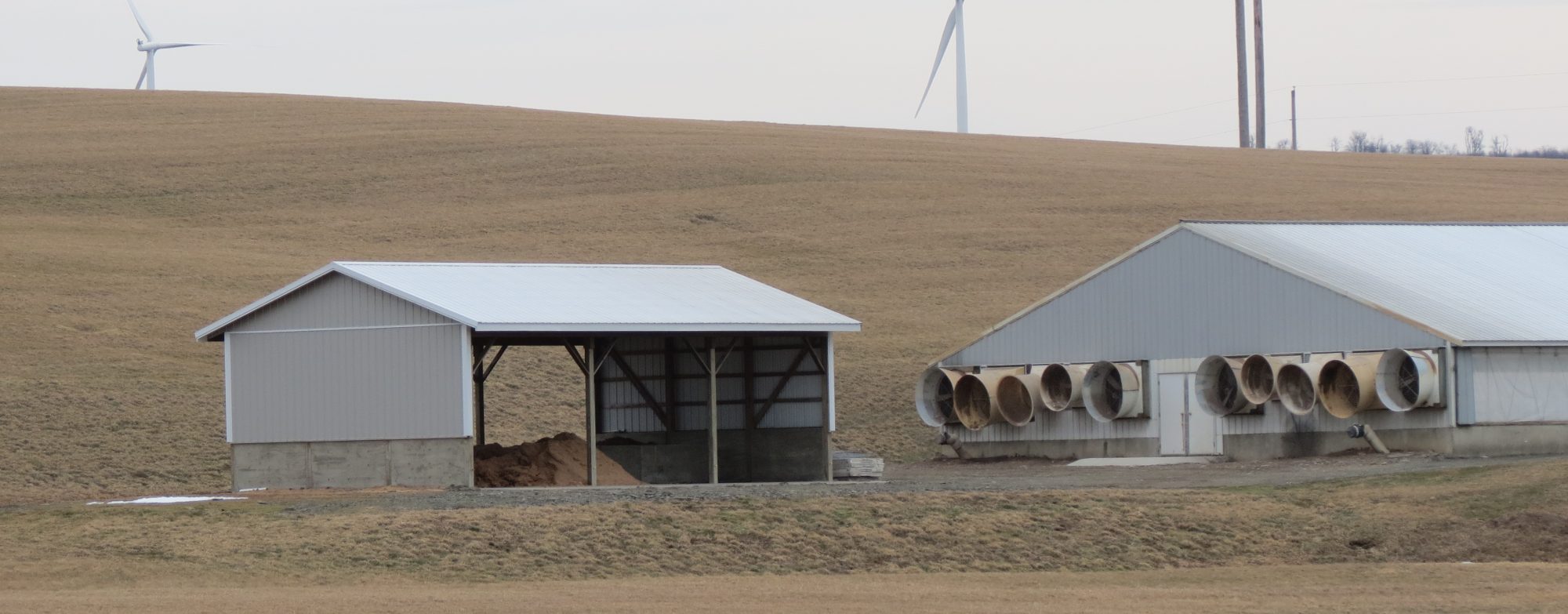
Mono-slope buildings (Figure 1) are one type of roofed and confined cattle feeding facility that is becoming increasingly popular in the Northern Great Plains. However, little is known about the impact of these housing systems and associated manure management methods on the air quality inside and outside the barn.  The objective of this study was to determine gas concentrations in mono-slope beef cattle facilities and relate these concentrations to environmental and manure management factors.

Figure 1. View of a monoslope cattle facility from the northeast. Adjustable curtains in the rear (north) wall are used to limit airspeed through the barn during colder weather.

What Did We Do?

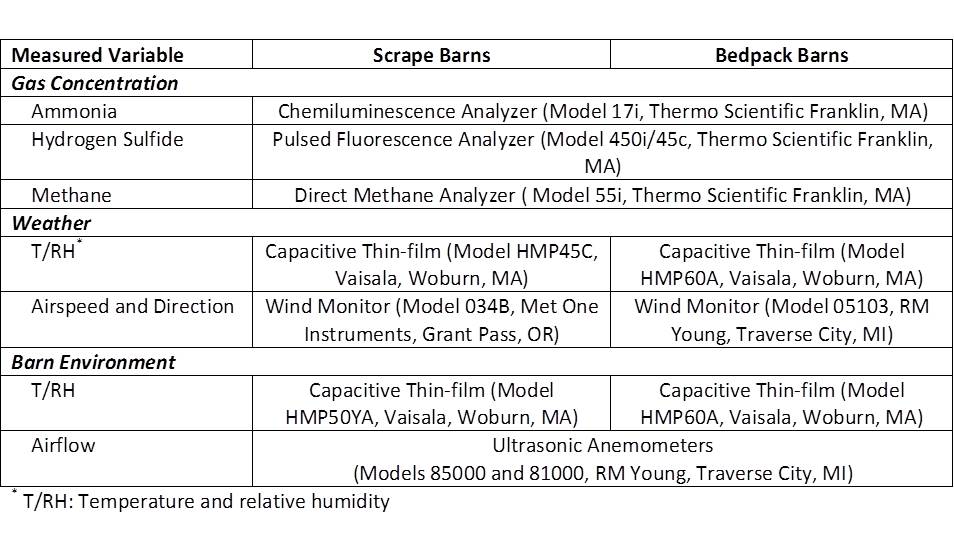
Four producer-owned and operated beef deep-bedded mono-slope facilities were selected for monitoring. Two barns maintained deep-bedded manure packs (Bedpack), whereas two barns scraped manure and bedding from the pens weekly (Scrape). Each site was monitored continuously for one month each quarter for two years to capture both daily and seasonal variations. At each facility, the environment-controlled instrument trailer and associated equipment were located adjacent to the barn. The trailer contained:  a gas sampling system (GSS) that consisted of Teflon tube sample lines connected to a computer-controlled sampling manifold, gas analyzers, computer, data acquisition system, calibration gas cylinders, and other supplies. In addition to the sampling lines, there were environmental instruments to measure the airflow and weather conditions for two pens in each barn. The analyzers and sensors used are summarized in Table 1.

Table 1. Analyzers and sensors used for air quality and environmental monitoring

Ammonia, hydrogen sulfide and methane concentrations were sequentially sampled from two south wall locations and three north wall locations per pen. The maximum hourly mean concentrations measured at the north or south wall of either pen in the barn were used in this analysis. The seasonal average hourly means of maximum concentrations and corresponding environmental variables were calculated.

What Have We Learned?

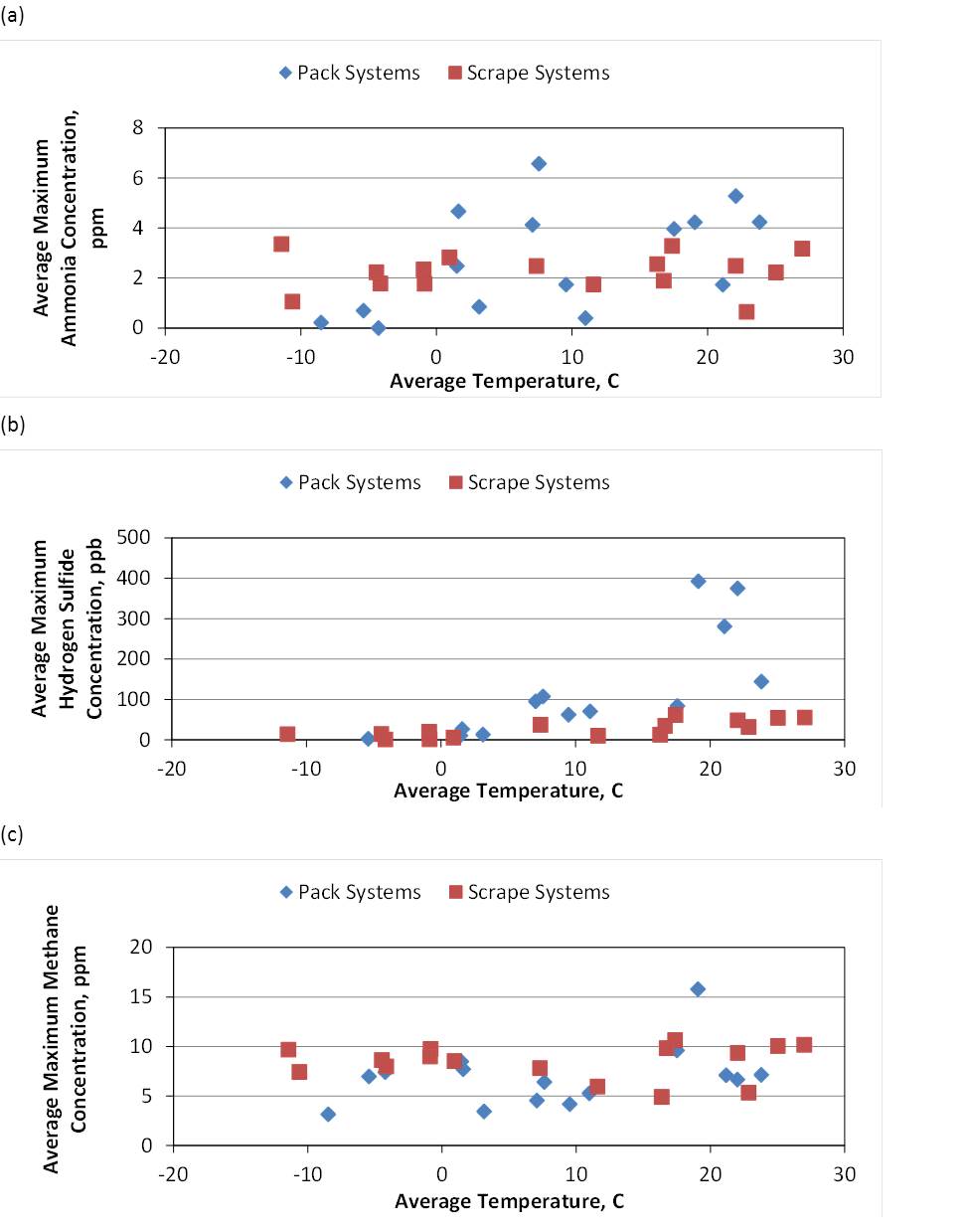
Figure 2. Seasonal averages of maximum hourly mean ammonia (a), hydrogen sulfide (b) and methane (c) concentrations for the bedpack and scrape manure management systems monitored in four monoslope cattle facilities, as influenced by ambient temperature.

The seasonal average hourly maximum ammonia concentration ranged from 0.6 to 3.3 ppm with the Scrape barns and from 0.2 to 7.1 ppm with the Bedpack barns (Fig 2a). The range of maximum hydrogen sulfide concentrations was 0 to 61 ppb in the Scrape barns and 0 to 392 ppb in the Bedpack barns (Fig 2b). The maximum methane concentration ranges were 4.9 to 10.6 and 3.1 to 15.8 ppm in the Scrape and Bedpack barns, respectively (Fig 2c). There are indications of differences between gas release rates for bedpack and scrape manure management systems and increased release rates with temperature for ammonia and hydrogen sulfide. Methane concentrations were more consistent between systems and for different temperature conditions.

This project expands the knowledge base of gaseous concentrations from deep-bedded beef barns. This integrated project also provides management techniques that producers can implement to minimize emissions, and improve air quality.

Future Plans

Emission values will be calculated using these concentration data, in conjunction with airflow data, which also varies with site and temperature conditions.

Authors

Erin L. Cortus, Assistant Professor, South Dakota State University, erin.cortus@sdstate.edu

Md Rajibul Al Mamun, Graduate Research Assistant, South Dakota State University

Ferouz Y. Ayadi, Graduate Research Assistant, South Dakota State University

Mindy J. Spiehs, Research Animal Scientist, USDA ARS Meat Animal Research Center

Stephen Pohl, Professor, South Dakota State University

Beth E. Doran, Extension Beef Program Specialist, Iowa State University Extension and Outreach

Kris Kohl, Extension Ag Engineer Program Specialist, Iowa State University Extension and Outreach

Scott Cortus, Engineering Research Technician, South Dakota State University

Richard Nicolai, Associate Professor (Retired), South Dakota State University

Additional Information

Acknowledgements

Project funded by Agriculture and Food Research Initiative Competitive Grant no. 2010-85112-20510 from the USDA National Institute of Food and Agriculture. Technical assistance provided by Alan Kruger, John Holman, Todd Boman, and Bryan Woodbury.

The authors are solely responsible for the content of these proceedings. The technical information does not necessarily reflect the official position of the sponsoring agencies or institutions represented by planning committee members, and inclusion and distribution herein does not constitute an endorsement of views expressed by the same. Printed materials included herein are not refereed publications. Citations should appear as follows. EXAMPLE: Authors. 2013. Title of presentation. Waste to Worth: Spreading Science and Solutions. Denver, CO. April 1-5, 2013. URL of this page. Accessed on: today’s date.