Effects of pH on Urease Activity in Swine Urine and Urea Solution

Proceedings Home W2W Homew2w17 logo

Purpose

A major source of pollution and loss of nutrient value from animal manure results from the conversion of urea nitrogen into ammonia by the naturally occurring urease enzyme in solid/liquid waste streams. Studies often focus on either urease inhibition in soil to prevent the volatilization of applied urea fertilizer or recovery of ammonia from wastewater, but few have studied urease inhibition in manure slurry directly from the barn. If the urea in fresh urine can be preserved at the source it would prevent the volatilization of ammonia that represents the loss of a valuable nutrient as well as the adverse effects of ammonia on livestock, humans and the environment. Our study investigated methods of inhibiting urease activity in fresh swine urine to preserve the urea nitrogen content during storage, processing and transport.

What did we do?

The study was comprised of 4 experiments:

1) Jack bean urease was introduced to a 1M aqueous urea solution and fresh swine urine. Samples were taken hourly for five hours and lab tested for total ammoniacal nitrogen (TAN) to compare urease activity of the urea solution with that of actual urine.

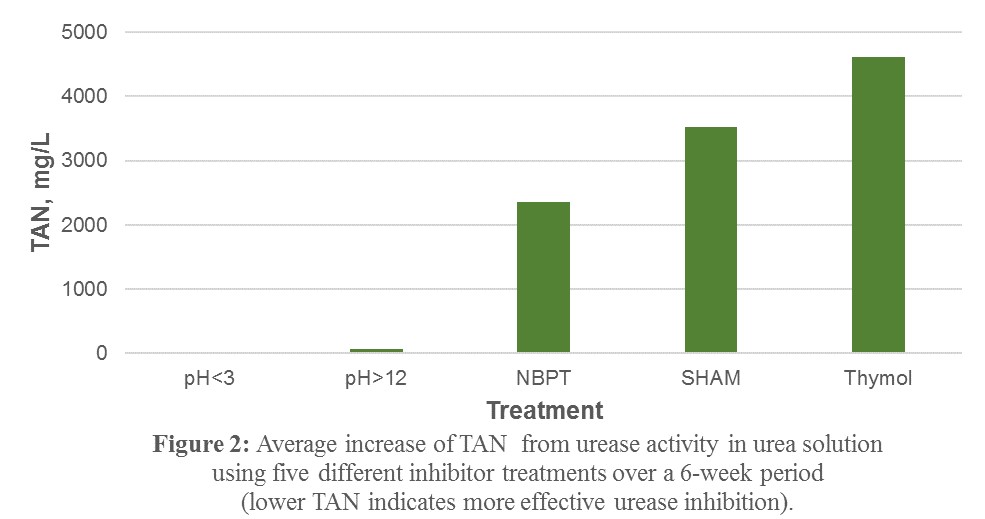
2) Using the same 1M urea solution, the effects of pH < 3.0 and pH > 12.0 on urease activity was measured relative to the commercially available inhibitors N-(n-butyl) thiophosphoric triamide (NBPT), salicylhydroxamic acid (SHAM), and Thymol (a phenol obtained from thyme oil or other volatile oils). Each treatment was sampled weekly for Total Kjeldahl Nitrogen (TKN), TAN and pH over six weeks to see which treatment best preserved urea nitrogen.

3) To determine if a smaller pH adjustment would be an effective inhibitor, we compared the activity of urease in a 1M urea solution across a pH range from 4.0 to 11.0. This was done by either lowering the pH of the urea solution with 0.1N sulfuric acid or raising it with 0.5N sodium hydroxide. The samples were tested at 7 days for pH, TKN and TAN.

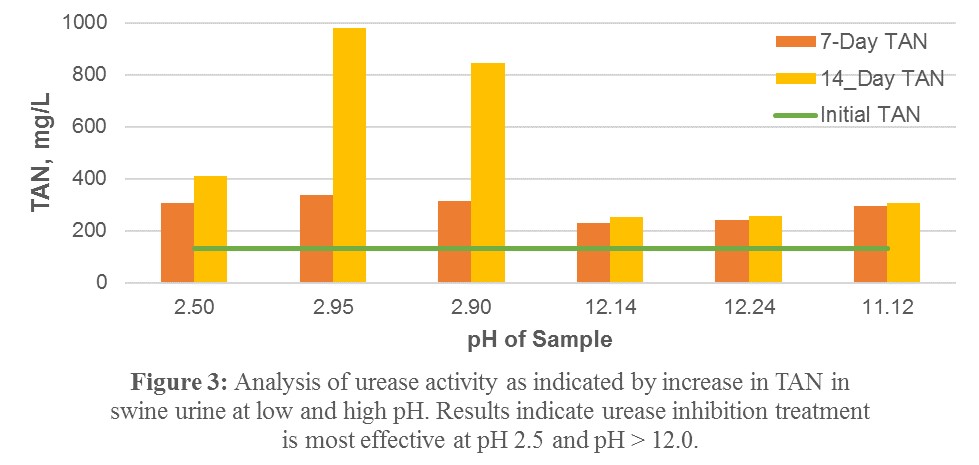
4) Finally, we explored the effect of pH < 3.0 and pH > 12.0 on urease activity in swine urine to compare the effect with that in the urea solution. The initial pH, TKN and TAN of the swine urine was observed relative to the pH and concentrations of samples taken at 7 days and 14 days.

What have we learned?

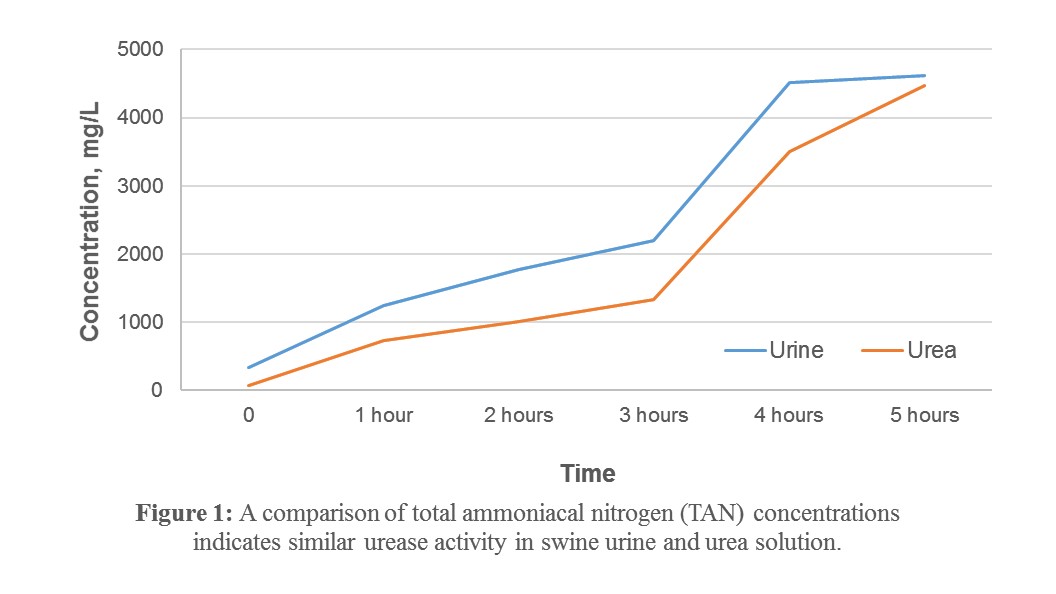
Figure 1: A comparison of total ammoniacal nitrogen (TAN) concentrations indicates similar urease activity in swine urine and urea solution

1) The conversion of urea nitrogen to ammonia (as measured by TAN) follows a similar trend in both a urea solution and freshly collected sow urine (Figure 1). This indicates that a urea solution may be an acceptable alternative for testing urease inhibition when fresh urine is not available.

2) In a comparison of NBPT, Thymol, and SHAM to pH < 3.0 and pH > 12.0, it was observed that the high and low pH had the most significant inhibitory effect on urease enzyme activity, as almost none of the TKN in the samples observed over a 6-week study period was converted to TAN, relative to the other inhibitors tested (Figure 2).

Figure 2: Average increase of TAN from urease activity in urea solution using five different inhibitor treatments over a 6-week period

3) Testing a range of nominal pH values between 4.0 and 11.0 it was observed that while urease enzyme remained active over a 2 week period across all values, activity declined with an increase or decrease in pH from the highest activity observed at pH 7.0. However, at a pH below 3.0 the urease enzyme was completely denatured and could not be restored by increasing the pH.

4) When testing high and low pH on swine urine it was observed to have a similar inhibitory effect on urease activity compared with the urea solution, that the effect is lasting over 14 days, and that the high pH is slightly more effective than the low pH (Figure 3).

Figure 3: Analysis of urease activity as indicated by increase in TAN in swine urine at low and high pH. Results indicate urease inhibition treatment is most effective at pH 2.5 and ph &gt; 12.0

Future Plans

A follow up study will be conducted using a pilot scale scraper separation system to collect fresh urine from about 30 swine through a 16 week growing cycle. We will be testing urea preservation using 3 different inhibitor treatments including pH > 12, pH < 3 and the commercial soil urease inhibitor, NBPT. We will also study the effect of UV light on urease activity during the control periods. The experiment will be repeated for each inhibitor over 3 feeding phases to simulate grower farm conditions.

Corresponding author, title, and affiliation

Alison Deviney, Graduate Research Assistant at Biological and Agricultural Engineering Department, North Carolina State University

Corresponding author email

avdevine@ncsu.edu

Other authors

John J. Classen, Ph.D. and Mark Rice, Extension Specialist at Biological and Agricultural Engineering Department, North Carolina State University

Additional information

Alison Deviney

Biological and Agricultural Engineering Department

North Carolina State University

Raleigh, NC 27695

Acknowledgements

Jason Shye and Dan Wegerif, Managing Members

Waste 2 Green, LLC, Cocoa, Florida, USA

Climate Change Mitigation and Adaptation in Dairy Production Systems of the Great Lakes

Proceedings Home | W2W Home  waste to worth 2017 logo

Purpose

To better understand how dairy agriculture can reduce its impact on climate change, the USDA has supported a large, transdisciplinary research project to examine dairy production systems across the Great Lakes region of the United States. The goals of the Sustainable Dairy Coordinated Agricultural Project are to identify where in the life cycle of a dairy system can beneficial management practices (BMP) be applied to reduce greenhouse gases (GHG) without sacrificing productivity or profit to the farmer. Since 2013, a team of 70 researchers has been collaborating across institutions and disciplines to conduct the investigations.

What did we do?

Experimental data were collected at the cow, barn, manure, crop and soil levels from 2013-2016 by agricultural and life scientists. Modelers continue to conduct comparative analyses of process models at the animal, field and farm scales. Atmospheric scientists have down-scaled global climate models to the Great Lakes region and are integrating climate projections with process modeling results. The Life Cycle Assessment team is evaluating select beneficial management practices to identify where the greatest reduction of greenhouse gases (GHG) may occur. Results of focus groups and farmer surveys in Wisconsin and New York will help us understand how producers currently farm and what types of changes they may be willing to implement, not just to reduce emissions but to adapt to long-term changes in climate.

What have we learned?

Through the Dairy CAP grant, researchers have developed and refined the best ways to measure GHG emissions at the cow, barn, manure, crop and soil levels, and these data are archived through the USDA National Sustainable Dairy LogoAgricultural Library. Results show that the greatest levels of methane produced on a farm come from enteric emissions of the cow and changes in the diet, digestion and genetics of the cow can reduce those emissions. Another significant source of methane—manure production, storage and management—can be substantially reduced through manure management practices, particularly when it is processed through an anaerobic digester. Changes in timing of nitrogen application and use of cover crops practices are found to improve nitrogen efficiency and reduce losses from the field.

A comparative analysis of process models showed multiple differences in their ability to predict GHG emissions and nutrient flow (particularly nitrogen dynamics) at the animal, farm, and field scales. Field data collected were used to calibrate and refine several models. The Life Cycle Assessment approach shows that a combination of BMPs can reduce GHG emissions without sacrificing milk production. The application of down-scaled climate data for the Great Lakes region is being used in conjunction with the suite of BMPs to develop mitigation and adaptation scenarios for dairy farming in the Upper Midwest.

Research findings are shared through a series of fact sheets available on the project website, and a web-based, virtual farm that presents educational materials for 150- and 1500-cow operations to a variety of audiences, ranging from high school students to academics.

Future Plans

The Dairy CAP grant sunsets in 2018, but research questions remain relative to the efficacy of beneficial management practices at different stages in the life cycle of a farm. Challenges revolve around the complexity of farming practices, the individuality of each farm and how it is managed, and uncertainty associated with the predictive capabilities of models. Mitigation and adaptation strategies will be shared with the dairy industry, educators and extension partners who will be responsible for working with farmers at the field level. Implementation of these strategies will make dairy farming in the Great Lakes region more resilient.

Corresponding author, title, and affiliation

Carolyn Betz, Research Project Manager, University of Wisconsin-Madison. Department of Soil Science

Corresponding author email

cbetz@wisc.edu

Other authors

Matt Ruark and Molly Jahn

Additional information

http://www.sustainabledairy.org

http://virtualfarm.psu.edu

Acknowledgements

This material is based upon work that is supported by the National Institute of Food and Agriculture, U.S. Department of Agriculture, under award number 2013-68002-20525.

Composted Horse Manure and Stall Bedding Pilot Project

Why Study Compost as Bedding for Horses?

The purpose of this project was to study and promote the use of compost as an alternative horse stall bedding and encourage horse owners and managers to think more creatively about manure management. Our objective was to reduce bedding use, and improve manure management practices at equine facilities in Snohomish County, Washington State.

Recreational and professional horse owners contribute to maintaining agricultural open space and supporting the agricultural infrastructure and local economy. Horse owners have historically been overlooked as contributors to animal agriculture, and as a result many horse owners lack a basic knowledge about manure and nutrient management. They are not aware of their impact on water and soil quality. Disposal of used stall bedding is costly for horse owners in northwestern Washington State, and has a potentially large impact on water quality. Disposal practices often include filling in low spots and ravines, or building massive piles. Composting manure at high temperatures eliminates pathogens and parasites, stabilizes nutrients, and reduces odors and vector attraction.

What did we do?

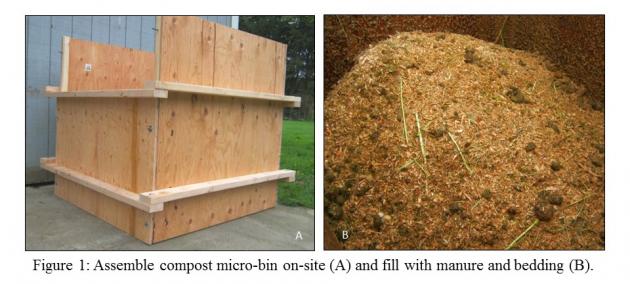
The Snohomish Conservation District (SCD) worked with ten commercial and two private equine facilities to test the use of compost as an alternative horse stall bedding material. Facilities ranged in size from 5 to >20 stalls. The primary system used for composting and reusing bedding involved a micro-bin composter (O2 Compost, Snohomish, WA) and a Stall Sh*fter® (Brockwood Farm, Nashville, IN). Micro-bins were assembled on-site and filled with used stall bedding (Fig.1-2).

Figure 1. Assemble compost micro-bin on site and fill with manure and beddingFigure 2. Turn on blower to provide aeration and monitor temperature

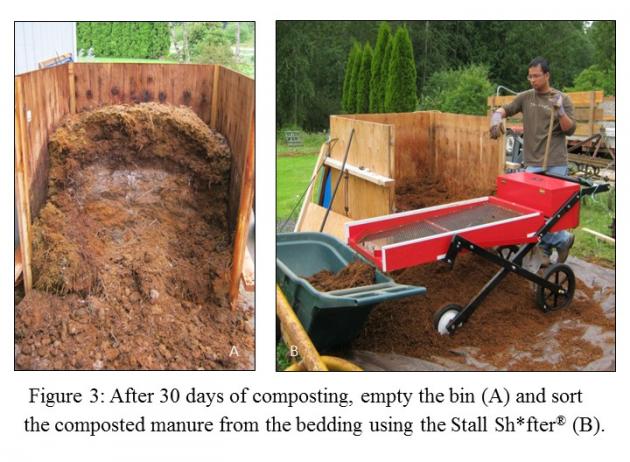
After 30 days of composting, the bin was emptied and the manure was separated from the bedding (Fig. 3). The composted bedding was then used in a stall (Fig. 4). Equine facility managers provided feedback on the effectiveness, perception, and impacts of using the compost as stall bedding. Results varied between trial sites based on type and quantity of bedding used, season, and stall management practices.

Figure 3. After 30 days of composting, empty the bin and sort the composted manure from the bedding using the Stall Sh*fter (registered trademark)

Figure 4. Use composted bedding in the stall and composted manure in the garden.

What have we learned?

Composted stall waste makes a soft absorbent bedding for horses or other livestock. Composted bedding is less dusty than shavings or wood pellets, darker in color, and has a pleasant earthy odor. There were no reports of composted bedding increasing stall odors or flies, or negatively impacting horse health. The best results were reported when mixing the composted bedding with un-composted bedding in equal proportions or two parts compost to one part bedding. There were some reports of horses with skin and respiratory conditions improving during the time they were on composted bedding, including thrush in the feet, hives and “rain rot” on the body, and “scratches” on the legs.

When separating the composted manure from the bedding, the amount and type of bedding determines the effectiveness of a bedding re-use system. Concern about appearances was more prevalent than concern about disease or parasite transfer. Even though barn managers were not entirely ready to make the switch to composted bedding, this project helped start many conversations (in person, through publications, and social media) about manure management and resource conservation. It was a great opportunity to help horse owners make the mental leap from “waste” to “resource”.

Future Plans

This project demonstrated that compost is a safe and effective horse stall bedding. Future work should be focused in three areas:

1. Developing systems for making composted bedding that are practical on a large scale and provide an economic incentive for large equine facilities to recycle their waste.

2. Outreach and education programs directed at horse owners who board their animals at commercial facilities. Would some horse owners be willing to pay a premium to board their horses at a facility that is managed in an environmentally sustainable manner?

3. Clinical trials to examine the effects of composted bedding on skin and respiratory conditions.

Author

Caitlin Price Youngquist, Agriculture Extension Educator, University of Wyoming Extension cyoungqu@uwyo.edu

Additional information

Visit http://BetterGround.org, a project of the Snohomish Conservation District.

The full report, including photographs of trial sites, is available on the Western SARE website: https://projects.sare.org/sare_project/ow11-315/

Acknowledgements

I would like to thank all of the farm owners and managers who very graciously participated in this project and were willing to try something new. The contribution of time and energy is very much appreciated.

Thanks also to the staff at O2 Compost for their efforts, ideas, and creativity. This would not have been possible without them.

And Mollie Bogardus for helping take this project to the next level, and explore all the possibilities.

The authors are solely responsible for the content of these proceedings. The technical information does not necessarily reflect the official position of the sponsoring agencies or institutions represented by planning committee members, and inclusion and distribution herein does not constitute an endorsement of views expressed by the same. Printed materials included herein are not refereed publications. Citations should appear as follows. EXAMPLE: Authors. 2015. Title of presentation. Waste to Worth: Spreading Science and Solutions. Seattle, WA. March 31-April 3, 2015. URL of this page. Accessed on: today’s date.
Discharge Quality Water from Dairy Manure: A Summary of the McLanahan Nutrient Separation System

Why Study Dairy Manure Treatment?

Dairy manure has historically been land applied consistent with the agronomic requirements of growing crops.  Due to consolidation of the dairy industry over the last 40 years, animal density has increased dramatically creating logistical, storage and environmental challenges.  Also, environmental constraints and water scarcity is more recognized.  Manure maintains tremendous nutrient value; however, water comprises approximately 90% of the manure stream.  Development of new and innovative methods for extracting nutrients for beneficial reuse while preparing water for beneficial on-site reuse is of paramount importance to the future of the US dairy industry.

What Did We Do?

Figure 1. The 4 steps that make up the McLanahan Nutrient Separation System

Figure 1. Diagram of the four steps that make up the McLanahan Nutrient Separation System

Research was initiated in 2004 to evaluate the potential of coupling a traditional complete mix digester with an ultrafiltration system to create what is commonly referred to as an anaerobic membrane bioreactor (AnMBR).

The AnMBR acts to separate hydraulic retention time from solid retention time while producing a high quality effluent. There are opposing views in the literature with respect to the impact of pump/membrane shear on biological activity and our objective was to add clarity.  An outcome of the research was that biogas production is negatively impacted by high shear forces but at practical flow rates, the impact is negligible. An additional finding, and the focus of this paper, is the recognition that the AnMBR is a logical starting point for a comprehensive nutrient recovery and water reuse process.

photo of pretreatment digester
Figure 2. Pretreatment Digester
photo of ultrafiltration
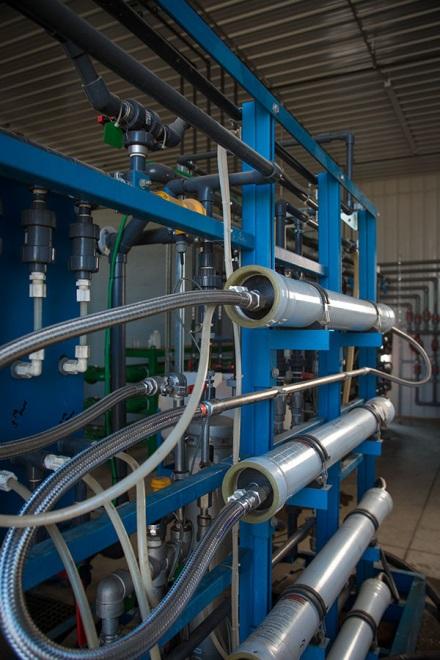
Figure 3. Ultrafiltration

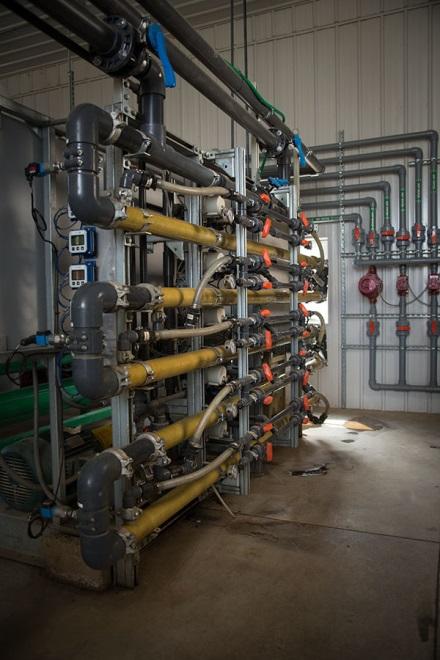
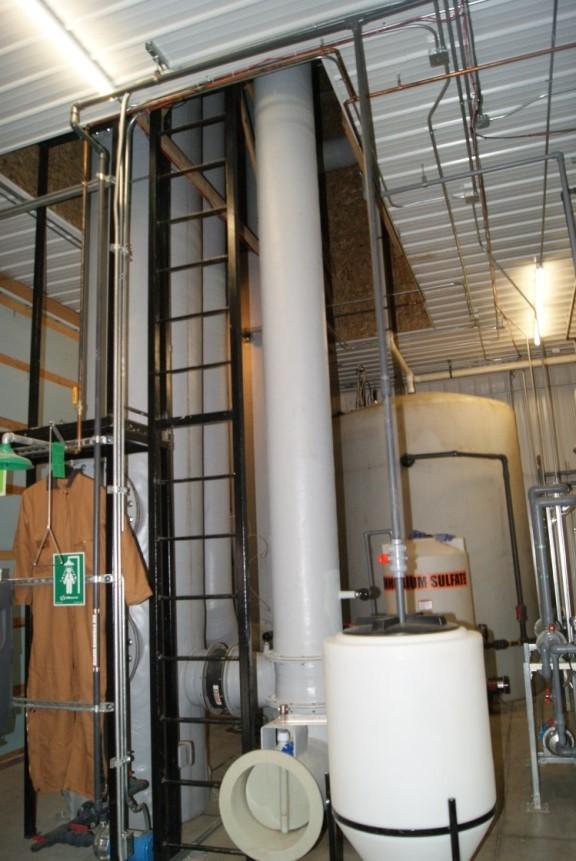
Based on this early research, a comprehensive Nutrient Management System has been developed that seeks to improve the social and environmental sustainability of the dairy industry, while reducing the cost and liability associated with manure management.  In general, nutrients are separated and concentrated, allowing for application where and when they are needed. The separated water can be land irrigated, re-used or even discharged. The system is comprised of four steps (as depicted in Figure 1):  pretreatment under anaerobic conditions (Figure 2), ultrafiltration (UF) (Figure 3), air stripping (Figure 4) and reverse osmosis (RO) (Figure 5).

photo of air stripping equipment
Figure 4. Air Stripping

The pretreatment system (anaerobic digester) and UF system are coupled together (AnMBR).  The manure fed to the AnMBR first undergoes sand separation (only for dairies bedding with sand) followed by solid separation to remove coarse solids to prevent plugging of the UF system.    The digester portion of the AnMBR produces a homogeneous feedstock while producing biogas useful for energy production, although its production is a secondary concern of the process.   There are two outputs from the UF process: permeate and concentrate.  The permeate stream, often referred to as “tea water”, is devoid of suspended solids and contains the dissolved constituents found in manure including ammonia and potassium.  The concentrate stream contains 95%+ of the phosphorus and 88%+ of organic nitrogen with a total solid content of 6-7%.  Due to the shearing action of the pump/membrane system coupled with anaerobic degradation, the resulting concentrate stream is readily pumped and the solid fraction tends to stay in suspension.

photo of reverse osmosis equipment
Figure 5. Reverse Osmosis

Permeate from the UF flows to an air stripping process for ammonia removal.  The equilibrium relationship between un-ionized and ionized NH3+/NH4 is controlled by pH and temperature.  As a general rule, the air stripper is used to remove as much ammonia as practical through the addition of waste heat (such as from an engine generator set or biogas boiler).  The stripped ammonia is combined with dilute sulfuric acid to produce liquid ammonium sulfate (approximately 6% nitrogen and 7% sulfur).

The air stripped water is fed to a RO process which produces clean water suitable for direct discharge and a concentrated liquid fertilizer containing the potassium.  The clean water represents approximately 55% of the starting volume of manure.  As an option, a plate and frame press can be used to dewater UF concentrate to produce a solid product containing phosphorus and organic nitrogen.  Inclusion of this technology offers the potential of increasing the percentage of clean water produced by the complete process to more than 60% of the starting volume of manure.

What have you learned?

  • UF membrane excludes 95%+ of phosphorus and 88%+ of organic nitrogen.
  • Stable flux rates at operating total solid concentrations of 6.0-7.0%.
  • Ammonium sulfate concentrations of 28-30% were readily achieved.
  • Overall, approximately 55% of water is recovered as discharge quality
  • Through the use of solid-liquid separation, the potential exists to increase volume of recovered water to 60%+.

Impact of Technology

The technology is flexible and can be applied to meet farm specific goals objectives.  Separated and concentrated nutrients can be land applied where and when they are needed and the production of clean water creates new and improved opportunities for water management.  Overall, the process vastly improves the farmer’s control of the manure management process.

Authors

James Wallace, P.E., PhD, Environmental Engineer, McLanahan Corporation JWallace@mclanahan.com

Steven Safferman, P.E., PhD, Associate Professor, Michigan State University

The authors are solely responsible for the content of these proceedings. The technical information does not necessarily reflect the official position of the sponsoring agencies or institutions represented by planning committee members, and inclusion and distribution herein does not constitute an endorsement of views expressed by the same. Printed materials included herein are not refereed publications. Citations should appear as follows. EXAMPLE: Authors. 2015. Title of presentation. Waste to Worth: Spreading Science and Solutions. Seattle, WA. March 31-April 3, 2015. URL of this page. Accessed on: today’s date.

Existing Equine Pasture Best Management Survey Findings from NE-1441 States


Purpose

Pasture is a good source of nutrition and 94% of U.S. equine operations allow horses to access pastures [8]. Proper management of equine operations requires the adoption of Best Management Practices (BMPs) to balance nutrient production and prevent erosion. Government agencies are concerned about non-point sources of water pollution and have focused on agriculture, including equine operations, as a major contributor to water quality issues. Many states’ laws have regulated equine farms, requiring farm managers to incorporate BMPs. Best Management Practice utilization on horse farms needs to be quantified before regulations are adopted. The objectives of these various states’ surveys were to quantify and assess the use of the equine industry’s BMPs in pasture management and erosion control and to examine potential environmental impacts. The object of this abstract is to compare and look for some similarities in the ways horse farms are managed to mitigate negative environmental impacts. Few studies have investigated horse BMPs in the regions. More research is needed to assess the effect of horse farm management on the nation’s water quality.

What did we do?

Over the past five years, state university extension equine specialist participating on the NE-1441: Environmental Impacts of Equine Operations, multi-state project, have conducted surveys of their state equine industry. Many of the state surveys were conducted to quantify and assess the use of the equine industry’s BMPs in pasture management and erosion control and to examine potential environmental impacts.

In all cases a written survey instrument was developed and the questions were reviewed by experts in the field for content and face validity. Some of the surveys used the multiple waves, (postage) mailing techniques, while some used online survey mailings, and others used an SRS clicker feedback style quiz during a program or event [1,3,7,10]. Several states developed a large list of names and email addresses consisting of horse owners/farm managers from within their state. All used follow-up reminders sent to non-responding addresses to increase return rates. All of the state’s surveys analyzed the data for descriptive statistics. Frequencies and percentages were determined for all surveys. Cross tabulations were used to determine the relationship between management practices and farm management demographics. There is difficulty in comparing the different surveys because they are all different in methodology and in the way they were conducted and analyzed.

What have we learned?

Size and scope of the equine industry-

The New Jersey equine industry consists of 7,200 horse farms with 29% having 8 or more horses. In NJ more than 50% of the farms had 5 or fewer horses and 56% of the farms had 4.05 hectors (10 ac) or less and 18.6% had more than 8.09 ha. [10] The Maryland Equine Industry consists of 87,000 horses located on 20,200 operations, averaging 11.6 ha of pasture [3].  The Pennsylvania study averaged housing 13.4 horses on 21 ha (52.7 ac) of pasture and has 32,000 operations [7].  The Tennessee study reported the average herd size of 5, with 25.6 ac designated for pasture [6]. Forty-two percent of Vermont’s horse operation house over 9 horses on 25 ac of land.

Methods horse farms used to manage pasture quality-

Results of a Pennsylvania horse farm survey showed, that during the growing season, as many as 65% reported using a rotational pasture system and 25% continuously grazing horses [7].  A Maryland survey found that only 30% of horse farm operators used rotational grazing on their farms [3].  In a Tennessee survey, continuous grazing was practiced by 51.5% of respondents. Only 23.8% of TN respondents allowed pasture to recover to a recommended grazing height and 45.3% reported sometimes resting pastures [6].  The New Jersey survey reported 54% practicing some form of rotational grazing [9].  A study conducted on farms in Minnesota and Wisconsin revealed farms had an average stocking density of 1.75 acres per horse [1].  Designated sacrifice lots were present on 84% of farms, while the average ground cover was 88% in NJ [10]. The PA study, reported 23.8% allowed pasture to recover to a recommended grazing height and 45.3% reported sometimes resting pastures. Most respondents, 75.4% assessed their pasture vegetative cover at 80% or better, and 5% reported poor vegetative cover [7].

Methods horse farms used to manage soil and weeds-

Pasture weed problems were reported to be a major issue by 78.1% of TN owners. Half of TN farm operators (49.8%) indicated they have never performed soil fertility tests [6]. While in NJ, 31% of horse farms indicated they soil test [10]. PA horse farm operators (49.8%) indicated they have never performed soil fertility tests on their pastures, with only 25.4% testing soil every 1-3 yrs [7].  In the NJ survey 89% reported mowing pastures [10].

Methods horse farms used to manage manure-

The PA survey reported that farms composting and using compost on the farm (34.1%), hauled off the farm fresh (10.9%), spread fresh on crop/pasture fields daily (10.6%), composted and hauled off farm (7.7%), horses pastured 24 hr/d with manure harrowed or removed (16.4%), horses pastured 24 hr/d with manure never managed (7.1%) [7]. New Jersey farms, 54% indicated they spread manure on their farmland, and 74% indicated that they have a designated area for storing manure. NJ farm with greater pasture acreage were positively correlated with having manure storage [10].  The TN survey, reported, that stall waste was stored on bare ground in uncovered piles (89.8%) and either stored indefinitely or spread regularly on pastures [6].

How do farm managers receive/obtain information-

Several studies showed, horse managers are receiving most of their educational information from publications, magazine articles and the internet [7].  Therefore, Extension needs to reach horse farm managers with what we do best, factsheets, popular press articles and meetings. In the PA survey, resources participants used for information included books, magazines, publications (79.4%), internet resources (79.1%), acquaintances (65%), agencies (60.5%), multi-media (27.8%), private businesses (15.7%), and 2% reported using none. Participants indicated that the primary limitation to them altering current management practices was finances (75%), knowledge (37.5%), regulations (13.7), and an inability to obtain services (11.7%) [7].

In a South Dakota study, 29% of participants indicated that their primary need for information was regarding horse pasture management and 12% wanted to figure out how to increase grazing for horses as a primary goal. Many new SD landowners were present at an Extension event with 38% having owned their acreage for less than 3 years, and only 19% had owned their acreages for more than 10 years [5].

Future Plans

Knowledge of the current scope and nature of equine industry management practices are important when developing regulations and laws that will govern land management on equine operations. Recently, several state environmental regulations are having a direct impact on equine operations. However, horse farms frequently manage horses on fewer acres per animal unit and have the potential to pose a significant environmental risk. A NJ study reported that the rate of spreading manure decreased on farms with over 20 horses [10].

Most states surveys data shows that many horse farms are utilizing BMPs to help reduce environmental impact. However, many of these studies determined that landowners of small acreages have little knowledge of natural resources management [2,5,7].  There are several areas, such as soil testing and the use of sacrifice loafing areas in pasture management, where educational programming and cost share funding are needed to target specific BMPs underutilized by the equine industry. Nearly all survey respondents reported having some pasture and nutrient management questions [2,5,7,10].

In order to help stable managers understand the principles of sustainable best management practices, Cooperative Extension can conduct state-wide “Environmental Stewardship Short Courses.” These educational programs need to be a comprehensive series of educational programs (face-to-face meeting or webinars) to promote adoption of best management practices on equine operations. In addition, what is really needed is a comparative surveys instrument that can be used nation-wide to quantify and assess the use of the equine industry’s BMPs on horse farms.

Authors

Ann Swinker, Extension Horse Specialist, Pennsylvania State University aswinker@psu.edu

Betsy Greene, Extension Equine Specialist, University of Vermont

Amy Burk, Extension Horse Specialist, University of Maryland

Rebecca Bott, Extension Equine Specialist, South Dakota State University

Bridget McIntosh, Extension Equine Specialist, Virginia

Additional information

  1. Earing J, Allen E, Shaeffer CC, Lamb JA, Martinson KL. Best Management Practices on Horse Farms in Minnesota and Wisconsin. J Anim. Sci. 2012; 90:52.
  2. Fiorellino, N., McGrath , J., Momen, B., Kariuki, S., Calkins, M., Burk, A., 2014. Use of Best Management Practices and Pasture and Soil Quality on Maryland Horse Farms, J. Eq. Vet. Sci. 34:2, 257-264.
  3. Fiorellino, N.M., K.M. Wilson, and A.O. Burk. 2013. Characterizing the use of environmentally friendly pasture management practices by horse farm operators in Maryland. J. Soil Water Conserv. 68:34-40.
  4. Henning J, Lacefield G, Rasnake M, Burris R, Johns J, et al. Rotational grazing. University of Kentucky, Cooperative Extension Service 2000; (IS-143).
  5. Hubert, M., Bott, R.C., Gates, R.N., Nester, P.L., May 2013. Development and Branding of Educational Programs to Meet the Needs of Small Acreage Owners in South Dakota, J. of NACAA. 6:1, 2158-9429.
  6. McIntosh, B. and S. Hawkins, Trends in Equine Farm Management and Conservation Practices ASAS, Phoenix, AZ. 2/13/12.
  7. Swinker, A., S. Worobey, H. McKernan, R. Meinen, D. Kniffen, D. Foulk, M. Hall, J. Weld, F. Schneider, A. Burk, M. Brubaker, 2013, Profile of the Equine Industry’s Environmental, Best Management Practices and Variations in Pennsylvania, J. of NACAA. 6:1, 2158-9429.
  8. USDA: Aphis” VS, (1998). National Animal Health System, Highlights of Equine: part III, p. 4.
  9. Westendorf, M. L., T. Joshua, S. J. Komar, C. Williams, and R. Govindasamy. 2010. Manure Management Practices on New Jersey Equine Farms. Prof. Anim. Sci. 26:123-129.
  10. Westendorf, M. L., P. Venkata, C. Williams, J. Trpu and R. Govindasamy. 2012. Dietary and Manure Management Practices on Equine Farms in Two New Jersey Watersheds, Eq. Vet. Sci. 33:8,601-606.

Acknowledgements

The State University Extension Equine Specialist that make up the NE-1441: Environmental Impacts of Equine Operations, Multi-State Program. USDA, NRCS-CIG grant for funding the Pennsylvania project.

The authors are solely responsible for the content of these proceedings. The technical information does not necessarily reflect the official position of the sponsoring agencies or institutions represented by planning committee members, and inclusion and distribution herein does not constitute an endorsement of views expressed by the same. Printed materials included herein are not refereed publications. Citations should appear as follows. EXAMPLE: Authors. 2015. Title of presentation. Waste to Worth: Spreading Science and Solutions. Seattle, WA. March 31-April 3, 2015. URL of this page. Accessed on: today’s date.
Sustainable Dairy Production Housing / Manure System: Compost Bedded Loose Housing Dairy Barn


What Are Compost Bedded Dairy Barns?

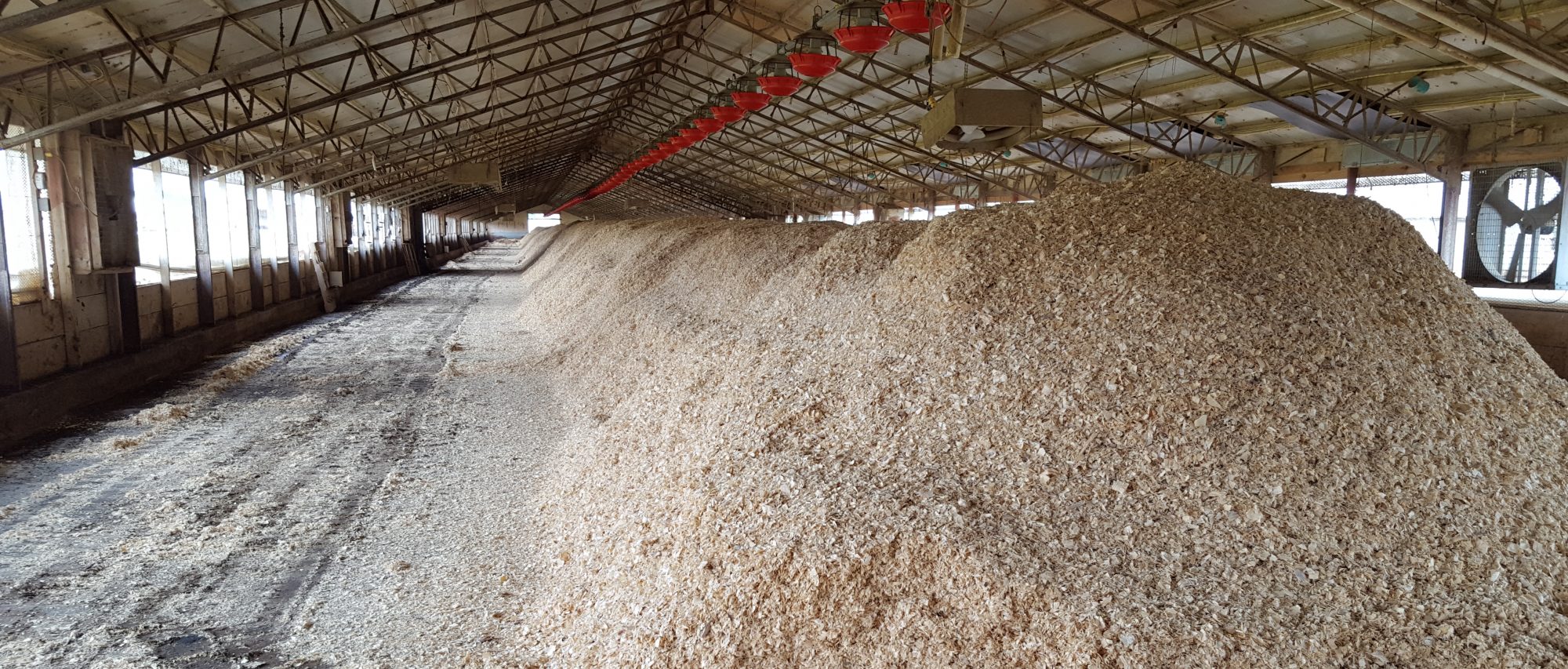
In the U.S., the first compost bedded loose housing (CBP) dairy barns were developed by Virginia dairy producers in the 1980’s to increase cow comfort and longevity.  The key component of a CBP dairy barn is a large, open resting area generally bedded with sawdust or dry, fine wood shavings that is tilled to support aerobic composting. Studies in Minnesota in the early 2000’s built a knowledge base which researchers in Kentucky have utilized during the past 5 years  as the foundation for our research and extension activities on the CBP barns, herds housed within them, and assessing compost fertility. CBP barns fit within goals of sustainable agriculture for dairies with less than 500 lactating cows because of benefits to the cow (space, rest, exercise, and social interaction – Videos 1 & 2), the farmer (low investment, labor-extensive, reduced manure storage costs with composted manure under roof), milk production (milk quality, milk yield), and the environment (reduced ammonia and greenhouse gas emissions, odor and dust emissions, reduced energy consumption, improved manure fertility and flexibility to meet nutrient management plans).  Operator experiences and research results of completed and on-going CBP barn projects are presented. 

What we did

Our first activity was to assess the existing CBP barns in KY to establish the reasons for success. Fifty-five known existing CBP dairy barns in KY were visited from September 2010 to March 2011 to determine the management, barn construction details and management factors that lead to successful operation and herd improvements. Five areas of research were subsequently identified. Critics have expressed concerns about mastitis risks in barns.  Environmental mastitis has been the main concern due to the bacterial load in the CBP barn compost. A study was conducted of mastitis incidence and milk Somatic Cell Count (SCC) of CBP barns relative to “gold standard”, sand bedded free stall barns. Dairymen also wanted to have more certainty of the compost nutrient value for land application. A study was initiated to determine N and P in compost and their release for plant uptake during the first year. For one year, bed data for temperature, moisture, nutrient content by depth, and barn climate were collected to understand the seasonal climatic effects on the compost bed and how quickly these effects are seen. Finally, bed tillage, using cultivators or rototillers, was evaluated for effects on bed performance.

What we learned

Facility design, ventilation, timely addition of fresh, dry bedding, frequent and deep stirring, and avoidance of overcrowding are the keys to a good working CBP barn. Poor management may lead to very undesirable compost bed conditions, dirty cows, elevated SCC, and increased clinical mastitis incidence. Most Kentucky dairy producers listed increased cow comfort and welfare as the main benefit to the CBP barn system, while others cited increased cow cleanliness, low maintenance nature of the system, and the barn’s usefulness for special needs and problem cows. Evaluation of annual bed performance data led to development of new compost bed management strategies. Instead of using the hygiene score for cows or bed temperature, moisture content was viewed as the primary measure since it was a leading indicator of the bed before failure. The time between a good performing bed and a poor performing bed was a matter of days when the moisture content exceeds 60% – wb. The comparison of CBP barns to sand bedded freestall barns validated producers’ observations of comparable SCC and mastitis incidence prevalence in CBP barns. Finally, CBP compost added to soil differs in P dynamics depending on soil test P level. In Low Soil Test P (STP) soils the CBP tended to slowly mineralize, and like inorganic P fertilizers, was subject to adsorption. In High STP soil, P in compost was first adsorbed, but then slowly released with time.

Future plans

  1. Computational Fluid Dynamics (CFD) modeling of the compost bed management and barn design alternatives for demonstration to dairymen for planned and existing facilities.
  2. Effect of Rapid Eye Movement (REM) sleep on cow health, production and comfort.
  3. Mastitis incidence as affected by microbial ecology of the cow udder and compost bedded pack.
  4. Life Cycle Assessment (LCA) and economic analysis of system: milk production, barn, and compost disposal.

Authors

Joseph L Taraba, Extension Professor, Biosystems and Agricultural Engineering, University of Kentucky, Lexington KY – joseph.taraba@uky.edu. 859.218.4353.

Jeffery M Bewley, Associate Extension Professor, Animal Food Sciences, University of Kentucky, Lexington KY

George B Day, Adjunct Instructor, Biosystems and Agricultural Engineering, University of Kentucky, Lexington KY

Mark S Coyne, John H. Heick Professorship, Plant and Soil Sciences; University of Kentucky, Lexington KY

Michael Sama, Assistant Professor, Biosystems and Agricultural Engineering, University of Kentucky, Lexington KY

Randi A Black, PhD Graduate Student , Animal Sciences, University of Tennessee, Knoxville TN

Flavio A Damasceno, Professor (Associate), Departamento de Engenharia, Universidade Federal de Lavras, Lavras, MG – Brasil

Elizabeth A Eckelkamp, Graduate Research Assistant, Animal Food Sciences, University of Kentucky, Lexington KY

Leslie A Hammond, Graduate Research Assistant , Plant and Soil Sciences; University of Kentucky, Lexington KY

John Evans, Graduate Research Assistant, Biosystems and Agricultural Engineering, University of Kentucky, Lexington KY

The authors are solely responsible for the content of these proceedings. The technical information does not necessarily reflect the official position of the sponsoring agencies or institutions represented by planning committee members, and inclusion and distribution herein does not constitute an endorsement of views expressed by the same. Printed materials included herein are not refereed publications. Citations should appear as follows. EXAMPLE: Authors. 2015. Title of presentation. Waste to Worth: Spreading Science and Solutions. Seattle, WA. March 31-April 3, 2015. URL of this page. Accessed on: today’s date.
Extension Recognizes Pennsylvania Farms that Adopt Sound Management Practices Protecting Water Quality and the Environment

penn state extension environmental friendly farm signPurpose

The Environmentally Friendly Farm program was developed by Penn State Equine Extension and is designed to recognize farms that adopt environmentally sound management practices that protect water quality and the environment. The program is supported by funds from the USDA Natural Resource Conservation Service (NRCS), Conservation Innovation Grant. Strategies are employed on Environmentally Friendly Farms to maintain productive pastures, reduce soil erosion, limit nutrient runoff from animal facilities and barnyards, safely store manure, recycle nutrients, and control animal access to surface waters. Excess sediment and nutrient runoff from manure poses health threats not only to the environment, but also to animals and people. Farm managers who practice environmental stewardship maintain healthy environments for their animals, their families, and their community.

What did we do?

Farm managers can apply for the program by request a copy of the application from Penn State Equine Extension by visiting us online at http://www.extension.psu.edu/equine, emailing or calling our extension office. Second, complete the Environmentally Friendly Farm application requesting background information about the farm operation.

Next, complete the Environmentally Friendly Farm Self-Assessment Checklist. Each statement is checked “yes” if the practice is in place on the farm, “no” if the practice is not in place or “non-applicable if the statement does not pertain to the farm operation. The checklist consists of a series of statements that identify potential on-farm practices in the following areas: Environmentally Sensitive Areas, Pastures, Animal Concentration Areas, Manure Storage, and Mechanical Manure Application.

Once the paperwork has been received, a farm site visit will be scheduled. Personnel from Penn State Extension, the County Conservation District, or the Natural Resource Conservation District (NRCS) will visit farms to verify that statements made in the application and checklists are accurate. At the same time, additional information and assistance will be provided to help improve farm management and develop any necessary plans for the farm.

The farm will be recognized by the public, conservation and agricultural agencies, and other farm managers as an operation that is committed to clean water and a healthy environment. Each farm manager will receive an Environmentally Friendly Farm sign that can be displayed on the farmstead. Farms that qualify will also be given permission to use the Environmentally Friendly Farm artwork on their website, brochure, and other marketing materials. Approved farms will be listed on the Penn State Equine Extension website.

This recognition will reflect the commitment of the farm manager to environmental stewardship and can serve as a marketing tool for the farm.

What have we learned?

After personnel visited farms to verify that statements made in the application and checklists are accurate. At the same time, additional information and assistance is provided to help improve farm management and develop any necessary plans for the farm. In addition, agency personal developed a personal relationship with the farm manager. The farm managers who practice environmental stewardship maintain healthy environments for their animals, their families, and their community.

Future Plans

This program will be continued through 2016. We hope to provide additional information and assistance to help improve farm management.

Authors

Ann Swinker, Extension Horse Specialist aswinker@psu.edu

Donna Foulk, Helene McKernan, Pennsylvania State University, University Park, PA 16802

Additional information

Farms can request a copy of the application from the Penn State Extension Equine Team by visiting us online at http://www.extension.psu.edu/equine

Acknowledgements

This program was funded partly by a USDA NRCS-CIG grant.

The authors are solely responsible for the content of these proceedings. The technical information does not necessarily reflect the official position of the sponsoring agencies or institutions represented by planning committee members, and inclusion and distribution herein does not constitute an endorsement of views expressed by the same. Printed materials included herein are not refereed publications. Citations should appear as follows. EXAMPLE: Authors. 2015. Title of presentation. Waste to Worth: Spreading Science and Solutions. Seattle, WA. March 31-April 3, 2015. URL of this page. Accessed on: today’s date.
Analyses of Microbial Populations and Antibiotic Resistance Present in Stored Swine Manure from Underground Storage Pits


Why Study Antibiotic Resistance in Manure?

Antimicrobial compounds have been commonly used as feed additives for domestic animals to reduce infection and promote growth. Recent concerns have suggested such feeding practices may result in increased microbial resistance to antibiotics, which can have an impact on human health. As part of our research project we have been studying the commensal microbial populations present in stored swine manure and the swine GI tract. We have extended this work to include studies on the antibiotic resistance present in these populations.

What did we do?

Predominant microbial populations were identified by both pure culture isolations and direct 16S rDNA sequencing of total DNA from swine feces and stored manure samples. Antibiotic resistance was analyzed using similar pure culture isolation methods. Pure cultures were isolated following plating on anaerobic and aerobic media containing tetracycline, tylosin, or erythromycin. Polymerase chain reaction (PCR) analyses using primers based on a variety of antibiotic resistance genes was carries out with both pure culture isolates and total DNA from swine feces and stored manure.

What have we learned?

Results of pure culture isolation and direct 16S rDNA gene sequence analyses indicate that the bacterial populations of the swine GI tract (feces) and stored manure ecosystems are predominantly composed of anaerobic, low mole %G+C, Gram-positive bacteria, most of which represent novel genera and species. Results of antibiotic resistance gene PCR studies demonstrated the presence of a variety of tet (e.g., tetK, tetO) and erm (e.g., ermA, ermC) resistance gene classes in both anaerobic and aerobic pure cultures and total DNA from both swine feces and stored manure, as well as the identification of novel bacteria containing new resistance genes. Comparison of DNA sequences suggests that horizontal transfer of resistance genes between bacterial strains has also occurred. The data indicate that both the swine gastrointestinal (GI) tract and stored swine manure may serve as reservoirs of known and novel antibiotic resistant bacteria and resistan ce genes.

Future Plans

We are interested in developing methods to reduce antibiotic resistance in the swine GI tract and stored manure, and to determine if antibiotic resistance genes present in these ecosystems can be transferred to bacteria that may affect human health (e.g., E. coli, Salmonella, Campylobacter).

Authors

Terence R. Whitehead, Research Microbiologist, USDA-ARS- National Center for Agricultural Utililzation Research, Peoria, IL 61604 terry.whitehead@ars.usda.gov

Michael A. Cotta, USDA-ARS-National Center for Agricultural Utilization Research, Peoria, IL 61604

Additional information

Terence R. Whitehead, NCAUR, 1815 N. University St., Peoria, IL 61615 309-681-6272

USDA-ARS-NCAUR-Bioenergy Research Unit: http://ars.usda.gov/main/site_main.htm?modecode=50-10-05-20

Cotta, M.A., Whitehead, T.R., and Zeltwanger, R.L. Isolation, Characterization, and Comparison of Bacteria from Swine Faeces and Manure Storage Pits. (2003) Env. Microbiol. 5:737-745. http://onlinelibrary.wiley.com/doi/10.1046/j.1467-2920.2003.00467.x/pdf

Whittle, G., Whitehead, T.R., Hamburger, N., Shoemaker, N.B., Cotta, M.A., and Salyers, A.A. Identification of a new ribosomal protection type of tetracycline resistance gene, tet(36), from swine manure pits . (2003) Appl. Environ. Microbiol. 69:4151-4158. http://aem.asm.org/content/69/7/4151.full

Cotta, M.A., Whitehead, T.R., Falsen, E., Moore, E. and Lawson, P.A. Robinsonella peoriae gen.nov., sp. nov., isolated from a swine-manure storage pit and a human clinical source. (2009) Int. J. System. Evol. Microbiol. 59:150-155. https://pubmed.ncbi.nlm.nih.gov/19126740/

Whitehead, T.R. and Cotta, M.A. Stored Swine Manure and Swine Feces as Reservoirs of Antibiotic Resistance Genes. (2013) Lett. Appl. Microbiol. 56:264-267. http://onlinelibrary.wiley.com/enhanced/doi/10.1111/lam.12043/

The authors are solely responsible for the content of these proceedings. The technical information does not necessarily reflect the official position of the sponsoring agencies or institutions represented by planning committee members, and inclusion and distribution herein does not constitute an endorsement of views expressed by the same. Printed materials included herein are not refereed publications. Citations should appear as follows. EXAMPLE: Authors. 2015. Title of presentation. Waste to Worth: Spreading Science and Solutions. Seattle, WA. March 31-April 3, 2015. URL of this page. Accessed on: today’s date.

Small to Mid-Sized Dairies: Making Compact Anaerobic Digestion Feasible

Why Consider Small or Medium Digester Projects?

Anaerobic digestion (AD) is an environmentally-friendly manure management process that can generate renewable energy and heat, mitigate odors, and create sustainable by-products such as bedding or fertilizer for dairies and farmers. However, due to economics, a majority of commercially available AD technologies have been implemented on large farming operations. Since the average herd size of dairies across the country is below 200 head of milking cows, there is a need for small-scale AD systems to serve this market.

eucolino allen farmsWhat did we do?

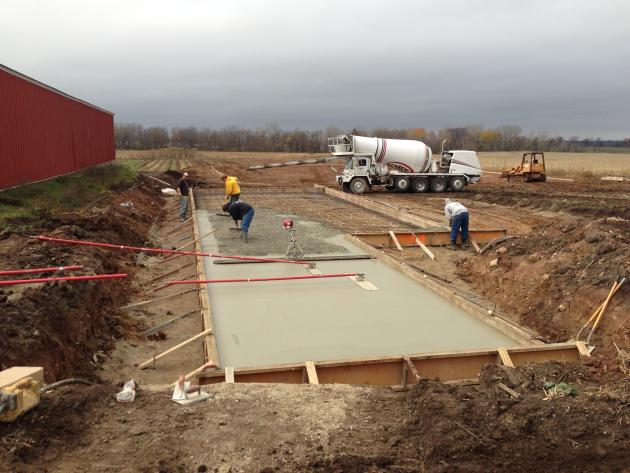
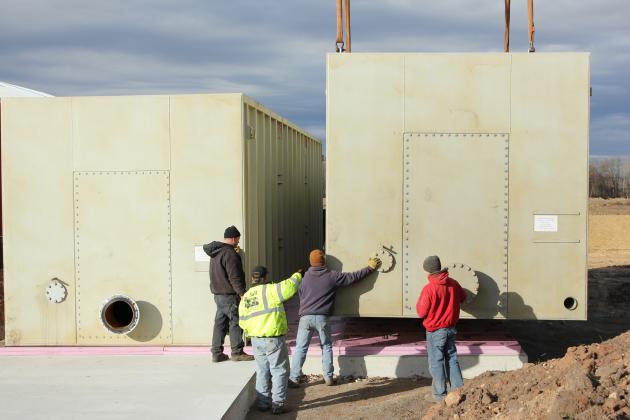
The University of Wisconsin-Oshkosh, in collaboration with BIOFerm™ Energy Systems, installed the EUCOlino—a small-scale, mixed, plug-flow digester—onto on a 136 milking head Wisconsin Dairy. The system is pre-manufactured, containerized and requires very limited on-site construction.   This includes grading, pouring a concrete pad for the containers and electrical services installation.

Start-up and commissioning were performed after the delivery of the 64 kWe combined heat and power (CHP). The input materials consist of bedded-pack dairy manure (corn or bean stover and straw), parlor wash water, and minor additional substrates such as lactose or fats, oils, and grease.

Solid materials are dumped via bucket tractor into a hopper feeder system that uses an auger to feed substrate into the anaerobic digestion tank. Additional parlor water is piped directly into the anaerobic digestion tank and mixed with the solids to make a feedstock of approximately 13% total solids. The solids are fed hourly, which is controlled by the PLC system.

The digester has a ~30-day retention time and the biogas produced is stored in a bag above the fermenters. Biogas produced is conditioned and combusted in a CHP mounted on a separate skid. Effluent from the system is pumped directly to an open pit lagoon for storage and subsequently land applied as fertilizer. The system produces approximately 25 – 33 m3/hour of biogas, with a raw biogas quality of 52-60% CH4 and less than 700 ppm H2S.

concrete pads for installation
installation
input

What have we learned?

This project has been an important step forward in developing future small-scale anaerobic digesters across the U.S.  Notably, our installation has given us insight into balancing system economics with the size of small-scale models; the energy output of the system must exceed pre-processing energy requirements and the digester must still be large enough for the designed residence time. Our experience has shown that, while reducing the size of a digester, these requirements remain essential for an installation to economically make sense.

Additionally, challenges involved in AD at the small-scale are related to pre-processing or feedstock conveyance. Once suitable consistence or size for conveyance, anaerobically digesting the organic fraction can be relatively easy. Inconsistency of incoming feedstocks is very detrimental to the system’s stability. Additionally, exterior feedstock storage and above ground piping can limit processing potential when severe cold weather settles in. While all of these are challenges that are easily overcome with engineering, they come at a cost and that can make or break the economics at this scale.

Future Plans

For the small-scale EUCOlino to be effective in the United States, it is key to establishing a U.S.- based manufacturing location. Pre-processing needs to be well-suited to the incoming feedstock. Post-digestion products need established off-takers, for electricity generation, bedding, fertilizer, etc.

Authors

Steven Sell, Manager Application Engineer, BIOFerm™ Energy Systems beaw@biofermenergy.com

Whitney Beadle, Marketing Communications, BIOFerm™ Energy Systems

Additional information

The following publications offer additional information on the Allen Farms digester:

Readers interested in this topic can also visit our website for more information on the Allen Farms digester and other BIOFerm projects. We can also be found on Facebook, Twitter, and LinkedIn.

The authors are solely responsible for the content of these proceedings. The technical information does not necessarily reflect the official position of the sponsoring agencies or institutions represented by planning committee members, and inclusion and distribution herein does not constitute an endorsement of views expressed by the same. Printed materials included herein are not refereed publications. Citations should appear as follows. EXAMPLE: Authors. 2015. Title of presentation. Waste to Worth: Spreading Science and Solutions. Seattle, WA. March 31-April 3, 2015. URL of this page. Accessed on: today’s date.