University and Anaerobic Digestion Industry Partnerships – Laboratory Testing

The anaerobic digestion (AD) industry often is in need of laboratory testing to assist them with issues related to project development, digester performance and operation, and co-digestion incorporation. This presentation will highlight laboratory procedures that can be carried out through a University partnership, including biochemical methane productivity (BMP), specific methane activity assays (SMA), anaerobic toxicity assays (ATA), solids, nutrient and elemental proximate analysis for inputs, outputs and co-products, as well as a host of other activities. The presentation will illustrate the lessons that can be learned from the results of these tests, using real-life examples of testing already completed for industry partners.

Why Provide Guidance on Laboratory Testing for Anaerobic Digestion?

Laboratory testing allows characterization of anaerobic digestion (AD) inputs, outputs, and process stability. Testing can be carried out within AD industry laboratories, and they can also be carried out through partnerships with active AD research laboratories at academic institutions. The purpose of this project was to provide a document that summarizes common laboratory procedures that are used to evaluate AD influents, effluents, and process stability and to illustrate real-life examples of laboratory test results.

What did we do? 

The overview of common laboratory procedures was written based on the need to introduce third-party AD developers and government agencies to evaluating AD outputs and process stability. The authors are practiced at performing AD laboratory tests and have expertise and valuable information concerning these types of evaluations. Following a description of each test, we included the purpose of the test and an example of how the test results can be interpreted.

What have we learned? 

Laboratory testing of AD samples is performed to determine the concentration of certain constituents such as organic carbon, volatile fatty acids, ammonia-N, organic-N, phosphorus, and methane. Contaminants can be tested for such as fecal coliform indicator pathogens, pesticides, and pharmaceuticals. Understanding the concentration of specific constituents enables informed decisions to be made about appropriate effluent management.

Biochemical methane potential (BMP) and specific methanogenic activity (SMA) tests are used to estimate the biogas and methane that can be produced from an organic waste or wastewater during AD. These tests are often used by industry during the design phase to predict total biogas output, allowing for correct sizing of engines and estimation of potential revenue.

Anaerobic toxicity assays (ATAs) test the effect of different materials on biogas production. Unknown inhibitors may reside within new feedstock materials which can lead to an unanticipated reduction in digester performance, so it is important to use ATAs to test the effect of new feedstock material on the AD system before it is used. A common example is when energy-rich organic materials are added to a digester that practices co-digestion.

Future Plans 

Future plans are to prepare an extension fact sheet about the basics of anaerobic digestion effluents and processes, including the overview of common laboratory testing used to evaluate AD influents, effluents, and process stability.

Authors

Shannon Mitchell, Post-doctoral Research Associate at Washington State University shannon.mitchell@email.wsu.edu

Jingwei Ma, Post-doctoral Research Associate at Washington State University

Liang Yu, Post-doctoral Research Associate at Washington State University

Quanbao Zhao, Post-doctoral Research Associate at Washington State University

Craig Frear, Assistant Professor at Washington State University

Additional information 

Craig Frear, PhD

Assistant Professor

Center for Sustaining Agriculture and Natural Resources

Department of Biological Systems Engineering

Washington State University

PO Box 646120

Pullman WA 99164-6120

208-413-1180 (cell)

509-335-0194 (office)

cfrear@wsu.edu

www.csanr.wsu.edu

Acknowledgements

This research was supported by funding from USDA National Institute of Food and Agriculture, Contract #2012-6800219814; and by Biomass Research Funds from the WSU Agricultural Research Center.

The authors are solely responsible for the content of these proceedings. The technical information does not necessarily reflect the official position of the sponsoring agencies or institutions represented by planning committee members, and inclusion and distribution herein does not constitute an endorsement of views expressed by the same. Printed materials included herein are not refereed publications. Citations should appear as follows. EXAMPLE: Authors. 2015. Title of presentation. Waste to Worth: Spreading Science and Solutions. Seattle, WA. March 31-April 3, 2015. URL of this page. Accessed on: today’s date.
Antibiotic Degradation During Anaerobic Digestion and Effects of Antibiotics on Biogas Production


Purpose 

The purpose of this research was to investigate the degradation of four animal husbandry antibiotics during anaerobic digestion (AD) and study biogas inhibition from the antibiotics. This study was designed to fill information gaps related to AD inhibition by different antibiotic classes in diluted manures received by anaerobic digesters, particularly cattle manure, and the need to more thoroughly investigate antibiotic degradation products from the AD process.

What did we do? 

We conducted AD bench-scale experiments that investigated biogas inhibition and antibiotic degradation. First, cattle manure was added to glass bottles. A known amount of antibiotic standard was added to the manure. A small amount of dilution water was added and the manure-antibiotic slurry was mixed briefly. Then, anaerobic digestion inoculum was added to the bottle. The air in the bottle was purged with nitrogen gas. Finally, the bottles were sealed and placed in an incubator set at 37°C. Biogas measurements and small liquid samples for antibiotic analysis were taken daily. At the end of the 40 day AD study, the solids were extracted to determine the amount of antibiotic adsorbed to the solids.

What have we learned? 

Results from our research showed that three out of four antibiotics degraded within 5 days of AD. Several degradation products were detected, some of which could be biologically active. The antibiotic that did not degrade was mostly found in the liquid phase of the AD reactor slurry and a small portion was adsorbed to the solids. Our results suggest that when antibiotic contaminated feedstocks are added to AD reactors, persistent antibiotics and transformation products may contaminate the liquid and solid effluents.

Our results showed the one of the antibiotics tested was more toxic to the AD process. Approximately 6.4-36 mg/L florfenicol lowered biogas production by 5-40%. Greater than 91 mg/L of the other antibiotics was needed to lower biogas production. These higher concentrations can be found in urine and feces of treated animals but they are not typical for the AD reactor following the addition of multiple feedstocks, inoculum, and dilution water. Our results suggest that there is little concern for these antibiotics to lower biogas production when cattle manure is used as an AD feedstock because the antibiotic concentration should be below inhibitory concentrations.

Future Plans 

Future research plans are to investigate the microbial population change in anaerobic digesters due to antibiotic contaminated cattle manure.

Authors

Shannon Mitchell, Post-doctoral Research Associate at Washington State University shannon.mitchell@email.wsu.edu

Craig Frear, Assistant Professor at Washington State University

Additional information 

http://www.ncbi.nlm.nih.gov/pubmed/24113548

Acknowledgements

This research was supported by Biomass Research Funds from the WSU Agricultural Research Center; and by the BioAg (Biologically Intensive Agriculture and Organic Farming) Grant Program of the Washington State University Center for Sustaining Agriculture and Natural Resources.

The authors are solely responsible for the content of these proceedings. The technical information does not necessarily reflect the official position of the sponsoring agencies or institutions represented by planning committee members, and inclusion and distribution herein does not constitute an endorsement of views expressed by the same. Printed materials included herein are not refereed publications. Citations should appear as follows. EXAMPLE: Authors. 2015. Title of presentation. Waste to Worth: Spreading Science and Solutions. Seattle, WA. March 31-April 3, 2015. URL of this page. Accessed on: today’s date.

Low-Power Aerators Combined with Center Pivot Manure Application at a Northeast Nebraska Hog Finishing Facility Created an Easy to Manage, Turn-Key System

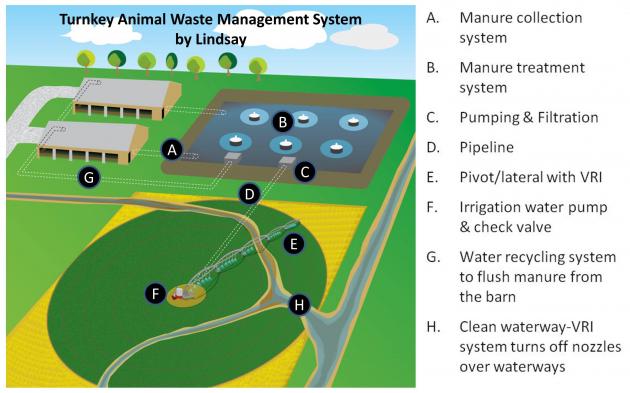
trnkey animal waste management systemApplying livestock manure from lagoon storage through center pivot irrigation has long been considered a low-labor, uniform method of application that can deliver nutrients in-season to a growing crop. Three challenges with this system have been odor, pivot nozzle clogging and loss of nitrogen. A new innovation in lagoon treatment addresses these challenges. Low-power circulators were installed at a Northeast Nebraska commercial hog finishing facility and used to aerate the lagoon by moving oxygen-rich water and beneficial microbes to the bottom of the lagoon, reducing odor and potent greenhouse gases while lowering disease pathogen risk. This process preserved nitrogen and made it 40-60% more available in the first year of application. Circulation also reduced lagoon solids and bottom sludge, resulting in reduced agitation and dredging expense. Having a continuously well-mixed lagoon facilitated accurate manure nutrient sampling and consistent nutrient concentration delivery to the irrigation system. Combined with the ease of calibration of the center pivots, precision uniform nutrient application was achieved. Center pivot application had several additional advantages over tractor-based systems: less soil compaction, optimal nutrient timing during plant growth, higher uniformity, lower labor and energy costs, and eliminating impact on public roads. The circulators combined with flush barns and center pivot irrigation creates a complete turn-key manure management system.
Do Circulators Make a Difference in Liquid Manure Storage?

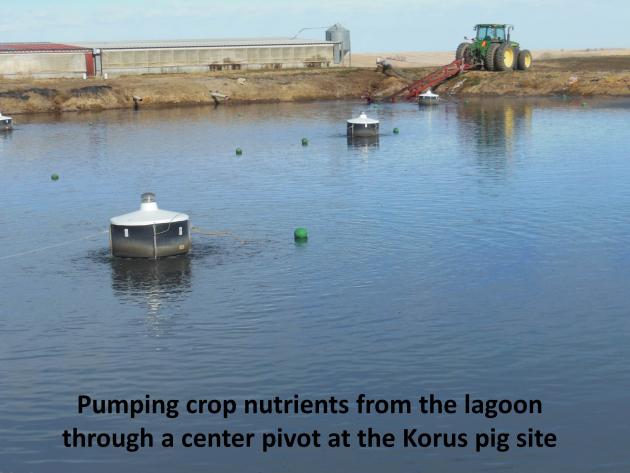
pumping nutrients from lagoon on korus pig siteThe purpose of the project was to evaluate the effectiveness of low powered circulators to treat livestock waste in lagoons. The objective was to evaluate how the addition of circulators to a livestock pond would change: 1. Odor levels, 2. Pivot nozzle clogging problems, and 3. Nitrogen loss.
What did we do?

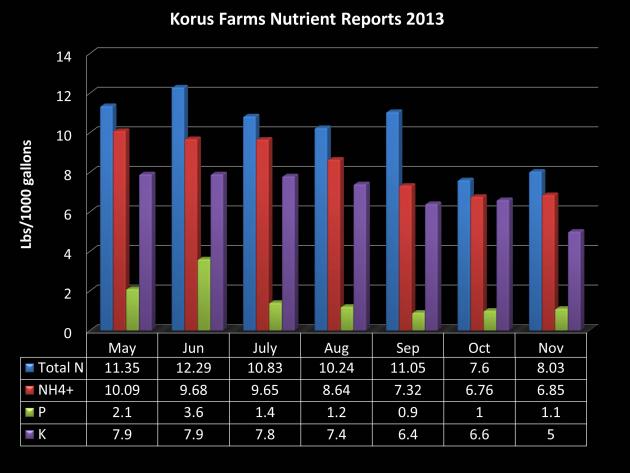
A demonstration was conducted by installing five circulators on a lagoon receiving manure from a 3000 pig finisher facility. The lagoon is owned by a Lindsay customer that was already pumping the top water from the pond through pivots, but was having difficulty with plugging nozzles and was hiring a commercial pumper to agitate and pump solids. The circulators were installed in May of 2013. Starting with the day of installation and each month after through November 2013, effluent lab samples were collected, photos of the pond and effluent were taken, and odor level estimated.

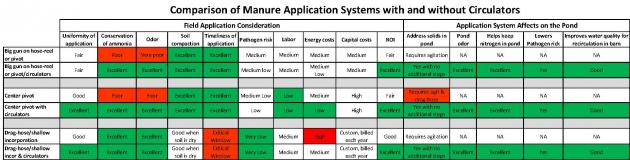
comparison of manure application systems

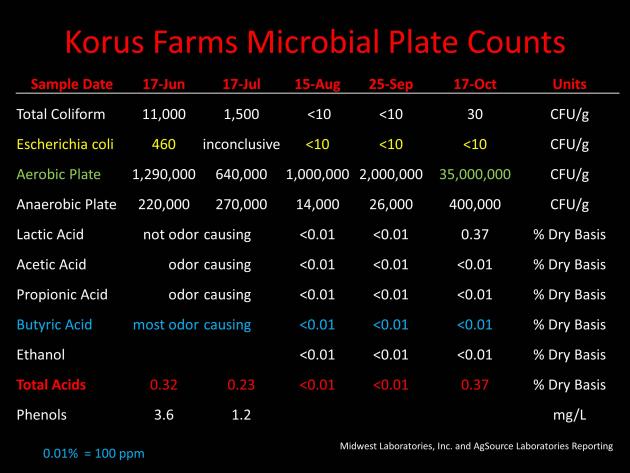
report from Korus farm
table of report from Korus farms

The effluent was pumped through pivots where odor and nozzle clogging problems were evaluated on August 15th and December 2nd of 2013. The pond was refilled with fresh water, circulated for a few days, and re-pumped right after the August 15th event so more of the nutrients could be utilized by the crops.

What have we learned?

The benefits of using aerobic lagoons with livestock waste have been known for many years. The challenge has been finding a cost effective and reliable method to facilitate the process. The cost to run all five circulators was about $3300 per year figuring $0.10 per kWh.

The circulators facilitated the following changes in the pond:

  • Reduced dry matter in effluent to <0.4%-starting at 0.57% and ending at 0.37%
  • Greatly reduced hog hair and soybean hulls caught in the filter resulting in virtually eliminating nozzle and pressure regulator clogging on the pivot
  • Reduced solids and bottom sludge-sonar indicated a 5+ ft reduction in bottom solids in 5 months
  • Doubled 1st year availability of nitrogen-%NH4 to total N was >80% compared to average book values of 40%
  • Greatly reduced offensive manure odor-downwind from pivot applying effluent, very little odor was observed
  • Reduced disease pathogens-Total Coliform went 11,000 to 30 CFU/g & Escherichia coli went from 460 to <10 CFU/g
  • Reduced flies-virtually eliminated floating solids and fly habitat on the pond
  • Reduced severe greenhouse gasses (GHGs)
  • Generated safer and lower odor water to recycled back through the barn for manure removal

Future Plans

We would like to continue evaluating the system for more precise odor reduction ratings, nitrogen preservation during pond storage, and affect on disease pathogens.

Author

Steve Melvin, Irrigation Applications Specialist, Lindsay steve.melvin@lindsay.com

Additional information

Call Steve Melvin at 402-829 6815 for additional information.

The authors are solely responsible for the content of these proceedings. The technical information does not necessarily reflect the official position of the sponsoring agencies or institutions represented by planning committee members, and inclusion and distribution herein does not constitute an endorsement of views expressed by the same. Printed materials included herein are not refereed publications. Citations should appear as follows. EXAMPLE: Authors. 2015. Title of presentation. Waste to Worth: Spreading Science and Solutions. Seattle, WA. March 31-April 3, 2015. URL of this page. Accessed on: today’s date.

Manure Management Practices for Mitigation of Gaseous Emissions from Naturally Ventilated Dairy Barns


How Does Management Impact Ammonia, Hydrogen Sulfide & Greenhouse Gases In Dairy Barns?

Emissions of pollutant gases from dairy barns are dependent on manure retention time in the barn and the quality of flushing water (for manure-flush systems). Strategies for mitigating air emissions from barns thus are a function of manure management either via optimal flushing or scraping, and pretreatment of flushing water.

What did we do?      

Ammonia (NH3), hydrogen sulfide (H2S), and greenhouse gases (CO2, CH4, and N2O) emissions, under different manure collection strategies, from a naturally ventilated dairy barn housing about 850 lactating Holstein cows were measured using an on-site real-time monitoring system. The manure collection strategies evaluated included: (i) altering manure-flushing frequency, (ii) alternating flushing and scraping to remove manure, and (iii) manure solids separation system via centrifugation of the flush water.

What have we learned?

Doubling flushing frequency (every 3 h flushing) did not significantly affect NH3 emission (25.5 g cow-1 d-1) compared to the normal every 6 h flushing (24.5 g cow-1 d-1) but reduced CO2 emission by 7.3%. On the hand, H2S, CH4, and N2O emissions were 1.3, 176% and 18.5% higher at the 3-h flushing schedule than at the normal 6-h flushing schedule. Flushing at half the frequency (every 12 h) reduced H2S, CO2, and CH4 by 59.4, 19.8 and 28.5%, respectively. Alternating manure flushing and manure scraping (or vacuuming) every 6 h, decreased CO2, CH4, and N2O emissions by 13.0, 7.8 and 19.5% compared to normal 6-h manure flushing alone. Use of centrifuged water for manure flushing significantly improved emissions mitigations more than all other strategies. Emissions of all the five gases decreased by 43.0 % for NH3, 37.3 % for H2S, 1.2% for CO2, 3.7% for CH4, and 51.7 % for N2O under the latter practice.

Future Plans  

Evaluation of other manure management practices which have not previously or adequately been tested at full-scale facilities or operations.

Authors

P.M. Ndegwa, Associate Professor, Biological Systems Engineering, Washington State University, PO Box 646120, Pullman, WA 99164, USA ndegwa@wsu.edu

H.S Joo, G.M. Neerackal, X. Wang; Department of Biological Systems Engineering, Washington State University, Pullman, WA.; and J.H. Harrison; Department of Animal Sciences, Washington State University, Puyallup, WA.

Additional information

• Joo H., P. Ndegwa, G. Neerackal, X. Wang, J. Harrison, J. Neibergs. 2013. Effects of manure management on ammonia, hydrogen sulfide, and greenhouse gases emissions from naturally ventilated dairy barns. ASABE Annual International Conference. Paper number 131593447; Kansas City, Missouri, July 21 – July 24. (doi: http://dx.doi.org/10.13031/aim.20131593447).

• Neerackal, G.M., H.S. Joo, P.M. Ndegwa, J.H. Harrison. 2014. Manure-pH management for mitigating ammonia emissions from manure-flush dairy barns. ASABE and CSBE/SCGAB Annual International Meeting. Paper number 1892636; Montreal, Quebec, Canada, July 13-17.

Acknowledgements      

This study was partially supported by funds from USDA-NRCS-CIG program (Grant No. 69-3A75-11-210), and Washington State University Agricultural Research Center. The cooperation and assistance of the collaborating producer is also acknowledged.

The authors are solely responsible for the content of these proceedings. The technical information does not necessarily reflect the official position of the sponsoring agencies or institutions represented by planning committee members, and inclusion and distribution herein does not constitute an endorsement of views expressed by the same. Printed materials included herein are not refereed publications. Citations should appear as follows. EXAMPLE: Authors. 2015. Title of presentation. Waste to Worth: Spreading Science and Solutions. Seattle, WA. March 31-April 3, 2015. URL of this page. Accessed on: today’s date.

Ethnobotanical Control of Odor in Urban Poultry Production: A Review


Purpose

Urban agriculture has been growing as the movement of population to the urban centers is increasing. According to FAO (2008), by 2030 majority of the population in sub sahara Africa (SSA) would be living in the urban area. Pollution from animal manure is a global concern and is much more acute and serious in countries with high concentrations of animals on a limited land base for manure disposal (Roderick, Stroot and Varel, 1998), this is the case with urban livestock production. Environmental pollution and odor complaints related to animal production have increased dramatically during the past decade (Ernest and Ronald, 2004). These odors potentially interfere with quality and enjoyment of life (Mauderly, 2002 and Albert, 2002). According to Pfost, Fulhage and Hoehne, 1999, odor complaints are more common when the humidity is high and the air is still or when the prevailing breezes carry odors toward populated areas. Inspite of the role that urban agriculture can play in pursuing the Millennium Development Goals, more specifically those, related to poverty reduction, food security, and environmental sustainability, odor from livestock still remains a major obstacle to future development. According to Obayelu 2010 there has been public’s increasing intolerance of livestock odors, hence the need to find solutions which will be ecosystem friendly. This paper will review some methods of odor control focusing on natural solutions to this problem.

What did we do?

For an odor to be detected downwind, odorous compounds must be: (a) formed, (b) released to the atmosphere, and (c) transported to the receptor site. These three steps provide the basis for most odor control. If any one of the steps is inhibited, the odor will diminish. (Chastain, 2000)

There are four general types of compounds for odor control: (1) masking agents that override the offensive odors, (2) counteractants that are chemically designed to block the sensing of odors, (3) odor absorption chemicals that react with compounds in manure to reduce odor emission, and (4) biological compounds such as enzymatic or bacterial products that alter the decomposition so that odorous compounds are not generated (Chastain, 2000). Some of these compounds are added directly to the manure while others are added to the feed. Yucca schidigera is a natural feed additive for livestock and poultry used to control odors, ammonia and other gas emissions, which can be detrimental to livestock performance. Essential oils are being promoted as effective and safe antimicrobial or antiviral (disinfectant) agents that also act as masking agents in the control of odor examples are thymol and carvacrol. Natural zeolite, clinoptilolite (an ammonium-selective zeolite), has been shown t o enhance adsorption of volatile organic compounds and odor emitted from animal manure due to its high surface area. Cai et al. (2007) reported reduction >51% for selected offensive odorants (i.e. acetic acid, butanoic acid, iso-valeric acid, dimethyl trisulfide, dimethyl sulfone, phenol, indole and skatole) in poultry manure with a 10% zeolite topical application. Treatment of broiler litter with alum was originally developed to reduce the amount of soluble phosphorous in poultry litter. However, it was also observed that using alum reduced the pH of the litter to below 6.5, and as a result, reductions in ammonia emissions from the litter have been observed.

Amendment of manure with alkaline materials such as cement kiln dust, lime, or other alkaline by-products can increase the pH to above 12.0, which limits the vast majority of microbialactivity, including odor producing microorganisms (Veenhuizen and Qi, 1993, Li et al., 1998). The effect of the addition of lime and other ONAs that alter the pH and moisture content of the waste and bedding requires further scientific research (McGahan, et al., 2002).

Dust particles can carry gases and odors. Therefore, dust control in the buildings can reduce the amount of odor carried outside. Management practices that can greatly reduce the amount of dust in poultry buildings are Clean interior building surfaces regularly, Reduce dust from feed, this can be by addition of oil to dry rations, proper and timely maintenance of feeders, augers, and other feed handling equipment. Also managing the relative humidity (RH) in poultry houses. Planting just three rows of trees around animal farms has also been proven to cut nuisance emissions of dust, ammonia, and odors from poultry houses. The use of tress around livestock facilities to mitigate odour and improve air quality has been recently reviewed by Tyndall and Colletti (2000). They concluded that trees have the potential to be an effective and inexpensive odor control technology particularly when used in combination with other odour control methods. Trees ameliorate odours by dilutio n of odour, encourage dust and aerosol deposition by reducing wind speeds, physical interception of dust and aerosols, and acting as a sink for chemical constituents of odour.

What have we learned?

The use of indigenous microorganisms for odor reduction related to livestock is being promoted under Natural farming, in this instance cultured mixtures of microorganisms consisting mainly of lactic acid bacteria, purple bacteria and yeast are used. This is already made into commercial product and marketed as effective microorganism activated solution (EMAS).

Interestingly, there is paucity of information on ethnobotanicals that are useful for odour control. Most literatures on ethnobotany focused of treatment and control of animal diseases but not on traditional control of the environment of livestock. As scientists are still working hard to develop chemical or biological additives which will eliminate or reduce odors associated with poultry wastes there is the need to survey traditional livestock owners for information that can serve for development of effective,inexpensive, efficient and suitable agent for odor control in poultry management.

Corresponding author, title, and affiliation

Oyebanji Bukola, Department of Animal Sciences, Obafemi Awolowo University, Ile-Ife, Nigeria

Corresponding author email

Oyebanji.bukola44@gmail.com

References

Albert, H. (2002) Outdoor Air Quality. Livestock Waste Facilities Handbook, Midwest Plan Service (MWPS),
Iowa State University in Ames, Iowa. Volume 18, section 3 Page 96.

Cai, L., Koziel, J.A., Liang, Y., Nguyen, A.T., and H. Xin. 2007. Evaluation of zeolite for
control of odorants emissions from simulated poultry manure storage. J. Environ. Qual.
36:184-193.

Chastain, J.P., and F.J. Wolak. 2000. Application of a Gaussian Plume Model of Odor
Dispersion to Select a Site for Livestock Facilities. Proceedings of the Odors and VOC
Emissions 2000 Conference, sponsored by the Water Environment Federation, April 16-19,
Cincinnati, OH., 14 pages, published on CD-ROM.

Ernest, F.B and Ronald, A.F.(2004) An Economic Evaluation of Livestock Odor Regulation Distances.
Journal of Environmental Quality, Volume 33, November–December 2004

FAO 2008. Urban agriculture for sustainable poverty alleviation and food security. FAO Rome

Mauderly, J.L. (2002) Health Effects of Mixtures of Air Pollutants. Air Quality and Health: State of the Science, Proceedings of the Clean Air Strategic Alliance Symposium, Red Deer, Alberta, Canada, June 3-4, 2002.

McGahan. E, Kolominska, C Bawden, K. and Ormerod. R (2002). Strategies to reduce odour emissions from Meat chicken farms Proceedings 2002 Poultry Information Exchange

Pfost, D. L., C. D. Fulhage, and J. A. Hoehne (1999) Odors from livestock operations: Causes and possible cures. Outreach and Extension Pub. # G 1884. University of MissouriColumbia.

Obayelu, A. E 2010. Assessment Of The Economic And Environmental Effects Of Odor Emission From Mechanically Ventilated Livestock Building In Ibadan Oyo State Nigeria. International Journal of science and nature VOL. 1(2) 113-119

Tyndall, J. and J. Colletti. 2000. Air quality and shelterbelts: Odor mitigation and livestock production a literature review. Technical report no. 4124-4521-48-3209 submitted to USDA, National Agroforestry Center, Lincoln, NE.

The authors are solely responsible for the content of these proceedings. The technical information does not necessarily reflect the official position of the sponsoring agencies or institutions represented by planning committee members, and inclusion and distribution herein does not constitute an endorsement of views expressed by the same. Printed materials included herein are not refereed publications. Citations should appear as follows. EXAMPLE: Authors. 2015. Title of presentation. Waste to Worth: Spreading Science and Solutions. Seattle, WA. March 31-April 3, 2015. URL of this page. Accessed on: today’s date.

Case Study: A Solid-Liquid Manure Separation Swine Operation for Resource Conservation


*Why Examine Solid – Liquid Manure Separation at Pig Farms?

v-shape pit with automated manure scraper and trough

V-shape pit with automated manure scraper and trough

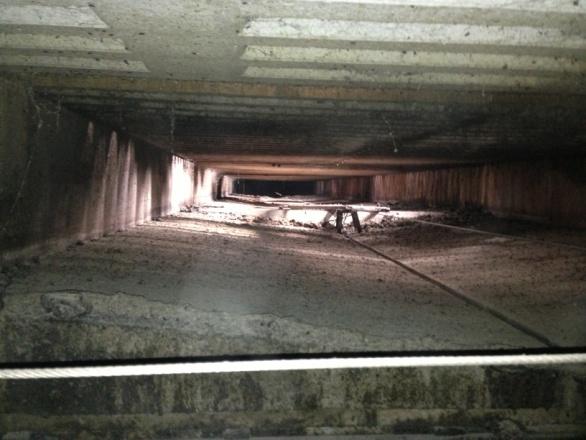
Many US pork production operations have become large in size and more geographically concentrated, and use very similar production facilities and manure management. With the potential extreme climates and diminishing water and land base, the industry needs to further improve the production systems and conservation effort. A Missouri swine finishing barn was designed to separate manure into solid and liquid portions, reduce odor and air emissions, and provide options for nutrient and water management. There is potential to reduce overall water use, and more importantly, to more efficiently export nutrients from the farm, or conserving nutrients in either the solid or liquid portions using additional practices.

What did we do?

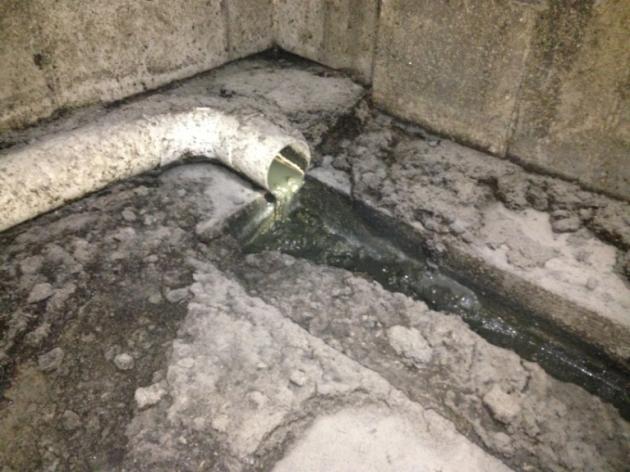
Gravity draining of liquid manure

Gravity draining of liquid manure

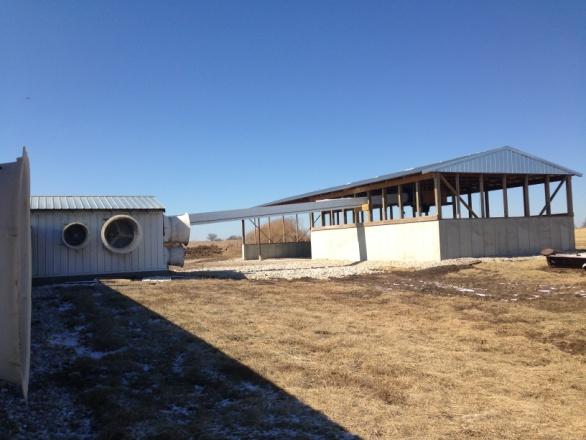
The solid/liquid separation barn has a capacity of 1200-hd. Manure management consists of a V-shaped gutter with mechanical scrapers installed beneath slatted floor, and a central pipe that collects the liquid manure fraction. The scraped manure is mechanically conveyed out to a nearby storage shed. Liquid manure portion is gravity drained into a temporary sump pit, and pumped into a nearby anaerobic lagoon automatically. Four monthly solid portion and liquid portion samples were collected and analyzed for moisture content, total nitrogen, phosphorous, potassium, pH, total carbon, and volatile solid content. The collected samples were kept on ice during transport and then frozen until analyzed by the University of Missouri Soil and Plant Testing Laboratory. Ammonia and hydrogen sulfide concentrations of the exhaust air streams were also measured using gas detection tubes during three of the four sampling events.

What have we learned?


storage shed for solid manure

Storage shed for solid manure

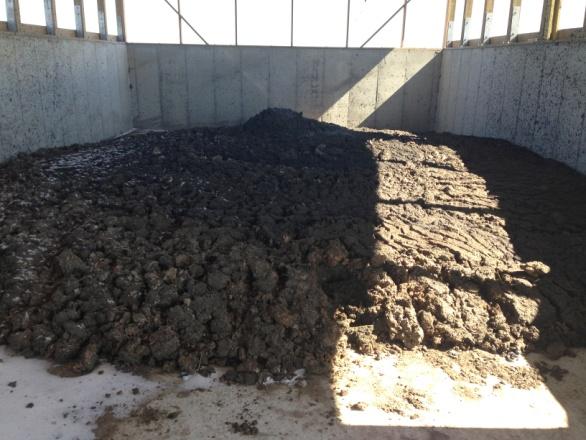
The solid manure portions have relatively low moisture content (MC, 57.9% to 63.4%, averaged 60.7%), and the liquid portion still have considerable amount of solids (MC = 93.3% to 98.3%, averaged 96.1%). The average nitrogen, phosphorus, potassium were 1.72%, 0.65%, 0.75% for the solid manure samples, and were 0.40%, 0.10%, and 0.29% for the liquid manure samples, respectively.

Ammonia concentration of the center exhaust fans averaged 7.7, 7.0, and 1.8 ppm for the February (n=3), March (n=2), and May (n=2) sampling visits respectively, and only one room fan was operating during the March visit, which measured 5.0 ppm (n=1). For all the sampling visits, hydrogen sulfide never reached the minimum detection limit of 0.5 ppm.

stored solid manure

Stored solid manure

The new facility design and reported findings have the potential to be adapted by new and existing production facilities, to develop new business models and management that are more flexible in nutrient management, and to improve resource conservation and reduce pollutions. It has been noted that the liquid stream can have relatively low solids from the well maintained scraper systems. If the farm continues to use the lagoon, there will be significantly less solid to be agitated and pumped. Assuming the untreated manure has a solid content of 6%, and the solid contents of the separated liquid and solid portions average about 3% and 39% respectively, the estimated contents in the solid manure are 28% and 47% of the total nitrogen and phosphorus in untreated manure, respectively. This is promising for exporting nutrients from the farm, or conserving nutrients in either the solid or liquid portions using additional practices.


Future Plans

More research is needed to systematically analyze the costs and management of the facilities, implications of water/nutrient conservations, potential byproduct production, and long-term sustainability improvement. The immediate next steps are to characterize the liquid and solid manure portions (in terms of volume and nutrient values) and barn air quality and emissions during different seasons. Effort should also include identification of the minimal and different levels of pre-treatment and reverse osmosis onto the liquid manure, for potential fertilizer concentrate, improved manure management, and potential water recycling. The long-term goals are to improve such solid/liquid separation barn, to provide partial manure treatment and water recycling potential that can be tailored for different cases and production sites.

Authors

Teng Lim, Associate Professor, University of Missouri limt@missouri.edu

Joseph M. Zulovich, University of Missouri.

Additional information

The collaboration of the farm owner and managers are greatly appreciated.

The authors are solely responsible for the content of these proceedings. The technical information does not necessarily reflect the official position of the sponsoring agencies or institutions represented by planning committee members, and inclusion and distribution herein does not constitute an endorsement of views expressed by the same. Printed materials included herein are not refereed publications. Citations should appear as follows. EXAMPLE: Authors. 2015. Title of presentation. Waste to Worth: Spreading Science and Solutions. Seattle, WA. March 31-April 3, 2015. URL of this page. Accessed on: today’s date.

Effects of Subsurface Litter Application Technology on Odor


Purpose         

Manure handling and application to agricultural land from animal facilities creates odor nuisances where population sprawl encroaches into once rural areas. The University of Maryland Eastern Shores (UMES) and The Pennsylvania State University (PSU) collaborated on data collection to quantify the odor reduction benefit of a novel technology called the Subsurfer which places poultry litter of ≤ 25% moisture content beneath the soil surface as opposed to traditional broadcast application.

What did we do?

Two 80-foot square locations were chosen at PSU’s Ag Progress site having similar grassy vegetation. For three separate trials, turkey litter was used, a slight departure from the usual use of poultry litter. This litter was chosen because it was available, and had a favorable moisture content of less than 25%. Three treatments were applied; subsurface application for location one , broadcasting for location two using the Subsurfer at the rate of two tons per acre, and no litter as a background. . Field-applied litter was evaluated using Nasal Ranger Field Olfactometer (NRO) instruments measuring dilutions-to-threshold (D/T) during field application employing the Multiple-Assessor Repeat Observation (MARO) method (Brandt et at., 2011a and 2011b). Odor assessment teams made observations at each location prior to litter application (background measurement) and at 1, 4, and 24 hr after the litter was applied at each location. Whole air samples were collected in 10-liter Tedlar® bags 4 hr after litter application using surface isolation flux chambers and the vacuum suitcases. A team of five qualified odor panelists quantified odor detection threshold (DT) using Dynamic Triangular Forced-Choice Olfactometry (DTFCO) on an Ac’ScentTM International Dynamic Olfactometer (St. Croix Sensory, Lake Elmo, MN) the same day of sample collection.

What have we learned?

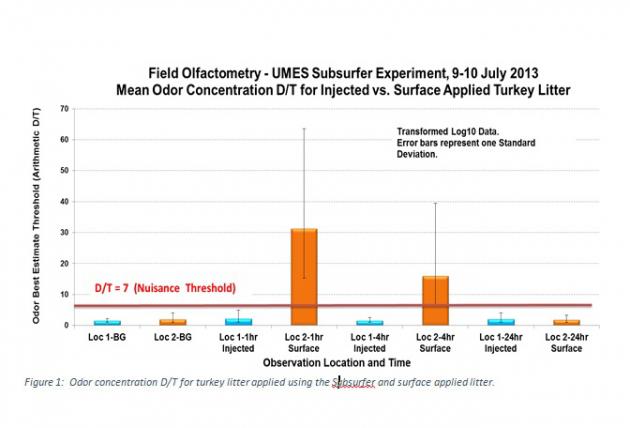
Results show greater than 75% reduction in mean odor concentration by DTFCO and NRO-MARO methods when the Subsurfer is used. Figure 1 shows the odor concentration D/T reduction of 92% (97% less background) for the 9 July 2013 data collection event when applying litter using the Subsurfer. Figure 1. odor concentration for turkey litter applied using the subsurfer and surface applied litter

Results from subsequent events (23 and 25 July 2013) showed significant reduction as well not below 75% when litter was applied using the Subsurfer. Figure 2 exhibits the same trend of 86% reduction (92% less background) in odor concentration DT using the DTFCO method. Again, measurements from subsequent data collection events yield similar results (minimum 75% reduction of odor concentration when the Subsurfer is used).

Figure 2. odor concentration for turkey litter applied using the subsurfer and surface applied litter

Future Plans

No future work is planned at this time.

Authors

Hile, Michael, Ph. D. Candidate in Agricultural and Biological Engineering (ABE) at Penn State (PSU) mlh144@psu.edu

Dr. Robin Brandt, Senior Lecturer in ABE at PSU, Ms. Nancy Chepketer, Graduate Assistant at UMES, Dr. Eileen E. Fabian, Professor in ABE at PSU and Dr. Herschel A. Elliott, professor in ABE at PSU, Dr. Arthur Allen, Associate Professor and Associate Resea

References              

Brandt, R.C., H.A. Elliott, M.A.A. Adviento-Borbe, E.F. Wheeler, P.J.A. Kleinman, and D.B. Beegle. 2011a. Field Olfactometry Assessment of Dairy Manure Land Application Methods. J. Environ. Qual. 40: 431-437.

Brandt, R.C., M.A.A. Adviento-Borbe, H.A. Elliott, E.F. Wheeler. 2011. Protocols for Reliable Field Olfactometry Odor Evaluations. J. Appl. Engr Agr. Vol. 27(3): 457-466.

The authors are solely responsible for the content of these proceedings. The technical information does not necessarily reflect the official position of the sponsoring agencies or institutions represented by planning committee members, and inclusion and distribution herein does not constitute an endorsement of views expressed by the same. Printed materials included herein are not refereed publications. Citations should appear as follows. EXAMPLE: Authors. 2015. Title of presentation. Waste to Worth: Spreading Science and Solutions. Seattle, WA. March 31-April 3, 2015. URL of this page. Accessed on: today’s date.

Hydrogen Sulfide Release from Dairy Manure Storages Containing Gypsum Bedding


Why Look at Potential Connections Between Gypsum and Hydrogen Sulfide?

Gypsum, a recycled product from the waste streams of the manufacturing and construction industries, provides ideal bedding for livestock because it absorbs moisture keeping the animals dry, is non-abrasive, and discourages bacterial growth as it is inert and non-organic. Gypsum is calcium sulfate (CaSO4•2H2O) and provides a sulfur source material that potentially increases H2S production from the manure storage due to the high generation of H2S levels. The goal of this research project is to compare H2S concentrations among Pennsylvania dairy farms that use traditional bedding, gypsum bedding and gypsum bedding with an amendment. Related: Manure Storage Safety | 2013 Waste to Worth conference proceedings by these authors “Gypsum Bedding – Risks & Recommendations for Manure Handling

Information from this gypsum bedding project was recently featured on a pre-conference webcast More…


What did we do?

Ten farms were observed during 19 fall and spring agitation events. Portable multi-gas meters (models MX6, M40 and Tango, Industrial Scientific, Pittsburgh, PA) were place around the perimeter of each manure storage, 10 meters downwind of the storage perimeter and attached to the operator for the duration of the event to monitor exposure. Each meter recorded gas measurements every minute during the first hour of manure agitation. Wind speed, wind direction and air temperature were recorded every minute during these events using a weather station (Kestral Communicator model 4500, Nielsen-Kellerman, Birmingham, MI). Manure storage design and manure handling practices were characterized. Manure was characterized according to general chemistry (temperature, pH and oxidation-reduction potential) as well as submitted for a full nutrient analysis content including total nitrogen, sulfur, calcium, percent solids and phosphorus source coefficient.

What have we learned?

Figure 1 shows cumulative H2S concentrations versus gypsum application rate. Gypsum and non-gypsum farms represented by the diamonds show a significant increase in cumulative H2S concentrations with increasing gypsum application rate. The observations depicted by the squares represent farms that use Vital™ Breakdown (manufactured for Homestead Nutrition, New Holland, PA), a treatment reported to reduce H2S emissions. One of the farms observed, also pointed out in Figure 1 by the triangles, uses OK-1000 (manufactured by Pro-soil Ag Solutions, Hawkins, TX) as a manure additive. Though it appears that these manure additives reduce cumulative H2S concentrations, the reduction was not statistically significant because not enough observations were recorded to provide statistical power.

Movement of manure prior to the storage location appears to allow H2S to escape before entering long term storage (shown in Figure 1 as prior agitation), lowering H2S concentrations released during agitation of the manure storage. Wind flowing into proximate buildings inhibited the dissipation of H2S thereby increasing cumulative H2S concentrations as shown by the observation pointed out by the image of wind direction in Figure 1. Four observations of operator exposure (out of 19 observations including non-gypsum, gypsum and gypsum with additive) yielded H2S concentrations above 20 ppm (above the Occupational Health and Safety Administration’s (OSHA) recommended exposure limit. Of the four operators above 20 ppm H2S, three were working over the rim of the storage, which increased risk of exposure. Downwind H2S concentrations above 20 ppm ten meters from storage occurred for eight out of the fourteen observations from farms that use gypsum, showing that children and animals within ten meters of the storage are at risk.

Figure 1. cumulative hydrogen sulfide concentrations for first 60 minutes of agitations versus gypsum application rate

Future Plans  

Bench scale work will be performed in hopes of finding a manure additive that reduces H2S production from farms that use gypsum. A new product (Dri Mat) formulated from its precursor, VitalTM Breakdown, will be mixed with manure and analyzed to determine the efficacy to reduced H2S emissions. Iron oxide, a by-product of acid mine drainage passive treatment lagoons will be one of the treatments for this work as well.

Authors  

Hile, Michael, Ph. D. Candidate in Agricultural and Biological Engineering (ABE) at Penn State (PSU) mlh144@psu.edu

Dr. Eileen E. Fabian, Professor in ABE at PSU, Dr. Herschel A. Elliott, professor in ABE at PSU, Dr. Robin Brandt, Senior Lecturer in ABE at PSU, Dr. C. Alan Rotz, Agricultural Engineer at USDA-ARS and Dr. Ray Bryant, Soil Scientist at USDA-ARS.

Acknowledgements      

This project would not have been possible without the support from Natural Resources Conservation Service’ (NRCS) Conservation Innovation Grant (CIG) program, USA Gypsum and Industrial Scientific.

The authors are solely responsible for the content of these proceedings. The technical information does not necessarily reflect the official position of the sponsoring agencies or institutions represented by planning committee members, and inclusion and distribution herein does not constitute an endorsement of views expressed by the same. Printed materials included herein are not refereed publications. Citations should appear as follows. EXAMPLE: Authors. 2015. Title of presentation. Waste to Worth: Spreading Science and Solutions. Seattle, WA. March 31-April 3, 2015. URL of this page. Accessed on: today’s date.

Manure Separation: Bedding and Nutrient Recovery

Why Study Manure Solid-Liquid Separation?

We wished to evaluate a two staged manure separation system for bedding and solids removal. Manure separation can accomplish several purposes on a dairy farm. The two most common goals are to produce a fiber bedding for the animals and the second is to remove as many solids as economically feasible prior to long term storage.

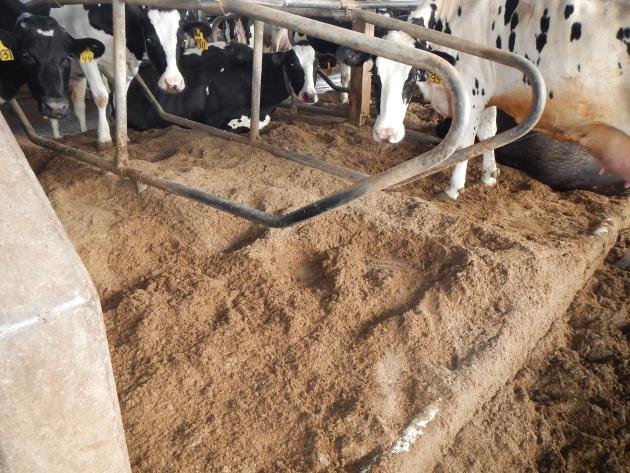
bedding in dairy barn made from separated manure solidsWhat did we do?

We looked at existing and new systems that use manure fiber bedding. Manure fiber bedding or “green bedding” is separated solids from manure collected daily on the dairy that has not been through digestion or other heat process. Manure samples were collected and analyzed for total solids and nutrient content through commercial labs. Questions were asked to dairy personnel regarding stall management practices.

What have we learned?

Separating manure for fiber bedding production is very different than separation for clean liquid. A dry solids cake from the separator does not directly correlate to a good bedding product for the cows. Dairy bedding must provide cushioning for the animal while laying and stable footing during the process of lying down and getting up. A healthy, productive cow will spend 12-14 hours per day lying down. A good bedding must be able to absorb liquid and maintain a clean, dry and comfortable stall for the cow. Typical dry solids cakes contain many small particles that prohibits the solids ability to absorb liquid on the cows lying surface.

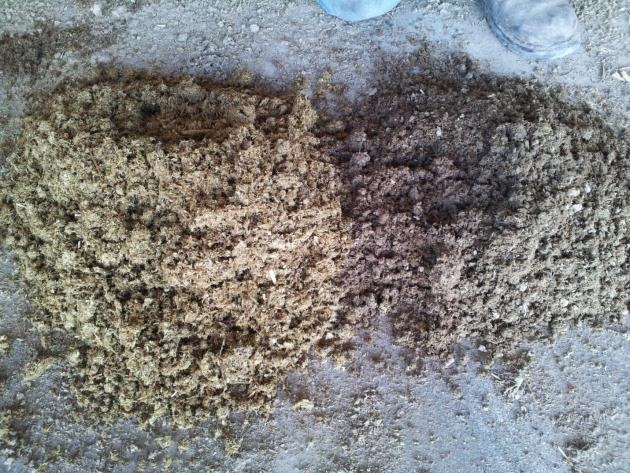
Separation equipment does have an effect on overall perceived bedding quality. Longer fibers are preferred to shorter fibers. Longer fibers appear to provide better cushioning and are less prone to sticking to the cow’s legs, flanks and teat ends.

comparison of fibers from two different manure separation systems

Figure 1. Roller press fibers on the left; screw press fibers on the right.

Fiber bedding can be used directly from the separator (often referred to as “green bedding), composted in windrows or aerobically digested in a vessel. Regardless of treatment method, the success of a manure fiber bedding system is dependent on many factors besides the equipment operation. Management of the free stalls including stall grooming, ventilation, re-bedding and frequency of manual manure removal are examples of other critical factors.

In looking at staged separation systems, the owner is willing to sacrifice capture rate efficiency on first stage separation to achieve high quality bedding. By allowing smaller solids to pass through the primary separation system, the quality of bedding often improves. Eventually, as the larger fibers are broken down while in the free stall or by pumping and processing equipment they become small enough to pass through first stage separation.

Having staged separation is extremely beneficial for advanced manure processing. Primary separation systems do more than produce a fiber bedding material, they also act as a foreign material screen for downstream equipment as well as slightly reduce the total volume to subsequent stages. Foreign material such as; plastic bottles, wooden hoof blocks, rocks, pieces of plastic etc. can cause significant damage to more sensitive (and often expensive) downstream equipment, such as a centrifuge, finer separation screen, belt filter press or other mechanical solid liquid separator. A primary separator is often better suited to handle foreign materials without disrupting operations. Furthermore, by removing the larger solids for bedding there is a slight reduction in volume going to secondary separation steps. This can lead to savings by reducing the required capacity of downstream equipment or reducing the total volume chemistry costs when using coagulants or polymers.

Primary separation for bedding has shown some nutrient removal. On farms using primary separated solids for animal bedding, the nutrient content is irrelevant since the nutrients are recycled back into to the housing system, until the fibers are broken down enough to pass. The specific capture rate of total solids and individual nutrients are show in the table below.

Primary Capture Rates Dairy TR Dairy GM Dairy CVT
Total Solids   20 43 55
Total Nitrogen   4.2 15 20
Phosphorus 3.5 5 37
Potassium   2.6 10 15

Total solids capture rates are directly correlated to incoming total solids content. Higher incoming solids results in higher capture rates (Burns and Moody, 2001). The total solids in the incoming material was lowest for Dairy TR and highest for Dairy CVT. It is a general understanding that a majority of the nutrients are contained in relatively small particles which pass through primary separation stream.

Future Plans

Staged separation systems are one example of how to incrementally add equipment and separation capacity as farms expand or field application of nutrients becomes more precise. Farms may initially install a basic separator to re-use liquid for alley flushing or flush fluming. A secondary stage separator can then be added for excess liquid prior to going to the lagoon for additional solids and nutrient removal.

Future investigation steps will be to continue evaluating secondary separation equipment for ease of operation, operational costs and nutrient removal efficiencies. Additionally further uses for the primary solids as a separation aid may prove beneficial as more systems are installed and used.

Author

Andy Lenkaitis, P.E. Environmental Systems Engineer, GEA Farm Technologies  andy.lenkaitis@gea.com

Additional information

Contact GEA Farm Technologies for additional information regarding specific information on equipment or systems for manure separation systems.

Flyer

Acknowledgements      

The author would like to acknowledge for dairy producers for sharing their insight and information to further the adaption of manure equipment. Additionally, support from key field personnel and local equipment dealers for identifying customers and servicing equipment in a less than pleasant location.

The authors are solely responsible for the content of these proceedings. The technical information does not necessarily reflect the official position of the sponsoring agencies or institutions represented by planning committee members, and inclusion and distribution herein does not constitute an endorsement of views expressed by the same. Printed materials included herein are not refereed publications. Citations should appear as follows. EXAMPLE: Authors. 2015. Title of presentation. Waste to Worth: Spreading Science and Solutions. Seattle, WA. March 31-April 3, 2015. URL of this page. Accessed on: today’s date.

Swine Manure Odor Reduction Using a Humic Amendment: On-Farm Demonstration


Why Study Odors from Pig Farms?

Odor-related nuisance complaints associated with animal production facilities are on the rise as residential sprawl encroaches on once rural areas. The efficacy of odor control additives is highly variable and most have limited success. This project demonstrated the efficacy of a commercial humic-material product (ManureMaxTM, Manufactured by JDMV Holding, LLC; Huston, TX) for limited control of liquid swine manure odors.

What did we do?

Two similarly-operated, 2,250-pig, tunnel-ventilated finishing barns on one farm were used for the demonstration. Barns were widely-separated by 1,800 feet of woodland and fields and were occupied by pigs of similar age. The underfloor manure storage pit (5-ft deep) of one barn received monthly additions with the additive while the other barn received no additive. After 20 weeks when hogs were finished for market and barns cleaned for restocking, treatments were switched so the previously untreated barn received the amendment. Odors at the barn ventilation exhaust were evaluated monthly by direct sensory methods (olfactometry) using human subjects. Field-applied manure was evaluated at the end of each 20-week grow-out period. Nasal Ranger Field Olfactometer (NRO) units were used to evaluate barn exhaust odor dilutions-to-threshold (D/T) and odors during field application, employing the Multiple-Assessor Repeat Observation (MARO) method (B randt et at., 2011a and 2011b). Barn ventilation exhaust was normalized against fan velocity and compared as odor flux (odor units min-1) among treatments. Whole air samples were collected in 10-liter TedlarTM® bags during each field visit and brought back to the Penn State Odor Assessmnt Laboratory (PSOAL) for evaluation. A team of five qualified odor panelists quantified odor detection threshold (DT) using Dynamic Triangular Forced-Choice Olfactometry (DTFCO) on an Ac’ScentTM International Dynamic Olfactometer (St. Croix Sensory, Lake Elmo, MN) within 10 hours of sample collection.

What have we learned?

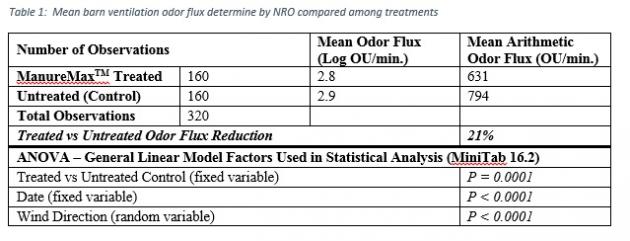
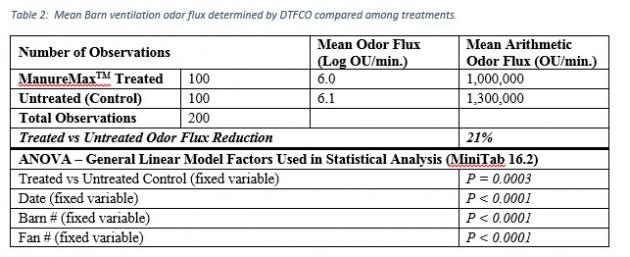
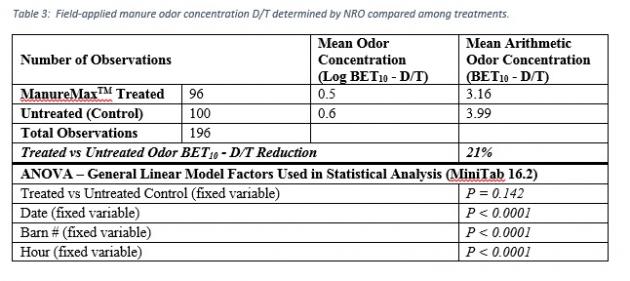
Results show a 21% reduction in mean barn odor exhaust as shown in Table 1 and Table 2. The humic amendment significantly decreased barn ventilation odor flux by 21% in both field NRO and laboratory DTFCO evaluations. Evaluation of field applied manure yield a 21% and 60% decrease in odor concentrations for NRO and DTFCO, respectively.mean barn ventilation odor flux

mean barn ventilation odor flux

field-applied manure odor concentration

field-applied manure odor concentration DT

Authors

Hile, Michael, Ph. D. Candidate in Agricultural and Biological Engineering (ABE) at Penn State (PSU) mlh144@psu.edu

Brandt, Robin, Senior Lecturer in ABE at PSU, Eileen E. Fabian, Professor in ABE at PSU and Herschel A. Elliott, professor in ABE at PSU. Robert E. Mikesell, Program Coordinator and Senior Lecturer, Department of Animal Science at PSU.

Additional information

Brandt, R.C., H.A. Elliott, M.A.A. Adviento-Borbe, E.F. Wheeler, P.J.A. Kleinman, and D.B. Beegle. 2011a. Field Olfactometry Assessment of Dairy Manure Land Application Methods. J. Environ. Qual. 40: 431-437.

Brandt, R.C., M.A.A. Adviento-Borbe, H.A. Elliott, E.F. Wheeler. 2011. Protocols for Reliable Field Olfactometry Odor Evaluations. J. Appl. Engr Agr. Vol. 27(3): 457-466.

Brandt, R. C., H. A. Elliott, E. E. Fabian, M. L. Hile, R. E. Mikesell, Jr., 2014. Manure Additive Shows Swine Odor Reduction. Fact Sheet. Penn State University, Department of Agricultural and Biological Engineering.

Acknowledgements

Thanks to JDMV Holding, LLC Houston, TX) for providing funding and product for this project. This project would not have been possible without the support from Natural Resources Conservation Service’ (NRCS) Conservation Innovation Grant (CIG) program.

The authors are solely responsible for the content of these proceedings. The technical information does not necessarily reflect the official position of the sponsoring agencies or institutions represented by planning committee members, and inclusion and distribution herein does not constitute an endorsement of views expressed by the same. Printed materials included herein are not refereed publications. Citations should appear as follows. EXAMPLE: Authors. 2015. Title of presentation. Waste to Worth: Spreading Science and Solutions. Seattle, WA. March 31-April 3, 2015. URL of this page. Accessed on: today’s date.