
Preferential Flow of Manure in Tile Drainage

Guidelines for Applying Liquid Animal Manure to Cropland with Subsurface and Surface Drains

Liquid animal manure is a valuable source of nutrients and organic matter for crop production and may be applied by a variety of methods including spray irrigation,land surface spreading, and shallow subsurface injection. Because of relatively low nutrient concentration, liquid animal manure may be applied at relatively high volumes, but it is generally recommended that it not be applied at rates that exceed the soil infiltration rate, nor exceed the amount needed to bring the soil to field water holding capacity (Johnson and Eckert, 1995). Even when similar guidelines are followed, liquid manure discharges from agricultural drains has been reported in soils with subsurface drainage due to macropore flow (Geohring et al., 2001). | Related: Manure & Nutrient Management in Tile Drained Lands…

Figure 1. Liquid effluent contaminating surface water. (Photo courtesy of Rick Wilson, OEPA)

Application of liquid animal manures to soils with subsurface drainage has been linked to contamination of the effluent with nutrients (Cook and Baker, 2001; Geohring et al., 2001), particulate organic matter (Barkle et al., 1999), estrogens (Burnison et al., 2003), bacteria (Bicudo and Goyal, 2003; Cook and Baker, 2001; Dean and Foran, 1992; Jamieson et al., 2002; Joy et al., 1998),and antibiotics (Kay et al., 2004). These findings are not universal, however, as liquid animal manures can be applied without any detectable adverse effects on water quality. For instance, Randall et al. (2000) noted no difference in nitrogen, phosphorus, or fecal indicator bacteria losses in drainage effluent when comparing plots fertilized with liquid dairy manure and mineral fertilizer.

Check Out These Programs & Research About Tile Drainage

Swine Manure Timing & Subsurface Drainage

Tile Drainage Field Day

Use of Filters in Drainage Control Structures

New Technologies for Drainage Water Management

Role of Drainage Depth and Intensity on Nutrient Loss

The fact that liquid animal manure nutrients can be safely land recycled in some instances, but are discharged in subsurface drainage water under different circumstances, suggests a complex system that needs to be managed. Soil texture, available water holding capacity, tillage history, as well as the type and quantity of manure applied, application method, and timeliness of rainfall after application may all play a role in determining the fate of the manure.

Liquid Manure Applied to Subsurface-Drained Cropland

The available water holding capacity of the upper 8 inches of the soil provides an estimate of the maximum volume of water that can be applied before additional water, manure, and nutrients may begin to move through the soil profile (refer to Table 1). Manure application rates may need to be adjusted the day of application to avoid reaching the available water holding capacity of the soil and is one factor determining the maximum volume that should be applied. Application rates should not exceed the lower of the nutrient restriction, available holding capacity of the soil or 13,000 gallon/acre. Smaller multiple low applications allow the soil to absorb liquid animal manures better than one large application.

Table 1. Available Water Capacity (AWC) Practical Soil Moisture Interpretations for Various Soils Textures and Conditions to Determine Liquid Waste Volume Applications not to exceed AWC.

Suggestions To Minimize the Downward Movement of Liquid Manure

Have an Emergency Plan

Identify subsurface drain outlets, and control or regulate discharge prior to application, or have on-site means of stopping the discharge from subsurface drains. Subsurface drainage outlets should be monitored before, during, and after application for potential liquid manure discharge. Drainage control structures and inline tile stops are recommended control practices to reduce the risk of a discharge, while tile plugs may be used in emergency situations but have been known to fail (Hoorman, 2004). Use caution not to back-up water where it may impair the functioning of an adjacent subsurface drainage system. Develop a contingency plan to handle situations when liquid manure discharges to ditches or streams.

Select Low-Risk Areas
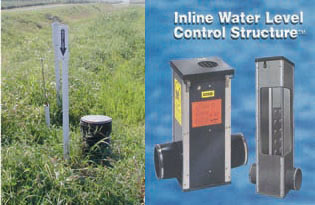
Figure 2. Control structures and tile stops reduce surface water contamination if properly installed. (Image courtesy of Agri-Drain, Adair, IA)

Liquid manure should not to be applied on soils that are prone to flooding, as defined by the National Cooperative Soil Survey (or in the Flooding Frequency Soil List posted in Section II eFOTG), during the period when flooding is expected. Manure can be applied if incorporated immediately or injected below the soil surface during periods when flooding is not expected.

Watch the Weather (Past and Future)

Avoid applying manure when rainfall is predicted, eminent, or directly after a rainfall event. After a significant rainfall event, the site should be allowed to drain to below field capacity, so that the soil has the capacity to absorb additional water or liquid animal manure. As part of the manure application record keeping, maintain a log of weather forecasts and actual weather conditions 24 hours before and after a manure application event.
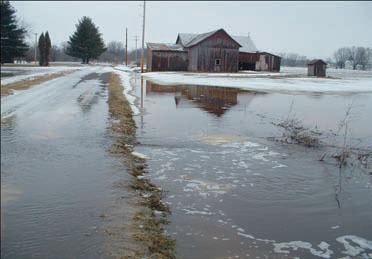
Figure 3.Field prone to flooding. (Photo courtesy of Norm Widman, NRCS)

Keep Drains Well-Maintained

Repair broken drains and blowholes prior to application, and follow recommended/required minimum setback requirements (setback distances vary from state to state) for surface inlets. See fact sheet on Liquid Manure Application Rates for Subsurface and Surface Drained Cropland in “Related Publications” section.

Are Drains Flowing?

Figure 4. Avoid applying liquid animal wastes to saturated soils. (Photo courtesy of Rick Wilson, OEPA)

Liquid manure should not be applied to subsurface drained cropland if the drains are flowing. Generally, flowing subsurface drain indicate soil moisture levels that are near or exceeding the soil water holding capacity. The addition of liquid manure under these conditions will increase the probability of manure moving downward and discharging through these drains or moving overland as surface runoff.

Consider Concentration of Application

Application rates should be closely tied to nutrient requirements and available holding capacity of the soil. The method of application can influence application rates. For example, with an injection toolbar with four nozzles on 30-inch spacing, each knife and nozzle produces a concentrated application to a small area. Under these concentrated flow conditions, the effective rate differs considerably from an average application rate. The effective rate is calculated as the volume of manure applied per unit area per nozzle. For example, assume a 10,000 gallon/acre application rate, an injection toolbar with 30-inch spacing and 6-inch sweeps, the effective rate is 50,000 gallon/acre, five times greater than a uniform even distribution over an acre.

Avoid Ponding

Liquid manure should be applied in a manner that will not result in ponding, or runoff to adjacent property, drainage ditches, or surface water regardless of crop nutrient need; and should be uniformly applied at a known rate. Liquid animal manure applications using irrigation or surface application equipment tend to have a greater risk of ponding.

Consider Tillage

Fields with a history of downward movement of manure and/or bare/crusted soils may require some tillage to improve infiltration and absorption of the applied liquid. Prior to manure application, use shallow tillage to disrupt the continuity of worm holes, macropores and root channels (preferential pathways) to reduce the risk of manure reaching drain lines, or till the surface of the soil 3 to 5 inches deep to a condition that will enhance absorption of the volume of liquid manure being applied. This is especially important if shallow drains are present (< 2 feet deep). Any pre-application tillage should leave as much residue as possible on the soil surface to minimize soil erosion.

Clay Soil Considerations

Figure 5. A Paulding clay soil with high shrink swell capacity may need to be tilled before application, and/or smaller initial liquid applications to help close the cracks. (Photo courtesy of Jim Lopshire, The Ohio State University).

Clay soils with a high shrink swell capacity tend to have larger deeper cracks during dry conditions. These soils may require tillage to disrupt the cracks and macropores, and a lower initial application rate applied to the soil to help close the cracks. Cover crops may be planted to improve soil structure and absorb available manure nutrients. Determine the most limiting application rate based on the field conditions and nutrient limitations (may vary from state to state).

Depth of Injection

Figure 6. For the most effective application,liquid manure should be applied shallow and uniformly into the soil surface. (Photo courtesy of Jon Rausch, The Ohio State University).

Shallow injection is recommended for liquid manure. Till the soil at least three inches below the depth of injection prior to application, and/or control outflow from all drain outlets prior, during, and after manure application.

Perennial Crop and No-Till Precautions

For perennial crops (hay or pasture) or continuous no-till fields where tillage is not recommended, all subsurface drain outlets from the application area should be monitored, and if manure laden flow should occur, all effluent should be captured. Crops with deep tap root systems (alfalfa) tend to have more problems than hay crops with fibrous roots (grass) because liquid animal manures may flow along the tap roots to subsurface drains and outlet to surface water.

These criteria may be waived if the producer can verify there is no prior history of manure discharge via subsurface drains, or if a system is in place to capture the discharge. However, if there is a discharge, the producer is liable for damages and is subject to being classified as a Concentrated Animal Feeding Operation (CAFO).

Liquid Manure Applied to Systematic Surface Drained Fields

Fields or areas of fields that have systematic “surface drainage” systems e.g., shallow surface drains spaced 100 to 200 feet apart—NRCS Surface Drainage-Field Ditch Practice Standard 607) are considered concentrated flow areas. However, if special precautions are taken, manure can be applied in the surface drains with minimal risk of surface runoff. This does not apply to the collector surface drains (mains, ditches, etc.) or drains bordering the fields.
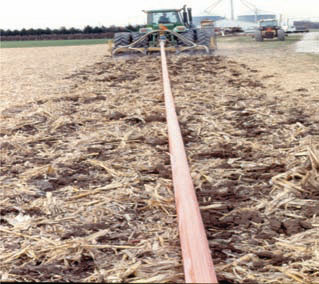
Figure 7. Till the soil 3 to 5 inches deep or 3 inches below the depth of injection to disrupt macropores. (Photo courtesy of Jon Rausch, The Ohio State University).

The following special manure application techniques shall be used:

  1. Till the soil surface at least 3 to 5 inches deep prior to liquid manure surface application. Pre-till within 7 days of application.
  2. Surface-apply liquid manure uniformly over the entire soil surface on the freshly tilled soil (3 to 5 inches) to allow the liquid manure to be absorbed into the soil surface.
  3. For fields with no subsurface drainage, liquid manure can be injected directly without prior tillage. If subsurface drainage is present as well as surface drains, then the above recommendations for subsurface drained cropland apply as well.

d. Manure application rates should be adjusted to consider the most limiting factor and include the ability of the soil to accept, store and hold liquid manure, water, and nutrients.

Follow recommended/required setbacks from environmentally sensitive areas for surface inlets. See fact sheet on Liquid Manure Application Rates for Subsurface and Surface Drained Cropland.

Summary

Improved management is a key issue in greatly reducing the potential of liquid manure reaching our surface water. While climate and some environmental conditions cannot be controlled, producers can better manage and control when and how they apply liquid manure. These recommended practices are intended to help producers apply liquid manure in a manner that minimizes the potential to impact water resources through the downward movement of manure into subsurface (tile) drains. These recommendations incorporate the best available knowledge.

Acknowledgments

The authors acknowledge Dr. Harold Keener, The Ohio State University; Dr. Timothy H. Harrigan and Dr. William G. Bickert, Michigan State University; Michael J. Monnin and Frank E. Gibbs, Ohio Natural Resources Conservation Service, and Susanne R. Reamer and Michael I. Gangwar, Michigan Natural Resources Conservation Service, team members who helped organize and conduct the “Liquid Animal Manure Application on Drained Cropland: Preferential Flow Issues and Concerns Workshop” and reviewed the regional guidelines. The workshop was organized and sponsored by The Ohio State University, Michigan State University, and cooperating organizations, with partial support from the USDA–CSREES Great Lakes Regional Water Quality Program, USDA–Natural Resources Conservation Service, Ohio Compost and Manure Management, Ohio State University Extension, Great Lakes Basin: Soil Erosion and Sediment Control, and the Overholt Drainage Education and Research Program.

References

  • Barkle, G.F., T.N. Brown, and D.J. Painter. 1999. Leaching of particulate organic carbon from land-applied dairy farm effluent. Soil Science 164 (4): 252–263.
  • Bicudo, J.R., and S.M. Goyal. 2003. Pathogens and manure management systems: A review. Environmental Technology 24 (1): 115–130.
  • Burnison, B.K., A. Hartmann, A. Lister, M.R. Servos, T. Ternes, and G. Van Der Kraak. 2003. A toxicity identification evaluation approach to studying strogenic substances in hog manure and agricultural runoff. Environmental Toxicology and Chemistry 22 (10): 2243–2250.
  • Cook, M.J., and J.L. Baker. 2001. Bacteria and nutrient transport to tile lines shortly after application of large volumes of liquid swine manure. Transactions of the American Society of Agricultural Engineers 44 (3):495–503.
  • Dean, D.M., and M.E. Foran. 1992. The effect of farm liquid waste application on tile drainage. Journal of Soil and Water Conservation 47 (5): 368–369. *Geohring, L.D., O.V. McHugh, M.T. Walter, T.S. Steenhuis, M.S. Akhtar, and M.F. Walter. 2001. Phosphorus transport into subsurface drains by macropores after manure applications: Implications for best manure management practices. Soil Science 166 (12):
  • Hoorman, J.J. 2004. Ohio liquid manure violation water quality data, Ohio Journal of Science, Vol. 104, No. 1, A-34.
  • Hoorman, J.J., J.N. Rausch, T.M. Harrigan, W.G. Bickert, M.J. Shipitalo, J.R. Reamer, F.E. Gibbs, M.J. Gangwar, and L.C. Brown. 2005. Summary of education and research priorities for liquid manure application to drained cropland: preferential flow issues and concerns, ASAE Meeting, Paper No: 52062. Tampa Bay, FL.
  • Jamieson, R.C., R.J. Gordon, K.E. Sharples, G.W. Stratton, and A. Madani. 2002. Movement and persistence of fecal bacteria in agricultural soils and subsurface drainage water: A review. Canadian Biosystems Engineering 44: 1.1–1.9.
  • Johnson, J., and D. Eckert. 1995. Best management practices: Land application of animal manure. Ohio State University Extension Publication AGF-208-95 Available online at http://ohioline.osu.edu/agf-fact/0208.html (Verified 8 September 2004).
  • Joy, D.M., H. Lee, C.M. Reaume, H.R. Whiteley, and S. Zelin. 1998. Microbial contamination of subsurface tile drainage water from field applications of liquid manure. Canadian Agricultural Engineering 40 (3):153–160.
  • Kay, P., P.A. Blackwell, and A.B.A. Boxall. 2004. Fate of veterinary antibiotics in a macroporous tile drained clay soil. Environmental Toxicology and Chemistry 23 (5): 1136–1144.
  • Randall, G.W., T.K. Iragavarapu, and M.A. Schmitt. 2000. Nutrient losses in subsurface drainage water from dairy manure and urea applied for corn. Journal of Environmental Quality 29 (4): 1244–1252.
  • Rausch, J.N., J.J. Hoorman, T.M. Harrigan, W.G. Bickert, M.J. Shipitalo, J.R. Reamer, F.E. Gibbs, M.J. Gangwar, and L.C. Brown. 2005. Guidelines for liquid manure application on drained cropland, ASAE Meeting, Paper No: 52061. Tampa Bay, FL.

Related Publications

Snap-Shot Assessments of Nutrient Use on Dairy Farms

Nutrient Use Efficiency

Escalations in feed and fertilizer cost, and ebbing milk prices are motivating many dairy farmers to find new ways to improve nutrient use efficiency (NUE) on their farms. But how can NUE be determined and monitored easily on dairy farms, and what improvement in NUE can be realistically expected? Over the past several years researchers at the U.S. Dairy Forage Research Center and the University of Wisconsin-Madison have been developing and using rapid assessment methods to provide snap-shot assessments of feed, fertilizer, and manure use on dairy farms in various settings. The most recent work was a survey of 54 Wisconsin dairy farms known as On Farmers’ Ground.

Snap-Shot Assessments of Nutrient Use on Dairy Farms Webcast

This webcast describes and demonstrates the usefulness of using rapid assessment methods to provide snap-shot assessments of feed, fertilizer, and manure use on dairy farms in various settings.

Resources Available Through “On Farmers’ Ground”

  • Fact Sheet which outlines the procedures used to provide ‘snap-shot’ assessments of feed, fertilizer and manure use. Some examples are provided of the information obtained using snap-shot assessment techniques.
  • Survey Questionnaire designed to compile information on herd size and composition, livestock facilities, land use, management practices, and motivations and goals related to feed, fertilizer and manure management.
  • Manure Tracking Book used to systematically tract how, when and where farmers spread manure, and factors that influenced farmer decisions related to manure management.
  • Final Farmer Report which contains analytical results of feed and manure samples taken during the farm visits, including information on how farmers may use these results to improve feed and manure management. The Final Farmer Report also contains estimates of manure collection, as well as a series of farm maps depicting crop rotations, manure spreading practices, nitrogen and phosphorus applications as fertilizer, manure and legume-fixed N, and farm cropland areas that are impacted by USDA-NRCS 590 Nutrient Management Standards.
  • Four scientific journal articles related to the On Farmers’ Ground project

Author

J. Mark Powell
Soil Scientist-Agroecology, USDA-ARS US Dairy Forage Research Center
Professor of Soil Science, University of Wisconsin-Madison
1925 Linden Drive West
Madison, WI 53706
<mark.powell@ars.usda.gov>

Phosphorus Best Management Practices Fact Sheets

What Is SERA-17?

SERA-17(Organization to Minimize Phosphorus Losses from Agriculture) is an organization of national and international research scientists, policy makers, extension personnel, and educators. The mission of SERA-17 is to develop and promote innovative solutions to minimize phosphorus losses from agriculture by supporting:

  • information exchange between research, extension, and regulatory communities
  • recommendations for phosphorus management and research
  • initiatives that address phosphorus loss in agriculture

One initiative of SERA-17 has been to develop a series of thirty-two best management practice (BMP) factsheets. These fact sheets were published in 2005. The BMPs can broadly be divided into three groups:

  1. BMPs that have an impact on the type or source of phosphorus (Source BMPs),
  2. BMPs that affect the transport of phosphorus (Transport BMPs), and
  3. BMPs that have an impact on both the source and transport of phosphorus (Source and Transport BMPs).

The list of topics in this series will continue to expand, as new research and technologies demonstrate further possible reductions in phosphorus losses.

SERA-17 Phosphorus BMP Factsheets

These publications are on the SERA-17 website under BMP Workgroup Publications. The following links will take you directly to each fact sheet.

Author

Forbes Walker, University of Tennessee

Manure Use for Fertilizer and Energy: June 2009 Report to Congress

Animal manure can be used as a fertilizer, and it can improve soil quality. Manure can also be used as a feedstock for energy production. But excessive concentrations of manure, either in storage or in land application, can create environmental risks, and farmers are facing increased regulation of their manure management practices.

This web page summarizes the findings of an USDA Economic Research Service publication, Manure Use for Fertilizer and for Energy : June 2009 Report to Congress.

What Is the Issue with Animal Manure?

The Food, Conservation, and Energy Act of 2008 directed the Department of Agriculture (USDA) to prepare a study that would evaluate the role of animal manure as a source of fertilizer, and its other uses. The study was to provide:

  1. determination of the extent to which animal manure is utilized as fertilizer in agricultural operations by type (including species and agronomic practices employed) and size;
  2. an evaluation of the potential impact on consumers and on agricultural operations (by size) resulting from limitations being placed on the utilization of animal manure as fertilizer; and
  3. an evaluation of the effects on agriculture production contributable to the increased competition for animal manure use due to bioenergy production, including as a feedstock or a replacement for fossil fuels.

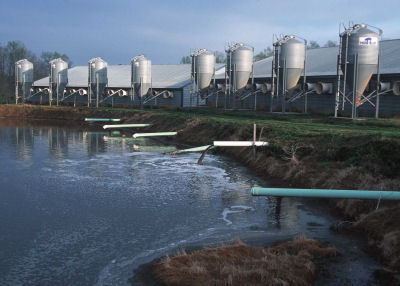
Livestock manure has value as a fertilizer and as an energy source. Photo courtesy USDA NRCS.

Animal manure is used as a crop fertilizer and soil amendment, but it can pose environmental risks when stockpiled or applied in excessive amounts. Federal, State, and local governments have responded to the environmental risks with regulations and conservation programs, and some State and local governments have also initiated lawsuits against livestock operations, claiming damages to water resources from manure. Efforts to comply with regulations impose costs on certain livestock operations and will likely lead to changes in manure use on those operations.

There is also increasing interest in using manure for energy production. Methane can be captured from the biogas in manure and burned for electricity generation, while manure can also be burned directly as a feedstock in combustion processes. This report assesses current patterns of use of manure as fertilizer and evaluates the likely impacts of emerging environmental regulations on manure use. The report also assesses current efforts to use manure for energy production and evaluates the impact of bioenergy investments on manure’s use as fertilizer.

What Did the Study Find?

Manure Nutrient Use

About 15.8 million acres of cropland, equivalent to about 5 percent of all U.S. cropland, are fertilized with livestock manure. Corn, which is planted on about one-quarter of U.S. cropland, accounts for over half of the land receiving manure. Patterns of manure use are driven by the agronomic needs of crops and by transport costs, which limit the distance that manure can be moved and create close links between types of livestock and certain crop commodities. Each favors the application of manure to corn.

Most manure applied to corn comes from dairy and hog operations. Manure from poultry and cattle feedlot operations is drier and less costly to transport, and is therefore often removed from the farm and shipped to other operations. Because broiler production is concentrated in the southern United States, crops like peanuts and cotton rely heavily on broiler manure when they use manure fertilizers.

The value of nutrients in this manure will vary with supply and demand. Photo courtesy Rick Koelsch, University of Nebraska.

Large livestock operations are increasingly required to have nutrient management plans, which require balancing nutrient applications with the nutrient utilization of crops. Compliance with the plans can raise farm costs. Estimated costs vary sharply with the degree to which excess manure needs to be disposed of and the willingness of nearby farmers to accept manure for application to their cropland. A low willingness to accept among nearby farmers means that livestock producers will need to transport excess manure much farther for crop application. With a limited willingness to accept manure (defined as 20 percent of nearby farmers), we estimated that production costs, including those for manure management, would likely rise by 2.5-3.5 percent for large operations.

Such increases are unlikely to alter the emerging structure of livestock production, where large operations have substantial cost advantages over small operations. They are also unlikely to lead to substantial declines in production and consumption; the resulting percentage retail price changes would be less than the cost changes noted above because farm costs are only a fraction of retail costs, and retail demand for meat and milk is relatively insensitive to price changes. As a result, expanded regulation through nutrient management plans will likely lead to wider use of manure on cropland, at higher production costs, with little impact on the size structure of farming operations.

Manure-to-Energy Use

Manure-to-energy projects are not currently in widespread use. Digester systems, including those planned or in construction, cover less than 3 percent of dairy cows and less than 1 percent of hogs. The single operating combustion plant utilizes litter from 6.6 percent of U.S. turkey production, while an idled plant in California could utilize manure from about 3 percent of fed cattle.

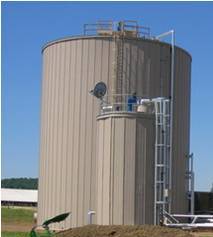
This anaerobic digester produces energy from livestock manure. Photo courtesy Bill Lazarus, University of Minnesota.

Manure-to-energy projects may allow farmers to realize benefits from avoided purchases of electricity, from selling electricity, or from selling manure to generating plants, but few realize enough savings to justify the expense. But because such projects use existing resources, they could provide society with benefits if manure replaces newly mined fossil fuels in energy production, and if methane, a greenhouse gas, can be captured. Those societal benefits have led to proposals to support manure-to-energy projects through State utility mandates (to purchase electricity from farms and to invest in renewable production sites), through subsidies for capital costs, and through direct subsidies and credits for energy production. Expanded support could lead to a substantial growth of energy applications for manure.

Currently envisioned manure-to-energy projects are not likely to impose substantive constraints on the use of manure as fertilizer. Many of the nutrients that are beneficial to crop growth remain after energy production. Nitrogen, phosphorus, and potassium nutrients remain in the effluent of the digester process, to be spread on fields. Combustion processes do consume the nitrogen nutrients in manure, but leave phosphorus and potassium in an ash residue that, because of its concentrated form, is less costly to transport than raw manure. In addition, manure-to-energy projects function in markets for fertilizer and energy, and will be most economic in those areas in which the acquisition costs of manure are lowest. In turn, manure acquisition costs will be lowest where manure is in excess supply, with the least value as fertilizer.

Additional Reading About Manure for Fertilizer and Energy

Author

James MacDonald, chief of the Agricultural Structure and Productivity branch in USDA’s Economic Research Service, Resource and Rural Economics Division, macdonal@ers.usda.gov

Animal Waste Management Software Training Video

Design of manure storage and treatment facilities requires an understanding of the operations involved in food animal production and engineering design principles. It also requires access to manure production data, climate data, as well as reporting and presentation software to put it all together. The USDA Natural Resources Conservation Service created the Animal Waste Management computer program to bring all of these features together.

This software has been used by consultants and government technical service providers for a number of years in designing storage and treatment facilities for animal production operations all over the country. The 2008 EPA CAFO rules cite this tool as part of the procedure to determine if a facility will discharge animal waste.

Watch the Video


Just as no engineering design software is simply plug and play, this software tool requires an understanding of the operations involved as well as experience with using the tool itself, its features and its limitations. This training video describes the basic features of how to use the software, from download to final design. Here you will learn about each screen of the tool and how each component contributes to the facility design. You’ll also learn about the data needs of the software and how to edit the native data set used by the NRCS developers of the tool.

Author

John Classen, North Carolina State University

Copper Sulfate Foot Baths on Dairies and Crop Toxicities

Environmental Issues for Land Applying Copper Sulfate

A rising concern with the application of dairy wastes to agricultural fields is the accumulation of copper (Cu) in the soil. Copper sulfate (CuSO4) from cattle footbaths is washed out of dairy barns and into wastewater lagoons. The addition of CuSO4 baths can increase Cu concentration significantly in manure slurry, from approximately 5.0 grams per 1,000 liters to 90.0 grams per 1,000 liters. The Cu-enriched dairy waste is then applied to agricultural crops, thus raising concerns about how soils and plants are impacted by these Cu additions.

Once added to the soil, the Cu+2 from CuSO4 can:

  1. remain in the soluble form of Cu+2 which is available to plants;
  2. adsorb to organic matter;
  3. adsorb to clay particles; or
  4. be converted to less available mineral forms.

Typically, the majority of Cu strongly adsorbs to soil organic matter and clay surfaces. In fact, Cu binds to organic matter more strongly than any other micronutrient. Dairy manure is rich in organic matter and will naturally have greater Cu adsorption than dairy lagoon water which is low in organic matter. In soils with pH values greater than 7.0, soluble Cu+2 will react with water to form either Cu(OH)2 or associations with Fe-oxides. Thus, almost all Cu added to soil typically stays in soil. For more information regarding soil Cu reactions, read Copper Deficiency in Cereal Grains.

The potential for groundwater contamination, via enhance downward Cu transport, will be greater in sandy, acidic soils or under irrigated conditions. And although increasing soil organic matter content will increase Cu adsorption, Cu associated with dissolved organic phases could also be transported downward. However, most studies suggest that soluble Cu transported through soils does not exceed the national drinking water standard of 1.3 mg/L. For more information regarding Cu transport, read Kinetics of copper desorption from soils as affected by different organic ligands.

Research Findings for Land Applying Copper Sulfate

With the strong binding of soluble Cu to soils, very little of the applied Cu is plant-available. Overall, the potential for Cu toxicities in plants is relatively small given the amount of Cu that is added through dairy-waste application. Preliminary results from the USDA–ARS in Kimberly, Idaho, showed that extractable soil Cu concentrations ranging from 1 to 154 parts per million (ppm) in a calcareous soil had no effect on alfalfa or corn silage biomass yields, while plant survival was drastically impeded at concentrations greater than 323 ppm.

Copper application rates used in this study to achieve reductions in yields and plant survival greatly exceeded rates typically seen for dairy manure applications. In a similar study in New York, Flis et al. (J. Animal Science, 2006, 84:184-185, supplement 1) applied CuSO4 at 0, 6.3 and 12.6 pounds Cu per acre to corn silage, orchardgrass, and timothy grass using Cu rates equivalent to those typical to dairy waste applications. Corresponding soil Cu concentrations were 11, 13 and 18 ppm, respectively. The varying Cu application rates had no effect on grass or corn silage yields, although tillering and regrowth rates were significantly reduced for the grasses.

While these results are encouraging in the short-term, repeated applications of dairy manures could potentially raise Cu concentrations to levels toxic to plants, with very limited possibilities for remediation. A few fields in Idaho that have received frequent applications of lagoon water have shown evidence of Cu accumulation. Because Cu is so tightly bound by the soil, it is very difficult to remove. Succeeding crops can only remove 0.1 pound Cu per acre per year. As it stands now, if a grower waits until Cu plant toxicity symptoms occur (including plant death), they will continue to see Cu toxicities in that field for an indefinite period of time.

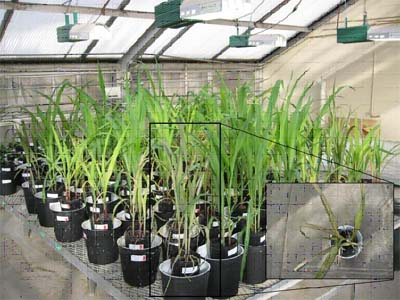
Corn growing in various copper- treated soils. Inset photo: Corn two days following a 1,000 ppm soluble Cu treatment. Photo courtesy Jim Ippolito.


In terms of regulation, there is an existing EPA 503 “worst case scenario” standard that limits annual loading of Cu from biosolids to 66 pounds Cu per acre and limits lifetime loading to 1,339 pounds Cu per acre (limits are based on biosolids land application). For more information read Land Application of Biosolids. Reaching these limits is almost impossible with dairy waste applications, and would devastate most agricultural crops long before the lifetime loading limits were met. New York has set lower lifetime loading limits for Cu at 75 pounds per acre to avoid the potential of irreversible toxic accumulations of Cu in the soil. (For more information, see Table 5 in Composting Facilities.

Recommendations for Land Applying Copper Sulfate Hoof Baths

While more studies are needed to develop an official threshold for Cu in alkaline Idaho soils, based on what we know thus far, it would be advisable to cease Cu additions to soils with greater than 50 ppm extractable Cu. This value is advisable for producers raising alfalfa for dairy cow consumption in order to avoid Cu accumulation above National Research Council recommendations. To determine if you currently have a Cu accumulation problem in your soil, or to identify a developing accumulation, request an analysis for diethylenetriaminepentaacetic acid (DTPA) extractable Cu every two to three years from an accredited soil testing laboratory.

Recommended Reading

Authors

Jim Ippolito. Research Soil Scientist, USDA–ARS, Northwest Irrigation and Soils Research Laboratory, 3793 N. 3600 E., Kimberly, ID, 83341; 208/423-6524; jim.ippolito@ars.usda.gov

Amber Moore. Assistant Professor and Extension Soil Specialist, University of Idaho – Twin Falls Research and Extension Center, 315 Falls Avenue East, Evergreen Bldg., P.O. Box 1827, Twin Falls, ID, 83303-1827; 208/736-3629; amberm@uidaho.edu

Environmental Impacts and Benefits of Manure: Phosphorous and Surface Water Protection

Managing manure nutrients in an environmentally and economically responsible manner is not a mutually exclusive endeavor. This article discusses phosphorus and its potential impacts on water quality.

Phosphorus and Water Quality

Phosphorous (P) is one of the major bio-available nutrients in manure. In aquatic ecosystems, P is typically the most limiting nutrient. When P is introduced into an aquatic ecosystem there is a marked increase in aquatic plant biomass production and increased algal blooms. The increased aquatic plant production and algal blooms can have a negative effect on the aquatic ecosystem such as tying up other nutrients and decreasing the amount of light infiltration.

At the end of the aquatic plant and algae growing cycles, there is a large release of excess nutrients into the ecosystem overwhelming the natural nutrient cycle, tying up oxygen during its degradation leading to fish kills and reducing surface water aesthetic qualities with the accumulation of rotting plant material on the water surface and offensive odors.

How Does Phosphorus Travel to Water?

In cropping systems, providing a sufficient level of P for plant uptake is as important as providing the proper levels of nitrogen (N) and potassium (K). Unlike N and K, P is bound to soil particles and is at low risk of leaching through the soil profile. The greatest risk of P loss from soils is with overland flow of runoff carrying P-enriched soil sediment or manure particles. Research has shown that soils testing high in P have a greater contribution effect for P loss than soils testing low in P.

However, there is a fraction of total P in runoff that is in the dissolved form. The sediment attached P and dissolved P have slightly different impacts in aquatic ecosystems. The sediment attached P contributes to long term P additions to the system whereas the dissolved P is readily available for a high rate of assimilation by aquatic plants and algae.

There are also reported cases of soils with extremely high levels of soil test P that are at risk of P leaching. Typically, soil P is bound tightly to soil particles and has a low risk of leaching. However, in some soils with extremely high soil test P levels, the exchange sites are at maximum capacity, leading to the risk of P leaching.

Blue-green algae bloom in nutrient impaired water. Source: Ron Wiederholt, NDSU Extension


Management Practices to Reduce Environmental Risks from Phosphorus

Cropping system practices that lead to reduced soil erosion are the most effective means of decreasing the risk of off-site movement of P. Besides soil erosion, there are other factors that need to be identified when reducing the risk of P loss from fields.

These factors include but are not limited to:

  • distance to surface water
  • slope of the landscape
  • soil erosivity index
  • soil test P level

Many states have adopted a process of ranking the risk of P loss from agricultural fields using a P-index. The USDA Natural Resources Conservation Service (NRCS) has been the lead agency in developing most of the state-by-state P-indexes. A P-index scores the factors important for off-site movement of P and by using the combined score of these factors a land manager can decide what options are best for managing P application levels to fields when using manure or commercial fertilizer.

However, the use of a P-index is only one of the tools available to nutrient managers. When there has been a long history of P mis-management and soil test P levels are extremely high, a P-index or other tools are not as effective. In these cases, a long term approach looking at the whole cropping and livestock system needs to be adopted.

Livestock rations must be closely monitored to ensure there is no P overfeeding (see the LPELC topic, Feed Management), manure may have to be sold or bartered to other land managers, or some type of intensive manure processing system will have to be adopted that will allow for more affordable long distance hauling of the manure (see the LPE Learning Center topic Manure Treatment Technology).

Recommended Reading On Phosphorus and Surface Water

Page Managers: Ron Wiederholt, North Dakota State University and Marsha Mathews, University of California-Davis

Manure and Compost Utilization on Fruit and Vegetable Crops

Manure Handling and Field Application

Livestock manure can be a valuable source of nutrients, but it also can be a source of human pathogens if not managed correctly. Organic certification programs currently include strict requirements on the handling of raw manure. Even though these requirements are designed to minimize environmental risks, it is important that all farms using manure follow good agricultural practices to reduce any microbial risk that may exist.

Proper and thorough composting of manure, incorporating it into soil prior to planting, and avoiding top-dressing of plants are important steps toward reducing the risk of microbial contamination.

Plan Before Planting

  • Select site for produce based on land history and location
  • Use careful manure handling (see recommended practices listed below)
  • Keep good records. Consider the source, storage, and type of manure being used on the farm
  • Store manure as far away as practical from areas where fresh produce is grown and handled. If manure is not composted, age the manure to be applied to produce fields for at least six months prior to application. Where possible, erect physical barriers or wind barriers to prevent runoff and wind drift of manure onto plants.
  • Store manure slurry for at least 60 days in the summer and 90 days in the winter before applying to fields.
  • Actively compost manure. High temperatures achieved by a well-managed, aerobic compost can kill most harmful pathogens. Remember to optimize temperature, turning, and time to produce high quality, stable compost.

Cover crops and injection methods lend themselves well to both incorporate the nutrients well ahead of the time of planting fruits and vegetables but to also decrease runoff of manure applications. Photo by N. Rector, Michigan State University Extension.

Plan Manure Application Timing Carefully

  • Apply manure in the fall or at the end of the season to all planned vegetable ground or fruit acreage, preferably when soils are warm, non saturated, and cover-cropped.
  • If applying manure in the spring (or the start of a season), spread the manure two weeks before planting, preferably to grain or forage crops.
  • DO NOT harvest vegetables or fruits until 120 days after manure application.
  • Remember to document rates, dates, and locations of manure applications. Incorporate manure into the soil
  • Incorporate manure immediately after application. Although it is known that many harmful pathogens do not survive long in the soil, research is still needed on soil microbes and pathogen interactions. Some pathogens, such as Listeria monocytogenes, may survive and grow in the soil.
  • If it is necessary to apply manure or slurry to vegetable or fruit ground, incorporate it at least two weeks prior to planting and observe the suggested 120-day pre harvest interval.
  • If the 120-day waiting period is not feasible, such as for short season crops like lettuce or leafy greens, apply only properly composted manure.

Choose appropriate crops

  • Avoid growing root and leafy crops in the year that manure is applied to a field.
  • Apply manure to grain or forage crops.
  • Apply manure to perennial crops in the planting year only. The long period between application and harvest will reduce the risks.

Recommended Reading

Page Manager: Natalie Rector, Michigan State University Extension and Elizabeth A Bihn, Cornell University

Research Summary: Evaluation of a Synthetic Tube Dewatering System for Animal Waste Pollution Control

Research Purpose

The objective of this field study was to evaluate the performance of a Geotube® dewatering system under field conditions by quantifying the mass removal efficiency of solids, nutrients, and metals from well-mixed dairy-lagoon slurry dewatered by this system.

Activities

A Geotube dewatering system was set-up to treat the lagoon slurry mix from the primary lagoon of a 2000-head lactating cow open-lot dairy (Fig. 1). After two synthetic tubes were filled to a height of approximately 1.5 m with the slurry mixture (Fig. 1), the pumping of effluent ceased and tubes were left to dewater for six months. During the pumping of slurry mix into tubes, both alum and polymer were added.

Slurry samples were collected before pumping it into the system (hereafter influent, IF), after mixing it with alum and polymer (hereafter IFCM), and effluent (hereafter EF) samples were collected as it ‘drained’ out of the system. Additionally, residual solids (RS) samples were also collected after both tubes had dewatered for six months. Samples were analyzed for solids, nutrients and metals following EPA and standard analytical methods.

Figure 1. Geotube® dewatering system: before (L) and after (R) filling with effluent.


Geotube dewatering system before filling Geotube dewatering system filled


What We Have Learned

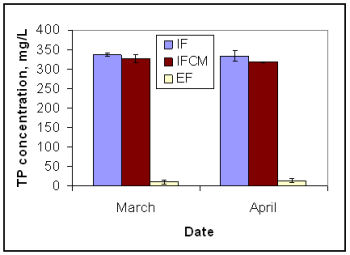
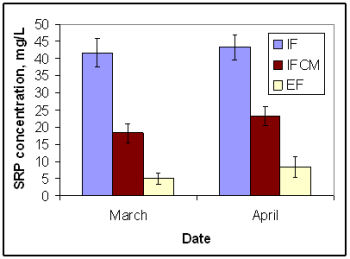
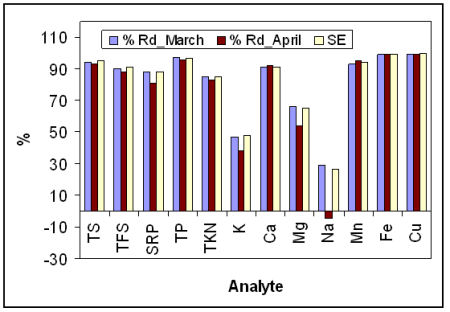
This system effectively removed high percentage of total phosphorus (TP), 97% (Fig. 2) and soluble reactive phosphorus (SRP), 88% (Fig. 3), well above 50% reduction goal set by the phosphorus Total Maximum Daily Loads (TMDLs) for the North Bosque River in east central Texas.

Geotube® also successfully filtered solids (95%) from the lagoon slurry. This system was less effective in removing K (<50%) (Fig. 3), since K is highly soluble.

Geotube® dewatering system successfully reduced Ca, Mn, Fe, and Cu concentration by 91, 60, 99, and 99%, respectively (Fig. 3). However, this system was not highly effective in removing Na (<26%) from dairy lagoon slurry (IF).

Figure 2. Average total phosphorus (TP) concentration at different sampling date


Figure 3. Average soluble reactive phosphorus (SRP) concentration at different sampling date.


Figure 4. Average % reduction (Rd) and separation efficiency (SE) of effluent constituents using Geotube® dewatering system.


Why is This Important?

Water quality degradation due to phosphorus (P) contribution as a non-point source (NPS) pollutant from effluent and manure applied to waste application fields (WAFs) is a major concern in the Bosque River watershed in east central Texas. Geotube® dewatering system can be used as one of the best management pactices to minimize pollution from dairy effluent to be applied to field, but it must address the disposal of solids and costs.

For More Information

Contact mukhtar@tamu.edu or (979)458-1019. For more information, refer to the following publication.

Mukhtar, S., L. A. Lazenby, S. Rahman. 2007. Evaluation of a synthetic tube dewatering system for animal waste pollution control. Applied Engineering in Agriculture 23(5): 669-675

Authors: Saqib Mukhtar and Shafiqur Rahman, Texas A&M University

This report was prepared for the 2008 annual meeting of the regional research committee, S-1032 “Animal Manure and Waste Utilization, Treatment and Nuisance Avoidance for a Sustainable Agriculture”. This report is not peer-reviewed and the author has sole responsibility for the content.

Protocol for Determining the Cost/Benefit of a Manure Storage Lagoon Cover

Do Manure Storage Covers Pay?

A protocol was developed to determine the cost/benefit of installing a cover over a manure storage structure. Included are a discussion on the cost and selection of the cover, a procedure to determine the feasibility of biogas production and capture, the technique to estimate the dilution of the slurry resulting from precipitation, and tools to estimate ammonia emissions, thereby predict the increase in nitrogen content and the savings from reduced fertilizer hauling. By considering the combination of all of these factors, the payback period can be calculated.

Current Activity

The protocol has been developed and a case study was performed. A manuscript is in preparation.

What We Have Learned

Techniques to identify the items that determine the cost and benefit have been researched and refined for the protocol. Based on a sensitivity analysis a crucial benefit is the savings associated with keeping precipitation out of the manure thus avoiding extra hauling costs. As a result, relatively short payback periods can be realized.

Why is This Important

One of the most common practices to store manure is the use of open storage structures. Numerous problems for farmers are created by the open structure including ammonia loss, methane emissions, odor complaints, and increased hauling of manure slurry. Covering a lagoon offers substantial environmental benefits and can save farmers money.

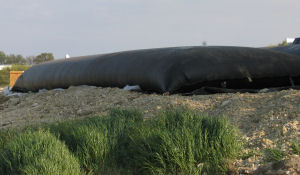
a lagoon cover recently installed on a dairy farm

For More Information

Steve Safferman
Michigan State University
Biosystems Engineering
202 Farrall Hall
East Lansing, MI 48824

This report was prepared for the annual meeting of the regional research committee, S-1032 “Animal Manure and Waste Utilization, Treatment and Nuisance Avoidance for a Sustainable Agriculture”. This report is not peer-reviewed and the author has sole responsibility for the content.