Manure Separation: Bedding and Nutrient Recovery

Why Study Manure Solid-Liquid Separation?

We wished to evaluate a two staged manure separation system for bedding and solids removal. Manure separation can accomplish several purposes on a dairy farm. The two most common goals are to produce a fiber bedding for the animals and the second is to remove as many solids as economically feasible prior to long term storage.
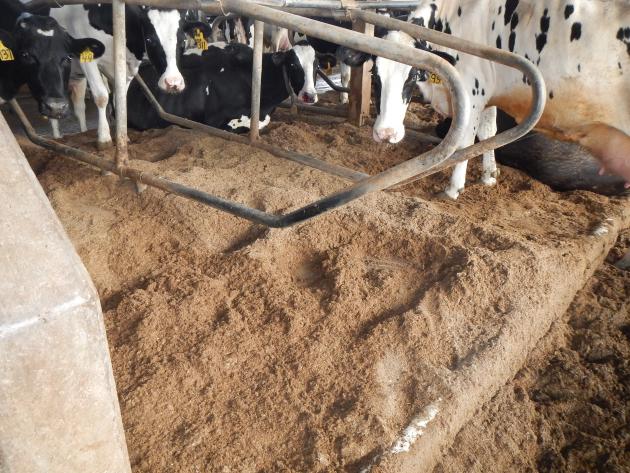
bedding in dairy barn made from separated manure solidsWhat did we do?

We looked at existing and new systems that use manure fiber bedding. Manure fiber bedding or “green bedding” is separated solids from manure collected daily on the dairy that has not been through digestion or other heat process. Manure samples were collected and analyzed for total solids and nutrient content through commercial labs. Questions were asked to dairy personnel regarding stall management practices.

What have we learned?

Separating manure for fiber bedding production is very different than separation for clean liquid. A dry solids cake from the separator does not directly correlate to a good bedding product for the cows. Dairy bedding must provide cushioning for the animal while laying and stable footing during the process of lying down and getting up. A healthy, productive cow will spend 12-14 hours per day lying down. A good bedding must be able to absorb liquid and maintain a clean, dry and comfortable stall for the cow. Typical dry solids cakes contain many small particles that prohibits the solids ability to absorb liquid on the cows lying surface.

Separation equipment does have an effect on overall perceived bedding quality. Longer fibers are preferred to shorter fibers. Longer fibers appear to provide better cushioning and are less prone to sticking to the cow’s legs, flanks and teat ends.
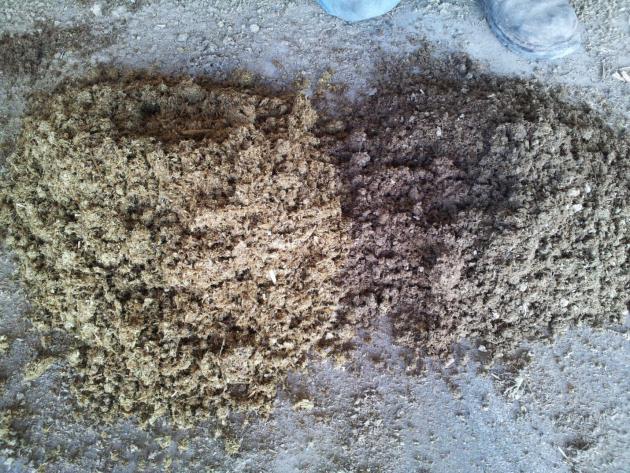
comparison of fibers from two different manure separation systems

Figure 1. Roller press fibers on the left; screw press fibers on the right.

Fiber bedding can be used directly from the separator (often referred to as “green bedding), composted in windrows or aerobically digested in a vessel. Regardless of treatment method, the success of a manure fiber bedding system is dependent on many factors besides the equipment operation. Management of the free stalls including stall grooming, ventilation, re-bedding and frequency of manual manure removal are examples of other critical factors.

In looking at staged separation systems, the owner is willing to sacrifice capture rate efficiency on first stage separation to achieve high quality bedding. By allowing smaller solids to pass through the primary separation system, the quality of bedding often improves. Eventually, as the larger fibers are broken down while in the free stall or by pumping and processing equipment they become small enough to pass through first stage separation.

Having staged separation is extremely beneficial for advanced manure processing. Primary separation systems do more than produce a fiber bedding material, they also act as a foreign material screen for downstream equipment as well as slightly reduce the total volume to subsequent stages. Foreign material such as; plastic bottles, wooden hoof blocks, rocks, pieces of plastic etc. can cause significant damage to more sensitive (and often expensive) downstream equipment, such as a centrifuge, finer separation screen, belt filter press or other mechanical solid liquid separator. A primary separator is often better suited to handle foreign materials without disrupting operations. Furthermore, by removing the larger solids for bedding there is a slight reduction in volume going to secondary separation steps. This can lead to savings by reducing the required capacity of downstream equipment or reducing the total volume chemistry costs when using coagulants or polymers.

Primary separation for bedding has shown some nutrient removal. On farms using primary separated solids for animal bedding, the nutrient content is irrelevant since the nutrients are recycled back into to the housing system, until the fibers are broken down enough to pass. The specific capture rate of total solids and individual nutrients are show in the table below.

Primary Capture Rates Dairy TR Dairy GM Dairy CVT
Total Solids   20 43 55
Total Nitrogen   4.2 15 20
Phosphorus 3.5 5 37
Potassium   2.6 10 15

Total solids capture rates are directly correlated to incoming total solids content. Higher incoming solids results in higher capture rates (Burns and Moody, 2001). The total solids in the incoming material was lowest for Dairy TR and highest for Dairy CVT. It is a general understanding that a majority of the nutrients are contained in relatively small particles which pass through primary separation stream.

Future Plans

Staged separation systems are one example of how to incrementally add equipment and separation capacity as farms expand or field application of nutrients becomes more precise. Farms may initially install a basic separator to re-use liquid for alley flushing or flush fluming. A secondary stage separator can then be added for excess liquid prior to going to the lagoon for additional solids and nutrient removal.

Future investigation steps will be to continue evaluating secondary separation equipment for ease of operation, operational costs and nutrient removal efficiencies. Additionally further uses for the primary solids as a separation aid may prove beneficial as more systems are installed and used.

Author

Andy Lenkaitis, P.E. Environmental Systems Engineer, GEA Farm Technologies  andy.lenkaitis@gea.com

Additional information

Contact GEA Farm Technologies for additional information regarding specific information on equipment or systems for manure separation systems.

Flyer

Acknowledgements      

The author would like to acknowledge for dairy producers for sharing their insight and information to further the adaption of manure equipment. Additionally, support from key field personnel and local equipment dealers for identifying customers and servicing equipment in a less than pleasant location.

The authors are solely responsible for the content of these proceedings. The technical information does not necessarily reflect the official position of the sponsoring agencies or institutions represented by planning committee members, and inclusion and distribution herein does not constitute an endorsement of views expressed by the same. Printed materials included herein are not refereed publications. Citations should appear as follows. EXAMPLE: Authors. 2015. Title of presentation. Waste to Worth: Spreading Science and Solutions. Seattle, WA. March 31-April 3, 2015. URL of this page. Accessed on: today’s date.
Manure Technology Video Series


Can Video Be Used as a ‘Virtual’ Tour?

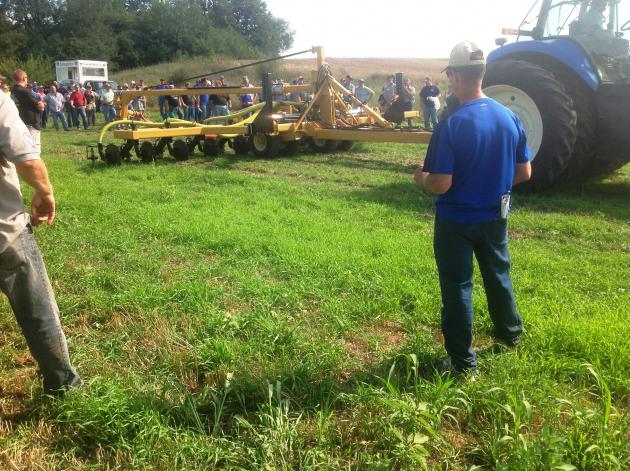
Producers are reluctant to adopt new technologies without firsthand experience with the technology. It is particularly difficult to get positive exposure for manure related issues in traditional media. Creative methods are needed to expose producers to useful technologies for handling and treating animal wastes. The OSU Waste Management Youtube channel was created to provide virtual tours of manure treatment and handling technologies.

What did we do?

Fourteen videos highlighting innovative manure handling and treatment technologies were filmed, edited, and produced by the Oklahoma Cooperative Extension Service. We specifically sought out producers who successfully adopted technologies to the particular conditions of their farms.

What have we learned?

In its five years of existence, the OSU Waste Management Youtube channel has been viewed more than 53,000 times (120,000 minutes viewed) from 183 countries and all fifty states – plus Guam, Puerto Rico and the District of Columbia.

Future Plans

We will continue to add new videos to the channel.

Authors

Douglas W. Hamilton, Associate Professor Oklahoma State University dhamilt@okstate.edu

Craig A. Woods, Video Producer/Director Ag Communication Services, Oklahoma State University

Additional information

https://www.youtube.com/user/OSUWasteManagement

The authors are solely responsible for the content of these proceedings. The technical information does not necessarily reflect the official position of the sponsoring agencies or institutions represented by planning committee members, and inclusion and distribution herein does not constitute an endorsement of views expressed by the same. Printed materials included herein are not refereed publications. Citations should appear as follows. EXAMPLE: Authors. 2015. Title of presentation. Waste to Worth: Spreading Science and Solutions. Seattle, WA. March 31-April 3, 2015. URL of this page. Accessed on: today’s date.
Technologies for Anaerobic Digestion of Flushed Swine Manure

Hog farmers face a unique challenge to implement digestion — namely the low volumetric methane yield of wet swine manure.  The most common digester used on hog farms using flushing systems is the covered lagoon.  This presentation explores the technical feasibility of high rate reactors for low solids swine manure.  Systems compared are Contact Stabilization Reactors, Upflow Anaerobic Sludge Blanket Reactors (UASB), Fixed Filmed Reactors, and Anaerobic Sequencing Batch Reactors (ASBR).  Contact Stabilization and UASB technology have been available since the 1970s, but are mostly found in industrial settings. Their main drawback for swine manure treatment is the required operator skill level.  UASB digesters also have difficulty handling the uneven solids flow from flushed or pull-plug barns.  Fixed film reactors have been successfully used in agriculture, but require solids separation before digestion.  The separator creates two waste streams and removes organic matter that could potentially be available for digestion.  ASBR technology was developed in the 1990s.  An ASBR digester was successfully operated at the Oklahoma Swine Research and Education Center in the 2000s.  Hydraulic retention time for this farm scale ASBR ranged between 5 and 20 days.  Maximum methane yield was 0.55 m3 CH4 kg-1 VS day-1.  Organic matter reduction efficiency was 50 to 75 % measured as Chemical Oxygen Demand (COD).  Current work on solids settling and retention will allow ASBR digesters to reach their full potential in swine production systems. Related: Treatment Technologies for Livestock Manure

Why Consider Anaerobic Digestion on Pig Farms?

Anaerobic digestion can reduce the carbon footprint of swine production, while substantially lowering the fossil fuel energy required to feed and raise hogs. However, economic analyses show that anaerobic digestion on swine farms using complete mix digesters to produce electrical energy have a net negative present value unless carbon credits in the price range of $10 to $12 per metric ton of CO2eq are given for methane emissions reduced (Cowley, 2015). The two factors negatively affecting the economic viability of complete mix digesters are high capital cost and relatively low biogas output of reactors. Capital cost of digesters is directly related to the hydraulic retention time (HRT) of reactors. Farm-scale complete-mix digesters treating swine manure have retention times ranging from 18 to 30 days (Fisher, et al., 1979; Schulte, et al., 1985; Zhang, et al., 1990). Methane yields of these digesters was between 0.22 to 0.25 m3 CH4 kg-1 V S, and reactor volumetric efficiencies ranged between 0.35 to 0.40 m3 CH4 m-3 reactor day-1.

What did we do?

High rate digesters are reactors that separate solids retention time (SRT) from HRT. High rate reactors shorten HRT, which results in smaller, less costly digesters. High rate digesters also have higher methane yields than complete mix reactors. Several high rate systems have successfully treated swine manure at the laboratory and pilot scale. Systems tested include fixed film, suspended particle attached growth (SPAG), and upflow anaerobic sludge blanket (UASB) reactors treating the liquid portion of swine manure after solid-liquid separation; and contact stabilization, anaerobic sequencing batch (ASBR), and anaerobic baffled (ABR) reactors treating whole, diluted swine manure. ASBR systems have used both single reactor and multiple reactors in series. Despite the success of laboratory studies, few farm-scale high rate reactors exist on the farm scale.you

What have we learned?

A 400 m3, single vessel ASBR was operated for two years on a 128 sow farrow-to-finish hog farm at the Oklahoma State University Swine Research and Extension Center. (Hamilton and Steele, 2014) . Methane yield was 0.55 m3 CH4 kg-1 VS, and COD removal efficiency was 73% when operated at a 20 day HRT with operating temperature ranging between 22 and 32oC. Methane yield was 0.38 m3 CH4 kg-1 VS and COD removal efficiency was 57% when operated at a 5 day HRT with operating temperature between 22 and 24oC. The digester, as built, was 4 times larger than it needed to be. Using microbial kinetic modeling, the volumetric efficiency of a 100 m3 digester operating at 5 day HRT was estimated to be 0.73 m3 CH4 m3 reactor day-1.

Future Plans

Further work with ASBR digesters is underway. We are working to improve the mixing, settling, and solids trapping efficiency of the ASBR. ASBR reactors are also highly adaptable to receive high energy low solids digestion co-products. Pilot testing has shown volumetric efficiency of swine manure ASBR can be increased 4 to 6 fold with augmentation with waste glycerol from biodiesel production.

Author

Douglas W. Hamilton, Associate Professor at Oklahoma State University

dhamilt@okstate.edu

Additional information

Cowley, C. 2015. Economic Feasibility of Anaerobic Digesters with Swine Operations. Unpublished Thesis. Stillwater, OK: Oklahoma State University.

Fisher, J.R., N.F. Meador, D.M. Sievers, C.D. Fulhage, and E.L. Iannotti. 1979. Design and operation of a farm anaerobic digester for swine manure. Trans ASABE 22(5):1129.

Hamilton, D.W. and M.T. Steele. 2014. Operation and performance of a farm-scale anaerobic sequencing batch reactor treating dilute swine manure. Trans ASABE. 57(5):1473.

Schulte, D.D., Kottwitz, T.J. Siebenmorgen. 1985. Design and operation of a flexible cover, precast concrete anaerobic digester for swine manure. Pp 509-515, in Agricultural Waste Utilization and Management, Proceedings of the 5th International Symposium on Agricultural Wastes. St Joseph, MI: ASABE.

Zhang, R.H., J.R. North, and D.L. Day. 1990. Operation of a field-scale anaerobic digester on a swine farm. Applied Engineering in Agriculture. 6(6):771.

The authors are solely responsible for the content of these proceedings. The technical information does not necessarily reflect the official position of the sponsoring agencies or institutions represented by planning committee members, and inclusion and distribution herein does not constitute an endorsement of views expressed by the same. Printed materials included herein are not refereed publications. Citations should appear as follows. EXAMPLE: Authors. 2015. Title of presentation. Waste to Worth: Spreading Science and Solutions. Seattle, WA. March 31-April 3, 2015. URL of this page. Accessed on: today’s date.
Wisconsin Professional Manure Applicator Education

Why Look at Manure Applicator Educational Programs?

Based on 2013 statistics, Wisconsin has a dairy herd of 1.2 million cows that produce 12,000,000,000 gallons of manure and waste water. Custom manure haulers in Wisconsin handle an estimated fifty percent of the dairy manure and forty per cent of all livestock manure generated in Wisconsin. Because custom manure applicators are a critical component of nutrient management plan (NMP) implementation, University of Wisconsin Extension initiated manure hauler education across the state in the early 1990’s. In 2000, the applicators sought UW – Extension advisory support in forming the Professional Nutrient Applicators Association of Wisconsin (PNAAW). This began a long term relationship between UW – Extension and the professional applicators in Wisconsin and across the upper Midwest.

Following a needs assessment of the industry, the board of directors of PNAAW expressed an interest in a voluntary training and certification program. The overall goal of the training was to educate the custom manure haulers and their employees in safe handling and application practices, spill response, regulations and nutrient management. Road safety, neighbor relations, and confined space safety education modules were added later.

What did we do?

In March of 2002, the board of directors of the PNAAW and a group of Michigan manure applicators independently approached Extension in each state to initiate a voluntary certification and training program. Over the next 5 months, applicators and Extension staff examined the 5 existing manure applicator certification programs and created the program currently in use in Wisconsin, Illinois and Michigan.

Field photo 2012

Manure expo 2012, checking out a new dragline applicator.

The UW – Extension Nutrient Management Team’s Custom Manure Hauler Workgroup joined with Extension faculty in Illinois and Michigan to develop a three-state certification program with three levels of training/certification. The certification includes a partnership with the insurance industry to provide a market-based incentive to participate. Business and employee management issues are addressed during an annual multi-state regional symposium coordinated by UW-Extension.

Certification: The program is segmented into three certification levels. Firms must meet level 1 requirement to gain level 2, and meet level 2 requirements to achieve level 3.

  • Level 1: Requires each employee to be trained and tested on spill response techniques, state specific regulations (including CAFO regulations) and common sense application techniques. Firms that document compliance are eligible for a 10% vehicle liability premium reduction. Training is ~3 hours in length and is completed annually.
  • Level 2: Requires crew supervisors and business owners to attend 6 hours of continuing education over a 2 year period. Classes are offered at field days and the annual conference. Once a firm has achieved Level 2, they may conduct Level 1 training in-house.
  • Level 3: Develop and implement an EMS (Environmental Management System). The EMS requires the firm to document their process and ensure all employees know their job responsibilities. Insurance auditors will evaluate each firm’s EMS annually to insure compliance. Premium reductions include 10-40% on vehicle liability and 50% on environmental liability.

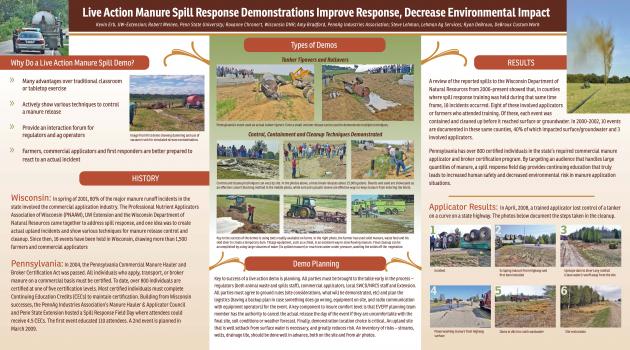
Not your typical Wisconsin “boat” show. PNAAW 2014 manure boat agitation demonstration, organized with UW-Extension.

All certification levels also require that the firm complete the PNAAW Performance Standards Checklist at least once per year.

Membership in the state’s applicator association is required for certification, as certification is granted by the association and not by Extension. Each state association may also require additional performance standards, such as documentation of equipment calibration, to grant certification.

One area of continuing education began in 2002, when UW – Extension with permission from Wisconsin Department of Natural Resources (WDNR), conducted manure spill response training using actual manure. The basic educational focus was containing, controlling, cleaning up, and then meeting reporting requirements of a spill. Since 2002, 20 live action demonstrations have occurred. Training has expanded to include calibrating of manure equipment and determining manure application rate per acre.

What have we learned?

PNAAW requested that Extension assist in filling an educational need not met by current farm shows – being able to compare different manure agitation and application equipment side by side in the field (using actual manure) to help determine which best meets individual needs. The result was the first Manure Expo in August 2001, which drew 432 people from 5 states and Canada.

The Manure Expo has grown to an annual 2-day educational and demonstration event. 2015 is the 13th Expo; the event has been hosted by Extension and custom applicators in Wisconsin, Michigan, Minnesota, Ohio, Iowa, Missouri, Nebraska, and Pennsylvania in the US and Guelph, Ontario, Canada. An average Expo will draw over 1,000 people from industry, university, farm, and application professionals.

PNAAW 2014

PNAAW 2014

The pit before the boat demonstration begins 2014.

The voluntary certification program has saved Wisconsin and Michigan over $100,000 annually because regulatory mandates require state finances for staff and office to run mandated programs. In addition to the sharing of curriculum in multiple Midwestern universities the training and educational sessions are a success in the formation/enhancement of three state associations in Michigan (now inactive), Pennsylvania, and Indiana/Ohio.

Applicator and industry partnerships contributed to a multi – state agriculture weight study based at the Minnesota DOT/University of Minnesota, MN Road Research Center. Over $640,000 was pooled from applicators and Applicator Associations (WI, MI, MN, IA, and OH), industry and agencies to fund research on the impact of larger manure hauling and agriculture equipment on pavement.

Custom manure applicators are a key component in the environmental application of manure. The Wisconsin Department of Agriculture, Trade, and Consumer Protection (DATCP) has tracked crop acres managed with a NMP. In 2004, 0.7 million crop acres were managed using a NMP; in 2014 the NMP managed acres increased to 2.58 million acres in Wisconsin.

Future Plans

Each year a new need will arise. Education will be provided for employee relations, business planning, family/work balance and the need to review new technology. A few projects that began in 2014: manure boat agitation field day and precision manure application. Education will be developed in the future as a need arises from the manure application industry.

Authors

Richard Halopka, CCA, Clark County UW-Extension Crops & Soils Agent richard.halopka@ces.uwex.edu

George Koepp, Columbia County UWEX Agriculture Agent, Jerry Clark,Chippewa County UWEX Crops/Soils Educator, Ted Bay, Grant County UWEX Crops/Farm Management Agent, Kevin Erb, UWEX Conservation Professional Devp. & Training Cord., Becky Larsen, UW Biowaste Specialist, Jim Leverich, UW On Farm Research, Kim Meyer, UW Arlington ARS, Cheryl Skjolaas, UW Agriculture Safety Specialist

Additional information

In 2014, over 400 custom manure applicators in Wisconsin were certified in at least one level of the program. Eight PNAAW member application firms revised their level 3 status in 2013 and are saving $44,000 annually on pollution insurance policies, while PNAAW firms achieving level 1 and level 2 certification reduced pollution insurance policies premiums by an additional $78,000 per year.

The collaboration of PNAAW, University of Wisconsin Extension, University of Wisconsin Specialists, WDNR, DATCP and UW – Extension County Agents has provided the foundation of a proactive approach to education and training, leading to problem solving results from a knowledgeable application industry.

https://www.facebook.com/pages/category/Nonprofit-Organization/Professional-Nutrient-Applicators-Association-of-Wisconsin-2223955430983054/  

2009 U.S.A. water quality poster, manure spills

2009 U.S.A. water quality poster, manure spills

Bulletin for manure spill response developed by UW-Extension nutrient management team PNAAW workgroup.

The authors are solely responsible for the content of these proceedings. The technical information does not necessarily reflect the official position of the sponsoring agencies or institutions represented by planning committee members, and inclusion and distribution herein does not constitute an endorsement of views expressed by the same. Printed materials included herein are not refereed publications. Citations should appear as follows. EXAMPLE: Authors. 2015. Title of presentation. Waste to Worth: Spreading Science and Solutions. Seattle, WA. March 31-April 3, 2015. URL of this page. Accessed on: today’s date.

Overwinter transformation and fate of fall-applied manure nitrogen

There is growing evidence that soil nutrient cycling is sustained during the non-growing season in the northern regions of Canada. However, the extent of the transformations and loss of fall-applied manure N is not well documented. The NH4-N fraction of liquid dairy cattle manure, liquid swine manure, and ammonium sulfate was enriched with 15N radioactive isotope, and all N sources were applied to bare sandy loams in early November at sites located in contrasted climate (mean annual temperature 1 to 10°C; mean annual precipitation 300 to 1300 mm; mean snow cover depth <5 to 70 cm). The experiment was replicated over two years at each site. Soils were sampled on the week of application, in November, and at intervals until next May. The recovery of applied 15N in soil NH4-N, NO3-N and organic N pools was measured in the 0-30 cm depth. Soil temperature was also monitored at the 5, 20 and 50 cm depths. Although the transformation of applied ammonium was delayed in colder areas, the transformation of 15NH4-N was generally completed by April, generally before seeding of the next crop. Both nitrification and immobilization of fall-applied 15NH4-N occurred throughout the non-growing season at all sites. As a result, residual 15N was essentially recovered as NO3-N and organic N in the following spring. In most cases, more than 50% of fall-applied 15N was not recovered in the following spring. In general, more 15NH4-N was immobilized with manures than ammonium sulfate, possibly because of the presence of fresh carbon in the manure. As a result, more 15N was recovered in the spring with the manure, and this was particularly obvious at the warmer sites. We conclude that a significant portion of fall-applied NH4-N may be lost during the non-growing season, even in areas with cold and long winter period.

Purpose

It is now recognized that biological processes involved in nitrogen (N) cycling are sustained in agricultural soils under frozen conditions (Clark et al., 2009; Maljanen et al., 2007; Virkajärvi et al., 2010), and that a significant portion of N present in soils in the fall may be transformed and lost during the non-growing season (Jayasundara et al., 2010; Chantigny et al., 2014). However, the extent to which fall-applied N fertilizer, and especially manure-N, can be lost as a function of local winter conditions (e.g. snow cover depth, frost penetration) is not known. Climate models are currently predicting that global warming will result in reduced snow fall, deeper frost penetration and more freeze-thaw cycles in soils of North America (Henry, 2008). This will have impacts on soil biological processes (Groffman et al., 2001), but it is not possible to predict how it may influence the fate of fall-applied N. Our objective was to use a multi-site approach to determine the extent of transformation and loss of fall-applied N during the non-growing season under contrasted winter conditions.

What did we do?

Pig slurry and dairy cattle slurry were enriched with 15N by adding a small amount of ammonium sulfate (99 atom% 15N). This approach allowed tracing of the readily available fraction of manure N (ammonia-N) in the soil N pools. Ammonium sulfate labelled at 5 atom% 15N was also included in the experiment as a no-carbon control treatment. The three treatments were applied to bare loamy soils (top 10 cm) in late fall (first week of November) at four sites located in different climatic zones of Canada: Pacific Maritimes [Mean annual temperature (MAT), 10.5°C; Mean annual precipitation (MAP), 1755 mm; average snow depth (ASD), < 1cm]; Prairies [MAT, 5.7°C; MAP, 383 mm; ASD, 3 cm]; Mixed Wood Plain [MAT, 6.3°C; MAP, 914 mm; ASD, 13 cm]; Boreal Shield [MAT, 4.2°C; MAP, 1213 mm; ASD, 44 cm]. The experiment was repeated in 2009-10 and 2010-11 at all sites. Soils were sampled to 30 cm depth on the week of application, and at intervals until early May to determine the amount of manure N recovered in the NH4, NO3 and organic (immobilized) N pools, as a function of time since application.

Overwinter transformation and fate of fall-applied manure nitrogen

What have we learned?

Fall-applied N was transformed and lost throughout the non-growing season at all sites (Fig. 1). Losses were rapid at the warmest site (Pacific Maritimes), and more gradual at the other sites where colder soil temperatures were recorded. Yet, six months after application (late April – early May) only 10 to 50% of fall-applied 15N was recovered in the top 30 cm of soil suggesting very significant loss of manure N during this period. Immobilization and nitrification of applied 15NH4 occurred throughout the non-growing season at all sites (data not shown), and 15N recovered in the next spring was essentially present as NO3 and organic N. At two sites, a greater proportion of applied 15N was recovered in the spring with the manures than ammonium sulfate, and more of this residual 15N was in the organic form in the manure treatments. This suggests that carbon present in the manure stimulated immobilization and retention of fall-applied N in soil. Overall, the results indicate that the readily available fraction of fall-applied N is at high risk of loss during winter, and that changes in soil conditions induced by global warming may not have a great influence on this process or on the manure-N transformation during winter.

References

Chantigny M.H., Angers D.A., Rochette P., Pomar C., Pelster D.E. 2014. Evidencing overwinter loss of residual organic and clay-fixed nitrogen from side-dressed, 15N-labelled pig slurry. Can. J. Soil Sci. 94:1-8.

Clark K., Chantigny M.H., Angers D.A., Rochette P., Parent L.E. 2009. Nitrogen transformations in cold and frozen agricultural soils following organic amendments. Soil Biol. Biochem. 41:348-356.

Groffman P.M., Driscoll C.T., Fahey T.J., Hardy J.P., Fitzhugh R.D., Tierney, G.L. 2001. Colder soils in a warmer world: A snow manipulation study in a northern hardwood forest ecosystem. Biogeochemistry 56, 135-150.

Henry, H.A.L. 2008. Climate change and soil freezing dynamics: Historical trends and projected changes. Climatic Change 87, 421-434.

Jayasundara, S., Wagner-Riddle, C., Parkin, G., Lauzon, J., Fan, M.Z. 2010. Transformations and losses of swine manure 15N as affected by aopplication timing at two contrasting sites.

Maljanen M., Kohonen, A.R., Virkajärvi P., Martikainen P.J. 2007. Fluxes and production of N2O, CO2 and CH4 in boreal agricultural soil during winter as affected by snow cover. Tellus, Series B: Chem. Phys. Meteor. 59, 853-859.

Virkajärvi P., Maljanen M., Saarijarvi K., Haapala J., Martikainen P.J. 2010. N2O emissions from boreal grass and grass-clover pasture soils. Agric. Ecosyst. Environ. 137, 59-67.

Future Plans

Now that we evidenced the significance of losses of fall-applied N from soils during the winter period under varied climatic conditions, we are initiating field work to determine best practices for fall application of manure (e.g. early vs. late fall application; use of additives to delay nitrification of manure ammonia) that will mitigate losses and help efficiently transferring applied N to crop in the next spring.

Corresponding author, title, and affiliation

Martin H. Chantigny, Soil Scientist, Agriculture and Agri-Food Canada, Quebec

Corresponding author email

martin.chantigny@agr.gc.ca

Other authors

Frank J. Larney, Agric. and Agri-Food Canada, Lethbridge; Shabtai Bittman, Agric. and Agri-Food Canada, Agassiz; David Lapen, Agric. and Agri-Food Canada, Ottawa; Denis A. Angers, Philippe Rochette, Agric. and Agri-Food Canada, Quebec

Additional information

Scientific papers and reports can be accessed through my webpage:  www.agr.gc.ca/fra/science-et-innovation/centres-de-recherche/quebec/centre-de-recherche-et-de-developpement-sur-les-sols-et-les-grandes-cultures/personnel-et-expertise-scientifiques/chantigny-martin-phd/?id=1181933396583

Acknowledgements

This project was financially supported by the Sustainable AGriculture Environmental Systems (SAGES) Initiative of Agriculture and Agri-Food Canada

The authors are solely responsible for the content of these proceedings. The technical information does not necessarily reflect the official position of the sponsoring agencies or institutions represented by planning committee members, and inclusion and distribution herein does not constitute an endorsement of views expressed by the same. Printed materials included herein are not refereed publications. Citations should appear as follows. EXAMPLE: Authors. 2015. Title of presentation. Waste to Worth: Spreading Science and Solutions. Seattle, WA. March 31-April 3, 2015. URL of this page. Accessed on: today’s date.
Nitrous Oxide Emissions in Snow-covered Agricultural Soils – manure-induced fluxes


Why Study Nitrous Oxide Emissions and Manure Application?*

It is now accepted that soil nitrous oxide (N2O) emissions occur under freezing conditions (Sommerfeld et al., 1993; Pelster et al., 2012), and that overwinter N2O emissions may represent a substantial portion of the total annual emissions from agricultural soils in northern countries (Maljanen et al., 2007; Wagner-Riddle et al., 2007; Virkajärvi et al., 2010). However, the temporal dynamics during winter are poorly documented, and the question whether manure application in the fall may increase winter N2O emissions is under debate. In addition, the possible influence of soil texture in regulating N2O emissions during winter has been overlooked. Our objective was to compare N2O emissions above the snow cover on sandy and clayey soils with and without pig slurry applied in the fall.

What did we do?

The study was carried out for three consecutive winter periods (2010-2013) on a sandy loam and a silty clay soil. Soil N2O concentration and emission were monitored weekly from November to May using soil probes and static chambers, respectively. The static chambers were made of 20-cm diameter white PVC pipe. The chamber base (15 cm height) was permanently inserted to 10 cm depth. Pig slurry was applied within half of the chamber bases (5 per soil type), whereas the other half remained unamended (Control treatment). The manure was immediately incorporated into the top 5 cm of soil using hand tools; soil in control chambers was similarly disturbed. Additional sections of PVC pipe (10 cm height) were secured on the top of each chamber base as the snowpack developed, and were removed stepwise in the spring during snowmelt. The chamber base was therefore emerging above the snow cover at time of chamber deployment. On each sampling date, the accumul ation of N2O within the chamber headspace was monitored at 6-min intervals during 18-min deployments. Soil air was also collected weekly through soil probes installed at 7.5 cm depth. Air samples were withdrawn with a syringe and transferred to pre-evacuated vials. Gas samples in vials were analyzed for N2O within 48 h using a gas chromatograph.

Title: Nitrous Oxide Emissions in Snow-covered Agricultural Soils – manure-induced fluxes

Authors and affiliations:

Martin H. Chantigny, Philippe Rochette & Denis A. Angers, Agriculture and Agri-Food Canada, Québec;

Claudia Goyer, Agriculture and Agri-Food Canada, Fredericton, Canada

Table 1. Range of cumulative N2O-N emission, magnitude of emissions, and emission factors measured for three consecutive winter periods.


Sandy loam


Silty clay

Cumulative emission

(kg N2O-N/ha)


0.1 to 2.0


0.6 to 1.6

Magnitude of emissions

(% of total annual emission)

32 to 67


10 to 27

Emission factor

(% N applied)

0.3 to 3.0


0.9 to 2.4

What have we learned?

Nitrous oxide was produced in soils and emitted in all years, with a low in late fall (Nov.-Dec.) and significant increases when snow depth exceeded 20 cm (late Dec. – early Jan.) and during spring thaw (late March – early April). Ice formation on and within the soil occurred during freeze-thaw events. This phenomenon generally blocked the emission of N2O but did not prevent its production in the soil. Therefore ice formation resulted in a marked decline in N2O emissions with concurrent increase in soil N2O concentration. The temporal dynamics of N2O emissions was variable among years, and the significance of manure-induced N2O emissions was mainly explained by early winter frost penetration, which was dependent on snow accumulation in late fall. As opposed to N2O emissions measured during the growing season, sandy soils tended to emit as much N2O as clayey soils during the non-growing season. Consequently, the cumulative N2O-N emi ssions in the non-growing season (November-April) accounted for 10 to 25% of total annual emissions in clayey soils, and from 20 to 70% in sandy soils (Table 1). Soils amended with pig slurry in the fall emitted more N2O than soils without, with emissions factors up to 3%, higher than the default IPCC coefficient (1%).

References

Maljanen M., Kohonen, A.R., Virkajärvi P., Martikainen P.J. 2007. Fluxes and production of N2O, CO2 and CH4 in boreal agricultural soil during winter as affected by snow cover. Tellus, Series B: Chem. Phys. Meteor. 59, 853-859.

Pelster, D.E., Chantigny, M.H., Rochette, P., Angers, D.A., Laganière, J., Zebarth, B., Goyer, C. 2012. Crop residue incorporation alters soil nitrous oxide emissions during freeze-thaw cycles. Can. J. Soil Sci. 93:415-425.

Sommerfeld, R.A., Mosier, A.R., Musselman, R.C. 1993. CO2, CH4, and N2O flux through a Wyoming snowpack and implications for global budgets. Nature 361:140-142.

Virkajärvi P., Maljanen M., Saarijarvi K., Haapala J., Martikainen P.J. 2010. N2O emissions from boreal grass and grass-clover pasture soils. Agric. Ecosyst. Environ. 137, 59-67.

Wagner-Riddle, C., Furon, A., McLaughlin, N. L., Lee, I., Barbeau, J., Jayasundara, S., Parkin, G., von Bertoldi, B., Warland, J. 2007. Intensive measurement of nitrous oxide emissions from a corn-soybean-wheat rotation under two contrasting management systems over 5 years. Global Change Biol. 13:1722-1736.

Future Plans

Now that we evidenced the significance of N2O emissions from soils during the winter period, we are initiating field work to determine best practices for fall application of manure (e.g. early vs. late fall application; use of additives to delay nitrification of manure ammonia) that will mitigate losses and help efficiently transferring applied N to crop in the next spring.

Authors

Martin H. Chantigny, Soil Scientist, Agriculture and Agri-Food Canada, Quebec martin.chantigny@agr.gc.ca

Philippe Rochette, Denis A. Angers, Agriculture and Agri-Food Canada, Québec;

Additional information

Scientific papers and reports can be accessed through my webpage:  www.agr.gc.ca/fra/science-et-innovation/centres-de-recherche/quebec/centre-de-recherche-et-de-developpement-sur-les-sols-et-les-grandes-cultures/personnel-et-expertise-scientifiques/chantigny-martin-phd/?id=1181933396583

Acknowledgements

This project was financially supported by the Sustainable AGriculture Environmental Systems (SAGES) Initiative of Agriculture and Agri-Food Canada

The authors are solely responsible for the content of these proceedings. The technical information does not necessarily reflect the official position of the sponsoring agencies or institutions represented by planning committee members, and inclusion and distribution herein does not constitute an endorsement of views expressed by the same. Printed materials included herein are not refereed publications. Citations should appear as follows. EXAMPLE: Authors. 2015. Title of presentation. Waste to Worth: Spreading Science and Solutions. Seattle, WA. March 31-April 3, 2015. URL of this page. Accessed on: today’s date.
The Effect of Broiler Litter, Swine Effluent, and Municipal Biosolids Land Application on Small Plot Pathogen, Antibiotic Resistance, and Nutrient Levels

Purpose

Land applying agricultural and municipal wastes carries an inherent risk associated with nutrient and pathogen runoff and contamination, but with that risk comes a potentially sustainable process to reclaim otherwise residual waste material. Few studies compare the two residuals. The purpose of this study was to investigate the land application of municipal waste water treatment solids (biosolids) versus manure (broiler and swine) and their effect on pathogens, antibiotic resistance and nutrients.

What did we do?

A 5×4 randomized block design comprised of broiler litter, swine effluent, and municipal biosolids treatments were land applied at a rate of 5-8 tons ha-1 for the broiler litter and biosolids, respectively, while effluent was applied at a rate of 32 ha-cm on a cooperator farm established with forage plots over a three-year period. Swine effluent was applied to the surface or surface-applied then incorporated to approximately 7.5 cm; applications were applied once per season. Soil core samples to 15 cm were collected from plots and were specifically targeted to include waste-residual. Samples were collected in the days, weeks and months following land application. Samples were processed for heterotrophic plate count bacteria, thermotolerant coliforms, enterococci, staphylococci, gram-negative bacteria, Escherichia coli, Clostridium perfringens, Salmonella spp., Campylobacter spp., Listeria monocytogenes, antibiotic resistant bacteria and genes, and 16S rRNA.

What have we learned?

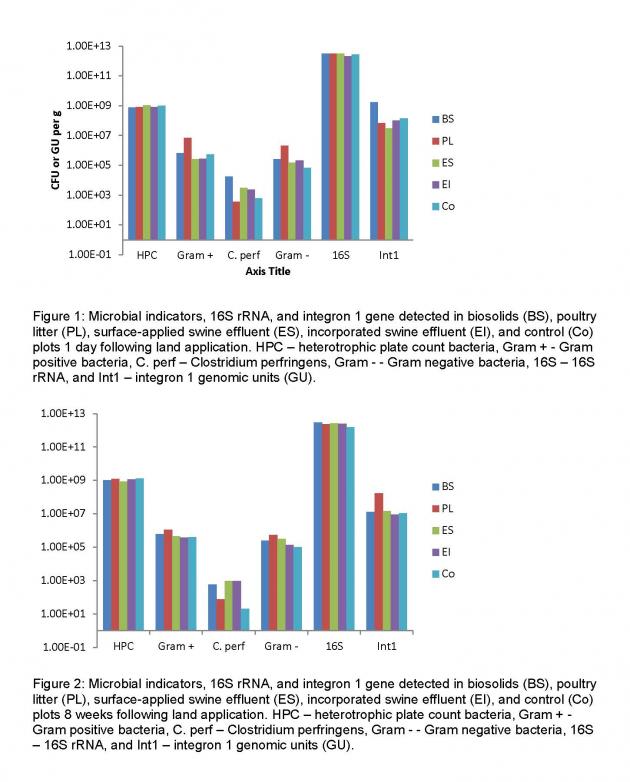
Immediately following land application, most pathogens and indicator bacteria were detected; however, by the end of the first month, most were at background levels. One day following land application (Figure 1), most indicators were noticeably enriched, but following 1 week, levels began to drop to background by week 8 (Figure 2). Pathogens were rarely dependent on waste, for instance, Salmonella was rarely detected, but was detected in both effluent and biosolids-applied plots. Clostridium perfringens, on the other hand was typically found in swine effluent-applied plots, though biosolids-applied plots were also positive for C. perfringens. Campylobacter spp. was not detected at any time point, and E. coli was fleetingly detected. Differences in phenotypic antibiotic resistance weren’t detected, while antibiotic resistance genes were equally detected in most applied treatments. Overall, the influence of waste didn’t alter 1 6S rRNA levels. Microbial ecology, only briefly investigated via terminal restriction fragment length polymorphisms, yielded slight differences between plot treatments. Overall, waste type had a small influence on pathogen/indicator presence and levels following land application, most likely as a result of minimal pathogen levels and application rates such that detection was limited. The overarching results of this study indicate microbial risks associated with any of the tested waste types will be similar, given overall low pathogen levels; however, further investigation into antibiotic resistance, which should be dependent on waste type, will be a focus of interest. Additionally, given the variability of manures, pathogen levels may vary significantly based on region, climate, and concentrated animal feeding operation.Microbial indicators detected

Future Plans

Quantitative microbial risk assessment modeling will be conducted on data, projecting the risks associated with each practice, taking into account a function of waste and time.

Authors

Brooks, John P., Research Microbiologist, Genetics and Precision Agriculture Unit, USDA-ARS, Mississippi State, MS 39762 john.brooks@ars.usda.gov

McLaughlin, M.R., Adeli, A., and Read, J.J.

Additional information

John Brooks
john.brooks@ars.usda.gov
662-320-7411
Manure Pathogens and Microbial Byproducts

Acknowledgements

The authors would like to thank the work of Cindy Smith, Renotta Smith, Jim Robbins, and our farm and wastewater treatment cooperators.

The authors are solely responsible for the content of these proceedings. The technical information does not necessarily reflect the official position of the sponsoring agencies or institutions represented by planning committee members, and inclusion and distribution herein does not constitute an endorsement of views expressed by the same. Printed materials included herein are not refereed publications. Citations should appear as follows. EXAMPLE: Authors. 2015. Title of presentation. Waste to Worth: Spreading Science and Solutions. Seattle, WA. March 31-April 3, 2015. URL of this page. Accessed on: today’s date.

Antibiotic Losses during Thermophilic Composting

Purpose

Residual antibiotics in land-applied manure and biosolids present a potential threat to public and ecological health, so it is important to determine antibiotic removal efficiencies for manure and biosolids waste management practices and to identify conditions that enhance antibiotic degradation.

What we did

Loss of the antibiotics florfenicol, sulfadimethoxine, sulfamethazine, and tylosin was studied during pilot-scale static pile thermophilic composting and the effects of temperature and feedstock particles on antibiotic removal rates were tested. The antibiotics were spiked into dairy manure solids and wastewater biosolids, and treatments included aerated and non-aerated manure and biosolids/wood-product (1:3 v/v) composting.

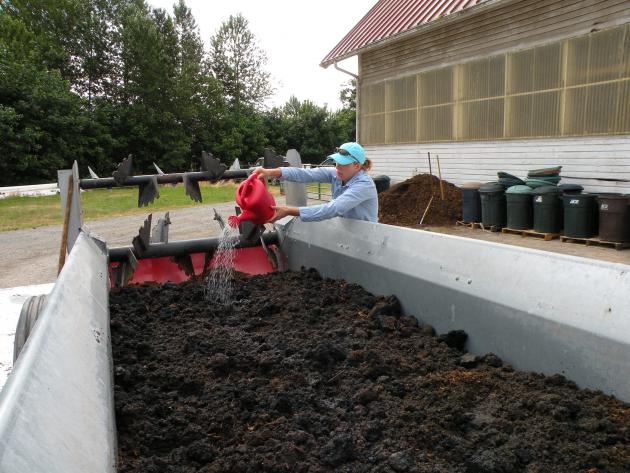
Figure 1. Applying antibiotic solution to biosolids

Figure 1. Applying antibiotic solution to biosolids

What have we learned

Results showed no significant differences between aerated and non-aerated treatments; on average ≥85%, ≥93%, and ≥95% antibiotic reduction was observed after 7, 14, and 21 d of composting. Greater antibiotic reduction was observed in manure compost compared to biosolids compost for florfenicol (7, 14, 21, 28 d) and tylosin (7, 14, 28 d); however, there was no significant difference for sulfadimethoxine and sulfamethazine. Peak temperatures were 66-73°C, and ≥55°C was maintained for 6-7 d in the biosolids compost and 17-20 d in the manure compost.

Bench-scale experiments conducted at 25, 55, and 60°C showed that lower temperature decreased removal of the sulfonamides and tylosin in both feedstocks and florfenicol in the biosolids. The presence of compost particles increased antibiotic loss, with time to 50% dissipation ≤ 2 d in the presence of solids (60°C), compared to no degradation in their absence. These results indicate that thermophilic composting effectively reduces residual antibiotics in manure and biosolids.

Figure 2. Mixing biosolids and wood shavings

Figure 2. Mixing biosolids and wood shavings

Figure 3. Mixing biosolids and wood shavings

Figure 3. Mixing biosolids and wood shavings.


Authors

A. Bary*, S.M. Mitchell*, J.L. Ullman**, C.G. Cogger*, A.L. Teel*, R.J. Watts*

Washington State University*, University of Florida**.

Andy Bary, bary@wsu.edu


The authors are solely responsible for the content of these proceedings. The technical information does not necessarily reflect the official position of the sponsoring agencies or institutions represented by planning committee members, and inclusion and distribution herein does not constitute an endorsement of views expressed by the same. Printed materials included herein are not refereed publications. Citations should appear as follows. EXAMPLE: Authors. 2015. Title of presentation. Waste to Worth: Spreading Science and Solutions. Seattle, WA. March 31-April 3, 2015. URL of this page. Accessed on: today’s date.
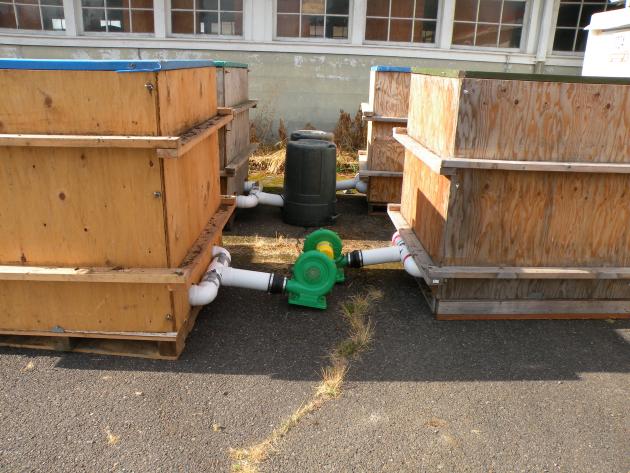
Figure 4. Compost bins

Figure 4. Compost bins

Life Cycle Greenhouse Gas Emissions of Dairy and Bioenergy Systems


Why Study Greenhouse Gas Emissions from Dairy Systems?

Animal agriculture presents multiple challenges for sustainability and the dairy sector alone contributes 30% of agricultural greenhouse gas (GHG) emissions. Bioenergy systems have been implemented to reduce GHG emissions and contribute to energy independence goals, but the production of bioenergy must be done with caution to avoid the generation of additional emissions during feedstock production and harvesting. This research used life cycle assessment (LCA) techniques to evaluate the integration of dairy and bio-energy systems to address global warming. The first place for integration is the dairy feed preparation level, where potential co-products of the biofuel industry (e.g. dry distillers grains with solubles and soybean meal) can be included in the dairy ration. A lifecycle approach should be considered to evaluate changes in GHG emissions related to the production of these added dairy feeds. This is important because the embedded emissions and energy resources related to upstream processes (e.g. manufacturing of seeds, fertilizers, pesticides, and fuels) and downstream processes (e.g. transportation and harvesting) can result in added greenhouse gases. The second point where dairy and bioenergy systems can be integrated happens at the waste management level, where manure is digested in an anaerobic digestion (AD) system to produce renewable energy. Different cow feeding scenarios, management practices, and anaerobic digestion pathways are modeled to identify practices that minimize GHG emissions at the dairy farm.

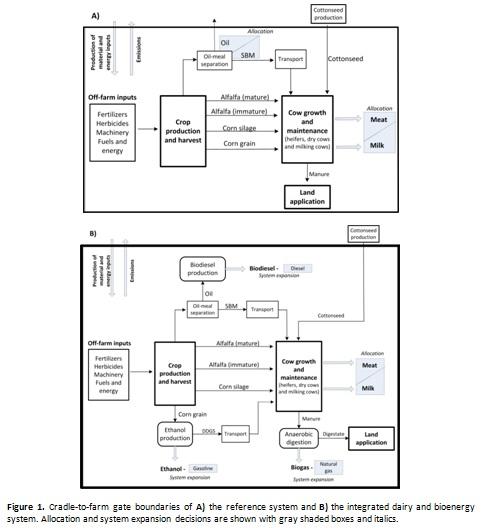
Figure 1. Cradle-to-farm gate boundaries

Figure 1. Cradle-to-farm gate boundaries

What did we do?

The effect of integrating bioenergy and dairy systems on GHG emissions was evaluated. First, a reference milk-producing system representative of Wisconsin (WI) was modeled using a partial LCA approach from cradle-to-farm gate. To integrate bioenergy products to the modeled farm, the boundaries of the system were defined and included corn and soybean production for ethanol and biodiesel, respectively. This was necessary in the analysis since co-products dry distillers grains with solubles (DDGS) and soybean meal (SBM) are part of the dairy diet in numerous farms of WI. In addition, the production of biogas through anaerobic digestion (AD) from the collected manure was evaluated as a second opportunity to integrate bioenergy systems with dairy systems. Given that this integrated system is multi-functional (producing milk, meat, ethanol, biodiesel and biogas); the GHG emissions were assigned to milk by system expansion, a method recommended by the International Organization for Standardization (ISO) to assign the environmental impacts of multi-functional systems among co-products. This method can be applied when a co-product clearly replaces the production of an external product (in our paper ethanol replaces gasoline and biodiesel replaces fossil diesel). Results indicate that GHG emissions for the reference system are 1.02 kg CO2-eq per kg of milk (corrected for fat and protein (FPCM). When analyzing the integration of ethanol and biodiesel (and after applying system expansion) GHG emissions are reduced to 0.86 kg CO2-eq per kg of FPCM in a diet that maximizes DDGS. The installation of a digester further reduced GHG emissions to 0.63 kg CO2-eq/kg FPCM, highlighting the importance of this system to achieve both energy and climate change goals.

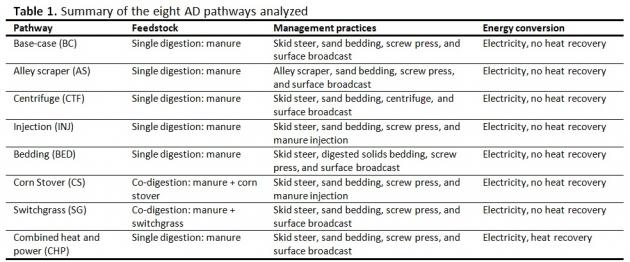
Given the important role that AD systems have to reduce greenhouse gases, we explored different AD scenarios based on manure management practices, co-digestion strategies, and energy conversion processes in order to achieve further emission reductions. AD is the main focus of this part of the study; therefore, a new functional unit was defined as 1 GJ of produced electricity. A base-case pathway was compared against seven alternative AD pathways. In the base-case, manure is collected with a skid steer, digested in a plug-flow digester, biogas is used for electricity production without heat recovery, and digestate is separated in a screw press and land-applied by surface broadcast. The alternative AD pathways are defined in Table 1.

Table 1. Summary of the eight AD pathways analyzed

Table 1

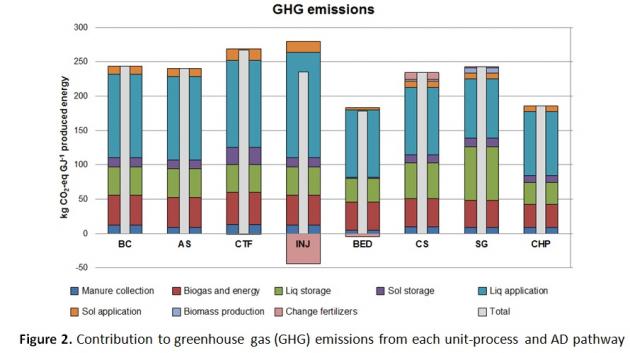
For the base-case, GHG emissions are 243.3 kg CO2-eq/GJ of produced energy. Results show that the AD pathway has a substantial influence on the estimates of environmental impacts and GHG emissions range from 178 to 267 kg CO2-eq/G J of produced energy (Figure 2).

Figure 2. Contribution to greenhouse gas (GHG) emissions from each unit-process and AD pathway

Figure 2.

What have we learned?

The dairy industry will continue to dominate agricultural activities in WI for the foreseeable future and the emerging bioenergy industry will need to be integrated into existing agricultural systems. System models like this one have potential to help farmers and policy makers identify synergies between dairy production and renewable energy development. GHG emissions of a reference dairy system representative of WI are compared to a system that integrates dairy and bioenergy production. Diet scenarios that maximize DDGS content are the most effective in reducing GHG emissions. Reductions in GHG emissions come mainly from the credits of avoided emissions and primary energy from displaced fossil fuels after system expansion. GHG emissions are further reduced when implementing AD to process the manure generated in the farm.

The second part of the study focused on improving the sustainability of AD systems by evaluating different manure management practices, co-digestion strategies, and energy conversion processes. GHG emissions can be reduced 31% by management practices alone, 24% if heat from the electricity generation process is recovered, and 4% by co-digesting manure with corn stover. Replacing sand with digested solids for cow bedding contributes to reduce GHG emissions as it avoids the manufacturing of this resource. Co-digesting corn stover with manure is an effective strategy to reduce GHG emissions as this feedstock requires only harvesting as opposed to switchgrass that needs to be added to the already existing crop mix requiring additional planting as well as harvesting. Finally, results show the major improvement in GHG emissions when heating the digester with recovered heat from the generator, highlighting the potential of this pathway to reduce environmental impacts without adding major technical or economic challenges to the farmer.

Future Plans

There is potential to expand the current analysis by using the survey data collected as part of this study. For example, it would be interesting to compare management practices coming from small and large dairy farm operations.

We still need to develop our knowledge on the sustainability impacts of co-digesting manure with other waste streams, such as cheese whey and whey permeate. These pathways can provide useful information to dairy processing plants about alternative uses of whey as an energy source with and without protein separation, which could be a decisive factor when making investment decisions.

It will be important to quantify other environmental services of AD systems, such as water quality preservation and odor reduction.

Authors

Aguirre-Villegas Horacio Andres. Postdoctoral Research Associate. Department of Biological Systems Engineering, University of Wisconsin-Madison aguirreville@wisc.edu

Larson Rebecca. Assistant Professor. Department of Biological Systems Engineering, University of Wisconsin-Madison. Reinemann Douglas J. Chair and Professor. Department of Biological Systems Engineering, University of Wisconsin-Madison

Primary author: Horacio Aguirre-Villegas, aguirreville@wisc.edu, 217-898-0345

Acknowledgements      

This study is part of the Green Cheese Project, funded by Wisconsin Focus on Energy, Environmental and Economic Research and Development Program and the National Institute of Food and Agriculture, United States Department of Agriculture, under ID number WIS01604

The authors are solely responsible for the content of these proceedings. The technical information does not necessarily reflect the official position of the sponsoring agencies or institutions represented by planning committee members, and inclusion and distribution herein does not constitute an endorsement of views expressed by the same. Printed materials included herein are not refereed publications. Citations should appear as follows. EXAMPLE: Authors. 2015. Title of presentation. Waste to Worth: Spreading Science and Solutions. Seattle, WA. March 31-April 3, 2015. URL of this page. Accessed on: today’s date.
Managing Dairy Nutrients for Stewardship: Washington State Science Symposium- May 2, 2014

The Science Symposium was focused on the principals and science supporting dairy nutrient management planning in Washington State. Speakers were from UC Davis, Agriculture and Agri-Food Canada-British Columbia, Oregon State University, Washington State University, WA Department of Ecology, Sunnyside Irrigation District and Whatcom Conservation District. Presentations related to WA NRCS Tech Note 14 (Winter Spreading) and the WA NRCS 590 (Nutrient Management Standard). The symposium ended with a panel discussion with the speakers, and concluded with a summary of expected next steps.

The goals of the symposium were to:

1. Learn the latest research regarding the winter spreading of dairy manure on water quality.

2. Identify areas of scientific agreement

3. Develop next steps


Please click on the highlighted presentation name below to view the recorded presentation from the symposium.

Presentation Presenter
Nitrogen Mineralization: Short and Long Term Considerations Dan Sullivan, Oregon State University
Perspectives on Wintertime Nitrogen Losses Shabtai Bittman, Agriculture and Agri-Food Canada
Understanding and Managing Groundwater Impacts from Dairies in California Thomas Harter, University of California, Davis
A Productive Approach to Water Resource Management Jim Trull, Sunnyside Valley Irrigation District
Nitrogen Dynamics at a Grass Field Overlying the Sumas-Blaine Aquifer in Whatcom County

Joe Harrison, Washington State University

Barb Carey, WA Department of Ecology

Charles Pitz, WA Department of Ecology

Protecting Puget Sound from Agricultural Pollution Using a Progressive Manure Application Risk Management (ARM) System Nichole Embertson, Whatcom Conservation District

Winter Application of Dairy Slurry on a Grazing Based Dairy
Joe Harrison, Washington State University
Speaker Panel: Continuing the Conversation Symposium speakers and audience


Additional Resources:

NRCS 590 Practice Standard.pdf

WA NRCS Technical Note 14 (Winter Spreading).pdf

Contact Information:

Karla Heinitz- WA State Conservation Commission, kheinitz@scc.wa.gov