Asking a client to share their communication style and preference isn’t necessarily the first thing that’s done when contacted for help about manure management. However, it’s been shown time and again that communicating to a person in the way that matches the way they want to be communicated to, is the best way to ensure everyone is acknowledged and heard.
What Have I Learned
There are several methods for identifying personality preferences and subsequently, communication preferences. I choose to use the Real Colors® program with the manure haulers I work with. This is a group that has had very little attention given to them by Extension and are reluctant to trust agency folks. Using an organized program like Real Colors® is a non-invasive way to really understand how each of the 25 haulers I work with need to be communicated with. After going through the assessment and figuring out everyone’s individual preferences, we then gather as a group and talk about why some father/son, brother and cousin teams may find it difficult to work together. I follow the personality preference training with conflict management strategies which eventually leads into discussion on how to get along with fellow employees, customers and competitors.
Next Steps
I dare you to ask your most challenging program attendee to be vulnerable enough to discuss their personality and communication style…the ones that come to every event you host within your program. The grumpy guy with crossed arms; the stern lady with pursed lips; or the one who won’t stop talking. Why would you do that? Because the barriers that break and the forward momentum that is gained may be just what your program is lacking.
The authors are solely responsible for the content of these proceedings. The technical information does not necessarily reflect the official position of the sponsoring agencies or institutions represented by planning committee members, and inclusion and distribution herein does not constitute an endorsement of views expressed by the same. Printed materials included herein are not refereed publications. Citations should appear as follows. EXAMPLE: Authors. 2019. Title of presentation. Waste to Worth. Minneapolis, MN. April 22-26, 2019. URL of this page. Accessed on: today’s date.
USDA-NRCS has nearly fifteen years of Conservation Innovation Grant project experience, and several of these projects have provided a means to learn more about various techniques for addressing air emissions from animal agriculture. The overall goal of the Conservation Innovation Grant program is to provide an avenue for the on-farm demonstration of tools and technologies that have shown promise in a research setting and to further determine the parameters that may enable these promising tools and technologies to be implemented on-farm through USDA-NRCS conservation programs.
What Did We Do?
Several queries for both National Competition and State Competition projects in the USDA-NRCS Conservation Innovation Grant Project Search Tool (https://www.nrcs.usda.gov/wps/portal/nrcs/ciglanding/national/programs/financial/cig/cigsearch/) were conducted using the General Text Search feature for keywords such as “air”, “ammonia”, “animal”, “beef”, “carbon”, “dairy”, “digester”, “digestion”, “livestock”, “manure”, “poultry”, and “swine” in order to try and capture all of the animal air quality-related Conservation Innovation Grant projects. This approach obviously identified many projects that might be related to one or more of the search words, but were not directly related to animal air quality. Further manual review of the identified projects was conducted to identify those that specifically had some association with animal air quality.
What Have We Learned?
Out of nearly 1,300 total Conservation Innovation Grant projects, just under 50 were identified as having a direct relevance to animal air quality in some way. These projects represent a USDA-NRCS investment of just under $20 million. Because each project required at least a 50% match by the grantee, the USDA-NRCS Conservation Innovation Grant program has represented a total investment of approximately $40 million over the past 15 years in demonstrating tools and technologies for addressing air emissions from animal agriculture.
The technologies that have been attempted to be demonstrated in the animal air quality-related Conservation Innovation Grant projects have included various feed management strategies, approaches for reducing emissions from animal pens and housing, and an approach to mortality management. However, the vast majority of animal air quality-related Conservation Innovation Grant projects have focused on air emissions from manure management – primarily looking at anaerobic digestion technologies – and land application of manure. Two projects also developed and enhanced an online tool for assessing livestock and poultry operations for opportunities to address various air emissions.
Future Plans
The 2018 Farm Bill re-authorized the Conservation Innovation Grant Program through 2023 at $25 million per year and allows for on-farm conservation innovation trials. It is anticipated that additional air quality projects will be funded under the current Farm Bill authorization.
Authors
Greg Zwicke, Air Quality Engineer, USDA-NRCS National Air Quality and Atmospheric Change Technology Development Team
greg.zwicke@ftc.usda.gov
Additional Information
More information about the USDA-NRCS Conservation Innovation Grants program is available on the Conservation Innovation Grants website (https://www.nrcs.usda.gov/wps/portal/nrcs/main/national/programs/financial/cig/), including application information and materials, resources for grantees, success stories, and a project search tool.
The authors are solely responsible for the content of these proceedings. The technical information does not necessarily reflect the official position of the sponsoring agencies or institutions represented by planning committee members, and inclusion and distribution herein does not constitute an endorsement of views expressed by the same. Printed materials included herein are not refereed publications. Citations should appear as follows. EXAMPLE: Authors. 2019. Title of presentation. Waste to Worth. Minneapolis, MN. April 22-26, 2019. URL of this page. Accessed on: today’s date.
Manure management practices recycle nutrients in animal manures for crop production. Harmful microbes and viruses in the manure are generally reduced in the soil environment over time. The soil properties influencing how long animal virus persistence are poorly understood and may be specific even down to the type of microbe present. Recently, porcine epidemic diarrhea virus (PEDV), which causes nearly 100% mortality in newborn piglets, has become a serious challenge for swine production. An important concern is whether PEDV in manure applied to nearby farmland may be a source for herd reinfection. How long will PEDV persist in the soil and still be infectious? Are some soils better suited to reduce PEDV risk?
What did we do?
A laboratory study was conducted to mimic a standard manure application practice (manure slurry application into soil) to determine if it reduced the potential for PEDV reinfection. In our study, we tested a range of soil types spiked with PEDV-positive manure slurry and evaluated how PEDV detection and potential infectious risk was affected by soil type. Quantitative PCR and live swine bioassays were used to enumerate PEDV and to determine whether manure and soil samples contained infectious PEDV (Stevens et al., 2018).
What have we learned?
Manure Slurry/Soil Incubations. PEDV genomes declined at different rates depending upon the type of soil tested (Figure 1). While PEDV declined rapidly and was not detected by PCR in Soil #1, #2, and #5 in just 24 hours, PEDV genomes in Soil #6 and #7 decreased more slowly the other soils. Soils #3 and #4 displayed an intermediate rate of decline and reached our detection limit at 48 hours. Soil is an important factor on PEDV persistence.
Figure 1. Porcine epidemic diarrhea virus genomes in the manure slurry/soil incubation determined by reverse-transcriptase quantitative polymerase chain reaction.
Swine Bioassay. Several of the samples tested positive for infections PEDV (Table 2) even when PCR indicated no virus was present; PCR molecular detection of the virus did not produce a complete picture of PEDV survival. For instance, the PCR method indicated no virus in soil #1 or #2 at 24 hours, yet the soil-manure mixture caused disease in a swine bioassay test—the gold standard test for infectious PEDV.
Table 2. Outcome of Swine Bioassay
Manure-slurry Soil Composite
Time (hours)
#1
#2
#3
#4
#5
#6
#6
24
Pos
Pos
Neg
Pos
Neg
Neg
Pos
48
Pos
Neg
Neg
Neg
Pos
Neg
Pos
†Animals inoculated by oral gavage of 10 mL of phosphate buffer-diluted sample. A porcine epidemic diarrhea virus positive (Pos) or negative (Neg) score is based on fecal swab molecular diagnostic test (reverse transcriptase quantitative polymerase chain reaction).
Are there any soil environmental factors that can help predict whether/how long infectious PEDV lasts in soils? Anything that would damage or disrupt the membrane or proteins on the outside of PEDV would render the virus non-infectious. Theoretically moist soils with lots of active bacteria would release enzymes to chew up PEDV proteins or alkaline (high pH) soils may denature PEDV proteins and damage membranes to inactivate PEDV. On the other hand, soils where manure rapidly dries would help preserve PEDV. None of these hypotheses could explain the PCR or swine bioassay results. Only one factor seemed related to PEDV persistence—high soil phosphorous seemed to protect the virus. No single factor seemed to destroy the virus.
Future Plans
Additional studies are underway determining where PEDV is found within three production sites and the surrounding environment immediately after an outbreak of PEDV. The sites will be monitored over 18 months to signs of PEDV re-emergence.
Authors
Corresponding author: Dan Miller, Research Microbiologist, USDA Agriculture Research Service; email: Dan.miller@ars.usda.gov
Other authors: Erin Stevens (Department of Animal Science, University of Nebraska – Lincoln); Amy Schmidt (Department of Biological Systems Engineering, University of Nebraska – Lincoln); Sarah Vitosh-Sillman and J. Dustin Loy (School of Veterinary Medicine and Biomedical Sciences, University of Nebraska – Lincoln).
Additional information
Stevens EE, Miller DN, Brittenham BA, Vitosh-Sillman SJ, Brodersen BW, Jin VL, et al. Alkaline stabilization of manure slurry inactivates porcine epidemic diarrhea virus. Journal of Swine Health and Production. 2018;26(2):95-100.
Acknowledgements
Funding for this research was provided by the National Pork Board and USDA Agriculture Research Service operational funds. USDA is an equal opportunity provider and employer.
The authors are solely responsible for the content of these proceedings. The technical information does not necessarily reflect the official position of the sponsoring agencies or institutions represented by planning committee members, and inclusion and distribution herein does not constitute an endorsement of views expressed by the same. Printed materials included herein are not refereed publications. Citations should appear as follows. EXAMPLE: Authors. 2019. Title of presentation. Waste to Worth. Minneapolis, MN. April 22-26, 2019. URL of this page. Accessed on: today’s date.
In regions of intensive livestock production, like many areas in Nebraska, significant amounts of livestock manure are produced and, at times, underutilized. Manure positively impacts soil health, has been shown to reduce runoff and erosion, and is no more of a pollutant risk than commercial fertilizers when applied responsibly and at appropriate rates.
Eastern red cedar trees (Juniperus virginiana), a native tree in Nebraska and many parts of the Great Plains, can proliferate readily when not properly managed. In Nebraska, where they are often planted to create windbreaks for livestock and homesteads, red cedar trees have multiplied substantially and are now considered an invasive species in many areas. Negative ecological and economic impacts of this phenomenon include reduced forage production on rangeland, fragmented habitat for wildlife, reduced water availability due to its high water consumption and increased risk and severity of wild fires. Prescribed burning of smaller trees and mechanical removal of larger ones can effectively limit dissemination of red cedar, but the expense of mechanical removal limits the management of these trees by many landowners. Identifying value-added markets for cedar wood chips has become a priority of the Nebraska Forest Service and many Natural Resources Districts (NRDs) in the state to offset expenses for tree management. The project presented here describes on-going efforts to quantify agronomic, economic and ecological impacts of utilizing cedar wood chips alone or co-mingled with livestock manure as soil amendments in crop production systems.
In addition to investigating the impacts of this novel use for cedar wood chips, this project is contributing to a larger effort to demonstrate the value and promote the utilization of manure as a nutrient source and soil amendment in cropping systems. The overall goal of this effort is to document and demonstrate the effects of land applied manure and cedar mulch on agronomic, economic and soil health variables in cropland under different agro-climatic conditions using a novel partnership model.
WHAT DID WE DO?
A producer-driven research study was initiated in 2015 to assess the impacts of cedar woodchips alone and co-mingled with livestock manure or urea ammonium nitrate fertilizer on soil, water use efficiency and agronomic productivity. This three-year study, conducted in the Nebraska Sandhills where sandy, excessively drained soils dominate, was completed in 2018 and is now being expanded to document and demonstrate the impacts of these practices throughout Nebraska under varying soil types and climatic conditions.
An ambitious partnership model, designed to accomplish the research and outreach goals through broad collaborative efforts, encompasses an on-farm research initiative replicated in six NRDs throughout Nebraska utilizing local implementation teams. Study sites include Overton, Brule, Saint Paul, Julian, Ainsworth, and Pierce, Nebraska (Figure 1). The local implementation team for each site is composed of a crop farmer and members of the local NRD, Natural Resources Conservation Service, Nebraska Extension, the Nebraska On-farm Research Network, the Nebraska Forest Service and the University of Nebraska-Lincoln. Additionally, each local implementation team is engaged with at least one local high school agricultural program. Delivery of a curriculum to students in these programs, developed according to the research and extension objectives, and student participation in on-farm research are intended to improve their knowledge about on-farm research methods, soil health, and benefits of responsible recycling of manure and cedar mulch as soil amendments. Using their research experiences, students will develop novel outreach products intended to positively impact knowledge and behaviors related to soil health, manure and red cedar tree management among crop producers and their advisors.
Figure 1. Statewide locations of on-farm research and high school agriculture program partners.
WHAT HAVE WE LEARNED?
The current project was initiated in summer 2018 and early efforts generated broad interest among crop producers and school teachers to participate in. On-farm research sites are being established using a Complete Randomized Block Design. Plots measure 170 m (350 ft) in length and up to 12 m (40 ft) in width, depending on equipment utilized by each partnering farmer. Up to four treatments are assigned to plots within each of four blocks. Treatments include: livestock manure, manure mixed with cedar woodchips, cedar woodchips* and commercial fertilizer. (*Note: Not all sites include a woodchip-only treatment; likewise, some sites include a treatment selected by the farmer, such as biochar.) Samples collected prior to treatment applications and regularly throughout the growing season will provide agronomic, environmental and soil health data at each study site.
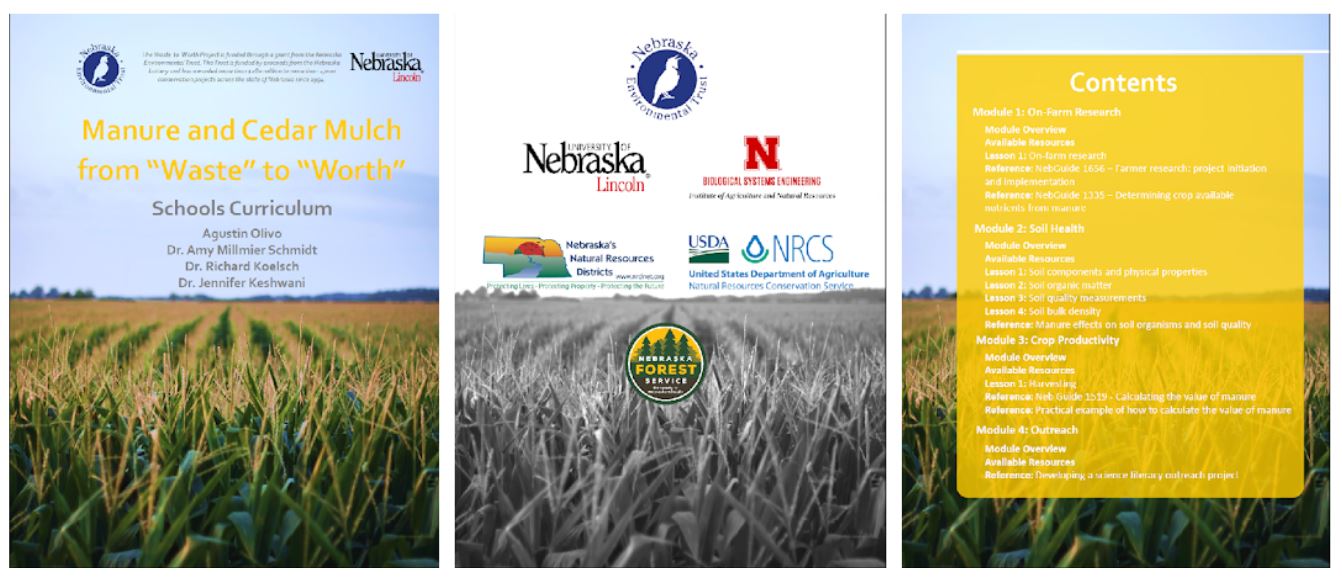
Curriculum implementation has begun at five high schools, each associated with a research site. Approximately 60 students will participate in the project during spring 2019. The curriculum (Figure 3) encompasses 4 modules: On-farm research (Module 1), Soil Health (Module 2), Crop Productivity (Module 3) and Outreach (Module 4). Each module is comprised of field and classroom activities. Partnering teachers and their students will use this curriculum document to complete lessons in one or more modules during each semester of engagement with the project team.
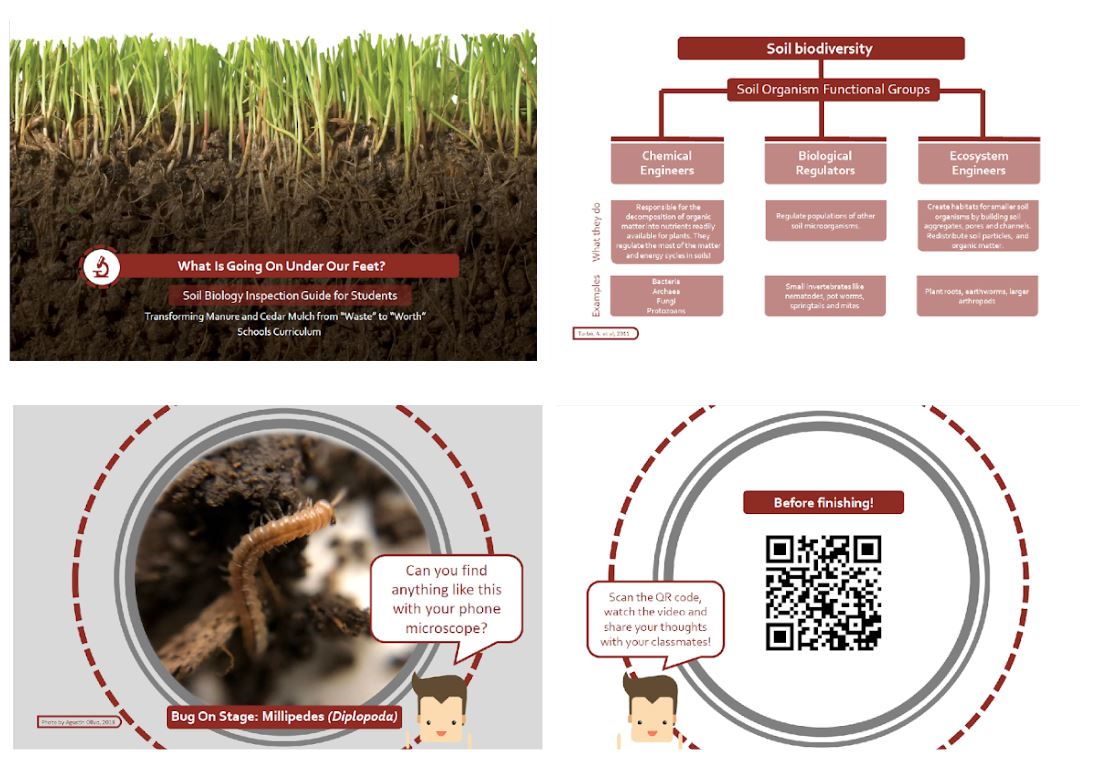
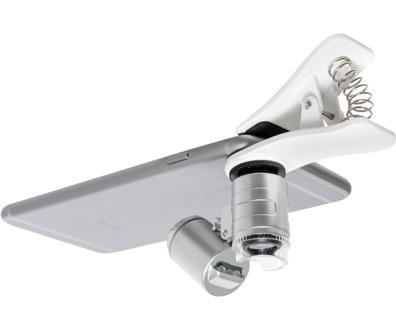
A 52-page Soil Biology Inspection Guide (Figure 4) has been developed for use by students to identify and understand the roles of soil organisms they find during hands-on soil inspections with a smart phone microscope. Along with the printed materials, each partnering teacher will receive a supply of smart phone microscopes (Figure 5) for students to use to inspect soil within the study site with which they are associated and in other soil samples.
Figure 3. Sample pages from the High School Curriculum.
Figure 4. Sample pages from the Soil Biology Inspection Guide.Figure 5. Smart phone compatible microscopes to be provided to classrooms.
FUTURE PLANS
On-farm research will be conducted during the 2019 and 2020 growing seasons to document short-term effects of the applied treatments. Each on-farm research site will host a field day during year three of the project to share study results and host farmer experiences with local agricultural producers and their advisors. Participating high school students will maintain an active role in research and outreach throughout the project. Assessments of knowledge gained and intended or actual behavior changes among students, their teachers, participating producers and outreach audiences will be completed to document impacts of this effort. Furthermore, an online photo sharing site is being explored to facilitate exchange of project photos among classes in all partnering high schools. Engaging students in the study near their school will be complimented by engaging classrooms from other schools participating in the project to share study statuses, data, and other information. These activities will be conducted via Zoom (online meeting platform) and facilitated by project team members to encourage students to share successes, frustrations, discoveries and outcomes from their study site with students in other schools participating in this project.
AUTHORS
Olivo, Agustin (University of Nebraska-Lincoln) – agustinolivo@outlook.com
Schmidt, Amy (University of Nebraska-Lincoln) – aschmidt@unl.edu
The Nebraska Environmental Trust provided funding for this project, Project 18-203: Transforming Manure and Cedar Mulch from ‘Waste’ to ‘Worth’.
The authors are solely responsible for the content of these proceedings. The technical information does not necessarily reflect the official position of the sponsoring agencies or institutions represented by planning committee members, and inclusion and distribution herein does not constitute an endorsement of views expressed by the same. Printed materials included herein are not refereed publications. Citations should appear as follows. EXAMPLE: Authors. 2019. Title of presentation. Waste to Worth. Minneapolis, MN. April 22-26, 2019. URL of this page. Accessed on: today’s date.
To provide a forum for the introduction and evaluation of technologies that can treat dairy manure to the dairy farming community and the vendors that provide these technologies.
What Did We Do?
Newtrient has developed an on-line catalog of technologies that includes information on over 150 technologies and the companies that produce them as well as the Newtrient 9-Point scoring system and specific comments on each technology by the Newtrient Technology Advancement Team.
What Have We Learned?
Our interaction with both dairy farmers and technology vendors has taught us that there is a need for accurate information on the technologies that exist, where they are used, where are they effective and how they can help the modern dairy farm address serious issues in an economical and environmentally sustainable way.
Future Plans
Future plans include expansion of the catalog to include the impact of the technology types on key environmental areas and expansion to make the application of the technologies on-farm easier to conceptualize.
Corresponding author name, title, affiliation
Mark Stoermann & Newtrient Technology Advancement Team
All of the vendors and technology providers that have worked with us to make this effort a success need to be recognized for their sincere effort to help this to be a useful and informational resource.
The authors are solely responsible for the content of these proceedings. The technical information does not necessarily reflect the official position of the sponsoring agencies or institutions represented by planning committee members, and inclusion and distribution herein does not constitute an endorsement of views expressed by the same. Printed materials included herein are not refereed publications. Citations should appear as follows. EXAMPLE: Authors. 2017. Title of presentation. Waste to Worth: Spreading Science and Solutions. Cary, NC. April 18-21, 2017. URL of this page. Accessed on: today’s date.
As producers of livestock and agricultural crops continue to focus significant efforts on improving the environmental, economic, and social sustainability of their systems, increasing the utilization of livestock manure in cropping systems to offset inorganic fertilizer use benefits both sectors of agriculture. However, promoting manure based purely upon nutrient availability may not be sufficient to encourage use of organic versus inorganic fertilizer. The value of livestock manure could increase significantly with evidence of improved soil fertility and quality following manure application. Therefore, understanding the impact of manure addition and application method on both soil quality and biological health is an important step towards improving the value and desirability of manure for agricultural cropping systems.
For edaphic ecosystems, collection, analysis, and categorization of soil microarthropods has proven to be an inexpensive and easily quantified method of gathering information about the biological response to anthropogenic changes to the environment (Pankhurst et al., 1995; Parisi et al., 2005). Arthropods include insects, crustaceans, arachnids, and myriapods; nearly all soils are inhabited by a vast number of arthropod species. Agricultural soils may contain between 1,000 and 100,000 arthropods per square meter (Wallwork, 1976; Crossley et al., 1992; Ingham, 1999). Soil microarthropods show a strong degree of sensitivity to land management practices (Sapkota et al., 2012) and specific taxa are positively correlated with soil health (Parisi et al., 2005). These characteristics make soil microarthropods exceptional biological indicators of soil health.
This study focused on assessing the chemical and biological components of soil health, described in terms of soil arthropod population abundance and diversity, as impacted by swine slurry application method and time following slurry application.
What did we do?
A field study was conducted near Lincoln, Nebraska from June 2014 through June 2015 on a site that has been operated under a no-till management system with no manure application since 1966. Experimental treatments included two manure application methods (broadcast and injected) and a control (no manure applied).
Soil samples were collected twelve days prior to treatment applications, one and three weeks post-application of manure, and every four weeks, thereafter, throughout the study period. Samples were not collected during winter months when soil was frozen.
Two types of soil samples were collected. Samples obtained with a 3.8-cm diameter soil probe were divided into 0-10 and 10-20 cm sections for each of the plots for nutrient analysis at a commercial laboratory. Samples measuring 20 cm in diameter and 20 cm in depth, yielding a soil volume of 6,280 cm3, were stored in plastic buckets with air holes in the lids, placed in coolers with ice packs, and transported to the University of Nebraska-Lincoln West Central Research & Extension Center in North Platte, Nebraska within 12 h of collection. These samples were then transferred to Berlese-Tullgren funnels for extraction of arthropods, a commonly used technique to assess microarthropods in the soil (Ducarme et al., 2002). A 70% ethanol solution was used to preserve the organisms for later analysis.
The QBS method of classification was employed to assign an eco-morphological index (EMI) score on the basis of soil adaptability level of each arthropod order or family (Parisi et al., 2005). Preserved arthropods from each soil sample were identified and quantified using a Leica EZ4 stereo microscope (Leica Biosystems, Inc., Buffalo Grove, IL) and a dichotomous key (Triplehorn and Johnson, 2004). Arthropods were classified to order or family based on the level of taxonomic resolution necessary to assign an EMI value as described by Parisi et al. (2005). For some groups, such as Coleoptera, characteristics of edaphic adaptation were used to assign individual EMI scores.
The impacts of swine slurry application method and time following manure application on soil arthropod populations and soil chemical characteristics was determined by performing tests of hypotheses for mixed model analysis of variance using the general linear model (GLM) procedure (SAS, 2015). The samples were tested for significant differences resulting from time and treatment, as well as for variations within the treatment samples. Following identification of any significant differences, the least significant differences (LSD) test was employed to identify specific differences among treatments. P <0.05 was considered statistically significant.
What have we learned?
A total of 13,311 arthropods representing 19 orders were identified, with Acari (38.7% of total arthropods), Collembola: Isotomidae (26.8%), Collembola: Hypogastruridae (10.4%), Coleoptera larvae (1.6%), Diplura (1.2%), Diptera larvae (0.9%), and Pseudoscorpiones (0.6%) being the most abundant soil-dwelling taxa. These taxa had the greatest relative abundance in samples throughout the study and were, therefore, chosen for statistical analysis of their response to manure application method and time since application.
The most significant responses to application method were found for collembolan populations, specifically for Hypogastruridae and Isotomidae. However, Pseudoscorpiones were also significantly affected by application method. Time following slurry application had a significant impact on most of the analyzed populations including Hypogastruridae, Isotomidae, mites, coleopteran larvae, diplurans, and dipteran larvae. The positive response of Hypogastruridae and Isotomidae collembolans to broadcast swine slurry application was likely due to the addition of nutrients (in the form of OM and nitrates) to the soil provided by this form of agricultural fertilizer.
Future Plans
Research focused on the role of livestock manure in cropping systems for improved soil quality and fertility is underway with additional soil characteristics being monitored under multiple land treatment practices with and without manure.
Corresponding author, title, and affiliation
Dr. Amy Millmier Schmidt, Assistant Professor, University of Nebraska – Lincoln
Nicole R. Schuster, Julie A. Peterson, John E. Gilley and Linda R. Schott
Additional information
Dr. Amy Millmier Schmidt can also be reached at (402) 472-0877.
Dr. Julie Peterson, Assistant Professor of Entomology, University of Nebraska – Lincoln can be reached at (308) 696-6704 or Julie.Peterson@unl.edu.
Acknowledgements
Eric Davis, Ethan Doyle, Mitchell Goedeken, Stuart Hoff, Kevan Reardon, and Lucas Snethen are gratefully acknowledged for their assistance with field data collection. Kayla Mollet, Ethan Doyle, and Ashley Schmit are acknowledged for their assistance with data processing. This research was funded, in part, by faculty research funds provided by the Agricultural Research Division within the University of Nebraska-Lincoln Institute of Agriculture and Natural Resources.
The authors are solely responsible for the content of these proceedings. The technical information does not necessarily reflect the official position of the sponsoring agencies or institutions represented by planning committee members, and inclusion and distribution herein does not constitute an endorsement of views expressed by the same. Printed materials included herein are not refereed publications. Citations should appear as follows. EXAMPLE: Authors. 2017. Title of presentation. Waste to Worth: Spreading Science and Solutions. Cary, NC. April 18-21, 2017. URL of this page. Accessed on: today’s date.
To provide information about commonly-found manure management systems and approaches in North Carolina and the Coastal Plains, and discuss opportunities for technological innovation in the areas of manure management and nutrient recovery/utilization. Hear from a diverse panel of researchers, animal agriculture producers, and agency representatives who will provide background on the environmental conditions of the region and discuss specific technical considerations for innovative research and development. Learn about what has and hasn’t worked in past attempts to recover nutrients at animal agriculture farms in the area, and about the exciting possibilities for innovation in the U.S. Environmental Protection Agency’s (EPA’s) Nutrient Recycling Challenge (www.nutrientrecyclingchallenge.org).
What did we do?
N/A
What have we learned?
N/A
Future Plans
N/A
Corresponding author, title, and affiliation
Joseph Ziobro, Physical Scientist, U.S. Environmental Protection Agency; Hema Subramanian, Environmental Protection Specialist, U.S. Environmental Protection Agency
Dr. John Classen, Associate Professor and Director of Graduate Programs, College of Biological and Agricultural Engineering at North Carolina State University
Dr. Kelly Zering, Professor of Agricultural and Resource Economics, North Carolina State University
Additional information
Session Agenda
Background, history, and technical information about manure management in North Carolina and the Coastal Plains
Presenter: Dr. John Classen, Associate Professor and Director of Graduate Programs, College of Biological and Agricultural Engineering at North Carolina State University
Lessons Learned from the Smithfield Agreement
Presenter: Dr. Kelly Zering, Professor of Agricultural and Resource Economics, North Carolina State University
Panel: Challenges and Opportunities around Manure Management Systems
Moderator: Hema Subramanian
Panel to include the above speakers plus representatives from the local animal agriculture industry, North Carolina Department of Agriculture and Consumer Services, North Carolina Department of Environmental Quality, and U.S. Environmental Protection Agency.
While Eastern Redcedar are native to Nebraska and much of the Central U.S., the ability of these trees to thrive in many soils and under a broad range of climatic conditions has contributed to their designation as an invasive species. Cedar tree proliferation negatively impacts agriculture by reducing groundwater availability, compromising grazing land, impeding forage production for cattle, and altering surface water flows. Agricultural crop and livestock producers depend on affordable access to water, healthy and productive soils, and quality grazing land to remain profitable. Land treatment practices that return organic matter to soil improve soil health, which in turn positively impacts crop productivity, soil water holding capacity, soil fertility, and grazing land forage quality and productivity. This project is investigating the use of two readily available by-products in Nebraska, livestock manure and cedar tree wood chips, as amendments on agricultural land to improve soil productivity metrics. The overall goal of this project is to demonstrate a value-added use for woody biomass to offset the cost of tree management activities and encourage landowner management of cedars.
What did we do?
Crop year 2016 was the first year of the Woody Biomass and Manure Project. Six treatments were applied to 12-m x 10-m plots within cooperators’ fields following the 2015 harvest:
1. woody biomass (WB1), 6 ton/ac
2. woody biomass (WB2), 12 ton/ac
3. woody biomass with liquid N (WBLN), 6 ton/ac
4. woody biomass with swine manure (WBSM), 6 ton/ac
5. woody biomass with cattle manure (WBCM), 6 ton/ac
6. control (Cont), no amendments
Manure and liquid nitrogen treatments received less than 30 lbs ac-1 of N in the fall. The experiment is a completely randomized block design with four replications of each treatment, for a total of 24 plots, at each of the sites. Since the plots were established within existing crop fields, the producers were encouraged to continue their current management strategies. Both sites were irrigated, and fertilizer was applied uniformly across all plots using the pivot throughout the growing season.
Soil was sampled for chemical and biological properties in the spring and fall of 2016 and sent to a commercial lab for analyses. Rye was sampled by hand harvesting 0.25 square feet from four locations within each plot for a total of 1 square foot. Corn was sampled by hand harvesting six plants from each plot. Stand counts were also completed. WATERMARK sensors were installed at three depths (1, 2, and 3 ft) in two replications of four treatments (WBCM, WB1, WB2, Cont) at both sites. Additionally, temperature sensors were installed at a depth of 1 ft. A total of 16 plots were monitored (8 plots per site with 2 replications of 4 treatments).
What have we learned?
Soil biological and chemical characteristics have not been affected during the first year. There were no differences in the amount or type of soil microbes due to treatment. WBCM and WBLN had greater soil nitrate than WB1 and WBSM early in the spring. Additionally, WBCM had greater soil K than the other treatments. Other than these two instances, there were no differences in organic matter, pH, and macronutrients. However, this is not surprising since measurable changes in soil properties typically occur over many years and manure application rate was relatively low. More importantly, though, is that microbial populations were not decreased by the cedar mulch.
Cedar mulch applications did not decrease biomass yield of corn and rye when applied with nitrogen. In fact, in the rye, WBLN had the greatest biomass yields followed by WBCM, WB1, WBSM, and Cont. WB2 had the lowest rye biomass, which was probably due to nitrogen tie-up by the wood chips due to the initially higher C:N ratio. There was no treatment effect for corn biomass or stand counts.
At the site planted to corn at a depth of one foot, the three woody biomass treatments monitored (WB1, WB2, and WBCM) were significantly wetter and cooler than the control from mid-June until mid-July. WBCM was also wetter at a depth of two feet than the control. Unfortunately, due to rodent activity, statistical analyses at the rye site and other times of the growing season are not possible. The differences in soil moisture and temperature are probably due to shading and the physical barrier to evaporation that the wood chips supply. The increased soil moisture under the woody biomass treatments could reduce irrigation.
Future Plans
In order to apply for competitive funding, we need more supporting data. We are going to increase monitoring of soil moisture and temperature, so that three replications of all six treatments are monitored at both sites. Additionally, a greenhouse study will be conducted to provide water quality data and rate of decomposition of the wood chips.
Corresponding author, title, and affiliation
Linda Schott, Extension Graduate Research Assistant, University of Nebraska-Lincoln
Amy Schmidt, Assistant Professor, University of Nebraska-Lincoln; Amy Timmerman, Associate Extension Educator, University of Nebraska-Lincoln; Adam Smith, Assistant Forester, Nebraska Forest Service
Additional information
More information can be found at: manure.unl.edu
Acknowledgements
This project is funded by the Nebraska Forest Service. We would like to thank the Middle Niobrara Natural Resource District, especially Mike Murphy, Travis Connot, and Zach Peterson, for their assistance to this project. We would also like to thank the Nebraska Forest Service, especially Richard Woollen, Adam Smith, and Heather Nobert, for their assistance to this project. Additionally, this project would not be possible without our two farmer cooperators, Leonard Danielski and Greg Wilke.
The purpose of this research was to identify trade-offs among soil erosion, soil health, and crop production when using cover crops with manure application.Continuous corn silage cropping systems in Wisconsin leads to overall removal of N from the system unless manure is applied. However, this cropping system allows for the planting of cover crops or a winter silage crop post harvest, which may lead to increases in soil N over time. Cover crops are valuable in these corn-silage based rotations as they also provide ground cover after harvest and can reduce N leaching after fall manure application.
What did we do?
The cropping system investigated was a continuous corn silage system with fall manure application. The experiment was a randomized complete block split-plot design where the whole plot treatments were no cover, rye as a cover (chemically terminated) or as a forage (harvested) crop and the split plot treatment was depth.The objective of this study was to determine the effect of cover cropping on potentially mineralizable nitrogen (PMN) over a growing season using a 7-day anaerobic incubation (2015 and 2016 season), a long-term aerobic incubation (2015 season), and N uptake by corn.
What have we learned?
There were no statistical differences in short-term PMN among cover crop treatments at any time point in 2015 or 2016. However, the cover crop treatments led to a yield reduction compared to no cover crop use in both years. Thus, our study showed significant effects of cover cropping on agronomic factors like corn yield and N uptake but these same differences were not measurable in the soil N.
Future Plans
This work will continue to evaluate the long-term effects of cover crop use on soil health.
This material is based upon work that is supported by the National Institute of Food and Agriculture, U.S. Department of Agriculture, under award number 2013-68002-20525. Any opinions, findings, conclusions or recommendations expressed in this publication are those of the author(s) and do not necessarily reflect the view of the U.S. Department of Agriculture.
The authors are solely responsible for the content of these proceedings. The technical information does not necessarily reflect the official position of the sponsoring agencies or institutions represented by planning committee members, and inclusion and distribution herein does not constitute an endorsement of views expressed by the same. Printed materials included herein are not refereed publications. Citations should appear as follows. EXAMPLE: Authors. 2017. Title of presentation. Waste to Worth: Spreading Science and Solutions. Cary, NC. April 18-21, 2017. URL of this page. Accessed on: today’s date.
The porcine epidemic diarrhea virus (PEDv) outbreak in North America has substantially impacted swine production, causing nearly 100% mortality in infected newborn piglets. Because manure may remain a source of reinfection, proper manure management practices to limit outbreaks need to be developed and evaluated. Two laboratory studies simulating manure pit treatment with increasing amounts of quicklime were conducted to determine PEDv susceptibility to increasing pH. Additionally, two laboratory soil incubation studies contrasting manure liming, multiple soil types, and two antecedent soil moistures were conducted over several months with incubation conditions mimicking the climates in Minnesota, Missouri, and Oklahoma to determine whether current manure application practices reduce the potential for PEDv reinfection via manure-amended soil. Quantitative PCR and live swine bioassays were used to enumerate PED virus and to determine whether manure and soil samples contained infectious PEDv.
What did we do?
Quicklime-Manure Slurry Incubations: An initial short-term manure slurry study was conducted on fresh PEDv-positive manure slurry collected in 2015 from the shallow pit of a commercial swine facility in southeast Nebraska. Manure was sampled prior to treatment (0 h) and then distributed among glass beakers (250 mL) to accommodate triplicates of three treatments: liming to pH 10, liming to pH 12, and unlimed manure. Following pH adjustment, aliquots of each sample were collected at 1 and 10 h, immediately neutralized with 10 mM HCl and stored at -80°C for subsequent analysis. In a second manure slurry incubation, triplicate PEDv-positive manure samples collected from a commercial swine operation in south central Nebraska site in December 2016 were mixed in equal portion (w:v) with distilled water to mimic manure slurry consistency observed in swine production pit storages. Quicklime was added stepwise (0.25 g addition) to each manure slurr! y sample with continuous stirring to gradually increase manure slurry pH. After each addition of quicklime, pH was measured and an aliquot of manure slurry was collected for subsequent quantitative PCR PEDv enumeration and infectivity in a pig bioassay.
Long-term manure and soil incubation. Initial tests determined appropriate initial soil moisture contents (representing a ‘dry’ and ‘moist’ soil condition) and manure:soil ratios (1 g slurry:3 g soil) to best represent the manure:soil within an injection furrow when slurry is injected into soil, and appropriate liming source (ag lime vs. quicklime). PEDv-positive manure slurry collected from a commercial swine operation in southeast Nebraska was divided between two 3-L containers, one for limed treatment (LIME) and the other for the control, or no-lime, treatment (CNL). Quicklime (30 g) was added to one 3 L portion (equivalent to an application of 80 lbs. quicklime per 1000 gallons of slurry) to achieve a final pH of 12. Both treated and untreated slurry stocks were incubated at room temperature for 24 hours. Distilled water was added to two soils, a silty clay loam (pH 7.0) and a loamy fine sand (pH 6.9), to attain 10% and 30% water holding capacity! (dry and moist soil condition). Thirty grams (dry weight) of soil was apportioned to multiple 50 mL screw top conical tubes and a cavity was made in the center of the soil by pressing a 10 mL pipet tip into the soil. Ten mL of slurry (LIME or CNL) were then added to each soil tube via pipet. Four replicate tubes were immediately frozen at -80°C for each combination of soil, moisture, and manure treatment to represent initial soil application (day 0). The tubes were loosely capped and placed into one of three incubators operated independently throughout the trial to simulate soil temperatures between November 1 and May 1 at one of three geographic locations: southern Minnesota, northern Missouri, and central Oklahoma (Figure 1). Twenty replicate tubes were created for each combination of soil, moisture, incubation, and manure treatment, and a set of four tubes were collected for each treatment combination on days 30, 60, 90, 120 and 150 of the incubation and immediately transfer! red to a -80°C freezer for storage.
Molecular detection and quantification of PEDv. Prior to analysis, soil and manure samples were removed from -80°C storage and allowed to thaw at room temperature. The RNA in each sample was extracted using the RNA PowerSoil Total RNA Isolation kit (Mo Bio, Carlsbad, CA). PEDv was detected in samples by reverse transcription and quantitative polymerase chain reaction (RT-qPCR).
Swine bioassay. To confirm that conditions yielding a PCR negative result actually inactivated the PED virus and rendered the manure non-infectious, a live pig bioassay was conducted with the limed and non-limed manure slurry samples from the initial short-term manure slurry incubation (quicklime addition). Fifteen pigs, approximately 21 days old, were sourced from a high-health facility whose dams tested negative for PEDv antibodies and virus by PCR. Piglets were tested for PEDv upon arrival and confirmed negative. Piglets were randomly assigned to individual housing in BSL-2 rooms at the University of Nebraska-Lincoln Life Sciences Annex as follows: control (3 piglets), pH 10 (6 piglets), and pH 12 (6 piglets), and allowed to acclimate for three days. Each pig was then administered a 10-mL oral gavage of manure slurry: three piglets in the control room received one of the three un-limed slurry samples; six piglets in the pH 10 room received one of the six limed (pH 10) sl! urry samp les (three limed for 1 h and three limed for 10 h); and six pigs in the pH 12 room received one of the six limed (pH 12) slurry samples (three limed for 1 h and three limed for 10 h). Piglets were monitored for fecal shedding of PEDv for four days until control animals began to demonstrate clinical signs of PEDv infection, at which time all piglets were humanely euthanized. Fecal swabs, and duodenum, ileum, jejunum, and cecum samples were collected from each animal and fixed in formalin. All fecal and tissue samples were analyzed for the presence of detectable PED virus by immunohistochemistry and PCR.
What have we learned?
Manure Slurry Incubation: Manure limed to pH 10 and pH 12 for 1 and 10 h yielded no detectable PEDv RNA. Live swine bioassay results confirmed that these samples were not infective while control samples resulted in PEDv infection of piglets. These results indicate that a final manure slurry pH of 10 (equivalent to 50 lbs. of quicklime added to 1000 gallons manure slurry) is sufficient to reduce PEDv RNA to an undetectable concentration after 1 hour of contact time. All pigs receiving limed manure (pH 10 or 12 maintained for 1 or 10 h) during the live swine bioassay tested negative for PEDv infection while control pigs (un-limed treatment) all tested positive for PEDv infection (Figure 1). The pig bioassay results confirmed that the PCR assay is a reliable predictor for the presence of infectious PEDv in these matrices and that lime addition to achieve pH 10 for just one hour is sufficient to deactivate the virus in stored manure.
Soil Incubations: At the completion of the long-term (150-day) soil incubation, a subset of the frozen samples (LIME and CON soil samples collected on day 0 and 30) was selected for RNA extraction and qPCR analysis. The qPCR results from days 0 and 30 yielded no detectable PEDv RNA in either the limed or un-limed manure-amended soils (Figure 1). Furthermore, manure-amended soils did not differ from soil-only controls even though PEDv RNA was still detectable in the original manure slurry at high concentrations. No differences in PEDv abundance were detected on either day when initial soil moisture (10% vs 30% water holding capacity), incubation condition (MN vs. MO vs. OK), or soil type (silty clay loam and loamy fine sand) were varied. For these soils, the concentration of PEDv in limed or un-limed manure decreased immediately to a non-detectable level. These results indicate that manure-amended soil with pH 6.9 or greater is not a vector for transmission of the PED virus.
A consistent finding from all of the studies is that pH of media (slurry or soil) strongly influences PED virus survival.
Future Plans
Additional studies are underway to identify the lowest pH at which the PED virus is rendered non-infectious in slurry manure.
Corresponding author, title, and affiliation
Amy Millmier Schmidt, Assistant Professor, Departments of Biological Systems Engineering and Animal Science, University of Nebraska – Lincoln
Stevens, E., A. Schmidt, D. Miller, J.D. Loy and V. Jin
Additional information
Dr. Amy Millmier Schmidt, corresponding author, can also be reach at (402) 472-0877.
Acknowledgements
Funding for this research was provided by the National Pork Board. Gratitude is extended to Ashley Schmit for assistance with laboratory activities and animal care. Special thanks to the Nebraska pork producers who granted access to their farms for collection of PEDv-positive manure.
Manage Cookie Consent
To provide the best experiences, we use technologies like cookies to store and/or access device information. Consenting to these technologies will allow us to process data such as browsing behavior or unique IDs on this site. Not consenting or withdrawing consent, may adversely affect certain features and functions.
Functional
Always active
The technical storage or access is strictly necessary for the legitimate purpose of enabling the use of a specific service explicitly requested by the subscriber or user, or for the sole purpose of carrying out the transmission of a communication over an electronic communications network.
Preferences
The technical storage or access is necessary for the legitimate purpose of storing preferences that are not requested by the subscriber or user.
Statistics
The technical storage or access that is used exclusively for statistical purposes.The technical storage or access that is used exclusively for anonymous statistical purposes. Without a subpoena, voluntary compliance on the part of your Internet Service Provider, or additional records from a third party, information stored or retrieved for this purpose alone cannot usually be used to identify you.
Marketing
The technical storage or access is required to create user profiles to send advertising, or to track the user on a website or across several websites for similar marketing purposes.