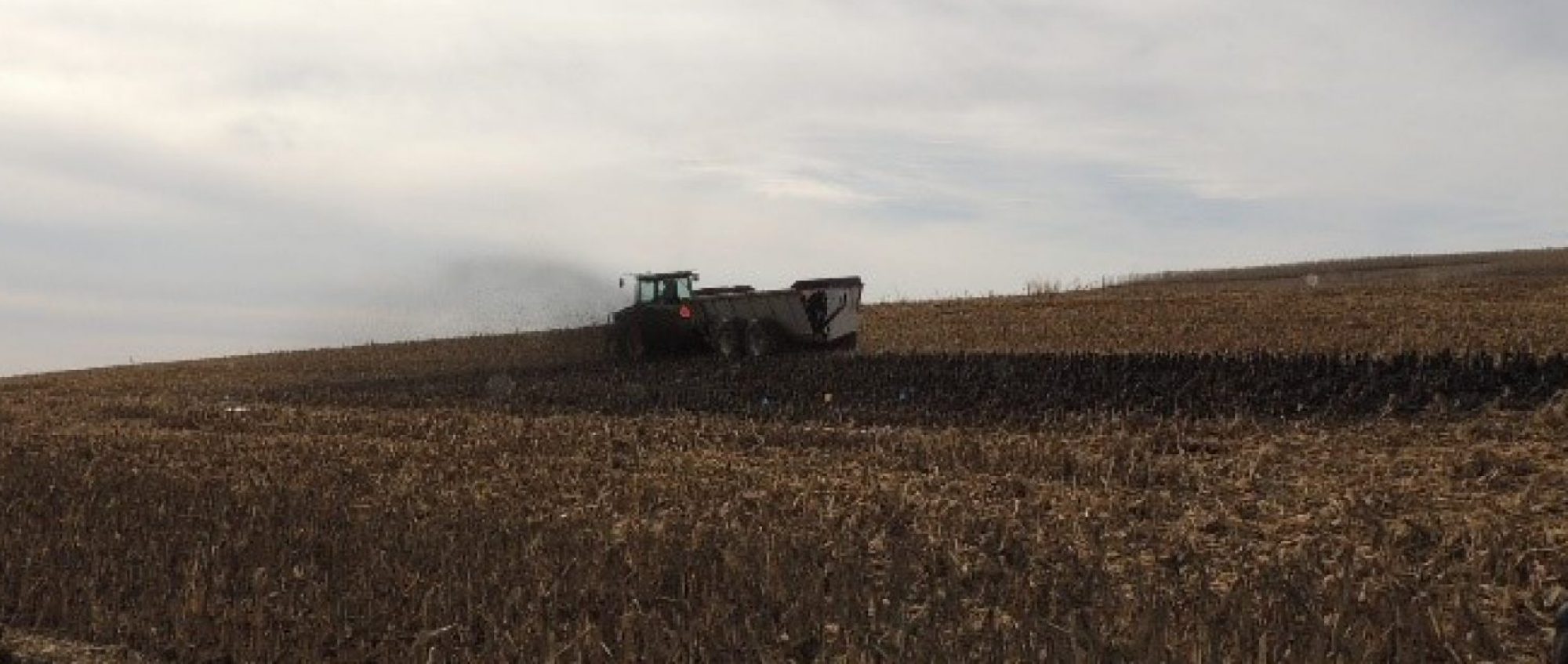

Farm-System Modeling to Evaluate Environmental Losses, Profitability, and Best Management Practice Cost-Effectiveness

Waste to Worth: Spreading science and solutions logoWaste to Worth home | More proceedings….

Abstract

To meet Chesapeake Bay Total Maximum Daily Load requirements for agricultural pollution, conservation districts and farmers are tasked with implementing best management practices (BMPs) that reduce farm losses of nutrients and sediment. The importance of the agricultural industry to the regional economy highlights the need for determining cost-effective BMP solutions given the geographical and operational characteristics of these farms. This study evaluated both the environmental risk and farm profitability of common farm-level management practices for three major farm types in the region: crop, tractor-based (“English”) dairy, and horse-drawn (“Amish”) dairy.

Whole-farm simulations were conducted with the Integrated Farm System Model, a multi-year, process-based simulation model, to facilitate a broader understanding of the challenges for the farmers in finding financially feasible and environmentally sustainable solutions. Strip cropping, conservation tillage, cover cropping, and nutrient management BMPs generally reduced nutrient and sediments losses from all three farm types. However, scenarios that reduced phosphorus and sediment losses generally promoted more leaching of nitrogen. Double cropping corn with winter wheat combined with improved nutrient management was the most profitable practice for the crop farm, increasing average farm profitability by 92% over the baseline condition, while reducing combined nitrogen and total phosphorus losses by 13% and 23%, respectively.

Net profitability of the dairy farm was increased only by decreasing manure storage or using improved nutrient management. For the horse-drawn dairy, cover-cropping and harvest of rye silage combined with increased nutrient management provided the greatest increase in farm profit (+8%) and also reduced phosphorus and nitrogen losses.

Horse-drawn machinery through puts and increased human labor hours were required to simulate a typical Lancaster Old Order Amish dairy operation in Southeastern Pennsylvania.

Why Study Farms As a System?

Because southeastern Pennsylvania is a significant environmental contributor of the Chesapeake Bay, agricultural land management is under intense scrutiny by restoration groups. It is imperative to improving water quality that economically and culturally acceptable nonpoint source control practices be explored, developed, and evaluated. This is true for “contemporary” crop and dairy farms in the region as well as those that are more conservative in their use of electrical- or gas-powered farming equipment, described in this study as “Lancaster Old Order Amish”. Evaluation from a whole-farm perspective enables practical assessments of tradeoffs among management practice combinations and is particularly relevant when effectiveness relies on the willingness and dedication of the farm operators.

What Did We Do?

The expertise of regional conservationists and pooled results from farmer surveys were used to determine three major farm types in southeastern Pennsylvania and design potentially acceptable management combinations for each type. Three baseline farms were described: 400 ha corn-soy-wheat crop farm; 100 cow, 120 ha contemporary dairy; and 24 ha Lancaster Old Order Amish dairy. Whole-farm impacts were assessed with the Integrated Farm System Model (IFSM), a multi-year, process-based simulation model. Environmental tradeoffs between nitrogen, phosphorus, and sediment losses were evaluated and financial cost-benefits through change in annual net return for the farmer were analyzed.

What Have We Learned?

Strip cropping, conservation tillage, cover cropping, and improved nutrient management generally reduced nutrient and sediment losses from all three farm types. However, scenarios that reduced phosphorus and sediment runoff losses generally increased nitrogen leaching to groundwater. Double cropping corn and winter wheat under improved nutrient management was the most profitable combination for the crop farm, increasing average farm profitability by 92% over the baseline while reducing combined nitrogen and total phosphorus losses by 13% and 23%, respectively. Net profitability of the contemporary dairy farm was increased only by decreasing manure storage or using improved nutrient management. For the Lancaster Old Order Amish dairy, cover-cropping and harvest of rye silage combined with increased nutrient management provided the greatest increase in farm profit (+8%) and also reduced phosphorus and nitrogen losses.

Future Plans

Cost-effective recommendations from a whole farm perspective that account for unique characteristics of particular farm types can aid officials in determining locally agreeable methods for efficiently addressing regional priority pollutants. As farms adopt and implement suggested management changes, additional management practices of interest can be evaluated. Also, IFSM is being expanded to consider air emissions and carbon sequestration effects of the management practices.

Authors

Tamie L. Veith, Agricultural Engineer, USDA-ARS, tamie.veith@ars.usda.gov

Andrew D. McLean, Water Resources Designer, McCormick Taylor, Inc.

C. Alan Rotz, Agricultural Engineer, USDA-ARS

James M. Hamlett, Professor of Agricultural and Biological Engineering, The Pennsylvania State University

James S. Shortle, Distinguished Professor of Agricultural and Environmental Economics, The Pennsylvania State University

Additional Information

Integrated Farm System Model: http://www.ars.usda.gov/Main/docs.htm?docid=8519

McLean, A. D., 2012. Modeling best management practices on representative farms in Southeastern Pennsylvania. Master’s thesis, PA State University, University Park, PA. https://etda.libraries.psu.edu/paper/14093/, available Dec. 05, 2012.

Acknowledgements

This work contributes to the Conservation Effects Assessment Project (CEAP), jointly funded, coordinated, and administered by United States Department of Agriculture’s Natural Resources Conservation Service, Agricultural Research Service, and National Institute for Food and Agriculture. We would like to thank Mike Hubler and Larry Baum from Dauphin County Conservation District and officials at Lancaster and Lebanon County Conservation Districts for their advice and guidance categorizing and characterizing farms of Dauphin County and southeastern Pennsylvania. Thanks also to Kristen Saacke-Blunk and Matt Royer from Conewago Creek Collaborative Conservation Initiative for their time and input.  Mention of trade names or commercial products in this publication is solely for the purpose of providing specific information and does not imply recommendation or endorsement by the U.S. Department of Agriculture. USDA is an equal opportunity provider and employer.

The authors are solely responsible for the content of these proceedings. The technical information does not necessarily reflect the official position of the sponsoring agencies or institutions represented by planning committee members, and inclusion and distribution herein does not constitute an endorsement of views expressed by the same. Printed materials included herein are not refereed publications. Citations should appear as follows. EXAMPLE: Authors. 2013. Title of presentation. Waste to Worth: Spreading Science and Solutions. Denver, CO. April 1-5, 2013. URL of this page. Accessed on: today’s date.

Small and Backyard Poultry Flocks

Waste to Worth: Spreading science and solutions logoWaste to Worth home | More proceedings….

Abstract

Because of their size, it is possible to raise most poultry species (chickens, turkeys, ducks, geese, pigeon, etc.) with only a minimal amount of acreage. This has made them increasingly popular in rural, suburban, and urban areas throughout the United States. They are suitable for 4-H/classroom projects, backyard flocks, as well as small- and medium-sized production flocks. Many of those who have started raising poultry have limited experience with poultry production.

What Topics Will Be Covered In This Presentation?

Example of a small layer flock (3 Buff Orpingtons) in a backyard

An overview of the situation with small and backyard flocks with regards to waste management

What Did We Do?

Visits to different small and backyard flocks, as well as information provided during presentations and webinars.

What Have We Learned?

Poultry production in the US started out as small farm operations. Over the decades poultry production has evolved from farming to an industry. World War II created a huge demand for poultry products. As farm workers were drafted into the army production become more mechanized. After the war ended many of the returning soldiers did not return to a life on the farm. New urban markets for poultry products developed, furthering fueling the modernization of poultry production. Today we have come full circle. It is becoming more common to see small chicken flocks raised in backyard poultry flocks. Niche markets have also been developed for organic and pasture poultry production.

The front yard of a home with a backyard chicken flock

Although flock size is small, chickens kept in backyards still produce a considerable amount of manure that needs to be managed. Many backyard flock owners also raise their own vegetables and use the manure produced as a valuable fertilizer. For others, however, the manure can be allowed to accumulate and, when not properly stored, can become an odor nuisance. Pasture-raised poultry flocks, given sufficient acreage, spreads the manure over a large area reducing, or eliminating, odor problems.

For both backyard and confined small poultry flocks, composting of both manure and any dead birds has become common.

Future Plans

Use of composted manure as fertilizer for raised garden beds

In the 1950s more than 40 state colleges and universities had poultry science departments. Discoveries in nutrition, genetics, physiology, health and food science helped poultry production become an important food industry.  Today only 6 universities have poultry departments. With the loss of university poultry depeartments and retirmements of key extension people, there has been a loss of updated extension publications to provide guidance to small and backyard poultry flock owners. Since very little information is available addressing the management needs of these smaller poultry flocks, many producers have turned to outdated books as well as non-science-based and anecdotal information for their education needs. A new eXtension community of practice for small and backyard poultry has been developed to fill this information void.

Author

Dr. Jacquie Jacob; Poultry Extension Associate; University of Kentucky, 906 Garrigus Building; Lexington, KY; 40546-0215, jacquie.jacob@uky.edu

Additional Information

www.eXtension.org/poultry


The authors are solely responsible for the content of these proceedings. The technical information does not necessarily reflect the official position of the sponsoring agencies or institutions represented by planning committee members, and inclusion and distribution herein does not constitute an endorsement of views expressed by the same. Printed materials included herein are not refereed publications. Citations should appear as follows. EXAMPLE: Authors. 2013. Title of presentation. Waste to Worth: Spreading Science and Solutions. Denver, CO. April 1-5, 2013. URL of this page. Accessed on: today’s date.

Evaluation of a Trickle Flow Leach Bed Reactor for Anaerobic Digestion of High Solids Cattle Waste

Waste to Worth: Spreading science and solutions logoWaste to Worth home | More proceedings….

Why Study High-Solids Anaerobic Digestion?

Colorado is the second highest producer of high solids cattle waste (HSCW) in the United States. Despite the available resources, Colorado currently has only one operational anaerobic digester treating manure (AgSTAR EPA 2011), which is located at a hog farm in Lamar. Arid climate and limited water resources in Colorado render the implementation of high water demanding conventional AD processes. Studies to date have proposed high solids AD systems capable of digesting organic solid waste (OSW) not more than 40% total solids (TS). Lab tests have shown that HSCW produced in Greeley (Colorado) has an average of 89.4% TS. Multi-stage leach bed reactor (MSLBR) system proposed in the current study is capable of handling HSCW of up to 90% TS.

What Did We Do?

Hydrolysis is carried out in a trickle flow leach bed reactor (TFLBR) and methanogenesis can be carried out in a high rate anaerobic digester (HRAD) like an upflow anaerobic sludge blanket reactor or a fixed film reactor. The objective of this research is to evaluate and optimize the performance of the TFLBR. The system was operated as a batch process and the organic leaching potential of a single pass TFLBR configuration was evaluated. The organic leaching potential was measured in terms of chemical oxygen demand (COD).

Three series’ of reactor experiments were carried out in total. Each subsequent experiment was based on the results on the previously conducted experiment. First set of reactor experiments included three TFLBRs (triplicate) loaded with HSCW. The difficulty encountered during the operation of this experiment was that the flow rate of water through the TFLBR slowed down over time and eventually dropped to zero within the first 24 hrs. This caused water build-up on top of the manure bed, resulting in the failure of hydrolysis. Second set of reactor experiments included six TFLBRs (two sets of triplicates). One set of triplicate was loaded with HSCW and the other set of triplicate was loaded with HSCW bulked with straw (5% by mass) to improve the porosity through the reactor. A layer of fine sand was added on top of the manure bed to facilitate water dispersion through the reactor.

The third set of reactor experiments included the comparison between nutrient dosed and non-nutrient dosed reactors (each carried out in triplicates). The idea behind dosing nutrients to an operational TFLBR was to check if the reactors were nutrient limited during the digestion process. Composite sampling technique was adopted so as to capture the exact leaching potential from each of the reactors.

What Have We Learned?

The first set of reactor experiments helped in identifying the clogging issues in operational TFLBRs handling HSCW. The second set of reactor experiments validated the use of fine sand as a better alternative to improve hydraulic flow when compared to the use of bulking agents. The third set of reactor experiments indicated that the addition of nutrient solution to a single-pass TFLBR operation is essential in improving the overall system yield. Leachate collection by composited sampling method instead of the instantaneous sample method improved the system efficiency by approximately 50%. The average TS reductions in the non-nutrient dosed and nutrient dosed TFLBRs were 23.18% and 22.67% respectively. The non-nutrient dosed TFLBRs underwent approximately 66.32% of COD reduction and the nutrient dosed TFLBRs underwent approximately 73.51% of COD reduction due to COD leaching during hydrolysis, over the period of six weeks. Biochemical methane potential (BCMP) test results indicate high biogas yields from the weekly composited leachate from the reactor experiments proving successful system operation. Approximately 0.43 L CH4/g COD is produced from the leachate collected from the non-nutrient dosed TFLBRs and 0.57 L CH4/g COD is produced from the leachate collected from the nutrient dosed TFLBRs.

Future Plans

The proposed MSLBR system recommends TFLBRs operating under leachate recirculation. The addition of nutrient solution in a leachate recirculated TFLBR would not be unnecessary since the nutrients in the system would be conserved. The success of hydraulic conductivity and leaching quality in a leachate recirculated TFLBR is unknown. More research is required to completely understand the operation and success of the MSLBR system treating HSCW. Pilot scale reactor experiments should be conducted to monitor the operation of the TFLBRs under leachate recirculation.

Authors

Asma Hanif, Graduate Student in Civil & Environmental Engineering, Colorado State University,  asmahanif1988@gmail.com

Dr. Sybil Sharvelle, Assistant Professor in Civil & Environmental Engineering, Colorado State University, Sybil.Sharvelle@colostate.edu


The authors are solely responsible for the content of these proceedings. The technical information does not necessarily reflect the official position of the sponsoring agencies or institutions represented by planning committee members, and inclusion and distribution herein does not constitute an endorsement of views expressed by the same. Printed materials included herein are not refereed publications. Citations should appear as follows. EXAMPLE: Authors. 2013. Title of presentation. Waste to Worth: Spreading Science and Solutions. Denver, CO. April 1-5, 2013. URL of this page. Accessed on: today’s date.

Youth Ag Greenhouse Gas Educational Lab Materials Via Pork Production Scenarios

Waste to Worth: Spreading science and solutions logoWaste to Worth home | More proceedings….

Abstract

Many of today’s high school students have little insight into the basic day-to-day operational decisions and challenges faced by Agricultural producers. Therefore, there is a need for the development of ag-centric and dynamic educational material. Furthermore; there is an even greater need to provide high-school instructors with innovative classroom materials and instructional tools that are conducive to the structured conveyance of ag principles. Targeting the need for these innovative ag educational materials within Arkansas classrooms, this project presents an dynamic lab activity with emphasis on introductory level subject matter about Arkansas swine production systems and the related greenhouse gas emissions. Due to the particular nature of the subject matter, the activity materials were crafted into two complementary products for practicality. The first product is a compilation of swine production reference materials including: terminology and layman definitions of Arkansas swine management strategies and the basic dynamics of greenhouse gasses (CO2, N2O, CH4) as they relate to swine production. The second product is a scenario based critical thinking exercise, implemented from a manipulative decision-tree platform.

Purpose

  1. Educate students within the state of Arkansas about the various management systems intrinsic to swine production operations within their state.
  2. Provide students insight into the management obstacles that Arkansas swine producers are challenged with through balancing Carbon footprints, economic resources, natural resources, and legal compliance with production profitability and productivity

What Did We Do?

This project presents an dynamic lab activity with emphasis on introductory level subject matter about Arkansas swine production systems and the related greenhouse gas emissions. The activity materials were crafted into two complementary products for practicality. The first product is a compilation of swine production reference materials including: terminology and layman definitions of Arkansas swine management strategies and the basic dynamics of common greenhouse gasses (CO2, N2O, CH4) as they relate to this activities scope of swine production. The reference material serves as both an introduction to basic ideas and practices native to swine production and GHGs, and as a guide which aids the students in completion of the second product (lab activity).

The second product is a scenario based critical thinking exercise, implemented from a manipulative decision-tree platform. Flashcards are used to represent three specific swine management systems using a three tier hierarchy. This hierarchy is distinguished by the allocation of Categories, Components, and Options. The “Categories” are the designated ranking class and will represent three major swine production management systems: Housing Management, Waste Management, and Feed Management. The “Components’ are the first sub-order class, and are used to represent various functions/considerations that comprise each “Category” of production system. The “Options” class holds the lowest position within the hierarchy and represents the different configurations/settings for the individual “Components”. For the context of this exercise the students will act as consultants hired by a producer to design the three management systems (via the flashcards) to “best match” the producer’s desired specifications, as defined within by a supplied catalog of unique scenarios.

Graphical reference to the hierarchical structure of the manipulatives used within this project’s lab activity.

Future Plans

Implementation of this project’s developed lab-activity within Arkansas’ high school classrooms via the Arkansas Farm Bureau supported (Ag-In-the-Classroom) program.

Authors

Szymanski “Rick” Fields II, Program Associate, Biological and Agricultural Engineering, University of Arkansas Division of Agriculture Extension rfields@uaex.edu

Karl VanDevender, Professor-Engineer, Biological and Agricultural Engineering, University of Arkansas Division of Agriculture Extension

Additional Information

http://www.extension.org/pages/65635/integrated-resource-management-tool-to-mitigate-the-carbon-footprint-of-swine-produced-in-the-united

Acknowledgements

This is a NIFA funded project (Proposal # 2010-04269; Title of Proposal “Integrated Resource Management Tool to Mitigate the Carbon Footprint of Swine Produced in the U.S”)

Special thanks to Donna VanDevender (High School Science Teacher-Bauxite Arkansas) for her insight into the development of the materials and for providing the opportunity to conduct trial runs of the lab-activity.

The authors are solely responsible for the content of these proceedings. The technical information does not necessarily reflect the official position of the sponsoring agencies or institutions represented by planning committee members, and inclusion and distribution herein does not constitute an endorsement of views expressed by the same. Printed materials included herein are not refereed publications. Citations should appear as follows. EXAMPLE: Authors. 2013. Title of presentation. Waste to Worth: Spreading Science and Solutions. Denver, CO. April 1-5, 2013. URL of this page. Accessed on: today’s date.

Overview: Manure Management Equipment for Small Farms

Waste to Worth: Spreading science and solutions logoWaste to Worth home | More proceedings….

Why Be Concerned With Manure Management for Small Farms?

Increased local or regional food marketing opportunities have allowed commercial success in livestock and poultry operations with relatively small herds and flocks.  The Census of Agriculture recently reports an increase in the number of small farms, as a proportion of all farms, across much of the U.S.  Small animal feeding operations, less than 300 animal units, are a productive component of the animal ag sector.  Finally, there continues to an interest in the development of hobby farm and equine related properties.  All of these scenarios result in the necessity to manage manure resources, often on small acres, and often in close proximity to a neighbor.  Knowledge about, access to, and acquisition of, appropriate manure handling equipment is a requirement to proper manure and nutrient management on all of these types of commercial or hobby farms and ranches.

What Did We Do?

This overview seeks to provide examples of power equipment and manure handling tools appropriate to smaller operations.  An emphasis is placed on solid manure handling, small acreage land application, and light duty compost production equipment.  Examples of equipment choices and options are based on Internet and literature reviews, as well as personal field experiences.

What Have We Learned?

A balance between size/power, cost, and versatility must be considered when purchasing or leasing equipment for small livestock and poultry operations.  Smaller operations often deal only in solid manure. This can simplify equipment choices to small tractors and skidsteer loaders, which can perform a variety of manure management and compost related tasks.  Tractor size will limit traditional manure spreader options.  However, several manufacturers are now offering light weight, ground drive spreaders, towable by small tractors or even ATVs.  

Authors

Thomas M. Bass, Livestock Environment Associate Specialist,  Montana State University tmbass@montana.edu

Acknowledgements

Mike Westendorf, Rutgers University and Jean Bonhotal, Cornell University


The authors are solely responsible for the content of these proceedings. The technical information does not necessarily reflect the official position of the sponsoring agencies or institutions represented by planning committee members, and inclusion and distribution herein does not constitute an endorsement of views expressed by the same. Printed materials included herein are not refereed publications. Citations should appear as follows. EXAMPLE: Authors. 2013. Title of presentation. Waste to Worth: Spreading Science and Solutions. Denver, CO. April 1-5, 2013. URL of this page. Accessed on: today’s date.

Equipment and facilities for managing manure on small farms

The number of small farms is increasing in much of the country, ensuring up to date information is available is important to protect water and environmental quality. This webinar focuses on some of the farm and manure management needs of smaller farms. This presentation was originally broadcast on April 20, 2018. More… Continue reading “Equipment and facilities for managing manure on small farms”