Sustainability of the Dairy Industry in the United States

Purpose

The U.S. dairy industry recognizes its environmental impact and has committed to achieving carbon neutrality by 2050, aiming to significantly reduce greenhouse gas (GHG) emissions while maintaining production efficiency. The primary sources of dairy-related emissions include enteric methane from cows, manure management, feed production, and energy use on farms.

Improvements in feed efficiency and manure management have already led to reductions in emissions per unit of milk produced. For instance, Idaho has successfully reduced enteric methane emissions per unit of milk by 25% since 1990, and methane emissions from manure per unit of milk have declined by about 20% (O’Hara, 2022). However, the total emissions from manure have increased by 20% due to herd growth in Idaho. These figures highlight the challenge of balancing productivity with environmental stewardship. Despite these difficulties, advancements in animal nutrition, manure management, and emerging technologies provide a promising path toward sustainability.

What Did We Do?

Over the past several decades, remarkable advancements in dairy farming have significantly improved milk production efficiency. Since the 1940s, the industry has nearly quadrupled milk output per cow through genetic improvements, optimized nutrition, and better overall management. This increase in productivity has allowed farmers to produce more milk with fewer cows, reducing the environmental footprint of each unit of dairy produced. Beyond improvements in feed efficiency, nutritional interventions such as adding feed additives like 3-NOP (3-nitrooxypropanol), seaweed, and oilseeds have been shown to reduce enteric methane emissions by altering rumen microbial activity. Research suggests that 3-NOP, for instance, can reduce methane emissions by up to 30% without negatively affecting milk yield or composition (Hristov, 2021).

Manure management is another critical area of focus. Technologies such as anaerobic digesters, composting systems, and improved storage techniques have been implemented to mitigate methane emissions from manure. Anaerobic digesters convert manure into biogas, which can be used as a renewable energy source, reducing the reliance on fossil fuels and lowering overall carbon emissions. Other strategies, such as mechanical separators and compost-bedded pack barns, have also been explored as effective methods for reducing methane release from stored manure.

What Have We Learned?

Several key strategies have emerged as effective pathways for improving dairy sustainability. The first is continued advancements in genetics, which allow farmers to breed more productive cows that require fewer resources per unit of milk produced. Selective breeding programs targeting low-methane-emitting cows could further contribute to sustainability efforts. Precision feeding techniques, which ensure cows receive the optimal balance of nutrients without overfeeding, are also crucial for reducing emissions. Feed additives such as tanniferous forages, alternative electron sinks like nitrates, and certain types of fats have shown potential in mitigating enteric methane production. However, long-term research is still needed to assess their effectiveness and potential side effects on animal health and productivity.

Another significant finding is the role of manure management systems in influencing overall farm emissions. Studies indicate that farms implementing covered liquid slurry storage and anaerobic digesters experience lower methane emissions compared to traditional open-lagoon systems. Additionally, manure treatment systems that integrate composting or separation techniques have been identified as key factors in reducing GHG emissions. Beyond farm-level practices, the industry has recognized the importance of collaboration across the supply chain. Processors, retailers, and policymakers must work together to promote sustainable practices, invest in research, and provide incentives for farmers to adopt new technologies.

Future Plans

Moving forward, the dairy industry will continue to focus on increasing milk production efficiency as a means of reducing emissions per unit of milk produced. Advances in genetics, feed optimization, and herd management will further contribute to sustainability efforts. Additionally, manure management will play a pivotal role in achieving sustainability goals. Expanding the use of anaerobic digesters and nutrient recycling technologies will help reduce emissions while providing renewable energy and valuable soil amendments.

Investment in research and innovation will be essential for identifying new strategies and improving existing ones. Research into alternative feed additives, precision agriculture, and digital monitoring tools will enable farmers to make data-driven decisions that enhance both productivity and environmental sustainability. Policy support and financial incentives will also be critical in accelerating the adoption of sustainable practices. Government programs and industry initiatives should continue to provide funding for technology adoption, carbon offset programs, and educational resources for farmers. Ultimately, the U.S. dairy industry is well-positioned to make significant strides toward its sustainability goals. By leveraging innovation, research, and collaboration, the industry can continue to provide essential nutrition while reducing its environmental footprint and working toward carbon neutrality by 2050.

Authors

Presenting & corresponding author

Mark A. McGuire, University Distinguished Professor, Department of Animal, Veterinary and Food Sciences, University of Idaho, mmcguire@uidaho.edu

Additional Information

Capper, J. L., Cady, R. A., & Bauman, D. E. (2009). The environmental impact of dairy production: 1944 compared with 2007. Journal of Animal Science, 87(6), 2160–2167. https://doi.org/10.2527/jas.2009-1781

El Mashad, H. M., Barzee, T. J., Franco, R. B., Zhang, R., Kaffka, S., & Mitloehner, F. (2023). Anaerobic digestion and alternative manure management technologies for methane emissions mitigation on Californian dairies. Atmosphere, 14(1), 120. https://doi.org/10.3390/atmos14010120

Godber, O. F., Czymmek, K. J., van Amburgh, M. E., & Ketterings, Q. M. (2024). Farm-gate greenhouse gas emission intensity for medium to large New York dairy farms. Journal of Dairy Science. https://doi.org/10.3168/jds.2024-25874

Hristov, A. N., Melgar, A., Wasson, D., & Arndt, C. (2021). Symposium review: Effective nutritional strategies to mitigate enteric methane in dairy cattle. Journal of Dairy Science, 105(10), 8543–8557. https://doi.org/10.3168/jds.2021-21398

Innovation Center for U.S. Dairy. (2022). U.S. Dairy Sustainability Report 2021-2022. Retrieved from https://www.usdairy.com/about-us/innovation-center

Kreuzer, M. (2024). Feed additives for methane mitigation: Introduction—Special issue on technical guidelines to develop feed additives to reduce enteric methane. Journal of Dairy Science.

Nguyen, B. T., Briggs, K. R., & Nydam, D. V. (2023). Dairy production sustainability through a one-health lens. Journal of the American Veterinary Medical Association, 261(1). https://doi.org/10.2460/javma.22.09.0429

O’Hara, J. K. (2022). State-level trends in the greenhouse gas emission intensity of U.S. milk production. Journal of Dairy Science, 106(10), 5474–5484. https://doi.org/10.3168/jds.2022-22741

Rotz, C. A. (2017). Modeling greenhouse gas emissions from dairy farms. Journal of Dairy Science, 101(7), 6675–6690. https://doi.org/10.3168/jds.2017-13272

U.S. Farmers & Ranchers in Action (USFRA). (2024). Potential for U.S. Agriculture to Be Greenhouse Gas Negative. Retrieved from https://www.usfraonline.org

Acknowledgements

Supported by USDA-NIFA SAS 2020-69012-31871

High Clearance Robotic Irrigation Impacts on Soybeans and Corn Yield and Nutrient Application

Purpose

This collaborative project between The Ohio State University, Iowa State University, and 360YieldCenter intends to demonstrate the in-season application of commercial and animal nutrient sources and water application as a unified strategy to reduce nutrient losses while improving profitability with increased grain yields. A new and innovative high-clearance robotic irrigator (HCRI) is being used to apply liquid-phase nutrients in-season beyond all stages of row crops. Replicated strip trials of Fall, Spring, and in-season application will occur using the HCRI (e.g., 360 RAIN Robotic Irrigator, Figure 1). The in-season application consists of traditional N and P application rates as well as reduced rates to take advantage of better matching nutrient availability to crop needs during the growing season. Data were collected to verify nitrate-nitrogen leaching loss using liquid swine manure as a nutrient source in Iowa, while total and dissolved reactive phosphorus losses with both runoff and leaching using commercially available nutrients were collected in in Ohio. Secondly, as climate shifts result in water scarcity during critical crop growth stages, robotic irrigation water applications will be used to meet the crop needs. Higher crop yields are anticipated via precision water management.

Figure 1: 360 RAIN Unit (HCRI)

What Did We Do?

OSU is conducting two field demonstrations, one with a focus on water quality, and a second for comparison of nutrient management practices. The HCRI is being utilized to apply commercial fertilizer in-season via dilution in irrigation water with up to 12 applications per growing season (effective 4.5 in. of precipitation season dependent). Nutrient injection rates (N and P) are scaled to plant nutrient uptake and irrigator pass intervals. Both sites are farmed in accordance with existing crop rotation and standard practices.

Beck’s Hybrid Site (West 1A) – The Beck’s Hybrid site (78 ac) is subdivided in accordance with the sub-watershed boundaries and managed with two treatments: 1) conventional commercial fertilizer application in accordance with the Tri-State Fertilizer recommendations, and 2) in-season nutrient management (N and P) using the HCRI and Tri-State Fertilizer Recommendations with the exception nutrient application  matching with plant nutrient uptake rates as judged by growing degree days (GDD). This site is instrumented as a paired watershed for surface water and subsurface tile drainage. Further, these watersheds are monitored for precipitation, flow, and water quality (nitrate, nitrite, total phosphorus and DRP).

Molly Caren Agricultural Center (MCAC) Site 1 (Field 7) – Field demonstrations at this site (140 ac) are laid-out in a randomized complete block design (RCBD) strip trial design with treatments that include: 1) commercial fertilizer application (N and P) in accordance with the Tri-State Fertilizer recommendations, 2) in-season nutrient management (N and P) using the HCRI and Tri-State Recommendations with the exception nutrient application matched with crop nutrient uptake rates based on growth stages as determined by GDD, and 3) in-season nutrient management (N and P) using the HCRI and 67.7% Tri-State recommend application rates matched with crop nutrient uptake rates based on growth stages (GDD). Strip trials are 160 ft. in width and approximately 1,170 ft. in length (4.3 ac treatments) with eight replicates.

MCAC Site 2 (Field 8A) – Field demonstration site used to test HCRI and “sandbox” for other RCBD trials outside of NRCS CIG grant to discovery and planning for future projects. This site varies depending on studies each year, but trials are completed via RCBD strips.

Data Collection and Analysis – Demonstration sites are grid sampled each season on a 1-ac grid (Beck’s) and within treatments (MCAC site) to monitor soil fertility levels. Soil moisture and temperature in situ sensors (CropX) are placed in both study locations (three per treatment, 15 total sensors). Tissue samples are collected by treatment type to assess nutrient uptake at three stages of crop growth. Harvested crops are scaled by treatment to ensure yield monitor accuracy. Remote sensing imagery (RGB, ADVI and thermal) is collected 10 or more times during the growing season to evaluate crop growth and development. Data is analyzed using RCBD procedures in SAS.

Water Quality Assessment – Surface and subsurface (tile) monitoring capacity was established in 2016 at the Beck’s Hybrid Site. Two isolated subareas within a single production field were identified and the surface and subsurface pathways were instrumented with control volumes and automated sampling equipment. Surface runoff sites were equipped with H-flumes while compound weirs were installed at each of the subsurface (tile) outlets. Each sampling point (two surface and two subsurface) is equipped with an automated water quality sampler and programmed to collect periodic samples during discharge events. Once collected, samples will be analyzed for N and P. An on-site weather station provides weather parameters. Water samples are collected weekly from the field plots during periods of drainage and follow the same ISU protocol for NO3–N. Dissolved reactive phosphorus (DRP) and digested (total phosphorous) samples are analyzed using ascorbic acid reduction method.

What Have We Learned?

2023 Results

At the Beck’s Hybrid location field West 1A was planted to corn for the 2023 cropping season. There was an 8.0 bu/ac difference between irrigated and non-irrigated treatments. Nitrogen was injected using the rain unit and put on crop for the first application and use of the rain machine. Not having the rain unit in June made a significant difference in this study. The results of this location from 2023 should be taken lightly as complete implementation was not done until August. Location study information can be seen in Figure 2 and results in Figure 3.

Figure 2: Study information for Beck's Hybrid location in 2023 cropping season.
Figure 2: Study information for Beck’s Hybrid location in 2023 cropping season.
Figure 3: Results for Beck's Hybrid field location in 2023.
Figure 3: Results for Beck’s Hybrid field location in 2023.

In 2023, field 7 at MCAC was in soybeans and had no irrigation completed for this growing season.

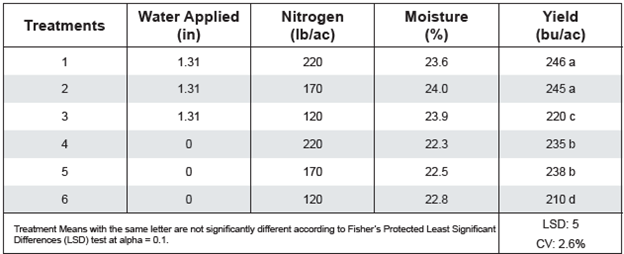
Field 8A at MCAC was in corn for the 2023 cropping season. Irrigation had a statistically significant effect on yield over all treatments. Nitrogen had statistical significance from 120 versus 170 and 220 units on nitrogen treatments. The 170 units of nitrogen was the optimal amount of nitrogen for all treatments. Not having the irrigator installed in early June caused there to be less yield in irrigated treatments. The results of this location from 2023 should be taken lightly as complete implementation was not done until August. Location study information can be seen in Figure 4 and results in Figure 5.

Figure 4: Study information for MCAC 8A location in 2023 cropping season.
Figure 5: Results for MCAC 8A field location in 2023.

2024 Results

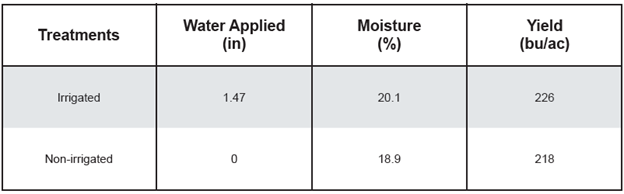
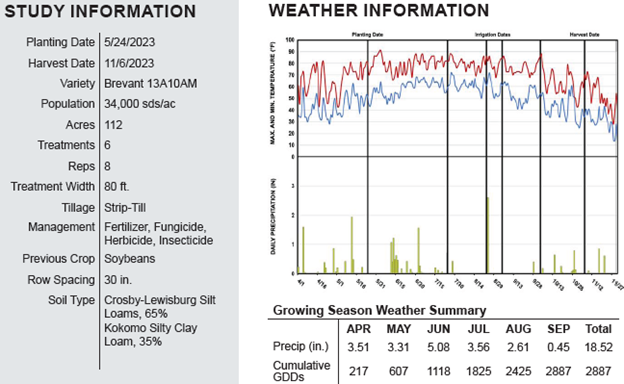
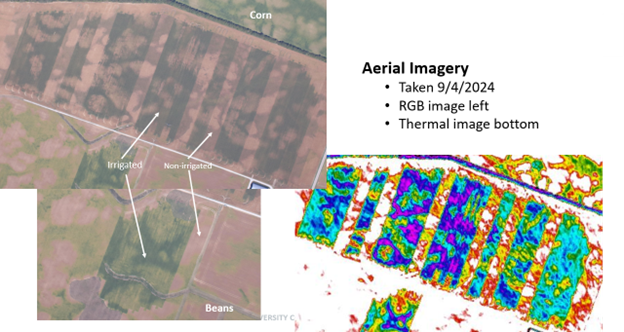
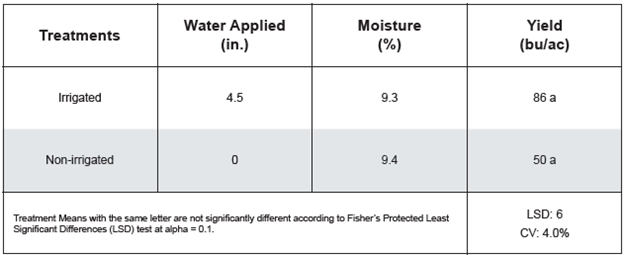
Field 7 at MCAC was in corn for the 2024 cropping season. Irrigation had a statistically significant effect on yield over all treatments. There was a 48 bu/ac between irrigated two-thirds nutrients and non-irrigated and 44 bu/ac between irrigated and non-irrigated for the 2024 growing season. A total of 773 gallons of diesel was used to run the irrigator for this trial for 2024 cropping season across 71 acres. A total of 25,739 kWh was used to run the electric pumps, base station, and well for 2024 growing season across 71 acres. These are the initial results that were published in efields and further results will continue to be analyzed to meet all project objectives. This data will be used to help in evaluating HCRI versus traditional crop production and management practices to meet project objectives. Location study information can be seen in Figure 6 and results in Figure 8. In Figure 7, aerial imagery can be seen from the 2024 cropping season.

Figure 6: Study information for MCAC 7 location in 2024 cropping season.
Figure 7: Aerial imagery of field 7 (Top l) and field 8A (Bottom left) from 2024 cropping season.
Figure 8: Results for MCAC 7 field location in 2024.

Field 8A at MCAC was in soybeans for the 2024 cropping season. Irrigation had a statistically significant effect on yield over non-irrigated. A total of 211 gallons of diesel was used to run the irrigator for this trial for 2024 cropping season across 11 acres. A total of 3,475 kWh was used to run the electric pumps, base station, and well for 2024 growing season across 11 acres. Location study information can be seen in Figure 9 and results in Figure 10. In Figure 7, aerial imagery can be seen from the 2024 cropping season.

Figure 9: Study information for MCAC 8A location in 2024 cropping season.
Figure 10: Results for MCAC 8A field location in 2024.

Future Plans

During the next 12 months, we are planning for the HCRI operation at the two sites for cropping practices and irrigation for 2025 growing season. We will be aggregating weather data, agronomic data, plant samples, surface and ground water quality samples, and machine performance data for all years of the project with the current end date as spring of 2026. We are hoping to continue to perform testing with this technology and implementing the dry product skid for field operations for the 2025 growing and full-scale implementation across all studies in 2026. The results from the Iowa State portion of this funded project will also be reported in the future as well. There is a significant need to further develop programs for injecting macro and micronutrients in liquid and granular form for growers. The potential to significantly cut application rates exists with this technology. Also, implementing this technology with liquid livestock manure producers will change the paradigm of how manure is managed in the future.

Authors

Presenting & corresponding author

Andrew Klopfenstein, Senior Research Engineer, The Ohio State University, Klopfenstein.34@osu.edu

Additional authors

Justin Koch, Innovation Engineer, 360YieldCenter; Kapil Arora, Field Agricultural Engineer, Iowa State University; Daniel Anderson, Associate Professor, Iowa State University; Matthew Helmers, Professor, Iowa State University; Kelvin Leibold, Farm Management Specialist, Iowa State University; Alex Parsio, Research Engineer, The Ohio State University; Chris Tkach, Lecturer, The Ohio State University; Christopher Dean, Graduate Research Associate, The Ohio State University; Ramareo Venkatesh, Research Associate, The Ohio State University; Elizabeth Hawkins, Agronomics Systems Field Specialist, The Ohio State University; John Fulton, Professor, The Ohio State University; Scott Shearer, Professor and Chair, The Ohio State University

Additional Information

eFields On-Farm Research Publication 2023 and 2024 Editions – https://digitalag.osu.edu/efields

Acknowledgements

Natural Resources Conservation Service – Conservation Innovation Grant (NR223A750013G037)

Ohio Department of Agriculture – H2Ohio Grant

USDA, NRCS, 360YieldCenter, Beck’s Hybrids, Molly Caren Agricultural Center, Rooted Agri Services, Iowa State University, The Ohio State University


The authors are solely responsible for the content of these proceedings. The technical information does not necessarily reflect the official position of the sponsoring agencies or institutions represented by planning committee members, and inclusion and distribution herein does not constitute an endorsement of views expressed by the same. Printed materials included herein are not refereed publications. Citations should appear as follows. EXAMPLE: Authors. 2025. Title of presentation. Waste to Worth. Boise, ID. April 7-11, 2025. URL of this page. Accessed on: today’s date.

Moving the “Sustainability” Needle

Purpose

Most farms are on a continuous journey of environmental stewardship. This journey includes voluntary and regulatory pathways (e.g., programs, regulations) and checkpoints (e.g., certifications, production goals). Industry initiatives like the Net Zero Initiative (US Dairy) and Pork Cares (National Pork Board) provide goals that serve as destination descriptions, motivating collective action amongst their farms. However, industry initiatives do not dictate which mitigation actions can serve as the route.  Every farm has a unique starting point in the present, and there are many pathways for the future that can be illuminated, shaped and supported by advisors.

This workshop was designed to provide the advisor community insights on opportunities to support the industries’ sustainability commitments through data, methods, and tools related to mitigation adoption.  The desired outcome was to accelerate adoption by strengthening a community of support for sustainability initiative practices.

What Did We Do?

This workshop used multiple formats to engage participants in discussion and ideation, recognizing there is a need not only for purposeful planning, but also for quick action. There were brief introductions to a suite of tools and resources that support on-farm decision-making, and opportunities for crowd-sourcing additional material. Collective discussions charted networks and roles for advisors to support farmers in the implementation process for select scenarios. Activities considered both one-on-one advisor-advisee relationships, as well as the role of advisors within a broader network of actors involved in sustainability initiatives.  The workshop culminated in identifying basic, finite steps for the promotion of action.

What Have We Learned?

The workshop content supports advisors for all types of livestock farms, but draws heavily from experiences in the swine and dairy industries. In extension work, we observed that advisors can serve as connectors, motivators, and informers. We noticed that exploring options for mitigation pathways can require a variety of advisor services.

Summary of Workshop Findings

Following the workshop, an accessible guide of resources to support participants and LPELC community members was compiled, available here:

2025 W2W Moving the Needle Summary Document

Authors

Presenting authors

MaryGrace Erickson, Postdoctoral Associate, University of Minnesota

Mahmoud Sharara, Extension Specialist, North Carolina State University

Erin Cortus, Extension Engineer, University of Minnesota

Corresponding author

Erin Cortus, Extension Engineer, University of Minnesota, ecortus@umn.edu

Additional Information

FARM Environmental Stewardship – https://nationaldairyfarm.com/dairy-farm-standards/environmental-stewardship/

Pork Cares Sustainability Report – https://www.porkcares.org/

Acknowledgements

This workshop is supported by Multistate Project S1074 – Fostering Technologies, Metrics, and Behaviors for Sustainable Advances in Animal Agriculture.  This workshop benefitted from supporting materials provided by National Pork Board and the National Milk Producers Federation Farmers Assuring Responsible Management Program.

The authors are solely responsible for the content of these proceedings. The technical information does not necessarily reflect the official position of the sponsoring agencies or institutions represented by planning committee members, and inclusion and distribution herein does not constitute an endorsement of views expressed by the same. Printed materials included herein are not refereed publications. Citations should appear as follows. EXAMPLE: Authors. 2025. Title of presentation. Waste to Worth. Boise, ID. April 7-11, 2025. URL of this page. Accessed on: today’s date. 


Closing the Loop: Extension’s Role in Driving Circularity in Manure Management

Purpose

Circular agriculture is a farming strategy designed to minimize inputs and environmental impact by improving soil health, reducing waste, and reusing materials. In the context of livestock production and manure management, circularity emphasizes nutrient recycling, minimizing environmental losses, and balancing nutrient inflows and outflows to sustain agricultural systems. These priorities have long been a focus of Extension efforts across livestock-intensive regions.

This work examines the role of Extension in defining, branding, and messaging circularity within manure management. Our objective is to highlight past progress, explore future opportunities, and establish consistent messaging across farmers, industry, and the public. Through multiple analyses, we demonstrate how minor alterations in messaging can tailor information to address different audience concerns.

What Did We Do?

To evaluate the evolution of manure management and its role in circular agriculture, we conducted several analyses:

    • Historical Nutrient Flow & Circularity Metrics 

Using historical data, we traced changes in nutrient use efficiency due to advancements in cropping systems, manure handling, and livestock genetics. 

Findings illustrate continuous improvement in livestock production systems and highlight key drivers of efficiency.

Improvements were attributed to livestock performance, crop performance, and manure management, helping identify areas requiring greater emphasis for future progress.

    • Nutrient Separation vs. Direct Manure Application 

We compared traditional manure application with nutrient separation techniques to assess their impact on nutrient circularity and economic viability. Nutrient separation could include solid liquid separation systems, but ideally will be based on systems that target partitioning of N and P, to better focus on how nutrient flows are impacted.

    • Comparing Manure & Municipal Waste Management 

By comparing manure management practices with municipal waste handling systems, we examined how these comparisons shape public perception.

Extension’s role includes bridging the gap between agricultural decision-making and a public that is increasingly disconnected from farming, requiring clear, relatable messaging.

What Have We Learned?

The analysis highlights several key takeaways:

    • Livestock & Crop Improvements Have Driven Nutrient Use Gains – While significant progress has been made, additional focus on manure management is needed to accelerate circularity.
    • Decision Tools Can Be Re-Branded – Farmers and industry stakeholders can benefit from repurposed decision-support tools that incorporate circularity metrics to inform practical manure management choices.
    • Public Understanding Requires Clear Communication – Agricultural waste and manure management must be explained in ways that connect with non-farm audiences, emphasizing environmental and health benefits.
    • Multimodal Messaging Enhances Engagement – Using a combination of visual graphics, infographics, and multimedia content, Extension can effectively communicate circularity’s value to diverse audiences.

Future Plans

To strengthen Extension’s role in promoting circularity in manure management, future efforts will focus on:

    • Developing targeted messaging for farmers, industry professionals, and the general public to improve adoption of circular manure management practices.
    • Creating practical decision-support tools that incorporate circularity metrics to assist in manure management planning.
    • Enhancing outreach efforts through multimedia resources, including infographics, videos, and interactive educational tools.
    • Strengthening connections between manure management and broader sustainability discussions by aligning messaging with climate resilience, water quality, and regenerative agriculture initiatives.

Authors

Presenting & Corresponding author

Daniel Andersen, Associate Professor, Iowa State University, Dsa@iastate.edu

The authors are solely responsible for the content of these proceedings. The technical information does not necessarily reflect the official position of the sponsoring agencies or institutions represented by planning committee members, and inclusion and distribution herein does not constitute an endorsement of views expressed by the same. Printed materials included herein are not refereed publications. Citations should appear as follows. EXAMPLE: Authors. 2025. Title of presentation. Waste to Worth. Boise, ID. April 711, 2025. URL of this page. Accessed on: today’s date. 

The Economics of Carbon Markets for Dairy Industry

Purpose

Dairy farmers in Washington state have been under significant pressure to reduce their carbon footprint in recent years. Dairy cooperative sustainability initiatives such as achieving carbon neutrality by 2050 have left many producers wondering what will be required of them to help their cooperatives meet this goal. Coupled with regulatory pressures to report on their greenhouse gas emissions and the threat of regulation to reduce them, uncertainty remains for producers around the types of climate-smart practices that will enable them to reduce their carbon footprint while remaining economically viable.

Without a thorough understanding of the costs and risks, pressures, or requirements to implement climate-smart practices may inadvertently drive consolidation and the accelerated loss of small to medium sized farms.

What Did We Do?

Utilizing Washington state dairy facility data, I conducted an economic cost benefit analysis of two climate-smart practices that capture GHGs from anaerobic storage: anaerobic digestors and the covered lagoon and flare system and the size of operation needed to implement both practices based on current and historic market conditions and technology costs. Private and public investment in climate-smart practices can have a substantial impact on whether they are economically feasible for producers to implement. I considered the impacts of various levels of cost-share on the size of farm able to adopt the technology based on several economic indicators.

What Have We Learned?

Most dairy farms cannot simply raise their prices to offset the costs of climate-smart practices, therefore it is critical to understand the broad economic impacts of imposing emissions reductions mandates. With consolidation being a well-documented trend across dairy farms in the United States, it is possible that climate regulations will only further exacerbate this trend due to the high capital costs and market risk associated with climate-smart farming that only facilities of scale can take on.

Future Plans

I am actively assisting research right now in Washington state with university and private researchers into dairy farm carbon intensities, across various farm sizes and facility types. An overview of this research may be available by Summer of 2025. Once this work is completed, we will have a better understanding of overall farm emissions and what climate-smart practices may be necessary for farms to implement to help achieve cooperative net zero targets.

Authors

Presenting & corresponding author

Nina Gibson, Agricultural Economist and Policy Specialist, Washington State Department of Agriculture, KGibson@agr.wa.gov

Additional Information

Link to Podcast I hosted, the Carbon and Cow$ Podcast, which covers the risks and opportunities associated with carbon markets for dairy and livestock producers: https://csanr.wsu.edu/program-areas/climate-friendly-farming/carbon-and-cows-podcast/

Link to my program’s homepage at WSDA: https://agr.wa.gov/manure

My Linkedin: https://www.linkedin.com/in/nina-gibson-b482a8119/

The authors are solely responsible for the content of these proceedings. The technical information does not necessarily reflect the official position of the sponsoring agencies or institutions represented by planning committee members, and inclusion and distribution herein does not constitute an endorsement of views expressed by the same. Printed materials included herein are not refereed publications. Citations should appear as follows. EXAMPLE: Authors. 2025. Title of presentation. Waste to Worth. Boise, ID. April 711, 2025. URL of this page. Accessed on: today’s date.

Consumer Demand for products using biochar

Purpose

This research aims to analyze consumer sentiment and demand for biochar-enriched products, with a focus on their willingness to pay. By assessing how consumers perceive and value biochar’s environmental and agricultural benefits—such as reduced greenhouse gas emissions, carbon sequestration, improved soil health, enhanced water efficiency, and increased yields—the study explores how these factors influence purchasing decisions.

Understanding these preferences is essential for determining the market viability of biochar-enriched products and identifying potential price premiums. Additionally, the study provides insights into policy recommendations on eco-labeling, sustainability certifications, and incentives for biochar adoption. As the biochar market is still emerging, these findings will help producers and suppliers assess whether investment in biochar-based systems is financially viable based on consumer demand.

What Did We Do?

For our analysis, we employed the contingent valuation method (CVM), a widely used approach in consumer studies. In this method, consumers are asked whether they are willing to pay a premium for products after being informed about their environmental and health benefits compared to conventional options. Our analysis is based on the premise that consumers care about the products they purchase, particularly in terms of the environmental and health benefits they offer.

To capture a broad range of consumer sentiments, the survey was designed to gather data from approximately 1,006 U.S. respondents aged 18 and older who consume meat, selected randomly through Qualtrics. The sample was evenly balanced, with 50.4% female and the remaining respondent’s male. The survey aimed to understand meat consumers’ preferences regarding sustainably produced feed, particularly focusing on corn silage produced using biochar. It collected demographic information and insights into participants’ meat purchasing habits, such as the frequency of purchases and their preferred locations. Participants ranked factors like taste, price, health benefits, environmental impact, and brand when selecting meat products. We also assessed their awareness of sustainable agriculture practices, environmental claims, and the effects of traditional farming.

Since biochar is a relatively new concept, respondents unfamiliar with biochar were shown an educational video explaining its benefits as a soil amendment. Respondents were then asked to choose between sustainable feed and conventional feed, as well as to rank the importance of sustainable feed sources in meat production. Following this, respondents listing benefits of biochar in silage production, including reduced greenhouse gas emissions, reduced water usage, decreased chemical fertilizer use, reduced carbon footprint, and improved soil health. Finally, respondents were asked about their willingness to pay a premium for meat produced with sustainably raised feed (silage produced using biochar) and whether additional product information or certifications, such as USDA , Organic, would influence their purchasing decisions.

What Have We Learned?

From our survey, we learned that demographic factors such as marital status, education level, urban residence, and full-time employment are associated with greater concern for health and a willingness to pay a premium for higher-quality meat. Nearly 94% of participants purchased meat from supermarkets, with 66% doing so weekly, with taste and price being the most important factors in their decision-making. Health benefits were considered, but they were secondary to taste and price. Environmental sustainability and brand identity had a minimal influence on purchasing choices, and most consumers did not actively seek information about food production processes. A significant portion of respondents, particularly those unfamiliar with sustainable farming practices, did not let environmental claims impact their meat purchases.

Additionally, our findings revealed that over 92% of respondents were initially unaware of biochar and its benefits. However, after being exposed to an informational clip, 49% expressed interest in learning more about biochar, and 35% felt informed enough to make a purchasing decision. Participants recognized key benefits of biochar, including reduced chemical fertilizer use, lower water consumption, and improved soil health. By the end of the survey, more than 69% of respondents indicated a willingness to pay a premium for sustainably raised meat.

Moreover, familiarity with sustainable agriculture and consideration of environmental claims played a significant role in purchasing decisions, emphasizing the impact of awareness on consumer behavior. Certification and detailed product information, both of which were statistically significant at the 1% level, further enhanced consumer trust and perceived value, increasing the likelihood of premium pricing acceptance.

Future Plans

The analyses conducted thus far are based on survey results, utilizing descriptive statistics and an ordered logit regression model. Moving forward, we plan to apply these findings to estimate market demand for biochar-based products and compare the profitability of biochar-based production with conventional practices. This expanded analysis will offer deeper insights into consumer preferences, the potential price premium for biochar products, and the economic viability of integrating biochar into agricultural production systems.

Authors

Presenting & Corresponding author

Sunita Bandane Pahari, Graduate Research Assistant, University of Idaho, paha0494@vandals.uidaho.edu

Additional author

Jason Winfree, Professor, University of Idaho

Additional Information

Idaho Sustainable Agriculture Initiative for Dairy (ISAID)

This informational clip derived from You Tube is used for survey to provide information on what is biochar and its benefits to participants: https://youtu.be/7qVcEvKEfGc?si=Isxex7E4lJCQrfGc

Acknowledgements

This research was funded by the USDA Sustainable Agricultural Systems Initiative through the Idaho Sustainable Agriculture Initiative for Dairy (ISAID) grant (Award No. 2020-69012-31871).

The authors are solely responsible for the content of these proceedings. The technical information does not necessarily reflect the official position of the sponsoring agencies or institutions represented by planning committee members, and inclusion and distribution herein does not constitute an endorsement of views expressed by the same. Printed materials included herein are not refereed publications. Citations should appear as follows. EXAMPLE: Authors. 2025. Title of presentation. Waste to Worth. Boise, ID. April 7-11, 2025. URL of this page. Accessed on: today’s date.

Application of Manure on Growing Crops

Scheduling conflicts, equipment breakdowns, and wet field conditions can wreak havoc on spring manure application and planting schedules. This webinar will provide valuable insights into maximizing the efficiency and timing of manure application for growing crops, especially corn. By exploring innovative techniques for liquid manure application and the potential for in-season poultry litter application, participants will learn possible ways to navigate challenges in crop management while ensuring nutrient efficiency and maintaining crop yield and quality. This presentation was originally broadcast on January 17, 2025. Continue reading “Application of Manure on Growing Crops”

Engaging Farm Safety and Manure Management: Innovative Teaching Methods in Action

The agricultural industry consistently has the highest risk for occupational injuries and fatalities.  This session will share some proven techniques for making changes to farm safety practices and manure management that could positively impact generations to come.  We will explore dynamic and interactive teaching methodologies that could be adapted for use in at your facility and in your training programs.  These methods employ activity-based learning, where participants have the opportunity to learn, apply and discuss real-world scenarios in a safe environment. This presentation was originally broadcast on November 22, 2024. Continue reading “Engaging Farm Safety and Manure Management: Innovative Teaching Methods in Action”

Managing Dairy Manure for Increased Soil Health and Forage Production Sustainability

Manure is a valuable source of crop-essential nutrients that, when managed carefully, can help build soil organic matter, enhance nutrient cycling, and improve overall soil health and climate resilience over time. In 2022, a statewide on-farm research project was initiated in New York State to quantify the nitrogen (N) replacement value, corn silage or grain yield, and soil health enhancements of various manure sources. Between 2022 and 2023, eleven on-farm field trials were implemented. Yield data are being used to quantify differences in most economic N rate between manured and non-manured strips, and to quantify the yield impact of the manure applications. In 2024, eight additional trials were added using various manure sources. Results so far indicate that manure can offset N fertilizer needs and increase corn silage yield beyond its nutrient contributions, but impacts are field-specific, reflecting differences in field histories and growing conditions. Assessments of soil microbial biomass for sites in 2023 and 2024 reflected the manure history for trial locations and suggest that mid-season assessments may help identify where nitrogen fertilizer addition is beneficial for the crop and where not. Assessment of variability of different manure sources point to the importance of manure sampling and analyses. Preliminary results will be shared. This presentation was originally broadcast on October 18, 2024. Continue reading “Managing Dairy Manure for Increased Soil Health and Forage Production Sustainability”

Staying in the Loop: Circularity in Integrated Crop and Livestock Production

Have you heard or read about circularity and the circular economy? These buzzwords describe sustainability concepts that are being adopted in many sectors, including food animal production. This webinar shares definitions for these concepts and how they can inform thinking about changes to animal systems and manure management. This presentation was originally broadcast on June 21, 2024. Continue reading “Staying in the Loop: Circularity in Integrated Crop and Livestock Production”