Swine Manure Application Method Impact on Soil Arthropods


Does Manure Application Impact Soil Arthropods? *

Soil arthropod populations and diversity provide an indication of the biological quality of soil, which can impact soil fertility. Arthropods include insects, crustaceans, arachnids, myriapods, and scorpions and nearly every soil is inhabited by many different arthropod species. Row-crop soils may contain several dozen species. One particular arthropod species, mites, can have a significant impact on nutrient release in soil. For this study, the impact of swine manure slurry applied via broadcast and injection at a rate designed to meet the agronomic nitrogen needs of corn was investigated to determine the manure application method impact on soil arthropod population and diversity.

What did we do?

Treatments include broadcasted swine slurry, injected swine slurry, and non-manured check plots with four replications per treatment. Plots have been monitored following manure application in June 2014 and will continue through June 2015. Soil samples were removed 4 d prior to manure application and at 1, 2, and 4 weeks and monthly thereafter from 0 to 8 inches on each plot. Arthropods were extracted by use of Burlese funnels and collected species are being sorted and characterized.

What have we learned?

Species characterization is on-going and will be summarized for presentation in the poster session at the conference.

Future Plans

Results of this work will allow us to better understand the impact of manure application on soil biological properties, a component in defining the overall fertility or “health” of soil.

Authors

Amy Millmier Schmidt, Assistant Professor and Livestock Bioenvironmental Engineer, University of Nebraska – Lincoln aschmidt@unl.edu

Nicole R. Schuster, Graduate Research Assistant, University of Nebraska – Lincoln; Julie Peterson, Assistant Professor and Entomologist, University of Nebraska – Lincoln

Additional information

Dr. Amy Millmier Schmidt; (402) 472-0877; aschmidt@unl.edu

Acknowledgements

We would like to recognize a number of individuals who assisted with soil sample collection, arthropod extractions, and other laboratory activities over the course of this project, including Keith Miller, Ethan Doyle, Mitch Goedeken, Eric Davis, Lucas Snethan, Kevan Reardon and Kayla Tierramar

The authors are solely responsible for the content of these proceedings. The technical information does not necessarily reflect the official position of the sponsoring agencies or institutions represented by planning committee members, and inclusion and distribution herein does not constitute an endorsement of views expressed by the same. Printed materials included herein are not refereed publications. Citations should appear as follows. EXAMPLE: Authors. 2015. Title of presentation. Waste to Worth: Spreading Science and Solutions. Seattle, WA. March 31-April 3, 2015. URL of this page. Accessed on: today’s date.
Cationic polymer and high-speed centrifugation effects on pathogen reduction during manure solid/liquid separation


Purpose

To investigate the effects on pathogen reduction using cationic polymer and high speed centrifuge during manure solid/liquid separation.

What did we do?

In this study, polymers effects on pathogen reduction were investigated. Low charge density cationic polyacrylamide (CPAM) was selected because CPAM has been commonly used in manure treatment and it is effective for manure coagulation and flocculation. The effect on pathogen reduction of CPAM was studied in this research. High charge density cationic polydicyandiamide (PDCD) was selected because of its application of water clarification and its the extreme high charge.

E. coli and total coliform counts were examined under three different conditions: buffer media only samples, dairy manure samples and polymer amended dairy manure samples. For each condition, the samples were centrifuged at a series of speed from 0×g to 10,000×g.

What have we learned?

The results demonstrated positive impacts of both polymer and high speed centrifugation on lowering the pathogen levels in the liquid portion of the manure. Low charge density CPAM is effective for manure coagulation and flocculation, however, it has a negligible effect on pathogen reduction in either nutrient rich or nutrient deficient conditions. In contrast, highly charged cationic PDCD does not facilitate coagulation in manure with high solids content, but can potentially inhibit bacterial pathogens and further lower the solids content in the liquid portion of manure after CPAM separation.

The results from this study also demonstrated that high speed centrifugation has a notable impact on solids reduction and pathogen reduction for 10 minutes centrifugation retention time. Centrifugation speed around 4,000×g was capable of reducing pathogen levels higher than 90% from a single separation process. However, high speeds above 6,000×g results in minor additional reduction.

Future Plans

This study investigated cationic polymer and centrifuge speed impact on pathogen reduction and solid/liquid separation in dairy manure. However, there is an increasing concern about reactivation issue in centrifugation of mesophilically digested biosolids. Therefore we have attempted to conducted more research in the future regarding parallels to manure digestion. Until recently, it is still not fully understood why some municipal wastewater facilities experienced reactivation of microorganisms in centrifuged solids while others did not. Thus, it is important to investigate the effect of centrifuge speed in combination with polymer type on indicator and pathogen content of manure digests.

Authors

Troy Runge, Professor, Biological Systems Engineering, University of Wisconsin-Madison trunge@wisc.edu

Additional information

Journal papers have been submitted to Journal of Environmental Quality

Troy Runge, trunge@wisc.edu

Zong Liu, zliu73@wisc.edu

Cationic polymer and high-speed centrifugation effects on pathogen reduction during manure solid/liquid separation

The authors are solely responsible for the content of these proceedings. The technical information does not necessarily reflect the official position of the sponsoring agencies or institutions represented by planning committee members, and inclusion and distribution herein does not constitute an endorsement of views expressed by the same. Printed materials included herein are not refereed publications. Citations should appear as follows. EXAMPLE: Authors. 2015. Title of presentation. Waste to Worth: Spreading Science and Solutions. Seattle, WA. March 31-April 3, 2015. URL of this page. Accessed on: today’s date.
Measuring Pasture Dry Matter Intake of Horses


Why Is It Important to Accurately Measure Horse Dry Matter Intake?*

The ability to predict a horse’s rate of pasture dry matter intake (DMI) assists horse owners/managers in accounting for pasture’s contribution toward a horse’s daily nutrient requirements. Accounting for nutrients obtained from pasture improves the ability to accurately balance rations thereby preventing inefficiencies associated with over- or under- feeding nutrients. This presentation will review pasture DMI estimates for horses reported in scientific literature, sources of variation associated with the measurements, and methods used to measure pasture DMI.

Pasture dry matter intake varies considerably. Estimates for continuously grazing horses range from 1.5 to 2.5% of body weight in dry matter (DM). Factors contributing to variability in pasture DMI include herbage mass available for grazing, sward height, plant maturity, plant chemical composition, plant palatability, horse physiological status and time allowed for grazing. Dry matter intake tends to increase as pasture herbage mass increases, provided forage does not become over-mature. Sward height may also play a role in dry matter intake as it can influence harvest efficiency (e.g., bit size and rate of chewing necessary to swallow ingested forage). Level of plant maturity and sward height are also related to plant chemical composition. As plants reach maturity acid detergent fiber (ADF) and neutral detergent fiber (NDF) increase. Both ADF and NDF concentration are negatively correlated to a horse’s preference for forage. Plant nonstructural carbohydrate (NSC) has been reported to be positively correlated with horse pasture plant preference. Therefore plant chemical composition (ADF, NDF, NSC) influences horse preference and likely influences pasture DM intake. Dry matter intake is also influenced by horse physiological status. Horses having physiological states with nutrient requirements above maintenance may also have greater pasture dry matter intakes (e.g., lactating mares). Dry matter intake is also influenced by the amount of time a horse is allowed to graze. As the amount of time allowed for grazing is restricted a horse’s rate of dry matter intake increases. Therefore it is possible in some cases for horses to have restricted pasture access yet still consume a significant amount of forage DM due to an increased rate of DMI.

What Did We Do?

Several methods exist to measure pasture intake among grazing horses, yet none are perfect and all face challenges in their application. The primary methods are herbage mass difference, difference in BW pre- versus post-grazing, and marker techniques (e.g., alkanes, acid-insoluble ash etc…). Herbage mass difference measures the herbage mass prior to grazing and again following grazing. This is accomplished by harvesting multiple small forage sub-samples each having the same area (e.g., a sub-sample is harvested within a .25 m x .25 m frame at a height of 2.5 cm above the ground). The difference between pre- and post-grazing herbage mass reflects the amount of forage consumed by the horse. However, as the time between pre- and post-grazing increases, pasture re-growth contributes to error in this measurement. An additional source of error in this measurement results from variability in sub-samples used to predict pre- and post-grazing herbage mass. Therefore this met hod tends to work best in small areas where grazing takes place less than 12 h. Change in body weight during a grazing bout, corrected for fecal, urine and other water loss, is another method used to predict dry matter intake. However, this method requires an efficient means of collecting feces and urine (e.g., collection harness apparatus) and requires a livestock scale having a relatively high sensitivity. The sensitivity of many livestock scales is ± 1 kg, which can represent considerable variation for smaller intakes. Chemical markers, either inherent to the plant or provided externally, provide a means of measuring DMI in a natural grazing setting. Markers rely on the following principle: Intake = fecal output/indigestibility. Fecal output is determined by feeding a known amount of an external marker, not present in pasture plants (e.g., even-chained alkanes) and then measuring its dilution in the feces. Indigestibility is calculated as 1 – digestibility. Digestibility is determined by the ratio of a marker concentration within the plant to that in the feces. Internal markers used for estimating digestibility in horses include odd-chained alkanes and acid-insoluble ash. Marker methods provide accurate measures but are relatively expensive and require considerable care when sampling forage (e.g., the composition of forage sampled must reflect the composition of the forage consumed).

What Did We Learn?

Although each of these methods has their short comings they can provide a starting point to estimate dry matter intake. Coupling these estimates with horse performance measures (change in BW or body condition, average daily gain for growing horses) should be used in conjunction with these estimates in order to validate them and correct for their sources of error. Ultimately, these methods can be used to develop models that incorporate factors responsible for variation in DMI among horses to more accurately predict pasture intake thereby facilitating efficient use of pasture derived nutrients in feeding horses.

Author

Paul D. Siciliano is a Professor of Equine Management and Nutrition in the Department of Animal Science, North Carolina State University. He teaches classes in equine management and conducts research in the area of equine grazing management. Paul_Siciliano@ncsu.edu

Additional Information

Chavez, S.J., P.D. Siciliano and G.B. Huntington. 2014. Intake estimation of horses grazing tall fescue (Lolium arundinaceum) or fed tall fescue hay. Journal of Animal Science. 92:p.2304–2308.

Siciliano, P.D. 2012. Estimation of pasture dry matter intake and its practical application in grazing management for horses. Page 9-12 in Proc. 10th Mid-Atlantic Nutrition Conference. N.G. Zimmermann ed., Timonium, MA, March 2012.

The authors are solely responsible for the content of these proceedings. The technical information does not necessarily reflect the official position of the sponsoring agencies or institutions represented by planning committee members, and inclusion and distribution herein does not constitute an endorsement of views expressed by the same. Printed materials included herein are not refereed publications. Citations should appear as follows. EXAMPLE: Authors. 2015. Title of presentation. Waste to Worth: Spreading Science and Solutions. Seattle, WA. March 31-April 3, 2015. URL of this page. Accessed on: today’s date.

Analyses of Microbial Populations and Antibiotic Resistance Present in Stored Swine Manure from Underground Storage Pits


Why Study Antibiotic Resistance in Manure?

Antimicrobial compounds have been commonly used as feed additives for domestic animals to reduce infection and promote growth. Recent concerns have suggested such feeding practices may result in increased microbial resistance to antibiotics, which can have an impact on human health. As part of our research project we have been studying the commensal microbial populations present in stored swine manure and the swine GI tract. We have extended this work to include studies on the antibiotic resistance present in these populations.

What did we do?

Predominant microbial populations were identified by both pure culture isolations and direct 16S rDNA sequencing of total DNA from swine feces and stored manure samples. Antibiotic resistance was analyzed using similar pure culture isolation methods. Pure cultures were isolated following plating on anaerobic and aerobic media containing tetracycline, tylosin, or erythromycin. Polymerase chain reaction (PCR) analyses using primers based on a variety of antibiotic resistance genes was carries out with both pure culture isolates and total DNA from swine feces and stored manure.

What have we learned?

Results of pure culture isolation and direct 16S rDNA gene sequence analyses indicate that the bacterial populations of the swine GI tract (feces) and stored manure ecosystems are predominantly composed of anaerobic, low mole %G+C, Gram-positive bacteria, most of which represent novel genera and species. Results of antibiotic resistance gene PCR studies demonstrated the presence of a variety of tet (e.g., tetK, tetO) and erm (e.g., ermA, ermC) resistance gene classes in both anaerobic and aerobic pure cultures and total DNA from both swine feces and stored manure, as well as the identification of novel bacteria containing new resistance genes. Comparison of DNA sequences suggests that horizontal transfer of resistance genes between bacterial strains has also occurred. The data indicate that both the swine gastrointestinal (GI) tract and stored swine manure may serve as reservoirs of known and novel antibiotic resistant bacteria and resistan ce genes.

Future Plans

We are interested in developing methods to reduce antibiotic resistance in the swine GI tract and stored manure, and to determine if antibiotic resistance genes present in these ecosystems can be transferred to bacteria that may affect human health (e.g., E. coli, Salmonella, Campylobacter).

Authors

Terence R. Whitehead, Research Microbiologist, USDA-ARS- National Center for Agricultural Utililzation Research, Peoria, IL 61604 terry.whitehead@ars.usda.gov

Michael A. Cotta, USDA-ARS-National Center for Agricultural Utilization Research, Peoria, IL 61604

Additional information

Terence R. Whitehead, NCAUR, 1815 N. University St., Peoria, IL 61615 309-681-6272

USDA-ARS-NCAUR-Bioenergy Research Unit: http://ars.usda.gov/main/site_main.htm?modecode=50-10-05-20

Cotta, M.A., Whitehead, T.R., and Zeltwanger, R.L. Isolation, Characterization, and Comparison of Bacteria from Swine Faeces and Manure Storage Pits. (2003) Env. Microbiol. 5:737-745. http://onlinelibrary.wiley.com/doi/10.1046/j.1467-2920.2003.00467.x/pdf

Whittle, G., Whitehead, T.R., Hamburger, N., Shoemaker, N.B., Cotta, M.A., and Salyers, A.A. Identification of a new ribosomal protection type of tetracycline resistance gene, tet(36), from swine manure pits . (2003) Appl. Environ. Microbiol. 69:4151-4158. http://aem.asm.org/content/69/7/4151.full

Cotta, M.A., Whitehead, T.R., Falsen, E., Moore, E. and Lawson, P.A. Robinsonella peoriae gen.nov., sp. nov., isolated from a swine-manure storage pit and a human clinical source. (2009) Int. J. System. Evol. Microbiol. 59:150-155. https://pubmed.ncbi.nlm.nih.gov/19126740/

Whitehead, T.R. and Cotta, M.A. Stored Swine Manure and Swine Feces as Reservoirs of Antibiotic Resistance Genes. (2013) Lett. Appl. Microbiol. 56:264-267. http://onlinelibrary.wiley.com/enhanced/doi/10.1111/lam.12043/

The authors are solely responsible for the content of these proceedings. The technical information does not necessarily reflect the official position of the sponsoring agencies or institutions represented by planning committee members, and inclusion and distribution herein does not constitute an endorsement of views expressed by the same. Printed materials included herein are not refereed publications. Citations should appear as follows. EXAMPLE: Authors. 2015. Title of presentation. Waste to Worth: Spreading Science and Solutions. Seattle, WA. March 31-April 3, 2015. URL of this page. Accessed on: today’s date.
Relationship between Surface Waters and Underlying Stream and Ditch Sediment in Selected Eagle Creek Tributaries


Why are stream and ditch sediment important to water quality?

Best management strategies implemented in most watersheds to reduce phosphorus (P) loads to surface waters have been successful, however, internal P loading within streams and ditches may still provide P to overlying water. Phosphorus retention and release by sediments is important for understanding sediment P status and buffering capacity and for determining the potential environmental fate of sediment bound P in flowing water systems.

What did we do?

Eight headwater streams and drainage ditches within Eagle Creek Watershed in central Indiana were selected to evaluate soluble P (SP). Stream and drainage ditch water and sediment were collected monthly from 8 selected locations within the Eagle Creek watershed in central Indiana for two consecutive years to estimate if there were any seasonal and/or land use trends. Sediments and water were analyzed for soluble P, and 24-hour P isotherms were performed to determine the P sorption capacity and to calculate the equilibrium P concentration (EPC0). The relationship between  EPC0 and SP in the water column allows for the prediction of the potential for sediments to either release P to or retain P from the water column.

What have we learned? 

Surface water P concentrations varied seasonally and were consistently greater during summer (P<0.05). Surface water SP concentrations increased with the percentage of land classified as urban (P<0.0001). Generally, we observed lower P concentrations in sediment during summer and greater P concentrations during winter and spring. We also observed greater P concentrations in areas that had a greater percentage of land used for agriculture and in some cases, sub-catchment area influenced the P content that was observed. Sediment EPC0 concentrations were not related to water column SP, however, when sediments were separated as ‘sinks’(r = 0.49) or ‘sources’(r = 0.65), a strong correlation was found between sediment EPC0 and water column SP (P<0.0001).

Future Plans    

Information from this study will assist managers and planners in targeting areas with the greatest potential for loss of P from sediments to overlying water. These results will also assist in improving nutrient criteria thresholds for the watershed.

Authors      

Candiss O. Williams, Research Soil Scientist, USDA NRCS Kellogg National Soil Survey Laboratory & Research Candiss.Williams@lin.usda.gov

Brad Joern, Professor, Department of Agronomy, Purdue University Douglas R. Smith, Research Soil Scientist, USDA ARS Grassland, Soil, and Water Research Laboratory

The authors are solely responsible for the content of these proceedings. The technical information does not necessarily reflect the official position of the sponsoring agencies or institutions represented by planning committee members, and inclusion and distribution herein does not constitute an endorsement of views expressed by the same. Printed materials included herein are not refereed publications. Citations should appear as follows. EXAMPLE: Authors. 2015. Title of presentation. Waste to Worth: Spreading Science and Solutions. Seattle, WA. March 31-April 3, 2015. URL of this page. Accessed on: today’s date.

Validation of Near-Infrared Reflectance Spectral Data for Analyzing Horse Manure

Can Near-Infrared Reflectance Spectroscopy (NIRS) Be Used For Analyzing Horse Manure?

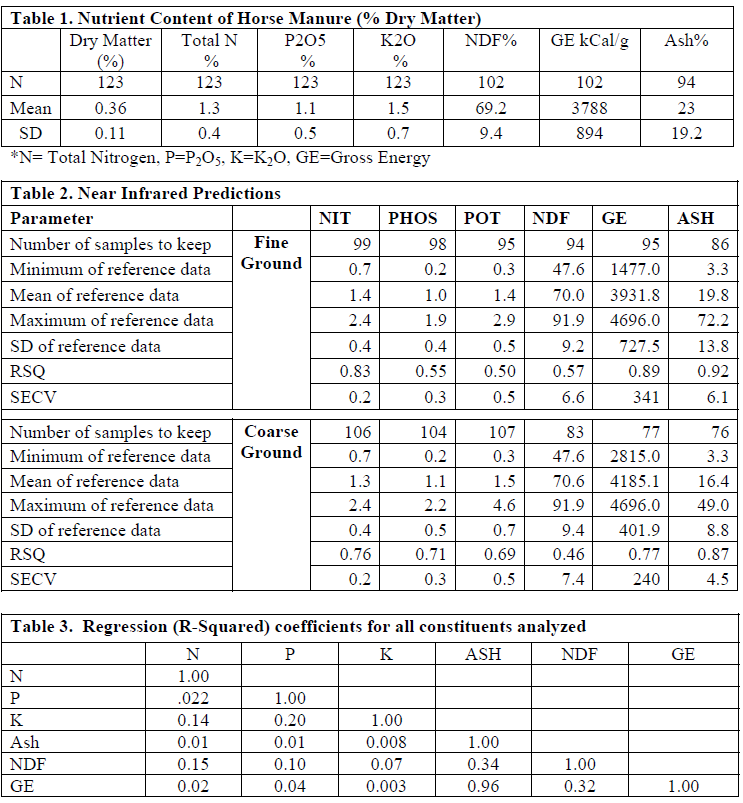
Increased horse numbers and insufficient acreage limit the ability for on-farm use of horse manure. Nearly 58% of surveyed farmers in NJ indicate that some manure was disposed off-farm while only 54% spread any manure on the farm (Westendorf et al., 2010). Analysis of manure by Near-Infrared Reflectance Spectroscopy (NIRS) could be a useful means of determining nutrient and energy content without time consuming efforts of wet chemistry and other laboratory analyses if horse manure is used as a fertilizer or energy source. The NIRS analysis works by subjecting samples to a concentrated light of a known spectrum and measuring the absorbance of the reflected beam (Dyer and Feng, 1997). Covalent chemical bonds of the common organic elements (Carbon, Nitrogen, Oxygen and Hydrogen) have strong absorbance in the NIRS region, useful because there is a correlation between absorbance and concentration (Malley et al., 2002). By comparing data between samples generated by NIRS to laboratory analysis of the same samples, NIRS equipment can be calibrated for practical use. The objectives of this project were: 1) determine the nutrient content and value of horse manure, and make NIRS calibrations based on previously determined wet chemistry values, and 2) determine if ash or Neutral Detergent Fiber (NDF) content can be used to predict Gross Energy (GE) levels.

What did we do?

Horse manure consisting of 123 solid dry stack manure samples, were collected from 30 NJ farms over four seasons during a 12-month period in 2008-2009. Samples were collected from various random locations in a manure pile in ~ 4 l sealable plastic bags, frozen, and stored until analysis. All samples were dried at 55o C to a constant weight in a Thermocore® oven. Following drying, all samples were ground to a particle size of 5-10 mm in a Waring® industrial blender, referred to as Coarse ground samples. Samples were sent to DairyOne Laboratories in Ithaca, NY and analyzed for manure components (Total-N, P2O5, K2O, NDF, and GE); samples were analyzed for Ash by the Rutgers University Soil Testing Laboratory. Coarse ground samples were further ground in a coffee grinder to a particle size between 2-3 mm (these samples are referred to as Fine ground samples). All NIRS analysis of Coarse and Fine ground samples were made with a Unit y Scientific Spectrastar ™ 2400 Drawer model (Brookfield, CT). Samples were scanned at 1nm intervals over the wavelength range of 1250-2350 nm, as prescribed by Unity Scientific. Data from the DairyOne Laboratory results were used as reference values to develop calibrations using the Ucal™ software package (Unity Scientific, Brookfield, CT) set at default values using a partial linear squares statistical model.

What have we learned?

On a dry matter basis (Table 1) samples averaged 1.3% N, 1.1% P2O5, 1.5% K2O, 69.2% NDF, 3800 kCal/g GE, and 24% Ash. The NIRS equations (Table 2) for Coarse (5-10 mm) ground horse manure predicted nutrient content, R-squared values of 0.76, 0.71, 0.69, 0.46, 0.77, and 0.87 for N, P2O5, K2O, NDF, GE, and Ash, respectively. The NIRS also predicted Fine (2-4 mm) ground horse manure R-squared values of 0.83, 0.55, 0.50, 0.57, 0.89, and 0.92 for N, P2O5, K2O, NDF, GE, and Ash, respectively. Ash, GE and NDF were regressed to determine how effectively Ash and NDF would predict GE (Table 3); NDF was a poor predictor of GE content (R-squared of 0.32), while Ash was a good predictor (R-squared of 0.96).

Future Plans

This research suggests that NIRS can be useful for predicting nutrient content of horse manure and that Ash is a good predictor of energy content. A comparative field trial on horse farms is planned for follow-up.

Authors

Michael L. Westendorf. Extension Specialist in Animal Science. Rutgers, the State University of New Jersey westendorf@aesop.rutgers.edu

Zane R. Helsel. Extension Specialist in Plant Biology and Pathology. Rutgers, the State University of New Jersey.

Additional information

Author Contact Information:

Michael Westendorf

Rutgers, The State University of New Jersey

84 Lipman Drive

New Brunswick, NJ 08901

Phone: 848-932-9408

e-mail: westendorf@aesop.rutgers.edu

Reference:

Dyer, D. J. and P. Feng. 1997. NIR Destined to be Major Analytical Influence. Feedstuffs Magazine. November 10, 1997.

Malley, D.F., Yesmin, L., and Eilers, R. G. 2002. Rapid Analysis of Hog Manure and Manure- amended Soils Using Near-infrared Spectroscopy. Soil Science Society of America Journal. 2002. 1677-1686.

Westendorf, M. L., T. Joshua, S. J. Komar, C. Williams, and R. Govindasamy. 2010. Manure Management Practices on New Jersey Equine Farms. Prof. Anim. Sci. 26:123-129.

Acknowledgements

Supported in part by the State Equine Initiative. Rutgers Equine Science Center. New Jersey Agricultural Experiment Station.

The authors are solely responsible for the content of these proceedings. The technical information does not necessarily reflect the official position of the sponsoring agencies or institutions represented by planning committee members, and inclusion and distribution herein does not constitute an endorsement of views expressed by the same. Printed materials included herein are not refereed publications. Citations should appear as follows. EXAMPLE: Authors. 2015. Title of presentation. Waste to Worth: Spreading Science and Solutions. Seattle, WA. March 31-April 3, 2015. URL of this page. Accessed on: today’s date.

Open Lot Dairy Ammonia Losses and Nitrogen Balance: A New Mexico Study

Purpose

Animal agriculture is a significant source of ammonia (NH3). Dairy cattle excrete most ingested nitrogen (N); most urinary N is converted to NH3, volatilized and lost to the atmosphere. This fugitive NH3 can contribute to negative environmental effects such as degraded air quality and excessive N in ecosystems. Open lot dairies on the southern High Plains are a growing industry and face challenges that include reporting requirements for NH3 emissions and potential regulation. However, producers and regulators lack a clear quantitative understanding of NH3 losses from the open lot production system.

What did we do?

We quantified NH3 emissions from the open lot and wastewater lagoons of a typical open lot New Mexico dairy during two weeks in summer, 2009. The 3500-cow dairy consisted of open lot, manure-surfaced corrals (22.5 ha). A flush system using recycled water removed manure from the feed alley to three lagoons (1.8 ha). Most manure was retained on the corral surface. Open path lasers measured atmospheric NH3 concentration downwind from the open lot and lagoon sources, sonic anemometers characterized turbulence, and inverse dispersion analysis (Windtrax) was used to quantify emissions every 15 minutes (Fig. 1). A dairy N balance was constructed using measured and calculated values to partition N to different stores in the dairy system. Milking cows comprised 73% of the herd, with the remainder dry or fresh cow. Dry matter intake averaged 22.5 kg/cow/d, with a mean crude protein content of 16.7% (Table 1).

What have we learned?

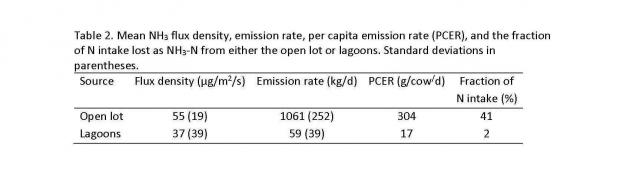
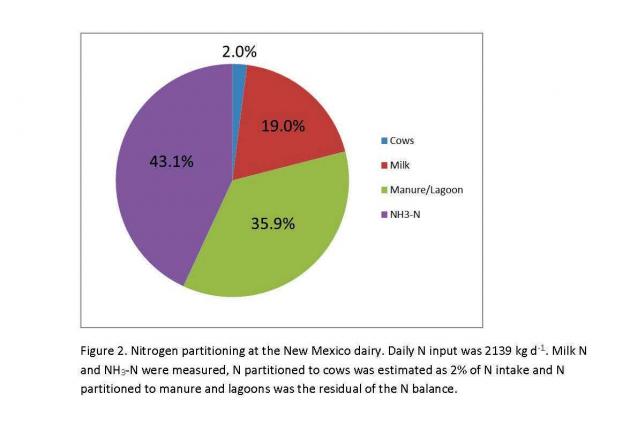
Most NH3 loss was from the open lot. Ammonia emission rate averaged 1061 kg/d from the open lot and 59 kg/d from the lagoons; 95% of NH3 was emitted from the open lot (Table 2). The per capita NH3 emission rate was 304 g/cow/d from the open lot (41% of N intake) and 17 g/cow/d from lagoons (2% of N intake). Mean N intake was 612 g/cow/d and N exported in milk averaged 145 g/cow/d. The dairy N balance showed that most N was lost as NH3. Daily N input at the dairy was 2139 kg/d, with 43, 36, 19 and 2% of the N partitioned to NH3 emission, manure/lagoons, milk, and cows, respectively (Fig. 2). The NH3 production intensity was 13.7 g NH3/kg milk. We estimated that on an annual basis, from 30 to 35% of fed N would be lost as NH3. Ammonia loss from open lot dairies is more similar to that from open lot beef feedyards than from dairies with closed housing where manure is more intensively managed.

Future Plans

Next steps include sampling during additional seasons to better characterize annual emissions.

Corresponding author, title, and affiliation

Richard W. Todd, Research Soil Scientist at USDA ARS Conservation and Production Research Laboratory, Bushland TX

Corresponding author email

richard.todd@ars.usda.gov

Other authors  

N. Andy Cole, Res. Animal Scientist at USDA ARS CPRL, Bushland, TX; G. Robert Hagevoort, Ext. Diary Specialist at New Mexico State University; Kenneth D. Casey, Air Quality Engineer and Brent W. Auvermann, Agricultural Engineer at Texas A&M AgriLife.

Additional information

For more information, contact Richard Todd, 806-356-5728.

Acknowledgements

Research was partially funded with a USDA NIFA Special Research Grant through the Southern Great Plains Dairy Consortium.

Table 1. Cow population, feed dry matter intake (DMI) and crude protein (CP), and the fraction of N fed for each cow class

Table 1.

Table 2. Mean NH3 flux density, emission rate, per capita emission rate (PCER), and the fraction of N intake lost as NH3-N from either the open lot or lagoons.

Figure 1. Ammonia flux density, 15-min time steps, at the open lot (a) and at the lagoons (b). The rainfall event reduced NH3 flux at the lagoons but not at the open lot.

Figure 1.

Figure 2. Nitrogen partitioning at the New Mexico dairy. Daily N input was 2139 kg d-1. Milk N and NH3-N were measured, N partitioned to cows was estimated as 2% of N intake and N partitioned to manure and lagoons was the residual of the N balance.

The authors are solely responsible for the content of these proceedings. The technical information does not necessarily reflect the official position of the sponsoring agencies or institutions represented by planning committee members, and inclusion and distribution herein does not constitute an endorsement of views expressed by the same. Printed materials included herein are not refereed publications. Citations should appear as follows. EXAMPLE: Authors. 2015. Title of presentation. Waste to Worth: Spreading Science and Solutions. Seattle, WA. March 31-April 3, 2015. URL of this page. Accessed on: today’s date.

Small to Mid-Sized Dairies: Making Compact Anaerobic Digestion Feasible

Why Consider Small or Medium Digester Projects?

Anaerobic digestion (AD) is an environmentally-friendly manure management process that can generate renewable energy and heat, mitigate odors, and create sustainable by-products such as bedding or fertilizer for dairies and farmers. However, due to economics, a majority of commercially available AD technologies have been implemented on large farming operations. Since the average herd size of dairies across the country is below 200 head of milking cows, there is a need for small-scale AD systems to serve this market.

eucolino allen farmsWhat did we do?

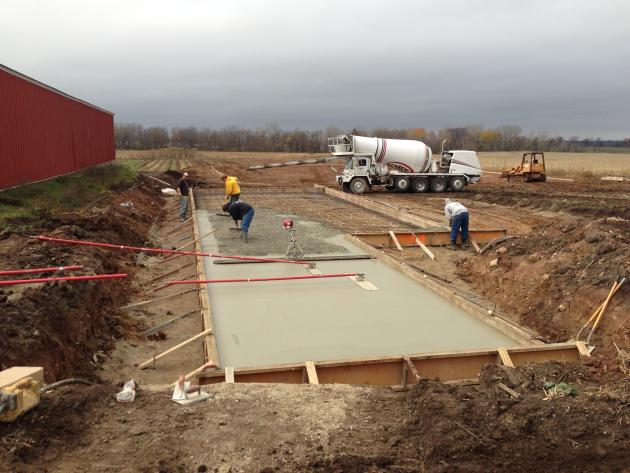
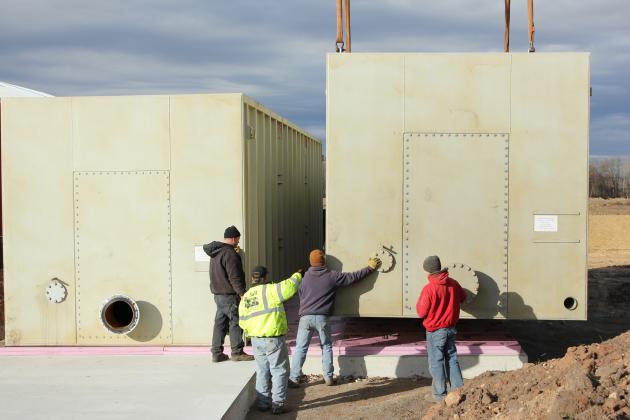
The University of Wisconsin-Oshkosh, in collaboration with BIOFerm™ Energy Systems, installed the EUCOlino—a small-scale, mixed, plug-flow digester—onto on a 136 milking head Wisconsin Dairy. The system is pre-manufactured, containerized and requires very limited on-site construction.   This includes grading, pouring a concrete pad for the containers and electrical services installation.

Start-up and commissioning were performed after the delivery of the 64 kWe combined heat and power (CHP). The input materials consist of bedded-pack dairy manure (corn or bean stover and straw), parlor wash water, and minor additional substrates such as lactose or fats, oils, and grease.

Solid materials are dumped via bucket tractor into a hopper feeder system that uses an auger to feed substrate into the anaerobic digestion tank. Additional parlor water is piped directly into the anaerobic digestion tank and mixed with the solids to make a feedstock of approximately 13% total solids. The solids are fed hourly, which is controlled by the PLC system.

The digester has a ~30-day retention time and the biogas produced is stored in a bag above the fermenters. Biogas produced is conditioned and combusted in a CHP mounted on a separate skid. Effluent from the system is pumped directly to an open pit lagoon for storage and subsequently land applied as fertilizer. The system produces approximately 25 – 33 m3/hour of biogas, with a raw biogas quality of 52-60% CH4 and less than 700 ppm H2S.

concrete pads for installation
installation
input

What have we learned?

This project has been an important step forward in developing future small-scale anaerobic digesters across the U.S.  Notably, our installation has given us insight into balancing system economics with the size of small-scale models; the energy output of the system must exceed pre-processing energy requirements and the digester must still be large enough for the designed residence time. Our experience has shown that, while reducing the size of a digester, these requirements remain essential for an installation to economically make sense.

Additionally, challenges involved in AD at the small-scale are related to pre-processing or feedstock conveyance. Once suitable consistence or size for conveyance, anaerobically digesting the organic fraction can be relatively easy. Inconsistency of incoming feedstocks is very detrimental to the system’s stability. Additionally, exterior feedstock storage and above ground piping can limit processing potential when severe cold weather settles in. While all of these are challenges that are easily overcome with engineering, they come at a cost and that can make or break the economics at this scale.

Future Plans

For the small-scale EUCOlino to be effective in the United States, it is key to establishing a U.S.- based manufacturing location. Pre-processing needs to be well-suited to the incoming feedstock. Post-digestion products need established off-takers, for electricity generation, bedding, fertilizer, etc.

Authors

Steven Sell, Manager Application Engineer, BIOFerm™ Energy Systems beaw@biofermenergy.com

Whitney Beadle, Marketing Communications, BIOFerm™ Energy Systems

Additional information

The following publications offer additional information on the Allen Farms digester:

Readers interested in this topic can also visit our website for more information on the Allen Farms digester and other BIOFerm projects. We can also be found on Facebook, Twitter, and LinkedIn.

The authors are solely responsible for the content of these proceedings. The technical information does not necessarily reflect the official position of the sponsoring agencies or institutions represented by planning committee members, and inclusion and distribution herein does not constitute an endorsement of views expressed by the same. Printed materials included herein are not refereed publications. Citations should appear as follows. EXAMPLE: Authors. 2015. Title of presentation. Waste to Worth: Spreading Science and Solutions. Seattle, WA. March 31-April 3, 2015. URL of this page. Accessed on: today’s date.

PEDV Survivability in Swine Mortality Compost Piles


*Purpose

PEDv has caused significant losses in the Nebraska pork industry and mortality can approach 100%. Disposal of these carcasses is a challenge as they serve as a source of tremendous amounts of infectious virus. Current alternative methods of disposal include rendering, incineration and burial. Rendering trucks may serve as a farm-to-farm vector. Incineration is not feasible for the significant number of mortalities and burial may enable long-term survival of virus in soil and may cause re-infection after disease elimination. Therefore, composting may serve as an ideal solution for disposal and mortalities this would provide a biosecure, safe, and cost-effective method to mitigate on-farm sources of virus. The overall objective of this study was to determine the efficacy of composting as a mortality disposal method following death loss from the porcine epidemic diarrhea virus (PEDv). Validation of time-temperature combinations for PEDv inactivation in mortality compost piles was the primary intended outcome of this project.

What did we do?

PEDv virus challenge protocol modeled one that has shown previous success using weanling pigs (Hesse et al., 2013). Twenty-seven animals (approximately 21-day-old weaned piglets) were sourced from a high-health commercial source that had no history of PEDv and with dams that tested negative for the presence of PEDv-specific antibodies and were negative for fecal virus shedding as determined by PCR. Experimental groups were housed in pens and maintained at appropriate temperature and in accordance with national animal care space requirements. Pigs were given five days of acclimation and maintained on commercial nursery pig diets. Following acclimation, each pig was inoculated orally with 5 mL of virus inoculum (NE 9282) supplemented with gentamicin that had been diluted to a real time PCR assay cycle threshold (Ct) 22. Inocula (feces/intestinal contents) from a natural outbreak of PEDv were used. Pigs were evaluated twice daily for evidence of infection: temperature, pulse, respiration, dehydration, and diarrhea. Fecal samples were collected daily for evaluation of fecal shedding of PEDv. When significant clinical signs of enteric disease were present or pigs became sufficiently ill that the attending veterinarian determined euthanasia was appropriate, animals were humanely euthanized and samples taken for necropsy.

Following necropsy, carcasses from infected and euthanized pigs were composted inside biosecure rooms in the Veterinary and Biomedical Sciences Research Facility at the University of Nebraska – Lincoln. Three compost piles were constructed using commercial sawdust and wood shavings at a target moisture content of 50% w.b. For each pile, an insulated platform with internal dimensions of 121.92 cm (W) x 152.4 cm (L) (48 in x 60 in) was used to contain piles. Platforms were constructed of an outer layer of plywood and an inner layer of PolyBoard sheeting with foam board insulation in between to simulate the linear continuation of the pile and the insulative properties of a compacted soil base. Compost piles were constructed by placing a layer of wood shavings on each base to a depth of 60 cm (24 in), followed by placement of five carcasses in a single layer in the center of the pile followed by a 15 cm (6 in) layer of pile material and a second layer of four carcasses in a single layer. Additional sawdust was placed over and around the carcasses to achieve 60 cm of coverage on the top of the pile. Rooms were maintained at approximately 21°C (70°F) and 25% RH throughout the duration of the project.

Temperature was monitored at ten locations within each pile using Apresys in-transit digital temperature recorders (Apresys, Inc., Duluth, GA) beginning at establishment of the piles and continuing at a 20-min sampling frequency (duration of primary compost cycle not established at time of proceedings submission). Temperature within each pile was also monitored manually using a thermometer at 0, 24, 48, 96 h, and 168 h, and then weekly for the duration of the compost cycle to confirm success of the heating process.

Following completion of the primary compost cycle, temperature loggers will be recovered and each pile will be mixed, sampled for analysis of survivability of PEDv at five locations, moisture will be added, and piles will be re-established for a secondary composting cycle with temperature loggers placed as previously described. At the completion of the secondary composting cycle, piles will again be sampled for analysis of survivability of PEDv (5 samples per pile) and temperature loggers will be recovered.

PEDv survivability will be determined via two independent assay methods. Reverse transcription quantitative polymerase chain reaction (RT-qPCR) is a rapid and sensitive method that will be used to quantify the amount of virus RNA genome in the samples. The Nebraska Veterinary Diagnostic Center currently has a validated RT-qPCR test to assay for the presence of PEDv in manure sample matrices. To validate results from the RT-qPCR in laboratory assays, sawdust simulated compost matrix will be spiked with known concentrations of PEDv target RNA and compared to known standards to ensure no inhibition is present and that proper extraction methods are being used. An alternative method using virus isolation will also be conducted to determine whether viable virus is present in flasks at a smaller subset of time points. To do this, Vero cell monolayers will be infected with filter sterilized aliquots of compost exudate, blindly passaged once after seven days, and examined for virus p resence using IFA with a PED specific monoclonal antibody. At specific time points, RT-qPCR Ct values and Virus Isolation will be run in parallel to ensure sensitivity of testing and to evaluate correlation of the testing modalities under the simulated testing conditions and matrices. If these testing methods show agreement, and/or no virus is isolated, RT-qPCR testing will be utilized to facilitate rapid and consistent assessment of virus persistence during the majority of experimental time points.

What have we learned?

Biosecurity is essential to controlling the spread of PEDv and any facility that is currently positive for PEDv should work diligently to prevent contamination of neighboring facilities. Vehicle transport has been shown as a high-risk activity that may facilitate spread of PEDv (Lowe 2014) and mortalities that are positive for PEDv may be rejected by renderers to protect them from liability for transmitting the disease. Burial of mortalities can be detrimental to water quality (Bartelt-Hunt et al., 2013) and it is unknown how long the PEDv can remain active in the cool, dark, moist environment that accompanies land burial of carcasses, but extrapolation of available data suggests virus may persist for months. Therefore, we believe composting is likely to provide an effective, biosecure, economically viable and environmentally compatible option for disposal of PEDv mortalities. This research will validate the effectiveness of composting through controlled mortality composting trials subsequent to experimental infections. With the completion of this research, our expectation is that we will know what operating parameters are required to ensure inactivation of PEDv during composting of PEDv mortalities.

Future Plans

Using the information generated from this research, we will deliver extension programming and outreach materials to swine producers, veterinarians, and stakeholders within and beyond Nebraska to promote biosecure disposal of PEDv-infected mortalities.

Authors

Amy Millmier Schmidt, Assistant Professor and Livestock Bioenvironmental Engineer, University of Nebraska – Lincoln aschmidt@unl.edu

J. Dustin Loy, Assistant Professor, Veterinary & Biomedical Sciences, University of Nebraska – Lincoln

Additional information

Dr. Amy Millmier Schmidt
(402) 472-0877
aschmidt@unl.edu

Acknowledgements

The authors would like to acknowledge the Nebraska Pork Producers Association and the National Pork Board for providing funding for this research. Special thanks to Jared Korth for helping with laboratory activities on this project and construction of mortality composting platforms.

The authors are solely responsible for the content of these proceedings. The technical information does not necessarily reflect the official position of the sponsoring agencies or institutions represented by planning committee members, and inclusion and distribution herein does not constitute an endorsement of views expressed by the same. Printed materials included herein are not refereed publications. Citations should appear as follows. EXAMPLE: Authors. 2015. Title of presentation. Waste to Worth: Spreading Science and Solutions. Seattle, WA. March 31-April 3, 2015. URL of this page. Accessed on: today’s date.

Time-Temperature Combinations for Destruction of PEDv During Composting


*Purpose

The purpose of this project was to determine the appropriate time-temperature combinations required for inactivation of the porcine epidemic diarrhea virus (PEDv) in composting material as a basis for evaluation of composting for disposal of swine mortalities and/or other PEDv-positive biological material.

What did we do?

In vitro propagation of PEDv for laboratory survivability assays was conducted using a cell culture-adapted isolate received from APHIS-NVSL (Ames, IA) that was free of extraneous agents (5th passage Colorado 2013 PEDv 1303). Propagation was conducted by infection of confluent VERO cell monolayers at a multiplicity of infection (MOI) of 0.1 with a concentration of 5 µg/mL TPCK trypsin. Virus stocks were be amplified following a 2-4 day incubation period on cell monolayers, frozen and thawed, centrifuged, and culture supernatants containing virus were harvested. Virus concentration was calculated and standardized to 1×10⁵-1×10⁶ TCID50/mL using immunocytochemistry and indirect fluorescent antibody assay (IFA) using a PEDV specific mouse monoclonal antibody (MedGene Labs).

The effect of temperature on survivability of PEDv in compost material was evaluated by inoculating compost material and subjecting the material to temperatures of 50°C (122°F), 55°C (131°F), 60°C (140°F), 65°C (149°F), and 70°C (158°F) for 0, 24, 48, 72, 96 h, and 120 h. Sawdust was acquired from a commercial source, autoclaved to eliminate existing microbes, oven dried and used to simulate compost material. One gram of prepared sawdust was placed in each of 140 1-mL centrifuge tubes. Cell culture supernatant containing infectious PEDv was added to phosphate buffered saline and added to each tube achieve a moisture content of 50% w.b. Tubes were randomly assigned to laboratory incubators at the five temperature treatment levels. At each sampling point, four tubes were removed from each incubator and tested to determine virus survivability.

PEDv survivability was determined via two independent assay methods. Reverse transcription quantitative polymerase chain reaction (RT-qPCR) is a rapid and sensitive method that was used by the Nebraska Veterinary Diagnostic Center to quantify the amount of virus RNA genome in the samples. To validate results from the RT-qPCR in laboratory assays, sawdust simulated compost matrix was spiked with known concentrations of PEDv target RNA and compared to known standards to ensure no inhibition was present and that proper extraction methods were being used. An alternative method using virus isolation was also conducted to determine whether viable virus was present in tubes at a smaller subset of time points. To do this, Vero cell monolayers were infected with filter sterilized aliquots of compost exudate, blindly passaged once after seven days, and examined for virus presence using IFA with a PED specific monoclonal antibody. At specific time points, RT-qPCR Ct values and Virus Isolation were run in parallel to ensure sensitivity of testing and to evaluate correlation of the testing modalities under the simulated testing conditions and matrices.

What have we learned?

At the time of proceedings submission, results were not available for inclusion in this report. Results will be presented during the scheduled oral seminar at the conference.

Results of this laboratory study will be used to evaluate appropriate time-temperature combinations necessary during swine mortality composting to inactivate the PEDv virus and determine the feasibility of on-farm mortality composting as a biosecure disposal method for PEDv-infected pigs. Following this laboratory study, mortality composting was initiated using PEDv-positive piglets to confirm the inactivation of PEDv during composting.

Future Plans

Results of this and the full-scale composting study will be used to recommend appropriate swine mortality disposal methods for swine producers with losses due to PEDv as part of their farm biosecurity plan. Additional swine enteric corornaviruses will likely be studied to confirm similar requirements for disposal of mortalities caused by these viruses.

Authors

Amy Millmier Schmidt, Assistant Professor and Livestock Bioenvironmental Engineer, University of Nebraska – Lincoln aschmidt@unl.edu

J. Dustin Loy, Assistant Professor, Clayton Kelling, Professor, Judith Galeota, Virology Laboratory Manager, and Sarah Vitosh, Graduate Research Assistant, Veterinary & Biomedical Sciences, University of Nebraska – Lincoln

Additional information

Dr. Amy Millmier Schmidt
(402) 472-0877
aschmidt@unl.edu

Acknowledgements

The authors would like to acknowledge the Nebraska Pork Producers Association and the National Pork Board for providing funding for this research. Special thanks to Jared Korth for helping with laboratory activities on this project.

The authors are solely responsible for the content of these proceedings. The technical information does not necessarily reflect the official position of the sponsoring agencies or institutions represented by planning committee members, and inclusion and distribution herein does not constitute an endorsement of views expressed by the same. Printed materials included herein are not refereed publications. Citations should appear as follows. EXAMPLE: Authors. 2015. Title of presentation. Waste to Worth: Spreading Science and Solutions. Seattle, WA. March 31-April 3, 2015. URL of this page. Accessed on: today’s date.