Bang for Your Buck: Developing Effective Anaerobic Digestion Policies for Carbon Emission Reduction

Purpose

Anaerobic digesters are an established technology for reducing methane emissions from livestock manure. In recent years, the rapid expansion of renewable natural gas (RNG) projects, driven by economic incentives such as Renewable Identification Number (RIN) credits, Low Carbon Fuel Standard (LCFS) credits, and Investment Tax Credits (ITC) from the 2022 Inflation Reduction Act, has spurred significant growth in RNG production. These incentives, while promoting the adoption of anaerobic digestion, may only sometimes be the most cost-effective way to achieve meaningful carbon reductions within the livestock sector. RNG production, electricity generation via biogas, and flaring biogas all mitigate agricultural greenhouse gas (sometimes referred to as carbon dioxide equivalence or CO2e) emissions from manure.  Nonetheless, electric generators are significantly cheaper than the biogas upgrading systems necessary for RNG production, and flares are significantly cheaper than electric generators.

Our analysis compares system costs and emissions reductions, and investigates the societal benefit featured by each system. The only revenue we analyze is RNG sales and electricity sales; we do not incorporate carbon credits into the revenue stream. Flaring biogas, or the process of burning the methane within biogas to produce the lesser potent greenhouse gas, CO2, greatly reduces agricultural CO2e emissions, though this process does not generate usable renewable energy. Electricity generation via biogas is cheaper than RNG production via biogas, but electricity can be sustainably generated with more efficient methods, such as wind turbines and solar panels. RNG is primarily created via anerobic digestion; additionally, RNG is the leading renewable replacement for conventional natural gas, a fossil fuel with increasing use, traveling within 3,000,000 miles of pipelines in the U.S. Nonetheless, RNG remains an expensive and technically complex process, requiring high capital investment and persistent, local, and skilled labor for effective operation.

What Did We Do?

This study compares the economic and carbon reduction potential of various anaerobic digestion biogas uses, including RNG production, electricity generation, and flaring. By evaluating the carbon savings and cost-effectiveness of these options, the study provides policymakers insights on optimizing public funding and incentives for the livestock industry. Furthermore, we provide livestock farmers with a decision support tool that balances the environmental benefits of anaerobic digestion with the most efficient use of financial resources to foster clean and sustainable livestock production system.

What Have We Learned?

Table 1 summarizes dollars per megagram (MG) of CO2e mitigated via RNG production, electricity production via biogas, and flaring biogas for both covered manure storages and constructed anaerobic digesters. Five scenarios were compared for farms featuring dairy cows, swine with lagoon manure storages, and swine with deep pit manure storages to analyze the carbon credit value (units of dollars per MG of CO2e mitigated) necessary to financially break even on the project. Flaring biogas featured the lowest necessary break-even carbon credit for dairy, swine farms with lagoon manure storage, and swine farms with deep pit manure storages. If a farmer wants to generate power, then generating electricity requires a lesser carbon credit value per MG CO2e mitigated compared to RNG generation. If a farmer wants to generate power via RNG, and carbon credits exist in units of dollars per energy, then a dairy farmer would be more profitable with a digester, whereas a swine farmer would be more profitable with a covered manure storage.

If a governing body is interested in maximizing its livestock manure CO2e reduction given a set amount of tax dollars, then the governing body may be most interested in incentivizing flaring systems. If a governing body is interested in both power generation via livestock manure and CO2e reduction, then the governing body may be most interested in incentivizing electricity generation. Nonetheless, renewable electricity can be generated more efficiently by a variety of methods, whereas RNG is the most prominent fossil natural gas replacement and primarily created via anaerobic digestion. Furthermore, as the electric grid “greens”, or as the CO2e emissions associated with grid electricity decrease, RNG generation will provide an overall greater percent CO2e reduction.

Deep pit swine farms generating electricity or RNG demonstrated CO2e reduction that was greater than 100%. Deep pit swine farms have less emissions than lagoon swine farms. By converting a deep pit swine farm to an outdoor covered manure storage or digester system, methane production increases, though that methane is now used for renewable energy generation, thereby offsetting fossil energy generation.

Table 1: Required Carbon Credit Value ($/MG CO2e mitigated) to Break Even
Head Dairy: 2,000 Swine – Lagoon: 14,000 Swine – Deep Pit: 14,000
Baseline CO2e (MG/yr) 10,654 10,179 3,980
Covered Storage Flaring CO2e Mitigated (MG/yr) 8,786 8,786 3,424
% CO2e Reduction 82% 86% 86%
$/yr Profit (10-year life) ($84,137) ($108,151) ($342,975)
Break-Even ($/MG CO2e Mitigated) Carbon Credit $10 $12 $100
Covered Storage Electricity CO2e Mitigated (MG/yr) 9,734 9,735 4,373
% CO2e Reduction 91% 96% 110%
$/yr Profit (10-year life) ($178,978) ($202,992) ($437,816)
Break-Even ($/MG CO2e Mitigated) Carbon Credit $18 $21 $100
Break-Even ($/kWh) Carbon Credit $0.08 $0.09 $0.20
Covered Storage RNG CO2e Mitigated (MG/yr) 9,913 9,914 4,552
% CO2e Reduction 93% 97% 114%
$/yr Profit (10-year life) ($780,801) ($795,726) ($1,030,551)
Break-Even ($/MG CO2e Mitigated) Carbon Credit $79 $80 $226
Break-Even ($/MMBTU) Carbon Credit $46 $47 $61
Digester Electricity CO2e Mitigated (MG/yr) 10,042 9,826 4,464
% CO2e Reduction 94% 97% 112%
$/yr Profit (10-year life) ($557,022) ($519,566) ($754,390)
Break-Even ($/MG CO2e Mitigated) Carbon Credit $55 $53 $169
Break-Even ($/kWh) Carbon Credit $0.14 $0.19 $0.27
Digester RNG CO2e Mitigated (MG/yr) 10,169 9,904 4,542
% CO2e Reduction 95% 97% 114%
$/yr Profit (10-year life) ($1,207,287) ($1,056,809) ($1,291,633)
Break-Even ($/MG CO2e Mitigated) Carbon Credit $119 $107 $284
Break-Even ($/MMBTU) Carbon Credit $39 $50 $62

Future Plans

The project life of biogas upgrading equipment, pipeline interconnects, electric generators, and flares are not always the same. We intend to further investigate the project lives of different equipment to calculate more accurate annualized costs and payback periods. Furthermore, we will analyze how the economies of scale compare between biogas upgrading equipment, electric generators, and flares by evaluating costs of equipment necessary for various farm sizes. Lastly, we would like to further define and quantify the overall societal impact created by RNG production, electricity production via biogas, and flaring biogas.

Authors

Presenting author

Luke Soko, Graduate Student, Iowa State University

Corresponding author

Dan Andersen, Associate Professor, Iowa State University, dsa@iastate.edu


The authors are solely responsible for the content of these proceedings. The technical information does not necessarily reflect the official position of the sponsoring agencies or institutions represented by planning committee members, and inclusion and distribution herein does not constitute an endorsement of views expressed by the same. Printed materials included herein are not refereed publications. Citations should appear as follows. EXAMPLE: Authors. 2025. Title of presentation. Waste to Worth. Boise, ID. April 7-11, 2025. URL of this page. Accessed on: today’s date. 

High Clearance Robotic Irrigation Impacts on Soybeans and Corn Yield and Nutrient Application

Purpose

This collaborative project between The Ohio State University, Iowa State University, and 360YieldCenter intends to demonstrate the in-season application of commercial and animal nutrient sources and water application as a unified strategy to reduce nutrient losses while improving profitability with increased grain yields. A new and innovative high-clearance robotic irrigator (HCRI) is being used to apply liquid-phase nutrients in-season beyond all stages of row crops. Replicated strip trials of Fall, Spring, and in-season application will occur using the HCRI (e.g., 360 RAIN Robotic Irrigator, Figure 1). The in-season application consists of traditional N and P application rates as well as reduced rates to take advantage of better matching nutrient availability to crop needs during the growing season. Data were collected to verify nitrate-nitrogen leaching loss using liquid swine manure as a nutrient source in Iowa, while total and dissolved reactive phosphorus losses with both runoff and leaching using commercially available nutrients were collected in in Ohio. Secondly, as climate shifts result in water scarcity during critical crop growth stages, robotic irrigation water applications will be used to meet the crop needs. Higher crop yields are anticipated via precision water management.

Figure 1: 360 RAIN Unit (HCRI)

What Did We Do?

OSU is conducting two field demonstrations, one with a focus on water quality, and a second for comparison of nutrient management practices. The HCRI is being utilized to apply commercial fertilizer in-season via dilution in irrigation water with up to 12 applications per growing season (effective 4.5 in. of precipitation season dependent). Nutrient injection rates (N and P) are scaled to plant nutrient uptake and irrigator pass intervals. Both sites are farmed in accordance with existing crop rotation and standard practices.

Beck’s Hybrid Site (West 1A) – The Beck’s Hybrid site (78 ac) is subdivided in accordance with the sub-watershed boundaries and managed with two treatments: 1) conventional commercial fertilizer application in accordance with the Tri-State Fertilizer recommendations, and 2) in-season nutrient management (N and P) using the HCRI and Tri-State Fertilizer Recommendations with the exception nutrient application  matching with plant nutrient uptake rates as judged by growing degree days (GDD). This site is instrumented as a paired watershed for surface water and subsurface tile drainage. Further, these watersheds are monitored for precipitation, flow, and water quality (nitrate, nitrite, total phosphorus and DRP).

Molly Caren Agricultural Center (MCAC) Site 1 (Field 7) – Field demonstrations at this site (140 ac) are laid-out in a randomized complete block design (RCBD) strip trial design with treatments that include: 1) commercial fertilizer application (N and P) in accordance with the Tri-State Fertilizer recommendations, 2) in-season nutrient management (N and P) using the HCRI and Tri-State Recommendations with the exception nutrient application matched with crop nutrient uptake rates based on growth stages as determined by GDD, and 3) in-season nutrient management (N and P) using the HCRI and 67.7% Tri-State recommend application rates matched with crop nutrient uptake rates based on growth stages (GDD). Strip trials are 160 ft. in width and approximately 1,170 ft. in length (4.3 ac treatments) with eight replicates.

MCAC Site 2 (Field 8A) – Field demonstration site used to test HCRI and “sandbox” for other RCBD trials outside of NRCS CIG grant to discovery and planning for future projects. This site varies depending on studies each year, but trials are completed via RCBD strips.

Data Collection and Analysis – Demonstration sites are grid sampled each season on a 1-ac grid (Beck’s) and within treatments (MCAC site) to monitor soil fertility levels. Soil moisture and temperature in situ sensors (CropX) are placed in both study locations (three per treatment, 15 total sensors). Tissue samples are collected by treatment type to assess nutrient uptake at three stages of crop growth. Harvested crops are scaled by treatment to ensure yield monitor accuracy. Remote sensing imagery (RGB, ADVI and thermal) is collected 10 or more times during the growing season to evaluate crop growth and development. Data is analyzed using RCBD procedures in SAS.

Water Quality Assessment – Surface and subsurface (tile) monitoring capacity was established in 2016 at the Beck’s Hybrid Site. Two isolated subareas within a single production field were identified and the surface and subsurface pathways were instrumented with control volumes and automated sampling equipment. Surface runoff sites were equipped with H-flumes while compound weirs were installed at each of the subsurface (tile) outlets. Each sampling point (two surface and two subsurface) is equipped with an automated water quality sampler and programmed to collect periodic samples during discharge events. Once collected, samples will be analyzed for N and P. An on-site weather station provides weather parameters. Water samples are collected weekly from the field plots during periods of drainage and follow the same ISU protocol for NO3–N. Dissolved reactive phosphorus (DRP) and digested (total phosphorous) samples are analyzed using ascorbic acid reduction method.

What Have We Learned?

2023 Results

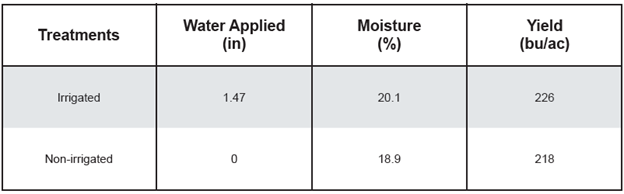
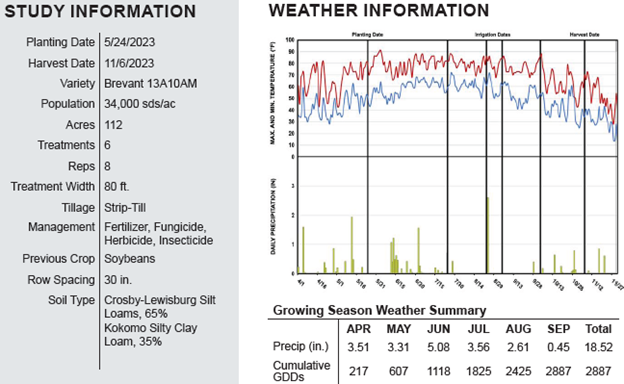
At the Beck’s Hybrid location field West 1A was planted to corn for the 2023 cropping season. There was an 8.0 bu/ac difference between irrigated and non-irrigated treatments. Nitrogen was injected using the rain unit and put on crop for the first application and use of the rain machine. Not having the rain unit in June made a significant difference in this study. The results of this location from 2023 should be taken lightly as complete implementation was not done until August. Location study information can be seen in Figure 2 and results in Figure 3.

Figure 2: Study information for Beck's Hybrid location in 2023 cropping season.
Figure 2: Study information for Beck’s Hybrid location in 2023 cropping season.
Figure 3: Results for Beck's Hybrid field location in 2023.
Figure 3: Results for Beck’s Hybrid field location in 2023.

In 2023, field 7 at MCAC was in soybeans and had no irrigation completed for this growing season.

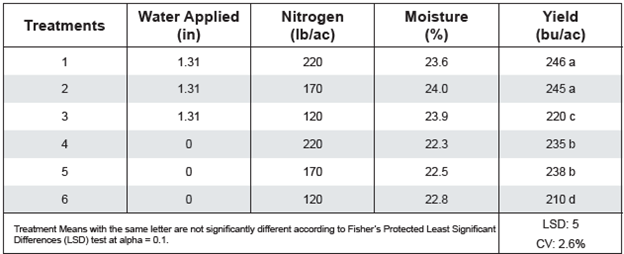
Field 8A at MCAC was in corn for the 2023 cropping season. Irrigation had a statistically significant effect on yield over all treatments. Nitrogen had statistical significance from 120 versus 170 and 220 units on nitrogen treatments. The 170 units of nitrogen was the optimal amount of nitrogen for all treatments. Not having the irrigator installed in early June caused there to be less yield in irrigated treatments. The results of this location from 2023 should be taken lightly as complete implementation was not done until August. Location study information can be seen in Figure 4 and results in Figure 5.

Figure 4: Study information for MCAC 8A location in 2023 cropping season.
Figure 5: Results for MCAC 8A field location in 2023.

2024 Results

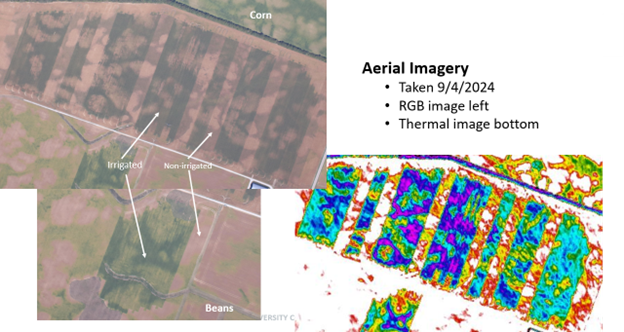
Field 7 at MCAC was in corn for the 2024 cropping season. Irrigation had a statistically significant effect on yield over all treatments. There was a 48 bu/ac between irrigated two-thirds nutrients and non-irrigated and 44 bu/ac between irrigated and non-irrigated for the 2024 growing season. A total of 773 gallons of diesel was used to run the irrigator for this trial for 2024 cropping season across 71 acres. A total of 25,739 kWh was used to run the electric pumps, base station, and well for 2024 growing season across 71 acres. These are the initial results that were published in efields and further results will continue to be analyzed to meet all project objectives. This data will be used to help in evaluating HCRI versus traditional crop production and management practices to meet project objectives. Location study information can be seen in Figure 6 and results in Figure 8. In Figure 7, aerial imagery can be seen from the 2024 cropping season.

Figure 6: Study information for MCAC 7 location in 2024 cropping season.
Figure 7: Aerial imagery of field 7 (Top l) and field 8A (Bottom left) from 2024 cropping season.
Figure 8: Results for MCAC 7 field location in 2024.

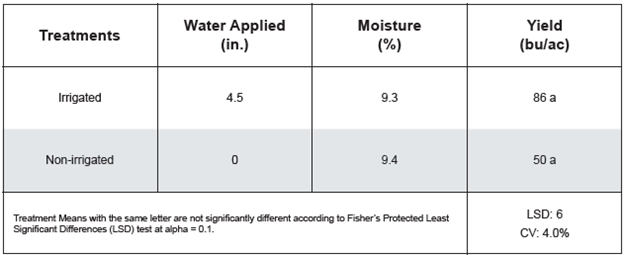
Field 8A at MCAC was in soybeans for the 2024 cropping season. Irrigation had a statistically significant effect on yield over non-irrigated. A total of 211 gallons of diesel was used to run the irrigator for this trial for 2024 cropping season across 11 acres. A total of 3,475 kWh was used to run the electric pumps, base station, and well for 2024 growing season across 11 acres. Location study information can be seen in Figure 9 and results in Figure 10. In Figure 7, aerial imagery can be seen from the 2024 cropping season.

Figure 9: Study information for MCAC 8A location in 2024 cropping season.
Figure 10: Results for MCAC 8A field location in 2024.

Future Plans

During the next 12 months, we are planning for the HCRI operation at the two sites for cropping practices and irrigation for 2025 growing season. We will be aggregating weather data, agronomic data, plant samples, surface and ground water quality samples, and machine performance data for all years of the project with the current end date as spring of 2026. We are hoping to continue to perform testing with this technology and implementing the dry product skid for field operations for the 2025 growing and full-scale implementation across all studies in 2026. The results from the Iowa State portion of this funded project will also be reported in the future as well. There is a significant need to further develop programs for injecting macro and micronutrients in liquid and granular form for growers. The potential to significantly cut application rates exists with this technology. Also, implementing this technology with liquid livestock manure producers will change the paradigm of how manure is managed in the future.

Authors

Presenting & corresponding author

Andrew Klopfenstein, Senior Research Engineer, The Ohio State University, Klopfenstein.34@osu.edu

Additional authors

Justin Koch, Innovation Engineer, 360YieldCenter; Kapil Arora, Field Agricultural Engineer, Iowa State University; Daniel Anderson, Associate Professor, Iowa State University; Matthew Helmers, Professor, Iowa State University; Kelvin Leibold, Farm Management Specialist, Iowa State University; Alex Parsio, Research Engineer, The Ohio State University; Chris Tkach, Lecturer, The Ohio State University; Christopher Dean, Graduate Research Associate, The Ohio State University; Ramareo Venkatesh, Research Associate, The Ohio State University; Elizabeth Hawkins, Agronomics Systems Field Specialist, The Ohio State University; John Fulton, Professor, The Ohio State University; Scott Shearer, Professor and Chair, The Ohio State University

Additional Information

eFields On-Farm Research Publication 2023 and 2024 Editions – https://digitalag.osu.edu/efields

Acknowledgements

Natural Resources Conservation Service – Conservation Innovation Grant (NR223A750013G037)

Ohio Department of Agriculture – H2Ohio Grant

USDA, NRCS, 360YieldCenter, Beck’s Hybrids, Molly Caren Agricultural Center, Rooted Agri Services, Iowa State University, The Ohio State University


The authors are solely responsible for the content of these proceedings. The technical information does not necessarily reflect the official position of the sponsoring agencies or institutions represented by planning committee members, and inclusion and distribution herein does not constitute an endorsement of views expressed by the same. Printed materials included herein are not refereed publications. Citations should appear as follows. EXAMPLE: Authors. 2025. Title of presentation. Waste to Worth. Boise, ID. April 7-11, 2025. URL of this page. Accessed on: today’s date.

Leveraging Carbon Intensity Scoring for Sustainable Livestock Feed Supply Chains

Purpose

As market demands, consumer expectations, and environmental regulations evolve, agricultural producers increasingly focus on improving profitability while minimizing environmental impact. Carbon Intensity (CI) scoring is a tool that quantifies the greenhouse gas emissions associated with crop production, thereby helping producers understand their ecological footprint. CI scores may influence crop sales for biofuel production for corn and soybean producers and may eventually affect livestock feed markets as companies seek carbon-neutral supply chains. Furthermore, renewable fuel producers may become eligible for Low Carbon Fuel Standard (LCFS) credits, where revenue is contingent on the lifecycle CI score of the fuel, and similar economic approaches may be required to drive livestock feeds toward carbon neutrality. Biofuels and animal feed share a strong relationship; ethanol plants generate distiller grains, a key component of livestock diets, and soybean processing plants generate soybean meal and soybean oil. Distiller grains represent a large portion of livestock feed, and soybean oil is a common biodiesel feedstock. We evaluate the emissions associated with corn and soybean production for each county in Iowa, assessing how their yield, crop rotation, tillage practices, cover crop implementation, and manure application affect their CI scores.

What Did We Do?

This study used the Department of Energy’s Feedstock Carbon Intensity Calculator (FD-CIC) and published literature to estimate corn and soybean production emissions throughout Iowa counties. Manure nutrient volumes were found using animal feeding operation data from Iowa DNR and manure production characteristics from ASAE D384.2. Data for yield, acres of corn, acres of soybean, acres of cover crop, acres of no-tillage, acres of reduced tillage, and acres of intensive tillage by county in Iowa were found using the USDA Quick Stats Database. Diesel emissions and grain drying emissions were calculated using Iowa State University Extension resources. The nitrogen fertilizer application rate was calculated using the yield goal method (manure) and Iowa State University Extension resources (commercial fertilizers). Limestone emissions were directly correlated to the amount of CaCO3 necessary to neutralize the H+ added to the soil from manure nitrogen and anhydrous ammonia. Embedded fertilizer emissions, biomass degradation emissions, leguminous N fixation emissions, and specific fuel emission factors were pulled from FD-CIC. Corn and soybean CI scores were calculated in g CO2e/bu units. Through this work, we provide actionable insights for corn and soybean supply chain stakeholders interested in improving sustainability and expanding revenue opportunities.

What Have We Learned?

Key emission sources from corn and soybean production are nitrous oxide (N2O) from fertilizer and manure application, biomass residue degradation, embedded emissions from fertilizer production, and tractor diesel emissions. Reducing CI in corn production can be achieved through increased yield, reduced tillage, increased cover crop, and manure application. Reduced tillage and increased cover cropping increase soil organic carbon (SOC). Depending on the location and its existing soil characteristics, reduced tillage, and cover crops can sequester soil carbon, decreasing the overall CI score of the corn and soybeans. On average, SOC reduced CI scores by 6% and 18% for corn and soybeans, respectively.

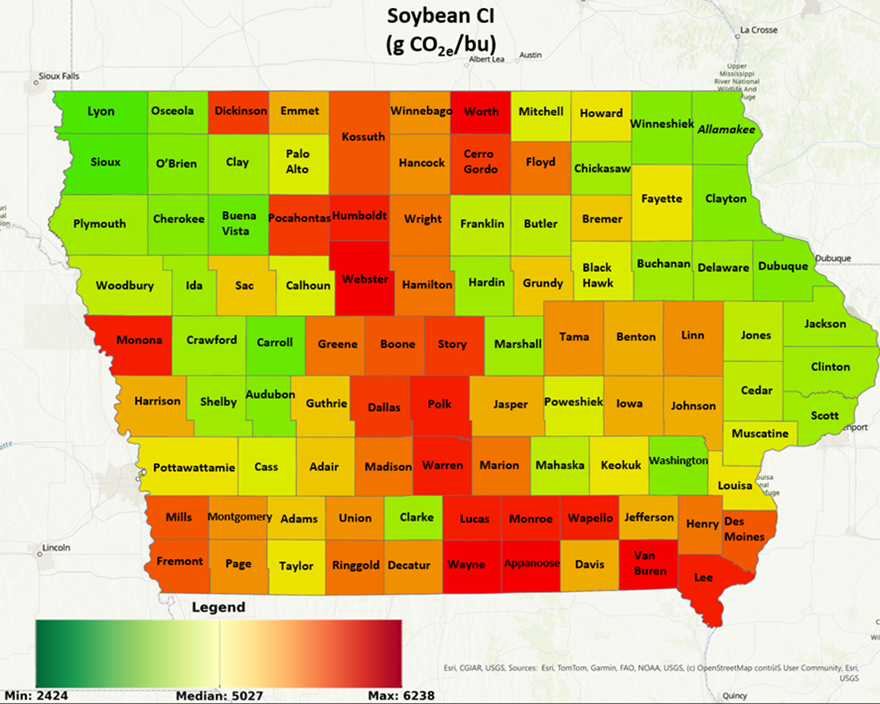
Yield significantly impacted CI scores; counties with greater yield featured reduced CI scores. The CI score dropped by 33 g CO2e/bu for corn as yield increased by bu/acre with an R2 of 0.53. For soybeans, the CI score dropped by 72 g CO2e/bu as yield increased by bu/acre with an R2 value of 0.19.

Manure also significantly impacted CI scores. Although manure has increased diesel emissions compared to anhydrous ammonia application, manure lacks the embedded emissions of anhydrous ammonia, P2O5, and K2O fertilizers. As the percentage of manure-derived nitrogen increased by 1%, the CI score for corn reduced by 14 g CO2e/bu, featuring an R2 of 0.25. As the percentage of manure-derived P2O5 increased by 1%, the CI score for soybeans reduced by 25 g CO2e/bu, featuring an R2 of 0.68.

Crop rotation had a less intuitive effect on the CI score. Corn-soybean (CS) rotations typically have higher yields, reduced nitrogen fertilizer inputs, and reduced tillage. Nonetheless, continuous corn (CC) rotations facilitate greater build-up of SOC (assuming county tillage practices are evenly distributed among corn and soybean acres). Also, CC rotations occurred more frequently in high-yielding counties. For these reasons, the CS rotation was not associated with a reduced CI score.

Figure 1 and Figure 2 show carbon intensity scores of corn and soybean, respectively, for all counties throughout Iowa. Green counties typically feature greater yields, greater manure volume, and more significant SOC accumulation, whereas red counties typically feature opposite trends. It is worth noting that while CI scores are calculated per bushel, corn production averages roughly 194 bushels per acre, whereas soybean averages approximately 57 bushels per acre.

Figure 1: Corn Carbon Intensity by County in Iowa
Figure 2: Soybean Carbon Intensity by County in Iowa

Future Plans

Future analysis includes evaluating the CI scores of biofuels and animal feed produced in Iowa counties where the corn and soybean CI scores have already been assessed. Additionally, we intend on investigating the economics of implementing emission reduction strategies, considering potential yield loss and expenses of associated field activities. Also, by applying the methods of this paper to decades of historical data, we plan on analyzing how corn and soybean CI scores have evolved throughout time. Lastly, we will project future emission reduction strategy adoption and predict how CI scores of feed and fuel will change throughout the next decade.

Authors

Presenting author

Luke Soko, Graduate Student, Iowa State University

Corresponding author

Dan Andersen, Associate Professor, Iowa State University, dsa@iastate.edu


The authors are solely responsible for the content of these proceedings. The technical information does not necessarily reflect the official position of the sponsoring agencies or institutions represented by planning committee members, and inclusion and distribution herein does not constitute an endorsement of views expressed by the same. Printed materials included herein are not refereed publications. Citations should appear as follows. EXAMPLE: Authors. 2025. Title of presentation. Waste to Worth. Boise, ID. April 7-11, 2025. URL of this page. Accessed on: today’s date. 
Using an interactive map exercise to help producers better manage their manure

Purpose

Time and time again, experience has taught us that many people learn by doing, not just from listening to presentations. The Nebraska Animal Manure Management Team has worked hard over the last six years to develop and expand what is now referred to as the Interactive Nutrient Management Decision-Making Exercise. This workshop will serve as a train-the-trainer event where attendees will:

    1. Discover how the exercise began and what it has grown to include
    2. Get familiar with the pieces and parts by helping set up the activity
    3. Experience a couple of the activities as participants
    4. Hear from others that have adapted the exercise and their experiences
    5. Brainstorm how the exercise can be used elsewhere or for other concepts

What Did We Do?

The Interactive Nutrient Management Decision-Making Exercise (mapping exercise) was developed by the Animal Manure Management Team at the University of Nebraska-Lincoln and University of Minnesota to engage participants during Manure Application Trainings. In Nebraska, these trainings previously relied heavily on PowerPoint and recorded presentations, but with many people being hands-on learners, an interactive exercise was proposed. In 2020, the original 6 activities were used for the afternoon portion, and it has since grown to the exercise it is today that is incorporated throughout the whole-day training.

It has been used not only for livestock producers but also crop producers. Parts of it have been modified to fit into workshops at conferences and, most recently, high school classrooms. Current expansion topics include spray drift to avoid sensitive areas and nitrogen management from all sources.

What Have We Learned?

Because many livestock producers in Nebraska are required to attend Land Application Training events every five years to maintain their Livestock Waste Control Facility permit, the winter 2024-2025 programming season for the Nebraska manure team offered an opportunity to ask participants how their operations have changed since the first time they had seen the Interactive Nutrient Management Decision-Making Exercise (in 2020). The team asked 3 questions specific to the exercise and changes on their operations and found the following results.

In general, participants are considering the topics taught during training more now than they were five years ago. The figure below indicates that 48% consider weather forecasts to decrease odor risk more or much more than they did prior to experiencing the Interactive Nutrient Management Decision-Making Exercise. Forty eight percent and 59% consider water quality and soil health impacts from manure more than five years ago, subsequently. While many participants already factored in transportation cost compared to nutrient value captured for a field, 59% reported that they consider it more or much more than they did, and 55% reported that they now considered the value of manure nutrients based on a field’s soil test more or much more.

Figure 1: As a result of experiencing the interactive nutrient management decision making exercise, how does your operation consider survey redults

We also asked participants to share with us how useful they felt the changes and expanded activities of the Interactive Nutrient Management Decision-Making Exercise were. All participants felt that the changes and expansion were useful with 52% indicating that they were very or extremely useful.

Figure 2: How useful are the changes and expanded activities of the Interactive Nutrient Management Decision-making exercise pie chart

We also asked, “How do you expect your experience with the newer activities of the interactive nutrient management decision-making exercise will change your operation in the future?” and, among others, we received the following responses:

    • “[we will] take more consideration to neighbors near application”
    • “[we will make] better $ management decision[s] on manure application site[s]”
    • “[the activity] makes us want to plan out better to get better results”

Future Plans

With so much success using this teaching tool, we would like to expand it to teach topics other than nutrient management. The Soil Health Nexus, a soil health workgroup in the north central region of the US, is in the process of developing an adaptation of this tool that will teach participants about the impacts of certain practices on soil health. Currently, progress has been made on activities focusing on tillage and the use of cover crops. Other planned activities include a focus on crop rotation and the use of the Soil Health Matrix, a tool developed by the Soil Health Nexus.

The Nebraska Animal Manure Management team, as part of a different grant, also has plans to create some activities focused on integrating livestock into cropping systems.

We also support using the base model of this exercise and adapting it for other practices and audiences outside of Nebraska.

Authors

Presenting & Corresponding author

Leslie Johnson, Animal Manure Management Extension Educator, University of Nebraska – Lincoln, leslie.johnson@unl.edu

Additional author

Amy Millmier Schmidt, Professor and Livestock Bioenvironmental Engineering Specialist, University of Nebraska-Lincoln;

Additional Information

Downloadable Curriculum: https://lpelc.org/interactive-nutrient-management-decision-making-exercise-curricula/

Acknowledgements

We would like to acknowledge all other contributors to the curriculum in the past including:

    • Larry Howard, Rick Koelsch, Agnes Kurtzhals, Aaron Nygren, Agustin Olivio, Amber Patterson, Katie Pekarek, Amy Schmidt, Mike Sindelar, and Todd Whitney (University of Nebraska, Lincoln)
    • Daryl Andersen, Tyler Benal, Will Brueggemann, Russ Oakland, and Bret Schomer (Lower Platte North NRD)
    • Blythe McAfee and Tiffany O’Neill (Nebraska Department of Environment and Energy)
    • Andy Scholting (Nutrient Advisors)
    • Marie Krausnick, Dan Leininger (Upper Big Blue NRD)
    • Chryseis Modderman (University of Minnesota)
    • Nutrient Advisors
    • Settje Agri Services Eng.
    • Ward Laboratories Inc.

The authors are solely responsible for the content of these proceedings. The technical information does not necessarily reflect the official position of the sponsoring agencies or institutions represented by planning committee members, and inclusion and distribution herein does not constitute an endorsement of views expressed by the same. Printed materials included herein are not refereed publications. Citations should appear as follows. EXAMPLE: Authors. 2025. Title of presentation. Waste to Worth. Boise, ID. April 7-11, 2025. URL of this page. Accessed on: today’s date.
Economic feasibility of dairy manure and food waste co-digestion at small, medium, and large farms

Purpose

Anaerobic digestion (AD) of dairy manure with and without food waste has mainly been implemented on a large scale in the US. The installed cost of these systems have economies of scale, and operations and maintenance costs need to be outweighed by adequate revenues from accepting food waste and/or producing energy, as well as reducing greenhouse gases (GHG). Scaling down AD systems is now technically feasible even on a micro-scale, but economic feasibility is still largely a challenge at small scales.

Local markets with competitive value structures for AD energy output and GHG reduction are needed to facilitate successful small and moderate scale AD systems. Analysis of energy values and consideration of food waste co-digestion with manure, as a way to expand revenues needed for economic feasibility at various scales, can help farmers and policymakers navigate opportunities.

What Did We Do?

We investigated the economic feasibility conditions of small, medium, and large AD systems processing dairy manure from 300 cows, 1000 cows, and 2,000 cows, respectively, in combination with varying amounts of food waste. The Cornell Manure-based Anaerobic Digester Simulation tool was further developed and then utilized to model the mesophilic, vessel-type AD of various food wastes and amounts in combination with varying dairy cow manure volumes to assess performance and associated economics. The breakeven capital cost of the full project was computed for each scenario (nine per dairy farm size) of manure to food waste ratio, tip fee revenue, energy output and revenue value. These were compared to estimated project costs based on multiple case studies to evaluate whether or not the breakeven cost was high enough to be considered an economically viable project.

What Have We Learned?

Key results from modeling these scenarios included that an AD to biomethane system can be economically feasible for a 300-cow dairy (300 lactating cow equivalents) only when food waste is co-digested in an equal volume with the manure and when tip fees reach $20 per ton and biomethane is valued at $25 per million BTU (MMBTU) or more. Biomethane sell price data collected from our collaborator, Energy Vision, was found to be as high as $70 per MMBTU if sold in the California transportation market (manure only AD), and between $12 and $28 in voluntary markets.

Additionally, a dairy farm with 1,000 lactating cow equivalents (e.g., 725 milk cows and 650 heifers), was found to achieve economic feasibility with 25% or more of food waste ratio to manure co-digested as long as both tip fees and energy revenue were high ($40 per ton tip and $35 per MMBTU biomethane). When food waste ratios increased to half the digester’s feedstock, economic feasibility was achievable at more moderate rates. The economic feasibility of manure-only AD continues to be challenged at small and moderate scale, while the addition of food waste with manure enables significantly higher revenues from substantially more energy production and tipping fees.

Future Plans

This project included detailed analysis of a small-scale co-digestion application at Cornell’s smaller Teaching Dairy operation to evaluate available equipment and biogas utilization options. A preliminary design is developed, capital funding secured, and initial operating period research and extension defined. The project is scheduled to be completed later this calendar year and will be utilized for various food waste and manure anaerobic digestion to energy system research and educational programming.

Authors

Presenting & corresponding author

Lauren Ray, Sr. Extension Associate, Cornell University – PRO-DAIRY, LER25@cornell.edu

Additional author

Peter Wright, Agricultural Engineer, Cornell University

Additional Information

https://cals.cornell.edu/pro-dairy/our-expertise/environmental-systems/manure-energy-systems

Acknowledgements

Funding was provided by the New York Farm Viability Initiative.

The authors are solely responsible for the content of these proceedings. The technical information does not necessarily reflect the official position of the sponsoring agencies or institutions represented by planning committee members, and inclusion and distribution herein does not constitute an endorsement of views expressed by the same. Printed materials included herein are not refereed publications. Citations should appear as follows. EXAMPLE: Authors. 2025. Title of presentation. Waste to Worth. Boise, ID. April 7-11, 2025. URL of this page. Accessed on: today’s date. 
Impact of ammonia reduction management practices in land applied manure on nitrogen losses and nitrogen use efficiency

Purpose

Manure nitrogen losses from agricultural soils presents a significant challenge with far-reaching implications for global food security and environmental health. This project evaluates common manure application practices and studies some mechanistic factors and relationships that influence manure nitrogen losses via leaching and volatilization when manure is soil applied. The study highlights the tradeoffs between reduction of ammonia emissions and nitrogen leaching aiming to promote effective manure management techniques that increase crop nutrient use efficiency while minimizing nutrient losses to the environment.

What Did We Do?

Dairy manure was applied to a silt loam agricultural field using different manure applications. The study involves six experimental treatments, each applying 94 m³ ha-1 of liquid dairy manure through different methods: injection, incorporation, surface broadcast, and two treatments with urease inhibitor-one injected and one surface broadcast. Additionally, there are control plots with no manure application. Immediately after manure application, ammonia emissions were routinely measured using an FTIR while cumulative nitrate leaching for the growing season was assessed using the resin cartridge methodology. Corn silage was planted and yield data collected at the end of the growing season and nitrogen use efficiency following each experimental treatment determined.

What Have We Learned?

Preliminary results suggest that manure incorporation and injection with or without the urease inhibitor, have a comparable significant impact on corn silage yield when compared to surface manure application and plots with no manure application. However, there were no significant differences in N uptake among treatments. Additionally, there were significant differences in the cumulative nitrates leached when comparing the manure application methods to the no-manure plots. Manure injection and incorporation resulted in the highest significant nitrates leached with averages of 104.4 kg ha-1 and 108.4 kg ha-1  respectively, in comparison to surface manure application. Overall, current project data suggests that ammonia emissions tend to be lower in the manure injection especially when the manure is treated with urease inhibitor compared to when manure is surface applied.

These preliminary results suggest that certain manure application practices may offer superior environmental benefits while the agronomic benefits may remain comparable across different practices.

Future Plans

The field project will be extended into a second year under similar soil types to collect additional data for better comparisons and identifications of trends among experimental treatments. Future plans will also include a new project involving the incorporation of biochar and investigating its potential in simultaneously reducing ammonia volatilization and nitrogen leaching in manure and crop systems.

Authors

Presenting & corresponding author

Juma Bukomba, PhD Candidate, University of Wisconsin-Madison, bukomba@wisc.edu

Additional authors

Rebecca Larson, Associate Professor, University of Wisconsin-Madison;

Mathew Ruark, Professor, University of Wisconsin-Madison

Acknowledgements

This material is based upon work supported by the National Science Foundation under Grant No. EFMA-2132036. Any opinions, findings, and conclusions or recommendations expressed in this material are those of the author(s) and do not necessarily reflect the views of the National Science Foundation.

The authors are solely responsible for the content of these proceedings. The technical information does not necessarily reflect the official position of the sponsoring agencies or institutions represented by planning committee members, and inclusion and distribution herein does not constitute an endorsement of views expressed by the same. Printed materials included herein are not refereed publications. Citations should appear as follows. EXAMPLE: Authors. 2025. Title of presentation. Waste to Worth. Boise, ID. April 7-11, 2025. URL of this page. Accessed on: today’s date. 

Biochar as a Manure Additive

Purpose

Biochar is a carbon-rich product derived from pyrolysis and is commonly used as a soil amendment. When applied to soil, biochar has been shown to sequester carbon, enhance aggregate stability, and improve soil nutrient and water retention. Recently, several states have adopted the USDA Natural Resources Conservation Service (NRCS) Code 336, which addresses soil carbon amendments, including biochar, as a conservation practice. This has led to increased awareness of biochar in agricultural systems. While the application of biochar to soil systems has been extensively studied, there are other agricultural sectors where biochar could be incorporated to provide additional benefits. This study explores the potential for incorporating biochar into manure management systems, specifically anaerobic digestion and manure storage.

What Did We Do?

Two different studies were conducted as part of this research. The first study investigated how biochar could be implemented into manure storage systems. Manure storage is a common practice at livestock facilities; however, emissions of ammonia (NH₃), methane (CH₄), and nitrous oxide (N₂O) are released into the atmosphere during storage. Additionally, the increasing use of solid-liquid separation in mid- to large-scale farms has resulted in emissions occurring outside of land application due to the lack of crust formation on manure storage. This study assessed emissions from pilot manure storage units (5-gallon buckets) after applying a 2-inch layer of raw feedstock or biochar as a cover over dairy manure. Different feedstocks, including woodchips, corn stover, and manure solids, were evaluated, and emissions were measured weekly over four months to determine NH₃, CH₄, and N₂O emissions (Figure 1).

Figure 1: Manure storage monitoring

The second study examined the incorporation of biochar into dairy manure anaerobic digestion systems. Anaerobic digestion of livestock manure produces biogas, which contains significant concentrations of hydrogen sulfide (H₂S) that must be removed before energy utilization. This study evaluated how dosing biochar—produced from different feedstocks and at varying pyrolysis temperatures—impacted hydrogen sulfide reduction during anaerobic digestion. A bench-scale study was conducted using batch reactors dosed at 0.75% (w/w) (approximately 62 lbs per 1,000 gallons), and biogas was analyzed every 2–3 days for H₂S, CH₄, and CO₂ concentrations.

Figure 2: Anaerobic digestion setup

What Have We Learned?

In the manure storage study, both raw feedstocks and biochar reduced NH₃ emissions. The greatest reductions in NH₃ emissions were observed with woodchip biochar, which achieved an average reduction of 82–97% in cumulative emissions. The manure solids and corn stover biochar resulted in average reductions of 35% and 55%, respectively. However, while NH₃ emissions were reduced, an increase in greenhouse gas emissions—particularly N₂O—was observed in treatments with biochar covers.

In anaerobic digestion systems, the addition of biochar at 0.75% (w/w) reduced H₂S production. The degree of reduction was influenced by the biochar production temperature, with lower-temperature biochars being more effective at reducing H₂S. During the batch anaerobic digestion tests, no significant impact was observed on CH₄ or CO₂ concentrations in the biogas.

Future Plans

For the manure storage study, while the reductions in NH₃ emissions were promising, the observed increase in N2O emissions requires further investigation. The highest N₂O emissions were associated with large-particle woodchip biochar, likely due to the creation of an anoxic environment within the biochar cover. Future studies will examine whether reducing biochar particle size can mitigate these N₂O emissions. Additionally, further research will assess the long-term impacts of these treatments on soil health and crop production following land application.

For the anaerobic digestion study, additional work is needed to determine the specific biochar characteristics responsible for the greater H₂S reductions observed with lower-temperature biochars. Since the study was conducted at a batch scale, further evaluation in a continuous system is necessary. Lastly, full-scale digester trials are needed before widespread adoption of biochar in anaerobic digestion systems.

Authors

Presenting & corresponding author

Joseph R. Sanford, Assistant Professor, University of Wisconsin–Platteville, sanfordj@uwplatt.edu

Additional authors

Ben Raimonde, Undergraduate Research Assistant, University of Wisconsin–Platteville
John Rodwell, Undergraduate Research Assistant, University of Wisconsin–Platteville
Jeffery Smolinski, Undergraduate Research Assistant, University of Wisconsin–Platteville

Acknowledgements

This material is supported by the Wisconsin Dairy Innovation Hub and the National Institute of Food and Agriculture, U.S. Department of Agriculture, under award number 2022-70001-37309. Any opinions, findings, conclusions, or recommendations expressed in this publication are those of the authors and do not necessarily reflect the views of the U.S. Department of Agriculture or the Wisconsin Dairy Innovation Hub.

The authors are solely responsible for the content of these proceedings. The technical information does not necessarily reflect the official position of the sponsoring agencies or institutions represented by planning committee members, and inclusion and distribution herein does not constitute an endorsement of views expressed by the same. Printed materials included herein are not refereed publications. Citations should appear as follows. EXAMPLE: Authors. 2025. Title of presentation. Waste to Worth. Boise, ID. April 7-11, 2025. URL of this page. Accessed on: today’s date. 
Manure Nutrient Sensing Technologies 

Due to a technical glitch, we did not get this presentation recorded. Please accept our apologies.

Purpose

Manure is a critical resource in livestock production as it contains many essential nutrients required for crop growth. However, as a nutrient source, manure is highly variable, and nutrient composition may fluctuate significantly during emptying of manure storages if not properly agitated. Accounting for this variability requires extensive sampling, which is often cost and time prohibitive for haulers and producers.

The aim of this study is to evaluate a commercially available manure nutrient sensor utilizing near-infrared spectroscopy (NIRS) to provide real-time manure nutrient data. The study investigates the impact of NIRS systems in the field to achieve target nutrient application rates and assess effects on crop nutrient use efficiency (NUE) and yield compared to conventional sampling and fixed-rate application methods.

What Did We Do?

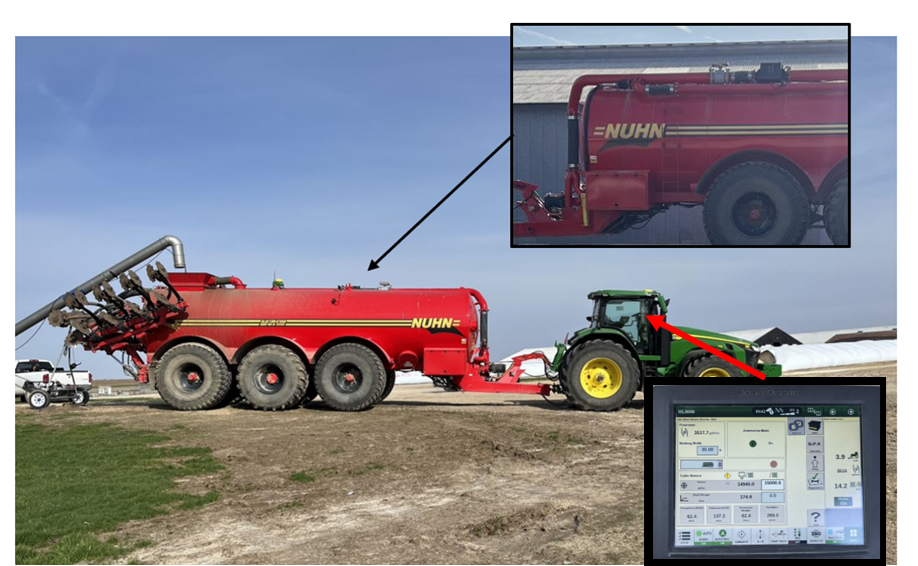
A manure tanker was outfitted with a John Deere HarvestLab 3000 setup for manure nutrient sensing. The setup included the sensor, a Krone flow meter, and a John Deere rate controller (Figure 1). Manure nutrient values from the sensor were recorded in real time. The controller then set specific target rates for a nutrient and the automation system adjusted the tractor speed or manure pump rate to meet the target.

Field trials were conducted in Wisconsin on silt loam soil. Manure was applied to strip plots to meet three specific nitrogen application rates using both the NIRS sensor and conventional sampling and application methods. During application, composite manure samples were collected to assess the sensor’s accuracy. After manure application, the field was planted with corn silage, and following harvest, NUE and yield were evaluated.

Figure 1: Manure tanker setup for sensor trials.

What Have We Learned?

In the first year of the study, the NIRS sensor outperformed conventional sampling methods in achieving target nitrogen rates. Across the application plots, the NIRS sensor delivered manure at a nitrogen rate in the range of 20 to 30 lbs N/ac over the target rate, whereas conventional sampling led to overapplication by 40 lbs N/ac to 95 lbs N/ac. During application, the system also tracked other nutrients, such as phosphorus and ammonium, but laboratory analysis indicated that the sensor was less accurate for these nutrients compared to nitrogen. While manure application rates varied, there was little difference in crop yield or NUE between treatments at harvest.

The NIRS sensor shows promise as a tool to revolutionize manure nutrient accounting in cropland. Its ability to track manure variation in real time could significantly improve nutrient management. Figure 2 demonstrates how the system tracked manure nitrogen, phosphorus, and potassium levels over time following a reduction in agitation. This type of tracking may help reduce the need for excessive agitation and enhance manure utilization efficiency.

Figure 2: Variation of nitrogen (left), phosphorus (center), and potassium (right) over time while applying dairy manure. The right side of the field shows signs of decreased homogeneity when agitation was reduced.

Future Plans

Researchers plan to continue field trials over multiple years to assess long-term impacts on nutrient use efficiency and soil nutrient management. Additionally, with new calibration updates since the original trial, future studies will evaluate the sensor’s accuracy in measuring phosphorus and its ability to meet phosphorus-based manure application targets while simultaneously tracking nitrogen for improved supplemental nitrogen prescriptions. Overall, the goal of the project is to provide producers and haulers with information on how effective the system is and ways in which it can be used to enhance on-farm efficiency.

Authors

Presenting & corresponding author

Joseph R. Sanford, Assistant Professor, University of Wisconsin -Platteville, sanfordj@uwplatt.edu

Additional authors

Rebecca A. Larson, Professor, Nelson Institute for Environmental Studies, University of Wisconsin-Madison; Tyler Liskow, Engineer, Nelson Institute for Environmental Studies, University of Wisconsin-Madison

Acknowledgements

This material is supported by the Wisconsin Dairy Innovation Hub and the National Institute of Food and Agriculture, U.S. Department of Agriculture, under award number 2022-69008-36506. Any opinions, findings, conclusions, or recommendations expressed in this publication are those of the author(s) and do not necessarily reflect the view of the U.S. Department of Agriculture or the Wisconsin Dairy Innovation Hub.

The authors are solely responsible for the content of these proceedings. The technical information does not necessarily reflect the official position of the sponsoring agencies or institutions represented by planning committee members, and inclusion and distribution herein does not constitute an endorsement of views expressed by the same. Printed materials included herein are not refereed publications. Citations should appear as follows. EXAMPLE: Authors. 2025. Title of presentation. Waste to Worth. Boise, ID. April 7-11, 2025. URL of this page. Accessed on: today’s date. 

Enhancing biogas production through anaerobic co-digestion of aquaculture waste and corn stover

Purpose

Aquaculture production has steadily increased over the past few decades to meet the growing demand driven by population growth. Recirculating aquaculture system (RAS) is a popular technology for fish farming, where water is continuously filtered and reused. The filtration process generates sludge, also called aquaculture waste (AW), comprised of fish feces, uneaten feeds and other metabolites. This sludge can create environmental pollution if not handled properly. Anaerobic digestion (AD) is a waste-to-energy technology that can convert AW into biogas. The digestate produced after AD is nutrient-rich and can be utilized for aquaponic production.

The performance of AD depends on several factors, including substrate characteristics, process conditions, and operational parameters. One critical factor is the carbon-to-nitrogen (C/N) ratio, which significantly influences AD efficiency. The optimal C/N ratio for AD is typically between 20 and 30. However, AW has a low C/N ratio due to its high protein content, which can limit biogas production. To maximize biogas yield, the C/N ratio of AW needs to be adjusted. Co-digesting AW with a high C/N feedstock can help achieve an optimal balance. Corn stover (CS), a high C/N substrate that is abundantly available in the U.S., can be used to enhance AD of AW. Therefore, the aim of this study was to find out the optimum mixing ratio that results in maximum biogas production.

What Did We Do?

In this study, AW was collected from the Aquaculture Research Lab at Purdue University, West Lafayette, IN, and CS was obtained from the Animal Sciences Research and Education Center at Purdue University. A batch experiment was conducted using 24 batch digesters, which were made of 1-L Corning polycarbonate square bottles. Ground CS was mixed with AW at seven different ratios (100:0, 90:10, 70:30, 50:50, 30:70, 10:90, and 0:100) as digester substrate. Digested slurry from a dairy farm manure biogas digester, which operated in mesophilic condition, was used as inoculum. The substrate-to-inoculum ratio was maintained at 1:3. Each digester was fed the feedstock containing 3.75 g volatile solids (VS) and the inoculum containing 11.25 g VS. A 1-L Tedlar bag was connected to each digester to collect biogas. All seven treatments and a blank, which contained only inoculum, were designed in triplicate and set up in an experimental chamber. The experiment was performed for 30 days under mesophilic conditions using two water baths to maintain a constant temperature. The volume and composition of biogas produced from each digester were measured daily and periodically, respectively. The biochemical methane potential for each mixing ratio was calculated by subtracting the biogas produced by the inoculum from the total biogas produced from a digester.

What Have We Learned?

The study showed that biogas production varied with different mixing ratios as shown in Figure 1. Biogas production was higher during the initial period and decreased as the digestion process progressed. Digesters with a higher proportion of AW took less time to produce 90% of the total biogas produced. The cumulative specific biogas production was highest (494.62 mL g−1 VS) for the 50:50 mixing ratio of CS and AW after 30 days of digestion. The methane concentration for all test groups ranged between 50.58% and 57.66%. The 50:50 ratio showed the highest cumulative methane yield (275.98 mL g−1 VS), which was 21.47% and 20.29% higher than the mono-digestion of CS and AW, respectively. The superior performance at this ratio can be attributed to a balanced C/N ratio.

Figure 1: Cumulative biogas and methane yield and methane concentration at different mixing ratios of aquaculture waste (AW) and corn stover (CS). The error bars are standard deviations.

Future Plans

This study is part of a USDA research project to develop a near-zero-pollution aquaculture production system. Future studies on AD for aquaculture production will focus on enhancing biogas yield from AW through various methods of substrate pretreatment and additive use. Additionally, the quality of the digestate from AD of AW will be evaluated for potential application of digestate in aquaponic production.

Authors

Presenting & corresponding author

Ji-Qin Ni, Professor, Agricultural and Biological Engineering, Purdue University, West Lafayette, IN 47907, jiqin@purdue.edu

Additional authors

Rajesh Nandi, PhD student, Agricultural and Biological Engineering, Purdue University, West Lafayette, IN 47907; Mohit Singh Rana, Postdoctoral Research Associate, Agricultural and Biological Engineering, Purdue University, West Lafayette, IN 47907

Additional Information

Mirzoyan, N., Tal, Y., Gross, A., 2010. Anaerobic digestion of sludge from intensive recirculating aquaculture systems: Review. Aquaculture 306, 1–6. https://doi.org/10.1016/j.aquaculture.2010.05.028

Acknowledgements

This research was supported by the intramural research program of the U.S. Department of Agriculture, National Institute of Food and Agriculture, Agriculture and Food Research Initiative grant no. 2023-68016-39718.

The authors are solely responsible for the content of these proceedings. The technical information does not necessarily reflect the official position of the sponsoring agencies or institutions represented by planning committee members, and inclusion and distribution herein does not constitute an endorsement of views expressed by the same. Printed materials included herein are not refereed publications. Citations should appear as follows. EXAMPLE: Authors. 2025. Title of presentation. Waste to Worth. Boise, ID. April 7-11, 2025. URL of this page. Accessed on: today’s date. 

Particulate Matter Concentrations in a Swine Farrowing Room Microenvironment

Purpose

Microenvironment in swine buildings is the specific and localized environmental conditions that directly affect the animals. Air quality is one of the critical conditions for the safety, health, productivity, and behavior of the animals and the health of workers. However, limited research has been conducted on air quality within the microenvironment of swine barns. The purpose of this study is to improve the understanding and management of swine production and welfare by measuring and characterizing the microenvironmental particulate matter (PM) concentrations in a swine facility.

What Did We Do?

This study covered a batch of swine farrowing from September 20 to October 15, 2024, in a 12-pen room of an experimental building at Purdue University. Measurement started on September 21, the second day after the sows were moved into the room.  Fine and inhalable particulate matter (PM2.5 and PM10, respectively) concentrations and air temperatures were monitored using 12 portable PM sensors and 12 T-type thermocouples, respectively, at approximately 50 cm (1.6 feet) above the slatted floor on the sow head/feeder end in each pen. Pig activity levels were monitored using a passive infrared detector positioned on the ceiling above each pen. Fan airflow rates were monitored using anemometers to determine room ventilation rates. All measurement data were recorded every minute. The PM concentration data from different sensors were normalized to remove sensitivity variations among the sensors. Data were analyzed for the dynamic and spatial variations of PM concentrations in the room and among different pens.

What Have We Learned?

Results showed that overall PM2.5 and PM10 concentrations changed dynamically.  Sows did not generate a significant amount of PM before farrowing.  The PM concentrations increased dramatically from pre-farrowing to farrowing and continued to increase to the maximum approximately 15 days after farrowing. After that the PM concentrations decreased daily until weaning. The PM concentrations in the pens were similar to empty pens right after the sows and piglets were removed at the end of the study (Figure 1). Diurnal variations in PM concentrations were evident and were affected by pig activities and room ventilation rates. Some management operations in the room caused spikes of PM concentrations, which did not last for long. Notable differences in PM2.5 and PM10 concentrations among the pens were observed. Concentrations of PM2.5 and PM10 within the same pen displayed similar variation patterns (Figure 1 top and bottom).

Figure 1. An example illustrating the temporal variability of PM2.5 (top) and PM10 (bottom) concentrations recorded every minute in one of the pens during the farrowing cycle. Some missing data from 10/23 to 10/24 was due to a measurement issue.

Future Plans

More experiments will be conducted to study PM emissions from swine farrowing facilities. Measurement methodologies will be improved to increase data accuracies and completeness. Additionally, the results of swine building microenvironment study will be disseminated via Extension to producers and other stakeholders.

Authors

Presenting & corresponding author

Ji-Qin Ni, Professor, Purdue University, jiqin@purdue.edu

Additional authors

Ritika Sachdeva, Graduate Student; Alexandra Elizabeth Fisk, Graduate Student; Katherine E. Klassen, Graduate Student; Subin Han, Graduate Student; Jae Hong Park, Associate Professor; Brian T. Richert, Associate Professor, Purdue University

Acknowledgements

This study was supported by the Foundation for Food and Agriculture Research and the National Pork Board under Grant ID: 22-000290

The authors are solely responsible for the content of these proceedings. The technical information does not necessarily reflect the official position of the sponsoring agencies or institutions represented by planning committee members, and inclusion and distribution herein does not constitute an endorsement of views expressed by the same. Printed materials included herein are not refereed publications. Citations should appear as follows. EXAMPLE: Authors. 2025. Title of presentation. Waste to Worth. Boise, ID. April 7-11, 2025. URL of this page. Accessed on: today’s date.