
Use of Orchard Debris for Vermifiltration: Advancing Regenerative Agriculture and Wastewater Treatment

Purpose

This study assesses the economic and air quality benefits of using chipped apple orchard wood as a carbon source in a vermifiltration wastewater system. Instead of burning orchard debris, which releases harmful pollutants, the Perca system repurposes it as a substrate for earthworm-microbial wastewater treatment. The study also compares apple wood chips to traditional conifer chips, evaluating their effectiveness and the broader environmental and economic advantages of diverting orchard waste.

What Did We Do?
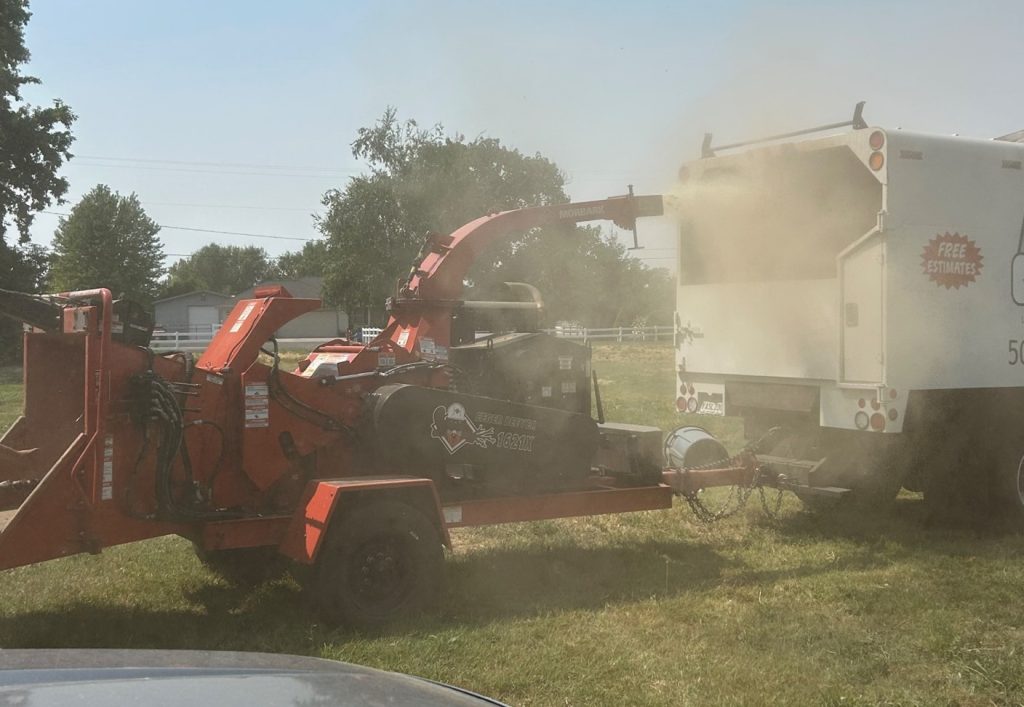
Image 1. Chipping process of apple orchard tear-out debris using Morbark, Eeger Beever, 1621” x 18”x 20.5” feeder throat with 140 horsepower motor.

Apple orchard tear-out debris from a local orchard was collected, chipped, and transported for installation as a substrate for the Perca vermifiltration system. Debris was screened to remove foreign materials, chipped to less than ½ inch size, and weighed to calculate tons of usable wood per ton of orchard debris. Data from processing, including chipping costs and labor requirements, were used to assess economic feasibility and air quality impact. In addition, a bench-scale test was conducted to evaluate the efficacy of wastewater treatment by apple orchard chips when compared to the standard conifer chips used in the Perca vermifiltration system. Removal efficiencies of total suspended solids (TSS), biological oxygen demand (BOD), and polychlorinated biphenyls (PCBs) were measured for both substrates.
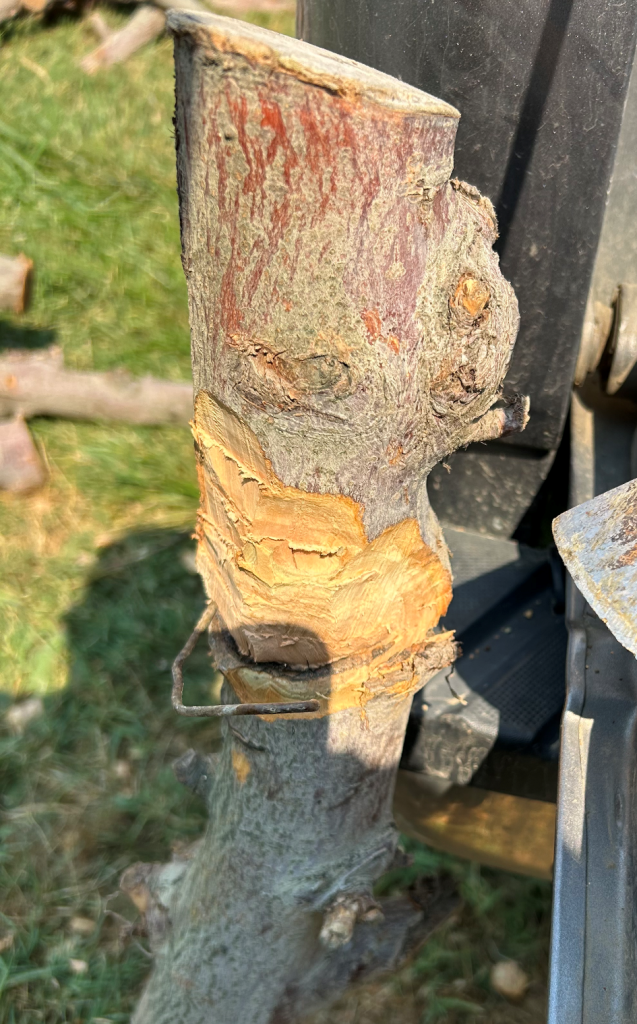
Image 2. Example of foreign objects (wire) embedded in apple wood pieces.

Market projections for Perca’s vermifiltration system show a compound annual growth rate (CAGR) of 113.45%, reaching 9.57% of the market over the next five years. Calculated market projection estimates over 16,000 tons of orchard debris could be converted into a value-added substrate product rather than burning. This shift could eliminate more than 500 tons of emissions between 2025 and 2029. Economic analysis shows that while chipping costs and wood size restrictions pose challenges for trellised orchards, non-trellised orchards offer better yields and lower costs, with market trends and technology advancements pointing toward broader economic feasibility. Bench-scale tests showed that both apple wood and conifer substrates effectively reduced TSS, BOD, and PCBs by more than 80% in all categories with no significant difference in performance, confirming apple debris works as well as conifer media. These findings demonstrate that apple orchard debris provides an environmentally sustainable alternative to burning, thus contributing to improved air quality, while also an efficient, cost-effective vermifiltration substrate for wastewater treatment.
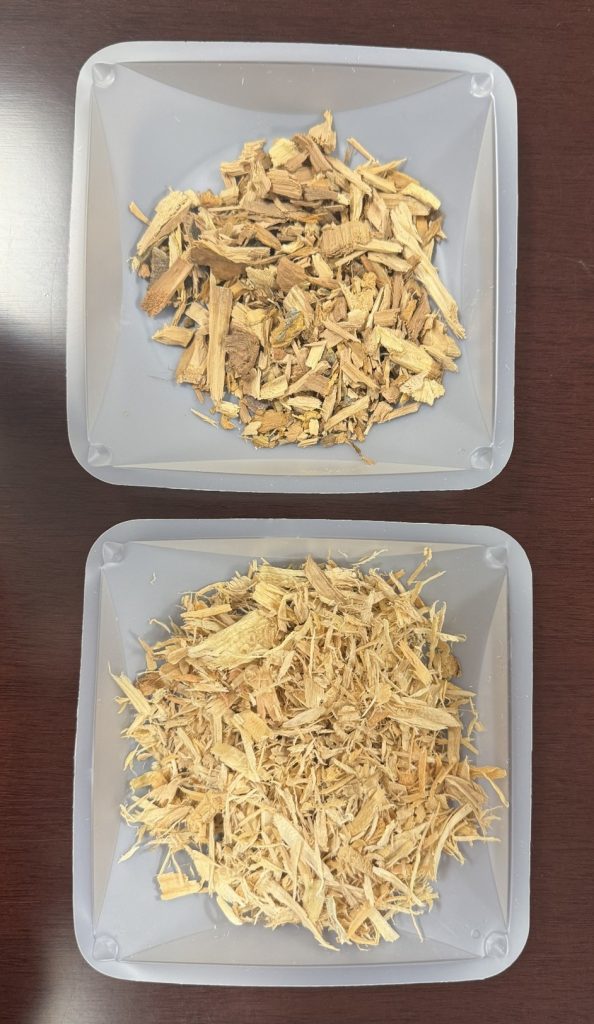
Image 3. Pine media and apple orchard tear-out fines.
Image 4. Rapid Assay Vermifiltration System (RAVS) used to test wastewater contaminant removal capability in traditional (pine) media and apple orchard tear-out fines.

Future Plans

Ongoing efforts focus on refining the use of apple orchard debris to create a cost-effective, reliable wood chip that matches or exceeds current substrates in reducing conventional and nonconventional wastewater pollutants, while offering an economic alternative to burning. Additionally, strategies are being developed to integrate vermifiltration into regenerative agriculture and circular bioeconomy practices by repurposing spent substrate as a nutrient-rich soil amendment or for soil remediation. This approach transforms agricultural waste into multiple value-added resources, supporting both environmental sustainability and economic viability through continued innovation, collaboration, and stakeholder engagement.

Authors

Presenting & Corresponding author

Sierra J. Smith, Director of Research and Development, Perca, Inc., sierrasmith@perca.net

Additional authors

Joseph S. Neibergs, Professor Extension Economist and Director Western Center for Risk Management Education, Washington State University

George A. Damoff, Chief Science Officer, Perca, Inc.

David A. Elmenhurst, Chief Financial Officer, Perca, Inc.

Additional Information

perca.net

https://ecology.wa.gov/about-us/accountability-transparency/partnerships-committees/boards-councils/agricultural-burning-research-task-force

Acknowledgements

Washington State Department of Ecology for funding and support

Washington State Agricultural Burning Practices & Research Task Force, under direction of the Department of Ecology, for funding and support

The authors are solely responsible for the content of these proceedings. The technical information does not necessarily reflect the official position of the sponsoring agencies or institutions represented by planning committee members, and inclusion and distribution herein does not constitute an endorsement of views expressed by the same. Printed materials included herein are not refereed publications. Citations should appear as follows. EXAMPLE: Authors. 2025. Title of presentation. Waste to Worth. Boise, ID. April 711, 2025. URL of this page. Accessed on: today’s date. 
We can learn a lot from poop

A summary of Using sewage for surveillance of antimicrobial resistance by Aarestrup and Woolhouse (2020)

Key Points

  • Sewage-based surveillance for antimicrobial resistance provides a flexible, scalable, and quickly implementable AMR tracking method.
  • Advances in DNA sequencing enable faster and more responsive resistance monitoring, which is essential to address AMR surveillance worldwide.

Continue reading “We can learn a lot from poop”

Development of a Cost-Effective Treatment Process for Removing Antimicrobials from Agricultural Wastewater

Much of the antimicrobials (AM) used therapeutically and prophylactically pass through the animal and enter the environment through irrigation with beef runoff wastewater (WW).  There are concerns repeated low-level AM loading of soils through irrigation will alter the natural biota resulting in increased resistance; thereby, making AM critical for human and animal health less effective.

What Did We Do?

Several studies are summarized describing a cost-effective removal process of AM from beef wastewater before being applied as irrigation. Study 1 investigated three radiolabeled AM, ([14C]-erythromycin (ERY), [3H]-chlortetracycline (CTC), and [3H]-monensin (MON)) to quantify their partitioning in the aqueous and solids fractions of a beef wastewater (WW) containing suspended solids (SS).  Following this, several flocculants were evaluated for removing SS with sorbed AM from WW. Study 2 evaluated the sorption properties of tylosin (TYL) with diatomaceous earth (DE) added to WW as a binding agent. Study 3 evaluated the proposed treatment process using pre-treatment of WW with flocculants then adding a binding agent to remove aqueous phase AM before being used an irrigation water.

What Have We Learned?

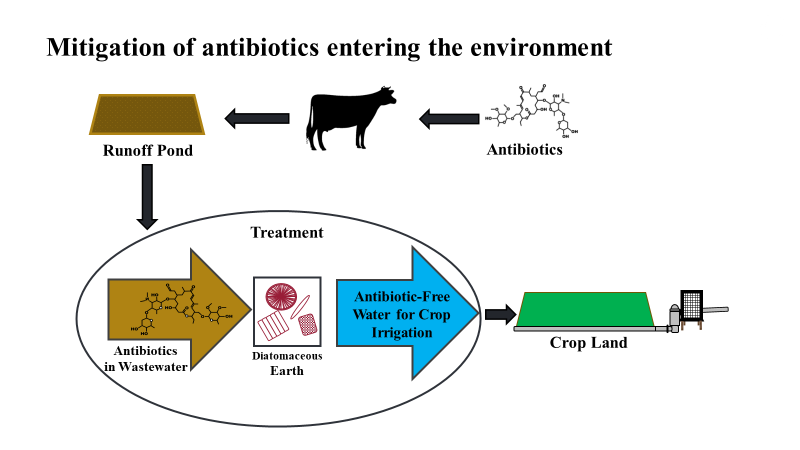
Study 1) After 48 hours, more ERY sorbed to the SS fraction than the aqueous. CTC partitioning occurred in three phases: a rapid sorption to the SS fraction between 0.5 and 8 hours with desorption into the aqueous fraction at 24 hours followed by short steady state at 48 hours with further desorption at 96 hours. The most lipophilic antibiotic, MON, quickly sorbed into the SS fraction and remained in equilibrium with the aqueous fraction after 48 hours.  Calculated partitioning coefficients, Kd, for WW were very different from published soil-water values illustrating wastewater uniqueness. A follow up study determined alum and ferric chloride removed some ceftiofur (CEF) and chlorotetracycline (CTC); however, they were ineffective for removing TYL.  Therefore, a process was needed to remove aqueous phase AM (figure 1). Study 2 evaluated three DE sources for binding aqueous TYL in WW. Raw (DER) contained organic carbon (OC) (3% g g-1), clays (20%) and amorphous silica (65%). Kieselguhr (DEK) had no OC (<1% g g-1), no clay (2%) and amorphous silica (96%).   had nearly 3.5 times greater maximum sorption capacity when compared to DEK. Sorption of TYL to DEK and DER at different pH values showed cationic and hydrogen bonding interactions are important. Higher sorption of TYL to DER compared to DEK suggested clays-DE matrix was important for TYL sorption. Removing OC improved TYL sorption and decreased the separation time for DE/AM removal to complete treatment. Study 3 found CEF and CTC would bind to DE in controlled, neutral aqueous solution. When AMs were spiked into WW collected from a beef feedlot runoff pond, DE successfully removed TYL and CTC, but not CEF. Wastewater treated with excess alum to remove SS followed by DE treatment showed similar removal rates for TYL. Pretreatment of water with alum also resulted in CEF removal if larger amounts of DE are needed. The reason for change in CEF binding when pretreated WW with alum is still under investigation. Alum treatment appeared to remove most of the CTC spiked into WW and therefore no assessment of how CTC binding to DE after treatment.

Future Plans

Future work will include: evaluating the proposed treatment process on other AM and their metabolites. Development of modified DE matrices specific for non-polar AM and metabolites.  These matrices could be combined to remove both polar and non-polar contaminants. Finally, the process needs to be evaluated for effectiveness of contaminant removal with municipal wastewater treatment systems.

Authors

Bryan L. Woodbury, Agricultural Engineer, USDA-U.S. Meat Animal Research Center, Clay Center, NE

bryan.woodbury@ars.usda.gov

Bobbi S. Stromer, Chemist Post Doc., USDA-U.S. Meat Animal Research Center, Clay Center, NE

Clinton. F. Williams, Lead Soil Scientist, USDA-US Arid-Land Agric. Research Center, Maricopa, AZ.

Katherine A. Woodward, Ph.D. Candidate, Tufts University, Civil & Environmental Eng., Medford, MA

Heldur Hakk, Research Chemist, USDA-Edward T. Schafer Agricultural Research Center, Fargo, ND.

Sara Lupton, Research Chemist, USDA-Edward T. Schafer Agricultural Research Center, Fargo, ND.

Additional Information

Stromer, B.S., B.L. Woodbury and C.F. Williams. 2018. Tylosin sorption to diatomaceous earth described by Langmuir isotherm and Freundlich isotherm models. Chemosphere.  193:912-920.

Figure 1.  Illustration of a wastewater treatment process to reduce the antimicrobials load applied through irrigation of agricultural wastewater.  Loading soils with antimicrobials may cause increased antimicrobial resistance. This resistance may make antimicrobials less effective to treat humans.

Acknowledgements

USDA is an equal opportunity provider and employer.


The authors are solely responsible for the content of these proceedings. The technical information does not necessarily reflect the official position of the sponsoring agencies or institutions represented by planning committee members, and inclusion and distribution herein does not constitute an endorsement of views expressed by the same. Printed materials included herein are not refereed publications. Citations should appear as follows. EXAMPLE: Authors. 2019. Title of presentation. Waste to Worth. Minneapolis, MN. April 22-26, 2019. URL of this page. Accessed on: today’s date.