
Purpose
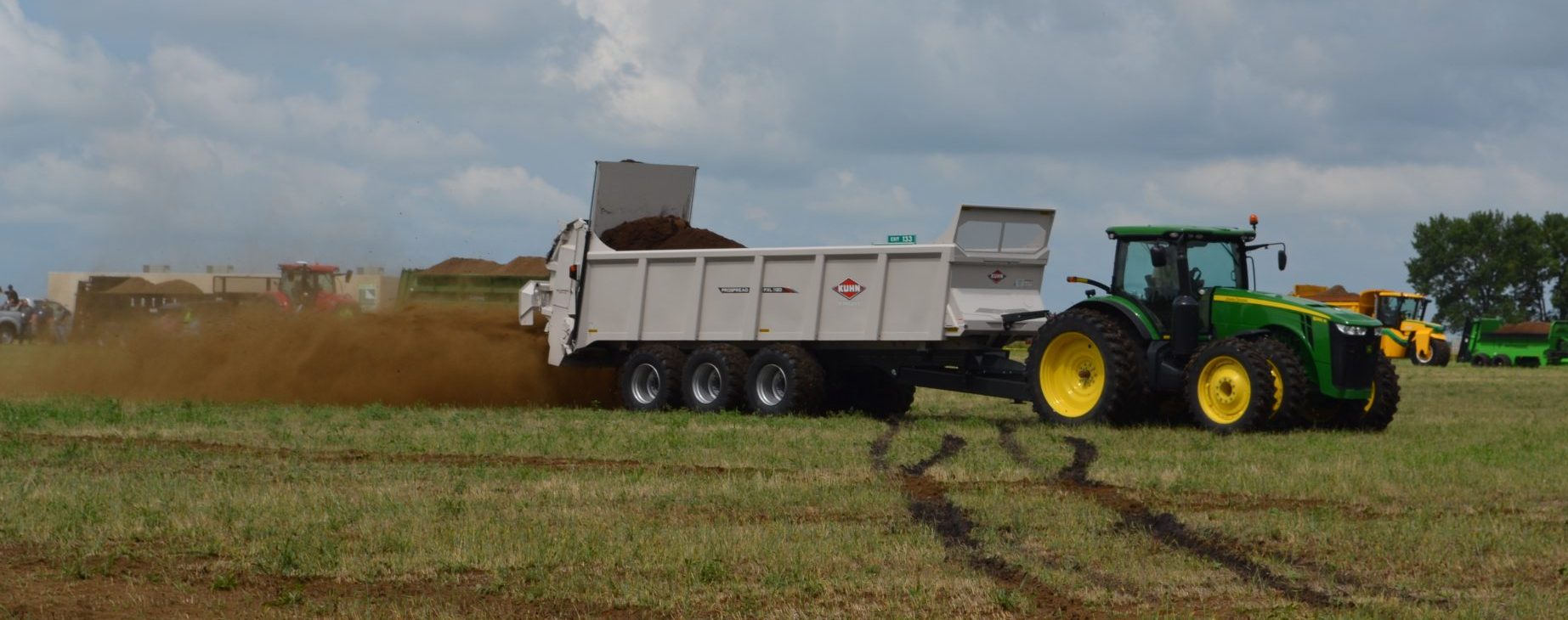
The purpose of the project has been to develop a scientifically grounded, curriculum-ready educational framework that equips educators, especially those in Idaho, with the knowledge and instructional tools necessary to introduce students to the dairy industry and specifically, the environmental and economic benefits of dairy waste by-products. This project aimed to bridge the gap between industry practices and secondary agricultural education by highlighting sustainable waste management strategies within the dairy sector, including manure management, organic fertilizer production, methane gas utilization for renewable energy, and innovative by-product applications.
By integrating interdisciplinary concepts in agricultural science, environmental sustainability, and economics, we have worked to enhance students’ understanding of circular bioeconomy principles, real-world waste management challenges, and the importance of dairy sustainability in mitigating environmental impact while generating economic value. The ultimate goal is to foster a new generation of agriculturally literate students who can critically evaluate and contribute to sustainable innovations in the dairy industry.
What Did We Do?
We are presenting a comprehensive, two-week educational curriculum designed to equip Idaho educators with a resource on the state’s dairy industry. The curriculum encompasses foundational topics, including an introduction to dairy cattle, dairy nutrition, production facilities, and the processes involved in milk and cheese production. However, its primary emphasis is on the sustainable management of dairy by-products, addressing key environmental challenges associated with dairy operations.
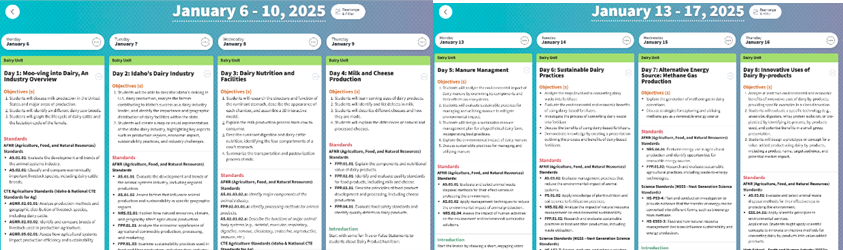
This interdisciplinary curriculum explores advanced dairy waste management strategies, including manure management, biochemical conversion into organic fertilizers, and anaerobic digestion for methane gas production. Through hands-on learning and real-world case studies, the curriculum connects industry practices with secondary agricultural education, fostering a deeper understanding of the ecological and economic impacts of sustainable dairy waste repurposing.
What Have We Learned?
Our findings indicate that students are both prepared and capable of engaging with new scientific and industry-specific information when presented through differentiated and interactive instructional methods. A pre-unit assessment was administered on 2/25/2025 prior to introducing the first-time curriculum, with students averaging 59% on the assessment. Following the conclusion of the unit on 3/14/2025, the average score on the same material rose to 89%. We believe even in the initial rollout of curriculum, this significant increase reflects meaningful learning gains, especially when considering the variability in student learning styles and attendance. The incorporation of varied learning modalities—ranging from hands-on applications to case-based discussions—provided sufficient cognitive engagement, contributing to sustained student interest and improved comprehension throughout the unit.
 Furthermore, this approach facilitates exposure to specialized aspects of the dairy industry that may otherwise remain unexplored, even by students residing in regions with high dairy production. By integrating diverse educational strategies, the curriculum broadens students’ conceptual understanding of sustainable dairy waste management, reinforcing the applicability of these practices within both local and global agricultural contexts.
Future Plans
Moving forward, the curriculum will be made available to agricultural educators across Idaho and the broader Northwest region, providing a flexible instructional resource that can be implemented in whole or adapted to meet specific classroom needs. By offering the curriculum in a digital format, accessible from anywhere, educators will have the ability to customize content to align with their students’ learning objectives while maintaining the integrity of the scientific and industry-relevant information presented.
This resource serves as a readily accessible tool for high school instruction, facilitating an in-depth exploration of the dairy industry, milk and cheese processing, and the complex sustainability challenges faced by modern dairy operations. By emphasizing the innovative repurposing of dairy by-products into value-added commodities, the curriculum equips students with a critical understanding of the environmental and economic imperatives driving sustainability within the dairy sector.
Authors
Presenting & corresponding author
Melissa A. Renfrow, University of Idaho, renfrow@uidaho.edu
Additional author
Dr. Kattlyn Wolf, Professor, Department of Agricultural Education, Leadership and Communication, University of Idaho
Additional Information
-
- ISAID Website: Home | University of Idaho ISAID Grant
- Curriculum Drive: Will link once available
Acknowledgements
This Idaho Sustainable Agriculture Initiative for Dairy project is supported by USDA-NIFA SAS award #2020-69012-31.
The authors are solely responsible for the content of these proceedings. The technical information does not necessarily reflect the official position of the sponsoring agencies or institutions represented by planning committee members, and inclusion and distribution herein does not constitute an endorsement of views expressed by the same. Printed materials included herein are not refereed publications. Citations should appear as follows. EXAMPLE: Authors. 2025. Title of presentation. Waste to Worth. Boise, ID. April 7-11, 2025. URL of this page. Accessed on: today’s date.