Estimating Routine Swine Mortality Mass based on Systems Operation

Purpose

Swine producers must dispose of the day-to-day losses of hogs and pigs on the farm. Unfortunately, most published data of swine mortalities are for one-time catastrophic events – where all the animals on a farm must be exterminated for disease outbreaks or natural disaster.  Routine mortalities on hog farms do not happen all at once, and mortality rates vary greatly between different life stages of swine.

This presentation is the work of an expert panel commissioned by the US-EPA Chesapeake Bay Program to determine annual nitrogen and phosphorus masses produced on swine farms.  In this presentation we will show results for annual mortality weights produced on farrow-to-finish, farrow-to-wean, nurseries, and finisher farms.

What Did We Do?

The panel looked, at depth, into existing swine production systems, and combined morality rates at different life stages, size of animals, and the age of varying carcass composition to determine mortality and nutrient masses produced during the production-flow of 25,000 market hogs.  All phases of production – gestation, farrowing, nursery, and finishing – rarely occur on the same farm in modern hog production.  The panel broke a single farrow-to-finish operation down into its component parts to estimate production of annual mortalities on all types of farms found in the watershed.

What Have We Learned?

Table 1 shows the expected mortality mass produced by a farrow-to-finish swine farm in Southeastern Pennsylvania with a production-flow of 25,000 market hogs per year.  Annual Death Rate for all breeding stock (Sows, Gilts, Boars) was assumed to be 7.8% (USDA-APHIS, 2012).  Weights at time of death are from Etienne et al. (2016).  Weight of Pigs born dead were calculated using values from USDA-APHIS (2012) and Etienne et al. (2016).  Mortality masses for growing stock (Weaned Pigs, Feeder Pigs, Finishers) was determined by combining an estimated growth curve for swine (Hamilton et al., 2021) and industry death rate data (Pork Checkoff, 2018).  It should be noted that the Pork Checkoff data for mortalities was collected after the PEDv outbreak of the 2010s.  Figure 1 shows the cumulative weekly weight of mortalities collected for a population of 1,000 pigs or hogs placed in confinement.  It should also be noted that the number of pigs placed in confinement is equal to the number of pigs leaving the previous phase of production in Table 1; i.e., 27,500 weaned pigs entered the nursery each year, 9,600 died in the nursery, and 25,000 left the nursery.

Table 1. Expected annual mass of mortalities and nutrients contained in carcasses produced by a farrow-to-finish operation with a running average of 1,150 sows.
Inventory Number Leaving Phase Each Year Animals Dying (Head yr-1) Animal Weight at Death (Lbs.) Mortality Mass (lbs. yr-1)
Sows 1,150 90 450 40,000
Gilts 115 19 300 2,700
Boars 12 1 700 700
Pigs Born Dead 0 3,200 2.95 9,450
Weaned Pigs 2,000 27,500 9,500 30,000
Feeder Pigs 3,900 26,000 1,500 64,000
Finishers 9,700 25,000 1,400 260,000
Total 16,877 406,900
Per Sow 350
Per Sow Animal Unit 790
Per Finisher Sold 16
Per Finisher Animal Unit 61
Per Inventory Unit 24
Figure 1. Cumulative mass of mortalities measured at the end of each week during the three growth phases of production for groups of 1,000 animals.

Breaking the numbers shown in Table 1 into smaller production units gives the estimated annual production of mortalities for all types of farms (Table 2).  It should be noted that the values in Table 2 for Farrow-to-Finish and Farrow-to-Wean farms do not include afterbirth, which can be a major component of biowaste created on farms with farrowing.

Table 2.Estimated Annual Weight of Mortalities Produced by Common Types of Swine Farms.
Annual Weight of Mortalities Produced (lbs. yr-1) Farrow to Finish Farrow to Wean Off-Site Nursery Finisher Farm
Per sow
350
73
Per Sow (1,000 lb. Animal Units)
7901
160
Per Pig or Hog Leaving
16
3.0
2.5
10
Per Pig or Hog Leaving (1,000 lb. Animal Unit)
612
2003
454
392
Per Feed-Space (Inventory)
24
26
25
27
1450 lb. sow
2270 lb. Market Hog
315 lb. Weaned Pig
455 lb. Feeder Pig

Swine producers can use the values estimated by this project to determine resources needed to prepare for mortalities.

Future Plans

Farms raising swine growing stock should size disposal methods based on the highest expected contribution of all additional life stages found on the farm (Figure 1); i.e., ~ 143 pounds per 1,000 hogs per day for finishers, 72 pounds per day per 1,000 nursery pigs. Swine breeding farms should size disposal practices based on the largest breeding head found on the farm, plus the highest expected contribution of all additional life stages found on the farm (Figure 1) plus afterbirth expected on a daily basis.  These values are based on conditions in the Chesapeake Bay Watershed, but can be adapted to any locale.  For instance, mortalities in the Midwest may be slightly higher because midwestern market weights are slightly higher than those in the Mid-Atlantic Region.

Authors

Douglas W. Hamilton, Ph.D., P.E., Extension Waste Management Specialist, Oklahoma State University

Corresponding author email address

Dhamilt@okstate.edu

Additional authors

Thomas M. Bass, Livestock Environment Associate Specialist, Montana State University; Amanda Gumbert, PhD., Water Quality Extension Specialist, University of Kentucky; Ernest Hovingh, DVM, PhD., Research Professor Extension Veterinarian, Pennsylvania State University; Mark Hutchinson, Extension Educator, University of Maine; Teng Teeh Lim, PhD, P.E., Extension Professor, University of Missouri; Sandra Means, P.E., USDA NRCS, Environmental Engineer, East National Technology Support Center (Retired); George “Bud” Malone, Malone Poultry Consulting; Jeremy Hanson, WQGIT Coordinator – STAC Research Associate, Chesapeake Research Consortium – Chesapeake Bay Program

Additional Information

Etienne, M., Meinen, R., Kristoff, J., Sexton, T., Long, B., & Dubin, M. (2016). Recommendations to Estimate Swine Nutrient Generation in the Phase 6 Chesapeake Bay Program Watershed Model. Annapolis, MD: Chesapeake Bay Program.

Hamilton, D., Bass, T.M., Gumbert, A., Hovingh, E., Hutchinson, M., Lim, T.-T., Means, S., and G. Malone. (2021). Estimates of nutrient loads from animal mortalities and reductions associated with mortality disposal methods and Best Management Practices (BMPs) in the Chesapeake Bay Watershed (DRAFT). Edited by J. Hanson, A. Gumbert & D. Hamilton.  Annapolis, MD: USEPA Chesapeake Bay Program.

Pork Checkoff. (2018). Checkoff’s Pork Industry Productivity Analysis. Des Moines, IA: National Pork Board. https://www.pork.org/facts/stats/industry-benchmarks/#AverageConventionalFinisherProductivity. Accessed October 1, 2019.

USDA-APHIS. (2012a). Swine 2012 Part I: Baseline Reference of Swine Health and Management in the United States, 2012. Washington, DC: United States Department of Agriculture, Animal and Plant Health Inspection Service. https://www.aphis.usda.gov/animal_health/nahms/swine/downloads/swine2012/Swine2012_dr_PartI.pdf. Accessed June 25, 2019.

Acknowledgements

This project was funded by the US EPA Chesapeake Bay Program through Virginia Polytechnical and State University.  EPA Grant No. CB96326201


The authors are solely responsible for the content of these proceedings. The technical information does not necessarily reflect the official position of the sponsoring agencies or institutions represented by planning committee members, and inclusion and distribution herein does not constitute an endorsement of views expressed by the same. Printed materials included herein are not refereed publications. Citations should appear as follows. EXAMPLE: Authors. 2022. Title of presentation. Waste to Worth. Oregon, OH. April 18-22, 2022. URL of this page. Accessed on: today’s date.
Estimating Routine Poultry Mortality Masses based on Systems Operation

Purpose

Current design standards and operation guidelines for poultry mortality disposal methods do not adequately account for the non-steady production of carcasses on poultry farms.  A common method is to assume poultry die at a constant annual death rate at the mean weight for a placement of birds.  While this method may be an accurate estimation for relatively steady-state operations such as egg laying, it grossly overestimates mortality production at the beginning of a grow-out cycle and underestimates mortality production towards the end of a grow-out cycle for meat production operations such as broilers and turkeys.

An expert panel was convened by the Agricultural Working Group of the Chesapeake Bay Program to determine annual mortality, nitrogen and phosphorus masses produced by broiler, turkey, and laying operations in the watershed.  This paper concentrates on the mortality masses estimations determined by the panel on a weekly and grow-out basis, using broilers as an example.

What Did We Do?

The weight of mortalities produced each week was determined by combining the expected weekly death rate with growth pattern for broilers.  In other words, weight of mortalities collected each week in a grow-out period is equal to number of birds dying during the week times the weight of birds at the time of death.  Mortalities collected for an entire grow-out period are then calculated by summing the weekly values.  This method can be used to determine mortalities produced for any market weight of bird because market weight is determined by the length of grow-out – all modern commercial broilers having the same basic growth pattern.

What Have We Learned?

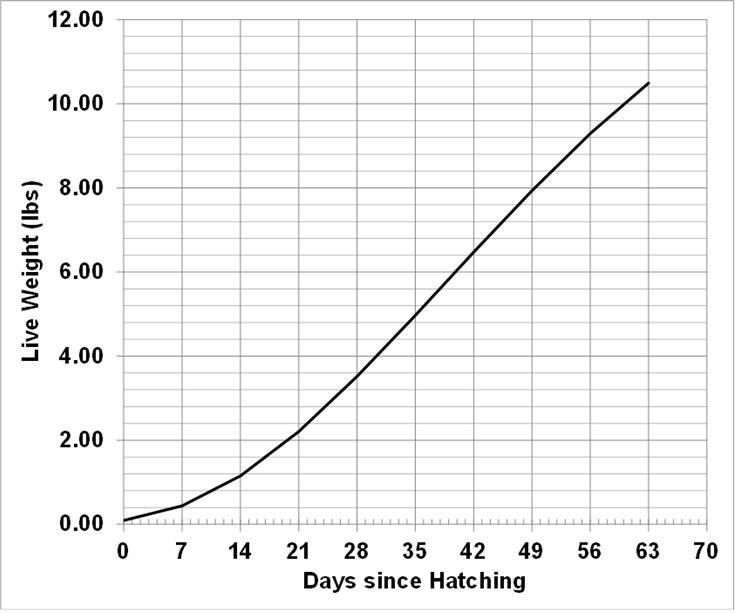
Figure 1 illustrates the average growth pattern of broilers using company-provided data for genetic lines commonly used in the Delmarva region.  Figure 2 shows weekly mortalities for broilers based on a data set used by the USDA-NRCS in Delaware to design capacity of mortality freezers and industry data provided confidentially to the retired Delaware Extension Poultry Specialist. This death rate data is for antibiotic-free birds. Combining figures 1 and 2 gives the expected weight of mortalities collected by a farmer each week during grow-out per 1,000 broilers placed in a building (Figure 3).  Figure 3 shows that weight of mortalities increases each week at an exponential rate with a high degree of correlation (R2 = 0.975).

Adding the weight of mortalities collected in one week to those collected in previous weeks gives the total weight collected up to date, or the cumulative weight of mortalities.  Since the time required to raise a bird to a certain market weight is known (Figure 1), we can plot the cumulative weight of mortalities during a grow-out period versus market weight of broilers (Figure 4).

The estimated weight of mortalities collected each week and the cumulative weight of mortalities collected over a grow out period can be used to better design and operate mortality disposal methods.

Figure 1. Growth Pattern of Modern Commercial Broilers
Figure 2. Weekly Death Rate of Modern Commercial Broilers
Figure 3. Weight of Mortalities Removed Each Week per 1,000 Broiler Placements
Figure 4. Weight of Mortalities Collected per 1,000 Broiler Placements over One Grow-Out Period for Various Market Weights.

Future Plans

A poultry farmer can use the maximum mass collected each week to accurately size a mortality incinerator or estimate the number of dead birds she will have to cover every day in a mortality composter. Multi-bin composters are usually designed to hold the entire mass of mortalities expected in a grow-out period – plus additional high-carbon and cover material.  Designing for this capacity is now possible with an accurate estimate of mortality weight collected per grow-out period.

Authors

Douglas W. Hamilton, Ph.D., P.E., Extension Waste Management Specialist, Oklahoma State University

Corresponding author email address

dhamilt@okstate.edu

Additional authors

Thomas M. Bass, Livestock Environment Associate Specialist, Montana State University; Amanda Gumbert, PhD., Water Quality Extension Specialist, University of Kentucky; Ernest Hovingh, DVM, PhD., Research Professor Extension Veterinarian, Pennsylvania State University; Mark Hutchinson, Extension Educator, University of Maine; Teng Teeh Lim, PhD, P.E., Extension Professor, University of Missouri; Sandra Means, P.E., USDA NRCS, Environmental Engineer, East National Technology Support Center (Retired); George “Bud” Malone, Malone Poultry Consulting; Jeremy Hanson, WQGIT Coordinator – STAC Research Associate, Chesapeake Research Consortium – Chesapeake Bay Program

Additional Information

Hamilton, D., Bass, T.M., Gumbert, A., Hovingh, E., Hutchinson, M., Lim, T.-T., Means, S., and G. Malone. (2021). Estimates of nutrient loads from animal mortalities and reductions associated with mortality disposal methods and Best Management Practices (BMPs) in the Chesapeake Bay Watershed. Edited by J. Hanson, A. Gumbert & D. Hamilton.  Annapolis MD: USEPA, Chesapeake Bay Program (DRAFT).

Acknowledgements

Funding for this project was provided by the US-EPA Chesapeake Bay Program through Virginia Polytechnic and State University   EPA Grant No. CB96326201


The authors are solely responsible for the content of these proceedings. The technical information does not necessarily reflect the official position of the sponsoring agencies or institutions represented by planning committee members, and inclusion and distribution herein does not constitute an endorsement of views expressed by the same. Printed materials included herein are not refereed publications. Citations should appear as follows. EXAMPLE: Authors. 2022. Title of presentation. Waste to Worth. Oregon, OH. April 18-22, 2022. URL of this page. Accessed on: today’s date.

Thermal Dehydration for the Disposition of Poultry Mortalities

Purpose

In the past 50 years, the poultry industry has made tremendous advancements in production performance, resource utilization and environmental sustainability. However, mortality disposal remains a major challenge as traditional methods of carcass disposal such as burial, incineration, composting, and rendering pose significant risk (biosecurity, environmental pollution, odor, cost, etc.) to the future of the poultry industry.

In North America, approximately 1,500,000,000 pounds of broiler and 187,500,000 pounds of layer hen mortalities must be disposed of in a socially and environmentally sustainable manner without jeopardizing the biosecurity of the production facility nor the financial success of the producer.

What Did We Do

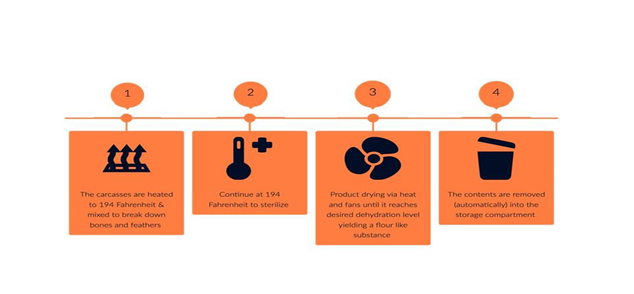
In response to growing concerns and regulatory requirements, an advanced thermal dehydration system has been developed for the disposition of poultry mortalities. This process utilizes simultaneous mixing and heating of the carcass materials in an enclosed drum to 194 F, which results in a 60% reduction in volume over a 12-hour cycle time.

Thermal Dehydration Process

This program was designed to understand the effectiveness, impacts, and opportunities of utilizing Agritech Thermal Disposal Systems thermal dehydration technology for the disposition of poultry mortalities in commercial poultry production facilities in the western United States.

TDS1300 Installation TX, USA

What Have We Learned

Thermal dehydration technology has proven an effective, efficient, and easy method to manage poultry mortalities in commercial poultry production systems. Agritech Thermal Disposal Systems currently offers two models, a smaller single phase unit with a maximum capacity of 1300 pounds and a larger 3 phase unit with a maximum capacity of 2000 pounds per cycle.

The units are simple to operate, as all that is required is to load the mortalities and initiate the thermal dehydration process. There is no requirement for additional materials (carbon), mixing the materials nor manual cleanout, etc.. On average the unit requires 1 kilowatt of electricity per 9 pounds of mortalities processed. An economic analysis comparing thermal dehydration technology with currently used poultry mortality methods is presented below.


Mortality Disposal Comparison
20 Year Analysis
Based on processing 1000 lbs mortality per day
Rendering Traditional Incinerator High Efficiency Dual Burner Incinerator Rotary Composter TDS 1300
Fuel Source LPG LPG Wood shavings Electrical
Amount 2.5 gph 2.5 gph 3:1 ratio 1kW/9 lbs
Fuel per cycle 30 gallons 11.24 gallons 3000lbs 111kW
Cost per cycle $75 $75 $28 $42.5 $12.5
Cost per week $526 $525 $197 $298 $88
Cost per year $27,300 $27,300 $10,238 $15,470 $4,565
Cost per 20 year $546,000 $546,000 $204,750 $309,400 $91,291
Annual service cost $1,200 $835 $200 $200
Lifetime Service $20,400 $15,675 $3,800 $3,800
Replacement time (yr) 5 6.67 20 20 20
Purchase cost $1,000 $12,000 $32,972 $65,000 $55,000
20 year equipment cost $5,000 $36,000 $2,972 $65,000 $55,000
500G propane tank $2,000 $2,000
Building $75,000 $75,000
Installation cost $2,500 $2,500 $2,500 $6,000 $3,000
Total investment $553,500 $606,900 $257,897 $459,200 $148,591
Per lb/cost $0.076 $0.083 $0.035 $0.063 $0.020
Assumptions
Handling Carcass handling cost equal
Fuel Cost 2.50$/gallon; 11.30 cents per KWh
Rendering Cost $0.75 per pound rendering pickup
Woodshavings: Average 37 lbs/cubic foot
Utilize 3 cubic yards per day
1500$/100 yard load delivered ($15/yd)
Recycle 50% from produced compost
Plus 30 minutes additional handling per day-20$

Based on industry performance statistics, a 100,000 head broiler facility would produce approximately 3 supersacks/totes of “meat powder” per flock. The resultant “meat powder” is a stable, odor free, sterile byproduct which can be field applied, integrated into commercial fertilizer or utilized in further processing. Compositional analysis has consistently demonstrated a moisture content of approximately 20%, a nitrogen level of 10%, phosphorus of 0.5% and potassium of 0.6%.

“Meat Powder” Produced from Thermal Dehydration Technology

The range in particle size of the resultant “meat powder” was determined through sieve testing in accordance with ANSI/ASAES319, with an average particle size of 560 microns with a standard deviation of 5.06.

Environmental impact analysis of the thermal dehydration process of poultry mortalities has demonstrated that there are no visible emissions from the thermal dehydration unit, other than water vapor.

Further emissions testing has shown total particulate emission rate averaged 0.0066 lb./operating hour, semi-volatile Organic Compounds (SVOCs) were all below the minimum detectable limit and the total combined speciated Volatile Organic Compounds (VOCs) emission rate averaged 0.0067 lb./operating hour, with all individual compounds below regulatory thresholds.

Future Plans

The long-term evaluation program of thermal dehydration technology for the disposition of poultry mortalities continues, with special emphasis on understanding the opportunities to utilize the “meat powder”. These efforts include conducting amino acid profiling, understanding the impacts on quality from long-term storage and determining the optimal handling system.

Thermal dehydration technology has gained international approval for the disposition of animal mortalities, has recently been permitted by the Texas Commission on Environmental Quality and is currently undergoing regulatory review in numerous jurisdictions throughout the United States.

Authors

Jeff Hill, President, Livestock Welfare Strategies
Jeff@LivestockWelfareStrategies.com

Additional Authors

Danny Katz, Agritech Thermal Disposal Systems, Anissa Purswell, Eviro-Ag Engineering, Inc.

Additional Information

www.thermaldisposal.com

Acknowledgements

H and R Agricultural Solutions LLC 1592 Southview Circle Center, Texas 75935

Videos, Slideshows, and Other Media

AgriTech Thermal Disposal Systems – YouTube


The authors are solely responsible for the content of these proceedings. The technical information does not necessarily reflect the official position of the sponsoring agencies or institutions represented by planning committee members, and inclusion and distribution herein does not constitute an endorsement of views expressed by the same. Printed materials included herein are not refereed publications. Citations should appear as follows. EXAMPLE: Authors. 2022. Title of presentation. Waste to Worth. Oregon, OH. April 18-22, 2022. URL of this page. Accessed on: today’s date.

Closing the Loop: Evaluating Carcass Compost for Corn Production in Northern Climates

Purpose

Composting is one way that livestock operations can effectively dispose of animal carcasses on their farm site during many times of the year, even in cold climates. Various carbon sources such as wood chips or chopped corn stalks can be used and tend to be coarsely chopped so that airflow is improved through the pile to increase degradation. This makes finished carcass compost different from typical manure or garden compost. Land application is recommended for the final product, but there is little information on nutrient availability of carcass compost for crop production. Since state regulations often require this information to determine appropriate agronomic land application rates, livestock producers are left unable to utilize this material efficiently in a way that meets the law. The goal of this project is to evaluate the fertilizer equivalent value of carcass compost that uses different carbon sources (wood chips versus corn stalks) for corn production.

What Did We Do

The Minnesota Department of Agriculture conducted winter swine carcass composting trials at the University of Minnesota Southwestern Research and Outreach Center in Lamberton, MN during the winter of 2020. In these trials, swine carcasses were ground with the carbon source prior to initiating the compost process. Carbon sources included wood chips or corn stalks. The compost went through the active composting cycles (thermophilic phase) and curing (mesophilic) phase over approximately one year. Samples were collected from each pile in the spring of 2021 and sent to Penn State Analytical Laboratory for standard compost tests.

In 2021, a field experiment was carried out at the University of Minnesota Southwestern Research and Outreach Center in Lamberton, MN to test the different carcass composts as a nutrient source. The field trial was set up as a randomized complete block design with four replications as the blocks. The 10 treatments included:

  • 0 N (full P, K, S) fertilizer (control)
  • 3 urea fertilizer N rates (50%, 100%, 150% of corn nitrogen [N] needs)
  • 3 woodchip compost and 3 corn stalk compost rates (50%, 100%, 150% of corn N needs)

The compost rates were determined assuming 50% of the total N from lab analysis is plant available. The overall N rates were determined using the University of Minnesota fertilizer guidelines for non-irrigated corn. Fertilizers and compost were applied by hand in spring at their appropriate rates and incorporated within 12 hours of application. Approximately 7, 14, and 21 tons per acre of compost were applied to achieve 50%, 100%, and 150% of corn N needs (this corresponds to 80, 160, and 240 pounds of N per acre). Corn was planted and managed for pests according to typical production practices in the region. The middle two rows of each plot were harvested in the fall with a plot combine and yield and grain moisture were recorded.

What Have We Learned

The lab analysis results of each compost are in Table 1. Total N content was similar between sources and primarily made up of organically bound N. The carbon:N ratio of the wood chip compost was higher at 20.8:1 than the corn stalk compost at 14.2:1, though both were below 20:1 and should not theoretically tie up N from the soil after land application. Respirometry tests suggested that the corn stalk compost was not yet mature (respiration was greater than 11 mg CO2-C/g organic matter/day) while the wood chip compost was considered in the “curing” phase (2-5 mg CO2-C/g organic matter/day). The bioassay results suggested that neither compost had any phytotoxins (both had emergence greater than 90%).

Table 1. Swine carcass compost test results from Penn State Analytical Laboratory. Samples were collected and sent to the lab in spring 2021 prior to land application.

Carcass Compost Carbon Source
Tests Wood Chips Corn Stalks
pH 7.3 8.0
Soluble salts (1:5 w:w), mmhos/cm 1.2 2.5
Moisture content, % 29.1 41.2
Organic matter, % 49.1 33.4
Total nitrogen (N), lb ton-1 22.0 24.0
Organic N, lb ton-1 22.0 22.0
Ammonium-N, lb ton-1 0.32 0.66
Nitrate-N, lb ton-1 0.04 0.00
Carbon: N ratio 20.8 14.2
Phosphorus (as P205) lb ton-1 5.4 4.6
Potassium (as K20) lb ton-1 6.6 9.4
Particle Size (<9.5 mm), % 82.6 68.1
Respirometry, mg CO2C/g organic matter/day 4.8 17.4
Bioassay (cucumber seedling emergence), % 100.0 96.0
Bioassay (cucumber seedling vigor), % 100.0 100.0

As for the field trial, the 2021 growing season endured a sustained drought and yield was lower than expected (ranging from 64 – 117 bushels per acre; Figure 1). Yield increased with each incremental increase in fertilizer N with the highest yield at 240 pounds of N per acre. The carcass composts differed in their effect on yield. Corn yield responded to the corn stalk compost and fertilizer up to 150 pounds of available N per acre (or about 14 tons per acre), but the carcass compost reduced yield at 240 pounds of N per acre. Yield only responded to the wood chip compost at the lowest rate (80 pounds of N per acre, or about 7 tons per acre) but at higher rates yield was similar to the control. This is likely due to the high carbon content of both composts. As more carbon was applied, the soil microbes needed a higher amount of N to degrade the carbon, thus taking it from the soil. Overall, we suggest that less than 15 tons per acre of carcass compost should be used for land application. If wood chips were used as the carbon source, do not expect a significant nitrogen credit.

Figure 1. Corn yield with fertilizer versus swine carcass compost (with either corn stalks or wood chips as the carbon source). Each nutrient source was applied at different rates to supply 80, 160, or 240 pounds of first year available nitrogen. There was also a no-nitrogen control.

Future Plans

We will repeat this study in 2022 at the same site but with compost generated during the winter of 2021. Besides wood chips and corn stalks, a new carbon source will be introduced to the project, wheat straw. Along with yield, we are also evaluating soil and plant samples for nitrogen and phosphorus changes.

Authors

Melissa L. Wilson, Assistant Professor and Extension Specialist, University of Minnesota
mlw@umn.edu

Additional Authors

-Erin L. Cortus, Associate Professor and Extension Engineer, University of Minnesota;
-Paulo H. Pagliari, Associate Professor, University of Minnesota

Acknowledgements

This project is funded by USDA’s Animal and Plant Health Inspection Service through the National Animal Disease Preparedness and Response Program. Thanks to our partners at the Minnesota Department of Agriculture for supplying the carcass compost.


The authors are solely responsible for the content of these proceedings. The technical information does not necessarily reflect the official position of the sponsoring agencies or institutions represented by planning committee members, and inclusion and distribution herein does not constitute an endorsement of views expressed by the same. Printed materials included herein are not refereed publications. Citations should appear as follows. EXAMPLE: Authors. 2022. Title of presentation. Waste to Worth. Oregon, OH. April 18-22, 2022. URL of this page. Accessed on: today’s date.
Evaluating Dry Manure Storage Options for Water Quality Protection in Western Washington

Purpose

The purpose of this project was to collect local on-the-ground data to evaluate the effectiveness of different manure storage options installed on working farms in King County, Washington. Agricultural areas in King County receive over 40 inches of rain annually with most of it falling between the months of October through March. During this time, farms often store and compost their manure for spring and summer field application. Composting livestock manure and waste can produce a valuable resource for land managers. However, if managed improperly, manure leachate and runoff can contaminate ground and surface water resources posing a risk to humans and other wildlife.

The project aimed to collect data on water quality and manure quality under different solid manure storage options during the fall and winter months. During the project, we worked with two farms to monitor water quality and manure quality as well as held education and outreach events to engage with stakeholders about benefits and/or costs of adopting new manure management BMPs.

What Did We Do

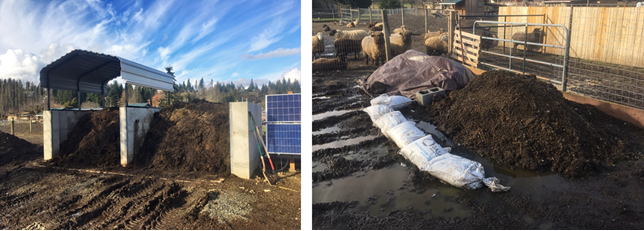
For the project, we worked with two farms and established four manure storage areas on each including: a concrete slab with walls and a roof, concrete slab with walls and no roof, a compacted soil areas with a tarp cover, and a compacted soil area with no cover. The manure piles were managed by the farmer following common winter practices and were turned and added to 2-3 times per month. We monitored the temperature of the piles over time to assess their composting activity, although it was not a primary focus of our study.

We collected samples of the manure from each storage area during the project to monitor changes over time. To assess nutrient loss and pollution via a stormwater runoff pathway, we collected runoff from the concrete slabs. To assess nutrient loss and pollution via a leaching pathway, we collected soil samples, from under the compacted soil areas. This monitoring allowed us to compare the storage options. The study was conducted over the course of eight months from October 2020 through May 2021. Below are photos of our study setup. Stormwater runoff water quality samples were collected using an ISCO automated sampler that was programmed to grab samples during rain events that generated runoff from the manure piles. Soil and manure samples were collected on a monthly basis.

Figure 1. Manure storage treatments. From left to right: slab covered, slab uncovered, soil covered, and soil uncovered.
Figure 2. Stormwater runoff collection system from the concrete slabs.

What Have We Learned

The project results support the conclusion that the covering of solid manure piles had positive environmental benefits. Covered manure piles stored on a concrete slab have less stormwater runoff with lower loads of nutrients in the leachate than uncovered manure piles on a concrete slab. The covering of dry manure piles stored on compacted soil surfaces reduced the leaching of nutrient, particularly nitrate and nitrite, from manure piles into the soil. It also created a better manure end-product by allowing higher heat values to be reached and creating a drier end product. Additionally, the

placement of manure on a non-permeable, concrete surface eliminated the leaching of manure nutrients below the piles. Covered manure piles, whether stored on a concrete slab or dirt, tended to be drier and have higher temperatures, which results in a better composted manure product.

The results of this study demonstrated that the type of animal species and pile management (how often the pile was turned or added to) also greatly affected the nutrient composition of the leachate. For instance, at Site A, there was higher TP in the manure, and thus higher TP in the runoff water quality and in soil samples.

Future Plans

Due to the short duration of the project, we pursued and were awarded additional funding to extend the project and expand the data set to allow for more robust statistical analysis and conclusions. Partner agencies and organizations as well as the farmers have expressed support and interest in continuing this research, and the project Steering Committee members have also expressed interest in further participation.

In future studies, we intend to try to better quantify the flow volumes from manure piles stored on slabs. In addition, we intend to better assess leaching potential underneath the manure piles stored on soil by using lysimeters to measure leachate volumes.

Authors

Presenting Author

Scarlett Graham, Conservation Research Specialist, Whatcom Conservation District

Corresponding Author

Laura Redmond, Landowner Incentive Program Coordinator, King Conservation District
laura.redmond@kingcd.org

Additional Authors

Addie Candib, Pacific Northwest Regional Director, American Farmland Trust

Additional Information

American Farmland Trust website: https://farmland.org/project/south-puget-sound-discovery-farms/

Acknowledgements

Dr. Nichole Embertson, PhD, Dairy Sustainability at Starbucks (formerly worked at the Whatcom Conservation District)

Videos, Slideshow and Other Media

South Sound Discovery Farms® Project


The authors are solely responsible for the content of these proceedings. The technical information does not necessarily reflect the official position of the sponsoring agencies or institutions represented by planning committee members, and inclusion and distribution herein does not constitute an endorsement of views expressed by the same. Printed materials included herein are not refereed publications. Citations should appear as follows. EXAMPLE: Authors. 2022. Title of presentation. Waste to Worth. Oregon, OH. April 18-22, 2022. URL of this page. Accessed on: today’s date.

Manure Nutrient Sensing Systems

Purpose

Manure is rich in essential elements, including nitrogen (N), phosphorus (P), and potassium (K), for plant growth. Although applying manure as a fertilizer at agronomic rates can restore organic matter and nutrients to the soil, over-application of manure may contribute to environmental issues such as eutrophication and water contamination. Manure nutrient prediction and variable rate application are promising new technologies to reduce the risk of over-application, however, the variability in manure nutrient concentrations and the time-lag caused by traditional chemical analysis of manure composition make precise nutrient application difficult to achieve.

Near-infrared (NIR) spectroscopy is a high-energy vibrational spectroscopy performed in the wavelength range between 750 to 2500 nm and has been proven to accurately determine total solid (TS), organic matter (OM), total nitrogen (TN), and ammoniacal nitrogen (NH4-N) of animal manure in several previous studies. A low-field nuclear magnetic resonance (NMR) device that is designed based on the absorption and emissions of energy in the radio frequency range of the electromagnetic spectrum is another potential method for predicting manure nutrients accurately. The main purpose of this manure sensing project was to determine if the NIR and NMR sensing techniques can provide robust prediction of manure nutrients and, therefore, improve the precision of field application.

What Did We D

We investigated NIR spectroscopy with reflectance and transflectance modes to predict micronutrients in dairy manure. In this study, 20 dairy manure samples were collected and spiked by dissolving a specific amount of ammonium chloride (NH4Cl) or Arginine to achieve incremental NH4-N and organic nitrogen (Org-N) concentrations, respectively. Each raw sample was spiked at four levels which were 1.25, 1.5, 2, and 4 times the NH4-N or Org-N concentrations of the raw manure as analyzed by a certified lab. All samples were scanned and analyzed using a NIR with a reflectance head sensor and a transflectance probe of three different optical path lengths. NIR calibration models were developed using partial least square regression analysis and the coefficient of determination (R2) and root mean square error (RMSE) were calculated to evaluate the models.

The accuracy and precision of a low-field NMR designated for manure nutrient prediction was assessed. Twenty dairy manure samples were collected and analyzed for TS, TN, NH4-N, and total phosphorus (TP) in a certified laboratory and using the NMR analyzer. Runtimes of 15 min to 90 min were tested to investigate their effects on accuracy and precision of NMR.

What Have We Learned

For the NIR study, the transflectance probe yielded calibrations that had higher R2 and RMSE for TS, ash, and particle size (PS), and reflectance sensor improved the accuracy of NH4-N and Org-N predictions. NIR sensors have the potential to predict N concentrations without being affected by the TS, ash content, and PS of the dairy manure.

The NMR predictions of TS, NH4-N, and TN were accurate for samples with relativley low TS, but not well correlated to the lab measurements for high TS samples. TP predicted by NMR was not affected by TS levels and the TP prediction was not precise and robust. The effects of runtime on the accuracy and precision of NMR prediction were not consistent.

Future Plans

Additional work is needed to improve the accuracy and precision of NIR calibration models. The procedure of spiking method in manure analysis using NIR techniques needs to be enhanced in order to be widely applied for preparing manure samples for NIR calibrations. Finally, further investigation of the methodology with other manure constituents such as P and K and conducting online variable rate application of organic fertilizer using NIR sensing system are needed to evaluate the potential effects of reducing the overall system variability.

Additional work to improve NMR prediction includes recalibrating the system based on specific manure samples and improving the accuracy and precision of TP prediction.

Authors

Xiaoyu Feng, Research Associate, University of Wisconsin-Madison
xfeng43@wisc.edu

Additional Authors

-Rebecca Larson, Associate Professor and Extension Specialist, University of Wisconsin-Madison; Matthew Digman, Assistant Professor, University of Wisconsin-Madison;
-Joseph Sanford, Assistant Professor, University of Wisconsin- Platteville

Additional Informaion

Feng, X.Y., R.A. Larson, and M. Digman. 2022. Evaluating the Feasibility of a Low-Field Nuclear Magnetic Resonance (NMR) Sensor for Manure Nutrient Prediction. Sensors 22(7):2438. https://doi.org/10.3390/s22072438

Feng, X.Y., R.A. Larson, and M. Digman. 2022. Evaluation of Near-Infrared Reflectance and Transflectance Sensing System for Predicting Manure Nutrients. Remote Sensing 14(4): 963. https://doi.org/10.3390/rs14040963

Acknowledgements

Support for this project was provided by the Wisconsin Dairy Innovation Hub.


The authors are solely responsible for the content of these proceedings. The technical information does not necessarily reflect the official position of the sponsoring agencies or institutions represented by planning committee members, and inclusion and distribution herein does not constitute an endorsement of views expressed by the same. Printed materials included herein are not refereed publications. Citations should appear as follows. EXAMPLE: Authors. 2022. Title of presentation. Waste to Worth. Oregon, OH. April 18-22, 2022. URL of this page. Accessed on: today’s date.

Vermifiltration as a Technology for Lowering Dairy Wastewater’s Nutritional and Organic-Strength

Purpose

Due to increased demand for milk and milk products, the dairy industry has grown tremendously over the last several decades. This has resulted in an increase in the production of dairy manure. In recent years, the industry has also seen significant changes, such as a decrease in the number of dairy farms but an increase in the size of individual operations, and regional concentrations of dairy operations. Because of the regional concentrations of large dairies, large volumes of manure are produced in small geographical areas, raising concerns about the effects on local air, land, and water resources. Various dairy manure management technologies have been suggested ranging from anaerobic lagoons to membrane filtration. Many of these technologies, however, are not considered economically viable due to the high energy and labor requirements for sludge management.

Vermifiltration is on the other hand an emerging low-cost manure management technology, which is an aerobic wastewater treatment system that employs a community of microorganisms and earthworms in a filter bed media. The purpose of this research was to assess the effectiveness of this technology in reducing solids, organic strength, and nutrients (nitrogen and phosphorus) in dairy wastewater from a dairy operation with a manure-flush system. The treatment’s ultimate goal was to: (1) reduce the nutrient load of the wastewater so that it could be recycled via irrigation on nearby land, (2) recycling to flush fresh manure from the barns, and (3) recover the nutrients in the form of earthworm biomass and vermicasts.

What Did We Do

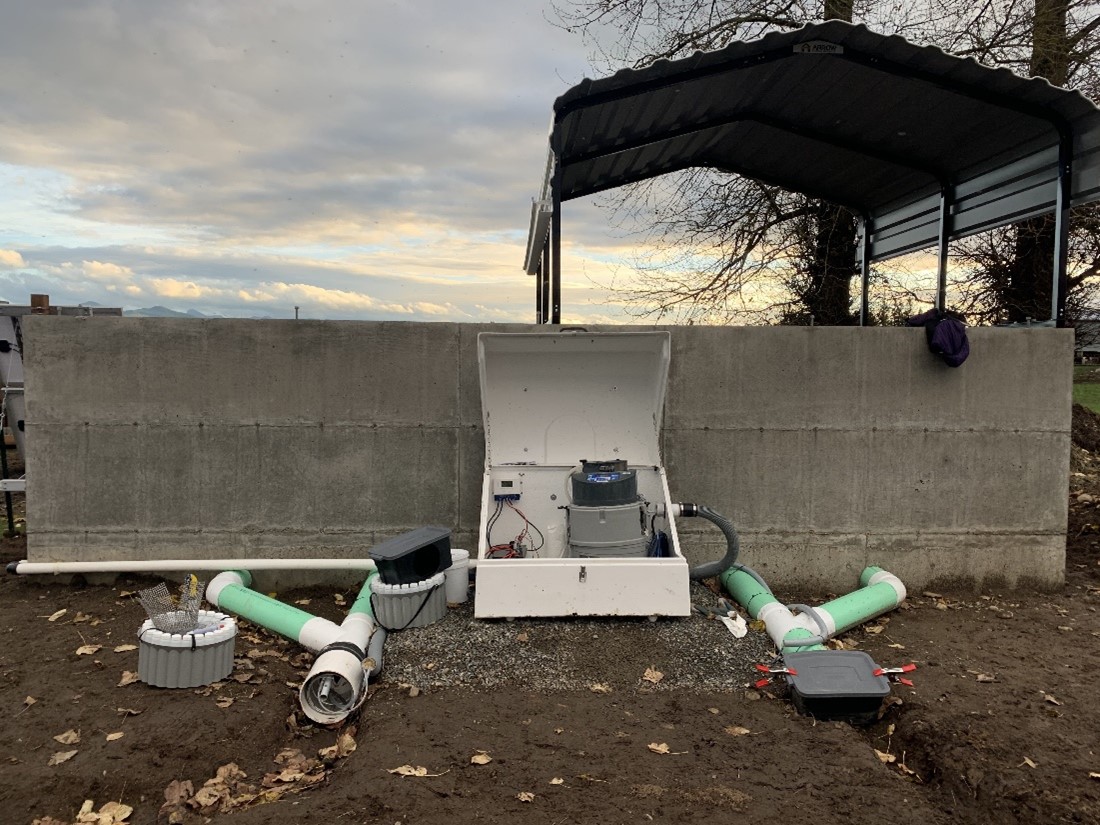
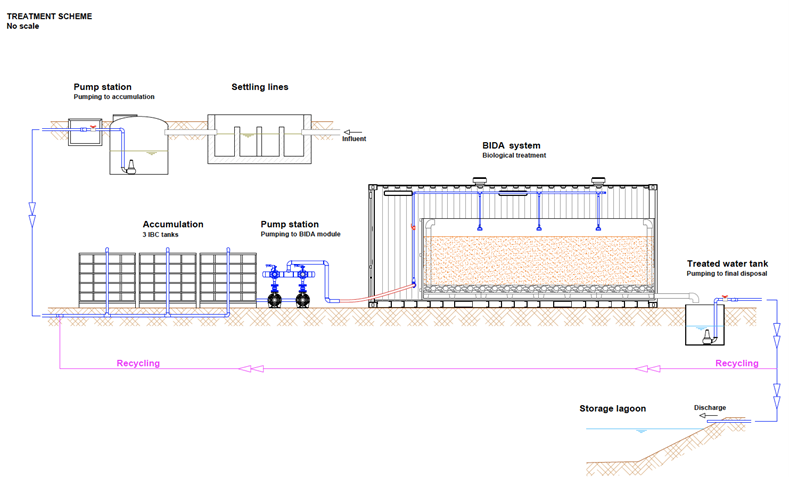
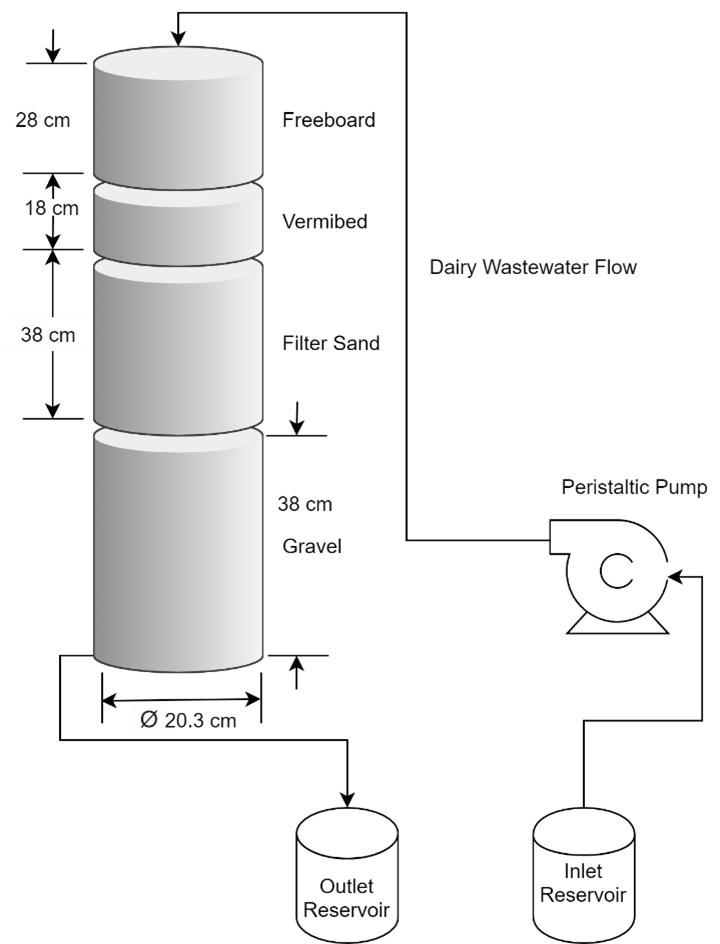
In this study, we assessed the efficacy of a vermifilter for treating dairy wastewater in terms of effluent quality and potential air emission reductions. For these tests, a pilot-scale vermifilter unit (Fig 1) was installed on a commercial dairy and monitored for 6 months. Additional lab-scale (Fig 2) studies looked into the effects of earthworm density, organic loading rate, and hydraulic loading rate on the vermifilter’s performance. Total solids, total suspended solids, chemical oxygen demand, total nitrogen, total ammonia-nitrogen, nitrate-nitrogen, total phosphorus, and orthophosphate were among the wastewater parameters of interest. A closed-loop dynamic chamber method was used to measure potential gas emissions (ammonia—NH3, methane—CH4, carbon dioxide—CO2, and nitrous oxide—N2O) from these samples. Lab scale Plexiglass vermifilters were also used to study the effect of earthworm density, organic and hydraulic loading rates.

Fig 1: Layout of the pilot scale vermifilter system (IIBC tanks for storage, BIDA is the vermifiltration system)
Fig 2: Lab scale vermifilter system

What Have We Learned

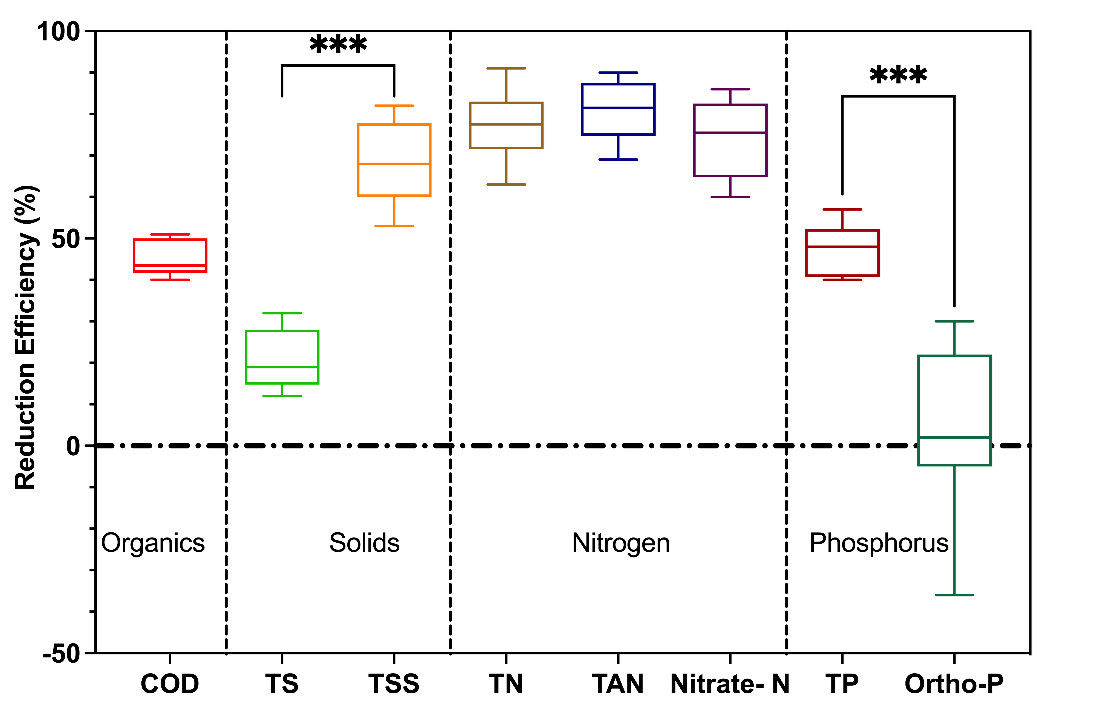
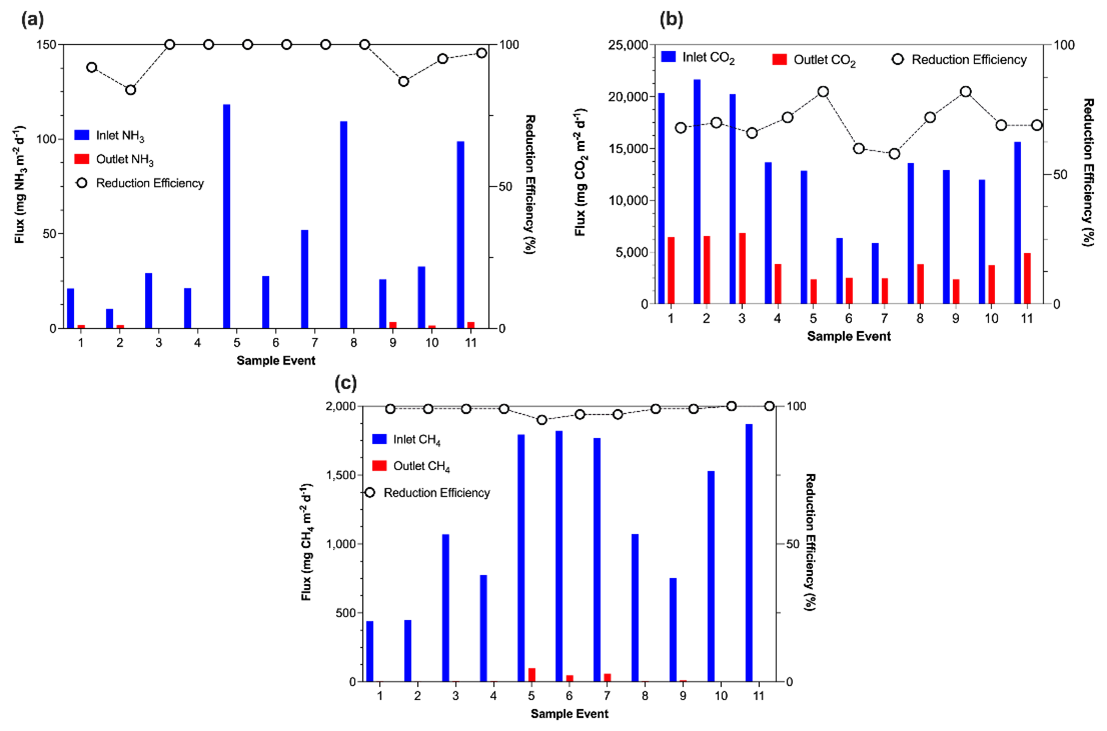
We observed that reduction efficiencies of up to 90% of inlet wastewater organics, nutrients, and solids can be achieved by the vermifilter (Fig 3). These results showed that vermifiltration has a high potential for reducing the concentrations of organics, nutrients, and solids in dairy wastewater. We also noted that the vermifilter system reduced emissions of gases by 84 – 100% for NH3, 58 – 82% for CO2, and 95 – 100% for CH4. Nitrous oxide emissions were mostly undetectable. We also learned that the vermifilter system reduced the global warming potential of untreated dairy wastewater by up to 100% and demonstrated the ability to generate carbon credits while maintaining a low carbon footprint. We further learned that vermifiltration at earthworm densities of 10,000 and 15,000 earthworms m-3 is best for treating dairy wastewater in terms of organic matter, nutrients, and solids concentration removal.

Fig 3: Reduction efficiencies of organics, solids, nitrogen and phosphorus
Fig 4: Influent, effluent gas fluxes through the vermifilter system

Future Plans

To enable effective scale-up, additional studies of a full-scale vermifilter system’s techno-economic and life cycle assessment are required. The techno-economic analysis will serve as a foundation for addressing vermifiltration optimization processes, as well as determining the system’s cost implications and economic performance. The life cycle assessment, on the other hand, will reveal potential environmental impacts associated with a full-scale vermifilter system.

Vermifiltration uses a variety of microbial pathways for nutrient conversion, including aerobic and anaerobic organic matter stabilization, ammonification, nitrification, immobilization, and denitrification. These pathways are heavily reliant on the system’s dominant microbiota, which has an impact on the system’s treatment efficiency. Genomic sequencing is required to better understand the microbiota present in dairy wastewater streams and vermifilter units, as well as how the introduction of earthworms affects the microbial communities. This will allow us to optimize the treatment and thus increase the vermifilter’s efficiency.

Authors

Gilbert Miito, Post Doctoral scholar, University of Missouri
gilbertjohn.miito@wsu.edu

Additional Authors

-Pius Ndegwa, Professor, Washington State University
-Femi Alege, Post Doctoral Fellow, University of California Berkeley
-Joe Harrison, Professor, Washington State University

Additional Information

Publication: https://www.sciencedirect.com/science/article/abs/pii/S2352186421002960

Acknowledge

Biofiltro, Organix Inc, Washington State University, Washington State Department of Agriculture


The authors are solely responsible for the content of these proceedings. The technical information does not necessarily reflect the official position of the sponsoring agencies or institutions represented by planning committee members, and inclusion and distribution herein does not constitute an endorsement of views expressed by the same. Printed materials included herein are not refereed publications. Citations should appear as follows. EXAMPLE: Authors. 2022. Title of presentation. Waste to Worth. Oregon, OH. April 18-22, 2022. URL of this page. Accessed on: today’s date.

Phosphorus Densification and Availability From Manure-Derived Biochar

Purpose

Manure produced at livestock facilities contains plant essential nutrients, such as nitrogen and phosphorus, which is typically land applied as a fertilizer source for crops near where it is generated. However, in areas of high livestock density, due to the imbalance of nitrogen and phosphorus in manure compared to crop requirements, soil phosphorus concentrations have increased. This has resulted in soil phosphorus legacy issues throughout the Midwest, contributing to water quality issues in surrounding waterways. To reduce phosphorus application near livestock facilities, advanced manure management systems are needed to separate and concentrate manure nutrients, particularly phosphorus, to expand transport distances. In this study, we investigated converting separated anaerobically digested manure solids into biochar through pyrolysis to densify manure nutrients. In addition, we examined the availability of phosphorus from manure derived biochar in a soil incubation study to evaluate its fertilizer potential.

What Did We Do

We collected anaerobically digested manure solids from a screw press separator at a local dairy facility. Manure solids were dried and converted to biochar at two different temperatures (662°F and 932°F). The mass of the dried manure and biochar were determined and samples analyzed for total nitrogen, total phosphorus, and available phosphorus to evaluate densification of manure nutrients.

We additionally evaluated nutrient availability of manure solids and biochar in a soil incubation study. In the study manure solids and biochar were applied at equal agronomic phosphorus rates to two different soil textures (loam and sandy loam). Soils were then incubated for 182 days with samples collected and analyzed Every week for four weeks throughout the period to evaluate phosphorus release over time.

What Have We Learned

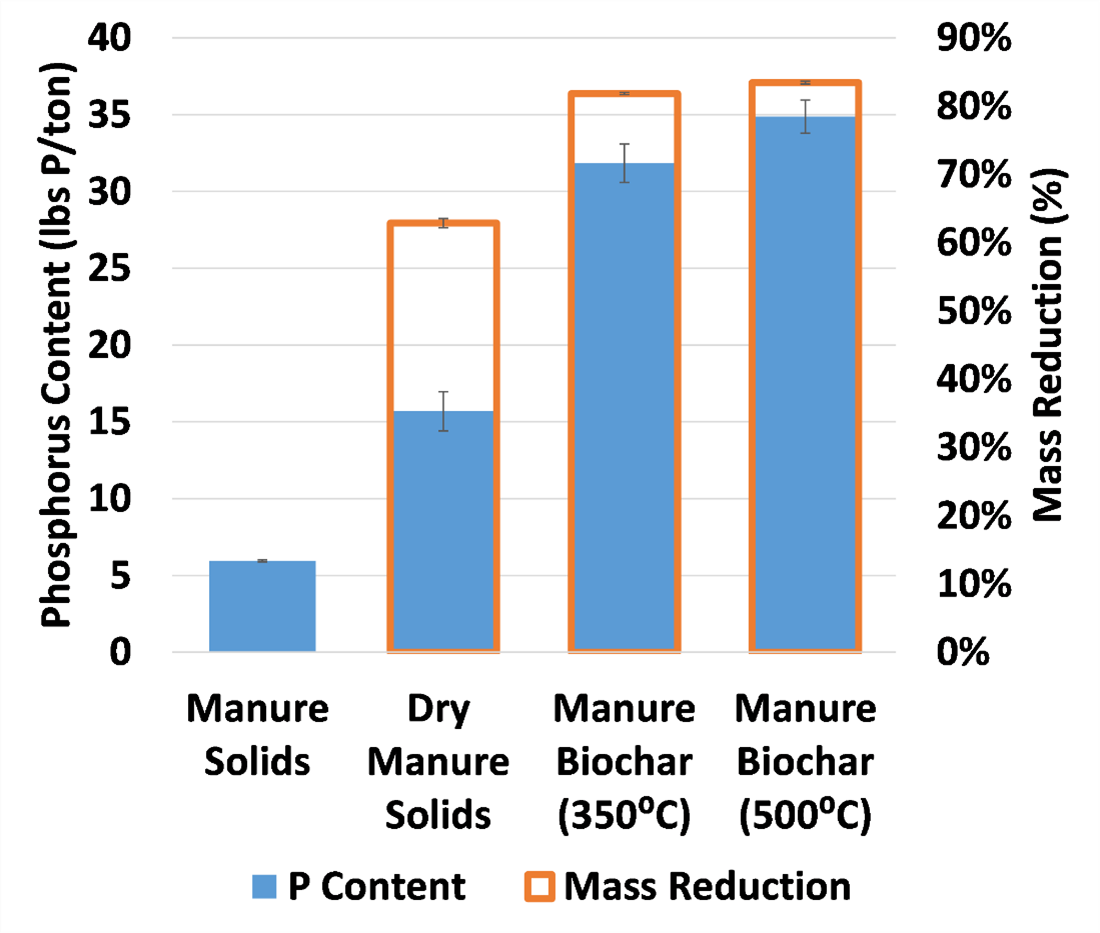
We found that converting manure solids to biochar is an effective method for reducing manure mass while retaining the original manure phosphorus content (as shown in Figure 1). However, manure derived biochar had lower available phosphorus following pyrolysis than the original separated manure solids, with the available P decreasing as the pyrolysis temperature increased.

Figure 1: Mass reduction and P content following drying and pyrolysis of manure.

During the soil incubation study, while soils with manure derived biochar application had lower available phosphorus at the start of the incubation period, within 28 days available soil phosphorus reached similar levels to those amended with separated manure solids in both soil textures. While nitrogen was applied at different rates, making comparisons difficult, there were minor changes in soil available nitrogen for manure derived biochar, suggesting no additional nitrogen availability during the incubation period.

Future Plans

We plan to further investigate manure derived biochar as a potential advanced manure processing pathway, by evaluating whether manure derived biochar can provide additional soil benefits, such as reducing nitrogen leaching when amended to agronomic soils and increasing crop yields in field studies.

Authors

Joseph R. Sanford, Assistant Professor and Wisconsin Dairy Innovation Hub Affiliate Researcher, School of Agriculture, University of Wisconsin-Platteville
sanfordj@uwplatt.edu

Additional Authors

Rebecca A. Larson, Associate Professor, Biological Systems Engineering, University of Wisconsin-Madison

Additional Information

Sanford, J., H. Aguirre-Villegas, R.A. Larson, M. Sharara, Z. Liu, & L. Schott. 2022. Biochar Production through Slow Pyrolysis of Animal Manure. University of Wisconsin-Extension, Publication No. A4192-006/AG919-06, I-01-2022.

Acknowledgements

This material is based on work that is supported by the National Institute of Food and Agriculture, U.S. Department of Agriculture, under award number 2017-67003-26055. Partial support was provided by the Wisconsin Dairy Innovation Hub. Any opinions, findings, conclusions, or recommendations expressed in this publication are those of the author(s) and do not necessarily reflect the view of the U.S. Department of Agriculture or Wisconsin Dairy Innovation Hub.


The authors are solely responsible for the content of these proceedings. The technical information does not necessarily reflect the official position of the sponsoring agencies or institutions represented by planning committee members, and inclusion and distribution herein does not constitute an endorsement of views expressed by the same. Printed materials included herein are not refereed publications. Citations should appear as follows. EXAMPLE: Authors. 2022. Title of presentation. Waste to Worth. Oregon, OH. April 18-22, 2022. URL of this page. Accessed on: today’s date.

Impact of Sludge on Nutrient Concentration in Anaerobic Swine Lagoon Supernatant

Purpose

The most common waste management practice on hog farms in Eastern North Carolina are anaerobic lagoons. Lagoons contain three zones: [1] sludge storage zone at the bottom, [2] treatment zone for incoming manure in near the middle, and [3] a liquid (supernatant) storage zone at the top. The supernatant is land applied throughout the year as a nutrient source for growing crops on farms while the middle (treatment) zone is required to remain full to ensure effective treatment.

Considering the risk that hurricanes pose to North Carolina and the hog sector (particularly during late summer months), close lagoon management is critical to avoid risk of overflow or breach. Currently, regulations allow swine growers to lower the effluent level in their lagoons by applying part of the treatment zone effluent. Conditional to this allowance, however, is that the treatment zone contains at least 4-feet of depth that is sludge-free. This condition aims to ensure applied effluent is safe for application.

While this condition is helpful to reducing the risk of applying higher concentration of phosphorus, zinc, and copper to crops, many producers do not meet this condition due to excessive sludge buildup and would not be able to lower the lagoon level which poses a significant risk during intense rainfall events.

This study aims to quantify the impact of the sludge-free depth in the lagoon on the quality of supernatant during the drawdown period. Findings will help with precision nutrient application from swine manure and allow for further drawdown during necessary storm events.

What Did We Do

This study used a dataset representing 27 swine operations in Eastern North Carolina between 2016-2021. The dataset includes:
1. Monthly effluent/waste sampling analysis,
2. Annual sludge surveys, as well as
3. Lagoon level readings.

This dataset was analyzed using statistical methods to quantify the impact of seasonality (time of year), farm type (sow, finisher, or farrowing), and sludge level on nutrient concentration in the effluent.

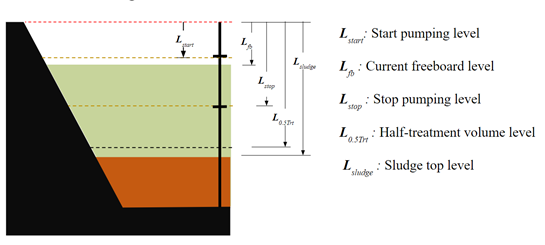
Most growers use depth, in inches, to report volumes applied or available for storage. However, when comparing lagoons with different designs, this can be a challenge. As such, we developed two parameters to facilitate cross-farm, cross-lagoon comparisons. The first is “freeboard ratio” (FBR), which refers to the relative “fullness” of the storage zone in the lagoon. FBR value between 0 and 1 indicates the lagoon is currently within the storage volume (between start and stop pumps), values greater than 1 indicate the lagoon is in drawdown, and negative values indicate the lagoon level exceeded the storage volume and is currently in the rainfall/storm storage zone and must be lowered promptly. The equation used to calculate FBR is as follows:

TBR= LFB-Lstart , variables defined in Figure 2.
Lstop-Lstart

The second variable is “sludge level ratio” (SLR), which refers to the relative treatment volume available compared to the 50% treatment volume required. SLR values greater than 1 indicate that more than 50% of the treatment volume is sludge-free in the lagoon and therefore drawdown can proceed, and no sludge removal is necessary. SLR values less than 1 indicate that less than 50% of the treatment volume is available and drawdown might not be feasible. The equation used to calculate SLR is as follows:

SLR= Lsludge-Lstop , variables defined in Figure 2.
L0.5. Trt-Lstop
Figure 2. Anaerobic lagoon zones used to calculate study parameters FBR and SLR

What Have We Learned

In analyzing the dataset we observed that only 2% of the samples were collected while the lagoon level exceeded storage level (above the start-pump level). This suggests the majority of studied operations were successful in managing effluent despite the wet years observed between 2016 and 2021. By comparison, 22% of the samples were collected while the lagoon was at a draw-down state (the entire storage volume is empty and the treatment zone is partially emptied).

Additionally, 38% of the samples collected were associated with lagoons that needed sludge removal (SLR < 1). These results are summarized in Table 1, with 12% of samples collected from lagoons in drawdown (FBR > 1) and in need of sludge removal (SLR < 1). This latter group of samples represent the primary concern for lagoon drawdown.


Table 1. Summary of FBR and SLR Interactions
Lagoon Sample Class Sludge Level Ratio (SLR)
No Removal Removal Due
Freeboard Ratio (FBR) Above stop-pump 40% 26%
In drawdown 22% 12%

The season was a significant predictor of the lagoon level (p < 0.001), with the late irrigation season (July – Sept) showing the least effluent volume in the lagoon. On average, 91% of the storage volume was unoccupied. This compares to the winter months (Oct – Feb) and the early irrigation season (Mar – June) with 81 and 69% of the storage volume empty, respectively.

For all seasons the mean ratio of N : P2O5 : K2O in the supernatant is 4 : 1 : 8.2. There was less variability for N and K content with the lagoon level than for P, Zn, and Cu. This can be attributed to the N and K being primarily in soluble forms in the lagoon supernatant compared to P2O5, Zn and Cu which are mostly bound to solids.

The analysis showed a greater variability in Zn, Cu, and P levels with changes in solid concentration in the supernatant as well as the amount of suspended solids as a result of wind or active lagoon agitation/sludge removal.

Overall, the results showed lagoon drawdown and existing sludge reserves to have a combined effect on nutrient concentrations in the supernatant, particularly for phosphorus.

Future Plans

This study will inform ongoing research to predict temporal variability in nutrient content in the lagoon due to weather, operational decisions, and time of year. Near term, these observations will help guide application rates to ensure P levels meet crop demands particularly during late-season drawdown without significantly increasing soil P levels. In addition, this work will be part of a larger study to predict the performance of anaerobic treatment lagoons under future climate conditions.

Authors

Presenting Author:
Carly Graves, Graduate Research Assistant, North Carolina State University

Corresponding Author:
Dr. Mahmoud Sharara, Assistant Professor & Waste Management Extension Specialist, North Carolina State University
msharar@ncsu.edu

Acknowledgements

Thank you to Smithfield Foods, Inc. for funding this research and providing datasets of sludge surveys.

Videos, Slideshows and Other Media

https://content.ces.ncsu.edu/sludge-sampling-in-anaerobic-treatment-swine-lagoons


The authors are solely responsible for the content of these proceedings. The technical information does not necessarily reflect the official position of the sponsoring agencies or institutions represented by planning committee members, and inclusion and distribution herein does not constitute an endorsement of views expressed by the same. Printed materials included herein are not refereed publications. Citations should appear as follows. EXAMPLE: Authors. 2022. Title of presentation. Waste to Worth. Oregon, OH. April 18-22, 2022. URL of this page. Accessed on: today’s date.
Subsurface Applying Swine Manure into Wheat as a Spring Nitrogen Source

Purpose

In Ohio, the surface application of swine manure to soft red winter wheat in late March or early April is a common practice. This process makes good use of the ammonium nitrogen in the manure and provides an in-season window to apply manure to a growing crop. The savings in purchased nitrogen fertilizer can help offset most of the manure application expense.

The Maumee River in Northwest Ohio drains into the Western Lake Erie Basin and has been the ongoing focus of concern as phosphorus carried to the lake continues to be cited as a cause of harmful algal blooms. The surface application of manure, without follow up incorporation tillage, could be banned if water quality problems persist. This could jeopardize the application of manure to wheat and the application of manure to forages between cuttings. The purpose of this research project was to determine if manure could be subsurface applied to wheat using a Grassland Applicator toolbar and produce similar yields to surface applied manure or commercial fertilizer. If this method of manure application was successful, it could become a viable option for livestock farmers and commercial manure applicators wanting to apply manure to wheat in the Maumee River watershed.

Subsurface applied manure to wheat is not common practice in Ohio. Wheat plants and plant roots are damaged as the Grassland Applicator travels across the wheat field. This study sought to document yield losses if they occurred.

What Did We Do

This one-year study was designed to determine if manure could be subsurface applied to wheat and produce similar yields to surface applied manure or commercial fertilizer. Three livestock farmers with available wheat fields were contacted for on-farm manure plots. Each of the three farmers had slightly different comparison plots so we will refer to them as the Haselman Farm, the Maag farm, and the Leopold farm.

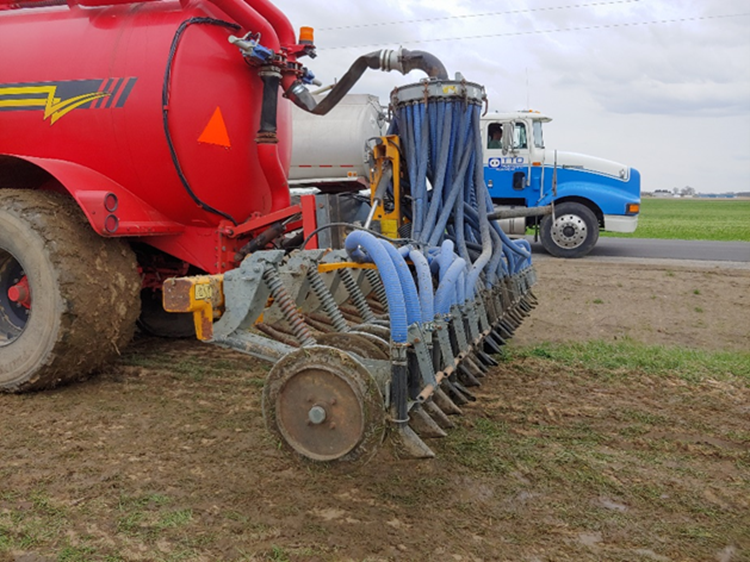
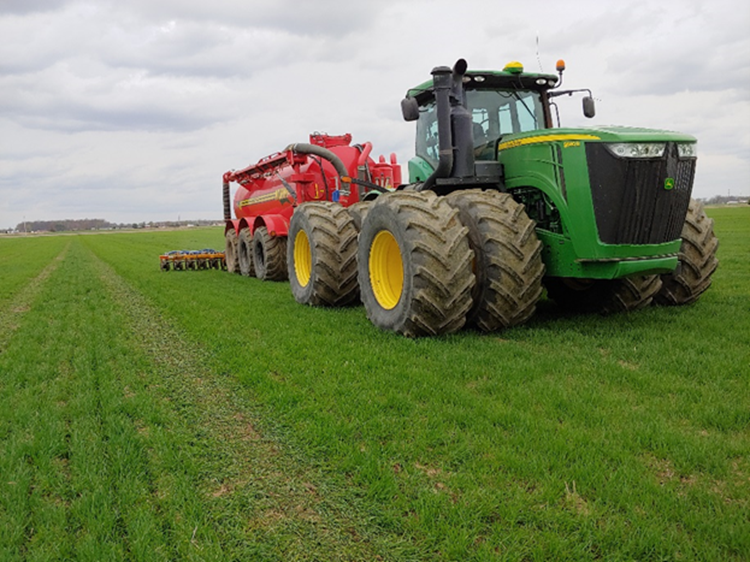
A 20-foot wide Grassland Applicator toolbar was attached to a 7,350 gallon manure tanker and used to subsurface apply manure to soft red winter wheat fields in early April. The manure tanker was owned by a commercial manure applicator and the livestock producers paid the commercial applicator for the manure application. The Grassland Applicator toolbar was owned by one of the livestock farmers.

The Haselman field compared subsurface applied manure to surface applied manure. Liquid swine finishing manure was both surface applied and subsurface applied in 40-foot (two 20-foot passes with the toolbar) treatments that were 1,050 feet long. Four treatments of subsurface applied manure were compared to four treatments of surface applied manure in a randomized block design. The surface application was accomplished by raising up the Grassland Application toolbar so that it just grazed the soil surface. This field was a certified organic field.

A history of manure samples showed 25 pounds of available nitrogen per 1,000 gallons in the swine finishing manure. The subsurface application involved slicing the soil every 7.5 inches to a width of approximately three eights of an inch and having a boot to place the manure over the soil opening. The soil slices were approximately three and a half inches deep. This field was organic and the wheat had been planted as a surface seeding and incorporated with shallow tillage the previous fall so there were no rows to follow. Due to the width of the dual tires on the application tractor and the flotation tires on the manure tanker, we estimated 40% of the wheat was flattened during the application process. The wheat was in the V4 stage of growth when the surface and subsurface manure treatments were applied. The field was harvested in early July using a John Deere combine with a 30-foot header.

On the Maag field, the subsurface manure treatment was compared to 100 pounds per acre of nitrogen applied as 28%Urea Ammonium Nitrate (UAN). On this field, the manure applicator traveled at a slight angle (approximately 10%) to the direction the wheat was planted to avoid having the toolbar follow the row. Both the manure and the 28%Urea Ammonium Nitrate treatments were applied the same day. As with the Haselman field, we estimated 40% of the wheat was flattened during the application process. This was the last of the three fields treated and the wheat was in the late V5 stage of growth due to weather delays and the commercial applicator having other manure application commitments. The 28% UAN was applied with an applicator with a 120 foot boom width.

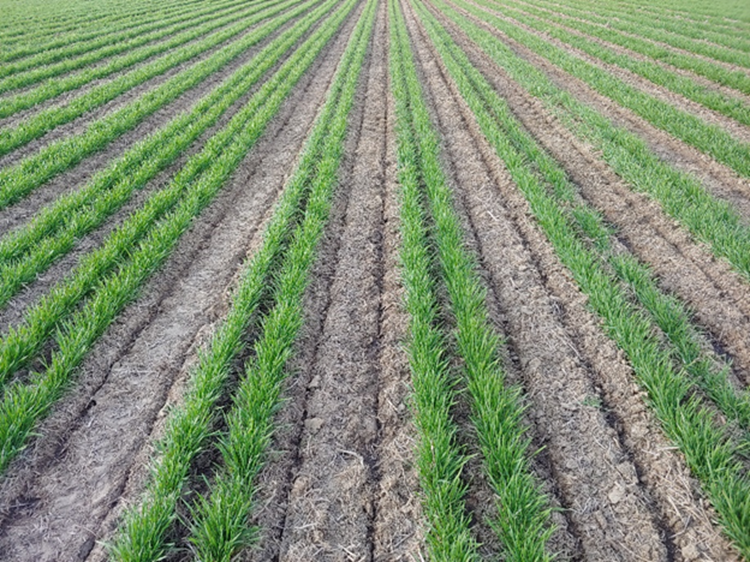
The Leopold field involved wide-row wheat in a field that was transitioning into organic status. The wheat had been planted in twin rows that were five inches apart and left 22.5 inches for equipment to travel between the twin rows. The Grassland Application toolbar was connected to a smaller tractor and tanker with wheels designed to travel between the wheat rows. As a result, there was very little wheat run over and minimal plant damage from the application toolbar. Previous manure samples from this swine nursery indicated 17 pounds of available nitrogen per 1,000 gallons. The subsurface manure application rate was 6,000 gallons per acre to get 102 pounds of available nitrogen. This was compared to 6,000 gallons of surface applied manure.

Figure 1: Closeup view of the Grassland Applicator toolbar.


Figure 2: Manure application to V4 stage wheat.


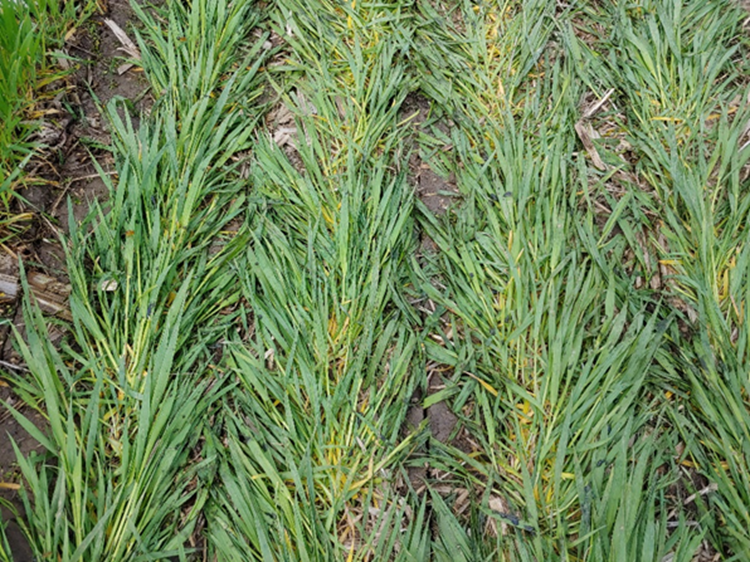
Figure 3: V5 stage wheat flattened by the manure tanker. Soil slices are the Grassland Applicator toolbar.


Figure 4: Wide-row wheat with subsurface nursery manure application.

Manure samples were collected and analyzed during the application process.

Table 1. Average nutrient analysis of swine manure applied.
Swine Finishing Manure Swine Nursery Manure
Nutrient Pounds per 1,000 gallons Pounds per 1,000 gallons
Total Nitrogen 26.2 18.1
Ammonium Nitrogen (NH4) 24.4 16.5
Organic Nitrogen 1.2 1.0
Available Nitrogen 25.0 17.0
Phosphorus (P2O5) 7.1 4.3
Potash (K2O) 10.9 8.2

What Have We Learned

In the Haselman organic wheat field, the subsurface applied manure yielded less than the surface applied manure. The thought process is that the damage to the wheat plants and roots caused by the Grassland Applicator toolbar is responsible for this reduction. The wheat plants were in Feeks growth stage four and handled the tractor and tanker damage well. The tractor and manure tanker tracks through the field were visible but did not appear to cause much damage to the wheat.

In the Maag Farm where subsurface applied manure was compared to commercial fertilizer the subsurface applied yields were higher than the commercial fertilizer yields. This field was in Feekes growth stage five when the treatments occurred. The damage from the manure tanker tires was easy to see for over three weeks as plant growth was badly stunted. The size of the wheat heads in these tracks were much smaller than the undamaged areas of the field. Damage from the tractor tires seemed minimal even though the wheat was more advanced than we wanted.

In the Leopold field wide-row wheat plot, the incorporated manure outyielded the surface applied manure. The tractor tires and the Grassland Applicator toolbar caused minimal damage to the wheat plants. This field was also in Feekes growth four.


Table 2. Wheat yields for treatments comparing nitrogen applied as UAN at planting to side-dressed hog manure. Subscript letters a and b indicate yields that year were statistically different using ANOVA at 0.05 probability level.
Yield in Bushels per Acre
Treatments Haselman Farm Maag Farm Leopold Farm
Subsurface applied finishing manure 95.4 102.6
Surface applied swine finishing manure 93.2
28% Urea Ammonia Nitrate 96.9
Subsurface applied swine nursery manure 82.1
Surface applied swine nursery manure 79.3
Least Significant Difference (0.05) 3.35 13.95 7.33
Coefficient of Variability 1.01 3.99 3.99

The subsurface application of manure using the Grassland Applicator produced wheat yields statistically similar to surface applied manure in the Haselman field. The surface applied manure had less damage to the wheat plants due to the applicator coulters not cutting into the soil.

In the Maag field the subsurface applied manure produces slightly higher yields (although not statistically higher) to the commercial fertilizer. The damage to the wheat field was severe where the tires of the tanker all but killed the wheat plants. The wheat was almost to elongation (Feekes growth stage six) and this field was the most advanced of the three fields studied. The damage from the tractor tires was not severe but the plant damage from the extreme weight of the tanker tires was evident. There was a delay in getting the commercial manure applicator to the field and this resulted in the wheat being more advanced than planned. Wheat heads from plants in the tire tracks were half the size of those where just the tractor track traveled. Wheat heads from the manured treatments also appeared to be larger than the wheat heads from the commercial fertilizer treatments.

In the Leopold field the surface applied manure was slightly less than incorporated manure. Since there was minimal plant damage to the wide-row wheat from the toolbar or the tractor, incorporating the manure may have saved more of the nitrogen compared to the surface applied manure.

Rainfall in the area of the three research fields from April 1st to June 15th was measured at 6.86 inches. Field conditions were unusually dry during application time which helped reduce damage from the tractor and manure tanker tires.

Future Plans

In this study the subsurface application of liquid swine finishing manure and liquid swine nursery manure produced wheat yields similar to surface applied manure and commercial fertilizer. We intend to continue this study in 2022 and 2023 with these farmers to gather additional data.

To avoid the damage from the manure tanker tires, a more ideal situation would be to connect the Grassland Applicator tool bar to a drag hose. This would be a more efficient method to apply manure and cause less field damage and compaction. We also plan to use the toolbar to eventually apply manure to forages between cuttings.

Authors

Arnold, G., Field Specialist, Manure Nutrient Management Application, Ohio State University Extension

Additional Information

Sundermeier, A. (2010). Nutrient management with cover crops. Journal of the NACAA, 3(1). Retrieved from https://www.nacaa.com/journal/index.php?jid=45

Vitosh, M. L., Johnson, J. W., & Mengel, D. B. (2003). Tri-state Fertilizer Recommendations for Corn, Soybeans, Wheat and Alfalfa. Purdue Extension, Lafayette, IN.

Zhang, W., Wilson, R. S., Burnett, E., Irwin, E. G., & Martin, J. F. (2016). What motivates farmers to apply phosphorus at the “right” time? Survey evidence from the Western Lake Erie Basin. Journal of Great Lakes Research, 42(6), 1343–1356. https://doi.org/10.1016/j.jglr.2016.08.007

Facebook Page: Ohio State University Environmental and Manure Management


The authors are solely responsible for the content of these proceedings. The technical information does not necessarily reflect the official position of the sponsoring agencies or institutions represented by planning committee members, and inclusion and distribution herein does not constitute an endorsement of views expressed by the same. Printed materials included herein are not refereed publications. Citations should appear as follows. EXAMPLE: Authors. 2022. Title of presentation. Waste to Worth. Oregon, OH. April 18-22, 2022. URL of this page. Accessed on: today’s date.