Due to a technical glitch, we did not get this presentation recorded. Please accept our apologies.
Purpose
Climate solutions are often talked about in a vacuum and conversation participants can sometimes overlook unintended consequences upon local environment and health. Solutions to mitigate methane from livestock agriculture are no exception to these climate discussions, and can impact other potential pollutants including ammonia, nitrous oxide, and odors. Moreover, it can be a particularly difficult space to work in climate and environmental justice, as many different communities are seemingly villainized and pit against each other, which make climate solutions even harder to implement.
What Did We Do?
Environmental Defense Fund is in the midst of an ongoing pilot project to engage communities in workshops around solutions regarding manure management. The goal of these workshops is to demonstrate best practices for effective collaboration and solution co-creation between farmers/producers and communities that can then be taken to local policymakers and stakeholders to implement. In this way, we can co-create solutions that align with community concerns, climate change mitigation, and feasibility for farmers.
What Have We Learned?
Community co-creation is possible, and even stakeholders who may seem hyper-polarized can still sit together at the same table to work together with ample time, transparency, and trust. Policy implications are enormous here and this session will discuss learnings we have regarding common misconceptions and myths around working with different affected stakeholders, as well as necessary guardrails surrounding commonly discussed methane mitigation technologies.
Future Plans
We will continue to work with the affected communities, including community groups and producer groups, to find common ground, with the hope of making these processes shareable across the country.
Authors
Presenting & corresponding author
Mindi W. DePaola; Senior Manager, Community and Equity, Ag Methane; Environmental Defense Fund, mdepaola@edf.org
Acknowledgements
We’d like to thank groups who have continued to give us time, as time is the biggest resource. These groups include White Earth Nation, EJCAN, Leadership Counsel for Environmental Justice, and MN Milk. NOTE: these are not necessarily official partners but again, want to acknowledge their time spent meeting with EDF.
The authors are solely responsible for the content of these proceedings. The technical information does not necessarily reflect the official position of the sponsoring agencies or institutions represented by planning committee members, and inclusion and distribution herein does not constitute an endorsement of views expressed by the same. Printed materials included herein are not refereed publications. Citations should appear as follows. EXAMPLE: Authors. 2025. Title of presentation. Waste to Worth. Boise, ID. April 7–11, 2025. URL of this page. Accessed on: today’s date.
Bio-based biodegradable plastics led by polylactic acid (PLA) are becoming increasingly popular as a sustainable alternative to traditional plastics. Although bioplastics are designed to break down easily, many do not fully degrade in the natural environment as intended. Anaerobic digestion (AD) is a promising solution for decomposing bioplastics alongside food waste, turning them into biogas for energy and digestate, rich in nutrients, that can be used as fertilizer. However, studies have shown that bioplastics, particularly PLA, does not degrade fully in AD systems. The byproducts left over from AD raise serious problems, especially if residual microplastics could still be present in the digestate and affect the quality of the soil and water. While existing research predominantly focuses on enhancing methane production and biodegradation efficiency during AD, the quality of digestate after the digestion process has been overlooked. This significant research gap was highlighted in this review, emphasizing the need for comprehensive studies that evaluate digestate composition alongside biogas production.
What Did We Do?
A systematic review of peer-reviewed studies was conducted using databases such as Scopus, ScienceDirect and Google Scholar to assess research on bioplastic degradation in anaerobic digestion. The literature search was performed using the keywords ‘bioplastic degradation’, ‘pretreatment methods,’ ‘Anaerobic digestion,’ ‘biodegradation,’ ‘biogas production’ and ‘digestate quality’. Search filters were applied to prioritize recent studies (2010-present), peer-reviewed journal articles, and experimental studies analyzing bioplastic degradation and digestate quality. The initial search yielded 172 papers, which were then screened for relevance based on their focus on bioplastic degradation, biogas production, and digestate analysis. After filtering out studies that were not directly related, 42 papers were selected for detailed analysis. A significant portion of the literature examined the effectiveness of different pretreatment methods in improving bioplastic degradation. These methods included but not limited to thermal pretreatment, where the plastics are exposed to elevated temperatures to increase its hydrolysis potential; alkaline pretreatment, which involves chemical treatments to enhance polymer degradation; and thermo-alkaline pretreatment, a combination of heat and chemical treatment to increase its susceptibility to decomposition. This allowed us to assess the extent to which bioplastic degradation has been addressed and the incomplete degradation persisting, highlighting the need for more comprehensive studies into the digestate quality.
What Have We Learned?
Studies consistently showed that bioplastic, especially PLA, degradation in AD remains incomplete in most cases, leading to concerns about the accumulation of microplastics residues in digestate. While pretreatment methods have been effective, with thermo-alkaline pretreatment yielding the highest methane outputs across most studies. The variability in methane yields across different pretreatment conditions suggests that degradation efficiency is highly dependent on factors such as temperature, retention time, microbial communities, and chemical additives. However, very few studies have explicitly analyzed whether residual bioplastic particles persist in the digestate post-AD. Given that AD is promoted as a promising solution for sustainable plastic waste solution, failing to assess digestate composition may lead to unintended environmental consequences. The implications of these findings are significant, particularly for large-scale implementation. If AD-derived digestate is to be used in agriculture or soil restoration, it must be free of persistent microplastics. Without comprehensive digestate analysis, the environmental benefits of AD for bioplastic waste management remain uncertain.
Future Plans
We are currently conducting an experimental study to evaluate the degradation of PLA in AD under different pretreatment conditions – thermal, alkaline, and thermo-alkaline treatments – to enhance PLA degradation and improve methane yields. More importantly, we aim to go beyond methane production by analyzing the resulting digestate for microplastic residues and overall chemical composition. Future studies will involve optimizing pretreatment strategies to minimize microplastic residues and investigating the long-term impacts of digestate when applied to soil systems.
Authors
Presenting & corresponding author
Nadia Bawa Fio Bekoe, Graduate Research Assistant, Biosystems and Agricultural Engineering Department, Oklahoma State University, nbekoe@okstate.edu
Additional author
Douglas W. Hamilton, PhD, P.E., Associate Professor and Extension Waste Management Specialist, Biosystems and Agricultural Engineering, Oklahoma State University
Acknowledgements
South Central Sun Grant Program Fellowship
Livestock & Poultry Environmental Learning Community (LPELC) Professional Development Grants
The authors are solely responsible for the content of these proceedings. The technical information does not necessarily reflect the official position of the sponsoring agencies or institutions represented by planning committee members, and inclusion and distribution herein does not constitute an endorsement of views expressed by the same. Printed materials included herein are not refereed publications. Citations should appear as follows. EXAMPLE: Authors. 2025. Title of presentation. Waste to Worth. Boise, ID. April 7–11, 2025. URL of this page. Accessed on: today’s date.
Livestock manure nutrients can be variable depending on animal species, age, diet, management, housing, climate, and manure storage and handling. Thousands of samples are analyzed every year by agricultural laboratories across the United States (U.S.). While many published manure characteristics are two decades old, this study provides an updated glimpse into more recent manure data from thousands of samples across the country and reviewed possible trends from 2012-2022 by U.S. regions for common animal categories.
What Did We Do?
We collected manure nutrient data from participating U.S. laboratories and this data was aggregated by researchers at the University of Minnesota into ManureDB, a manure nutrient test database. By February 2024, ManureDB included over 490,000 samples from across the U.S. With ManureDB, data was filtered for the time period from 2012-2022 and common U.S. animal manure categories (solid beef, liquid beef, solid dairy, liquid dairy, solid chicken-broiler, solid chicken-layer, solid turkey, and liquid swine manure) to update nutrient summary statistics for total nitrogen (TN), ammonium-N (NH4-N), phosphorus (P2O5), and potassium (K2O) using the approximately 325,000 samples. Samples were divided by designating samples with <10% total solids as liquid manure and samples with >10% total solids as solid manure. Data was also analyzed to assess regional nutrient comparisons and trends for regions with sufficient samples.
What Have We Learned?
Regional differences impacted nutrient concentrations in solid and liquid manures. When comparing regions with at least 500 samples per animal manure category across 2012-2022 we found significant differences in nutrient concentrations in 66% of the individual year comparisons for solid manures and 91% of comparisons for liquid manures for all four analytes.
Between 2012 and 2022, significant increasing or decreasing nutrient (TN, NH4-N, P2O5, K2O) trends were evident in 25% of solid samples and 18% of liquid samples. The only significant trend for solid beef manure was a decreasing trend in the SE region for NH4-N. Both the solid chicken-broiler SE and NE regions had significant decreases in NH4-N, and only the SE had an increasing trend for K2O. The SE region for solid chicken-layer had decreasing trends for NH4-N, P2O5, and K2O. For solid dairy manure, the MW region only had a decreasing trend for P2O5, while the NE region had decreasing trends for N and NH4-N. Solid turkey manure only had significant trends for P2O5, with the MW increasing and the SE decreasing. Liquid beef manure had no significant trends. For liquid dairy manure, only the NE region had significant decreasing trends for all four nutrients. For liquid swine manure, only the SE region had significant increasing trends for NH4-N.
Standardizing nomenclature and increasing manure sample details, especially with animal life stage and manure storage information on manure sample submittal forms, will further improve ManureDB’s usefulness.
Future Plans
We continue to expand and refine ManureDB by adding data each year, additional labs, making the website more user-friendly, and enhancing data quality control. We archived the first set of data with Ag Data Commons in 2024 and plan to do that annually. We also plan to publish several papers regarding the development of the database and analysis of the manure nutrient data.
Authors
Presenting & corresponding author
Nancy L. Bohl Bormann, Researcher, University of Minnesota, nlbb@umn.edu
Additional authors
Melissa L. Wilson, Associate Professor, University of Minnesota
Erin L. Cortus, Associate Professor and Extension Engineer, University of Minnesota
ManureDB is supported through USDA NIFA Award 2020-67021-32465 and Cooperative Ecosystem Studies Unit program [grant no. NR253A750008C001] from the U.S. Department of Agriculture — Natural Resources Conservation Service.
The authors are solely responsible for the content of these proceedings. The technical information does not necessarily reflect the official position of the sponsoring agencies or institutions represented by planning committee members, and inclusion and distribution herein does not constitute an endorsement of views expressed by the same. Printed materials included herein are not refereed publications. Citations should appear as follows. EXAMPLE: Authors. 2025. Title of presentation. Waste to Worth. Boise, ID. April 7–11, 2025. URL of this page. Accessed on: today’s date.
Dairy farmers in Washington state have been under significant pressure to reduce their carbon footprint in recent years. Dairy cooperative sustainability initiatives such as achieving carbon neutrality by 2050 have left many producers wondering what will be required of them to help their cooperatives meet this goal. Coupled with regulatory pressures to report on their greenhouse gas emissions and the threat of regulation to reduce them, uncertainty remains for producers around the types of climate-smart practices that will enable them to reduce their carbon footprint while remaining economically viable.
Without a thorough understanding of the costs and risks, pressures, or requirements to implement climate-smart practices may inadvertently drive consolidation and the accelerated loss of small to medium sized farms.
What Did We Do?
Utilizing Washington state dairy facility data, I conducted an economic cost benefit analysis of two climate-smart practices that capture GHGs from anaerobic storage: anaerobic digestors and the covered lagoon and flare system and the size of operation needed to implement both practices based on current and historic market conditions and technology costs. Private and public investment in climate-smart practices can have a substantial impact on whether they are economically feasible for producers to implement. I considered the impacts of various levels of cost-share on the size of farm able to adopt the technology based on several economic indicators.
What Have We Learned?
Most dairy farms cannot simply raise their prices to offset the costs of climate-smart practices, therefore it is critical to understand the broad economic impacts of imposing emissions reductions mandates. With consolidation being a well-documented trend across dairy farms in the United States, it is possible that climate regulations will only further exacerbate this trend due to the high capital costs and market risk associated with climate-smart farming that only facilities of scale can take on.
Future Plans
I am actively assisting research right now in Washington state with university and private researchers into dairy farm carbon intensities, across various farm sizes and facility types. An overview of this research may be available by Summer of 2025. Once this work is completed, we will have a better understanding of overall farm emissions and what climate-smart practices may be necessary for farms to implement to help achieve cooperative net zero targets.
Authors
Presenting & corresponding author
Nina Gibson, Agricultural Economist and Policy Specialist, Washington State Department of Agriculture, KGibson@agr.wa.gov
The authors are solely responsible for the content of these proceedings. The technical information does not necessarily reflect the official position of the sponsoring agencies or institutions represented by planning committee members, and inclusion and distribution herein does not constitute an endorsement of views expressed by the same. Printed materials included herein are not refereed publications. Citations should appear as follows. EXAMPLE: Authors. 2025. Title of presentation. Waste to Worth. Boise, ID. April 7–11, 2025. URL of this page. Accessed on: today’s date.
The overall objectives of this research are to describe the current linkages among participants in the dairy manure compost supply chains in the Pacific Northwest (PNW) states of ID, OR, and WA and to provide analytical insights into the challenges and opportunities for enhancing manure compost marketability and usage in the different regions. Obtaining an enhanced understanding of these market dynamics is necessary for explaining why and how dairy compost quality varies and for identifying strategies for establishing and/or strengthening linkages among market participants. Improving dairy compost quality and increasing usage among crop producers is important for achieving sustainable environmental quality and agricultural business profitability in all PNW states.
What Did We Do?
Our analysis builds on the underlying concept that is outlined in Extension bulletins and other references from universities in the PNW (e.g., Chen et al. 2011), which emphasize that developing good quality dairy manure-based compost requires achieving a proper Carbon (C) to Nitrogen (N) ratio (C:N) of about 30:1. It is common that supplemental C is needed to increase the C:N balance in dairy manure-based compost to that magnitude. There are various sources of supplemental C used by PNW compost producers, but the most common are cereals (barley and wheat) straw, corn stalks/silage, sawdust, and wood chips.
We created Figure 1 to describe, with several assumptions, the major participants in the PNW dairy compost supply chains and the nature of their typical interactions with each other. The main participants include dairies, compost businesses, logging businesses, cereals farms, laboratory testers, and silage farmers. We next implemented data-driven analyses to determine if and the extent to which the linkages among the dairy compost supply chain participants differ across PNW states, based on the structure of the dairy and other aligned industries (e.g., logging) in each state. The principal objective of the analyses was to quantify the relative spatial concentration of the dairy industries, which has implications for business profitability and policy-driven incentives for implementing the composting process. We used a couple of different measures of dairy market concentration for comparison. The first is the Herfindahl-Hirschman Index (HHI), which is a statistical measure of industry concentration (Rhoades, 1993). We applied the calculation of the HHI in a manner that is different than is typically done such that the obtained values represent differences in the spatial concentration of the dairy industries in ID, OR, and WA. We supplemented the HHI values with calculations of the ratios of dairy cow inventories to cropland acreage. Lastly, to obtain insights about the relative strengths of linkages among potential dairy compost supply chain entities, we estimated the correlation between county level dairy cow inventories, cropland acreage, and the numbers of other entities (e.g., logging businesses) for each state.
Figure 1. Diagram of major PNW dairy compost supply chain linkages (Source: Authors)
What Have We Learned?
The estimated HHI values in our context could range from close to about 100, which would reflect an even distribution of dairy cows among all counties in a state, to 10,000, which would imply that all dairy cows are in a single county. Our estimated HHI values based on 2022 data from the USDA Census of Agriculture were 1,378 for ID, 2,307 for OR, and 2,082 for WA. Thus, by the HHI measure, the dairy industries in OR and WA are more spatially concentrated than that in ID. However, by the ratio of dairy cow inventory to cropland acreage measure, all states have counties with relatively high concentrations of dairy cows, but to different extents across states. Additionally, estimates from the correlation analysis at the county level show a positive relationship between dairy cow inventories and cropland acreage for all states (statistically significant at the 5% confidence level for OR). A negative, but not statistically significant, relationship was found between the number of logging businesses and dairy cows in all states, but the magnitude was largest in ID. Thus, it is more common that counties have both dairy cows and logging businesses in a county in OR and WA than in ID. These relationships help explain why wood-based amendments with higher C are likely more commonly used in the composting process in OR and WA than in ID, as well as how the associated compost qualities differ across states.
Future Plans
The analyses we have implemented so far are at the county level. We plan to implement additional analyses that include identifying larger multi-county dairy producing regions and compiling more data on the existing supply chain participants, including cropland acreage for other crops (i.e., non-grain and silage) in such regions. This expanded analysis will provide more regionally specific assessments of the differences in dairy compost components/quality among the major dairy producing regions in the PNW.
Authors
Presenting & corresponding author
Patrick Hatzenbuehler, Associate Professor and Extension Specialist – Crop Economics, University of Idaho, phatzenbuehler@uidaho.edu
Additional authors
Srijan Budhathoki, Graduate Student, Washington State University
Mario de Haro-Martí, Extension Educator – Gooding County, University of Idaho
Anthony Simerlink, Extension Educator – Power County, University of Idaho
Research funding was provided by USDA-NIFA Sustainable Agricultural Systems Grant No. 2020-69012-31871 and the Idaho Agricultural Experiment Station.
The authors are solely responsible for the content of these proceedings. The technical information does not necessarily reflect the official position of the sponsoring agencies or institutions represented by planning committee members, and inclusion and distribution herein does not constitute an endorsement of views expressed by the same. Printed materials included herein are not refereed publications. Citations should appear as follows. EXAMPLE: Authors. 2025. Title of presentation. Waste to Worth. Boise, ID. April 7–11, 2025. URL of this page. Accessed on: today’s date.
Manure is a tremendously valuable nutrient source. Not all the nitrogen (N) in manure is plant-available at land application. Organic N is released into plant-available forms over multiple years. Inorganic N availability depends on the application method and timing, with more plant-available N from manure when injected in the spring than when surface applied in fall. A manure N crediting system was developed in New York in the late 90s that credits N from manure based on manure’s composition and application timing and method. With advances in farm management, the manure that dairy farms are land-applying now may be very different from the manure sources used to develop that crediting system. The Value of Manure project was initiated by the New York On-Farm Research Partnership in 2022 to update New York’s manure crediting system. Over multiple years, the project evaluates different manure sources, application methods, and timings that commercial farms now use. Additionally, we are documenting the impact of manure on yield beyond what can be obtained with inorganic fertilizer only.
What Did We Do?
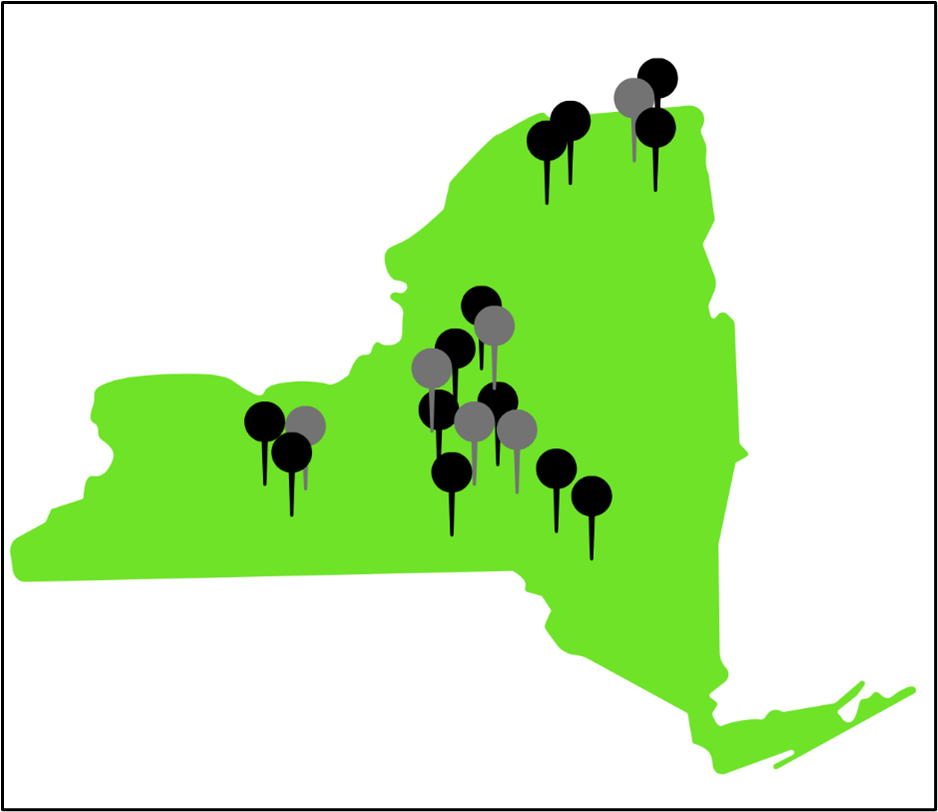
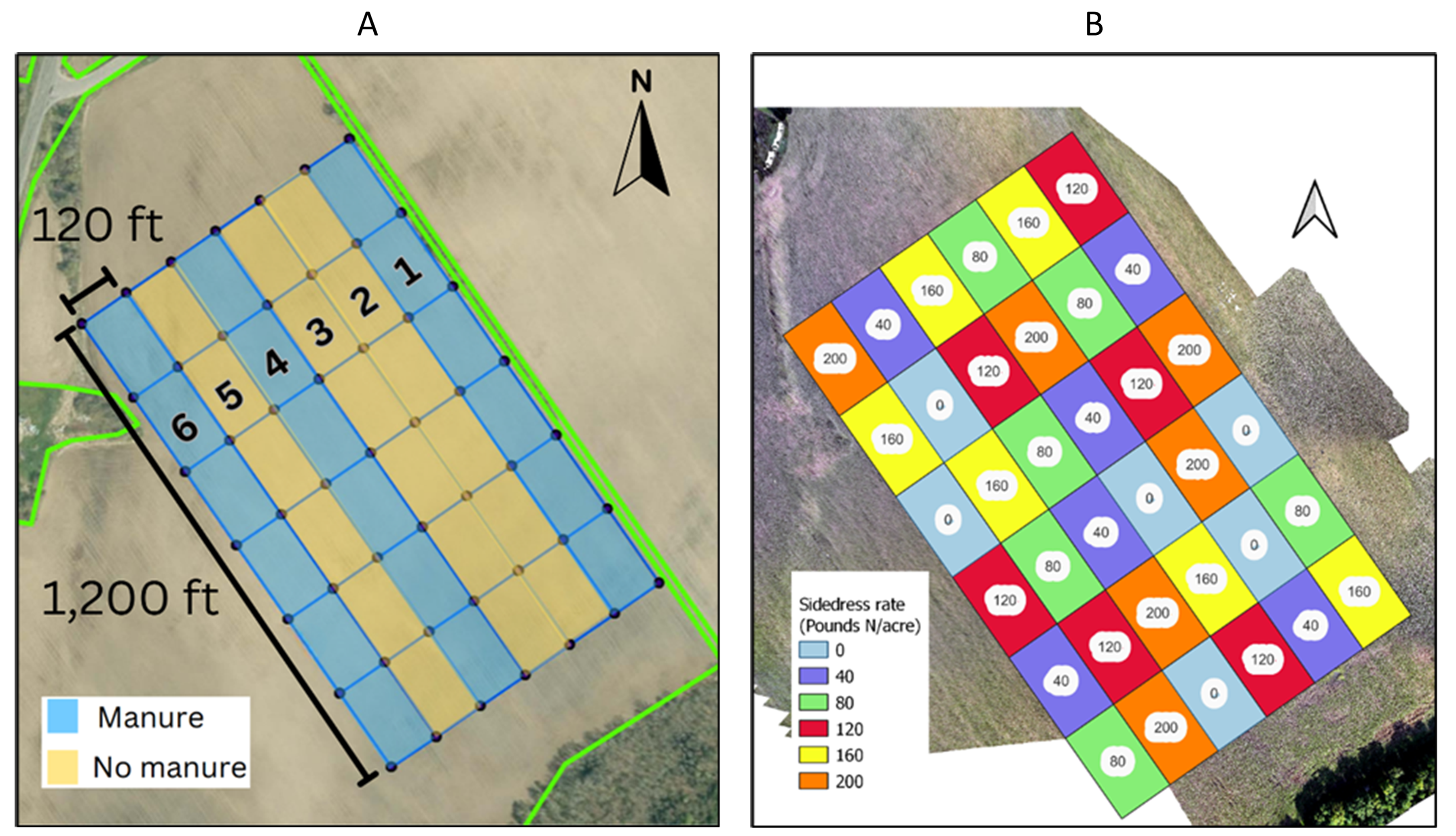
Nineteen trials were implemented on commercially farmed corn fields across New York between 2022 and 2024 (Figure 1). Each trial had three strips that received manure and three that did not, for a total of six strips per trial (Figure 2a). Five “carryover” trials received manure in the spring of year 1, and we tested manure N and yield benefits in the second year after application. Manure was applied and tested in the same year in all the other trials. Soil type, dairy manure type (digestate, separated liquids, untreated, etc.), application rate, and application methods (broadcasted, injected, etc.) varied across trials (see our “What’s Cropping Up?” extension articles in the Additional Information section for more details).
When corn was at the V4-V6 stage each strip was divided into six sub-strips (Figure 2b), and subplots were sidedressed at a rate usually ranging from 0 to 200 pounds N/acre. Sidedress rates were trial-specific, based on the expected N requirement of each field according to the Nitrogen Guidelines for Field Crops in New York. In each trial, we measured manure nutrient composition, general soil fertility, Pre-Sidedress Nitrate Test (PSNT), Corn Stalk Nitrate Test (CSNT), yield, and forage quality.
Figure 1. Nineteen Value of Manure trials have been implemented across New York between 2023 and 2024.Figure 2. Layout of a Value of Manure study plot. Three strips received manure before planting corn (1a). At the V4-V6 stage each of the six strips received six different inorganic N sidedress rates (1b).
What Have We Learned?
In the three years of the project, we have documented how manure offsets fertilizer needs and “bumps” yields. Yield responses to manure and fertilizer N vary by location and year, influenced by field past management (manure history, crop rotation, etc.) and weather.
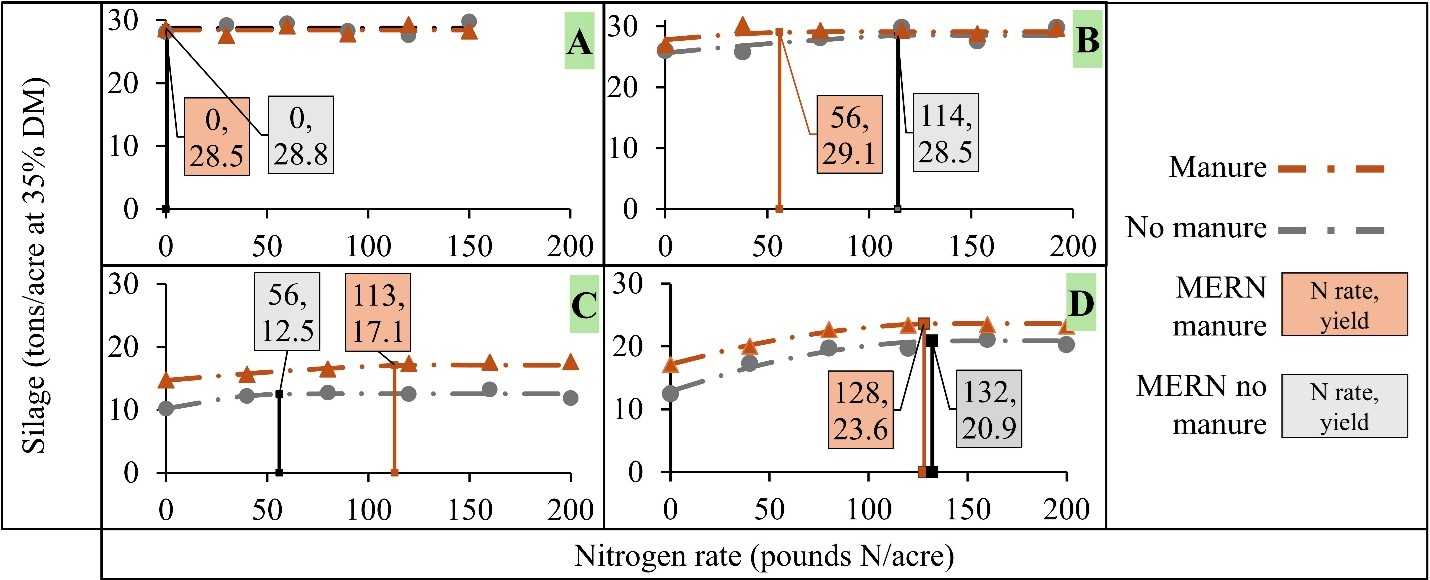
We observed no yield response to manure or sidedress N application in three trials (Figure 3A, Table 1 trial A). That was likely due to high N credits from past manure applications. Yet those trials were among the highest-yielding ones and had excessive CSNT results.
At the Most Economical Rate of N (MERN, the N rate that maximizes economic return), manure replaced inorganic N fertilizer in six trials by lowering sidedress fertilizer needs (Figure 3B, Table 1 trial B). In the manure strips for these trials, yields at MERN were higher than the yields at the MERN of the no-manure plots.
In three trials manure applications increased yields to such elevated levels (2.3 to 4.6 tons/acre), that it also increased the crop’s need for fertilizer N (Figure 3C, Table 1 trial C).
Significant yield bumps due to manure application were documented in fourteen trials. These yield bumps were also present in all five “carry-over” trials, where we saw that manure applied in year 1 benefited yields in the second year after application (Figure 3D, the carryover study of Figure 3C trial, Table 1 trial D).
Figure 3. Four examples of crop response to manure and sidedresss N as part of the statewide Value of Manure trials conducted between 2022 and 2024. Orange text boxes are the MERN and yield at MERN for manured plots; gray text boxes are MERN and yield at the MERN for no-manure plots. Yields are in tons/acre at 35% dry matter (DM).
Table 1. Most economic rates of N (MERN) for no-manure and manure plots and manure-induced yield increase (tons/acre at 35% dry matter) for four examples of crop response to manure and sidedress N as part of the statewide Value of Manure trials conducted between 2022 and 2024.
Trial
No manure MERN
Manure MERN
Manure-induced yield increase
————- pounds N/acre ————-
tons/acre
A
0
0
0
B
114
56
0.6
C
56
113
4.6
D *
132
128
2.7
*Note: Trial D was a carryover study where manure was applied in the spring of 2023 and we tested its value for 2024 corn.
Future Plans
To re-evaluate the current N crediting system and learn how to predict and take into account yield bumps, the Value of Manure project requires the addition of more trials beyond the nineteen trials completed so far. Thus, the Value of Manure Project will continue in 2025. We will be testing additional manure types and application methods in various soil types and weather conditions and follow up with several sites to determine carryover benefits into the third year after application.
Authors
Presenting author
Juan Carlos Ramos Tanchez, On-Farm Research Coordinator, Nutrient Management Spear Program, Cornell University
Corresponding author (name, title, affiliation)
Quirine M. Ketterings, Professor, Cornell University, qmk2@cornell.edu
Additional authors
Kirsten Workman, Nutrient Management and Environmental Sustainability Specialist, PRO-DAIRY and Nutrient Management Spear Program, Cornell University; Carlos Irias, Master Student, Nutrient Management Spear Program, Cornell University.
We thank the farms participating in the project and their collaborators for their help in establishing and maintaining each trial location, and for providing valuable feedback on the findings. This project has been funded by Northern New York Agricultural Development Program, New York Farm Viability Institute, New York Department of Environmental Conservation, New York Department of Agriculture and Markets, Dairy Management Inc., and the Foundation for Food & Agricultural Research.
The authors are solely responsible for the content of these proceedings. The technical information does not necessarily reflect the official position of the sponsoring agencies or institutions represented by planning committee members, and inclusion and distribution herein does not constitute an endorsement of views expressed by the same. Printed materials included herein are not refereed publications. Citations should appear as follows. EXAMPLE: Authors. 2025. Title of presentation. Waste to Worth. Boise, ID. April 7–11, 2025. URL of this page. Accessed on: today’s date.
Advanced manure processing technologies offer the potential to enhance the sustainability of these systems by separating manure into various streams for more efficient post-processing management. This presentation will synthesize findings from multiple full-scale studies on manure processing systems, focusing on separation technologies. It will also include recent evaluations of systems designed to treat manure to a quality suitable for discharge into surface waters. The data presented will cover separation efficiencies of key components, system performance, operational challenges, barriers to adoption, and the results of life cycle assessments of the environmental impacts when integrated into dairy facilities. These insights can provide valuable guidance for producers and stakeholders on how to integrate these systems effectively to achieve targeted environmental and operational outcomes.
What Did We Do?
A number of full-scale manure separation systems were analyzed over time to assess the nutrient separation efficiency of each component. This included systems from previously published data as well as two new sites analyzed in 2024-2025.
Site 1. A total of 45 manure samples were collected over 37 weeks from the Aqua Innovations treatment system located in Middleton, WI. Samples were collected from the (1) influent manure (following digestion), the (2) separated solid (screw press)and (3) liquids from the separator (screw press), (4) separated solid (centrifuge), (5) liquids from separator (centrifuge), (6) ultrafiltration (UF) concentrate and, (7) UF treated liquid, and the (8) reverse osmosis concentrate, and (9) clean water discharged.
Site 2. Samples were also collected from a dairy with a Livestock Water Recycling system located in Kiel, WI. Similarly, samples were collected over 45 sampling events from (1) liquid influent entering the inclined screen/roller press (raw manure), (2) liquid effluent following the inclined screen/roller press, (3) solids following the polymer assisted inclined screen/roller press, (4) liquid effluent following polymer assisted inclined screen/roller press, (5) outflow from clarifier, (6) liquid effluent following reverse osmosis (“clean” water), and (7) nutrient concentrate following reverse osmosis.
Samples were collected and shipped to Great Lakes Labs after each week of sampling and manure analyzed for manure total solids (or dry matter), total phosphorus, total nitrogen, ammoniacal nitrogen, potassium among many other sample parameters. Nutrient separation efficiencies were then compared for the entire system and each system component to previously collected data and data reported in literature.
What Have We Learned?
Separation efficiencies vary significantly for each nutrient through the system. Mutiple separation systems in series reduce variability in separation efficiency. Manure nitrogen is primarily removed from advanced treatment components, ultrafiltration and reverse osmosis, while solids and phosphorus are primarily removed in the initial separation stages.
Future Plans
Data will be further analyzed and published in a peer-reviewed journal. The data will also be integrated into a partial life cycle assessment to determine the impact to various environmental impact categories. This will be useful in aiding farmers in selecting processing systems for targeted outcomes in terms of nutrient separation and environmental outcomes.
Authors
Presenting & corresponding author
Rebecca A. Larson, Professor, Nelson Institute for Environmental Studies, University of Wisconsin-Madison, rebecca.larson@wisc.edu
Additional author(s)
Tyler Liskow, Engineer, Nelson Institute for Environmental Studies, University of Wisconsin-Madison; Brian Langolf, Researcher, Nelson Institute for Environmental Studies, University of Wisconsin-Madison; and Horacio Aguirre-Villegas, Scientist, Nelson Institute for Environmental Studies, University of Wisconsin-Madison
Newtrient and the USDA NRCS Conservation Innovation Grants for the funding to complete system sampling.
The authors are solely responsible for the content of these proceedings. The technical information does not necessarily reflect the official position of the sponsoring agencies or institutions represented by planning committee members, and inclusion and distribution herein does not constitute an endorsement of views expressed by the same. Printed materials included herein are not refereed publications. Citations should appear as follows. EXAMPLE: Authors. 2025. Title of presentation. Waste to Worth. Boise, ID. April 7–11, 2025. URL of this page. Accessed on: today’s date.
Land application of manure is crucial for providing nutrients to crops, yet challenges such as nutrient losses and reduced nutrient use efficiency (NUE) affect sustainability. This study evaluates a commercially available real-time near-infrared spectroscopy (NIRS) nutrient-sensing system to enhance precision manure nutrient application in crop production systems. The study assesses the impact of the NIRS system on manure application rates, NUE, and crop yield compared to conventional fixed-rate methods.
What Did We Do?
Field trials were conducted using a John Deere Harvest Lab 3000 NIRS system, rate controller, and Krone Flow meter on a manure tanker, Figure 1. Manure was applied to achieve a target total nitrogen rate for corn silage, with application rates varied to simulate manure nutrient variations during lagoon emptying.
Figure 1. Location of sensor on manure tanker
What Have We Learned?
Although NIRS predictions taken in laboratory conditions for total nitrogen were lower than the ranges reported for Manure analysis proficiency (MAP) certified laboratory results, the ammoniacal nitrogen, phosphorous (P2O5), and potassium (K2O) were with the MAP lab ranges reported in Sanford et al. (2020). However, additional data is needed for assessment of the sensor accuracy during field conditions.
First-year field trial data indicate that NIRS was closer to the intended nitrogen application rates and had improved NUE with no significant differences in yield compared to those using conventional fixed-rate application methods. Further, the system is capable of producing manure nutrient application maps that can be used for supplemental nutrient applications, Figure 2.
Figure 2: Nitrogen application maps produced by the sensing system during plot trials
Overall, integrating NIRS into the land application system demonstrates potential improvements in precision nutrient application over conventional methods. Further trials and analyses are planned to assess the accuracy of the NIRS sensor and its broader impact on nutrient management and application precision.
Future Plans
Researchers plan to continue field trials for another one to two years to assess the impacts over multiple field years. This includes assessing the sensor accuracy in field conditions. Further, researchers’ previous trials have focused on applying based on manure nitrogen content. Additional trials will assess applying manure with a phosphorus limit using the same sensor. Lastly, researchers are working to guide farmers interested in integrating the system and aiding in using developed maps to improve supplemental nitrogen application.
References
Sanford, J.R., R.A. Larson, & M.F. Digman. 2020. Assessing certified manure analysis laboratory accuracy and variability. Applied Engineering in Agriculture, 36(6):905-912. https://doi.org/10.13031/aea.14214
Authors
Presenting author
Tyler Liskow, Engineer, Professor, Nelson Institute for Environmental Studies, University of Wisconsin-Madison
Corresponding author
Rebecca A. Larson, Professor, Nelson Institute for Environmental Studies, University of Wisconsin-Madison, rebecca.larson@wisc.edu
Additional authors
Tyler Liskow, Engineer, Nelson Institute for Environmental Studies, University of Wisconsin-Madison; and Joseph Sanford, Assistant Professor, University of Wisconsin-Platteville
Acknowledgements
This material is based on work that is supported by the National Institute of Food and Agriculture, U.S. Department of Agriculture under award number 2022-69008-36506.
Any opinions, findings, conclusions, or recommendations expressed in this publication are those of the author(s) and do not necessarily reflect the view of the U.S. Department of Agriculture.
The authors are solely responsible for the content of these proceedings. The technical information does not necessarily reflect the official position of the sponsoring agencies or institutions represented by planning committee members, and inclusion and distribution herein does not constitute an endorsement of views expressed by the same. Printed materials included herein are not refereed publications. Citations should appear as follows. EXAMPLE: Authors. 2025. Title of presentation. Waste to Worth. Boise, ID. April 7–11, 2025. URL of this page. Accessed on: today’s date.
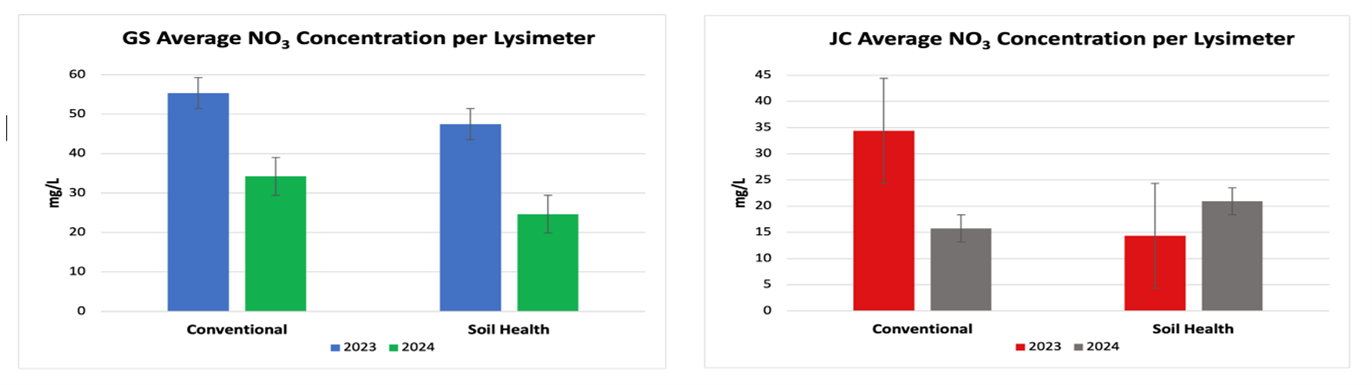
An NRCS Conservation Innovation Grant (CIG) state-wide study examining soil health is underway. Seventeen farms across the state of Utah are incorporating various soil health practices and are comparing them to their conventional practices (no soil health treatment). Mini zero-tension lysimeters (12” diameter) were installed at two of the locations in northern Utah (Cache Valley), to collect leachate. Cache Valley has a semi-arid climate with warm summers and cold winters. The soil type on both farms is a Lewiston sandy loam. Both of these farms apply manure and are incorporating cover crops as part of their soil health management. The fields are irrigated. Leachate is being collected to evaluate the impact of cover crops on nutrient leaching. Other scientists are examining various soil health parameters, such as bulk density, soil carbon tests, water infiltration, etc.
Leachate is being collected bi-weekly throughout the growing season, and as late as possible into the winter. Leachate samples are being analyzed for available N (ammonia and nitrate/nitrite), and dissolved phosphorus on a Lachat Auto-Analyzer using Methods 10-10701-2-A, 10-107-04-1-A, and 10-115-01-1-A, respectively. Deep soil cores are also being collected to a depth of 5 feet and will be analyzed for nitrogen and phosphorus.
What Did We Do?
Mini zero-tension lysimeters were installed in the spring of 2023. In year 1, both farms (GS and JC) planted corn with a cover crop (rye, clover, vetch, brassica mix) being interseeded at ~ the V5 stage. Due to the short growing season, cover crop establishment early in the season, before canopy cover, is needed to get adequate cover crop growth in the fall. In year 2, the GS Farm began transitioning to alfalfa. Oats were planted in the spring and terminated for a late summer/early fall alfalfa planting. Three-way grass will be interseeded into alfalfa in the spring of 2025 for the soil health treatment. In year 2, the JC Farm missed the window for getting the cover crop interseeded into the corn crop. There was no soil health treatment in effect for the 2024 growing season on the JC Farm.
Leachate is being collected bi-weekly throughout the growing season, and as late as possible in the winter. Leachate samples are being analyzed for available N (ammonia and nitrate/nitrite), and dissolved phosphorus on a Lachat Auto-Analyzer using Methods 10-10701-2-A, 10-107-04-1-A, and 10-115-01-1-A, respectively. Deep soil cores are also being collected to a depth of 5 feet and will be analyzed for nitrogen and phosphorus.
What Have We Learned?
On the GS Farm, the leachate from the soil health treatment had, on average, a lower nitrate concentration. There was also less leachate produced, and less total nitrate going past the soil root zone. On the JC Farm in 2023, the soil health treatment also produced leachate with a lower nitrate concentration than their conventional treatment. There was also less total leachate produced and less total nitrate loss when cover crops were interseeded into the corn in 2023. Those results disappeared in 2024 when a cover crop was not planted. Even with the cover crop, the leachate (on average) exceeded the drinking water standard for nitrate concentration. The application of manure in the spring likely contributed to this loss.
Future Plans
This study will continue for three more years. The goal is to verify and demonstrate practices that improve soil health and minimize environmental impacts.
Authors
Presenting & Corresponding author
Rhonda Miller, Professor, Utah State University, rhonda.miller@usu.edu
Additional authors
Katie Hewitt, Graduate Student, Utah State University; Bruce Miller, Professor, Utah State University
Acknowledgements
Funding provided by NRCS CIG Grant “Utah Soil Health Partnership On-Farm Trials” – Agreement Number NR223A750013G009
The authors are solely responsible for the content of these proceedings. The technical information does not necessarily reflect the official position of the sponsoring agencies or institutions represented by planning committee members, and inclusion and distribution herein does not constitute an endorsement of views expressed by the same. Printed materials included herein are not refereed publications. Citations should appear as follows. EXAMPLE: Authors. 2025. Title of presentation. Waste to Worth. Boise, ID. April 7-11, 2025. URL of this page. Accessed on: today’s date.
The purpose of the ManureTech Decision-Support Tools (DST) for Dairy and for Swine is to assist farmers, consultants, and others in the dairy/swine industry in optimizing the management of manure from collection to land application. By providing data-driven recommendations based upon customizable inputs and priorities, the ManureTech DST help users make informed decisions about manure management systems in consideration of the economic, environmental, and operational needs of farm management.
What Did We Do?
A multi-state team has developed Excel-based decision-support tools for selecting technology and systems for managing manure on dairy and swine operations as part of a USDA NIFA-funded project.
During this workshop, participants will be introduced to the ManureTech DST for Dairy and the ManureTech DST for Swine and will be provided with hands-on training in using the decision-support tool for dairy. Major aspects of the tools that will be addressed in the workshop include an introduction to the user interface; entering primary inputs; prioritization of economic, environmental, and operational metrics; and reporting of results, including the ranking of manure system scenarios.
What Have We Learned?
In terms of learning, this effort has provided the project team with a fuller grasp of the complex nature of manure management! In terms of accomplishments, the team has assembled a tool that considers the multi-faceted benefits and challenges of various manure management systems and presents users with a ranked list of systems for consideration, which should help expedite and enhance system selection. Users of the ManureTech DST can provide farm-specific weight to economic, environmental, and operational criteria which allows ManureTech DST to rank alternative manure management scenarios in close alignment with individual priorities.
This visual illustrates what a user of the ManureTech Decision-Support Tool sees when weighing economic, environmental, and operational priorities of a farm, so that the rankings of the manure management systems reflect these farm priorities. In the illustrated case, the user preferences favor economic priorities over others.
Future Plans
Future plans include completing beta testing / pilot-testing of the ManureTech DST and conducting additional training on using the tool. Over a longer-range timeframe, the team would like to add some additional specialized capabilities and functionality, as a phase II effort.
Authors
Presenting authors
Erin Scott, Project/Program Manager, University of Arkansas
Varma Vempalli, Wastewater Treatment Specialist, City of Meridian (ID)
Jacob Hickman, Systems Analyst, University of Arkansas
Rick Stowell, Extension Specialist in Animal Environment, University of Nebraska-Lincoln
Teng Lim, Extension Professor and Engineer, University of Missouri
Corresponding author
Rick Stowell, Extension Specialist in Animal Environment, University of Nebraska-Lincoln, Richard.Stowell@unl.edu
Additional authors
Erin Scott, Project/Program Manager, University of Arkansas
Jacob Hickman, Systems Analyst, University of Arkansas
Jennie Popp, Associate Dean and Professor, University of Arkansas
Varma Vempalli, Wastewater Treatment Specialist, City of Meridian (ID)
Greg Thoma, Director of Agricultural Modeling and Lifecycle Assessment, Colorado State University
Teng Lim, Extension Professor and Engineer, University of Missouri
The authors acknowledge funding from the USDA NIFA AFRI Water for Food Production Systems program, grant #2018-68011-28691.
The authors are solely responsible for the content of these proceedings. The technical information does not necessarily reflect the official position of the sponsoring agencies or institutions represented by planning committee members, and inclusion and distribution herein does not constitute an endorsement of views expressed by the same. Printed materials included herein are not refereed publications. Citations should appear as follows. EXAMPLE: Authors. 2025. Title of presentation. Waste to Worth. Boise, ID. April 7–11, 2025. URL of this page. Accessed on: today’s date.
Manage Cookie Consent
To provide the best experiences, we use technologies like cookies to store and/or access device information. Consenting to these technologies will allow us to process data such as browsing behavior or unique IDs on this site. Not consenting or withdrawing consent, may adversely affect certain features and functions.
Functional
Always active
The technical storage or access is strictly necessary for the legitimate purpose of enabling the use of a specific service explicitly requested by the subscriber or user, or for the sole purpose of carrying out the transmission of a communication over an electronic communications network.
Preferences
The technical storage or access is necessary for the legitimate purpose of storing preferences that are not requested by the subscriber or user.
Statistics
The technical storage or access that is used exclusively for statistical purposes.The technical storage or access that is used exclusively for anonymous statistical purposes. Without a subpoena, voluntary compliance on the part of your Internet Service Provider, or additional records from a third party, information stored or retrieved for this purpose alone cannot usually be used to identify you.
Marketing
The technical storage or access is required to create user profiles to send advertising, or to track the user on a website or across several websites for similar marketing purposes.