Extension Outreach Response to Livestock Mortality Events Associated With Algal Toxin Production in Georgia Farm Ponds

Waste to Worth: Spreading science and solutions logoWaste to Worth home | More proceedings….

Purpose

Excessive nutrient enrichment in watersheds can create harmful algal blooms (HABs) in aquatic systems, including ponds, which are frequently used to water livestock. Harmful algal blooms are typically dominated by cyanobacteria (commonly referred to as “blue green algae”) many of which produce toxins that can be harmful to fish, wildlife and humans.  In May 2012, our laboratory began receiving reports of cattle mortalities associated with HABs. We began an outreach effort to screen and identify algal species and toxins in water samples submitted by private citizens from ponds throughtout Georgia. Prior to this effort, no state or federal laboratories offered such a service. Private laboratories conduct these services, however the collection protocols and analytical costs preclude the average citizen from utilizing them. Rapid detetion of a HAB is critical for farmers so that access to the water source can be restricted. We recognized the need to provide such a service and to educate the public regarding exposure effects, preventative measures, and treatment of HABs.

During Summer 2012 sampling events we commonly encountered Microcystis blooms in both farm ponds used by humans for fishing and recreation (above) and for watering livestock (below).

What Did We Do?

We documented dense blooms of  planktonic cyanobacteria, predominantly Microcystis aeruginosa, and  extremely high levels of the potent hepatotoxin, Microcystin, in water samples submitted by Georgia cattle producers (Haynie et al. 2013). Many of these samples were submitted by producers who had experienced cattle mortalities, potentially due to algal toxin exposure.

Through a collaborative effort with UGA’s Agriculture and Environmental Services Laboratories, we established a water screening service that includes algal speciation and toxin detection. This service became available to the public in Februrary 2013. This effort included a detailed outreach letter to extension agents, sampling protocol and materials for water sample collection and shipping. This screening service is avalible for either a $30.00 (algal identification) or $45.00 (toxin analysis and algal identification) fee. The submitter will receive an electronic report within 24 hours with results, interpretation, and recommendations.

We have begun promoting this service and educating the public about HABs by participating in various short courses, meetings and outreach opportunities.

What Have We Learned?

We have demonstrated that HABs and cyanotoxins are common in Georgia agriculture ponds. Therefore, the potential for livestock exposure and subsequent effects including mortality are likely to occur. Education and establishment of a rapid toxin detection service is warranted and will be beneficial to producers. The livestock deaths have highlighted an important issue for Georgia farmers and pond owners that will likely be increasingly prevalent under projected climatic models.

Future Plans

We will continue our outreach efforts by participating in University and industry sponsored workshops and meetings. We will use these opportunities to educate and inform the public about the newly available algal screening service. We have included, in recently submitted grants, funding to subsidize testing expenses in order to encourage more farmers/pond owners to use this service. We intend to utilize the testing service to gather spatially referenced data on the prevalence of HABs and toxin levels in GA ponds. This information, which is not currently available,  will inform nutrient management plans and BMPs that will ultimately improve nutrient management and water resources in Georgia.  We hope that this effort will serve as a model for other states experiencing similar increases in frequency and severity of HABs in agricultural settings.

Authors

Rebecca S. Haynie, Post Doctoral Associate, Warnell School of Forestry and Natural Resources, University of Georgia, Athens, GA 30602 hayniers@uga.edu

Susan Wilde, Assistant Professor, Warnell School of Forestry and Natural Resources, University of Georgia, Athens, Georgia 30602

David Kissel, Director and Professor, Agriculture and Environmental Services Laboratory, University of Georgia, 2400 College Station Road, Athens, Georgia 30602-9105

Leticia Sonon, Program Coordinator, Soil, Plant, and Water Analysis Laboratory, University of Georgia, 2400 College Station Road, Athens, Georgia 30602-9105

Uttam Saha, Program Coordinator, Feed and Environmental Water Analysis Laboratory, University of Georgia, 2400 College Station Road, Athens, Georgia 30602-9105

Additional Information

Haynie, R. S., J. R. Morgan, B. Bartelme, B. Willis, J. H. Rodgers Jr., A.L. Jones and S. B. Wilde.  Harmful algal blooms and toxin production in Georgia ponds. (in review). Proceedings of the Georgia Water Resources Conference. Athens, Georgia. April 2013.

UGA Agriculture and Environmental Services Laboratory: http://aesl.ces.uga.edu/

Burtle, G.J. July 2012. Managing Algal Blooms and the Potential for Algal Toxins in Pond Water. University of Georgia Cooperative Extension Temporary Publication 101.

Haynie, R.S., J.R. Morgan, B. Bartelme, S. B. Wilde. Cyanotoxins: Exposure Effects and Mangagement Options. Proceedings of the UGA Extension Beef Cattle Shortcourse. Ed. L. Stewart. Athens, Georgia. January 2013.

News article: https://www.wsbtv.com/news/local/experts-say-toxic-algae-may-pose-threat-kids-pets/242741856/

Acknowledgements

Drs. Lawton Stewart, Gary Burtle (Animal and Dairy Science, College of Agriculture and Environmental Sciences, UGA)  coordinated sample delivery from pond owners to our laboratory. Brad Bartelme, James Herrin and Jamie Morgan (Warnell School of Forestry and Natural Resources, UGA) contributed significant technical assistance with algal screening and sample processing.

The authors are solely responsible for the content of these proceedings. The technical information does not necessarily reflect the official position of the sponsoring agencies or institutions represented by planning committee members, and inclusion and distribution herein does not constitute an endorsement of views expressed by the same. Printed materials included herein are not refereed publications. Citations should appear as follows. EXAMPLE: Authors. 2013. Title of presentation. Waste to Worth: Spreading Science and Solutions. Denver, CO. April 1-5, 2013. URL of this page. Accessed on: today’s date.

Evaluation of a Trickle Flow Leach Bed Reactor for Anaerobic Digestion of High Solids Cattle Waste

Waste to Worth: Spreading science and solutions logoWaste to Worth home | More proceedings….

Why Study High-Solids Anaerobic Digestion?

Colorado is the second highest producer of high solids cattle waste (HSCW) in the United States. Despite the available resources, Colorado currently has only one operational anaerobic digester treating manure (AgSTAR EPA 2011), which is located at a hog farm in Lamar. Arid climate and limited water resources in Colorado render the implementation of high water demanding conventional AD processes. Studies to date have proposed high solids AD systems capable of digesting organic solid waste (OSW) not more than 40% total solids (TS). Lab tests have shown that HSCW produced in Greeley (Colorado) has an average of 89.4% TS. Multi-stage leach bed reactor (MSLBR) system proposed in the current study is capable of handling HSCW of up to 90% TS.

What Did We Do?

Hydrolysis is carried out in a trickle flow leach bed reactor (TFLBR) and methanogenesis can be carried out in a high rate anaerobic digester (HRAD) like an upflow anaerobic sludge blanket reactor or a fixed film reactor. The objective of this research is to evaluate and optimize the performance of the TFLBR. The system was operated as a batch process and the organic leaching potential of a single pass TFLBR configuration was evaluated. The organic leaching potential was measured in terms of chemical oxygen demand (COD).

Three series’ of reactor experiments were carried out in total. Each subsequent experiment was based on the results on the previously conducted experiment. First set of reactor experiments included three TFLBRs (triplicate) loaded with HSCW. The difficulty encountered during the operation of this experiment was that the flow rate of water through the TFLBR slowed down over time and eventually dropped to zero within the first 24 hrs. This caused water build-up on top of the manure bed, resulting in the failure of hydrolysis. Second set of reactor experiments included six TFLBRs (two sets of triplicates). One set of triplicate was loaded with HSCW and the other set of triplicate was loaded with HSCW bulked with straw (5% by mass) to improve the porosity through the reactor. A layer of fine sand was added on top of the manure bed to facilitate water dispersion through the reactor.

The third set of reactor experiments included the comparison between nutrient dosed and non-nutrient dosed reactors (each carried out in triplicates). The idea behind dosing nutrients to an operational TFLBR was to check if the reactors were nutrient limited during the digestion process. Composite sampling technique was adopted so as to capture the exact leaching potential from each of the reactors.

What Have We Learned?

The first set of reactor experiments helped in identifying the clogging issues in operational TFLBRs handling HSCW. The second set of reactor experiments validated the use of fine sand as a better alternative to improve hydraulic flow when compared to the use of bulking agents. The third set of reactor experiments indicated that the addition of nutrient solution to a single-pass TFLBR operation is essential in improving the overall system yield. Leachate collection by composited sampling method instead of the instantaneous sample method improved the system efficiency by approximately 50%. The average TS reductions in the non-nutrient dosed and nutrient dosed TFLBRs were 23.18% and 22.67% respectively. The non-nutrient dosed TFLBRs underwent approximately 66.32% of COD reduction and the nutrient dosed TFLBRs underwent approximately 73.51% of COD reduction due to COD leaching during hydrolysis, over the period of six weeks. Biochemical methane potential (BCMP) test results indicate high biogas yields from the weekly composited leachate from the reactor experiments proving successful system operation. Approximately 0.43 L CH4/g COD is produced from the leachate collected from the non-nutrient dosed TFLBRs and 0.57 L CH4/g COD is produced from the leachate collected from the nutrient dosed TFLBRs.

Future Plans

The proposed MSLBR system recommends TFLBRs operating under leachate recirculation. The addition of nutrient solution in a leachate recirculated TFLBR would not be unnecessary since the nutrients in the system would be conserved. The success of hydraulic conductivity and leaching quality in a leachate recirculated TFLBR is unknown. More research is required to completely understand the operation and success of the MSLBR system treating HSCW. Pilot scale reactor experiments should be conducted to monitor the operation of the TFLBRs under leachate recirculation.

Authors

Asma Hanif, Graduate Student in Civil & Environmental Engineering, Colorado State University,  asmahanif1988@gmail.com

Dr. Sybil Sharvelle, Assistant Professor in Civil & Environmental Engineering, Colorado State University, Sybil.Sharvelle@colostate.edu


The authors are solely responsible for the content of these proceedings. The technical information does not necessarily reflect the official position of the sponsoring agencies or institutions represented by planning committee members, and inclusion and distribution herein does not constitute an endorsement of views expressed by the same. Printed materials included herein are not refereed publications. Citations should appear as follows. EXAMPLE: Authors. 2013. Title of presentation. Waste to Worth: Spreading Science and Solutions. Denver, CO. April 1-5, 2013. URL of this page. Accessed on: today’s date.
Silage Runoff Treatment

Waste to Worth: Spreading science and solutions logoWaste to Worth home | More proceedings….

Abstract

Agricultural filter strips are commonly used to treat runoff from agricultural farmstead areas.  Many filter strips have been assessed in terms of surface water quality impacts but have failed to determine the fate of pollutants once they have infiltrated the soil subsurface.  Two side-by-side filter strips plots were installed to assess the performance of and determine the fate of contaminants in a filter strip system.  One of the two plots also contained a pretreatment system to facilitate nitrogen removal in an attempt to reduce nitrate leaching.  Both plots were lined with an impermeable membrane to collect subsurface leachate as well as surface runoff.  A mass balance could then be determined for these filter strip systems to assess the fate of nutrients and the ability of a low cost pretreatment system to reduce nitrate leaching.

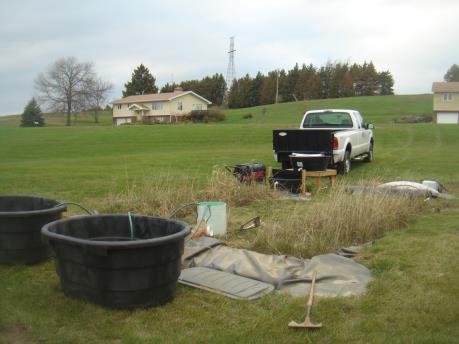
Filter-strip Construction

Why Is It Important to Prevent Runoff from Silage Piles from Reaching Water?

Silage runoff, or the flow of surface excess water over an area containing silage or silage leachate, contains nutrients harmful to watersheds.  A filter-strip, a long narrow buffer strip used in agriculture as a BMP, could be used to reduce nutrient concentrations within silage runoff.  A study that investigates design storm loading and seasonal operation could benefit producers and their surrounding watershed.  A pre-treatment design consisting of an aerobic and anaerobic section, is also analyzed to quantify improvements in pollutant reduction.

What Did We Do?

Before Establishment of Vegetation

Two experimental filter-strips, one control and one pre-treatment design, were applied with silage runoff at volumes and rates corresponding to a 25 year – 24 hour and a 2 year – 24 hour design storm.  Design storm rates and volumes were determined from the runoff modeled from a 1:1 dairy bunker to filter strip area.  Three runs of each design storm were accomplished throughout the months of October, November, and early December 2012.

What Have We Learned?

The pre-treatment filter strip design distributed higher BOD5 reduction however, nitrite concentrations increased in the effluent.  Application in November and December had lower infiltration and changes in ammonia reduction were illustrated. 

Experimental Filter-strip and Sampling

Future Plans

Applications in the spring  and summer will determine further seasonal variation.  Expanding design storms applied will help determine prescriptive loading and aid in modeling.

Authors

Michael Holly, Master’s Candidate Biological System Engineering, University of Wisconsin – Madison, maholly@wisc.edu

Dr. Rebecca Larson, Assistant Professor and Extension Specialist, University of Wisconsin – Madison

Acknowledgements

Zach Zopp, Lab and Field Tech

Shayne Havlovitz, Undergraduate Research Assistant


The authors are solely responsible for the content of these proceedings. The technical information does not necessarily reflect the official position of the sponsoring agencies or institutions represented by planning committee members, and inclusion and distribution herein does not constitute an endorsement of views expressed by the same. Printed materials included herein are not refereed publications. Citations should appear as follows. EXAMPLE: Authors. 2013. Title of presentation. Waste to Worth: Spreading Science and Solutions. Denver, CO. April 1-5, 2013. URL of this page. Accessed on: today’s date.
Silage Runoff Characterization

Waste to Worth: Spreading science and solutions logoWaste to Worth home | More proceedings….

Abstract

Silage leachate is a high strength waste which contributes to surface and groundwater contamination of various pollutants from runoff, direct leaching through concrete storage structures, and infiltration of runoff. Feed storage is required for the majority of dairy operations in the country (which are expanding in size and fed storage requirements) leading to widespread potential contamination. Limited data on silage leachate quality and treatment has made management and regulation based solely on observation. This project investigated three bunker silage storage sites to assess the water quality characteristics of silage leachate and runoff from various feed sources and surrounding environmental factors. Surface samples were collected from feed storage structures and analyzed for numerous water quality parameters. Using collected hydrologic data, contaminant loading was analyzed for various storm events and assessed for first flush effects and potential to impact handling and treatment designs. Determination of first flush provides essential data for separation of waste streams (high and low strength) to ease management in terms of operation and cost, reduce loading to treatment systems, and reducing the overall environmental impact.

Why Is It Important to Characterize Silage Leachate?

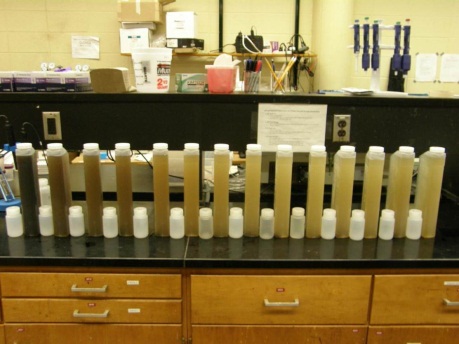
Silage Runoff Samples from an October Rain Event

Silage runoff, or the flow of surface excess water over an area containing silage or silage leachate, contains nutrients harmful to watersheds. Nutrient concentrations within silage runoff are variable and are dependent on event size, seasonality, bunker condition, and concentration of silage. Knowledge of nutrient loading thoughout a storm can benefit silage runoff storage and treatment standards.

What Did We Do?

Three horizontal bunkers in south central Wisconsin were anzlyzed over the seasons of fall, spring and summer.  Two of the bunkers sampled were designed with subsurface leachate collection.  Runoff was collected using ISCO automated samplers and samples were triggered by flow rate. Water quality analysis was completed on the campus of University of Wisconsin – Madison and alkalinity, NH3, BOD5, COD, NO2, NO3, ortho-p, pH, TKN, TP and TS were analyzed. Thirty-five storms in total were analyzed ranging from 0.03 – 1.74 inches.

Horizontal Dairy Bunker During a Storm Event

What Have We Learned?

Seasonality can impact the nutrient concentrations within silage runoff.  Normalized cumulative pollution load curves illustrate moderate first flush in the fall and a moderate delayed load curve in the summer.

Future Plans

Correlating silage runoff concentrations with bunker conditions such as date, amount filled, moisture content, and amount of litter present on pad could help explain seasonal variability.  Collection of future storms could aid in explaining variances and facilitate modeling.

Authors

Michael Holly, Master’s Candidate Biological System Engineering, University of Wisconsin – Madison, maholly@wisc.edu

Dr. Rebecca Larson, Assistant Professor and Extension Specialist, University of Wisconsin – Madison

Acknowledgements

Zach Zopp, Lab and Field Tech

Shayne Havlovitz, Undergraduate Research Assistant


The authors are solely responsible for the content of these proceedings. The technical information does not necessarily reflect the official position of the sponsoring agencies or institutions represented by planning committee members, and inclusion and distribution herein does not constitute an endorsement of views expressed by the same. Printed materials included herein are not refereed publications. Citations should appear as follows. EXAMPLE: Authors. 2013. Title of presentation. Waste to Worth: Spreading Science and Solutions. Denver, CO. April 1-5, 2013. URL of this page. Accessed on: today’s date.
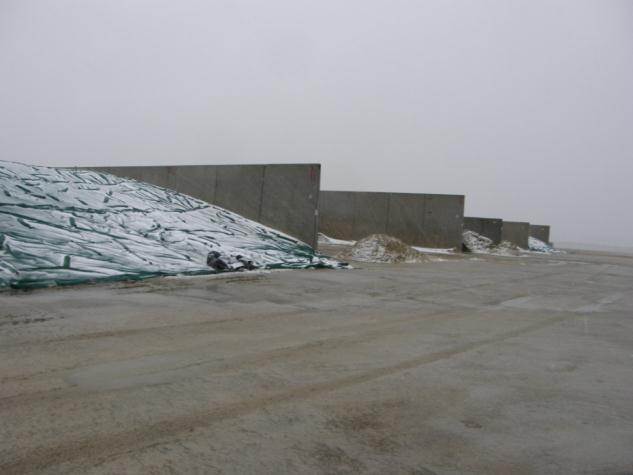
Model of a Successful Regulatory-Industry Partnership to Address Air Emissions from Dairy Operations in Yakima, WA

Waste to Worth: Spreading science and solutions logoWaste to Worth home | More proceedings….

Why Is It Important for Industry and Regulators to Work Together?

The community in the Yakima Region of Washington State has raised concerns over the potential adverse effects of air emissions from dairy operations. To address these concerns, the Yakima Regional Clean Air Agency (YRCAA) proposed a policy process in October 2010 to control and mitigate emissions through implementation of site-specific best management practices (BMPs) on dairy operations. Absent a lack of reliable methodologies for estimating emissions from dairies, the YRCAA enrolled experts and scientists to help create tools that could be used for estimation of emissions from dairy operations. The assessment of BMPs aimed at mitigating air emissions from dairies was also included to determine their effect on the character, amount, and dispersion of specific air pollutants. This project assessed the effect of voluntary verses policy driven action on the dairy industry, community, and environmental impacts of air emissions from dairy operations.

What Did We Do?

The Yakima Regional Clean Air Agency (YRCAA) proposed a draft policy in October 2010 to control and mitigate emissions through implementation of site-specific best management practices (BMPs) on dairy operations. To validate the policy, a “Pilot Research Project” was launched in February 2011 to gather information for one year to test the feasibility of implementing and determining policy effectiveness. Twelve operations, representing ~40% of the estimated regional cow numbers, volunteered to participate.

A description of proven BMPs and a BMP selection-guide were created to help producers develop site-specific Air Quality Management Plans (AQMP). Each AQMP identified, systematically, specific BMPs to mitigate emissions from each area of the dairy system (nutrition, feed management, milk parlor, housing-drylot, housing-freestall, grazing, manure management, land application, other) based on effectiveness, practicality and economics. The pollutants addressed in each AQMP included ammonia, nitrous oxide, hydrogen sulfide, volatile organic compounds, odor, particulate matter, oxides of nitrogen, and methane. A universal score-sheet was created to assess implementation of BMPs at each dairy. The YRCAA inspectors were trained to evaluate, score, and record BMP implementation. A whole-farm score was generated during each visit, which identified areas of improvement to be addressed.

The process was very unique in that the dairy industry took a proactive role and actively participated. Using science and air quality experts to create and validate the evaluation tools and process also brought authority to the process. The policy was revised based on information collected from the pilot project and was adopted in February 2012. To date, 22 operations, representing 57% of total cow numbers in the Yakima Region, are enrolled.

What Have We Learned?

The voluntary approach used during the pilot project phase of the policy was very effective in enrolling the dairy community. Producers stepped up to volunteer and cooperatively participate in an unknown process. Even though they were very robust and integrated a large amount of scientific information, the emission assessment tools created as an outcome of the pilot project were very user friendly and easy to interpret by planners and producers. The air quality BMP assessment tool is currently being evaluated for use by other agencies and institutions.

Future Plans

The YRCAA has entered into phase two of the policy process and are now mandating that dairies participate in the air quality assessment. Starting in March 2013, all dairy operations in the Yakima basin will be either voluntarily or mandatorily inspected and assessed for air quality improvements. This provides an opportunity to compare voluntary and mandatory policy processes. The long-term impact of the process is yet unknown.

Authors

Nichole M. Embertson, Ph.D., Nutrient Management Specialist, Whatcom Conservation District, Lynden, WA, nembertson@whatcomcd.org

Gary Pruitt, Executive Director, Yakima Regional Clean Air Agency Air, Yakima, WA

Hasan Tahat, Engineering and Planning Supervisor, Yakima Regional Clean Air Agency Air, Yakima, WA

Pius Ndegwa, Biological and Systems Engineering, Washington State University, Pullman, WA

Additional Information

https://www.yakimacleanair.org/site/files/file_manager/page/shared/Resource%20Guide%20for%20BMP%20for%20Dairy%20Oparation%20Aug18.pdf


The authors are solely responsible for the content of these proceedings. The technical information does not necessarily reflect the official position of the sponsoring agencies or institutions represented by planning committee members, and inclusion and distribution herein does not constitute an endorsement of views expressed by the same. Printed materials included herein are not refereed publications. Citations should appear as follows. EXAMPLE: Authors. 2013. Title of presentation. Waste to Worth: Spreading Science and Solutions. Denver, CO. April 1-5, 2013. URL of this page. Accessed on: today’s date.
What Practices are Reducing Environmental and Economic Risks on Wisconsin Farms?

Waste to Worth: Spreading science and solutions logoWaste to Worth home | More proceedings….

Abstract

This workshop will focus on how dairy farmers in Wisconsin evaluate the risk of nutrient and sediment loss on their operations and what best management practices are adopted to reduce these risks.  Dennis will describe how farm families evaluate all the risk factors facing their operation (weather, production, marketing, labor, safety and environmental risks) and discuss how a farmer has to balance the risk and rewards for each of these challenges.  It is helpful to gain an appreciation for the numerous challenges farmers face on a daily basis and the amount of time committed to the evaluation and implementation of soil and water best management practices on each farm. Conservation practices are often applied in a “one size fits all” approach and are not developed and implemented to fit the needs of each farming operation.  The large diversity of both farming systems and physical settings require a collaborative evaluation and implementation process between producers and conservation technicians to develop economic, effective, and practical conservation practices to fit the specific circumstances of individual farming operations.

What Are Some of the Lessons Learned in Managing Environmental Risks?

The focus of this talk is to explain when and where we saw nutrient and sediment losses that could have been avoided with improvements in management.  We will also discuss what we have learned about unavoidable losses and try and explain the difference between unacceptable risk and acceptable risk.

What Did We Do?

Over the past twelve years UW – Discovery Farms has worked on many farms evaluating a variety of farming systems and identifying the positive and negative impacts that production agriculture can have on the environment.  Data collection through this program includes over 120 sites years of edge-of-field monitoring, in-stream monitoring and monitoring tile drainage systems.  All the monitoring was done in partnership with the United States Geological Survey (USGS)  and this data set is one of the largest and best on-farm sets known to exist.

What Have We Learned?

Discovery Farms has studied a variety of farming systems including no-till, minimal tillage, tillage and rotational grazing.  The settings for these farming systems ranged from very steep (the driftless region with slopes up to 32%) to gently rolling (<3%) with a variety of unique challenges including manure management, tile drainage systems and close distance to surface water.  On each of the operations that were studied, the farm operators have selected a farming system (tillage, planting, pest control, manure management, harvest, crop rotation, etc) that works for them.  For the first two years of the study we asked the producers not make changes to their farming systems so that we could evaluate nutrient and sediment loss from their current practices.  It quickly became apparent that on real farms, nothing stays the same.  All of our cooperators made adjustments in management based not only on the data we were collecting, but also based on economics, changes in demand and changes on the operation (equipment, land base, labor, increase in cattle numbers).  It is also apparent that even with the best farming system, implemented almost perfectly; mother nature can throw some unanticipated events which have a tremendous impact on nutrient and sediment losses. 

Future Plans

In 2010, the UW – Discovery Farms Program expanded their on-farm research program to include not only edge-of-field and in-stream work on individual farms;  they are now working with multiple farms in small watersheds.  The goal of these studies is to better understand the relationsihp betweeen edge-of-field losses and what actually happens in lakes and streams.

Authors

Dennis R. Frame, Director, UW – Discovery Farms Program; Professor UW – Extension,  drframe@wisc.edu

Amber Radatz, Outreach Specialilst, UW – Discovery Farms

Eric Cooley, Outreach Specialist, UW-Discovery Farms

Additional Information

UW Discovery Farms makes every effort to develop materials from all of the on-farm research projects.  These materails are available on our website (uwdiscoveryfarms.org or by contacting our office at 1-715-983-5668).

Acknowledgements

The authors would like to thank all the farmers who have participated in our program.  Without their guidance and support this program would not be possible.  We would also like to acknowledge the support and guidance of all the non-governmental agricultural organizations in Wisconsin who continue to provide support financially and politically.


The authors are solely responsible for the content of these proceedings. The technical information does not necessarily reflect the official position of the sponsoring agencies or institutions represented by planning committee members, and inclusion and distribution herein does not constitute an endorsement of views expressed by the same. Printed materials included herein are not refereed publications. Citations should appear as follows. EXAMPLE: Authors. 2013. Title of presentation. Waste to Worth: Spreading Science and Solutions. Denver, CO. April 1-5, 2013. URL of this page. Accessed on: today’s date.

Balancing Earth, Air and Fire In The Kansas Flint Hills

Waste to Worth: Spreading science and solutions logoWaste to Worth home | More proceedings….

Abstract

Native Americans placed great value on the four elements of life,  earth, water, air and fire. They recognized, as we do today, that fire is the most powerful land management tool. The 4.8 million acre Flint Hills region of Kansas is the largest remaining expanse of tallgrass prairie in North America.   Prescribed fire is routinely practiced in the region to enhance livestock forage quality, control invasive species, provide grassland wildlife habitat and improve plant vigor.  But where there is fire, there is smoke, and there are public health concerns when excessive smoke is in the atmosphere.   Ground level ozone can have serious public health consequences and major cities adjacent to the Flint Hills, have recorded excessive ozone levels resulting from Flint Hills prescribed fire.   A collaborative effort including the Kansas Dept of Health & Environment, EPA,  K-State Research & Extension, Kansas Livestock Association and other groups completed the Flint Hills smoke management plan in December, 2010, with the objective of reducing health concerns from prescribed fire, while retaining it as a land management tool.  The plan established a  website of “best smoke management practices” and a comprehensive education and outreach effort for land managers was implemented, involving prescribed fire schools, news articles and radio airplay.   Results of the plan are positive, indicating  that Kansas has responded to the smoke issue appropriately and will retain prescribed fire as a management practice that maintains both the tallgrass prairie of the hills, and the air quality of adjacent metro areas.  The inter-relationships of earth, water, air and fire are continual, each impacting the other.   The Kansas Flint Hills now has a plan to ensure harmony of these essential elements of life.

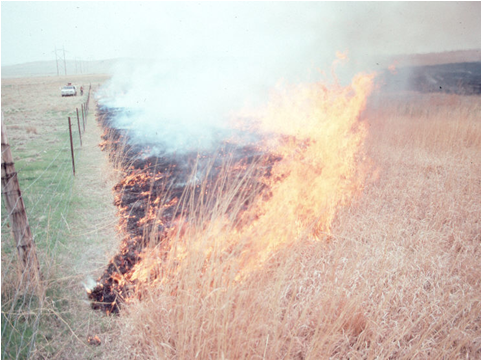
A prescribed fire in the Kansas Flint Hills

Prescribed Fire in Tallgrass Prairie

The Flint Hills Smoke Management Plan is a collaborative effort designed to maintain the benefit of prescribed fire on the private grasslands of the Flint Hills, while also protecting the air quality of ajor metropolitan areas such as Kansas City and Wichita.   The Flint Hills have particular environmental implications, as they are the largest expanse of tallgrass prairie remaining in North America.

What Did We Do?

Kansas Department of Health and Environment wrote the plan, but embraced those involved with the issue, including K-State Research and Extension, the KS Livestock Association, Farm Bureau, Tallgrass Legacy Alliance, KS Prescribed Fire Council, Cities of Wichita and Kansas City, Natural Resource Conservation Service, KS Dept. of Wildlife Parks & Tourism to develop a plan that would address the goals of all those involved.   A website was developed to give ranchers day by day information regarding smoke emission and direction from a prescribed fire that day or the following day.

What Have We Learned?

Those that practice prescribed fire in the Kansas Flint Hills respect the health and environment of their city neighbors.   Conversely, those living in neighboring metropolitan areas understand the economic importance of prescribed fire as related to beef cattle production, and the role fire plays in preserving the integrity of the tallgrass prairie.   By engaging all entities involved, agreements can be reached, solutions can be found and advancements can be made.

Prescribed fire controls woody species, maintaining the integrity of the tallgrass prairie.

Future Plans

In the years ahead,  KS Dept of Health and Environment will continue monitoring smoke emissions due to prescribed fire in the Flint Hills.  Those practicing prescribed fire will be encouraged to use the best smoke management methods of prescribed fire.   This will be done through K-State Research & Extension prescribed fire schools, the KS Prescribed Fire Council workshops and the KDHE website.

Authors

Jeff Davidson  K-State Research & Extension Watershed Specialist      Kansas State University     jdavidso@ksu.edu

Additional Information

http://ksfire.org

Acknowledgements

K-State Research & Extension, Kansas Precribed Fire Council, Kansas Livestock Association, KS Dept. of Health & Environment,  Tallgrass Legacy Alliance, KS Dept. of Wildlife, Parks & Tourism, Natural Resource Conservation Service, Farm Bureau, Cities of Wichita and Kansas City.


The authors are solely responsible for the content of these proceedings. The technical information does not necessarily reflect the official position of the sponsoring agencies or institutions represented by planning committee members, and inclusion and distribution herein does not constitute an endorsement of views expressed by the same. Printed materials included herein are not refereed publications. Citations should appear as follows. EXAMPLE: Authors. 2013. Title of presentation. Waste to Worth: Spreading Science and Solutions. Denver, CO. April 1-5, 2013. URL of this page. Accessed on: today’s date.

Litter Generated Ammonia Captured by Activated Carbon Derived ffrom Broiler Litter

Waste to Worth: Spreading science and solutions logoWaste to Worth home | More proceedings….

Abstract

In 2011, the production rate of broilers was 8.6 billion with a value of $23.2 billion (USDA 2012).  Both CERCLA and EPCRA have reporting requirements for ammonia (NH3) of 100 lb of NH3/d or 18.3 tons/yr, a level that may affect large animal production facilities (NRC 2003). Although USEPA (2009) has provided an exemption for animal waste producing farms under CERCLA for reporting hazardous air emissions, it is expected that this exemption will be revoked once valid methodologies are established for monitoring. Two of the 24 sites in the NAEMS monitoring study reported similar NH3 emissions of 3.6 – 5.3 tons of NH3 per house per year (Burns et al. 2009, Heber 2010). Emissions of this level indicate a need for developing technologies that can reduce the NH3 levels produced by broiler operations. This research is focused on the use of broiler litter as activated carbon (BAC) to reduce aerial NH3 generated by litter, an opportunity to not only reuse the manure, but also treat the emissions from or within broiler houses. The objective of this study was to evaluate the efficacy of BAC to remove NH3 volatilized from litter samples in a laboratory acid-trap system. Preliminary studies using NH3/air mixture indicated that the BAC capacity to adsorb NH3 was approximately double that of Vapure 612, a commercial carbon. In the litter emission study, the BAC and Vapure performance was comparable. Breakthrough for both carbons occurred within 14 hours of the test start. At the end of the 3 day test, the NH3 emission for BAC was 75% of the litter only control, whereas, the Vapure emission was 64% of the control. The results of the study demonstrate the potential for a cyclical waste utilization strategy in using broiler litter activated carbon to capture NH3 volatilized from litter.

Why Study Ammonia and Poultry Litter?

Overall purpose of this study is to develop innovative solutions for animal waste reuse and minimize emissions from poultry operations. The specific objective of this phase of the study was to evaluate the efficacy of activated carbon from broiler litter (BAC) to remove NH3 volatilized from litter samples in a laboratory acid-trap system.

What Did We Do?

The broiler litter for producing the BAC was obtained from a commercial farm in Mississippi, where the original bedding was pine shavings.  The broiler litter as collected had a moisture content of 25 to 30%.  The commercial carbon, Vapure 612 carbon (Norit Americas, Marshall, Texas), is a steam activated coal-based carbon manufactured for use in the removal of odors, toxic vapors, irritants, and corrosive gases.  After completing initial adsorption tests with the two carbons using the NH3 and air mixture, litter samples were collected from a commercial Mississippi farm where the bedding origin was also pine shavings to perform the litter emission test.  Eleven flocks had previously been grown on the litter.  The pH and moisture content were 8.32 and 17.9% respectively. The litter samples were placed in the acid trap system described below to determine the capture capacity of the carbons for NH3 volatilized from the litter. 

Litter emissions and carbon efficacy were evaluated using 50 g fresh litter samples in the laboratory using a chamber acid trap (CAT) system. The CAT system provides a straightforward method for determining differences in NH3 evolution by capturing off-gases in H3BO3. Twelve air-tight chambers, 1000 ml each, receive humidified air from a single manifold.  Weighed litter samples were placed in each air tight chamber.  To assess litter NH3 generation, exhaust air from each chamber flowed through a series of two H3BO3 flasks at approximately 115 ml/min.  The solution from the two flasks was combined into a single sample and titrated with HCl as above.  The NH3 trapped in solution was reported as mg N recovered.  For estimating carbon column efficiency, the columns described above were loaded with BAC and Vapure carbons and placed in the exhaust flow between the chambers and acid traps.  The litter only, BAC and Vapure columns were randomly assigned to the chambers in the CAT system and each replicated three times.  All treatments were titrated each morning and afternoon at consistent times for the three day test period. 


Chamber acid-trap system for capturing NH3 in the laboratory:  a) litter in chamber, b) activated carbon column, and c) boric acid traps. 

What Have We Learned?

Preliminary studies using NH3/air mixture indicated that the BAC capacity to adsorb NH3 was approximately double that of Vapure 612, a commercial carbon. In the litter emission study, the BAC and Vapure performance was comparable. Breakthrough for both carbons occurred within 14 hours of the test start. At the end of the 3 day test, the NH3 emission for BAC was 75% of the litter only control, whereas, the Vapure emission was 64% of the control. The results of the study demonstrate the potential for a cyclical waste utilization strategy in using broiler litter activated carbon to capture NH3 volatilized from litter. 

Future Plans

The development of these activated carbons and char from broiler litter will provide an effective means of reuse that will not only reduce waste volume, but in turn comprehensively treat the emissions from the waste during bird production, storage, and land application of litter. We will conduct greenhouse gas adsorption studies to determine the efficacy of activated carbon and char to adsorb CO2, CH4, and N2O.

Additionally, our plan is to develop an outreach program to be presented to poultry farmers in the Southeast U.S. along with other stakeholders addressing poultry farm emission regulations and technologies for remediation through workshops, a webinar and professional conferences.

Authors

Kari Fitzmorris Brisolara, ScD, Associate Professor of Environmental and Occupational Health, Louisiana State University, Health Sciences Center, School of Public Health, 2020 Gravier Street, New Orleans, Louisiana kbriso@lsuhsc.edu

Dana M. Miles, PhD, USDA-ARS-Mississippi State, Genetics & Precision Agriculture Research Unit, P. O. Box 5367, Mississippi State, Mississippi, 39762 dana.miles@ars.usda.gov

Isabel M. Lima, PhD, USDA-ARS-SRRC, P.O. Box 19687, New Orleans, Louisiana 70179 isabel.lima@ars.usda.gov


The authors are solely responsible for the content of these proceedings. The technical information does not necessarily reflect the official position of the sponsoring agencies or institutions represented by planning committee members, and inclusion and distribution herein does not constitute an endorsement of views expressed by the same. Printed materials included herein are not refereed publications. Citations should appear as follows. EXAMPLE: Authors. 2013. Title of presentation. Waste to Worth: Spreading Science and Solutions. Denver, CO. April 1-5, 2013. URL of this page. Accessed on: today’s date.
Fate of Barbiturates and Non-steroidal Anti-inflammatory Drugs During Carcass Composting

Waste to Worth: Spreading science and solutions logoWaste to Worth home | More proceedings….

Why Are We Concerned About Drug Residues in Animal Mortality Compost?

With disease issues, the decline of the rendering industry, a ban on use of downer cows for food, and rules to halt horse slaughter, environmentally safe and sound practices for disposal of horses and other livestock mortalities are limited. Improper disposal of carcasses containing veterinary drugs has resulted in the death of domestic animals and wildlife. Composting of carcasses has been performed successfully to reduce pathogens, nutrient release, and biosecurity risks. However, there is concern that drugs used in the livestock industry, as feed additives and veterinary therapies do not degrade readily and will persist in compost or leachate, threatening environmental exposure to wildlife, domestic animals and humans.

Two classes of drugs commonly used in the livestock and horse industries include barbiturates for euthanasia and non-steroidal anti-inflammatory drugs (NSAID) for relief of pain and inflammation. Sodium pentobarbital (a barbiturate) and phenylbutazone (an NSAID) concentrations in liver, compost, effluent and leachate were analyzed in two separate horse carcass compost piles in two separate years. Horse liver samples were also buried in 3 feet of loose soil in the first year and drug concentrations were assessed over time.

What did we do?

Year 1- On 9/22/09 a 6 x 6 m piece of 10 mil plastic sheeting was laid on bare soil with a 2% slope, at the edge of Cornell University’s compost site in Ithaca, NY. Water was poured on the plastic to check the direction of flow. A hole was dug at the low end of the pad, under the plastic, large enough to fit a 76 l galvanized garbage can. A stainless steel canner was placed in the garbage can to collect effluent. A hole was cut in the plastic over the canner for collection. A 0.6 m high base (3.7 x 3.7 m) of coarse carbon material (woodchips) was laid on the plastic. A 27 year old Appaloosa mare, weighing approximately 455 kg that had been dosed with 1 gram phenylbutazone at midnight on 9/22/09 and again at 8:00 am was led onto the base and euthanized for severe lameness by a qualified veterinarian with 120 ml Fatal Plus® solution (active ingredient 390 mg/ml Pentobarbital Sodium). After the horse had been euthanized and the veterinarian ensured there were no signs of life, the carcass was maneuvered onto the wood chips with the head on the upward slope of the pad. The liver was removed from the horse and cut into 48 pieces, each weighing approximately 100 grams, and nylon mesh bags were then placed in whiffle balls. A 2 m length of nylon twine was attached to each ball. Twenty-three balls were inserted in the horse’s gut cavity and 22 balls were placed in a 1 m hole in the ground (burial hole) which was dug approximately 1.5 m from the pad. Pieces of the intestine and some blood were also placed in the hole to help mimic the presence of a carcass. The remaining 3 nylon mesh bags with liver were packaged for delivery to Cornell University’s Animal Health Diagnostic Center (AHDC) to determine initial NSAID and barbiturates concentrations. Two Hobo U12 data loggers with 4 temperature probes each were set up to record hourly temperatures. Five of the probes were placed in the compost pile: under the horse’s chest, in the horse’s hind gut, in the horse’s chest cavity, under the horse’s spine and under the horse’s right hind quarter. Two of the probes were placed in the burial hole and one probe was left out to record ambient temperature. The hole was covered with loose soil. The horse was covered with woodchips so that the pile was approximately 1.8 m high. The plastic liner was tightened by rolling it over and under wooden fence posts.

Year 2- In year 1, the collection of “leachate” included precipitation that diluted the leachate. In year 2, to target only the liquids that leached out of the horse and through the pile, two 3 m long troughs with a 1% slope were built out of 15 and 10 cm diameter PVC pipe attached to 5 x 15 cm untreated lumber. The troughs were placed on the pad from the centerline to the edge of the pile end-to-end with slopes going toward the outside of the pile. Leachate drained via gravity into 2-liter polyethylene bottles attached to the troughs. The exposed ends of the troughs were covered with 1 m length of aluminum flashing to keep rainwater out of the collection bottles.

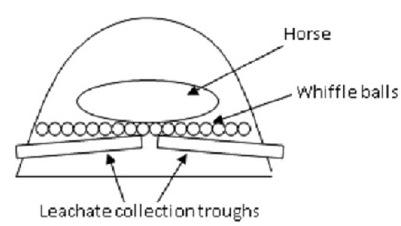
On 8/10/10 the leachate collection troughs were laid on bare soil with a 2% slope at the edge of Cornell University’s compost site in Ithaca, NY. A 0.6 m high base (3.7 x 3.7 m) of coarse carbon material (woodchips) was laid on top of the troughs. A 22 year old horse weighing approximately 590 kg, that had been dosed with 1 gram phenylbutazone at midnight on 08/10/10 and again at 7:30 am, was led onto the base and euthanized by a qualified veterinarian with 300 mg xylazine as a sedative, then with 120 ml Fatal Plus® solution (active ingredient 390 mg/ml Pentobarbital Sodium). After the horse had been euthanized and the veterinarian ensured there were no signs of life, the carcass was maneuvered on the wood chips with the head on the upward slope of the pad. The veterinarian took 4 tubes of blood from a vein in the nose and a vein in the front leg of the horse in heparinized Vacutainer® tubes for initial concentrations of pentobarbital and phenylbutazone. Twenty-six whiffle balls that had been pre-filled with wood chips (the base material of the compost pile) were placed such that they would be under the horse and liquids coming from the horse would be absorbed by the chips inside the balls, as well as in the surrounding base material, while the excess would drain down the leachate collection troughs and be captured in the 2 liter bottles at the end of the troughs (Figure 1). One Hobo U12 data logger with 4 temperature probes was set up to record hourly temperatures. The probes were placed under the horse’s neck and rump, on top of the horse’s abdomen, and one was left out to record ambient temperature. The horse was covered with woodchips so that the pile was approximately 1.8 m high. Additional woodchips were added to the pile on August 13 and the pile was covered with a breathable polyester compost cover to collect only what was leaching from the animal.

Figure 1 Cross-section of horse compost pile showing placement of leachate collection troughs and woodchip-filled whiffle balls.

On 8/10/10 a 0.6 m high base (3.5 x 3.5 m) of coarse carbon material was laid near the horse compost pile. A 455 kg 3 year, 7 month old, 2nd lactation Holstein cow was euthanized, due to a lung abscess, in the same manner as the horse (300 mg xylazine, followed by 120 ml Fatal Plus®). Four tubes of blood were withdrawn from her milk vein as described for the horse. One Hobo U12 data logger with 4 temperature probes was set up to record hourly temperatures. The probes were placed under the cow’s udder and rear leg, on top of the cow’s back, and one was left out to record ambient temperature. The cow was then covered with woodchips so that the pile was approximately 1.8 m high. Additional woodchips were added to the pile the following day before the pile was covered with a compost cover.

What did we learn?

In year one, phenylbutazone concentrations in the liver of the horse were undetectable (< 10 ppb) by 20 days of composting or burial in loose soil and were undetectable in effluent from the pile at the time of first sampling on day 6. Pentobarbital concentrations were undetectable (< 10 ppb) in liver samples retrieved from both the compost pile and loose soil by day 83. Rate of decay was faster in the soil, exponentially decreasing by 18% per day, with a half-life of 3 days, than in the compost pile where there was a 2% decrease per day and a half-life of 31 days, but occurred at the same rate of 1% and a half-life between 55 and 67 mesophilic degree days when calculated on the number of mesophilic degree days to which it was exposed. This suggests that breakdown of pentobarbital is not initiated by the heat of composting, but by the biological degradation that occurs in both soil and compost at mesophilic temperatures. Pentobarbital in the effluent decreased by 20% per day with a half-life of 3.1 days but was still detectable (0.1 ppm) at 223 days of composting.

In year 2, phenylbutazone was not detected in any of the samples analyzed (compost and leachate) other than blood taken from the jugular vein of the horse immediately after euthanasia. Pentobarbital concentrations in the compost were still detectable after 224 days of composting, but had decreased from 79.2 (initial) to 5.8 ppm. Pentobarbital in leachate was 2.2 ppm at day 56 of composting, after which no additional fluids leached into the leachate collection containers.  Rate of decay in the leachate was 35.2% per day with a half-life of 1.6 days. When managed properly, composting will deter domestic and wild animals from scavenging on treated carcasses while they contain the highest drug concentrations providing an effective means of disposal of euthanized and/or NSAID treated livestock. The resulting compost contains either no or very low concentrations of both NSAIDs and barbiturates rendering it safe for use in agriculture.

Barbiturate poisoning in domestic and wild animals has occurred from ingestion of tissue from animals euthanized with pentobarbital. Many of the reported cases have occurred from direct feeding on improperly disposed livestock in which little or no degradation or biotransformation of pentobarbital has occurred.  During the time period in which carcasses would be desirable to domestic and wild animals as a food source, composting creates sufficient heat to deter them from digging in to the pile. In addition, when covered properly, the smell of decomposition is minimized, also reducing attraction. The diverse community of microorganisms in the compost pile aids in the degradation and biotransformation of pentobarbital, especially after the thermophilic phase of composting is over. Properly implemented composting, as a means of disposal of euthanized or NSAID treated livestock, will deter domestic and wild animals from scavenging for carcasses when they contain the highest drug concentrations. The resulting compost contains either no or very low concentrations of either NSAIDs or barbiturates, rendering the compost safe for use in agriculture.

Future Plans

Education and implementation work continues in this area nationally and internationally. A 5th International Symposium on Depopulation and Disposal of Livestock is in the planning stages. A study on the Fate of anthelmintics (drugs that expel parasitic worms from the body) in livestock manure has just been completed.

Authors

Jean Bonhotal,  Mary Schwarz,  Cornell University, Cornell Waste Management Institute, Ithaca, NY

Karyn Bischoff, Joseph G Ebel, Jr. Cornell University, College of Veterinary Medicine, Ithaca, NY

Additional Information

Visit Cornell Waste Management Institute Web site: http://cwmi.css.cornell.edu/mortality.htm

Trends in Animal & Veterinary Sciences Journal article http://cwmi.css.cornell.edu/fate.pdf

The authors are solely responsible for the content of these proceedings. The technical information does not necessarily reflect the official position of the sponsoring agencies or institutions represented by planning committee members, and inclusion and distribution herein does not constitute an endorsement of views expressed by the same. Printed materials included herein are not refereed publications. Citations should appear as follows. EXAMPLE: Authors. 2013. Title of presentation. Waste to Worth: Spreading Science and Solutions. Denver, CO. April 1-5, 2013. URL of this page. Accessed on: today’s date.

What Practices Increase Infiltration and Reduce Runoff on Slopes Greater Than 30%?

Waste to Worth: Spreading science and solutions logoWaste to Worth home | More proceedings….

Why Are We Concerned About Runoff on Farms?

Farming in the driftless region of Wisconsin where the steep fields and waterways are all connected to rivers and streams can have signficant risks to water quality.  Sediment and nutrient movement into streams, rivers, and lakes in this part of the state has always been an issue, and agriculture has been identified as the largest contributor.  This talk is given by a farmer living and farming in one of the most challenging areas of the country.

What Did We Do?

Home dairy farm

For seven years, the UW – Discovery Farm Program (DFP) and the United States Geological Survey (USGS) conducted a paired research project on a livestock operation in the driftless region of Wisconsin.  This farm consisted of about 800 acres of tillable acres where fields are steep (some >30% slope), and every one drains into a waterway or stream which eventually flows into the Mississippi River.

What Have We Learned?

The USGS installed two in-stream monitoring stations in two small headwater streams that divide the farm.  The north basin consists of 430 acres with 150 acres cropland, 250 acres woodland, and 30 acres pasture.  The south basin consists of 215 acres with 39 acres cropland and pasture, 107 acres woodland, and 69 acres in CRP/CREP.  The farming system uses a combination of conservation tools and techniques that have been adapted to fit the physical setting of the area, and the goals and vision of the producer who has a rich history of conservation. Harvesting precipitation is constantly at the forefront of operations through careful soil management, a network of small check dams and larger at-grade stabilization structures, and a focus on minimizing soil disturbance activities. Seven years of data indicated that almost all sediment losses occurred during a few large summer storms that exceed the design criteria.

Overlooking the dairy farm

Future Plans

This project is completed and all that remains is the development of outreach and education materials.

Authors

Joe Bragger, Dairy Farm Manager, Bragger Family Dairy,  braggfam@triwest.net

Dennis R Frame, Director, UW – Discovery Farms

Amber Radatz, Outreach Specialist, UW – Discovery Farms

Eric Cooley, Outreach Specialist, UW – Discovery Farms

Dam on the farm

Additional Information

Information is available through the website (http://www.uwdiscoveryfarms.org) or by contacting the office at 1-715-983-5668.

The authors are solely responsible for the content of these proceedings. The technical information does not necessarily reflect the official position of the sponsoring agencies or institutions represented by planning committee members, and inclusion and distribution herein does not constitute an endorsement of views expressed by the same. Printed materials included herein are not refereed publications. Citations should appear as follows. EXAMPLE: Authors. 2013. Title of presentation. Waste to Worth: Spreading Science and Solutions. Denver, CO. April 1-5, 2013. URL of this page. Accessed on: today’s date.