Effects of Subsurface Litter Application Technology on Odor


Purpose         

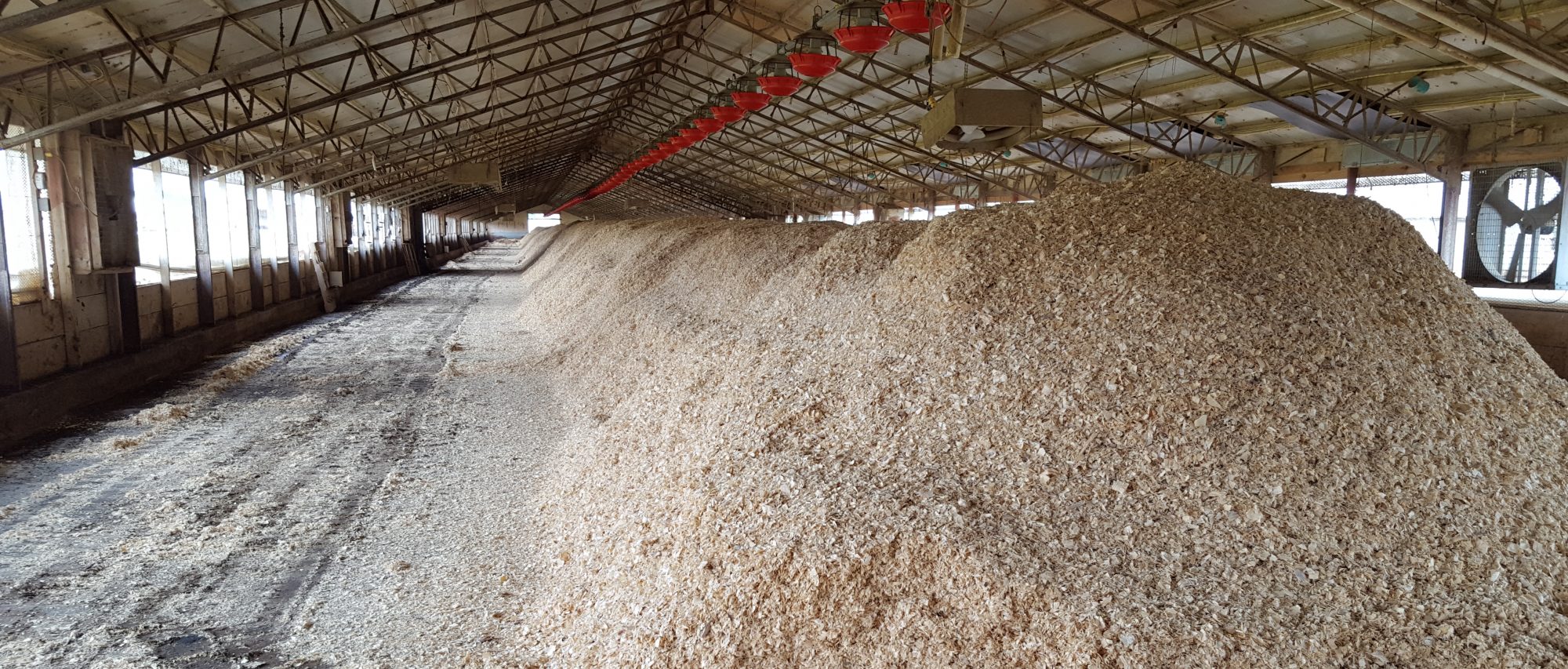
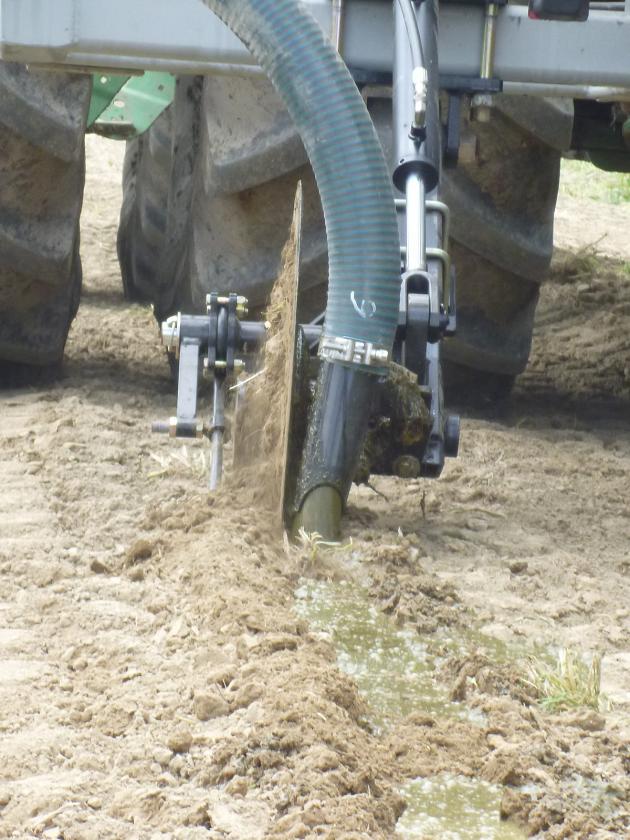
Manure handling and application to agricultural land from animal facilities creates odor nuisances where population sprawl encroaches into once rural areas. The University of Maryland Eastern Shores (UMES) and The Pennsylvania State University (PSU) collaborated on data collection to quantify the odor reduction benefit of a novel technology called the Subsurfer which places poultry litter of ≤ 25% moisture content beneath the soil surface as opposed to traditional broadcast application.

What did we do?

Two 80-foot square locations were chosen at PSU’s Ag Progress site having similar grassy vegetation. For three separate trials, turkey litter was used, a slight departure from the usual use of poultry litter. This litter was chosen because it was available, and had a favorable moisture content of less than 25%. Three treatments were applied; subsurface application for location one , broadcasting for location two using the Subsurfer at the rate of two tons per acre, and no litter as a background. . Field-applied litter was evaluated using Nasal Ranger Field Olfactometer (NRO) instruments measuring dilutions-to-threshold (D/T) during field application employing the Multiple-Assessor Repeat Observation (MARO) method (Brandt et at., 2011a and 2011b). Odor assessment teams made observations at each location prior to litter application (background measurement) and at 1, 4, and 24 hr after the litter was applied at each location. Whole air samples were collected in 10-liter Tedlar® bags 4 hr after litter application using surface isolation flux chambers and the vacuum suitcases. A team of five qualified odor panelists quantified odor detection threshold (DT) using Dynamic Triangular Forced-Choice Olfactometry (DTFCO) on an Ac’ScentTM International Dynamic Olfactometer (St. Croix Sensory, Lake Elmo, MN) the same day of sample collection.

What have we learned?

Results show greater than 75% reduction in mean odor concentration by DTFCO and NRO-MARO methods when the Subsurfer is used. Figure 1 shows the odor concentration D/T reduction of 92% (97% less background) for the 9 July 2013 data collection event when applying litter using the Subsurfer. Figure 1. odor concentration for turkey litter applied using the subsurfer and surface applied litter
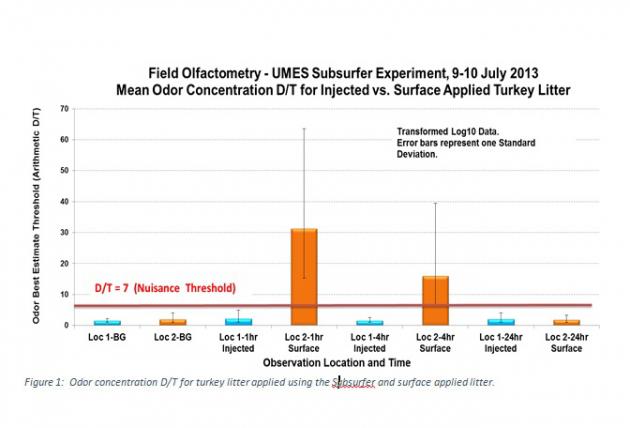
Results from subsequent events (23 and 25 July 2013) showed significant reduction as well not below 75% when litter was applied using the Subsurfer. Figure 2 exhibits the same trend of 86% reduction (92% less background) in odor concentration DT using the DTFCO method. Again, measurements from subsequent data collection events yield similar results (minimum 75% reduction of odor concentration when the Subsurfer is used).

Figure 2. odor concentration for turkey litter applied using the subsurfer and surface applied litter

Future Plans

No future work is planned at this time.

Authors

Hile, Michael, Ph. D. Candidate in Agricultural and Biological Engineering (ABE) at Penn State (PSU) mlh144@psu.edu

Dr. Robin Brandt, Senior Lecturer in ABE at PSU, Ms. Nancy Chepketer, Graduate Assistant at UMES, Dr. Eileen E. Fabian, Professor in ABE at PSU and Dr. Herschel A. Elliott, professor in ABE at PSU, Dr. Arthur Allen, Associate Professor and Associate Resea

References              

Brandt, R.C., H.A. Elliott, M.A.A. Adviento-Borbe, E.F. Wheeler, P.J.A. Kleinman, and D.B. Beegle. 2011a. Field Olfactometry Assessment of Dairy Manure Land Application Methods. J. Environ. Qual. 40: 431-437.

Brandt, R.C., M.A.A. Adviento-Borbe, H.A. Elliott, E.F. Wheeler. 2011. Protocols for Reliable Field Olfactometry Odor Evaluations. J. Appl. Engr Agr. Vol. 27(3): 457-466.

The authors are solely responsible for the content of these proceedings. The technical information does not necessarily reflect the official position of the sponsoring agencies or institutions represented by planning committee members, and inclusion and distribution herein does not constitute an endorsement of views expressed by the same. Printed materials included herein are not refereed publications. Citations should appear as follows. EXAMPLE: Authors. 2015. Title of presentation. Waste to Worth: Spreading Science and Solutions. Seattle, WA. March 31-April 3, 2015. URL of this page. Accessed on: today’s date.

Hydrogen Sulfide Release from Dairy Manure Storages Containing Gypsum Bedding


Why Look at Potential Connections Between Gypsum and Hydrogen Sulfide?

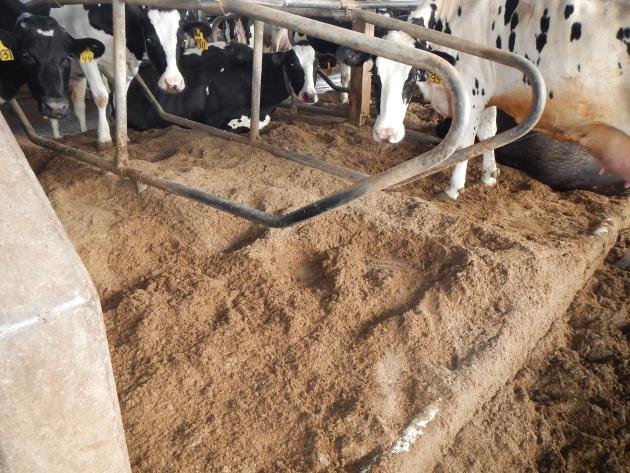
Gypsum, a recycled product from the waste streams of the manufacturing and construction industries, provides ideal bedding for livestock because it absorbs moisture keeping the animals dry, is non-abrasive, and discourages bacterial growth as it is inert and non-organic. Gypsum is calcium sulfate (CaSO4•2H2O) and provides a sulfur source material that potentially increases H2S production from the manure storage due to the high generation of H2S levels. The goal of this research project is to compare H2S concentrations among Pennsylvania dairy farms that use traditional bedding, gypsum bedding and gypsum bedding with an amendment. Related: Manure Storage Safety | 2013 Waste to Worth conference proceedings by these authors “Gypsum Bedding – Risks & Recommendations for Manure Handling“

Information from this gypsum bedding project was recently featured on a pre-conference webcast More…


What did we do?

Ten farms were observed during 19 fall and spring agitation events. Portable multi-gas meters (models MX6, M40 and Tango, Industrial Scientific, Pittsburgh, PA) were place around the perimeter of each manure storage, 10 meters downwind of the storage perimeter and attached to the operator for the duration of the event to monitor exposure. Each meter recorded gas measurements every minute during the first hour of manure agitation. Wind speed, wind direction and air temperature were recorded every minute during these events using a weather station (Kestral Communicator model 4500, Nielsen-Kellerman, Birmingham, MI). Manure storage design and manure handling practices were characterized. Manure was characterized according to general chemistry (temperature, pH and oxidation-reduction potential) as well as submitted for a full nutrient analysis content including total nitrogen, sulfur, calcium, percent solids and phosphorus source coefficient.

What have we learned?

Figure 1 shows cumulative H2S concentrations versus gypsum application rate. Gypsum and non-gypsum farms represented by the diamonds show a significant increase in cumulative H2S concentrations with increasing gypsum application rate. The observations depicted by the squares represent farms that use Vital™ Breakdown (manufactured for Homestead Nutrition, New Holland, PA), a treatment reported to reduce H2S emissions. One of the farms observed, also pointed out in Figure 1 by the triangles, uses OK-1000 (manufactured by Pro-soil Ag Solutions, Hawkins, TX) as a manure additive. Though it appears that these manure additives reduce cumulative H2S concentrations, the reduction was not statistically significant because not enough observations were recorded to provide statistical power.

Movement of manure prior to the storage location appears to allow H2S to escape before entering long term storage (shown in Figure 1 as prior agitation), lowering H2S concentrations released during agitation of the manure storage. Wind flowing into proximate buildings inhibited the dissipation of H2S thereby increasing cumulative H2S concentrations as shown by the observation pointed out by the image of wind direction in Figure 1. Four observations of operator exposure (out of 19 observations including non-gypsum, gypsum and gypsum with additive) yielded H2S concentrations above 20 ppm (above the Occupational Health and Safety Administration’s (OSHA) recommended exposure limit. Of the four operators above 20 ppm H2S, three were working over the rim of the storage, which increased risk of exposure. Downwind H2S concentrations above 20 ppm ten meters from storage occurred for eight out of the fourteen observations from farms that use gypsum, showing that children and animals within ten meters of the storage are at risk.

Figure 1. cumulative hydrogen sulfide concentrations for first 60 minutes of agitations versus gypsum application rate

Future Plans  

Bench scale work will be performed in hopes of finding a manure additive that reduces H2S production from farms that use gypsum. A new product (Dri Mat) formulated from its precursor, VitalTM Breakdown, will be mixed with manure and analyzed to determine the efficacy to reduced H2S emissions. Iron oxide, a by-product of acid mine drainage passive treatment lagoons will be one of the treatments for this work as well.

Authors  

Hile, Michael, Ph. D. Candidate in Agricultural and Biological Engineering (ABE) at Penn State (PSU) mlh144@psu.edu

Dr. Eileen E. Fabian, Professor in ABE at PSU, Dr. Herschel A. Elliott, professor in ABE at PSU, Dr. Robin Brandt, Senior Lecturer in ABE at PSU, Dr. C. Alan Rotz, Agricultural Engineer at USDA-ARS and Dr. Ray Bryant, Soil Scientist at USDA-ARS.

Acknowledgements      

This project would not have been possible without the support from Natural Resources Conservation Service’ (NRCS) Conservation Innovation Grant (CIG) program, USA Gypsum and Industrial Scientific.

The authors are solely responsible for the content of these proceedings. The technical information does not necessarily reflect the official position of the sponsoring agencies or institutions represented by planning committee members, and inclusion and distribution herein does not constitute an endorsement of views expressed by the same. Printed materials included herein are not refereed publications. Citations should appear as follows. EXAMPLE: Authors. 2015. Title of presentation. Waste to Worth: Spreading Science and Solutions. Seattle, WA. March 31-April 3, 2015. URL of this page. Accessed on: today’s date.

Manure Separation: Bedding and Nutrient Recovery

Why Study Manure Solid-Liquid Separation?

We wished to evaluate a two staged manure separation system for bedding and solids removal. Manure separation can accomplish several purposes on a dairy farm. The two most common goals are to produce a fiber bedding for the animals and the second is to remove as many solids as economically feasible prior to long term storage.

bedding in dairy barn made from separated manure solidsWhat did we do?

We looked at existing and new systems that use manure fiber bedding. Manure fiber bedding or “green bedding” is separated solids from manure collected daily on the dairy that has not been through digestion or other heat process. Manure samples were collected and analyzed for total solids and nutrient content through commercial labs. Questions were asked to dairy personnel regarding stall management practices.

What have we learned?

Separating manure for fiber bedding production is very different than separation for clean liquid. A dry solids cake from the separator does not directly correlate to a good bedding product for the cows. Dairy bedding must provide cushioning for the animal while laying and stable footing during the process of lying down and getting up. A healthy, productive cow will spend 12-14 hours per day lying down. A good bedding must be able to absorb liquid and maintain a clean, dry and comfortable stall for the cow. Typical dry solids cakes contain many small particles that prohibits the solids ability to absorb liquid on the cows lying surface.

Separation equipment does have an effect on overall perceived bedding quality. Longer fibers are preferred to shorter fibers. Longer fibers appear to provide better cushioning and are less prone to sticking to the cow’s legs, flanks and teat ends.

comparison of fibers from two different manure separation systems

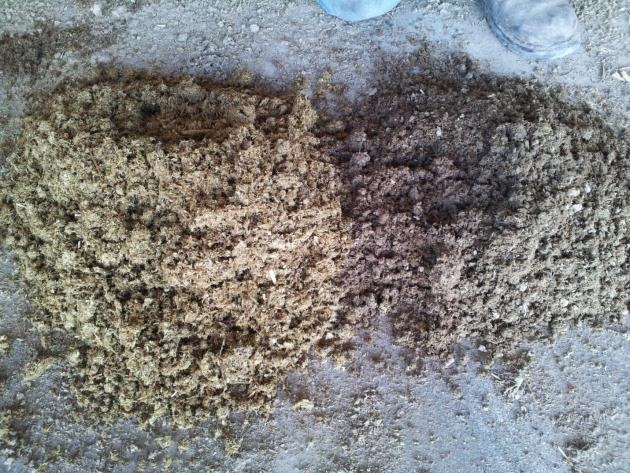
Figure 1. Roller press fibers on the left; screw press fibers on the right.

Fiber bedding can be used directly from the separator (often referred to as “green bedding), composted in windrows or aerobically digested in a vessel. Regardless of treatment method, the success of a manure fiber bedding system is dependent on many factors besides the equipment operation. Management of the free stalls including stall grooming, ventilation, re-bedding and frequency of manual manure removal are examples of other critical factors.

In looking at staged separation systems, the owner is willing to sacrifice capture rate efficiency on first stage separation to achieve high quality bedding. By allowing smaller solids to pass through the primary separation system, the quality of bedding often improves. Eventually, as the larger fibers are broken down while in the free stall or by pumping and processing equipment they become small enough to pass through first stage separation.

Having staged separation is extremely beneficial for advanced manure processing. Primary separation systems do more than produce a fiber bedding material, they also act as a foreign material screen for downstream equipment as well as slightly reduce the total volume to subsequent stages. Foreign material such as; plastic bottles, wooden hoof blocks, rocks, pieces of plastic etc. can cause significant damage to more sensitive (and often expensive) downstream equipment, such as a centrifuge, finer separation screen, belt filter press or other mechanical solid liquid separator. A primary separator is often better suited to handle foreign materials without disrupting operations. Furthermore, by removing the larger solids for bedding there is a slight reduction in volume going to secondary separation steps. This can lead to savings by reducing the required capacity of downstream equipment or reducing the total volume chemistry costs when using coagulants or polymers.

Primary separation for bedding has shown some nutrient removal. On farms using primary separated solids for animal bedding, the nutrient content is irrelevant since the nutrients are recycled back into to the housing system, until the fibers are broken down enough to pass. The specific capture rate of total solids and individual nutrients are show in the table below.

Primary Capture Rates Dairy TR Dairy GM Dairy CVT
Total Solids   20 43 55
Total Nitrogen   4.2 15 20
Phosphorus 3.5 5 37
Potassium   2.6 10 15

Total solids capture rates are directly correlated to incoming total solids content. Higher incoming solids results in higher capture rates (Burns and Moody, 2001). The total solids in the incoming material was lowest for Dairy TR and highest for Dairy CVT. It is a general understanding that a majority of the nutrients are contained in relatively small particles which pass through primary separation stream.

Future Plans

Staged separation systems are one example of how to incrementally add equipment and separation capacity as farms expand or field application of nutrients becomes more precise. Farms may initially install a basic separator to re-use liquid for alley flushing or flush fluming. A secondary stage separator can then be added for excess liquid prior to going to the lagoon for additional solids and nutrient removal.

Future investigation steps will be to continue evaluating secondary separation equipment for ease of operation, operational costs and nutrient removal efficiencies. Additionally further uses for the primary solids as a separation aid may prove beneficial as more systems are installed and used.

Author

Andy Lenkaitis, P.E. Environmental Systems Engineer, GEA Farm Technologies  andy.lenkaitis@gea.com

Additional information

Contact GEA Farm Technologies for additional information regarding specific information on equipment or systems for manure separation systems.

Flyer

Acknowledgements      

The author would like to acknowledge for dairy producers for sharing their insight and information to further the adaption of manure equipment. Additionally, support from key field personnel and local equipment dealers for identifying customers and servicing equipment in a less than pleasant location.

The authors are solely responsible for the content of these proceedings. The technical information does not necessarily reflect the official position of the sponsoring agencies or institutions represented by planning committee members, and inclusion and distribution herein does not constitute an endorsement of views expressed by the same. Printed materials included herein are not refereed publications. Citations should appear as follows. EXAMPLE: Authors. 2015. Title of presentation. Waste to Worth: Spreading Science and Solutions. Seattle, WA. March 31-April 3, 2015. URL of this page. Accessed on: today’s date.

Swine Manure Odor Reduction Using a Humic Amendment: On-Farm Demonstration


Why Study Odors from Pig Farms?

Odor-related nuisance complaints associated with animal production facilities are on the rise as residential sprawl encroaches on once rural areas. The efficacy of odor control additives is highly variable and most have limited success. This project demonstrated the efficacy of a commercial humic-material product (ManureMaxTM, Manufactured by JDMV Holding, LLC; Huston, TX) for limited control of liquid swine manure odors.

What did we do?

Two similarly-operated, 2,250-pig, tunnel-ventilated finishing barns on one farm were used for the demonstration. Barns were widely-separated by 1,800 feet of woodland and fields and were occupied by pigs of similar age. The underfloor manure storage pit (5-ft deep) of one barn received monthly additions with the additive while the other barn received no additive. After 20 weeks when hogs were finished for market and barns cleaned for restocking, treatments were switched so the previously untreated barn received the amendment. Odors at the barn ventilation exhaust were evaluated monthly by direct sensory methods (olfactometry) using human subjects. Field-applied manure was evaluated at the end of each 20-week grow-out period. Nasal Ranger Field Olfactometer (NRO) units were used to evaluate barn exhaust odor dilutions-to-threshold (D/T) and odors during field application, employing the Multiple-Assessor Repeat Observation (MARO) method (B randt et at., 2011a and 2011b). Barn ventilation exhaust was normalized against fan velocity and compared as odor flux (odor units min-1) among treatments. Whole air samples were collected in 10-liter TedlarTM® bags during each field visit and brought back to the Penn State Odor Assessmnt Laboratory (PSOAL) for evaluation. A team of five qualified odor panelists quantified odor detection threshold (DT) using Dynamic Triangular Forced-Choice Olfactometry (DTFCO) on an Ac’ScentTM International Dynamic Olfactometer (St. Croix Sensory, Lake Elmo, MN) within 10 hours of sample collection.

What have we learned?

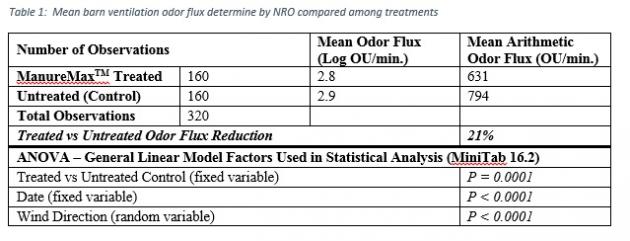
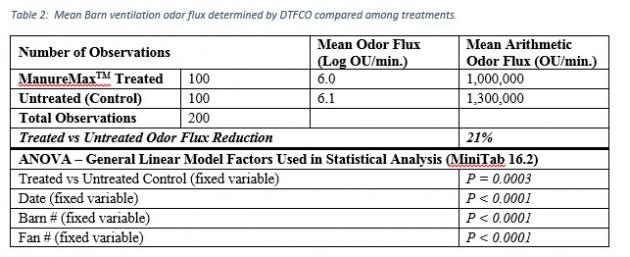
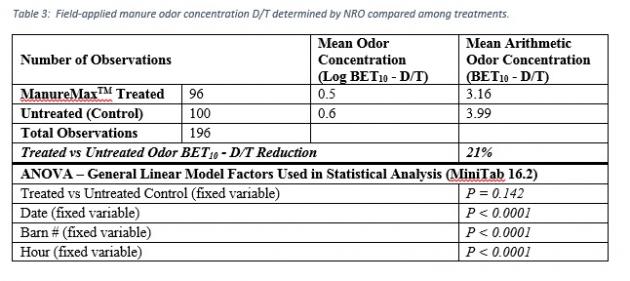
Results show a 21% reduction in mean barn odor exhaust as shown in Table 1 and Table 2. The humic amendment significantly decreased barn ventilation odor flux by 21% in both field NRO and laboratory DTFCO evaluations. Evaluation of field applied manure yield a 21% and 60% decrease in odor concentrations for NRO and DTFCO, respectively.mean barn ventilation odor flux

mean barn ventilation odor flux

field-applied manure odor concentration

field-applied manure odor concentration DT

Authors

Hile, Michael, Ph. D. Candidate in Agricultural and Biological Engineering (ABE) at Penn State (PSU) mlh144@psu.edu

Brandt, Robin, Senior Lecturer in ABE at PSU, Eileen E. Fabian, Professor in ABE at PSU and Herschel A. Elliott, professor in ABE at PSU. Robert E. Mikesell, Program Coordinator and Senior Lecturer, Department of Animal Science at PSU.

Additional information

Brandt, R.C., H.A. Elliott, M.A.A. Adviento-Borbe, E.F. Wheeler, P.J.A. Kleinman, and D.B. Beegle. 2011a. Field Olfactometry Assessment of Dairy Manure Land Application Methods. J. Environ. Qual. 40: 431-437.

Brandt, R.C., M.A.A. Adviento-Borbe, H.A. Elliott, E.F. Wheeler. 2011. Protocols for Reliable Field Olfactometry Odor Evaluations. J. Appl. Engr Agr. Vol. 27(3): 457-466.

Brandt, R. C., H. A. Elliott, E. E. Fabian, M. L. Hile, R. E. Mikesell, Jr., 2014. Manure Additive Shows Swine Odor Reduction. Fact Sheet. Penn State University, Department of Agricultural and Biological Engineering.

Acknowledgements

Thanks to JDMV Holding, LLC Houston, TX) for providing funding and product for this project. This project would not have been possible without the support from Natural Resources Conservation Service’ (NRCS) Conservation Innovation Grant (CIG) program.

The authors are solely responsible for the content of these proceedings. The technical information does not necessarily reflect the official position of the sponsoring agencies or institutions represented by planning committee members, and inclusion and distribution herein does not constitute an endorsement of views expressed by the same. Printed materials included herein are not refereed publications. Citations should appear as follows. EXAMPLE: Authors. 2015. Title of presentation. Waste to Worth: Spreading Science and Solutions. Seattle, WA. March 31-April 3, 2015. URL of this page. Accessed on: today’s date.

Case Study of Contaminated Compost: Collaborations Between Vermont Extension and the Agency of Agriculture to Mitigate Damage Due to Persistent Herbicide Residues

Why Study Herbicide Contamination of Compost?

Picloram, clopyralid, aminopyralid and aminocyclopyrochlor are broadleaf herbicides commonly used in pastures due to effectiveness in controlling undesirable plants and the very low toxicity for animals and fish. In fact, some of these herbicides do not require animal removal post application. The grazing animals can ingest treated leaves with no ill health effects, but may pass the herbicides through to the manure. Also see: Composting Livestock or Poultry Manure

When a complaint driven problem of damaged tomatoes and other garden crops in Vermont was traced back to a single compost provider in Chittenden County in Vermont, a series of actions and reactions commenced. Complaints were fielded and investigated by personnel from the Vermont Agency of Agriculture, Food and Markets (VT-AG) and the University of Vermont Extension (UVM-EXT). The compost provider sent samples of various components of the compost to a single laboratory and received positive results for persistent herbicides in sources of equine bedding/manure components. Subsequent interviews by the facility manager in both print and television media seemed to cast blame on Vermont equine operations for ruining Vermont gardens. Coincidentally, the composter had recently changed compost-processing methods. Initial samples sent to a separate laboratory did not support the composter’s laboratory results. Samples of feed, manure, shavings, and many other components which were shipped to several laboratories by VT-AG, resulted in extremely inconsistent and/or contradictory data between laboratories running the exact same samples.

Related: Small Farm Environmental Stewardship or Managing Manure on Horse Farms

What did we do? 

Several processes were underway by several agencies in a coordinated and collaborative effort to resolve and mitigate the herbicide issues:

• Vermont Agency of Agriculture, Food and Markets was receiving and investigating complaints.

• University of Vermont Extension plant biology personnel were identifying, documenting, and sampling affected plants, as well as counseling gardeners.

• University of Vermont equine extension worked with horse owners and media to mitigate unsubstantiated claims of “horses poisoning garden plants”.

• A more thorough investigation by VT-AG involved collection of raw samples (feed, hay, shavings, manure) from 15 horse farms who utilized the compost facility to dispose of manure and bedding.

• The VT Secretary of Agriculture and the VT-AG Agri-chemical Management Section Chief were brought together with equine and compost experts attending the NE-1041 Equine Environmental Extension Research group annual meeting hosted by UVM equine extension.

• VT-AG worked with herbicide manufacturers to use high quality testing equipment and procedures to gather consistent data from samples.

What have we learned? 

More extensive details of this particular case have been published in the Journal of NACAA (http://www.nacaa.com/journal/index.php?jid=201).

• The levels of persistent herbicides were low enough that they were below the acceptable limits for water, yet they still harmed sensitive garden plants.

• Nationally and locally manufactured grains tested positive for persistent herbicides; most likely due to the individual components being treated within legal limits during field production.

• Many of the laboratories were unable to provide accurate or consistent results when testing for the persistent herbicides.

• Discussions between the NE-1041 group and VT-AG resulted in a fruitful exchange of information, as well as development and delivery of pertinent information for the general public and County Agricultural Agents.

Future Plans 

Several proactive activities have already been initiated and/or completed. A peer reviewed case study on all aspects of the contaminated compost has been published in the Journal of NACAA; and two episodes of Vermont’s Agricultural television show (Across the Fence) were created to educate and update the general public on the situation. A Vermont compost working group has been assembled and set goals to create potential educational materials including a horse owner pamphlet (in final editing phase), a farmer/livestock pamphlet, and press releases for the public education on challenges with persistent herbicides. The VT-AG website has a Compost FAQs page addressing the most common questions associated with compost and herbicides.

Authors

Betsy Greene, Professor/Extension Equine Specialist, University of Vermont Betsy.Greene@uvm.edu

Carey Giguere, Agrichemical Management,Vermont Agency of Agriculture

Rebecca. Bott, Extension, South Dakota State University

Krishona. Martinson, Extension, University of Minnesota

Ann Swinker, Extension, Penn State University

Additional information

• Greene, E.A., R.C. Bott, C. Giguere, K.L. Martinson, and A.W. Swinker. 2013. “Vermont Horses vs. Twisted Tomatoes: A Compost Case Study. J of NACAA. 6:1 (http://www.nacaa.com/journal/index.php?jid=201)

• Vermont Agency of Agriculture, Food and Markets Compost FAQ’s: http://agriculture.vermont.gov/node/696

• Davis, J. Dept. of Horticultural Science, NC State University. 2010. Herbicides in Manure: How Does It Get there and why Should I Care?, Proceedings 8th Annual Mid-Atlantic Nutrition Conference, Timonium, MD. pp 155-160.

• Across the Fence Television Show: An Update on Green Mountain Compost Contamination and Testing-Greene/ Gigliuere (9/14/12)

• Across the Fence Television Show: Information from NE 1041 Meetings and National Equine Specialists-Greene (9/17/12)

• Article from Minnesota Extension explaining the problem in hay and how to avoid it. The article is devoted to “ditch hay”, but the information is relevant to all hay. https://extension.umn.edu/horse-nutrition/managing-herbicides-ditch-forages

• Washington State University Web site on clopyralid carryover includes pictures of affected vegetables, research results, and the bioassay protocol http://www.puyallup.wsu.edu/soilmgmt/Clopyralid.htm

• Dow Agrosciences United Kingdom website with information on aminopyralid: http://www.manurematters.co.uk/

• CDMS Agro-chemical database with access to all the herbicide labels: http://www.cdms.net/LabelsMsds/LMDefault.aspx?t

Acknowledgements

The State University Extension Equine Specialists that make up the NE-1441: Environmental Impacts of Equine Operations, Multi-State Program. USDA.

The authors are solely responsible for the content of these proceedings. The technical information does not necessarily reflect the official position of the sponsoring agencies or institutions represented by planning committee members, and inclusion and distribution herein does not constitute an endorsement of views expressed by the same. Printed materials included herein are not refereed publications. Citations should appear as follows. EXAMPLE: Authors. 2015. Title of presentation. Waste to Worth: Spreading Science and Solutions. Seattle, WA. March 31-April 3, 2015. URL of this page. Accessed on: today’s date.

Composting and the Benefits: Achieving Practice Change through Education to Reduce Nutrient Loads and Increase Adoption of Best Management Practices

Purpose

Florida houses roughly 500,000 horses and is also home to 700 freshwater springs; Marion County is, “Horse Capital of the World” and houses two first magnitude springs and each is currently in a restoration plan with the Florida Department Environmental Protection Agency (FDEP). The Florida Department of Agriculture and Consumer Services (FDACS) equine Best Management Practices (BMP) Manual recommends composting as an excellent manure management option.

Composting is a controlled biological process that decomposes and heats up organic material to produce a biologically stable humus, which can then be used as a rich soil amendment. Composting provides protection to the ground and surface waters by preventing excess nutrients from being leached out and running-off into the waters. It destroys up to 90% of weed seeds contained in manure and kills parasite eggs and pathogens. Additionally, the organic matter/compost helps prevent and control soil erosion and can improve both soil quality and productivity.

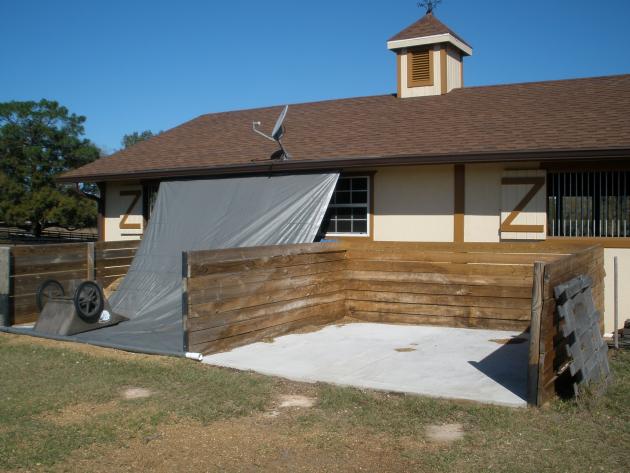
Compost Bin SetupWhat did we do?

Individual and group programming has been developed to educate farm owners and managers about the benefits derived from composting horse manure/spent bedding. Since 2007, Over 800 farms have been seen in the county. In 2013 alone, 132 participants were involved in individual farm consultations or farm revisits, group presentations and composting workshops. Education was provided and supplemental materials were developed for clientele about composting manure, compost bin construction and composting’s soil-improvement capabilities. Compost Countryside

What have we learned?

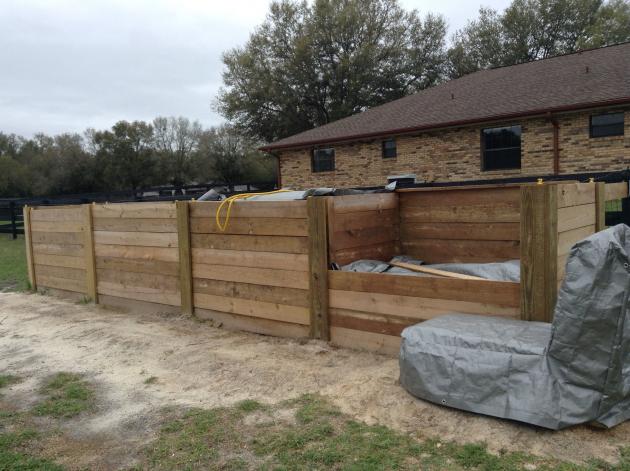
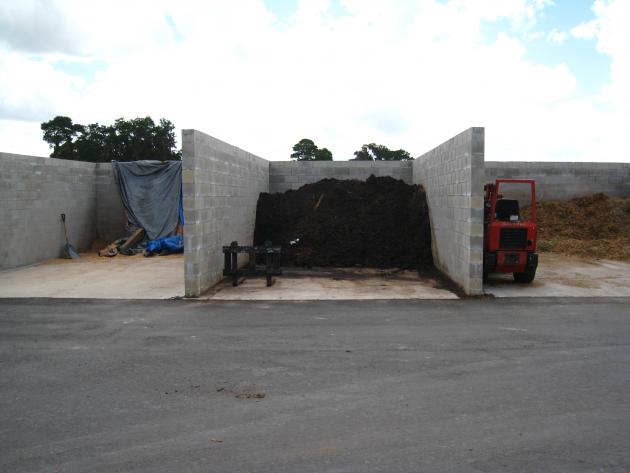
Pre and post-test results showed a 62% (82 of 132 total participants) knowledge gain from information taught. A total of 71% (n=12 of 17 farm revisit consultations) of farms revisited improved and adopted recommended manure handling practices after receiving education. Additionally, seven farms and facilities have begun cost-share planning with Southwest Florida Water Management District (SWFWMD) for compost bin construction. Results/impacts show improved management practices and a greater understanding of BMPs, allowing for a decrease in nutrient levels to the ground and surface waters. Pictures show sample bins which were constructed as a result of individual and group programming.

an example of a concrete manure storage areaFuture Plans

Continued group and individual programming needs to be continued, in partnership with trade journal articles being written about manure management, protection of the ground and surface waters and the benefits derived from composting manure/bedding. Cost-share dollars, coming from state organizations, will further incentivize farms to construct and use compost facilities as part of a regular manure management plan.

example of lattice compost storage areaAuthor

Jamie Cohen, Farm Outreach Coordinator, UF/IFAS Extension Marion County jamiecohen@ufl.edu

Additional information

My eXtension.org Manure Management Strategies Webcast:  https://connect.msu.edu/p8yko9zhhoq/?launcher=false&fcsContent=true&pbMode=normal

eXtension.org –Manure Management page:  https://lpelc.org/horse-manure-management/

A Guide to Composting Horse Manure:  www.whatcom.wsu.edu/ag/compost/horsecompost.htm

The authors are solely responsible for the content of these proceedings. The technical information does not necessarily reflect the official position of the sponsoring agencies or institutions represented by planning committee members, and inclusion and distribution herein does not constitute an endorsement of views expressed by the same. Printed materials included herein are not refereed publications. Citations should appear as follows. EXAMPLE: Authors. 2015. Title of presentation. Waste to Worth: Spreading Science and Solutions. Seattle, WA. March 31-April 3, 2015. URL of this page. Accessed on: today’s date.

Making Dairy Manure More Valuable Than Milk

Can Anaerobic Digestion Lead to Additional Revenue Streams On a Dairy Farm?

CowPots are the invention of necessity. Brothers Matt and Ben Freund are second generation dairy farmers in the northwest hills of Connecticut. In dairy farming, the most challenging job is to manage the nutrient stream in an environmentally sound manner. In 1997 the brothers installed a methane digester to heat the manure coming out of a cold barn to be able to separate the liquid year round for field application with a drag line system. This made the farm much more efficient and timely while at the same time reducing soil compaction and improving crop yields. The solids which are composted were first used for bedding the herd and are now used to mold the CowPots, whose value far exceeded bedding value. Farmers and gardeners have always considered cow manure a wholesome organic soil amendment for their crops. The challenge was to find a new and better way to get manure to these soils while maintaining value to consumers.

CowPots are a patented, environmentally friendly product made from the nutrient rich manure and are a vehicle for exporting the farm’s excess nutrients. Through production and sales of CowPots the Freunds have reduced the nutrient load on their farm by approximately 11% and have added a significant 2nd income to the dairy operation.

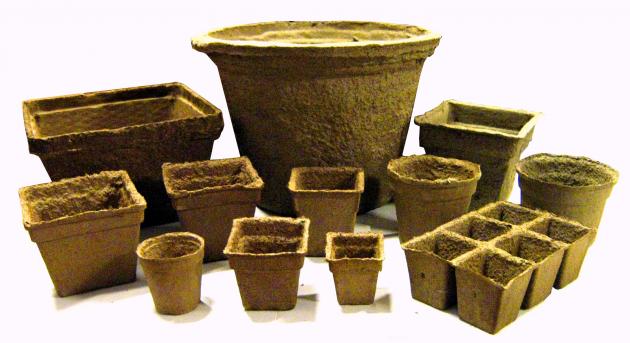
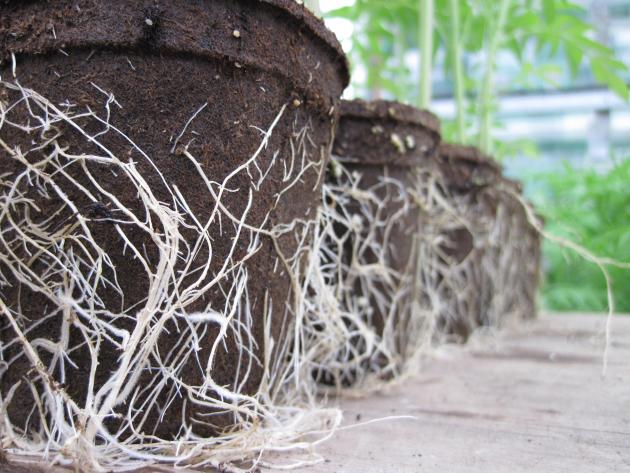
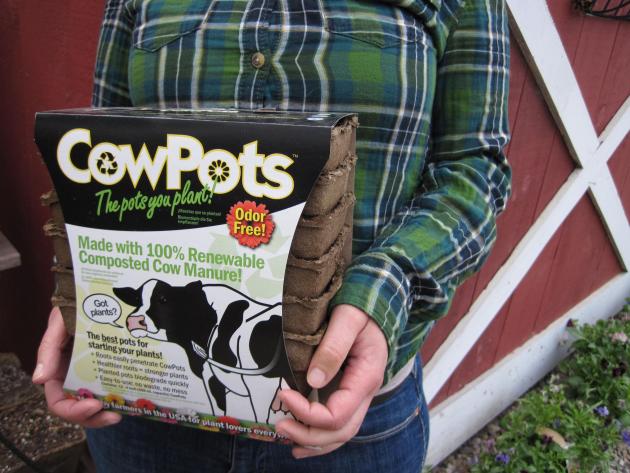
Examples of CowPots    Root Example

Emblems of sound stewardship, CowPots are the ideal product for farmers, growers, gardeners — and for the planet.

What did we do?

The idea for using manure solids to fashion a horticultural pot occurred in the mid 1990’s. The dairy farmer’s wife, Theresa owns a seasonal farm market and garden center adjacent to the dairy farm. Matt noticed that when his wife was tilling the soil each spring, the supposed biodegradable pots were still fully intact.

Confronting stricter regulations on nutrient management through state and federal rules, he needed an alternative to the status quo of storing and spreading manure on their 260+ cow dairy farm. Comparing the fibers found in the peat pots to the fibers of the manure solids, he brought his idea to the kitchen. In Matt’s spare time he began forming, pressing, pasting and molding manure fibers into pots (initially working in the greenhouse and using equipment from his wife’s kitchen and not wanting to get divorced, he moved outside to the farm shop). Nearly a decade was spent experimenting through trial and error.

In the mid 2000’s a production prototype was constructed in one bay of the farm shop where 4” pots were formed and placed by hand onto a drying oven. In 2006, CowPots worked with a local company to shrink wrap stacks of pots and sold them for resale at local garden centers and hardware stores in the tri-state area. That same year Freunds received an SBIR grant to further investigate the horticultural benefits of growing in CowPots. Concurrently, UConn and Cornell University conducted trials in greenhouse settings. In 2009, a standalone manufacturing facility was built and the lineup of sizes offered grew. Today the Freunds manufacture 12 size pots for horticultural uses as well as custom shapes for customers.

What have we learned?

Freunds have learned not all dairy fibers are the same. There are numerous activities on any farm which affect the characteristics of this material. Changes in feed, added minerals, digester upsets,composting temperatures, duration in the in-vessel composer and pasturing the herd have been the most influential on Freund’s farm.

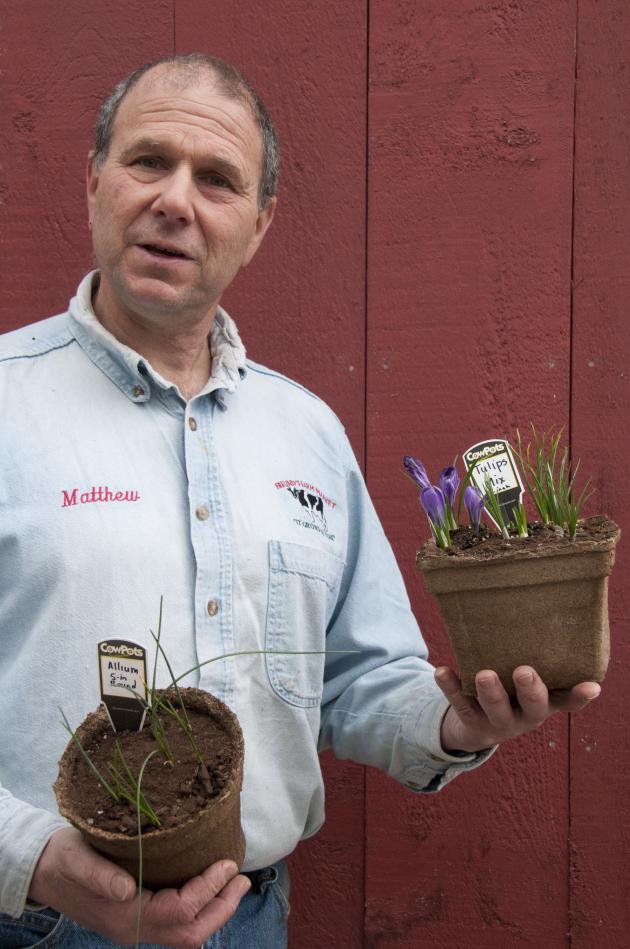
Matt Freund with Product   CowPots

Future Plans

The Freunds had many goals one of which was not to have CowPots dictate the management of the dairy. Every bucket of manure fiber needs to be tested before it is used for production of CowPots. The equipment is adjusted in response to any changes.

Another goal was to design a production facility with no waste stream. Dry matter of the fiber is very important to achieve this goal. By having nothing but water vapor and finished product exiting the facility, permitting becomes much less difficult and our footprint becomes much smaller.

The CowPots manufacturing facility is fast approaching their production capacity with shifts that run 24/6. New automation in the packaging system will be installed in the coming months for a total of three robots in the facility. Currently, Freunds are putting together an expansion plan to include an additional production line. They are also working with a company in a similar business to look for synergies. Freunds are investigating other waste streams which could be blended with CowPots products to make the end product even better and at a reduced cost. Recently an engineer came on board to identify production inefficiencies within the manufacturing system to help reduce costs. As the market builds, Freunds will be looking for partners to work with in different areas of the country.

Author

Matt Freund, Owner/Inventor matt@cowpots.com

Additional information

http://cowpots.com/

https://www.youtube.com/user/CowPots

Acknowledgements

Northeast SARE, SBIR, USDA NRCS and Rural Development, CT Dept of Agriculture and CT Dept of Energy and Environmental Protection

The authors are solely responsible for the content of these proceedings. The technical information does not necessarily reflect the official position of the sponsoring agencies or institutions represented by planning committee members, and inclusion and distribution herein does not constitute an endorsement of views expressed by the same. Printed materials included herein are not refereed publications. Citations should appear as follows. EXAMPLE: Authors. 2015. Title of presentation. Waste to Worth: Spreading Science and Solutions. Seattle, WA. March 31-April 3, 2015. URL of this page. Accessed on: today’s date.

Manure Technology Video Series


Can Video Be Used as a ‘Virtual’ Tour?

Producers are reluctant to adopt new technologies without firsthand experience with the technology. It is particularly difficult to get positive exposure for manure related issues in traditional media. Creative methods are needed to expose producers to useful technologies for handling and treating animal wastes. The OSU Waste Management Youtube channel was created to provide virtual tours of manure treatment and handling technologies.

What did we do?

Fourteen videos highlighting innovative manure handling and treatment technologies were filmed, edited, and produced by the Oklahoma Cooperative Extension Service. We specifically sought out producers who successfully adopted technologies to the particular conditions of their farms.

What have we learned?

In its five years of existence, the OSU Waste Management Youtube channel has been viewed more than 53,000 times (120,000 minutes viewed) from 183 countries and all fifty states – plus Guam, Puerto Rico and the District of Columbia.

Future Plans

We will continue to add new videos to the channel.

Authors

Douglas W. Hamilton, Associate Professor Oklahoma State University dhamilt@okstate.edu

Craig A. Woods, Video Producer/Director Ag Communication Services, Oklahoma State University

Additional information

https://www.youtube.com/user/OSUWasteManagement

The authors are solely responsible for the content of these proceedings. The technical information does not necessarily reflect the official position of the sponsoring agencies or institutions represented by planning committee members, and inclusion and distribution herein does not constitute an endorsement of views expressed by the same. Printed materials included herein are not refereed publications. Citations should appear as follows. EXAMPLE: Authors. 2015. Title of presentation. Waste to Worth: Spreading Science and Solutions. Seattle, WA. March 31-April 3, 2015. URL of this page. Accessed on: today’s date.

Field Scale Management of Separated Dairy Manure Fractions


Why Look at Separated Manure for Crops?

Research at Pacific Agriculture Research Centre (PARC) by Agriculture and Agri-Food Canada (AAFC) in Agassiz, B.C. has shown that targeted application of separated liquid and thicker sludge fractions from dairy manure slurry on grass and corn, respectively, can improve crop nutrient efficiencies, reduce the requirement for commercial fertilizer, and reduce nutrient losses to the environment. These benefits are in comparison to the traditional practice of surface broadcast application of agitated raw slurry manure. More specifically, the liquid fraction, applied via surface banding to grass fields, helps to improve infiltration, reduces ammonia emissions, and improves grass yield and nitrogen recovery. The thicker sludge fraction, which contains more phosphorus, is precision deep injected, then planted with corn near or over the injection furrows. This replaces the need for commercial phosphorus fertilizer normally applied as a starter during corn planting. The sludge fraction is obtained from sedimented slurry.

precision manure injector and tractorThe overall objective of our two year project is to assess these improved manure application practices at the farm scale through various sub-objectives. First, sedimentation efficiency is being evaluated on farms with contrasting manure management by sampling liquid storages at various depths prior to agitation. The goal is to assess natural stratification of nutrients under different bedding and water management, and to assess the practicality of sequentially pumping the thin supernatant (late Mar- early Apr) and thicker sludge (late Apr- early May). Second, improved equipment is being developed to precision deep inject slurry sludge (6 – 11% dry matter) prior to corn planting. Third, on-farm field scale trials using improved manure application equipment are assessing the agronomic and economic benefits of managing separated dairy manure fractions, compared to the traditional practice of surface broadcasted agitated raw manure.
precision maure injector in useWhat did we do?

We have completed one year of this two year project. Progress has been made on all three sub-objectives, but most notably on the first. Under the first sub-objective we have sampled manure at various depths for 18 liquid manure storages, and collected management information on bedding management and water inputs into these storages.

We also utilized a custom manure operator to mount a farm scale 4 row deep manure injector onto a dragline system. This was used to precision deep inject thicker dairy sludge and compare with traditional surface broadcast application and incorporation, prior to corn planting on a farm field near Agassiz, B.C. On this same farm a different custom manure operator applied thinner dairy slurry on a grass field using first a shallow disc injector and then a trailing hose. These two treatments were compared with the farmer’s surface broadcast application.

These manure applications on grass occurred two times, once in March and once in May. While it would have been preferable to use agitated raw manure for the farmer’s surface broadcast application on both grass and corn, this is not feasible when managing a farm’s manure supply from a single storage system. Rather the same manure sources, ie. thin slurry on grass and thicker sludge on corn, were used for all application treatments, including the farmer’s broadcast application.

the plots where the precision manure injector study was performedWhat have we learned?

Average nutrient content of liquid manure in storages varied greatly between farms, ranging from 0.58 to 2.80 kg/m3 for total nitrogen and 0.17 to 1.51 kg/m3 for total phosphorus (expressed as P2O5). These nutrient values were closely correlated with dry matter content, which ranged from 0.58 to 10.02%. Variation in dry matter content is determined primarily by the amount of water inputs into the manure storage, the amount of organic bedding imported onto the farm, and whether the raw manure undergoes a mechanical solid/liquid separation process prior to the liquid manure entering the storage.

Seven out of 18 storages had little or no sedimentation of solids or nutrients. Four storages showed slight stratification and the remaining seven storages had considerable settling of solids and nutrient concentration increasing with depth. For storages with considerable stratification average dry matter content ranged from 1.5% for the shallowest depths to 7.7% for the deepest depths. For these same depth positions average total nitrogen increased from 0.090% to 0.193%, and average total phosphorus from 0.015% to 0.041%. Preliminary assessment of manure sample analysis compared to manure management practices suggests that sedimentation of solids and nutrient stratification is minimal or reduced when coarse solids are mechanically separated from liquid manure prior to entering storage, and/or there is considerable disturbance of manure when transferring it from the barn into the manure storage. For example, manure pumping involves more disturbance than scraping.

Preliminary results from land applied manure suggest small but likely insignificant increases in dry matter yield for trailing hose and shallow injection on grass compared to surface broadcast manure. On corn land there was no difference in yield between deep injected and surface broadcast/incorporated dairy sludge. Part of the reason for little or no difference is due to using the same manure source and application rate for all treatments. Also, the corn land result may be due to the majority of nutrients for both treatments being supplied by another source, surface broadcast poultry manure.

Future Plans

In the winter of 2015 most liquid manure storages will be resampled. An additional 5 liquid manure storages have been chosen for sampling in 2015, to include some manure management systems not accounted for in 2014. Our 4 row deep manure injector is being modified to a 6 row unit. This will enable easier alignment of the manure furrow with subsequent 6 row corn planter. We plan to add two more farm sites to land apply separated manure fractions on grass and corn, for the 2015 growing season.

Authors    

Dennis Haak, Senior Soil Resource Specialist, Agriculture and Agri-Food Canada dennis.haak@agr.gc.ca

Shabtai Bittman, Research Scientist, Agriculture and Agri-Food Canada; Derek Hunt, Biologist, Agriculture and Agri-Food Canada

Additional information             

1. Precision Placement of Separated Dairy Sludge Improves Early Phosphorus Nutrition and Growth in Corn (Zea mays L.), https://dl.sciencesocieties.org/publications/jeq/abstracts/41/2/582

2. Removing Solids Improves Response of Grass to Surface-Banded Dairy Manure Slurry: A Multiyear Study, https://dl.sciencesocieties.org/publications/jeq/abstracts/40/2/393

The authors are solely responsible for the content of these proceedings. The technical information does not necessarily reflect the official position of the sponsoring agencies or institutions represented by planning committee members, and inclusion and distribution herein does not constitute an endorsement of views expressed by the same. Printed materials included herein are not refereed publications. Citations should appear as follows. EXAMPLE: Authors. 2015. Title of presentation. Waste to Worth: Spreading Science and Solutions. Seattle, WA. March 31-April 3, 2015. URL of this page. Accessed on: today’s date.

Lifecycle greenhouse gas (GHG) analysis of an Anaerobic Co-digestion Facility Processing Dairy Manure and Industrial Food Waste in NY State

While the theoretical benefits of anaerobic digestion have been documented, few studies have utilized data from commercial-scale digesters to quantify impacts.  Previous studies have analyzed a range of empirical studies to constuct emission factors for a generic European AD plant processing source separated municipal solid waste.  However, most U.S. studies have applied reporting protocols and have been based upon theoretical assumptions.  Furthermore, GHG analyses of U.S. co-digestion facilities are limited to one scenario in protocol based analysis of community digester options. 

Purpose          

We are not aware of any peer-reviewed studies of US anaerobic co-digestion. Several case studies have presented calculations of impacts using GHG reporting protocols, however significant portions of the lifecycle have been neglected such as the feedstock reference case emissions, digestate storage emissions and fertilizer displacement impacts. Furthermore, they have often been modeled using general theoretical assumptions such as number of cows rather than empirical data on feedstock volume and characteristics and digester operation.

What did we do? 

A lifecycle GHG analysis was performed based upon data reported on a farm-based anaerobic co-digestion system in New York State, resulting in an 71% reduction in GHG impact relative to conventional treatment of manure and food waste.

The objective of this study was to provide a comprehensive analysis of GHG emissions based upon a NYS digester that co-digests manure and industrial-sourced food waste. Empirical data on feedstock (t-km transport, avoided disposal, TS, VS, TKN), digester operation (m3CH4, KWh, exhaust emissions) and effluent properties (TS,VS,TKN) were combined with regional parameters (i.e., climate, soil type and management practices) to represent a state-of-the-art, anaerobic co-digestion facility in NYS. This data was combined with information collected through interviews in order to model a reference case, representing the business-as-usual food waste disposal and manure management practices en lieu of the anaerobic co-digestion system.

What have we learned? 

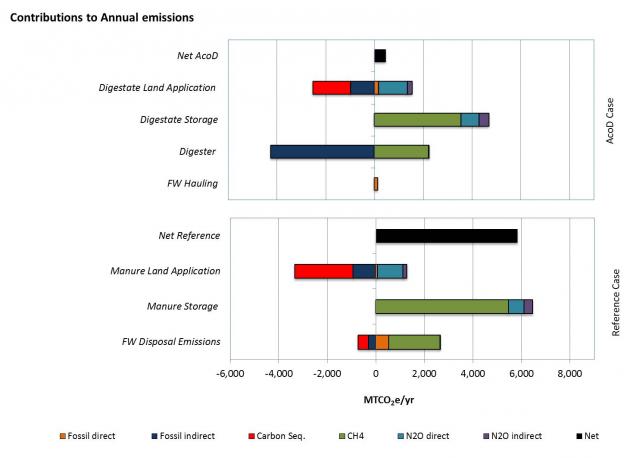
Displacement of grid electricity provided the largest benefit followed by avoidance of food waste landfill emissions and reduced impacts associated with storage of digestate vs. undigested manure. Nominal land application N2O emissions were offset by inorganic fertilizer displacement and carbon sequestration in both cases. The higher volume of digestate increased net land application emissions as did increased transportation distance to the fields and lower carbon sequestration. Digestate is a by-product of the co-digestion process and its treatment must be considered in an LCA. Modeling of land application impacts are highly uncertain and can be significant.

The largest source of direct emissions was CH4 emissions. N2O emissions were larger in the land application phase than during storage. Direct fossil fuel emissions had a minor impact. Emissions were offset by displacement of grid electricity and fossil based fertilizers along with carbon sequestration.

Future Plans    

More empirical research is needed to measure emissions and to provide emission factors that incorporate key variables and characteristics affecting emissions. A whole system, dynamic approach is necessary to incorporate complex interdependencies between stages of farm and manure management.

Authors

Jennifer L. Pronto, Research Assistant, Cornell University jlp67@cornell.edu

Ebner, Jackie      jhe5003@rit.edu              Rochester Institute of Technology

Rodrigo A. Labatut, Matthew J. Rankin, Curt A. Gooch, Anahita A. Williamson, Thomas A. Trabold

Additional information               

www.manuremanagement.cornell.edu

Figure 1: Contributional analysis of GHG impacts for the reference and anaerobic co-digestion cases.

Figure 1: Contributional analysis of GHG impacts for the reference and anaerobic co-digestion cases.


The authors are solely responsible for the content of these proceedings. The technical information does not necessarily reflect the official position of the sponsoring agencies or institutions represented by planning committee members, and inclusion and distribution herein does not constitute an endorsement of views expressed by the same. Printed materials included herein are not refereed publications. Citations should appear as follows. EXAMPLE: Authors. 2015. Title of presentation. Waste to Worth: Spreading Science and Solutions. Seattle, WA. March 31-April 3, 2015. URL of this page. Accessed on: today’s date.