A number of the manure related Conservation Innovation Grants (CIG) have been successful. Several feed management related projects have been major successes under the CIG program. Other successful projects have dealt with such technologies as anaerobic digesters; community digesters; environmental credit trading; lagoon management; manure to energy generation; alternative litter sources, storage, and handling; and pathogen, odor, and emissions mitigation, to name just a few.
The presentation will provide specific numbers of projects and funding per year, and information about actual projects that NRCS considers to have been successful.
What Is the Purpose of the CIG Grant Program?
Glenn Carpenter came to Natural Resources Conservation Service as a Senior Economist in December of 2001 with the Animal Husbandry and Clean Water Division. In May, 2004 he became the agency’s National Leader for Animal Husbandry, with that Division. In 2010 his position was moved to the Ecological Sciences Division. Much of his work with NRCS has been related to the animal waste issue and the agency’s interaction with EPA over the CAFO Rule.
Glenn has three degrees in Poultry Science from Michigan State University. Prior to joining NRCS, Glenn served in Extension Poultry positions at two universities.
The 2002 Farm Bill created a mechanism under the Environmental Quality Incentives Program (EQIP) for a program of Conservation Innovation Grants (CIG). These grants were “…intended to stimulate innovative approaches to leveraging Federal investment in environmental enhancement and protection, in conjunction with agricultural production…” The grants were to provide a mechanism for funding projects to aid in technology development and transfer. The granting program actually began in 2004, and has continued since that time.
What Did We Do?
By statute, the USDA Natural Resources Conservation Service cannot do research. Because of this, and because the interest of NRCS lies in directly assisting farmers and ranchers in the adoption of technologies that will benefit conservation, projects funded under this program must be in the field demonstration or tool application stages. Since the initial grant funding cycle in 2004, NRCS has provided funding through EQIP every year. To date nearly 500 grants have been awarded, with total funding in excess of $180 million.
A large share of these CIGs has been strongly animal, and/or manure related. Almost 25 percent of the total number of grants has been animal related, and these grants have received slightly over 26 percent of the total dollars. About 19 percent of the total grants have been manure related and these have received about 22 percent of the funding. Those animal related grants that are not manure related largely deal with range and pasture systems.
What Have We Learned?
Several feed management related projects have been major successes under the CIG program. Other successful projects have dealt with such technologies as anaerobic digesters; community digesters; environmental credit trading; lagoon management; manure-to-energy generation; alternative litter sources, litter storage, and handling; and pathogen, odor, and emissions mitigation from manure, to name just a few.
The number and variety of funded projects has covered a wide range of geographic areas and technical innovations. A multistate feed management project resulted in training programs, a tech note for NRCS, and many fact sheets and other materials that are available on Livestock and Poultry Environmental Learning Center webpage. Another major grant demonstrated the effectiveness of filter strips and other vegetated treatment areas on mitigating manure runoff from cattle feedlots. Utilizing high pressure injection of manure, a Pennsylvania project demonstrated a decrease in odor and runoff while also preserving nitrogen. Several projects have successfully demonstrated the effects of precision feeding of dairy cattle to show the change in manure nutrients. Projects have demonstrated the effectiveness of different tillage systems and technologies on manure nutrient runoff. Other projects have dealt with innovative waste-to-energy technologies, or waste to value-added-product creation. These are just a few of the number and variety of projects funded through the Conservation Innovation Grants program.
Future Plans
The success of the CIG program since 2004, both in numbers of projects and in innovative technologies and tools applied, demonstrates that the program is important to agriculture in the U.S. NRCS has shown its support by continually funding the program, and by making additional moneys available for special targeted CIGinitiatives.
Authors
Glenn H. Carpenter, National Leader, Animal Husbandry, USDA Natural Resources Conservation Service glenn.carpenter@wdc.usda.gov
United States Department of Agriculture, Natural Resources Conservation Service, Conservation Innovation Grants Program
The authors are solely responsible for the content of these proceedings. The technical information does not necessarily reflect the official position of the sponsoring agencies or institutions represented by planning committee members, and inclusion and distribution herein does not constitute an endorsement of views expressed by the same. Printed materials included herein are not refereed publications. Citations should appear as follows. EXAMPLE: Authors. 2013. Title of presentation. Waste to Worth: Spreading Science and Solutions. Denver, CO. April 1-5, 2013. URL of this page. Accessed on: today’s date.
* Presentation slides are available at the bottom of the page.
Ammonia and odor emissions from land application of liquid dairy manure, and costs associated with manure land application methods are serious concerns for dairy owners, regulators, academic, and the general public. Odor and ammonia samples from agricultural fields receiving liquid dairy manure applied by surface broadcast and subsurface injection methods were collected and analyzed. Costs associated with both of the manure application methods were estimated. The test results showed that subsurface injection reduced both the odor and ammonia emissions compared with surface broadcast; therefore, applying liquid dairy manure by subsurface injection could be recommended as one of the best management practices to control ammonia and odor emissions. The estimated costs associated with subsurface injection were higher than surface broadcast. However the higher costs could be partially compensated by the higher nitrogen fertilizer value captured in the soil by the deep injection method.
Why Study Air Emissions from Dairy Farms?
A floating self-propelled mixing pump and a remote controller (yellow)
Agriculture is the single most important economic sector in Idaho. Dairy production currently stands as the single largest agricultural pursuit in Idaho. Currently, Idaho ranks as the third largest milk production state in the US. Idaho has roughly 550 dairy operations with 580,000 milk cows. Over 70% of milk cows are located in the Magic Valley in southern Idaho (Idaho Department of Agriculture-Bureau of Dairying, 1/22/2013). A number of dairies in the Magic Valley use flushing systems resulting in huge amount of lagoon water which is applied to crop lands near the lagoons via irrigation systems during the crop growing seasons. The volatilization of ammonia (NH3) from the irrigated lands and lagoons is not only a loss of valuable nitrogen (N), but also causes air pollution. Concentrated dairy production in a limited area such as the Magic Valley has caused air and water quality concerns. Controlling odor and capturing N in dairy manure are big challenges facing the southern Idaho dairy industry.
Direct injection incorporates manure directly beneath the soil surface and thus minimizes odor and NH3 emissions during application. Injecting manure decreases soluble phosphorus (P) and N in runoff relative to surface application. Some common types of direct injection applications are liquid tankers with injectors and drag-hose systems with injectors. Manure can be successfully injected in both conventional tillage and non-till systems with currently available equipment. The manure direct injection has been proven in other regions, such as the Midwest, to effectively manage odors and manure nutrients. The purpose of this research was to demonstrate, evaluate, and encourage the widespread adoption of the manure direct injection method in southern Idaho for mitigating odors and managing manure nutrients.
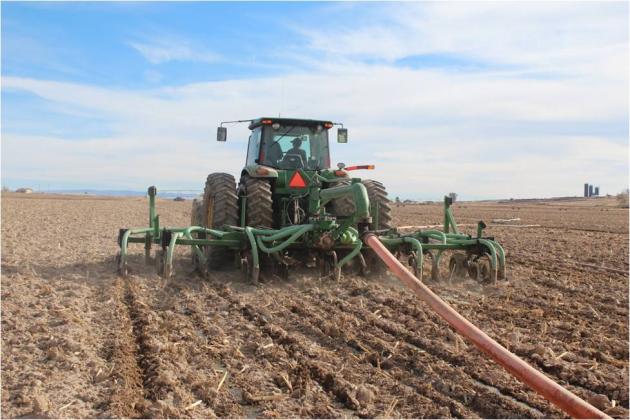
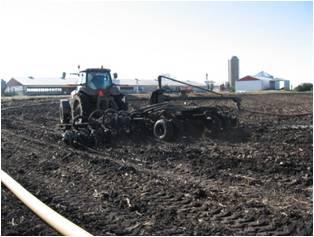
Subsurface injection with drag hose system
What Did We Do?
A manure application field day was held on October 31, 2012 on a dairy in Buhl, Idaho, to demonstrate and evaluate dairy manure land application via a drag-hose system and manure mixing equipment. The dairy had approximately 3,500 milking cows managed in a free-stall and open-lot mix set-up, with about 60% of the cows housed in free stalls. Waste is flushed from lanes running under the feeding alleys and from the milking parlor. The wastewater passes through solids removal equipment and basins and then into three lagoons in series. Manure used for this demonstration study was from the last lagoon, which had about 9 million gallons of manure at the beginning of the demonstration field day and its sludge had been not cleaned for 5 years.
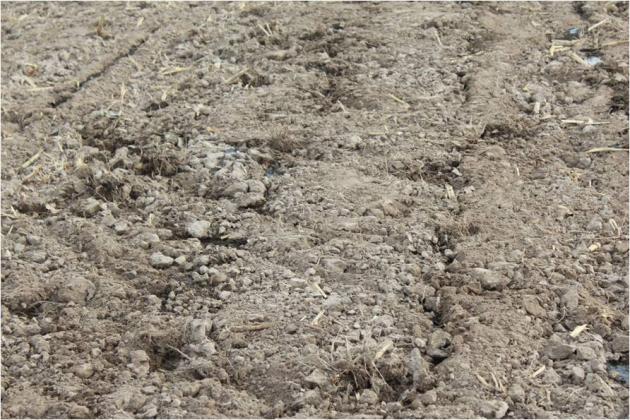
Soil after manure subsurface injection
The on-farm manure application trials conducted at two sites were comprised of two manure application methods: surface broadcast and subsurface injection. At each of the sites, a square plot of approximately 3,600 m2 in the western portion of the site was used for surface broadcast and the rest of the land was used for subsurface injection. The western portion of the site was chosen because the prevailing winds were from the north during the test period. The previous crop at the two sites was corn; both sites had been disked after harvest.
The manure lagoon was agitated before and during application with a floating mixing pump. Manure was pumped from the lagoon directly to the application field via drag hoses. The two manure application methods were demonstrated with the same equipment. Subsurface injection placed manure behind the shank in a band approximately 20 cm (8 inches) deep. Surface broadcast was realized by lifting the shanks above ground so manure was applied on the soil surface. Manure was applied from east to west and back again until the site was finished. The equipment shanks were lifted only when the equipment was in the designated 3,600 m2 square plot for surface application. After manure application in the site, three towers, each 1.5 m high, were placed in a north-to-south orientation with approximately 15 m spacing. The middle tower was placed at the center of the manure surface applied plot. Three towers were placed in the manure subsurface injected field parallel to the ones in the manure surface broadcasted plot and approximately 200 m apart to avoid or minimize cross-contamination between the two manure application methods.
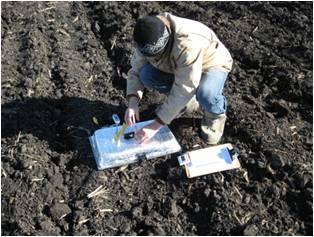
Passive NH3 samplers (Ogawa & Co. USA Inc., Pompano Beach, FL) were installed on each tower at a height of 0.5 and 1 m to determine the NH3 concentration at each location. Ammonia samplers were changed approximately every 24 hours over a two-day period after manure application. Right after collection of NH3 samplers in field, samplers were placed into airtight containers and then shipped back to the U-Idaho Twin Falls Waste Management Laboratory where the NH3 sampler filters were carefully removed from the samplers and transferred into 15-mL centrifuge tubes. Five mL of 1 M KCI was added to each of the centrifuge tubes to extract NH3 trapped in the filters. The extractant was transported to the USDA Northwest Irrigation and Soils Research Laboratory (NWISRL) located in Kimberly, Idaho where it was analyzed for NH4-N using a flow-injection analysis system (Quickchem 8500, Lachat Instruments, Milwaukee, WI). Background concentrations of NH3 were determined by placing three towers 50 m upwind (north) of the site following the same procedure described previously. Concentrations from passive samplers are time-average concentrations for the amount of time the sampler was exposed to the air and were calculated with the following equation:
In this, [NH3-N]air is the concentration of NH3-N in the air, [NH4-N]extractant is the concentration of NH4-N in the extractant, and 31.1 cm3/min is a constant used to calculated diffusion to the trap (Roadman et al., 2003; Leytem et al., 2009). Details regarding the design and calculation of NH3 concentrations can be found in Roadman et al. (2003) and Leytem et al. (2009).
Air samples were collected from the first test site right after manure application using Tedlar bags. One air sample was collected at 1 m above ground from each of the three towers located in the surface broadcast plot, subsurface injection, and background, respectively. A total of nine air samples were collected and then sent via UPS over-night service to Iowa State University Olfactometry Laboratory for odor analysis. The nine air samples were analyzed within 24 hours based on ASTM E679-04 (ASTM, 2004).
For each test site, a grab sample (about 1 L) of liquid manure was collected and transported to a commercial lab (Stukenholtz Laboratory, Inc., located in Twin Falls, Idaho) for pH and total nitrogen analysis. The manure pH, total N, and calculated total N application rates are shown in Table 1. The liquid manure application rate was approximately 20,000 gallons per acre on both the test sites.
Table 1. Manure pH and total N concentrations and application rates of total N at the two test sites
Site and Application Method
Manure pH
Manure total N concentration (mg/L)
Manure total N Application Rate (kg/acre)
Site 1
7.4
3433
257
Site 2
7.3
3519
265
A soil temperature probe with data logger (HOBO U23 Pro v2 2x external temperature data logger-U23-003) was placed 3 cm below the soil surface to record soil temperature data in 15-min increments. Wind speed, temperature, and relative humidity data were obtained from local Buhl Airport, located six miles from the test sites, due to failure of the mobile weather station set on the test sites. The ambient weather conditions and soil temperature at the test sites over the test period are shown in Table 2.
Table 2. Ambient weather conditions and soil temperature at the test sites
Site 1
Site 2
Item
Day 1
Day 2
Day 1
Day 2
Average wind speed, m/s
5.0
4.2
4.2
3.1
Air temperature, average(minimum, maximum),˚F
61 (42, 78)
49 (45, 63)
49 (45, 63)
47 (38, 61)
Average relative humidity, %
28
53
53
51
Soil temperature, average(minimum, maximum), ˚F
50.9 (51.1, 56.1)
47.3 (51.1, 51.2)
46.5 (51.5, 52.1)
66.7 (51.6, 69.1)
Cost analysis was carried out for four different manure land application systems as shown in the “What Have We Learned?” section below. Cost calculations are based on 500 hours annual use for the tractor and 200 hours annual use for the injection system. Tractor operator labor is figured at $11.70/hour, diesel is figured at $4.00/gallon. Equipment costs were determined using the MACHCOST program from the University of Idaho’s department of Agricultural Economics and Rural Sociology. The program is available on the AERS web page at https://www.uidaho.edu/cals/idaho-agbiz/resources/tools. Equipment data was provided by John Smith at Smith Equipment Co. Rupert, ID 83350. Some machinery data was taken from “Costs of Owning and Operating Farm Machinery in the Pacific Northwest” PNW 346 available on line at: https://www.extension.uidaho.edu/publishing/pdf/PNW/PNW0346/PNW0346.html.
What Have We Learned?
Odor results from test site 1
T-test for Odor showed there was no significant difference between the background and subsurface injection (P=0.41), there was significant difference between the background and surface broadcast (P=0.03), and P value was 0.08 for the t-test of mean difference between the subsurface injection and surface broadcast. The field day attendees felt there was significant difference in odor perception between the subsurface injection and surface broadcast methods.
Test site 1
First day ammonia sample results from test site 1.
Second day ammonia sample results from test site 1.
The NH3 concentration data from test site 1 showed significant difference between surface broadcast and subsurface injection based on P<0.05. The NH3 concentration data from test site 1 showed 82% and 64% reduction in NH3 concentration for first and second sampling day, respectively when liquid dairy manure was applied by subsurface injection vs. surface broadcast.
Test site 2
First day ammonia sample results from test site 2.
Second day ammonia sample results from test site 2.
The NH3 concentration data from test site 2 showed significant difference between surface broadcast and subsurface injection based on P<0.05. There were 64% and 41% decrease in NH3 concentration for first and second sampling day, respectively when manure was applied by subsurface injection compared with surface broadcast.
The NH3 concentration data from both the test sites showed lower NH3 concentration in the air from the subsurface injected soil vs. surface applied land which means higher nitrogen fertilizer value captured in the soil by the subsurface injection method.
Cost analysis results:
*Fuel and Lubricant Costs are assigned to the Power Unit.
The above fact sheet summarizes probable costs of operation for a 7,400 gallon tank with a 2,000 gpm discharge rate and a 15 foot wide broadcast unit. A 180 PTO HP tractor is needed to pull this unit at an average ground speed of 8 mph. Up to 10 acres per hour can be covered with the unit. The tank is discharged in approximately 4 minutes. Time and equipment to refill the tank is not included in these calculations.
*Fuel and Lubricant Costs are assigned to the Power Unit.
The above fact sheet summarizes probable costs of operation for a 7,400 gallon tank with a 2,000 gpm discharge rate and a 12 foot wide broadcast unit. A 215 PTO HP tractor is needed to pull this unit at an average ground speed of 7 mph. Up to 7 acres per hour can be covered with the unit. The tank is discharged in approximately 4 minutes. Time and equipment to refill the tank is not included in these calculations.
*Fuel and Lubricant Costs are assigned to the Power Unit.
The above fact sheet summarizes probable costs of operation for a 7,400 gallon tank with a 2,000 gpm discharge rate and a 12 foot wide broadcast unit. A 225 PTO HP tractor is needed to pull this unit at an average ground speed of 7 mph. Up to 7 acres per hour can be covered with the unit. The tank is discharged in approximately 4 minutes. Time and equipment to refill the tank is not included in these calculations.
*Fuel and Lubricant Costs are assigned to the Power Unit.
The above fact sheet summarizes probable costs of operation for a system utilizing 5,280 FT of 8 inch hose and 1,320 FT of 5 inch hose. The pump unit capacity is 1,500 gpm to a 16 foot knife injection unit. A 250 PTO HP tractor is needed for the injection unit operating at 75% field efficiency and at an average ground speed of 3.5 mph. The lagoon pump is a 270 HP unit and operating efficiency assumed at 70%. Beyond 2 miles a booster pump would be necessary. Up to 4.75 acres per hour can be covered with the unit. Operation is continuous as no tank refill is needed.
Based on the estimated costs above, the subsurface injection method has higher costs mainly due to the need of larger tractor and lower operating speed. However, we did not include the time and equipment costs associated with refilling the tank for the tank application system. Due to the short time to discharge the tank on the tank broadcast and tank injection systems additional equipment to refill the tank in a timely fashion would be desirable. This would increase the investment in equipment and also would reduce the number of acres that could be covered per hour due to down time while the tank is refilled.
In summary, subsurface injection can reduce both the odor and NH3 emissions compared with surface broadcast; therefore, applying liquid dairy manure by subsurface injection could be recommended as one of the best management practices to control NH3 and odor emissions. The estimated costs associated with subsurface injection were higher than surface broadcast. However, the higher costs could be partially compensated by the higher nitrogen fertilizer value captured in the soil by the subsurface injection method.
Future Plans
We will finish development of educational videos to demonstrate the manure subsurface injection technique and disseminate results from this study to our stakeholders.
Authors
Lide Chen, Waste Management Engineer and Assistant Professor, Biological and Agricultural Engineering Department, University of Idaho lchen@uidaho.edu
Mario de Haro Marti, Extension Educator
Wilson Gray, District Extension Economist and Extension Professor
Howard Neibling, Extension Irrigation and Water Management Specialist and Associate Professor
Mireille Chahine, Extension Dairy Specialist and Associate Professor
Sai Krishna Reddy Yadanaparthi, Graduate student, University of Idaho
Acknowledgements
This project was supported by the USDA Natural Resource Conservation Service through a Conservation Innovation Grant. We would also like to thank Dr. April Leytem and Mr. Myles Miller (USDA Northwest Irrigation and Soils Research Laboratory (NWISRL) located in Kimberly, Idaho) for their help with analysis of ammonia samples.
The authors are solely responsible for the content of these proceedings. The technical information does not necessarily reflect the official position of the sponsoring agencies or institutions represented by planning committee members, and inclusion and distribution herein does not constitute an endorsement of views expressed by the same. Printed materials included herein are not refereed publications. Citations should appear as follows. EXAMPLE: Authors. 2013. Title of presentation. Waste to Worth: Spreading Science and Solutions. Denver, CO. April 1-5, 2013. URL of this page. Accessed on: today’s date.
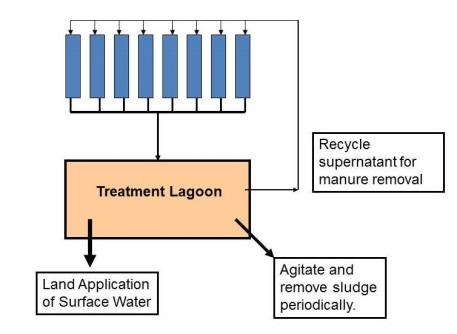
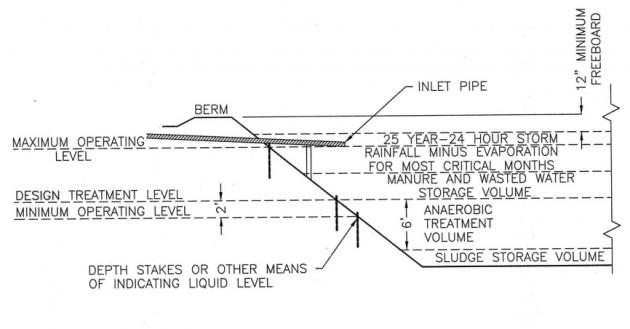
Treatment lagoons are one of the most common biological treatment methods used on swine and dairy farms that use recycled supernatant as a means to remove manure from animal housing facilities by flushing. A properly functioning treatment lagoon will provide adequate treatment to allow reuse of the effluent without compromising animal health or generating strong odor.
A typical treatment lagoon system used on swine and dairy farms.
A lagoon should have a minimum biological treatment volume and provide sufficient volume for settling and storage of sludge to provide the needed levels of treatment prior to recycling. This presentation will provide a summary of the benefits of using liquid-solid separation to maintain and potentially reduce the required treatment volume, reduce sludge build-up, increase useful life of an existing lagoon, and to reduce the size of new lagoons based on the ASABE Standard. Information will also be provided concerning desired loading rates and supernatant concentrations for recycling, and impacts of odor production potential.
Components of a treatment lagoon for animal manure.
What Did We Do?
The ASABE Lagoon Standard (ANSI/ASAE EP403.4, ASABE 2011) was used to calculate lagoon treatment volumes for swine and dairy manure using volatile solid loading rates for a variety of climates ranging from a cold climate, such as Southern Minnesota (3 lb VS/1000 ft3-day), to a hot climate, such as Central Florida (6.0 lb VS/1000 ft3-day). Liquid-solid separation methods can provide a reduction in the mass of VS in the liquid fraction by 10% to 80%. The corresponding reduction in treatment volume were also determined for swine and dairy manure over a wide range of climates.
The ASABE Standard also provides a method to estimate sludge storage volume requirments per year for swine and dairy lagoons that is based on the total solids loaded into a lagoon. The impact of implementing solid-liquid separation on the sludge accumulation rate was also destermined for TS removals in the range of 20% to 80%.
What Have We Learned?
The percent reduction in treatment volume of a lagoon was the same as the mass fraction of VS removed by liquid-solid separation. That is, a 30% reduction in VS provided a 30% reduction in treatment volume. The practical result is that implementation of liquid-solid separation system that can remove 30% of the VS would allow pork producers in the Midwest to use similar treatment volumes as pork producers located in South Carolina or Central Georgia.
Liquid-solid separation also reduced sludge build up in lagoons by the same percentage as the TS removal efficiency. Therefore, a 30% reduction in TS will reduce sludge accumulation by30%.
Reduction in TS and VS loading can help to reduce odors from lagoons, reduce the size of the lagoon needed to provide treatment, and can yield better treated surface water for flushing manure from the buildings.
Removal of large portions of the VS (60% to 80% reduction) using high-rate liquid-solid separation methods has the added benefit of greatly reducing the amount of the organic-N loaded. As a result, less organic-N will be converted to ammonium-N in a lagoon where a portion will be lost to the air as ammonia.
Future Plans
This information will be published as part of a new USDA-NRCS technical note or as part of the National Engineering Handbook, Part 651 Agricultural Waste Management Field Handbook.
Authors
Dr. John P. Chastain, Professor and Extension Agricultural Engineer, School of Agricultural, Forestry, and Environmental Sciences, Clemson University jchstn@clemson.edu
Jeffrey P. Porter, P.E. Environmental Engineer Manure Management Team USDA-Natural Resources Conservation Service
Additional Information
Solid-Liquid Separation Alterntives for Manure Handling Treatment, a new USDA-NRCS technical note or as part of the National Engineering Handbook, Part 651 Agricultural Waste Management Field Handbook.
Acknowledgements
Piedmont-South Atlantic Coast Cooperative Ecosystems Studies Unit (CESU). This Cooperative and Joint Venture Agreement allowed for this work to take place.
Manure Management Team USDA-Natural Resources Conservation Service, Greensboro, NC
Additional support was provided by the Confined Animal Manure Managers Program, Clemson Extension, Clemson University, Clemson, SC.
The authors are solely responsible for the content of these proceedings. The technical information does not necessarily reflect the official position of the sponsoring agencies or institutions represented by planning committee members, and inclusion and distribution herein does not constitute an endorsement of views expressed by the same. Printed materials included herein are not refereed publications. Citations should appear as follows. EXAMPLE: Authors. 2013. Title of presentation. Waste to Worth: Spreading Science and Solutions. Denver, CO. April 1-5, 2013. URL of this page. Accessed on: today’s date.
A new method was used at the Ag 450 Farm Iowa State University (41.98N, 93.65W) from October 24, 2012 through December 14, 2012 to assess GHG emission from land-applied swine manure on crop land. Gas samples were collected daily from four static flux chambers. Gas method detection limits were 1.99 ppm, 170 ppb, and 20.7 ppb for CO2, CH4 and N2O, respectively. Measured gas concentrations were used to estimate flux using four different models, i.e., (1) linear regression, (2) non-linear regression, (3) non-equilibrium, and (4) revised Hutchinson & Mosier (HMR). Sixteen days of baseline measurements (before manure application) were followed by manure application with deep injection (at 41.2 m3/ha), and thirty seven days of measurements after manure application.
Static flux chamber (pictured) method was developed to measure greenhouse gas emissions from land-applied swine manure from a corn-on-corn system in central Iowa in the Fall of 2012. Gas samples were collected in vials and transported to the Air Quality Laboratory at Iowa State University campus.
Why Study Greenhouse Gases and Land Application of Swine Manure?
Assessment of greenhouse gas (GHG) emissions from land-applied swine manure is needed for improved process-based modeling of nitrogen and carbon cycles in animal-crop production systems.
What Did We Do?
We developed novel method for measurement and estimation of greenhouse gas (CO2, CH4, N2O) flux (mass/area/time) from land-applied swine manure. New method is based on gas emissions collection with static flux chambers (surface coverage area of 0.134 m^2 and a head space volume of 7 L) and gas analysis with a GC-FID-ECD.
Baseline (post tilling) greenhouse gas (GHGs) emissions monitoring was followed with swine manure application in the Fall of 2012 (pictured) and about 10 weeks of post-application monitoring of GHGs.
New method is also applicable to measure fluxes of GHGs from area sources involving crops and soils, agricultural waste management, municipal, and industrial waste. New method was used at the Ag 450 Farm Iowa State Univeristy (41.98 N, 93.65 W) from October 24, 2012 through December 14, 2012 to assess GHG emission from land-applied swine manure on crop (corn on corn) land. Gas samples were collected daily from four static flux chambers. Gas method detection limits were 1.99 ppm, 170 ppb, and 20.7 ppb for CO2, CH4, and N2O, respectively.
What Have We Learned?
Measured gas concentrations were used to estimate flux using four different mathematical models, i.e., (1) linear regression, (2) non-linear regression, (3) non-equilibrium, and (4) revised Hutchinson & Mosier (HMR). Sixteen days of baseline measurements (before manure application) were followed by manure application with deep injection (at 41.2 m3/ha), and thirty seven days of measurements after manure application. Preliminary net cumulative flux estimates ranged from 115,000 to 462,000 g/ha of CO2, -4.65 to 204 g/ha of CH4, and 860 to 2,720 g/ha N2O. These ranges are consistent with those reported in literature for similar climatic conditions and manure application method.
Greenhouse gases (GHGs) were analyzed in the Air Quality Laboratory (ISU) using dedicated GHGs gas chromatograph. The picture above shows an example of gas sample analysis for CO2, GH4 and N2O. Each ‘peak’ represents one of the tagget GHGs. Gas concentrations were used in a mathematical model to estimate GHG flux (mass emitted/area/time).
Future Plans
Spring 2013 measurements of GHG flux from land-applied swine manure are planned. The spring study will follow the protocols developed for the Fall 2012 season. Estimates of the Spring and Fall GHG flux will be used to develop GHG emission factors for emissions from swine manure in Midwestern corn-on-corn systems. Emission factors will be compared with literature data.
Authors
Dr. Jacek Koziel, Associate Professor, Iowa State University Department of Agricultural and Biosystems Engineering koziel@iastate.edu
Devin Maurer, Research Associate, Iowa State University Department of Agricultural and Biosystems Engineering
Kelsey Bruning, Undergraduate Research Assistant, Iowa State University Department of Civil, Construction and Environmental Engineering
Tanner Lewis, Undergraduate Research Assistant, Iowa State University Department of Agricultural and Biosystems Engineering
Danica Tamaye, Undergraduate Research Assistant, University of Hawaii College of Agriculture, Forestry, and Natural Resource Management
William Salas, Applied Geosolutions
Acknowledgements
We would like to thank the National Pork Board for supporting this research.
The authors are solely responsible for the content of these proceedings. The technical information does not necessarily reflect the official position of the sponsoring agencies or institutions represented by planning committee members, and inclusion and distribution herein does not constitute an endorsement of views expressed by the same. Printed materials included herein are not refereed publications. Citations should appear as follows. EXAMPLE: Authors. 2013. Title of presentation. Waste to Worth: Spreading Science and Solutions. Denver, CO. April 1-5, 2013. URL of this page. Accessed on: today’s date.
The Anaerobic Digester Workforce Development Project is a project funded by the New York State Energy Research and Development Authority, aimed at developing and delivering high quality educational programs targeted to a range of workforces within the dairy farm-based anaerobic digestion (AD) sector of the clean energy field.
A goal of the project was to form a farmer driven discussion group among existing AD owners and operators. Farmers value and learn from the insights of fellow producers because they trust the experience and knowledge of others who are in situations similar to their own. This is especially true when adopting new technology. The purpose of this discussion group was to allow farmers an opportunity to learn from each other by sharing their real world experiences integrating and operating an anaerobic digester system into their farm business. Realizing that frequent, long-distance travel of all involved was a barrier to continued, dedicated involvement, the group opted to pursue a virtually-based discussion group platform. Farmers from across the state were linked via an online meeting site. This is an efficient method to allow farmers to interact with each other in a meaningful way without leaving their farm. The use of high definition video conferencing enhanced the interaction considerably. There have been many lessons learned from this challenging venture, as well as many successful communication strategies to share.
What Did We Do?
Realizing that frequent, long-distance travel of all involved was a barrier to continued, dedicated involvement, the group opted to pursue a virtually-based discussion group platform. Farmers from across the state were linked via an online meeting site. This is an efficient method to allow farmers to interact with each other in a meaningful way without leaving their farm.
What Have We Learned?
The focus of this presentation is to introduce the topic of forming and facilitating farmer based discussion groups with an emphasis on distance learning. By using online meeting and video conferencing farmers from across geographic areas can meet and engage in meaningful dialogue. This is especially useful when producers are implementing new technology in which they have no or limited experience. The opportunity to have an open dialogue with other farmers that have real world experience with the technology is invaluable. The experience and exchange of knowledge between farmers assists in the implementation and operation of the technology.
Future Plans
The virtual discussion group will continue to meet and develop. As we gain more experience and farmers become more comfortable with this method of interact we expect for the discussions to increase in value and effectiveness.
Authors
Kathryn Barrett, Sr. Extension Associate, Cornell University, ProDairy Program, Director of Dairy Profit Discussion Group Program. kfb3@cornell.edu
Acknowledgements
The Anaerobic Digester Workforce Development Project is a project funded by the New York State Energy Research and Development Authority, aimed at developing and delivering high quality educational programs targeted to a range of workforces within the dairy farm-based anaerobic digestion (AD) sector of the clean energy field.
The authors are solely responsible for the content of these proceedings. The technical information does not necessarily reflect the official position of the sponsoring agencies or institutions represented by planning committee members, and inclusion and distribution herein does not constitute an endorsement of views expressed by the same. Printed materials included herein are not refereed publications. Citations should appear as follows. EXAMPLE: Authors. 2013. Title of presentation. Waste to Worth: Spreading Science and Solutions. Denver, CO. April 1-5, 2013. URL of this page. Accessed on: today’s date.
Why Be Concerned With Manure Management for Small Farms?
Increased local or regional food marketing opportunities have allowed commercial success in livestock and poultry operations with relatively small herds and flocks. The Census of Agriculture recently reports an increase in the number of small farms, as a proportion of all farms, across much of the U.S. Small animal feeding operations, less than 300 animal units, are a productive component of the animal ag sector. Finally, there continues to an interest in the development of hobby farm and equine related properties. All of these scenarios result in the necessity to manage manure resources, often on small acres, and often in close proximity to a neighbor. Knowledge about, access to, and acquisition of, appropriate manure handling equipment is a requirement to proper manure and nutrient management on all of these types of commercial or hobby farms and ranches.
What Did We Do?
This overview seeks to provide examples of power equipment and manure handling tools appropriate to smaller operations. An emphasis is placed on solid manure handling, small acreage land application, and light duty compost production equipment. Examples of equipment choices and options are based on Internet and literature reviews, as well as personal field experiences.
What Have We Learned?
A balance between size/power, cost, and versatility must be considered when purchasing or leasing equipment for small livestock and poultry operations. Smaller operations often deal only in solid manure. This can simplify equipment choices to small tractors and skidsteer loaders, which can perform a variety of manure management and compost related tasks. Tractor size will limit traditional manure spreader options. However, several manufacturers are now offering light weight, ground drive spreaders, towable by small tractors or even ATVs.
Authors
Thomas M. Bass, Livestock Environment Associate Specialist, Montana State University tmbass@montana.edu
Acknowledgements
Mike Westendorf, Rutgers University and Jean Bonhotal, Cornell University
The authors are solely responsible for the content of these proceedings. The technical information does not necessarily reflect the official position of the sponsoring agencies or institutions represented by planning committee members, and inclusion and distribution herein does not constitute an endorsement of views expressed by the same. Printed materials included herein are not refereed publications. Citations should appear as follows. EXAMPLE: Authors. 2013. Title of presentation. Waste to Worth: Spreading Science and Solutions. Denver, CO. April 1-5, 2013. URL of this page. Accessed on: today’s date.
Composting is becoming widely accepted as a best management practice for equine facilities. Stable waste is a readily compostable feedstock which generates heat and transforms into a finished compost product in as little as 2 weeks using in-vessel technologies. Composting the stable waste is financially beneficial, turning a liability into an asset, negating disposal fees, offering a decrease in bedding expenses and creating a saleable product. In- vessel composting allows for compliance with increasing environmental regulations associated with manure management.
The primary topic will be the cost analysis of in-vessel vs. open pile composting of stable waste. The author will also compare the value of the product produced, specifically the value added with weed seed kill, reduction of pathogens, and the uniform quality and dryness of end product. The presenter will provide lab data showing compost stability and pathogen reduction using both shavings and pellet bedding. Value of the end product is seen in bedding re-use and/or soil amendment.
Discussion of cost savings will differ for different venues in the industry. Case studies will be shown for the financial analysis of a private 20 horse stable and the 65 horse stable at the US Army base at Fort Myer/Henderson Hall in Washington DC.
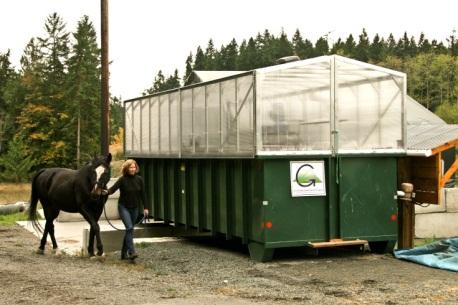
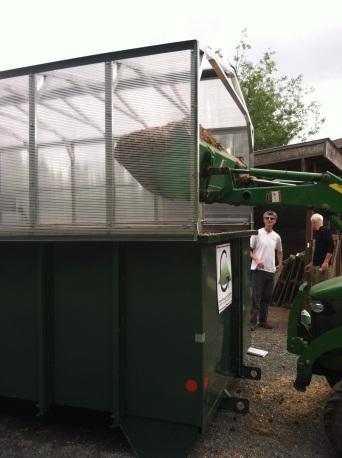
In-Vessel Earth Flow system used for manure waste at IOS Ranch, Bainbridge Island, WA
Why Study Composting Stable Waste?
To identify a financially beneficial way to dispose of stable waste for equine facilities.
What Did We Do?
Costs associated with the disposal of stable waste are increasing, taking a larger part of the operating budget for many barns. The increasing costs are largely due to environmental awareness and new and expanded regulations for all segments of the waste stream. Barns can no longer legally pile manure unprotected in the backyard. In many regions, haulers have to be registered and dump sites are forced to put in expensive regulation-specified collection pads. . Farms are less likely to take and store stable waste for land use and not all municipal dump sites have the infrastructure to handle the waste. Barn owners are left searching for affordable solutions.
Composting came to the forefront as a proven method to dispose of stable waste by turning a cost into a revenue stream by eliminating haul off disposal fees and creating a saleable by product with stable soil amendment. Urban locations have the added burden of odor control; also addressed with a composting system, especially with an in-vessel system. With these systems, environmental regulations are met and even exceeded. The resulting composted material can be either sold or used on site as soil amendment or for bedding reuse. If the material is sold, the infrastructure for this sales effort will need to be established.
Existing technology for composting food waste was examined to treat stable waste. The in-vessel composting systems with an automated auger and computer-controlled cycles adapted to stable waste easily. In fact one of the test sites, Joint Base Meyers/Henderson, tested the use of stable waste from the Caisson Stable as the bulking agent for the food waste from their commissary and mess halls. In a second test, the stable waste was used exclusively and proved to be a superior soil amendment that passed all laboratory testing and is currently being used at Arlington National Cemetery.
Private stables are putting in-vessel systems on site as they have small footprints, low energy consumption, low manpower hours, ease of use and comply with regulation. Medium sized barns (over 40 horses) use Site Built flow systems that have many of the same benefits as the in-vessel systems. Larger stables, event centers and high-density equine areas are looking at large scale Aerated Static Pile (ASP) yards. Cost models show these yards to be a lucrative financial investment when cost and difficulty of disposal is present as well as a market for the end product. Even when conservative numbers are used for both number of horses serviced and value of end product, ASP facilities are a good business opportunity. The investment cost for the in-vessel systems, site built systems and ASP sites vary by size and volume. In cases where the expense of haul off of the stable waste exists, the ROI for an in-vessel system illustrates a solid investment.
Easy loading with the front bucket of a tractor.
Horse manure and traditional wood shavings or pellets is an excellent feedstock for composting. As explained by Michael Bryon Brown of Green Mountain Technology, “Horses are not ruminants and therefore do not extract as much nutrient from the grasses they eat. This leaves more energy available for the compost process. Typically, horse manure is collected with bedding material which is saturated in urine which has available urea and ammonia. The wood shavings are also an excellent bulking agent and carbon source for the compost process. The bedded horse manure has a high C:N ratio of 30:1 or higher. However, much of the N is in the form of ammonia which is readily available. The net effect is that if the horse manure balls are blended with the shavings before the ammonia dissipates, it will create the ideal compost matrix.”
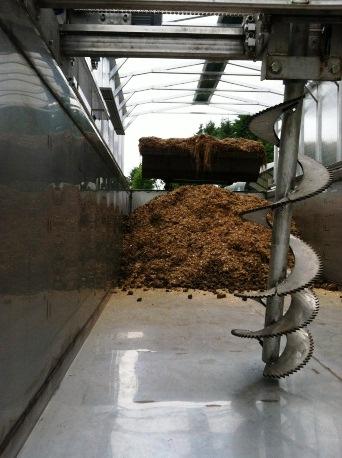
In the auger-based systems, the horse manure is shredded and blended with the bedding, bringing the nitrogen in contact with the grass fibers. This blended material generates heat, driving off moisture as vapor. Temperatures rise to 135-155F sterilizing the compost, killing weed seed and drying the mixture. In-vessel composted material is ready to exit the system in 10-14 days; in a site-built system, depending on length of the bay, 15-25 days. The exiting material is void of any manure or ammonia smell and is homogenous in nature. Laboratory testing has shown the compost to be stable and free of pathogens according to EPA regulations. Composting stable waste reduces by up to 50% both water-soluble phosphorous and nitrogen that would be present in rain water runoff from an untreated pile.
Interior auger used to mix and move the stable waste material.
The price for composted material will vary across the country in accordance with the demand for the product. In urban areas outside of Seattle, Washington, compost is selling for as much as $32 a yard at retail and $20 a yard wholesale. Untreated aged horse manure is being sold in Florida for $5 a yard. Historically barns have advertised manure for sale with an ad in the local paper, offering to fill up a pick up for a nominal sum. Initial effort will be spent to set up a network of buyers for the compost material. Once the network is set it should create a steady income stream.
Options other than soil amendment include re-use as bedding for both equine and dairy businesses, lowering another cost of operation if the compost material is priced below new shavings. Regional prices for new shavings vary by up to $8 dollars per yard and availability ranges from scarce to plentiful. Further financial gain can occur with the added health benefits to bedding re-use, long recognized in the dairy industry and recently explored in the equine industry.
We plan to follow development and enforcement of regulations on manure waste, support networking of compost markets, continue research on the health benefits of bedding re-use and continue to develop composting systems that are affordable for the equine industry.
Authors
Mollie Bogardus, MBA in Sustainable Business, Bainbridge Graduate Institute, Equine Specialist, Green Mountain Technologies, Inc. mollie@compostingtechnology.com
Additional Information
Bogardus, Mollie. “Equine Applications – Case Studies.” Green Mountain Technologies, Inc.. N.p., 13 Sept. 2012. Web. 27 Feb. 2013. <http://compostingtechnology.com/equine>.
Brezovec, Paul. “Evaluating Composting for Contingency Bases « « BioCycle BioCycle.” Composting, Renewable Energy & Sustainability | BioCycle.net BioCycle. Version Nov 2012, Vol.53, No. 11, p. 20. Biocycle Magazine, n.d. Web. 27 Feb. 2013. <http://www.biocycle.net/2012/11/evaluating-composting-for-contingency-ba….
“Equine Applications- Media- lab results.” Green Mountain Technologies. Green Mountain Technologies, Inc, n.d. Web. 27 Feb. 2013. <http://compostingtechnology.com/equine>.
Sikora, Lawrence. “Composting Effects on Phosphorous availability in Animal Manures.” SERA-17 Organization to Minimize Phosphorous Losses from Agriculture. SERA-17, n.d. Web. 15 Jan. 2013. <www.sera17.ext.vt.edu/Document/BMP_composting_effects.pdf>.
Wheeler, Eileen. “Cornell Cooperative Extension, Orange County Equine, Saratoga County Equine.” Cornell Cooperative Extension, Orange County Equine, Saratoga County Equine. Penn State, n.d. Web. 27 Feb. 2013. <http://www.cceequine.org>.Zaborski, Ed. “Composting to Reduce Weed Seeds and Plant Pathogens – eXtension.” eXtension – Objective. Research-based. Credible.. University of Illinois at Urbana-Champaign, 22 Oct. 2012. Web. 27 Feb. 2013. <http://www.extension.org/pages/28585/composting-to-reduce-weed-seeds-and….
Acknowledgements
Special thanks to Caitlin Price Youngquist , Farm Planner, Snohomish Conservation District, for her continuing collaboration and dedicated work on this subject.
The authors are solely responsible for the content of these proceedings. The technical information does not necessarily reflect the official position of the sponsoring agencies or institutions represented by planning committee members, and inclusion and distribution herein does not constitute an endorsement of views expressed by the same. Printed materials included herein are not refereed publications. Citations should appear as follows. EXAMPLE: Authors. 2013. Title of presentation. Waste to Worth: Spreading Science and Solutions. Denver, CO. April 1-5, 2013. URL of this page. Accessed on: today’s date.
Researchers and university specialists from USDA’s Meat Animal Research Center (USMARC), South Dakota State University, and Iowa State University recently finished a four-year study looking at mono-slope beef barns and how to improve cattle and environmental performance.
A research team worked for three years to gather baseline data for the levels of gas emissions from mono-slope beef barns. The study involved a total of four mono-slope beef barns in South Dakota and Iowa. Researchers also evaluated two different manure-handling systems to determine if there are any differences in gas emissions.
The results of that study are summarized in a eight-page publication “Air Quality in Mono-Slope Bedded Beef Barns“. They measured ammonia, hydrogen sulfide, methane, carbon dioxide, and nitrous oxide. The first three are the primary focus of the publication, since those are most commonly associated with beef feedlots. Also discussed are impacts of building orientation, manure-handling system, pen density, bedding type, and curtain opening (ventilation).
Beef Facilities Conference
Over 300 people attended the November, 2013 conference on beef confinement buildings held in Sioux Falls, South Dakota. The recordings and written papers are linked below.
Environmental and Regulatory Aspects of Beef Barns
The third presentation focuses on manure and nutrient production, and nutrient management for manure produced in these systems.
Capturing, managing, and using nutrients from the barn – pages 18-21
Producer Panel – Virtual Tours
Four producers shared aspects of their different building designs including ventilation, manure management, what works well, and things they would change. Their summaries are on pages 22-26 of the Beef Facilities Conference Proceedings.
Hoop buildings – one farm tour and a short synopsis of different building designs in use in Iowa
Mono-slope buildings – narrow and wide designs
Slatted floor barn (with rubber mats) – originally built without mats
Cattle Performance and Comfort In Beef Barns
University specialists compared feed intake, animal performance, carcass characteristics, and management considerations with barns compared to other systems. The page numbers next to each are the location of a companion written paper in the Beef Facilities Conference Proceedings.
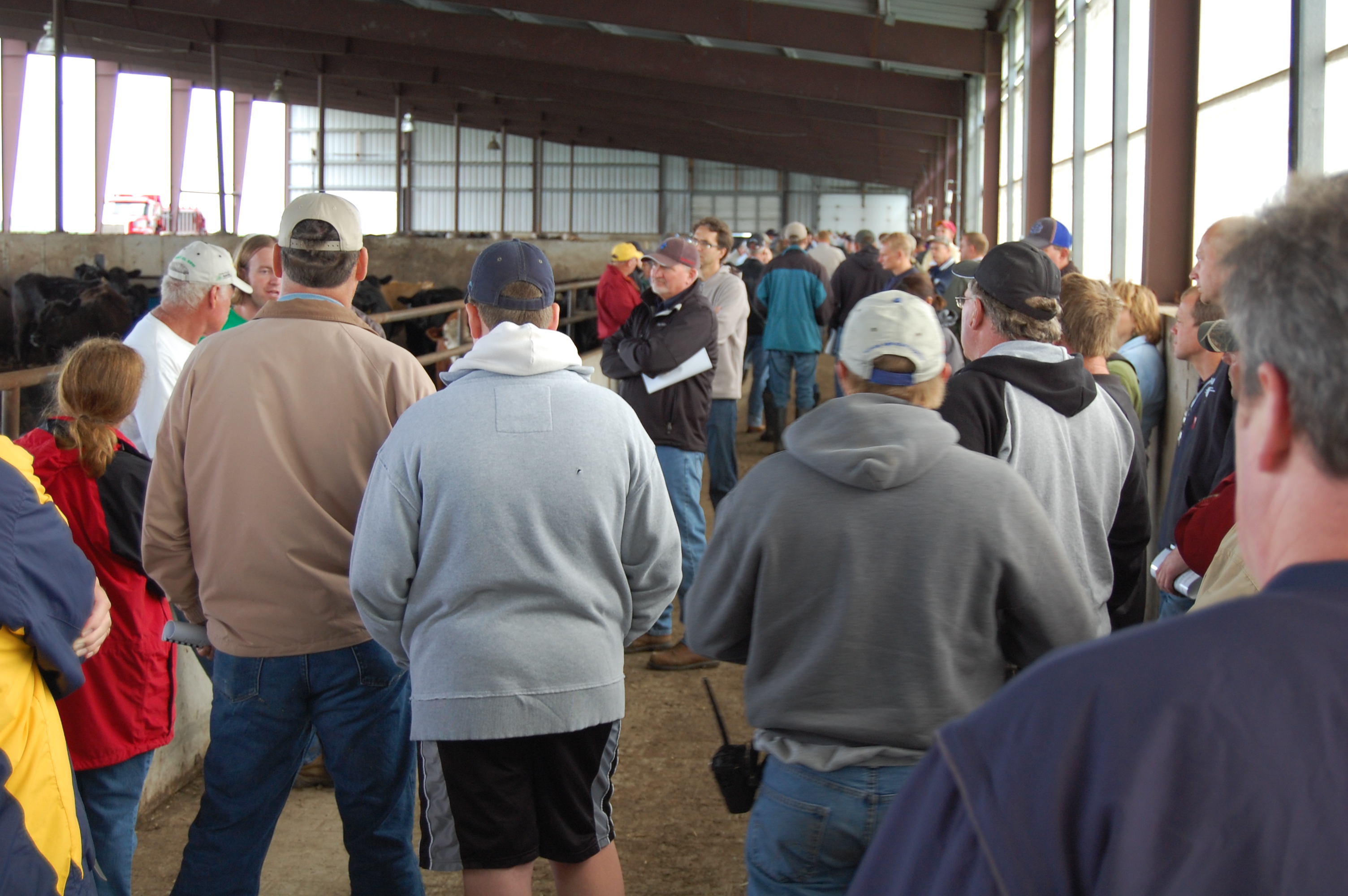
It was standing room only as participants listened to station presentations in the alleyway of the mono-slope barn.
As part of the outreach plan for this project, a series of open houses were scheduled to inform cattle producers, regulatory and technical agency staff, Extension employees, service providers and legislative and local policy-makers about air quality management and manure and environmental issues with these facilities.
Over 200 people from Iowa, Minnesota, South Dakota and Nebraska attended the Mono-Slope Beef Barn Open House in June of 2011. The open house was hosted by Ron and Clayton Christensen of Royal, Iowa and featured barn and manure management, cost-sharing opportunities, the tri-state air quality project and environmental regulations.
The open house was organized by ISU Extension and Outreach, SDSU Ag and Biosystems Engineering, and the USDA Meat Animal Research Center at Clay Center, NE. Sponsors included Animal Medical Centers of Spencer, Clay County Cattlemen’s Association, Clay County Farm Bureau, Coalition to Support Iowa’s Farmers, Farm Credit Services of America -Emmetsburg, Spencer Ag Center and Spencer Chamber of Commerce Ag Committee.
A second open house was hosted in South Dakota in August of 2011. The open house was hosted by Goodwin Heritage Cattle Company, with approximately 125 people in attendance from South Dakota and neighboring states. Sponsors included Coteau Hills Cattlemen’s Association, Watertown Chamber of Commerce Ag Committee, SPN & Associates, Glacial Lakes Energy LLC., Landmark Builders Inc., South Dakota Farm Bureau, Ag United for South Dakota, Banner Associates and Form-A-Feed, Inc.
As a result of the two open houses:
95% had a better understanding of the air quality regulations and why this research is needed*
88% learned where they could find financial resources to construct a mono-slope barn*
89% had improved knowledge about how gases and dust are measured*
*Based on 19.7% participation in a short survey after each open house
A facility tour, Science Behind Environmental Policy, was held June 22, 2012 in NW Iowa. This tour was attended by state and federal legislators, state policy makers and stakeholders representing Extension and university specialists. Enthusiasm for research efforts was proclaimed by the legislators. See what they learned.
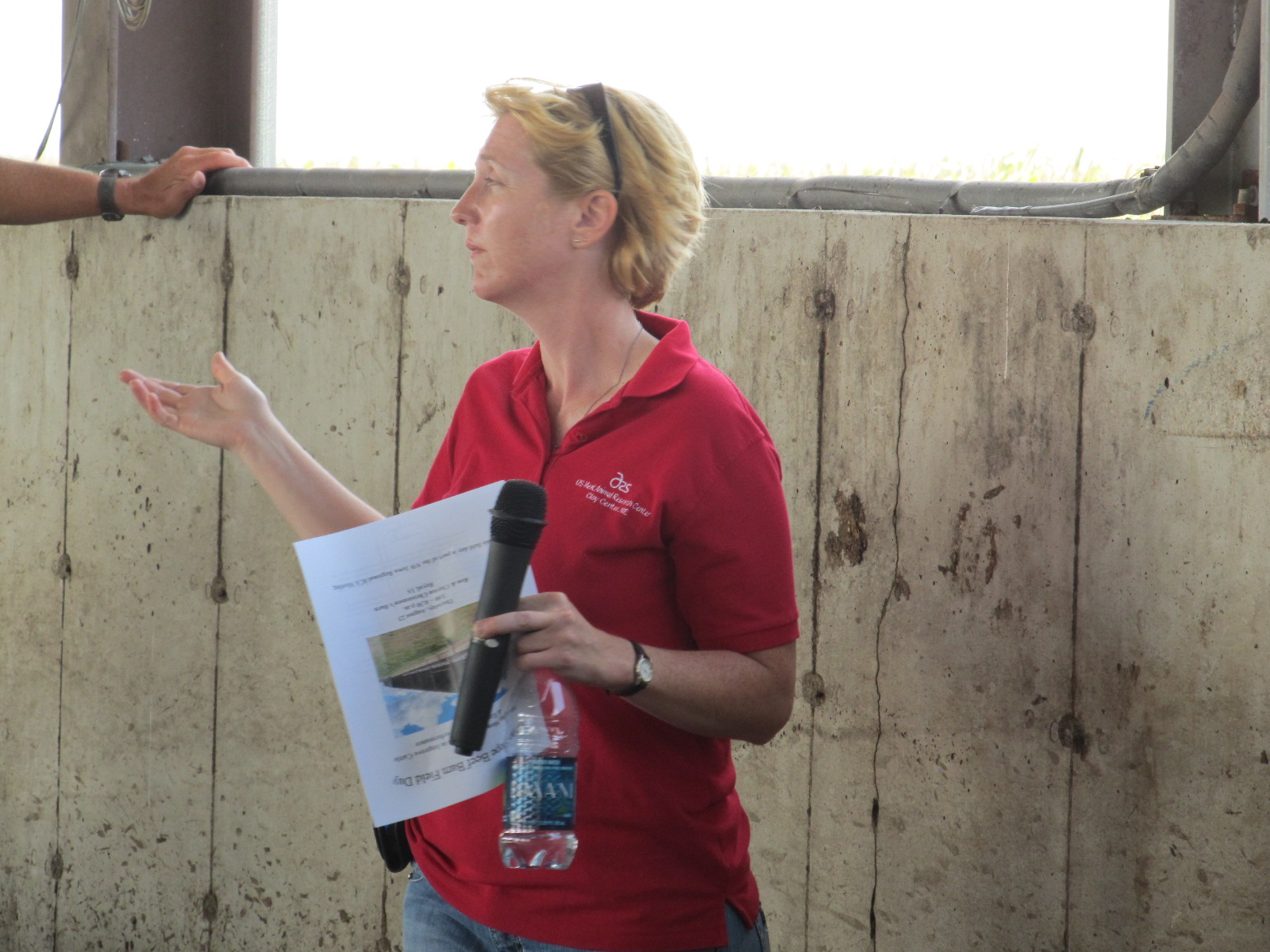
NW Iowa cattlemen listened to Mindy Spiehs, researcher with USDA ARS Meat Animal Research Center at Clay Center, share progress about the Tri-State Air Quality Project. The update and tour at the Christensen barn were part of a NW regional meeting sponsored by the Iowa Cattlemen’s Association on August 23, 2012.
Mindy Spiehs talks about the Tri-State Air Quality Project.
Waste to Worth Conference Presentations
In April, 2013 researchers presented air emissions results from this project at the Waste to Worth: Spreading Science and Solutions conference in Denver, CO. These proceedings include a short written paper, recording and links to additional information. The different aspects presented were:
There is growing interest in feeding cattle in bedded confinement buildings for a multitude of reasons including (but not limited to): performance advantages, limited space for open lots, and keeping manure dry as well as preventing feedlot run-off and reducing environmental concerns. Oftentimes these confined cattle are housed in mono-slope barns.
What Is a Monoslope Beef Barn?
This video is excerpted from a webcast presentation by Shawn Shouse, Iowa State University
Mono-slope barns, by definition have only one slope to their roof and are usually naturally ventilated. They are typically positioned to take advantage of seasonal climatic conditions. This means in the northern hemisphere the higher side would be south-facing with the lower side to the north. This allows for shade in the summer and sun exposure in the winter. In bedded units, the bedding absorbs moisture and provides a softer surface for cattle to walk and lay on.
Comparing Confinement Farms with Conventional Feedlots
Shawn Shouse of Iowa State University compares
confinement systems to open lots for beef cattle.
While there are many advantages to mono-slope beef barns, the question that has been raised is: “What is the quality of air in these barns?”. A recent, on-going research project takes on this question.
Covers and biofilters are two techniques that can be used to help manage odors and other airborne emissions from animal feeding operations and manure storage units. Watch these two videos to learn about covers and biofilters, how they work, and related costs and benefits of different methods to reduce airborne emissions. Links to additional techniques and information are given below.
Manure Storage Covers for Reducing Odor Emissions
Visit the Feedlot Air Emissions Treatment Cost Calculator website to download a spreadsheet to help calculate costs and benefits of installing technologies to treat odors and gas emissions from animal feeding operations. A good tool to assess current management practices and their impact on air emissions, including odor, is to use the National Air Quality Site Assessment Tool (NAQSAT). Manure Storage Covers includes many more resources on this topic.
Biofilters for Reducing Odors and Gas Emissions
More is available on Biofilters. There are several methods that can be used to manage odor and other airborne emissions from animal feeding operations. Additional techniques and management information include:
For more information about this video or these resources, contact Dr. Kevin Janni, University of Minnesota kjanni@umn.edu
These materials were based upon work supported by the by the National Institute of Food and Agriculture, U.S. Department of Agriculture under Agreement No. 2010-85112-20520.
Any opinions, findings, conclusions, or recommendations expressed in this video are those of the speaker and do not reflect the view of the U.S. Department of Agriculture.
Manage Cookie Consent
To provide the best experiences, we use technologies like cookies to store and/or access device information. Consenting to these technologies will allow us to process data such as browsing behavior or unique IDs on this site. Not consenting or withdrawing consent, may adversely affect certain features and functions.
Functional
Always active
The technical storage or access is strictly necessary for the legitimate purpose of enabling the use of a specific service explicitly requested by the subscriber or user, or for the sole purpose of carrying out the transmission of a communication over an electronic communications network.
Preferences
The technical storage or access is necessary for the legitimate purpose of storing preferences that are not requested by the subscriber or user.
Statistics
The technical storage or access that is used exclusively for statistical purposes.The technical storage or access that is used exclusively for anonymous statistical purposes. Without a subpoena, voluntary compliance on the part of your Internet Service Provider, or additional records from a third party, information stored or retrieved for this purpose alone cannot usually be used to identify you.
Marketing
The technical storage or access is required to create user profiles to send advertising, or to track the user on a website or across several websites for similar marketing purposes.
 Waste to Worth home | More proceedings….



 Researchers and university specialists from USDA’s Meat Animal Research Center (USMARC), South Dakota State University, and Iowa State University recently finished a four-year study looking at