
PEDV Survivability in Swine Mortality Compost Piles


*Purpose

PEDv has caused significant losses in the Nebraska pork industry and mortality can approach 100%. Disposal of these carcasses is a challenge as they serve as a source of tremendous amounts of infectious virus. Current alternative methods of disposal include rendering, incineration and burial. Rendering trucks may serve as a farm-to-farm vector. Incineration is not feasible for the significant number of mortalities and burial may enable long-term survival of virus in soil and may cause re-infection after disease elimination. Therefore, composting may serve as an ideal solution for disposal and mortalities this would provide a biosecure, safe, and cost-effective method to mitigate on-farm sources of virus. The overall objective of this study was to determine the efficacy of composting as a mortality disposal method following death loss from the porcine epidemic diarrhea virus (PEDv). Validation of time-temperature combinations for PEDv inactivation in mortality compost piles was the primary intended outcome of this project.

What did we do?

PEDv virus challenge protocol modeled one that has shown previous success using weanling pigs (Hesse et al., 2013). Twenty-seven animals (approximately 21-day-old weaned piglets) were sourced from a high-health commercial source that had no history of PEDv and with dams that tested negative for the presence of PEDv-specific antibodies and were negative for fecal virus shedding as determined by PCR. Experimental groups were housed in pens and maintained at appropriate temperature and in accordance with national animal care space requirements. Pigs were given five days of acclimation and maintained on commercial nursery pig diets. Following acclimation, each pig was inoculated orally with 5 mL of virus inoculum (NE 9282) supplemented with gentamicin that had been diluted to a real time PCR assay cycle threshold (Ct) 22. Inocula (feces/intestinal contents) from a natural outbreak of PEDv were used. Pigs were evaluated twice daily for evidence of infection: temperature, pulse, respiration, dehydration, and diarrhea. Fecal samples were collected daily for evaluation of fecal shedding of PEDv. When significant clinical signs of enteric disease were present or pigs became sufficiently ill that the attending veterinarian determined euthanasia was appropriate, animals were humanely euthanized and samples taken for necropsy.

Following necropsy, carcasses from infected and euthanized pigs were composted inside biosecure rooms in the Veterinary and Biomedical Sciences Research Facility at the University of Nebraska – Lincoln. Three compost piles were constructed using commercial sawdust and wood shavings at a target moisture content of 50% w.b. For each pile, an insulated platform with internal dimensions of 121.92 cm (W) x 152.4 cm (L) (48 in x 60 in) was used to contain piles. Platforms were constructed of an outer layer of plywood and an inner layer of PolyBoard sheeting with foam board insulation in between to simulate the linear continuation of the pile and the insulative properties of a compacted soil base. Compost piles were constructed by placing a layer of wood shavings on each base to a depth of 60 cm (24 in), followed by placement of five carcasses in a single layer in the center of the pile followed by a 15 cm (6 in) layer of pile material and a second layer of four carcasses in a single layer. Additional sawdust was placed over and around the carcasses to achieve 60 cm of coverage on the top of the pile. Rooms were maintained at approximately 21°C (70°F) and 25% RH throughout the duration of the project.

Temperature was monitored at ten locations within each pile using Apresys in-transit digital temperature recorders (Apresys, Inc., Duluth, GA) beginning at establishment of the piles and continuing at a 20-min sampling frequency (duration of primary compost cycle not established at time of proceedings submission). Temperature within each pile was also monitored manually using a thermometer at 0, 24, 48, 96 h, and 168 h, and then weekly for the duration of the compost cycle to confirm success of the heating process.

Following completion of the primary compost cycle, temperature loggers will be recovered and each pile will be mixed, sampled for analysis of survivability of PEDv at five locations, moisture will be added, and piles will be re-established for a secondary composting cycle with temperature loggers placed as previously described. At the completion of the secondary composting cycle, piles will again be sampled for analysis of survivability of PEDv (5 samples per pile) and temperature loggers will be recovered.

PEDv survivability will be determined via two independent assay methods. Reverse transcription quantitative polymerase chain reaction (RT-qPCR) is a rapid and sensitive method that will be used to quantify the amount of virus RNA genome in the samples. The Nebraska Veterinary Diagnostic Center currently has a validated RT-qPCR test to assay for the presence of PEDv in manure sample matrices. To validate results from the RT-qPCR in laboratory assays, sawdust simulated compost matrix will be spiked with known concentrations of PEDv target RNA and compared to known standards to ensure no inhibition is present and that proper extraction methods are being used. An alternative method using virus isolation will also be conducted to determine whether viable virus is present in flasks at a smaller subset of time points. To do this, Vero cell monolayers will be infected with filter sterilized aliquots of compost exudate, blindly passaged once after seven days, and examined for virus p resence using IFA with a PED specific monoclonal antibody. At specific time points, RT-qPCR Ct values and Virus Isolation will be run in parallel to ensure sensitivity of testing and to evaluate correlation of the testing modalities under the simulated testing conditions and matrices. If these testing methods show agreement, and/or no virus is isolated, RT-qPCR testing will be utilized to facilitate rapid and consistent assessment of virus persistence during the majority of experimental time points.

What have we learned?

Biosecurity is essential to controlling the spread of PEDv and any facility that is currently positive for PEDv should work diligently to prevent contamination of neighboring facilities. Vehicle transport has been shown as a high-risk activity that may facilitate spread of PEDv (Lowe 2014) and mortalities that are positive for PEDv may be rejected by renderers to protect them from liability for transmitting the disease. Burial of mortalities can be detrimental to water quality (Bartelt-Hunt et al., 2013) and it is unknown how long the PEDv can remain active in the cool, dark, moist environment that accompanies land burial of carcasses, but extrapolation of available data suggests virus may persist for months. Therefore, we believe composting is likely to provide an effective, biosecure, economically viable and environmentally compatible option for disposal of PEDv mortalities. This research will validate the effectiveness of composting through controlled mortality composting trials subsequent to experimental infections. With the completion of this research, our expectation is that we will know what operating parameters are required to ensure inactivation of PEDv during composting of PEDv mortalities.

Future Plans

Using the information generated from this research, we will deliver extension programming and outreach materials to swine producers, veterinarians, and stakeholders within and beyond Nebraska to promote biosecure disposal of PEDv-infected mortalities.

Authors

Amy Millmier Schmidt, Assistant Professor and Livestock Bioenvironmental Engineer, University of Nebraska – Lincoln aschmidt@unl.edu

J. Dustin Loy, Assistant Professor, Veterinary & Biomedical Sciences, University of Nebraska – Lincoln

Additional information

Dr. Amy Millmier Schmidt
(402) 472-0877
aschmidt@unl.edu

Acknowledgements

The authors would like to acknowledge the Nebraska Pork Producers Association and the National Pork Board for providing funding for this research. Special thanks to Jared Korth for helping with laboratory activities on this project and construction of mortality composting platforms.

The authors are solely responsible for the content of these proceedings. The technical information does not necessarily reflect the official position of the sponsoring agencies or institutions represented by planning committee members, and inclusion and distribution herein does not constitute an endorsement of views expressed by the same. Printed materials included herein are not refereed publications. Citations should appear as follows. EXAMPLE: Authors. 2015. Title of presentation. Waste to Worth: Spreading Science and Solutions. Seattle, WA. March 31-April 3, 2015. URL of this page. Accessed on: today’s date.

Time-Temperature Combinations for Destruction of PEDv During Composting


*Purpose

The purpose of this project was to determine the appropriate time-temperature combinations required for inactivation of the porcine epidemic diarrhea virus (PEDv) in composting material as a basis for evaluation of composting for disposal of swine mortalities and/or other PEDv-positive biological material.

What did we do?

In vitro propagation of PEDv for laboratory survivability assays was conducted using a cell culture-adapted isolate received from APHIS-NVSL (Ames, IA) that was free of extraneous agents (5th passage Colorado 2013 PEDv 1303). Propagation was conducted by infection of confluent VERO cell monolayers at a multiplicity of infection (MOI) of 0.1 with a concentration of 5 µg/mL TPCK trypsin. Virus stocks were be amplified following a 2-4 day incubation period on cell monolayers, frozen and thawed, centrifuged, and culture supernatants containing virus were harvested. Virus concentration was calculated and standardized to 1×10⁵-1×10⁶ TCID50/mL using immunocytochemistry and indirect fluorescent antibody assay (IFA) using a PEDV specific mouse monoclonal antibody (MedGene Labs).

The effect of temperature on survivability of PEDv in compost material was evaluated by inoculating compost material and subjecting the material to temperatures of 50°C (122°F), 55°C (131°F), 60°C (140°F), 65°C (149°F), and 70°C (158°F) for 0, 24, 48, 72, 96 h, and 120 h. Sawdust was acquired from a commercial source, autoclaved to eliminate existing microbes, oven dried and used to simulate compost material. One gram of prepared sawdust was placed in each of 140 1-mL centrifuge tubes. Cell culture supernatant containing infectious PEDv was added to phosphate buffered saline and added to each tube achieve a moisture content of 50% w.b. Tubes were randomly assigned to laboratory incubators at the five temperature treatment levels. At each sampling point, four tubes were removed from each incubator and tested to determine virus survivability.

PEDv survivability was determined via two independent assay methods. Reverse transcription quantitative polymerase chain reaction (RT-qPCR) is a rapid and sensitive method that was used by the Nebraska Veterinary Diagnostic Center to quantify the amount of virus RNA genome in the samples. To validate results from the RT-qPCR in laboratory assays, sawdust simulated compost matrix was spiked with known concentrations of PEDv target RNA and compared to known standards to ensure no inhibition was present and that proper extraction methods were being used. An alternative method using virus isolation was also conducted to determine whether viable virus was present in tubes at a smaller subset of time points. To do this, Vero cell monolayers were infected with filter sterilized aliquots of compost exudate, blindly passaged once after seven days, and examined for virus presence using IFA with a PED specific monoclonal antibody. At specific time points, RT-qPCR Ct values and Virus Isolation were run in parallel to ensure sensitivity of testing and to evaluate correlation of the testing modalities under the simulated testing conditions and matrices.

What have we learned?

At the time of proceedings submission, results were not available for inclusion in this report. Results will be presented during the scheduled oral seminar at the conference.

Results of this laboratory study will be used to evaluate appropriate time-temperature combinations necessary during swine mortality composting to inactivate the PEDv virus and determine the feasibility of on-farm mortality composting as a biosecure disposal method for PEDv-infected pigs. Following this laboratory study, mortality composting was initiated using PEDv-positive piglets to confirm the inactivation of PEDv during composting.

Future Plans

Results of this and the full-scale composting study will be used to recommend appropriate swine mortality disposal methods for swine producers with losses due to PEDv as part of their farm biosecurity plan. Additional swine enteric corornaviruses will likely be studied to confirm similar requirements for disposal of mortalities caused by these viruses.

Authors

Amy Millmier Schmidt, Assistant Professor and Livestock Bioenvironmental Engineer, University of Nebraska – Lincoln aschmidt@unl.edu

J. Dustin Loy, Assistant Professor, Clayton Kelling, Professor, Judith Galeota, Virology Laboratory Manager, and Sarah Vitosh, Graduate Research Assistant, Veterinary & Biomedical Sciences, University of Nebraska – Lincoln

Additional information

Dr. Amy Millmier Schmidt
(402) 472-0877
aschmidt@unl.edu

Acknowledgements

The authors would like to acknowledge the Nebraska Pork Producers Association and the National Pork Board for providing funding for this research. Special thanks to Jared Korth for helping with laboratory activities on this project.

The authors are solely responsible for the content of these proceedings. The technical information does not necessarily reflect the official position of the sponsoring agencies or institutions represented by planning committee members, and inclusion and distribution herein does not constitute an endorsement of views expressed by the same. Printed materials included herein are not refereed publications. Citations should appear as follows. EXAMPLE: Authors. 2015. Title of presentation. Waste to Worth: Spreading Science and Solutions. Seattle, WA. March 31-April 3, 2015. URL of this page. Accessed on: today’s date.

Multi-Specie Mortality Composting Demonstrations and Outreach in SW Nebraska

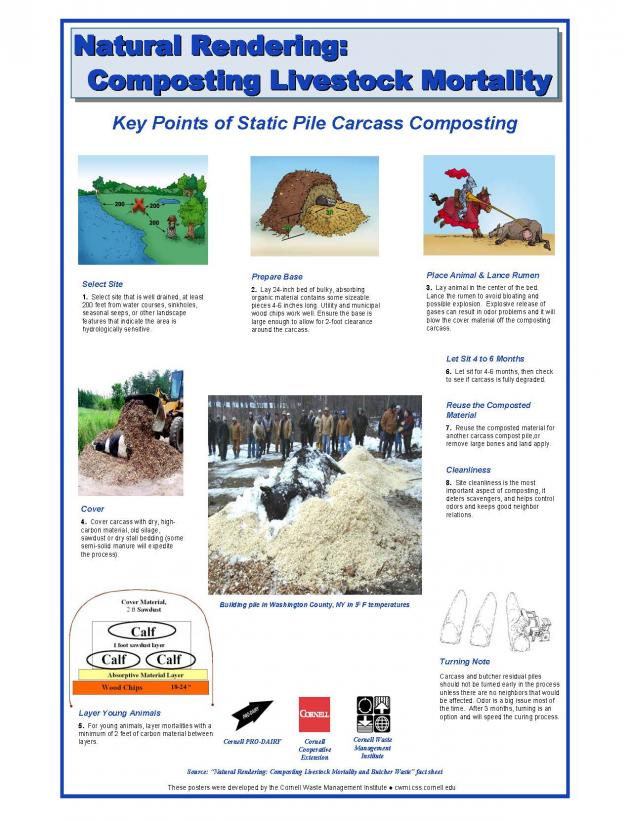
Research and demonstration projects continue to validate the practice of mortality composting in a variety of production scenarios, geographic regions, and climates.  Composting, when compared to many common methods of mortality management, can result in improved environmental, economic, and biosecurity outcomes.  In SW Nebraska, a partnership was developed between the USDA-Natural Resources Conservation Service (NRCS) and the Nebraska College of Technical Agriculture (NCTA) to demonstrate mortality composting as a biosecurity management practice for livestock producers, and an economically viable practice for management of equine mortalities.  Initially, the target audiences for the demonstration and outreach were agricultural students and faculty of NCTA, livestock producers, and horse owners; however, the project attracted the interest of veterinarians managing private practices and the teaching hospital at NCTA.  The expanded audience allowed for discussion on the social acceptance of composting for recreational horses and companion animals, particularly the fate of the finished compost.  Additionally, multiple carbon sources and co-composting materials were piloted, included waste cedar which is common to the area.  Additional demonstration sites and outreach events are planned for 2015, working with the expanded audiences, and in other regions of the state.  Management of mortality composting in the humid eastern end Nebraska will be different than in the semi-arid high plains location of NCTA.              

Authors

Bass, Thomas     tmbass@montana.edu                 Animal and Range Sciences        

Jim Hicks, NCTA

The authors are solely responsible for the content of these proceedings. The technical information does not necessarily reflect the official position of the sponsoring agencies or institutions represented by planning committee members, and inclusion and distribution herein does not constitute an endorsement of views expressed by the same. Printed materials included herein are not refereed publications. Citations should appear as follows. EXAMPLE: Authors. 2015. Title of presentation. Waste to Worth: Spreading Science and Solutions. Seattle, WA. March 31-April 3, 2015. URL of this page. Accessed on: today’s date.
Manure Technology Video Series


Can Video Be Used as a ‘Virtual’ Tour?

Producers are reluctant to adopt new technologies without firsthand experience with the technology. It is particularly difficult to get positive exposure for manure related issues in traditional media. Creative methods are needed to expose producers to useful technologies for handling and treating animal wastes. The OSU Waste Management Youtube channel was created to provide virtual tours of manure treatment and handling technologies.

What did we do?

Fourteen videos highlighting innovative manure handling and treatment technologies were filmed, edited, and produced by the Oklahoma Cooperative Extension Service. We specifically sought out producers who successfully adopted technologies to the particular conditions of their farms.

What have we learned?

In its five years of existence, the OSU Waste Management Youtube channel has been viewed more than 53,000 times (120,000 minutes viewed) from 183 countries and all fifty states – plus Guam, Puerto Rico and the District of Columbia.

Future Plans

We will continue to add new videos to the channel.

Authors

Douglas W. Hamilton, Associate Professor Oklahoma State University dhamilt@okstate.edu

Craig A. Woods, Video Producer/Director Ag Communication Services, Oklahoma State University

Additional information

https://www.youtube.com/user/OSUWasteManagement

The authors are solely responsible for the content of these proceedings. The technical information does not necessarily reflect the official position of the sponsoring agencies or institutions represented by planning committee members, and inclusion and distribution herein does not constitute an endorsement of views expressed by the same. Printed materials included herein are not refereed publications. Citations should appear as follows. EXAMPLE: Authors. 2015. Title of presentation. Waste to Worth: Spreading Science and Solutions. Seattle, WA. March 31-April 3, 2015. URL of this page. Accessed on: today’s date.
Composting Horse Mortality and Mortality Disposal Alternatives

With the decline of the rendering industry, managing routine livestock mortality in an effective, economical and environmentally sound manner has become more difficult.  Over 900,000 horses have to be properly managed annually in the US. Disposal should be done in a manner that is most acceptable to the owner, protects public health and safety, does not create a nuisance, prevents the spread of disease, or have adverse effects on water and air quality.

Composting mortality is an option when done properly. It requires a carbon source such as wood chips or other chunky carbon and should be located in a well-drained area along field edges or other dry convenient areas.  The carcass is then covered and left to passively compost. When managed properly, composting will deter domestic and wild animals from scavenging carcasses. Mortality composting, has been proven effective in deactivating pathogens, limits the risk of groundwater and air pollution contamination, and on-site composting reduces the potential for farm to farm disease transmission. On site composting also decreases transportation costs and tipping fees associated with off-site disposal. There is also the added benefit of producing a usable product. As with any farm operation health and safety issues exist in mortality composting. Proper training is the best means to reduce those health and safety issues.

In addition to routine mortality, every year we face animal related disasters including barn collapses, fires, lightning strikes, floods and winter storms. Composting provides an alternative to traditional carcass disposal as it is self-sufficient and can be “biosecure”.  The temperatures achieved through the composting process will eliminate or greatly reduce pathogens, hindering the spread of disease.  Research continues to demonstrate effective destruction of nearly all livestock diseases of concern. Being prepared ahead of time and considering the “what if’s” is important. 

Authors

Bonhotal, Jean  jb29@cornell.edu            Cornell Waste Management Institute 

For Additional Information

The authors are solely responsible for the content of these proceedings. The technical information does not necessarily reflect the official position of the sponsoring agencies or institutions represented by planning committee members, and inclusion and distribution herein does not constitute an endorsement of views expressed by the same. Printed materials included herein are not refereed publications. Citations should appear as follows. EXAMPLE: Authors. 2015. Title of presentation. Waste to Worth: Spreading Science and Solutions. Seattle, WA. March 31-April 3, 2015. URL of this page. Accessed on: today’s date.   
Natural Rendering: Composting Horse Mortality


poster of the mortality composting processPurpose          

Understanding Livestock Composting as there are few methods to safely dispose of livestock mortality

What did we do?         

CWMI has been working on mortality disposal since 1990. Research was completed methodically as new questions arose. We started with large livestock(deadstock) migrated to research on managing animals hit by cars, generally wild animals. Moved to managing disease outbreak and drugs residual that might end up in compost if it does not degrade.

What have we learned?           

See attached paper

Future Plans  

Responding to Routine Mortality and Disasters

Authors

Jean Bonhotal, Director CWMI, Cornell University jb29@cornell.edu

Mary Schwarz, Cornell Waste Management Institute Craig Williams, Penn State University, Ann Swinker, Penn State University

Additional information      

http://cwmi.css.cornell.edu/mortality.htm

Acknowledgements      

Mary Schwarz, Cornell Waste Management Institute

Craig Williams, Penn State University

Josh Payne, Oklahoma State University

Ann Swinker, Penn State University

The authors are solely responsible for the content of these proceedings. The technical information does not necessarily reflect the official position of the sponsoring agencies or institutions represented by planning committee members, and inclusion and distribution herein does not constitute an endorsement of views expressed by the same. Printed materials included herein are not refereed publications. Citations should appear as follows. EXAMPLE: Authors. 2015. Title of presentation. Waste to Worth: Spreading Science and Solutions. Seattle, WA. March 31-April 3, 2015. URL of this page. Accessed on: today’s date.

Managing Animal Mortalities Curriculum Materials

Managing animal mortalities is an unpleasant but necessary part of raising livestock or poultry. Improper carcass disposal can negatively impact the environment and be a source of disease or pathogens. This material was developed for use in beginning farmer and extension programs, high school classrooms, and for self-study or professional continuing education.

Teachers, Extension, Consultants

Educators are welcome to use the following materials in their classrooms and educational programs. More modules… All materials except the video FAQs are available in a single ZIP file for easy download. Download animal mortality curriculum ZIP file….

Acknowledgements

Authors: Joshua Payne, Oklahoma State University; Jean Bonhotal, Cornell University; Shafiqur Rahman, North Dakota State University

Reviewer: Thomas Bass, Montana State University

Building Environmental Leaders in Animal Agriculture (BELAA) is a collaborative effort of the National Young Farmers Educational Association, University of Nebraska-Lincoln, and Montana State University. It was funded by the USDA National Institute for Food and Agriculture (NIFA) under award #2009-49400-05871. This project would not be possible without the Livestock and Poultry Environmental Learning Community and the National eXtension Initiative.

On-Farm Field Days as a Tool to Demonstrate Agricultural Waste Management Practices and Educate Producers

Waste to Worth: Spreading science and solutions logoWaste to Worth home | More proceedings….

Abstract

Teaching Best Management Practices (BMP) or introducing new agricultural waste management practices to livestock producers and farmers is a challenge. This poster describes a series of on-farm field days designed to deliver information and demonstrate on-site several waste management techniques, most of them well established in other parts of the country but sparsely used in Idaho. During these field days, Extension personnel presented each technique and offered written information on how to apply them. But without a doubt, presentations by the livestock producers and farmers who are already applying the techniques and hosted each field day at their farms was the main tool to spark interest and conversations with attendees.

Four field days were delivered in 2012 with more programmed for 2013. Demonstrated techniques reduce ammonia and odor emissions, increase nitrogen retention from manure, reduce run-off risks, and reduce emissions of greenhouse gases. Topics addressed on each field day were, a: Dairy manure collection and composting, 20 attendees. b: Dairy manure land application ten attendees. c: Grape vine prunings and dairy manure composting, 50 attendees. d: Mortality and offal on-farm composting, 40 attendees. In all cases farm owners and their managers presented and were available to answer attendees’ questions, sharing their experience, and opinions regarding the demonstrated practices. Many attendees expressed their interest and willingness to adopt some of the demonstrated practices. On-farm field days are an excellent tool to increase understanding and adoption of BMP and new technologies. Hearing experiences first hand from producers applying the techniques and being able to see them in action are excellent outreach tools. On-farm field days also fit the fast pace, busy schedule of modern producers who can later visit with Extension and other personnel if they need more details, information, and help on how to adopt the techniques they are interested in.

Why Hold Field Days on Ag Waste Management?

The dairy industry is the number one revenue commodity in Idaho. At the same time Idaho is ranked third in milk production in the nation. Idaho has more than 580,000 dairy cows distributed in 550 dairy operations (Idaho State Department of Agriculture 1/2013). The Magic Valley area in south-central Idaho hosts 54% of those dairies and 73% of all dairy cows in the state (Idaho Dairymen’s Association internal report, 2012).  Odors from dairies and other animal feeding operations are a major issue in Idaho and across the country.  In addition, the loss of ammonia from manures reduces the nutrient value of the manure and generates local and regional pollution. Dairy farmers of all sizes need more options on how to treat and dispose of the manure generated by their operations. Odor reductions, capture of nitrogen in dairy manure, reduction of greenhouse gases emissions, off-farm nutrients export, water quality protection, and reduction of their dairy operation’s environmental impact are some of the big challenges facing the dairy industry in Idaho and around the country. There are many Best Management Practices (BMP) that are proven to work on providing results related to the challenges mentioned before. Some of these practices are widely adopted in certain parts of the country or in other countries, with a lack of adoption by dairy producers and farmers in other parts of the country. This poster shows a series of Extension and research efforts designed to introduce and locally test proven BMP to dairy producers and crop farmers in southern Idaho in an effort to increase their adoption and incorporate those BMP as regular practices in Idaho agriculture. The four projects described were delivered in 2012 and some will continue in 2013.

What Did We Do?

To demonstrate and test BMP we chose to develop on-farm research projects to collect data and couple these projects with on-farm field days to demonstrate the applicability of the BMP in a real-world setting. Extension personnel developed the research and on-farm field days and did several presentations at each location. But without a doubt the stars during those field days were the dairy producers and farmers who hosted the research and demonstration events and who are already using or starting to use the techniques showcased. These pioneer producers are not only leading the way in using relatively new BMP in southern Idaho, they also share their experiences with other producers and with the academia so everybody around can learn from them. Topics addressed in each field day were, a: Dairy manure collection and composting, 20 attendees. b: Dairy manure land application, 10 attendees. c: Grapevine prunings and dairy manure composting, 50 attendees. d: Mortality and offal on-farm composting, 40 attendees.

On-farm manure collection and composting field day.

Some highlights from each project are: a. The dairy manure collection and composting field day demonstrated the operation and use of a vacuum manure collection system and a compost turner. Dairy managers and machinery operators shared their experiences, benefits and challenges related to the use of these two technologies. During the field day attendees also visited the whole manure management system of the dairy and were able to observe diverse manure management techniques. As a result of this project Extension personnel determined the necessity of generating educational programs for compost and manure management operators for dairy employees. A composting school in Spanish and English proposal was presented and a grant was obtained to develop and deliver them in 2013.

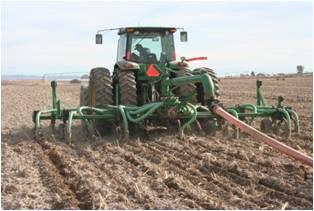
b. The dairy manure land application field day featured the demonstration of a floating manure storage pond mixer and pump, and a drag hose manure injection system. We also showed an injection tank that wasn’t operated during the demonstration. The floating pond mixer serves as lagoon mixer and pump. It mixes and pumps the manure through the drag hose system to the subsurface injector. This system dramatically reduces the time required to land apply liquid and slurried manures. It also significantly reduces ammonia and odor emissions to near background levels, as well as avoids runoff after applications. This project included research of emissions on the manure injection sites (see Chen L., et al. in this conference proceedings).

Demonstrating dairy manure subsurface injection using a drag hose system.

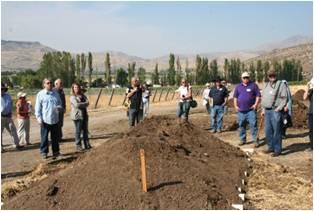
c. The grapevine prunings and dairy manure composting project involves research on the implications of increasing the carbon content of dairy manures using grapevine prunings and other carbon sources to retain more nitrogen in the compost, and how it varies among three diferent composting techniques. This project includes two field days, one during the project (2012), and another one at the end of it in 2013. The demonstration includes how to compost using mechanically turned windrows (common in Idaho), passive aerated, and forced aerated windrows (both very rarely used in Idaho). Another novelty in this project is that it aims to bring together dairy producers and fruit & crop producers, or landscaping insustry so they can combine their waste streams to produce a better compost and to reduce the environmental impact of each operation. Several producers of the diverse audience who attended showed interest in adopting some of the composting techniques presented during the field day.

On-farm composting methods featuring grape vine prunings and dairy manure compost

d. The mortality and offal on-farm composting project was located at a diversified sheep farm that includes sheep and goat dairy and cheese plant, meat lambs, and chickens. A forced aerated composting box was used to compost lamb offal, hives, lamb and chicken mortalities, and whey from the cheese plant. A very diversified audience attended the field day and the composting system generated a lot of interest. The farm owner was so pleased with the system that she created a second composter with materials she had on-hand to increase her composting capabilities and compost all year round. The producer stopped disposing of lamb offal, hives, and mortalities at the local landfill.

What Have We Learned?

On-farm field days are a great tool to demonstrate and encourage the application of otherwise seldom applied techniques. They also can serve a dual purpose of demonstration and research, allowing for quality data collection if designed properly. Farmers’ collaboration and full participation during all phases of the project is paramount and pays off by having a very enthusiastic and collaborative partner. Identiying progressive and pioneer producers that are already applying new BMP or are willing to take the risk is very important to develop this kind of on-farm experience. In general these individuals are also willing to share their knowledge, experience, and results with others to increase the adoption of such techiques. Having a producer hosting and presenting during the field day, at their facilities (as opposed to a dedicated research facility) generates great enthusiasm from other producers and helps to “break the ice” and bring everybody to a friendly conversation and exchange of ideas if properly facilitated.

Future Plans

On both projects, a. manure collection and composting and b. manure injection we will generate a series of videos to demonstrate the proper application of BMP, and educational printed material will also be published. Project c. grape prunings and manure composting is still going on and we will finish collecting data by mid 2013. A second field day will be offered and videos and printed educational material will be developed. Project d. will see an expansion with a mortality composter for dairy calves being installed at a dairy, and with a field day following after the first compost batch is ready. Additional programs are in the works; these programs incorporate the on-farm demonstration and research dual purpose and have high participation from the involved producers.

Authors

Mario E. de Haro-Marti, Extension Educator, Gooding County Extension Office, University of Idaho Extension.  mdeharo@uidaho.edu

Lide Chen, Waste Management Engineer

Howard Neibling, Extension Irrigation and Water Management Specialist

Mireille Chahine, Extension Dairy Specialist

Wilson Gray, District Extension Economist

Tony McCammon, Extension Educator

Ariel Agenbroad, Extension Educator

Sai Krishna Reddy Yadanaparthi, Graduate student

James Eells, Research Assistant. University of Idaho Extension.

Acknowledgements

Projects a. and b. were supported by a USDA-NRCS Conservation and Innovation Grant (CIG). Project c. was supported by a USDA-NRCS Idaho CIG. Project d. was supported by a University of Idaho USDA-SARE mini grant. We also want to thank Jennifer Miller at the Northwest Center for Alternatives to Pesticides for her help and support with projects c. and d. Finally, we want to thank all producers involved in these projects for their support and openess to work with us, and for their innovative spirit.


The authors are solely responsible for the content of these proceedings. The technical information does not necessarily reflect the official position of the sponsoring agencies or institutions represented by planning committee members, and inclusion and distribution herein does not constitute an endorsement of views expressed by the same. Printed materials included herein are not refereed publications. Citations should appear as follows. EXAMPLE: Authors. 2013. Title of presentation. Waste to Worth: Spreading Science and Solutions. Denver, CO. April 1-5, 2013. URL of this page. Accessed on: today’s date.

Quantification of Sodium Pentobarbital Residues from Equine Mortality Compost Piles

Waste to Worth: Spreading science and solutions logoWaste to Worth home | More proceedings….

*Abstract

Preliminary research has shown that sodium pentobarbital, a euthanasia drug, can persist up to 180 days in equine mortality compost piles. This experiment attempts to expand upon past research by quantifying pentobarbital residues in equine mortality compost piles over a longer duration using innovative sampling schemes. Six, 3.7 m2 plots were used to construct separate compost bins with 3 bins serving as control. Each bin was constructed with 1.2 m high horse panels. Soil samples were collected in each bin area. The carbonaceous material consisted of wood chips that were added at a depth of 0.46 m creating the base. Twenty-four whiffle balls, pre-filled with wood chips were placed on the center of each pad.  Nylon twine was tied to each ball for retrieval.

A licensed veterinarian provided six horse carcasses for use in the experiment.  These horses had required euthanasia for health reasons. All horses were weighed and then sedated with an intravenous injection of 8 ml of xylazine.  After sedation the three horses in the treatment group were euthanized by intravenous injection of 60 ml of sodium pentobarbital. The three control group horses were anesthetized by intravenous injection of 15 ml of ketamine hydrochloride and then humanely euthanized by precise gunshot to the temporal lobe. Following euthanasia, each carcass was placed on the center of the woodchip pad and surrounded with 0.6 m of additional wood chips. Serum and liver samples were immediately obtained while whiffle ball, soil and compost samples were obtained over time. Each sample was analyzed for pentobarbital residues. Compost pile and ambient temperatures were also recorded. Data illustrates pentobarbital persistence up to 367 days in compost piles with no clear trend of concentration reduction.

Why Be Concerned with Equine Mortality Management?

Equine mortality is an issue encountered by every horse owner. Mortality may be associated with disease, injury, age or a catastrophic event. For horses suffering from an incurable illness or injury, euthanasia is often the most humane option. The American Veterinary Medical Association (AVMA) approved methods for horse euthanasia include barbiturate overdose and captive bolt or gunshot to the temporal lobe (AVMA, 2007). Following mortality, the carcass must be properly disposed of according to local regulations. For many horse owners, carcass disposal options are limited and can be costly.  Improper disposal of animal carcasses can present potential environmental, animal and public health risks.

Recent interest has focused on the common euthanasia barbiturate, sodium pentobarbital, and its persistence in the animal carcass following euthanasia. In 2003 the FDA added environmental warning labels to euthanasia products containing pentobarbital in regards to proper carcass disposal (FDA, 2003). Barbiturates accumulate within the carcass and can cause sedation or death of animals that may consume the body (AVMA, 2007).

Questions exist regarding the potential environmental risk of improperly disposed animal carcasses following euthanasia with pentobarbital. It has been suggested that proper composting of animal carcasses euthanized with pentobarbital may degrade drug residues to negligible concentrations. However, preliminary research has shown that pentobarbital can persist up to 180 days in equine mortality compost piles (Cottle et.al, 2010). The researchers identified a need for controlled experiments investigating the persistence of sodium pentobarbital in animal carcasses during composting. The objectives of this experiment were to expand upon previous research by quantifying pentobarbital residues in equine mortality compost piles over a longer duration using innovative sampling schemes and to determine the efficacy of wood chips as a carbonaceous material for degrading equine carcasses.

Compost bin with pad.

What Did We Do?

Six, 3.7 m2 plots were used to construct separate compost bins. Each compost bin was constructed with 6.1 m x 1.2 m metal horse panels supported by 3 steel t-posts. The bulking agent for construction of compost piles consisted of hardwood chips that were wetted to approximately 50% moisture content. Bulking agent was added at a depth of 0.46 m creating the pad. Twenty-four whiffle balls pre-filled with wood chips were centrally placed on each pad.  Nylon hay twine was tied to each whiffle ball for retrieval during required sampling times.

A licensed veterinarian provided six horse carcasses for use in the experiment.  These horses had required euthanasia for health reasons. All horses were weighed and then sedated with an intravenous injection of 8 ml of xylazine.  After sedation the three horses in the treatment group were euthanized by intravenous injection of 60 ml of sodium pentobarbital (Beuthanasia-D, Schering-Plough Animal Health).  The three control group horses were anesthetized by intravenous injection of 15 ml of ketamine hydrochloride and then humanely euthanized by precise gunshot to the temporal lobe.

Compost bin after carcass placement.

Following euthanasia, each carcass was placed on the center of the woodchip pad and surrounded with 0.6 m of additional wood chips. Serum and liver samples were immediately obtained while whiffle ball, soil and compost samples were obtained over time. Each sample was analyzed for sodium pentobarbital residues. Compost pile and ambient temperatures were also recorded throughout the duration of the study.

What Have We Learned?

The findings from this experiment indicate that wood chips were effective at decomposing equine mortalities within 129 days of composting. Nearly all of the soft tissue was completely degraded with only large bones present. Compost temperatures met EPA class B biosolid standards for pathogen reduction. At day 367, sodium pentobarbital still persisted in the treatment group with no clear trend of concentration reduction from day 7 to day 367. Enveloping the carcass with carbonaceous material and constructing a barrier reduces the risk of secondary toxicosis from scavenging animals. Moreover, carcass degradation by composting followed by homogenous compost mixing allows for dilution of any remaining sodium pentobarbital residues.

Future Plans

Future research could focus on alternative livestock mortality management options and their impact on sodium pentobarbital residues.

Authors

Josh Payne. Ph.D. Area Animal Waste Management Specialist. Oklahoma State University.   joshua.payne@okstate.edu

Rodney Farris. Ph.D. Senior Research Station Superintendent. Oklahoma State University.

Gene Parker. D.V.M. Area Food/Animal Quality and Health Specialist. Oklahoma State University.

Jean Bonhotal. Director. Cornell Waste Management Institute.

Mary Schwarz. Extension Support Specialist. Cornell Waste Management Institute.

Additional Information

Managing Livestock Mortalities Link

Horse Mortality: Carcass Disposal Alternatives Link

Acknowledgements

Appreciation is extended to Ted Newell, Tommy Tucker, Robert Havener and Bobby Adams for their assistance with field work as well as Cheryl Ford for her assistance with data entry.

The authors are solely responsible for the content of these proceedings. The technical information does not necessarily reflect the official position of the sponsoring agencies or institutions represented by planning committee members, and inclusion and distribution herein does not constitute an endorsement of views expressed by the same. Printed materials included herein are not refereed publications. Citations should appear as follows. EXAMPLE: Authors. 2013. Title of presentation. Waste to Worth: Spreading Science and Solutions. Denver, CO. April 1-5, 2013. URL of this page. Accessed on: today’s date.
White Meat-Green Farm: Case Study of Brinson Farms

Waste to Worth: Spreading science and solutions logoWaste to Worth home | More proceedings….

Abstract

Comprehensive on-farm resource utilization and renewable energy generation at the farm scale are not new concepts.  However, truly encompassing implementation of these ideals is lacking.  Brinson Farms operates 10 commercial broiler houses.  The farm generates heat for its houses using biomass boilers and litter anaerobic digestion to produce methane.  Solar panels assist in heating process water for the boilers and digester.  Biomass feedstock includes litter as well as municipal yard wastes.  Liquid fertilizer is a product of the digester while residual solids are included in the farm’s composting operation.  The operator has used a futuristic approach to not only attain energy independence for the farm, but also to comprehensively utilize byproducts of production and other local “wastes”, diverting them from local landfills.  Considering the propane cost for a single winter flock has reached $66,000 and the annual electric bill may be $120,000, energy costs very much affect grower profitability.  This approach decreases the uncertainty in energy costs.  Brinson Farms provides a unique look into ensuring long-term farm sustainability in an environmentally friendly way and with a wide-ranging systems approach to management.

Purpose

The purpose of the renewable energy project was to implement an innovative, sustainable solution to manage poultry manure and other organic waste products using anaerobic digestion as well as to demonstrate the ability to effectively and economically reduce dependence on outside utilities.

What Did We Do?

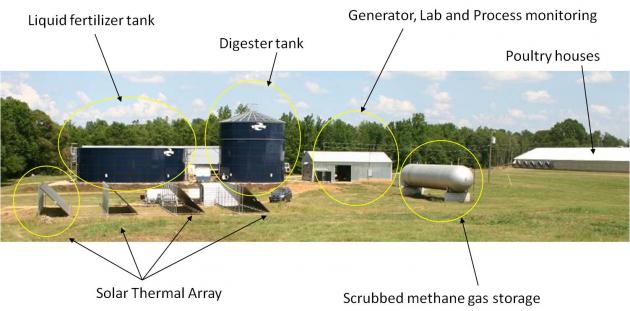
Brinson Farms demonstrates comprehensive utilization of local resources that have historically been viewed as wastes.  These organic materials (broiler litter, yard trimmings, storm damaged trees and waste vegetables) come from both the farm and the community.  Broiler litter and waste vegetables are anaerobically digested to produce methane.  The methane is then used in three ways: 1) to generate electricity for the farm; 2) in boilers to heat water used in the digestion process; and 3) in dual-fuel biomass boilers to heat water for heat exchange in the broiler houses when biomass sources are low. Two other significant products from the digester include liquid fertilizer (approximately 5-2-3) that is sold and residual solids that are incorporated into the farm’s composting facility.  Solar panels assist in heating water for the biomass boilers and the digester. The simple payback period for the on-farm poultry litter digester system is approximately 5 years.

Brinson Farms anaerobic digester complex.

What Have We Learned?

Brinson Farms provides a unique system to ensure long-term farm sustainability in an environmentally beneficial manner. Attributes of the integrated system include: 1) bio-based energy production; 2) reduced utility costs; 3) comprehensive litter utilization; 4) no need to land apply poultry litter; 5) production of high quality, organic liquid fertilizer; 6) production of a marketable soil amendment (compost);  and 7) diverting wastes from landfills.  The farm/community interface is mutually advantageous. The farm uses yard trimmings and trees for energy and as a compost substrate; the community has a free repository to dispose of the biomass, where otherwise it would have to pay landfill fees.

Biomass storage and boiler to heat broiler houses

Future Plans

Future plans include developing economic evaluations for each of the system components so that farmers can choose the renewable energy/value added process(es) that will best fit their local resources as well as short and long term financial plans.

Authors

Dana M. Miles, Chemical Engineer, USDA-ARS Genetics & Precision Agriculture Research Unit, Mississippi State, MS, dana.miles@ars.usda.gov

Additional Information

John Logan: johnlogan1@windstream.net;

Jeff Breeden: jbreeden@egesystems.com;

Eagle Green Energy: http://eaglegreenenergyinc.com/;

Arora, S. 2011. Poultry Manure: The New Frontier for Anaerobic Digestion. http://www.nrcs.usda.gov/Internet/FSE_DOCUMENTS/stelprdb1046769.pdf

Acknowledgements

The assistance of John Logan and Jeff Breeden to effectively describe the Brinson system is greatly appreciated.

The authors are solely responsible for the content of these proceedings. The technical information does not necessarily reflect the official position of the sponsoring agencies or institutions represented by planning committee members, and inclusion and distribution herein does not constitute an endorsement of views expressed by the same. Printed materials included herein are not refereed publications. Citations should appear as follows. EXAMPLE: Authors. 2013. Title of presentation. Waste to Worth: Spreading Science and Solutions. Denver, CO. April 1-5, 2013. URL of this page. Accessed on: today’s date.